بسم الله الرحمن الرحيم

Author: Imam Khalid Griggs

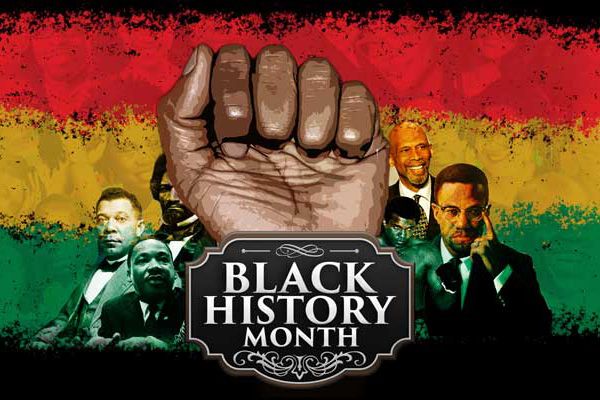
  • Black History Month 2022

    Black History Month 2022

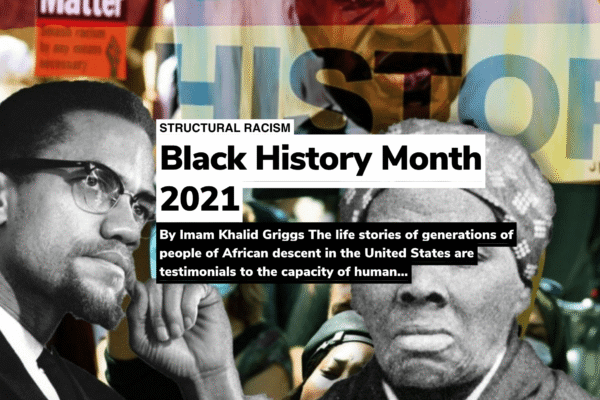
    The life stories of generations of people of African descent in the United States are testimonials to the capacity of human beings to overcome, with Allah’s help, adverse life circumstances that typically cripple the social advancement of even the most highly motivated individuals. Such is the case of Carter G. Woodson, born in 1875 to enslaved parents in Canton, Virginia, as he would rise to become one of the most celebrated figures of the 20th century. Although blessed with a brilliant intellect, Woodson was forced to interrupt his pursuit of higher education to work in the coal mines of West Virginia to help support his family. Yet, due to his academic prowess, Woodson achieved teaching and graduate degrees at a relatively early age. He was the second African American, after Dr. W.E.B. Dubois, to receive a doctorate degree from the prestigious Harvard University. Dr. Woodson spent most of his professional career as a professor and administrator at Washington, DC’s Howard University.

    Frustrated by the scarcity of teaching materials on the accomplishments of African Americans, Dr. Woodson vowed to document the contributions of Black people to American society and throughout the African Diaspora. In 1915, he established the Association for the Study of Negro Life and History and the Journal of Negro History in 1916, earning him the honorific title, Father of Black History. Negro History Week was initiated by the Association in the second week of February 1926. Black students, faculty, and staff at Kent State University expanded Black History Week to Black History Month in 1970. Every U.S. president since that time has designated the month of February as Black History Month.

    To fully appreciate the astounding contributions of African Americans to American society, one must understand the environmental context in which inventions were produced, scientific breakthroughs made, prose and poetry composed, acts of heroism displayed, and faith communities of various religious traditions established and perpetuated. Every decade since the founding of the United States of America in 1776 has witnessed unrelenting systems of racial terrorism, property denial, and limited access to and mobility in the labor market against people of African descent. Black advancement in American society is inextricably tied to social justice movements that have struggled to eliminate many egregious discriminatory laws or practices like pro-enslavement legislation, race-based denial of entry or service at places of public accommodation such as restaurants, retail stores, libraries, parks, etc., and inequitable funding of public schools located in African American communities.

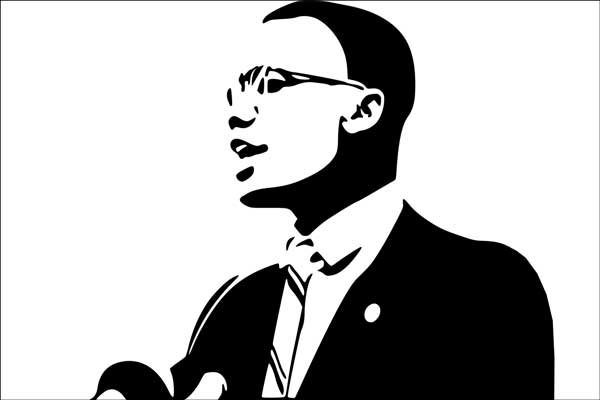
    It is commonly acknowledged today that every immigrant population from Asia or Africa that has settled in the United States since the 1965 Immigration Act, Hart-Celler Act, owes a debt of gratitude to the historic social justice struggles of the 1950s-1970s of persons like Medgar Evers, Fannie Lou Hammer, Ella Baker, Septima Clark, Queen Mother Moore, A. Phillip Randolph, Harry Belafonte, H. Rap Brown (Imam Jamil Abdullah A-Amin), Andrew Young, John Lewis, Dr. Martin Luther King, Jr., Malcolm X (El-Hajj Malik El Shabazz), and a host of others. Even though anti-Black racism, anti-immigrant hatred, misogyny, and Islamophobia continue to plague the nation, we are a better nation today because of the struggles of these and other august Black history makers.

    Black History Month is cause for the celebration and recognition of the accomplishments of those from America’s most historically despised group, the descendants of African people in America. Muslims have much to learn from the history and struggle of African Americans in this land. As Muslims in America better understand the history of social justice movements in this country, particularly in the African American community, we will better understand our role in organizing for and demanding justice for all people in this country. It is a divinely mandated imperative for Muslims to take a stand for justice while not being silenced by the fear of retribution from those committing or sponsoring oppression. Black History Month 2022 comes at a pivotal moment in American history. Muslims must decide, “What side of history are we going to be on?”

  • Convicted Killers of Malcolm X Exonerated

    Convicted Killers of Malcolm X Exonerated

    The recent exoneration of 83-year-old Muhammad Aziz and the late Khalil Islam for the 1965 assassination of human rights icon Malcolm X is a 55 year long-delayed judicial affirmation of their innocence. Formerly known as Norman 3X Butler and Thomas 15X Johnson, Aziz and Islam were members of the Nation of Islam and, like many in the organization, wanted to see Malcolm X dead because of their insistence that he had betrayed the trust of Elijah Muhammad. But they were innocent of the murder, and the exoneration came after the Manhattan District Attorney’s office and lawyers for the defendants engaged in a 22-month investigation to review evidence in the case.

    The reinvestigation of the men’s convictions was predicated on previously withheld evidence pointing to their innocence. The legal efforts to exonerate the two men were bolstered by the tireless efforts of historians, researchers, lawyers, and those who knew the two men who were tenacious in maintaining their innocence for more than five decades. The pressure to reopen the investigation reached a crescendo after the airing of the highly acclaimed Emmy-nominated Netflix documentary Who Killed Malcolm X in February 2020. Decades-long exhaustive research and exclusive interviews by historian and longtime Malcolm X admirer Abdur Rahman Muhammad provided the impetus for the documentary. The film revealed the roles played by the New York City Police Department, the FBI, and the Nation of Islam in facilitating the killing of Malcolm X and the perpetuation of the false narrative about the tragic event.

    I first met Abdur Rahman Muhammad one evening decades ago in Washington, D.C. on Georgia Avenue NW in front of the ever-popular Pyramid Bookstore. He was a new convert to Islam at the time and was engaged in a heated exchange with 3 or 4 Nation of Islam members about their unorthodox beliefs. My instinct was to try to diffuse the situation by extracting the fiery Abdur Rahman from that space before something bad happened. He is not a neophyte to Malcolm research. I believe his research about Malcolm X and the Nation of Islam began sometime around this event a few decades ago.

    Prosecutorial and Law Enforcement Misconduct

    Many past and present social justice figures, politicians, and community leaders and influencers have been victims of prosecutorial and law enforcement misconduct. These manufactured convictions have had the effect of undermining respect of, and confidence in, the judicial system. This system has been proved to be fundamentally flawed because of structural racism as well as inequitable dispensation of justice based on the financial capacity of defendants to “purchase” justice. There have been more than 2,500 known exonerations in the United States since 1989. At least 190 individuals formerly on death row have been exonerated. If the recent exoneration of two men who served two decades in prison for assassinating Malcolm X teaches us anything, it should be that not everyone convicted in U.S. courts is necessarily guilty of a crime. A good example is the case of Imam Jamil Abdullah Al-Amin. Like other political prisoners in the U.S., he is a victim of slow death by medical neglect. He was convicted of murdering a Cobb County deputy sheriff in 2002 and wounding a second deputy even though his supporters’ and defense attorneys’ belief is that the evidence was illegitimate. Before the conclusion of Al-Amin’s trial, another man, Otis Jackson, confessed to the shooting. The shooting victims both testified (the deputy who died described the assailant before his death) that the shooter was 5 feet 8 inches tall with gray eyes. Imam Jamil is 6 feet 5 inches with brown eyes. Otis Jackson fits the description given by the officers.

    The Brazen Killing of Malcolm X

    The assassination of Malcolm X in Harlem’s Audubon Ballroom was brazenly carried out by a team of Nation of Islam assassins in a crowded hall of 400 people. Present were individuals curious about Malcolm X’s post-NOI direction and there were his ardent supporters as well, including his wife Betty Shabazz and four of their young daughters. The assassins made no attempt to disguise their identities or devise an elaborate escape plan. They correctly surmised that the shock effect of their bold actions would so terrorize potential witnesses that few, if any, would provide positive identification of the murderers. Thomas Hagan, also known at the time of the assassination as Talmadge X Hayer and currently going by Mujahid Abdul Halim, was captured by some of Malcolm’s followers, brutally beaten, and shot in the leg as he attempted to escape the Ballroom.

    Thomas Hagan was arrested on the scene that fateful day by New York City police officers and charged with the murder of Malcolm X, El Hajj Malik El Shabazz. Two days later, Norman 3X Butler and Thomas 15X Johnson were arrested and charged with Malcolm’s assassination. During his 1966 trial, Hagan informed the court that neither Norman 3X Butler nor Thomas 15X Johnson participated in the assassination. The court rejected consideration of this newly revealed information, resulting in all three of the accused being found guilty and sentenced to 20 years to life in prison.

    Hagan initially denied his involvement, but during the trial confessed to the crime. At the time, Hagan did not disclose the identities of his accomplishes. In 1977, when Butler and Johnson unsuccessfully appealed their convictions, Hagan submitted sworn affidavits once again denying Butler’s and Johnson’s participation in the assassination and disclosing the names of four of his actual partners in Malcolm’s assassination. The names provided to the court by Hagan were Ben X Thomas (aka Ben Thompson), Leon X Davis, William X, and Wilbur X, all members of Newark’s Temple No. 25. The full names of the killers were Benjamin Thomas, Leon Davis, William Bradley, and Wilbur Mckinley. The four hitmen were never charged with the murder of Malcolm X. William Bradley, who was identified as the man sitting in the front row during those fateful moments of Malcolm’s assassination, sprang from his seat and with one shotgun blast to the left side of the chest of the fallen martyr, ended the life of one of the most influential figures of the 20th century.

    Bradley was a career criminal after Malcolm’s murder, committing robberies, aggravated assault, and drug offenses. Changing his name to Al-Mustafa Shabazz, he married a prominent political activist in Newark, New Jersey. He curiously even appeared in a political advertisement in Newark for then mayoral candidate Corey Booker. The ad was pulled after a New York Times article exposed Shabazz’s likely connection to the murder of Malcolm X. The other three alleged unindicted murderers all lived their lives virtually hiding in plain sight.

    Many Knew the Identities of the Murderers

    In 1978, I was assigned to work in Southern Alabama on union organizing campaigns. One of my union co-workers was the sister of former heavyweight boxing champion Joe Frazier. Over meals, the organizers would mostly discuss campaign strategies and politics. Frazier’s sister was amused that I was naïve enough at the time to believe that Thomas 15X Johnson and Norman 3X Butler were the assassins of Malcolm X. She would laugh and say that every fool knew that two of the actual murderers lived in her adopted home of Patterson, New Jersey and that she knew the names of the other two and how they got their “daily bread.” As my fascination with Malcolm grew over the years, I met and developed different levels of friendships with several of his close associates from the NOI, Muslim Mosque, Inc, and Organization of Afro-American Unity, including Dr. Betty Shabazz.

    Among those willing to discuss the issue, there was unanimity of opinion that Butler and Johnson were not part of the team of assassins who killed Malcolm X. In 1975, I gave a lecture on Islam to a large gathering of inmates at Lewisburg Federal Penitentiary in Pennsylvania. I was amazed when one of the brothers informed me that one of the convicted killers of Malcolm X, Mujahid Abdul Halim, was in the audience and had been temporarily transferred for either medical treatment or protective custody. I had no desire to meet him.

    Mujahid Abdul Halim was paroled from New York state prison in 1985. Muhammad Abdul Aziz was also paroled in 1985. Khalil Islam was released from prison in 1987 and died in 2009. According to the meticulous research in the 1992 book The Judas Factor: The Plot to Kill Malcolm X by Karl Evanzz, Malcolm told his confidante and supporter James Shabazz on February 16, 1965, that, “I have the names of five Black Muslims assigned to kill me. I will announce them at the meeting [February 21, 1965].” Malcolm did not live long enough to reveal the names of his suspected killers. Eyewitnesses reported that Betty Shabazz took a blood-soaked piece of paper believed to be the list containing those names from her husband’s coat pocket as he lay on the stage of the Audubon. Before his martyrdom, Malcolm also expressed to his close associates that he was going to stop saying that it was the Nation of Islam that was trying to kill him. He knew they did not have the reach to try to poison him in the Cairo Hilton Hotel restaurant or to influence the French government to forbid his deplaning in France on his final overseas trip mere weeks before his assassination. So, others, more powerful, were also intending to take him out.

    There is a hadith that states when Allah SWT loves someone, He declares that love to angels who announce that love throughout the heavens. Allah SWT then places the love of that person in the hearts of humans so that he or she is loved on earth. Malik Shabazz, Malcolm X, has been a beloved figure worldwide for over half a century. His life lessons and prescriptions for the establishment of social justice movements have transcended the boundaries of his generation, race, nationality, and political beliefs. Although he was only 39 years old and had been a practitioner of mainstream Sunni Islam for just 11 months before he died, Malcolm X has influenced millions worldwide to embrace Islam. It seems ironic that 55 years after his martyrdom that a documentary streaming on Netflix, and the exoneration of two people falsely convicted of his murder, would ignite for another generation a newly found interest in America’s Muslim martyr.

    A Larger Perspective on the Exonerations

    The exoneration of Muhammad Aziz and Khalil Islam for the assassination of Malcolm X is a long-overdue remedy for the gross miscarriage of justice committed against them. Yet, the national and international publicity that highlighted their two decades of false imprisonment and excruciating 55-year delay before being cleared of all charges can never remedy the hardship and pain suffered by the two men and their family members. Nor is it likely that other victims of prosecutorial and law enforcement misconduct who are currently languishing in prisons today will directly benefit from this high-profile exoneration. The United States is a carceral nation that has intertwined racial capitalism [“the process of deriving social and economic value from the racial identity of another person” (Leong)] and structural racism. Thus, the U.S. has the largest prison population of any country, with currently 2.1 million citizens incarcerated, according to the Pew Research Center. According to The Color of Justice Sentencing Project statistics, African Americans are incarcerated in state prisons at a rate of five times that of Whites, the most disproportionate representation of a single racial or ethnic group anywhere on earth. The U.S. also has the largest number of for-profit privately-owned prisons in any country.

    Nationally, one in 81 African American adults in the U.S. is serving time in prison. Since exonerations are granted on the state level, it is highly improbable that states will be motivated to accelerate their own pace of evidentiary review of convictions because of New York state murder convictions from half a century ago that ultimately were vacated and the convicted men exonerated. The efforts of groups like the Innocence Project to investigate dubious felony murder conviction cases are meritorious and valuable. However, a simultaneous movement to overhaul the criminal justice system is essential to minimize, with the ultimate objective of eliminating, convictions based on random arrests, witness tampering and coercion, and exclusion of African Americans and Latinos from jury pools. Nonetheless, the exoneration of Muhammad Aziz and Khalil Islam and the resultant correction of the historical record involving the assassination of Malcolm X, Malik Shabazz, cannot be overstated.

    For additional information, the following books are recommended:
    The Autobiography of Malcolm X: As Told to Alex Haley
    The Judas Factor: The Assassination of Malcolm X, by Karl Evanzz
    The Dead Are Arising, The Life of Malcolm X, by Les Payne and Kamara Payne
    On The Side of My People: A Religious Life of Malcolm X, by Louis A. DeCaro, Jr.

  • Let Us Call It What It Is

    Let Us Call It What It Is

    From time immemorial, men have constructed dehumanizing systems of exploitation that stagger even the most vivid imagination. Each of these inhumane structures of society share some common characteristics including a self-serving distortion or disregard of divine guidance, creation of racial, ethnic, and/or religious hierarchies, extreme monopolization of resources, and implementation by the dominant class of systematic oppression or even brutality to subdue the subordinate population. The well-documented practices of the Pharaonic system imposed on the populace of Egypt for thousands of years perhaps best epitomizes the extent to which oppression was systematized in societies during antiquity.

    Feudalism and Its Caste System

    One of the exploitative social systems during the medieval ages, particularly from the 9th to the 15th century, was European feudalism. Feudalism was a tightly structured caste-like social system in which individuals were relegated to exclusive roles in society. At the top of the feudalism pyramid were the nobles or lords whose status came from their receiving lands in perpetuity from the Crown in exchange for their military service. Vassals were tenants of the nobles on land known as a fiefdom. Land was given to vassals in exchange for their support of the lord, and if enough land was accumulated by a vassal, they could become lords themselves. At the bottom of the feudal system were serfs/peasants who lived in mostly wretched conditions as unfree laborers on the lord’s land, giving him homage, labor, and a share of the produce. The institution of feudalism was relatively less barbaric than many other systems of exploitation.

    Settler Colonialism and Slavery

    One of the most dehumanizing systems to ever exist was that of chattel slavery. Trans-Atlantic settler colonialism of Europeans began with Christopher Columbus in the late 1400s. The centuries-long Trans-Atlantic trade of enslaved Africans ushered in a system of global exploitation whose vile residue of anti-Black and structural racism exist up to this day. Columbus was afforded the backing and financial resources of the Spanish Crown, particularly Queen Isabella, to explore a new mercantile route to China and India. Muslim domination of the Mediterranean and northeastern Atlantic seaboard of the African continent presented a major obstacle to the maritime aspirations of European seafaring countries like Spain and Portugal. Queen Isabella shared Columbus’ anti-Muslim sentiment and dedication to Christianity, making his proposal to sail westward to find an alternate route to the spice-rich orient more appealing to the Spanish Crown. Other European nations like Italy and Portugal flatly denied sponsorship of his ambitious proposal. Columbus, like Isabella, harbored crusading ambitions to recapture Jerusalem from Muslim control. Although never participating in a Crusade to Jerusalem, Columbus fought with Spanish soldiers during the bloody 1492 Christian reconquest of Granada, Spain, the last Muslim stronghold there. Spanish and Portuguese settler colonizers in the Americas were especially averse to the presence of Muslims in the New World due to their religious hatred of Islam after the near 700-year control of Al-Andalus by Muslims.

    Racial Segregation and Apartheid

    In addition to the oppressive systems of feudalism and slavery is the abhorrent system of apartheid. In 1913, three years after South Africa gained its independence from Britain, racial segregation and White supremacy were institutionalized with the passage of 1913 Land Act. The Land Act forced Black Africans to live in resource-deprived, woefully overcrowded reserves. The Afrikaner National Party won the national election in 1948 on the campaign pledge of Apartheid, Apartness. The new government’s immediate goal was to not only separate non-Whites from Whites, but to also separate non-Whites along tribal lines to decrease any potential unifying political power. In a series of Land Acts passed over the years, 80 percent of South Africa’s land was reserved for the minority White population. Non-Whites were forced to carry passbooks confirming their authorization to be in each area. This practice had historical precedent in chattel slavery in the United States. Apartheid legislated that marriage and sexual relations between Whites and non-Whites was illegal. The Population Registration Act of 1950 classified all South Africans by race — Bantu (Black Africans), Coloured (mixed race), and White. A fourth category of Asian (Indian and Pakistani) was later added. Movement, jobs, housing, and other privileges were assigned based on these categories. Black Africans were at the bottom of the apartheid structure and were most brutally sanctioned, punished, and killed.

    The two nations that never wavered in their support of the almost 50-year apartheid regime were the United States and Israel. South Africa was a pariah to most of the nations of the world due to the sheer brutality of the regime and its unapologetic racist practices.

    Yet, despite South Africa being backed by the United States, the global movement against apartheid eventually triumphed against seemingly insurmountable odds. Massive global demonstrations against apartheid undoubtedly played a significant role in its eventual demise in South Africa. But, more importantly, the world community sustained an effective boycott of South African companies and their products that proved too high a cost. Even the United States government eventually recognized that apartheid was destined for the trash bins of history much like chattel slavery, feudalism, and the pharaonic system in ancient Egypt.

    Apartheid: Israeli Retrogression

    Israel adopted its own version of homelands (Bantustans) by appropriating occupied land for Jewish immigrants from primarily Europe and America. Israel, like apartheid South Africa, receives unqualified support from the United States in its racist, inhumane treatment of non-Jewish citizens. It is a racist state that remains unrepentant for its actions against its Palestinian citizens and those who live under Israeli occupation in the West Bank and Gaza. Israel acts with impunity due primarily to United States economic and military support and its pressure on other nations to abstain from taking action against Israel.

    In mid-May, Israel ended its most brutal 11-day aerial assault on the population of the Gaza Strip after unprecedented worldwide demonstrations and denunciations by citizens and governments. In the United States, the largest pro-Palestinian demonstration ever held in Washington, DC in modern times was held at the Lincoln Memorial on May 29. The Sanction Israel Rally, whose sponsors included American Muslims for Palestine, USCMO, and ICNA CSJ, attracted over 35,000 demonstrators. The Israeli attacks had targeted an already limited number of hospitals and medical facilities, roads leading to standing hospitals like the one in Gaza City, residential buildings, and local infrastructure like a water desalination plant. There is no standing army in Gaza, no jets or armed personnel vehicles, or any other means for the populace to be able to defend themselves against the most heavily armed and deadly military in that part of the world. According to the UN, at least 58,000 Gazans were internally displaced, further exacerbating existing overcrowding and food shortages. The health needs of the people of Gaza were made worse as the World Health Organization estimates that at least 200,000 of the two million Gazans are in dire need of medical attention. Only two percent of Gazans have received Covid-19 vaccinations in a country that boasts one of the highest vaccination rates in the world. The Zionist government of disgraced leader Benjamin Netanyahu imposed a near-complete blockade on Gaza in 2007 after the defeat of the Palestinian Authority and the election of Hamas as the representative government of Gaza. Essentially creating an open-air prison, the blockade is ongoing and Gazans cannot enter or leave Gaza without Israeli permission. This lockdown is nothing short of collective punishment which is prohibited under international humanitarian law. The blockade has been in effect for 14 years and Israel disallows basic food staples, baby formula and diapers, building essentials like concrete, and other items necessary for survival.

    Prior to the military assault, Palestinian residents in the Sheik Jarrah neighborhood in East Jerusalem were facing evictions to make way for a Jewish settlement. Based on a District Court ruling, at least 13 families were ordered to vacate their homes. In addition, under the pretext of controlling Palestinian protestors at Masjid al Aqsa, Israeli police and military attacked unarmed demonstrators and otherwise created havoc on worshippers at the sacred site.

    The current BDS (Boycott, Divestment, Sanctions) movement attempts to end international support for Israel’s maltreatment and oppression of Palestinians and force the government to comply with international law. The BDS movement is not an anti-Jewish effort nor is it an attempt to dismantle the state of Israel. It is an effort to halt genocidal actions against Palestinian people just as the anti-apartheid movement was never intended to drive all Whites out of South Africa or destroy that nation. We must avail ourselves of all legal, effective methods to stop the genocidal assaults on the Palestinian people by the state of Israel. BDS is a growing global movement that offers a realistic path to end the abominations committed against the Palestinian people since 1948.

  • Nakba 2021: The Cost of Indifference

    Nakba 2021: The Cost of Indifference

    On May 25, 2020 much of the world was riveted watching the slow agonizing death of George Floyd as he was murdered by former Minneapolis police officer Derek Chauvin. Darnella Frazier, a 17-year-old girl, courageously captured on her cell phone video camera Chauvin pressing his knee to the neck of George Floyd for 9 minutes and 29 seconds until Floyd’s handcuffed body was lifeless. After years of public outcry over police officers across the country killing unarmed African Americans with impunity, the Floyd murder was a tipping point. For the first time in modern United States history, massive demonstrations were continuously held in multiple cities in all 50 states, including Hawaii and Alaska. Protests were also held in countries around the world. Unlike past demonstrations in the U.S. against police brutality, these demonstrations included an unprecedented number of Whites and Latinos.

    Bills have been introduced in federal, state, and local legislatures, often for the first time, calling for the repeal of qualified immunity, the legal principle that grants immunity to police officers and other designated government officials from civil suits unless they have violated a person’s “clearly established statutory or constitutional rights.” Critics of the doctrine argue that it opens the door to the use of excessive force by police officers. In the U.S. House of Representatives, the George Floyd Justice in Policing Act is under consideration. The bill increases accountability for law enforcement misconduct, restricts the use of certain policing practices, enhances transparency and data collection, and establishes best practices and training requirements. City Councils and County Commissions across the country have held hearings with some agreeing to compensate African Americans for centuries of unpaid labor by their ancestors.

    A Militarized Police Force

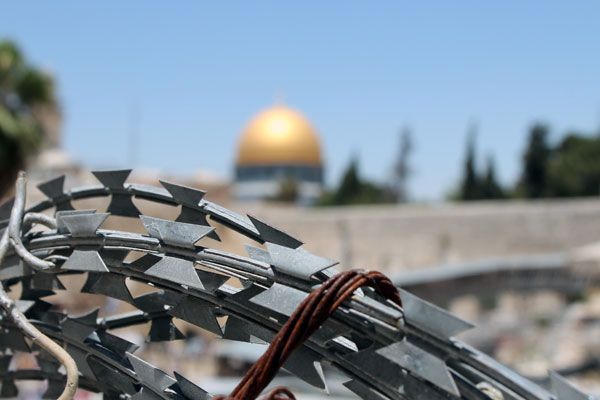
    Now, in a land half the globe away, troubled by egregious policing practices against an oppressed marginalized population, Israeli police violated the sanctity of the third most sacred site in Islam, Al Aqsa Mosque in East Jerusalem. On May 7, during Islam’s holiest month of Ramadan, within the last 10most revered days of the month, Israeli police invaded the sanctuary of Al-Aqsa Mosque. They used excessive force to dislodge a few protestors who had non-violently demonstrated their opposition to Israeli plans to evict Palestinians from the Sheikh Jarrah neighborhood in East Jerusalem. The plan for evictions spurred violent hordes of Israeli extremists storming through the neighborhood and forcibly removing and assaulting residents.

    The police entered Al-Aqsa firing stun guns, tear gas grenades, and rubber bullets. “Rubber bullets” are more accurately described as relatively large metal pellets thinly encased in rubber. It was reported that at least six people were permanently blinded during the assaults. In the resulting melee, 330 Muslim worshippers were injured, and centuries-old windows and wooden doors were damaged or destroyed. Recent increased tensions in the area surrounding the mosque have been fueled by Israeli police allowing radical Israeli settlers to storm the Al-Aqsa compound while loudly chanting slogans and taunts, interrupting Muslim worshippers in prayer and contemplation. “Violations of UNESCO (United Nations Educational, Scientific, and Cultural Organization) prohibitions on allowing non-Muslim access to worship inside the historic mosques have been increasingly violated over the years with the cooperation of Israeli police.

    The militarization of policing in the U.S. exhibits practices similar to those used in Israel. This is not coincidental. Top law enforcement officials in police departments across the United States have gone to Israel for training in the use of surveillance and aggressive techniques and methods for crowd control. After numerous public demonstrations and successful political mobilizations, the city of Durham, in North Carolina, prohibited its police departments from training in Israel. Alameda County in California has done the same, and departments in Vermont and Massachusetts withdrew from a planned training trip to Israel in 2018.Over the past two decades, police departments across the U.S. have secured military-grade weapons including armed personnel carriers, tanks, predator drones, and other military equipment. Begun in 1997 by the Clinton administration to ostensibly fight the “war on drugs,” a Defense Department program called 1033 provides excess or outdated military equipment to local police departments at no cost to them other than shipping. While Israel routinely unleashes deadly force on Palestinians, one incident stands out in the U.S. On May 13, 1985,Philadelphia Mayor Wilson Goode authorized the dropping of a bomb from a State Police helicopter on a house occupied by members of MOVE, a Black separatist group. The fire was then allowed to burn completely out of control, destroying 61 homes in the middle-class African American neighborhood. Five children and six adults died in the fire. The bombing was widely condemned, and the MOVE survivors were later awarded a $1.5 million settlement in 1996.

    The Ongoing Catastrophe

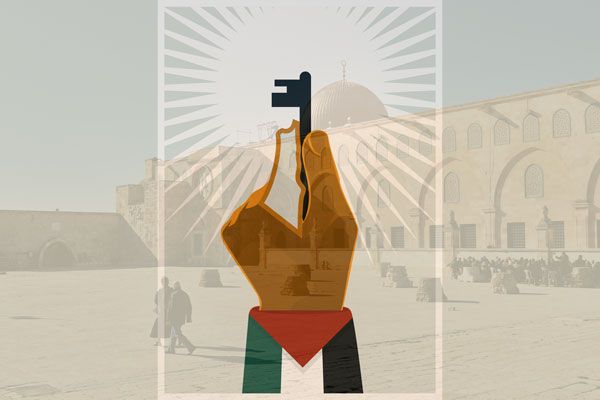
    Seventy-three years ago, Palestinians experienced what they refer to as a “Nakba” (catastrophe, disaster). The specific reference is to the ethnic cleansing by Zionist paramilitary gangs including Irgun, Haganah, and the Stern Gang. Their terrorist activities resulted in destruction of 400-600 Palestinian villages and over 300,000 men, women, and children expelled or fleeing the terror campaign and ending up in refugee camps in Syria, Lebanon, and Jordan, as well as the West Bank and Gaza. Christian Palestinians, while discriminated against by the policies of the Israeli government, are not forced to live in resource-starved camps like their Muslim counterparts, under the watchful and intimidating eyes of the Israeli military.

    At the end of the 1947-49 Palestine War, the United Nations adopted Resolution 194 that resolved that Palestinian refugees had the right to return to their properties and live at peace with their neighbors at the earliest possible time, and those choosing not to return should be given compensation for their properties. The government of Israel has defied this UN Resolution and many others for over 70 years while giving Palestinian homes and property to American and European Jewish settlers. After the 2006election of Hamas, the Palestinian resistance group, as the governing authority for Gaza, Israel imposed a land, air, and sea blockade over the area, one of the most densely populated areas in the world. Two million Gazans have been unable to secure adequate life-sustaining goods and supplies including food, baby formula, medicine, concrete for rebuilding structures destroyed by Israeli bombs or bulldozers, and other essential items. Gaza is often referred to as the world’s largest outdoor prison due to the restrictions imposed on its citizens. Water is unnecessarily and indiscriminately shut off by the Israeli government. The food supply allowed into Gaza is based on Israel’s calculations of Palestinians’ caloric needs and the objective is revealed by a statement made by Dov Weisglass, the spokesman for former Israeli prime minister Ariel Sharon. In 2006, Weisglass stated, “The idea is to put the Palestinians on a diet, but not to make them die of hunger.”

    The State of Palestine is recognized by 138 nations but, sadly, the world is witnessing Nakba 2021 for the Palestinians in Gaza and the West Bank. It is not the first time that the Israeli military has relentlessly attacked Gaza, but it is the most destructive and deadly. Civilian housing is being targeted and destroyed by sophisticated missiles, most of which were supplied by the United States. In the short span of less than two weeks, more than 200 Palestinians have been killed, including at least 60 children and more than 35 women, three of whom were pregnant. Roads leading to Al-Shifa Hospital in Gaza City have been targeted by missiles, making it virtually impossible to get to the hospital for treatment. Palestinian doctors and other health professionals are being targeted for murder. Critical infrastructure, housing, and markets have been destroyed, complicating an already subsistence existence. Since the start of vaccinations for the Covid-19 global pandemic, Israel has one of the highest vaccination rates in the world. Yet, Palestinians in Gaza and the West Bank have had only one percent of their population receiving the vaccine protection.

    Setting Right What is Wrong

    With notable exceptions, most Muslim-majority nations have entered pacts and alliances with Israel that seem to preclude their assisting the Palestinians or even condemning Israeli aggression against the Palestinian people. Ironically, some of these same nations appear to have little compunction in acting treacherously or even warring against other Muslims. Conversely, the Black Freedom Struggle in the United States in the 1960s and 1970s recognized the intersectionality of the liberation struggles of all peoples against oppression, including Palestinians. For this reason, Imam Jamil Al-Amin(formerly H. Rap Brown), Kwame Ture (formerly Stokely Carmichael), Muhammad Ahmad (formerly Max Stanford), Malcolm X, Huey Newton, Dhoruba bin Wahad, and other leaders of the Black Panther Party, SNCC, and other organizations embraced the struggle of the Palestinian people in their struggle for liberation. Leaders of some African nations during this same period identified with, and wholeheartedly supported, the struggles of the Palestinian people. Leaders like Kwame Nkrumah, Nelson Mandela, Sekou Toure, Patrice Lumumba, and many others supported the Palestinian cause.

    The images of young Palestinians standing firm during their violent arrests by Israeli police for protesting the occupation — those images are vital. They demonstrate a willingness to confront with stones the heavily armed Goliaths, encouraging reminders that believers must have patience and put our trust in Allah, the Most High. Prophet Muhammad has reminded us that Allah is on the side of the oppressed and that there is no barrier between the supplications of the oppressed and Allah. Pray for Palestine and work to liberate it from the knee on its neck. The Israeli bombing on May 15 of the building that housed the AP, Al-Jazeera, and other media outlets will not stop the world from watching and witnessing. The injustices are being recorded; the setting right of what is wrong is inevitable.

  • Voter Suppression: A Tool of Supremacists

    Voter Suppression: A Tool of Supremacists

    Since the inception of the United States approximately 245 years ago, the exercise of the ballot has remained one of the most cherished rights and expressions of American citizenship. The 13 British colonies that gained independence, and subsequently established the United States of America, crafted the U.S. Constitution which limited electoral participation to property-owning White males. The unfettered right to vote was not afforded to White females, enslaved or free Blacks, or Indigenous persons until the 20th century. The 19th amendment to the Constitution was ratified in 1920, giving women the right to vote. It granted all women the franchise by law, but in practice women of color were often still denied the right to vote. The 1924 Snyder Act granted Native Americans born in the United States full citizenship and the right to vote. Even though the 15th Amendment, adopted in 1870, granted African American men the right to vote, many states put in place barriers aimed at preventing them from doing so. African Americans would have to wait until the passage of the 1965 Voting Rights Act before federal legislation finally gave the full franchise to them.

    The Reconstruction Era, from the end of the Civil War in 1865 until 1877, represented the young nation’s brief tryout of non-racialized democracy. For the first time in U.S. history, formerly enslaved Blacks not only voted, but were elected to city, state, and federal offices throughout the South. P.B.S. Pinch back was the first African American governor when he was elected as Louisiana’s chief executive in 1872. Hiram Revels, born free in North Carolina in 1827, became the first mixed-race person to serve in the U.S. Senate when, in 1870, Mississippi voters favored him over other candidates. Blanche Bruce was elected to the Mississippi Senate in 1875.

    The Ku Klux Klan was formed in Pulaski, Tennessee in 1865 to terrorize and thus discourage newly freed Blacks from benefiting economically, socially, or politically after emancipation. Voter suppression and deadly terrorist attacks against Black voters and office holders accelerated after federal troops stationed in the South were removed by then-president Andrew Johnson. The North may have won the Civil War, but the reactionary post-reconstruction battle was clearly won by the South through its near-total disenfranchisement of Blacks and reimplementation of a labor-intensive plantation economy that virtually re-enslaved Black workers.

    Suppression Through Law and Violence

    According to an article written by the senior editor of Encyclopedia Britannica, voter suppression may be defined simply as, “Any legal or extralegal strategy or measure whose purpose or practical effect is to reduce voting, or registering to vote, by members of a targeted racial group, political party or religious community. The overwhelming majority of victims of voter suppression in the United States have been African Americans.” Throughout the history of the American republic, voter suppression has been the tool of choice used by White supremacists to re-establish or maintain control over the policy agendas of local, state, and federal legislatures. From 1865 until 1968, racial segregation and systemic anti-Black discrimination were codified in laws known as Jim Crow laws. Jim Crow was a character in a minstrel show who was wildly popular with racist Whites because of his reinforcement of negative stereotypes of Black people.

    During the modern Civil Rights era, 1953-1968, African Americans were murdered, lynched, burnt or bombed out of their homes for attempting to register themselves or others to vote. Medgar Evers, former NAACP Mississippi Field Secretary and civil rights activist, was murdered in his driveway by White supremacist Byron De La Beckwith in 1963. The murder was, to a large degree, because of Evers voter registration efforts among Blacks. A comprehensive report by the Poor People’s Campaign (PPC), “The Souls of Poor Folk, Auditing America 50 Years After The Poor People’s Campaign,” states that “More than 50 years after the Voting Rights Act, people of color still experience a broad range of attacks on their voting rights, including racialized redistricting, voter ID laws, proof of citizenship, voter registration hurdles, reduction of days for early and absentee voting, felony disenfranchisement, purging of voter rolls, preemption laws, and emergency financial manager appointment…” A major boom to the voter suppression movement was the June 2013 decision by the Supreme Court in Shelby v. Holder. The Court essentially concluded that participation by African Americans in the electoral process had progressed to a point that special protections by federal law were no longer needed. The decision struck down provisions in the 1965 Voting Rights Act that required jurisdictions with significant histories of voter discrimination to preclear any new “standard, practice, or procedure,” that is, to get federal approval from the Department of Justice, to show that that they do not have discriminatory purpose or effect.

    The practical outcome of the Court’s decision speaks volumes about the ongoing agenda to disenfranchise citizens. Quoting further from the PPC’s report, we find that “By 2016, 14 states had new voting restrictions in place for the first time in a presidential election: Alabama, Arizona, Indiana, Kansas, Mississippi, Nebraska, New Hampshire, Ohio, Rhode Island, South Carolina, Tennessee, Texas, Virginia, and Wisconsin. These steps disproportionately target low-income residents and neighborhoods of color. When including felony voter disenfranchisement, eight out of the ten poorest states have enacted voter suppression laws, or only recently saw such laws overturned in federal court.” Voter suppression is a tool for electoral control and manipulation of the process.

    Trying to Turn Back the Clock

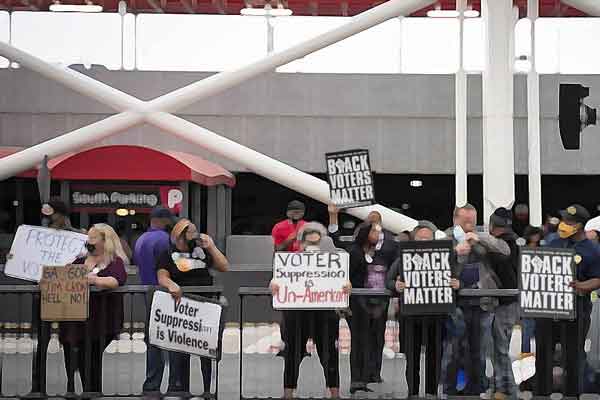
    During the 2020 electoral season, the state of Georgia had a historic massive voter turnout resulting in the state casting a majority of votes for Democrats — Joe Biden for president, and Rev. Raphael Warner and Jon Ossoff for U.S. Senate. Their wins turned the state from being a proverbial red state to a blue state. Rev. Warner is the first African American senator in the state’s history. The Georgia state legislature wasted little time in passing two voter suppression bills that seem to target Blacks, other people of color, and poor communities. The measures will eliminate automatic voter registration, ban drop boxes for mail-in ballots, and repeal no-excuse absentee ballots. Former president Jimmy Carter observed, “As our state legislators seek to turn back the clock through legislation that will restrict access to voting for many Georgians, I am disheartened, saddened, and angry.” Such voter suppression measures seem to echo Georgia’s inglorious past political history when staunch segregationists like former Georgia governors Eugene Herman Talmage and Lester “Axe Handle” Maddox overtly championed discrimination against Blacks at the polls.

    It is revealing that 50 years after the passage of the 1965 Voting Rights Act a vigorous nationwide campaign is taking place to suppress the vote of citizens who are part of minority and poor communities. Voter suppression in this country affects all Americans. Native American political prisoner Leonard Peltier stated, “We need to do more than what is right. We need to join together to right what is wrong.” As Muslims, we are charged with the responsibility of taking a stand for justice for all human beings, irrespective of religion, race, ethnicity, country of origin, or social status. When we know better, we must do better. Allah, in the Qur’an, enjoins us, “O you who believe, stand out firmly for justice, as witnesses to Allah, even though it be against yourselves, or your parents or your kin, be he rich or poor; Allah is nearer to them both” (Qur’an 4:135).

  • Black History Month in The Muslim American Consciousness

    Black History Month in The Muslim American Consciousness

    With few noteworthy exceptions, historical accounts of the achievements and struggles of North American people since the colonization of the land by Europeans has been written overwhelmingly from the vantage point of Euro-Americans. The phenomenon of history being written by the dominant or conquering group is not unique to the North American or United States experiences. One of the unfortunate outcomes of the ascendency of a culture or civilization over others is the inclination to craft a one-sided historical narrative that minimizes, if noterases,the contributions of those outside the dominant group.

    African people have been a major presence in the Western hemisphere and North America since the start of the Transatlantic slave trade, first brought to this continent by the Spanish in the first quarter of the 16th century, followed by the British at the turn of the 17th century. These Euro-American settler colonialists established a system of chattel slavery that has no historical parallel in its systemic brutality across generations, resulting in obliteration of personal identifiers such as culture, language, family units, and religious practices of the enslaved.

    At the outset, the transatlantic trade of enslaved Africans targeted majority-Muslim areas in West Africa. Muslims from the Senegambia region were prized targets for enslavement due to their literacy, their expertise in growing rice, and their enterprising spirit. In addition to Senegambians, African Muslims were highly valued in the North American markets as they were often given duties requiring trust and general competency,such as drivers. It is estimated that the Muslim population of enslaved Africans in the United States was from 30-40 percent of the enslaved population, a significantly lower percentage than found in the Caribbean and South America.

    Contributions ‘Overlooked, Ignored, and Even Suppressed’

    Despite the dehumanizing and barbaric conditions forcefully imposed on enslaved Blacks, they and their descendants made extraordinary contributions to the fields of science, mathematics, medicine, agriculture, literature, education, and most areas of society when afforded any semblance of an opportunity. Dr. Carter G. Woodson was born to formerly enslaved parents in New Canton, Virginia ten years after the abolishment of slavery. Dr. Woodson was the second African American, after Dr. W.E.B. Dubois, to receive a doctorate degree from the prestigious Harvard University. As a historian, he lamented the absence from history books of the unique contributions made by Black people to America and to the world. Dr. Woodson founded the Association for the Study of Negro Life and History in 1915 and the Journal of Negro History in 1916.

    Noting that the contributions of African Americans were “overlooked, ignored, and even suppressed by the writers of history textbooks and the teachers who use them,” Dr. Woodson created Negro History Week in 1926, a forerunner to Black History Month. Dr. Woodson said of the necessity of Negro History Week that, “If a race has no history, it has no worthwhile tradition, it becomes a negligible factor in the thought of the world, and it stands in danger of being exterminated.” Black History Month was first proposed by the Black United Students organization at Kent State University in February 1969 and was first celebrated the following year. After six years, Black History Month was celebrated nationally.

    Muslims Americans over the years have been varied in their reactions to Black History Month. Some have been oblivious to it or indifferent, and others scornful. Some, though, were receptive and recognized its importance. Based on casual observation, few Muslim Americans in the 1970s through the ‘90s were interested in Black History Month, seeming to believe that Black history in general was irrelevant to the status and progress of the Muslim community in the U.S., let alone the American community-at-large.The decade of the 1970s witnessed an unprecedented increase in the number of African Americans embracing Sunni or orthodox Islam. The Civil Rights Movement had mostly acceded ascendency to the Black Power phase of the Black Freedom Struggle after 1967.Malcolm X was the inspirational leader of tens of thousands of Black youths who were disenchanted with non-violence as a philosophical construct that disallowed any act of violence even in self-defense against the violent assaults and abuses from white supremacists.Malcolm’s life story of transformation and redemption resonated with Black urban youth who could identify with the survival tactics employed by him to navigate the institutional racism and poverty, as well as hyper-incarceration, imposed on the descendants of America’s formerly enslaved population.

    Black History: From Malcolm to Contemporary Dawah

    The release of the Autobiography of Malcolm X: As Told to Alex Haley in October 1965, eight months after his public assassination, provided the inspiration and impetus for untold thousands of Black youths to embrace Islam after reading about Malcolm’s near total transformation of intellect, character, and spiritual identity after becoming a part of the international brotherhood and sisterhood of Islam. Malcolm inspired legions of newly converted Muslims to study and celebrate Black history in order to extricate themselves from feelings of inferiority and self-loathing inflicted upon them by the dominant culture. During the 1970s, Black History Month, to varying degrees, was generally acknowledged by Muslim African Americans. During this same period, the number of Muslim immigrants to the United States increased in unprecedented numbers due to the Immigration Act of 1965. For the most part, this wave of Muslim immigrants to the U.S. had little motivation to learn the history of Black people in the U.S.They came to this country for various reasons but certain lywere intent, like all immigrants to the U.S., to take full advantage of the economic, educational, and social opportunities available. Most were oblivious to the struggles and sacrifices of the Black Freedom Struggle that resulted in many of those opportunities being afforded to them, even as African Americans’ human and civil rights continued to be violated. The quest for equitable rights and opportunities for Black people continues to the present day.

    For the most part, it was not until the new millennium, 2000 CE, that a substantial number of Muslim organizations and masajid realized the dawah (Islamic propagation) potential of organizing annual programs during Black History Month. These Muslim-sponsored events, while geared toward providing accurate information to non-Muslims, also assist Muslims in learning about the struggles and the accomplishments of Muslim and non-Muslim African Americans. African people have been major contributors to the development of this nation and the establishment of the Islamic presence and legacy of Islam in the American context. The history of Muslim Africans in the United States is not the exclusive purview of Muslim African Americans.It belongs to all Muslims regardless of ancestry or geographic origin. Black History Month affords Muslim Americans another opportunity to reclaim and celebrate aspects of our history.

  • Structural Racism

    Structural Racism

    The life stories of generations of people of African descent in the United States are testimonials to the capacity of human beings to overcome, with Allah’s help, adverse life circumstances that typically cripple the social advancement of even the most highly motivated individuals. Such is the case of Carter G. Woodson, born in 1875 to enslaved parents in Canton, Virginia, he would rise to become one of the most celebrated figures of the 20 th century. Although blessed with a brilliant intellect, Woodson was forced to interrupt his pursuit of higher education to work in the coal mines of West Virginia to help support his family. Due to his academic prowess, Woodson achieved teaching and graduate degrees at a relatively early age. He was the second African American, after Dr. W.E.B. Dubois, to receive a doctorate degree from the prestigious Harvard University. Dr. Woodson spent most of his professional career as a professor and administrator at Washington, DC’s Howard University.

    Frustrated by the scarcity of teaching materials on the accomplishments of African Americans, Dr. Woodson vowed to document the contributions of Black people to American society and throughout the African Diaspora. In 1915, he established the Association for the Study of Negro Life and History and the Journal of Negro History in 1916 earning him the honorific title, Father of Black History. Negro History Week was initiated by the Association in the second week of February 1926. Black students, faculty, and staff at Kent State University expanded Black History Week to Black History Month in 1970. Every US president since that time has designated the month of February as Black History Month.

    To fully appreciate the astounding contributions of African Americans to American society, one must understand the environmental context in which inventions were produced, scientific breakthroughs made, prose and poetry constructed, acts of heroism displayed, and faith communities of various religious traditions established and perpetuated. Every decade since the founding of the United States of America in 1776 has witnessed unrelenting systems of racial terrorism, property denial, limited access to and mobility in the labor market against people of African descent. Black advancement in American society is inextricably tied to social justice movements that have struggled to eliminate many egregious discriminatory laws like pro-enslavement legislation, race- based denial of public accommodation, and inequitable funding of secondary schools located in African American communities.

    It is commonly acknowledged today that every immigrant population from Asia or Africa that has settled in the United States since the 1965 Immigration Act, Hart-Celler Act, owe a debt of gratitude to the historic social justice struggles of the 1950s-1970s of persons like Medgar Evers, Fannie Lou Hammer, Ella Baker, Septima Clark, Queen Mother Moore, A. Phillip Randolph, Harry Belafonte, H. Rap Brown (Imam Jamil Abdullah A-Amin), Andrew Young, John Lewis, Dr. Martin Luther King, Jr., Malcolm X (El-Hajj Malik El Shabazz), and a host of others. Even though anti-Black racism, anti- immigrant hatred, misogyny, and Islamophobia continue to plague the nation, we are a better nation today because of the struggles of these and other august Black history makers.

    Black History Month is cause for the celebration and recognition of the accomplishments of those from America’s most historically despised group, the descendants of African people in America. Muslims have much to learn from the history and struggle of African Americans in this land. As Muslims in America better understand the history of social justice movements in this country, particularly in the African American community, we will better understand our role in organizing for and demanding justice for all people in this country. It is a divinely mandated imperative for Muslims to take a stand for justice while not being silenced by the fear of retribution from those committing or sponsoring oppression. Black History Month 2021 comes at a pivotal moment in American history. Muslims must decide, “What side of history are we going to be on?”
    Article Courtesy: ICNACSJ

  • The End of Innocence in Seven Hours

    The End of Innocence in Seven Hours

    The United Nations recognizes the existence of 195 countries in the world, including the non-voting entities of Palestine and the Vatican. Egypt, established as a single kingdom by King Menes in 3100 BCE, and South Sudan which gained its independence from the Republic of Sudan in 2011, are respectively the oldest and youngest members of the global family of nations. By global standards, the United States is viewed as a relatively late entry to the list of countries in the world. The United States of America published its Declaration of Independence in 1776, one year after the Revolutionary War began. The war, fought to free the 13 colonies from Britain, continued until the end of all hostilities in 1783.

    From the outset, the United States enjoyed natural coastal defenses on its eastern and western borders by way of two oceans. The new nation was blessed with rich and ample natural resources, abundant habitable land, and a government free from the dueling pursuits of centralized religious authorities like the Church of England and the Catholic Church in Europe,or the fights for political hegemony of warring European dynasties. The fact that the foundations of the American government appreciably differed from the British and other European models from which it evolved gave rise to the idea of American exceptionalism. This idea of American exceptionalism was perhaps first noted in 1831 by a French diplomat and traveler to the United States, Alexis de Tocqueville. Tocqueville astutely observed that, at its outset, the American experiment differed from European nations which were still in the grip of aristocracies. In the township governments of New England, Tocqueville observed democracy in action, what he believed would be the inevitable evolution beyond the aristocratic order that dominated Europe. He was fascinated by the democratic impulse that he observed playing out in the practice of self-governance.

    The characterization of some version of American exceptionalism has been echoed by American politicians, social scientists, and common citizens for generations. Over the decades, the United States has been viewed, rightly or wrongly, by citizens and governments around the world as the beacon of hope for economic prosperity, social equality, and government stability. It is conservatively estimated that a minimum of one million-plus immigrants come to the United States every year. The U.S.is the preferred destination for immigrants who are fleeing government repression orin sufferable poverty, or simply come with hope and expectation of securing a better living status. The common theme, though, is that unlike many of their countries of origin, the United States has an incomparably stable government that is free from the uncertainties of coup attempts and insurrections.

    ‘Stop the Steal’

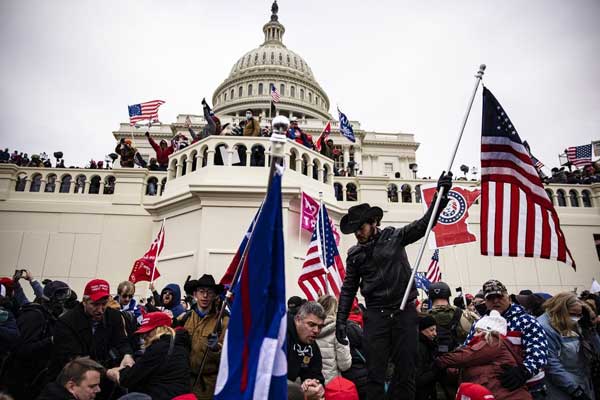
    Since the first election of George Washington as president in 1776, the United States had never experienced the refusal on the part of the defeated candidate to allow an unencumbered transition of power to the newly elected president. That is until Donald Trump, the 45th president, refused to acknowledge electoral defeat even after receiving 74,222,593 to President Biden’s 81,281,502 certified votes, and 232 to Biden’s 306 electoral college votes. After claiming unsubstantiated and debunked gross electoral fraud that denied him the election, Trump urged his followers to organize “Stop the Steal” rallies nationwide and to converge on Washington, D.C. on January 6, 2021 for a massive Trump-led event. The date of the D.C. rally coincided with the day that the U.S. Congress would officially validate the presidential election results. The ensuing events at the Capitol led to Trump’s designation as the only president in the history of the country to be impeached twice during a single term, an ignoble distinction that may remain in perpetuity. People around the world, both government officials and citizens, were horrified at events that unfolded on Capitol Hill on January 6th. After Trump, Rudy Giuliani, and other Trump surrogates riled up the gathered Trump supporters for over an hour, encouraging them to converge on the Capitol to “Stop the Steal,” a mob of domestic terrorists overwhelmed a woefully unprepared and undermanned Capitol police force.The mob forced their way into the Capitol building causing members of Congress and their staff to flee for their lives from the legislative chambers and offices, hiding under desks, donning gas masks, huddling silently in designated safe spaces until being moved by Capitol police to secure spaces elsewhere. Five people died on this fateful day. In a horrifying and mind-boggling span of about seven hours, approximately 11 a.m. to 6p.m., American innocence and exceptionalism was lost on the stages of the largest media and social media platforms in the world. Not since the War of 1812 between the United States and Britain had the U.S. Capitol been invaded and violated, except this time it was carried out by American citizens. America, that proverbial shining city/house on the hill joined other nations around the world whose citizens reject results of democratic elections, choosing anarchy and insurrection instead.

    Appropriate Measures Must Be Taken

    Undoubtedly, the tragic events of January 6, 2021 must become a major impetus for government investigation and development of a substantive plan to address the threats that white supremacist, militia, and other domestic terrorist groups pose to American society. Quoting from the Southern Poverty Law Center’s report, Terror from the Right, “These (domestic terrorists plots) have included plans to bomb government buildings, banks, refineries, utilities, clinics, synagogues, mosques (emphasis added), memorials and bridges; to assassinate police officers, judges, politicians, civil rights figures and others; to rob banks, armored cars and other criminals; and to amass illegal machine guns, missiles, explosives and biological and chemical weapons. Most contemplated the deaths of large numbers of people — in one case, as many as 30,000, or 10 times the number murdered on September 11, 2001.” Similar findings have been compiled by comparable organizations that track domestic terrorists.

    While the insurrection of January 6 threatened the lives of legislators, staff, and Capitol police for just over seven hours, the attempted coup has far-reaching consequences and raises questions that must be answered if America is to avoid even more dangerous acts of traitorous violence in the future. How can federal law enforcement agencies be aware of terrorist plots by militia and white supremacist groups and not have these groups labeled domestic terrorists and appropriate measures taken against them? How can they know of these plans or attempts to overthrow government entities, kidnap and/or kill elected government officials, destroy government property, or kill non-white citizens and not take action against these groups?

    Covid-19 has been the direct cause of the deaths of over 456,000 Americans, the crippling of the U.S. economy and staggering number of job losses, the interruption of the education of millions of students, and other serious disruptions of civil society. Yet, few events in the history of this country have shocked the American republic and its people to the core as the seven hours of insurrectionary terror waged against the U.S. Capitol on January 6, 2021. It took generations for the United States to be near idolized by the world as being an exceptional government and country and only seven hours to dis enchantthe world of this notion.

  • Political Evolution of Muslim Americans: An Historical Perspective

    Political Evolution of Muslim Americans: An Historical Perspective

    Sustained European contact with Muslims goes back at least to the late 7th and early 8th centuries when in 711 CE, Tarik ibn Ziyad, the Berber-appointed governor of Morocco, led a Muslim army across the Straits of Gibraltar (Jabal al Tarik) and defeated the Visigoth forces in Spain, liberating the persecuted Jewish and Christian populations under their rule. Muslims then ruled southern Spain, Al Andalus, for approximately 800 years, establishing a period of enlightenment often referred to as the Golden Age of Islam. A reign of terror against Muslims and Jews started in 1492 after King Ferdinand II of Aragon and Queen Isabella I of Castille, the Catholic monarchs of Spain, conquered Granada, the last Muslim stronghold in Al-Andalus. Jews were forcibly expelled from Spain and many North African Muslim countries accepted these religious refugees. Jews and Muslims remaining in Spain were forced to accept Christianity or be killed. Muslims were ultimately expelled from Spain in 1608.

    The Ottoman Empire conquered the Balkans consisting of Bulgaria, Greece, Hungary, and Macedonia, during a process that started in 1362 and continued for approximately the next 100 years. The four North African countries of Morocco, Algiers, Tunis, and Tripoli were also a part of the Ottoman empire and constituted what was known as the Barbary States. Under the unofficial protection of the heads of respective territories, the Barbary States would enrich their coffers through pirating commercial ships from other countries, often kidnapping foreign sailors and passengers for ransom. These seafaring marauders were infamously referred to as the Barbary Pirates. The maritime trade and travel of European nations were severely hampered by the threat of being robbed of their goods and their crew being ransomed or sold into slavery in North Africa or other parts of the Ottoman Empire. This slave trade resulted in many hundreds of thousands of Europeans being enslaved in North Africa. This phenomenon was a motivating factor in the late 15th century for Spanish monarchs Ferdinand and Isabella to finance the voyages of Christopher Columbus to identify other sources of wealth and to find new, more secure, trade routes to the lucrative markets of India and the Far East so as to avoid the threat of pirates. In 1492, Columbus set foot in the Americas.

    Thirteen Colonies and Its Immigrants

    The first British colony was established in the “New World” in 1607. By the late 1700s, thirteen colonies had been established. They declared their independence from Britain in 1776 and fought the British in the American Revolutionary War. The American colonies won the war and a treaty was signed in 1783. The first head of state to recognize the newly-established government of the United States was Muhammad III, the Sultan of Muslim Morocco. Muhammad III signed the Moroccan-American Treaty of Friendship in 1777, recognizing the sovereignty of the United States and affording safe passage and open ports to American ships. Yet, the first overseas war fought by the young nation was fought from 1801 to 1805 against Muslims in the country of Tripoli. Tripoli had demanded that the U.S. pay a tribute for any ship sailing with the American flag. Thomas Jefferson, before being elected president in 1800, adamantly stated that he would refuse to pay a tribute to Tripoli. His position changed when the U.S.S. Philadelphia, carrying a number of then-current and former U.S. diplomats and valuable cargo was captured and $60,000 demanded as ransom for the seized vessel. Jefferson relented and the government paid the ransom for the release of its citizens.

    Today, Muslims in the United States continue to navigate a complicated relationship with the people and government of this country. Some of the earliest Muslims to arrive here were Africans who were sold into slavery and transported to early America. This is different from the Europeans who came here as immigrants fleeing grinding poverty or religious and political persecution, or the tens of thousands of British prisoners, for example, who were sent here as a way for England to get rid of their undesirable citizens. These convicts were sold as indentured servants in the colonies, with a specific number of years they were required to work before being granted their freedom. In contrast, those from the African continent were trapped in a mostly inescapable system of brutal generations-long chattel slavery. Although recent research has established that 30 percent or more of enslaved Africans in the United States were Muslims, the exact number is presently unquantifiable and may never be known.

    Demographics of Muslim American Citizens

    In Edward Curtis’ searing political analysis in his book “Muslim American Politics and the Future of US Democracy,” the author states, “From that time until the present, war-making in Muslim lands has been frequently interpreted by US policymakers and citizens alike as a struggle for liberty and freedom over and against what are said, in blatantly racist terms, to be Islam’s and Muslims’ tendencies towards despotism, ignorance, and fanaticism… US liberalism’s supposedly benevolent military intervention abroad, including in places where Muslims live, is essential to explaining why Muslim Americans are not offered full political and social citizenship in the United States.”

    From the inception of the United States to the present time, the population of Muslim Americans has been comprised of a significant number of immigrants and refugees, as is the case in other Western countries. Accurate census data about the number of Muslims in the United States is challenging to obtain, primarily because questions about religious preference are not included in the decennial (every ten years) U.S. census. Muslim American population estimates range from 3.45 million according to the latest Pew Research findings to 6-8 million, estimates from research institutions and other Muslim-sponsored surveys. The likelihood is that the more accurate figure lies somewhere in between.

    According to a 2017 Pew Research Study, U.S. Muslims concerned About Their Place in Society, But Continue to Believe in the American Dream, “Nearly six-in-ten U.S. Muslims are first-generation Americans, having been born in another country. Three-quarters of the U.S. Muslims are immigrants or the children of immigrants…the vast majority of Muslims living in the U.S. (82%) are American citizens, including 42% who were born in the U.S. and 40% who were born abroad but who have been naturalized.” African American Muslims are routinely estimated to make up 20-25 percent of the U.S. Muslim population.

    Fulfilling Citizenship Requirements

    The diverse racial, ethnic, geographical, and socio-economic profiles of U.S. Muslims preclude the simplistic stereotyping that, intentionally or not, serves to marginalize or typecast all members of this particular group. The third president, Thomas Jefferson, famously argued for the future citizenship and full participation in the electoral process of even “despised groups like Muslims,” a group whose existence in the U.S. at the time he failed to acknowledge or was unaware of. Former president Eisenhower, who cut the ribbon in 1957 to inaugurate what was then the largest mosque in the Western hemisphere — the Islamic Center in Washington, D.C. — like Obama, George W. Bush, and others in between, have, according to Curtis, “articulated the idea that Muslims, like other religious minorities, can become genuine Americans, especially if they serve in the US military and fight its ideological enemies.” From the Revolutionary War to the longest war in U.S. history in Afghanistan, Muslim Americans have fulfilled their citizenship requirements and more. American Muslims are arguably the most assimilated Muslims in all of the Western countries. Resistance to Muslim assimilation into American society is, to a large extent, the function of religious and racially-based prejudice on the part of the larger society rather than any legitimate reasons, any perceived deficiency or estrangement from American society on the part of the Muslim American community. A similar false notion was set forward after the end of chattel slavery in the U.S. when some asserted that Black culture was the cause for anti-Black racism and the failure of the newly emancipated population to be accepted in mainstream society. The similar phenomenon taking place today is that some people in the larger American community refuse to accept Muslims as equal citizens and insist on seeing Islam and Muslims as alien and a destructive force. Despite the fact that the majority of Muslims in the U.S. support and embrace the good that American society has to offer, a well-financed Islamophobic network flourishes in the U.S.

    The geographical diversity of Muslim Americans, hailing from numerous other countries, is unparalleled in any other nation’s population. Consequently, the mere fact that Muslim Americans may have family members in nations that the U.S. and its allies are at war with has provided justification for them to become targets of extrajudicial surveillance, arrest, and rendition. Additionally, when violent illegal acts are committed on American soil by Muslim foreign nationals, Muslims as an entire group come under suspicion. Acts of institutionalized discrimination and false labeling of Muslim Americans have erected additional barriers for Muslims to overcome in our longstanding efforts to become citizen partners in this land.

    The Opportunity to Serve

    However, the Muslim American community has, for the most part, rejected attempts by some within our ranks to self-identify as hapless victims rendered marginalized and hopeless because of Islamophobia. Within the last 13 years, the United States has seen the election of its first Muslim member of Congress, Keith Ellison, subsequently three other Muslims, Andre Carson, Ilhan Omer, and Rashida Tlaib, and a host of Muslim city council members, county commissioners, school board members, and other elected officials across the nation. While electing Muslims to public office should not be the ultimate achievement goal for Muslim Americans, it is a barometer of the capacity of the Muslim community to overcome Islamophobic discrimination and organized resistance to Muslims achieving full citizen rights and privileges and having the opportunity to serve the greater American society. Muslim Americans have embraced the divinely mandated responsibility to serve humanity through the efforts of multi-area social service operations, social justice initiatives, dawah (Islamic propagation efforts), and the display of exemplary moral character and conduct. Muslim Americans are a significant and valuable thread in this country’s diverse and beautiful social and political fabric. We pray that those who oppose or even detest that reality will come to realize that we are here to stay and to serve the common good.

  • Muslims’ Future in France

    Muslims’ Future in France

    When President Emanuel Macron of France declared in the aftermath of the beheading of French high school teacher Samuel Paty by 18-year-old Abdoullah Anzorov that “Islam is in crisis everywhere,” he inadvertently unleashed controlled furor across the Muslim world. Rather than calming things down after the gruesome murder, Macron vilified 1.7 billion Muslims and the religion of Islam by his indiscriminate remarks. By displaying to his classes cartoons published by the French satirical magazine, Charlie Hebdo, Paty reignited a controversy that had erupted in France in 2015.The cartoons insulted the dignity of the globally-revered man, Prophet Muhammad ibn Abdullah (peace be upon him). In the aftermath of Paty’s murder and the stabbing death of three parishioners in a cathedral in Nice, the viability of Muslims living in French society has once again dominated national discourse. Yet, the contemporary relationship of Muslims to French society cannot be understood or defined by any series of singular events, or by the pronouncements or actions of various French presidents and their administrations. To understand the present and project possible future developments for Muslims in France, history is prologue; that is, history helps to set the context for the present.

    Historical Context

    France, with its considerable military might, occupied the predominately Muslim north African country of Algeria in 1830. To facilitate its near total domination of the Muslim country, one million French, Spanish, and Italian nationals (colons) settled in Algeria, thereby constituting 10 percent of the nation’s total population. These colonial settlers imposed a tiered citizenship structure in the country much akin to the social dynamics of white privilege and control established later in apartheid South Africa in 1948. The social and economic stratification of Algerian society was enforced by the French military, much to the chagrin and resentment of the Algerian people. An irreversible turning point in Franco-Algerian relations began on the day that Nazi Germany surrendered in World War II, on May 8, 1945. Approximately 5,000 Muslims celebrated Germany’s defeat, many of whom carried Algerian flags and banners decrying French colonial rule in the country. When French soldiers attempted to forcibly take the flags and banners, shots were fired and both Muslim celebrants and French soldiers were shot. As tensions escalated, 102 Europeans were killed by irate Algerians in the countryside. French military officials were commanded by Paris to take retribution for the slain Europeans. Estimates of up to 30,000 Algerians, almost all of whom were civilians, were slaughtered by the French military in retaliation. Almost ten years later, the Algerian War of Liberation was fought against France, starting in 1954, culminating in Algeria’s independence from France in 1962 after brutal attempts by the French military to suppress the revolution. The Algerian war efforts were led by the Algerian National Liberation Front.

    In 1881, fifty years after France colonized Algeria, the Muslim majority nation of Tunisia was similarly colonized. Both Algeria and Tunisia had been a part of the Ottoman empire for three centuries until after the Russo-Turkish War in 1877 when Russia defeated the Ottoman Turks. The colonial adventures of France in West Africa are reputed to have started as early as 1659 with the establishment of the trading post, Saint Louis, in Senegal, and the capture of Goree Island from the Dutch in 1677. Cheikh Anta Diop, a brilliant renowned Senegalese Muslim anthropologist, historian, physicist, author, and politician, wrote in his 1991 book, “Civilization or Barbarism: An Authentic Anthropology,” a searing analysis of European and French colonialism in Africa. He wrote, “Thus imperialism, like the prehistoric hunter, first killed the being spiritually and culturally before trying to eliminate it physically. The negation of the history and intellectual accomplishments of Black Africans was cultural and mental murder, which preceded and paved the way for their genocide here and there in the world.”

    Legacies of Colonialism

    France, along with other European nations, continue to struggle with their legacies of colonialism and how it impacts its present worldview and human and geopolitical relations. The colonial holdings of France peaked in 1929 when it was one of the largest empires of the 20th century. At that time, 72 nations were a part of the French empire, covering 8.7 percent of the land mass of the earth. Over the last 100 years, France has developed a unique colonial relationship with its non-European citizens and territories. Its spheres of influence are divided into 18 regions, states, and provinces and five Departments and Overseas Territories. Five of the Overseas Territories are island nations: Guadelope (Caribbean), Martinique (Caribbean), French Guam (South America), Mayott (Indian Ocean), and Reunion (Indian Ocean). All these territories and their citizens are considered a part of France, a single country scattered around the world. All non-Europeans residing in these areas can vote in French elections and are, theoretically at least, afforded all the rights and privileges of French citizens residing in the country of France.

    Currently, there are approximately four million Muslims residing in France, the largest Muslim population on the European continent which includes the greatest number of indigenous citizens converting to Islam. In a recent webinar entitled “France’s Islamophobia: Religious Separatism or Disciplining Muslims,” numerous French panelists emphasized the point that the acts of terror committed in Paris and Nice are being used as justifications to implement draconian measures against Muslims. Over 76 mosques have been closed, numerous Muslim schools and organizations have been forced to cease operations, and imams and other Muslim leaders are being arrested on conspiracy charges.Anti-Muslim rhetoric by right wing National Front politicians and others has increased, and physical assaults, including attacks against Muslim women and girls, are on the rise. One of the panelists, Hamza Esmili, made the point that French officials are openly lamenting the fact that Muslims have migrated to France on a daily basis from the Maghrib, West Africa, and the Middle East, and have subsequently entered into every aspect of society. The French landscape has been populated by over 2,300 mosques in a country whose core state principal is secularism (laicite). Esmili further stated that French politicians are decrying the fact that too many French Muslims have integrated into French society rather than assimilating (assimilating is adopting the ways of the dominant culture; integrating is maintaining one’s cultural differences while participating fully in the society).

    Like most issues in the world, this one is more complicated than a simple, reductionist explanation would have it. France passed a law in 1905 that created a separation of church and state, with the explicit purpose of ensuring freedom of conscience and “the free exercise of religion.” France thus became a secular state and broke its ties to the Catholic religion. Some would argue that a secular state is a positive thing in that guarantees the free exercise of religion, at least in theory. Muslims in the U.S. certainly view the separation of church and state and the secular nature of this nation as benefiting them at this point in history.

    Further complicating the matter with regard to France, is that there is an aversion to communalism, the identification and allegiance to one’s racial, ethnic, or religious group rather than to French society as a whole. That is what Hamza Esmili was referring to regarding French politicians’ lament that French Muslims had integrated rather than assimilated into French society. In the U.S., communalism is seen differently in that allegiance to American society, alongside attachment to one’s ethnic, cultural, or religious heritage, is not considered a negative. In fact, it is held aloft as America’s proud diversity. The melting pot tradition, in current times, has been somewhat transformed so that American society is described as a mosaic or a multi-colored tapestry; it is seen as a multi-cultural reality in which differences are honored at the same time that an overarching Americanism is in place. In France, communalism —allegiance to and public expression of one’s identity as a distinct racial, ethnic, or religious group within French society — is seen as a threat to assimilation and cultural cohesion. French secularism sees sameness, rather than differences, as essential to shared French values and a mainstay of the common good. Thus, French Muslims have a difficult course to navigate.

    Difficult Choices

    The future of Muslims in France is yet to be determined. At this historical juncture, Muslims in France are seemingly challenged to either assent to the citizenship demands of the state to place being French and secular above any other personal or group identity, or to develop Islamically sound community development options. As demonstrated by the 2005 civil disturbances involving young Muslims crammed into suburban slums around Paris with few opportunities for educational, social, or economic mobility, Muslims living in France are at a crossroads. On one hand, there is the realization that the conditions that necessitated their immigrating to France in the first place were to a large degree created by the colonial practices of France and other European nations.

    The downturn in the global economy and international travel restrictions imposed due to Covid-19 militate against the prospects of individuals and families improving their financial condition by migrating to another country. For the immediate future, sheltering in place and altering lifestyle practices that cause unnecessary expenses and sacrifices seem to be more viable options at this time. Since the advent of the first Islamic movement in Makkah and Madina, Arabia under the leadership of Prophet Muhammad (peace be upon him), committed Muslims have best navigated societal challenges by utilizing the guidance of the Qur’an and authentic sunnah of Prophet Muhammad (peace be upon him).

    The future of Muslims in France is yet to be determined. At this historical juncture, Muslims in France are seemingly challenged to either assent to the citizenship demands of the state to place being French and secular above any other personal or group identity, or to develop Islamically sound community development options. As demonstrated by the 2005 civil disturbances involving young Muslims crammed into suburban slums around Paris with few opportunities for educational, social, or economic mobility, Muslims living in France are at a crossroads. There is the realization that the conditions that necessitated their immigrating to France in the first place were to a large degree created by the colonial practices of France and other European nations.Since the advent, however, of the first Islamic movement in Makkah and Madina, under the leadership of Prophet Muhammad (peace be upon him), committed Muslims have best navigated societal challenges by utilizing the guidance of the Qur’an and authentic sunnah of Prophet Muhammad (peace be upon him).