
بسم الله الرحمن الرحيم

Author: Imam Khalid Griggs

  • France’s Macron: A Deep Dive into Islamophobia

    France’s Macron: A Deep Dive into Islamophobia

    About two weeks before Muslims worldwide acknowledged the presumed birthday of Prophet Muhammad (s),October 28-29, 2020 (11 Rabi Awwal 1493), French schoolteacher Samuel Paty shared with his history classes negative caricatures of the Prophet of Islam as examples of the freedom of speech so cherished in that secular country. The images had been previously published in the French satirical magazine Charlie Hebdo in 2006, 2011, 2015, and 2020, each time generatingprotests,sometimes violent,by Muslims in France and across the globe. They were incensed by the attempted degradation of the universally beloved Prophet. The response to Paty’s sharing of the cartoons was especially gruesome as18-year-old Abdoullakh Anzorov, a Chechen national who had lived in France from the age of six, beheaded the 48-year-old educator with a long knife. Anzorov, who was shot and killed by French police, was loudly condemned for his actions by Muslims and non-Muslims alike.

    The response to the killing by French president Emmanuel Macron was swift, and it belied any attempt on his part to try to heal the traumatized citizens.He did not call the horrific incident an individual criminal act.Instead, he demonized the religion of Islam and thus, the six million Muslims in France and the 1.7 billion Muslims around the world. Macron declared that, “Islam is in crisis in the world,” adding that “He (Paty) was killed because Islamists want our future. They will never have it.” In a dramatic display of support for free speech in France, the cartoons were projected on government buildings in Toulouse and Montpellier during memorial programs for Samuel Paty. Macron was present at the memorials.

    Macron’s response to the offensive cartoons was diametrically opposed to that of former French president Jacque Chirac. Charlie Hebdo’s 2006 publishing of 12 demeaning cartoons of Prophet Muhammad (s)resulted in boycotts of French products, rioting, and at least a dozen deaths across the Muslim world. Chirac angrily stated, “I condemn all obvious provocations which could dangerously fuel passions. Anything that can hurt the convictions of someone else, in particular religious convictions, should be avoided. Freedom of expression should be exercised in a spirit of responsibility.”

    The Fallout Continues

    Macron has instituted dozens of raids against suspected Muslim extremists and even took action against some who were already in jail but now were served with additional charges. Muslim charities and relief groups have also been closed in the aftermath of recent events. As of the end of October, at least three mosques have been attacked. Several mosques are padlocked, and Imams and religious leaders arrested. Muslim women wearing hijab have been attacked, one such brutal assault taking place at the iconic Eiffel Tower in Paris.The French Interior Ministry announced that more than 50 Muslim institutions with alleged ties to recent attacks are under investigation.

    Two weeks after Paty was decapitated by Anzorov, three worshippers in the famed Notre Dame Basilica were killed in a knife attack in Nice, a city in the south of France. The suspected attacker, a Tunisian man who entered France after arriving by boat from Italy on September 20, was taken into custody by French authorities. In Saudi Arabia, a guard was stabbed with a sharp tool outside of the French consulate. The perpetrator was arrested by Saudi police. These violent attacks on French citizens are attributed to President Macron’s continued defense of cartoons that dishonor Prophet Muhammad (s). Of course, Macron’s Islamophobic statements and policies and the subsequent attacks on French citizens are directly related. But, at the same time, we have to be clear that extra-judicial killings are forbidden in Islam. Punishments can only be established and carried out by legal and authorized authorities who ensure that due process is followed, and justice is brought about.

    President Recep Erdogan of Turkey declared in a speech that Macron was “mentally damaged.” He added, “Macron needs mental treatment. What is the problem with this person Macron with Muslims and Islam?” President Erdogan has been outspoken about Muslims suffering discrimination and oppression from non-Muslim states. Muslim countries around the world have decried Macron and other French government officials’ conflation of acts of terrorism by individual Muslims as concerted attacks by all French Muslims on European people and Western civilization. Muslim-majority nations, including Pakistan, Bangladesh, Saudi Arabia, Kuwait, Qatar, and Jordan have either directly criticized Macron’s comments and actions or called for or instituted a boycott of French products.

    Macron’s deep dive into Islamophobic rhetoric and policies comes at a pivotal time in his presidential bid for re-election. In 2022, Macron will face the leader of the National Rally(formerly National Front), Marine Le Pen, in France’s presidential election. Macron decisively defeated Le Pen in the 2017 presidential contest. As the electorate in France has embraced the more nationalistic, anti-immigration, and Islamophobic positions of the National Rally party of Le Pen, Macron has embraced a right wing populist stance that aligns him more close lywith the perceived political mood of the nation. Le Pen was an early supporter of the candidacy of Donald Trump in 2016 and now echoes his anti-Muslim and anti-immigration rhetoric.

    Muslim Presence in France: A Long History

    Since the Middle Ages, Muslims have had a presence in the south of France that coincided primarily with the almost 700-year Muslim domination of Andalusia, southern Spain.But it was not until the beginning of the 20th century, between World Wars I and II, especially after1945,that tens of thousands of Muslims settled in France, coming mostly from Morocco, Algeria, and Tunisia. World War II caused untold devastation to the infrastructure of France and required immigrant laborers to rebuild structures and to work in the factories. Muslim workers poured into the country for decades until the French government tightened immigration policies in the 1970s due to an economic crisis. After decades of almost unimpeded legal immigration,Muslims have become part of the French landscape, making Islam the second largest religion in the country.

    Some have reacted to the growing presence of Muslims in Europe with a radical and deadly animus. Brenton Tarant, the perpetrator of two mosque attacks in 2019 in Christ Church, New Zealand wrote in his manifesto, “This crisis of mass migration and sub-replacement fertility is an assault on the European people that, if not combated, will ultimately result in the complete racial and cultural replacement of the European people.” His deadly killing spree, as a member of the Identitarian Movement, resulted in 51 dead and 40 injured. The Identitarian Movement emerged in France after World War II and it appears that members today believe it is Western elites who are promoting open borders and unlimited immigration into Europe and the U.S. for their own globalist agenda. They propose that White Christians must fight to save their civilization.The group is active across Europe, United States, Australia, and New Zealand.

    The lingering issues of France’s colonial mission in Muslim-majority countries, particularly in Northern Africa, has hung over the nation like a toxic cloud. For example, France imposed colonial rule over Algeria from 1830 until the Algerian War of Independence from 1954 to 1962 that resulted in independence from France. The war was fought primarily on Algerian soil with the French widely employing torture against Algerian soldiers and civilians while unsuccessfully attempting to crush the Algerian Revolution. Some estimates are that more than 10 million Algerians died as a result of French colonial rule.

    The memory of French colonial atrocities remains in the minds of Muslim citizens of France.This is particularly true in the densely populated outskirts of cities like Paris, Marseille, and Lyon where many Muslims live. These areas are plagued by entrenched poverty, unemployment, in large part caused by discrimination, and public housing that has ended up as isolated ghettos where gangs and drugs abound. This is the perfect recipe for over-policing and its end result — prison. Some estimates are that over half of the French prison population is Muslim. These conditions lead to complete alienation from French society. Much to the chagrin of government planners and elected officials, a growing number of these disenfranchised young people are rejecting secularism and attempting to fully embrace the tenets of their Islamic faith. The response from the secular French government has been attempts to remove all vestiges of the symbols of Muslim religious and social life from the public square. This was initiated in 1989 with the government ban on wearing headscarves in government buildings and in public schools.

    Unlike in the United States, a preponderance of French Muslims, especially those living in the outlying housing projects, has not been fully assimilated into the economic or social realms of French society, even after living in the country for over 75 years. As the French economy continues to weaken and its post-colonial status on the world stage diminishes, Islam and the presence of Muslims in France have become convenient scapegoats for the country’s woes. The plight of Muslims in France should serve as a cautionary tale for Muslim minorities in Western countries.As Muslims, the model for our success in any society must not be how fully we assimilate into the mores and practices of our environment, but rather how closely we strive to emulate the Prophetic model in our personal and collective lives.

  • Beyond the 2020 Elections: What’s Next for Muslim Americans

    Beyond the 2020 Elections: What’s Next for Muslim Americans

    The 2020 U.S. presidential election has often been described in hyperbolic terms by journalists, political hacks, and social commentators as being the “most important election in the history of the republic.” While the truth of this observation may be questioned by some, it is credible to say that only in the period leading up to and during the Civil War, in the 1850s and 1860s, do we find a comparable era when the American people were so socially and politically polarized. A sense of racial superiority and support of the institution of chattel slavery fueled 11 Southern states to secede from the Union in 1861 and set up an independent government called Confederate States of America. What followed was the deadliest war in the history of this country, resulting in over 618,000 combatants being killed.

    The historic election of Barack Hussein Obama in 2008 as the country’s first Black president was interpreted by a significant number of Americans as signaling a post-racial America. This perspective was soon debunked by subsequent events. In the immediate aftermath of Obama’s election, hundreds of cases of racially inspired hate crimes and other acts of intimidation against Blacks and ethnic minorities skyrocketed to levels unseen since at least the middle of the last century. The FBI and other intelligence agencies reported more credible death threats against Obama than any of his predecessors in the White House. Beyond the racist epithets and crude characterizations of Barak and Michelle Obama as apes or monkeys, and accusations that he was not born in the U.S., Obama was doggedly accused of being a Muslim, a claim that he repeatedly denied. The fact that his being labeled a Muslim was intended to be a denunciation is a testament to the climate of Islamophobia that existed in the United States at that time.

    Donald Trump’s election in 2016 was to a large degree a racist backlash against Obama. Trump’s unapologetically equivocal attitude toward White supremacist and neo-Nazi groups, and his refusal to condemn the extrajudicial killing of unarmed Black men and women by police officers across the country, have emboldened these groups. In addition, Trump’s draconian immigration policies for Latin America are unparalleled in the modern era. His patently Islamophobic statements and travel bans on citizens from seven Muslim-majority countries to the United States have militated against Muslim Americans being accepted as full citizens, regardless of historical and present contributions to society.

    Muslims in Early America

    Muslims in America represent the most ethnically diverse population in the world. Enslaved African Muslims were forcibly brought by the Spanish to the area in and around present-day Florida as early as the 1560s. Prior to becoming the third president of the United States, Thomas Jefferson was the governor of Virginia and he significantly influenced the Virginia state legislature to insert clauses in the state constitution that prohibited the establishment of a state-sponsored religion. He also persuaded the same of the framers of the U.S. Constitution.

    Those who wanted an official religion presumed that it would, of course, be Christianity. Most early 18th century Protestant Christians believed that the Islamic religion was outside the realm of an acceptable faith while others, like Jefferson, opined that the new nation should offer full citizenship to those outside the mainstream religion of Protestant Christianity. While Jefferson espoused concepts of freedom and equality for all men, he held hundreds of enslaved Africans on his Monticello plantation. The probability is great that at least a few of these were Muslim based on their West African origins and census data from the 1790 census. Jefferson had a fascination with the various religions and their teachings and, as a young lawyer, he purchased in 1765 an English translation of the Qur’an, a 1734 edition. But his advocacy for full citizenship rights for Muslims was presented hypothetically, as most Americans, including Jefferson most probably, were not aware at that time that many of the African slaves were Muslim. But even in the hypothetical, Muslims were not looked upon favorably. So, for Jefferson, they served as an indicator of whether a universal tolerance and guarantee of constitutional rights for all people would be enshrined in the Constitution.

    In 1807, Jefferson got definitive proof that Muslims, literate no less, were among the enslaved Africans. He received two hand-delivered manuscripts from Muslim fugitive slaves, written entirely in Arabic, appealing for their release from slavery. The Arabic verses were passages from the Qur’an addressing bondage and freedom. When Louisiana native Ira Nash delivered the manuscripts to the president, the two Muslims were moving eastward along the Cumberland River in Kentucky and Tennessee, hoping to return to Africa. The president was unsuccessful in locating the fugitives to free them.

    During the colonial period, there were many Christian denominations, including Anglicans, Baptists, and Presbyterians, and there were conflicts and persecutions by one Christian group against another. Later, in the 1800s, there were tensions between Protestants and Catholics, and violent attacks were aimed at Irish Catholic immigrants. In the early 1800s, Mormons were chased out of a number of Northeast states until they finally settled in Utah. The town where they settled was burned to the ground in 1844 by anti-Mormon agitators. The first occurrence of anti-Jewish sentiment was in the late 1800s. Considering this backdrop of religious conflict among various denominations and religions, it is not surprising that there was antipathy toward Muslims. But, again, because most Americans at that time didn’t personally know Muslims, it was a theoretical antipathy, with a perception of Islam as a foreign, violent religion. The animus toward Islam and Muslims by White Protestant Christians in 17th and 18th century America had been inherited primarily from European Catholic church doctrine and the general public attitude toward a faith they knew little about.

    Prince Among Slaves

    Even though the relatively few Muslim immigrants and the thousands of enslaved African Muslims were forced to operate on the margins of Colonial American society, often practicing their religion clandestinely, the existence of a Muslim presence was at times dramatically thrust into the national spotlight. One such example is that of Ibrahima Abdul Rahman Sori. Born in 1762 into a royal family in what is modern-day Guinea, he was captured in a tribal battle and sold into slavery at the age of 24. After Abdul Rahman’s chance encounter in Natchez, Mississippi with John Cox, a British doctor who had met Ibrahima decades before in his home village of Futa Jallon, Cox and his son tried for years, unsuccessfully, to purchase Abdul Rahman’s freedom. They were able, though, to publicize the story of the prince among slaves, making it known in Natchez and even beyond the state of Mississippi. In 1828, after Ibrahima had spent 40 years in captivity, President John Quincy Adams and his Secretary of State, Henry Clay, received a request from the Sultan of Morocco to release Abdul Rahman. After his emancipation, Abdul Rahman embarked on a high-profile national campaign to try to raise funds for the freedom of his wife Isabella and their nine children. He and Isabella returned to West Africa, but Abdul Rahman died before making it back to his village.

    Canaries in the Coal Mine

    Since the inception of the nation, Muslims and African-Americans have been the proverbial canaries in the coal mine, signaling whether true and full citizenship rights will be granted to all Americans. Despite fighting bravely in every war that the United States has fought and contributing much to the success and betterment of this nation, the loyalty of African Americans and Muslim Americans is again and again challenged by elected officials and opinion poll respondents after every incidence of foreign or domestic terror, even though according to the Center for Strategic & International Studies, “Right-wing attacks and plots account for the majority of all terrorist incidents in the United States since 1994, and the total number of right-wing attacks and plots has grown significantly during the past six years. Right-wing extremists perpetrated two thirds of the attacks and plots in the United States in 2019 and over 90 percent between January 1 and May 8, 2020.”

    During the decades of the 1950s and 1960s, millions of African Americans were influenced in their understanding of structural racism by the brilliant oratory and searing analysis of American society by Malcolm X. For 12 years, Malcolm X was the national spokesman for Elijah Muhammad and the Nation of Islam. He announced his departure from the organization on March 8, 1964, becoming one of the most prolific da’ees (callers to orthodox Islam) in the history of this country. Millions of African Americans have been influenced by his example to embrace Islam and actively engage in civil society. The Nation of Islam was a Black separatist, heterodox Muslim organization that served as a counterpoint to the integrationist efforts of the Civil Rights Movement. The message of Malcolm and the NOI held wide appeal to African Americans, particularly those trapped in cycles of poverty, drugs, and general disadvantage and hardship due to systems of oppression imposed on their communities. Prior to the 1970s, many “orthodox” African American Muslims were disengaged from the political system in the U.S. Thousands of African American Muslims started to vote and otherwise participate in “mainstream” American pursuits due the influence of Imam Warith Deen Mohammed. Imam Mohammed took over the leadership of the NOI after the death of his father, Elijah Muhammad.

    The circumstances surrounding the path to citizenship of immigrant Muslims coming to the U.S. could not have been more glaringly different from that of African Americans. After being kidnapped and forcibly brought in the bowels of slave ships to this country, African people were enslaved for roughly 250 years and denied de facto citizenship until the passage of the 14th Amendment to the Constitution in 1868. In contrast is the experience of immigrant Muslims. Since the passage of the Immigration and Naturalization Act of 1965, Muslims from Muslim-majority countries were allowed entry to the United States if immigration authorities classified them as having potential benefit to the country. This process of selective immigration essentially allowed only the brightest and most educated Muslims to enter. These new Muslim arrivals were almost uniformly classified as White for immigration purposes. Upon arrival, many of these immigrants were afforded amenities and perks that had been denied people of African descent due to structural racism. Hence, over the succeeding decades, the civic engagement of immigrant Muslims generally exceeded that of African American Muslims, especially in relationship to the electoral arena.

    The rise of Islamophobia in the U.S. since 9/11 has arguably created the greatest challenge to American Muslims. Hate crimes against Muslims have exponentially increased over the years as some elected officials ramp up negative rhetoric against the Muslim presence in this country. Still, Muslim immigrants to the U.S. have had a rather seamless transition into professional careers and business ownership, affording the Muslim community here the distinction of being the most educated and highest-earning Muslim population in the world.

    Active Participants in Civic Engagement

    Muslims in America must make critical decisions about our individual and collective actions moving forward. Our rights, privileges, and social opportunities are no longer discussed in abstract terms like during the formative days of the republic. We are no longer living on the margins of society but rather are increasingly active participants in civic engagement and social justice areas that are so important to our existence as Muslims. It is critical that we be clear about our Islamic identities and not immerse ourselves in pursuits, no matter how well intentioned, that take us away from our Islamic duties to Allah SWT, to ourselves, and to others. To a large degree, our actions are predicated on our knowledge and experiences. It is imperative that our Muslim leaders know and understand the history of this land. Otherwise, as so succinctly stated by Dr. Martin Luther King, Jr., we risk “leading our people into a burning house.” There is an expression that many Christians ruminate about when deciding a course of action: “What would Jesus do?” — (peace be upon him). Maybe, as Muslims, we should ask ourselves and one another as we chart our political and social collective paths, “What would Prophet Muhammad (peace be upon him) do?”

  • The Cry of the Bugle: Stand Back and Stand By

    The Cry of the Bugle: Stand Back and Stand By

    As early as 1758, some variation of a brass bugle was used by military commanders in England, and later in the United States, to clearly communicate commands on the battlefield. The bugle’s distinct-sounding cry could be heard far above the noise and confusion of combat. That, of course, was prior to the advent of aerial bombings, thunderous-sounding ground weapon blasts, and megaton field explosions. Soldiers understood the bugle’s non-verbal communications initiated by their field leaders to retreat or advance, fire or stop firing. Like military commanders on the battlefield, politicians often utilize a form of political messaging that uniquely communicates with their supporters while potentially not generating significant attention or opposition— this is dog-whistle politicking. During former president Richard Nixon’s successful 1968 presidential campaign, Lee Atwater, a Republican party strategist at the time, was credited with devising Nixon’s “Southern strategy” of playing dog-whistle politics by appealing to Southern voters with coded language that encouraged and inflamed anti-Black attitudes and perspectives. Nixon appealed to Southern racist voters not by referring to Blacks using racial epithets, but by using coded expressions such as “prone to crime” or “threats to the Southern way of life.”

    Refusing to Condemn: ‘Good People on Both Sides’

    At an August 2017 Unite the Right rally in Charlottesville, Virginia, White supremacists, neo-Nazis, Klansmen, and militias marched through the streets carrying burning tiki torches and confederate and Nazi flags while shouting racist and anti-Semitic slogans. One counter protestor was killed, and 19 others were injured after being rammed by a vehicle driven by one of the Unite the Right rally participants. President Trump refused to condemn the White supremacists and neo-Nazis for their hate-filled words and violent actions even after being pressured to do so by numerous journalists, elected officials, and political commentators. Trump’s response was to shockingly declare that there were “good people on both sides” at the Charlottesville rally.

    Since his election in 2016, Trump has failed to distance himself from the racist rhetoric of some elected officials or to condemn the intimidation tactics and even physical attacks against Blacks, Hispanics, and non-European immigrants by law enforcement officers and White supremacists. Additionally, this president often uses false and incendiary statements to mischaracterize the efforts of opposition politicians, critics of his social policies, and peaceful protestors. Classifying his detractors as far-left extremists, socialists, or members of antifa is commonplace for Trump. Antifa is a contraction of the word anti-fascist. It is a loose association of individuals who share in some opposition tactics against fascism, not a structured organization with an official membership and designated leaders.

    An Enduring Legacy of Hate

    For all of Trump’s bluster and daily dissemination of misinformation, his symbiotic relationship with gun toting organized militia and other White supremacist groups may be one of his most enduring legacies and a continuing threat to the national security of the United States long after he leaves office. In the first presidential debate of the 2020 campaign, debate moderator Chris Wallace repeatedly asked Trump if he was “willing to denounce White supremacist and militia groups.” The pointed question seemed relevant considering his past refusal to condemn the recent violent actions of such groups and individuals in Kenosha, Wisconsin and across the country that have threatened domestic security across the nation and contributed to a culture of violence. Demonstrations in Kenosha protested the shooting by a White police officer of 29-year-old African-America Jacob Blake. He was shot seven times in the back while his horrified children sat in the rear seat of his car. During the protests, two protestors were shot and killed, and a third person seriously injured, by a 17-year-old, self-professed gun-loving, uber supporter of Blue Lives Matter. Kyle Rittenhouse was driven to the protest from his home in Antioch, Illinois by his mother. After arriving on the scene, Kyle walked pass Kenosha police officers, without being stopped, carrying a loaded AK-47 assault rifle, the weapon used in his murderous assault.

    Trump asked debate moderator Chris Wallace to identify a specific group for him to denounce. Presidential candidate Joe Biden interjected with the specific name, “Proud Boys,” one of many militia, White supremacist, and anti-Muslim groups, like Boogaloo, that have emerged on the national scene since the ascendancy of Trump to the White House. His response to the Proud Boys prompt was, “Stand back and stand by.” After months of refusing to denounce racially-motivated hate crimes by White supremacist and militia groups, the President’s debate rejoinder appears to be a dog-whistle call for those groups to lay low for the time being, but to stay ready to be called into action by the President. Only Donald Trump knows the intent of these comments. What is known, though, is that Trump is the only U.S. president in the 20th and 21st centuries who has overtly, and with reckless calculation, incited armed White supremacist groups and antigovernment militias. These groups are perceived by millions of Americans as likely to rise up in violent protest if Trump loses the election. The political history of the United States is replete with contentious presidential campaigns, but never has a sitting commander in chief, before Trump, openly cast doubt about cooperating in a peaceful transfer of power if the American people vote him out of office.

    Number of Militia Groups Skyrockets

    Racial terrorism has unfortunately enveloped American history since the founding of the republic 244 years ago. Notorious White supremacist domestic terrorist organizations like the Ku Klux Klan, founded in 1865 in Polanski, Tennessee, were the forerunners for acts of organized terror against Blacks, Jews, and until several decades ago, Catholics. According to the Counter Extremism Project’s report on White supremacy, there are currently 199 known White supremacist groups in the country today. While the modern-day militia movement does not necessarily express itself in racist language, the election of the first Black president in 2008, not coincidentally, saw the number of militia groups in the country skyrocket 813 percent, from 149 to 1,360 by 2012, according to the Southern Poverty Law Center. While their stated reason to exist may not be White supremacy, their beliefs and actions have become more closely aligned with White nationalist extremists. Militia groups in the U.S. share a near-obsession about the right to own weapons, increasingly high-powered guns with no discernible civilian use. Protection against federal encroachment over the rights of States and individuals is also exceedingly high on their agenda. The nation’s militia groups are typically anti-immigration and self-avowed protectors of America’s southern borders with Mexico.

    President Donald Trump’s open flirtation with militia groups and White supremacists for his own perceived political gain is a disastrous occurrence that will militate against the unity of the American people for years to come. A plot by at least six members of a Michigan militia group to kidnap and possibly murder Michigan governor Gretchen Whitmer was recently foiled by the FBI. According to an FBI spokesman, the men were discussing murdering “tyrants.” Governor Whitmer became a target for this group after she implemented strict social distancing and other measures in response to the coronavirus pandemic. Virginia Governor Ralph Northern was also a potential target for kidnapping by a militia group because of lockdown measures that he implemented for his state. The militia group objected to the lockdown’s harmful effect on businesses. Both Democratic governors were verbally attacked by Trump for their positions. These militia groups have been emboldened by the endorsement of their positions by Trump. The consequences of this alliance will likely negatively reverberate across this land long after Trump is out of office.

    Malcolm X: ‘America Needs to Understand Islam’

    According to Islamic guidelines, we should define the success and prosperity of a nation by its moral might, not its military might; and by the well-being of all its citizens, not the privilege and wealth of a few. Most of all, we would define our exceptionalism as that of faithful and dedicated pursuit of justice in our own nation and around the world. And through submission to the guidelines for society established by Allah (SWT) in the Qur’an and the Sunnah, established tradition, of Prophet Muhammad ibn Abdullah (peace be upon him), we might narrow the political divisions and heal the racial wounds.

    In the words of Malcolm X, America’s illustrious martyr, “America needs to understand Islam, because this is the one religion that erases from its society the race problem. Throughout my travels in the Muslim world, I have met, talked to, and even eaten with people who in America would have been considered white — but the white attitude was removed from their minds by the religion of Islam. I have never before seen sincere and true brotherhood practiced by all colors together, irrespective of their color… I could see from this, that perhaps if white Americans could accept the Oneness of God, then perhaps, too, they could accept in reality the Oneness of Man — and cease to measure, and hinder, and harm others in terms of their ‘differences’ in color.”

  • Can America Survive Four More Years of Donald Trump?

    Can America Survive Four More Years of Donald Trump?

    A relatively late entrant as a candidate for the Republican Party’s 2016 nominee for president, Donald Trump officially announced his candidacy on June 15, 2015, joining a field that eventually included 16 other GOP candidates. Texas Senator Ted Cruz, the first Republican to file, announced his intention to run 596 days before the election. By contrast, Canada’s campaign season for prime minister lasts eleven weeks, while Mexico’s presidential run lasts 90 days, concluding three days before election day. Over the last few decades, presidential aspirants in the U.S. have often expressed their “interest” in running for the office two to three years in advance while formally filing as a candidate an average of 400 days prior to the actual election. Unlike other industrialized nations, the United States has no fixed time limit for campaigning or limitations on campaign spending. As a result, America has the longest and most expensive campaign season in the world.

    Trump is a useful tool of the deep-pocketed ruling elite of which he is a part. But he is a replaceable cog in the American political machine. There are thousands like him waiting to assume the mantel of leadership while ignoring the common good and defying the Ultimate Lawgiver.

    The inordinate amount of money that is raised and spent during every presidential election cycle in the U.S. has the practical effect of limiting potential candidates to millionaires and billionaires, or individuals who have a political organization capable of raising enormous amounts of money from corporations and other wealthy donors. During the 2016 presidential campaign, candidate Trump spent $66 million of his own money and $280 million of funds raised from Super PACs and small donors. His opponent, former first lady and secretary of state Hillary Clinton, raised an eye-popping $1.2 billion in her unsuccessful presidential bid.

    A significant portion of the American electorate, as well as leaders and citizens of other countries, were dumbfounded by the election of Donald Trump. His extreme narcissism, blatant expressions of racist, xenophobic, and misogynistic views, as well as his hedonistic lifestyle, were not seen as inclining him to become a salaried public servant. Trump was the ultimate Washington outsider and political novice, a reality show tv star, a self-proclaimed billionaire with six bankruptcies in his portfolio. As a rental property owner, he had multiple racially motivated housing discrimination lawsuits filed against him. Trump was an extremely atypical candidate for the presidency.

    A President Should Ideally Possess Certain Traits

    While the office of the president has no stated requirements beyond being a natural-born U.S. citizen, 35 years or older, and resident in the U.S. for at least 14 years, it is generally expected by voters that the office bearer should ideally possess certain traits such as believability, decorum, a strong commitment to universal justice, and patriotism. In less than four years in office, the current president, in his official capacity, has been cited by multiple fact-checking operations to have lied to the American people, media outlets, and government officials more than 20,000 times. Over 100 licensed psychiatrists released a signed document questioning his fitness to serve as president based on him exhibiting signs of mental instability. He has publicly denigrated developing nations by characterizing them in vulgar and derogatory terms, referred to asylum-seeking Latin American refugees as rapists and drug dealers, and ordered immigrant children at the U.S./Mexico border to be separated from their parents and caged like animals in unsanitary, traumatizing conditions. Additionally, in the history of the American republic, no American president has shown such a flagrant disregard or ignorance of the constitutional parameters of presidential power. None has flaunted an overreach of executive authority toward the judicial and legislative branches of government as demonstrated by Trump.

    Trump’s Disconcerting Policy Decisions

    Yet, while Trump’s crudeness and lack of social graces may be unsettling to individuals across the political spectrums, it has been his policy decisions as head of state that are most disconcerting to American citizens and members of the global community. He has appointed 194 of 792 sitting federal judges who are appointed for life and significantly influence public policy, law, and legislation. Trump, with Congressional approval, has stacked the federal benches with ultra-conservative activist judges who are able to reverse or modify established progressive social legislation. The Affordable Care Act, commonly known as Obamacare, has been unrelentingly attacked as the Trump administration tries again and again to dismantle it. Environmental protection legislation, regulations governing worker safety, automobile emission standards, protection from drilling in federal preserves, and social safety nets like food stamps and welfare payments — all have been gutted to varying degrees by the current administration. To further enrich the one percent, Trump has engineered significant tax cuts for corporations and the wealthiest individuals. He has attempted to privatize the public-school system and the United States Postal Service. His mismanagement of the economy mirrors his past business failures as some of the nation’s economic indicators have spiraled into a downward cycle under his watch, even before the onset of the pandemic. He continues the practice of his predecessors of privatizing virtually all aspects of the military, including combat and intelligence missions, to the degree that private contractors serve side-by-side with their military counterparts, doing the same jobs at a substantially higher rate of pay.

    Trump has weakened strategic relationships with long-term allies of the United States by making insulting and disrespectful comments about the leaders of other countries. He has unilaterally pulled out of the 2015 Joint Comprehensive Plan of Action, commonly known as the Iran Nuclear Deal, and unilaterally withdrawn from treaties like the Paris Climate Agreement, signed in 2016 by 196 countries, that addresses greenhouse gas emissions and other critical environmental issues. The withdrawal will not be completed until after the November election.

    No Coherent Plan to Navigate the Pandemic

    One of this President’s most apparent deficiencies has been his inability to provide a coherent plan for the nation to navigate the deadly ravages of the Covid-19 pandemic. With a reported death toll of over 190,000 men, women, and children as of September 2020, Trump has demonstrated such incompetence and lack of compassion at this critical moment in history that the United States will likely suffer unnecessary pain and suffering for years to come. Leadership is a serious responsibility at any time, but the failures of inept leaders during extraordinarily challenging moments are magnified, to the continuing detriment of the nation. Trump’s leadership failures are exacerbated by his deliberate attempts to polarize racial, ethnic, and religious differences for what he thinks benefits him politically, caring not about how it harms the country. It can be reasonably argued that in the 20th and 21st centuries, no president since Woodrow Wilson has been as openly supportive of White supremacists and violence against non-White people as Donald Trump. How ironic that he is the immediate successor to the nation’s first African American president, Barack Obama.

    At this critical juncture in United States and world history, the question must be asked, “Can America survive four more years of Donald J. Trump?” The reflex response to this question by millions of Americans is an emphatic “No!” But, if we fail to understand, as expressed by Dr. Martin Luther King, Jr., “the urgency of now,” then we will have to endure four more agonizing years of a dangerous decline in American society. We must vote and make sure our family members and friends vote so that our voices are heard, loud and clear.

    Trump Is a Useful Tool for the Exploiters

    We are living in a time in which social justice warriors want to cancel anyone in the past who didn’t live up to the standards of today. Taking into account that history is moment after moment and era after era of humans as “products of their times,” we don’t need to go around canceling America’s history. Having said that, we must acknowledge that it is way past due to reckon with its flaws, and to realize that the U.S. is a mixed bag of good and bad like most nations and individuals. It remains the case that in many ways, the American core failure rests on the two pillars of exploitation and racism. From the beginning of American history (and human history), the poor have been exploited by the rich. The U.S. was built upon the back of chattel slavery while land and natural resources of Native Americans were expropriated by White settler colonists. America tolerated racially based convict leasing until 1908, and even today, those who are incarcerated are forced to work for virtually nothing in prison industries that are contracted with major corporations. Our American history includes exploitation of poor White coal miners by coal barons…Chinese railroad workers, migrant farm workers, “essential workers” today during a deadly pandemic, all have been exploited by the “owners,” the super-rich. The perpetuation of this system of exploitation by the moneyed elite is supported by both sides of the aisle even though their political theater wants us to believe otherwise.

    Trump is a useful tool of the deep-pocketed ruling elite of which he is a part. But he is a replaceable cog in the American political machine. There are thousands like him waiting to assume the mantel of leadership while ignoring the common good and defying the Ultimate Lawgiver.

    Turning the Mirror Toward Ourselves

    The responsibility to stand for justice is a divinely mandated responsibility for the head of every political, economic, and social organization and group, as well as the responsibility of every individual in his or her own life. We must enjoin right conduct and forbid wrong conduct consistently and with conviction. Four more years of Donald Trump as president will be disastrous for everyone except the exploiters among us. However, a good practice is to also turn the mirror toward ourselves and search our own hearts. The great scholar Ibn Qayyim wrote in Miftah Dar As-Sa’adah: “Ponder upon the wisdom of Allah where He has made people’s kings, leaders, and those of authority over them of the same kind as their own deeds. It is as if the people’s deeds appeared in the forms of their kings and leaders.”

    The point is that we must be the change that we wish to see in the world. “Indeed, Allah will not change the condition of a people until they change what is in themselves” (Qur’an – 13:11).

  • ‘Daddy Changed the World’

    ‘Daddy Changed the World’

    Some words and images are indelibly etched into the recesses of our minds. Such is the case of George Floyd’s six-year-old daughter Gianna sitting on the shoulders of her father’s close friend, Stephen Jackson, after a Minneapolis press conference just days after Mr. Floyd was murdered by local cops. A smiling Gi-Gi, the nickname for the pint-sized young girl, perceptively captured the historical significance of the moment by raising her arms and confidently declaring, “Daddy changed the world.” “Yes Gi-Gi, Daddy did change the world,” Jackson responded. With this brief comment, Jackson affirmed to Gianna what millions of people around the world have recognized — that the senseless murder of Mr. Floyd triggered an unprecedented and so long suppressed public discussion of anti-Black racism in the United States. It created a demand for Americans to face the generational harm caused to the victims of structural/systemic racism in this country and around the world.

    Colleges, universities, and major corporations, religious organizations, and other entities have apologized for the roles that their institutions played in benefitting from and/or perpetuating chattel slavery in the Americas.

    In the aftermath of Mr. Floyd’s agonizing nine-minute death by suffocation, no sector of civil society in this nation has been unaffected by demands for the redress of racial disparities in the distribution of wealth, housing, educational opportunities, and dispensation of justice in the courts. Perhaps the most critical right of citizenship is the right to live one’s life without fear of life-threatening encounters with law enforcement, white bigots, or any other self-appointed enforcers of the status quo. American citizens of African descent have been denied this most basic right of citizenship since the inception of the country. The racial hierarchy established in the formative days of the republic has persisted up to this day. Beside the disparities in accessible resources and opportunities and in fairness in the justice system, citizens of African descent have suffered from racist characterizations and stereotyping that contribute to the wholesale devaluation of Black lives.

    Nowhere is this racial hierarchy more dangerously manifested today than in the mistreatment of African Americans by federal, state, and local law enforcement officers, judges, probation/parole officials, and prison personnel. The horrors of roughly 250 years of “legal” chattel slavery in North America may have disappeared from the social landscape, but the denial of full humanity and the devaluing of lives continues unabated. African American males are killed by police officers at a disproportionate rate to White males. And they are sentenced to longer incarcerations for the same offenses as their White counterparts. The number of unarmed Black men like George Floyd, Rayshawn Brooks, and now Jacob Blake who are shot by cops without provocation, continues even after the world’s attention focused on excessive use of lethal force used against Black men, women, and children.

    Refusing to Hide the Ugliness of Hate

    On August 6, 1955, 14-year-old Chicago native, Emmett Till, went south to Money, Mississippi to spend time with relatives. While there, he was accused by a White woman, Carolyn Davis, of flirting with and whistling at her in a downtown store. That night Emmett was forcibly dragged from his uncle’s home by the woman’s husband and his half-brother, tortured and murdered before having his lifeless body thrown into a river with a commercial fan tied around his neck. His mother, Mamie Till, could not recognize him since his face had been so disfigured from the beatings. She retrieved her son’s body and went back to Chicago for his funeral. She insisted that despite his horribly beaten face and body, Emmett would have an open casket. Numerous historians mark the start of the modern Civil Rights Movement with the 1955 murder of Emmett Till. Southern White supremacist savagery toward Black people was put on full display for the world to see during his funeral. The resultant outrage energized Blacks and some Whites to organize and mobilize for the next two decades to try to dismantle the system of racial apartheid that pervaded the country. The accuser of Emmett Till, Carolyn Davis, recanted her testimony about four years ago, finally admitting, more than 60 years after the murder, that she had lied about Emmett Till flirting with or whistling at her.

    The appalling image of George Floyd, laying on his stomach, handcuffed behind his back, pleading with the cop to take his knee off his neck, cannot be unseen. For racists, hardened and reinforced in their attitudes by decades of social acceptance and public toleration, there has been little incentive to change their thinking or behavior, until now. Numerous city and county governments across the country, prompted by protests and calls for changes in policing, are developing plans to redirect money from police departments (defunding) to social services, while assigning tasks to counselors, social workers, and others who are unquestionably more qualified than police officers to handle certain situations. Colleges, universities, and major corporations, religious organizations, and other entities have apologized for the roles that their institutions played in benefitting from and/or perpetuating chattel slavery in the Americas. An honest discussion about racism in the United States was virtually taboo until the May 25th Memorial Day murder of George Floyd. Like the sadistic murder of Emmett Till in the last century that ignited the modern Civil Rights Movement, Mr. Floyd’s murder has been the catalyst for Americans to collectively confront their racist past while boldly charting a course that facilitates the cleansing of racism from the American system and psyche.

  • Hunger in the Land of Plenty

    Hunger in the Land of Plenty

    In the ancient world, countries that possessed abundant, fertile land and plentiful fresh water for its population were typically powerful and wealthy, as long as they prudently controlled their resources. The label ”breadbasket” was given to countries like ancient Egypt that were able to produce enough food for its own population and create wealth through selling to other nations. The regular overflow of the Nile River was the source of silt that fertilized the land along the river’s banks as well as its delta, a triangular plain of land where the branches of the Nile flow into the Mediterranean Sea. Egypt’s Nile River delta was written about by the Greek historian Herodotus as being a marvel of nature. Egypt’s preeminence in the ancient world was to a significant degree predicated on the richness of the Nile River and its delta.

    Yet, even the abundance of food and water in ancient Egypt failed to guarantee equitable distribution of these resources to its own population. Ancient Egyptian society seemed to have provided a blueprint for how the social and political elites could monopolize even the most rudimentary of life’s essentials such as food and water. As a cautionary note, the Nile River delta today may soon not be able to support its own Egyptian population according to a report issued by the Geological Society of America. “…Where the Nile river drains out to the sea is suffering from decreased water flow, rising sea levels, and saltwater intrusion— all of which damage food production and fresh water supplies…”

    Since the turn of the 20th century, the role of the United States as the premier breadbasket of the world has remained virtually unchallenged, until recently. America’s Midwest, also considered the heartland because it lies at the center of the country, grows the wheat that produces much of the bread consumed in this country. The state of California has also been called the Breadbasket of the World. But, extreme drought in recent years, along with climate change, have negatively impacted its agricultural yields, so much so that lately China has been outstripping the United States in production and delivery of fruits and vegetables to world markets.

    The food supply from the ocean is also in peril. The pollution of the oceans has reached unparalleled levels in the history of the planet. According to the group Conserve Energy Future, 1.4 billion pounds of trash is dumped in the oceans each year, with plastic being the most common source of harm to marine life. In addition, millions of tons of toxic waste are illegally dumped in the oceans each year. Marine life is dying at alarming rates from pollution and illegal toxic dumps in the waterways. The microbial and chemical contamination affects the water and the seafood, making the food supply from oceans increasingly unsafe for human consumption. Weak enforcement of existing regulations to prevent pollution of oceans, rivers, and streams also exacerbates the problem.

    The availability of healthy nutritious food to the American population, like in ancient Egypt, conforms to a racial, economic, and social caste system. A food desert can be defined as an area that has limited access to affordable and nutritious food, in contrast with an area with higher access to supermarkets and fresh foods, called a food oasis. Statistics vary, but approximately 23.5 million people live in food deserts in America. Whether determined by race, income, or geography, supermarkets and fresh food shops are largely absent in low-income non-White areas. This deprives people living in these areas of easy access to a nutritional diet. Barry Mark Schuster has done an exhaustive study on food deserts in the city of Jacksonville, Florida entitled, “How to End Every Food Desert in America.” The study reveals that fresh markets and supermarkets that sell healthy foods, like Publix, are disingenuous in their assertions that patrons living in food deserts do not support their businesses causing their bottom lines to suffer. Schuster asserted, “The economic reason this Publix market closed (Jacksonville, Florida food desert) was because their large square foot footprint stocked too many items that the local residents were not interested in or could not purchase according to USDA regulations.” It is evident that there must be markets that stock their stores based on the needs of SNAP and WIC recipients, providing nutritious food at prices their customers can afford.

    So, some questions must be asked: Is government inaction on climate change, contamination of soil, waterways, and oceans threatening our food supply? Is the availability of healthy nutritious food to all Americans a privilege or a right?” over 1,400 years ago in the Qur’an, Allah SWT tell us, “O you who believe! Eat of the good and pure things that We have provided for you, and render thanks to Allah if it is He whom you worship” (Qur’an 2:172).

  • Feeding Our Elders

    Feeding Our Elders

    One of the greatest challenges of national governments should be to ensure, in all ways possible, the health and well-being of one of the most vulnerable groups of its population — the elderly. Beginning with Franklin Delano Roosevelt’s twelve years as president, presidential administrations and their congressional legislatures have realized varying degrees of success trying to create a social safety net for those who, without government intervention, would fall through the proverbial cracks. Although food, clothing, and shelter are essential life-sustaining elements, food access is, of course, most critical for human survival. The United States Department of Agriculture defines food insecurity as “…A lack of consistent access to enough food for an active, healthy life…Hunger refers to a personal, physical sensation of discomfort, while food insecurity refers to a lack of available resources for food at the household level.”

    Food Insecurity in the General Population

    The primary reason for food insecurity is the lack of money and reliable access to a sufficient quantity of affordable, nutritious food. The label “food insecurity” was introduced by the Department of Agriculture a few years ago to replace the designation “starvation.” To facilitate food availability to the most vulnerable populations, the federal government created various assistance programs such as food stamps, now known as SNAP (Supplemental Nutrition Assistance Program), and WIC (Women, Infants and Children). After qualifying to receive cash benefits through SNAP, an EBT card is issued that allows for the purchase of most food items (EBT cannot be used to buy alcohol or tobacco, prepared foods, vitamins, and some other designated items). The WIC program is designed to ensure that women and their children have healthy and nutritious food.

    The federal government identifies 46.2 million Americans as being impoverished, an astonishing 15 percent of the total population. Of that number, 16.4 million are children. Additionally, 22 percent of the American population younger than 18 live in poverty. Thirty-six million people in the U.S. receive EBT cards. In 2018, 6.87 million people received WIC benefits. Those beneficiaries include women, children, and infants. Unfortunately, social service assistance programs like EBT are typically the first to be cut by legislators during periods of economic decline. During the outbreak of the Coronavirus (COVID-19), President Trump attempted to cut 700,000 people from food stamps (EBT). A federal judge ordered a preliminary injunction and stay, blocking implementation of this assault on the poor.

    Food Insecurity Amongst a Growing Demographic

    The growth of the senior population in the U.S. has expanded more than the resources made available to serve them. Medical advances have contributed to the increase in the number of Americans 65 and older. As of 2019, the elderly population is reported to be 52 million, or 16 percent of the total population. According to statistics provided by AARP, “5.5 million adults 60 and older in 2017 were food insecure— meaning that they went hungry because they could not afford food.” While government programs help address this problem, they have not been able to fulfill all the nutritional needs of seniors. Volunteers servicing this population provide anecdotal information about seniors eating cheap pet food or making decisions whether to buy food or medication, a tragic choice to have to make.

    Widening the Efforts to Feed Our Elders

    In cities across the country, government food assistance programs are supplemented by the efforts of family members, community volunteers, neighbors, non-profit agencies, and religious groups. The organization Meals on Wheels is a program designed to assist the elderly and disabled to continue to live with independence and dignity, and without hunger, by providing daily free meals and human contact. Nationally, the Meals on Wheels program serves 220 million meals to more than two million seniors each year. Because of increased demand for their services, MOW typically has a waiting list, from 1,000 in Northern Florida to 35 in Waco, Texas. Food deliveries to seniors has expanded over the years and some groups use the Meals on Wheels designation although they may not be a part of the official network. ICNA Relief provides prepared meals and uncooked nutritional food items to the elderly in times of disaster and throughout the year. The food services of ICNA Relief are provided through a national network of units throughout the nation and in U.S. territories like Puerto Rico.

    Believers are characterized by Allah SWT in the Qur’an as those who feed the poor: “We feed you only for Allah’s sake; we desire from you no reward or thanks. Verily, we fear from our Lord a Day, harsh and distressful” (76:9-10). It is incumbent upon all believers to serve the needs of their own families and loved ones while also attending to the needs of humanity. The elderly can easily be forgotten or neglected. We must not ignore our elders. We must mitigate as much as we can the loneliness and food insecurity that this “invisible” population endures. During pandemics like the Coronavirus, when everyone is concerned about their own survival, it is essential that we increase our support for the elderly. Identify groups like ICNA Relief and Meals on Wheels that will use your donations to support those in need, to make sure they know that their fellow human beings care about them.

  • Sacred Places in an Unholy Land

    Sacred Places in an Unholy Land

    Those unfamiliar with religious history or cartography know little about the ancient designation of one of the recognized cradles of civilization — Palestine. It was not until 5 BCE, however, that the area was uniformly called and subsequently identified on maps as Palestine. The Greek historian Herodotus is reputed to have popularized the name of the region, a land that would come to be seared into the collective consciousness in the mid-20th century.

    Britain ruled Palestine starting in 1917 and in 1922 the League of Nations approved their rule through the British Mandate which lasted until 1948. On November 29, 1947, the General Assembly of the United Nations passed Resolution 181 that recommended the partition of Palestine into Arab and Jewish states. We should note that General Assembly resolutions are non-binding, with no enforcement mechanisms. Thus, when someone says that the U.N. established the state of Israel, they are inaccurate. Arabs in Palestine and the governments of Egypt, Syria, Iraq, and Saudi Arabia denounced the partition of Palestine. While some think the Palestinians lost that original chance for a bona fide two-state solution, the facts speak to another reality. The founding Zionists, including Theodore Herzl, saw the establishment of a Jewish state as a colonialist project, in lockstep with the European colonialism of the time which, by definition, aimed for territorial expansion. Herzl wrote to Cecil Rhodes in 1902, asking for advice and support for the Zionist project. Rhodes, who became the prime minister of British South Africa (then called the Cape Colony) in 1890, was an avowed racist and imperialist who believed that the British should rule the world. Herzl wrote to Rhodes, “How, then, do I happen to turn to you, since this is an out-of-the-way matter for you? How indeed? Because it [the Jewish settlement in Palestine] is something colonial” (The Complete Diaries of Theodore Herzl). Territorial expansion is part of the colonialist project. It is absurd to think that the Palestinians would agree to their own dispossession.

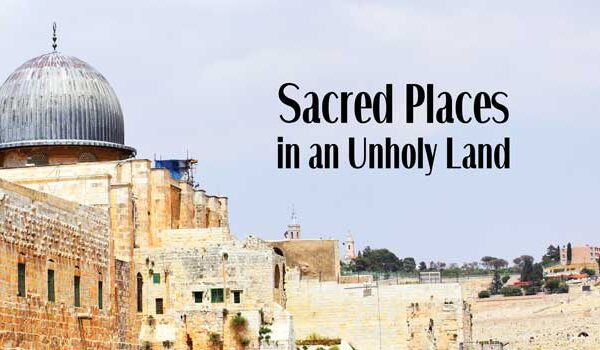
    Sacred buildings stand tall in Jerusalem in what is commonly described as the Holy Land. Yet, the systemic oppression of the Palestinian people debases the land, the people, and the principles of international law.

    A number of massacres took place starting in 1948, the most well-known one being in the village of Deir Yassin on April 9, 1948, where more than 100 civilian villagers were mercilessly killed. Those who have read widely about the origins of the state of Israel see no other reality than the Zionist intention to expand their territory and expel the indigenous population, using whatever means were necessary. Between 500 and 600 Palestinian villages were destroyed and roughly 750,000 Palestinians became refugees. The 1967 War has been characterized as a necessary war for Israel, defending itself from Egyptian forces mobilizing in the Sinai. Menachem Begin, prime minister in 1982, stated in a speech, “In June 1967, we had a choice. The Egyptian Army concentrations in the Sinai approaches (did) not prove that Nasser was really about to attack us. We must be honest with ourselves. We decided to attack him.”

    During this war, Israel occupied Jerusalem, the West Bank, Gaza, and the Syrian Golan Heights. The U.N. Security Council passed Resolution 242 on November 22, 1967, “Emphasizing the inadmissibility of the acquisition of territory by war and the need to work for a just and lasting peace in which every State in the area can live in security…” The resolution called for Israel to withdraw from Palestinian land taken during the war. In defiance of the United Nations and world opinion, Israel declared at that time that, “East Jerusalem is part of our eternal, undivided capital.” Its repeated failure to comply with dozens of U.N. resolutions over the last seven decades, as well as its ongoing human rights abuses, has resulted in Israel being viewed by critics as an apartheid state, one which is content to maintain an occupation without end.

    Demographics

    In 1881, before the rise of political Zionism, the Muslim population of Palestine was 86.6 percent, Christians constituted 9.1 percent of the population, and non-Zionist Jews represented only 2.8-4.3 percent. By 1947, the Jewish population had grown to 33 percent of Palestine’s population while the Muslims had fallen to 58 percent and Christians 7.9 percent. In 1947, Jews owned just 6 percent of the land. Palestinian refugees and their descendants are today more than seven million, many of whom remain in refugee camps, denied their right to return to their land and homes. Meanwhile, there are roughly 750,000 illegal settlers in occupied Palestine today, living in 250 settlements. The settlements are promoted, built, and paid for by the Israeli government. Jews are offered many incentives such as subsidized housing to go live in the settlements. The larger settlements have schools, medical centers, and malls. In contrast, as many as three generations of Muslim family members can be found existing in squalid, water-deprived camps where their physical mobility is often limited by in-camp curfews and armed patrols riding in machine gun mounted jeeps. Acts of civil disobedience and protest by children as young as 10 years old frequently result in arrest and detention.

    With an estimated population of over 2 million people, Gaza is recognized as being the most densely populated place on earth. It is frequently referred to as the largest “open-air prison” on the planet. The Israeli government has imposed a suffocating air, land, and sea blockade on Gaza since the early 1990s. The blockade has at times restricted shipments of food, baby formula, medicine, building supplies, and clothing from entering Gaza. Gaza and West Bank residents are subjected to random stoppages of potable water for hours or even days at a time by Israel. Fresh water is often diverted from Muslim-populated camps and villages to Jewish settlements, kibbutzim, and even water parks. The denial of access to clean drinking water and proper sanitation is a human rights violation.

    Jerusalem

    There is arguably no other city in the world like Jerusalem where the practitioners of the Abrahamic faiths, Judaism, Christianity, and Islam converge in their respective sacred, hallowed spaces to commune with the Divine. Haram al-Sharif (the Noble Sanctuary) is a 35-acre site and is for Muslims the third most sacred space in all of Islam, with the Kaabah in Makkah, Saudi Arabia and Masjidul Nabi (Mosque of Prophet Muhammad) in Madinah, Saudi Arabia being the first and the second. Masjidul Aqsa, located on the site in Jerusalem, is believed by all Muslims to be where Prophet Muhammad (peace be upon him) embarked on a Night Journey from Makkah to Jerusalem, returning to Makkah in one night after leading other noble prophets in prayer inside that sacred sanctuary. Before returning to Makkah on a winged animal named Buraq, Prophet Muhammad (pbuh) stood on a rock that is located inside the Dome of the Rock, journeyed through the seven heavens where he met, on different levels, various prophets including Moses, Abraham, and Jesus (peace be upon them all). Arriving in the highest level, Prophet Muhammad entered the Divine Presence and received the command about the daily prayers.

    The Jewish community refers to the same area as the Temple Mount. Jews believe that the first temple was built on the current site of al-Aqsa Mosque by Prophet Solomon in 957 BCE and that the Ten Commandments were in a special room on that site. Both Jews and Christians believe that Prophet Abraham (pbuh) offered to sacrifice his son Isaac (Islam teaches that it was Ishmael who was offered for sacrifice) to the Creator on the rock inside the Dome of the Rock. Within a relatively short distance of these sites is the Church of the Holy Sepulchre, the place where Christians believe that Jesus (pbuh) was crucified, buried, and ascended to the heavens after three days. The Wailing Wall, also called the Western Wall, abuts the Haram al-Sharif (Temple Mount). The Wailing Wall is the holiest place for Jews because of its proximity to the Temple Mount where they have not, until recently, been allowed to pray. Increasingly, Israeli settlers, accompanied by police, have been allowed to pray and even hold short services inside both Masjidul Aqsa and Dome of the Rock. This practice has caused increased tensions and caused a number of altercations between Jewish settlers and Muslim worshippers.

    Trump’s ‘Peace’ Plan

    On January 28, 2020, an about-to-be impeached president, Donald Trump, and a criminally indicted Israeli prime minister, Benjamin Netanyahu, announced what many believe to have been a dead on arrival plan for a two-state solution for Israel and Palestine. Trump’s son-in-law, Jared Kushner, is credited with helping to broker the Plan, a plan about which the Palestinians were never consulted. In an opinion piece in the New York Times, Nathan Thrall, a senior analyst with the International Crisis Group, wrote on January 29, “The Trump plan, much like the decades-long peace process that it crowns, gives Israel cover to perpetuate what is known as the status quo: Israel as the sole sovereign controlling the territory between the Jordan River and the Mediterranean Sea, depriving millions of stateless people of basic civil rights, restricting their movement, criminalizing speech that may harm ‘public order,’ jailing them in indefinite “administrative detention’ without trial or charge, and dispossessing them of their land — all while congressional leaders, the European Union and much of the rest of the world applaud and encourage this charade, solemnly expressing their commitment to the resumption of ‘meaningful negotiations.”

    Michael Lynk, U.N. Special Rapporteur on the situation in Palestinian Territories described the plan as being lopsided and that it will only entrench occupation. “The US plan offers a one and a half state solution. It is not a recipe for a just and durable peace, but rather it endorses the creation of a 21st century Bantustan in the Middle East” (Bantustans were the lands reserved for black South Africans during that nation’s apartheid era; the Bantustans had limited self-government). The proposed Palestinian state would be fragmented across several regions that are miles apart. The plan calls for new roads, tunnels, and bridges to connect the areas together. The plan proposes the Israeli annexation of the Jordan Valley, the breadbasket of the West Bank. Prior to the announcement, the Trump Administration had stopped all donations to the U.N. Relief and Works Agency for Palestine Refugees in the Near East (UNRWA) which provides services and aid to refugees; he also stopped aid to the Palestinian Authority. Michael Lynk continued, “The Palestinian statelet envisioned by the American plan would be a scattered territory, completely surrounded by Israel with no external borders, no control over its airspace, no right to defend its security, no geographical basis for a viable economy, no freedom of movement, and with no ability to complain to international judicial forums against Israel or the United States.”

    Sacred buildings stand tall in Jerusalem in what is commonly described as the Holy Land. Yet, the systemic oppression of the Palestinian people debases the land, the people, and the principles of international law.

  • Brett Kavanaugh and the Politics of White Privilege

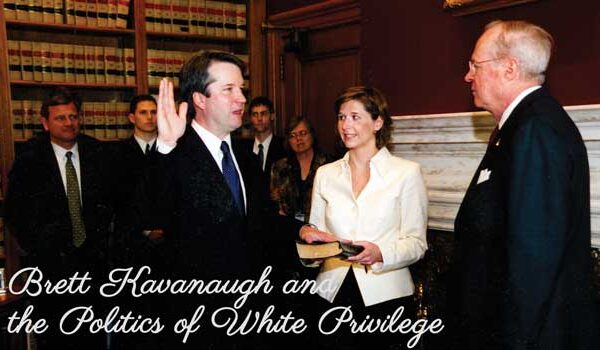
    Brett Kavanaugh and the Politics of White Privilege

    In 1787, delegates to the Constitutional Convention gathered in what was to become known as Independence Hall in Philadelphia to discuss the division of power between the executive and legislative branches of the United States government. From the spirited debates of the Constitutional Convention, the importance of a federal judiciary emerged, laying the groundwork for a third branch of the federal government. Article III of the U.S. Constitution in 1789 established the Supreme Court of the United States while the First United States Congress, meeting in Federal Hall in New York City, passed the Judiciary Act of 1789 that detailed the role, meeting place, and operational procedure of the newly created Federal Court. On February 2 through 10, 1790, the inaugural session of the Supreme Court convened in New York City’s Royal Exchange Building. The building doubled at the time as a covered marketplace. When the capital of the country was permanently moved from Philadelphia to Washington, DC in December 1800, the Supreme Court and the rest of the federal government found a permanent home in the newly-created national capital.
    Unlike members of the executive and legislative branches of the federal government, Supreme Court justices are nominated by the president and serve for life. The idea was that if the justices were not required to run for office, partisan influences and considerations would not affect their judicial rulings. The reality of this moral decision proved hollow almost from the very beginning of the Supreme Court. Associate Justice Samuel Chase, nominated by President George Washington, served on the Supreme Court from 1796 until his death in 1811. Chase was a member of America’s first political party, the Federalist Party. This party existed from the 1790s to 1816 and was considered pro-administration, socially conservative, and favored national over state governments. President Thomas Jefferson and his Republican allies targeted Chase for removal from the Supreme Court in 1804 for “acting in a partisan manner.” Jefferson and the Republicans in Congress wanted to minimize the influence of the Federalist Party, particularly in the judicial arena, but their thinly-veiled assault on Associate Justice Chase resulted in his impeachment by the United States House of Representatives in 1804. The U.S. Senate acquitted Chase, and he continued as an associate justice until his death.
    Partisan Politics and the Court
    Partisan politics have tainted the presidential nomination and congressional approval of future Supreme Court justices since the inception of the institution. To date, there have been 114 Supreme Court justices in our nation’s history and few, if any, have reached the bench untouched by considerations by presidents and Congress of their future impact on major social policy issues confronting the nation. Supreme Court justices are nominated and approved primarily based on the projection by the president and the majority party in Congress that the nominee will provide judicial reinforcement of their partisan agendas. A case in point is Associate Justice James Clark McReynolds. McReynolds was nominated to the Court by President Woodrow Wilson and served from 1914 until he retired in 1941. McReynolds was known as a bigot who spewed toxic vitriol mostly against Jews but also against Blacks. President Wilson was fundamentally an academic, an efficient administrator, and a racist. During his two terms as president, 1913-1921, Wilson transformed Washington, D.C. into one of the most segregated, racist cities in the country. In the racist McReynolds, Wilson found a kindred spirit. But unlike Wilson, McReynolds did nothing to disguise his animosity towards Jews and Blacks. During his 27 years as an associate justice on the Supreme Court, McReynolds refused to stand beside Associate Justice Lewis Brandeis who was Jewish, or to listen to a woman present a legal case. McReynolds relished his self-appointed role as the Court’s chief adversary against the jobs creation programs of the New Deal of Wilson’s predecessor, Franklin Delano Roosevelt.
    The fifth Chief Justice of the Supreme Court was Roger Taney, a former Federalist who switched to the Democratic Party. After supporting the successful presidential bids of Andrew Jackson in 1824 and 1828, Taney was appointed in 1831 by President Jackson as U.S. Attorney General and as Chief Justice of the Supreme Court in 1835. Jackson is recognized for his slaughter and persecution of Native Americans and as a slave owner who brutally beat his slaves, owning at least 150 slaves and co-owning with his son an additional 51. Taney’s accomplished judicial career was overshadowed by his leading role in the 1857 Dred Scott decision. He wanted to resolve the issue of slavery according to his own views, that the government was obligated to uphold and defend the institution of slavery. Dred Scott was an enslaved Missouri Black who made the legal claim in 1856 that he had attained his emancipation in the 1830s by living with another enslaver in the free state of Illinois and in a section of the Louisiana Territory that was exempt from slavery due to the Missouri Compromise. The Missouri Supreme Court overturned the lower court’s ruling that Scott was a free man. The Supreme Court of the United States accepted the case on appeal and ruled against Scott, that having lived in a free state and territory did not accord him his freedom, and that as an African slave, he was not a citizen and could not sue in federal court. The majority opinion, written by Chief Justice Taney stipulated that African Americans could never become citizens, and that “They had for more than a century been regarded as beings of an inferior order, and altogether unfit to associate with the white race either in social or political relations, and so far inferior that they had no rights which the white man was bound to respect, and that the negro might justly and lawfully be reduced to slavery for his benefit. He was bought and sold and treated as an ordinary article of merchandise and traffic whenever a profit could be made by it.” This was the overtly racist view of both Jackson and Taney.
    Past opinions and attitudes have never been exact predictors of how Supreme Court justice nominees will rule in the future, but all presidents have attempted to replace vacancies on the high court with men and women who are most likely to reflect their core values and views on topical issues of the day. For 180 years, only white male Protestants served on the Supreme Court of the United States. In the 229-year history of the Supreme Court, only four women have served on this august body— Sandra Day O’Connor, appointed by President Ronald Reagan in 1981; Ruth Bader Ginsburg, appointed by President Bill Clinton in 1993; Sonia Sotomayor, the first Supreme Court Justice of Latina descent, appointed by President Barak Obama in 2009; and Elena Kagan, also nominated by President Obama in 2010. It was not until 1967 that President Lyndon Johnson appointed the first African American Supreme Court Justice, Thurgood Marshall. Marshall, a distinguished and tireless civil rights attorney before his serving on the highest court in the land, was an associate justice of the Supreme Court from 1967 until 1991. The only other African American to serve as a Supreme Court Justice is Clarence Thomas, appointed by President H.W. Bush in 1991 after the retirement of Thurgood Marshall. Thomas is a conservative who rarely asks questions or otherwise speaks during sessions. He is the longest-serving current associate justice with over 27 years on the bench.
    The Nomination and Confirmation of Brett Kavanaugh
    In July 2018, Donald Trump nominated Brett Kavanaugh to become an associate justice of the Supreme Court. Kavanaugh, a well-respected conservative lawyer served from 2006 as a U.S. court of appeals judge for the District of Columbia circuit. The senate confirmed Kavanaugh in October of 2018 to become an associate justice of the Supreme Court. Kavanaugh is a member of the Federalist Society for Law and Public Policy Studies. The Federalist Society was formed in 1982 at University of Chicago Law School, Harvard Law School, and Yale Law School, to challenge what its members claimed to be American liberal ideology prevailing in law schools. The Federalist Society vets potential conservative candidates for federal judicial appointments and submits its approved list to the president. The list of Supreme Court justices whose names the group submitted for presidential consideration includes Supreme Court Chief Justice John Roberts, Supreme Court Justice Samuel Alito, Supreme Court Justice Clarence Thomas, and Supreme Court Justice Brett Kavanaugh. Kavanaugh and Trump share more than a penchant for an unregulated free enterprise system of economics. At least 13 women have accused President Trump of sexual harassment or sexual assault, all alleged to have taken place before his presidency. He is also known to have engaged in extramarital sexual encounters, and to have paid hundreds of thousands in hush money to at least two women to conceal these affairs, with allegations of hush money paid to additional women. Regarding Kavanaugh, Dr. Christine Blasey Ford called a Justice Department tip line to accuse Kavanaugh of attempted rape and sexual assault approximately 30 years ago when they were teenagers.
    Although two other women allege sexual misconduct by a drunken teenage Kavanaugh, only Dr. Christine Blasey Ford was permitted to testify before the Senate committee. Kavanaugh vehemently denied any sexual misconduct, claiming, “This whole two-week effort has been a calculated and orchestrated political hit, fueled with apparent pent-up anger about President Trump and the 2016 election, fear that has been unfairly stoked about my judicial record, revenge on behalf of the Clintons, and millions of dollars in money from outside left-wing opposition groups.” Of the four candidates interviewed by Trump for the Supreme Court nomination, Kavanaugh has in the past expressed the broadest interpretation concerning the scope and limits of presidential pardons, raising the question of whether a president can pardon himself or be subpoenaed to testify in a criminal case. This is certainly an issue of interest to a president who is, himself, being criminally investigated, and has already seen six of his inner circle members pleading guilty or being convicted of crimes including financial fraud, conspiracy against the United States, and lying to the FBI.
    The strident tone of Kavanaugh’s denial of the charges leveled against him by Ford and the two other women garnered considerable opposition to his approval. John Paul Stevens, who formerly served as a Supreme Court justice for 35 years, questioned whether Kavanaugh had the requisite temperament to perform on the highest court in the land. About Kavanaugh being confirmed, Stevens said, “I feel his performance in the hearings ultimately changed my mind.” Stevens noted that critics of Kavanaugh “suggest that he has demonstrated a potential bias involving enough potential litigants before the court that he would not be able to perform his full responsibilities.” Stevens went on to say, “And I think there is merit in that criticism and that the senators should really pay attention to it.” Over 2,400 law professors signed a letter opposing his ascension to the Supreme Court based on his performance during the hearings.
    Both Trump and Kavanaugh exude a sense of superiority and entitlement, especially with regard to women. When accused of sexual misconduct, Trump waves it off as if it didn’t happen, is nothing of consequence, or was, in fact, part of his privilege as a celebrity and a wealthy man. Kavanaugh, on the other hand, reacts to accusation of sexual misconduct with indignation, as if it were impossible that someone of his social standing, hard competitive drive, and accomplishments could be accused of anything. He spoke in his confirmation hearing testimony about his prestigious prep school education, his two Yale University degrees, and numerous other self-styled accolades including his time as captain of the football team. His words and indignant attitude conveyed that his prestigious life precluded belief that he was guilty of the accusations against him. Whether Kavanaugh possesses the capacity to render impartial judgments as a member of the Supreme Court is a moot point since he ultimately prevailed in the confirmation process.
    White Privilege Must No Longer Hold Sway
    Exaggerated, if not cartoonish, public displays of white male privilege have sadly become commonplace since the advent of the Trump Administration. White privilege, particularly for white males, is not an invention of Trump, Kavanaugh, or even the modern era. The U.S. Constitution is predicated on white male privilege. The framers of the U.S. Constitution were mostly British aristocrats or their descendants who fashioned a system of economic and political power distribution that was to be the near-exclusive domain of white males, much as it had been in Britain. Voting was restricted to white male property owners.
    White females were not given the ballot in the United States until the Women’s Suffrage Movement pressured Congress to pass the 19th amendment to the U.S. Constitution that granted women the right to vote. The Snyder Act of 1924 granted Native Americans citizenship and the presumptive right to vote. As late as 1948, however, Native Americans could not vote in New Mexico and Arizona. The passage of the Voting Rights Act of 1965 prohibited racial discrimination in voting. Millions of African Americans, Native Americans, and other non-white citizens finally had the legal barriers removed that had blocked them from casting their ballots in municipal, state, and national elections. However, Southern states devised devious requirements to prohibit African Americans from voting such as poll taxes and onsite exams on the U.S. Constitution. The Ku Klux Klan and other racists used intimidation and violence to obstruct voting. For most of American history, voting, running for public office, and petitioning the court for judicial relief has been the near-exclusive privilege of white males. Currently, in the United States, women earn on average eighty cents to every one dollar earned by her male counterpart. According to a recent report in USA Today, this gender pay disparity accounts for $513 billion in lost wages for female workers every year.
    The United States has reached a pivotal moment in its relatively young existence as a nation. The clarion call for a moral revolution, after 242 years, must resonate in hearts across this nation as championed by the Poor Peoples Campaign lead by Dr. William Barber, III if the country is to ever achieve its place as leader of the free world. Every nation/empire reaches a point of diminishing returns whenever fear and brute force is needed to guarantee a compliant citizenry. America is no longer a nation of European immigrants wielding some self-proclaimed superiority and privilege over Native Americans, Mexicans, and enslaved Africans as it was during the establishment of the country. The destructive disposition of white privilege can no longer hold sway if this multi-racial, multi-ethnic, multi-faith mosaic of American people is to realize its full potential as a land of justice and opportunity.

  • Interview: Javaid Siddiqi

    Interview: Javaid Siddiqi

    The following interview with ICNA President Javaid Siddiqi was conducted by Imam Khalid Griggs. Dedicated to Islamic service
    and dawah, he also serves as Chief Operating Officer for Helping Hand USA and previously held the
    office of ICNA Vice President for Tarbiyah.

    1. How were you first made aware of ICNA and what factors influenced you to become a member of its General Assembly (MGA)?

    My parents have long been associated with the work of Islamic movements for decades. When my father migrated to the United States, one of his first efforts was to make contact with brothers who were active in Islamic activities and work in America. My formal introduction to ICNA was in the late 1990s. I was extremely impressed by the sense of brotherhood that existed among members of this organization and felt a deep connection to the work and its membership. I studied the charter and bylaws of the organization and worked very closely with members of ICNA’s General Assembly. ICNA’s mission and vision resonated clearly with the mission entrusted to the ummah of Muhammad (pbuh), which is, through education and service, inviting mankind to the worship of one God. The combination of these key factors played a central role in my decision to become an MGA of ICNA.

    2. What have been some of your organizational responsibilities over the years? And, through the prism of these duties, what changes have you seen in the membership and support base of ICNA?

    Over the years, I have served in a variety of leadership roles at the local, regional, and national levels. What I feel is important, though, and one of the most important and distinguishing features of the organization, is the practice of “not desiring or seeking leadership roles or positions.” This practice has been adopted in accordance with Islamic principles and teachings of the Prophet Muhammad (pbuh) to promote an environment of volunteerism and service to God and community. Members of the organization do not seek, and neither desire nor campaign, for leadership positions. Rather, members are nominated or elected based on their commitment to the cause, capability, experience, and skills. This model stands out in today’s cultural and political environment where campaigning and self-promotion by candidates is the norm. Once elected for any position, members mostly serve in volunteer positions and consider this as a religious duty, a responsibility for which they are accountable before God. I believe this Islamic model is a mature and moral alternative to the current mode of campaigning that is self-centered and often ruthless competition, dominated by mutual bashing by candidates.

    Over the years, I have witnessed an always evolving, committed and enthusiastic membership base that subscribes to the vision and mission of the organization. It is exciting to see the expansion we are experiencing but feel much more can be done to share Islam with everyone in America. It is humbling to see the trust and support ICNA has received from the community at large. In the 1980s and ‘90s, the majority of the membership were immigrants to the United States; but in the last 20 years, young men and women who have been born and raised in America have joined the ranks of the organization. ICNA’s social service and relief projects created a perfect opportunity for Muslims who may not have identified themselves as religious-minded but saw service to humanity as a duty. So many became volunteers and supporters of these important projects. This is still a work in progress and we must do more to deepen our roots within the Muslim community. I’m confident that with the help of Allah and the dedication and sincerity of our brothers and sisters, we will be able to share the message of Islam, and its solutions to the challenges faced by humanity, to every corner of this continent.

    3. To what degree do you think changes in the socio-political landscape of America have influenced the programmatic thrust, emphasis, and services of ICNA?

    ICNA’s program and methodology are based upon the teachings of Quran and Sunnah of Prophet Muhammad (pbuh). I believe the similarities in the challenges faced by the early Muslims during the time of Prophet Muhammad (pbuh) and the Muslim community in America today provide an amazing blueprint for success. ICNA’s dawah projects, WhyIslam and Gainpeace, provide the backbone of dawah-related activities. These projects — through an online presence, a network of dedicated volunteers, highway billboards, 24/7 toll free hotlines, and publications — present the Muslim message and invitation to the truth and peace of Islam.

    The rise in Islamophobia over the past decade, as well as the need to offer the Islamic narrative to social challenges in society, have provided the thrust to expedite ICNA’s efforts to be actively involved in the social justice movement and, hence, the birth of ICNA’s Council for Social Justice (CSJ). The council has established several areas of focus: family breakdown, structural racism, global injustice, hunger/poverty/inequality, injustice to indigenous people, Islamophobia, and unjust immigration policies. Similarly, the fight against hunger and poverty and Islam’s teachings about the rights of neighbors, the needy, and the poor in our communities propelled us to establish ICNA’s domestic relief efforts in the form of ICNA Relief. The work of ICNA Relief is one of the most beautiful manifestations of what Islam stands for, and clearly sends the message that Muslims care! We realize the tide of negative propaganda against Islam and Muslims has risen to unprecedented levels, but we truly feel that intensifying our efforts of outreach, through dawah and service, is the best way to educate our fellow Americans about Islam and its beautiful way of life. Our social service projects at home and abroad show that Muslims are active contributors to the well-being of people and societies. We feel the pain and suffering of humanity, and based on the teachings of Islam, continually strive to look beyond our own self-interests. Our social justice program is designed to bring awareness to all forms of injustice in society. The list is long.

    4. In your opinion, has ICNA’s response to the needs of the larger Muslim community been sufficient?

    Over the years, ICNA has launched projects designed to address the needs of every segment of the community and family. ICNA Sisters, an organization dedicated to women, has been busy transforming the lives of our mothers, sisters, wives, and daughters through education, organization, and service. Young Muslims (brothers and sisters) is organized to address the needs of our youth, starting at an early age, to provide a safe, educational, and enjoyable environment for their development.

    In our recent Shura retreat in September, we took a pause to reflect on our past 50 years and evaluate our developing needs. It was apparent that despite our efforts, a lot more needs to be done to address the needs of the Muslim community. We can’t consider ourselves immune from the harmful aspects of the environment around us. The challenges of broken families, troubled marriages, divorce, drug abuse, and mental health issues are affecting the Muslim community in the same way the larger society is affected. I feel ICNA has done a great job creating model organizations to address a variety of challenges, but that’s not enough. We need everyone to participate in this effort. These challenges are bigger than one organization. So, for example, the existing availability of Muslim counselors or matrimonial services is not able to keep up with the demands. Complicating matters is that issues related to mental illness are often avoided in our communities due to cultural stigmas and, therefore, don’t receive appropriate attention. There is a dire need for many more Muslim mental health professionals. The time is long overdue for Muslims to forthrightly recognize these issues and brainstorm how best to address them. I’m confident with an integrated and unified approach these issues can be addressed, insha’Allah.

    5. ICNA classifies itself as an integral part of the Islamic movement, not the only one. What mindset underlies this self-designation?

    We feel that our role is to complement the efforts of many other Muslim organizations who seek to
    provide leadership to the Muslim community. We recognize and appreciate the efforts of mainstream Muslim organizations who are providing leadership in this space and are committed to working with them in a cooperative manner, not in some kind of petty competition with them. We believe that our role is to unite the community, and therefore we seek partnerships, staying far away from an isolationist mentality, for we are clear that we do not “know it all.”

    Our mission and vision outline what we believe in and how we intend to accomplish that. Every individual who subscribes to these principles is our brother or sister in this journey. We are confident that every Muslim who believes in Allah and the final Prophet will see our vision and mission as their own vision and mission. We believe that Quran and Sunnah are the two primary sources that provide a holistic view for every aspect of life. We fully subscribe to the calling of Quran to “believe in Allah and do good deeds.” ICNA feels that its efforts and projects must provide an opportunity for every member to learn and gain knowledge while exercising that knowledge through action and activism.

    6. What is ICNA’s relationship to the global Islamic movement and how has that changed, if at all, over the years?

    We continue to feel that our organization is an integral part of the global Islamic movement. We aim to collaborate, cooperate, and share. The changing socio-political climate around the world and realities on the ground have hampered and slowed down these efforts to collaborate and cooperate. I believe that the changing dynamics around us have forced Islamic movements to redefine themselves to address their local needs. I wish we could have established closer relations and more practical exchange of ideas and solutions. Leadership visits do happen from time to time but not in systematic and effective ways.

    7. This year, 2018, commemorates 50 years of ICNA’s continuous organizational existence. In your opinion, what have been some of the most significant accomplishments and disappointments during this period?

    I would like to thank Allah (SWT) who has allowed us to reach this milestone. We are humbled and grateful. First let me mention a couple of areas for improvement. The establishment of professional educational institutions has been an area in which we have not yet been able to make any significant progress. There is a demonstrable need for an educational institution of higher Islamic learning for our youth and adults, but we have not yet found a workable means to achieve this. In recent times, more organizations have joined the efforts to address this need and meet this challenge, but options right now remain limited. Also, ICNA has been slow in developing content for North America in the various local languages. I feel we have a lot of work to do in this area.

    As to significant accomplishments, in addition to the projects that ICNA has launched over the years, we feel that ICNA has been able to create different organizational models. For example, in dawah, we have learned tremendously over the years and have successfully established “the needs” of “dawah” and how to address them. Similarly, our conventions continue to grow year after year, alhamdullilah. I feel, we have been able to create a model for how and what to address through these conventions. As to social services in this country, I’m thankful to Allah (SWT) for allowing us to establish a good working model for serving the society and providing relief and support wherever it is needed. Coming to understand in comprehensive ways what is needed and how to best address these needs has been part of the ever-expanding domain of knowledge we have gained over the years. So, when I look at the past 50 years, I feel we have made a lot of progress. At the same time, we are dedicated to continual growth and
    improvement, with the help of Allah (SWT).