بسم الله الرحمن الرحيم

Author: Imam Khalid Griggs

  • Patriotism: ‘Last Refuge of Scoundrels’

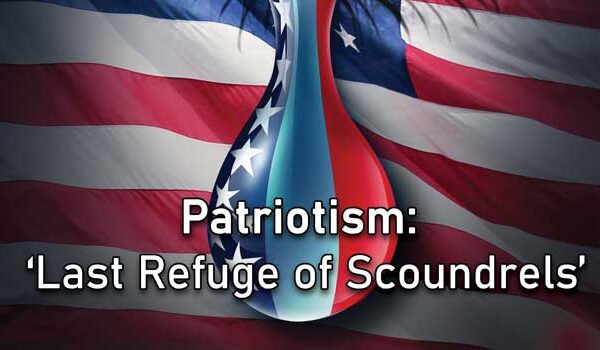
    Patriotism: ‘Last Refuge of Scoundrels’

    Since the generation of the U.S. Founding Fathers, the identifying qualities of a Patriot have evolved. At the time of the American Revolution, a Patriot was generally considered anyone who expressed disdain for the continued rule of King George III of England over the colonies. Colonials choosing to maintain a status quo relationship with British rule, prior to the American Revolution, were aptly referred to as Loyalists. As the fledgling country struggled with formulating a national identity independent from its former colonizer, the United States, ironically, wrote into its founding documents one of the very same principles that led to its violent rejection of British rule— the exclusive right of the aristocratic class to rule over the citizenry. Rather than establish a monarchy like in Britain, American Founding Fathers restricted participation in the electoral process to White, property-owning males. Most of the immigrants from Europe and enslaved Africans were eliminated from the electoral process by one or both statutory requirements.

    This nation must never accept patriotism being defined by freedom-denying, . . .

    In the ensuing years, “Patriot” became a rather generic label for any American citizen who devoutly, sometimes blindly, accepted the federal government’s designation of individuals or ideological groupings as “enemies of the state.” American Patriots were once identified by the federal government as mostly northern citizens who opposed slavery and its westward continental expansion. With the establishment of the Confederacy, 1861-1865, pro-slavery southerners considered themselves “true Patriots” as they conjoined the forcibly imposed practices of the trans-Atlantic slave trade with a misapplication of Biblical text to justify that despicable institution. The practice of chattel slavery in the United States presented a virtually unbridgeable dichotomy between pro-slavery defenders and abolitionists concerning the “Patriot” label. Abolitionists vociferously condemned slavery as being incompatible with American values. Apologists of slavery promoted slavery as a patriotic virtue.

    Following the success of the Russian Bolshevist Revolution in 1917, opposition to Communism became the barometer by which American patriotism was measured. Wisconsin Senator Joseph McCarthy single-handedly drove the nation into an anti-Communism hysteria with his baseless allegations that Soviet spies and sympathizers had infiltrated every segment of American society. From 1950 until his death in 1957, no American was safe from being maligned by McCarthy and his political minions as Communists or Communist sympathizers. Thousands of law-abiding American citizens had their careers, families, personal relationships, and reputations ruined by the demagogic hysteria of the McCarthy era. From 1945 to 1990, the Soviet Union-led Communist bloc and the United States-led Western bloc were engaged in the Cold War, a hostile ideological battle for political hegemony. During this period, J. Edgar Hoover, the feared, over-reaching director of the FBI, insisted that public opposition to Communism was a litmus test for whether an American was aloyal citizen.

    Since at least World War II, support for our nation’s wars has been primarily predicated on appealing to the patriotic sentiments of the American public. Jingoistic propaganda and unquestioning media support of war have created a national consciousness that is supportive of militancy. Yet, millions gathered, to no avail, across the nation in 2003 in opposition to President George W. Bush’s intention to occupy the oil-rich sovereign nation of Iraq.

    The number of active anti-government militia groups in America has proliferated since the election of President Obama in 2008. Of the 998 anti-government militia groups listed in 2015 by the Southern Poverty Law Center, most of these groups identify themselves as “Patriots.” These white supremacist groups have appropriated the Patriot label to the extent that the term increasingly becomes synonymous in popular culture with white supremacists and anti-government xenophobes.

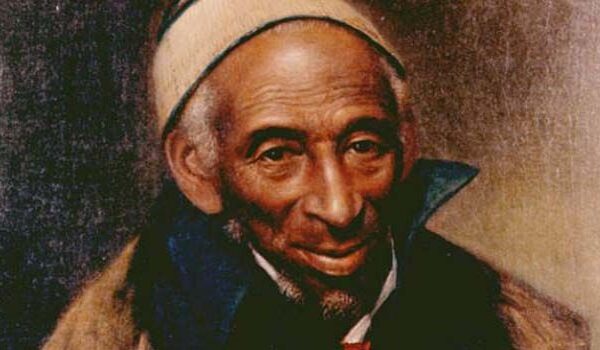
    Few minority populations in the U.S. have had a more complicated relationship with this country than the Muslim community, today being more distrusted and vilified as ever.Yet, according to the Department of Defense, there are presently 5,896 self-identified Muslims serving in the U.S. armed forces. There is empirical data to suggest that Muslims have fought in defense of this country in every war since the Revolutionary War. The first nation to recognize the newly-independent United States of America was the Muslim country of Morocco, ruled at that time by King Muhammad Abdullah. Included in the Continental Army serving under General George Washington were Bampett Muhammad, Salem Poor, and Benjamin Ishmael. Yusuf bin Ali (Joseph Benehaley) fought alongside General Sumpter in the Continental Army. Muhammad Ali ibn Said (Nicolas Said) was a member of the historic 55th All-Colored Regiment from Boston that fought in the Civil War in the Union Army. In more recent times, Chaplain Yusuf Yee served this country as a chaplain to Muslim detainees at Guantanamo Bay, Cuba, one of the most difficult assignments in the world.

    In 1775, the English writer and social critic, Dr. Samuel Johnson, was quoted as saying, “Patriotism is the last refuge of the scoundrel.” This nation must never accept patriotism being defined by freedom-denying, bigoted scoundrels draping themselves in the American or Confederate flag to deflect from their true intentions to deny life, liberty, and the pursuit of happiness to some of America’s citizens.

  • America’s ‘Peculiar Institution’: Slavery and the Making of a Nation

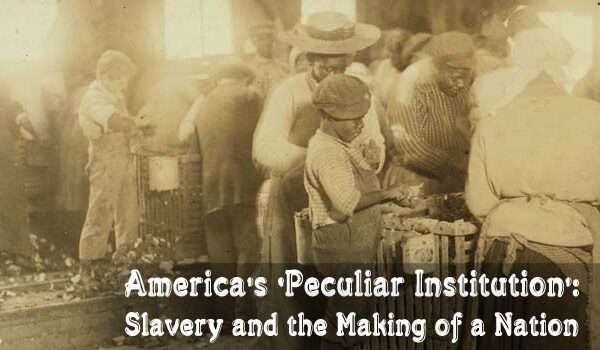
    America’s ‘Peculiar Institution’: Slavery and the Making of a Nation

    [button size=medium style=less_round color=gray align=none url=http://hipcast.com/podcast/HrrzzsXs]Click here to listen audio podcast of this article[/button]

    Slavery, in all its hideous iterations throughout history, was, paradoxically, the outgrowth of “civilization.” In more primitive groupings of human beings such as hunters/gatherers or subsistence farmers, slaves would have been viewed as burdensome additions to an already tenuous existence. There was no hidden or apparent advantage in being responsible for the food and shelter of another person when survival, itself, was difficult and uncertain. With the development of villages and towns, along with the establishment of commercial farming and craft development, cheap or unpaid workers became desirable. There were many ways for a free person to end up as a slave, including inability to pay off a debt, being captured by adversaries during raids, kidnappings, or wars. Slaves and their societal status have been outlined in ancient legal works such as the Babylonian Code of Hammurabi, and in religious texts such as the Old Testament, the Quran, and the authentic traditions of Prophet Muhammad (pbuh). Slavery has also been chronicled in the practices of ancient Egypt, Greece, and Rome. With the advent of Islam, all justifications for enslaving another human being were eliminated except for prisoners of war. However, Muslims were commanded to feed them the same food as they ate, to clothe them as they were clothed, and not to overburden them.

    Slavery in the U.S. was more brutal, and culturally and religiously destructive than its counterparts in the Caribbean, Central and South America where slavers did not routinely separate slaves of the same tribe, family, language, or religion.

    Throughout the annals of history, slavery was mostly a life-long condition of brutal bondage with escape being an offense punishable by death. The Old Testament stipulates that if a person from the Hebrew tribes had a Hebrew slave, after six years that slave was to be released. That did not apply to “foreigners,” meaning anyone who was not a Hebrew, and enslaved persons from other nations or temporary residents living among the Hebrew people, could be enslaved for life. The Quran and Sunnah of Prophet Muhammad (pbuh) provided any and all slaves the potential for freedom, and those who owned slaves were given religious incentives to liberate them. In a narration contained in Sahih Bukhari, narrated by Abu Hurayra, The Prophet (pbuh) said, “Whoever frees a Muslim slave, Allah will save all the parts of his body from the (Hell) Fire as he has freed the body parts of the slave.”

    The Transatlantic Slave Trade – Unrivaled Brutality

    Of all the historical periods of slavery, with its cruelty and exploitation for personal and economic gain, the transatlantic slave trade is perhaps unrivaled in its brutality, and its continuing detriment to African-American social and economic life in the U.S. is highly visible. The first recorded shipment of African slaves to the Americas was captained by Sir John Hawkins, a pirate, merchant, British naval commander, and slave trader. In October 1562, John Hawkins set sail from England to Sierra Leone on a 700-ton ship purchased by King Henry VIII and loaned to him by Queen Elizabeth. Hawkins named the vessel “The Good Ship Jesus,” despite his plundering and pirating and, ironically, he was known as a religious gentleman who insisted that each member of his crew “serve God daily.”

    Black slaves built the White House and U.S. Congress, as well as many university buildings in the Northeast and South.

    Hawkins was aware of the Spanish and Portuguese need for African slaves to transport to the New World to labor in their newly colonized lands in the Western Hemisphere. Upon arriving in Sierra Leone, Hawkins and his crew joined in the country’s native wars, and at one point set fire to a village of 8,000 inhabitants. Five hundred natives of Sierra Leone were captured by Hawkins and his men, “partly by the sword, and partly by other means,” according to Hawkins own description. One of the other means was to deceive the unsuspecting Africans by telling them that if they came with him peacefully, without resistance, he guaranteed for them free land and riches. Queen Elizabeth gave her permission for Hawkins to transport Africans to the New World “only if they did so by their own free consent.”

    Hawkins was not yet done as he pirated a Portuguese ship, commandeering 70,000 pieces of gold. His human cargo of 500 Africans was smuggled in and sold on the island of the Dominican Republic, a Spanish possession. The official policy of the Spanish government at that time was that slavery was not allowed in their Western possessions. The 1531 decree by King Ferdinand and Queen Isabella forbidding the presence of African Muslims in the West was officially still in effect, but rarely enforced. Slaving was a profitable enterprise. While the Spanish government offered a weak pretense that they did not want slaves in the West, the British played no such charade. In 1619, a Dutch ship, the White Lion, pirated 20 enslaved Africans from a Spanish ship. Landing in the English colony of Jamestown, Virginia for repairs, the Dutch sailors sold the slaves to the colony in exchange for food and supplies.

    Chattel Slavery and Tobacco

    The newly-arrived slaves in Jamestown started a 240-year love affair between the land that was to become the United States of America and the immensely profitable institution of chattel slavery. The British immediately understood the profitability of tobacco once the Native Americans introduced them to smoking and the medicinal use of the plant. Virginia was an ideal climate for tobacco production. After receiving a favorable review of tobacco from England, the British in Virginia proceeded to drive Native Americans off their ancestral homelands so that tobacco and British colonizers could replace them. Although the British, Spanish, and Portuguese attempted to enslave Native Americans, it was quickly determined that Native Americans were not easily subjugated. Foremost among the reasons was that Native Americans had the advantage of intimately knowing the land. It was virtually impossible to capture them once they escaped their bondage. Secondly, the Europeans brought diseases against which the Native Americans had no immunity, and over a short period of interaction with Europeans, disease decimated their once prolific numbers, killing up to 95 percent of the population.

    White supremacy and racism, and its despicable outgrowth, chattel slavery, fueled the economic engine of this nation’s past.

    The colonization of North American territory in the late 1500s, 1600s, and 1700s by the British, Spanish, and French corresponded with the rapidly developing slave population in this country. As the British demand for tobacco increased, tobacco growing states like Virginia, North and South Carolina, and Georgia increased their growing and production. Planting and harvesting tobacco were labor-intensive operations that motivated an ever-rising demand from planters for slave labor. The transatlantic slave trade also generated a new class of slavery-related jobs in the colonies, including brokers, patty rollers (slave patrols), and overseers, as well as a new class — ultra-wealthy landowners who planted vast tracts of tobacco. This wealthy planter class (“planter” generally defined as an owner of property and 20 or more slaves) included most of the “Founding Fathers” of the American republic including George Washington, Thomas Jefferson, and James Madison. As a result, the American Constitution and the Declaration of Independence, undoubtedly beautifully-worded documents, elucidate the rights and privileges of White, male land owners, including the right to vote, hold public office, or serve on juries. Excluded from the Constitutional assurance of these rights were those who did not own property, as well as females, African Americans, Native Americans, and non-White immigrants. For the purpose of taxation, African slaves were designated three-fifths of a human being.

    When the United States entered the business of transporting human cargo in the bowels of slave ships from Africa to America, the cruelness of the slave trade exponentially increased. American slavers preferred the less expensive markets in Central or East Africa to the more common areas on the coast of West African. To increase their profit margins, American slavers also specialized in capturing and buying African children since more of them could be crammed in holding areas below deck. Slavery in the U.S. was more brutal, and culturally and religiously destructive than its counterparts in the Caribbean, Central and South America where slavers did not routinely separate slaves of the same tribe, family, language, or religion. Thus, In Brazil, the mainly Muslim slaves held on to their religious beliefs and practices, and among them were very learned Muslims. A well-known rebellion took place in Bahia, a northeastern state, in 1835. The Muslim slaves organized a revolt against their enslavers, calling it a jihad. Their struggle to obtain freedom was short-lived, but it shows the critical mass of Muslims that existed in Bahia at the time.

    The Cotton Gin – Growing Profits and Demand for More Slaves

    The last two decades of the 1700s, following the American Revolution and the founding of the United States of America, saw the abolition of slavery in a number of Northern states, and the abolitionist movement grew. George Washington, first president of the U.S., had owned 318 slaves at the highest point, and had sanctioned slavery throughout most of his life. But in a letter to his secretary and close friend Tobias Lear in 1794, five years before his death, Washington wrote about selling a lot of his land in the Southern state of Virginia. “I have another motive,” he wrote, that “is indeed more powerful than all the rest, namely to liberate a certain species of property which I possess, very repugnantly to my own feelings; but which imperious necessity compels.” The more industrialized North was naturally less dependent on slave labor than the mostly agriculture South. Northern states, however, were the primary brokers of Southern products to be distributed on the world market. In addition to cotton, the South was the primary producer of agricultural products for export to England. As cotton production increased, primarily due to the needs of England, the capacity of the South to meet demands seemed doubtful at best. Growing and picking cotton was not only labor intensive, but required tedious and time-consuming effort to separate the sticky seeds from the cotton.

    In 1793, a Massachusetts farmer named Eli Whitney invented a machine, the cotton gin, which would revolutionize cotton production. Before the cotton gin, it took 10 hours to produce one pound of cotton. The cotton gin would eventually produce 1,000 pounds a day at a fraction of the cost. This revolutionary invention increased cotton production from 138,000 pounds a year to 1,600,000 pounds. “King Cotton” would grow to become 50-60 percent of the new nation’s exports. Before the cotton gin, the full production of cotton, by hand, could not be done quickly and cotton was not profitable. When the cotton gin quickened and increased production, slavers needed greater numbers of slaves in the field to keep up with demand. So the cotton gin not only made cotton growing profitable, it further entrenched slavery as a Southern profit-making institution.

    In fact, chattel slavery was the engine that ran the economic expansion during the 17th and 18th centuries. Thomas Jefferson pushed Congress to outlaw the importation of slaves into the United States after January 1, 1808. This action was of great benefit to his home state of Virginia since it would become the slave breeding capital of the country after this legislation became law. Northern businessmen invested heavily in slavery, and the profitable buying and selling of African men, women, and children was augmented by the financial instruments that were created to facilitate and capitalize on slavery — “bonds backed by asset securitization,” the assets being the slaves themselves. Thus, human beings were used as collateral by the slave holders and traders to borrow money from banks.

    In fact, many major corporations, including Lehman Brothers, JP Morgan Chase, Brown Brothers Harriman, Barclays, and Wachovia, have acknowledged and apologized for their involvement and profiteering from the slave trade. With the ascension of the South’s “King Cotton,” the balance of power significantly shifted from the North to the South.

    Slavery: ‘Our Peculiar Institution’

    Slavery in the United States was a near-perfect confluence of the country’s push for economic expansion, religious justification for slavery (Genesis 9:20-27 for example), legal sanctioning and institutionalizing of White supremacy, and pseudo-scientific theories of the day that posited the inferiority of non-White races.

    The dehumanizing, exploitation, and brutality against Black slaves in the United States represented one of the longest, most sustained assaults on human life and dignity in history. Slaves were characterized as sub-human, savages to be trapped like animals and brought to America to serve, without compensation, the interests of White supremacy. Black slaves built the White House and U.S. Congress, as well as many university buildings in the Northeast and South. In his monumental book, “Race, Slavery, and the Troubled History of America’s Universities,” Craig Steven Wilder writes, “American colleges were not innocent or passive beneficiaries of conquest and colonial slavery…The academy never stood apart from American slavery, in fact, it stood beside the church and state as the third pillar of a civilization built on bondage.” White supremacy and racism, and its despicable outgrowth, chattel slavery, fueled the economic engine of this nation’s past. In countless ways, the discrimination, brutality, and denial of rights continue into the present.

    Those who participated in and profited from slavery euphemistically referred to it as “Our Peculiar Institution.” Better to call a spade a spade and realize that slavery was America’s “vile institution.” The racism at its core monopolized and kept power in White hands. It supported and vitalized wealth building for Whites only, and created a seemingly permanent underclass of African Americans whose ancestors toiled and suffered so that prosperity and power and privilege for the dominant class could be built upon their backs.

  • Do You Know America’s First Muslims?

    Do You Know America’s First Muslims?

    [button size=medium style=less_round color=gray align=none url=http://hipcast.com/podcast/HW2v7KKs]Click here to listen audio podcast of this article[/button]


    Estevanico (Stephen the Moor)

    Estevanico, also known as Stephen the Moor, was born in Morocco around 1503 and raised as a Muslim. He was sold into slavery and in 1527 his owner, Andres de Dorantes, took him on an expedition to Florida, along with six hundred colonists and soldiers. During his time with Dorantes, Estevanico converted to Christianity. After encountering hostile Native Americans, the surviving contingent of colonists and soldiers escaped by barge, sailing toward Mexico, but ended up in Texas. After being enslaved by Indians, only four men survived — Estevanico, Dorantes, Cabeza de Vaca, and Alonso Castillo. These four traveled for eight years across northern New Spain (present-day U.S. Southwest and northern Mexico), reaching Spanish forces in Mexico City in 1536. He is said to have been the first African man in North America.

    Omar ibn Sayyid

    Omar ibn Sayyid was born around 1770 in what is present-day Senegal. He was an educated Muslim man who was kidnapped from his home at age 37, transported to South Carolina and sold into slavery, remaining enslaved until he died, in 1864. He converted to Christianity while a slave, but wrote heartfelt reminiscences of his early days as a Muslim and some scholars maintain that he stayed true to Islam throughout his life. He wrote 14 manuscripts, all in Arabic, including his autobiography which begins with verses from the Quran.

    Adbul Rahman Ibrahima Sori

    A man who spent 40 years as a slave in Natchez, Mississippi, Abdul Rahman Ibrahima Sori, was born in 1762, a prince from the Kingdom of Futa Jallon, a territory in present-day Republic of Guinea. He was sold into slavery in 1788, at the age of 26. Upon being freed in 1829, he and his wife set sail for Timbuktu, his birthplace, but they made it only as far as the American colony in Monrovia, Liberia on the west coast of Africa. He died soon after arriving, while his nine children remained enslaved in America. His remarkable story is told in a 2008 film, “Prince Among Slaves” which includes the reunion of Abdul-Rahman’s descendants, from both Liberia and the U.S., in 2003.

    Abu Bakr Al-Siddiq

    From a family of learned and prosperous Muslims in Mandingo (now Ghana), Abu Bakr Al-Siddiq was taken as a prisoner of war at the age of 15, sold into slavery and sent to Jamaica in 1807 to work on a plantation. He was forced to change his name and convert to Christianity, but he always thought of himself as Abu Bakr, maintained his faith as a Muslim, and years later wrote a short autobiography in Arabic. Abu Bakr compiled detailed lists of trade routes in Western Africa, and some of his works were later translated into English.

    Salih Bilali

    Most of his life was spent as a slave on St. Simon’s Island, Georgia, a long way from where Salih Bilali was born, in Massina (present-day Mali) in the 1770s. Then he was kidnapped and sold into slavery around 12 years old, ending up in the Bahamas where he worked as a slave until he was purchased by the Couper family of Georgia. Bilali was characterized by his owner’s son as the most religious man he had ever known, stating that Bilali’s last words before his death were “Allah is God and Mohammed his prophet.” (The above image is an artist’s rendering of a native of Hausa, said to resemble Salih Bilai. Image from African Muslims in Antebellum America.)

    Bilali Mohamed

    Bilali Mohamed was born in Timbo, Guinea around 1770. His family was Muslim and highly educated. He was enslaved as a teenager and taken to the Caribbean where he worked for 10 years, and then sold to a planter on Solepo Island, Georgia. Among the slaves, Bilali was seen as a leader and a teacher and some of his writings are preserved in the Georgia State Library in Atlanta. Upon his death in 1857, a 13-page Arabic manuscript was found and it has come to be called the Bilali Mohamed Document. It is a statement of Islamic beliefs. Bilali is also known for motivating his fellow slaves during the War of 1812 as they defended the island from the British. (Image of Bilali Mohamed descendant, Shad Hall of Sapelo. Photo circa 1930s, from African Muslims in Antebellum America.)

    Ayuba bin Sulaiman

    Ayuba bin Sulaiman, known in Europe and the U.S. as Job Ben Solomon, was born in 1701 of a religious Muslim family, was well-educated, and became a merchant. He was captured and sold into slavery in 1731 and sent to Annapolis, Maryland where he spent two years on a tobacco plantation. He was briefly imprisoned after attempting to escape from the plantation. He was later purchased by a British man and granted his freedom, and in 1734 he sailed back to Africa where he stayed until he died, in his seventies. He was known for his intelligence and conveyed a great pride in his African and Muslim identity.

    Mahommah Gardo Baquaqua

    Born around 1830 in Djougou (now Benin in West Africa), Mahommah Gardo Baquaqua was from a Muslim family of merchants. He was captured and shipped to Brazil as a slave in 1845. After two years, his owner, a ship captain, took him on a voyage to New York where abolitionists secured Baquaqua’s freedom. He made his way to Haiti and worked there for a time, converting to Christianity. He returned to New York in 1849, enrolled in college, but in 1853 he moved to Canada and collaborated with a local writer to produce his biography.

    Mahammed Ali ben Said (Nicholas Said)

    Mahammed Ali ben Said, later named Nicholas Said, was born in 1836 in northern Africa. When Said was around 15 years old, he was enslaved and transported across the desert, subsequently being owned by masters of various nationalities including Arab, Turk, and Russian. He was eventually hired as a valet to a European man and traveled with him to America. Said became a teacher in 1862 in Michigan and fought in the Civil War as part of the 55th Regiment of Massachusetts Colored Volunteers. His autobiography was published in the Atlantic Monthly in 1867 in which several references to Allah are found. He died in 1882.

  • Slavery and the Prison Industrial Complex

    Slavery and the Prison Industrial Complex

    Chattel slavery existed in continental North America, including the United States, for over three centuries. Prior to the 1830s, the Society of Friends, commonly known as Quakers, was basically the sole organized, consistent voice clamoring against the evils of slavery in the United States. The Abolitionist Movement agitated and mobilized against slavery from the 1830s until years after Abraham Lincoln issued the Emancipation Proclamation on January 1, 1863, freeing slaves living in states that were in “rebellion against the United States.” It was not until after the Civil War and the ratification by Congress of the 13th Amendment to the US Constitution on December 6, 1865 that slaves were freed in all states and territories of this country, with one categorical exception – prisoners. The 13th Amendment reads: “Neither slavery nor involuntary servitude, except as a punishment for crime whereof the party shall have been duly convicted, shall exist within the United States, or any place subject to their jurisdiction” (emphasis added). While abolishing slavery as a legally protected institution in the nation, the 13th Amendment allows for some form of bondage or involuntary servitude of persons convicted of crimes.

    European prisoners, mostly from England, were introduced into the American colonies from the earliest days of settlement. As matters of fact, convict conscription and/or banishment in lieu of the death penalty were primary tools used to populate these early colonies, especially before the Revolutionary War. The largest percentage of convicts, 40,000 or 87 percent, were sent to Maryland and Virginia. Pennsylvania and South Carolina were the third and fourth, respectively, most likely destinations for European prisoners during the colonial era. Most of these early prisoners were debtors who were either unable or unwilling to pay off their legitimate debts. Prisons were among the first public buildings erected by settlers. In Boston, a house of detention was first built in a community of 40 houses. Prisons were initially built and utilized as holding facilities for those awaiting trial, not as long-term centers for punishment. Only political prisoners, prisoners of war, and debtors were imprisoned for lengthy periods. Other forms of punishment were employed in the colonial era rather than extended terms of imprisonment. Punishment models that were imported from Europe such as shaming, public stockades, fines, whippings, and branding were frequently employed. The early state prisons often maintained wretched conditions in which dying from neglect was common.

    Penitentiaries in America

    The penitentiary is commonly accepted as being of American origin. The expected outcome of being incarcerated was that prisoners would, out of a sense of religious conviction, be penitent, read the Bible, and reflect on the errors of their ways while being isolated from not only society, but from other inmates as well. The Philadelphia Society for Alleviating the Miseries of Public Prisons and Quakers worked to replace mistreatment and corporal punishment of prisoners. They advocated incorporating elements of the English workhouse with a more enlightened treatment of inmates. The Walnut Street Jail, built in 1789 in Philadelphia, was converted into the first penitentiary. In 1799, the Penitentiary Act was put in effect determining that prisons should be built with one inmate per cell and that labor should be continuously carried out in silence. The Walnut Street Jail was the forerunner for future maximum security prisons and solitary confinement units.

    Alexis de Tocqueville, a French historian and political thinker, traveled to the United States in 1831 to observe American life and its relationship to institutions. He commented about the early penitentiaries in this country and those advocates who “…thought that absolute separation of the criminals can alone protect them from mutual pollution, and they have adopted the principle of separation in all its rigor. According to this system, the convict, once thrown into his cell, remains there without interruption until the expiration of his punishment. He is separated from the whole; and the penitentiaries, full of malefactors like himself, but every one of them entirely isolated, do not present to him even a society in the prison.” Early penitentiaries were infamous for their harsh rationing of substandard food, insufficient clothing, and woefully inadequate medical care given to the inmates. In a paradoxical twist of history, women and men of African descent were, for the most part, excluded from inclusion in these early facilities since penitentiaries were considered part of a “noble experiment” while Blacks and women were considered either subhuman or otherwise undeserving of this consideration.

    From Slave Codes to Black Codes

    In the immediate aftermath of the Civil War, the southern states enacted a series of laws known as Black Codes. These restrictions on the actions of newly emancipated slaves were modeled on previously-enforced Slave Codes, but these Black Codes attempted to ensure a supply of inexpensive agricultural labor, restrict the liberties of newly-freed slaves, and maintain the White-dominated social hierarchy. An integral part of the attempt by White southerners to maintain the existing social hierarchy was to establish a system by which they could secure sufficient numbers of manual laborers to continue uninterrupted agricultural production. Consequently, a convict lease system was established for White planters to “lease” prisoners to labor without compensation on plantations, which in some cases were the very same plantation from which a freedman was recently emancipated. Under the system of Black Codes, newly-freed slaves could be forced into convict servitude for actions such as getting drunk, handling money carelessly, vagrancy, breaking curfew, and being wanton in speech or conduct. Southern prisons were now populated by thousands of Black men, not because of actual criminal behavior on their part, but to fill the insatiable thirst of White plantation owners for free labor.

    The prison population in the United States remained relatively constant until the Great Depression of 1929 when thousands of men, women, and children suffered incarceration as they attempted to survive, by any means possible, the extreme deprivations of the time. The incarceration rate in 1939 of 137 per 100,000 people was the highest rate in the history of the country. However, the election of Richard Nixon as president in 1968 ushered in an era of mass incarceration due to his ill-advised “War on Drugs” and “law and order” policies. These policies gave birth to mandatory minimum sentencing laws and draconian drug laws championed by then New York governor Nelson Rockefeller. The Nixon Administration’s attitude towards African Americans and protest politics during this era may perhaps best be characterized by H.R. Haldeman, Nixon’s Chief of Staff, when he commented, “[President Nixon] emphasized that you have to face the fact that the whole problem is really the blacks. The key is to devise a system that recognizes this while not appearing to.”

    Racist scapegoating by the Nixon Administration and targeted arrests and incarceration of African Americans by the criminal justice system were major contributors to the prison warehousing of African Americans that continues to the present day. During the presidency of Ronald Reagan, incarceration figures in this country passed those of even the Great Depression. Reagan’s economic policy of “trickle down economics” and deregulation resulted in economic stagnation for the masses of Americans and greater numbers being given lengthy sentences for crimes against property. The year 1993 ushered in the dreaded “Three Strikes and You’re Out Law” which started in the state of Washington and spread rapidly across the country. Under these laws, convicted felons would be sentenced to a mandatory life sentence for the commission of a third felony, no matter how non-violent or relatively inconsequential the act may be. One of the most odious aspects of America’s criminal justice system is the disproportionate number of African Americans shoved into the bowels of its penitentiaries.

    In Michelle Alexander’s groundbreaking work, “The New Jim Crow: Mass Incarceration in the Age of Color Blindness,” she shockingly reveals, “More African Americans are under correctional control today – in prison or jail or parole – than were enslaved in 1850, a decade before the Civil War began. The mass incarceration of people of color is a big part of the reason that a black child born today is less likely to be raised by both parents than a black child born during slavery.”

    The Prison Industrial Complex: Neo-Slavery

    The United States has over 2.4 million men, women, and children incarcerated in jails and prisons across the country. While America represents less than five percent of the world’s population, it nevertheless locks away an astounding 25 percent of the total number of prisoners worldwide. America operates the largest penal system on earth. In “Texas Tough: The Rise of America’s Prison Empire,” Robert Perkinson explains, “Imprisonment in the United States has achieved an unprecedented scale. Combining law enforcement, courts, and prisons, the U.S. criminal justice system consumes $212 billion a year and employs 2.4 million people, more than Walmart and McDonald’s combined, the nation’s two largest private employers…Concrete and concertina wire have become integral features of the American landscape.” Although crime rates in this country are below international levels, the incarceration rate in the United States is six to ten times greater than any other industrialized nation. China, a nation with at least five times the population of this country, incarcerates 1.6 million people, a full third less than America’s prison population.

    The prison industry in the United States has reached a tipping point level of self-sustaining profitability, resulting in what has been characterized as the Prison Industrial Complex. Former President Dwight Eisenhower, a five-star general and legendary military hero, delivered a chilling commentary in his farewell address on January 17, 1961 in which he warned the nation of a major threat to the country, stating, “In the councils of government, we must guard against the acquisition of unwarranted influence, whether sought or unsought, by the Military Industrial Complex. The potential for the disastrous rise of misplaced power exists and will persist…” President Eisenhower was warning against the symbiotic relationship between government agencies that are charged with managing wars and the corporations that produce weapons and equipment for war.

    The Military Industrial Complex was described as an all-too-friendly relationship that may develop between defense contractors and government forces, where “war for profit” results. The Military Industrial Complex developed near sacrosanct status in the American halls of government after World War II, during the period from the 1950s to the early 1990s commonly known as the Cold War. The Cold War was primarily a global struggle between the former Soviet Union and the United States for strategic influence and control of the human and physical resources of the rest of the world. The civilian defense industry reaped financial windfalls from the seemingly endless quest for world domination on the part of the two superpowers. The mantra of the United States during this period was to “Fight Communism” at all costs, even if taxpayer dollars had to be redirected from national social services and education programs to sustain this effort.

    When President Reagan launched his “War on Drugs” in the mid-1980s, the U.S. prison population quadrupled in less than two decades, triggering the ascension of the Prison Industrial Complex. The majority of these inmates have been and continue to be African American and Latino. The domestic “War on Drugs” has been a cynical assault on the nation’s poor that disproportionately drives into the Prison Industrial Complex at least seven times the number of African Americans than Whites. In an insightful article by Linda Evans and Eve Goldberg entitled “The Prison Industrial Complex,” the relationship between the Military Industrial Complex and its counterpart is revealed: “As with the building of weapons and armies, the building and maintenance of prisons are big business. Investment houses, construction companies, architects, and support services such as food, medical, transportation, and furniture all stand to profit by prison expansion. A burgeoning specialty item industry sells fencing, handcuffs, drug detectors, protective vests, and other security devices to prisons…As the Cold War winds down and the Crime War heats up, defense industry giants like Westinghouse are re-tooling and lobbying Washington for their share of the domestic law enforcement market. ‘Night Enforcer’ goggles used in the Gulf War, electronic ‘Hot Wire’ fencing, and other equipment once used by the military are now being marketed to the criminal justice system.”

    The authors continue, “Communication companies like AT&T, Sprint, and MCI are getting into the act as well, gouging prisoners with exorbitant phone calling rates, often six times the normal long distance charge. Smaller firms like Correctional Communications Corp are dedicated solely to prison phone systems, fully equipped for systematic surveillance…” In a brilliant discourse about the state of America’s prison industry – “Are Prisons Obsolete?” – political activist, scholar, and author Angela Davis asserts, “…corporations associated with the punishment industry reap profits from the system that manages prisoners and acquire a clear stake in the continued growth of prison populations. Put simply, this is the era of the Prison Industrial Complex. The prison has become a black hole into which the detritus of contemporary capitalism is deposited. Mass imprisonment generates profits as it devours social wealth, and thus it tends to reproduce the very conditions that lead people to prison.”

    In “Beyond Prisons: A New Paradigm for Our Failed Prison System,” Maganani and Wray observe, “In 1979, the United States government repealed the interstate transport law that had forbidden interstate transport of prisoner-made goods. The Department of Justice implemented a national work program throughout the federal prison system. There, prisoners theoretically work for minimum wage, of which 80 percent is withheld for room, board, survivor compensation, medical fees, and educational costs…Thirty states now allow some type of legalized contracting of prison labor to private firms. Thus, prison labor has become an alternative to moving offshore for many corporations. Workers unemployed because of job flight- and their children- are now working these jobs in prison.” As U.S. corporations continued to maximize profits by outsourcing jobs to countries with much cheaper and mostly unregulated labor forces like Mexico, China, Bangladesh, and India, companies began to realize that a much more exploitable labor pool awaited them by in-sourcing to America’s prisons. Average minimum wages for state prison labor is 93 cents a day.

    As state budgetary restraints limited the unfettered expansion of state prisons, privately-owned prisons became the fastest growing sector of the corrections industry. Bastions of American capitalism such as American Express and General Electric are included in the number of investors in private prisons traded on the NASDAQ stock exchange. Correctional Corporation of America is one of the largest owners of private prisons in the world. Virtually free from government oversight, private prisons are notoriously brazen in brutally disciplining inmates for otherwise minor infractions. Private prisons receive a fixed amount of money from the contracting federal, state, or county governments for each inmate in its custody, and with profit as the bottom line, administrators and staff are incentivized to minimize expenditures on the inmates. This is accomplished by providing inadequate and substandard meals and clothing, housing inmates in grossly overcrowded conditions, and allocating insufficient staff supervision. The private prisons’ non-union officers and staff receive minimum pay and training and are, at best, ignorant of the inner city culture of the majority African American and Latino inmates or, at worse, racist.

    According to Evans and Goldberg, “Prisons are also a leading rural growth industry. With traditional agriculture being pushed aside by agribusiness, many rural American communities are facing hard times. Economically depressed areas are falling over each other to secure a prison facility of their own. Prisons are seen as a source of jobs – in construction, local vendors, and prison staff – as well as a source of tax revenues.”

    Concluding Thoughts

    The Prison Industrial Complex in the United States represents a socio-spiritual crisis for persons of faith and good conscience. Not since the institutionalization of chattel slavery has such a large percentage of the population been complicit through tacit acceptance or indifference. Angela Davis rightly observes, “The prison, therefore, functions ideologically as an abstract site into which undesirables are deposited, relieving us of the responsibility of thinking about the real issues afflicting those communities from which prisoners are drawn in such disproportionate numbers. This is the ideological work that the prison performs – it relieves us of the responsibility of seriously engaging with the problems of our society, especially those produced by racism and, increasingly, global capitalism.”

    If there is any hope for significant reform or replacement of the current Prison Industrial Complex, the following minimum steps can and must be taken by individuals of conscience who can no longer remain silent about this issue:

    Educate yourself and others about the fact that dehumanizing, torturous conditions for persons convicted of crimes are not necessary or desirable and are actually counterproductive for the rehabilitation and redemption of human beings.

    Advocate for comprehensive prison reform and greater use of sentencing alternatives to prison, such as restorative justice (a theory of criminal justice that emphasizes the rehabilitation of offenders through repairing harm caused by their criminal behavior, including reconciliation with victims and the community at large) and community service.

    Support political action and legislation to eliminate the for-profit prison model. For information, news, and updates, see www.aclu.org/prisoners-rights/private-prisons.

    Organize a support network and system for family members of incarcerated individuals that include organizing transportation to visit loved ones and establishing independent social service relief outlets for food, clothing, and emergency financial assistance.

    Assist individuals and organizations that act on behalf of the incarcerated.

    Adopt a correctional institution within a reasonable distance of your home and assist inmates by providing literature, religious outreach, and social counseling. Understand the actual needs of inmates in that facility and address real needs, and be willing to raise the issues with administration officials.


  • “Hands Up, Don’t Shoot” or “Pants Up, Don’t Loot”

    “Hands Up, Don’t Shoot” or “Pants Up, Don’t Loot”

    It seems like only yesterday that the collective eyes and hearts of the nation were fixated on the vigilante murder of 17-year-old teenager Trayvon Martin by George Zimmerman, a community watch volunteer in Sanford, Florida. Before Zimmerman’s acquittal, those calling for justice for the slain teen decried the tragic irony of Trayvon being gunned down, not in the commission of a crime, but on the way home after going to a neighborhood store to innocently purchase a can of Arizona Ice Tea and a pack of Skittles. Meanwhile, the supporters of Zimmerman played up the media-fueled imagery of the menacing, hoody-wearing African American male as justification for Zimmerman’s alleged fear for his life and claim that he killed the unarmed youth in self defense.

    Protestors have stood up to militarized police units, state troopers, and the National Guard armed with grenade launchers, tear gas, tanks, drones, and other field equipment historically found on the battlefield and not in cases of urban protest

    Fast forward from that tragic day, February 26, 2012, to August 9, 2014 when unarmed 18-year-old Michael Brown was shot four times in the arm and two times in the head by Ferguson, Missouri police officer Darren Wilson. Brown and a friend were confronted by the officer as they walked down the middle of a residential street. Like in the Trayvon Martin case, the corporate media soon focused on the “intimidating,” presence of an African American male, and in this case on a 6-foot-4 Black young man who was a

    suspect in a convenience store robbery, to present a feasible scenario that justified the killing, despite multiple witnesses who reported that Brown had run away and then turned toward Wilson with his hands up.

    It took some time before the media connected this police killing to the larger nationwide trend that an African American male is killed by a law enforcement officer every 28 hours in the U.S. According to ProPublica, a public interest investigative journalism news organization, young African American males are 21 times more likely to be shot by police than their white counterparts. Walter Fields, Executive Editor of North Star News & Analysis, has emphatically stated, “Death by law enforcement is a penalty specifically reserved for Black youth and mostly levied against Black males.” The corporate media, for the most part, has been complicit in establishing an environment where the American public is not only desensitized to the extrajudicial killing of young African American males by police officers, but finds acceptable the most logic-defying “explanations” as to how law enforcement officers mete out their rendition of street justice.

    The polarization of public opinion around issues like police killing of African American youth generally falls along racial lines. For example, protestors in Ferguson adopted the mantra of “Hands Up, Don’t Shoot” to symbolize the killing of unarmed youth by law enforcement. On the other hand, money is being raised across the country by supporters of Officer Wilson to purchase billboard advertisements with the message “Pants Up, Don’t Loot,” clearly a provocational jab at the African American community, as if their grievance about the deaths of unarmed Black men is of little merit and the more relevant social commentary is about African American crime and rebellion against “proper” dress. Far too many police departments across the United States lack racial and ethnic diversity in their command structures and line officers, frequently resulting in culturally insensitive officers, at the least, or out-and-out bigots who indulge their racism injuriously in their interactions with the African American community.

    In Ferguson, Missouri, despite the fact that 67 percent of the population is African American, there are only three African American police officers. The hacker/activist group Anonymous declared cyber war on the Missouri Ku Klux Klan, America’s oldest domestic terrorist organization and prototypical white supremacist group, which threatened “lethal force” against protestors demanding justice for Michael Brown and his family. Anonymous alleges that after hacking into the Twitter account of the KKK, Ferguson-area law enforcement officers were outed as Klan members and active participants in the racist organization. Daily protests have continued in Ferguson since Michael Brown was gunned down by Officer Wilson in August.

    In addition to long-time civil rights activists and community organizers from across the country, thousands of first-time protestors have helped swell the ranks of the daily marches and rallies. Student activists from all over the country, as well as locals, young and old, are participating in the grassroots protests with fearless determination to confront and address systemic forces of racism and injustice. Beyond the extrajudicial killing, with impunity, of African American youth by police, protestors complain of the seeming complicity of Ferguson authorities in obstructing protests in the name of maintaining peace, without attending to the community’s deep-rooted grievances and legitimate claims of racist injustice.

    Fannie Lou Hamer, the iconic Mississippi social activist and grassroots community organizer of the 1950s-1970s captured in such simple and direct terms the mood of those fearless activists during the epic Civil Rights Movement when she stated, “I am sick and tired of being sick and tired.” The Ferguson protestors have exemplified the courage that comes with that anguished experience. They are physically, mentally, emotionally, and morally at wit’s end, with sorrow and disgust at the unconcern and disrespect shown by police officers for the lives of Black people and, on top of that, the militant and belligerent response to those who protest the inhuman, and at times, criminal actions of the police.

    Protestors have stood up to militarized police units, state troopers, and the National Guard armed with grenade launchers, tear gas, tanks, drones, and other field equipment historically found on the battlefield and not in cases of urban protest. The public awareness of the militarization and excessive force used against Ferguson protestors is hampered by the harassment and arrest of journalists and the declaration of a 37-square mile No Fly Zone over the area. No Fly Zones have typically been employed by the United States military in theaters of war as a step towards regime change.

    Ferguson and St. Louis, Missouri are, unfortunately, not aberrations, but social barometers of the relationship of the law enforcement community to African American males nationwide. Urban enclaves have too often been reduced to being incubators for the Prison/Industrial Complex and its voracious appetite to incarcerate Black males. In some urban cities, the unemployment rate for African American males age 18-24 is fifty percent. The largest transfer of personal wealth in the history of this country occurred during the criminal financial housing scandal of the first decade of the 21st century. The African American community lost 60 percent of its wealth during this short period of time, most of it due to subprime housing loans resulting in foreclosures.

    Islam demands that we not be passive spectators to injustice. The Prophet of Islam (pbuh) is reported to have said, “When a crime is committed on earth, anyone who is physically present, but opposed to it, is reasoned to have distanced himself from the crime; while anyone at a distance from the crime, who is in agreement with it, is reasoned to have been an accessory to it” (Abu Daud).

  • Whistling Past the Graveyard

    Whistling Past the Graveyard

    April 4, 1968 is deeply embedded into the collective conscience of this nation as a watershed moment — the assassination date of Dr. Martin Luther King, Jr. While demonized by bigots to this day, Dr. King is acclaimed by human and civil rights advocates, deservedly recognized for his courageous struggle against institutional and individual manifestations of racism. His activism provided conduits for social change movements that pressured a reluctant federal government to remove many of the legal barriers that blocked full civic and political participation by African American and other non-White citizens. While widely remembered as the “apostle of non-violence” and the deliverer of the 1963 March on Washington’s “I Have a Dream” speech, Dr. King’s political evolution is widely overlooked, if not deliberately expunged from the historical record. Dr. King’s legacy has been sanitized to align with the establishment orthodoxy rather than being studied and analyzed for inspiration and guidance in civil and human rights reform and tenacious non-violence in the struggle for freedom and justice.

    Dr. Martin Luther King, Jr. is for many in the U.S., Muslim and non-Muslim alike, the quintessential symbol of selfless sacrifice for the collective good

    Basking in the after-glow of Dr. King’s rhetorically stellar “I Have a Dream” speech, one seldom gains exposure to his vocal opposition to not just the Vietnam War, but the militarism and adventurism of the United States around the world. His opposition to the Vietnam War was famously expressed in a 1967 speech before 3,000 people at New York’s Riverside Church: “…the war was doing far more than devastating the hopes of the poor at home…We were taking the black young men who had been crippled by our society and sending them eight thousand miles away to guarantee liberties in Southeast Asia which they had not found in southwest Georgia and East Harlem.” Dr. King went on in this momentous speech to declare, “A true revolution of values will lay hands on the world order and say of war, ‘This way of settling differences is not just.’ This business of burning human beings with napalm, of filling our nation’s homes with orphans and widows, of injecting poisonous drugs of hate into the veins of peoples normally humane, of sending men home from dark and bloody battlefields physically handicapped and psychologically deranged, cannot be reconciled with wisdom, justice, and love. A nation that continues year after year to spend more money on military defense than on programs of social uplift is approaching spiritual death.”

    In 1966, Dr. King, A. Philip Randolph, and Baynard Rustin advanced a plan called “A Freedom Budget for All Americans.” The plan’s promise was to provide a blueprint for the full triumph of the civil rights movement by linking the goal of civil rights with the goal of economic justice for all Americans. The Freedom Budget was a radical departure, for its time, from what many non-violent civil rights activists and organizations put forward as a solution to the woes of impoverished Americans. According to the book, “A Freedom Budget for All Americans,” by Paul Le Blanc and Michael D. Yates, Randolph addressed a conference on October 24, 1966 and elaborated on the goals of the Freedom Budget. The Freedom Budget spelled out a specific and pragmatic course of action, step by step, to have started in early 1967, toward the practical elimination of poverty in the United States by 1975. The program urged in the The Freedom Budget attacked all of the major causes of poverty: unemployment and underemployment; non-living wages, inadequate socioeconomic safety nets for the poor, needy, and disabled; substandard housing; deficiencies in health services, education, and vocational training; and fiscal and monetary policies which tend to an upward redistribution of wealth. The Freedom Budget leaves no room for discrimination as its programs address every aspect of reform needed to achieve an equitable and more egalitarian socioeconomic order.

    A. Philip Randolph, a veteran of the civil, human, and labor struggles in the U.S. from the 1920s until his death in 1979, organized, among other things, the Brotherhood of Sleeping Car Porters in 1925, the country’s first predominately African American labor union. His organizational brilliance resulted in the forming of the March on Washington Movement that planned a massive demonstration in Washington, DC, but never materialized after President Franklin Delano Roosevelt was “convinced” by Randolph to issue Executive Order 8802 in 1941 that banned discrimination in the defense industries during World War II. Randolph was also instrumental in persuading President Harry Truman to end segregation in the armed forces by issuing Executive Order 9981 in 1948. Baynard Rustin was a brilliant strategist for the civil rights and non-violent movements and a confidante of Dr. King. Both Randolph and Rustin were self-avowed socialists and, along with King, questioned the capacity of laissez faire capitalism to be fair and just. Like A. Philip Randolph, and scores of others, Baynard Rustin is relegated to the margins of the social change narrative and civil rights movement of the 1950s and 60s.

    One of Dr. King’s greatest assets was his capacity to challenge individuals to stop being spectators to life and to muster the courage to make a difference

    Dr. Martin Luther King, Jr. is for many in the U.S., Muslim and non-Muslim alike, the quintessential symbol of selfless sacrifice for the collective good. Forty-six years after his assassination at the age of 39, Dr. King remains arguably the most quoted and idealized personality from the civil rights era. He is memorialized by a statue in the National Mall, a park in Washington, D.C., a national holiday commemorates his life and legacy, streets, schools, parks, and organizations are named in his honor, and a U.S. postage stamp bears his likeness. Yet, his true legacy, and that of the civil and human rights movement for that matter, is generally misunderstood or undervalued, and too often misappropriated by various groups to advance their respective causes. Dr. King’s tremendous personal sacrifices for the human rights movement, his indomitable courage in the face of threat and danger, and his capacity to ideologically evolve are lost on most of his admirers. One of his greatest assets was his capacity to challenge individuals to stop being spectators to life and to muster the courage to make a difference — rather than just whistling past the graveyard. “There comes a time when one must take a position that is neither safe, nor politic, nor popular, but he must take it because conscience tells him it is right.” Otherwise we are just whistling past the graveyard, looking the other way and ignoring the hazards of our time. We should heed the words of Dr. King who rightly spoke of “the wounds weinflict on our soul when we look the other way.” As Muslims, we must look, we must understand, we must take a position and act.


  • The Tea Party’s Dangerous Agenda

    The Tea Party’s Dangerous Agenda

    From 1831 until 1840, French political philosopher Alexis de Tocqueville traveled throughout the United States recording his observations of the religious, social, and political life of the American people. His masterful sociological treatise of early America, Democracy in America, published in 1835, introduced a characterization of the nation that would endure — virtually unchallenged in the psyche of the American people into the 21st century — American exceptionalism. This notion entails the collective belief that the United States is qualitatively different from other countries due to its unique ideological foundation of personal liberty, equality, individualism, and tolerance of differences. This belief morphed into the expansionist policy of Manifest Destiny in the 19th century as the American people embraced the idea that they were destined to stretch the nation from “sea to shining sea,” even if Native American nations had to be eliminated and Mexicans living in America had to be forcibly driven back to Mexico in the process.

    Dominance and “The American Century”

    The 20th century unfolded as “The American Century,” due to this nation’s global political, economic, and military dominance. America’s position as the unique bastion of personal liberties and equality further suffered as the nation struggled in the 1950s and 1960s, before an international audience, to extend civil and human rights to its citizens of African descent while facing formidable racist resistance to the civil rights movement. Since that time, there has been no case in which state governments have competed with one another with such determination to banish a minority community — in this case Muslims — from public life, as is happening with the anti-Shariah legislation now proposed in at least 24 states.

    Protecting the Nation from Foreign Laws?

    The thinly-veiled racist, bigoted nature of the anti-Shariah campaign attempts to hide behind the patriotic-sounding, hysterical sloganeering of “protecting the Constitution and the nation from foreign laws.”  While the hateful campaign tries to present itself as a grassroots reaction to the menace of “creeping Shariah law,” the facts are otherwise. At the heart of the campaign is David Yerushalmi, an Arizona-based white supremacist lawyer who wrote an essay in 2006 entitled “On Race: A Tentative Discussion.” He discusses his belief in the genetic inferiority of black people. In the same essay he writes, “Muslim civilization is at war with Judeo-Christian civilization…The Muslim peoples, those committed to Islam as we know it today, are our enemies.” The Anti-Defamation League describes the South Florida native who lived for a time in a Jewish settlement in Occupied Palestine, “…an Arizona attorney with a record of anti-Muslim, anti-immigrant, and anti-black bigotry.” From his platform of the Society of Americans for National Existence (S.A.N.E.), Yerushalmi has formed an operational unity with conservative policy institutes, former military and intelligence officers, and ultra-right anti-Muslim hate groups like ACT for America, led by Bridgette Gabriel, a Lebanese Christian American, Frank Gaffney’s Center for Security Policy, and American Congress for Truth. While Yerushalmi found ideological camaraderie and funding with a relatively small, tightly-knit network of Islamophobes, it would be the Tea Party’s embrace of Yerushalmi’s anti-Muslim, anti-Shariah philosophy that would provide him the national political megaphone necessary to transform the fascist-like, bigoted rhetoric of the anti-Shariah movement into a 24-state campaign.

    Tea Party Alliances

    The true origin of the Tea Party is about as dubious as the rhetoric of its members. Popular legend attributes its genesis to Dick Army, former Republican House leader from Pennsylvania, CNBC commentator Rick Santelli, and/or Seattle housewife Keli Carender. What is undisputed is that the Tea Party was publicly birthed in February 2009. Brought together by a shared hatred for big (federal) government and a common vision of restoring America to its white Anglo-Saxon Protestant (W.A.S.P.) roots, the Tea Party exploded onto the national scene by rallying evangelical and other ultra-conservative right-wing Christians. An August 2010 Pew Forum on Religious and Public Life survey revealed that 42 percent of Tea Party supporters agree with the positions of the religious right conservative Christian movement. It should not be surprising that Yerushalmi’s hateful anti-Shariah discourse found a receptive home in the Tea Party.

    The most sinister of the Yerushalmi’s anti-Shariah legislations is Tennessee State Bill 1028. The wide-ranging legislation would make it a felony, punishable by up to 15 years, for anyone providing material support to a “Shariah organization.” They defined a Shariah organization as two or more persons who practice Islam in a group.  Learning from the successful judicial challenges to anti-Shariah legislation elsewhere, the bill was modified, omitting any reference to the word “Shariah” focusing instead on language forbidding the application of “foreign laws.”

    Shariah is Enduring and Incontrovertible

    Shariah is the framework of the Ultimate Reality, a Path to Allah, a conceptual ideal that maximizes the well-being of all people in this life and the next. No number of lies or profusion of disinformation can change the fact that the Divine parameters of the Shariah are immutable, not subject to change. The timeless, transcendent elements of the Shariah such as aqidah (core beliefs), rituals of worship, and personal adhab (etiquette) are incontrovertible and enduring. Individuals like David Yerushalmi and groups like the Tea Party threaten American ethics and values at their very core. It is a serious threat to this nation when public repudiation of hatemongers and racists becomes so muted that the image of America is commandeered by a relatively small fanatical group of citizens.