
Prophet Muhammad (peace be upon him) said, “Marry the loving and fertile. Verily, I will have most followers among the prophets on the Day of Resurrection.” (Musnad Aḥmad, 12202)
As a Muslim convert, I always considered my children a blessing and parenthood an opportunity to raise more Muslims and make the Prophet (peace be upon him) proud in the hereafter. However, after my third child, life became chaotic and felt overwhelming, and I no longer had enough hands to hold onto each child. For me, the third baby disrupted the balance.
When my third turned two, I decided I did not want to have any more, at least for a while. I needed to get past the “terrible twos” and become accustomed to managing my brood. My older children were in school, and I was driving constantly to and from school, karate practice, or Quran class, all while managing a toddler and working from home, often at night.
Over time, I thought less about having more children, and January 2014 was no different. However, that month I began having severe spasms. Once while driving, a stabbing pain in my lower left abdomen made it almost impossible to continue. Still, I managed to get home, take my toddler out of the car, and into our apartment before collapsing onto the couch, writhing in pain.
My daughter stared at me, bewildered, and asked for food, but I waved her away, saying, “Not now. Give me a minute.” I felt like my insides were about to burst, and I was nauseous with intense pain.
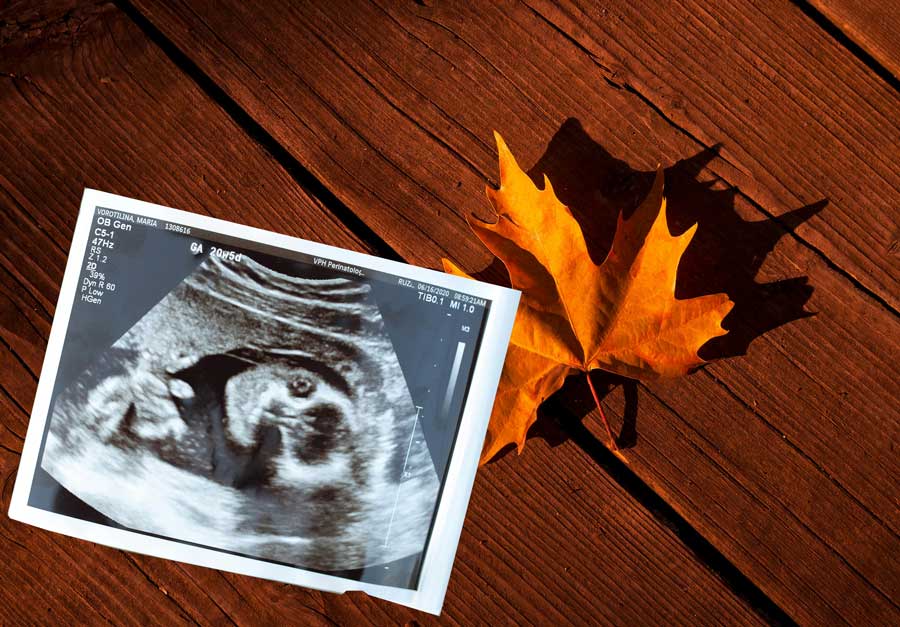
Thankfully, the pain started to subside, so I chose to ignore it – until it came back and I found myself in the emergency room two days later with a pregnancy diagnosis. Suddenly, the pain became more tolerable and meaningful. Although unexpected, the news filled me with hope and joy. Instinctively, I cradled my abdomen, tenderly reassuring my little one that it was ok. I was not upset with him or her for causing me this agony. I was so relieved that this new life was developing in my womb and giving my pain purpose. Nevertheless, relief was quickly replaced with anxiety as I realized my cramps were abnormal. The doctor assured me that some women experience these symptoms in the first trimester. He prescribed pain medication and sent me home; however, I decided not to take any medicine and went straight to bed. Although another child had not been on my mind previously, at that moment I was filled with excitement. I asked Allah to protect my baby and to let him or her grow healthy and strong.
At 4 am, I was awakened by horrible cramps. I finally took medication, hoping it would help me sleep, but I woke again at 6:30 to pray Fajr. However, I realized I was bleeding heavily, and I became too dizzy to stand. I tried to reach for the door, but I fell. The room was spinning and turning black. I was barely able to call out to my husband, who came running and found me lying on the bathroom floor. He helped me up and to make wudu1. Then, he led me out of the bathroom and covered me in blankets because I was shivering. I had to pray lying on my side because if I tried to sit or stand, I would get dizzy again.
I had never felt so close to death.
Certain that I was, indeed, dying, I told my husband to take care of the children and to ask them to make dua for me if I passed away. After praying, I fell asleep there on the floor, wrapped in blankets, dozing off while wondering what would happen to my baby.
Alhamdulillah, I was able to rest and felt better when I woke up. A week passed, and the bleeding and pain had stopped. I was already daydreaming about whether I would have a boy or a girl and what we would name him/her. In retrospect, I wonder what still kept me hopeful, given what I was experiencing. Perhaps it was wishful thinking. I was worried, but I tried my best to suppress those feelings with positive thoughts. I eventually heard from my doctor, who informed me my bloodwork indicated a miscarriage. Over the following weeks, I battled more bouts of abdominal cramps and bleeding that would send me staggering onto my bed, always holding onto my stomach as if trying to keep my baby in its place, but nothing could stop the inevitable. Eventually, my hope and joy for this new life faded away, leaving only emptiness.
Once, a friend of mine confided in me that after having a miscarriage, someone told her, “Well, can you mourn for something you never really had?” At that moment, the callousness of those words became palpable. There are many ways to lose a child, including miscarriage. Each loss is different, but there will always be pain. Whether one is more painful than another is irrelevant to the person experiencing it.
Allah tests us differently. Someone may say, “You have other children, so be happy,” or, “You can have another one, so be happy,” but that does not take the sorrow away. Grieving is natural and necessary.
After the miscarriage, I rarely spoke of it. It was too painful. With time, I came to understand and accept Allah’s decree. A few months later, I was surprised to learn I was pregnant again, and nine months later, alhamdulillah, my family welcomed Aasia. She is named after the Pharaoh’s wife in the story of Prophet Moses, peace be upon him, who overcame adversity to earn a home close to Allah in paradise. For us, she was a blessing amidst an abyss of sadness.
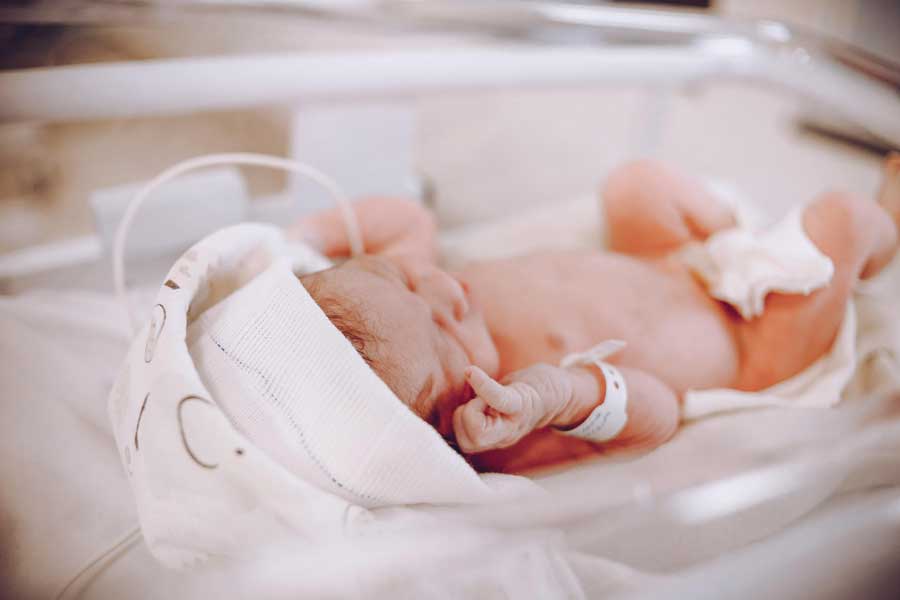 With her arrival, I could see clearly the manifestation of Allah’s names Al-Khaliq and Al-Mu’id. Al-Khaliq, or the Creator, brought life anew into our home, designing and orchestrating this miracle at the perfect time. And Al-Mu’id, the Restorer, replaced our sorrow with joy, restoring hope where grief had once resided. Just as plants wither in the winter only to bloom again in spring, Allah recreated life in our family, gently easing our sadness and reminding us that even after loss, He is the One who brings back all things: “For indeed, with hardship comes ease. Indeed, with hardship comes ease.” (Quran 94:5,6)
Allah says, “Is He [not best] who begins creation and then repeats it and who provides for you from the heaven and earth? Is there a deity with Allah? Say, “Produce your proof, if you should be truthful.” (Quran 27:64)
Allah is so mighty that He created the first human being and countless generations after, as He is Al-Khaliq, the Creator. He causes us to die and brings us back to life again, demonstrating that His power over life and creation is absolute. He effortlessly replaces one person with another, restoring what has been lost. Imagine a time when you lost a friend, or a loved one moved far away, or passed on, and you eventually found comfort elsewhere. Although the absence of the first person may still be felt, with time and renewed companionship, your wound begins to heal, and you can find contentment again. This is truly a gift from Al-Mu’id, the Restorer, who renews our hearts and circumstances, brings new life into the world, and reminds us that loss is never the end when Allah wills to recreate and restore.
Looking back, I see Allah’s mercy and wisdom woven through both loss and renewal. In the sorrow of my miscarriage, I felt the weight of life’s fragility, yet it was also a reminder of His power as Al-Khaliq, the Creator, who brings life into existence in His perfect timing. And when another child came into our lives after losing one, I witnessed Al-Mu’id, the Restorer, gently renewing our hearts, replacing grief with contentment, and filling our home with hope once more. Life, in all its trials and blessings, is a testament to Allah’s infinite ability to create, restore, and transform. Even in moments of darkness, He reminds us that every ending can be a beginning, and every loss can be met with a gift only He can provide.
- The bleeding I experienced was considered istihaadah (non-menstrual bleeding) and not postpartum bleeding, given the timing of the pregnancy.