
For many people, Ramadan is celebrated with others, from community iftar dinners to collective taraweeh prayers as well as numerous gatherings aimed at charity or worship. However, some of us struggle with social anxiety and isolate to cope, while others may be grappling with a loss and crippling grief, and still some folks have obligations that keep them indoors or have no family with which to enjoy the holy month of fasting. What’s more, even those surrounded by fun and festivities all month may feel slightly down and find their faith wain somewhat once the fasting routine and such is over and the Eid parties are over.
With so many conflicting experiences and emotions, it stands to reason that although Ramadan’s end is shared by all Muslims, the feelings that linger at its departure are not. With that we should ask ourselves: How can we support each other despite our different experiences and how can we avoid this distressing post-Ramadan emotional and spiritual dip?
The response to both questions may be found in realizing Ramadan’s true purpose and understanding that adjusting your mindset can result in a more fulfilling experience no matter your struggles during or after the month. Reevaluating what Ramadan actually signifies and recognizing it for the training it is helps to effectively deal with the solitude we might feel during the month and the slump some experience once it’s passed.
Taqwa is Best When Experienced Alone
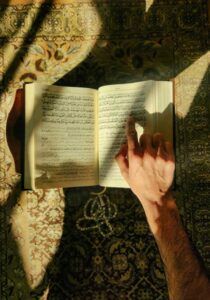 Ramadan is meant for sincere, undistracted worship in various forms. Abstaining from food and water and standing at night in prayers is meant to strengthen personal – not collective – closeness to Allah (SWT) and increase our taqwa, a deeply personal feeling. For some, our heartfelt calls and cries to our Lord will come more easily when no one else is listening, when we can worship in our own language and at our own pace, when there is no one to impress or worry about, and no one stands between us and our Creator. “O Believers, decreed upon you is fasting as it was decreed upon those before you that you may become righteous”.1
To become righteous, to perform good deeds and to refrain from bad with only the intention to please Him, taqwa must be attained and maintained. What’s more, this constant God consciousness is best cultivated and expressed alone, because this is when you truly do something just for Him, and you do it as if no one but He is watching.
Islam is A Nocturnal Religion
Some refer to Islam as a nocturnal religion2. Our longest and most impactful prayers are meant for the night, including but not limited to taraweeh, tasbeeh and tahajjud. What’s more, our duas are considered more intimate when made at night, when the world is still and devoid of distracting colors and noises, leading to an intimate connection with the Creator. Those who cannot attend the often loud and large congregational prayers are not necessarily missing out on the essence of Ramadan; in fact, they may be even closer to it.
Consider when the Prophet (peace be upon him) received the world’s most important revelation. Was he not alone and secluded in the dark depths of the cave of Hira? After all, during the day our bodies are engaged with the affairs of the world, but it’s at night when our minds and bodies rest so the heart and soul might do its spiritual work. There is a reason the Layla tul Qadr (night of power) can come at night only and not during the day. The moon, and not the sun, is studied, measured and followed to create calendars, to begin and end Ramadan, Eid and Hajj. The last 10 nights of Ramadan are lofty and treasured, but there is no mention of the last 10 days. We refrain from food and drink all day and eat at night for added vigor and energy so as to remove focus from food and instead take it to where it truly is meant to be. The spirit of Ramadan comes alive when alone, primarily at night.
We All Are Ghurabaa
‘Amr ibn ‘Awf reported: The Messenger of Allah (peace be upon him) said, “Verily, the religion began as something strange and it will return to being strange, so blessed are the strangers who restore my sunnah which the people after me had distorted.”3 This means true Muslims and especially those close to their Lord are not meant to fit in with the larger crowds or fall within the status quo and should not worry if standing apart. Muslims should only concern themselves with pleasing Allah (SWT), whatever toll that takes. We aim to take the road less traveled, that of righteousness and not of desires. By accepting our station as travelers and strangers, with our eye on the afterlife, being alone ceases to have a negative connotation.
With that we can see Ramadan’s purpose might be better fulfilled by solitude, that the depth of ibadah is done in the loneliest time of night, and that, in general, we are meant to be strangers on this path, so let Ramadan and its lasting lessons be your companions and you will need nothing else.
Overcoming the Ramadan Dip
 Feeling a bit down after the holy month ends is common, but combat this by remembering the training the month affords you, through its purpose and rituals, which are meant to last. The lessons within it that helped you stay connected to a community, to the Quran and masjid, and to your worship, should remain a focus after it is gone. Keep the same momentum of recitation, fasting, and performing good deeds which kept your iman high. If you find this to be a struggle, remember the Muslims were guided to continue their worship even after suffering the devastating loss of the Prophet (peace be upon him). Upon his (PBUH) death, Abu Bakr (may Allah be pleased with him), announced, “Whoever used to worship Allah, Allah is alive and will never die. Whoever used to worship Muhammad, Muhammad is dead.”4 We see that Islam and the Quran did not change after the Prophet’s (PBUH) death, and nor should your ibadah and connection to the Quran and Allah after Ramadan. Instead, take its lessons and training to heart and let them guide your actions.
Whether we feel down during Ramadan or now when it has passed, refocusing on its true purpose, on the companionship that constant focus provides, and on its lessons to take forth, can make those issues better. It can become a month you look forward to and become comforted by, and we can honor what it means to us by enacting the lessons it teaches us.
- (2:183)
- The Nocturnal Religion: What the Night Means in Islam, Ahmed Elbenni, March 12 2026
- Sunanal-Tirmidhī 2630
- (3:144)