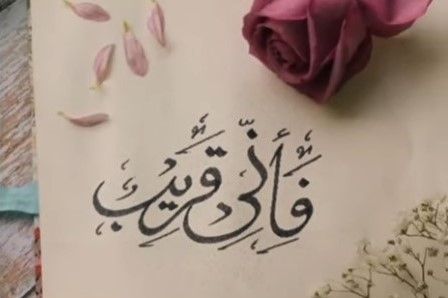
بسم الله الرحمن الرحيم

Author: Aatika Choudry

  • Beyond Ramadan: Taking Its Lessons Farther 

    Beyond Ramadan: Taking Its Lessons Farther 

    For many people, Ramadan is celebrated with others, from community iftar dinners to collective taraweeh prayers as well as numerous gatherings aimed at charity or worship. However, some of us struggle with social anxiety and isolate to cope, while others may be grappling with a loss and crippling grief, and still some folks have obligations that keep them indoors or have no family with which to enjoy the holy month of fasting. What’s more, even those surrounded by fun and festivities all month may feel slightly down and find their faith wain somewhat once the fasting routine and such is over and the Eid parties are over.

    With so many conflicting experiences and emotions, it stands to reason that although Ramadan’s end is shared by all Muslims, the feelings that linger at its departure are not. With that we should ask ourselves: How can we support each other despite our different experiences and how can we avoid this distressing post-Ramadan emotional and spiritual dip?

    The response to both questions may be found in realizing Ramadan’s true purpose and understanding that adjusting your mindset can result in a more fulfilling experience no matter your struggles during or after the month. Reevaluating what Ramadan actually signifies and recognizing it for the training it is helps to effectively deal with the solitude we might feel during the month and the slump some experience once it’s passed.

     Taqwa is Best When Experienced Alone

    Ramadan is meant for sincere, undistracted worship in various forms. Abstaining from food and water and standing at night in prayers is meant to strengthen personal – not collective – closeness to Allah (SWT) and increase our taqwa, a deeply personal feeling. For some, our heartfelt calls and cries to our Lord will come more easily when no one else is listening, when we can worship in our own language and at our own pace, when there is no one to impress or worry about, and no one stands between us and our Creator.  “O Believers, decreed upon you is fasting as it was decreed upon those before you that you may become righteous”.1

    To become righteous, to perform good deeds and to refrain from bad with only the intention to please Him, taqwa must be attained and maintained. What’s more, this constant God consciousness is best cultivated and expressed alone, because this is when you truly do something just for Him, and you do it as if no one but He is watching.

     Islam is A Nocturnal Religion

    Some refer to Islam as a nocturnal religion2. Our longest and most impactful prayers are meant for the night, including but not limited to taraweeh, tasbeeh and tahajjud. What’s more, our duas are considered more intimate when made at night, when the world is still and devoid of distracting colors and noises, leading to an intimate connection with the Creator. Those who cannot attend the often loud and large congregational prayers are not necessarily missing out on the essence of Ramadan; in fact, they may be even closer to it.

    Consider when the Prophet (peace be upon him) received the world’s most important revelation. Was he not alone and secluded in the dark depths of the cave of Hira? After all, during the day our bodies are engaged with the affairs of the world, but it’s at night when our minds and bodies rest so the heart and soul might do its spiritual work. There is a reason the Layla tul Qadr (night of power) can come at night only and not during the day. The moon, and not the sun, is studied, measured and followed to create calendars, to begin and end Ramadan, Eid and Hajj. The last 10 nights of Ramadan are lofty and treasured, but there is no mention of the last 10 days. We refrain from food and drink all day and eat at night for added vigor and energy so as to remove focus from food and instead take it to where it truly is meant to be. The spirit of Ramadan comes alive when alone, primarily at night.

     We All Are Ghurabaa

    ‘Amr ibn ‘Awf reported: The Messenger of Allah (peace be upon him) said, “Verily, the religion began as something strange and it will return to being strange, so blessed are the strangers who restore my sunnah which the people after me had distorted.”3 This means true Muslims and especially those close to their Lord are not meant to fit in with the larger crowds or fall within the status quo and should not worry if standing apart. Muslims should only concern themselves with pleasing Allah (SWT), whatever toll that takes. We aim to take the road less traveled, that of righteousness and not of desires. By accepting our station as travelers and strangers, with our eye on the afterlife, being alone ceases to have a negative connotation.

    With that we can see Ramadan’s purpose might be better fulfilled by solitude, that the depth of ibadah is done in the loneliest time of night, and that, in general, we are meant to be strangers on this path, so let Ramadan and its lasting lessons be your companions and you will need nothing else.

     Overcoming the Ramadan Dip

    Feeling a bit down after the holy month ends is common, but combat this by remembering the training the month affords you, through its purpose and rituals, which are meant to last. The lessons within it that helped you stay connected to a community, to the Quran and masjid, and to your worship, should remain a focus after it is gone. Keep the same momentum of recitation, fasting, and performing good deeds which kept your iman high. If you find this to be a struggle, remember the Muslims were guided to continue their worship even after suffering the devastating loss of the Prophet (peace be upon him). Upon his (PBUH) death, Abu Bakr (may Allah be pleased with him), announced, “Whoever used to worship Allah, Allah is alive and will never die. Whoever used to worship Muhammad, Muhammad is dead.”4 We see that Islam and the Quran did not change after the Prophet’s (PBUH) death, and nor should your ibadah and connection to the Quran and Allah after Ramadan. Instead, take its lessons and training to heart and let them guide your actions.

    Whether we feel down during Ramadan or now when it has passed, refocusing on its true purpose, on the companionship that constant focus provides, and on its lessons to take forth, can make those issues better. It can become a month you look forward to and become comforted by, and we can honor what it means to us by enacting the lessons it teaches us.

    1. (2:183)
    2. The Nocturnal Religion: What the Night Means in Islam, Ahmed Elbenni, March 12 2026
    3. Sunanal-Tirmidhī 2630
    4. (3:144)
  • Domestic Violence Versus Domestic Peace 

    Domestic Violence Versus Domestic Peace 

    October is Domestic Violence Awareness Month in the United States, and for good reason: The statistics are staggering as well over half of all females’ deaths in America come at the hands of their partners. In fact, about 24 women every minute become victims of domestic violence. 1 Home, meant to be a place of peace and comfort, is often a place of pain and conflict. Many factors play a role, making certain communities more susceptible than others. But no matter the reason for this violence, it can be argued that a belief in a higher power, in accountability and consequences, and in the basic tenants of good character would eliminate this issue plaguing our nation.

     Facts and Underlying Reasons

    Everyday stressors like finances play a big role leading up to domestic violence. Often, this stress is taken out on the most vulnerable in the home, usually women and children. Many reports show the lower the income, the higher the prevalence of domestic violence.” (Poverty, Domestic Violence, and the Covid19 Pandemic, 2020)

    Further exacerbating the problem is the general lack of resources available to victims in low socioeconomic communities, paired with a lower response time and less presence of law enforcement against the culprits. This perfect storm perpetuates the problem on several levels, and even if the victim reports the crime, they may face insufficient law enforcement support and an unfavorable support system once they leave the abuser, further preventing victims from taking action.

    The community’s racial makeup and socio-economic status may influence police response times, with underserved neighborhoods experiencing delays of up to 40 percent2. For protection, victims often seek restraining orders, with close to 2 million issued in the U.S. in 20083 – and likely higher today –  92 percent of which were for domestic violence. What’s more, data shows women of very low socioeconomic status experience little to no decline in reported violence after a restraining order, suggesting they are at an overall higher risk of re-victimization than those in other communities.4

    As children, many transgressors were reared in violent homes and continue the pattern into adulthood, with studies showing at least 33 percent of victims becomes abusers.5 Unresolved trauma is often the root of the behavior and the cycle it creates, and so therapy and a lifestyle change must be implemented if change is to be expected.  Drug and alcohol use also often fuels violent behavior and are factors in 60 percent of domestic violence incidents.To cope, those involved may further self-medicate with even more drugs and alcohol and may require addiction specialists and other resources to stop the violence.

     Islam’s Stand

    With its strict prohibition on alcohol and drugs, our religion cuts the problem’s root before it can develop. Muslims must be in control of our senses at all times. Our five daily prayers are scattered throughout the day, must be made on time, and we must be of sound mind and body and clean properly to perform them correctly. This isn’t possible if our faculties are diminished. A sincere connection to Allah (SWT) and awareness of His presence (tawakul) at all times is only possible with a clear thought process. “O you who have believed, indeed, intoxicants, gambling, [sacrificing on] stone alters [to other than Allah], and divining arrows are but defilement from the work of Satan, so avoid it that you may be successful.” (Quran 5:90)

    Because we are held accountable for every thought, action, word, and movement, Muslims should strive to be on their best behavior if we want to please Allah. “So whoever does an atom’s weight of good will see it, and whoever does an atom’s weight of evil will see it.” (Quran 99:7-8)

    Accountability is also critical if Muslims are to support the weak, oppressed, and abused as we are called to do. The Prophet of Allah (peace be upon him) said: “There are three persons whose supplications are never rejected: The just leader, the fasting person when he breaks his fast, and the oppressed when he supplicates and whose supplication is raised above the clouds and the gates of heaven are opened for it, and (to whom) Allah will say: ‘By My Glory! I shall assist you, even if it is after a while.’” [At-Tirmithi]

    This not only pertains to the oppressor, but also if the oppressed made dua against those who watched in silence without helping.


    Muslims also are called to refrain from violence – whether done while impaired or consciously with that intention – and especially against someone much weaker than themselves. Although there are strict guidelines during which violence is allowed, such as self-defense, indiscriminate violence is prohibited.  “The Muslim is the one from whose hand and tongue Muslims are safe; and the believer is the one with whom people feel secure with regards to their blood and properties.” [Reported by al-Nasa’I (4995) al-Termidhi (2627) and others on the authority of Abu Hurayrah (may Allah be pleased with him)]


    Islam also places guidelines on another cause of violent episodes – anger. The Prophet (peace be upon him) offered a practical tip for calming anger: “If one of you gets angry while standing, let him sit down. If the anger goes away, then good; if not, then lie down.” (Sunan Abi Dawood) Following this guidance can result in rewards and blessings from Allah (SWT), who encourages man to be patient and kind to women and children.


    Sadly, we all likely know someone who is a victim of domestic violence. Even more tragic is the fact that the U.S. had to designate a month allocated to bringing awareness to this epidemic in hopes of curbing it. As subscribers to a religion that shuns this and any type of abuse, encourages stopping oppression, and mentions future punishments for the perpetrators, the responsibility lies even heavier on us to do so.


    1. Domestic Violence Statistics in the U.S 2025 | Facts About Domestic Violence – The Global Statistics
    2. (Jannik Linder, Gitnux, April 29, 2025)
    3. Restraining Orders Issued and in Effect in the U.S. | Communicating with Prisoners
    4. Do Protection Orders Protect? | Journal of the American Academy of Psychiatry and the Law
    5. https://scienceoxygen.com/what-percentage-of-abuse-victims-become-abusers/
    6. Substance Abuse and Domestic Violence: National Statistics
  • Let’s End Hunger Together 

    Let’s End Hunger Together 

    In our backyard and around the world, in past narratives as well as present-day events, we observe our fellow man suffering from hunger. For some, the source of that affliction is man-made conflict and theft of their resources; For others, it may be natural disasters that depleted their food sources. Still others lack food and provisions as a result of poverty. But, for those who have enough and, particularly, those who have more than enough, the responsibility to care for and help those who aren’t as fortunate falls on them. This is the Islamic way. With that in mind, Muslims should be aware that September is Action Hunger Month, a nationwide annual campaign launched in 2007 by Feeding America to increase awareness of hunger and combat food insecurity in affected communities across the United States.

     The pain of food deprivation

    Not only does hunger and starvation lead to health ailments and death, but during the slow period of decline, one experiences a torturous plight. Those who bring this issue to light, such as bloggers and journalists like Shaimaa Eid, a writer based in Gaza, express the extreme desperation and pain felt during the pangs of hunger, describing it is a feeling of despair unlike any other. “Even writing has become an exhausting task—one we attempt with weakened bodies and minds burdened by anguish.”1

     Scientists say intense hunger leads to a drop in energy as the body breaks down its own fat and muscle, eventually causing critical organs to fail. The immune system weakens, often leading to various infections. From the lack of nourishment, acute malnutrition and, finally, starvation occur as the hunger reaches a point where the body can no longer sustain life. Psychologists explain how those dealing with hunger, especially prolonged hunger, “report apathy, irritability, anxiety and a constant preoccupation with food. Cognitive abilities decline, and emotional regulation deteriorates, sometimes leading to depression or withdrawal.”In children, all these symptoms are magnified.

    Our role to ease suffering

    Collective responsibility and compassion for fellow man is a hallmark of Islamic etiquette and character. The people asked, “O Allah’s Messenger! Is there a reward for us in serving the animals?” He said, “(Yes) There is a reward for serving any animate (living being). (Sahih al-Bukhari 6009)

    This principal is enforced through zakat, an obligatory act of charity and a pillar of Islam. Every year it is mandatory to assess your assets and give a set portion to those in need. In Ramadan, Muslims fast for almost a month, and one of the benefits of this act of worship is to feel what hunger is and, inshallah, experience empathy towards those suffering from it.

    Muslim tradition teaches that nothing is owned by you, can be taken back at any time, and must be shared. Imam al-Nawawi, a renowned scholar of hadith, commented, “This is an encouragement to share food. Even a little will be enough for this purpose, and there is blessing in sharing with those present.” (Sharḥ al-Nawawī ‘alá Ṣaḥīḥ Muslim 14/23) To take it a step further beyond its reward, there also is sin associated with not sharing. “Here you are – those invited to spend in the cause of Allah – but among you are those who withhold [out of greed]. And whoever withholds only withholds [benefit] from himself; and Allah is the free of need, while you are the needy. And if you turn away, He will replace you with another people; then they will not be the likes of you.” (Quran 47:38)

    These points are poignantly emphasized by the haunting words journalist Eid shared in her reporting from Gaza. “This is no longer just a food shortage—it is a collapse of human dignity. People feel the entire world has turned its back on them…”1

     Think globally, act locally

    The effort to curb and end hunger can be many fold. We see in current events setup for specific situations, many programs and organizations running those programs assisting in international fronts, often appealing for monetary help. Helping Hand for Relief and Development leads the way with many programs targeting those corners of the world that need them the most, making it a worthwhile organization to trust with your zakat. Domestically, ICNA Relief runs “Hunger Prevention,” a department dedicated to organizing year-round special pantries, distributing thousands of pounds of meat during the Eid Qurbani season, and much more.

    “ICNA Relief NJ sees the current challenges that our disadvantaged community members may be facing. We have provided hot meals distributions, Ramadan food bags and during the COVID pandemic, home food deliveries. We are helping our neighbors in need. Get your community to organize a food drive or event!”

     In such organizations, there are several ways to get involved to prevent and end hunger. Folks can assist with event marketing, while others, particularly young people, might donate time to fundraising events. Of course, monetary donations are always welcome, as well. There is nothing too small and no wrong time to start. Even if you are not located near a feeding center, any internet search of soup kitchens, community pantries, and food distribution sites will direct you where help is needed, such as No Kid Hungry.

    With Hunger Action Month upon us, let us all find ways to combat the plight of hunger and ease the lives of those afflicted by it. It could happen to any one of us and could be happening to your neighbor.

    1.‘When I Slept Hungry’: My Testimony on the Exhausting Hunger in Gaza – Palestine Chronicle

    1. The science of starvation: this is what happens to your body when it’s deprived of food
    2. Hunger Prevention – ICNA Relief USA


  • Time: Our Downfall or Our Success

    Time: Our Downfall or Our Success

    “Time is money.”

    “Time is of the essence.”

    We hear phrases like these often, usually proclaimed to boost our productivity. Generally speaking, even across cultures and professions, nothing is more valuable than money, and the fact that money is equated with time speaks volumes about its importance. As Muslims, we believe Allah (SWT) created everything and what He creates is sacred and to be cherished. We treasure it, are grateful for it, and strive to use it wisely. Some things given to us are gifts, sources of joy with potential for success. Time is one such gift, without which nothing is possible. The more time given, the more opportunities for good we have. However, Allah (SWT) will ask how we used that gift and will judge us accordingly. Indeed, accountability is a hallmark of our faith.

    Everything He creates is sacred

    “Indeed, the number of months with Allah is twelve (lunar) months in the register of Allah [from] the day He created the heavens and the earth; of these, four are sacred. That is the correct religion, so do not wrong yourselves during them.” (Quran 9:36)

    Allah’s (SWT) emphasis on certain months suggests we should be extra mindful of our religious obligations during those times and aim to increase our worship and good deeds in hopes their rewards will be magnified. This teaches us there is purpose and an obligation in how we pass our time.

    This purpose is clearly stated throughout the Quran and hadith of Prophet Muhammad (peace be upon him). For example, Allah (SWT) said: “I have only created jinns and men that they may serve Me. No sustenance do I require of them, nor do I require that they should feed Me. For Allah is He Who gives (all) sustenance, Lord of Power, steadfast forever.” (Quran 51:56-58) With this, it becomes our duty to fill our time by serving Allah (STW). We can do this in various ways, including service to humanity, to ourselves, and to our families.

     A gift to be grateful for and used wisely 

    In Islam and in life, gratefulness is touted as a balm, both for the soul and for the practicalities of everyday life. Allah (SWT) said: “Be grateful to Allah for whoso is grateful is grateful for the good of his own soul.”  (Quran 31:12). Here we are told to thank Allah (SWT) for all He has given us is out of His mercy, as we can do nothing alone.

    As mentioned, gratitude benefits our soul, a claim backed by scientists who study human psychology. “Expressing gratitude and cultivating it in ourselves has been linked to increased happiness, improved physical health, greater mental well-being, higher self-esteem, and life satisfaction.” (Gene P., Benefits of Gratitude, www.happierhuman.com)

    What’s more, Prophet Muhammad (peace be upon him) said: “The two blessings that many people waste are health and free time.”(Bukhari). Allah (SWT) reminds us many times that we tend to forget time’s value and that it is our nature to waste it, underscoring how important it is to make good use of it. Perhaps the greatest reminder is Surah Al-’Asr, which addresses time in title and context. “By time, indeed, mankind is in loss, except for those who have believed and done righteous deeds and advised each other to truth and advised each other to patience.” (Quran 103) From this we understand we will be the losers in this life unless we use time wisely and for good, as the surah suggests.

     Take accountability – you will be asked about it

    Prophet Muhammad (peace be upon him) said: “Take advantage of five matters before five other matters: your youth before you become old; your health before you fall sick; your wealth before you become poor; your free time before you become preoccupied, and your life before your death.” (Musnad Imam Ahmad)

    Other hadiths urge us to be mindful of how we spend our time and remind us of standing before Allah (SWT) on judgment day. The Prophet (peace be upon him) said: “A person will not move on (on the day of judgment) until he has been asked about four things: his life and in what he spent it; his knowledge and what he did with it; his wealth, from where he acquired it and on what he spent it, and his body and how he wore it out.” (Mu’ath bin Jabal)

    As we can see, time is a heavy gift that carries an even heavier responsibility.

    Practice urgency in doing good

    Allah (SWT) says: “Every soul will taste death.” (Quran 3:185) There should be an urgency in how we plan and execute use of our time, and procrastination should be off the table for believers. Imagine you have a long list of important tasks set aside for a future date, only to be afflicted with something that prevents you from completing them. “Lose no time to do good deeds before you are caught up by one of seven calamities awaiting you: a starvation which may impair your wisdom; a prosperity which may mislead you; an ailment which may damage your health; an old age which may harm your senses; a sudden death; the Dajjal (Antichrist), or doomsday, which is indeed the hardest and most bitter.” (At-Tirmidhi)

    Tips for your time

    Time is valuable and needs to be used wisely. As Muslims, we believe every action can become worship if done for betterment and with good intention. So, purify your intentions before you act, no matter how mundane the tasks. Be organized and create to-do lists to ensure your busy schedule doesn’t cause you to forget. Take accountability of yourself, so if a change is needed you have time to shift. There are hadith mentioning the early part of the day holds bounty in the daylight, in energy levels and so much more. Muhammad (peace be upon him) said: “O Allah, bless my nation in their early morning.” (Tirmidhi)

    What’s more, to perform optimally we must feel optimal, so eat well and guard your rest. Also, never forget the power of prayer, which calms our psyches and garners results. Always begin a task with dua, fill the duration of your task with it, and make even more dua of gratitude when you are done.

    Time is a gift and a test, so treat it as such, with the goal of heaven as your intention.

  • Protecting Land and Life: Islam’s View on the Care of our World

    Protecting Land and Life: Islam’s View on the Care of our World

    When it comes to Islam’s teachings about Muslims’ relationship with the natural world, Allah (SWT) has given us much to consider. In honor of Earth Day on April 22, we have an opportunity to examine our responsibility to tread wisely and lightly regarding the care of the beautiful world Allah (SWT) has blessed us with.

    Islam advocates for conservation and responsible stewardship of all institutions and sacred relationships, be those of the Earth and its habitats, our familial structures and hierarchies within, our communities and members that constitute them, and more. Quranic verses and prophetic traditions emphasize the concept of khalifah (stewardship) and responsibility of caring for everything entrusted to humans and that which we use, from valuing animal life to leaves on a tree. Because Allah (SWT) created everything, there is sanctity in it.  The Quran tells us, “…Not a leaf falls but that He knows it. And no grain is there within the darkness’s of the earth and no moist or dry [thing] but that it is [written] in a clear record.” (Quran 6:59)

    By understanding Allah’s (SWT) intimate knowledge of every part of His creation, we might be moved to view His creation as sacred and a gift to be grateful for, treasured, and preserved. We might be moved to restore what we use and to aim for balance in our consumption. Yes, we need lumber to build a home, but can we not then plant more trees to replenish the resource? Can we find ways to recycle our trash rather than waste resources making it, then filling landfills and poisoning oceans disposing of it?

    As we value our life, so should we value others and the environment in which we all live.

    An important Islamic value is the care of one’s body. Religious leaders and scholars advocate that we eat nutritious food, remain active, and get enough rest to achieve and maintain good health. Prophet Muhammad (peace be upon him) said a strong believer was better than a weak believer (Sahih Muslim). With better health, the Ibadah you perform can improve in quality and quantity; your prayers can be longer, your fasts easier, you can perform various Islamic work with energy and clarity, and the grueling task and rituals of Hajj would be easier, among many other things. The intention is to please Allah (SWT) by showing you are grateful for this gift He gave, and caring for it as He prescribed. “Verily, your own self has rights over you, so fast and break your fast, pray and sleep.” (Sunan Abī Dāwūd 1369)

    But how does this quest for health mesh with our obligation to strive for a heathy planet? It’s important to note that caring for your own well-being extends to that of your fellow man, the animals that coexist with us, and the vegetation that surrounds and sustains us, as we are all connected. The people of Muhammed (peace be upon him) asked, “O Allah’s Messenger! Is there a reward for us in serving the animals?” He said, “(Yes) There is a reward for serving any animate (living being). (Sahih al-Bukhari 6009). This principle is beautifully illustrated in the hadith of the prostitute who was guaranteed forgiveness because she showed mercy to a dog who was thirsty and saved his life by feeding him water. (Sahih al-Bukhari 3321).

    Conserving resources

    The planet and everything within it is sacred and must be taken care of and appreciated, and certainly not wasted. Israaf, or wasteful expenditure, is a much-discussed term in our deen, and it is considered a great sin.  Allah (SWT) says “…and do not squander wastefully, surely the squanderers are the followers of the shaitans and the Shaitan is ever ungrateful to his Lord” (Quran 17:26-27).  Here, wastefulness correlates to ungratefulness, another sin. Acknowledging provisions as gifts from our Lord, being grateful for them, and using them appropriately is a way to show respect to Allah (SWT).  Even if you perceive the resource to be in abundance, do not assume it’s permissible to use it in excess. The Prophet Muhammad (peace be upon him) said: “Do not waste water, even if you perform your ablution on the banks of an abundantly-flowing river.” (Ibn Majah) Allah (SWT) instructs us to do everything in moderation, even consuming food: “Eat and drink and do not commit excesses; indeed He does not love those who are excessive” (Quran 7:31). Miqdam bin Madikarib said: “I heard the Messenger of Allah (peace be upon him) say: ‘A human being fills no worse vessel than his stomach. It is sufficient for a human being to eat a few mouthfuls to keep his spine straight. But if he must (fill it), then one third of food, one third for drink and one third for air.’”

    Acknowledging, being grateful for, and sharing His gifts to benefit the natural environment

    Sharing what we have is so fundamental that Allah (SWT) established it as a pillar of our faith: zakat. Every year we must assess our wealth and give a set portion to those in need. As with everything Islam decrees, there is reward in donating time, energy, money and anything else we may own, whether by giving a portion away or sharing it. Imam al-Nawawi, author of “Forty Hadith,” commented, “This is an encouragement to share food. Even a little will be enough for this purpose, and there is blessing in sharing with those present.” (Sharḥ al-Nawawi ‘alá Ṣaḥiḥ Muslim 1423) To take it a step farther, there is also sin associated with not sharing. “Here you are – those invited to spend in the cause of Allah – but among you are those who withhold [out of greed]. And whoever withholds only withholds [benefit] from himself; and Allah is the free of need, while you are the needy. And if you turn away, He will replace you with another people; then they will not be the likes of you.” (Quran 47:38)

    The Prophet (peace be upon him) explained anything we share or do that benefits people or animals is a form of charity.  “If a Muslim plants a tree or sows seeds, and then a bird, or a person, or an animal eats from it, it is regarded as a charitable gift (sadaqah) for him.” (Sahih Muslim)

    Blessings are temporary and to be appreciated

    As Muslims, we believe everything at our disposal, including our bodies, is an amanah, a temporary trust given to us to be used wisely, to be taken care of, to appreciate, and to be shared. Abdullah bin `Umar narrated, “Allah’s Messenger (peace be upon him) took hold of my shoulder and said, ‘Be in this world as if you were a stranger or a traveler.’” There is also a command to be mindful of everything we’ve been given, as we will be questioned about it by Allah (SWT). Ibn Abbas reported the Messenger of Allah (peace be upon him) said, “Take advantage of five matters before five other matters: your youth, before you become old; your health, before you fall sick; your wealth, before you become poor; your free time before you become busy; and your life, before your death.” Muslims understand that to “take advantage” is to cherish our gifts, to use them wisely and to share them with others, with the intention to please Allah (SWT).

    This, of course, applies to the earth and everything contained in it.  These gifts bestowed upon us, be them land, the water of the seas, or the animals of the forests, are to be looked after for Allah’s (SWT) sake, and never wasted or taken for granted.  Let us think about these lessons on Earth Day and every day we are blessed to live this life with the intention of pleasing Allah.”

  • Allah – A Constant Companion

    Allah – A Constant Companion

    Wherever you are, there too is Allah. What a profound statement! It confers compassion while reminding us of His mighty attributes and clarifying our role in the deity-servant relationship. It also brings a great measure of hope.


    Allah says, “And He is with you wherever you are. He knows what penetrates into the earth and what emerges from it and what descends from heaven and what ascends therein.” (Quran 57:4)


    But how is this possible? How can Allah be everywhere at the same time, a part of every human’s journey while simultaneously in control of all within the universe? How is He aware of all that happens, even things unspoken and only within people’s minds?


    To understand, we must strive to know Him through His descriptions and His attributes. We can look to several surahs throughout the Quran, particularly Ayatul Kursi in Surah Al-Baqarah. This powerful passage makes frequent mention of Allah’s names, describing His features, including Al-Baseer and Al-Sami, which translates to All Seeing and All Hearing respectively. Among Allah’s 99 names, these explain His perfect awareness and knowledge of all things. He is also described as All Watching, or Ar-Raqib.


    When we consider these three attributes – all seeing, all hearing, and all watching – we gain a better understanding of how Allah can be with us always, no matter where we are and regardless of what we’re doing. With this, He becomes Al-Kabir, the One Who is All Aware or the One Who Knows the Truth of All Things. Knowing this, we take comfort in realizing Allah is in control, that nothing we do escapes His notice, and everything is happening according to a well-devised plan.


    A Basis for Hope


    When we are wronged or treated unjustly, we often worry the offender will go unpunished or that no one will notice what they’ve done. Not only can this lead the victim to anguish, it also can spur criminals to persist in their wrongdoing. As Muslims we are taught Allah is Al-Shaheed, the All Observing Witness from whom nothing is absent. We also believe He is Al-Muqsit, the Just One, equitable and fair in His judgment.


    Understanding these attributes, we realize nothing goes unnoticed and everything is recorded because He is always near, offering perfect judgment. Consequently, if wronged, we can never truly feel forlorn. Imagine, Allah is even aware of hidden crimes or whispered slights against of which we have no idea. Holding firm to this belief is what allows oppressed people,

    even those with the most serious plights, to have the will to go on, to have a positive outlook and a sense of hope that all will be put right in the end.

    This knowledge can elevate your attitude. If Allah is always near and always just, He is also Al-Hafiz, the Guarding One, the Preserver, the Protector, and Al-Mujib, the Responsive, who answers those in need when they ask. How then can we not be hopeful and optimistic if we are firm in faith that our calls and prayers to Allah are heard, whether they be shouted or whispered in our heart?


    Of course, sometimes the answer to a prayer is delayed because He knows best what is good

    for us and what is not, and sometimes it is not granted specifically but the person praying receives an answer in a different form. Still other times Allah wards off some other evil in response to prayer. What can be better than to have a constant companion and protector, as Al-Wali, the Protecting Friend and the Supporter?


    Allah’s Nearness Prevents Loneliness


    This deep awareness of Allah’s constant nearness to us can also guard us from loneliness, a problem so pervasive that the former U.S. surgeon general released an advisory on the issue. Partly a lack of social connection, loneliness can lead to a myriad of problematic behaviors that can result in an increase in anxiety, depression, stroke, heart disease, and dementia. Chronic loneliness even increases our risk of premature death, according “Loneliness: Causes and Health Consequences” by Kendra Cherry, MSEd, updated on December, 5, 2023.


    Although it’s likely that lack of societal priority to families and family structure, along with a cultural emphasis on being independent and desiring privacy, could be contributing factors to loneliness, lack of engagement within a religion or adherence to higher power or faith also helps loneliness and isolation take root.


    Allah says, “We are closer to them than ˹their˺ jugular vein.” (Quran 50:16) If you ponder this verse and its meaning, you will understand how a firm faith can help us to combat loneliness, even if we have other risk factors in our lives. Establishing and developing a close relationship with our Creator leads to a feeling of companionship with Allah. We can achieve this closeness by regularly reading the Quran, pondering His signs all around us, and truly opening our hearts and minds to His innate closeness to us, rather than considering Him as far away and distant.


    With faith and complete trust and reliance on Allah, we can overcome those stages in life when even the strongest believers might feel abandoned by the Lord and fall victim to solitude. In these moments we must be reminded of Allah’s names and characteristics, something we can achieve by coming back to the Quran time and again when we feel ourselves slipping from Allah’s closeness.


    With this we see we are never alone. Wherever we are, be it surrounded by friends and family or living in a solitary silence, He is with us. He is King and we are his slaves. We are never alone.

  • Freedom Through Faith

    Freedom Through Faith

    It’s a universal truth that we are born free and die untethered, our minds and souls unconfined in those moments. We can be physically enslaved, but our minds can never be chained. Core to our belief is Allah created us with free will and with the purpose of serving Him alone. Hence why some seemingly oppressed people seem satisfied and positive and can withstand abuses while exuding inner peace and moving forward. Their resilience may even inspire strength in others. Who then is free, and who is enslaved?

    The common denominator among enslavers

    Slavery has existed for thousands of years. The earliest documented evidence can be found in ancient Mesopotamia dating to around 3500 BC, coinciding with the rise of the first civilizations. Documentation depicts slavery as prevalent across different cultures and times. Many factors led to the enslavement of others, such as greed for free labor, the belief that other races are inferior, and the idea there would be increased political security by suppressing potential opposition, among others.

    It’s likely the perpetrators acted from a sense of entitlement or God-given right to expansion while also believing labor should fall to others, at little or no cost, and for maximum profit. The United States’ 19th century mantra of manifest destiny to expand the nation from the Atlantic Ocean to the Pacific Ocean via occupation and settlement is an example of some white Americans’ belief that they were divinely ordained not only to eliminate anyone who would hinder that goal and but to use others to advance that goal, as well.

    A widespread evil

    The current impact of past slavery is evident through observation and research. I’ve noted as such in my travels to Nassau, Bahamas, where slavery was practiced from the 17th century until 1834.  There, the wealthy elite vacation lavishly, but the locals, many who are descendants of West African slaves, seem to live on a separate island entirely. These people bear the effects of slavery, such as financial oppression, lack of education and subsequent opportunity, and loss of respectable societal status. Over time, the never-ending cycle becomes the status quo and remains a constraint. Therefore, outlawing slavery doesn’t always guarantee freedom and success, at least not in the immediate future. Freed slaves have written about the challenges they faced after gaining their freedom. “Narrative of the Life of John Quincy Adams, When in slavery and Now as a Freeman,” by John Quincy Adams in 1872 is a good example.

    Evil takes various forms

    Slavery manifests in many ways. There’s economic bondage where one can’t break free of their employment or contracts, hindering their advancement. Also, for some domestic workers, they’re promised entry into a new country, often at high cost, but remain at the mercy of employers who confiscate their important documents. Still others, fearing repercussions, are bound to remain quiet or compliant despite having opposing political views. Current events in Syria demonstrate how legions of citizens were silenced for decades and are only now free to speak after the oppressive regime was overthrown.

    Unconstrained minds: Faith is the underlying power

    Resilience is evident in many cases of slavery, and there are some common, underlying factors to consider.  For example, some important American history highlights exemplary people who accomplished amazing things but who were, in fact, enslaved. In his book, former slave John Quincy Adams wrote about the harsh realities that existed in slaves’ daily lives. He detailed atrocities like families being separated and how slaves were forced to treat their masters’ families with utmost reverence. Adams questions how this could be justified. “I ask, could a man who believed that there was a just God do such outrageous crimes to human beings, and then say it was right, and have the face to go to church and come home and have the slaves out on the back end of the farm working on Sundays, and some of the ministers going around telling the slaves they must obey their master and mistress, and all would be right.” The faith in a higher power and assurance of that power holding man accountable for his actions is what causes some who are enslaved to question their situation, to understand it to be incorrect, and to have the wherewithal to be hopeful and have the bravery to protest.

    Courage to trigger change and abolish injustice

    To cure injustice, one courageous person can be the catalyst for change by defying the odds and standing strong in opposition. Though oppressed, his mind is free and his faith is strong, a strength used to inspire and help others.

    Consider Spartacus’ (103-71BC) daring slave revolt against the Roman Republic. A gladiator and escaped slave leader, he displayed courage in the face of insurmountable odds, inspiring people to stand against authorities and to fight for their own freedom.  Sojourner Truth, an advocate for abolition and civil rights in the 19th century, was known to be rooted in her faith. She understood her God-given rights as a woman and, despite her enslavement, showed great courage, often invoking religion in her passionate sermons. “If the first woman God ever made was strong enough to turn the world upside down, all alone, these women together ought to be able to turn it right, and make it answer the end for which it was made.”

    Muhammad Ali, famous American boxer and direct descendant of slave Archer Alexander is another prime example. He boldly defied society’s expectations of him as a black man, even as he was discriminated against after converting to Islam, saying, “I know where I’m going and I know the truth, and I don’t have to be what you want me to be. I’m free to be what I want.” Ali also faced inherent racism and was fined and jailed for refusing to fight in the Vietnam War in 1967. Though he wasn’t enslaved like his ancestors, Ali had to struggle against a different type of chains that could have limited his freedom, but he wielded his dedication to his faith and made it the backbone of his defiance.

    As we move through life, who knows who is free and who is enslaved? We know we are born free and die free; yet even if we are chained in life, death releases people from worldly shackles, proving their enslavement was manmade rather than a natural state of being. Those oppressed can find strength in their conviction of faith, believing there is a power higher than their false masters, that there is a just ruler to whom their world and the war within it is known and seen, and from whom eventual justice will come.

  • Motivation and Maintaining Momentum

    Motivation and Maintaining Momentum

    The excitement simmers as you are crouched at a race, eager to begin the sprint, energy and strength built up in body and mind. When the starting shot is fired, the potential for victory is unlimited. Most would agree that when an idea for action sprouts in one’s mind, and a plan is then formulated to attain the results, that is perhaps the relatively easier part. The individual is excited about the novel situation, has zeal galore. Yes, motivation is bountiful at the start line.


    The more difficult part is maintaining a sustainable pace, to consistently make wise use of resources to make it to the end, or to continue long term if your goal is such. Too often we fall into the cycle of depleting ourselves early on, subsequently giving up and then feeling like a failure mid-way.


    Real victory is enjoying the run, running with little to no negativity, and making it to the finish line according to your initial plan in terms of your intention and your aims. Several tips can be kept in mind to maintain momentum and motivation once a goal has been formulated and is ready for action.


    Set Attainable Goals: An important tip to maintain momentum is to make rational goals that are within your reach, keeping factors such as your resources, your talents, and your external circumstances in mind. We do not want to set ourselves up for failure by setting a goal that is unrealistic and thus overextending our efforts and stretching our resources. Since we have restricted time, limited physical strength, as well as constraints on every other resource we own and use, it should be evident that we have to aim for goals that are within our reach.

    Being too harsh on yourself is harmful to your mental and emotional well-being as well as your outlook on life and should be avoided by never setting an unattainable goal — that only leads to demoralization and loss of motivation to continue setting and striving for goals.


    Christopher Bergaland, a science writer and public health advocate writes, “’If at first, you don’t succeed, try, try again!’ is drummed into our heads from a very young age. These types of pep talks may backfire if the goal is unachievable regardless of how much effort someone pours into his or her futile struggle to succeed.”


    If, for example, a student decides that he wants to pursue astrophysics but dislikes mathematics, it would be irrational for him to declare a goal of becoming an astrophysicist. He might instead make a goal of becoming competent in math and overcoming his aversion to it. That would be a reasonable goal and if he accomplishes that, he then could consider astrophysics as an academic major and career path. Likewise, he can attempt to discover his talents and strengths and pursue studies within that realm. In fact, Islam encourages us to consistently and continuously take action, make effort, and strive toward attainable goals.  The Prophet (pbuh) was asked, “What deeds are loved most by Allah?” He said, “The most regular constant deeds even though they may be few.” He added, ‘Don’t take upon yourselves other than the deeds which are within your ability” (Bukhari).


    Articulate a Good Intention: As Muslims, the start of any task taken toward any long- or short-term goal should begin with the intention. Islam teaches that every act can be an act of worship and is rewarded, if the right intention preceded it. The primary intention is to act for the sake of Allah. Further, the intention to please our Creator is key, whether it be through serving humanity, feeding your child, or simply caring for your own health. Since intentions are at the root of every action, they reflect the underlying motives of why we plan something or do what we do. Prophet Muhammad (pbuh) said, “Indeed, deeds are by intention. Every man will be rewarded only for what they intended” (Bukhari and Muslim). Once we have articulated our intention, we should remind ourselves often of that intention as an added layer of wisdom.

    When the going gets tough, a reminder of the original, noble intention gives us fuel to keep going.


    Determine a Personal Reward: Helpful in keeping the spark of motivation alive is picturing what we will get out of it that is favorable to us. In 10 Psychological Tricks to Stay Motivated and Stick with Your Goals, Rick Wignall describes the concept of “artificial positive reinforcement.” He writes that it is “a fundamental principle of human psyche that a behavior is more likely to happen (and continue to happen) when it’s followed by something enjoyable or rewarding.” Allowing small rewards for ourselves after each completed task or level in working toward a goal will boost motivation further. If the goal is a long-term one, break up the timeline and gift yourself once a designated segment has been accomplished. Rewards can be small or large, anything that brings pleasure — a weekend trip after a substantial project or a coffee from your favorite cafe after achieving a workday’s slated agenda. Some may simply remind themselves of the ultimate goal — Allah’s pleasure. Don’t underestimate the power that rewards, even small ones, have on our motivation.


    Keep in Mind that the Struggle Itself Is Rewarded:  One of the Names of Allah is Al-Aleem (The All-Knowing, The Omniscient) so we have certainty that Allah sees, hears, and knows all things. The private pain one goes through, the silent struggles one endures, the internal jihad some must fight to accomplish certain things — all of this, the hidden, inner aspects, is known to Him alone. When we couple that with the teaching that every act is an act of worship if we so intend it that way, we realize that even if the task or the journey becomes difficult, presents obstacles, or even becomes a burden, that we will be rewarded for the struggle itself. The Prophet (pbuh) said, “No fatigue, nor disease, nor sorrow, nor sadness, nor hurt, nor distress befalls a Muslim, even if it were the prick he receives from a thorn, but that Allah expiates some of his sins for that” (Bukhari).


    A rough path then should not deter us from continuing on it, especially if we think of the problems as increasing our ultimate reward. We know He does not burden us beyond what we can bear, and we recognize that He knows everything taking place, and rewards us for our good intention, attitude, action, and struggle. This is a win-win situation. “…and it is not for man except what he strives for, and that his striving will soon be seen, and then he will be recompensed to the fullest” (Qur’an, 53:39-41).


    Don’t Focus on the Result: While striving for a goal, refrain from putting the focus on the end point. The focus, instead, should be on the process, the journey. If our reward is for our good intention and sincere and dedicated efforts, then the outcome is secondary. There are times we have an end goal in our sight, but something definitively derails all our efforts. In fact, Allah knows what is best, and so we leave it in His Hands. We can’t control a multitude of factors that can affect our plans so we plan, take action, and we trust He will accept the effort. “And my success is not but through Allah. In Him I trust and to Him I turn” (Qur’an 11:88).


    Think of the Bigger Picture: Integral to our deen is the meaning and purpose of our lives. Our purpose, as stated in the Qur’an, is worshipping Him and striving to establish His deen on earth as exemplified by our role models, the Prophet and his companions. We find meaning in seeking His pleasure as the main focus in our daily lives. Essentially, every act of ours is toward that end goal, and that may take many forms throughout the different walks and stages of our lives. Our scholars remind us, especially during calamities when we question why something is happening, that if we reflect on the bigger picture, we can find opportunity to deepen our faith and reorient our priorities, whether as an individual or as an ummah. Reminding ourselves of our final abode (which is an eternal abode) and emphasizing in our minds and hearts that the end goal is the pleasure of Allah, then we try to attain our goals in the most effective and competent way. “And do not weaken and do not grieve…” (Qur’an 3:139).


    The Power of Du’a: The power of asking Allah for guidance and help in whatever we need and recognizing that we are weak and need the support of Al-Azeez, The All-Mighty, is so profound that it can even change qadar (destiny). Flawed humans are nothing without His help, and if du’a (supplication) and dhikr (remembrance of Allah) accompany you in any task or effort, then you will have the most powerful protection, as well as a beacon illuminating your path and inspiring your quest.  “…I respond to the invocation of the supplicant when he calls upon Me. So let them respond to Me and believe in Me that they may be led aright” (Qur’an 2:186).


    So, we set our eyes on a reachable goal, articulate a pious intention, make a realistic and detailed plan, and begin our journey with “bismillah.” We ask for Divine help when needed and, with our eyes on the prize, we keep going. The above tips are some ways by which to nourish our motivation, to patiently keep going and persevere.


    “Indeed, mankind is in loss, except for those who have believed and done righteous deeds and advised each other to truth and advised each other to patience and perseverance” (Qur’an 103:2-3).

  • The Power and Privilege of the Youth

    The Power and Privilege of the Youth

    The current condition and future status of a community is seen, on one level, in the state and actions of its youth, particularly its students. Although definitely not unprecedented, we are at a crossroads within the current climate: socially, politically, and academically. I have been in the field of education for decades and am witnessing an inversion of truth, an enforced narrative that belies what our eyes see plainly in front of us.

    Yet, a basic tenet of a sound education is the importance of critical thinking, just as freedom of speech is the lifeblood of democracy. Add to those essential principles, the American constitutional declaration that all individuals are created equal. What an irony of epic proportions that the current Establishment narrative denies, or at the very least obscures, the clear oppression and injustice in Palestine. Where are critical thinking, freedom of speech, and the equal rights to dignity and freedom of all human beings when the mainstream authorities try in every way to mute the voices and block the actions of those who see what is going on and conscience dictates speaking and acting on behalf of those who are being victimized in the most brutal ways? The message is simply this: “You actually do not have the freedom to speak and act according to your conscience, even if in fully lawful ways, and despite proclamations that you do.” It seems that too many Americans subscribe to the dystopian principle in George Orwell’s Animal Farm: “All animals are equal, but some animals are more equal than others.”

    We have been here before. The Jim Crow laws and enforced racial segregation, the misguided and destructive Vietnam War, pressing issues about the environment, economic and social inequality — all of these took students to the streets in the past, inspired writers to express outrage by pen, and woke up the general population.

    Columbia University in New York City, at the center of the current wave of protests, has seen similar uprisings before, including during the Vietnam War in 1968. Demonstrations led the university to end classified war research and stop military recruitment, among other changes, according to an article by Rosalind Rosenberg, a professor of history at Barnard College. On the other coast, in the 1950s, at the University of California, Berkeley, student groups taking part in any on- or off-campus political activities were banned from campus. Nearly 800 students were arrested by local police as a result. The overreaction to protestors ultimately worked in the students’ favor as the administration eventually overturned policies that would restrict the content of speech or advocacy. The shootings at Kent State in 1970, when police fired upon a protest killing two students, Phillip Lafayette Gibbs and James Earl Green, catalyzed the first general student strike in the history of the United States, when students from over 400 colleges and universities called off classes to protest the shooting.

    Courage, Maturity, and Strength of Character

    Campuses have come to the forefront of the news once again amidst the current unrest in the Middle East, as over 150 colleges and universities saw encampments on their grounds during the last academic year and now with new semester, with many faculty joining in as well. The courage, maturity, and strength in character exemplified by the students and many staff risking their livelihoods, are commendable. Encampments were set up on university campuses in calls for a ceasefire in Gaza and divestments from companies that are advancing the brutal military objectives of the occupying force. Thousands of protesting students were arrested in an unprecedented move. Meetings were set up with deans, presidents, and directors of these institutions to voice student concerns, and many were fruitful. The president of Columbia University, Dr. Minouche Nemat Shafik, was called to a Congressional Hearing in April 2024 to answer for her reaction to the climate of unrest on campus, and then eventually resigned in August 2024 amidst the uproar.

    For sure we are living at a critical time in history. In Bangladesh, for example, a tyrant ruled for decades. But she was ousted by the galvanization of students. The protests began after she instituted unfair policies regarding quotas in government jobs, and these demonstrations escalated as orders were issued to use force to disperse the gatherings. Anger mounted and could not be quelled, and former Bangladeshi Prime Minister Sheikh Hasina, the longest serving Muslim female head of state, was forced to resign and flee the country.

    The Student Body of the World Is a Powerful Force

    What makes the youth, the student body of the world, such a powerful force that can help end a war or an unjust racial policy? Why can the students, creating an uproar with their voices and actions calling for justice, bring about such dramatic and important change? The answer lies in their youthful energy and idealism. Their critical thinking skills have not yet been dampened by years of political propaganda and their own personal investment in the system. Their minds have not yet been corrupted by ulterior motives or tainted by greed, nor blurred by what the propaganda narrates and demands we conform to. They are still free. This is their power and their privilege.

    The students’ minds are restless and hunger for answers. They see injustice and call it out, simmer with anger and burn with an undaunted desire for action. Their confidence is unparalleled. It triggers the call — and in the face of ridicule, accusations, ostracism, legal actions, and oppressive policing, they cement their places and release their dynamic response in history as it unfolds. They have a responsibility; and they still have an ability to respond with honesty and determination.

    The kinetic disturbance of protesting energy grows into waves. This motivates others to join and soon, a group becomes a movement, galvanizing others by their voices and drowning out the backlash, overcoming those who would misrepresent and whitewash the wrongdoings that prompted the protests.

    Tiny seeds of honest discernment and uncompromising conscience can be nurtured to ultimately change the direction of the world. A seed is planted, and someone appears with a drum to signal the rhythm and beat of nature’s unrelenting will to take root and grow. This beat is a planting of ideas but also a viable march in time, and it yields a chant for freedom, calling to all human beings with a vision of justice and peace, daring to stand in defiance of those who monger fear and exploitation and war.

  • I Wonder…

    I Wonder…

    I wonder…
    if man-made problems wreak more havoc
    than natural disasters ever do,
    if the problems we create are worse
    than adversities falling upon us.

    Nature can wipe out a people in an instant,
    humans buried under scorching lava,
    or swept out to sea by tsunamis,
    or succumbing to death by virus.

    History narrates, though, and the present manifests too
    intentional destruction of deeply sacred spaces,
    silencing of peacemakers, making souls to suffer
    and dimming the hopes of a decent humanity.

    The pain is more piercing when man destroys man,
    when brother hates brother,
    when one just like us, walking amongst us,
    invents ways to crush men, women, and children.

    Is not ethnic cleansing of a place, sanctity of life defiled,
    far worse than any fire leaving nothing but ashes?
    Is not a seed of hatred planted, growing in bursts of violence,
    more ghastly than torrential floods that drown?

    I wonder…
    How you are blind that your own babies are precious cargo
    yet you massacre “other” mothers with babes in arms.
    You are so fueled by this fiery hate
    that your eyes are hollow…and your soul and your humanity dead.

    I wonder…
    Why do you hate?
    Because his hue is a shade darker than yours?
    She was born across a border in a land you don’t like?
    Or you fear the religion they study to know their Creator?

    I wonder…
    How it is that the greed of wanting and taking what you want
    allows you to murder innocent, defenseless lives.
    How you deceive yourself and the world that you are so right, so moral
    while making a calamitous killing field upon this earth.

    I wonder…
    Why evil perpetrated by man shakes the soul of mankind
    more than any powerful quake shakes the earth.
    We need not bunkers from geologic upheaval,
    but rather shelter from slaughter by deranged men.

    I wonder and worry …
    When will it end?
    When humanity hates more than it loves?
    When more structures are blown up than built?
    When humans bury more of their own than they birth?

    I wonder…
    How you don’t see that your hubris deforms generations,
    Knee upon neck, muting talents and wiping out hopes, dreams, and giants.