بسم الله الرحمن الرحيم

Author: Wendy Diaz

  • Las telenovelas y la resurrección del Islam en América Latina

    Las telenovelas y la resurrección del Islam en América Latina

    Publicado en inglés el 29 de septiembre de 2021 en The Message International (https://messageinternational.org/latest-issue/hispanic-heritage-month/
    Traducido al español por Pablo Porcel (hyct.com.ar)

    El pasado 11 de septiembre se cumplieron veinte años desde el ataque al World Trade Center en la ciudad de Nueva York que conmovió a todo el mundo. Cuando se culpó a los musulmanes del ataque terrorista más sangriento en suelo estadounidense, la imagen pública del Islam en Estados Unidos sufrió enormemente. Sin embargo, al sur de la frontera con Estados Unidos, se celebró otro 20 aniversario de un evento que cambió la opinión pública sobre el Islam de una manera muy diferente. El 1 de octubre de 2001, una telenovela brasileña llamada O Clone se emitió por primera vez en la televisión Rede Globo. Más tarde se vendería a más de 90 países. Su nombre fue traducido a El Clon para audiencias de habla hispana. El Clon fue la primera serie de televisión que revolucionó por completo la percepción de los musulmanes en América Latina, y no sería la última.

    América Latina ha sido llamada la última frontera cuando se trata de la expansión del Islam. A pesar de que su historia es rica en influencia islámica de su ascendencia indígena, africana y andaluza, la población musulmana en América Latina y el Caribe sigue siendo mínima. Sin embargo, las telenovelas o novelas, para abreviar, garantizan que todos y, literalmente, sus madres, estén expuestos al Islam. Las novelas son tan latinas como el pastel de manzana o el béisbol es estadounidense. Hay chistes y anécdotas sobre lo sagrada que es la hora de la telenovela para las abuelas o mamás en todos los hogares de habla hispana. Cambiar el canal puede ganarle a un niño travieso un chancletazo. Los mayores productores de telenovelas latinas han sido México, Brasil y Colombia. Más recientemente, las novelas turcas han ocupado un lugar central y el público latinoamericano las ha abrazado, pero fue El Clon el que allanó el camino para la representación musulmana.

    Entra El Clon

    Solmarie Santiago del Latin Post clasificó a El Clon entre las seis mejores telenovelas de todos los tiempos. “El Clon no fue solo una novela, fue una lección de cultura”, dijo al destacar su enorme éxito (https://www.latinpost.com/articles/6284/20140123/latin-post-exclusive-6-telenovelas- no puedo olvidar.htm). Creado por Gloria Pérez y dirigido por Jayme Monjardim, El Clon se desarrolla en Río de Janeiro, Brasil y Fez, Marruecos. Sigue la historia de Jade, una niña marroquí que pasa su infancia en Brasil y se ve obligada a regresar a su tierra natal después de la muerte de su madre. Se muda con Tio Ali, su estricto tío musulmán, y debe aprender a asimilarse a este nuevo entorno islámico. Jade termina enamorándose de un brasileño llamado Lucas, quien casualmente está de gira por Marruecos con su familia. Lo que sigue es un choque de culturas, ética y ciencia futurista, con un científico creando en secreto un clon humano del protagonista, Lucas. Con el tiempo, como en todas las telenovelas, el amor triunfa.

    El Clon es más notable por su interpretación de personajes musulmanes y el propio Islam. Rede Globo buscó el consejo de la Asamblea Mundial de la Juventud Musulmana y de los imanes locales para su producción; sin embargo, todavía no está libre de los estereotipos típicos: Tio o Sidi Ali tuvieron tres esposas y la novela hizo que la poligamia pareciera una práctica común en el Marruecos moderado; todas las musulmanas sabían bailar la danza del vientre; y la única esperanza de felicidad para las mujeres era el matrimonio en una familia rica. A pesar de estas tergiversaciones y clichés, El Clon logró despertar el interés del público en el Islam. Irónicamente, fue Tio Ali quien se ganó el corazón de los espectadores con su recitación del Corán y explicaciones de las enseñanzas del Profeta Muhammad, la paz sea con él.

    Dentro de la comunidad musulmana latina, entre conversos de diez o más años, es común escuchar historias sobre cómo El Clon afectó positivamente su opinión sobre el Islam o cambió cómo, como musulmanes, eran percibidos por otros. Vilma Santos, puertorriqueña convertida al Islam y presentadora de Construyendo Puentes de Paz en la Radio Islámica de Estados Unidos, recuerda cómo el personaje de Tío Ali influyó en su comprensión de la fe. “Tio Ali era mi favorito”, dijo Santos, “era muy divertido, muy realista, pero él era el que hablaba de Alá”.

    Luego de sufrir un accidente que la dejó postrada en cama por un tiempo, Santos comenzó a ver la telenovela con su hermana. Abriría la puerta a su conversión dos años después del 11 de septiembre de 2001. Ella cree que aprendió más de la novela que de los musulmanes que conocía personalmente. El programa “fue muy impactante porque fue la primera vez que la comunidad latina conoció el Islam”, explicó Santos. Todavía se le pone la piel de gallina al recordar las palabras del ficticio Tio Ali, quien dice que habló maravillosamente.

    Navirita Julia Ovando Moscoso, de 39 años, experta en comunicaciones de La Paz, Bolivia, también fue influenciada por Tío Ali y las mujeres de El Clon. Ella dijo: “Sentí curiosidad por el Islam después de ver la telenovela y escuchar hablar árabe por primera vez”. Moscoso dijo que estaba fascinada por los roles sociales de las mujeres dentro de un entorno islámico frente a un país no musulmán. Conocer a una amiga musulmana en la universidad la ayudó a aprender mientras veía el programa. Se convirtió al Islam unos años después. Curiosamente, aunque la novela se emitió mucho antes que las redes sociales, hay páginas dedicadas a Tio Ali con citas inspiradoras, memes y fotos en Twitter, Instagram y Facebook (https://www.instagram.com/ensinamentosdotioali/) (https: //twitter.com/frasesdoali?lang=en). Un ejemplo de una cita de Tio Ali es: “Alá le da a cada persona la luz necesaria para distinguir lo que está bien de lo que está mal; si no sabes distinguir, la culpa es solo tuya ”.

    Pablo Porcel, 52, técnico informático y traductor de Córdoba, Argentina, traduce, subtitula y publica series extranjeras desde hace más de dos años. Él le da crédito a El Clon por la creciente tolerancia del Islam en América Latina. Dijo que “fue una pieza fundamental para mostrar el Islam por primera vez en América Latina y creo que abrió la puerta a lo que después la serie turca definitivamente ha logrado”.

    Telenovelas Turcas: El Nuevo Imperio Otomano

    Los dramas turcos han reemplazado la programación de novelas en horario estelar en toda América Latina. Las historias exóticas son más limpias y, con impresionantes paisajes de Anatolia y el Mediterráneo, han cautivado al público latino. Tanto es así, que están adoptando algunos de los idiomas de origen islámico, como “masha’Allah” e “insha’Allah”, junto con el vocabulario turco. Canales como WAPA Televisión en Puerto Rico y sus sucursales en Estados Unidos han abandonado las telenovelas mexicanas o colombianas por programas turcos más conservadores. Hay al menos una novela turca en todos los canales principales en español.

    Esta no es la primera vez que Turquía ha revolucionado la identidad latinoamericana. La migración contemporánea de musulmanes a América Latina a principios del siglo XIX está relacionada con el declive del Imperio Otomano. Un éxodo del Medio Oriente, que involucró especialmente a árabes de áreas dominadas por los otomanos, llevó a los musulmanes a América Latina, donde establecieron negocios y establecieron hogares permanentes. Debido a que sus pasaportes los identificaban como ciudadanos otomanos, todos fueron clasificados como turcos. Esta confusión llevó a los latinoamericanos a referirse a todos los musulmanes y cristianos de origen del Medio Oriente como “los turcos” (los turcos) o “los árabes” (los árabes). Otras olas de migración musulmana al Caribe y América Latina han ocurrido desde entonces, dando forma a todo, desde el gobierno y el comercio hasta la industria del entretenimiento.

    Porcel es el administrador del grupo de Facebook Historia y Cultura Turca en Series y Películas, con más de 200.000 seguidores, así como del sitio web Historia y Cultura Turca, (hyct.com.ar). Ha traducido más de cien episodios de dos horas y media de novelas, documentales y películas turcas. Aunque él mismo no se ha convertido al Islam, reconoce el valor de la representación de los musulmanes en la televisión latinoamericana.
    Dijo: “Hay una comprensión y un conocimiento que se habían ocultado, pero que ahora se está revelando y está cambiando radicalmente la perspectiva de la gente sobre la historia y la cultura musulmanas”. Las novelas y dramas turcos históricos épicos, llamados dizi en Turquía, presentan familias musulmanas y vislumbres de la vida musulmana hace siglos. Porcel dice que los programas están eliminando lo que él describe como “prejuicios fabricados y falsas percepciones del Islam como una ideología violenta”. Ha observado el desarrollo del cambio en los últimos cinco años y conoce a algunos espectadores que, como resultado, se han convertido al Islam.

    Avanzando en América Latina

    Una serie turca que contribuye a este cambio es Dirilis: Ertugrul. Traducido como Resurrección: Ertugrul, fue lanzado en el canal TRT en Turquía en 2014. Ambientada en la Anatolia del siglo XIII, la Resurrección es un drama histórico de ficción centrado en la vida de Ertugrul Gazi, padre de Osman I, el fundador del Imperio Otomano. Como Tio Ali en El Clon, el erudito Ibn al Arabi al Andalusi sirve como guía espiritual tanto para el personaje principal como para el público. Sus enseñanzas literalmente han resucitado el espíritu de El Clon para la audiencia latina.

    “Ibn Arabi ha sido la persona que reivindicó el Islam”, dijo Porcel del jeque, interpretado por el actor Ozman Sirgood. Ibn Arabi pronuncia palabras de sabiduría sobre el Islam, Alá y Sus profetas, guiando a los personajes de Dirilis a través de las peores situaciones imaginables, incluidas las invasiones mongolas, las traiciones y los malvados planes de los cruzados. La sabia guía de Ibn Arabi impactó profundamente a Porcel y a otros espectadores. También elogia otros programas turcos como Uyanis Buyuk Selcuklu, o The Great Seljuks: Guardians of Justice, a quien describió como “llevando el conocimiento del Islam al más alto nivel que hemos conocido”. Uyanis es un programa nuevo y en curso, lanzado en septiembre de 2020, sobre el Imperio selyúcida. Sin embargo, no hay duda de que su popularidad se debe en parte al éxito de su predecesor, Dirilis: Ertugrul. The Guardian informó en agosto de 2020 que “(Dirilis) ahora es tan popular que ha sido doblado a seis idiomas y transmitido en 72 países”. Y que “solo en YouTube, Ertugrul ha superado los 1.500 millones de visitas” (https://www.theguardian.com/tv-and-radio/2020/aug/12/ertugrul-how-an-epic-tv-series-became -el-juego-de-tronos-musulmán).

    “Creo que hay un antes y un después que sucede después de ver Dirilis: Ertugrul”, dijo Porcel, al describir el cambio de opinión que los latinoamericanos tienen hacia el Islam. Sorprendentemente, la industria del entretenimiento ha logrado más a través de las novelas que la población musulmana inmigrante en América Latina, para educar al público sobre el Islam. Es un recordatorio de lo que dijo el Profeta Muhammad (s): “… ALá no dejará una casa o residencia, pero que Alá hará que esta religión entre en ella, por lo que los honorables serán honrados y los deshonrados serán deshonrados …” (Musnad Ahmad). Con más programas lanzados cada año y una audiencia latinoamericana totalmente comprometida y ansiosa, la influencia de la cultura islámica seguramente seguirá avanzando en esta parte del mundo.

    Nota: Pablo Porcel espera continuar su trabajo de traducción y subtitulado de esta y otras series turcas, pero busca el apoyo de la comunidad musulmana para cubrir los costos asociados con el mantenimiento de su sitio web y sus servicios de transmisión. Ofrece sus servicios de forma gratuita, pero carece de los recursos para continuar con esta monumental tarea. Cualquiera que desee donar a la causa puede visitar su sitio web, hyct.com.ar y donar a través de PayPal.

    La autora Wendy Díaz es una escritora, traductora y poeta musulmana puertorriqueña. Es la coordinadora de contenido en español de WhyIslam y cofundadora de Hablamos Islam, un proyecto de divulgación basado en la educación que produce recursos sobre la religión y la cultura islámicas en español. También es autora de varios libros infantiles bilingües sobre el Islam.

  • Soap Operas and the Reawakening of Islam in Latin America

    Soap Operas and the Reawakening of Islam in Latin America

    This past September 11 marked twenty years since the attack on the World Trade Center in New York City that sent shock waves all over the world. When Muslims were blamed for the bloodiest terror attack on U.S. soil, the public image of Islam in America suffered greatly. South of the U.S. border, however, another 20-year anniversary took place of an event that changed public opinion about Islam in a very different way. On October 1, 2001, a Brazilian telenovela, or soap opera, called O Clone aired for the first time on Rede Globo television. It would later be sold to over 90 countries. Its name, The Clone in English, was translated to El Clon for Spanish-speaking audiences. El Clon was the first tv series that completely revolutionized Latin America’s perception of Muslims, and it would not be the last. Latin America has been called the final frontier when it comes to the spread of Islam. Even though its history is rich with Islamic influence from its indigenous, African, and Andalusian ancestry, the Muslim population in Latin America and the Caribbean is still minimal. However, telenovelas, or novelas, for short, are ensuring everyone and, literally, their mothers, are exposed to Islam. Novelas are as Latino as apple pie or baseball is American. There are jokes and anecdotes about how sacred telenovela hour is for abuelas (grandmas) or mamis (mothers) in every Spanish-speaking household. Changing the channel may earn a person a chancletazo or flying sandal to the body. The biggest producers of Latino telenovelas have been Mexico, Brazil, and Colombia. More recently, Turkish novelas have taken center stage and the Latin American public have embraced them, but it was El Clon that would pave the way for Muslim representation.

    Enter El Clon

    Solmarie Santiago of the Latin Post ranked El Clon within the top six telenovelas of all time. “El Clon was not only a novela, it was a culture lesson,” she said while highlighting its huge success (https://www.latinpost.com/articles/6284/20140123/latin-post-exclusive-6-telenovelas-cant-forget.htm). Created by Gloria Perez and directed by Jayme Monjardim, El Clon is set in Rio de Janeiro, Brazil and Fez, Morocco. It follows the story of Jade, a Moroccan girl who spends her childhood in Brazil and is forced to return to her native land after her mother’s death. She moves in with Tio Ali, her strict Muslim uncle, and must learn to assimilate into this new Islamic environment. Jade ends up falling in love with a Brazilian named Lucas, who is coincidentally touring Morocco with his family. What ensues is a clash of cultures, ethics, and futuristic science, with a scientist secretly creating a human clone of the protagonist, Lucas. Eventually, as in all telenovelas, love conquers all.

    El Clon is most notable for its portrayal of Muslim characters and Islam itself. Rede Globo sought counsel from the World Assembly of Muslim Youth and local imams for its production; nevertheless, it is still not free from the typical stereotypes: Tio or Sidi Ali had three wives and the novela made polygamy seem like a common practice in moderate Morocco; all the Muslim women knew how to belly-dance; and the only hope of happiness for the women was marriage into a rich family. Despite these misrepresentations and cliches, El Clon managed to spark the public’s interest in Islam. Ironically, it was Tio Ali who won the hearts of viewers with his recitation of Qur’an and explanations of the teachings of Prophet Muhammad, peace be upon him.

    Within the Latino Muslim community, among converts of ten or more years, it is common to hear stories about how El Clon positively affected their opinion about Islam or changed how, as Muslims, they were perceived by others. Vilma Santos, a Puerto Rican convert to Islam and hostess of Construyendo Puentes de Paz (Building Bridges of Peace) on America’s Islamic Radio, recalls how the character of Tio Ali influenced her understanding of the faith. “Tio Ali was my favorite,” Santos said, “He was very funny, very down-to-earth, but he was the one who spoke about Allah.”

    After suffering an accident that left her bedridden for a time, Santos began watching the telenovela with her sister. It would open the doorway to her conversion two years after September 11, 2001. She believes she learned more from the novela than from the Muslims she knew personally. The show “was very impactful because it was the first time the Latino community was introduced to Islam,” Santos explained. She still gets goosebumps from remembering the words of the fictional Tio Ali, who she says spoke beautifully.

    Navirita Julia Ovando Moscoso, 39, a communications expert from La Paz, Bolivia, was also influenced by Tio Ali and the women of El Clon. She said, “I became curious about Islam after watching the telenovela and hearing Arabic spoken for the first time.” Moscoso said she was fascinated by the social roles of women within an Islamic environment set against a non-Muslim country. Meeting a Muslim friend in the university helped her learn as she watched the show. She converted to Islam a few years later. Interestingly, although the novela aired long before social media, there are pages dedicated to Tio Ali with inspirational quotes, memes, and photos on Twitter, Instagram, and Facebook (https://www.instagram.com/ensinamentosdotioali/) (https://twitter.com/frasesdoali?lang=en). One example of a Tio Ali quote is, “Allah gives each person the light necessary to distinguish what is right from what is wrong; if you do not know how to distinguish, the fault is only your own.” Pablo Porcel, 52, a computer technician and translator from Córdoba, Argentina, has been translating, subtitling, and publishing foreign series for more than two years. He credits El Clon for Latin America’s growing tolerance of Islam. He said it “was a fundamental piece to show Islam for the first time in Latin America and I think it opened the door to what later the Turkish series has definitely achieved.”

    Turkish Telenovelas: The New Ottoman Empire

    Turkish dramas have replaced the primetime lineup of novelas all over Latin-America. The exotic stories are cleaner and, with breathtaking scenery of Anatolia and the Mediterranean, have captivated Latino audiences. So much so, that they are embracing some of the language of Islamic origin such as “masha’Allah” and “insha’Allah,” along with Turkish vocabulary. Channels like WAPA Televisión in Puerto Rico and its branches in the U.S. have abandoned Mexican or Colombian telenovelas for more conservative Turkish shows. There is at least one Turkish novela on every mainstream Spanish channel. This is not the first time Turkey has revolutionized Latin American identity. Contemporary migration of Muslims to Latin America at the turn of the 19th century is related to the decline of the Ottoman Empire. An exodus from the Middle East, which especially involved Arabs from areas dominated by the Ottomans, landed Muslims in Latin America, where they established businesses and made permanent homes. Because their passports identified them as Ottoman citizens, they were all classified as Turks. This confusion led to Latin Americans referring to all Muslims, and Christians of Middle Eastern origin, as “los turcos” (the Turks) or “los árabes” (the Arabs). Other waves of Muslim migration to the Caribbean and Latin America have occurred since that time, shaping everything from government and commerce to the entertainment industry.

    Porcel is the administrator for the Facebook group, Turkic History and Culture in Series and Movies, with over 200,000 followers, as well as the website, Historia y Cultura Turca, (hyct.com.ar). He has translated more than one hundred 2.5-hour episodes of Turkish novelas, documentaries, and films. Although he has not converted to Islam, himself, he recognizes the value in the representation of Muslims on Latin American TV.

    He said, “There is an understanding and knowledge that had been hidden but is now being revealed and radically changing people’s perspective on Muslim history and culture.” The novelas and epic historical Turkish dramas, called dizi in Turkey, feature Muslim families and glimpses into Muslim life centuries ago. Porcel says the shows are doing away with what he describes as “manufactured prejudices and false perceptions of Islam as a violent ideology.” He has observed the change develop over the past five years and knows some viewers who have, as a result, converted to Islam.

    Making Strides in Latin America

    One Turkish series contributing to this shift is Dirilis: Ertugrul. Translated as Resurrection: Ertugrul, it was released on the channel TRT in Turkey in 2014. Set in 13th century Anatolia, the Resurrection is a fictionalized historical drama centered around the life of Ertugrul Gazi, father of Osman I, the founder of the Ottoman Empire. Like Tio Ali in El Clon, the scholar Ibn al Arabi al Andalusi serves as the spiritual guide for both the main character and the audience. His teachings have literally resurrected the spirit of El Clon for the Latino audience.

    “Ibn Arabi has been the person who vindicated Islam,” said Porcel of the sheikh, played by actor, Ozman Sirgood. Ibn Arabi speaks words of wisdom about Islam, Allah, and His prophets, guiding the characters of Dirilis through the worst situations imaginable, including Mongol invasions, betrayals, and Crusaders’ evil plots. The sage guidance of Ibn Arabi profoundly impacted Porcel and other viewers. He also praises other Turkish shows like Uyanis Buyuk Selcuklu, or The Great Seljuks: Guardians of Justice, who he described as “taking the knowledge of Islam to the highest level we have ever known.” Uyanis is a new and ongoing show, released in September 2020, about the Seljuk Empire. There is no doubt, however, that its popularity is due in part to the success of its predecessor, Dirilis: Ertugrul. The Guardian reported in August 2020 that “(Dirilis) is now so popular that it has been dubbed into six languages and broadcast in 72 countries.” And that “on YouTube alone, Ertugrul has surpassed 1.5bn views” (https://www.theguardian.com/tv-and-radio/2020/aug/12/ertugrul-how-an-epic-tv-series-became-the-muslim-game-of-thrones).

    “I think there is a before and after that happens after watching Dirilis: Ertugrul,” said Porcel, describing the change of heart Latin Americans have towards Islam. Amazingly, the entertainment industry has achieved more through novelas than the immigrant Muslim population has in Latin America, to educate the public about Islam. It is a reminder of what Prophet Muhammad (s), said, “…Allah will not leave a house or residence but that Allah will cause this religion to enter it, by which the honorable will be honored and the disgraceful will be disgraced…” (Musnad Ahmad). With more shows being released every year and a fully engaged and eager Latin American audience, the influence of Islamic culture is sure to continue to make strides in this part of the world.

    Note: Pablo Porcel hopes to continue his work of translating and subtitling this and other Turkish series but is seeking the Muslim community’s support to cover costs associated with maintaining his website and streaming services. He provides his services for free yet lacks the resources to continue this monumental task. Anyone wishing to donate to the cause can visit his website, hyct.com.ar and donate through PayPal.

  • Representation Matters: Islamic Books for and with Latino Children

    Representation Matters: Islamic Books for and with Latino Children

    Fifteen years ago, my husband and I, both Latino converts to Islam, welcomed our first son to this world. Alhamdulillah, he was the first Muslim child born into our families, a blend of Puerto Rican and Ecuadorian heritages, and born here in the U.S. His fitra, that innate faith in one supreme creator, was untainted, unlike ours had been. He does not have to discover Islam in his teens or twenties like his parents did. We named him Uthman, after the third khalif in Islam, who was married to Ruqayyah, and upon her death, married Umm Kulthum. Both were daughters of Prophet Muhammad (s). So, Uthman was the son-in-law of the Prophet two times. He was thus given the name “the bearer of two lights.” And so began our Muslim parenting journey, one that we are still striving to navigate efficiently as more and more challenges and blessings present themselves.

    As convert parents, our objective is to raise righteous Muslims by Allah’s will. As Latinos, we endeavor to preserve our culture within the parameters of Islam. We learned early, despite what we heard from some well-intentioned Muslims, that Islam does not require us to give up our cultural identity. In fact, Islam is part of our rich history as Latinos – an inheritance bequeathed to us by our ancestors, but one that has been buried and almost forgotten. Unfortunately, this reality has not been explored enough in contemporary circles of knowledge. Muslims from other parts of the world do not consider Latin America part of the Islamic narrative. Yet, as more of us return to Islam, we are unearthing this truth and we are eager to pass it on to our children with pride.

    When we began searching for Islamic books and material to teach our first son in our native language, we were unsuccessful. However, as a mother who wanted to instill a love of reading in my child, I settled with purchasing books in English and translating them into Spanish simultaneously as I read them to my son. Soon I began reaching out to publishing companies that specialized in Islamic books and offered to translate their children’s books. After receiving no response or downright rejection because, according to them, there was “no market for Spanish material,” I realized that if I wanted books for my children in Spanish, I would have to create them.

    Thankfully, I love writing as much as I love reading, but I knew from my experience with traditional Islamic publishers that it was unlikely my manuscripts would be accepted. My husband and I investigated self-publishing, and after investing our own capital, we published our first bilingual Islamic children’s book in 2010, titledA Veil and a Beard. Other books followed, including a series on the Prophets, a book about Ramadan and one on Friday prayer, an artistic representation for children of the hadith of the angel Gabriel, and others. We sought support from friends and family through our non-profit social project and dawah organization, Hablamos Islam, Inc. Due to a high demand for these books all over Latin America, we have been able to supply needy communities with Islamic children’s books in their own language in over a dozen countries. Alhamdulillah, we also began creating children’s programming in Spanish on our YouTube channel, Hablamos Islam, that has been viewed in over 40 countries worldwide. Nevertheless, this was not enough.

    The Only Latino Children in Their Islamic Schools

    After my first, then second, then third child entered school, I began to see another concerning trend. The three of them were the only Latino children in their Islamic schools. As such, they experienced some alienation and bullying. My eldest was often taunted by his classmates who called him Mexican and said he ate tacos, despite him telling them that he was half Puerto Rican, half Ecuadorian and tacos are not a staple of either country. My second son’s teachers complained about his behavior and suggested that the reason for his troubles in class were due to him not having many Muslim relatives as role models (because we were converts). She did not consider that perhaps his issues resulted from him feeling alienated from his peers. My sons’ last name, Guadalupe, was always mispronounced and ridiculed. In fact, the name is a blend of Arabic and Latin (wadi – valley, al – the, and lupus – wolf).Despite bringing these issues to the attention of the school’s administration, little was done to curb these occurrences and the misconceptions that fueled them.

    At this point, I understood that it was not just Islamic books in Spanish that were missing for Latino children, but also Islamic books with Latino characters. This Latino representation would be beneficial for all Muslims – children, parents, and educators as well. Latino-American Muslims needed to see themselves represented in Islamic literature and it is imperative that other Muslims accept them as part of the general Islamic community. Later, when we moved and we were forced to put our children in public school, there emerged a need to also educate non-Muslims about my Latin American Muslim family. This is when the idea for my most recent books was born.
    My mission is to be a voice for the under-represented Latino American Muslim community, and especially for our children. It is very important that Latino American Muslim children feel represented and an integrated part of the larger community. They need, like all children, to feel validated and welcomed rather than alienated and outside the norm.

    Insha’Allah, books and other literature that represent our experiences as Latino Muslims, both inside and outside the Muslim community, will help us understand each other and be more welcoming to those we do not know. After more than a decade being involved in this work, my family and I are now beginning to see other authors and even publishing companies starting to work towards filling this serious need for Spanish material and representation for Latino Muslim children. For that, we are profoundly grateful. However, there is still a lack of awareness and support in the greater Muslim community for these important resources. I hope that you, my dear reader, will aid us in raising awareness for this cause by discussing diversity within the Islamic community with your children or students, sharing this article for others to benefit, and possibly, insha’Allah, adding these books to your home library or giving as gifts. May Allah bring back the unity in our community. Ameen!
    Please follow me on social media @authorwendydiaz. All the books I have written and published can be found on amazon.com/author/wendydiaz.

  • Striking a Balance in a Superhero Culture

    Striking a Balance in a Superhero Culture

    The entertainment industry is shifting towards an inclusive and diverse assemblage of characters, now more than ever, without overlooking its global Muslim audience. One example is the film produced by the popular Marvel Cinematic Universe franchise, “Spiderman: Far From Home,” which features their first-ever hijab-wearing Muslim character. According to several sources, plans are also underway to weave the Muslim superheroine, Kamala Khan, a.k.a. Ms. Marvel, into an upcoming film. As this surge in representation draws an increasing number of Muslims to the movie theaters, a discussion about its implications on the minds of the youth and their perspective on Islamic values is ever so crucial.

    When I was a young mother and my first two sons were a toddler and a baby, I was determined to never let them enter the world of comic book superheroes. Not wanting them to fall into the trap of idolizing fictitious characters or ascribing godlike attributes to anything or anyone other than Allah, I steered clear of all action figures, Disney, DC, and Marvel comic books, and the television or movies that promoted them. In this society, where education is closely tied in with entertainment and consumerism, and families feel pressured to give in to the latest fads, it was a monumental task, like trying to hide the sun with a fingertip.

    My intention was to build a strong faith foundation for my children, promoting real-life heroes, like the prophets. I wanted my children to love them with the same enthusiastic fervor as I saw other children admire Superman. I even began writing and illustrating a comic book series called, “Our Superheroes (Nuestros Superheroes)” under my family’s educational non-profit organization, Hablamos Islam, Inc. We published two titles in the series, “The Adventures of Suleiman (Las Aventuras de Suleiman),” and “Yunus’ Mission (La Misión de Yunus),” about the prophets Suleiman and Yunus, peace be upon them.I spoke to my children about the great messengers in Islam, whom Allah gifted with superb powers of faith, morality, integrity, and devotion to Allah. And best of all, they were real! I explained they were real-life people who performed the most marvelous feats of character in order to teach people about the Oneness of Allah.

    By the time my kids were ready for preschool, the only heroes they knew were the prophets in the Qur’an, and I thought I had succeeded in keeping the West’s superhero trend at bay. My slogan was, “Who needs Superman when we have Suleiman!”I avoided the funky t-shirts with Spiderman or Batman cartoons, the toddler underwear with the Hulk or Captain America, the Star Wars bed sheets, and all the superhero toys. And thankfully, my boys were happy. Even if the children of our extended family and friends were into watching superhero flicks and owned all the latest action figures, my children never felt deprived. Nonetheless, this idealistic utopia I created for them was short-lived, eventually falling apart once they started school.

    Superhero Culture Everywhere

    More and more, the superhero culture made its way into our home, by way of comic-inspired educational materials provided by their teachers, stories they heard and read, and games they played with their peers. The fact that they were in Islamic school did not help filter out the obsession with these characters. Lunch and recess discussions centered around the latest movies and TV shows their friends were watching. The boys began to ask for superhero toys for Eid and they grew more enthusiastic about visiting the action figure sections of department stores. Soon, they were asking to watch movies like Batman vs. Superman as I sat across the table with a raised eyebrow. “You know who’s better than them?” I would ask, and then playfullyanswerfor them,fist pumped to the sky, “the prophets!”

    I continued to resist,diplomatically,as they got older, but I did not want to be unreasonable. I understood where they were coming from; I was also into superheroes as a child. I loved the old reruns of Batman, the X-Men cartoons, Teenage Mutant Ninja Turtles, and Captain Planet and his environmentally conscious “Planeteers.” Yet my admiration for these imaginary characters never evolved into the cult-like following it is today. Superhero movies were not nearly as popular in the 80s and just began gaining traction in the 90s,until finally booming in the early 2000suntil the present day. Ironically, one of the events that prompted Hollywood to produce more films based on comic books was the success of the X-Men, a personal favorite. How could I blame my children for wanting to follow this trend? After all, as human beings, we are drawn to stories of heroes, like those of the prophets who faced immense hardships and triumphed against all odds. These tales fill us with awe and hope, and they are incredibly entertaining.

    Growing up, I read a lot of Greek and Roman mythology and I knew that comic book creators drew from mythological tales to develop their own fictional characters. Think about heroes like Odysseus or Perseus, portrayed in the myths as demigods with superhuman strength who defied the greatest odds to achieve their goals. Another pro tagonistin the comic book world may be just a regular human being, often flawed (making him/her more relatable), who is given a gift, be it by accident or circumstance, and they must use this gift for good against an evil adversary. Some are even taken directly from mythology with little alteration, like the Nordic “god,” Thor, one of the key members of Marvel’s Avengers.
    Never has the influence of superheroes been so palpable as after the death of Chadwick Boseman in August 2020. Boseman became popular as the character Black Panther, also known as King T-Challa, ruler of the fictional African nation of Wakanda, as he provided representation to people of color. News of his passing grieved many, and non-Muslims and Muslims alike took to social media to express their sadness.

    Sinister Agendas?

    In all forms of art and creative expression, there is an aim. It might simply be to entertain, to portray beauty of some sort, to communicate an idea, or to bring about an intellectual, moral, or emotional response. Film is no different. Yet, there is often a hidden agenda behind the movies Hollywood produces. After all, the big screen is a powerful tool with the ability to influence public opinion on a global scale. Whether or not these agendas are sinister in nature is up for debate. The conspiracy theorist in me has analyzed a lot of the cartoons that were popular when I was a child, that are still popular to this day,and discovered some disturbing facts. For instance, a significant number of characters bear Christian Crusader symbols, like a cross on their breast, on their armor or uniforms. Some examples are He-man, Voltron,andthe Star Wars robot BB-8. Even more perplexing is the Star Wars Jedi order symbol which looks like a cross on top of a horizontal crescent.Others, like Batman and Robin, are brazenly called the “Caped Crusaders.”It leaves one to wonder if it is pure coincidence that the psychiatric hospital/prison where Gotham city houses the criminally insane, some of whom were Batman’s archenemies, is called “Arkham Asylum”? This name is eerily close to Dar ul Arqam, the house of one of the first Muslims, Arkam bin Abil Arkam bin Asad. This was a safe house in which the early Muslim converts held secret meetings with Prophet Muhammad, peace be upon him, to escape persecution.

    Occult symbolism is also use dthroughout some cartoons like the “devil horns” hand gesture Spiderman makes when shooting webs from his wrists. Batman, also called the “Dark Knight,” uses a bat as his emblem, a representation of evil in the Bible (Isaiah 2:20). The official Church of Satan even tweeted in September 2017 that “Batman is the perfect manifestation of the satanic ethic…” The concept of the Eye of Providence, or the all-seeing eye, can be found in Thundercats and scattered across the DC and Marvel universes. Some superheroes and villains are even depicted withtraits of the Dajjal, or the Antichrist, specifically his distinctive,floating one eye and ability to appeal to the masses by way of illusions (think Dr. Sivana in “Shazam”). The famous Avenger, Doctor Strange is known as the “sorcerer supreme,” drawing his powers from supernatural entities and mystical artifacts. All these symbols and ideas go against the teachings of Islam and the Oneness of Allah.There are other questionable elements in comic books and films, but the ones mentioned above were enough for me to feel apprehensive.

    How to Strike a Balance with Our Children

    So, where do we strike the balance? My main concern for my children was how to draw a clear line between what is fantasy for entertainment purposes and what is our reality as Muslims. Can love for these super powerful fictional characters coexist with our pure love for Allah, as the All-Powerful Supreme Being? As my children became more exposed to superhero movies through family, friends, school, and commercial spaces, I began to think of their interest as an educational opportunity.

    Instead of solely countering a child’s curiosity with an outright “no” or “haram,” parents can ask, “How does this differ from our beliefs as Muslims?” For my own children, I make sure lines of communication are always open. When they are interested in watching an age-appropriate show or movie, I allow it on occasion, from time to time, and always with my own agenda to seize the opportunity to teach. I read reviews about the program first,at sites like “Common Sense Media,” and I sit to watch it with them. I instruct them to be aware of religious, pagan, and satanic symbolism within the most popular fictional comic book universes and remind them about the impermissibility of magic and ascribing divine attributes to other than Allah. It is important to also remind them about the trials of the Last Day and the Dajjal, of course at their level of understanding, along with the recommended Sunnah practices to counter and seek protection from their evils.

    The Spanish saying, No puedes tapar el sol con un dedo, “You can’t cover the sun with your fingertip,” is so true.We cannot hide the obvious or willfully ignore facts. We cannot “bury our headsin the sand,” pretending that an issue does not exist. Nothing exemplifies this statement more than parenting Muslim children in the West. Let’s face it, our children are exposed to more than we ever were as children. What are we doing to help them navigate through it? Some parents prefer to keep their children isolated to protect them from exposure to questionable or harmful influences. But this risks resentment or rebellion down the road. Others leave them to explore their surroundings without any guidance or supervision, hoping they will stay grounded through the strength of family traditions.

    Then there is the middle path: establishing a harmonious balance of autonomy and compliance for our children. The ideal is to teach children so they make the best decisions — to teach them to enjoin the good and forbid the evil, and to never fall into any extreme, whether that be completely neglecting their duties to the Creator or becoming overzealous to the point of fanaticism. This is our goal, as parents and as a community. In an age filled with distractions and temptations of every sort,the comic book superheroes are here to stay.Let’s not be over-protective villains in the minds of our children. Let’s instead be teachers of a divine criterion so that our children can navigate skillfully in this world of good and evil. Let us be a heart-driven force for the dissemination of Islam, for the good.

  • Combating Racial Bias in the U.S. and in the Muslim Community

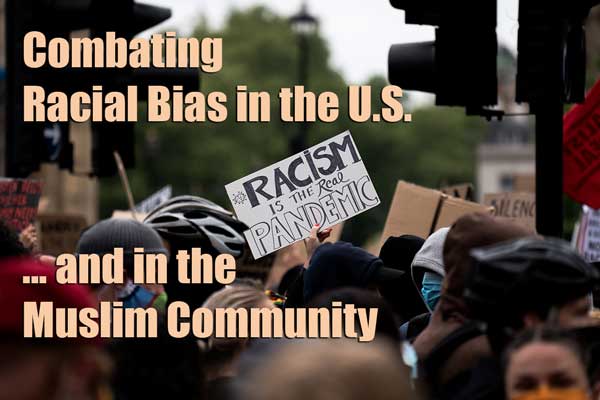
    Combating Racial Bias in the U.S. and in the Muslim Community

    Can you recall the first time you heard about or were directly affected by racial bias, colorism, or any other type of discrimination? Although I never experienced bigotry firsthand until I moved to the United States, I do recall an incident that impacted me as a little girl growing up in Puerto Rico. My mother and I had gone to visit my great-aunt, and as I sat, legs crossed on her flowery couch and hands placed neatly on my lap, I overheard a strange conversation. My great-aunt, a white-haired woman with pale skin and faded blue eyes, lamented that her daughters chose to marry men of dark complexions and coarse hair.

    “Their children came out with that pelo malo, bad hair,” she exclaimed to my mother, throwing a frustrated gesture into the air. She glanced at me and apologetically added, “At least your husband is not so dark and yours came out cepillados.” The word “cepillado” in Spanish means to brush, remove dirt, clean, or smooth a surface.It is the same word we use to say, “brush your teeth.” So, she implied that since my brother and I were born with lighter skin and less textured hair than her grandchildren, we were somewhat cleaner-looking or acceptable. I could not believe my ears, and even though I must not have been more than 7 years old, I was offended to my core. After we left her house, I told my mother I never wanted to visit her again. My mother nodded in agreement, quite possibly feeling just as insulted.

    I wondered why, if we were all Puerto Rican, my great-aunt would feel like she was better than an islander with darker skin. Why did she demean her own grandchildren only because they had a caramel complexion and coily hair? After all, most Puerto Ricans have visibly mixed heritage; our ancestors are a rich blend of native, European, and North and West African. My father happens to be a Puerto Rican of mixed race, darker than my mother’s side of the family, who are of mostly European descent or mestizos. My grandfather had light brown hair and green eyes, and his family migrated to Puerto Rico from Corsica, then part of Italy. My grandparents on my mother’s side, however, are a mixture of indigenous Taino and African, with browner skin tones and features. I was angry that anyone, much less a family member, would point out our differences when I believed, in my childlike way,that our diversity is what made us so unique and beautiful. In fact, my parents lovingly referred to me as their negrita, or little black girl, a common term of endearment in our culture.

    Racism in a Historical Context

    NowI understand that this colorism and racial bias are byproducts of Caribbean colonialism, but as a child this was a concept too complex to understand.Racism, colorism, ethnocentrism, classism and other superiority biases are as old as time itself, and present in every part of the world, manifesting themselves in different forms. When the Spanish made their way to the New World, after the newly victorious Catholic monarchy expelled Muslims and Jews from the Iberian Peninsula, they brought with them their own brand of racist, supremacist, and anti semitic views. To be white and Christian was to be pure, untainted, and civilized. People of color were classified as subhuman, dirty, and uncouth, a sentiment fueled by hatred for the Moors, according to historian Alan Mikhail, author of the book, In God’s Shadow: Sultan Selim, His Ottoman Empire, and the Making of the Modern World.

    In the Caribbean Spanish colonies, a sort of caste system was put in place in which “Peninsular” Spaniards – those born in Europe – were the elite and ruling party, followed by the Puerto Rican born Spaniards, followed by mestizos – a mixture of Spaniard and indigenous,then the mulattoes – a blend of African and indigenous, and then the purely indigenous and Africans at the bottom of the barrel. This system became widespread in places like the Americas, European-occupied African lands, and the Indian subcontinent.

    We never learned about this aspect of history in school as children. In Puerto Rico and here, in the United States, Christopher Columbus and other famous explorers, like our founding fathers, are regarded as heroes, despite their racist ideals. We studied little about ethnocentrism around the world and why some dominant groups viewed others as inferior. As Dan Brown wrote in The Da Vinci Code, “History is always written by the winners. When two cultures clash, the loser is obliterated, and the winner writes the history books – books which glorify their own cause and disparage the conquered foe.” To educate ourselves on this reality is to willfully begin a journey of reversing the effects of colonialism within our own minds, families, and communities. It becomes clear that our job now, as informed parents, guardians, and educators, is to teach our children that racism, colorism, classism, and every sort of bigotry is wrong and contrary to our Islamic faith.

    Indeed, this plague of bigotry, has even made its way back into our Muslim communities of today when over 1400 years ago, the Prophet Muhammad, peace be upon him, warned his followers against it. We hear, time and time again, of the Prophet’s final sermon, in which he famously declared, “… All mankind is from Adam and Eve; an Arab has no superiority over a non-Arab nor a non-Arab has any superiority over an Arab.Also a white has no superiority over a black nor a black has any superiority over a white – except by piety and good action” (Bukhari).Thus, the only characteristic that distinguishes one human being over another, male or female, or whatever their ethnicity or race or culture, is their faith and deeds.

    In the Qur’an, Allah, Himself, may He be glorified, says, “O mankind, indeed We have created you from male and female and made you peoples and tribes, that you may know one another. Indeed, the most noble of you in the sight of Allah is the most righteous of you. Indeed, Allah is Knowing and Aware” (49:13).The two primary sources of our faith and practice, the Qur’an and the Sunnah, clearly prohibit any type of racism or tribalism. These teachings were groundbreaking, nevertheless, they are not always put into practice.

    Identifying and Eliminating Bias

    Human beings are intrinsically biased, we tend to have preferences when it comes to innocent things such as food, the weather, or pet ownership. However, bias becomes problematic when it is directed at groups of people based on preconceived notions or stereotypes. For my great-aunt, a Puerto Rican of darker complexion was undesirable based on the notion that blacks or mulattos were of a lower social status. In the book, Overcoming Bias: Building Authentic Relationships Across Differences, authors and experts on diversity, Tiffany Jana and Matthew Freeman, describe bias as a natural, normal human tendency. However, they say, “expressing bias toward or against people and acting on that bias gets people fired.” Their solution is to become a “cultural ally, someone who seeks to expand their understanding of others and use if for good.” There are certain steps that one must follow to become a cultural ally, and these can be applied by both adults and children.

    The first is to acknowledge our own biases. As Allah says in the Qur’an in chapter 13, verse 11, “Allah will not change the condition of a people until they change what is in themselves.”Although slavery was abolished in the United States 155 years ago, the oppression and suppression of African Americans and other people of color has evolved in its form and operation and continues to this day. There is cultural and racial bias ingrained in the fabric of the American way of life. The escalating racial tension fueled by multiple cases of police brutality and targeted killings of African Americans in 2020is indicative of just how much more work needs to be done. Fortunately, these cases have garnered international attention and sparked movements for change, including in the Muslim community.

    One of the conversations that individuals and organizations are now having is that of privilege. Jana and Freeman mention checking one’s privilege and ego is the second step in combating negative bias. They say, “Generally speaking, privilege blinds you to the challenges that others face. Suffering through a challenge helps you build empathy for others in a similar situation.” An example of this is how certain groups within the Muslim community rally behind a cause depending on the nationality of those affected. Muslims should unify under the banner of faith and universal human rights to combat racism, using whatever privileges we enjoy individually, whether that be racial, socio-economic, or educational.

    Another step we can take to become cultural allies is to actively seek out diverse relationships. Jana and Freeman say that we should aim to be “someone who deliberately deepens her or his understanding of others through cultural fluency and cultural competence.” As Allah says in chapter 49, verse 13, as cited above, we must get to know one another. This should not be in a superficial manner, but rather through forging close, meaningful relationships across differences. The final two steps go hand-in-hand with some simple principles of communication:“ask, don’t assume” — if you are not sure what someone means and you ask them to clarify rather than assuming what they mean, you are enhancing communication with them and avoiding misunderstanding;and “listen, don’t judge” — this is not as easy as it sounds. But truly keeping an open mind about what another person is trying to convey and aiming to see their perspective, without any ego judgments, fosters mutual understanding and a sense of deeper connection as human beings. These communication guidelines apply to all human interactions, but especially are important when we communicate with people who are different from us, whether ideologically, religiously, racially, culturally, or otherwise.

    Taking all of these necessary precautions within our own circles to avoid racial bias and discriminatory practices may not completely obliterate racism in the world, but it can spark positive change in our community.

  • Hispanic Heritage: Intertwined with  Islamic Heritage

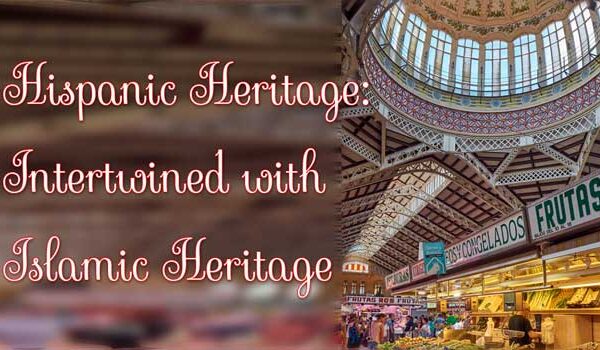
    Hispanic Heritage: Intertwined with Islamic Heritage

    Hispanic Heritage Month is observed annually in the United States from the 15th of September to the 15th of October. It began as Hispanic Heritage Week in 1968 and was upgraded to a month in 1989 to “honor the cultures and contributions of both Hispanic and Latino Americans as we celebrate heritage rooted in all Latin American countries,” according to the official government website (hispanicheritagemonth.gov). During this month, the media and educational institutions showcase Latin American artists, entertainers, academics, scientists, politicians, and others who have left an impact on the world. This month may seem of little significance to Muslims; however, Hispanic heritage and Islamic heritage are intertwined. The celebration of Hispanic, or Spanish, heritage is incomplete without mentioning the history and influence of the cultures that helped shape Latin America. A striking and significant part of the fabric of Hispanic heritage is Islamic.

    This intertwining began just a few years after the death of Prophet Muhammad, peace be upon him, when Islam spread as far east as Persia and the Indus River and as far west as Africa and Europe, primarily Spain and Portugal. These two countries are responsible for the colonization of most of Latin America, what is now Mexico, Central and South America, and the Caribbean. Some Muslim historians such as At-Tabari and Ibn Kathir suggest that the earliest expeditions to Spain were made during the third caliphate of Uthman ibn Affan, around 653 CE, roughly 20 years after the Prophet’s death. However, it was in the year 711, 79 years after the death of Prophet Muhammad, peace be upon him, that Islam was definitively introduced to the Iberian Peninsula, to the land we now call Spain.

    This major campaign was initiated by Musa Ibn Nusayr and his general, Tariq Ibn Ziyad, after hearing of the political turmoil there and the people’s grievances with its tyrannical rulers, the Visigoths. This took place during the era of the Tabi’een, or the successors to the companions of the Prophet, peace be upon him, the best generation second only to the companions in piety and worship. Tariq Ibn Ziyad traveled from the coast of Africa to Gibraltar with 7,000 soldiers. On April 30, 711 CE, they arrived with four ships. Although their army was only one-third the size of their opponents, they eventually managed to subdue the Visigoth army and conquer the cities of Toledo, Cordoba, and Granada, which came under the Islamic rule of the Umayyad caliph, Al Walid ibn Abd al-Malik, the grandson of Marwan ibn al-Hakam.

    Freedom and Tolerance Under Muslim Rule in Spain

    The driving force that allowed the Islamic empire to expand to the lands of Spain and Portugal was the same that began as a spark and eventually spread to the whole of the Arabian Peninsula. The Muslims were disseminating the faith for the sake of Allah and in order to earn a place in the Hereafter. The non-Muslims of Spain, mainly Christians and Jews, enjoyed a great degree of freedom and tolerance under Muslim rule. They were ensured protection and freedom to practice their beliefs without persecution. This marked a time in history when all three faiths prospered in many fields, including sciences, medicine, agriculture, and the arts. The Islamic presence in Spain lasted for almost 800 years, shaping everything about Spanish culture including values, customs, and language. This was the foundation for the Hispanic traditions we celebrate today.

    This is not the only location with an Islamic infusion. Aside from the Muslims in North Africa, it is known that Muslims crossed into Abyssinia, what is now Ethiopia and Eritrea, from Arabia as early as six years before the Hijrah (614 CE), the migration of the early Muslim converts to Medina. Additionally, during the caliphates of Umar ibn Al Khattab and Uthman ibn Affan, military expeditions were sent to conquer the lands from Egypt to Tunisia, and these expansions continued throughout Africa, from east to west. Continuous interactions with Muslims, through trade and proselytizing, resulted in more and more African tribes embracing Islam and establishing their own Muslim communities.

    Catholic Spain and Portugal, after having recaptured rule in the Iberian Peninsula by 1492, engaged in the Atlantic slave trade, seeking to colonize and settle in the recently “discovered” New World. African men and women, including Muslims, along the Western Coast of Africa were captured, sold, and traded like merchandise, and many of them were shipped to the Americas, especially to the Caribbean, Mexico, and South America. This continued from the 16th to the 19th century. The presence of these Africans in Latin America helped shape a multi-ethnic identity. A common Spanish proverb in Latin America is “Si no tiene de Dinga, tiene de Mandinga,” which translates to “If one does not have something from the Dinka, then one has something the from the Mandinka. This means that a Latino or Hispanic individual cannot deny their African ancestry, whether he or she came from the Dinka, a tribe native to Sudan, or from the Mandinka people of Mali. It is interesting to note that the vast majority of Mandinka are Muslims.

    The expulsion of Muslims from Spain began after a presence of 800 years, towards the end of the 15th century and around the same time that Italian explorer Christopher Columbus and his crew, financed by the Catholic monarchs of Spain, came to the New World aboard Spanish ships. To fully understand the level of influence of Islam on Spanish culture, compare those eight centuries to the age of the United State which is only 244 years old. Muslims ruled Spain for more than twice as long as the U.S. has been in existence, yet no one can deny that the European and African descendants of slaves that are now living in this country are “American.” Therefore, the Muslims, like Jews and Christians, who were living in Spain for generations were indeed, Spanish, and not just a superficial “influence” that was completely wiped away by the Catholic Inquisition, persecution, and exile of Muslims.

    What happened to these descendants of Muslim Spaniards? Sadly, some were forced to convert to Christianity (some even did it willingly to save themselves and their property), many were killed, displaced, and evicted from their lands, sent away to “where they came from” – likely North Africa, although they had never previously set foot in that region because they had been born and raised in Spain. Still, countless others made their way to the New World. Likewise, Muslim Africans were brought to the Americas as slaves and once slavery was abolished, they formed their own communities in every country of Latin America. Later mass migrations followed the dismantlement of the Ottoman Empire and subsequent instability in Ottoman controlled lands. Many Muslim immigrants resulted from wars and political strife in the Middle East and Far East, and still others were looking for a better way of life. This migration that began with the colonization of the New World has not stopped to this day, bringing the population of Muslims in Latin America to the millions, not counting the descendants of Muslim Spaniards and Africans who were stripped of their faith.

    Loving Every Part of Our Muslim History

    Given the historical evidence, Muslims should recognize that many Hispanics or Latin Americans are descendants of Muslim civilizations. If we claim, as Muslims, to love our history, we must own every part of it. We cannot be enchanted with the architecture and stories of Islamic Spain, and the wealth and influence of the Muslim empire of Mali and, yet, dismiss the fact that both live on in the New World.
    Celebrating the contributions of Latin Americans is also to acknowledge that many political leaders, including 11 presidents, of Latin American countries have Muslim ancestry. It is to travel to these nations and see the Islamic influence in their architecture, arts, food, and in the very DNA of their people. It is also to know that some of the most popular Hispanic celebrities like Salma Hayek, Shakira, Emilio Estefan, and Jaime Camil are of Middle Eastern descent. It is to hear the stories of Latin Americans who remember a Muslim grandparent or great-grandparent or distant relative. It is to celebrate that Allah’s promise to His servants is true. Prophet Muhammad, peace be upon him, said: “This matter will certainly reach every place touched by the night and day. Allah will not leave a house or residence, but that Allah will cause this religion to enter it, by which the honorable will be honored, and the disgraceful will be disgraced. Allah will honor the honorable with Islam and he will disgrace the disgraceful with unbelief” (Ahmad).

    As Muslims, we have a responsibility to reject trends in the U.S. that alienate and/or objectify Latinos or treat them as second-class citizens. We should also put an emphasis on bringing Hispanics or Latinos/Latin Americans back to Islam, or at least to educate them on their history, which is tied closely with Islamic history. In 2009, only one percent of Muslims identified as Hispanic. By 2018, that number had reached seven percent, according to the Institute for Social Policy and Understanding’s annual report, American Muslim Poll: Predicting and Preventing Islamophobia. Hispanics are returning to their roots. Is the wider Muslim community doing all it can to welcome them back? Let us begin by honoring Hispanic Heritage.

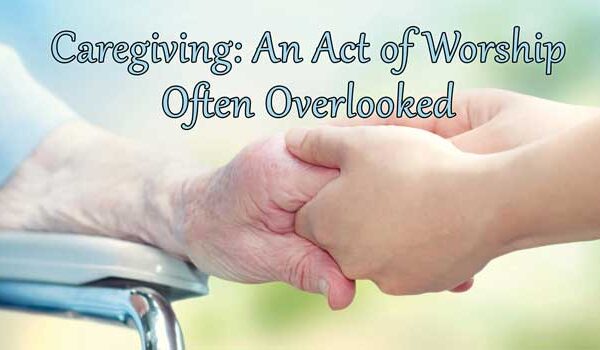
  • Caregiving: An Act of Worship Often Overlooked

    Caregiving: An Act of Worship Often Overlooked

    “It is not righteousness that you turn your faces toward the east or the west, but righteous is he who believes in Allah and the Last Day and the Angels and the Book and the Prophets, and gives his wealth in spite of his love [for it] to his relatives and the orphans and the needy and the wayfarer and the beggars, and for freeing those in bondage; and who establish the prayer and pay the poor-due; and those who fulfill their promise when they make it, and the patient in suffering and hardship, and in times of peril; it is those who are true and righteous” ( Quran, 2:177).

    Consider the situation of a Muslim who is caring for a sick relative or an elderly parent. The afflicted family member cannot bathe or eat on their own, they cannot dress themselves, or walk to the bathroom to answer the call of nature. The caregiver must be with them each day, tending to their every need diligently, with very little time for themselves to engage in other activities. They might not be getting enough sleep and often feel too exhausted to offer voluntary prayers or fasting. Is such a person missing out on performing acts of worship that will benefit them in the Hereafter? Are they neglecting their duties to their Lord?

    Nurturing and Giving Care: Acts of Worship

    Being a caregiver is part of the innate nature of man. Regardless of gender, locality, social status, or religious background, human beings are creatures that thrive on nurturing relationships. Humans have both the need to feel protected and loved and the desire to reciprocate these emotional needs on both a spiritual and physical level. In Islam, every action that is done with the intention of pleasing the Creator is considered an act of worship. Thus, social interactions that are carried out in accordance with the teachings of the Quran and prophetic traditions naturally fall into this category.

    Allah says in the Quran, “And they have been commanded no more than this: to worship Allah, offering Him sincere devotion, being true [in faith]; to establish regular prayer, and to practice regular charity; and that is the religion right and straight” (98:8). We should note here that charity encompasses much more than giving money. The Prophet (pbuh) said, “A kind word is charity, and every step that a person takes for prayer is a charity; if you remove obstacles in the road it is a charity” (Ahmad). Certainly, caregiving is an essential and profound charity.

    Benefits to the Giver

    Tristen Inagaki and Edward Orehek, both assistant professors in the Department of Psychology at the University of Pittsburgh, write about the benefits of caring for others: “People thrive when they experience close social bonds and suffer when they lack social ties. In particular, social connections foster a sense of social support—the perception or experience of being loved and cared for by others, esteemed and valued, and part of a social network of mutual assistance and obligations (Wills, 1991) —which is important for functioning in daily life (Lakey & Orehek, 2011).”

    The pillars of Islam are the very foundations of faith through submission, and one of those pillars has to do with caring for others. Like salat (prayer), sawm (fasting during the month of Ramadan), and hajj (the pilgrimage to Makkah), zakat (obligatory charity) is regarded as a pillar of the religion and an act of worship. The purpose of zakat is not only to purify the wealth of the person giving, but also to aid the less fortunate. While the other pillars of Islam serve the individual, offering zakat impacts the entire Muslim community, and society in general. Muslims are obligated to care for the needy and fulfilling this duty is a major and necessary part of worship.

    Everyone Is a Caregiver

    There are countless examples in both the Quran and the Sunnah that demonstrate that caring for any living being is regarded as an act of worship. Every single person is a potential caregiver and must fulfill the role at one point or another. Even caring for and protecting the earth and its resources is a form of caregiving. Tending to a sick or wounded animal, nursing a child, providing for one’s family, taking care of an elder — these all demonstrate the human capacity and willingness to care and nurture and provide for the needs of others. As far back as Adam and Eve, parents have helped one another in nurturing their offspring, raising them until they are independent adults and then providing them support even beyond their young adulthood. They teach them the skills they need to be on their own, just like a bird shows its young how to fly, or a lion teaches its cub how to hunt. Older siblings take care of younger siblings and help with daily chores. Aunts, uncles, cousins, even neighbors and teachers, all form a support network of cultivation for the youth, preparing them for the responsibilities of adulthood.

    Once this child is grown up, then they must take care of themselves, start a family of their own, and possibly bear children, and the cycle begins all over again. When parents grow older and need help, their children become their caregivers. Allah says in the Quran, “And your Lord has decreed that you worship none but Him, and to parents be good. Whether one or both of them reach old age [while] with you, say not to them a word of contempt and do not repel them, but speak to them a noble word” (17: 23). This system of care and compassion is encouraged in Islam, and Allah, more than once in the Quran, commands men and women to honor their parents, at times citing the parents’ sacrifices of love, care, and commitment to their children.

    It was narrated from Ibn Umar that Prophet Muhammad, peace be upon him, said: “Each of you is a shepherd and each of you is responsible for his flock. The ameer (ruler) who governs the people is a shepherd and is responsible for his flock. A man is the shepherd of the members of his household and is responsible for them. A woman is the shepherd of her husband’s house and children and is responsible for them. A slave is the shepherd of his master’s wealth and is responsible for it. Each of you is a shepherd and each of you is responsible for his flock” (Bukhari and Muslim).

    Not upholding this trust can result in earning the wrath of Allah. An example of this is the narration about a woman who owned a cat and neither fed the animal nor allowed it to go out in search of food and drink. The cat’s death resulted in her being condemned to the Hellfire (Bukhari and Muslim). In both Bukhari and Muslim, it is also narrated that the Prophet, peace be upon him, said, “There is no servant to whom Allah has entrusted the care of people, and he dies neglecting his flock, but Allah will forbid Paradise to him.”

    Allah Is with Those Who Are in Need

    The Muslim who carries out his obligation of caring for those in need, including family, orphans, the physically and mentally ill, the poor, and the oppressed will find a great reward with Allah. Abu Hurairah, may Allah be pleased with him, reported that the Messenger of Allah said, in a hadith Qudsi: “Allah will say on the Day of Judgment, ‘Son of Adam, I was sick, but you did not visit Me.’ The person being questioned will respond, ‘My Lord, how could I visit You when You are the Lord of the Worlds?’ Allah will say, ‘Did you not know that one of My servants was sick and you didn’t visit him? If you had visited him, you would have found Me there.’ Then Allah will say, ‘Son of Adam, I needed food, but you did not feed Me.’ The person will ask, ‘My Lord, how could I feed You when You are the Lord of the Worlds?’ Allah will say, ‘Did you not know that one of My servants was hungry, but you did not feed him? If you had fed him you would have found its reward with Me.’ Allah will then say, ‘Son of Adam, I was thirsty, but you did not give Me something to drink.’ The person will ask, ‘My Lord, how could I give you a drink when You are the Lord of the Worlds?’ Allah will respond, ‘Did you not know that one of My servants was thirsty, but you did not give him a drink? If you had given him a drink, you would have found its reward with Me’” (Bukhari).

    Now imagine the scenario of the caregiver who will meet his Lord, after the time spent on earth offering his or her time, energy, and sincere efforts to care for the needs of others. They will humbly ask Allah for mercy and forgiveness for not offering more voluntary prayers or fasting. However, when they give the reasons for that, they will say: “My Lord, one of your servants was sick, and I took care of them; one of your servants needed food, and so I fed him; one of your servants was thirsty, and I gave him drink.” What will the caregiver’s situation be before Allah SWT? The bounteous reward that such a person has in store is unfathomable.

    Benefits of Caregiving

    Aside from the recompense in the Hereafter, there are worldly benefits to caregiving. Anas ibn Malik reported that the Messenger of Allah, peace be upon him, said, “Whoever is pleased to have his provision expanded and his life span extended, then he should keep good relations with his family” (Bukhari and Muslim). Keeping good relations with family encompasses good treatment and caring for their needs. Science, again, seems to agree with this prophetic guidance. In an article in Time Magazine entitled, “Be Nice, Because People Who Care for Others Live Longer,” the author mentions that, “a recent study published in the journal, Evolution and Human Behavior, found that people who occasionally watched and cared for others lived longer than people who didn’t (Sifferlin, 2016).” Likewise, an article by Melissa Willets in Parents magazine, “Good News, Moms-of-Many! You May Live Longer,” cites two new studies that propose that mothers who bear multiple children and raise large families, with the support of a social network, may live longer.

    As mentioned before, caregiving not only impacts people on an individual level, but it can also serve as a catalyst for social change. If the instinct of humans is to protect and nurture, seeing another creature suffering should trigger a caring and compassionate response. As the caretakers of the earth, the responsibility of mankind Is to maintain balance and justice. Thus, caring for others is also the driving force behind social movements. Public outrage or a massive public response happens when people in a society witness a wrongdoing or natural disaster which causes anguish. This is the natural inclination to care for fellow human beings, instilled in us by the Most Merciful, Himself. Abdullah ibn Amr reported that Prophet Muhammad, peace be upon him, said, “Those who are merciful will be shown mercy by the Most Merciful. Be merciful to those on the earth and the One in the heavens will have mercy upon you” (Tirmidhi).

  • La importancia de los 40 años en el Islam

    La importancia de los 40 años en el Islam

    Me convertí al Islam a la edad de 20 años, y fue un momento decisivo en mi vida. Faltaba poco para que cumpliera 21 años, y mis amigas esperaban que celebrara la ocasión en una discoteca o comprando alcohol legalmente (en los Estados Unidos la edad mínima para comprar alcohol es 21). Se sorprendieron al descubrir que me había convertido en musulmana y que no tenía ninguna intención de aceptar sus invitaciones para salir de fiesta. Esas mismas amigas comenzaron a retirarse de mi vida una por una como soldados heridos en una batalla que ya no podían luchar. Esta fue mi primera prueba de fe. Mi mentor, el que facilitó mi Shahadah (testimonio de fe), me había advertido que me vería afectada por dificultades tras abrazar el Islam. El abandono fue una de ellas. Él lo describió como el último intento desesperado de Satanás para desviarme de mi verdadero propósito: adorar al Creador.

    Después de casi dos décadas, la lucha continúa y ahora las pruebas han tomado diferentes formas. Una vez que Satanás se da cuenta de que no hay marcha atrás, nos hace perder el tiempo, hasta que nos damos cuenta de que han pasado años y hemos descuidado nuestros deberes religiosos. Hay un dicho que dice: “La edad no es más que un número”, pero la edad de cuarenta años tiene un significado especial en el Islam. Con respecto al envejecimiento, Alá dice en el Corán: “… Cuando alcance la madurez, al llegar a los cuarenta años, debe decir [en súplica]: “¡Oh, Señor mío! Haz que sepa agradecerte los favores que nos has concedido, tanto a mí como a mis padres, y que pueda realizar obras buenas que Te complazcan. Concédeme una descendencia piadosa. Me arrepiento a Ti [de mis pecados] y soy de los musulmanes” (46:15).

    Teniendo en cuenta este verso, he aprendido a apreciar las arrugas y ojeras y los demás cambios que vienen con la edad. En lugar de ser algo de que avergonzarse, son insignias de honor, un testimonio de mis experiencias, buenas y malas, y el conocimiento que he obtenido como resultado. También significa que pronto habré vivido más de mi vida como musulmana que como no musulmana. El verso anterior destaca la importancia de alcanzar este hito y nos exhorta a estar agradecidos y a entrar en este período de tiempo con humildad y sumisión, esperando el placer del Altísimo. Se nos recuerda que nuestros días están contados y, como tal, debemos centrarnos en nuestro destino final.

    No hay mejor prueba del inmenso valor que tiene la edad de cuarenta años que el hecho que Alá lo menciona en el Corán y que le encargó al Profeta Muhammad, la paz sea con él, con su misión a esa edad exacta. El Profeta Muhammad, la paz sea con él, solía pasar largos períodos de tiempo en profunda reflexión en las montañas alrededor de La Meca, y finalmente recibió su primera revelación de Alá mientras estaba en la cueva de Hira en su cuadragésimo año de vida. Como sabemos, el Profeta Muhammad vivió una vida ejemplar tanto antes como después de alcanzar la profecía, pero es interesante que comenzó a recibir revelaciones a la edad de cuarenta años. Ibn Kathir dijo en su Tafsir del Corán, con respecto al versículo 15 del capítulo 46, que cuando un hombre (o mujer) alcanza los cuarenta años, su “intelecto entero, comprensión y paciencia alcanzan el nivel de madurez”.

    Aunque no he celebrado un cumpleaños desde que me convertí en musulmana, al menos no en el sentido tradicional, mi familia todavía me llama o me envía mensajes para felicitarme, y todavía recibo regalos ocasionales. Cuando era más joven, les preguntaba en broma (medio en broma, medio en serio): “¿Por qué debemos celebrar cuando estoy un año más cerca de mi muerte?”. La realidad es que nuestro último aliento se acerca cada vez que respiramos, y cada paso que damos sobre la Tierra nos acerca más a nuestra tumba. Hasan al Basri, que Alá tenga piedad de él, dijo: “No eres más que un número de días, y cada vez que un día pasa, una parte de ti fallece”. El Profeta Muhammad, la paz sea con él, también mencionó que el promedio de vida de sus seguidores es de sesenta a setenta años (Tirmidhi). Por lo tanto, una vez que lleguemos a los cuarenta, debemos esforzarnos por prepararnos para nuestra partida de este mundo.

    La gente rara vez habla de la muerte; es un tema que nos hace sentir incómodos. Es “el elefante en la habitación” para cada ser humano, esperando, al acecho, como nuestra única garantía en este mundo impredecible. Sin embargo, debemos enfrentar nuestra realidad mortal, y el Profeta, la paz sea con él, nos enseñó que deberíamos “Recordar a menudo al destructor de placeres”. Esto nos recuerda que no debemos ocuparnos tanto con el entretenimiento y buscando el éxito y la felicidad mundanal. Cuando nuestra alma se separe de nuestro cuerpo, el fruto de nuestro trabajo se perderá, excepto lo que se ofrece de adoración y buenas obras. Nuestro legado depende de los actos continuos que sigan beneficiando, como la caridad, el conocimiento beneficioso y las oraciones de nuestros hijos piadosos.

    Esto me llevó a reflexionar y evaluar mi viaje en el camino del Islam a lo largo de los años. Me pregunto, ¿Qué he ganado? ¿Qué he perdido? ¿Dónde podría haber mejorado? ¿Qué puedo hacer ahora para remediar cualquier daño hecho? En esta autoevaluación, espero encontrar la motivación para mejorarme como musulmana, como hija, como hermana, como madre, como esposa y como persona, con la ayuda y guía de Alá. También quiero que mis lectores que tienen menos de cuarenta años reflexionen sobre sus propias experiencias y, en lugar de esperar hasta los cuarenta para mejorar, que comiencen ahora mismo. Si Alá así lo desea, una vez que alcancen esta etapa, tendrán menos arrepentimientos y más triunfos. Para aquellos de mi edad y mayores, tal vez puedan compartir sus propias palabras de sabiduría con sus hijos y con nuestras generaciones más jóvenes, como lo han hecho nuestros predecesores por nosotros. Hasan al Basri dijo: “El mundo es de tres días: en cuanto a ayer, se ha desvanecido junto con todo lo que había en él. En cuanto a mañana, es posible que nunca lo veas. En cuanto a hoy, es tuyo, así que trabaja por él”.

    Estas hermosas palabras nos enseñan que no debemos detenernos en el pasado. Nuestras vidas son lo que Alá ha querido, y cada experiencia nos ha convertido en los seres humanos inevitablemente defectuosos, pero siempre esperanzados y determinados que somos hoy. El Profeta Muhammad, la paz sea con él, dijo: “El remordimiento es parte del arrepentimiento” (Ibn Majah). Por lo tanto, lamentaremos el tiempo perdido, las oportunidades perdidas y los errores cometidos. Sin embargo, en lugar de permitir que nuestros cargos de conciencia nos consuman, podemos usarlos como recordatorio de que todavía tenemos tiempo para hacer las paces. Mientras vivamos y respiramos, podemos volver a nuestro Señor. El Mensajero de Alá, la paz sea con él, dijo: “Aprovecha los cinco antes de los cinco: tu juventud antes de tu vejez, tu salud antes de tu enfermedad, tus riquezas antes de tu pobreza, tu tiempo libre antes de tu trabajo y tu vida antes de tu muerte” (Al Hakim).

  • The Islamic Significance of Age 40

    The Islamic Significance of Age 40

    I embraced Islam at the age of 20, alhamdulillah, and that was a turning point in my life. It was only a few months before my 21st birthday, which my non-Muslim friends had expected I would usher in by going to a nightclub and purchasing alcohol legally. They were shocked to discover I became Muslim and that I had no intention of accepting their invitations to go out and party. Those same friends began to retreat from my life like wounded soldiers from a battle they could no longer fight. This was my very first test of faith. The youth coordinator that facilitated my shahadah (testimony of faith), had warned me that I would be afflicted with trials after embracing Islam. Abandonment was one of them. He described it as Shaytaan’s desperate attempt to deter me from surrendering to my true purpose of worshipping the Creator.

    After almost two decades, the struggle continues and now the tests have taken different forms. Once Shaytaan realizes that he cannot turn us back on our heels, he makes us waste time, until we realize that years have passed, and we have neglected our duties. There is a saying that goes, “Age is nothing but a number,” but the age of forty has special significance in Islam. Regarding aging, Allah says in the Qur’an, “… until, when he reaches maturity and reaches forty years, he says, ’My Lord, enable me to be grateful for Your favor which You have bestowed upon me and upon my parents, and to work righteousness of which You will approve, and make righteous for me my offspring. Indeed, I have repented to You, and indeed, I am of the Muslims’” (Qur’an, 46:15).

    Considering this verse, I have learned to appreciate the wrinkles and dark circles under my eyes, and other changes that come with aging. Instead of them being something to be ashamed about, they are badges of honor, a testament to my experiences, good and bad, and the knowledge I have gained as a result. It also means that soon I will have lived more of my life as a Muslim than as a non-Muslim. The verse above highlights the significance of reaching this milestone and exhorts us to be grateful and enter into this time period in full humility and submission, hoping for the pleasure of the Most High. We are reminded that our days are numbered, and as such, we should be focused on our ultimate destination.

    There is no better example about the immense meaning of the age of forty than the fact that Allah mentions it in the Qur’an and that He commissioned Prophet Muhammad, peace be upon him, at that exact age. Prophet Muhammad (pbuh) used to spend long periods of time in deep reflection in the mountains around Makkah, and finally received his first revelation from Allah while in the cave of Hira in his fortieth year of life. As we know, Prophet Muhammad lived an exemplary life both before and after attaining prophethood, but it is interesting that he began receiving revelations at age forty. Ibn Kathir said in his Tafsir of the Qur’an, regarding verse 15 in chapter 46, that when a man (or woman) attains forty years, his “complete intellect, understanding, and patience reach the level of maturity.”

    While I have not celebrated a birthday since becoming a Muslim, at least not in the traditional sense, my non-Muslim family still call me or send me messages to congratulate me, and I still receive occasional gifts. When I was younger, I would jokingly (half joking, half serious) ask them, “Why should we celebrate when I am a year closer to my death?” The reality is that our final breath is approaching every time we inhale, and each minute we remain on the Earth brings us a step closer to our grave as we exhale. Hasan al Basri, may Allah have mercy on him, is quoted as saying, “You are nothing but a number of days, and whenever a day passes away, a part of you passes away.” Prophet Muhammad (pbuh) also mentioned that the average lifespan of his followers is from sixty to seventy years (Tirmidhi). Thus, once we reach forty, we should endeavor to prepare for our departure from this world.

    People seldom speak of death; it is a subject that makes many of us feel uncomfortable. It is the elephant in the room for every human being, waiting, lurking, our only guarantee in this unpredictable world. Nevertheless, we must face our mortal reality, and the Prophet (pbuh) taught that we should “Remember often the destroyer of pleasures.” This reminds us that we should not busy ourselves with entertainment and seeking mundane success and happiness, for when our soul departs, the fruit of our labor will be lost except for whatever we put forth of worship and good deeds. Our legacy depends on acts of righteousness that keep on giving, such as ongoing charity, beneficial knowledge, and the prayers of our righteous offspring.

    This led me to reflect on and evaluate my journey on the path of Islam over the years. What have I gained? What have I lost? Where could I have improved? What can I do now to remedy any damage done? In this self-assessment, I hope to find motivation to better myself as a Muslim, as a daughter, as a sister, as a mother, as a wife, and as a person, with Allah’s help and guidance. I also want my readers who are under forty to reflect on their own experiences and instead of waiting until forty to improve, start right now. If Allah so wills, once you do reach this huge milestone, you will have less regrets and more triumphs. For those my age and beyond, perhaps you can share your own words of wisdom with your children and with our younger generations, as our predecessors have done for us. Hasan al Basri said, “The world is three days: As for yesterday, it has vanished along with all that was in it. As for tomorrow, you may never see it. As for today, it is yours, so work on it.”

    This beautiful quote teaches us that we should not dwell on the past. Our lives are what Allah has willed, and every experience has shaped us to become the inevitably flawed but always hopeful and determined human beings that we are today. Prophet Muhammad, peace be upon him said, “Regret is part of repentance” (Ibn Majah). So, we will have regrets, about time wasted, opportunities lost, and mistakes made. However, instead of allowing our pangs of conscience to consume us, we can use them as a reminder that we still have time to make amends. As long as we are living and breathing, we can turn back to our Lord. The Messenger of Allah, peace and blessings be upon him, said, “Take advantage of five before five: your youth before your old age, your health before your illness, your riches before your poverty, your free time before your work, and your life before your death” (Al Hakim).

  • El mes de Ramadán al estilo latino

    El mes de Ramadán al estilo latino

    El mes de Ramadán al estilo latino: Una entrevista con el Licenciado Jamal Abdul-Karim

    El Licenciado Jamal A. (Díaz) Abdul-Karim es el director de la División Superior de la Escuela Al-Rahmah en el condado de Baltimore, Maryland. Es un converso de ascendencia cubana y nativo de Manhattan, Nueva York. Está casado y tiene siete hijos, desde los 29 y hasta los 50 años de edad. Lic. Abdul-Karim posee una maestría en educación y se ha dedicado a servir al sector educativo público y privado durante más de cuatro décadas. Ha dirigido series de conferencias, escrito artículos de investigación, y continúa trabajando independientemente en programas y eventos culturales y comunitarios. Le pedimos que compartiera sus pensamientos sobre la celebración del mes de Ramadán como musulmán latino.
    ¿Cómo se preparan usted y su familia para el mes de Ramadán?

    El mes de Ramadán es un período único y bendecido para todos los musulmanes practicantes. Nuestra familia se prepara de manera similar a otras familias musulmanas. Obtenemos lo que necesitamos en alimentos, mientras anticipamos los beneficios de la adoración, la camaradería, los eventos especiales y las visitas de familiares y amigos. Más allá de eso, esperamos mejorar espiritualmente, en nuestra vida personal y nuestro carácter. Siento que los beneficios son ilimitados.

    ¿Ayudan a organizar eventos de Ramadán o comidas para la comunidad latina en su área?

    Mi familia ha participado en muchos eventos de Ramadán a lo largo de los años. Por lo general, se comparten alimentos de origen latino, recuerdos personales y temas de la religión. Actividades como esta se han llevado a cabo en salones grandes y pequeños y he tenido el privilegio de participar en ambos. Estas ocasiones me han inspirado a escribir artículos, dar entrevistas y participar como orador en diferentes programas centrados en educar a otros musulmanes sobre el impacto que los musulmanes latinos han tenido y continúan teniendo en nuestra comunidad.

    La mayoría de la comunidad musulmana responde de manera positiva a nuestros esfuerzos. Sin embargo, de acuerdo con las estadísticas de cuántos musulmanes latinos existen, o el papel que hemos desempeñado en la historia, algunos musulmanes ignoran la cantidad y la diversidad de informes sobre los musulmanes latinos que viven en todo el continente americano. Estamos inextricablemente unidos a los desarrollos históricos de esta región. Las poblaciones indígenas de latinos que provienen de muchas de las ciudades más pobladas estuvieron movilizadas durante décadas. Seguimos creciendo como comunidad en todo el país. Sin embargo, muchos hermanos y hermanas aún se sorprenden cuando conocen o aprenden sobre los logros de los musulmanes latinos.

    ¿Su cultura y tradiciones juegan un papel en la manera que se prepara y celebra el mes de Ramadán y Eid?

    Para mí, es una cuestión de conmemoración. Ramadán me recuerda a las celebraciones navideñas. Piña colada casera, helado de coco, helado de mango o piña estilo cubano, arroz amarillo o rojo y guisantes, plátanos o guineos verdes, empanadas de carne, pescado en salsa roja, limonada, o ensalada de mariscos picante, el sabor de sofrito, etc., son todos parte de la atmósfera festiva que experimenté durante esas épocas festivas.

    Mi hija mayor se ha comprometido a preservar partes de esa tradición, ¡y es un gozo! Nos gustan los sabores, mezclas y condimentos. Cuando otros musulmanes latinos comparten su comida con nosotros, siempre es algo especial. Creo que cada grupo tiene algo bueno que ofrecer, y no es diferente para los musulmanes latinos. Es una parte importante de nuestra diversidad y herencia islámica.

    ¿Has desarrollado tus propias tradiciones de Ramadán / Eid?

    En lo que respecta a las tradiciones, nuestras actividades básicas siguen el mismo patrón que otros musulmanes. Cada hogar puede tener algo especial que hace, pero el enfoque principal es adorar a Alá y obtener la mayor cantidad de bendiciones y beneficios. Lo verdaderamente especial de este tiempo es el esfuerzo por perfeccionar nuestra espiritualidad para que dure todo el año. Otro enfoque es lograr que nuestros hábitos alimenticios se ajusten a las recomendaciones islámicas. Así podemos disfrutar de todos los alimentos y platos mencionados, utilizando productos halal. En ese sentido, podemos disfrutar durante Ramadán en el mismo contexto, y comer esa empanada con carne halal o condimentar nuestro arroz y gandules con pavo halal ahumado en lugar de cerdo. Podemos beber los mojitos vírgenes (bastante refrescantes) y disfrutar de otras cosas que son familiares de una manera permisible.

    En el caso de mi familia, incorporar algunos alimentos latinos es necesario para preservar nuestra cultura. Creo que esta es una forma positiva de transmitir lo que nos hace quienes somos y la identidad que elegimos reconocer como parte de la herencia de nuestra familia. En el esquema más amplio de las cosas, estamos agradecidos de compartir esta realidad, porque hay un lugar legítimo para ello en el Islam.

    ¿Cómo se compara el mes de Ramadán con la Navidad en la manera que usted y su familia lo celebra?
    Cuando expreso cuál era mi disposición religiosa anterior, a veces le parece algo extraño a la gente, pero no era cristiano. Sí, estuve expuesto al cristianismo y sus enseñanzas, pero mis padres fueron abiertos al respecto. A pesar de que mi padre era un católico jesuita estricto y mi madre fue criada en la iglesia bautista, nunca nos obligaron a practicar el cristianismo. Sin duda, sí nos animaron a creer en Dios. Inicialmente, cuando era joven, mi familia asistía a una iglesia interconfesional. Las enseñanzas de la iglesia eran que el verdadero compañerismo estaba compuesto por personas de todas las denominaciones y que se expresaba en los ideales más elevados de fe y hermandad.

    Por esta razón, conocí a judíos, cristianos, continentales africanos, indios orientales y una gran cantidad de otros feligreses que participaban en esa iglesia. Esta experiencia temprana me impresionó de niño, con su énfasis principal en la hermandad y la unidad y la adoración de Dios. Fui libre de explorar otros sistemas de creencias que reflejaban las creencias tradicionales afro céntricas, las enseñanzas asiáticas, la filosofía mundial y, por supuesto, el Islam. Creo que lo expresé antes, que los tiempos festivos anteriores tenían un sentido de espiritualidad en términos de las tradiciones familiares, así como la costumbre de reunirse entre los miembros jóvenes y mayores. Al igual que las familias que le dan importancia a la tradición, el respeto por los mayores y el agradecimiento, las fiestas islámicas enfatizan la gran bendición derivada de conmemorar las alabanzas de Alá. Alá nos recuerda en el Corán que una manera de alabarlo es conmemorando los días especiales que nos ha otorgado.

    ¿Qué te distingue como musulmán latino en tu comunidad? Es decir, ¿La gente se da cuenta que eres un musulmán latino?

    Esta es una excelente pregunta y, sinceramente, mi apariencia física no necesariamente transmite a las personas que soy un musulmán latino. Esto viene con compartir información personal cuando surge el tema. Otras personas son conscientes de que he estado involucrado de manera proactiva con el movimiento y programas de latinos musulmanes, y como parte de los esfuerzos de educación islámica. Además de mis hermanos y hermanas latinos que saben que soy de ascendencia latina, pueden surgir rastros reveladores cuando uso una frase en español, alguien que conoce mi pasado lo menciona. He conocido a otros musulmanes que son como yo, pero son más discretos al respecto. Por ejemplo, puede ser que no hablen español, o no se identifican abiertamente como latinos. Incluso pueden sentir una sensación de incomodidad al interactuar con los latinos, y mucho menos identificarse como uno.

    Me he esforzado en darle frente a este punto de vista, recordando el hecho de que somos un grupo diverso. Algunos están completamente inmersos en la experiencia latina, mientras que otros provienen de una etnia latina multicultural o bicultural. Tengan la seguridad de que ninguna de estas cosas invalida a las personas, sus raíces, cultura o sentido de identidad étnica. Lo veo como una forma de aprender más sobre la historia personal, y descubrir cómo se relaciona con el Islam.
    No tengo ningún problema con ser identificado como afroamericano. Esto no presenta ningún conflicto para mí. La cultura y civilización indígena africana es solo una realidad fenomenal que es el resultado de la diáspora africana global. Permítanme recordarles que los latinos vienen en todas las formas, tamaños, tonos y colores, y hablamos español, portugués, holandés, francés, inglés y criollo y / o patois.

    ¿Tiene alguna experiencia o consejo especial sobre el mes de Ramadán que le gustaría compartir específicamente dirigido o relacionado con los musulmanes latinos?

    El Ramadán es una oportunidad para renovar nuestras intenciones, refrescar nuestro conocimiento y revitalizar nuestro compromiso espiritual. Cuando surgen oportunidades para compartir las ricas experiencias culturales de los musulmanes latinos, recomiendo que otros musulmanes exploren, investiguen, discutan y asistan a programas que comparten información vital sobre los musulmanes latinos y su continua contribución al mundo islámico y al mundo en general. Somos afortunados de tener personas preparadas, dedicadas y continuamente buscando lo mejor para sus hermanos musulmanes latinos. La comunidad musulmana latina se está expandiendo y su perfil refleja grupos que provienen de América del Norte, México, América Central, América del Sur y las Islas del Caribe. Los musulmanes de estas diversas áreas pueden compartir sus experiencias con otras personas y representar cada aspecto de la región de la que proceden. Compartir este tipo de información mejorará la comprensión de nuestra comunidad musulmana y reforzará la realidad de que Alá puede llevar el Islam al corazón de cualquier persona y a cualquier sociedad que elija.

    Finalmente, los musulmanes latinos continúan contribuyendo globalmente al avance del Islam a través de la educación académica, la erudición islámica, las ciencias médicas y tecnológicas, la investigación histórica, el desarrollo comunitario, las artes culinarias, las empresas independientes, el ámbito sociopolítico y varios otros campos de activismo. Las contribuciones de los musulmanes latinos son primordiales para los continuos esfuerzos colectivos para establecer el Islam en nuestras comunidades regionales y el hemisferio occidental.