بسم الله الرحمن الرحيم

Author: Wendy Diaz

  • Los latinos adoptando el Islam:  un regreso a sus verdaderas raíces

    Los latinos adoptando el Islam: un regreso a sus verdaderas raíces

    La gran mayoría de los latinos son católicos romanos, debido principalmente a su cultura o crianza. Pero muchos de estos habitantes de Norte, Sur y Centroamérica se sienten incómodos y desencantados con las diferentes creencias y prácticas de la Iglesia Católica, incluyendo el énfasis en los santos, la doctrina de la santa trinidad, las oraciones dirigidas a María, el pecado original, asuntos relacionados con la jerarquía de la Iglesia, y la falta de aplicación de las prácticas religiosas por muchos católicos.

    Se ha reportado en El Almanaque Católico que un estimado de 100.000 a 600.000 hispanos, o latinos, abandonan la Iglesia Católica cada año en los EE.UU. solamente. Ya sea que elijan aceptar el Islam o no, ellos están comprometidos en la búsqueda de una mayor satisfacción espiritual y un sentido de propósito. El Islam es la respuesta para muchos debido a su simplicidad y su enseñanza de una relación directa entre el individuo y Dios, sin ningún intermediario como Jesús (que se considera en el cristianismo como el hijo de Dios) o un sacerdote. Cuando descubren que el Islam enseña el mensaje del monoteísmo puro y promueve la creencia en las verdaderas y originales enseñanzas de Jesús como hombre y profeta de Dios, se sienten cautivados y quieren saber más. Las siguientes son algunas de las otras razones por las cuales los latinos se interesan en el Islam.

    La inclinación natural

    El Islam enseña que el ser humano nace con una naturaleza innata de la pureza y la inclinación primordial hacia el tauhid (la unicidad de Dios; el monoteísmo). Esta disposición natural, la fitrah en árabe, está en completa armonía con las creencias y prácticas del Islam. Cada persona nace en la fitrah como un musulmán o, por definición, uno que se somete a Dios, pero son sus padres o la sociedad que los desvía. Dios dice en el Corán en Surah (Capítulo) Al Araf-

    “Y tu Señor creó a partir de Adán su descendencia e hizo que todos ellos atestiguaran [diciéndoles]: ¿Acaso no soy Yo vuestro Señor? Respondieron: Sí, lo atestiguamos. Esto es para que el Día de la Resurrección no digáis: No sabíamos [que Alá era nuestro Señor]”. (El Corán 7:172)

    Los seres humanos saben intuitivamente que hay algo más grande que ellos mismos, un poder supremo o ser poderoso. Muchas personas que no pertenecen a una religión o iglesia en particular todavía creen en un Creador, tanto es así que en los momentos de desesperación ellos le piden a Dios que les ayude, como se describe en Surah Yunus-

    “Él es Quien hizo posible que transitaseis por la tierra y por el mar. Y cuando os encontráis en los barcos y navegáis con buenos vientos os contentáis por ello. Más si os sacude una fuerte tormenta golpeándoos las olas por todos lados y pensáis que no tenéis salvación, entonces invocáis a Alá con toda sinceridad diciendo: Si nos salvas de ésta nos contaremos entre los agradecidos”. (El Corán, 10:22)

    Cuando los latinos sienten ciertas dudas acerca de la fe en que nacieron y se criaron, todavía anhelando conocer el propósito de la vida y las respuestas a las preguntas sobre el origen y el destino del hombre, algunos buscan el conocimiento sobre otras religiones. Cuando se encuentran con el Islam, ven las respuestas a sus preguntas y descubren que el sistema de creencias tiene mucho sentido.

    La creencia en Tauhid

    Los latinos sin duda creen en un Creador o Ser Superior debido a su cultura y herencia. Cuando son introducidos al Islam a través de las numerosas vías, comienzan a verdaderamente apreciar la importancia del Tauhid o la Unicidad de Alá. A pesar de que se les enseñó que el cristianismo es una fe monoteísta, pueden ver claramente la diferencia entre la doctrina cristiana de Dios como una Trinidad (y la contradicción irreconciliable de “un Dios en tres personas” y Dios a la misma vez como un ser absoluto, indivisible, y trascendente. Y aún más, ven que la creencia islámica del tauhid con sus corolarios como una verdad universal y una sola familia humana, se ponen en práctica por los musulmanes.

    La verdadera práctica de la fe

    En el catolicismo y el cristianismo protestante, hay principios que se enseñan, que no necesariamente son aplicados o incluso fomentados. Por ejemplo, María, la hija de Imrán, o la Virgen María, ha sido representada llevando un velo o hiyab en muchas pinturas y estatuas que adornan las iglesias y catedrales por todo el mundo. Incluso en las escrituras religiosas cristianas, el asunto de la mujer cubriendo su cabeza y vistiendo modestamente ha sido determinado. Sin embargo, esta característica de pudor y el deseo de imitar a la mujer más virtuosa en el cristianismo no se enseñan ni se promueven. En el Islam, por el contrario, es una obligación para todas las mujeres musulmanas cubrirse la cabeza y vestir modestamente de modo que su forma física no se revele, según lo ordenado por Dios en el Corán. Como cuestión de hecho, hace sólo unas pocas décadas en los países de América Latina, las mujeres utilizaban un velo para cubrirse la cabeza cuando iban a la iglesia, y una modestia general de vestir era la costumbre. Hoy en día esta práctica está desapareciendo lentamente.

    No existen intermediarios

    El Islam enseña que cada individuo tiene una relación directa y personal con Dios, y no es necesario ningún intermediario como un sacerdote para adorar a Dios, para pedir perdón, o para ser protegido del castigo en la otra vida. En la Iglesia Católica, si uno comete un pecado, debe buscar la expiación a través de la confesión, revelando el pecado cometido a un sacerdote que luego le da una “receta” de una serie de oraciones que se deben realizar con el fin de que Dios acepte el arrepentimiento. Otro ejemplo de la necesidad de un intermediario se encuentra en las iglesias protestantes, en particular las iglesias evangélicas: los fieles obtienen la “salvación” de sus pecados a través de aceptando a Jesús (el “hijo de Dios”) como su salvador y ser “ungidos” o “nacidos de nuevo” a través de este proceso. En el Islam, la adoración es profundamente satisfactoria debido a que las cinco oraciones diarias, así como las súplicas, se comunican directamente a Dios que dice estar “… más cerca de él (ser humano) que su propia vena yugular” (El Corán 50:16).

    Una religión balanceada y moderada

    El Islam es una fe de moderación. El Corán dice: “Hicimos de vosotros una comunidad moderada y justa…” (El Corán, 2:143). Esta es una exhortación divina para establecer la moderación en todos los aspectos de la vida, evitando los extremos tanto de la mundanalidad y del ascetismo excesivo. Es un equilibrio perfecto entre la existencia espiritual y material, como se puede encontrar mediante el estudio de la vida del Profeta Muhammad, que la paz esté con él, y sus compañeros. El Islam no exige, ni siquiera tolera, el desapego con el mundo, sino que se limita a exigir que un musulmán viva en el mundo de acuerdo con los principios éticos y las virtudes de carácter recomendadas por el Islam.

    Las semejanzas culturales

    Hay muchas influencias islámicas que tuvieron un papel importante en la formación cultural de América Latina. Y muchos latinos sienten una fuerte conexión histórica con la herencia islámica que se encuentra en la época islámica clásica en España, así como mediante el reconocimiento de que los esclavos musulmanes fueron traídos de África a América Latina y que hubo una presencia musulmana documentada en las Américas antes de la llegada de Cristobal Colón. A través del aprendizaje sobre la Inquisición Española y la conquista española de las tierras indígenas en las Américas, y las conversiones forzadas de los musulmanes, judíos, y los pueblos indígenas al cristianismo, muchos latinos sienten que al aceptar el Islam, están reclamando su verdadera herencia religiosa.

    El aspecto lingüístico

    El idioma castellano o el español se ha visto muy influenciado por el árabe. Durante los casi 800 años en los que la mayor parte de España se encontraba bajo dominio islámico, sus habitantes hablaban español y árabe. Aproximadamente el 30 por ciento de las palabras en el idioma castellano o el español, lo que equivale a cerca de 6.000 palabras, tienen origen árabe. Algunos ejemplos son alfombra, café, batata, algodón, álgebra, azúcar, aceituna, ojala (si Dios quiere), sofá, y arroz. También los nombres y apellidos como Omar, Fátima, Benjamín, Medina, Álvarez, Guadalupe, Benalcázar o Balcázar, por nombrar unos pocos, son de origen árabe.

    La poesía

    Se dice que el flamenco, un estilo de música que tiene su origen en el sur de España, fue creado como una forma de enmascarar la recitación del Corán y sus letras describen los actos de persecución que sufrieron los musulmanes en manos de los cristianos. El flamenco se estableció principalmente alrededor de 1499 CE, durante la Inquisición Española, cuando los musulmanes fueron expulsados u obligados a abandonar su creencia en Alá y aceptar la religión de la Nueva España. Los musulmanes ocultaban su fe y recitaban el Corán en secreto, disimulando por temor a la persecución por las autoridades españolas. Aunque la guitarra fue introducida al cante flamenco en el siglo 19, se llevaba a cabo inicialmente sin instrumentos, de forma similar a la poesía árabe. En el flamenco, las ondas de vibración y el sonido son una reminiscencia de la recitación del Corán.

    Las características físicas

    Muchos latinos se dan cuenta del parecido físico que tienen con los árabes, los países del Asia Sudoriental, y los africanos. Esto los lleva a conocer más sobre su genealogía, que resulta en muchos descubriendo sus lazos ancestrales con los musulmanes y despertando su curiosidad por aprender sobre el Islam.

    Los valores familiares en el Islam

    Hay paralelos importantes entre los latinos y musulmanes en sus valores familiares. El Islam enseña gran respeto por los padres. Dios dice en Surah Al Isra: “Tu Señor ha ordenado que no adoréis sino a Él y que seáis benévolos con vuestros padres. Si uno de ellos o ambos llegan a la vejez, no seáis insolentes con ellos y ni siquiera les digáis: ¡Uf! Y háblales con dulzura y respeto. Trátales con humildad y clemencia, y ruega: ¡Oh, Señor mío! Ten misericordia de ellos como ellos la tuvieron conmigo cuando me educaron siendo pequeño.” (El Corán, 17:23-24).

    Hay muchos otros ejemplos de la importancia de la familia en las narraciones o hadices de nuestro amado Profeta. En un hadiz auténtico que se encuentra en Bujari y Muslim narrado por Abdullah Ibn Masud, que le preguntó al Profeta, que la paz esté con él, “¿Qué acción es la más amada por Alá?” El Profeta respondió: “El Salat (la oración) a tiempo.” Ibn Masood preguntó: “¿Entonces qué?” Él respondió: “El buen trato a los padres.” La cultura latina, así mismo, enseña obediencia a los padres y el respeto a los mayores. Incluso los vecinos o amigos que no son parte de la familia inmediata se consideran parientes y son tratados con respeto. Este es un valor islámico, donde a los ancianos se les consideran tíos y tías, y todos los musulmanes se consideran hermanos y hermanas en la fe.

    Las costumbres latinas

    En la cultura latina y en los distintos países de América Latina, hay muchas costumbres interesantes que tienen raíces en el Islam o la cultura musulmana. Por ejemplo, muchos latinos tienen aversión a matar a las arañas. Esto puede estar relacionado con la historia de una araña que ayudó a salvar al Profeta Muhammad tejiendo una telaraña alrededor de la entrada de la cueva en la que se escondía de los que querían hacerle daño, antes de su migración a Medina. Además, hay un dicho: “Al que madruga, Dios le ayuda”, que implica que quienes se despiertan temprano (como lo hacen los musulmanes para orar) están protegidos por Dios. Otros ejemplos son mencionar el nombre de Dios antes de cocinar, decir: “Gloria a Dios” especialmente después de estornudar, la creencia en el mal de ojo, saliendo de la cama con el pie derecho primero, y muchos otros.

    La ética comunitaria

    Otra razón por la creciente ola de latinos que entran al Islam es el hecho de que algunos latinos no ven a la Iglesia verdaderamente apoyando los derechos de los pobres y desfavorecidos. En los países de Centro y Sudamérica, es común encontrar a personas pobres sentadas en los escalones de las catedrales mendigando, mientras que estos lugares están decorados en el interior con oro y ornamentación opulenta y los sacerdotes se visten con las mejores galas. Esto es desalentador para aquellos que sienten que la iglesia debe ser una defensa y fuente de consuelo y ayuda para los pobres y oprimidos.

    En los EE.UU., los latinos también encuentran que el Islam es más comprensivo con su situación como minorías. Ellos ven al Islam como una religión que realmente se preocupa por los pobres y subyugados. Se pueden identificar fácilmente con el Islam debido a la lucha de los inmigrantes latinos por la justicia y la igualdad similar a la lucha de los afroamericanos en la era de los Derechos Civiles, en la que, comparativamente, muchos afroamericanos abrazaron el Islam.

    El Islam es, de hecho, una religión que promueve la igualdad racial y la justicia social, atrayendo a los grupos minoritarios y a todos los individuos imparciales. El resumen perfecto de esta igualdad se puede encontrar en el discurso del Profeta Muhammad durante su última peregrinación: “Toda la humanidad proviene de Adán y Eva, un árabe no tiene superioridad sobre un no árabe, ni un no árabe tiene superioridad sobre un árabe; un blanco no tiene superioridad sobre un negro ni un negro tiene superioridad sobre un blanco, excepto por la piedad y las buenas acciones. Sepan que todo musulmán es hermano de todo musulmán y que los musulmanes constituyen una hermandad “(Sajih Bujari).

    Debido a las razones mencionadas anteriormente, que incluyen tanto los factores históricos como los culturales, muchos latinos creen que aceptar el Islam es una forma de regresar a sus verdaderas raíces. También les ofrece un nuevo comienzo, donde pueden adorar a su Creador en una forma más directa y sencilla y cumplir con sus inclinaciones espirituales naturales. Por último, son capaces de unirse a la comunidad mundial de musulmanes en su creencia en el monoteísmo puro y la experiencia de una verdadera hermandad.

    Para más información acerca de Hablamos Islam, puede visitar www.hablamosislam.com, enviar un correo electrónico a hablamosislam@gmail.com, o unirse a www.facebook.com/hablamosislam

  • Interview: Mujahid Fletcher (Islam in Spanish)

    Interview: Mujahid Fletcher (Islam in Spanish)

    Born and raised in Colombia until the age of 8, Mujahid Fletcher migrated with his family to Houston, TX. After a turbulent adolescence filled with gang violence and serious trouble, his parents sent him back to his homeland where Fletcher says his life took a positive turn. He returned two years later to Houston and shortly thereafter was introduced to Islam by a friend. After studying the religion for a year, he embraced Islam, and later founded IslamInSpanish, a non-profit organization which provides Islamic audiovisual products and services in Spanish. IslamInSpanish recently celebrated its tenth anniversary with a banquet and fundraiser held in Dallas, TX.

    Q What were some of the difficulties you encountered as a new Muslim?

    A A few months after I became a Muslim, September 11th happened and I found out that there was no Spanish material to hand my father or anyone else who wanted to know about Islam. I was asked by the Islamic Society of Greater Houston to speak in front of the Spanish media to inform the public about Islam, and after discussing Islam further with my father, he converted three months after me. He then told me that if no audiovisual material had been created to educate Latinos about Islam, that it should be my responsibility to produce it. This challenge led to my wife and I enrolling in the Art Institute of Houston to obtain degrees in Multimedia and Graphic Design. What drove us was the fact that Muslims seemed very weak or unprepared to portray Islam effectively through the media, so we made this our life goal, and graduated with honors as a young 22- and 24-year old new Muslim Latino couple.

    Q What are you contributing to dawah to both Spanish speakers and non-Spanish speakers (including your family)?

    A One of my humble contributions to dawah in the Spanish language is the founding of the non-profit organization IslamInSpanish, which for more than ten years has been producing much needed audiovisual multimedia Islamic material in Spanish to educate Latinos about Islam worldwide. I am the founder, and as such, a multimedia film and television producer. My father has been the audio narrator and my wife is the graphic designer. My mother, mother-in-law, wife’s aunt, and many others in our family have embraced Islam, along with thousands worldwide via our website www.IslamInSpanish.org and other social media outlets such as www.Facebook/IslamEnSpanish, our YouTube Channel IslamInSpanishTV which has thousands of views on the video uploads, and through television channels locally, as well as internationally from Madrid, Spain.

    Q What other type of services does IslamInSpanish provide?

    A We’re also invited to speak in Spanish and English at public places such as universities, churches, synagogues, Sam’s Club, conventions, and other venues, mainly about what Islam is and who Muslims are from a Latino’s perspective, and about the Muslim Latino experience. I have personally had the chance to speak at Harvard University, Rutgers University, Unitarian churches, Catholic radio stations, Sam’s Club for cultural sensitivity training in Ramadan, and will be speaking at a synagogue’s confirmation class this coming month. Muslim-owned businesses also request that we visit employees who are interested in knowing about Islam.

    Q What are some of the hurdles you’ve had to overcome in your outreach projects?

    A A challenge we have is that media production is costly due to the fact that it requires technically trained professional staff and it is very time-intensive. Despite budget limitations and the challenge of finding those with the skills to carry out our ambitious production projects,

    IslamInSpanish has produced the first 26-CD set of a Spanish translation of the Qur’an, as well as producing audios in Spanish of other classical works such as 40 Hadith Al Nawawi, The Sealed Nectar (Biography of Prophet Muhammad), and very informative CDs such as Get to Know Jesus and Mary in Islam, Get to Know the Quran, and Get to Know the Prophet of Islam.

    Q In your opinion, what are some of the greatest accomplishments of IslamInSpanish?

    A Today we are the number one authentic source of Islamic multimedia in Spanish to educate Latinos about Islam, and now after ten years we are about to travel to areas where people may not have heard of us or where we have not held live events, in order to increase our reach and awareness. Over the last five years we have raised and invested $200,000 into our production studio called “Andalucia Media Arts Center (www.AndaluciaCenter.org).” We have produced over the last ten years more than 500 audiobook titles and 200 television shows to date.

    We carry out a signature Open House for Latino Non-Muslims across the U.S. entitled “Islamic Roots in the Latino Culture” — “Raíces Islámicas en la Cultura Latina” — where hundreds of people have embraced Islam. Other live event workshops are given to non-Muslims. Two weekly Spanish classes are held in Houston and two Spanish khutbahs are delivered monthly, which is a pioneering activity we hope, in the future, to take place all throughout the U.S.

    Q What is the best approach for presenting Islam to Latinos here and at home [in our countries]?

    A First, we have learned that it is key to connect with people based on where they are in life. Everyone in general wants good for themselves and their families. If they can help someone, a good number of people will do so. The way we approach people when speaking to them is the way we want to be spoken to. It is not about debate or bashing, this is negative in nature. This is a golden rule found in Islam as it is a universal way of life.

    Second, we approach people to build bridges of understanding between us at a human level so we can get to know one another. When we don’t know each other, that is when issues happen no matter the race, culture, or religious affiliation. And we are meant to get to know one another. This is based on a verse in the Quran in Surah (Chapter) al-Hujurat 49:13 —

    “O mankind! Behold, We have created you all out of a male and a female, and have made you into nations and tribes, so that you might come to know one another. Verily, the noblest of you in the sight of God is the one who is most deeply conscious of Him. Behold, God is all-knowing, all-aware.”

    Third, language plays a huge factor in communication, thus the name IslamInSpanish. We speak the language of our people, as this is the way to communicate the message naturally to the people — in their own language — as did the messengers sent by Allah such as Adam, Noah, Abraham, Moses, Jesus, and Muhammad (peace be upon all of them). Allah mentions this in the Quran in Surah Ibrahim 14:4 — “And We did not send any messenger except [speaking] in the language of his people to state clearly for them, and Allah sends astray whom He wills and guides whom He wills. And He is the Exalted in Might, the Wise.”

    Therefore, the heart of the listener connects to the heart of the speaker based on the mutual cultural context of the language in order for the deepest sense of communication to be established. This is the reason why IslamInSpanish events are carried out in the native language of the people it serves. If the audience speaks English, we can deliver the information in English as well, but anyone who knows Spanish and hears the same information in his or her native tongue, its impact and long-lasting effect is high to the point of acceptance of, or at least empathy toward, Islam and Muslims.

    For more information about IslamInSpanish, contact:

    (877) 717-4961

    www.IslamInSpanish.org

    www.facebook.com/islamenspanish

    www.youtube.com/IslamInSpanishTV

  • Entrevista: Mujahid Fletcher (Islam in Spanish)

    Entrevista: Mujahid Fletcher (Islam in Spanish)

    Nacido y criado en Colombia hasta la edad de 8 años, Mujahid Fletcher emigró con su familia a Houston, TX. Sin embargo, tras una adolescencia llena de violencia pandillera y serios problemas, sus padres lo mandaron de vuelta a su país de origen donde, Fletcher dice, su vida dio un giro positivo. Permaneció en Colombia dos años y regresó nuevamente a Houston. Poco tiempo después, un amigo le hablo acerca del Islam. Después de estudiar la religión por un año, decidió abrazar el Islam, y luego fundó IslamInSpanish (IslamEnEspañol), una organización sin fines de lucro que ofrece productos y servicios audiovisuales islámicos en español. IslamInSpanish recientemente celebró su décimo aniversario con un banquete y recaudación de fondos en Dallas, TX.

    P ¿Cuáles han sido algunas de las dificultades que has encontrado como un nuevo musulmán?

    R Algunos meses después de que me convertí en musulmán, ocurrieron los atentados del 11 de septiembre, y me di cuenta durante ese tiempo que no había ninguna materia en español para darle a mi padre ni a cualquier otra persona que quería saber del Islam. La Sociedad Islámica de Greater Houston me pidió que hablara con la prensa hispanohablante para informar al público sobre el Islam, y después de explicarle más a mi papá acerca de la religión, él se convirtió tres meses después de mí. Luego me dijo que si no existía ningún material audiovisual para educar a la gente latina acerca del Islam, entonces debería ser mi responsabilidad producirlo. Este reto me llevo a mí y a mi esposa a matricularnos en el Instituto de Arte de Houston para obtener licenciaturas en Multimedia y Diseño Gráfico. Lo que nos motivo fue el hecho de que los musulmanes parecían muy débiles o no suficientemente preparados para presentar al Islam en los medios de comunicación de una manera efectiva, de tal manera que hicimos esto nuestro objetivo en la vida, y nos graduamos con honores siendo una pareja joven de nuevos musulmanes latinos de 22 y 24 años.

    P ¿Qué has contribuido para el dawah a los hispanohablantes y en general (incluyendo a tu familia)?

    R Una de mis humildes contribuciones al dawah en el idioma español es la fundación de IslamInSpanish, que por más de diez años ha producido el material islámico audiovisual en español tan necesario para educar a los latinos sobre el Islam a nivel mundial. Yo soy el fundador, y como tal, un productor de cine y televisión. Mi padre ha sido el narrador y mi esposa es la diseñadora gráfica para la compañía. Mi madre, mi suegra y su hermana, y muchos otros en nuestra familia han abrazado el Islam, al igual que miles de otros a nivel mundial por medio de nuestra página web www.IslamInSpanish.org y otros medios sociales como www.Facebook/IslamEnSpanish, nuestro canal en YouTube IslamInSpanishTV que tiene miles de visitantes, y a través de canales locales de televisión y también internacionales desde Madrid, España.

    P ¿Qué otro tipo de servicios ofrece IslamInSpanish?

    R También se nos invita a lugares públicos como universidades, Iglesias, sinagogas, Sam’s Club, convenciones, y otras avenidas, para hablar en inglés y en español acerca de lo que es el Islam y el punto de vista latino dentro del Islam. Yo, personalmente, he tenido la oportunidad de hablar en la Universidad de Harvard, la Universidad Rutgers, iglesias Unitarias, estaciones de radio católicas, Sam’s Club para entrenamiento de sensibilidad cultural durante el mes de Ramadán, y estaré hablando en una clase de confirmación en una sinagoga el próximo mes. Los propietarios de negocios musulmanes incluso piden que visitemos a sus empleados que están interesados en aprender del Islam.

    P ¿Cuáles son algunos de los obstáculos que ha tenido que superar en sus proyectos educativos?

    R Un problema que tenemos es que la producción de multimedia es costosa por el hecho de que requiere personal con entrenamiento técnico y requiere mucho tiempo. A pesar de las limitaciones presupuestarias y el desafío de encontrar las personas con las habilidades para llevar a cabo nuestros proyectos de producción ambiciosos, IslamInSpanish ha producido el primer set de 26 CDs de una traducción española del Corán, así como la producción de audios en español de otras obras clásicas como Los 40 Hadices de Al Nawawi, El Néctar Sellado (Biografía del Profeta Muhammad), y CDs muy informativos como Conozca a Jesús y María en el Islam, Conozca el Corán, y Conozca al Profeta del Islam.

    P En tu opinion, ¿Cuáles son algunos de los más grandes logros de?

    R Hoy somos la primera fuente auténtica de multimedia islámico en español para educar a los latinos sobre el Islam, y ahora después de diez años estamos a punto de viajar a zonas donde las personas quizás no sepan de nosotros o donde no se han celebrado eventos en vivo, con el fin de aumentar nuestro alcance y la conciencia. En los últimos cinco años hemos recaudado e invertido 200.000 dólares en nuestro estudio de producción llamado “Centro de Artes de Medios de Andalucía (www.AndaluciaCenter.org).” Hemos producido en los últimos diez años, más de 500 títulos de audiolibros y 200 programas de televisión hasta la fecha.

    Llevamos a cabo una firma de puertas abiertas para los latinos no musulmanes en los EE.UU. titulado “Raíces islámico en la cultura latina” – “Raíces Islámicas en la Cultura Latina” – donde cientos de personas han abrazado el Islam. Otros talleres de eventos en vivo se les da a los no musulmanes. Dos clases de español semanales se llevan a cabo en Houston y dos sermones españoles se entregan mensualmente, que es una actividad pionera que esperamos, en el futuro, que tendrá lugar durante todo los EE.UU.

    P ¿Cuál es la mejor manera de presentar el Islam a los latinos aquí [en nuestros países]?

    R En primer lugar, hemos aprendido que la clave es conectarse con la gente basada en la situación que se encuentran. En general, todos queremos el bien para nosotros mismos y para nuestras familias. Si hay una oportunidad para ayudar a alguien, mucha gente lo haría. La manera que nos dirigimos a las personas cuando hablamos con ellos es de la misma manera que nosotros quisiéramos que ellos nos hablen. Nunca se trata de debatir o discutir, porque esto abre la puerta de la negatividad. Esto es una regla mayor que se encuentra en el Islam y es una regla universal.

    En segundo lugar, nos acercamos a la gente para levantar los puentes de comprensión entre nosotros a nivel humano para poder conocernos bien. Si no nos conocemos, eso es cuando los problemas ocurren; no importa la raza, cultura, o afiliación religiosa. Y hemos sido creados para conocernos, basado en un verso en el Corán, en la Surah (Capítulo) al-Huyurat 49:13 –

    “¡Oh, humanos! Os hemos creado a partir de un hombre [Adán] y una mujer [Eva], y [de su descendencia] os congregamos en pueblos y tribus para que os conozcáis unos a otros. En verdad, el más honrado de vosotros ante Alá es el más piadoso. Ciertamente Alá es Omnisciente y está bien informado de lo que hacéis”.

    En tercer lugar, el idioma juega un papel enorme en la comunicación, por eso escogimos el nombre IslamInSpanish. Hablamos el idioma de nuestra gente, porque esta es la manera de comunicar el mensaje de manera natural – en nuestro propio idioma –como hicieron los mensajeros enviados por Alá, tal como Adán, Noé, Abrahán, Moisés, Jesús, y Muhammad (que la paz este con todos ellos). Alá menciona esto en el Corán en la Surah Ibrahim 14:4 –

    “Todos los Mensajeros que enviamos hablaban el idioma de su pueblo para transmitirles claramente el Mensaje. Pero sabed que Alá extravía a quien Le place y guía a quien quiere; ciertamente Él es Poderoso, Sabio”.

    Por lo tanto, se establece el sentido más profundo de comunicación entre ambas partes, y el corazón del que escucha se conecta al corazón del que habla basado en la cultura y el idioma que comparten. Esta es la razón que los eventos de IslamInSpanish son organizados en el idioma de la gente que sirven. Si la audiencia habla inglés, podemos presentar la información en inglés también, pero cuando una persona de habla hispana escucha la misma información en su lengua natal, su impacto y efecto son duraderos y los lleva al punto de aceptación, o al menos, de empatía hacia el Islam y los musulmanes.

    Para más información acerca de IslamInSpanish, consulte:

    La página web: www.IslamInSpanish.org

    Número telefónico gratuito: 1 (877) 717-4961

    www.IslamInSpanish.org

    www.facebook.com/islamenspanish

    www.youtube.com/user/IslamInSpanishTV


  • Los Ansar de hoy

    Los Ansar de hoy

    Cuando los primeros seguidores del Mensajero de Alá, que la paz y bendiciones de Allah estén con él, estaban sufriendo persecución, siendo humillados y hasta torturados por sus propios parientes, Alá abrió el camino para que emigraran a la ciudad de Yathrib.

    La próxima vez que los vea, muéstreles su amor y apoyo, pregúnteles si necesitan ayuda, invíteles a su hogar, pregúnteles acerca de sus familias y sus hijos, y comparta su conocimiento con ellos sin esperar nada a cambio, excepto ganar la complacencia de Alá

    El Profeta Muhammad, que la paz esté con él, se reunió con una delegación de 12 creyentes de la ciudad conocida ahora como Medina en el Monte Aqabah en las afueras de la Meca quienes le ofrecieron un compromiso de lealtad. Le aseguraron al Profeta que protegerían a los nuevos musulmanes de cualquier daño de la misma manera que protegerían a sus propias esposas e hijos y que si alguna gente alzara sus espadas contra ellos, estarían listos para defenderlos. Después de este pacto, el Profeta les permitió a sus seguidores, los Mujayirin o emigrantes, a escapar a Medina, y cuando casi todos se fueron, entonces él también emigró.

    Los Mujayirin fueron los primeros en convertirse al Islam, y debido a su fe en el Profeta, que la paz esté con él, sufrieron bastante, a veces a manos de sus familiares. Por lo tanto, después de la Hégira, el Profeta estableció lazos de hermandad entre ellos y los musulmanes de Medina, que llegaron a ser conocidos como los Ansar, o los “ayudantes”. Los Ansar proporcionaron refugio, hospitalidad y protección, incluso ofreciendo compartir la mitad de sus riquezas y posesiones con sus nuevos hermanos en la fe. Alá menciona su generosidad en el Corán:

    “Los que han creído, emigrado y luchado con sus bienes y sus personas en el camino de Alá, así como los que han dado asilo y socorro, ésos son los aliados unos de otros”. (Al-Anfal 8:72)

    Se puede hacer una comparación de los Mujayirin de esa época con los nuevos conversos de hoy en que ellos similarmente han embarcado en un camino de fe y muchos se han enfrentado a numerosas dificultades y críticas de sus propias familias por la decisión. La conversión es un tiempo de prueba, cuando los nuevos musulmanes están luchando para aprender e implementar los principios básicos de su fe, mientras tratan de explicar sus acciones a sus padres, familias, amistades, compañeros de trabajo y clases, etc., y Shaitan está ocupado intentando desviarlos del camino.

    Durante esta transición, nuevos musulmanes necesitan ayuda de sus “Ansar”, o aquellos que han nacido y se han criado en el Din, que tienen la ventaja de tener la oportunidad de vivir el Islam desde una temprana edad. Los “nacidos musulmanes”, como se les llaman, tienen la responsabilidad de acoger a sus nuevos hermanos y hermanas, proporcionar la cordialidad y hospitalidad para ellos, educarlos, y refugiarlos de cualquier daño que reciban de los que se oponen y abusan de ellos, como los Ansar de Medina hicieron por los Muhayirin de la Meca, ganándoles un alto estatus con Alá, subjanaju wa ta a’la.

    A menudo, la única vez que los nuevos musulmanes reciben un abrazo de amabilidad es cuando proclaman el testimonio de fe, pero luego son abandonados a luchar solos, cuando ellos ni siquiera saben cómo hacer la ablución o rezar, o los principios básicos del Islam, y mucho menos cómo leer el Corán o pronunciar las letras árabes. Muchos se quedan solos para celebrar durante las fiestas de Eid, y algunos se sienten fuera de lugar al entrar en las mezquitas porque incluso no se encuentran ni con una sonrisa de sus hermanos y hermanas.

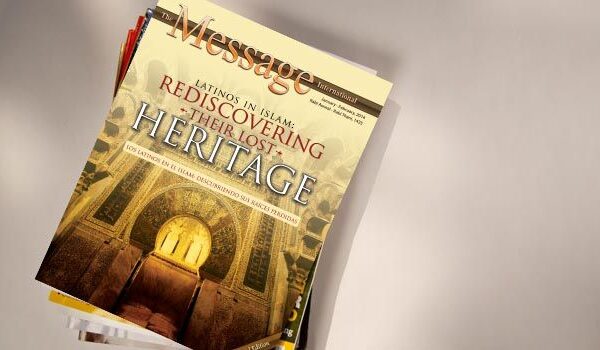
    Esta edición de la revista El Mensaje Internacional destaca quién es quién en el dawah en español y dispone de las narraciones de algunos de los latinos que han abrazado el Islam. Mientras lee estas historias de conversión inspiradoras, por favor recuerde a todos nuestros nuevos hermanos y hermanas en la fe. La próxima vez que los vea, muéstreles su amor y apoyo, pregúnteles si necesitan ayuda, invíteles a su hogar, pregúnteles acerca de sus familias y sus hijos, y comparta su conocimiento con ellos sin esperar nada a cambio, excepto ganar la complacencia de Alá. Puede ser que si se enteran de algún bien a través de usted, Dios le recompensará cada vez que lo pongan en práctica. El Mensajero de Alá, que la paz esté con él, dijo: “El que llama a la guía tendrá una recompensa similar a la de aquellos que la sigan, sin que la recompensa de cualquiera de ellos se disminuya en absoluto.” (Sajih Muslim: 2674)

    Que Alá haga nuestros caracteres e iman igual como los de los Mujayirin y los Ansar, que fortalezca nuestros lazos de hermandad como los de los Mujayirin y los Ansar, y que Él se complazca con nosotros como está complacido con ellos. Amen.


  • The Ansar of Today

    The Ansar of Today

    When the early followers of the Messenger of Allah, peace and blessings be upon him, were being persecuted, mocked, and even tortured by their own kinsfolk, Allah made a way for them to migrate to the city of Yathrib. Prophet Muhammad, peace be upon him, met with a delegation of twelve believers from the city now known as Al-Madinah, at Mount Aqabah on the outskirts of Makkah who offered him a pledge of allegiance. They assured the Prophet that they would protect the new Muslims in the same way they would protect their own wives and children, and that should anyone raise arms against them, they would certainly be prepared to fight. After this pledge took place, the Prophet permitted his followers, the Muhajireen or emigrants, to escape to Madinah, and when almost all of the Muslims had gone, then he himself, peace be upon him, migrated.

    Next time you see a new convert, show your love and support, ask if they need assistance, invite them to your home, inquire about their families, and share your knowledge with them without expecting anything in return except earning Allah’s pleasure

    The Muhajireen were the first converts to Islam, and due to their belief in the Prophet, peace be upon him, they suffered a great deal, sometimes at the hands of their own family members. Thus, after the Hijrah, the Prophet established ties of brotherhood between them and the Muslims in Madinah who came to be known as the Ansar, or the “helpers.” The Ansar provided shelter, hospitality, and protection, even offering to share half of their wealth and possessions with their new brothers and sisters in faith. Allah mentions their generosity in the Qur’an: “Those who believed, and adopted exile, and fought for the Faith with their property and their persons, in the cause of Allah, as well as those who gave asylum and aid, these are friends and protectors, one of another” (Al-Anfal 8:72).

    A comparison can be made of the Muhajireen of that era with the new converts of today in that they, too, embarked on a journey of faith and many have faced hardship and criticism from their own families for their decision. Conversion is a testing time, when new Muslims are struggling to learn and implement the basic principles of their faith, while attempting to explain their actions to parents, friends, coworkers, and classmates, and Shaytaan is busy trying to turn them back on their heels.

    During this transition, new Muslims need help from their “Ansar,” those who have been born and raised in the deen and have practiced Islam from an early age, as well as from those converts who have been practicing for years or even decades. These choice “helpers” have a responsibility to embrace their new brothers and sisters, provide warmth and hospitality to them, educate them, and shelter them from any harm that they receive from those who oppose and abuse them, as the Ansar of Madinah did for the Muhajireen of Makkah, earning them a high status with Allah, subhanahu wa ta’ala.

    Often, the only time new Muslims receive a kindly embrace is when they proclaim the Shahadah, but then they are left to struggle alone, when they do not even know how to make wudhu or pray, or the basic tenets of Islam, much less how to read the Qur’an. Many are left to celebrate alone during the Eid holidays, and some feel out of place when entering the masajid because they do not even encounter one smile from their brothers or sisters.

    This edition of the Message International magazine highlights a “who’s who” in Spanish dawah, and features narratives from some of the Latinos who have embraced Islam. While reading these inspiring conversion stories, please remember all of our new brothers and sisters in faith. Next time you see a new convert, show your love and support, ask if they need assistance, invite them to your home, inquire about their families, and share your knowledge with them without expecting anything in return except earning Allah’s pleasure. It may be that if they learn any good through you, Allah will reward you each time they put it into practice. The Messenger of Allah, peace be upon him, said, “Whoever calls to guidance will have a reward similar to that of those who follow it, without the reward of either of them being lessened at all” (Saheeh Muslim: 2674).

    May Allah make our strength of character and our eman like that of the Muhajireen and the Ansar. May He fortify our bonds of brotherhood like those of the Muhajireen and the Ansar, and may He be pleased with us as He is pleased with them. Ameen.


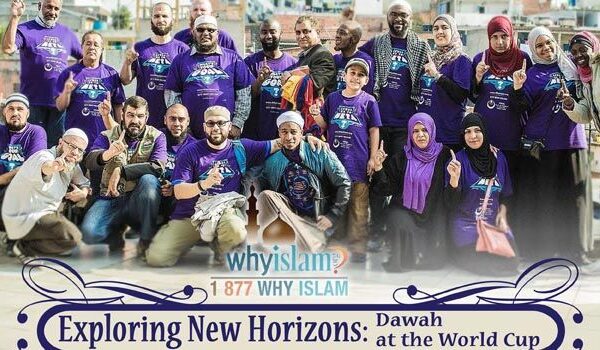
  • Exploring New Horizons: Dawah at the World Cup

    Exploring New Horizons: Dawah at the World Cup

    According to a Muslim historian, Khashkhash ibn Said ibn Aswad from Islamic Spain sailed across the Atlantic Ocean and made contact with the inhabitants of a distant land. He then returned safely to Andalusia with treasures and tales of his adventures. If this story is true, this would mean that he reached the New World over 600 years before Christopher Columbus. Historian Abu al-Hasan ‘Al? al-Mas’?d? (871-957), in “The Book of Golden Meadows,” speaks of this story: “In the ocean of fogs [the Atlantic] there are many curiosities which we have mentioned in detail in our Akhbar az-Zaman, on the basis of what we saw there, adventurers who penetrated it on the risk of their lives, some returning back safely, others perishing in the attempt. Thus a certain inhabitant of Cordoba, Khashkhash by name, assembled a group of young men, his co-citizens, and went on a voyage on this ocean. After a long time he returned back with booty. Every Spaniard knows this story.”

    It is important to learn different languages and cultures to better answer the questions that others have about Islam. That will have a significant impact on dawah work

    Similarly, in 1311, a naval fleet of 400 ships with Muslim passengers from Mali was swept off course and crossed the Atlantic Ocean, discovering a new world in the west and engaging in trade with its natives. Of the fleet, only one ship returned and its captain told the Mali ruler at the time, Prince Abu Bakr II, about their remarkable journey. Cited in an article by Joan Baxter, “Africa’s greatest explorer,” on BBC news online, a Malian scholar, Gaoussou Diawara, in his book, “The Saga of Abubakari II,” writes that Abu Bakr was Intrigued by this story and decided to follow in their footsteps, preparing an expedition of his own to sail the Atlantic. These contacts between Muslim travelers and the indigenous people of the Americas began to shape the history of the lands that were soon to be “discovered,” conquered, and colonized, by a once Muslim-dominated Spain. The trading that allegedly took place between the two cultures would have facilitated the introduction of Islam, much like Islam spread to Indonesia through commercial contact between Muslims and islanders. There are a number of historical narratives that suggest that some native inhabitants of the Americas practiced Islam and even spoke Arabic due to continuous interactions with Muslim traders.

    Even during the colonization period, immigration from both the Iberian Peninsula and Africa shaped the cultures, traditions, and languages of countries and territories in Latin America. With waves of immigration from Muslim countries to Latin America and the voluntary conversion of natives to Islam, the number of Muslims from Mexico to Argentina continues to rise. Currently, the estimated Muslim population in Latin American countries combined is anywhere from 4 to 7 million, the largest concentration being in Brazil with an estimated 1.5 million.

    Certainly, Islam has played a colossal role in the history of Latin America, a land which some are calling the “final frontier” of Islam. Muslim organizations engaging in Islamic propagation have realized this fact, and turned a vigilant eye towards these lands. Unlike the brave navigators and explorers of the past who spent months or even years on their journeys, those making dawah today have the advantage of technology which facilitates contact and information-sharing between the two cultures, making Latin America a fertile ground for outreach and education. It is no wonder that Muslims in Latin America’s closest neighbor, the United States, with a sizable Latino population of its own, have taken on the task of paving the way for dawah missions to their southern neighbors. One such effort took place recently with the FIFA 2014 World Cup as the venue. What began as an over-ambitious idea in the imagination of an associate of the Islamic Circle of North America’s WhyIslam project, surged into an unprecedented tidal wave of dawah efforts in Latin America, particularly in Brazil. The FIFA World Cup 2014 soccer tournament was the second hosted by Sao Paulo, Brazil, the first being held in 1950. It was the perfect opportunity for outreach, given the global popularity of futbol, or soccer, and the proximity to the US, where WhyIslam’s headquarters is located.

    WhyIslam directors and coordinators began the massive undertaking months in advance, networking with organizations and individuals to put together teams, assign tasks, and develop a strategic plan. It was determined that the propagation efforts in Brazil would culminate with a global day of outreach, termed “Global Dawah Day” (GDD) to be held on July 5. In order to promote and fund the project, WhyIslam elaborated a successful marketing campaign, using advertising in photos, videos, email blasts, and posting to social media outlets like YouTube, FaceBook, Instagram, and Twitter. Well-known Muslim lecturers, personalities, and imams such as Nouman Ali Khan, Omar Suleiman, Yasmin Mogahed, Hamza Tzortsis, Abdurraheem Green, Boona Mohammed, and Isa Garcia, provided video clips endorsing the campaign and calling for support and participation.

    The resonating theme for WhyIslam’s bold endeavor was “What is Your Goal?”, a play on soccer lingo intended to make one reflect on the true goal or purpose in life. There was a webpage (www.whatisyourgoal.org) set up for teams, organizations, and individuals to register their dawah event and to follow the endeavors and accomplishments of the crew in Brazil. The official flyer for GDD was printed on cards, banners, and posters and plastered over purple T-shirts that were provided to eager volunteers on six continents who vowed to participate in the World Cup street dawah and/or GDD. Many organizations came on board, one of which was the Centro de Divulgação do Islam para América Latina or CDIAL. CDIAL is one of the most prominent dawah-driven organizations in South America based in Brazil. They helped to facilitate housing and itinerary logistics, translations and printing of materials for distribution during the World Cup, as well as providing their own volunteers on the ground. WhyIslam printed and distributed thousands of brochures in English, Spanish, French, and Portuguese, as well as translations of the meaning of the Qur’an to World Cup spectators and locals in Brazil.

    Another group which contributed volunteers was the Islamic Education and Research Academy (iERA), headquartered in the UK, and its Mission Dawah team traveled across the Atlantic to partake in the outreach efforts. Another group was led by Imran ibn Mansur, widely known as Dawah Man, a YouTuber who has gained attention through his videos. They joined a group of 18 organizers, scholars, youths, and professionals from the US and Canada including Nahela Morales, the National Spanish Outreach Coordinator for WhyIslam, Shaykh Abdool Rahman Khan, a graduate of the Islamic University of Madinah, KSA, Abu Sumayyah Lebron, an Islamic Studies teacher and senior student at Mishkat University, Boona Mohammed, a famous poet and Islamic lecturer, and Cyrus McGoldrick, a writer and political activist.

    Native Brazilian volunteers offered their language and cultural expertise to aid their visiting brothers and sisters during their stay in Sao Paulo, and arranged housing and meal accommodations. Although the World Cup attracts people from all over the world, including many English-speaking countries, one of the challenges team members faced was the language barrier. Volunteers represented various regions, some being of South Asian descent, others from Spanish backgrounds, and many from Europe and Canada. One volunteer, Moihudeen Syed, originally from Pakistan and now residing in Orlando, Florida, describes his experience: “The way I thought was that dawah could be given to anyone in the English language only. I realized after I landed in Sao Paulo that it is not the case. I had to face the language barrier on every step I made. So I think it is important to learn different languages and cultures to better answer the questions that others have about Islam. That will have a significant impact on dawah work Insha’Allah.” Syed is currently in the process of learning Spanish after being inspired by his trip to South America.

    Others such as Morales, Lebron, and McGoldrick used their knowledge of Spanish to facilitate the dawah efforts since the Portuguese-speaking Brazilians understand it due to the similarities. Brazil is the only country in Latin America which recognizes Portuguese as its official language. Spanish is the official language of the overwhelming majority of countries in Central and South America, including a few which border Brazil. Brazilian convert and WhyIslam volunteer Muhammad S. Abdallah-Martins, who resides in Dallas, Texas, was one of the US team’s interpreters. A frequent traveler to his homeland, Martins emphasizes the need for these types of campaigns as he understands very well the challenges faced by local Muslims. Some of these challenges include a lack of adequate resources such as classes and activities for new converts, feelings of exclusion due to a language barrier between Brazilians and Muslim Arab immigrants, and the compelling need to establish cultural awareness between the two groups. Martins notes, “I don’t see a problem of being proud of your heritage, however, if we don’t identify with the local culture and do not make connections with the local convert Muslim community, then how are we supposed to spread the message of Islam?”

    During the World Cup, volunteer groups did their best to distribute flyers, speak with both spectators and locals about Islam, and engage vendors, taxi drivers, and anyone they came in contact with in conversations about Muslims and their religion. The regular driver for the American crew, a man by the name of Carlos, accepted Islam during their stay citing his reason as being their generosity and respect towards the people of Brazil. He witnessed how they distributed food and toiletries to poor families in the slums of Sao Paulo and made regular visits to the area’s small musalla, or Islamic prayer space. There were many lessons learned during the trip, the greatest lesson being that these type of efforts need to continue, and as Morales stated, “This is just the beginning.” Martins suggested that organizations in the US continue to work with those in Brazil and other Latin American countries, as well as reach out to their Islamic centers to establish special programs. “We should assist them with organizing national and regional conferences, similar to the ICNA conventions, in order to unite Muslims from all over (South America) to learn about their Deen, address issues that they are facing, and to create opportunities for networking.” He also commended the efforts in Brazil thus far, stating, “I think that this is a great start and will have a great impact on strengthening the bonds between the Muslims living in Brazil and the native Brazilians that have embraced Islam.”

    Muslim explorers, traders, immigrants, and converts of the past faced great challenges of distance and limited communication opportunities. They share, however, with the dawah journeyers, immigrants, and converts of today their passion for Islam. Many of our forebears’ dawah challenges have been resolved by the modern tools and technologies of today. However, it is up to the current and subsequent generations to step out of the comfort of their everyday lives to journey to other lands and explore new horizons, seeking the pleasure of the Lord by sharing with the local inhabitants the faith in One Creator and Sustainer of all.

  • WhyIslam Scores “GOAL”

    WhyIslam Scores “GOAL”

    Organizing a massive dawah effort for the 2014 FIFA World Cup in Brazil, bringing together over 20 Islamic organizations on an international level, and mobilizing dozens of volunteers originating from 6 continents is a task of epic proportions. With the help of Allah and the assistance of the Centro de Divulgação do Islam para a América Latina (CDIAL), an equally dynamic dawah initiative based in Brazil, South America, the Islamic Circle of North America (ICNA)’s WhyIslam Project was able to take on the challenge and as of June 12th a team of daees was already in Sao Paulo kicking off the World Cup by asking soccer fans, “What is your goal?”
    Team members began arriving in Brazil as early as June 10th, from as far as the UK and also the US. After some meetings with local volunteers and logistics coordinating, they began hitting the streets of Sao Paulo on June 12th, which marked the beginning of the World Cup soccer matches. In preparation for the games, they printed 40,000 dawah handouts in Portuguese and Spanish, as well as other languages. As they work, they don the official campaign T-shirt with the slogan, “What is Your Goal?” or “Qual é o seu meta” in Portuguese. The purpose of the slogan is to make people think about what really is the most important goal in life.

    In just one week, there have been three shahadahs facilitated by dawah volunteers

    The crew engaged local residents and fans from all over the world in “street dawah,” a style of outreach in which Muslim men and women approach individuals in the street, local vendors, or fans at stadium-side to provide them with information about Islam and answer questions. In just one week, there have been three shahadahs facilitated by dawah volunteers in Sao Paulo, one of which was the cab driver who was transporting some of the volunteers, alhamdulillah.

    Throughout their days, volunteers take photos and video to post on social media in order to keep WhyIslam’s global audience informed of their progress.
    The many volunteers include Nahela Morales, WhyIslam’s National Spanish Outreach Coordinator, Sheikh Abdool Rahman Khan, Boonaa Muhammad, Cyrus McGoldrick, Andrew Morales, Anwer Arshar and Abu Sumayyah Lebron. Bia Kehdy and Muhammad Martins, both Muslim Brazilian natives, and other local Brazilian volunteers have been instrumental in planning logistics and breaking language barriers. More team members continuously arriving from places such as the US, Canada, Mexico, Colombia, and the UK. Others involved in managing and organizing, taking hotline calls, and media coverage are not physically present in Brazil, but working remotely from the US and Canada to provide assistance to the group.

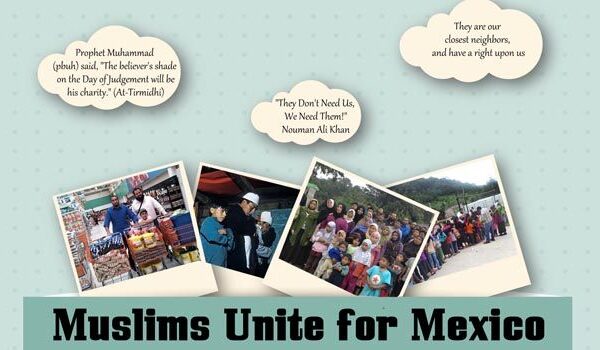
  • Muslims Unite for Mexico

    Muslims Unite for Mexico

    When Nouman Ali Khan, founder and professor at Bayyinah Institute, is not teaching intensive Arabic classes, engaging the youth in various masajid in Texas, touring the country making his program known in local communities, or recording Qur’an Weekly videos and Ramadan reminders, he goes grocery shopping for poor indigenous Muslim families in Mexico.

    With the challenging task of touring five Islamic communities, an average of five hours driving distance apart, this effort also required manpower

    It all began at the 38th Annual ICNA-MAS Convention 2013 held in the Hartford Convention Center in Connecticut the last weekend in May, where Khan was a guest speaker. While walking through the Marriott Hotel adjacent to the center, he was approached by WhyIslam’s Spanish Outreach Coordinator, Nahela Morales, who handed him a flyer about her upcoming trip to Mexico to deliver Islamic material.

    It was the second time Morales would be traveling to her native land for the same purpose, but this time contributions from sponsors and individuals had more than doubled. She also planned to visit five different Islamic centers in five states within Mexico. All she needed was one more boost to help her reach her $15,000 goal, an amount that she and Imam Isa Rojas from Al Hikmah Islamic Center in Mexico City estimated they would need to cover the cost of renovating a damaged mosque in the indigenous community of San Cristobal de las Casas, in the state of Chiapas.

    This motivated Morales to approach Khanas she had done with a number of other Muslim leaders, and his response was overwhelmingly positive. He asked how much funding Morales needed and after hearing the amount, he told her, “It’s yours.” Morales’ jaw dropped, but his promise to fulfill the financial needs was not the most shocking. He added, “I want to go, too.” “I was speechless,” Morales recalls, “But I felt that my prayers were being answered. He (Khan) was the best suited to raise awareness about this cause.”

    Khan’s wife, Sofia Sharieff, joined him in his excitement to visit the United States’ southern neighbor. When her husband mentioned the plans, she was immediately on board. “I have always wanted to visit Mexico,” the Texas resident says. “It was a different country but not too far. I love to meet new people and see new communities. I have to admit that I have not been ‘actively’ giving dawah and I thought this was a good opportunity to start….and it was.” Weeks later Khan presented Morales with a generous check and made arrangements to visit the needy Muslims in Chiapas for two days despite his busy schedule and numerous speaking engagements.

    By the time Morales was ready to leave for Mexico on June 25th, she had raised almost $30,000 in contributions through social networking, local and online fundraising, and with the support of WhyIslam. Funds came from all over the U.S., as well as Islamic clothing donations, books, prayer rugs, and other necessities from as far as Washington State. Maryland residents from the community of Dar-us-Salaam in College Park and the Islamic Community Center of Laurel participated by donating clothing and sponsoring Ramadan iftars for their Mexican brothers and sisters.

    With the challenging task of touring five Islamic communities, an average of five hours driving distance apart, this effort also required manpower. This is where the team of dedicated volunteers came in. From New York, two brothers, one Pakistani and one Mexican, arranged with Morales to fly to Mexico to assist after hearing about the trip at the ICNA conference. From New Jersey, two young sisters who attend the same mosque as Morales, one Egyptian and the other Tunisian, joined Morales and they took off on their connecting flight to Houston where they were met by another female volunteer from Maryland, Malak Soussi, a Moroccan who is fluent in Spanish. From Houston, the four flew to Mexico City where they were picked up by members of the Al Hikmah Islamic Center and joined by the brothers from New York.

    After touring the capital, the crew travelled to Tequesquitengo, 84 miles from Mexico City, to hear lectures on sustainable ecological projects and reforestation by Brother Omar Weston, and to participate in a tree-planting event. Students from local universities were in attendance and asked questions about Islam as Morelos and volunteers handed out WhyIslam brochures in Spanish. The team, now joined by Imam Isa Rojas and other Muslims from Mexico City, took a flight to the state of Chiapas, where they were scheduled to visit the Muslims of Masjid Al Kauthar in San Cristobal de las Casas. This is an indigenous Mayan community where Islam has been growing steadily since the early 90s. The mosque, which has a tin rooftop and no wudu area, was badly damaged and needed repairs, which would be funded by the donations collected by Morales.

    The greater part of the Mexican outreach tour would be spent in Chiapas, from July 1 to the 11th, coordinating with the architects and engineers who would be spearheading the mosque renovation. The group was also serving the needs of the impoverished Muslims in the area, buying and distributing groceries and school supplies for Muslim families and their children, handing out Islamic clothing and books, painting and preparing the mosque for Ramadan, organizing lectures and classes, and feeding those who were fasting during the first few days of the Holy month. “We planned on using the majority of the donations to cover the cost of renovating Masjid Kauthar,” explains Morales. “But once we arrived and saw the conditions in which the people were living, we decided that we should buy them food also in order to cover their needs for Ramadan and their Eid celebration; we also gave zakat to those who needed it most.”

    It was during this time that Khan and Sharieff arrived. Then early morning on July 3rd, Khan and his wife, Morales, and Imam Isa Rojas went to a local market in San Cristobal de las Casas and shopped for 14 indigenous families, all from Masjid Kauthar. Most of these families live in very modest homes, built out of wooden planks, sheets, and tin roofs, with bare dirt floors. When individuals were asked what they needed from the grocery store, they only asked for five items: oatmeal, sugar, salt, soap, and rice. Sharieff was excited to do as much as she could in the short amount of time they had. She said, “We had only one day to spend with the Muslim community. In that one day, we went grocery shopping for 14 families and distributed the food, we handed out new clothes to the community and I got to cook!” She prepared food on a traditional open flame because the mosque does not have a kitchen and neither do most of the Muslims’ homes.

    “Nouman made a few videos to promote awareness of the growing community, he had an interview with the local news station, he gave a lecture on unity at the (mosque’s) open house and we had cake….that was a big deal.” Khan and his wife spent one full day in San Cristobal de las Casas and felt that the trip was an eye-opener for them both and also for the other volunteers. “They don’t need us, we need them,” Khan said about the Muslims in Chiapas after observing how little they have, but yet how happy they are. “We should be grateful for what we have, our houses, cars, clothes and conveniences but we should have gratitude most for being blessed with Islam….it opens up doors and opportunities you would never be able to imagine.” Khan also encourages Muslims in the US to learn other languages and use their talents to help others understand Islam. “Living in America, we should be very conscious of the growing population of Muslims around us. The Latino community is embracing Islam at a rapid rate and we should be ready to welcome them and have resources available to them to further their understanding.”

    Soussi, the Moroccan volunteer, recently spent a year in Spain in order to perfect her Spanish. Before the summer she never imagined she would be using it in Mexico with other Muslims. But when she heard about Morales’ efforts through her mother, she decided to travel and help. The 20-year-old Maryland resident says, “I was really interested in helping people in Mexico and to get closer to Allah, I wanted to grow better as a Muslim and see how much we take for granted even if it meant stepping out of my comfort zone.” Soussi was in Mexico for two weeks, during which she helped paint the Al Kauthar Mosque and distribute clothing. “What I learned from visiting the community in Chiapas is that I’m so fortunate and I take so much for granted. Allah has blessed me with so much yet I’m still ungrateful.”

    The two volunteers from New York were in Chiapas until July 6 and during their stay they had soccer uniforms made for all of the men and children of the Al Kauthar Muslim community. There was also a kid’s pre-Ramadan party organized with inflatable play areas, balloons, candy, and games which was open to the whole village. The additional masjid renovations were well underway, with foundations laid out for the new bathrooms and wudu areas for men and women.

    After the stay in Chiapas, the tour continued with Morales and Imam Isa Rojas visiting Guadalajara, in the state of Jalisco, to distribute Islamic material, teach classes, conduct Q&A sessions, and organize three iftars. They left the community with their Eid festivities prepaid and zakat for needy families. Due to time restrictions, the team was unable to visit the city of Puebla, but they left material in Mexico City which would be picked up and delivered to the Muslims there, as well as any other areas in need.

    Volunteers and community leaders met to discuss future plans for more outreach efforts in Mexico. This year’s dawah trip ended July 26, with Morales’ return to her home in New Jersey. She hopes that the efforts in Mexico can continue with annual trips and more Muslim leaders like Nouman Ali Khan raising awareness of the needs of the Mexican Islamic community. The renovations for Masjid Al Kauthar in San Cristobal de las Casas are ongoing, and WhyIslam and Morales hope to continue fundraising to cover the costs.


  • We Speak Islam – Education in Spanish Language

    We Speak Islam – Education in Spanish Language

    The group, Hablamos Islam (We Speak Islam), formerly known as “PrimeXample” or “Latino Muslim Outreach Project” (LMOP) was created by a family of Muslim converts who sought to educate the general public about Islam, including both Latinos and non-Latinos.
    One of its founders, Hernan Guadalupe, whose parents are Ecuadorians, was raised in a predominately Latino community in Union City, New Jersey. After his conversion to Islam in 2001, he began assisting prayers at the Islamic Education Center of North Hudson (IEC), an Islamic center with one of the largest population of Hispanic Muslims in the United States. A short time following his conversion, his brother, Diego, and his mother, Martha, also embraced Islam. Then three years later, Hernan married Wendy Diaz, a Puerto Rican who had converted in the year 2000 and lived in Maryland. Together, they collaborated with masjid IEC’s outreach (dawah) committee, organizing various events, and also volunteered with WhyIslam, an organization dedicated to dawah nationwide. With WhyIslam, they managed dawah tables in malls and commercial centers, distributing literature about Islam, and also followed up with new converts.

    Motivated by wanting to teach their non-Muslim family about their newfound faith, Hernan and Wendy, along with Diego, began LMOP and PrimeXample, which referred to the excellent example and character of the Prophet Muhammad (May peace and blessings be upon him). Under this group, the three dedicated themselves to translating many articles about Islam from English to Spanish and also gave lectures at various universities in the Northeast about numerous topics dealing with Islam. One of the lectures was titled, “Latinos in Islam: Rediscovering Our Roots,” which presented the similarities between Latino culture and Islam due to the history they share. Eventually, the name LMOP was dropped in order to prevent misconceptions, since the dawah were directed at everyone, not just Latinos. The efforts continued with PrimeXample, utilizing the internet to distribute information and collaborating with Muslim Student Associations in universities and mosques to plan educational events.

    After some time, and after having lived in Egypt for a year to study Arabic, Hernan and Wendy, also known as Abu and Umm Uthman (the father and mother of Uthman), decided to dissolve PrimeXample and focus more on the dawah to the Latino community. They changed the name to “Hablamos Islam” which represented what the name implies; to speak about Islam in the Spanish language with the purpose of education. This service is directed towards Latinos who have embraced Islam and also to those who are curious and/or motivated to learn about the religion. Abu Uthman says, “There are many resources about Islam available in English nowadays, however, there is a greater need for these services in Spanish, and this is what Hablamos Islam wants to facilitate, insha’Allah.”

    Currently, the webpage www.hablamosislam.com offers articles, videos, and fatawa (Islamic jurisprudence in question/answer format) in Spanish and is one of the most popular pages amongst the Spanish-speaking Muslim communities, Alhamdulillah. After searching for information about Islam geared towards children, the founders of Hablamos Islam realized there was a lack of resources available and they took the initiative to also form the children’s site: www.hablamosislamninos.com. With the determination to offer educational materials to both Spanish-speaking Muslim parents and children, Hablamos Islam Niños has published four Islamic children’s books, three of them being bilingual Spanish/English, and they have created a program called “Hablamos Islam with Ahmed” (We Speak Islam with Ahmed), which teaches children some aspects of Islam in a fun way and in their native tongue. These programs can be found in their website and also on YouTube under the name “Hablamos Islam.” The site also offers coloring and activity pages, poems, and information for parents to help them in teaching their children about Islam, insha’Allah. There is also a page on Facebook dedicated to Hablamos Islam, where many fans unite to hear the latest news about their projects.

    With Allah’s help and with the support of many brothers and sisters, Hablamos Islam plans to do much more for Spanish-speaking Muslims and non-Muslims all over the world, insha’Allah. They hope to increase awareness about the lack of Islamic resources available for children in Spanish, insha’Allah, and so far, they have been able to convince two Islamic stores to carry their bilingual books, masha’Allah. Also, by way of donations, they were able to distribute free books in Puerto Rico, Ecuador, and Colombia. Their goal is to print and distribute more books in all of Latin America, Spain, and the US, insha’Allah, as well as provide many more videos and articles through their site. Currently, their books are available for purchase on the official Hablamos Islam Niños website and also through the page: www.nuestratiendita.bigcartel.com. All proceeds go directly towards the production of more resources in Spanish.

  • Editorial: Our Collective Role  in Spanish Dawah

    Editorial: Our Collective Role in Spanish Dawah

    More than 1,400 years ago, Prophet Muhammad, peace be upon him, said: “Surely, this religion will reach the boundaries of the day and night and Allah will not spare a rural or an urban dwelling except that He would cause Islam to enter it…”(Ahmad and Ibn Hibban, classified as authentic). We are witnessing the realization of this prophecy today, as Islam continues to spread from the East to the West, including North and South America, where the number of Muslims will more than double by the year 2030, according to statistical projections.

    Many of the new Muslims are Latinos who are living in the US and in Latin America. Recent studies such as the The American Mosque 2011 Report reveal that the number of Latino converts in the US has been steadily increasing since the year 2000, more so than any other racial or ethnic group. Similar trends are occurring in neighboring Mexico and further south in Central and South America, where the primary language is Spanish.

    Spanish is the second most widely spoken language in the world, and the official language of 21 countries. With over 50 million native speakers and second-language speakers, the United States has the second largest Spanish-speaking population in the world, after Mexico. Spanish is the most studied foreign language in the US.

    In the Qur’an, God says, “And We sent not a Messenger except with the language of his people, in order that he might make (the Message) clear for them. Then Allah misleads whom He wills and guides whom He wills. And He is the All-Mighty, the All-Wise”(Qur’an, 14:4). This points to the importance of providing educational materials about Islam in all languages. And due to the dramatically rising number of Spanish-speaking Muslim converts in the US, the need for resources in Spanish cannot be ignored.

    ICNA and its WhyIslam project are among the few organizations providing services for this demographic, with Spanish-speaking operators on the 1-877-WhyIslam hotline, educational material in Spanish, Spanish sessions during the annual ICNA-MAS convention, and The Message International magazine now featuring articles in the Spanish language.

    Islam is an integral part of Latino history and culture and as such, Hispanics who choose to become Muslim are merely rediscovering and embracing their past. Through our efforts, with God’s help, we can share the message with our brothers and sisters in humanity and facilitate the success of their transition.