بسم الله الرحمن الرحيم

Author: Wendy Diaz

  • Latino Muslim Fast Facts

    Latino Muslim Fast Facts

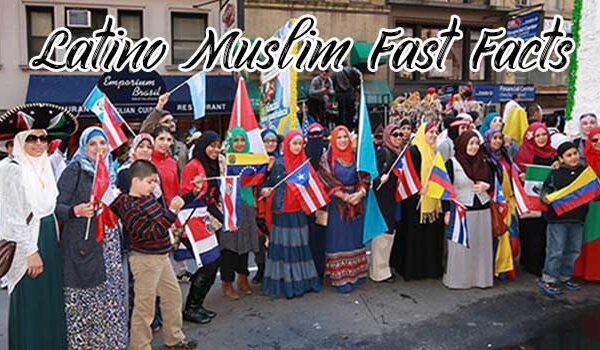
    September 15 to October 15 marked the 30th National Hispanic Heritage Month in the United States, a month-long tribute established by President Ronald Reagan on September 14, 1989. It is, therefore, worth reflecting on the important presence of Latin American Muslims who represent the fastest growing population of Muslims in the United States. The seeds of Islam continue to be planted across the nation and Muslims from the Latino community play a great role in helping to make the deen accurately known and easily accessible to ever-widening numbers of Americans.

    A Latino is a person who was born or lives in South America, Central America, or Mexico or a person in the U.S. whose family is originally from South America, Central America, or Mexico (Merriam-Webster Dictionary). Latino origin is based on ancestry, culture, nationality and/or country of birth. Therefore, Latino people come from a variety of countries, ethnic backgrounds, and social traditions. Hispanic refers to a person of Latin American descent or relates to the people, speech, or culture of Spain (Merriam-Webster Dictionary). According the U.S. Census Bureau, as of 2017 there were an estimated 58.9 million Hispanic people in the U.S., which is equivalent to 18.1 percent of the entire population. Only Mexico has a larger Hispanic population than the U.S.!

    Latinos find that Islam resonates with their spirituality, morals, family values, social struggles, and traditions

    The ten states with the largest populations of Hispanics are Arizona, California, Colorado, Georgia, Florida, Illinois, New Jersey, New Mexico, New York, and Texas. In a map developed by the Spanish department of ICNA’s WhyIslam project, the team identified prominent Latino Muslim organizations and active individuals and found that the majority were in one of these ten states.
    Not surprisingly, Spanish is the second most widely spoken language in the United States. There are 21 countries in the world where Spanish is the official language. Most are in Central and South America, and the Caribbean. Brazil is considered part of Latin America even though the official language is Portuguese. Mexico is also the only Spanish-speaking country that shares a border with the U.S. One fascinating and little-known fact about the Spanish language is that it shares a special bond with Arabic. Muslims ruled Spain for eight centuries, from 711 to 1492. During that time, Spanish was even written in Arabic script, and it borrowed countless words from Arabic. About 30 percent of the words in the Spanish language have Arabic roots. A few examples are algodon in Spanish/al-qutun in Arabic (cotton), fulano in Spanish/fulan in Arabic (so and so), and aceituna in Spanish/zaytun in Arabic (olive).

    There were Muslims in the Americas before the arrival of Christopher Columbus, and African Muslims who were brought to this country as slaves. The Muslim population in Latin America is over 4 million. Latinos are also the fastest growing minority in the U.S., and the fastest growing minority within Islam, and it is estimated that 12 percent of converts to Islam in the U.S. are Latinos.

    Among the many reasons why Latinos are drawn to Islam is the belief in tawhid, or the natural inclination to believe in the Oneness of God; putting faith into practice; the importance of balance and moderation in everyday life; and there being no intermediaries needed (such as clergy) between a human being and God — each individual seeks a personal relationship with Allah. There are many cultural similarities between Islam and what Latinos hold dear, including family values and morals (the proper upbringing of children, respect for elders, and adult children caring for elderly parents) and community ethics such as support for the poor and underprivileged, and the promotion of social justice and affirmation of equality in human worth regardless of religion, gender, race, or ethnicity (yet, one can distinguish himself or herself through piety and virtue).

    Some of the most popular sayings in Latin America have Islamic roots or are very similar to Islamic values or teachings. For example, the saying, “Al que madruga, Dios le ayuda (God helps the one who wakes up early) is like what the Prophet (peace be upon him) said, “O Allah, bless my nation in their early mornings” (Sunan Ibn Majah). Another is “Donde comen dos, comen tres (Where two eat, three eat); this is similar to what the Prophet (pbuh) said, “The food of one person is enough for two, the food of two is enough for four, and the food of four is enough for eight” (Muslim). ”Díme con quién andas y te diré quien eres” (Tell me who you hang out with, and I will tell you who you are) is similar to the Prophet’s advice, “A man follows the religion of his best friend, so each one of you should look at whom he befriends” (Tirmidhi).

    Latinos find that Islam resonates with their spirituality, morals, family values, social struggles, and traditions. The internet and social media have made information about Islam more accessible to Latinos. Furthermore, Latinos and Muslims have come together in solidarity in the face of recent injustices and oppression of their groups. Latinos have a lot in common with Muslims, and that is perhaps because many are descendants of European, African, and indigenous Muslims. Islam is in our blood!

  • Datos breves sobre los latinos musulmanes

    Datos breves sobre los latinos musulmanes

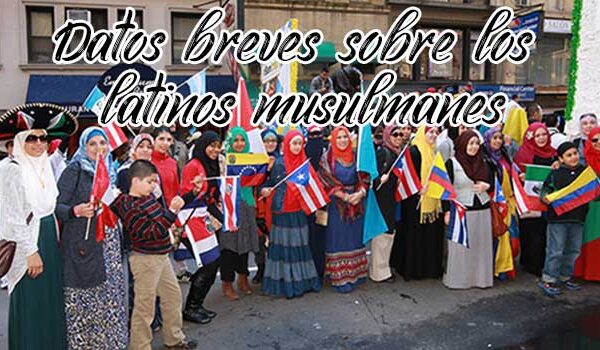
    Desde el 15 de septiembre hasta el 15 de octubre de 2019 se celebró el trigésimo mes de la herencia hispana en los Estados Unidos, una conmemoración de un mes establecida oficialmente por el presidente Ronald Reagan el 14 de septiembre de 1989. Por lo tanto, vale la pena reflexionar sobre la importancia de los musulmanes latinoamericanos, que representan la población de musulmanes de más rápido crecimiento en los Estados Unidos. Las semillas del Islam continúan siendo plantadas en todo el país y los musulmanes de la comunidad latina juegan un gran papel en ayudar a que la fe sea conocida con claridad y sea fácilmente accesible para un número cada vez mayor de estadounidenses.

    Un latino es una persona que nació o vive en Sudamérica, Centroamérica o México o una persona en los Estados Unidos cuya familia es originaria de Sudamérica, Centroamérica, o México (Diccionario Merriam-Webster). El origen latino se basa en ascendencia, cultura, nacionalidad y / o país de nacimiento. Por lo tanto, los latinos provienen de una variedad de países, orígenes étnicos y tradiciones sociales. El término hispano se refiere a una persona de ascendencia latinoamericana o se relaciona con la gente, el habla o la cultura de España (Diccionario Merriam-Webster). Según la Oficina del Censo de los EE. UU., a partir de 2017, se estimaba que había 58,9 millones de hispanos en los EE. UU., Lo que equivale al 18,1 por ciento de toda la población. Significa que, de todos los países del mundo, ¡Solo México tiene una población hispana más grande que los Estados Unidos!

    Los diez estados con las mayores poblaciones de hispanos son Arizona, California, Colorado, Georgia, Florida, Illinois, Nueva Jersey, Nuevo México, Nueva York y Texas. En un mapa desarrollado por el departamento de español del proyecto WhyIslam de ICNA, el equipo identificó organizaciones latinas musulmanas prominentes e individuos latinos activos y descubrió que la mayoría se encontraba en uno de estos diez estados.

    Los latinos encuentran que el Islam comparte sus propios puntos de vista sobre la espiritualidad, la moral, los valores familiares, la lucha por los derechos civiles y las tradiciones

    No es sorprendente que el español sea el segundo idioma más hablado en los Estados Unidos. Hay 21 países en el mundo donde el español es el idioma oficial. La mayoría se encuentra en Centroamérica, Sudamérica y el Caribe. Brasil se considera parte de América Latina a pesar de que el idioma oficial es el portugués. México también es el único país de habla hispana que comparte una frontera con los EE. UU. Un hecho fascinante y poco conocido sobre el idioma español es que comparte un vínculo especial con el árabe. Los musulmanes gobernaron España durante ocho siglos, desde 711 hasta 1492. Durante ese tiempo, el español incluso se escribió con letras árabes, y tomó prestadas innumerables palabras del árabe. Alrededor del 30 por ciento de las palabras en español tienen raíces árabes. Algunos ejemplos son algodón en español / al-qutun en árabe, fulano en español / fulan en árabe y aceituna en español / az-zaytun en árabe.

    Había musulmanes viviendo en las Américas antes de la llegada de Cristóbal Colón, y musulmanes africanos que fueron traídos a estos países como esclavos. La población musulmana en América Latina supera los 4 millones. Los latinos también son la minoría de más rápido crecimiento en los Estados Unidos y la minoría de más rápido crecimiento dentro del Islam, y se estima que el 12 por ciento de los conversos al Islam en los Estados Unidos son latinos.

    Entre las muchas razones por las cuales los latinos se sienten atraídos por el Islam es la creencia en tauhid, o la inclinación natural de creer en un solo Dios; el hecho de que la fe se pone en práctica; la importancia del equilibrio y la moderación en la vida cotidiana; y que no se necesiten intermediarios (como el clero) entre un ser humano y Dios: cada individuo busca una relación personal con Alá.

    Hay muchas similitudes culturales entre el Islam y lo que los latinos aprecian, incluidos los valores familiares y el honor (la educación adecuada de los niños, el respeto a los mayores y los hijos adultos que cuidan a los padres ancianos) y la ética comunitaria, cómo se brinda apoyo a los pobres y desfavorecidos, y la promoción de la justicia social y la afirmación de la igualdad de los seres humanos, independientemente de la religión, el género, la raza o el origen étnico (sin embargo, uno puede distinguirse a sí mismo a través de la piedad y la virtud).

    Algunos de los dichos más populares en América Latina tienen raíces islámicas o son muy similares a los valores o enseñanzas islámicas. Por ejemplo, el dicho: “Al que madruga, Dios le ayuda” es como lo que el Profeta (la paz sea con él) dijo: “Oh Alá, bendice a mi nación en sus mañanas” (Sunan Ibn Majah). Otro es “Donde comen dos, comen tres”; esto es similar a lo que dijo el Profeta: “La comida de una persona es suficiente para dos, la comida de dos es suficiente para cuatro y la comida de cuatro es suficiente para ocho” (Muslim). “Díme con quién andas y te diré quién eres” es similar al consejo del Profeta: “Un hombre sigue la religión de su mejor amigo, por lo que cada uno de ustedes debe tener cuidado con quién se hace amigo” (Tirmidhi).

    Los latinos encuentran que el Islam comparte sus propios puntos de vista sobre la espiritualidad, la moral, los valores familiares, la lucha por los derechos civiles y las tradiciones. El internet y las redes sociales han hecho que la información sobre el Islam sea más accesible para los latinos. Además, los latinos y los musulmanes se han unido en solidaridad ante las recientes injusticias y la opresión en contra de sus grupos. Los latinos tienen mucho en común con los musulmanes, y eso es quizás porque muchos son descendientes de musulmanes europeos, africanos e indígenas. ¡El Islam está en nuestra sangre!

  • Revealing Rape Culture in the U.S.

    Revealing Rape Culture in the U.S.

    Sexual violence represents a serious and long-standing problem in the United States, as well as in many other parts of the world. In most cases the victims are women; however, sexual violence can involve perpetrators and victims of the same gender, and men also can be the victims of abuse by women. Nevertheless, statistics show that women are more likely than men to be victims of sexual assault and domestic violence. According to RAINN (Rape, Abuse & Incest National Network), described as the nation’s largest anti-sexual violence organization, there are approximately 321,500 victims (age 12 or older) of rape and sexual assault each year in the United States, the majority of whom are female.

    It is alarming that one out of every six women in the U.S. has reported being the victim of rape or attempted rape during her lifetime. Females, ages 16-19, are four times more likely than the general population to be victims of rape, attempted rape, or sexual assault, and 90 percent of all adult rape victims are women. Statistics are typically based on crime survey estimates that rely mostly on FBI, police, and emergency room medical reports, as well as academic investigations. However, many women report sexual violence to friends, family, relatives, clergy, physicians, and nurses – sources not reflected in crime or academic surveys, while others do not report the abuse at all. Therefore, the number of victims is most likely greater than studies reveal.

    The World Health Organization (WHO) argues that in war-torn zones around the globe the collapse of social infrastructures and the disintegration of communities and families, as well as the disruption of adequate response systems and aid, leave women and girls especially vulnerable to sexual and other forms of gender-based violence.

    #MeToo

    In a survey by the Thomson Reuters Foundation, released in June 2018, about 550 global experts on women’s issues ranked India as the world’s most dangerous country for women. Afghanistan and Syria were in second and third places, with Somalia and Saudi Arabia following. In fact, nine out of the top ten countries were in Africa, the Middle East, and Asia. However, the United States took the number ten spot as one of the worst places in terms of “the overall risks faced by women, and specifically regarding healthcare, access to economic resources, customary practices, sexual violence, non-sexual violence and human trafficking.”

    If regions of war and armed conflicts are cauldrons for sexual violence against women, it is hard to believe that the United States, a global superpower, would also harbor such social ills when there are no such conflicts occurring on its soil. Furthermore, the U.S. is often regarded as an example of the highest standard of progress and democracy, and its ideals and values are extolled in other parts of the world seeking similar success.

    As far as the reasons for the U.S. being ranked the 10th most dangerous country for women in the survey mentioned above, the survey noted that it is “the only Western nation to appear in the top 10. The United States shot up in the rankings after tying joint third with Syria when respondents were asked which was the most dangerous country for women in terms of sexual violence including rape, sexual harassment, coercion into sex and the lack of access to justice in rape cases. It was ranked sixth for non-sexual violence. The survey was taken after the #MeToo campaign against sexual harassment went viral in October last year … and thousands have joined the #MeToo social media movement to share stories of sexual harassment or abuse.” Thus, the American nation was not only ranked in the top ten most dangerous places for women, but also number three when it comes to sex-related crimes, tied with war-ravaged Syria.

    The #MeToo movement is an American-born viral social media movement against sexual harassment and assault which took off in October of 2017 after allegations of sexual misconduct emerged against film producer and founder of Miramax, Harvey Weinstein. Weinstein was accused by more than 70 women, including famous actresses, of rape, sexual assault, and/or sexual harassment. After these accusations were brought forth, and the #MeToo movement was launched in Twitter and Facebook, more and more women became vocal about their experiences with sexual abuse in every setting and industry imaginable.

    Women were suddenly emboldened and given a voice through this social media phenomenon during a time when people in America were neither aware of the degree of sexual violence occurring around them, nor did they realize the widespread nature and extent of abuse in their own communities. Victims included not only high-profile celebrities, but also women in every walk of life. A woman, who herself is not a victim, often has a family member or close friend who is. The conversation was no longer taboo, but a necessary and long overdue exposé.

    While, statistically speaking, no one really knows how many victims of physical, sexual, or emotional abuse simply suffer in silence or never come to the attention of anyone outside the immediate family, the #MeToo movement provided a network of support and reassurance even for victims of sexual misconduct in the entertainment industry, the corporate world, and government. The #MeToo movement even brought out accusations against a number of prominent Muslim leaders.

    However, the reality is that although the #MeToo movement is relatively new, violence against women has always existed in the U.S. Donna E. Shalala, Professor of Political Science and Health Policy at the University of Miami and former Secretary of the U.S. Department of Health and Human Services, once remarked, “In this country, domestic violence is about as common as giving birth.” Shalala served under former President Bill Clinton and was president of the Clinton Foundation from 2015 to March 2017. Ironically, exactly twenty years before the #MeToo movement, Clinton was accused of being involved in an improper, sexual relationship with a 22-year-old White House intern, Monica Lewinsky (while he was 49 years of age). He was also accused of sexual assault and harassment by four other women on various occasions. These cases received extensive media coverage, but their revelatory nature regarding sexual violence against women in the U.S. never gained traction as times were different and victims who spoke out were most often disbelieved or silenced by a “he said/she said” environment. The #MeToo movement changed all that and during the 2017 presidential election women also accused Donald Trump of sexual abuse.

    History Repeating Itself

    Allan Smith, writing in an article at Business Insider, a financial and business news website, notes, “More than a third of the men who’ve occupied the Oval Office have been either accused of sexual misconduct, alleged to have had an affair, fathered a child out of wedlock with someone they were conducting such an affair with, or boasted of their extramarital sexual escapades.” Attitudes towards women have been established throughout history and influenced by cultures, religious beliefs and scriptural interpretations, and the traditional role of women in the society and communities in which they live. Since the American revolution, women in the U.S. have struggled to thrive as respectable members of society, sharing equal rights with men. Traditionally, a woman’s role in the young nation was limited to her home and she was not allowed to take part in politics. Although it is probable that not everyone living in that era was a devout follower of Christianity, they were still influenced by the Christian faith and were driven by the commonly accepted morals, ethics, and values derived from Anglo-European models of governance which were influenced by biblical law.

    The Nineteenth Amendment to the Constitution, finally granting women the right to vote, was adopted in 1920, not even a hundred years ago. Similarly, it was not until the 1960s that laws were passed to prevent sexual discrimination in the workplace and equal opportunities of employment for women. It was not until 1994 that the Violence Against Women Act was passed, allowing women to seek civil rights remedies for gender-related crimes. Six years later, the Supreme Court invalidated the provision of the law permitting victims of rape, domestic violence, etc. to sue their attackers in federal court.

    The Feminist Movement

    Feminism was born as a response to gender-related issues of inequality, traditional gender roles, sexual violence, and a generalized bias against women. However, feminism has appeared and reappeared over the past hundred years in different forms and for varying reasons, all related to the plight of women in society. In the United States, the first wave of feminism dealt with the women’s suffrage movement and sought equal rights for women with regards to voting and ownership of property. The more modern movements differ when it comes to whether liberation for women should go beyond equality in the workplace, government, the judicial system, and at home or if it entails a sexual revolution. The latter encourages women to seek dominance over men in reverse roles of sexuality and to seek sexual gratification freely outside of a traditional marriage, while the former maintains that this behavior is nothing more than perpetuating the exploitation of women as sex objects in a male dominated society. Muslims, and members of other faith communities must always be alert, to differentiate between legitimate advocacy of rights and those trends and movements that bring about disruption of family values and traditional morality, concealed under the pretense of liberation and progress.

    Despite these conversations, gender inequality still exists, and women are still being raped and abused and treated as the inferior sex. The magazine, Everyday Feminism, defined rape culture as, “situations in which sexual assault, rape, and general violence are ignored, trivialized, normalized, or made into jokes.” An example of this is that regardless of the appalling statistics about the number of women experiencing sexual violence in their lifetimes, according to RAINN, only three percent of rapists will serve time in jail. A Gallup poll from 2011 showed that more women than men reported fearing for their safety while walking alone at night. Their report states that, “Women in larger cities are less likely to feel safe in their communities. For women who do not have any alternative mode of transportation (aside from public transportation), harassment can be a daily or weekly occurrence.”

    Negative attitudes towards women are also promoted in popular culture with the depiction of submissive and/or seductive roles for women in film, television, video games, in print, and in the music industry. But by far, the greatest example of the prevalence of rape culture in the U.S. is the booming pornography industry, which has been the subject of debate amongst modern feminists. The question they raise is whether women who choose to be hypersexualized for money are exercising their right to control their own bodies and life choices, or are they still being victimized. Is not the porn industry the pinnacle of degradation against women? Some lawmakers think so.

    Fighting for Change

    In 2016, Del. Robert G. Marshall, a Republican from Virginia proposed a resolution to the state legislature declaring that pornography was a public health hazard. His resolution stated in part: “Whereas, because pornography treats women as objects and commodities for the viewer’s use, it teaches girls that they are to be used and teaches boys to be users; and whereas, pornography normalizes violence and abuse of women and children; and whereas, pornography treats women and children as objects and often depicts rape and abuse as if such acts are harmless…” Because of the availability of porn on the internet and mobile devices, it has become a billion-dollar industry in the U.S. and around the world.

    Whether or not pornography is one of the causes of violence against women is not easy to scientifically prove, but what is obvious is that it does not help the problem. Within the porn industry there exists what is called rape porn and sadomasochism, showcasing men inflicting pain and humiliating women for pleasure. Likewise, male characters in video games and music videos often ridicule and degrade women, indicating their dominance and power. Instead of addressing this immorality, too many policymakers dismiss it as freedom of expression.

    As a nation, America must come to terms with the fact that it is not immune to the ills that exist in the world. Since the beginning of the U.S.-led “War on Terror,” which began in 2001, the Western media has devoted much of their time to exposing gender disparities in the Middle East and the Muslim world. Journalists have traveled to remote villages in Afghanistan and condemned the backward Taliban for their mistreatment of women, they have filmed documentaries in the slums of India to bring attention to child marriages, they have denounced female genital mutilation in communities all over Africa, and have criticized Saudi Arabia for not allowing women to drive or to travel without a male relative. These critiques and conversations are crucial and commendable. The question for all Americans is this — what is the United States doing to take care of its own women? American women are also suffering, and their dignity is being crushed, and no woman is deserving of that, no matter what part of the world she resides in.

    Prophet Muhammad (pbuh) said, “The most complete of the believers in faith are those with the best character, and the best of you are the best in behavior to their women” (At-Tirmidhi).

  • 25 Things Latino Muslims Want You to Know

    25 Things Latino Muslims Want You to Know

    You may have heard that Latinos are the fastest growing minority in the United States, but they are also the fastest growing minority of Muslims. However, the history of Latinos is just as rich with Islamic roots and influences as their future promises to be. Not all Latino Muslims are converts; many come from families who have been practicing Islam for generations, and some are even descendants of Muslims from faraway lands. Since Latinos have been involved in Islamic and civil rights movements in the United States as far back as the 1960s and ‘70s, and may have been here for even longer, one would think that non-Latino American Muslims would do their best to familiarize themselves with the culture, traditions, and geography of Latin America to better understand their brothers and sisters. However, the non-Latino Muslim community still knows very little about Latin America, what it really means to be Latino or Hispanic in America, and what it means to be Latino and Muslim. The following list are things that Latino Muslim leaders all over the U.S. want you to know.

    1. We want to feel accepted.

    “As a Muslim Latina, I would like to let non-Latinos know that we are very open and accepting individuals. We have a lot to share, and I would love to share my Dominican recipes that add some spunk to any dish! Most importantly, I want non-Latinos to know that we just want to be accepted, not rejected by the (Muslim) community.” – Sahar Amada Quesada, teacher, New York

    2. We want to be treated as equals.

    “Muslim Latinos want to be seen on an equal footing of respect, admiration, brotherhood, and affection. This requires work on our parts, as well as that of our communities… We want others to know that many of us feel hurt and that we are being treated [by non-Latino Muslims] as we have been treated by non-Muslim society — like second class citizens. Still, we stand with our brothers in religion even though our social and political agendas may be different.” – Hajj Yahya Figueroa, Alianza Islámica, Pennsylvania (formerly in New York)

    3. We come from good families.

    “Many, if not most of us, came from very moral families. The idea that we converted from some horrible background simply because we’re Latino is not our narrative.” – Shinoa Matos, journalist, New York

    4. We can be Muslim and keep our Latino identity.

    “I would like others to be able to understand and identify the difference between the true practices of our religion, Islam, versus the diverse cultures that Muslims belong to. For example, someone can be Mexican and Muslim, and nowhere in the religion are we encouraged or obligated to choose between the two. We can be proud of our faith as well as our culture. We do not need to compromise.” – Nahela Morales, ICNA Dallas, Texas

    5. Latinos helped to establish Islam in the U.S.

    “Latino Muslims were instrumental in establishing Islam in the U.S. and they have a role in Muslim American history not known to many. Unfortunately, despite this fact, not enough has been done to assist the growth and continuity of the Latino Muslim community by the larger body of Muslims. So, the community is forced to struggle to address its needs with very little support.” – Imam Yusuf Rios, 3 Puerto Rican Imams Project, Ohio

    6. Our community can relate to both the indigenous and the immigrant experience.

    “Latino Muslims offer a unique experience within the narrative of Islam in America. We can be a bridge between the African-American Muslim community and the immigrant Arab and South Asian Muslim communities. For many of us, we understand and are affected by many of the issues that affect the African-American community due to our long history within the U.S. Yet, at the same time, we understand the immigrant experience and the notion of what ’back home’ means. Latino Muslims are at a crossroads and we are still defining who we are.” – Hazel Gómez de Crain, Organizing Fellow at Dream of Detroit, Michigan

    7. We are a collage of cultures and customs.

    “The ethnic mix of Latino Muslims reflects a broad spectrum of people including Africans, Native peoples, Europeans, etc. This has increased because of the diaspora, the Triangular Slave Trade, and the pre- and post-Colombian exchange. We should find strength and common ground in our diversity, and explore why we look like we do, eat what we do, speak like we do, and all those other traits that make Latino Muslims a unique group of individuals.” – Jamal Abdul-Karim, M.Ed., teacher, Maryland

    8. All of us deserve to learn about Islam.

    “We have the right to know and learn about Islam just like everyone else. Not all of us are blue collar immigrant workers. A Latino or Hispanic person should never be regarded as inferior because of where they are from or their occupation. It is so sad to see a Latino person cleaning the mosque or working on landscaping outside a mosque and he doesn’t know anything about Islam or Muslims because no one bothers to talk to him. There is no excuse.” – Wendy Díaz, Co-Founder, Hablamos Islam, Maryland

    9. We are just like you.

    “We came to Islam because it appeals to our very Latino-ness (Latinidad). We are converts, just like born Muslims are nothing more than the descendants of converts.” – Shinoa Matos, journalist, New York

    10. We have been inspired by our predecessors.

    “As Latino Muslims, our inspirations are the non-Arab great scholars who learned the deen and became prominent, including Bukhari (Uzbekistan), Imam Muslim (Nishapur), and Imam Qurtubi (Spain).” – Imam Daniel Hernandéz, Pearland Islamic Center ISGH, Houston, Texas

    11. We want you to acknowledge that we are valuable.

    “We are not second-class citizens, rather we are servants of the Most High and that makes us brothers/sisters under His Mercy and Grace. Affirm our specialties and acknowledge that we are no less than you in our professions.” – Imam Wesley Abu Sumayyah Lebron, Misericordia Para La Humanidad (Mercy for Humanity), 3 Puerto Rican Imams Project, New Jersey

    12. We want you to get to know who we are.

    “Latino Muslims coming to Islam just add feathers to the beautiful peacock. We are many nations who are diverse in culture and custom. Please take the time to personally get to know and understand the Latino Muslims you encounter; we are whole human beings, not just our conversion stories.” – Imam Daniel Hernandez, Pearland Islamic Center ISGH, Houston, Texas

    13. Latinos are diverse.

    “We are not all Puerto Rican or Mexican. Latin America is very diverse.” – Nivia Martinez, Grassroots Dawah, New York

    14. We do not want to confuse culture with Islam.

    “Don’t bring us your cultural baggage and confuse it with Islam. Islam is just as much a part of our heritage as it is of yours. We are equal because we share this deen with you, and we follow the footsteps of the best generations because we accepted Islam based on authentic Islamic doctrine and not culture.” – Hernán Guadalupe, M.Eng., doctoral student, business administration, Maryland

    15. Please do not believe the stereotypes.

    “I would want non-Latino Muslims to know that we are no less than them. Those of us who are not born into a Muslim family have a certain push and devotion in the Islamic direction. The last point, sad that I have to say it, is that most of us are not bad or criminal just as most Muslims are not terrorists or extremists.” – Alex Robayo, ME, physics instructor, New York

    16. We learn about Islam in various ways.

    “Some people believe that most of us have come to [learn about and convert to] Islam in prison. Most of us have come to know about Islam through friends or family, our own study, or Muslim outreach efforts.” – Juan Alvarado, caseworker, Pennsylvania

    17. Our conversion stories are just as diverse as we are.

    “Many of us did not become Muslim through marriage. Not to shame those who did, but some of us made this choice on our own.” – Nivia Martinez, Grassroots Dawah, New York

    18. We deserve respect.

    “Just as every Latino is not Mexican, every Latino is not a drunkard. Almost all immigrant Muslims who contact me are trying to marry a Latina. Many of them see us as no more than a Tinder (dating app). Maybe they could ask to help in dawah, instead.” – Juan Galvan, Co-founder, LADO, Illinois

    19. Our women are not for sale.

    “Unfortunately, we Muslim Latina sisters are fetishized and sexualized amongst some of the men in our ummah. They consider us cheaper alternative brides and we get tricked out of having a legitimate wali and then offered less in dowry, dignity, and honor. It’s not right and these conversations need to be had.” – Paulina Rivera, MSW candidate, USC, California

    20. Rather than criticize, lend a hand.

    “Do not criticize the Latino once he is learning about Islam; instead, you should help him, get to know him, befriend him, and learn from him all the things you do not know about our culture.” – Sonia García, The Latina Muslim Foundation, California

    21. If you want to know more about us, just ask.

    “Do not assume to know who we are, what we have been through, or how we got here. If you want to know our story, just ask. We will be happy to tell you. And when we do, don’t judge us; just listen.”
    – Melissa Barreto, homeschooling educator, New Jersey

    22. We are proud of who we are.

    “After coming to Islam, Latino Muslims truly appreciate their home countries and who they are because they get to have Islam and be Latino at the same time.” – Dr. Julio Ortiz-Luquis, Professor of International Relations, New York

    23. We want you to learn about our rich history and contributions to society.

    “There is much to celebrate in our Latino customs, from our past indigenous contributions in pre-colonial American history to the more recent contributions throughout Latin America. Islam is as transformative to Latino Muslims as it is to non-convert Muslims. Find out how to make a more meaningful impact in our communities by getting to know our histories, our people, our values.” – Nylka Vargas, P.I.E.D.A.D National Coordinator, NHIEC Dawah Committee, New Jersey

    24. Just as we have a shared past, we have the same goals.

    “We aspire to belong to the ummah of Muhammad, the mercy for mankind. I would like for the Muslim community to accept us as Muslims with an Andalusia flair.” – Imam Yusef Maisonet, Masjid As-Salaam, Alabama

    25. We are here to stay.

    “We exist, and we are here to stay. Islam is for everybody; it is universal and not confined to one place or time.” – Imam Danny Khalil Salgado-Miralla, Masjid the Abrar, New York

    The Quran tells us, “O mankind, indeed We have created you from male and female and made you peoples and tribes that you may know one another. Indeed, the most noble of you in the sight of Allah is the most righteous of you. Indeed, Allah is Knowing and Acquainted” (Quran, 49:13).
    Historically, Latino Muslims have sought refuge in Islam because it resonated with our spirituality, morals, family values, and traditions. There is so much to learn from our “Latinidad,” what makes us innately Latino. We are a people from various countries and backgrounds, bound together by a shared language and moral principles and a history of being subjected to colonization, oppression, and injustice. Mexico is the only Spanish-speaking country that shares a border with the U.S. However, there are a total of 21 countries in the world where Spanish is the official language. The majority of those are in Central and South America, as well as the Caribbean. All Spanish-speaking countries are represented throughout the U.S.
    Now, we have been united with you under the banner of Islam. We have so much to offer the greater Islamic community, but this begins with acceptance. Make a conscious effort to get to know your Latino brothers and sisters today.

    Note: The Merriam-Webster dictionary defines a Latino as: “a person who was born or lives in South America, Central America, or Mexico or a person in the U.S. whose family is originally from South America, Central America, or Mexico,” whereas Hispanic means: “coming originally from an area where Spanish is spoken and especially from Latin America.” Latino origin is based on ancestry, lineage, heritage, nationality and/or country of birth; therefore, Latino people come from a variety of countries, backgrounds, and social statuses.

  • Musulmanes Latinos: Recuperando el legado y respondiendo a nuevas realidades

    Musulmanes Latinos: Recuperando el legado y respondiendo a nuevas realidades

    En el año 2000, cuando acepté el Islam, yo pensaba que era la única musulmana Latina en el mundo. Aprendí del Islam a través de mi amistad con una familia egipcia y conocí a musulmanes de otros países como Palestina y Pakistán, y hasta conocí algunos musulmanes americanos. Sin embargo, no fue hasta casi 2 años después que supe de otras personas como yo, musulmanes Latinoamericanos viviendo en los Estados Unidos. Cuando visité Puerto Rico, donde nací y me crie por ocho años de mi vida, por primera vez como musulmana, me sorprendí al saber que había nueve mezquitas en la pequeña isla, y miles de musulmanes viviendo ahí. Aunque la mayoría de los musulmanes en Puerto Rico son inmigrantes árabes, también existe un número cada vez mayor de conversos.

    En el Islam las acciones son juzgadas por sus intenciones, por lo tanto el objetivo de las acciones es complacer a Dios para obtener su Misericordia y el Paraíso en la otra vida

    Con un mayor sentido de determinación, continué mi búsqueda para más musulmanes latinos, para poder compartir juntos nuestras experiencias, nuestras luchas con nuestras familias no musulmanas, nuestra búsqueda de conocimiento, nuestras alegrías de encontrar el Islam y nuestra frustración por no ser aceptados o entendidos por nuestros parientes de sangre y hermanos en la fe. Con el tiempo, conocí a más y más musulmanes latinos y comenzamos a tratar de formar una identidad islámica fiel al legado que nuestros antepasados musulmanes en España dejaron hace siglos atrás. Esta edición de El Mensaje Internacional es un tributo a ese legado y un llamamiento a nuestros nuevos hermanos y hermanas para que dejen atrás su propio legado.
    Pero, ¿qué es un legado? Los famosos, iconos del deporte, pensadores o figuras políticas del pasado son recordados por alguna contribución que han hecho a su respectivo campo o a la sociedad en general. Un médico o científico puede ser recordado por descubrir una droga beneficiosa, un rey puede ser honrado por haber sido un gobernante poderoso, un músico venerado por su impacto en la cultura popular, un jugador de béisbol celebrado por el número de jonrones que bateó durante su carrera; sea cual sea el caso, un legado se basa en algún tipo de influencia. En el Islam, una persona es honrada por su piedad y buenas acciones, y sus obras son inmortalizadas en la mente de las personas debido a sus contribuciones a la sociedad y a la historia islámica. Este es el legado de un musulmán.
    Al mismo tiempo, los musulmanes debemos recordar que nuestros esfuerzos son para la causa de Alá, solo para complacerlo a Él, y no para complacer o impresionar a la gente o con la intención de dejar atrás un legado de fama. Un legado debe ser la consecuencia de nuestras acciones y sinceridad, no el resultado de luchar únicamente para su causa. El punto aquí es que el enfoque no debe ser la apariencia de nuestras obras o su resultado. El enfoque debe ser purificar nuestras intenciones y aumentar nuestra fe. De esta manera, las acciones virtuosas nacerán naturalmente.
    Hay un hadiz en Sajih Bujari acerca de un hombre que luchó junto a los musulmanes en una batalla, quien, a pesar de que la gente elogiaba su heroísmo, el Profeta dijo que estaba destinado al Infierno. Los compañeros del Profeta se sorprendieron ya que habían sido testigos de su impecable valentía. No obstante, llegó la noticia de que después de haber sido herido, el hombre se había suicidado, confirmando la predicción. El Profeta, la paz sea con él, dijo, “Un hombre puede parecer a la gente como si estuviera practicando las obras de la gente del Paraíso, cuando en realidad es de la gente del fuego (el infierno), otro puede parecer a la gente como si estuviera practicando las obras de la gente del infierno, cuando en realidad es de la gente del Paraíso”.
    En el Islam las acciones son juzgadas por sus intenciones, por lo tanto el objetivo de las acciones es complacer a Dios para obtener su Misericordia y el Paraíso en la otra vida. Si el objetivo de una persona es ganar fama o fortuna o complacer su propio ego, entonces se quedará con lo que pretendía y encontrará su recompensa en esta vida. Aunque como musulmanes esperamos dejar atrás un legado de bondad en esta Tierra como resultado de nuestra piedad, el objetivo no es enfocarnos en lo que estamos construyendo en este mundo, sino más bien en lo que estamos invirtiendo para el Más Allá.
    Le pedimos a Alá que acepte nuestras buenas obras y nos perdone nuestros pecados y nuestras faltas, y que nos permita entrar al Paraíso y reunirnos con los piadosos. Amen.

  • Latino Muslims: Reclaiming Legacy & Responding to New Realities

    Latino Muslims: Reclaiming Legacy & Responding to New Realities

    Back in 2000 when I accepted Islam, I used to think that I was the only Muslim Latina in the world! I learned about Islam through an Egyptian family and met Muslims from other countries like Palestine and Pakistan, and even came across some American Muslims. However, it wasn’t until almost two years later that I met a handful of others like myself, Latin-American converts living in the US. When I finally visited Puerto Rico, where I was born and lived for the first eight years of my life, as a Muslim, I was surprised to learn that there were about nine mosques on the tiny island – which is smaller than Rhode Island – and thousands of Muslims. Although the majority of Muslims living in Puerto Rico are Arab immigrants, there is also an ever-growing number of converts.

    In Islam deeds are judged by their intentions, hence the aim of righteous actions should be pleasing God in order to obtain Paradise in the Hereafter. If a person’s objective is to gain fame or fortune or to satisfy his ego, then he will be left with what he intended and his rewards will only go as far as this life

    Now with a greater sense of determination, I continued my search for more Latino Muslims, so we could share our experiences, our struggles with non-Muslim family members, our quest for knowledge, our joys of finding Islam, and our frustration of being misunderstood by both our blood relatives and brothers and sisters in faith. As time went on, I met more and more Latino Muslims and we began trying to form an Islamic identity true to the legacy which our Muslim ancestors in Spain left behind centuries ago. This issue of The Message International is a tribute to that legacy and an appeal for our new brothers and sisters to leave behind a legacy of their own.
    But what is a legacy? Celebrities, sports icons, thinkers, or political figures of the past are remembered for some contribution they have made to their respective field or to society as a whole. A doctor or scientist may be remembered for discovering a beneficial drug, a king may be honored for having been a powerful ruler, a musician revered for their impact on popular culture, a baseball player idolized for the number of home runs he batted during his career; whatever the case may be, a legacy is built upon some type of influence. In Islam, a person is honored because of his or her piety and good actions, and their good deeds are immortalized in the minds of the people due to their contributions to society and to Islamic history. This is the legacy of a Muslim.
    By the same token, Muslims must remember to strive in the Cause of Allah only for the sake of pleasing Him and not to please or impress people, or even with the intention of leaving a legacy of fame. A legacy should be the consequence of one’s sincere, heartfelt conviction and actions, not the result of striving for it. The point here is that the focus should not be on the appearance of one’s striving or its outcome. The focus must be on purifying our intentions and deepening our eman. Faithful and righteous action emerges naturally out of that. There is a hadith in Sahih Bukhari about a man who fought in a battle alongside the Muslims, who, although the people praised his bravery, the Prophet said he was destined for the Hellfire. The companions were surprised because they had witnessed his seemingly flawless courage, yet news reached them that after he was wounded, the man had killed himself, confirming the prediction. The Prophet, peace be upon him, said, “A man may seem to the people as if he were practicing the deeds of the people of Paradise while in fact he is from the people of the Hellfire; another may seem to the people as if he were practicing the deeds of the people of Hellfire, while in fact he is from the people of Paradise.”
    In Islam deeds are judged by their intentions, hence the aim of righteous actions should be pleasing God in order to obtain Paradise in the Hereafter. If a person’s objective is to gain fame or fortune or to satisfy his ego, then he will be left with what he intended and his rewards will only go as far as this life. Although as Muslims we hope to leave behind a legacy of goodness on this earth as a result of our piety, the goal is not to be deceived into focusing on what we are building in this world, but rather what we are investing for the Hereafter.
    We pray that Allah accepts our good deeds and forgives our sins and pardons our mistakes, and that He admits us to Paradise so that we may be reunited with the pious. Amen.

  • Latinos Make America Great Again, and Again

    Latinos Make America Great Again, and Again

    The current presidential race has left many unbiased Americans stunned and not-so-broadminded others rejoicing, as we all witness a surge in derogatory attacks by candidates against entire minority groups, such as Muslims, African-Americans, and immigrants, particularly Latinos/Hispanics. The drama continues to unfold in what could potentially be the most controversial election in the history of the United States of America. While unity has often been declared the focal point in shaping American society, this election has polarized the American people and contributed to a rise in racially-driven violent hate crimes, xenophobia, and islamophobia.

    Republican nominee Donald Trump and his GOP rivals who fell to the side during the primaries, like Ben Carson and Ted Cruz who are, ironically, descendants of immigrants or minorities themselves, have all contributed their share of attacks against members of the Islamic community and Latinos, through their campaigns, town hall meetings, news interviews, and even through social media. Their xenophobic and Islamophobic rhetoric questioning the allegiance and morality of Muslims and Latino immigrants, is reminiscent of the Second Red Scare during the McCarthy era, in which a hysterical fear of communists (Reds) caused panic throughout the U.S.

    Of course, the most vocal of the GOP presidential hopefuls and the most controversial has been Trump, the business tycoon and former reality TV personality who starred in NBC’s The Apprentice from 2004 to 2014. Trump has since laid to rest his famous catch phrase, “You’re fired!” and replaced it with his campaign slogan, “Let’s Make America Great Again.” He began his primary race for the Republican nomination with harsh criticisms of Mexican immigrants. Speaking from the Trump Tower Atrium in Manhattan on June 16, 2015, he said, “When Mexico sends its people, they’re not sending their best. They’re not sending you. They’re not sending you. They’re sending people that have lots of problems, and they’re bringing those problems with us. They’re bringing drugs. They’re bringing crime. They’re rapists”; after smearing almost the entire Mexican population, he sympathetically added, “And some, I assume, are good people.” One of Trump’s diehard political plans to curb illegal immigration from Mexico is to build a wall separating the border between the U.S. and Mexico. He claims that the Mexican government will be paying for the construction of the wall, and Trump has even outlined exactly how they will be persuaded to do so on his promotional website.

    History Provides a Deeper Perspective

    In order to understand the level of absurdity in the statements about Mexico and the Mexican people, it becomes necessary to explore the history of the United States and its southern neighbor. What is today Mexico, Texas, Arizona, New Mexico, Colorado, Utah, and California were once colonies belonging to Spain. In 1822, Mexican settlers, following the example of the American Revolution, rebelled against the Spanish government and won their own war of independence. Less than 25 years after Mexico became a free nation, by 1846, the U.S. had invaded and entered into war with Mexico in order to obtain their territories north of the Rio Grande River and westward all the way to California. In 1848 Mexico surrendered to the terms set by the U.S., transferring ownership of New Mexico, California, Texas, Utah, most of Arizona, Colorado, and Wyoming, for $15 million (An Historic Overview of Latino Immigration and the Demographic Transformation of the United States, David G. Gutiérrez, PhD., University of California).

    These states were already populated by Mexicans; 75,000 to 100,000 former citizens of Mexico chose to remain north of the new border at the end of the war and were granted automatic citizenship by the U.S. government (The Treaty of Guadalupe Hidalgo: A Legacy of Conflict, Norman: University of Oklahoma Press, 1990). In reality, while Trump and his followers blame Mexicans for stealing jobs from Americans, bringing crime to the U.S., and causing other problems, the fact is that much of the Western part of the U.S. was built and inhabited by Mexicans. It was, in reality, Americans who first sent troops over the border in order to incite a war against Mexico and gain territorial dominance.

    Immigration from Mexico into the U.S. thereafter became a complicated love-hate relationship, where the U.S. government would open its borders and welcome Mexicans to come and perform jobs that Americans were either unable or unwilling to do, and later would begin mass deportation when Mexicans were no longer needed or desired. Beginning in the late 1800s, U.S. companies began to fill a rising demand for labor in agriculture, mining, construction, and transportation with Mexican laborers. During the Great Depression, when average Americans were struggling to find jobs, local, state, and federal government agencies began forcing Mexicans out. A short time later, when the U.S. entered World War II and experienced a farm labor shortage, the Federal Government signed an agreement with Mexico to allow Mexican workers to again enter the U.S. and work. Much the same pattern has ensued ever since.

    This is America, Speak Spanish!

    In a childish move during the GOP primaries, Donald Trump insulted former opponent, John Ellis “Jeb” Bush, by tweeting, “Jeb Bush is crazy, who cares that he speaks Mexican, this is America, English !!” (Twitter account, @realdonaldtrump, Donald J. Trump, 7:14 PM – 24 Aug 2015). There are many things wrong with this ignorant statement. First of all, Trump confused the nationality, Mexican, with the language, Spanish, a simple fact that everyone hopes a candidate to the presidency of the U.S. would know. Secondly, the statement, “this is America, (speak) English!” implies that as Americans, everyone should give up their native tongues and trade them for English only. It is a matter of fact, however, that America consists of both North and South America, and the vast majority of the Americas is Spanish-speaking. Not to mention that hispanophones (those who speak Spanish) inhabited or explored territories of the present-day U.S. way before English settlers stepped foot on the land.

    Spanish is the second most widely spoken language in the world and, more specifically, in the U.S. It is also the language most studied by Americans. The Spanish influence in the nation is everywhere from the names of states, counties, and cities, such as Florida, Colorado, Montana, Nevada, Las Vegas, Santa Fe, El Paso, etc., to the names of bodies of water, valleys, forests, mountains, and forts. American English has borrowed common, everyday words from the Spanish language as well, such as rodeo, ranch, banana, alligator, armadillo, barbecue, and chocolate. The bottom line is this — not only the Spanish language, but Latino/Hispanic culture as well, are deeply woven into the fabric of U.S. history and heritage.

    Understanding the Latino/Hispanic Identity

    Some people not so well-versed in geography, often categorize all Latin-Americans as Mexican. However, there are a total of 21 countries in the world where Spanish is the official language. The majority of those are in Central and South America, as well as the Caribbean. Mexico is the only Spanish-speaking country that shares a border with the U.S. Thus, the majority of Hispanics in the U.S. are Mexican or of Mexican origin (64.6 percent in 2011 according to the Pew Research Center). However, all Spanish-speaking countries are represented throughout the U.S.

    The Merriam-Webster dictionary defines a Latino as “a person who was born or lives in South America, Central America, or Mexico or a person in the U.S. whose family is originally from South America, Central America, or Mexico”; whereas Hispanic means “coming originally from an area where Spanish is spoken.” Hispanic origin is based on ancestry, lineage, heritage, nationality and/or country of birth and, therefore, Hispanic people come from a variety of countries, backgrounds, and social strata. Whites, blacks, and Asians are all considered racial groups. Hispanics are an ethnic group, which means that although they share a common language and heritage, they do not share a common race. They can be black or white or Asian, or be descendants from indigenous peoples of a place colonized by Spain.

    South American and Caribbean Hispanic immigration in the U.S. experienced the fastest growth beginning in the mid-1900s until the present day. According to the U.S. Census Bureau, as of 2013 more than one-quarter (28 percent) of the foreign-born population in the U.S. came from Mexico, 9.6 percent from the Caribbean, 7.7 percent from Central America, and 6.7 percent from South America.

    Latin-American Contributions to the US

    Hispanic immigrants, as well as second and third generation immigrants from Latin America, have had a major impact on shaping the course of U.S. history. They strengthen the economy, serve in the military, defend the country during times of war, and hold offices in government. In addition to influencing the political sphere, they have also had significant imprint on American culture, arts, sciences, and education. Entrepreneurship in the Latino community helps the U.S. economy tremendously. According to the American Immigration Council, “One out of every five people in the country is Latino or Asian. Together, Latinos and Asians (both foreign-born and native-born) wield $2 trillion in consumer purchasing power, and the businesses they owned had sales of $857 billion and employed 4.7 million workers at last count. Immigrant, Latino, and Asian workers, taxpayers, and entrepreneurs are integral to the U.S. economy—and they are a potent electoral force” (Strength in Diversity: The Economic and Political Power of Immigrants, Latinos, and Asians, January 1, 2015).

    Back in June of 2013, Donald Trump tweeted, “Sadly, the overwhelming amount of violent crime in our major cities is committed by blacks and hispanics-a tough subject-must be discussed” (Twitter account, @realdonaldtrump, Donald J. Trump, 4:05 AM – 5 Jun 2013). He reiterated this sentiment in 2015 when he accused Mexicans of being rapists and drug dealers. However, nothing can be further from the truth. In a special report, published on July 13, 2015 by the American Immigration Council, entitled The Criminalization of Immigration in the United States, researchers affirm that, “immigrants are less likely to commit serious crimes or be behind bars than the native-born, and high rates of immigration are associated with lower rates of violent crime and property crime. This holds true for both legal immigrants and the unauthorized, regardless of their country of origin or level of education.” In addition, Census data from 2010 found that the incarceration rate of undocumented immigrant men from countries such as Mexico, Guatemala, and El Salvador is significantly lower than that of males born in the U.S. In other words, what the American people are witnessing during this presidential election are outright lies and sensationalist propaganda used to sway public opinion and stir controversy in order to garner attention, support, and votes from a xenophobic sector of the American constituency.

    Just as all racial, ethnic, and religious groups are part of the diverse and vibrant fabric of the U.S., Hispanic Americans are revitalizing the nation’s diversity as contributors to society, doing their part to uplift and uphold the standards that make this country great. There are countless Latinos and descendants of Latinos serving the nation as government officials, lawyers and judges, advocates and activists for social justice, and military personnel. There are Latino athletes, with immigrant parents, who proudly competed for Team U.S.A. in the just-completed 2016 Olympics. There are Hispanics contributing to all sectors of society, from the laborers who work to build the residences and commercial spaces where businesses thrive to the entrepreneurs providing opportunities for countless Americans to work; from the Latino teachers who contribute to the education of our youth to the doctors who provide healthcare. All are working for the benefit of themselves, their families, and the collective American success story.

    Immigrants in this country work hard to make a better life, and they do not take their new home for granted, but rather cherish the opportunities it provides. This is the United States of America, and they are an integral part of the whole, striving to fulfill the U.S. potential as a tolerant and inclusive land of great hope and opportunity for all its inhabitants, as well as a beneficial force for good throughout the world.

  • Serving the  Mexican Community

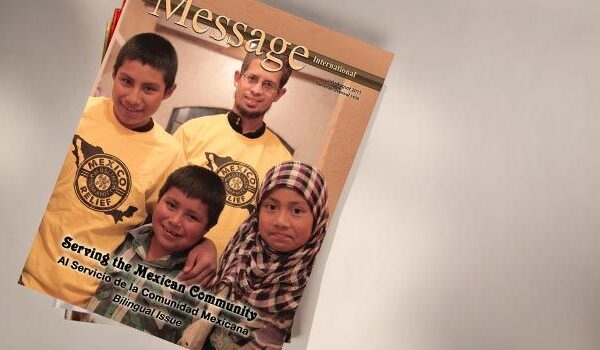
    Serving the Mexican Community

    It was only four years ago that the first story about WhyIslam in Mexico was written, but many exciting events have transpired since then. The Mexican campaign began with a desire to deliver Islamic attire and literature to a growing community in Mexico City, Al Hikmah Center. Seven organizations joined forces to contribute to the cause, donating everything from Islamic CDs to siwaks. During her vacation, Nahela Morales, a Mexican convert, distributed the items to the Islamic community in June of 2012. The trip was so successful that it became an annual effort and each year expanded to cover more than five cities within the country.

    Interest really took off when well-known lecturers and personalities such as Nouman Ali Khan, Omar Suleiman, and Boonaa Mohammed endorsed the projects in Mexico. In 2013, Nouman Ali Khan even traveled to the Mexican state of Chiapas, to the Islamic village in San Cristobal de las Casas, as part of the second annual dawah trip to Mexico. He was so moved by the poor living conditions of the indigenous Muslim families that he filmed a video tour of a typical home, a humble structure with walls made of planks and plastic covering to keep out the rain, a tin rooftop, and a dirt floor. The video was released on WhyIslam’s YouTube channel and has over 215,000 views.

    The goal for that year was to begin plans to renovate the town’s masjid Al Kauthar. Through the use of social media and fundraising campaigns, Morales was able to gather over $30,000 for Islamic material and food for distribution during Ramadan, and the masjid renovation project. However, future goals were to offer continuous support to needy families in this sector and to provide home renovations and reconstructions. This sparked plans to launch Mexico Relief Project by Helping Hand for Relief and Development.

    In 2014 Boonaa Mohammed traveled with HHRD and film crews to Mexico to produce documentaries that bring the necessary attention to this cause.

    The Prophet Muhammad, peace be upon him, once advised Aisha when she desired to offer a gift to a neighbor, that she should give, “to the one whose door is nearer to you.” The idea of helping our brothers and sisters in Mexico is one that stems from neighborliness, in the sense that Mexico is one of only two countries which share a border with the US. It is also the largest Latin American country with the smallest Muslim population; however, the Muslims are growing in number and need assistance. Alhamdulillah, we have been blessed with the ability to aid our brethren so we ask for your continued support and prayers.

    We hope that you will enjoy reading some stories and informative articles from our Mexican and Spanish-speaking brothers and sisters, and that you will also remember them in your prayers. JazakumAllahu khaiyran.

  • Al Servicio de la Comunidad Mexicana

    Al Servicio de la Comunidad Mexicana

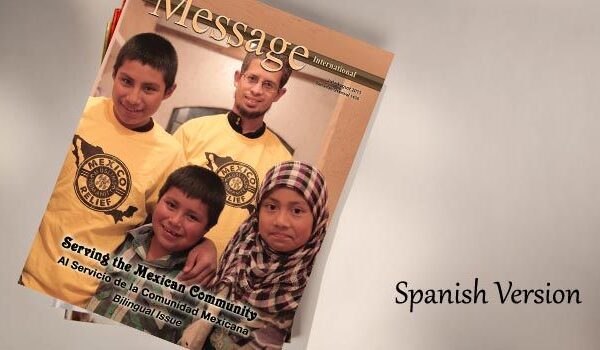
    Hace solo cuatro años que el primer informe fue escrito acerca del Proyecto WhyIslam en México, pero mucho ha ocurrido desde entonces. La campaña mexicana comenzó con un deseo de repartir ropa islámica y literatura a una comunidad creciente en la Ciudad de México llamada Centro Al Hikmah. Siete organizaciones se unieron para contribuir a la causa, donando todo lo necesario. Durante su vacación, Nahela Morales, una conversa mexicana, distribuyó los artículos a la comunidad islámica en junio de 2012. El viaje tuvo tanto éxito que se convirtió en un esfuerzo anual.

    El interés aumentó cuando personalidades muy conocidas como Nouman Ali Khan, Omar Suleiman, y Boonaa Mohammed respaldaron los proyectos en México. En 2013, Nouman Ali Khan viajó al estado mexicano de Chiapas, al pueblo de San Cristobal de las Casas, como parte del segundo viaje de divulgación en México. Se conmovió tanto al ver las condiciones de vida tan pobres en las que viven las familias musulmanas indígenas, que decidió filmar un recorrido de un hogar típico, una estructura humilde hecha de paredes de madera cubiertas en plástico para que no entre la lluvia, un techo de chapa, y piso de tierra. El video fue lanzado en el canal de YouTube de WhyIslam y lo han visto más de 215.000 personas.

    La meta para ese año era comenzar planes para renovar la mezquita, Al Kauthar. A través del uso de medios de comunicación y campañas para recaudar fondos, Morales logró reunir más de $30.000 para el material islámico y alimentos a distribuir durante el mes de Ramadán, y el proyecto de renovación para la mezquita. Sin embargo, las metas futuras eran ofrecer apoyo continuo a las familias necesitadas en este sector y proporcionar renovaciones a sus casas. Esto provocó planes para establecer un capítulo de Mano Amiga para la Ayuda y el Desarrollo en México, o HHRD (Helping Hand for Relief and Development).

    En 2014 Boonaa Mohammed viajó con HHRD y un equipo de grabación a México para producir documentales que llaman la atención necesaria a esta causa.

    El Profeta Muhammad, la paz sea con él, una vez aconsejó a Aisha cuando ella deseaba ofrecer un regalo a un vecino; le dijo que debía dar “a aquel cuya puerta está más cerca a la tuya”. La idea de ayudar a nuestros hermanos y hermanas en México nace de este consejo, siendo que México es uno de solo dos países que comparte una frontera con los EE.UU. También es el país más grande de América Latina con la población musulmana más pequeña. Sin embargo, los musulmanes están creciendo en número y necesitan ayuda. Alhamdulillah, hemos sido bendecidos con la capacidad de ayudar a nuestros hermanos por lo que pedimos su continuo apoyo y oraciones.

    Esperamos que ustedes disfruten leer algunos relatos y artículos informativos de nuestros hermanos y hermanas de México y de habla hispana, y que también los recuerden en sus oraciones. YazakumAllahu khaiyran.


  • Working Together for a Better Future: Christian and Muslim Relations

    Working Together for a Better Future: Christian and Muslim Relations

    “Say [O Muhammad]: ‘O people of the Scripture (Jews and Christians),come to a word that is just between us and you, that we worship none but Allah, and that we associate no partners with Him, and that none of us shall take others as lords besides Allah.’ Then, if they turn away, say,‘Bear witness that we are Muslims’” (Quran 3:64).
    Islam teaches that all the prophets, including the Hebrew prophets up to, and including, Jesus, taught the same core message – the oneness of God (without partner or anything associated with Him), the proper worship of Him, accountability for one’s actions with belief in a Day of Judgment, and the way to live a pious life. Jesus was sent to the lost sheep of the children of Israel, and Muhammad came to confirm his teachings, and to serve as the vehicle for the revelation of Quran, the last scriptural testament of God, a timeless and universal divine book for all humanity.

    Islam teaches that all the prophets, including the Hebrew prophets up to, and including, Jesus, taught the same core message – the oneness of God (without partner or anything associated with Him), the proper worship of Him, accountability for one’s actions with belief in a Day of Judgment, and the way to live a pious life

    God promised that this final revelation would be incorruptible and as such, its miracle lives on through various media – printed, memorized, recited, and taught by multitudes of people in all corners of the earth. The Quran mentions previous prophets and messengers, each preaching to a specific group of people, all of whom were,overall,rejected by their own people but still gained many supporters. They performed miracles in the name of God as proof of their prophethood, and they exemplified piety and good manners. The influence of Prophet Jesus and Prophet Muhammad was so great that their followers combined make up more than half of today’s world population. According to the Pew Research Center on Religion and Public Life, “As of 2010, Christianity was the world’s largest religion, with an estimated 2.2 billion adherents, nearly a third (31%) of all 6.9 billion people on Earth. Islam was second, with 1.6 billion adherents, or 23% of the global population.”

    Differences and Commonalities Between the Two Faiths

    The Christian creed today, according to Muslim belief, has emerged from a long history of modifications and alterations from the original teachings of Jesus. The most significant difference now existing between the two faiths is the Islamic concept of unity (tawheed) and the Christian concept of trinity, that God is a three-fold God – the Father, the Son, and the Holy Spirit(some Christian sects such as the Unitarians believe in tawheed, but they are in the minority).Regarding what was taught by Jesus, the Quran says, “And when Allah says: O Jesus, son of Mary! Did you say unto mankind: Take me and my mother for two gods beside Allah? He says: Be glorified! It was not mine to utter that to which I had no right. If I used to say it, then You knew it. You know what is in my mind, and I know not what is in Yours. Lo! You, only You, are the Knower of things hidden” (Quran 5:116).
    At the same time, Christianity and Islam have many commonalities of belief. Both Christians and Muslims believe in the miraculous birth of Jesus Christ, peace be upon him, in the pious nature of his mother, Mary, in the miracles he performed in God’s name, in his ascension, and both are awaiting his second coming during which he will kill the Antichrist and unify the believers under one banner. Numerous verses of the Quran speak about the life of Jesus and his role as one of the mightiest Messengers of God. There are three chapters in the Quran dedicated exclusively to his legacy: Chapter 3, The Family of Imran (the father of Mary), Chapter 19, Mary, and Chapter 5, The Table Spread, which talks about what is known in Christianity as the Last Supper.

    Toward Greater Understanding and Cooperation

    The World Council of Churches (WCC) published a report in January 1992 which stated, “Christian-Muslim relations have a complex history sometimes marked by rivalry or war, but equally in many cases – though frequently forgotten – characterized by constructive living together. A striking feature of our historical memories has been the way in which conflicts overshadow the peaceful experiences. This has been paralleled at the level of theological thinking, where polemics drown the voices of frank and honest interchange.”Interfaith activists today work hard to generate greater understanding and cooperation among the various faith communities. In fact, Muslims in the U.S. continue to enjoy a generally prevailing harmony within their communities, workplaces, and educational institutions, living side by side with people of all faiths.With regard to Christians, the Quran says, “You will find the nearest in love to the believers (Muslims) those who say, ‘We are Christians.’ That is because among them are priests and monks, and they are not proud’” (5:82).

    Much of the Islamophobic feeling comes from lack of familiarity with Islam and Muslims, or being fed inaccurate information by demagogues and self serving propagandists

    The scholar Ibn Kathir said in his explanation of this verse that it“…refers to those who call themselves Christians, who follow the religion of the Messiah and the teachings of his Gospel. These people are generally more tolerant of Islam and its people, because of the mercy and kindness that their hearts acquired through part of the Messiah’s religion. In another Ayah, Allah said; ‘And We ordained in the hearts of those who followed him, compassion, mercy, and monasticism…’ (57:27). In their book is the saying; ‘He who strikes you on the right cheek, then turn the left cheek for him.’ And fighting was prohibited in their creed… This describes them with knowledge, worship and humbleness, along with following the truth and fairness.”

    Christian Support and Protection of the Early Muslims

    It was a Christian who first confirmed the truth about what Muhammad, peace be upon him, had witnessed on the Mountain of Hira. When he thought he was going mad, his wife reassured him saying that God could not possibly forsake a person who was so trustworthy, generous, and caring. However, it was her cousin, Waraqah ibn Nawfal, a Christian convert, with whom they consulted about the appearance of the Angel Gabriel, and who confirmed that Muhammad had been chosen by God as a prophet. He predicted that he would be driven out of Makkah and that his own tribe would fight against him.
    The Muslims faced persecution in Makkah from the very advent of Islam. The leaders of the tribe of Quraysh who opposed Prophet Muhammad used to constantly defame him and even perpetrate acts of violence against him and his companions. Because Makkah was a trade center and housed the Kaaba, where pilgrims from all over Arabia would travel, the Quraysh leaders would unleash their arsenal of anti-Muslim propaganda on the unwitting travelers, many of whom would believe them and continue to spread their rumors amongst themselves and other tribes.
    Nevertheless, a good number of these visitors to Makkah also came across Muslims or even the Prophet himself, and after learning about their religion and witnessing their goodness in word and deed, they would embrace it wholeheartedly and reject the character attacks on Prophet Muhammad. These converts would return to their lands or tribes and inform their families and tribesmen about the peaceful message of Islam and the exemplary character of its leader, allowing them to formulate their own opinion about the religion, based on facts.
    When the persecution of Muslims in Makkah became unbearable during the early period of Islam, when its message was just beginning to spread more broadly, Prophet Muhammad instructed his followers to seek refuge in Abyssinia, a land ruled and inhabited by Christians. He described the king, Ashama al Negashi, as a righteous man who would not wrong them. The Muslims fled from the Arabian Peninsula into Abyssinia, now Ethiopia and Eritrea, and were well-received by the Christian ruler, who promised them safety and protection. In turn, the Muslims lived in the land abiding by its laws and interacting peacefully with its inhabitants, never imposing on anyone their beliefs.
    However, the Quraysh of Makkah were afraid that the Muslims would grow in number and attempt to fight them later after gaining momentum. They sent delegations to try and convince the king to hand over the Muslims so they could be taken back to their homeland and dealt with by the Quraysh. The Muslims living in Abyssinia handled the situation with sincerity and honesty by explaining their belief system to Al Negashi and also informing him that they, too, believed in the message of Jesus Christ and in his miraculous birth. They recited to him verses from the Chapter Mary in the Quran; this moved the ruler to tears, and instead of him focusing on the differences between the two religions, it made him stand firmly on the side of the Muslims against the idolaters.

    Living Islam Outwardly and Inwardly

    There is much hatred spewed toward Muslims and Islam today, a result of sociopolitical events and dynamics. The September 11 attacks on the World Trade Center in 2001 and the subsequent establishment of the “War on Terror,” the continuous presence of the United States military, along with the armed forces of its allies, in predominately Muslim lands, the rise of so-called Islamic terrorist groups with agendas contrary to Islamic teachings, bigoted right-wing individuals and groups spreading fear and insecurity among the masses, biased media coverage, and the occupation of Palestine and the ensuing violence that results when one group occupies and colonizes another’s land – all contribute to this growing animosity. Much of the Islamophobic feeling comes from lack of familiarity with Islam and Muslims, or being fed inaccurate information by demagogues and self-serving propagandists.
    Many American Christians are surprised to learn that believing in Jesus is an integral part of Islam. It is imperative that Muslims do their part to inform others about Islam, in an accurate and positive way. Interacting with Christian and other neighbors, coworkers, peers, and community members in an exemplary way, and being an active, contributing member of the society makes a huge impact. Islamic dawah, inviting others to Islam, is about more than just calling people to the religion vocally.It is also about living Islam outwardly and inwardly. A compelling example of reaching out with patience and piety to those who hate is what happened on the weekend of October 10 when anti-Muslim protests outside mosques were organized across the country. One woman alone turned up for the protest in Dearborn, Ohio. A few Muslims tried to engage her in conversation and explain that her negative perceptions of Islam were inaccurate. At one point, she said “If you’re a Muslim I can’t be friends with you then.” She also said that she did not believe that there are any moderate Muslims. After much discussion, the Muslims invited her into the mosque to eat breakfast with them. She finally agreed and when she later left, she took selfies with her new Muslim acquaintances. A photo of her and a Muslim woman hugging went viral.
    Ignorance about Islam and Muslims will continue to fuel hatred. Reaching out to those who react out of their fear can extinguish their enmity and build bridges of mutual understanding and fellowship.
    “You shall certainly be tried and tested in your wealth and properties and in your personal selves, and you shall certainly hear much that will grieve you from those who received the Scripture before you and from those who ascribe partners to Allah; But if you remain patient in adversity and conscious of Him, and pious,then verily, that will be a determining factor in all affairs” (Quran 3:186).