بسم الله الرحمن الرحيم

Tag: Atheism

  • Adiyy ibn Hatim

    Adiyy ibn Hatim

    When the Prophet (pbuh) announced openly his call to guidance and truth and Arabs from one region after another accepted his teachings, Adiyy, an Arab king who was the son of the famous Hatim at-Taai, saw in the Prophet’s mission a threat to his own position and leadership. Although he did not know the Prophet personally, and had never met him, he developed strong feelings of enmity towards him. He remained antagonistic to Islam for close to twenty years until at last God opened his heart to the religion of truth and guidance. The way in which Adiyy became a Muslim is a remarkable story. He himself narrated the story:

    Wealth flowed among the Muslims so much so that when the town-criers called on people
    throughout the Muslim domain to come and collect Zakat, no one was found in need to respond

    Adiyy Goes to Syria to Be With Christians

    “There was no man among the Arabs who detested God’s Messenger, may God bless him and grant him peace, more than I, when I heard about him. I was then a man of status and nobility. I was a Christian. From my people I took a fourth of their booty as was the practice of other Arab kings. When I heard of the Messenger of God, peace be on him, I hated him. When his mission grew in strength and when his power increased and his armies and expeditionary forces dominated east and west of the land of Arabs, I said to a servant of mine who looked after my camels, ‘Get ready a fat camel for me which is easy to ride and tether it close to me. If you hear of an army or an expeditionary force of Muhammad coming towards this land, let me know.’ One evening, my servant came to me and said, ‘Yaa Mawlaya! What you intended to do on the approach of Muhammad’s cavalry to your land, do it now.’ ‘Why?’ [I asked him]. ‘I have seen scouts searching close to the habitations. I asked about them and was told that they belonged to the army of Muhammad,’ he said. ‘Bring the camel which I ordered you to get ready,’ I said to him. I got up then and there, summoned my household [including] my children and ordered them to evacuate the land we loved. We headed in the direction of Syria to join people of our own faith among the Christians and settle among them.”

    Sister Seeks Help from the Prophet

    “We left in too much haste for me to gather together our entire household. I had left my own sister in our Najd homelands together with the rest of the Tayy people. I did not have any means to return to her. So I went on with those who were with me until I reached Syria and took up residence there among people of my own religion. As for my sister, what I feared for her happened. News reached me while I was in Syria that the forces of Muhammad entered our habitations and took my sister together with a number of other captives to Yathrib. There she was placed with other captives in a compound near the door of the Masjid. The Prophet, peace be upon him, passed by her. She stood up before him and said, ‘Yaa Rasulullah! My father is dead and my guardian is not here. Be gracious to me and God will be gracious to you!’ ‘And who is your guardian?’ asked the Prophet. ‘Adiyy ibn Hatim.’ she said. ‘The one who fled from God and His Prophet?’ he asked. He then left her and walked on. On the following day, the same thing happened. She spoke to him just as she did the day before and he replied in the same manner. The next day, the same thing happened and she despaired of getting any concession from him for he did not say anything.”

    “Then a man from behind him indicated that she should stand up and talk to him. She therefore stood up and said: ‘O Messenger of God! My father is dead and my guardian is absent. Be gracious to me and God will be gracious to you.’ ‘I have agreed,’ he said. Turning to those about him, he instructed, `Let her go, for her father loved noble ways, and God loves them.’ ‘I want to join my family in Syria,’ she said. ‘But don’t leave in a hurry,’ said the Prophet, ‘until you find someone you can trust from your people who could accompany you to Syria. If you find a trustworthy person, let me know.’ She stayed in Yathrib until a group arrived among whom was someone she could trust. So she went the Prophet and said: ‘O Messenger of God! A group of my people have come to me and among them is one I can trust who could take me to my family.’ The Prophet, peace be on him, gave her fine clothes and an adequate sum of money. He also gave her a camel and she left with the group.”

    Prophet’s (pbuh)Generosity

    “Thereafter we followed her progress gradually and waited for her return. We could hardly believe what we heard about Muhammad’s generosity towards her in spite of my attitude to him. When she stood before us, she snapped sharply at me and said: ‘The one who severs the tie of kinship is a wrongdoer. You took your family and your children and left the rest of your relations and those whom you ought to have protected.’ ‘Yes, my sister,’ I said, ‘don’t say anything but good.’ I tried to pacify her until she was satisfied. She told me what had happened to her and it was as I had heard. Then I asked her, for she was an intelligent and judicious person, ‘What do you think of the mission of this man [meaning Muhammad peace be on him]?’ ‘I think, by God, that you should join him quickly.’ she said. ‘If he is a Prophet, the one who hastens towards him would enjoy his grace. And if he is a king, you would not be disgraced in his sight while you are as you are.’”

    Adiyy Meets the Prophet (pbuh) in Madinah

    “I immediately prepared myself for travel and set off to meet the Prophet in Madinah without any security and without any letter. I had heard that he had said: ‘I certainly wish that God will place the hand of Adiyy in my hand.’ I went up to him. He was in the Masjid. I greeted him and he said: ‘Who is the man?’ ‘Adiyy ibn Hatim,’ I said. He stood up for me, took me by the hand and set off towards his home. By God, as he was walking with me towards his house, a weak old woman met him. With her was a young child. She stopped him and began talking to him about a problem. I was standing [all the while]. I said to myself, ‘By God, this is no king.’ He then took me by the hand and went with me until we reached his home. There he got a leather cushion filled with palm fiber, gave it to me said: ‘Sit on this!’ I felt embarrassed before him and said, ‘Rather, you sit on it.’ ‘No, you,’ he said. I deferred and sat on it.”

    Adiyy Declares His Acceptance of Islam

    “The Prophet, peace be on him, sat on the floor because there was no other cushion. I said to myself, ‘By God, this is not the manner of a king!’ He then turned to me and said, ‘Yes, Adiyy ibn Hatim! Haven’t you been a Rukusi, professing a religion between Christianity and Sabeanism?’ ‘Yes,’ I replied. ‘Did you not operate among your people on the principle of exacting from them a fourth, taking from them what your religion does not allow you?’ ‘Yes,’ I said, and I knew from that he was a Prophet sent [by God]. Then he said to me, ‘Perhaps, O Adiyy, the only thing that prevents you from entering this religion is what you see of the destitution of the Muslims and their poverty. By God, the time is near when wealth would flow among them until no one could be found to take it. Perhaps, O Adiyy, the only thing that prevents you from entering this religion is what you see of the small number of Muslims and their numerous foe. By God, the time is near when you would hear of the woman setting out from Qadisiyyah on her camel until she reaches this house, not fearing anyone except Allah. Perhaps what prevents you from entering this religion is that you only see that sovereignty and power rest in the hands of those who are not Muslims. By God, you will soon hear of the white palaces of the land of Babylon opening up for them and the treasures of Chosroes the son of Hormuz fall to their lot.’ ‘The treasures of Chosroes the son of Hormuz?’ I asked (incredulously). ‘Yes, the treasures of Chosroes the son of Hormuz,’ he said. Thereupon, I professed the testimony of truth, and declared my acceptance of Islam.”

    One report says that when Adiyy saw the simplicity of the Prophet’s lifestyle, he said to him, “I testify that you do not seek high office in this world nor corruption,” and he announced his acceptance of Islam. Some people observed the Prophet’s treatment of Adiyy and said to him, “O Prophet of God! We have seen you do something which you have not done to any other.” “Yes,” replied the Prophet. “This is a man of stature among his people. If such a person comes to you, treat him honorably.”

    Adiyy ibn Hatim, may God be pleased with him, lived for a long time. He later said, “Two of the things [which the Prophet spoke of] came to pass and there remained a third. By God, it would certainly come to pass. I have seen the woman leaving Qadisiyyah on her camel fearing nothing until she arrived at this house [of the Prophet in Madinah]. I myself was in the vanguard of the cavalry which descended on the treasures of Chosroes and took them. And I swear by God that the third event will be realized.” Through the will of God, the third statement of the Prophet, on him be choicest blessings and peace, came to pass during the time of the devout and ascetic Khalifah, Umar ibn Abd al-Aziz. Wealth flowed among the Muslims so much so that when the town-criers called on people throughout the Muslim domain to come and collect Zakat, no one was found in need to respond.


  • Muslim Youth and the Rise of Atheism

    Muslim Youth and the Rise of Atheism

    If you were asked what the state of your eman (faith) is at this moment regarding the existence of Allah (SWT) and the reality of the hereafter, how would you respond? This is an important question because scholars often remind us that our faith is not static or unchanging. Rather, our eman is in a state of flux— either strengthening or weakening depending on various factors such as acts of worship or their neglect, or the commission of good or bad deeds. Despite the fact that our eman is in constant motion, most of us would surely declare that our eman is strong and that we could never imagine leaving this world except as Muslims. In addition, for most of us it is our knowledge of Islam and glimpses of the wisdom and joy it holds for us, as well as those occasional moments of profound prayerful connection with our Creator, that keeps our commitment to Islam firm and unwavering.
    Muslims must continuously endeavor to strengthen their eman, but to keep the Muslim ummah strong, we must also make imparting the beauty of Islam to the next generation tantamount to our most important goals. After all, it is the youth who will carry on the banner of this blessed religion in the homes and Islamic centers of tomorrow. However, there have been serious shortcomings in the guidance and education of our youth, to such a degree that an unfathomable reality has already infiltrated our Muslim communities. Gone are the days when we only had to worry about Muslim youth neglecting their prayer or complaining about fasting. These were phases that tended to be a temporary part of growing up and accepting full accountability before Allah (SWT). The shocking reality is that today there is a small but steady number of Muslim youth who are throwing away all that Islam has to offer and rejecting the very existence of Allah (SWT) altogether. These young ex-Muslim atheists claim complete and utter kufr (disbelief).

    If you were asked what the state of your eman (faith) is at this moment regarding the existence of Allah (SWT) and the reality of the hereafter, how would you respond?

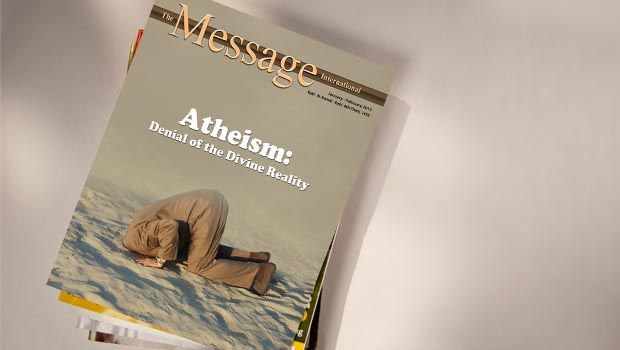
    As shocking and unthinkable as this reality is, we cannot afford to keep our heads in the sand and pretend that it is not happening or that it could never happen to our youth. The fact is that every young Muslim is our child, the responsibility of the ummah, and we need to be informed of this new disease infecting portions of our Muslim community so that we can provide the solutions to contain this problem before it spreads and places the future of Muslim communities at serious risk. We need to identify some of the causes of our youth being pulled toward atheist ideology and what Muslim families and communities can do to thwart this phenomenon. Some of the findings and solutions presented here arise from my work with youth for twenty-plus years through the organization Muslim Youth of North America and with Islamic schools, Muslim camps, conferences, and halaqas.

    Some of the Causes of Muslim Youth Falling into Atheism

    Lack of Islamic Education or Parental Role Modeling in the Home:

    Parents who don’t prioritize Islamic education and practice in the home are at greatest risk of their children straying off the path of Islam. The first armor against doubt is education and it is not enough to send a child to Sunday school. Parents must teach their children about Islam, but they must also practice what they preach by being good role models. Parents must themselves practice the religious rituals such as salat and fasting and do so with regularity, as well as exemplify the moral code of Islam so as to confirm and reinforce, rather than contradict, whatever the children are learning about the proper way to conduct themselves as Muslims. This allows them to internalize their commitment to Islam. Here is an excerpt from an article written by a Muslim youth from Singapore who became an atheist. It illustrates that lack of practice in the home is a common thread to later incidences of leaving Islam: “I’m a 20-year-old Atheist and former Muslim from Singapore. Like many other Muslims, I was raised while being taught Islamic values and attended Madrasah/Sunday school until I was 16. I didn’t wear hijab or pray daily but I claimed I was proud to be a Muslim.” Obviously if she lived in a home that did not require prayer or other aspects of Islamic practice, then she didn’t truly have an Islamic education or a good example set by her parents.

    Associating With a Bad Crowd of Friends:

    Parents must have full knowledge of who their children associate with on a daily basis. This is essential because one never knows what negative influences these friends might bring. During an interview on the Deen Show, Ustadh Nouman Ali Khan of the Bayinnah Institute, spoke of his own internal religious struggle which led to him leaving Islam and turning to atheism as a youth. He relays that it began with him befriending non-believing peers in high school which in turn eventually led to a loss of religion and him adopting the atheist ideology. Falling into that crowd and not being around any Muslims, he reached the point that, as he says, “I had a hatred for the concept of God. It was by the Mercy of Allah that Allah opened many doors that led me back to Iman and to my Faith, and conviction.” The Prophet (pbuh) said, “A good friend and a bad friend are like the perfume seller and a blacksmith: The perfume-seller might give you some perfume as a gift, or you will get a good smell from him; as for the blacksmith, he might singe your clothes or you will get a bad smell from him” (Bukhari).

    Negative Influence of Social Media:

    Oftentimes it is through social media that atheist ideologies are promoted. Parents need to monitor their children’s time on the internet. It is very easy for youth to happen upon, or even search for, information that can lead them into doubt about religion. In an article entitled “Pakistani Youths Turning Into Atheists” on IBN live, the writer notes, “A Facebook group has been floating for Pakistan’s atheists by Hazrat NaKhuda, a former Pakistani Muslim. At last count, the group had over a 100 members.” A thread was started on the discussion board entitled “How did you become an atheist.” Members of the group are from all over including the United States.

    Emotional or Psychological Troubles:

    Underlying emotional issues that a young Muslim is facing might cause him to doubt and lead to atheism. Ustadh Nouman Ali Khan states that atheism is rooted in emotional trauma: “Atheism is a conscious decision. It does not occur naturally… It is not rooted in something intellectual—that’s the facade. It’s actually rooted in something psychological. These people are either traumatized or they had a really bad experience in life, or they’ve seen something that they were emotionally disturbed by—they decided to blame God for it, and as part of their reaction against God—you know, what is the biggest offense I can do—[to say] He doesn’t even exist.”

    Interweaving Culture with Islam:

    Muslims commonly confuse cultural tradition with Islamic practice. In his recent article about the rise of atheism, Mohamed Ghilan, a Ph.D. candidate in neuroscience at the University of Victoria in Canada and a student of Islamic jurisprudence, makes the point that this is a major cause of the rise of atheism: “In fact, the problem is not with Islam; it’s with modern day Muslims. It’s where some Muslims coming to the West from the East have decided that cultural customs are actually absolute parts of Islam. Having their children grow in the West and raising them to be cultural schizophrenics who unjustifiably feel guilty about their adopted culture is now showing its ugly face. We now have a growing movement of young educated Muslims who all of a sudden discovered that what they took for granted as absolutes turned out to be nothing more than relative cultural manifestations of Islam… After realizing they’ve been duped the whole time as a result of their own and their parent’s ignorance of Islam, the whole religion became an open question. …Interestingly, the places where cultural baggage is being exported as an absolute part of Islam happen to also be the places with the most vocal and strongest growing atheist ex-Muslim movements.”

    Protecting Youth from Atheism: Some Solutions

    After Allah (SWT), the two greatest protections against Muslim youth falling off the path of Islam are parents and local Muslim communities. There are a number of things parents can do to protect their children.

    Have Children Attend Full-time Islamic School and Islamic Sunday School:

    One of the first steps in building a sense of Islamic identity is to surround youth with Muslims and Islamic teaching. By attending Islamic school, children will make salat, read the Qur’an, and practice their religion daily in a supportive environment.

    Establish Salat in the Home as a Family Practice:

    Children and youth must be required to make their prayer (salat) daily. A wise person once said: “If one does not pray, they become easy prey for Shayton (the devil).” In the home, adopt a “no playing before praying” rule, meaning that children must do their daily prayers so as not to lose the privilege of playing; this includes video games, watching TV, and time spent online. Furthermore, if the prayer time comes in while they are engaged in any other activity, they must be required to leave that activity to perform the prayer and if time permits, to then return to that activity.

    Require Children to Read the Qur’an Daily:

    Establish for your children the habit of reading Qur’an every day for ten minutes to an hour. Teach them to read the Qur’an in Arabic, and to learn its meaning as well. Reading Qur’an not only provides blessings, but also increases eman and inspires a stronger commitment to Allah (SWT) within the heart.

    Attend Islamic Conferences and Events as a Family:

    Attending annual Islamic conventions and conferences like ICNA, ISNA, and other smaller events helps strengthen the youths’ Islamic identities and give them a sense of fellowship and solidarity with other Muslims. Oftentimes Muslims feel their status as a minority, but while attending Islamic conferences, Muslim youth can feel like part of a majority, surrounded with like-minded individuals, like they would in a Muslim country.

    Send Children to Muslim Youth Camps and Conferences:

    Quality Muslim youth camps can be cornerstones in helping youth develop Islamic identity. What sets Muslim youth camps and conferences apart from the Islamic studies class, is that youth are not “talked at,” but rather encouraged to “talk to” each other. When youth talk together in workshops and open forums about common challenges and problems, they internalize the information more and gain confidence by realizing they are not alone. One quality youth conference can change a Muslim youth’s life for the better.

    Have Your Older Children Attend a Regular Muslim Youth Halaqa:

    Our older children must come together with other youth on a regular basis and discuss Islam and take turns researching and teaching one another various Islamic topics. By the youth themselves relaying hadeeth and Qur’anic verses, the information is retained and internalized more effectively. If there is currently not an available halaqa, then parents can start one in their local masjid, and invite other youth to attend. The Prophet (pbuh) said: “Whoever seeks a way to acquire knowledge, Allah will make easy his way to Paradise” (Muslim).

    More Solutions at the Community Level

    There are also a number of things local communities can do to protect our children.

    Provide Regular Quality Youth Conferences, Camps, Halaqas, and Sports Programs:

    Youth certainly need to be involved in youth workshops and conferences where they speak to, teach, and debate one another about Islam and its practical application in life, as well as engage in discussion about Islamic work and other Islamic topics. They also need recreation programs which can provide enjoyment and provide opportunity for them to develop lasting friendships with fellow Muslim youth.

    Develop Leadership Training Programs:

    In order for youth to fully internalize their faith in action, they must take ownership of their Islamic work. This means giving the youth responsibilities and positions within Islamic centers which help them to feel responsible and that they are a dynamic part of the community. This encourages youth to engage in community service and think long term about how to carry on the vital work needed in our communities.

    Invite Motivational Muslim Speakers Specifically for Youth:

    Many Muslim speakers have great experience talking to the youth and they can be the role models needed to inspire youth to strengthen their eman and Islamic identity.

    Hold Youth Forums Highlighting the Many Muslim Contributions to World Civilization:

    Special workshops can be held to spotlight the many contributions made by Muslims in the way of science, technology, mathematics and inventions. Muslim youth are inundated with negative stereotypes about Muslims in the media. One way to counterbalance that negativity is to highlight for the youth the part that Islam and Muslims have played in advancing knowledge in zoology, astronomy, geography, navigation, architecture, medicine, and mathematics, as well as in founding great libraries, making advancements in bookmaking, designing decorative geometric art, calligraphy, and fine textiles, and so on. Realizing this extensive and important heritage can give youth confidence and inspiration to continue the tradition of future contributions to civilization.

    Final Thoughts

    If a Muslim youth is going astray, take a gentle approach. It is important to befriend them with an uncritical and non-judgmental manner. This is the best way to deal with these youth who are already feeling somewhat alienated. Ustadth Nouman Ali Khan attributes this approach to helping him leave the atheist lifestyle and re-commit to Islam: “One of the most important messages that benefited me that I hope other Muslims can benefit from is, number one, there is nobody that is hopeless. I was one of those guys (people would have called hopeless), but then someone decided not to judge me and to just think of me as a human being who has some goodness in them. And we have to do that for other people. We have to have some patience with them in giving them Islam, and it’s not going to happen overnight. This brother that helped me never actually gave me dawah to Islam: he never told me to pray, he never told me about the Qur’an. But just through his company and his kindness and generosity, little by little, and it was a good year-long process that —Subhan’Allah I came toward the Deen.”
    Share with youth why you love Islam. We must find the words to communicate the beautiful legacy of Islam to our Muslim youth—words which help to inspire them to internalize the beauty of its message. We cannot assume that youth have already heard the message. We must relay the message to them, and give them reasons to feel awe for their religion and thankfulness for being Muslim. Explain to them how Islam took Muslims out of the darkness and into the light of knowledge. Relay to them how we should be thankful that it answers life’s biggest question directly – why we are here on earth: “And I did not create the jinn and mankind except to worship Me”(Qur’an 51:56). Convey to the youth how thankful you are that with this religion came our beloved Prophet Muhammad (pbuh) who was a beacon among men and a mercy to humankind, promoting peace, justice, kindness, morality, and honor and rights to women. And through Prophet Muhammad came the Glorious Qur’an, the final message to mankind, which is both a blessing and a miracle in so many ways including its incorruptible, healing, and awe-inspiring text which is memorized word for word by millions. This is just a small part of the beauty and uplifting legacy of Islam which must be properly imparted to the youth of today and tomorrow.
    Our Muslim youth are the next generation of Islamic workers and community leaders, and it is the responsibility of both parents and the local communities to work together, striving to instill in our children’s hearts and minds a deep-seated love for Islam and strong Islamic identity. We must be certain that they are hearing and understanding the message of Islam. Only then can they internalize its beauty and truth and develop a realization that our Lord is ever near. May they be of those who reach out to Him for mercy and guidance and find their place among those of whom it is said, “They were the youth who believed in their lord and we increased them in Guidance” (Qur’an 18: 13).

  • Losing My Religion, A Call for Help

    Losing My Religion, A Call for Help

    To the Homegrown American Sisters
    and Brothers,

    At present, our community in America, whether or not we are aware of it or acknowledge it, is engulfed in a decisive conflict, and we are taking heavy losses. Mass numbers of descendents of Muslims, converts, and spiritual seekers are forsaking the American Islamic community and many of these will inevitably abandon the religion. The confrontation is of course not military but rather is occurring on the intellectual plane. On one front our religion is being both subtly and overtly demeaned by the media. On another, anti-Islam websites are assaulting the faith with mostly discarded but now resurrected antiquated orientalist criticisms.
    On another, an extreme, virulent and irrational interpretation of the faith has assumed, with a good deal of outside support, center stage on the world scene. On another, most mosques in this country impose in the name of Islam, traditions and beliefs of questionable necessity that obfuscate the fundamental message of God’s last revelation to humanity and that are driving individuals from the faith in droves, and that serve to confirm for too many youth of Muslim parentage and American converts the overriding negative impression of Islam that society seems to hold at large. Instead of seeing a path to spiritual growth, enlightenment and fulfillment, many of these disengaged Muslims start to see a stagnant, retrogressive, patriarchal remnant of a lagging culture, mired in meaningless controversies and hollow, lifeless formalism.
    If this is going to be countered, it will require an immense and courageous intellectual effort, and those upon whose shoulders this challenge and duty primarily rests are the second generation and converts who have held fast to their faith despite the many challenges this has presented. It is you, the activist American Muslim youth and converts, though your numbers are small, who have been placed in a pivotal role. Through your American upbringing, you have come to fully know and understand the surrounding society, and through your love and commitment to God and your religion, in a milieu that constantly tests it, you have by nature and necessity become the crucial bridge between your faith and its future in this country. You are in the best position to rationally respond to Islam’s detractors and to communicate and demonstrate to your fellow countrymen and women what it really means to be a Muslim. You think their think, talk their talk, and appreciate their confusions and concerns. You are also in the best position to reassess the vast tradition that has come down to us in the name of Islam. It is precisely because you have not been reared in a traditional Muslim culture and because you have been taught since your first day in school to search, question, critique, and analyze that you are the prime candidates to endeavor to separate religion from culture, to distinguish the essential to Islam from time and place bound interpretations. It is you who are best able to understand and communicate to the disaffected Muslim youth. This is your jihad (struggle), a jihad for minds and hearts, a jihad of intellect and reason.

    At present, our community in America, whether or not we are aware of it or acknowledge it, is engulfed in a decisive conflict, and we are taking heavy losses.

    So I encourage you to arm yourselves, my younger brothers and sisters, with books, and pens and personal computers, and all the other instruments of learning. And arm yourselves with knowledge of your religious tradition and the works and thoughts of its great minds of the past. But also arm yourselves with modern techniques of critical, analytical, investigative research, so that you can better study and critique past contributions in the Islamic sciences. Learn all you can in your coursework, and especially in such fields as religious studies, history, anthropology, and linguistics. Arm yourselves also, if you have the inclination and aptitude, with advanced degrees in these areas of research so critical to the project of reappraising our community’s traditions. And arm yourselves with humility, because it is vital to objectivity, and with courage and perseverance, brothers and sisters, because you will be opposed from without and within the Muslim community.
    And remember to always pursue the truth, for God is the Truth, and always pray for and trust in His guidance. And so arm yourselves also with steadfast devotion to your Lord, never forgetting that to Him, and Him only, you have surrendered – not to a tradition, or a school of thought, or a local community or culture, or scholarly legacy – and that your living, striving, sacrifice and dying, all is for
    Allah.
    The article was excerpted from Dr. Jeffrey Lang’s book entitled Losing My Religion, an in depth analysis of the current acculturation of the Muslim American identity.

  • The Big Questions

    The Big Questions

    At some point in our lives, everybody asks the big questions: “Who made us,” and “Why are we here?” So who did make us? Most of us have been brought up more on science than religion, and to believe in the Big Bang and evolution more than God. But which makes more sense? And is there any reason why the theories of science and creationism cannot coexist?

    Should we not show good manners and thank our Creator for His gifts now, and subsequently for the rest of our lives? Don’t we owe Him that? You answered “Yes.” You must have.

    Important Questions

    The Big Bang may explain the origin of the universe, but it doesn’t explain the origin of the primordial dust cloud. This dust cloud (which, according to the theory, drew together, compacted and then exploded) had to come from somewhere. After all, it contained enough matter to form not just our galaxy, but the billion other galaxies in the known universe. So where did that come form? Who, or what, created the primordial dust cloud? Similarly, evolution may explain the fossil record, but it falls far short of explaining the quintessential essence of human life—the soul. We all have one. We feel its presence, we speak of its existence and at times pray for its salvation. But only the religious can explain where it came from. The theory of natural selection can explain many of the material aspects of living things, but it fails to explain the human soul.

    Furthermore, anyone who studies the complexities of life and the universe cannot help but witness the signature of the Creator. Whether or not people recognize these signs is another matter—as the old saying goes, denial isn’t just a river in Egypt. (Get it? Denial, spelled “de Nile” … the river Ni … oh, never mind.) The point is that if we see a painting, we know there is a painter. If we see a sculpture, we know there’s a sculptor; a pot, a potter. So when we view creation, shouldn’t we know there’s a Creator? The concept that the universe exploded and then developed in balanced perfection through random events and natural selection is little different from the proposal that, by dropping bombs into a junkyard, sooner or later one of them will blow everything together into a perfect Mercedes.

    Chaos or Controlled Events?

    If there is one thing we know for certain, it is that without a controlling influence, all systems degenerate into chaos. The theories of the Big Bang and evolution propose the exact opposite, however—that chaos fostered perfection. Would it not be more reasonable to conclude that the Big Bang and evolution were controlled events? Controlled, that is, by the Creator?

    The Bedouin of Arabia tell the tale of a nomad finding an exquisite palace at an oasis in the middle of an otherwise barren desert. When he asks how it was built, the owner tells him it was formed by the forces of nature. The wind shaped the rocks and blew them to the edge of this oasis, and then tumbled them together into the shape of the palace. Then it blew sand and rain into the cracks to cement them together. Next, it blew strands of sheep’s wool together into rugs and tapestries, stray wood together into furniture, doors, windowsills and trim, and positioned them in the palace at just the right locations. Lightning strikes melted sand into sheets of glass and blasted them into the window-frames, and smelted black sand into steel and shaped it into the fence and gate with perfect alignment and symmetry. The process took billions of years and only happened at this one place on earth—purely through coincidence. When we finish rolling our eyes, we get the point. Obviously, the palace was built by design, not by happenstance. To what (or more to the point, to Whom), then, should we attribute the origin of items of infinitely greater complexity, such as our universe and ourselves?

    Another argument to dismiss the concept of Creationism focuses upon what people perceive to be the imperfections of creation. These are the “How can there be a God if such-and-such happened?” arguments. The issue under discussion could be anything from a natural disaster to birth defects, from genocide to grandma’s cancer. That’s not the point. The point is that denying God based upon what we perceive to be injustices of life presumes that a divine being would not have designed our lives to be anything other than perfect, and would have established justice on Earth. Hmm … is there no other option?

    We can just as easily propose that God did not design life on Earth to be paradise, but rather a test, the punishment or rewards of which are to be had in the next life, which is where God establishes His ultimate justice. In support of this concept we can well ask who suffered more injustices in their worldly lives than God’s favorites, which is to say the prophets. And who do we expect to occupy the highest stations in paradise, if not those who maintain true faith in the face of worldly adversity? So suffering in this worldly life does not necessarily translate into God’s disfavor, and a blissful worldly life does not necessarily translate into beatitude in the hereafter. I would hope that, by this line of reasoning, we can agree upon the answer to the first “big question.” Who made us? Can we agree that if we are creation, God is the Creator?

    Why Are We Here?

    If we can’t agree on this point – that God is the Creator – there probably isn’t much point in continuing. However, for those who do agree, let’s move on to “big question” number two—why are we here? What, in other words, is the purpose of life? Well, why are we here? To amass fame and fortune? To make music and babies? To be the richest man or woman in the graveyard? – for, as we are jokingly told, “He who dies with the most toys wins.” No, there must be more to life than that, so let’s think about this. To begin with, look around you. Unless you live in a cave, you are surrounded by things we humans have made with our own hands. Now, why did we make those things? The answer, of course, is that we make things to perform some specific function for us. In short, we make things to serve us. So by extension, why did God make us, if not to serve Him?

    If we acknowledge our Creator, and that He created humankind to serve Him, the next question is, “How? How do we serve Him?” No doubt, this question is best answered by the One who made us. If He created us to serve Him, then He expects us to function in a particular manner, if we are to achieve our purpose. But how can we know what that manner is? How can we know what God expects from us. Well, consider this: God gave us light, by which we can find our way. Even at night, we have the moon for light and the stars for navigation. God gave other animals guidance systems best suited for their conditions and needs. Migrating birds can navigate, even on overcast days, by how light is polarized as it passes through the clouds. Whales migrate by “reading” the Earth’s magnetic fields. Salmon return from the open ocean to spawn at the exact spot of their birth by smell, if that can be imagined. Fish sense distant movements through pressure receptors that line their bodies. Bats and blind river dolphins “see” by sonar. Certain marine organisms (the electric eel being a high-voltage example) generate and “read” electric fields, allowing them to “see” in muddy waters, or in the blackness of ocean depths. Insects communicate by pheromones. Plants sense sunlight and grow towards it (phototropism); their roots sense gravity and grow into the earth (geotropism). In short, God has gifted every element of His creation with guidance. Can we seriously believe he would not give us guidance on the one most important aspect of our existence, namely our raison d’etre—our reason for being? That he would not give us the tools by which to achieve salvation?

    And would this guidance not be . . . revelation?

    Think of it this way: Every product has specifications and rules. For more complex products, whose specifications and rules are not intuitive, we rely upon owner’s manuals. These manuals are written by the one who knows the product best, which is to say the manufacturer. A typical owner’s manual begins with warnings about improper use and the hazardous consequences thereof, moves on to a description of how to use the product properly and the benefits to be gained thereby, and provides product specifications and a troubleshooting guide whereby we can correct product malfunctions. Now, how is that different from revelation? Revelation tells us what to do, what not to do and why, tells us what God expects of us, and shows us how to correct our deficiencies. Revelation is the ultimate user’s manual, provided as guidance to the one who will use us—ourselves. In the world we know, products that meet or exceed specifications are considered successes whereas those that don’t are … hmm … let’s think about this. Any product that fails to meet factory specifications is either repaired or, if hopeless, recycled. In other words, destroyed. Ouch. Suddenly this discussion turns scary-serious. Because in this discussion, we are the product—the product of creation.

    But let’s pause for a moment and consider how we interact with the various items that fill our lives. As long as they do what we want, we’re happy with them. But when they fail us, we get rid of them. Some are returned to the store, some donated to charity, but eventually they all end up in the garbage, which gets … buried or burned. Similarly, an under-performing employee gets … fired. Now, stop for a minute and think about that word. Where did that euphemism for the punishment due to an under-performer come from? Hmm … the person who believes the lessons of this life translate into lessons about religion could have a field day with this. We should remember that both Old and New Testaments are filled with analogies, and Jesus Christ taught using parables. So perhaps we had better take this seriously. No, I stand corrected. Most definitely we should take this seriously. Nobody ever considered the difference between heavenly delights and the tortures of hellfire a laughing matter.

    The Need for Revelation

    But many people would question my assertion: Why does mankind need revelation? Isn’t it enough just to be good? Isn’t it enough for each of us to worship God in our own way? Regarding the need for revelation, I would make the following points: Life is full of injustices, but our Creator is fair and just and He establishes justice not in this life, but in the afterlife. However, justice cannot be established without four things—a court (i.e., the Day of Judgment); a judge (i.e., the Creator); witnesses (i.e., men and women, angels, elements of creation); and a book of laws upon which to judge (i.e., revelation). Now, how can our Creator establish justice if He did not hold humankind to certain laws during their lifetimes? It’s not possible. In that scenario, instead of justice, God would be dealing out injustice, for He would be punishing people for transgressions they had no way of knowing were crimes.

    Why else do we need revelation? To begin with, without guidance mankind cannot even agree on social and economic issues, politics, laws, etc. So how can we ever agree on God? Secondly, nobody writes the user manual better than the one who made the product. God is the Creator, we are creation, and nobody knows the overall scheme of creation better than the Creator. Are employees allowed to design their own job descriptions, duties and compensation packages as they see fit? Are we citizens allowed to write our own laws? No? Well then, why should we be allowed to write our own religions? If history has taught us anything, it is the tragedies that result when mankind follows its caprice. How many who have claimed the banner of free thought have designed religions that committed themselves and their followers to nightmares on Earth and damnation in the hereafter?

    So why isn’t it enough just to be good? And why isn’t it enough for each of us to worship God in our own way? To begin with, peoples’ definitions of “good” differ. For some it is high morals and clean living, for others it is madness and mayhem. Similarly, concepts of how to serve and worship our Creator differ as well. More importantly and to the point, nobody can walk into a store or a restaurant and pay with a different currency than the merchant accepts. So it is with religion. If people want God to accept their servitude and worship, they have to pay in the currency God demands. And that currency is obedience to His revelation. Imagine raising children in a home in which you have established “house rules.” Then, one day, one of your children tells you he or she has changed the rules, and is going to do things differently. How would you respond? More than likely, with the words, “You can take your new rules and go to Hell!” Well, think about it. We are God’s creation, living in His universe under His rules, and “go to Hell” is very likely what God will say to any who presume to override His laws with their own.

    Sincerity becomes an issue at this point. We should recognize that all pleasure is a gift from our Creator, and deserving of thanks. If given a gift, who uses the gift before giving thanks? And yet, many of us enjoy God’s gifts for a lifetime and never give thanks. Or give it late. The English poet, Elizabeth Barrett Browning, spoke of the irony of the distressed human appeal in “The Cry of the Human”:

    And lips say “God be pitiful,”
    Who ne’er said, “God be praised.”

    Should we not show good manners and thank our Creator for His gifts now, and subsequently for the rest of our lives? Don’t we owe Him that? You answered “Yes.” You must have. Nobody will have read this far without being in agreement, but here’s the problem: Many of you answered “Yes,” knowing full well that your heart and mind do not wholly agree with the religions of your exposure. You agree we were created by a Creator. You struggle to understand Him. And you yearn to serve and worship Him in the manner He prescribes. But you don’t know how, and you don’t know where to look for the answers. And that, unfortunately, is not a subject that can be answered in an article. Unfortunately, that has to be addressed in a book, or maybe even in a series of books. The good news is that I have written these books. I invite you to start with “The Eighth Scroll.” If you’ve liked what I’ve written here, you’ll love what I’ve written there.

  • The Quranic Model: A Harmony of Faith and Reason

    The Quranic Model: A Harmony of Faith and Reason

    John Locke, in his book “An Essay Concerning Human Understanding,” suggests: “For till it be resolved how far we are to be guided by reason, and how far by faith, we shall in vain dispute, and endeavor to convince one another in matters of religion.” But there are more fundamental questions: Do faith and reason have to always be in conflict? Can God’s existence and attributes be established by reason alone or faith alone? Why is it that the exponents of reason complain of restraint by exponents of faith? And why do exponents of faith complain of being dismissed or marginalized by the exponents of reason? Is there a boundary for each, and under what circumstances can they combine and interact?

    The Qur’an, from its very inception, guides our thoughts towards the unseen, and at the same time it engages us in things that are physical and that appeal to reason

    Since early times until now great philosophers, thinkers, and religious scholars have tried their best to tackle these questions. Many theories and concepts have been posited but ultimately there still appears to be a conflict between faith and reason. Some conclude that if you believe and have faith, you need not look for any intellectual conviction regarding your belief. While others say that all evidence for what is reality must be rational and can only be explained by using logical argument and what is observable to the senses. But a good argument can be made that the question of faith versus reason goes back to some larger issues in metaphysics such as belief in the unseen. Is there something beyond the physical world that humans must accept as real even though they cannot see or measure it? If so, what is it? Those who believe in an unseen realm find in faith their primary source for understanding reality. On the other hand, those who disbelieve in divine and transcendental realities will surely deny faith and reject revelation and, thus, rely on reason as the only means to determine reality.
    As Muslims we believe that beyond this physical world and the physical things we see around us is a world of the unseen, or ghaib. In fact, The Qur’an, from its very inception, guides our thoughts towards the unseen, and at the same time it engages us in things that are physical and that appeal to reason. Allah SWT says, “Alif, Lam, Meem. This is the Book about which there is no doubt, a guidance for those conscious of Allah, who believe in the unseen, establish prayer, and spend out of what We have provided for them” (Qur’an 2:1-3). In these verses Allah SWT combines faith and belief in the unseen as first and foremost elements of guidance. Then come the practical attributes of that faith and belief such as performing prayers and helping others who are in need.
    In fact, praying to the Lord and giving charity to the needy can be reasoned out once a person has attained to faith. Nothing combines faith and reason more than the acts of worship. One who prays goes through physical motions that make sense from a spiritual point of view, from standing in qiyaam to bowing in ruku to prostrating in sujood. But while these physical movements and positions metaphorically direct the mind and heart beyond this world to a higher realm, toward sincere surrender to Allah SWT, they are firmly grounded in a here-and-now sense experience. And beyond that, the prayer is structured, deliberate, and systematic in motivating a person to think and reflect. Similarly, a person who helps someone in need does so both at a physical level as well as within a spiritual context.

    The human being is equipped to observe, contemplate, understand, and draw conclusions. Thus, the Qur’an challenges man to use his faculty of reasoning to recognize and worship the One and Only God – Allah SWT

    It should be mentioned here that out of the six pillars of Imaan only two have a physical correlative, while the rest are based solely on faith in the unseen. Belief in Allah SWT, the Angels, the Last Day, and Qadr are all metaphysical in nature. The Prophets were physical beings during their lifetimes, but for us today, only belief in the Books, and for us specifically the Qur’an, has a physical counterpart that we can touch, see, and investigate firsthand. In fact, the Qur’an is a book that challenges us to read, to study, to contemplate, and to use our reason, all leading us to faith in the unseen.
    The Qur’an teaches that Allah SWT, the Creator of everything, has created the means, and He is Lord and Controller of the means, or what is known as the Rabbul-Asbaab. This is what makes the Qur’an so powerful in its argument that both faith and reason are necessary and work in harmony. In Islam, reason is not a separate entity void of any connection to faith. Rather faith and reason work together and complement each other (though faith is higher grade than reason in the ultimate schema) and brings about balance and harmony at the individual level, the societal level, and the global level.
    The human being is equipped to observe, contemplate, understand, and draw conclusions. Thus, the Qur’an challenges man to use his faculty of reasoning to recognize and worship the One and Only God – Allah SWT. The Qur’an itself is a unique merging of faith and reason, of religion and philosophy, and there is no contradiction therein. No doubt, reason plays an important role in the quest for truth. Thus, faith and reason in Islam must be, and are, complementary. In fact, the Qur’an repeatedly enjoins human beings to observe the natural world as a way to realize that there must be a Creator: “Have they not looked at the sky above them – how We structured it and adorned it and it has no rifts? And the earth – We spread it out and cast therein firmly-set mountains and and produced therein every kind of beautiful growth, giving insight and a reminder for every servant who turns [to Allah]” (Qur’an 50:6-8). There are so many verses in The Qur’an that challenge man to use his senses and his intellectual faculties to rationally conclude that there is a Creator and, again, through reason, that there is only One God. So we look at creation around us, not in an unthinking way, but by reflection and reason, and recognize the power, the omniscience, the greatness of the Creator.
    Indeed, because Allah SWT is All-Knowing, there is a perfect harmony in the universe, and through the use of reason and observation, one’s faith in the divine is fortified and increased. How beautiful is the divine order in Allah’s creation! He SWT says: “And a Sign for them is the night – We withdraw therefrom the day, and behold, they are in darkness. And the sun runs on its fixed course for a term [appointed]. That is the Decree of the All-Mighty, the All-Knowing. And the moon, We have measured for it mansions [to traverse] till it returns like the old dried curved date stalk. It is not for the sun to overtake the moon, nor does the night outstrip the day. They all float, each in an orbit” (Qur’an 36:37-40). The Qur’an then challenges man to examine the verses of the Qur’an and see if he can find any contradiction therein: “Then do they not reflect upon the Qur’an? If it had been from other than Allah, they would have found within it much contradiction” (Qur’an 4:82). It is clear from the above verses that Allah SWT does not ask of the human being a dogmatic and blind faith. In fact, following blindly and without question or intelligent assessment the ways of one’s forefathers is condemned in the Qur’an: “When it is said to them, ‘Come to what Allah has revealed and unto the Messenger,’ they say, ‘Enough for us is that which we found our fathers following,’ even though their fathers had no knowledge whatsoever and no guidance” (Qur’an 5:104). Indeed, it is the intellect that distinguishes man from the rest of created beings.
    In almost 50 verses of the Qur’an Allah SWT talks about using the intellect. Further, the word “knowledge” and its derivatives are found over 800 times. In conclusion, both reason and faith are necessary and work in harmony in humanity’s quest for the truth. A proper balance of the two is required in order to fully grasp reality and to fulfill due diligence with regard to worldly and spiritual obligations. The Qur’an has indeed provided us with a good command of both faith and reason and it is up to us to use these blessings to create harmony and peace in the world.

  • Tawakkul: Trust and Reliance in Allah (swt)

    Tawakkul: Trust and Reliance in Allah (swt)

    Tawakkul means perfect reliance and trust. The root of tawakkul is wao-kaf-lam. One of the words derived from this root is wakil – the person whom we trust. The person who trusts someone is called mutawakkil. Naturally, every one of us wants the best wakil for guidance in all our affairs, and who could we trust more than our Creator, Allah (SWT)? In Surah Al-Imran, Allah (SWT) says, “Allah [alone] is sufficient for us, and He is the best Disposer of affairs” (Qur’an 3:173). Is anyone more capable to guide us than Allah (SWT)? But unfortunately, because of our weak eman, we put our trust in worldly sources of advice and assistance to resolve our problems. This includes, but is not limited to, visiting graves of saints, making du’as to dead people, putting one’s entire trust in a doctor or specific treatment for a cure. On the contrary, Allah (SWT) tells us in Surah Ibrahim, “And in Allah let the believers put their trust” (Qur’an 14:11).

    In our everyday life, we should remember the meaning of tawakkul (trust) exhibited to us by the Prophet (pbuh).

    Ibn Abass (RA) narrated that the Prophet (pbuh) said that he was shown a huge crowd of people and was told, “This is your nation out of whom seventy thousand shall enter paradise without reckoning.” Then the Prophet (pbuh) entered his house without telling his companions who they (the 70,000) were. So the people started to wonder about these 70,000. When the Prophet heard of their discussions, he came out and said, “Those people are those who do not treat themselves with amulets, nor do they believe in bad or good omens, nor do they get themselves branded [cauterized], but they put their trust in their Lord” (excerpted from a hadith in Sahih Bukhari). This is truly a great reward for the mutawakallen in the Hereafter. May Allah (SWT) make us one of them, ameen.
    On the contrary, for people who depend on worldly means more than Allah (SWT), they may succeed in this dunya in terms of wealth or fame or other worldly accomplishments, but these are only temporary things which will vanish when they die or on the Day of the Judgment, whichever comes first. They will be held accountable for their deeds and have to face the torment as they excluded themselves from the list of believers who put trust in Allah (SWT) alone.
    In Surah Al-Imran, Allah (SWT) says, “O you who believe! Fear Allah as He should be feared, and die not except in a state of Islam” (Qur’an 3:102). To die as a Muslim with complete submission to Allah (SWT), we have to follow the Qur’an and Sunnah, to try to be Ibad-ur-Rahman, servant of the Beneficent. We have to be like Yaqoob (AS) when his two sons Yusuf and Bin-Yameen were separated from him, instead of begging the rulers of the time, he turned to Allah (SWT), and said, “I expose my distress and anguish only onto Allah…” (Qur’an 12:86). This is the ideal behavior of a true believer as he is fully aware that for everything the final decision is from our Creator and Sustainer, Allah (SWT). We notice the firm conviction of Yaqoob (AS) in his trust in Allah as the story progresses. When his sons tell him about the allegation that Bin Yameen stole a cup and was detained in Egypt, he said, “So patience is most fitting! It may be that Allah will bring them all unto me. Lo! He, only He, is the Knower, the Wise” (Qur’an 12:83). Allah (SWT) responded to his trust by reuniting the entire family in Egypt.
    When Ibrahim (pbuh) declared the truth that Allah (SWT) is the only one who deserves to be worshipped and He does not have any partners, his people decided to punish him by throwing him into the fire. According to the hadith in Sahih Bukhari (narrated by Ibn Abass), Prophet Ibrahim (pbuh) reacted by saying, “For us Allah suffices. He is the best disposer of affairs.” We are told that the angels of fire and rain were waiting for Allah’s orders to extinguish the fire, but Allah (SWT) directly spoke to the fire, “We said ‘O Fire, be cool and safe for Ibrahim (AS).’” Jabir (RA) narrated an incident that happened during the Dhat-ur-Riqa’ expedition. The Prophet (pbuh) was resting under a shady tree, and a non-believer sneaked up on him. He drew his sword and said to the Prophet who was at that moment unarmed, “Who will stop me from killing you now?” The Prophet peace be upon him answered, “Allah!” In one version of the hadith, the sword then fell from the man’s hand. This incident highlights the Prophet’s (pbuh) immense confidence and trust in Allah (SWT).
    In our everyday life, we should remember the meaning of tawakkul (trust) exhibited to us by the Prophet (pbuh). He said to one of his companions, “Tawakkul means that you should tie your camel first and put your trust in Allah (SWT).” Definitely Allah (SWT) is the One who provides for us, but this does not mean that we simply sit idle and wait for miracles. Rather, we have to struggle in every aspect of our lives and then put our trust in Allah (SWT) for favorable results. To achieve these qualities, we must again turn to the Sunnah. According to the narration of Ibn Abbas (RA), the Prophet (pbuh) used to pray, “Allah, to You I have submitted and have become obedient; in You do I believe and in You do I seek my judgment. O Allah, I seek refuge with You through Your Honor; there is none worthy of worship except You alone that You safeguard me against deprivation. You are the eternal who never dies whereas human beings and jinns will all die” (Agreed upon).
    May Allah (SWT) grant us wisdom to follow the verse from Surah Al-Ahzab, “And put your tawakkul in Allah, for Allah is Sufficient as a Wakil [trustee and disposer of affairs]” (Qur’an 33:3). May Allah (SWT) give us the tawfiq (good fortune) to have fullest conviction of Allah’s Lordship – and the patience and thankfulness that are yielded from that conviction – to be, each one of us, a mutawakkil. Ameen.

  • Dealing with Deniers of Divine Reality

    Dealing with Deniers of Divine Reality

    Freedom of choice is a unique privilege and blessing enjoyed by mankind. This choice is given not without purpose, however. It is central to the divine plan. As the Qur’an says: “He Who created death and life to test which of you is best in action – He is the Almighty, the Ever-Forgiving” (Qur’an 67: 2). Since human beings are endowed with the capacity for discernment and reason, and given that they are held accountable for their actions with consequence of ultimate reward or punishment, it follows in perfect congruity that each human being is accorded the right to choose a way of life for himself.

    Signs are everywhere in the world around us and deep within our own selves, testifying to the existence of One God

    People’s right to submit to their Creator, as well as their right to deny submission, is an inherent natural right, a proper claim which no person or society should hinder. There are cases in which a person identifies as an atheist but later on submits to God and finds peace of mind and heart. Each individual has his or her own spiritual journey and this must be respected. This is fundamental to the plan of God that there be no coercion in religion. Otherwise, submission to Him would not be a voluntary choice, thus losing its most profound meaningfulness.
    How magnanimous God Almighty is that He doesn’t compel people to submit to Him. In Qur’an, while addressing this subject, Allah (swt) declares: “There shall be no compulsion in [acceptance of] the religion. The right course has become clear from the wrong. So whoever rejects taghut [false gods; transgression] and believes in Allah has grasped the most trustworthy handhold with no break in it. And Allah hears and knows all things” (Qur’an 2:256). And in another verse we are told, “And say: The truth is from your Lord, so whoever wills – let him believe; and whoever wills – let him disbelieve” (Qur’an 18:29). Those who disbelieve, who refuse to submit to God, don’t realize that man’s high status – revolving around the freedom of choice – is fully realized by voluntary submission to the Creator.
    To reaffirm this divine scheme, Allah (swt) further tells us: “And had your Lord willed, those on earth would have believed – all of them entirely. Then, [O Muhammad], would you compel the people in order that they become believers?” (Qur’an 10:99). And further, “But if Allah had willed, they would not have taken false gods. And We have not appointed you over them as a guardian, nor are you a manager over them” (Qur’an 6:107). Unfortunately, some individuals in the Muslim world seem to have failed to understand this unmistakable principle of religious freedom. Many times they take a very stringent approach when they deal with people of other faiths, and even with their own coreligionists. Their discourses don’t reflect Islam’s encompassment of diversity and it’s enjoining of tolerance, respect, and benevolence. Their tough manner reflects their cultural characteristics and/or their own personal inclinations, not Islamic values or practices. Naturally, and regrettably, such an overzealous and misguided approach adds to the factors creating confusion, conflict, and extremism in the Muslim world and beyond.
    As a matter of fact, coercion runs counter to the core message of Islam. One must look at how the Qur’an addresses the human mind and intellect. “What, do they not ponder the Qur’an? Or is it that there are locks upon their hearts?” (Qur’an 47:24). Allah (swt) in the Qur’an asks us over and over again to open our eyes and minds and hearts and examine the wonders of the universe with its remarkable design. The signs are everywhere in the world around us and deep within our own selves, testifying to an intelligent cause behind this creation – that is God – and to the meaning and purpose He has made to pervade the entirety, from the world of quantum physics to the macrocosm, and everything in between. One writer eloquently depicts this omnipresent divine reality: “The truth is that, without belief in God, the universe remains as unexplainable as the entire mechanism of light and motion is without belief in electric waves. Thus the option one has to take is not between the universe without God and the universe with God. Rather, the option actually is between the universe with God, or no universe at all. Since we cannot, for obvious reasons, opt for the latter proposition, we are, in fact, left with no other option except the former, that is, the universe with God.”
    Therefore, with rational minds and open hearts we find contentment in submission to the Creator, for there is nothing in the created world that stands on its own without His sustaining grace. And the believers’ approach to those who have not yet submitted must align with the way of Prophet Muhammad (peace be upon him), according to instruction by God Almighty in the Qur’an: “Say: ‘O mankind, the truth has come to you from your Lord, so whoever is guided is only guided for the good of his own soul; and whoever goes astray, does so to their own loss. And I am not [set] over you to arrange your affairs” (Qur’an 10:108). May God Almighty enable us to understand this message and reach out with humility and compassion to those who have yet to comprehend and submit to the divine reality. Ameen.

  • Why Some Muslims Get Lost in the Endless Loop of Doubt

    Why Some Muslims Get Lost in the Endless Loop of Doubt

    Many of us know someone who is going through or has gone through a crisis of faith. Perhaps we have had the painful realization one day – “Oh my God, so and so, did he actually do that or say that?” Or “Did he actually renounce the faith?” We are seeing more and more people question and doubt their faith and become either agnostic or atheist and the fact of the matter is that very few of us are really qualified to deal with this when it happens to someone we know. When you go and study Islam, you are not trained to deal with the types of problems that our youth are experiencing today. Just recently I was discussing with somebody who openly become “murtad,” an apostate. He was a very active person in this community, he was a youth counselor, and he was regular in his attendance at the Masjid. And then all of a sudden he just dropped out for a year and then he announced that he’s no longer a Muslim. Somebody connected me with this brother and we had a very long back and forth discussion about many issues – why Islam allows such-and-such, and how could the Qur’an say that, or why did the Prophet salallahu alayhi wasalam do that. All of these questions were issues that, for him, were ethically problematic.

    Instead of being so quick to question Islam, take a step back and examine where your question is emanating from

    We have to realize that Allah subhanahu wa ta’ala created us with three primary needs – physical, intellectual, and spiritual needs. Physically, of course, we need to eat, we need to drink, and we need oxygen to breathe. Without these basic things we will die. Then there are intellectual needs as well. That includes opportunities to use the faculties of logic and reason, and to be able to explore ideas and learn, to acquire knowledge so that one’s curiosity and yearning to understand life, the world, the self, and other people are satisfied. Also we have spiritual needs and these spiritual needs must also be fulfilled. These needs include knowing the origin and destiny of man and the purpose of life. Without our spiritual needs being fulfilled, we are vulnerable to depression and to a feeling that life is meaningless. There is an innate spiritual need to have a higher goal in life than just to survive and focus on worldly goals. And a person can dedicate his or her life to a lofty goal such as social justice, environmental sustainability, animal rights, and so on. But without God in that equation, as a foundation for those goals, there is still a feeling of emptiness.
    So we have the physical, the intellectual, and the spiritual needs and Islam provides us with what we need to fulfill all of these. And so importantly, it answers the questions about meaning and purpose: Why am I here? What is the purpose of life? Why did Allah subhanahu wa ta’ala create me? Now the problem arises when we approach the religion without a proper balancing of intellectual logic and spiritual faith. There may be a verse that a person doesn’t understand logically and if he is impulsive, he might end up rejecting the entire religion of Islam. I am not suggesting that there are things in Islam that are irrational. But there are some things that are supra-rational. That means that some things are beyond the limits of logic or rationality, outside the scope of the intellect. This means that the intellect might not necessarily understand some things. It is possible your mind will not fully comprehend something, but no Islamic teaching goes against the true fitra or nature of the human being.
    When you look at the questions that young Muslim men and women have, usually between the ages of 17 and 20, they inevitably revolve around a set of issues that result from living in a particular cultural paradigm. In other words the questions that people of our generation are asking never even occurred to the last generation or the generation before them, going all the way back to the Prophet salallahu alayhi wasalam. These are questions that modern society is positing about the existence of God, issues of sexuality and sexual orientation, what the proper gender roles are, and so on. A hundred years from now, the questions that that generation of Muslims will be asking will be different from the questions that concern the generation of our time.
    So, instead of being so quick to question Islam, take a step back and examine where your question is emanating from. The fact is, we are products of a particular era and cultural context. There are questions that naturally arise out of the context that we live in, and we should be brave enough to challenge those questions, even as we’re brave enough to challenge the Qur’an. The questions we have will not threaten or change the Qur’an, but the human understanding of the intellect, of reason, of consciousness, is always growing and changing. In fact, my Ph.D. from Yale was about the role of reason and intellect in Islam, and how reason and revelation are reconciled in the Islamic tradition.
    The great theologian, Ibn Taymiya, actually critiques the notion that reason alone can always arrive at the truth, and he provides us with such relevant examples. For example, as just mentioned, what might appear rational to the human intellect in one historical era and cultural setting might not appear rational in another time and place. Even within our own daily lives, think about how many times you have undertaken a course of action, thinking it was so logical, that it was a reasonable and correct decision. And the next day or the next week or the next year you look back and say, “What a bad decision I made…what in the world was I thinking?!” So how can we take human reason to be a criterion above and beyond anything else, as if we can derive ultimate truth from it?
    Now this does not mean, as I mentioned previously, that Islam has nothing to do with reason. In fact, Allah subhanahu wat’ala enjoins us to think, to ponder. He tells us in the Qur’an to make “tafakkur,” “tadabbur,” “tadzakkur” of His signs. By reflecting upon His signs, human beings are challenged to consider whether Islam is true or not, whether the Prophet salallahu alayhi wasalam was genuinely a messenger or not, and whether the Qur’an is from Allah or not. However, once you come to the conclusion that the Qur’an is the book from Allah, that the Prophet Muhammad salallahu alayhi wasalam is a true Prophet, then you are not supposed to question each and every minutiae, the precise details of every single thing. We can never fully comprehend the wisdom of why we pray five times a day and not four or six times, and there is no clear answer we can give to this question. We will never understand precisely why we perform “wudu” in a certain manner, why we have to do one “ruku’u” and two “sajdas” in every “rak’a.” It might not be something that is fully understood rationally, but neither is it irrational. It does not contradict reason. It’s there and you simply submit. Then somebody will say, “I don’t understand the wisdom in five prayers.” Well, you’ve accepted the truth of the Qur’an, of Islam, so you must accept it as a package deal.
    If you look at the questions these young men and women ask, they’re always about fiqh issues of relatively minor nature – Why does Islam allow this? Why does Qur’an say that? And they’re all things to do of a legal nature, they are not about the basics or the essence of theology. We do not judge the validity of a religion based upon the minutiae. We judge Islam based on the theology, on the fact that the Qur’an is a book from Allah. Once we’ve established these things are true, we then accept the message as it is. We don’t have the luxury of tinkering with the message itself and therefore if we rely too much on these questions and think that the mind itself will be able to answer these questions, then we are doomed to fail. I will never be able to explain to you every single detail of Islam.
    Islamophobes, for example, slander the Prophet, sallallahu alaihi wasallam, because the age of Ayesha was nine when she married the Prophet, according to hadith of al Bukhari. I’ve had young men and women come to me, Muslims, and they wonder how we can accept this. They say this is something that is vulgar and unethical. But we have to realize that cultures vary, practices vary, and it’s not just Islamic or Arab culture. The reality is five hundred or a thousand years ago, the world over, people were marrying at younger ages. The lifespan was shorter and young people matured faster. A nine year-old of 1400 years ago is like a 16 or 17-year-old young person of our time, biologically and mentally. We can’t back-project our nine-year-old of 2014 into Madina. This mode of thinking is flawed. We cannot take present-day ideas and perspectives and anachronistically superimpose them on the past. This creates a distorted understanding of that past historical period. This is cultural bias. We have to look at the times of the Prophet sallallahu alayhi wasallam within the cultural milieu of that time. In fact, there are parallels to the young marriage age of Ayesha even in 17th century England and America. According to the Encyclopedia of Children and Childhood in History and Society, “The American colonies followed the English tradition but the law could at best be called a guide. For example in Virginia in 1689, Mary Hathaway was only nine when she was married to William Williams.” Further, “The most influential legal text of the seventeenth century in England, that of Sir Edward Coke, made it clear that the marriage of girls under twelve was normal, and the age at which a girl who was a wife was eligible for a dower from her husband’s estate was nine…”
    My own grandmother was born in British India and got married at the age of 14. I remember asking her about that when I was about 17 or 18. I couldn’t imagine getting married at 14. She told me that everyone got married at that age, all her friends got married at that age. And this was 1920s in British India, roughly 100 years ago, not 1400 years ago. But there are many Muslims who buckle under the pressure of the cultural context of our day. Instead, they should put things in perspective. And they should know that Ayesha was the happiest wife in the world. She loved the Prophet sallallahu alayhi wasallam. This was the marriage age tradition in a 1400-year-old culture. We are not looking to resurrect that in our times and as a faqih, as a theologian, as an Imam, it is proper to say in our culture and era that a nine-year-old does not qualify to get married. And many of the ulama’a are saying that.
    Let us remember that Allah created us with an innate nature called the fitra, and as our Prophet sallallahu alayhi wasallam said, “Every child is born upon the fitra.“ The fitra is a source of intuitive knowledge. It is not knowledge that is taught to you or gained through experience. You are born knowing right from wrong, and knowing that lying, cheating, and stealing, for example, are wrong. And you know it because that intuitive sense is in the fitra. Being kind and generous to the poor is something ingrained in us. And the fitra also inclines us to the belief in God and tawheed, and that He alone is worthy of being worshipped. So the Muslim does not need to intellectually analyze each and every law in the Qur’an and Sunna. His inner conscience is at ease that Islam is true, that this is the correct religion, a way of life that is clearly in harmony with his fitra. I want to be very clear – I am not saying that Islam doesn’t tell us to think. I am saying that we don’t base the validity of Islam on the age of Ayesha, or why a woman has to cover her hair, or why inheritance is this or that. There are laws that you might not understand, or the answer provided to you might not satisfy you at a certain point in your life or at that stage in your spiritual journey. But rather than going into this infinite maze and endless loop, take a step back and challenge your own paradigm before you challenge the Qur’an and the Sunna.
    Finally, if you meet a person who is having some doubts, tell this person to sincerely call upon the One Who created us, call upon Him for guidance – “Ihdina sirat al mustaqim.” The power of dua’a should never be underestimated. Tell this brother or this sister that if they really are in doubt, then they should continue to make sincere prayer. We have a very clear belief in our religion and that is that whoever yearns for guidance will be guided. Allah does not play games. Allah does not put traps for the one who sincerely wants to find the sirat al mustaqim, the straight path. And going back to the brother who I spoke about earlier who, for now, has left Islam, I still consider him a brother in humanity and I pray that Allah guide him. I told this brother after long discussions back and forth, “I am confident that if you are sincere, you will come back to the deen and, insha’Allahu ta’ala, me and you will be praying together and giving lectures together. And if you are not sincere, then every single answer that I give you, you will find loopholes because for every ‘why’ there is a ‘why not’ and for every ‘if’ there is a ‘but’ – there is an infinite loop of doubting.” But there comes a point in time where you have simply to say I know this man, the Prophet, sallalahu alayhi wasallam, to be a Prophet based on his lifestyle, his message, his teachings. I know the Qur’an and I hear the Qur’an and I know it’s from Allah subhanahu wa ta’ala. The Qur’an moves me with its resonant sound and the wisdom of its words. This book cannot be from a human being. That’s all I need to know and I submit upon that deep, heartfelt knowing. May Allah subhanahu wa ta’ala guide me and you and all of us to that which benefits us, uplifts us, and earns us His pleasure.

  • Denying God, Denying Reality

    Denying God, Denying Reality

    Does God Exist?

    This is the question I’ve constantly discussed with Atheist academics. The discussion is often put forward in different guises but the premise is always the same; does God exist and what evidence is there to support this belief?
    In fact, I would argue that we don’t need any evidence for God’s existence. So the question itself needs debating. It shouldn’t actually be “does God exist?”, but rather “what reasons do we have to reject His existence?”
    Now, don’t get me wrong, I believe we have many good arguments which support a belief in God. The point I am raising here, however, is that we don’t require any evidence for His existence: God is an axiomatic belief. In other words, God’s existence is self-evidently true. Also known as a ‘basic belief’ in the language of philosophy.
    The idea of self-evident truths are accepted by all. Take science for example: science takes the world’s reality as a self-evident truth; it believes that the world is real. In other words, the physical world is separate and external from our minds and our thoughts.
    So you may be thinking, ‘I believe that the real world is real, as I can touch and feel it. I believe the world is real because other people also say that the world is as tangible to them as it is to me.’
    However, this doesn’t prove anything. Touching and feeling something doesn’t prove that what you touch and feel is external to your mind. The thinking and feeling could simply be happening by the workings of your brain. Consider this; maybe your brain is in a jar on the Moon. There is an alien who has placed probes in it, who is making you think and feel what you’re feeling right now.
    You don’t actually have substantial evidence for the reality of the world you experience. Evidence based on experience is unreliable as the experience could simply be produced in the brain. Evidence based on philosophy or complex logic is also a product of the mind. The external world may have no real existence apart from what is going on in your skull.
    On reading this you may demand proof, proof that the real world is external to the brain… but we don’t have any proof. Actually, we don’t need it. That’s why we call the belief in the real world an axiom, a self-evident truth or a basic belief. Therefore, I would argue, that rejecting God’s existence is equivalent to rejecting that the world is real because they are both self-evident truths.
    This is not a type of special pleading for God because there are a myriad of other self-evident truths and axioms that we believe in. These include:
    The existence of other minds
    The existence of objective moral values
    The existence of logical truths
    The validity of our reasoning
    The law of causality

    Self-evident truths, axioms and basic beliefs are cross cultural in that they are not culturally bound. They are also innate in that they are not acquired via any form of information transfer, and they are also foundational. What is meant by foundational is that they provide the basis for a coherent worldview. These aspects of self-evident truths will be explained further while addressing the key objections to this argument.

    Objection #1: What about the great pumpkin, or the spaghetti monster?

    There are some objections to this argument. Some atheists and sceptics will say: ‘What about the great pumpkin, or the spaghetti monster?’ They highlight that if God is a self-evident truth, if God is axiomatic, then why can’t the spaghetti monster, or the great pumpkin be self-evident truths as well?

    There are three ways of dealing with this false contention:

    A Cross Cultural Belief: The ‘spaghetti monster’ and the ‘great pumpkin’ are not natural tendencies. There is not a broad natural tendency to believe in a ‘spaghetti monster’ or ‘great pumpkin’. These are not natural tendencies, they are culturally bound. For example, if I believe in a spaghetti monster, I would have to have been brought up in a culture in which you are taught about spaghetti and monsters. However, the idea of God, the basic underlying idea of a creator, of a supernatural cause for the universe, is cross-cultural. It is not contingent on culture but transcends it, just like the belief in causality and the existence of other minds.

    An Innate Belief: Properly basic beliefs, axiomatic beliefs, and self-evident truths, do not require information transfer. For me to understand what a spaghetti monster is, I require information to be transferred to me. For example, I require knowledge of western cuisine and Italian culture. But when it comes to the idea of God’s existence as the creator of the universe, you do not require any information transfer, whether from culture, or education. This is why sociologists and anthropologists argue that even if atheist children were stranded on a desert island, they would come to believe that something created the desert island.[1]
    This is very critical to understand because we frequently hear ‘God is no different than believing in the spaghetti monster’. This is not true. If you understand self-evident truths, axiomatic and basic beliefs then you would see that they do not require information transfer. The basic concept of God does not require information transfer. The idea that monsters exist, or even that spaghetti exists, requires information transfer. Therefore the spaghetti monster is not a self-evident truth.

    A Foundational Belief: The third point is that basic and axiomatic beliefs are foundational: they provide a basis for a coherent world view. They answer questions and facilitate knowledge. For example, God’s existence, explains conscious emergence, the fact that we have consciousness within a material world.[2] It answers the questions for which we have no answer, like the question of language. Currently, evolutionary paradigms can’t explain the development of language.[3] It also explains the existence of objective moral truths and offers a foundation for explaining why things happen.
    Let’s apply this to another self-evident truth: the validity of our reasoning. Trusting our minds and the very fact that we can reason to the truth is a basic belief. If we did not hold such a belief then how could we trust our minds? How could we reason to the truth? How could we understand the universe and ourselves? These questions are indicative of the foundational nature of the validity of our reasoning.

    God’s existence provides a foundation for a coherent world view, facilitates knowledge and answers key fundamental questions. A belief in the spaghetti monster or the belief in the great pumpkin, only provides the foundation for a few laughs.

    Objection #2: Wasn’t the belief in a flat earth once self evidently true?

    Another objection is the belief that the earth was flat. This was once a self-evident truth, it was a basic belief. As science has progressed we have found that this is not the case. We now know that the world is round. I don’t want to get into a big philosophical discussion about basic beliefs or self-evident truths and if they can be changed by future scientific evidence but what I will say is this problem is not applicable to God’s existence. God, by definition, is a non-observed being and is outside of His universe. For example, if I made a chair, I obviously remain distinct and disjoined from the chair. I am outside of the chair. Likewise, the creator is distinct and external to the universe.[4] Therefore, the creator cannot be observed. We can’t observe what’s outside of our universe. So, from this perspective, the objection doesn’t apply: it is only applicable to things which can be observed.
    Science is based on a theory of knowledge called Empiricism. Empiricism stems from the idea that you can only have knowledge of something from experience based on direct or indirect observation.[5] An empirical rejection of God is impossible as it requires evidence from observation to form conclusions. To deny something that cannot be observed, by using the theory of knowledge that can only form conclusions based on observations, is absurd. The scientific world can never deny God’s existence because science can only deal with things that you can observe. This is why the philosopher of science Elliot Sober, in his essay Empiricism asserts that science is limited to questions which observation can explain,
    “At any moment scientists are limited by the observations they have at hand…the limitation is that science is forced to restrict its attention to problems that observations can solve.”[6]
    God is not observed. How can you use the observed world to deny that which cannot be observed? It’s impossible. This is why science can never directly reject God’s existence. It can only do one of two things:
    Stay silent on the matter
    Suggest some evidence that can be used to infer His existence

    A common reply to this answer includes ‘if it cannot be observed, you cannot believe it’. This is a misplaced assertion because observations do not encompass all phenomena. There are many things we believe in that we cannot observe. The Philosopher John Cottingham exposes this problem in his book Rationalism:
    “But what about ‘all water at a given atmospheric pressure boils at 100 degrees Celsius’? Since this statement has the form of an unrestricted universal generalization, it follows that no finite number of observations can conclusively establish its truth. An additional and perhaps even more worrying problem is that when we reach the higher levels of science…we tend to encounter structures and entities that are not observable in any straightforward sense. Atoms, molecules, electrons, photons and the like are highly complex theoretical constructs…here we seem to be very far removed from the world of direct ‘empirical observation’…”[7]

    Objection #3: The belief in God is not universal

    A final key objection is that since self-evident truths must be universal, the existence of millions of atheists worldwide suggests that the God’s existence is not self-evident.

    There are two reason why this objection is false:

    Self-evident truths do not have to be universal: Self-evident truths, basic beliefs or axioms can be individualized and do not have to have universal appeal. Take for example your mother; you have a basic belief that the lady that you call your mother is the one that gave birth to you. You do not have a home DNA test kit and accept the fact that she is your mother because for you it is self-evidently true. However, to someone else, the lady that you call your mother could be your aunty, step-mother or adopted guardian. Basic beliefs and self-evident truths do not have to be universal. They can be individualized.
    The belief in God is universal: In spite of the number of atheists in the world, the belief in God is universal. A universal belief does not mean every single person on the planet must believe in it. A cross cultural consensus is enough evidence to substantiate the claim that God’s existence is a universal claim. Evidently there are more theists than atheists in the world, and this has always been the case from the beginning of recorded history.

    In order for atheists and sceptics to effectively challenge this thesis, they will have to explain that God is not a self-evident truth. They will have to explain that God is not a foundational belief, is culturally bound and is only acquired via information transfer.

    Our Innate Nature (fitrah)

    This whole idea of basic beliefs, of self-evident truths concerning God’s existence, is in line with the Islamic theological tradition concerning the fitrah. The fitrah is an Arabic word that essentially means the natural state, the innate nature, or the innate disposition of the human being. This innate nature acknowledges God and wants to worship Him.[8] As the Prophet Muhammad (upon whom be peace) said in an authentic prophetic tradition, “that every child is born in a state of fitrah. Then his parents make him a Jew, a Christian or a Magian…”.[9]
    The concept of the fitrah has been a topic of scholarly discussion in the Islamic intellectual tradition. The 14th century theologian and polymath Ibn Taymiyyah explained that “affirmation of a Maker is firmly-rooted in the hearts of all men…it is from the binding necessities of their creation…”[10] The 12th century scholar Al-Raghib al-Asfahani similarly asserts that knowledge of God “is firmly-rooted in the soul”.[11]
    In spite of this, the fitrah can be ‘veiled’ or ‘spoiled’ by external influences. These influences, as indicated by the above Prophetic tradition, can include parenting, society and peer pressure. These influences can cloud the fitrah and prevent it from acknowledging the truth. In this light Ibn Taymiyyah argues that when the natural state of someone is “altered” that person may need “other evidences” for God’s existence:
    “Affirmation of a Creator and His perfection is innate and necessary with respect to one whose innate disposition remains intact, even though alongside such an affirmation it has many other evidences for it as well, and often when the innate disposition is altered…many people may be in need of such other evidences.”[12]
    These other evidences can include rational arguments. Ibn Taymiyyah asserts that the originated being “itself knows through clear reason that it has an originator”.[13] However these rational arguments must conform to Islamic theology and not adopt premises that contradict it. From this perspective, it is important to know that belief in God is not inferred from some type of inductive, deductive, philosophical or scientific evidence. Instead, this type of evidence acts as a trigger to wake up the fitrah, the innate natural disposition to believe in God. In addition to this, a key principle is that the Qur’anic arguments ‘unveil’ or ‘uncloud’ the fitrah. These Quranic arguments include encouraging reflection, pondering, and introspection:
    “Thus do We explain in detail the signs for a people who give thought.” The Qur’an 10:24
    “Indeed in that is a sign for a people who give thought.”
    The Qur’an 16:69
    “Or were they created by nothing? Or were they the creators (of themselves)? Or did they create heavens and earth? Rather, they are not certain.”
    The Qur’an 52:35-36

    Evidence Supporting the Fitrah

    Interestingly, the Islamic concept of the fitrah is supported by psychological, sociological and anthropological evidence. Below are some brief examples:

    Psychological evidence: the academic Olivera Petrovich conducted some studies concerning the psychology of the human being and God’s existence. She concludes that the belief in a non-anthropomorphic God is the natural state of a human being. Atheism is a learned psychology.[14] Theism is our natural state.
    “The possibility that some religious beliefs are universal (e.g., basic belief in a non-anthropomorphic God as creator of the natural world) seems to have a stronger empirical foundation than could be inferred from religious texts. Some of the initial findings of research into early religious understanding are consistent with other areas of developmental research which suggest that there are cognitive universals in a number of domains of human knowledge…”[15]

    Sociological evidence: Take for instance, Prof Justin Barrett. Professor Barrett’s research in his book Born believers: the science of children’s religious belief looked at the behaviour and claims of children. He concluded that the children believed in what he calls “natural religion”. This is the idea that there is a personal being that created the entire universe. That ‘being’ cannot be human – it must be divine, supernatural.
    “Scientific research on children’s developing minds and supernatural beliefs suggests that children normally and rapidly acquire minds that facilitate belief in supernatural agents. Particularly in the first year after birth, children distinguish between agents and non-agents, understanding agents as able to move themselves in purposeful ways to pursue goals. They are keen to find agency around them, even given scant evidence. Not long after their first birthday, babies appear to understand that agents, but not natural forces or ordinary objects, can create order out of disorder…This tendency to see function and purpose, plus an understanding that purpose and order come from minded beings, makes children likely to see natural phenomena as intentionally created. Who is the Creator? Children know people are not good candidates. It must have been a god…children are born believers of what I call natural religion…”[16]

    Anthropological evidence: Consider the atheism of communist Russia and communist China. They still had signs of what you would call a worship instinct, a sanctification instinct, awe of a greater being, which relates to the fitrah. For example their big statues of Stalin and Lenin were almost revered. When you look at different cultures you can see this worship instinct coming through. This instinct even manifests itself in Atheist cultures.

    In summary, to deny God is like denying the real world is actually real. We previously discussed self-evident truths and that the reality of our world is one of them, although we have no evidence for it. This is why if you deny God, Who is also a self-evident truth, you are denying reality itself. And this was confirmed via the teachings of our beloved Prophet (upon whom be peace) over 1400 years ago.

    “Can there be doubt about Allah, Creator of the heavens and earth?”
    The Qur’an 14:10

    Footnotes
    [1] BBC Radio 4 Today, 24 November 2008 http://news.bbc.co.uk/today/hi/today/newsid_7745000/7745514.stm. Accessed 17 December 2014.
    [2] For more on this please read “Consciousness and the New Scientist Magazine”, Hamza Andreas Tzortzis, 2014. http://www.iera.org/research/essays-articles/consciousness-and-the-new-scientist-magazine-reflections-on-false-materialist-assumptions-hamza-tzortzis. Accessed 17 December 2014.
    [3] “This highlights an important and difficult challenge facing the study of language evolution: the need for cooperation between different disciplines and between researchers working on different aspects of the problem. Without this cooperation a satisfactory account of the evolution of human language, and therefore of human language itself, is likely to be elusive.” ([Prefinal Draft] Kirby, S. (2007). The evolution of language. In Dunbar, R. and Barrett, L., editors, Oxford Handbook of Evolutionary Psychology, pp. 669–681. Oxford University Press.)
    [4] “To Ibn Taymiyya, the term ‘created’ implies something distinct and disjoined from God…” (Perpetual Creativity in the Perfection of God: Ibn Taymiyya’s Hadith Commentary on God’s Creation of this World. Jon Hoover. Journal of Islamic Studies 15:3 (2004) pp. 296.)
    [5] Elliot Sober “Empiricism” in The Routledge Companion to Philosophy of Science. Edited by Stathis Psillos and Martin Curd. 2010, p. 129.
    [6] Ibid, pp. 137-138.
    [7] John Cottingham. Rationalism. Paladin. 1984, pp. 109 -110.
    [8] Ibn Qayyim argued that the fitrah is truly an inborn predisposition to acknowledge Allah, the Oneness of Allah and the religion of Islam (al-Asqalani, Fathul Bari, p. 198).
    [9] Sahih Muslim
    [10] Dar’ al-Ta’arud 8/482
    [11] al-Dharee’ah p. 199
    [12] Majmu’ al-Fatawa 6/73
    [13] Nubuwwat, 266
    [14] Infants ‘have natural belief in God’. The Age National (Australia) http://www.theage.com.au/national/infants-have-natural-belief-in-god-20080725-3l3b.html. Accessed 17 December 2014.
    [15] Key Psychological Issues in the Study of Religion. Olivera Petrovich. psihologija, 2007, Vol. 40 (3), str. 351-363
    [16] Justin L. Barrett. Born Believers: The Science of Children’s Religious Belief. Free Press. 2012, pp. 35 – 36.

  • Why is there Evil and Suffering in the World

    Why is there Evil and Suffering in the World

    One of the most vexing questions for people is why God allows evil and suffering in the world. Some think that since God is all-powerful, He could create a world in which human beings always do good and no suffering exists. In fact, He has created a place of perpetual happiness, free of sin, hardship, pain, misfortune, or any sort of distress. That place, of course, is Paradise, in the Hereafter. If we accept that this world, on the other hand, is the place where humans are tested as to their faith and their deeds, so as to earn Paradise, then if follows that there must be the freedom to choose right from wrong. And some people choose to do wrong, resulting in suffering for themselves either in this world or in the Hereafter, and suffering for others in small or large number. Beyond that, there is also suffering as a result of natural occurrences like a hurricane or illness or death of a loved one.
    We are told in the Qur’an, “The One Who created death and life, so that He may put you to test, to find out which of you is best in deeds; He is the All-mighty, the All-forgiving” (Qur’an, 67:2). God, in His mercy, has built into His design, though, that whatever adversity we experience, it is a test that is inclined in our favor. The Prophet (peace be upon him) said: “How amazing is the case of the believer; there is good for him in everything, and this characteristic is exclusively for him alone. If he experiences something pleasant, he is thankful, and that is good for him; and if he comes across some adversity, he is patient, and that is good for him.” And he also said, “No calamity befalls a Muslim but that Allah expiates some of his sins because of it, even though it were the prick from a thorn.” This reinforces the idea in the first cited hadith that there is “good” in every circumstance for the believer, and explains further how the experience of hardship or adversity serves an important role: expiation of sins. Here we have a very specific description of how adversity is “good” for the believer (of course with the presumption that, as a believer, he will be patient in the face of adversity).

    In fact, He has created a place of perpetual happiness, free of sin, hardship, pain, misfortune, or any sort of distress. That place, of course, is Paradise, in the Hereafter.

    Adversity is good for us in other ways as well. When we face challenges and difficulties of every sort, this is what spurs our growth and, for believers, this is what allows for purification of the soul. In fact, it is through suffering that the soul opens itself to the healing and purifying agency of faith. The depths of soul are revealed to us through our encounters with hardship. And many times our suffering is the result of having made the wrong choice or decision, and the consequences of our wrongdoing or poor decision-making – suffering – can be the greatest teacher.
    Through the loss from a tornado or the pain of the thorn prick or the criticism from non-Muslims we develop gratitude for what we have, we can practice patience, and we can develop tolerance. By encountering situations in which we can choose to keep our souls pure or give in to corruption, we learn a sense of accountability. When we are provoked by a friend or co-worker we have opportunity to restrain our anger. How else might we learn good decision-making and appreciation of a clear conscience without being afforded the choice to act rightly or wrongly? Only in a world where there is exploitation and breaches of trust might we commit to fight for social justice and the proper discharge of power by government and other institutions. We yearn for peace because we have experienced conflict and the ravages of war. We appreciate love because we see hatred in too many corners. We honor kindness and caring and generosity because we know the scourge of meanness and greed.
    Both the beauty and the ugliness that reside in the world can turn our hearts to the Creator. This earth is where we are tested as to faith and deeds. The suffering is not without purpose. The test is not without reward for those “…who are patient in adversity out of a longing for their Sustainer’s countenance, and are constant in prayer, and spend on others, secretly and openly, out of what We provide for them as sustenance, and [who] repel evil with good. It is these that shall find their fulfillment in the hereafter: Gardens of perpetual bliss, which they shall enter together with the righteous among their parents, their spouses, and their offspring: and angels will come unto them from every gate [with the salutation]: ‘Peace unto you for that ye persevered in patience! Now how excellent is the final home!’” (Quran, 13:23-24)