

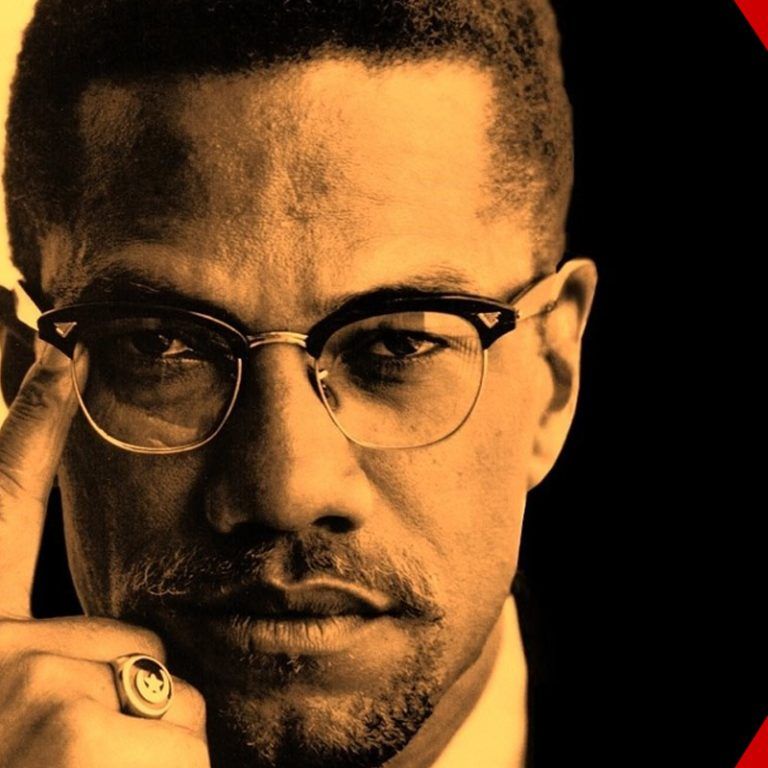
Many regard Malcolm X as one of the most influential activists in American history. Throughout his life, he was a voice for Black empowerment; even after death, he loomed large as a symbol of resistance for civil rights activists. However, despite her role as a significant inspiration to him and a major factor in his success, his sister, Ella Little-Collins, is often overlooked. But her story matters and should be told and held up as a lesson in remembering and appreciating the women in our lives.
Born in Butler, Georgia, in 1914, Little-Collins was the daughter of Earl Little and his first wife, Daisy Mason. During Earl Little’s second marriage to Louise Langdon Norton, he welcomed seven children, including Malcolm Little, Little-Collins’ half-brother.
For most of Malcolm’s childhood, his sister lived in Boston. In 1931, when Malcolm was six years old, his father was killed by a streetcar. The coroner ruled this incident accidental, but many believed it was perpetrated by the Black Legion, a white supremacist hate group. In 1939, Little’s second wife suffered a mental breakdown and was admitted to Kalamazoo State Hospital, resulting in Malcolm and his siblings being split apart and sent to different foster homes. Despite being separated from his family, Malcolm was able to visit with his sister in The meeting was significant, prompting him to write in his autobiography, The Autobiography of Malcolm X: As Told to Alex Haley, “I had never been so impressed with anybody,” regarding his first meeting with Little-Collins. In fact, after Malcolm finished eighth grade, he went to live with her in Boston.
Despite his sister’s guidance, Malcolm hit some rough patches as he grew older. He dropped out of school and engaged in gang activity, of which Little-Collins heavily disapproved. His problems continued, and he was eventually arrested and sentenced to 8-10 years in prison for larceny and breaking and entering. During Malcolm’s time behind bars, Little-Collins made an effort to stay in touch with him, visiting him and writing letters. In 1952, Malcolm was released on parole and, soon after, joined the Nation of Islam. Little-Collins followed in his footsteps, becoming a member in the mid-1950s. During her time with the Nation of Islam, she helped establish a mosque in Boston and a daycare center.
However, she was only a member for a short time, soon growing to disapprove of the group and of its leader, Elijah Muhammad. After studying with Sunni Muslim teachers in Massachusetts, Little-Collings converted to Sunni Islam, left the Nation of Islam, and founded the Sarah A. Little School of Preparatory Arts in Boston. Students there learned Arabic, Swahili, French, Spanish, and even how to read the Quran. Malcolm was impressed by his sister’s accomplishment and wrote, “Ella had started studying under Boston orthodox Muslims, then she founded a school where Arabic was taught! She couldn’t speak it, (but) she hired teachers who did.”
During this time, Malcolm was having his own doubts about the Nation of Islam. He was troubled that then-leader Muhammad had fathered so many children out of wedlock and was worried about his limited knowledge of traditional Islam. Malcolm even mentioned in his autobiography that Muhammad never taught him how to pray.
His own worries, coupled with his sister’s influence, led Malcolm to eventually leave the Nation of Islam in 1964 and convert to Sunni Islam. After his spiritual awakening, Little-Collins recognized he needed a change and offered her hajj savings to fund his pilgrimage to Mecca, a selfless and sacrificial act.
Before Malcolm went to Mecca, he traveled to many other Muslim countries, learning more and more about Sunni Islam. After completing hajj, his worldview changed drastically. Before becoming a Sunni Muslim, Malcolm believed white people were the “devil” for their historical mistreatment of Black people, leading him to advocate for Black separation. However, his experiences in Mecca and in the Muslim world made him realize people of all races could coexist. He abandoned his previous belief and shifted towards one that connected the struggle for Black equality to the fight for global human rights. Upon returning to the U.S., he created the Muslim Mosque Inc. (MMI) and the Organization of Afro-American Unity (OAAU) to continue his fight for civil rights. Malcolm’s pilgrimage to Mecca was a major turning point in his life, and it was thanks to Little-Collins for her guidance and for funding his travels.
After Malcolm was tragically assassinated in 1965, his sister paid his funeral expenses and took over as head of the OAAU. She continued her activism work and Malcolm’s, including his scholarship project, which gave money to Americans interested in studying overseas.
In 1996, Little-Collins passed away, leaving behind a life and legacy of incredible accomplishments. Without her, the trajectory of Malcolm X’s life would have been very different. She supported him and uplifted him without seeking credit. From adopting him and caring for him in his teen years to funding his holy pilgrimage later in his life, she was always there supporting him. In his autobiography, Malcolm does not fail to praise and express appreciation for his sister, ensuring her impact on his life is not overlooked and will never be forgotten.
Sources:
https://www.islam21c.com/history/ella-collins-the-woman-who-led-malcolm-x/
https://www.thoughtco.com/malcom-x-in-mecca-2353496#:~:text=On%20April%2013%2C%201964%2C%20Malcolm,journey%20in%20a%20b rief%20life