بسم الله الرحمن الرحيم

Author: Sh. Suleiman Hani

  • Earth and Its Environment: An Islamic Responsibility

    Earth and Its Environment: An Islamic Responsibility

    Our earth is at risk. If human beings continue to contribute to the destruction of the earth, the risk of greater harm increases for every generation. As global temperatures rise, oceans warm, ice sheets shrink, glaciers retreat and melt, sea levels rise, and extreme events – hurricanes, tsunamis, flooding, droughts, blizzards, and wildfires – we will continue to see the effects of human agency on the natural world around us.

    First, as Muslims we must undoubtedly recognize that the earth and everything upon it is entrusted to us. We are Khulafaa’ – caretakers and vicegerents – on earth. With our free-will, we hope to pass the test for which we were created and that includes taking good care of the earth and its environment. Allah SWT tells us, “…the one who created death and life in order to test you to see who is best in conduct, and He is the All-Mighty, the Ever-Forgiving (Qur’an 67:2).” Being best in conduct, for us, comes from belief in objective truth coming from God, the supreme source. It also comes from morality that derives from that truth, having integrity and the self-awareness to direct our free will in a way that protects and preserves rather than neglects or violates.

    We read in the Qur’an, “And when your Lord said to the angels, ‘I am going to place a vicegerent on earth,’ they said, ‘Will You place in it someone who will spread corruption there and shed blood, while we glorify Your praises and proclaim Your holiness?’ He said, ‘I know what you do not know’” (2:30).

    The angels were concerned about a human creature with free-will that would spread corruption in this world, but there is wisdom in the creation of agents with free-will who choose to do good, guided by objective morality, and striving for justice and the fulfillment of rights throughout their lives. He SWT remind us that “Allah has caused you to grow as a growth from the earth“ (Qur’an 71:17), and further that as His servants, we are commanded, “Do not cause corruption on the earth, after it has been set in order…” (7:56). Unfortunately, the corruption (fasad) mentioned in this verse is precisely what we see in our lifetimes and have historically observed. The destruction of the environment, evident all around us, in addition to the violating of peoples’ rights, is nothing other than the fasad that Allah warns us to avoid.

    Many of the harms we see in the environment are a result of our own actions, and oftentimes Muslims don’t realize the responsibility upon their shoulders in addressing environmentalism from an Islamic paradigm. We are approximately twenty-five percent of the world’s population and we certainly can make a difference in preserving the environment if we truly wanted to. Otherwise, the corruption that spreads in the lands and seas will continue to increase and it will inevitably beget more harm and evil. “Corruption has spread on land and sea as a result of what people’s hands have done, that He may make them taste a part of what they have done so that they might return [to the Right Path]” (Qur’an 30:41).

    According to this verse, corruption has spread because of peoples’ actions, and no doubt corruption requires a reference point and definition, and for believers it is guided by objective morality from the Qur’an and authentic ahadith. If we are to preserve the environment in order to protect the lives of current and future generations, we must decide today to reverse the harm done and to change our practices and lifestyles as necessary.

    Allah created this earth for us to live upon it in harmony with nature and other creatures, to live healthy lives for His sake, and to benefit from natural resources in ways that are responsible and sustainable. While not all Muslims live in countries with excessive fossil fuel usage, many Muslims live in nation-states today where society generally promotes wasteful lifestyles, oftentimes in ways that are excessive and harmful to the environment. Furthermore, many oil-rich nations should focus on investments in sustainable energy industries rather than commit solely to oil production.

    What Part Can Every Muslim Play?

    First, do not waste resources.“…Do not waste, for Allah does not like the wasteful” (Qur’an 6:141). While conservation has many facets, the very least every Muslim can commit to is to avoid wasting within their own homes and environments. Wastefulness includes disposing of a significant amount of food that could have benefited others, using packaging and material that harms the environment and remains for years in the oceans, and engaging in an excessive form of hyper-consumerism that is indulgent, extravagant, and neglectful of using income and wealth to help others.

    One day, Prophet Muhammad (s) passed by a companion, Sa’d, while he was performing ablution (wudu). The Prophet said, “What is this excess?” Sa’d said, “Is there excess with water in ablution?” The Prophet said, “Yes, even if you were on the banks of a flowing river” (Sunan ibn Majah). Waste of food and water is unfortunately common in many households, Muslims included, and yet the first people who should be implementing the command of conservation should be the believers. Allah commands us, “O Children of Adam! Dress well whenever you are at worship. Eat and drink, but do not waste. Surely He does not like the wasteful” (7:31).

    Second, emphasize the importance of trees. One of the greatest continuous charities is that of planting a tree. It is known from numerous authentic narrations that planting a tree is a virtuous deed for a number of reasons. Trees provide continuous benefit to those who utilize their resources for many generations thereafter, from the shade provided to a traveler on a hot day to the edible resources for both humans and animals, as well as the oxygen we benefit from locally and globally. In fact, the believer is likened in some authentic narrations (Bukhari) to a palm tree, for reasons such as their spreading of fruits (good deeds) to others, their roots being deep (beliefs and principles), and their continuous benefit year after year. This is the utilization of every part of the tree for some kind of benefit for people, animals, or the environment. Similarly, every part of the believer – their tongue, their eyes, their hands – does good and spreads good.

    Third, recognize the nations of animals as communities. “And there is no animal on the earth nor bird that flies on its wings but that are communities like you. Nothing have We left out of the Book. Then to their Lord they will be gathered (Qur’an 6:38). These communities live according to a divine ordering and measure, with a necessary ecological harmony, for purposes and wisdoms we may not always fully understand. What we do understand is that unnecessary deforestation and irresponsible capitalistic lifestyles that encourage hyper-consumerism and waste contradict Islamic ethics about human behavior and protection of the environment.

    Fourth, strive to implement change at all levels. Having started on the individual level, we can expand our scope of action in a number of ways, including the following suggestions:

    1. Discuss actions you can take with your family within your home. If you live alone, write out some suggestions for yourself and begin implementing your plans, and consider reaching out to a friend or group of friends to help one another with implementation strategies.
    2. Keep in mind the impact of voting for candidates who care about the preservation of the environment as one of their declared values and priorities.
    3. Reach out to local organizations such as your Islamic Center and ask what measures are in place to prevent waste and environmental harm. If nothing is in place, offer suggestions, guidelines, and resources that may incentivize the organization and its members to become more active regarding the environment.
    4. Share with others what you learn about protecting the earth and the environment.

    Finally, we should keep remembrance of Allah SWT always in our minds and hearts. We should seek His guidance, accept responsibility for vicegerency on the earth, and pray that our actions are continuously rewarded by Him.

  • The Holy and Blessed Lands of Al-Aqsa

    The Holy and Blessed Lands of Al-Aqsa

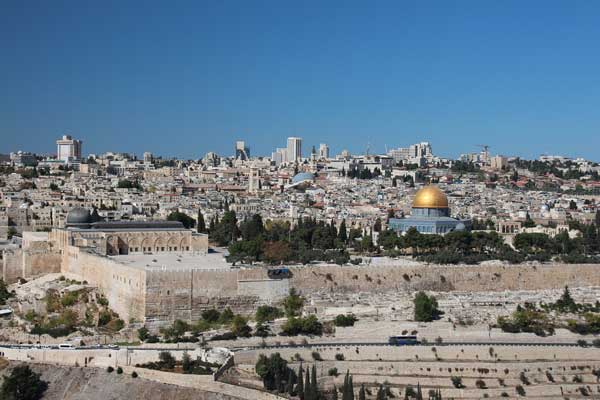
    Masjid Al-Aqsa in Jerusalem is important in Islam and beloved by Muslims for a number of reasons. First, it is important to note that the “holy” and “blessed” lands of Al-Aqsa are mentioned in numerous places in the Qur’an, such as Allah’s saying in Surat al-Isra: “Glory be to the One Who took His servant [Muḥammad] by night from Masjid al-Haram [the Sacred Mosque] to Masjid Al-Aqsa [the Farthest Mosque] whose surroundings We have blessed, so that We may show him some of Our signs. Indeed, He alone is the All-Hearing, All-Seeing” (17:1).

    Masjid Al-Aqsa, as Muslims believe, was the mosque that Prophet Muhammad was transported to during the night journey (al-israa), and then to the heavens (al-mi’raj). It did not become blessed and holy only with the final messenger Muhammad (s) but rather it was always blessed and one of the first mosques on earth. It was authentically reported in a hadith that the great companion Abu Dharr (r) asked the Prophet (s), “O Messenger of Allah, which masjid was built first on earth?” The Prophet (s) replied, “The Sacred Masjid of Makkah.” Abu Dharr again asked, “Which was next?” The Prophet (s) said, “The Masjid al-Aqsa.” Abu Dharr (r) further asked, “How long was the period between the building of the two mosques?” The Prophet (s) said, “Forty years.” He added, “Wherever [you may be, and] the prayer time becomes due, perform the prayer there, for the best thing is to do so [i.e., to offer the prayers on time]” (Bukhari).

    Based on a number of ahadith and reports from companions, some scholars opine that the first two mosques on earth, Masjid al-Haram and Masjid Al-Aqsa, were built by the forefather of humanity, aided by the angels, forty years apart. Generations later, it is believed that the two mosques were reconstructed by Prophet Ibrahim (Abraham) and his son, and then later Masjid Al-Aqsa was reconstructed by Prophet Dawud (David) and his son Suleiman (Solomon). This historical context is important in order to emphasize that Muslims believe that all prophets before Prophet Muhammad were also Muslims, and that the holy lands have always been holy and blessed lands.

    The First Qiblah in Islam

    Fast forward to the era of Prophet Muhammad (s) and one finds that the Muslims were directing all of their prayers towards Masjid Al-Aqsa. It is the first qiblah (direction one faces during prayer) in Islam. When Muslims migrated from Makkah to Madinah because of persecution and oppression, they faced towards Masjid Al-Aqsa for the first 17 months. It was during the second year after the hijrah (migration) that the revelation came down from the Creator about the change of prayer direction from Masjid Al-Aqsa in Jerusalem to Masjid Al-Haram, as found in Surat al-Baqarah (2:142-143). The masjid in Madīnah where Prophet Muhammad (s) was leading the Muslims in prayer is today called Masjid Qiblatayn, Masjid of the two qiblahs.

    Fast forward once again to the reign of Umar b. al-Khaṭṭab (r), the great companion and righteous khaliph who extended Muslim-controlled territory and established justice in every part of it, and one finds that with the liberation of Jerusalem, it was once again a source of light and peace for the world. In the year 638 CE, the Christian Patriarch Sophronius insisted he would hand over the keys to Al-Aqsa only to Umar (r). After the peaceful surrender of Jerusalem, Umar (r) gave a speech that became known for centuries later as a treaty of religious pluralism and tolerance, particularly juxtaposed with the harshness of the previous Byzantine empire. Umar permitted Jews to enter Jerusalem, after they had been banned for over five centuries by the Christian Byzantine empire, and permission was given to Christians, Jews, and Muslims to visit and worship at Al-Aqsa, honoring religious diversity in the land. Umar’s Assurance, as it became known, influenced the Byzantine Empire in that it promoted greater tolerance and established the rights of minorities, and it was a proven exemplification of Islamic law in practice – that people of various religious beliefs could live in harmony side-by-side in one land.

    The city of Jerusalem experienced several conquests, liberations, and occupations throughout the millennia after Umar (r). In 1187, for instance, it was freed from the Crusaders by Salahuddin Al-Ayyubi (also known as Saladin), and it continued to be a city that was open to various minorities to worship in peace under numerous Islamic dynasties throughout the ages.

    No Longer a Land of Peace

    Then we turn to the present century, and unfortunately the situation is no longer one of peace and good will. Since the 1917 Balfour Declaration and the 1948 colonial project to create the State of Israel, Palestine and the holy lands surrounding Al-Aqsa have been subjected to regular violence of various forms: structural (systemic), cultural (beliefs), or even physical attack by Israeli individuals or the State. The blessed land is now a land of occupation – in fact, the longest-lasting military occupation of our times – a land that demonstrates that settler colonialism and military control in the region matter more to some people than justice and rights. Religious freedom for Palestinians is limited, and in fact Muslims and Christians have both been harmed by the occupation in countless ways. Millions of Palestinians have been displaced throughout the past 73 years of occupation, hundreds of thousands displaced immediately in 1948 when Israel was formed as a nation-state, and Palestinian land has consistently been stolen as part of Israel’s greater project to completely wipe out Palestinian presence and identity. Ethnic cleansing is taking place today, and Palestinian lives – young and old – are being wiped out while the world watches.

    What Israel has not accounted for, though, is the shifting tide in favor of human rights and justice. Due to the immediacy of communications technology and social media connectivity, people worldwide have been able to witness the violence and occupation as it occurs daily. Most of the world is horrified when bombs are dropped on residential buildings in Gaza, children are shot in the back, and families are evicted from their homes by force and replaced with Israeli settlers who say “If I don’t steal it, someone else will.” Yet, the greater concern is that of ongoing structural violence. The occupation itself with its checkpoints, open-air “prison,” and constant persecution and harassment of Palestinians of all ages and backgrounds is largely ignored by most of the world when the violence is not visual and immediate.

    Accusations of Anti-Semitism Used to Silence Those Who Speak Out

    The Israeli government is constantly working with powerful lobbying organizations, hundreds of millions of dollars in funding, and international political connections in order to spread its propaganda to every home, and the message is clear: criticism of Israel will be met with swift accusations of anti-Semitism. This obfuscating canard thrown at critics of Israeli policy has devastating effect on free speech and open discourse. It also brings harm to Jewish people in general as it raises the ire of people worldwide who recognize the oppression of Palestinians for what it is and know it is their right and duty to speak out. And, sadly, there will always be some number of individuals who will blame all Jews rather than those who are perpetrating the injustice. This, unfortunately, contributes to greater anti-Semitism.

    In fact, baseless accusations of anti-Semitism by the Israeli government or by hardline Zionist persons and groups as a way to deflect criticism of the occupation and discriminatory policies has backfired in recent years, particularly with the recent evictions of residents of Sheikh Jarrah and the bombs dropped in Gaza. Much of the world is starting to realize the distinction between Zionism and Israel’s occupation on the one hand, and Judaism as a religion on the other, thanks to the many Jewish voices for peace in the world supporting Palestinian sovereignty and self-determination. When the occupation ends, one day soon God-willing, those who spoke the truth and stood up for justice will be seen as courageous and heroic, in contrast to those who remained silent and hid behind the “complexity of two sides” when clear injustice was occurring. Truly, silence in the face of injustice feeds injustice, and silence in the face of oppression invigorates it only more.

    The Holy and Blessed Land

    The land of Palestine will always be a holy and blessed land, even while it is occupied, but we believe a day will come soon in which occupation will be replaced with justice and freedom for all the people. The entire region of the Levant, in Islamic theology, plays a critical role at the end of times. The region is going to witness the emergence of Ad-Dajjal (the Anti-Christ), the presence of the Mahdi, the return of Prophet Jesus (Isa) from the heavens, and the prevention of Ad-Dajjal entering the three holy lands (Makkah, Madinah, and Al-Aqsa). Eventually, Ad-Dajjal will be slayed by Prophet Isa in the land of Al-Aqsa. It has also been reported in some narrations that the blessed land will also be the land of resurrection and gathering for the Day of Judgment.

    We all want peace, or at least that’s what most people claim. However, justice is required in order to establish peace, because ongoing injustice and violence against a community is, by definition, an obstruction of peace. Peace is established upon rights, and the rights of Palestinians and the holy land are currently being violated, and as the tide continues to shift, slowly but surely, every voice and every facilitator of peace makes a difference.

    We ask Allah to grant peace and justice to the region and to all communities worldwide.

  • A Message on Eid Al-Fitr

    A Message on Eid Al-Fitr

    All praise is due to Allah (SWT) for all our blessings. We offer sincere and complete gratitude for His guiding us to Islam; and truly it is sufficient as a blessing. All praise and all glory are to Allah, the One, and none is comparable to Him. He is the Exalted, the Majestic, the Creator, the Sustainer, the Provider, the Helper, the Maintainer, the Protector, the Merciful, the Oft-forgiving, the Most Loving, the Most Kind, the Most Wise, the Magnificent! He is an-Noor, the Light of the Heavens and the Earth, guiding us out of the darkness and into the light of truth. The First and the Last, He is al-Waasi’, the All-encompassing, and His Mercy is vast. He is as-Salaam who sends His peace and blessings, Lord of the worlds, King of all kings. And may the peace and blessings of Allah be upon His beloved and final Messenger, Muhammad (s) and all of his family and all of his companions and all who follow him correctly until the Day of Resurrection.

    Eid al-Fitr mubarak to our brothers and sisters around the world! May Allah accept our prayers, fasting, charity, Qur’an recitation, good deeds, and the fulfillment of all our responsibilities for His sake. We celebrate Eid with gratitude, and we emphasize the happiness and joy of this day. Let us be joyful for the vast blessing, the powerful and unimaginable enlightenment and rewards we are able to access during the month of Ramadan. Let us be joyful for the countless blessings of Allah upon us that we cannot begin to numerate. As He (SWT) tells us, “If you tried to count Allah’s blessings, you would never be able to number them. Surely Allah is All-Forgiving, Most Merciful” (Qur’an 16:18). Let us be happy for the vast number of believers who found hope and solace and renewed energy during this month to excel in worship. Let us be happy and spread this happiness to our loved ones, our families, our friends, our communities, the old and the young, believers from all walks of life.

    Happiness and Gratitude on This Day

    We should be happy on this day, as was the Prophet (s), but this happiness doesn’t mean that we’re forgetting our brothers and sisters struggling around the world. We make dua for them that they also can celebrate and find happiness on this day, and we wish for the entire Ummah to be happy. Our happiness today is because Allah has allowed us to live to enjoy another Ramadan, to worship once again in Ramadan, and to potentially be of those whose worship and fasting and deeds are accepted in Ramadan. Indeed, the more a person worshipped and strived with dedication during Ramadan, the more happiness they experience on this blessed day of Eid. Still, no matter one’s state, he or she should never lose hope in Allah and should continue to strive towards Him, for when we take one step towards Allah, He takes many towards us. He does so because He (SWT) loves us and wants us to succeed. He wants us to be happy.

    A precondition of that happiness is gratitude. In the verses about fasting during Ramadan, Allah says: “…so that you may complete the prescribed period and proclaim the greatness of Allah for guiding you, and perhaps you will be grateful” (2:185). Our gratitude to Allah, of course, should be year-round. Some Muslims wonder why so many enter the masjid during Ramadan and on Eid but do not enter the mosque the rest of the year. They try to understand why many Muslims recite the Qur’an in Ramadan in abundance, but they do not look at this treasure throughout the rest of the year. They wonder why many people give generously, repent passionately, increase their good deeds significantly, but just in the month of Ramadan. There are some who are judgmental and condescending and think, “These are just terrible Ramadan Muslims.”

    There is a prophetic etiquette, however, of beautiful compassion and true genuine desire for everyone to succeed, and that we look for the best in each person. Someone who finds hope and solace in Ramadan should not be pushed away by being negatively perceived, but brought closer to Allah by our encouragement and, if appropriate, our advice. Who are we to prevent someone from finding hope in this month, from praying more and fasting and reciting the Qur’an and finding the capacity to finally ask for forgiveness? We should focus on his or her fasting in Ramadan with faith and heartfelt hope for redemption and ultimate reward. For each and every one of us, Allah gives opportunity after opportunity to receive His forgiveness and mercy, and this beautiful month in which some people found hope can remind them that Allah is always present and ready to guide and help, not just in Ramadan. The doors of mercy are open throughout the year, every day and every moment of our lives.

    Allah is the Lord during the entire year, not just Ramadan. If you found the capacity to do even slightly more during this blessed month, then have hope and confidence and conviction that you can certainly change for the better, but it must begin with a sincere and strong intention and yearning for His closeness and guidance. This Ramadan has passed and will never return, but Allah is forever present, Ever-Living, and will continue to be there for us, wanting to forgive us, waiting for us to ask of Him in sincere humility, and submission. Allah, the one we submit to with love, hope, and fear, intending to develop our taqwa for His sake during Ramadan and throughout the year.

    Allah Is Greater!

    We submit because Allah is greater than our desires, our worldly attachments, our worldly concerns, and the entirety of His creation. Allah is greater, Allah is greater. This is why we express takbir (“Allahu akbar”) frequently on Eid and throughout the year in our prayers and acts of worship. Allah is greater than our future uncertainties, our pain, our setbacks, and the enemies of the Ummah. Allah is greater, Allah is greater.

    This is a time for us to reflect on the state of the Ummah and the state of humanity, and to return back to the reality that God is greater. This pandemic has been a powerful reminder of Allahu Akbar, for people to return to Him, to humble themselves before Him, and to fulfill their purpose in life. A difficult reminder and trial in this world is actually a blessing preventing much of humanity from regrets and difficulties on the Day of Resurrection.

    The Muslim Ummah has all the tools necessary to be successful in this life and the next, and yet our quantity is greater than our quality, if we’re being honest with ourselves. The Speech of Allah that’s known to us is a solution for the world’s problems, oppressions, injustices, and struggles, and yet as Muslims we don’t connect to it enough, understand it deeply, or implement it in our daily lives. And because of that, the rest of humanity does not see the precious blessing of Islam and its truthfulness as the religion of God. If we truly desire to be people of success, then we are required to fulfill the rights of Allah in our everyday lives, to helping and supporting His plan for us and humanity. He (SWT) tells us “O you who believe! If you help [the cause of] Allah, He will help you and will make your foothold firm (Qur’an 47:7).

    In one hundred years, those who are currently alive will likely be dead, having departed to the Creator, as every human before us has. When we’re long gone and our names are forgotten on earth, we won’t be thinking in the graves about the worldly status we held, the brand name clothes or jewelry we bought, or the type of car or house we owned. We’ll be reflecting only on our deeds, the eternal currency, that which leads to punishment or reward. The believer never loses hope and continuously strives to accumulate good deeds while alive, for life is too short to waste on limited pleasure.

    As we celebrate Eid al-Fitr, we pray for those who are suffering and prevented from practicing Islam openly, and for those who are unable to ever pray in a mosque or wear hijab or exemplify any teaching of God. We celebrate the day joyously while keeping the Ummah in our prayers, advocating for their relief from oppression or injustice of any kind, and living by – and spreading – the true message of Islam in order to celebrate eternally in a blissful home in Paradise.

    Eid Mubarak to our brothers and sisters around the world. May Allah accept all that we have done for His sake and keep us consistently growing and striving throughout the year.

  • Reflecting on Taqwa During Ramadan

    Reflecting on Taqwa During Ramadan

    Every Ramadan, we are reminded about the verse of fasting (2:183) and other verses that guide us to the objective of taqwa. And every Ramadan we need to reaffirm our understanding of the comprehensive facets of taqwa, for ourselves, our families, and our communities, so that we are aiming for its bountiful scope, not just one or another of its aspects.Consider the following three verses of the Qur’an. Allah says:“O you who believe, have taqwa of Allah as His right upon you” (3:102); and He says,“O you who believe, have taqwa of Allah, and let every soul reflect on what it has sent ahead for the afterlife” (59:18); and “O you who believe, fasting has been obligated upon you as it has been obligated upon those before you so that you may gain taqwa” (2:183).

    Taqwa is translated variously as God-consciousness, fear of God, being in awe of God, awareness of God, mindfulness of God, and conscious obedience to God. However, the Arabic term ‘taqwa’ is far more extensive and multi-faceted than the narrow translations found in one or two English words. One can understand the various facets of taqwa based on the verses of the Qur’an, the authentic aḥadith, and the commentary of the companions (r) of the Prophet (s) and scholars of Islam throughout the ages.

    What Is Taqwa?

    Taqwa is to be mindful and conscious of Allah, recognizing His Majesty and Perfection, acknowledging one’s status as a human being in need before the Creator, and recognizing the importance of submission to Allah out of love, hope, and fear, all with a consistent equilibrium. Thus, the internal state of taqwa leads to external manifestations such as obeying Allah’s commands, staying away from His prohibitions, and regularly reviewing one’s actions in order to progress towards Allah. Taqwa is a safeguard against complacency in this life; it is a fortress against sinning without remorse; it is to protect oneself with cautiousness in everyday life, so that nothing risks harming one’s relationship with Allah and, consequentially, one’s place in the afterlife.

    Taqwa is a shield, but it is not inert like a physical shield. It is a dynamic consciousness, a vitality infused into the believer’s soul so that he or she sees broadly and minutely while walking in a field of thorny bushes, walking cautiously so that they are not harmed by the prick of the thorn. Taqwa is a protection against recklessness whether with one’s thoughts or actions,or with choosing one’s companions or environment.Taqwa is to be so aware of one’s purpose in this life, and of Allah’s Perfection and Majesty, that the only reasonable lifestyle in this temporary and relatively insignificant world is that of awareness and vigilance.There is an adage that a prudent caution precedes wisdom.

    A Healthy Fear that Is Part of Taqwa

    Oftentimes, taqwa is wrongly taken to be a type of fear that is so debilitating that an adherent is living with excessive paranoia and spiritual paralysis. While fear is healthy to have in the proper proportion, it must be coupled with hope in the mercy of Allah, to the extent that one always recognizes their ultimate need for Allah’s mercy regardless of how often they repent or do good. Taqwa is to be so mindful of Allah that one’s actions change for the better.In the modern world, when people know they are being recorded, they tend to be more conscious of what they say or do.

    Then what about the mindfulness we should practice in the sight of Allah, Al-Basir, the All-seeing, and the effect this should have on our lives? While taqwa has within it the aspect of fear, everything in Islam is imbued with a healthy apportionment. What, then, is the healthy type of fear that accompanies taqwa with regards to our lives as believers?

    The component of fear in taqwa is multifaceted: it is fear of misguidance, fear of shortcomings in good deeds, fear of sinfulness, fear of God’s anger, fear of the hellfire — fear of any and all things that can result in ultimate and eternal loss. This fear, however, must be coupled with recognition of Allah’s vast mercy, as He promises to forgive the sinner every time he or she sincerely repents – and that sincerity is demonstrated by stopping the sin, having remorse, and intending to never return to the sin again. Allah’s mercy is so explicit that no believer can reasonably fall into paranoia and debilitating fear unless they have failed to reflect upon His mercy.The All-Merciful says, “O my servants who have transgressed upon themselves in sins, do not lose hope in the mercy of Allah, for certainly Allah forgives all sins. Indeed, He is the All-Forgiving, the Ever-Merciful” (39:53). Further, Allah says in a hadith qudsi, “O son of Adam, were your sins to reach the clouds of the sky and then you asked forgiveness from Me, I would forgive you” (Tirmidhi). Grasping the vast mercy of Allah prevents a believer from experiencing the fear of Allah in such way that it is paralyzing, preventing him or her from thriving mentally and emotionally. That is why it is so crucial for every believer to recognize the formula for equilibrium: it is to worship Allah out of true love and humility, with a balance between fear because of one’s shortcomings and hope for Allah’s mercy.

    The opposite extreme is when believers ignore the element of fear in taqwa and thus, they typically find themselves disregarding Allah’s prohibitions, ignoring His commands, missing some (or all) obligations, and thinking only of Allah’s mercy while ignoring the balancing weight on the other side of the scale:“Inform My servants that I am the Ever-Forgiving, the Ever-Merciful; and that My punishment is the most painful punishment” (15:49-50).

    Taqwa is to recognize Allah’s right over His creation, and as a result to humble oneself and follow His command. Taqwa is what leads the humble, wise, human being to recognize that true success and salvation cannot be achieved without Allah’s vast mercy, but that it is Allah’s right that He be worshipped and His Oneness not denied, praised and His guidance not forgotten, called upon in need and His punishment not downplayed.Imam Ibn al-Qayyim says: “Such a person [of taqwa] will be convinced that he cannot rely on his actions, lest he be destroyed. Many people think about their rights over Allah and not about His rights over them. This is how they are detached from Allah and deprived of the desire to meet Him. This is the epitome of ignorance of their Lord and of themselves.”

    The Path to Taqwa

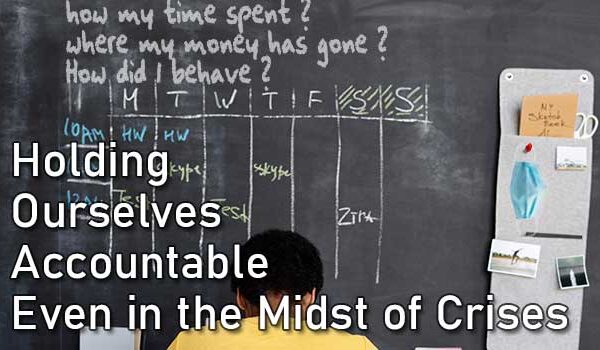
    If taqwa is a necessary shield, fortress, lifestyle, mindfulness, and a condition of salvation and success, then it is only reasonable that every believer should strive to become a muttaqi, or one who has taqwa. Taqwa comes through holding oneself accountable in this world by reflecting on one’s thoughts and actions, before one is held accountable on the Day of Judgment. Taqwa comes through recognizing that this life is the only opportunity for good deeds – the currency of success! – and that the Day of Accountability is for justice, whether reward or punishment, with no more opportunity for good deeds. It was Umar (r) who said, “Hold yourselves accountable before you’re held accountable, and weigh your deeds [by reflecting on them] before they are weighed [on the Day of Judgment].” Similarly, Al-Hasan al-Baṣri (r) said: “Those who frequently hold themselves accountable in this life find their accountability in the next life easy, and those who take this matter lightly will find their accountability very heavy and difficult in the next life.”

    Taqwa is to check oneself frequently by reflecting and measuring. What is measured is oftentimes managed, and what is measured oftentimes progresses. What greater thing to measure — to manage and to facilitate progress — than one’s own journey to Allah? Taqwa in everyday life is to avoid the consumption of anything damaging to one’s journey to Allah such as watching inappropriate videos, movies, orany other form of improper entertainment, or listening to anything displeasing to Allah, or reading that which distances oneself from Allah’s mercy.Taqwa is to choose one’s environment cautiously and one’s friends carefully, in the hopes of finding support on one’s journey to the Ever-Merciful.

    Imam al-Ghazali (r) wrote,“It is incumbent on every person who believes in Allah and the Last Day that he should not be oblivious of self-accountability. Every breath of life is a precious jewel which can buy eternal treasures. Wasting these breaths or using them for detrimental purposes is such a great loss which no intelligent person could justify.” It was reported that Umar (r) donated a valuable piece of land when he missed Asr prayer in congregation, and that his son, Ibn Umar, used to pray qiyam all night if he missed a prayer in congregation. Thus, disciplining the self when one falls short helps to raise the believer in rank, to preserve the default level and standard of taqwa, and to experience true liberation from worldly desires and attachments, all while connecting to Allah the Ever-Merciful.

    Taqwa puts a proper order and proportion in one’s life, giving the believer a means to facilitate and measure his progress on the journey to Allah. Taqwa reminds the believer of Allah’s punishment while, at the same time, relieving the believer of distress by assuring him of the incomparable grace and power of Allah’s mercy. Taqwa is remembrance that Allah’s mercy is available so long as one ascribes no partner to Him and calls upon Him with true sincerity of repentance. “…And whoever has taqwa of Allah, He will make for him a way out. And He will provide for him from where he could not imagine. And whoever puts his trust in Allah, sufficient is He for him. For Allah will surely accomplish his purpose. Verily, Allah has set for all things a measure” (Qur’an 65:2-3).

    This Ramadan, let us fortify, through remembrance and reflection, a broad understanding of taqwa and then strive for its fullest application in ourselves, our families, and our communities.

  • Humility and Pride

    Humility and Pride

    Imagine having aballoon with you wherever you go in life, and that balloon symbolizes your ego.

    Every time someone interacts with you or every time you react in any particular situation or circumstance, there’s an opportunity for the balloon to inflate, remain as is, or deflate.Someone advises you to fear Allah and, being a believer,your balloon deflates, whereas for someone who doesn’t believe in God and sees believers as foolish, that very same advice causes their balloon to inflate significantly. Someone cuts you off while driving – how do you react? Do you rant for three minutes about bad drivers; or do you remain calm and remember Allah.With the first reaction, the ego inflates; with the second, it deflates.

    An inflated ego connotes a sense of superiority, arrogance, and self-importance. Humility shrinks the ego down to proper size so that a healthy sense of self remains intact and able to navigate the world and one’s daily living;but the healthy self, infused with humility, knows that it is prone to weaknesses and shortcomings and only with the help and guidance of Allah does he or she attain to goodness and achieve an elevated rank, one which is yielded from righteousness.

    In Islam, the concept of tawaadu’ (humility) is unique in its various facets and components. To understand the Islamic virtue of humility, we begin with its opposite — pride.In the famous narration of Ibn Mas’ud, it is reported that Prophet Muhammad (s) said: “No one will enter Paradise in whose heart is an atom’s weight of arrogance and no one will enter Hell in whose heart is an atom’s weight of faith.” A man said,“What if I like my clothes to look nice and my shoes to look nice?” He (s) said,“Verily Allah loves beauty; rather pride/arrogance means rejecting the truth and looking down on people” (Tirmidhi).

    What Is Humility and What Is the Harmful Form of Pride

    Humility is having a modest view of oneself and one’s own importance. It encompasses traits such as being courteous and respectful, and unpretentious about one’s rank and accomplishments. In contrast, the harmful form of pride is an exaggerated sense of one’s own importance, merit, or standing in relation to other people.

    In the above hadith, Prophet Muhammad (s) made it clear that simple pride like wanting to be presentable in one’s dress is not what is being condemned. One can take simple and straightforward pride in good and beneficial things. This simple pride is connected to self-respect and a proper sense of human dignity.

    The harmful form of pride is destructive and can lead to envy, unfavorable presumptions about others,greed, dishonesty, and self-righteous anger, among other vices. It oftentimes leads to the rejection of truth (as mentioned in the hadith), including truth about religious matters. We can also look at the interesting distinction between pride (kibr) and conceit (‘ujb). While pride manifests in relation to other people, such as feeling good about oneself by looking down on others and considering them inferior, conceit can manifest without others. Conceit is when someone finds pleasure in a quality within themselves without associating the quality with the generosity and guidance from God or contribution from any source external to himself. In other words, they believe the quality to be completely dependent on their innate stature and actions and efforts, rather than recognizing that goodness and high rank, based on one’s degree of righteousness, come from God and His guidance. Hence, conceit leads to a type of self-delusion, and in fact it is likely this very ignorance of true values is what leads to pride. Feeling prideful stands as a barrier to feeling and cultivating humility.

    Humility in Relation to Other People

    Al-Hasan al-Basri said, “Do you know what humility is? Humility is that you leave your house and you do not meet any Muslim but that you view him as better than yourself.” This is in contrast to the tendency of some people to shine spotlights on other people’s sins or shortcomings while ignoring his or her own.In the hadith of Ibn Hibban, the Prophet reportedly said, “One of you sees the speck in his brother’s eye while he forgets the log in his own eye.” We should note that to view any Muslim as “better than yourself” is not meant to diminish one’s own worth or lead to self-abasement. It is meant as a warning to avoid any sense of superiority or diminishing of others. Thus, as Ibn al-Qayyim stated, humility is “to avoid seeing yourself as superior to others or having claims over others, but rather to see others as superior to you and as having claims over you” (The Book of the Soul).

    To look down on others is to be prideful and arrogant. Looking down on others can manifest in any area of life, as it is the ego’s compulsion to compare oneself to others and find ways, often self-deceiving, to puff up the self in relation to other people. Looking down on others might result, for example,from observing another person’s public sins or lack of religious practice (externally, at least). An example is when a woman sees her Muslim sister in the mosque with an incomplete hijab.If she sees her sister as beneath her, religiously, then she has revealed some arrogance in herself. Instead, she should see her sister as struggling, perhaps learning, even possibly a new Muslim, and think good of her.She can then assess how to advise her. Additionally, she should thank Allah for guiding her to a good deed, thank Allah for concealing her own sins, and assume that the other sister perhaps has other good much greater than her own. This approach does not overlook the moral judgment of an action – that it is either right or wrong – but rather it combines recognizing the action for what it is, with humility and good assumptions about the individual, all while figuring out the wisest approach to advising her fellow sister.

    Imam Ahmad was asked about enjoining good and forbidding evil, “How should one enjoin it?” Ahmad said, “One should enjoin good with gentleness and humility. If they make him hear what he dislikes,he should not get angry such that he wants to avenge himself.”Thus, the one who is giving advice must not lose his/her sense of humility when their feedback is rejected, or when they hear insults while enjoining the good. A real test of humility and sincerity in that case would be to hear such insults and continue advising people, rather than seek revenge on behalf of one’s ego.

    Oftentimes, a Muslim may struggle to hold a number of distinct matters in their mind at the same time: a) the moral judgment of a deed; b) the erring individual’s circumstances [e.g., perhaps it is unintentional or due to ignorance]; c) the observer’s need to approach all things with humility; d) the role of sincere advice; and e) praising Allah for guiding the observer so that he or she does not fall into that same error. All of these can be taken into account in any situation; consideration of all these aspects enhances one’s perspective and increases humility,all while upholding virtue in society and gently advising one another towards truth and virtue.

    Humility in Relation to Pursuit of Knowledge

    Humility is crucial in the pursuit of knowledge. Gaining beneficial knowledge is a blessing from God, and the one who pursues it for the sake of showing off, to argue with others, to put others down, to seem “more knowledgeable,” is committing a major sin, and the benefit and reward for that pursuit is rejected. Seeking knowledge should be sincere and the end result should be a positive transformation in one’s character and an increase in his or her own state of humility. If the pursuit of knowledge is not leading to increased humility, then the seeker of knowledge should reassess his or her intentions and thoughts.

    Humility in Relation to Authority and Power

    Either humility or pride often comes to the surface when an individual or group assumes a position of authority or acquires power through wealth, influential position, or other means. This might apply to a local organization, an Islamic Center, a government position, a corporate position, or anywhere else in society. Power and authority, in Islam, is a responsibility and a test of servitude. Leadership is servitude to the people, all while recognizing the major accountability that comes with the position – an accountability before God on the Day of Judgment.

    Humility in Relation to Recognizing and Accepting the Truth

    One of the obvious problems with pride is that it prevents one from accepting the truth, particularly religious truth. Remember that Iblees, the Devil, rejected the command of God and became arrogant, and thus his arrogance prevented him from seeing (and doing) the best course of action (i.e., submission to God and the Truth). Adam and Hawaa, on the other hand, were reprimanded by God for their transgression and they resorted immediately to humble repentance. They said, “Our Lord! We have wronged ourselves. If You do not forgive us and have mercy on us, we will certainly be among the losers” (Qur’an 7:23). On a daily basis, we experience manifestations and fluctuations in our own degree of humility or pride, and we ask Allah to guide us consistently to humility and its benefits,and to protect us from the harm of pride.

    “Verily, for all men and women who have surrendered themselves unto God, and all believing men and believing women, and all truly devout men and truly devout women, and all men and women who are true to their word, and all men and women who are patient in adversity, and all men and women who humble themselves… for them God has readied forgiveness of sins and a mighty reward” (Qur’an33:35).

  • Postmodernism and Truth

    Postmodernism and Truth

    Imagine a scenario in which a friend informs you that he believes there are aliens in his closet. You check the closet and find nothing, and you respond, “there are no aliens in your closet.” Your friend is taken aback at your stance and he responds, “That’s your truth. My truth is that there are aliens in my closet.” Perhaps your friend here is suggesting that truth is relative, and that people might have different truths that contradict one another. Furthermore, your friend is clearly implying that your claim – that there are no aliens in his closet – is simply your truth and thus is insignificant to his beliefs. What is the problem here?

    One of the greatest characteristics of the postmodern world is the lack of certainty in any objective truth. We live in an era in which many people, like in the simplified example above, make no distinction between personal beliefs and objective truth. In such a postmodern scenario, what your friend believes to be true does not need to align with what you believe to be true, even if what you believe to be true is, in fact, true. While it is possible to have subjectivity in some everyday scenarios, truth is objective (i.e., factual) in most scenarios. For instance, after checking your friend’s closet, you would establish an objective truth: there are no aliens in the closet. However, your friend is free to believe that there are; it doesn’t make the belief true! Otherwise, human beings would be free to believe any number of ridiculous ideas, such as the belief that one can fly, without any evidence to warrant such a claim.

    Unfortunately, the idea of subjective truths in objective matters has become more common today, and it has led to the watering down of religious beliefs, universal truths, and confidence in objective matters. With religion in particular, what people used to consider objectively true has simply come to be considered a “created truth” or subjective worldview, one that has been created on a human level, in contrast to transcendent truth that has been established or proven through research, reflection, and analysis.

    A Relativist World?

    The idea of relativism posits that all perceptions and judgments depend on and vary according to the individual and environment, and the historical context. Accordingly, nothing is absolute, including morality and truth.The discomfort of relativism as a worldview eventually, for many if not most people, gives way and they come to face the real issue: Is there a transcendent meaning and purpose in this life or is there none?

    Without delving into complex terminologies or concepts, one can consider the notion of relativism evident in the 1965 novel The Crying of Lot 49, in which there is a relative notion of value and truth. In this postmodern novel, the protagonist finds herself struggling with conflicting standards of meaning, but she comes to the most fundamental existential challenge, one that is represented in binary form. The author describes the protagonist’s predicament as a metaphor:

    For it was now like walking among matrices of a great digital computer, the zeroes and ones twinned above, hanging like balanced mobiles right and left, ahead, thick, maybe endless. Behind the hieroglyphic streets there would either be a transcendent meaning, or only the earth. . . . Ones and zeroes. . . . Another mode of meaning behind the obvious, or none.

    There would be either some form of transcendent meaning (e.g., a divine reality), or only the earth she walked upon (i.e., a plodding material existence). The character’s dilemma is “either/or,” a zero or a one; either there is meaning behind the mundane, an objective truth, or there is none. Yet, the proponents of postmodern relativism have consistently claimed that the desire to distinguish between a “truth” and a “falsehood” is in need of revision.Unfortunately, the consequence of such a philosophy is alack of belief in a verifiable truth.Furthermore, postmodern relativism, as manifested in everyday thought, is one that does not believe it is possible to establish a truth, due to a number of factors, or that there is no need for it.

    Thus, in the postmodernist ethos, people have moved away from claims of traditional truth and have anchored themselves in a form of self-created spirituality and ego-worship, where truths are subjective and created, purpose is invented by the individual’s preferences and experiences, and structures of religion or objective morality are no longer relevant or verifiable. Such an invented “truth” – a relative worldview – has no specific doctrine, no scripture, no objectivity, no sound methodology, and no claim to philosophical coherence. It is simply whatever the individual desires, prefers, and chooses to believe is his or her “independent truth.” These assumptive and relative beliefs, however, hold no weight against objective truth, just as God says: “…they merely follow assumptions, and assumptions are of no value against the truth” (Qur’an 53:28).

    A World of Objective Truth

    From an Islamic theological and philosophical perspective, postmodern philosophy — specifically, relativism— holds no weight whatsoever and can be exposed for what it truly is: worship of the self and an abandonment of God and objective meaning and purpose. Muslims believe in an objective truth when it comes to religion (“Indeed, the true religion in the sight of Allah is Islam…” (Qur’an 3:19), and that God gave human beings the necessary faculties to distinguish between truth and falsehood in order to fulfill their purpose in this life.

    Truth can be established via sound reasoning, a sound natural disposition (i.e., the fiṭrah), sincerity, humility, and research. Sound reasoning and intellectual pursuits, so long as they are built on the foundations of sincerity, may be used to establish a number of objective truths.

    Sound reasoning and a sound methodology of study and analysis can establish the following:

    1. The reality of God

    “Have they not reflected upon their own selves? Allah only created the heavens and the earth and everything in between for a purpose and an appointed term. Yet most people are truly in denial of the meeting with their Lord!” (Qur’an 30:8).

    When one considers the astronomically precise fine-tuning of the universe, the existence of the laws of the nature, and the origins of purpose-driven organisms, one can clearly establish that there is asupreme designer of such precise and intricate design. The denial of God’s existence is not based on any objective truth or evidence, as everything observed in the natural world is, in fact, clear signs of God, for people of sincerity. One might observe, for instance, the manner in which many deniers of God will continue to evade the truth by depending on speculative beliefs (e.g., a multi-verse in order to avoid addressing the fine-tuning of this universe) or, for example, thinking that science can prove or disprove the reality of God while, at the same time, denying any other source of knowledge (such as revelation).

    Rather than allowing the evidences of God’s truth to shape their beliefs, dogmatic disbelievers in the existence of God use their own existing beliefs (i.e., a denial of God) to shape the evidences in their minds. God tells us in the Qur’an, “God alone is the truth, and what they invoke beside Him is false. He is the Most High, Most Great”(31:30).

    2. The truthfulness of Prophet Muhammad as a messenger of God

    About the Qur’an being brought by Prophet Muhammad, God instructs the Prophet what to tell his people: “Say: ‘If God had so willed, I would not have recited it to you, nor would He have made it known to you. I lived a whole lifetime among you before it came to me. How can you not use your reason?’”(10:16).

    An objective study of the proofs of prophethood (https://yaqeeninstitute.org/series/proofs-of-prophethood),signs that Prophet Muhammad was truly a chosen messenger of God, leads to the obvious conclusion that cannot be denied by anyone sincerely pursuing truth.One needs to objectively consider the historical context, the integrity of Prophet Muhammad, the prophecies and predictions of the future (which clearly is revelatory knowledge from God), and the miracles he came with, including the Qur’an.

    God says about those of the Prophet’s contemporaries who tried to find any reason not to believe in him as a true prophet and messenger, “Has it not occurred to them that their companion is not mad, but is a clear warner?” (Qur’an 7:184).

    3. The reality of the Qur’an being the Speech of God

    God tells us in the Qur’an, “Do they not then reflect on the Qur’an? Had it been from anyone other than Allah, they would have certainly found in it many inconsistencies” (4:82).An objective study of the miraculous nature of the Qur’an(https://yaqeeninstitute.org/suleiman-hani/introduction-to-ijaz-al-quran-the-miraculous-nature-of-the-quran) would lead any reader of sound mind and sincerity to recognize the truth that the Qur’an is from God. The truth can be established by eliminating any possibility whatsoever of human authorship, beyond just observing specific facets of the Qur’an’s miraculous nature. The miraculous facets of the Qur’an, such as its literary inimitability, then-undiscovered knowledge of the natural world (e.g., the detailed description of the embryo’s development), knowledge of the future (e.g., the Romans, Abu Lahab, the Conquest of Makkah, the victory (al-Naṣr) and spread of Islam, the preservation of the Qur’an, lost knowledge of the past (e.g., Prophet Yusuf [Joseph], the Sleepers of the Cave, the correct historical usage of “pharaoh” versus“king,” and other corrections to the Old and New Testaments), universal maxims and moral laws, its impact on hearts and souls — all these and more are standalone arguments against any claim of human authorship.

    “Say, ‘People, the truth has come to you from your Lord. Whoever is guided, is guided only for his own soul, and whoever goes astray, strays only against it [his own soul]’” (Qur’an 10:108).

    Ultimately, the erosion of certainty that there is objective truth leads to the erosion of religious practice, transcendent purpose, and the pursuit of paradise. Additionally, and dangerously, the erosion of objective truth in society leads to a greater worship of desires, oftentimes far from their natural disposition, and objective morality disappears with objective truth. As objective morality disappears, oppression, violence, and all sorts of evil will continue to increase and spread throughout the world in different forms and to different degrees. The loss of objective morality leads to the corruption of family ties, political systems, social justice, and true world peace. A great predecessor supplicated, “O Allah, show us the truth as truth and guide us to follow it, and show us falsehood as falsehood and guide us to refrain from it.”

    God guides us accordingly: “Had the truth followed their desires, the heavens, the earth, and all those in them would have certainly been corrupted. In fact, We have brought them their Reminder but they turn away from it” (Qur’an 23:71).

  • Postmodernism, Desires, and Self-Worship

    Postmodernism, Desires, and Self-Worship

    The era of postmodernism followed the late modern period which stretched from the 19th century to the mid 20th century. Many scholars point to the 1960s and 1970s as the years of formative development in postmodern thought. The mainly philosophical movement of postmodernism typically claims, among other things, that there is no objective truth or reality; that reason and logic are constructed by a particular intellectual tradition that is bound by time and ideology and, therefore, not universally valid; that there is no intrinsic and universal human nature; and that all knowledge is relative and prone to subjective distortion. Thus, postmodernism rejects religious metanarratives about God, reality, the world, and human existence.

    It is crucial that both scholars and the general community should be aware of the clear trends in postmodern thought and their influences on society. It is not sufficient for us to recognize the links between secularism, modernity, and postmodernity — we need also to recognize how postmodernity, in all of its forms, influences philosophy, religious adherence, culture, art, literature, media, politics, and so on. In fact, one of the defining traits of a postmodernist worldview pertains to individualism and instant gratification. In short, the ego and base desires are placed on a pedestal and form a way of life for such an individual. This is the type of “self-worship” described in the Qur’an: “Do you see the one who takes his desires as a god?” (45:23).

    The Age of Consumerism

    In this age of consumerism, and particularly around the holiday shopping season, the effects of hyper-consumerism and neoliberalism can be observed in how people shop, both in stores and online. In the politico-economic neoliberal school of thought, human relations are seen as primarily competitive (and therefore the “market” is to be unregulated and the inequalities in society are seen as natural and even virtuous) and people are viewed as mere consumers who exercise their freedom and choice through buying and selling. The advent of the Internet, with all of its potential good and evil, turned “into yet another corporate-dominated sphere” (The Cambridge Companion to Postmodernism, p.141)
    with endless virtual shopping malls and countless entertainment options. It expands the reach of consumerism and reinforces social alienation and isolation. Today, many shoppers have become part of a great capitalist-hedonistic experiment, one in which happiness is intertwined with consumption habits. In a consumer culture, individuals are trained to routinely focus on temporary, superficial, even frivolous products and objectives rather than on transcendent, lasting, purposeful ends.

    So, when we consume, we should consume with purpose and wisdom. It is necessary to purchase products and services, but the wise believers are cautious not to allow consumption habits to validate their lives, fill a spiritual void, attach them to this world, or distract them from greater pursuits. There are many people with immense wealth who find no happiness in their material possessions, and many people with little to no wealth who are happy and fulfilled. We ask, thus, what defines true wealth in light of such a stark contrast. The Prophet (s) has, in fact, answered this. He said, “Richness is not in having an abundance of goods; rather, richness is the richness of the soul [or self]” (Sahih Bukhari and Muslim). He also said, “…Wealth is in the heart and poverty is in the heart. Whoever is wealthy in his heart will not be harmed no matter what happens in the world. Whoever is impoverished in his heart will not be satisfied no matter how much he has in the world. Verily, he will only be harmed by the greed of his own soul” (Al-Tabarani in al-Mu’jam al-Kabir).

    May Allah keep us content and feeling blessed with what we possess and use in the service of Him, of ourselves and our loved ones, and of others. Allah Almighty describes believers, those who perceive the signs of God, recognize them, and submit to His remembrance/worship: “Those who believe and whose hearts find peace in the remembrance of Allah — truly in the remembrance of Allah do hearts find comfort” (Qur’an 13:28). We can compare that to the experience of the person who does not remember Allah. The Prophet (s) said, “If the son of Adam were to possess two valleys of gold, he would long for the third one…” (Bukhari and Muslim). This explains why many consumers increase their spending habits unnecessarily because of FOMO (“fear of missing out” on sales and discounts). But the reality is that you lose a lot more than what you save when you consume for the sake of sales. The allure of sales is known to retailers and often they raise prices and then offer “discounts” for the holidays, or even anytime during the year, in order to increase sales.

    Missing No Opportunity to Do Good

    The believer, though, with his or her eye on the ultimate purpose of life should strive to feel a level of FOMO when it comes to that which is profoundly meaningful, something that material wealth or base desires can never be. The believer should strive to regularly feel “FOMO” with regard to opportunities to do good deeds, to give charity, and to be in the service of others for Allah’s sake. Instead, many believers complain when, for instance, so many charities reach out to them, so many posts are about charity, or so many times an Islamic Center hosts a sincere and authentic humanitarian organization. The believer with purposeful and transcendent priorities sees these as opportunities rather than irritations and burdens; and sees every moment as one that allows an individual to seek God’s pleasure and the highest levels in Paradise.

    Finally, as Muslims, we must consider the significant impact of consumerism on the environment. Reckless consumerism, which takes a heavy toll on nature, disrupts the proper functioning of ecosystems and depletes natural resources that humans rely on for survival (e.g., drinkable water, unpolluted air, and arable soil). Moderation, thrift, avoiding extravagance and waste — these are encouraged in Islam, as is conservationism and the protection of the earth and all its creatures. Therefore, we should control what we consume and not allow what we consume to control us. It is wisdom to keep your dunya (world) in your hands, not your heart, for you will inevitably part from it and take only what you prepared of deeds.

    There are many people who see themselves as seeking clarity about the truth, about God, about purpose, and about the afterlife, but when the signs of God reach them, they ignore them with stubbornness and arrogance. In fact, many people claiming to seek truth refuse to accept any sign that is not convenient and conforming to their personal desires and whims, their own desire-driven rationale and justification, and their own invented methodology of establishing truth. This group of people is driven by worldly pursuits, instant gratification, and mutual worldly rivalry rather than more purposeful and everlasting ends (i.e., the Hereafter). About these people, Allah says, “Whoever desires this worldly life and its adornments, We will pay them in full for their deeds in this life — nothing will be left out. It is they who will have nothing in the Hereafter except the Fire. Their efforts in this life will be fruitless and their deeds will be useless” (Qur’an 11:15-16). These are people who refuse to work for an eternal return on their investment of time, efforts, and everyday pursuits, and instead their purpose in this world is formed by their own base desires and whims.

    Looking Beyond Base Pleasures

    It is on this final note of a desire-driven life that I want to conclude. Postmodernity is oftentimes viewed as an opposition to modernity, with modernity being portrayed as an age of reason and intellect more than anything else. Postmodernism is viewed as an ideology that challenges ultimate truths and objective morality and ethics, insisting on individual truths, reinterpretations of past intellectual, historical, and philosophical claims; and that gives preference to desire over reason. However, I believe that this generalized approach to an understanding of modernity and postmodernity is flawed in the works of many postmodern scholars. It misses a crucial point elucidated in the Islamic sciences centuries ago. The age of secularism in the 17th and 18th centuries embodied disbelief, abandonment of God, a reinterpretation of the human condition, and a focus on worldly pursuits instead of otherworldly (or religious) purpose, and it is oftentimes characterized as reason-driven, emphasizing intellect (al-‘aql) and logic over belief. However, from the Islamic paradigm, the age of secularism and the abandonment of God was due to a number of interconnected factors, but at its core it is particularly driven by shahawat (desires) and disguised with the cover of pseudo-intellectual arguments (shubuhat) and subsequent philosophies. The age of disbelief and rejection of truth, thus, is one that attempts to replace the worship of God with the worship of one’s own self and desires, and later repackages it as a pseudo-profound philosophy and lifestyle.

    The one who seeks truth must look beyond his or her own pleasures, recognizing that the definition and experience of pleasure is very malleable and responsive to human discernment and choice – for there is no greater pleasure than that which is everlasting, purposeful, for higher ends, and beyond the physical self. May Allah the Exalted guide us, forgive us, protect us, and allow us to overcome our desires. May He keep our desires anchored to His revelation and guidance, so that we pass the trial of this life and enjoy an everlasting home of bliss.

  • Striving for an Exalted Moral Character

    Striving for an Exalted Moral Character

    Among the greatest teachings of Islam is the importance of striving for an exalted moral character. The multi-faceted morality espoused in the revelation of Allah facilitates growth of a sound and pure character for individuals, families, and societies. While there are many facets to exalted moral character in Islam, one can study a part of it through Surah 41, verses 33 to 36, in the Qur’an. Allah says, “And who is better in speech than one who invites to Allah and acts righteously and says, ‘Indeed, I am of those who submit’” (41:33).

    After previous verses consoling the believers and reminding them of the paradise that is promised to them, Allah commands believers to fulfill their duty in inviting others to the truth, in performing righteous deeds, and in proclaiming their faith as Muslims. We can focus on three lessons apparent in this verse.

    Da’wah and Righteousness

    First, Allah classifies da’wah – inviting others to the truth – as one of the greatest forms of speech. Therefore, it is not enough to strive for religious faith and a good character; but rather one should love for others, as well,to have access to the truth and its fount of wisdom and guidance to personal betterment and salvation.Prophet Muhammad (s) was reported to have said, “If Allah guides a person through you, it is better for you than everything in this world” (Bukhari).

    Second, it is not enough for one’s character to be demonstrated in inviting others to Allah and the truth of Islam, but rather one must practice righteousness and practice what they preach. This verse profoundly emphasizes one touchstone of character that can be summarized as follows: practice what you preach and preach what you practice.

    Third, one of the greatest tests of character is standing for the truth in times of personal difficulty, or when worldly or societal challenges arise, such as during the early stage of prophethood. Likewise, today, proclaiming one’s adherence to Islam, in many societies, comes with its own trials. A test of character, thus, is found in being confidently Muslim and proclaiming it without reservation. The one who follows the truth should not be timid to share it with others, particularly when many people today unabashedly call toward falsehood and immorality.

    Respond with What Is Better

    In the next verse, Allah says, “Good and evil cannot be equal. Repel it [evil] with what is better, then the one, who between him and you is enmity, will become like a close friend” (41:34).The invitation to the truth was difficult during early prophethood because there was strong opposition and antagonism. The opposition itself was grounded in the mores of the era and the region which abounded in indecency, immorality, and social injustices. This is similar to the opposition of our times.Allah Almighty reminds humankind that good and evil are not equal. The one who does evil, who violates the rights of others, is not like the one who does good, who fulfills others’ rights.In this verse, believers are reminded that responding to evil with goodness can often break down barriers, soften hearts, and establish alliances.

    At a protest against Islam and Muslims in 2015 in Phoenix, Arizona, aman stood in front of the mosque wearing a shirt with a profane message insulting Islam.One of the mosque members invited him to join them for the Friday prayer. Later that day, he stated that he had taken off his shoes and kneeled in prayer with so many peaceful people. He insists that the experience changed him. He was treated with kindness, welcomed rather than castigated, and he ended up leaving with the profanity on his shirt covered up and a newfound respect for Muslims. A man who urinated in the mosque of Prophet Muhammad was treated with tolerance and mercy by the Prophet and ended up embracing Islam.

    How should we deal with insults and abuse? It is an opportunity to represent Islam. In fact, the verse suggests not only responding with what is good but what is better, and this for the believer is a reminder to contemplate one’s situation carefully before responding to evil. This does not imply that a Muslim is to be stepped on or physically abused, or that Islam encourages ongoing evil and harassment, but rather that many situations can be dealt with effectively by refusing to stoop to the low moral standards of the perpetrator. In many cases, the one who committed evil is moved by the high-minded response and this can lead to remorse, a softening of the heart and an apology, or even friendship.

    The Requisite of Sabr

    Allah then says with regard to the capacity to return something better,“And it is not granted except to those who have sabr; and it is not granted except to the one who possesses great fortune” (41:35). Sabr is patience and perseverance, both aspects needed when making da’wah and when responding to evil with something better. As to the great fortune mentioned in this verse, according to the tafsir (exegesis) of Ibn Kathir, it is “a great portion of happiness in this world and in the Hereafter.” This happiness comes from worshipping Allah and striving for purity of heart and an elevated character. One of the salaf (righteous predecessors) described this happiness: “There are moments that I say to myself, ‘truly if the people of Paradise feel what I feel here on earth, they are indeed living a good and joyous life.’”

    Although returning that which is better is effective and powerful, it is not so easy to implement and therefore the reward is significant. When someone wrongs you, it requires great restraint and self-control, as well as spiritual vision, to look beyond the moment and see an opportunity to demonstrate Islamic character and embody the message of Islam.

    In fact, sabr is one of the most crucial traits to be practiced by the believers, and it is one that connects the believer with other people in beneficial ways, and with God, with the afterlife and its eternal bliss. Allah says, “Verily, humanity is at a loss except those who believe and do righteous deeds; and enjoin one another to truth and enjoin one another to sabr” (103:2-3). An attachment to one’s desires, or to societal trends, or to this worldly life in general, is an attachment that prevents the cultivation and growth of moral character. An attachment to Allah and the Hereafter purifies one’s character of low standards, of defective character traits, and of base desires. The more we are attached to Allah and the afterlife, the better our character. The more we are attached to the truth of Islam, the greater our character. The greater our character, the more inclined we are to contribute to the improvement of society in ways that are mature, sensible, and rooted in truth.

    On the other hand, a corruption of moral character, unfortunately, ruins individuals, families (the building blocks of society), and society. Much of the corruption we see in politics and politicians today is due to a lack of morals. What we see are actions that are self-serving and politically expedient, often with no regard to morality. The more we uphold upright character in our everyday lives, and demand it of our leaders and institutions, the more we will see it normalized in society. The devil, however, strives to corrupt the character of mankind, and this is why Allah says in the next verse, “And if you are tempted by Satan, then seek refuge with Allah. Indeed, He alone is the All-Hearing, All-Knowing” (41:36).

    The Profound Effects of Good Character

    Beyond the fact that it is Allah who opens hearts, and that the truth has a compelling, transcendent quality, it was also the elevated character and graced personality of the Prophet (s) that motivated people to embrace Islam.Anas (r) reported, “A man once begged from the Prophet and he gave him enough sheep to fill a valley. The man returned to his people and said, ‘Enter Islam, for by God, Muhammad gives with no fear of poverty!’ People would go to the Prophet wanting only worldly goods and would find before the day was out that their religion had become dearer and more precious to them than the whole world” (Muslim). Those people went with a materialistic motivation, “wanting only worldly goods,” yet ended up experiencing a spiritual surrender “dearer and more precious to them than the whole world.”

    The Prophet (s) said, “Nothing is weightier upon the scale [of good] for the believer on the Day of Resurrection than good character…” (al-Tirmidhi).

  • Fulfilling One’s Potential Through Tafakkur (Reflection)

    Fulfilling One’s Potential Through Tafakkur (Reflection)

    “You should have some proportion of solitude or else you will become heedless.” -‘Umar b. al-Khaṭṭāb (r)

    Among the greatest blessings God has bestowed upon human beings is the ability to reflect, to contemplate. The blessings of utilizing rational thought, thinking fully and deeply, introspecting, and conceptualizing — these inform the beneficial ability to immerse oneself in contemplation about a belief or idea or perception, striving to penetrate beyond its apparent meaning or value.

    It does not make sense to confine our potential to goals that attach to this world with no investment in the life to come.

    Hallmarks of Western civilization are belief in the human mind’s capacity for rational thought and the human condition being imbued with the right to dignity, well-being, and fulfillment. Contrary to anti-theistic claims, Islam emphasized both of these more than 14 centuries ago. Islam does not disregard the use of reasoning and reflecting in favor of blind faith. Instead, the ability to reason and reflect is praised by Allah in the Qur’an and is considered to be a faculty that has the potential to bring one closer to Allah and the truth. Islam, thus, is a rationally justified belief system, and the correct use of reasoning, alongside other faculties, brings one to Islam. Furthermore, the ability to reason and reflect opens the door to self-actualization – becoming the greatest version of oneself — in numerous ways. There are countless things to reflect upon, but here are a few foundational ones:

    Reflecting on the Oneness of God, the Creator of the universe, and that He is source of blessings

    “Do you not see that Allah has made subject to you whatever is in the heavens and whatever is in the earth and amply bestowed upon you His favors, apparent and hidden? But of the people is he who disputes about Allah without knowledge or guidance or an enlightening Scripture” (Qur’an 31:20).
    “And every bounty that you have is from Allah…” (Qur’an 6:53).

    While we recognize the great benefits of a “productivity” culture in offering technologies, optimizing resources and methodologies, and encouraging lifestyles of goal-orientation, striving, and efficiency, one can never fulfill their greatest potential without the blessings of Allah, the source of all blessings. “Blessed is the One in Whose Hands rests all authority, and He has power over all things” (Qur’an 67:1). The Kingdom belongs to Him, and all blessings come from Him, and the believer regularly recites Surat al-Mulk (The Sovereignty), the 67th chapter in the Qur’an, and asks God for blessings while expressing gratitude for everything He has bestowed upon him.

    Reflecting on the fact that Allah created the universe with purpose, and recognizing one’s need for God in order to fulfill one’s own purpose

    “Indeed, in the creation of the heavens and the earth and the alternation of the night and the day are signs for those of understanding; those who remember Allah while standing, sitting, and lying on their sides, and reflect on the creation of the heavens and the earth and pray, ‘Our Lord! You have not created all of this without purpose. Glory be to You! Protect us from the torment of the Fire’” ( Qur’an 3:190-191).

    We all have our dreams of what we want to accomplish and, if we are realistic, we set goals to achieve them. Yet, without belief in and worship of Allah, we will not achieve the ultimate purpose of our existence — a place in Paradise. “Have they not reflected upon their own selves? Allah only created the heavens and the earth and everything in between for a purpose and an appointed term. Yet most people are truly in denial of the meeting with their Lord!” (Qur’an 30:8).

    Reflecting on the Qur’an and its signs, and recognizing its origin from God

    “Do they not then reflect on the Quran? Had it been from anyone other than Allah, they would have certainly found in it many inconsistencies” (Qur’an 4:82).

    By reflecting on the Qur’an, the stories of past nations, the signs of God all around us, and the miraculous nature of the final Message, the believer is re-motivated to strive harder for God’s pleasure and eternal paradise. There is no greater purpose for the believer than true belief in God, submission to His command, exemplification of the Prophet’s model of Islamic living in worship, attitude, speech, and action, and the teaching of the Islamic truth to the world.

    Reflecting on the inevitability of death and what comes after

    “Every soul will taste death, and you will only be given your full recompense on the Day of Resurrection. So, he who is drawn away from the Fire and admitted to Paradise, then surely he is successful. And the life of this world is nothing except the enjoyment of delusion” (Qur’an 3:185).

    The role of death in fulfilling one’s greatest potential cannot be emphasized enough. The awareness of human beings of their inevitable death, and the embracing and accepting of that reality that we are temporary residents of this earth, should motivate us to prepare for what comes after it.

    Too great an attachment to this worldly life makes the thought and reality of death very difficult, while wisdom necessitates preparation for what all human beings know is inevitable. Therefore, psychological escapism from the reality of death is unwise and futile, and it prevents an individual from attaining the greatest heights of self-actualization. While anxiety about death is not to be belittled, escapism does nothing for the one who wants to prepare and succeed in attaining Paradise. A man from the Ansar asked the Prophet (s) which of the believers is wisest. The Prophet answered, “The one who remembers death the most and is best in preparing for it. Those are the wisest” (Ibn Majah).

    Imagine, if you will, a man being informed of a pending hurricane and being provided instructions and a map to escape safely. Imagine if this man redirected and rechanneled his fear of the hurricane by distracting himself with mindless television, hours of streaming content, useless video games, and other worldly diversions. Does his escapism truly provide an escape from what is inevitable? Of course not! While the hurricane might veer on its course and miss the man’s house, no human being, regardless of his religious belief or earthly status, can escape death. It is an inevitable moment guaranteed for all human beings. Running from the thought of it does not stop it from manifesting in our lives. We are not meant to remain in this world. “Say, ‘the death you are running away from will inevitably come to you. Then you will be returned to the One who knows the unseen as well as the seen, and He will inform you of what you used to do’” (Qur’an 62:8).

    Reflecting on the temporality of this world and its insignificance compared to the afterlife

    Abu Dawood At-Tayalisi recorded from Jabir that the Prophet (s) said, “Jibril said, ‘O Muhammad! Live how you wish, for verily you will die; love what you wish, for verily you will part with it; and do what you wish, for verily you will meet it [your deed].’”

    By recognizing the temporality of this world, one’s efforts are redirected to greater purpose and potential. By keeping in mind the transitory nature of this life, we strive for that which is significant in an enduring way. We exert our efforts towards that which will be worth it in hindsight (in the afterlife). Self-actualization is to know that whatever you strive for in this life must be truly aligned with your greatest objective, which is a place in Paradise. In contrast, our potential is limited when we become overly attached to the things of this world. The significance of this world is in proportion to how much of it you use for attaining the reward in the afterlife — how much we make efforts for the sake of God, for establishing lasting continuous charities, for a beneficial and sincere legacy of good deeds.

    The Prophet (s) said, “What is the example of this worldly life in comparison to the Hereafter other than one of you dipping his finger in the sea? Let him see what he brings forth” (Muslim). One who dips his finger into any body of water sees how insignificant the few drops are compared to the sea or ocean. The temporality of this world and all that it contains of desires, comforts, and happiness is unimaginably insignificant compared to the eternal world of the Hereafter.

    Thus, the true home for the believer, and the source of motivation and the fulfillment of one’s potential, is the Hereafter. Allah says, “This worldly life is nothing but diversion and amusement. Verily, the home of the Hereafter is the true life if only they knew” (Qur’an 29:64). It does not make sense to confine our potential to goals that attach to this world with no investment in the life to come.

    Do not become attached to what is temporary. Do not become attached to what is a distraction. Attachments will make inevitable departure more difficult; attachments distract us from greater priorities, distort our expectations and grasp of realities, and cause us to become entitled and ungrateful. Attachments can become the source of future regrets and can shackle us to worldly desires and achievements. You are liberated in proportion to how much you submit to God and focus on the Hereafter, and your potential is increased in proportion to how much you are truly liberated. All people strive – and the greatest success is reserved for the one who strives for what is eternal.

    “Each person will have nothing except what he strives for. And what he strives for, he will come to see [in the next life]. Then he will be fully rewarded for it; and that to your Lord is the ultimate return of all things” (Qur’an 53:39-42). While we strive to unlock greater potential by seeking God’s pleasure and Paradise, we ask Him for well-being in this life; and we act out of that well-being consciously, for His sake, as a means of coming closer to Him and our ultimate objective.

    “Our Lord, give us goodness in this life and goodness in the Hereafter and save us from the punishment of the Hellfire” (Qur’an 2:201).

    Spending time in solitude and silence so as to engage in contemplation can lead to increased self-awareness, deeper understanding, and gratitude, as well as rewards and celebration on the Day of Judgment.

  • Holding Ourselves Accountable Even in the Midst of Crises

    Holding Ourselves Accountable Even in the Midst of Crises

    These are difficult times for many people around the world regarding their health, their livelihoods, their families and other relationships, and numerous other aspects of their lives. Yet, as many have said, this is the new normal. As Muslims, we believe it is important to accept the reality of the present and work with it in the most efficient and optimistic manner possible. We might not be the cause of all that has happened to us in our lives and we are not accountable for what is out of our control, but we certainly are accountable for how we respond to every situation. Holding on to one’s purpose is crucial in times of ease and times of difficulty. Holding ourselves accountable is a part of our faith, and we have limited time – this life, from the age of accountability (starting with puberty) to death – to do so. Thus, the question is raised: how do we hold ourselves accountable while encountering a crisis such as this global pandemic?

    Reminding Us About Humility

    First, it is crucial that we recognize the role of humility in times of hardship. The hardship affecting us – be it a small inconvenience or an infectious and sometimes deadly virus, or any other difficulty – should remind us to humble ourselves to Allah. Allah is in control. Allah is aware. Allah’s wisdom is in effect. Allah’s knowledge is all-encompassing. Allah’s mercy is manifest in ways we cannot imagine or comprehend. Hardships remind us about Allah’s power and sovereignty, as Allah says, “Blessed is He in whose hand is all authority…” (Qur’an 67:1), and oftentimes these hardships come at times when individuals, communities, or societies lose their humility and forget their dependence upon Allah. One of the greatest ways to hold ourselves accountable, therefore, is by means of reflecting on our current state of humility and what we need to do to increase it. If, during a hardship, we find ourselves committing sins as individuals or nations, then the true exemplification of humility should lead us to remorse and repentance, recognizing that Allah is the King of all kings and the one who accepts sincere repentance.

    When our father and mother, Adam and Hawaa’, were reprimanded for eating from the tree, their response was one of genuine humility: “They replied, ‘Our Lord! We have wronged ourselves. If You do not forgive us and have mercy on us, we will certainly be losers’” (Qur’an 7:23). The devil, when condemned for disobeying a clear command of God, responded with arrogance rather than humility, and he blamed God instead of accepting responsibility for his action: “The devil said, ‘Because You have put me in the wrong, I will lie in ambush for them on Your Straight Path’” (Qur’an 7:16).

    Adam and Hawaa’ chose the path of humility and redemption, after which the remorseful believer is raised to the highest of ranks. The devil, however, chose pride and doubling down on sin, and the end result is a rank that is lowest of the low. May Allah grant us humility in times of ease and times of hardship.

    Reminding Us About Our Purpose and Destination

    Second, hardship should remind us about the purpose of life and the destination we seek. Recognizing one’s purpose, as clarified to us by the Creator, should lead us to productive lifestyles that remain consistent in times of hardship. Allah says: “…the One who created death and life in order to test you as to which of you is best in deeds, and He is the Almighty, the Ever-Merciful” (Qur’an 67:2).While one’s worldly life might be in tumult, the believer should never assume that he or she is “completely lost” in life due to worldly struggles. So long as believers know and act upon their ultimate objective — to pass the test as to who is best in deeds — their lives are not ever truly “lost.” In fact, one of the greatest reminders of holding ourselves accountable is found in the above verse when Allah mentions death before life. Allah mentions death before life for several possible reasons, all of which aid in self-accountability:

    1) Death is mentioned before life because death is the state we existed in before we were born. Allah created our pre-existence just as He created our existence. “How do you disbelieve in Allah when you were dead, then He gave you life, then He caused your death, then He gave you life [for the Day of Resurrection], and then to Him you all return” (Qur’an 2:28).

    2) Death is mentioned before life because death is a more powerful reminder that can potentially awaken the hardened heart. When one becomes distracted by this life and overly attached to it, the reminder of death has the potential to jolt their psycho-spiritual state back to their true purpose so that they may hold themselves accountable.

    3) Death and life in this verse are like this world (ad-dunya) and the afterlife (al-aakhirah). This life, with all of its struggles and its tests, ends with death – the departure to the afterlife. The afterlife, however, is eternal, and thus, in that abode there is no death.

    When the believer is reminded about the transient nature of this world, that this life is a test, and that Allah gave us clear purpose and a life mission, the reminder serves to benefit the believers by increasing them in sincerity, motivation, resilience, and self-accountability. A practical advice on this note, thus, would be to reflect regularly on the question, “What have I prepared for my afterlife?” Writing out what has been accomplished thus far may or may not be motivational to the believer, but what matters more is the present strategy. What goals do you have now to better prepare for the afterlife, and how are you going to regularly fulfill those goals (that is, how to make the necessary actions into habits)? What needs to change so that your death will bring you more joy and less regret? May Allah grant us righteous and productive lives and a righteous death.

    Reminding Us About the Need to Prepare

    Third, a powerful reminder to help the believers hold themselves accountable is the saying, “Whoever holds himself accountable in this life will find their accountability on the Day of Judgment easier. Whoever does not hold himself accountable in this life will find their accountability on the Day of Judgment more difficult” (this saying is sometimes attributed to Al-Hasan Al-Baṣri). Whether or not we face ease or difficulty, we have limited time to prepare for what truly lasts and what truly matters. While we are not taken to account for our actions while we are in this world, this world serves as the only opportunity to prepare for the afterlife, after which there is accountability without opportunity for redemptive actions. A practical advice, therefore, would be to recite the Qur’an regularly to increase these reminders about the afterlife, as well as to seek knowledge consistently so that our foundation for faith and understanding are increasingly strong. A practical question-based activity would be “How do I hold myself accountable on a daily basis?” and “Where am I today in my progress towards easier accountability on the Day of Judgment?”

    Struggles and hardships are part and parcel of this life, and we ask Allah to ease our hardships and to grant us relief and reward. Holding ourselves accountable helps us to cope with these hardships with humility, helps us remain true to our purpose of successfully passing the test of this life, and helps us prepare for our accountability so as to celebrate more on the day we depart this transient life and meet Allah, the King of all kings.