بسم الله الرحمن الرحيم

Author: Sh. Suleiman Hani

  • When Oppressors Fall, Lessons are Learned

    When Oppressors Fall, Lessons are Learned

    Human history is rife with oppression, often cloaked by illusions of grandeur, military strength, and wealth. Yet the Qur’an reminds us of one unchanging reality: When the powerful resort to tyranny, they will inevitably face divine justice. It’s easy to believe might makes right, but the Qur’an demonstrates that no degree of power, wealth, or influence can avert God’s decree. Whether in the past or today, the same pattern emerges – tyrants rise, grow arrogant, oppress others, and are eventually undone.

    The Arrogance and Fall of Pharaoh

    Consider Pharaoh, who ruled Egypt with absolute power and committed crimes fueled by pride, declaring, “I am your lord, most high!” (Qur’an 79:24). His unchecked arrogance led him to subject the Children of Israel to forced labor, to deny them basic rights, and to have their newborn sons killed. Today we witness tyrants using lethal force against innocents, like Zionist forces in Palestine. Like Pharaoh, they disregard human life, believing political or military power shields them from moral accountability.

    Yet Pharaoh suffered Allan’s wrath when he and his army drowned in the Red Sea, obliterating his empire. No worldly luxuries nor amassed wealth shielded him. The lesson? When tyranny challenges divine authority, it’s condemned to failure.

    Wealth and the Pitfalls of Arrogance

    And what of Qarun, of Prophet Musa’s (peace be upon him) community? He had immense wealth and believed it a result of his intellect and skill, not divine blessings, making him arrogant.

    Yet his wealth, like Pharaoh’s armies, couldn’t save him. The earth swallowed him and his treasure. “So, We caused the earth to swallow him and his home.” (Qur’an 28:81) Qarun’s downfall challenges materialism. We often celebrate wealthy people and view them as paragons of success. But the Qur’an tells us that, while wealth can be a blessing, if it fosters arrogance and neglect of moral and spiritual responsibilities, it can become a curse. Qarun’s story teaches blessings must be used to serve God’s creation rather than to inflate personal egos.

    Historical Empires’ Collapse

    Historically, grand empires and powerful regimes that once seemed immutable have vanished. The Persian Empire, the Roman-Byzantine Empire, and other colonial powers have crumbled, leaving behind ruins and lessons.

    When the French colonized Algeria from1830–1962, indigenous Muslim populations suffered. Cultural suppression was rampant, and those who resisted were persecuted, imprisoned, and subjected to violence. The French believed themselves invincible, supported by a powerful military and a sense of cultural superiority. Yet the colonial edifice eventually collapsed, just like past empires.

    At its zenith, the British Empire included large swaths of South Asia, North Africa, and the Middle East. Many Muslims lived under restrictive policies that stunted their economic growth, suppressed Islamic institutions, and dismissed local voices. Though it presented itself as a beacon of civilization, the Empire disintegrated over the course of the twentieth century.

    Modern Examples of Tyranny’s End

    Syria’s Assad regime once appeared unassailable, surviving over fifty years of systematic oppression, torture, sexual violence, arbitrary arrests, and extrajudicial killings. Political power once considered monolithic is now fragmented and unstable. Many Syrians, those who endured torture, families who lost children, and the displaced who fled for safety, rejoiced at even partial signs of this regime’s weakening. Despite an uncertain future, we know oppressors who believe their power permanent eventually face their vulnerability.

    Leaders aren’t alone in their tyranny. Abusers who harm via physical, emotional, or psychological means, can oppress as well. When they face justice, their victims are relieved, yet believers recognize real accountability extends beyond this life. The Prophet (peace be upon him) taught, “No one who has an atom’s weight of pride in his heart will enter Paradise” (Muslim), underscoring how even a small measure of arrogance leads to spiritual ruin.

    Pride and Paradise

    Pride doesn’t just lead to external oppression; it poisons from within. It blinds individuals to their flaws, distances them from divine mercy, and deceives them into thinking themselves self-sufficient. The Prophet (peace be upon him) warns pride is destructive and must be rejected, teaching that humility is the path to divine success.

    The Question of Justice Delayed

    If oppressors’ downfalls are certain, why do many live long, successful lives with no punishment. Both Belgium’s Leopold II and Russia’s Joseph Stalin’s regimes led to the deaths of countless people yet they died in bed, seemingly without earthly retribution. Countless Zionist politicians seem to “escape” with barbaric crimes against humanity.

    This can test faith. The story of the People of the Ditch in Surah al-Burūj depicts believers thrown alive into a ditch of fire. The Qur’an doesn’t mention their oppressors’ immediate downfall, suggesting they escaped punishment. However, the message is this: Divine justice is never absent, only delayed. “And never think that Allah is unaware of what the wrongdoers do. He only delays them until a Day when eyes will stare [in horror].” (Qur’an 14:42)

    When oppressors die without accountability, we must remember our perception is limited. Complete justice belongs to God, whose knows all and who settles all moral debts on Judgement Day. This knowledge strengthens faith.

    Having Hope in Divine Justice

    Delayed or unseen justice encourages a profound relationship with Allah. The believer’s trust doesn’t just hinge on what happens in this world but rests in the conviction that God’s justice transcends human limitations. While this can be a severe test for oppressed communities, the Qur’an reassures us. “The way [of blame] is only against those who wrong the people and tyrannize upon the earth without right. Those will have a painful punishment.” (Qur’an 42:42)

    Moreover, martyrs’ fate reminds us that one’s spiritual standing trumps one’s worldly circumstances. The People of the Ditch perished in flames, but they are immortalized as paragons of faith and resistance. Conversely, their oppressors remain examples of moral bankruptcy who faced the ultimate reckoning. As a result, we recognize that patience and steadfastness have cosmic value.

    Responding to Oppression

    The Qur’an and hadith emphasize believers mustn’t despair when oppressed. Even when the wheels of justice grind slowly, or not at all, Muslims must remember Allah’s accounting is meticulous. This perspective pushes believers to stand against injustice, advocate for the oppressed, foster goodness in their communities, and speak against international atrocities, making Muslims ethical change agents.

    Sometimes regimes collapse abruptly. Other times oppressors remain entrenched, leaving suffering behind. Yet the moral imperative remains the same – work to oppose oppression through lawful, ethical means while maintaining confidence in divine justice. Allah says, “That home of the Hereafter We assign to those who do not desire exaltedness upon the earth or corruption. And the [best] outcome is for the righteous.” (Qur’an 28:83).

    By remembering Pharaoh, Qarun, and historical despots, believers realign their priorities, ensuring their pursuit of power or wealth never eclipses the goal of pleasing Allah and serving humanity. We also must guard against arrogance in daily home life, at work, or among friends, lest it manifest in oppressing others.

    Navigating Modern Complexities

    When criminals profiteering off healthcare, warfare, or exploitative industries face justice, many celebrate. However, believers should be cautious. While feeling relief is natural, gloating over another’s downfall can cultivate a hidden seed of arrogance. Believers can acknowledge that divine or worldly justice has come to pass, especially if it protects victims. However, we must remain humble, conscious that ultimate reckoning belongs to God.

    This caution extends to vigilante justice. In Islam, justice must come via legitimate means like due process and moral restraint, not deliberate acts of revenge killing or extrajudicial violence. This doesn’t diminish the oppressor’s crimes, rather it preserves the dignity and consistency of religious ethics from social anarchy.

    Remaining Steadfast Amid Uncertainty

    In the present, where new conflicts emerge and old tyrannies persist, Muslims must anchor themselves in the divine justice’s certainty. This makes us resilient and hopeful that suffering isn’t in vain while reminding potential oppressors that no worldly advantage can shield them forever.

    Finally, it’s crucial to build institutions and communities that embody ethical conduct, social justice, and spiritual wisdom. Islamic scholarship, community activism, charitable work, and moral leadership are practical expressions of faith. In these efforts, we reflect historical and scripture-based lessons, destroying arrogance, while humility and righteousness build societies worth living in.

  • Muslims in America: The True Price of Living Here

    Muslims in America: The True Price of Living Here

    Earlier this year, I traveled to Jordan with a relief organization. I spent a week visiting refugee camps sheltering countless Gazan and Syrian families, as well as individuals who have lost their families, including too many child orphans. Often when people visit refugee camps, they return with emotional messages, haunted by the tremendous pain and loss they have witnessed, stories of grieving widows, children without shoes, and nomadic campsites lacking water or basic human necessities.


    But beyond these personal narratives, something else comes to mind, a thought that boils the blood of every Muslim who cares. We ask ourselves what caused this immense pain and suffering. The answer? — carnage and destruction inflicted by people who care little about justice, who seem to care nothing about being the direct cause of human suffering. Yet, we know that the Lord is fully aware of what they do.


    And the Lord also knows what we do. So, where is the Muslim ummah, two-billion strong, in the pursuit of long-delayed, long overdue justice? Where are we, American Muslims, who enjoy the opportunities and conveniences of living in this country— what are we doing to bring about justice? Are we aware of and willing to pay the price of living here?


    Are We Willing to Pay the Price?


    The price of living here is you being angry about the injustices prevalent in the world and, therefore, engaged with the political system. The price of living here is you aiming to be the most pious practicing Muslim you possibly can be. You must be, when the land you call home is one of the most politically and economically powerful in the world. The price of living here is you regularly inviting others to Allah’s truth in a way that reflects the profound goodness of Islam: “Invite to the Way of your Lord with wisdom and kind advice…” (Qur’an 16:125). The price of living here is you never compromising on the truth of what Allah (SWT) has revealed and you living by it with firm resolve: “And do not incline toward the wrongdoers, or you will be touched by the Fire…” (Qur’an 11:113).


    The price of living here is you being required to learn about the worldwide impact of America’s political system as it morphed into a military-industrial complex, to be aware of how many innocent people that the oligarchy oppresses, and to recognize its taint of discrimination by race, class, national identity, religion, etc., both at home and around the world.


    As Muslims, we are called to care and act when we see injustice wherever it may be.  How then can we watch a genocide unfold in Gaza and not engage with our political system? The Prophet (pbuh) said: “Whoever among you sees evil, let them change it with their hand… If you cannot, then with your speech; if you cannot, then hate it in your heart—and that is the least degree of faith” (Muslim).


    We see the state of the economy, the government corruption, the immorality of some politicians; and we see scores of people who feel frustrated and helpless. However, many Muslims cast their votes this month, determined to make themselves known as an important and integral part of this country’s political dynamics. They voted to make it clear there are hundreds of thousands of people who see the genocide taking place and cannot remain silent.


    Nonetheless, you may think, “I’m just one person, what can I do?” But this is exactly how the oppressors want you to think— that you are powerless, that you are insignificant. But that isn’t true, and the Prophet (pbuh) said wanting for your brother what you want for yourself is a sign of a believer, offering us hope in the importance of our compassion and our actions. The Prophet (pbuh) said, “None of you truly believes until he loves for his brother what he loves for himself” (Sahih al-Bukhari). Conversely, we also hate for our brothers and sisters what we hate for ourselves. Therefore, if we don’t desire genocide for ourselves, we cannot be complacent when we see others subjected to it.


    The Fight for Justice Can Never Cease


    However, the road isn’t always easy. Understand that when you struggle against evil you will likely face people who wish to see you silenced by any means necessary. These people have demonstrated in other lands the lengths they will go to dehumanize a group and commit war crimes against them. Nevertheless, Muslims’ fight for justice can never cease, particularly for those who live in the West. As followers of Islam, justice for all people is part of our faith-based worldview. We must fight for it until our last breath. We must stay focused, and we must plan, work, and strategize to inspire others as our ummah did in the past.


    If you find yourself falling short, remember the Prophet’s (pbuh) words: “The most beloved people to Allah are those who are most beneficial to others” (al-Ṭabarani). If we want to be beneficial to others as our Prophet (pbuh) advised us, and we hope to earn Allah’s love, I offer the following suggestions:


    1. Strengthen your relationship with Allah.
    2. Educate yourself and others.
    3. Volunteer your time and skills.
    4. Use your wealth for good.
    5. Speak out for justice even if your voice trembles.
    6. Engage with the political system to your best capacity.
    7. Reassess how you spend your time.
    8. Join and strengthen your Muslim community.
    9. Always keep your intentions pure.
    10. Most importantly, keep moving forward. Get up and get moving.


    For those already fighting in the way of justice, alḥamdulillah! There are so many amazing men, women, and youth working for noble causes worldwide and doing what’s required of them by fulfilling their promises to Allah (SWT). “Among the believers are men true to what they promised Allah…” (Qur’an, 33:23).


    However, if you’re ever struggling to live up to this noble stature, having difficulty in implementing any of the above suggestions, let the coming Day of Judgment be your inspiration. Imagine standing before Allah (SWT) and Him asking you what you did with the blessings He gave you. So, we should ask ourselves whether we are paying the price of these blessings.

  • Seerah Reflections: The Most Painful Day for Prophet Muhammad

    Seerah Reflections: The Most Painful Day for Prophet Muhammad

    When reading the biography of Prophet Muhammad (peace be upon him), we find many examples of him enduring pain, abuse, persecution, opposition, and injustice in various forms. But what was the most difficult day of all? And how does reflecting on his painful experiences help us better understand his life and legacy?


    Studying the Prophet’s pain allows us to better appreciate his prophethood, his humanity, and the immense sacrifices he made. It enables us to more deeply value the final message of God, conveyed by the last messenger to humankind, and to feel gratitude for the opportunity to worship Allah and experience purpose and salvation through following His final message. As believers engage in discussions over secondary or minor issues within Islam, it would benefit us all to study the most challenging moments of the Prophet’s life (pbuh) in order to better understand the weight of the responsibility that comes with following him.


    One might consider the pain of the Makkan boycott, the torture of his followers, the death of his beloved wife Khadijah and his uncle Abu Talib in the same year (known as the Year of Sorrow), or the many battles where his companions were martyred. The Battle of Uhud stands out in particular because some of the archers disobeyed the Prophet’s command to stay on the mount. Their disobedience led to the loss of many lives, and the Muslims ultimately suffered a setback in the battle.


    After losing his two strongest supporters in Makkah, the Prophet (pbuh) sought to deliver the message of Islam to the people of Ta’if. However, they chased him away, pelting him and his companion Zayd with stones, injuring them both. The Prophet was offering them salvation, and they responded with cruelty and violence.


    A pivotal hadith from Bukhārī recounts this event. Aisha, may Allah be pleased with her, asked the Prophet (pbuh) “Have you ever experienced a day harder than the day of [the battle of] Uhud?” He replied: “Indeed, I have suffered a lot at the hands of your people [i.e., the disbelievers from of the Quraysh Tribe], the harshest of which was what they did to me on the Day of Al-‘Aqabah when I went to Ibn ‘Abd Yalīl ibn ‘Abd Kulāl with the purpose of inviting him to Islam, but he made no response [to my call]. So, I departed with deep distress. I did not recover until I arrived at Qarn Ath-Tha‘ālib.”  According to Seerah, the Prophet’s distress was so great that he felt like he didn’t know where he was going and, as stated in the hadeeth, only recovered when he reached Qarn Ath-Tha’alib which was 4-5 miles (7-8 kilometers) away.


    A Powerful and Heartfelt Supplication


    What did the Prophet (pbuh) do in such moments of pain? Once he reached the shade of a tree, he turned to Allah with a heartfelt supplication, recorded in the Seerah of Ibn Hisham:


    “O Allah! I complain to You of my weakness, my lack of resources, and my humiliation before the people. You are the Most Merciful of those who show mercy, and You are the Lord of the humble. To whom have You entrusted me? To someone who does not care for me? Or to a close relative whom You have given power over me? As long as You are not angry with me, I do not mind. However, Your protection is easier for me to seek. I seek refuge in the Light of Your Face, through which the darkness is illuminated, and through which the affairs of this world and the next are made right, lest Your anger descend upon me, or Your displeasure befall me. It is Your right to reprimand until You are pleased. There is no power nor strength except through You.”


    This powerful supplication teaches us so much about the Seerah and the Prophet’s humanity. It also shows us how to live in alignment with the Seerah, drawing inspiration from the greatest of role models, no matter the hardship. The du’a reminds us that pain is not always a sign of Allah’s displeasure with our actions. Even the most righteous individuals experience pain and trials.


    Sa’d ibn Abi Waqqas asked, “O Messenger of Allah, which people are tested most severely?” The Messenger of Allah, peace and blessings be upon him, said, “They are the prophets, then the next best, then the next best. A man is put to trial according to his religion” (Tirmidhi).


    Pain does not necessarily mean one is distant from Allah, especially if one is striving to avoid major sins and disobedience. The life of the Prophet (pbuh) teaches us that the purpose of this world is based on Allah’s perfect wisdom, not our limited understanding or desires for relief. Paradise is the place of eternal bliss and happiness, free from pain and suffering for the righteous. This world, however, is one of tests, but we are reassured by the promise of an afterlife designed with perfect wisdom, where no hardship exists for those who attain Allah’s pleasure.


    Another important lesson from the Prophet’s supplication is the value of pouring one’s heart out to Allah in times of difficulty. We are permitted to complain to Allah, not about His decree, but about our own weakness in facing challenges. The believer should ask for relief, strength, forgiveness, and success, knowing that Allah is the ultimate source of change. We should instill in our children the habit of making du’a regularly and turning to Allah in times of need, especially in moments of sadness or hardship, seeking His strength and guidance.


    Notice the Prophet’s primary concern in his supplication: Allah’s pleasure. “As long as You are not angry with me, I do not mind.” We should also begin our supplications with the highest priorities, asking for Allah’s pleasure and forgiveness before presenting our personal requests. After that, we may ask for ease and relief, knowing that while we do not challenge Allah’s decree, we are permitted to seek well-being.


    Du’a is the weapon of the believer, a fortress and refuge. It is a means for changing ourselves so that we may change our circumstances. It is a lifestyle and an ongoing connection between the Creator and the creation, the Master and His servant. The Prophet’s many reported supplications serve as a masterclass in how to call upon Allah in every situation.


    Loving the Messenger (pbuh) is yielded from reflecting on his life regularly, to study his Seerah from various angles, to teach it to others, and to ask Allah to send peace and blessings upon him. It is to make du’a to be with him in the afterlife, to follow his teachings as closely as we can, and to defend his honor. Loving the Messenger (pbuh) also means loving those he loved—his family and companions—and studying their lives from authentic sources. Ultimately, loving the Prophet (pbuh) means living a life of gratitude for the guidance of Islam and expressing that gratitude until our final breath.


    May Allah send peace and blessings upon the Messenger (pbuh), guide us to learn about his life and teachings, and grant us the honor of living and dying according to the message he conveyed from the Lord of the worlds.

  • Standing for War Criminals

    Standing for War Criminals

    What do you stand up for?

    Standing up for someone or something can indicate fear, intimidation, respect, support, or even love. In Islamic teachings, standing up for truth and justice is a recurring theme. The youth of the cave (ashab al-kahf) serve as an exemplary model of standing up for the truth. They declared their faith in the face of oppression, proclaiming their loyalty to Allah SWT. Their unwavering stance in a time of trial highlights the importance of steadfastness in faith. Their story, as narrated in the Qur’an, emphasizes the significance of standing up for what is right, even when faced with severe opposition.

    Allah warns against the hypocrites who stand deceitfully.

    “Surely the hypocrites seek to deceive Allah, but He outwits them. When they stand up for prayer, they do it half-heartedly only to be seen by people—hardly remembering Allah at all” (4:142). This hypocrisy is condemned as it contravenes the sincerity and devotion that are essential in worship. The hypocrites’ actions are a stark reminder of the dangers of insincerity and the importance of genuine devotion in all acts of worship. It’s also a reminder that appearances do not necessarily equate with true devotion or spiritual success, and for the believers to see past external appearances.

    Believers are called to stand in devotion.

    “Guard strictly the prayers, especially the middle prayer, and stand in true devotion to Allah” (2:238). The Qur’an emphasizes the importance of observing the obligatory prayers and standing in true devotion to Allah, which contrasts with the previous verse about hypocrites who pray just so others will see them and presume they are devout. Amidst the Muslims of Madinah, they tried to hide their hypocrisy. Standing for Allah with devotion implies sincere focus, humble submissiveness, attentiveness of the heart, and guarding the prayer, performing it on time.

    How Umar b. Abdul Aziz perceived justice.

     One of the notable examples of standing for justice in Islamic history is Umar ibn Abdul Aziz. His dedication to justice is well-documented, and he is often cited as a paragon of just leadership in Islam. Umar’s tireless efforts to address the needs of his people, his humility, and his fear of failing his duties before Allah highlight the qualities of a just ruler. His example serves as an inspiration for those in positions of authority to prioritize justice and the well-being of their people.

    Islamic justice is founded on the principle of balance. The word “mizaan” signifies God’s balance in the universe, emphasizing justice towards all creations, including nature and mankind. This concept of balance extends to all aspects of life, reminding believers of their responsibility to act justly in all matters. The idea of balance in the universe is a reflection of divine justice, where nothing is lacking, and there is no imbalance created by tending to one extreme or the other. Islamically, balance is connected to moderation, so for example, Islam teaches us to be generous, not stingy or extravagant (the two opposite extremes). Leaders should be authoritative, not weak and ineffectual but also not tyrannical; believers should be courageous, not cowardly or reckless. The principle of balance and moderation serves as a guide for believers to strive for justice in their personal lives and in their interactions with others. In any group, whether a family, political action group, or nation, the leader must set an example of standing for justice.

    Fir’awn (Pharaoh) is a historical example of the opposite, a tyrannical leader. Despite receiving clear signs from Musa (Moses), he and his followers persisted in their arrogance, refusing to submit to the truth. Fir’awn’s story is a powerful reminder of the consequences of arrogance and tyranny. His refusal to accept the message of Musa and his continued oppression of his people led to his ultimate downfall. The Qur’an narrates how Fir’awn and his soldiers chased Musa and his followers to the sea, where they were ultimately destroyed. This story serves as a warning against the dangers of arrogance and the importance of humility and submission to divine guidance.

    Like Fir’awn’s soldiers, many today align themselves with oppressive regimes, out of ignorance, political opportunism, or other venal self-serving interests. They expose their amoral and corrupted character by ignoring or justifying undeniable injustices. The contemporary political landscape often mirrors the ancient scenarios. American lawmakers from both houses of Congress giving a standing ovation, 29 times, for Netanyahu on July 24, a man accused of war crimes, starkly contrasts with the principles of justice. The American politicians’ applause during Netanyahu’s address symbolizes a grave moral sellout. These politicians, like Fir’awn’s soldiers, are willing to compromise their principles for personal or political gain, ignoring the evident injustices and atrocities being committed in Gaza. In fact, they cannot plead ignorance as the International Criminal Court has issued an arrest warrant for Netanyahu for crimes against humanity and war crimes. Couple that with the fact that the International Court of Justice, on July 19, ruled that Israel’s occupation is “unlawful” and breaches international law as an apartheid state. The same court, the ICJ, issued an advisory opinion January 26 that Israel is committing a “plausible genocide.”

    Allah SWT reminds us of the inevitable Day of Judgment and that He is, “Highly Exalted in rank, Lord of the Throne. He sends down the revelation by His command to whomever He wills of His servants to warn of the Day of Meeting—the Day all will appear; nothing about them will be hidden from Him. To whom belongs dominion this Day? To Allah—the One, the Supreme! This Day every soul will be rewarded for what it has done. No injustice today! Surely Allah is swift in reckoning” (40:15-17).

    On that day, worldly power and influence will be meaningless, and true justice will prevail. Power will not be found in political connections, wealth, or social status, and the most arrogant and oppressive of this world will be the most humiliated and wretched in the afterlife. The Prophet (pbuh) said, “Allah will seize the earth and will roll up the heavens in His right hand; then He will say, ‘I am the Sovereign; where are the kings of the earth?’” (Bukhari). Muslims are urged to stand for justice and prepare for their meeting with Allah, addressing and engaging with social justice causes. This preparation involves fulfilling the rights of Allah and His creation, engaging in social advocacy, and raising future generations with a strong foundation of faith and commitment to justice.

    May Allah bring every innocent child, woman, and man to testify on the Day of Judgment about those who made them suffer, who oppressed them or drove them out or killed them. And yet, let us not forget that He is, “… the knower of the unseen. Not escapes from Him an atom’s weight within the heavens or within the earth or smaller than that or greater, except that it is in a clear record” (34:3). In that we can take solace.

  • “Where Is the Salahuddeen of Today?”

    “Where Is the Salahuddeen of Today?”

    Salahuddeen is one of the most revered figures in the Muslim world. As the legendary general who liberated Al-Aqsa from the Crusaders after 88 years of rule, his achievements are monumental. Often, Muslims ask, “Where is the Salahuddeen of today?” without considering two crucial points.

    First, every era has its own leaders and followers, supporters and facilitators. Each Muslim is responsible for contributing to the collective benefit of the world and the facilitation of universal justice and peace. The Salahuddeen of our times will not mirror the Salahuddeen of the 11th century; every era has its unique needs and challenges.

    Second, rather than waiting for others to initiate and rescue us from oppression, we must take action ourselves. Our efforts should be wise, strategic, pleasing to Allah, and suitable for our circumstances to effect meaningful change. In other words, we must strive to be the “Salahuddeen” of our times. This involves raising righteous children, using our jobs, income, skills, and time to serve noble causes, and staying connected to our communities. It also means emulating the praiseworthy traits of those whom Allah used for victories in the past, like Salahuddeen and others.

    Therefore, I share here some timeless lessons from the legacy of Salahuddeen that can be emulated by Muslims worldwide.

    Religious knowledge

    Salahuddeen believed deeply in the importance of religious knowledge, encompassing Islamic governance, politics, spirituality, jurisprudence, creed, and other matters. To Salahuddeen, scholars were vital to the ummah. Today, we see scholars who stand against tyranny, facing oppression, imprisonment, or even death for their bravery. Conversely, there are scholars who blindly serve rulers driven by personal interests and political ambitions, indifferent to the well-being of Islam and Muslims. In lands where freedom of speech and religion prevail, some scholars remain silent in the face of widespread injustice, prioritizing their careers over the suffering of the ummah. Silence is not an option when men, women, and children are pulverized by bombs while the total population is driven from their homes and denied food, water, and medicine, all this after decades of occupation. Unfortunately, some scholars and people of influence have betrayed the world.

    Knowledge is essential for every Muslim, and we must elevate the standards and accessibility of knowledge for all who seek it, emphasizing depth over breadth. Every Muslim graduating from a college in a Western nation should possess an equivalent level of Islamic knowledge to intertwine their field with benefits to the world. Scholars and councils in lands with established freedom of speech bear an even greater responsibility to address the ummah’s needs, focusing on relevant issues and actions beyond basic rituals.

    While not all scholars and students of knowledge have the same responsibilities, and generalizations are unwise, each must strive to do what they can within their circumstances. We must raise the bar for Islamic knowledge and its integration into every aspect of life, ensuring it serves the greater good and fosters a just and compassionate world.


    Seeking the truth intra-Islam and still maintaining unity

    While differences exist among Sunni Muslims in creed (aqida) and fiqh (jurisprudence), the overwhelming majority of Muslims do not know what these differences are or why they exist. While we teach what we believe to be true about Ahlus-Sunnah (the majority of the 2 billion Muslims worldwide), we also emphasize the importance of prioritizing correctly. There is a time and place to discuss creedal differences in a manner that does not cause greater divisions, and a time to emphasize unity among Muslims.

    The creed of Sunni Islam is not restricted to some modern-day movement, it is simple and straightforward, it does not require any knowledge of philosophy, logic, or complicated terms and jargon. Belief in the six pillars, in the Qur’an, in Prophet Muhammad, in God’s attributes, are simple and straightforward. Seeking the truth within Islam is important, but it is equally crucial to maintain unity among Muslims and not allow different beliefs (within the scope and boundaries of Ahlus-Sunnah) to cause harmful divisions.

    Remembering our commitment and loyalty to Allah and to the truth

    Countless U.S. presidents have explicitly stated their loyalty to Israel since 1948, and it has held a special place in the hearts of many Americans for a long time. It is deeply embedded in the American political system, influencing the highest levels of office. And through ongoing lobbying efforts (often perceived as legal bribery), this loyalty permeates all political levels, transcending party lines. Israel holds significant importance to America in numerous ways, and many American politicians have found political success through their loyalty to AIPAC and other pro-Zionist lobby groups.

    For Muslims, loyalty is to the truth. We believe in justice regardless of who is on the other side— Muslim, Jew, Christian, atheist, etc.— and we uphold universal justice, irrespective of political ambitions or personal agendas. This is a fundamental difference between the politics of most settler-colonial entities today and the principles of Muslims who truly understand loyalty to Allah’s command. For an honest, moral American politician or administration, genocide could never be justified, nor could the invasions of Iraq and Afghanistan, the bombings of countless innocent people worldwide, the blackmail and economic control of other nations, or the numerous historical examples of American imperialism and the military-industrial complex.

    While our commitment is to the truth, we also believe in the importance of diplomacy, strategy, political philosophy, practical proficiency, and wisdom in all matters, particularly when structures of injustice are so severe and strongly intertwined.


    Trusting in Allah and taking all measures

    Salahuddeen was a man of hard work, and with a strategic intelligence, he relentlessly pursued great achievements for the ummah, but he continuously emphasized trust in Allah, and was devoted to prayer and earnest du’a.

    The liberation of many lands and cities, including Al-Aqsa, did not happen overnight. These victories required long-term planning, perseverance, patience, and true tawakkul— trusting in and seeking Allah’s reward for one’s efforts regardless of the outcome. This calls for Muslims around the world to individually and collectively strive for universal justice by trusting in Allah, strategizing within their political ecosystems, engaging more with policymaking and foreign policy, consolidating their skills, resources, and investments economically, and uniting for great causes. Efforts are needed at the grassroots level and beyond, all while maintaining hope in Allah’s divine support.

    At the end of his life, Richard the Lionheart attempted once again to invade Jerusalem with a subsequent Crusader army, but Salahuddeen fortified the city and took proper measures. He made du’a to Allah, as witnessed by the historian Ibn Shaddad, on numerous occasions and in a sincere manner. Eventually, news reached Salahuddeen that the Crusader army had halted their march to Jerusalem. Ibn al-Atheer reported that Richard supposedly said, “This is a city that cannot be besieged so long as Salah ad-Deen is still alive and the Muslims are united.”

    In one of the letters of Al Qadi al-Fadil, on the night the Sultan died, he saw in a dream someone saying to him: “Yusuf has left the prison tonight.” That was the day Salahuddeen (whose full name is Salah al-Din Yusuf ibn Ayyub) passed away. The idea that he “left the prison” may relate to the hadith, “This world is a prison for the believer and paradise for the disbeliever” (Sahih Muslim).

  • University Encampments for Justice in Palestine: 3 Key Insights

    University Encampments for Justice in Palestine: 3 Key Insights

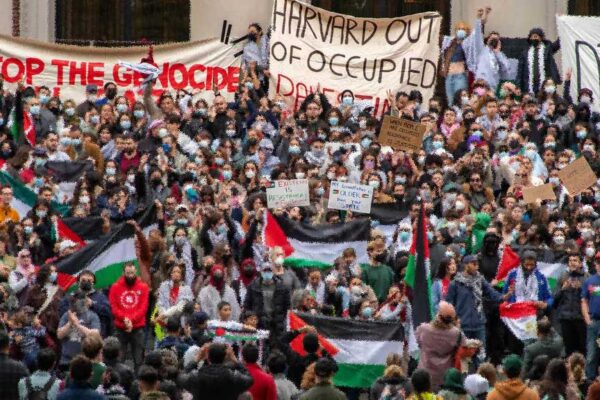
    After visiting several university encampments in the United States and engaging in hundreds of conversations with university personnel, faculty, student organizers, and national leaders, I feel it is important to share key insights for the global Muslim community and others interested in important foundational elements of the movement.

    First, the stance of anti-genocide is a self-evident principle of the most basic moral virtue.

    It is morally natural and expected for students to side with justice. People of all backgrounds are fed up with genocide and a blatantly hypocritical status quo. There is no peace while genocide is ongoing. There is no peace as long as Gaza is under occupation. Without justice and peace in Palestine, there is no true peace in the world.

    Students have much less to lose than American politicians who have collectively received millions of dollars in bribes—disguised as lobbying—from pro-Zionist groups. How can we expect politicians to advocate for true universal justice, for all people including Palestinians, Muslims, Jews, and others, when their decisions are swayed by external entities and financial incentives?

    University administrators are not exempt from scrutiny. Virtually no American university president has condemned Israel’s actions as genocide, nor have they protected the rights of students to protest occupation, immoral investments, and the ethnic cleansing of Palestinians. University presidents and regents often receive direct pressure from wealthy donors, including Zionist supporters of Israel’s occupation of Palestine, and they prioritize their careers, political connections, and long-term ambitions over ethical concerns. The higher one climbs within an unethical system, the less independence they retain, especially when moral causes require the sacrifice of their comfortable status. Only those with moral fortitude would resign from their positions rather than renounce their moral values.

    As for the everyday citizens who criticize students, it may be the media they consume shapes their perceptions of peoples, places, and events. It is the unfiltered social media documentation of genocide that has informed students and faculty worldwide.

    Second, people who advocate for universal justice are increasingly frustrated with the double standards, hypocrisy, and selective justice they observe.

    We see individuals, political groups, and institutions espouse morality and justice but then look away and remain silent when a clear injustice is taking place; they, directly or indirectly, support and promote a government and media narrative that inverts reality. This ruling class quagmire of self-interest, networked with ideological delusion, feeds a growing disgust among activists and the general population. Worse still is when peaceful protests against the genocide happening in real time, on screens in front of our eyes, are misrepresented as antisemitic and promoting of violence. How is it justifiable to violently arrest students peacefully protesting against the utter destruction of Gaza and the bombing that has killed so many tens of thousands, a majority of them women and children? The students are peacefully protesting settler-colonial structures that lead to ethnic cleansing, discrimination, land theft, oppression, violence, and now, genocide. Shutting down the peaceful protests against what is demonstrably wrong, let alone violently doing so, is the height of hypocrisy, displaying a double standard and selective justice that is beyond shameful.

    For Muslims, standing against injustice involves a full commitment to the truth, not blind allegiance to a nation’s military-industrial complex, a political party, a particular politician, influencer, or even a “religious” scholar if he speaks or acts in any way that deviates from Islamic orthodoxy. In Islam, allegiance is to universal justice and truth as defined by God. Therefore, if a Muslim commits a crime, Muslims stand with the truth by willingness to condemn his crime and support his prosecution by the law, just as Muslims worldwide have condemned the terrorist movements that do not represent Islamic teachings. Similarly, many Jews condemn the Israeli occupation of Palestine, the inherent racism and supremacism in Zionism and in the far-right extremist groups in Israeli society, as well as the weaponization of antisemitism and the Holocaust. Some of the most vocal advocates for Palestinian liberation, calling for the end of occupation and injustice, are, themselves, Holocaust survivors. Organizations like Jewish Voice for Peace are at the forefront of numerous campaigns and university encampments.

    Furthermore, students are tired of being lied to and deceived. Western media often portray peaceful protestors as radical anti-Semitic agitators, while ignoring the reality that these encampments are protesting genocide, immoral investments, and the suppression of pro-Palestinian voices. It has been documented on numerous occasions that agitators and undercover pro-Zionists frequently infiltrate these protests to provoke students, incite violence, and cause the mainstream media to portray the protestors as anti-Semitic.

    Universities preach “freedom of speech” and when people freely speak about Palestine, they respond, “No, not like that.” Universities preach “inclusivity” and when we include Palestinian dignity and rights, they say, “No, not that kind of inclusive.” Universities preach “academic freedom” but when professors and scholars speak about Israeli settler-colonialism and the Palestinian right to freedom, they say, “Not that kind of freedom.” American norms preach “freedom to protest,” but when students and faculty protest genocide, they suppress them, suspend them, expel them, and assault them with military-trained police in scenes that resemble the IDF’s brutal and barbaric assault on innocent Palestinians.

    Third, know that students and faculty involved in encampments are principled, courageous, and resilient.

    The students understand the risks of protesting at institutions like Harvard, NYU, Columbia, Yale, UNC, Northwestern, University of Michigan, and literally hundreds of other campuses. They risk their educational and career ambitions, their comfort, and often their safety, to stand up for those who have been silenced or, worse, slaughtered. If Palestinian voices are ignored and lives obliterated with U.S.-funded weapons and the ideological extremism of Zionist settler-colonialism, then university students worldwide will speak and act on their behalf.

    We should all recognize these truths: the more you suppress students and faculty who protest against genocide and the immoral investments in the Israeli economy, the stronger and more frequent the protests will become. The more you deploy military-style police to suppress peaceful protesters, to tase and assault them, to ban and intimidate them, the more that Jews, Muslims, Christians, and others will continue to rise up. And these efforts may not immediately change the status quo, but as they clearly are disrupting those in power, the Israeli war criminals, and those who fund them, protestors also recognize that the matter is intricate, complex, and contains many variables, and protest alone is not going to cause a shift in policy. It is but one part of the equation, and a necessary and inspirational one.

    History shows that many contemporary figures once considered enemies of the state are now glorified and emulated. A good example is Martin Luther King Jr. Similarly, today’s students, faculty, and others who support the end of genocide and occupation will be viewed positively by future generations, and this recognition may not be so far off. The tides have turned. The fervent desire to stop a genocide generated by a supremacist and racist ideology and 75 years of occupation cannot be extinguished. The spark ignited on university campuses worldwide is spreading rapidly. And whether or not we see the immediate results, we will persist in our efforts to end genocide, replace it with universal justice for all people, and hold those accountable who have perpetrated and enabled one of the most barbaric and violent injustices of our times. Furthermore, whether future generations see us as being on the right side of truth and justice is not the ultimate factor in our decision-making and resilience; rather, it is the awareness that God sees our actions and is our ultimate judge.

    And soon, God-willing, Palestine will be free.

  • Laylat al-Qadr: Greater than a Lifetime

    Laylat al-Qadr: Greater than a Lifetime

    Envision an opportunity so extraordinary, rare, and magnificent that missing it would be like missing a millennium of opportunities. In Islam, there is such an opportunity — it is Laylat al-Qadr, or the Night of Decree.

    The Night of Decree holds a place of unparalleled significance in Islam. As the Prophet (peace be upon him) proclaimed when the month of Ramadan began, “Verily, this month has presented itself to you. There is a night within it that is better than a thousand months. Whoever is deprived of it has been deprived of all good, and none is deprived of its good but that he is truly deprived” (Ibn Majah). The one who is deprived is the one who is not deserving of its great blessings, reward, and forgiveness because of grievous sins and evil choices they’ve embraced, rejecting Allah’s signs that prompt him to turn back to Him, and squandering countless opportunities to do good.

    Can a soul truly claim the blessings of this magnificent night when they continuously turn away from its light? The one who is profoundly purposeful about his afterlife, therefore, should embrace turning back to Allah, asking for forgiveness, and striving for a purified heart, and never giving up on redemption and growth. Otherwise, to miss out on the Night of Decree is to miss out on a treasure beyond measure, a night that has the potential to alter the course of our lives forever.

    Greater than 1000 Months

    The Night of Decree is described in the Qur’an as a night “better than a thousand months” (97:3), surpassing the average human lifespan. One night is greater in reward, blessings, accepted prayers, and forgiveness than an entire lifetime. Thus, only a prideful or foolish person would neglect such a night. It is the repentant heart, feeling the burden of sins, that recognizes this night as a beacon of hope. This night’s unparalleled virtues outshine all other times honored by Allah, like the Day of Arafah among the days, the month of Ramadan among the months of the year, and Jumu’ah (Thursday sunset to Friday sunset) among the days of the week — all marking times of profound spiritual opportunity. Yet, Laylat al-Qadr exceeds all of these.

    In Islamic theology, the concept of decree (qadar) usually includes reference to Laylat al-Qadr. Decrees, known only to Allah and inscribed upon the Preserved Tablet, is brought down by angels appointed to bring them to the lowest heaven, the realm of our existence. The angels cover the expanse of life from the moment a soul is breathed into a fetus, ushering in life, to the annual descent of decree on the Night of Qadr. This night stands as a solemn reflection, a spiritual checkpoint from one year to the next, encompassing the information about one’s forthcoming lifespan, deeds, and sustenance.

    Although Prophet Muhammad (s) used to strive all year with unwavering dedication, he intensified his devotion during Ramadan, and even more so in the last ten nights. Aishah reported, “When the last ten nights of Ramadan arrived, the Prophet, peace and blessings be upon him, would tighten his belt, spend the night in worship, and awaken his family” (Bukhari). This heightened devotion is for us to emulate, highlighting what is in our best interests as believers.

    When Is the Night of Decree?

    For several reasons it is  from Allah’s wisdom and mercy that the believers have to seek out the Night of Decree in the last ten nights of Ramadan. Aisha reported: “The Messenger of Allah, peace and blessings be upon him, said, ‘Search for the Night of Decree in the odd nights among the last ten nights of Ramadan’” (Bukhari). This directive is not a mere suggestion but a profound strategy, igniting a spiritual marathon. The believer who strives for ten nights is not going to gain the limited benefits like the one who strives for one night. Imagine the depth of repentance, the sincerity of consistent du’a, and the generosity of giving spread across ten nights, each act compounding upon the previous, emerging as a beacon  of submission and growth.

    Ubadah ibn al-Samit reported that,” The Messenger of Allah, peace and blessings be upon him, came out to inform people about the Night of Decree in Ramadan, but two Muslim men were insulting each other. The Prophet said, ‘Verily, I have come out to tell you about the Night of Decree, but two men were insulting each other. Thus, its knowledge was taken away and perhaps it is better for you. Look for it during the seventh, ninth, or fifth night of the last ten nights’” (Bukhari). Of great importance in this hadith is the phrase translated as, “perhaps it is better for you.” In other words, it is better for the believers to strive to find the Night of Qadr than to know when it is, strive on one night, and retire afterwards.

    What Actions Are Best?

    On the Night of Qadr, the believer is encouraged to pray mindful and sincere prayers, to recite Qur’an with deep reflection on its meanings, to supplicate for oneself, one’s family, and the ummah, and to seek forgiveness with humility.

    Aishah reported: “I said, ‘O Messenger of Allah, if I know which night is the Night of Decree, what should I say during it?’ The Messenger of Allah, peace and blessings be upon him, said, ‘Say: O Allah, You are pardoning. You love to forgive, so forgive me’” (Tirmidhi).

    At the heart of it all, it is forgiveness and Allah’s pleasure that we strive for. Abu Hurairah reported that the Messenger of Allah, peace and blessings be upon him, said, “Whoever fasts the month of Ramadan due to faith and seeking reward, his previous sins will be forgiven. Whoever stands in prayer during the Night of Decree due to faith and seeking reward, his previous sins will be forgiven” (Bukhari).

    Life, with its many demands, often leads us through cycles of energy and fatigue. It’s a natural ebb and a flow, and a reminder of our humanity. While it is natural to fluctuate throughout the days, months, and years, there lies in the reminder a cautionary tale. A principle of wisdom, perhaps, is in recognizing the moments that hold great potential and significance, and to take advantage of them and use our energy effectively.

    Therefore, let us be vigilant during Ramadan and the Night of Decree. Let us not allow the periods of waning energy to coincide with these blessed opportunities. Do not be among those who start off Ramadan really strong and burn out after a few days. Do not be like those who work hard in the beginning and lazy at the end, for it is similar to the one who plants seeds, waters them, cultivates them, and then when the time to harvest the fruits of their efforts arrives, he walks away and abandons them. This is why the early generations of Muslims exemplified perseverance in their religious dedication — when the days of Ramadan were decreasing, their good works and acts of worship only increased.

    May Allah grant us and our brothers and sisters worldwide blessings, accepted prayers, and forgiveness through the Night of Decree.

  • How to Increase Barakah (Blessings) in Life

    How to Increase Barakah (Blessings) in Life

    Some societies invest billions of dollars in the pursuit of efficiency and instantaneous results. University students, for example, often search for productivity hacks and study tips to help them achieve their desired outcomes more quickly. Many companies today are exploring how artificial intelligence can be utilized to streamline processes and achieve objectives more efficiently.

    An interesting concept in Islam is that of barakah. Consider a half-full water bottle. If that water is imbued with barakah, a divine blessing, it will quench your thirst with less. Having more water in the empirical sense does not necessarily mean having more barakah. Barakah refers to growth and increase, a blessing enjoyed by some of Allah’s servants. Our Prophet Muhammad (s) prayed for barakah for various individuals and occasions, including for Anas ibn Malik (r). Prophet Muhammad (s)ﷺ prayed, “O Allah, increase his wealth and offspring, and bless what You have given him” (Bukhari).

    Allah SWT answered the Prophet’s (s) supplications, making Anas one of the wealthiest among the Ansar, blessed with abundance, and over a hundred of his children and grandchildren. Allah also blessed his lifespan, allowing him to live over a century.

    Barakah is generally understood as a divine gift from Allah SWT, the giver of all good things and the source of all barakah. Barakah can manifest at any point in one’s life, enhancing even the smallest of blessings and greatly benefiting larger ones. The ultimate purpose of barakah is to use these blessings in obedience to Allah SWT, such as dedicating one’s wealth or time to acts of worship.

    What actions increase barakah in one’s life?

    1. Sincere intentions

    Everything you do starts from within. In the famous hadith, the Prophet(s)ﷺ mentioned: “Actions are based on intentions…” (Bukhari). Ikhlaas – sincere intentions in one’s devotion to Allah – can move mountains. It can change lives. It can revive the ummah. It can be a source of protection. Sincere and intentional devotion can be a means of ripple effects in continuous charity long after one has left this world. It can be the reason you have more blessings in your time and wealth than the person next to you who has the same 24 hours and same bank balance.

    Renew your intention daily and reflect on it before you sleep, when you wake up, and before you engage in acts of worship; and keep purifying your intention in your thoughts and attitudes, in your speech, and in your actions, both small and large.

    1. Ties of kinship

    The Prophet (s) said: “Whoever would like his rizq (provision) to be increased and his life to be extended, should uphold the ties of kinship” (Bukhari). He also said, “Nothing can ward off the divine decree except du‘a (supplication) and nothing can increase lifespan except honoring one’s parents” (Tirmidhi).

    1. Connect to the Qur’an

    It is not surprising that the Qur’an is one of the greatest sources of barakah for the believers, as Allah says about it: “a blessed Book which We have revealed to you  so that they may contemplate its verses, and people of reason may be mindful”  (Qur’an 38:29).

    Although the entire Qur’an is blessed and a source of barakah, the Prophet (s) specified in one hadith, “recite Surat al-Baqarah, for doing so leads to barakah” (Bukhari). And abandoning it  leads to regret and loss. And it cannot be overcome by al-batalah, which can refer to two things: 1) it cannot be penetrated by the sorcerers, so it’s a form of protection, and 2) it cannot be attained by those who are lazy and slow to acts of worship.

    If one reads Surat al-Baqarah, it becomes a source of blessings in one’s time. Of course, the test for the servant is knowing that Surat al-Baqarah is the lengthiest surah in the Qur’an, and yet it is the one singled out in the hadith as being a source of blessings. Many times, people memorize or recite al-Baqarah without realizing that it was a cause of great blessings in their lives, but they had not associated those blessings with the surah.

    1. Seek barakah in time

    Barakah in time means having the same 24 hours in a day as everyone else, but being able to get more out of it. In era of productivity hacks, shortcuts, and instant gratification, the believer seeks barakah in time in order to get more out of life, even if one’s lifespan itself is shorter than average.

    For students, barakah in time is the ability to get more studying done with less time; for professionals, it is the ability to fulfill one’s work responsibilities while having the time to excel and do more. For parents, it is the experience of raising one’s children with more benefit in their overall development. Some scholars had so much barakah in their time, it’s as though they finished in a day what it would take others a week to accomplish.

    One way to seek more barakah in time is to sincerely ask Allah for it, consistently, and to use one’s time wisely. A second way to seek barakah in time is to specifically utilize the morning time.

    The Prophet (s) made du’a over 1400 years ago, “O Allah bless my ummah in its morning time” (Tirmidhi). The effects of this du’a are well known to all who take advantage of the early hours of the morning.

    When people neglect time, they tend to regret it in later years. Many people look back at their high school and college years wishing to have done greater good with their time. The Prophet (s) informed us in the famous hadith, “There are two blessings many people waste: good health and free time” (Bukhari). In other words, many people waste their good health until they’re ill and then they regret not doing more with it, and the same with time. Life only increases in responsibilities and commitments for the productive believer, and there’s no concept of “true boredom” for the Muslim who values every precious minute of this short life.

    Some people were given only 30 years in this world, but were able to accomplish more in quality than people who lived decades longer. The believers are those who do the best with their situation, living each day as though it’s the last, and not procrastinating goodness for a future that may not arrive.

    1. Du’a and dhikr

    Du’a is the essence of worship, and we should spend time every single day to call upon Allah with sincere, humble hearts, persistently asking for the best of this life and the next. There are many examples of what to ask for in terms of barakah, such as in one’s time, health, and wealth.

    Additionally, an example of barakah is starting many actions with “bismillah” (in the name of Allah), sincerely hoping for reward, blessings in the action, and protection. Another example of a daily practice is the du’a famously used in the witr prayer, but can be employed any time of the day:

    “O Allah, guide me with those whom You have guided, and strengthen me with those whom You have given strength. Take me to Your care with those whom You have taken to Your care. Bless me for what You have given me. Protect me from the evil You have ordained. Surely, You command and are not commanded, and none whom You have committed to Your care shall be humiliated and none whom You have taken as an enemy shall taste glory. You are Blessed, Our Lord, and Exalted” (Abu Dawud).

    Du’a for barakah is also frequently used in Islam when it comes to wanting blessings for other people, such as when someone has a newborn and you pray for blessings in their child, or blessings for those who get married, as well as those who purchase new items (e.g., houses, cars, devices).

    1. Honesty in trading and income

    Sincerity and morality when conducting business is a way to increase barakah in one’s income. The Prophet (s) said, “The buyer and the seller have the option of cancelling or confirming the bargain, unless they part from each other, and if they spoke the truth and made clear the defects of the goods, then they would be blessed in their bargain, and if they told lies and hid some facts, their bargain would be deprived of Allah’s blessings” (Bukhari).

    1. Charity

    Some people say they feel like they have no blessings in their wealth as money seems to slip through their fingers. Some feel like it’s due to their lack of giving charity, while justifying spending on countless forms of entertainment and unnecessary leisure activity.

    The Messenger of Allah (s) said, “Allah said, ‘O son of Adam! Spend, and I shall spend on you’” (Bukhari).With charity, one’s wealth has increased barakah and goes much further in terms of benefit. This barakah oftentimes spreads to one’s home and material wealth as well.

    1. Food

    “The Messenger of Allah (s) said: “Eat together and do not eat separately, for the blessing is in being together” (Ibn Majah). This is a simple act of worship that can be implemented easily. We are living in an era when individualism and aloneness has increased, even in eating.

    On another note, related to food and barakah, the Prophet (s) said: “Take a meal before dawn [i.e., suhoor], for there is a blessing in taking a meal at that time” (Bukhari). Later at sunset, upon breaking fast, he commanded, “When one of you breaks his fast, then let him do so with dried dates, for they are blessed. Whoever does not find dates, then water, for it is purifying” (Tirmidhi).

    Finally, one should never waste any food, even if it’s a small amount left on one’s plate, utensils, or hands. Jabir reported that the Messenger of Allah (s) commanded  the licking of fingers and the dish, saying: “You do not know in what portion the blessing lies” (Muslim).

    1. Consistent repentance and seeking forgiveness

    Sinfulness, in the Islamic worldview, might be the reason a believer is prevented from a provision, relief from hardship, or divine blessings. Allah says, “…Seek your Lord’s forgiveness; He is truly Most Forgiving. He will shower you with abundant rain, supply you with wealth and children, and give you gardens as well as rivers” (Qur’an 71:10-12).

    1. Gratitude

    Allah says, “…If you are grateful, I will increase you…” (Qur’an 14:7).

    While “increase” generally refers to an increase in faith and righteous deeds, there’s also the increase of provisions because the believer uses the existing wealth or resource with true gratitude. Gratitude, thus, is to use the blessings of Allah in a manner that is pleasing to Him. To be grateful with health is to use one’s energy to do good, and to be grateful with one’s time is to use it for Allah’s sake.

    While the list above is not exhaustive, it is a helpful starting point for all of us to review our daily practices and pursuit of divine blessings. May Allah bless  us in all that has been given to us.

  • The Unity of Muslims Worldwide

    The Unity of Muslims Worldwide

    There seems to be an impression among many that it is impossible to unite the Muslim world. However, unity does not imply: 1) unanimous agreement at all levels of government and society, and 2) unity does not imply conformity of views.

    Firstly, unity is not conformity. There are certain aspects of Islam that unite people across lines of jurisprudence, and even across theological lines (e.g., Sunni and Shia), and one clear-cut example of that is the profound issue of Palestine. Unity does not imply conformity of views; in fact, coalition-building itself, socio-political charters, like that of the Madinah Charter, did not imply that Muslims, Jews, and others held identical views. Prophet Muhammad (s) established a charter that governed all of Madinah, and it included non-Muslims, each with rights and responsibilities as citizens of the city. Unity is a political, societal, and structural tool, with a goal in mind. It’s critical to challenge the misconception that social cohesion requires conformity. The 1400-year-old Islamic tradition, especially within the vast community of 1.8 billion Sunni Muslims, is a testament to the strength found in diversity. The problem with equating unity and conformity is that some people, unfortunately, see disagreement as a cause and an evidence of conflict and enmity.

    Allah SWT’s words form the bedrock of unity in Islam: “And hold firmly to the rope of Allah all together and do not become divided” (3:103).  This divine directive calls for unity that transcends worldly resources or constructs like wealth, political power, nation-states, citizenship, ethnicity, language, or any other distinction. In Islam, unity is a powerful, spiritual bond that brings together hearts and minds in a diverse yet harmonious collective, striving towards a common goal.

    In 7th century Arabia, an era dominated by the chains of slavery, the arrogance of the elites, and the social hierarchy that marginalized the weak, Allah SWT delivered a revolutionary message: “O mankind, indeed We have created you from male and female and made you peoples and tribes that you may know one another. Indeed, the most noble of you in the sight of Allah is the most righteous of you. Indeed, Allah is Knowing and Acquainted” (49:13). This profound verse shattered the entrenched class systems of Arabia, igniting a powerful transformation. It empowered Muslims to rise above societal norms and aspire for God-consciousness and piety, placing these virtues above all else.

    Moreover, this verse stands as a formidable beacon of diversity in Islam. It commands Muslims to acknowledge, respect, and celebrate the rich tapestry of differences in language, skin color, ethnicity, and all worldly distinctions. It’s a call to unity in diversity, where the true measure of nobility is not in one’s lineage or status but in their righteousness and love and fear of God. This is a clarion call for a world where equality and understanding must triumph over division and prejudice, echoing through the ages as a timeless reminder of the true essence of humanity.

    When the innocent in Palestine endure suffering, it sends waves of anguish across the globe to Muslims in New Zealand. The displacement of Muslims in Sudan resonates as deep sorrow in the hearts of their brethren in Pakistan. The trials faced by the Rohingya, Uighur, Yemeni, Syrian, and suffering Muslims anywhere around the globe, ripple through the ummah, a shared agony that unites us all. This collective empathy is akin to a person trying to sleep while besieged by a relentless fever or a throbbing headache, finding no solace in rest. Prophet Muhammad (s) profoundly stated: “The believers in their mutual kindness, compassion, and sympathy are just like one body. When any part of the body suffers, the whole body feels pain” (Sahih Muslim). We are that singular, interconnected body – transcending borders, transcending birthplaces. Our unity is not defined by geography but by the shared pulse of our passionate belief in Islam, feeling each other’s pain as if it were our own, standing in solidarity against the tide of suffering — unwavering and resolute.

    The Muslims who fled persecution from the pagan elites in Makkah and migrated to Madinah were known as the Muhajiroon (those who emigrate). The Muslims of Madinah, who welcomed and supported them upon their arrival, were called the Ansar (supporters). Upon their arrival in Madinah, Prophet Muhammad (s) paired each individual from the Muhajiroon with a member of the Ansar. This pairing aimed to facilitate assimilation, provide financial support, if possible, and extend a warm welcome to the families of the Muhajiroon in Madinah. Among the Ansar, individuals like Sa’d bin Rabi’ exhibited extraordinary generosity— he offered half of his wealth to his Muhajiroon companion, Abdulrahman bin ‘Awf. Abdulrahman, an intelligent businessman, politely declined the offer but requested to be shown to the marketplace so he could start building his livelihood from scratch.

    Whether Family or Society, Differing Opinions Are Expected

    Muslims are consistently instructed in the Qur’an and authentic hadith to maintain familial bonds, exercise patience and forgiveness, even towards those who may not reciprocate kindness, and to embody a higher standard of character. This ethos aims to foster family unity. However, this guidance should not be misconstrued as a tolerance for injustice or as overlooking urgent situations that necessitate intervention to prevent abuse and harm. It primarily addresses everyday interactions with relatives and family members who may be rude, irritating, argumentative, or unkind, despite one’s own kindness and exemplary character. Prophet Muhammad (s) stressed the importance of sustaining family ties, even when another family member may sever them. This does not mean, however, that family members are expected to have unanimous views on all matters. Should differences of opinion within a family lead to enmity and conflict? Of course not.

    Just as families are encouraged to embrace diverse viewpoints while working together and avoiding division, so too is the Muslim ummah expected to operate in a similar spirit of unity amidst diversity.

    There is unity of belief in the foundational principles of Islam such as the five pillars, the primary pillar of tawheed (oneness of God) serving as a perfect example. Here there is a unity of belief and understanding that does not admit any differences or disagreement. However, in the details, priorities, or approaches to practical matters — issues of fiqh such as the diverse opinions on voluntary aspects of prayer or wudu’ — there can be differences or variance in interpretation of sources. That a diversity of opinions exists is evidenced by the different schools of fiqh. This diversity of opinion is a kind of disagreement known as ikhtilaaf al-tanawwu’ (disagreement of variance, or variant views) and we are invited to embrace the plurality of opinions within the framework of Islamic orthodoxy while following scholars seeking to clarify the strong evidence of one opinion over others.

    Another type of disagreement is tadaad (ikhtilaaf tadaad), which represents differences that are contradictory, beyond the bounds of varying interpretations. Not all differing opinions stem from interpretation of the sources of Islamic legislation. Some opinions are false, deviating from proper Islamic methodology and resulting in ideas or innovations that fall outside the scope of orthodox Islam. This can lead to confusion among those who assume that all varying or conflicting views are valid. That is not the case.

    However, embracing the plurality of opinions within the framework of Islamic orthodoxy is not only permissible but also encouraged in the interest of maintaining social harmony among Muslims, and it is the role of scholars and advanced students of knowledge to discuss the deeper issues of differences among these opinions and to pursue what is strongest based on their methodologies. Whichever school of jurisprudence one follows (among Sunni Muslims — Hanafi, Maliki, Shafi’i, and Hanbali), or for those who pursue Islamic knowledge while remaining outside of these schools of jurisprudence, the caution is to avoid divisions and disputes among the masses of Muslims. Thus, each individual and/or group is to recognize and respect the validity of the other fiqh interpretations that are based on Qur’an and sunnah and orthodox Islamic methodology.

    Consistent Efforts to Unite

    It is not the responsibility of laypeople or the general masses to engage in debates and disputes about the principles of fiqh, as this is not their area of expertise. Such actions may only serve to legitimize divisions and disputes. These academic discussions are best left to qualified scholars who are actively engaged in addressing the needs of diverse Muslim communities in today’s globalized world.

    Conversely, as mentioned above, some Muslims mistakenly believe that all differing opinions are valid, so in the name of liberalism, inclusivity, and tolerance, they open the floodgates of all possible views on what Islam is or isn’t. People are legally free to define themselves as they wish, but we do not believe that Islam is open to postmodern hijacking or secular reformulation. College students, in particular, must exercise caution in their understanding of inclusivity. Islam is a big umbrella insofar as it invites any and all people to learn about it, to investigate its teachings, and to join its ranks, regardless of their current religious belief, political orientation, or personal identity. But Islam does not allow its tenets to be modified to accommodate concepts or practices that are contrary to its teachings. It can be, especially for young adult Muslims, a thin line to walk between being welcoming, kind, and respectful to individuals with other beliefs and ideologies and, at the same time, remaining faithful in thought, word, and deed to orthodox Islam.

    Certain topics have the power to unite, and shared hardships, whether through physical and emotional experience or through witnessing and empathy, can bring hearts closer. The ummah is in need of many things, and the issue of Palestine consistently demonstrates our potential for unity. What is required is wisdom, sincerity, and consistent efforts to unite strategically, in planning and organization, throughout the year, for the sake of Allah SWT.

  • 12 Keys to Divine Support

    12 Keys to Divine Support

    During times of hardship, many Muslims ask important questions that unlock great opportunities to do good, to change, and to improve the state of the individual and the global community. One of these insightful questions is, “What are the keys mentioned by Allah that are associated with His Divine support?” And while there are many responses to this question, the following twelve keys serve as an introduction.

    1. Strong eman in Allah

    We respond to the trials and concerns of life with our worldview, our beliefs about God, and the strength of our eman (belief/faith). Thus, during one of the historical battles, Allah says about the believers’ reaction to a worrisome matter: “When the believers saw the enemy alliance, they said, ‘This is what Allah and His Messenger had promised us. The promise of Allah and His Messenger has come true.’ And this only increased them in faith and submission” (Qur’an 33:22). Faith and belief in Allah are associated with trials and success. A person of weak eman, for example, might give up early on during a difficulty rather than enduring.

    2. Tawheed: establishing the Oneness of Allah

    The early revelations were mostly about the Oneness of God, especially significant because of the prevalent idol-worship of Arabia. Belief in the oneness of God, or tawheed, is associated with success and expansiveness of the ummah. Allah says: “Allah has promised those of you who believe and do good that He will certainly make them successors in the land, as He did with those before them; and will surely establish for them their faith which He has chosen for them; and will indeed change their fear into security. They worship Me, associating nothing with Me. But whoever disbelieves after this, it is they who will be the rebellious (Qur’an 24:55).

    3. Tawakkul: trusting fully in Allah

    One of the greatest traits of believers is their trust in God. “And whoever puts their trust in Allah, then He is sufficient for them” (Qur’an 65:3). Allah is sufficient to dispose of one’s affairs as He is greater than one’s worries, anxieties, problems, and enemies. Allah suffices as a protector. Tawakkul, however, is an internal state of worship that is combined externally with taking all measures, such as a student trusting in Allah and also doing their best to study for an exam. An ummah that has trust in Allah does not waver in that trust, no matter how long the trial is prolonged. The early Muslims were referenced likewise in the Qur’an: “Those who were warned, ‘Your enemies have mobilized their forces against you, so fear them,’ the warning only made them grow stronger in faith and they replied, ‘Allah is sufficient as an aid for us and is the best Protector” (Qur’an 3:173).

    4. Sabr: perseverance and endurance, especially in times of difficulty

    Allah SWT says, “Do you think you will enter Paradise without Allah proving which of you strive and patiently endure?” (Qur’an 3:142). And in another verse, we are told, “O believers! Patiently endure, persevere, be steadfast, and be mindful of Allah, so you may be successful” (Qur’an 3:200).

    Ibn Abbas reported: The Messenger of Allah (s) said, “Know that there is much good in being patient with what you detest; victory will come with patience, relief will come with affliction, and ‘with the hardship will come ease’ [94:5]’” (Musnad Aḥmad).

    5. Taqwa: God-consciousness

    Taqwa is to have a sense of cautiousness out of love for Allah, fear of breaking His laws and thus staying away from acts that lead to sinfulness. Allah says, “And whoever is mindful [has taqwa] of Allah, He will make a way out for them, and provide for them from sources they could never imagine” (Qur’an 65:2-3).

    6. Supporting the religion of Allah

    One of the greatest signs of real submission to Allah is that one seeks divine support by obeying Allah’s commands and staying away from His prohibitions. Allah gives a clear promise in the Qur’an: “Believers, if you aid Allah, He will come to your aid and will plant your feet firmly” (Qur’an 47:7). This may apply at times to situations where the companions were defending their lives in the battlefield, but this is a general promise for believers until the end of times. If we support Islam, practice it in private and public, in rituals and good character, Allah promises divine support and firmness.

    7. Istiqaamah: steadfastness

    Being steadfast is an integral part of Islam. The first step is submission, the second is steadfastness upon submission. It is linked to success and true worship, and it is a reminder given to the Prophet (s) and the Muslims — “So be steadfast as you are commanded, along with those who turn [to Allah] with you. And do not transgress. Surely, He is All-Seeing of what you do” (Qur’an 11:112). And in another verse: “Surely those who say, ‘Our Lord is Allah’ and then remain steadfast—there will be no fear for them, nor will they grieve” (Qur’an 46:13).

    8. Unity for the sake of Allah

    In a time of great division, there is an absolute need to unite as believers, to work together, to learn how to prioritize unity over ideological differences, group rivalries, personal agendas, or any other consideration. “Obey Allah and His Messenger and do not dispute with one another, or you would be discouraged and weakened. Persevere! Surely Allah is with those who persevere” (Qur’an 8:46).

    9. Du’a and full conviction in His response

    An essential act of worship is du’a (to call upon Allah), and it is linked to other acts of worship for the believers. It’s an act that represents a powerful relationship between Master and servant, Creator and creation. And it is the weapon and fortress of the believer. Allah says to those who doubt their du’a is heard, “Call upon Me, I will respond to you” (Qur’an 40:60). Du’a, though, is not answered only on our terms, according to our timeline, or in the manner we think is best based on our limited knowledge and wisdom. Du’a, so long as you don’t ask for anything prohibited, is accepted, but the Muslim is required to be sincere, humble, persistent, patient, grateful, and fully believing in the acceptance of the du’a. No sincere du’a goes unanswered.

    10. Establishing prayer and dhikr (remembrance of God)

    There are two interesting verses in Surat Taha that offer different commands. First, Allah commands the Muslims, “Do not let your eyes crave what We have allowed some of the disbelievers to enjoy, the
    splendor of this worldly life, which We test them with. But your Lord’s provision is far better and more lasting” (Qur’an 20:131). In other words, don’t let this world deceive you, and do not desire what the disbelievers have of worldly things. Worldly success – material or political – is not a sign of success in the afterlife or one’s standing with God. That is not the nature of this world. Do not lose your divine support from God by craving what others have of this world, especially disbelievers who are being tested with their wealth and will be held accountable for it.

    Immediately after this verse, Allah commands something greater than worldly materialism: “Bid your people to pray and be diligent in it. We do not ask you to provide. It is We Who provide for you. And the ultimate outcome is for the righteous” (Qur’an 20:132).

    11. Using all economic and physical means for victory

    There is a specific historical context to the following verse so beware of taking it out of context, and yet there is a timeless lesson from it as well in terms of strategizing what actions to take after having established the prayer and being diligent about its importance. Think of the early Muslims who were attacked in Madinah, preparing constantly by turning to Allah who reminded them to prepare physically and financially against those coming to harm them. He said, “Prepare against them what you can of power and cavalry to deter Allah’s enemies and your enemies as well as other enemies unknown to you but known to Allah. Whatever you spend in the cause of Allah will be paid to you in full and you will not be wronged. If the enemy is inclined towards peace, make peace with them. And put your trust in Allah. Indeed, He is the All-Hearing, All-Knowing” (Qur’an 8:60). This verse is a reminder to take all measures possible, so long as they are permissible, legal, and pleasing to Allah, and do not limit yourself to prayer and optimism. Furthermore, peace is enjoined when the enemy genuinely inclines to peace; in other cases, however, there are structural injustices and a lack of true peace, and people can be deceived by those committing injustices and human rights violations while claiming to champion peace.

    12. Repentance

    One of the most alarming verses for sinners and people who spread corruption is to know that their actions have consequences worldwide, and that their evil causes more corruption and evil to spread. Allah says, “Corruption has spread on land and sea as a result of what people’s hands have done, so that Allah may cause them to taste some of their deeds and perhaps they might return [to Him]” (Qur’an 30:41). This verse also makes it clear that only a fraction of consequences is experienced in this world, and it is for the purpose of people reflecting and returning to God. Some people wake up in times of hardship, globally, locally, or personally, and others double down on their arrogance and distance from God.


    Repentance, on the other hand, is a cause of additional relief from hardships, and a source of success in this life and the next. “Turn to Allah in repentance all together, O believers, so that you may be successful” (Qur’an 24:31).

    Sa’d ibn Abi Waqqas reported: “I said, ‘O Messenger of Allah, which people are tested most severely?’
    The Messenger of Allah said, ‘They are the prophets, then the next best, then the next best. A man is put to trial according to his religion. If he is firm in his religion, his trials will be more severe. If he is weak in his religion, he is put to trial according to his strength in religion… The servant will continue to be put to trial until he is left walking upon the earth without any sin’” (Tirmidhi).

    We must not misunderstand — Allah hates oppressors and the act of oppression. However, it is the sunnah/laws of this world that things operate beyond our understanding in terms of divine wisdom and some people leave this world by being killed as martyrs. But we have to do our part and persevere. “And persevere! Certainly, Allah does not discount the reward of the good-doers” (Qur’an 11:115).

    May Allah the Exalted bring down His swift justice, deliver mercy to those suffering in the world, and use us to facilitate justice and relief for others.