
بسم الله الرحمن الرحيم

Author: Staff Writer

  • Gambling: A Social Justice Issue, Not Merely a Moral Debate

    Gambling: A Social Justice Issue, Not Merely a Moral Debate

    Gambling is often framed as a matter of personal choice or individual morality, an issue of self-control, ethics, or private behavior. While moral considerations are not irrelevant, reducing gambling to a purely moral question obscures a far more troubling reality. Fundamentally, gambling is a social justice issue because it operates through systemic exploitation, disproportionately harms vulnerable communities, deepens economic inequality, and is actively promoted by powerful corporate and government interests.

    Systemic Exploitation Disguised as Entertainment

    Modern gambling is not just a neutral pastime. Casinos, online betting platforms, lotteries, and sports gambling industries are built on sophisticated psychological and technological systems designed to maximize addiction and loss. Research in behavioral science has shown that gambling platforms intentionally use variable reward schedules — the same mechanisms used in addictive digital platforms — to keep users engaged despite consistent losses.

    This is not an accident. The industry’s profit model depends on a small percentage of users, often labeled “problem gamblers,” who generate a majority of gambling revenue. Studies in multiple countries consistently show that between 30 and 60 percent of gambling revenue stems from individuals with gambling addiction or severe financial distress. When an industry relies on human vulnerability to sustain profitability, the issue moves beyond morality and into exploitation.

    Disproportionate Harm to Low-Income and Marginalized Communities

    Gambling does not impact all communities equally. Evidence shows casinos, betting shops, and lottery outlets are disproportionately concentrated in low-income neighborhoods and communities of color. State lotteries, for example, are heavily marketed in economically disadvantaged areas with slogans promising “hope,” “dreams,” and “escape.” Yet the reality is stark: Low-income households spend a significantly higher percentage of their income on gambling than wealthier households. Lottery participation is highest among those with the least disposable income. Financial losses exacerbate cycles of poverty, debt, housing instability, and food insecurity. Instead of being a path out of poverty, gambling functions as a regressive economic system, effectively transferring wealth from the poor to corporations and state governments.

    Government Dependence and Ethical Contradictions

    One of the most troubling aspects of gambling is the role governments play in its promotion. Many states and countries rely on gambling revenue to fund public services such as education or infrastructure. While this may appear pragmatic, it creates a profound ethical contradiction.

    Governments that claim to protect public welfare are simultaneously funding budgets through industries that cause increased bankruptcy rates, family breakdown and domestic stress, as well as mental health crises including depression and suicide. This arrangement shifts the cost of public services onto those least able to afford it. It also reduces political incentives to regulate gambling strictly because addiction and loss generate revenue.

    Corporate Power and Targeted Marketing

    The rise of online gambling and sports betting has intensified structural harm. Corporations now use big data, algorithms, and targeted advertising to identify and retain high-risk users. Gambling ads flood sporting events, social media, and mobile apps, often reaching young adults and economically stressed individuals. This targeted exposure mirrors practices seen in other harmful industries such as tobacco and predatory lending. The choice is no longer purely individual when billions of dollars are spent engineering dependency.

    Social Consequences Beyond the Individual

    The harms of gambling ripple far beyond the gambler. Families face unpaid bills, broken trust, emotional trauma, and domestic conflict. Communities bear increased social service costs, homelessness, and crime related to financial desperation. Mental health systems absorb the psychological fallout. These collective consequences make gambling a structural harm, not just a private failing.

    Reframing the Conversation

    Labeling gambling solely a moral issue places blame on individuals while absolving systems of responsibility. A social justice framework, by contrast, asks harder but necessary questions:

    Who profits, and who pays the price?
    Why are vulnerable populations targeted?
    Why do governments fund public goods through private suffering?

    Addressing gambling as a social justice issue opens the door to meaningful reform such as stronger regulation, limits on advertising, community education, alternative revenue models, and support systems for those harmed.

    Gambling is not only about personal discipline or moral strength; it is about power, policy, profit, and inequality. When an industry thrives on vulnerability, concentrates harm among the poor, and is endorsed by state authority, the issue demands more than moral advice, it demands ethical accountability and social reform. Understanding gambling through the lens of social justice allows societies to move beyond judgment toward responsibility, compassion, and structural change.

  • Tragic Boat Sinking: ‘No One Deserves to Die in Search of a Better Life’

    Tragic Boat Sinking: ‘No One Deserves to Die in Search of a Better Life’

    The recent sinking of a boat on June 14, the Adriana, carrying 750 people en route to Europe from Libya, serves as a somber reminder of the immense human cost associated with desperate, dangerous migration which too often ends with tragedy. Only 104 individuals survived the sinking of the flagless fishing trawler. The migrants, Pakistani, Syrian, Egyptian, and Palestinian, paid between $4,500 and $6,000 to board the boat and were told by the human smugglers that they would arrive in Italy after a 3-day journey. The boat was overcrowded, and each person had only 40 cm of space (a little more than 15 inches), estimated one of the survivors. The smugglers took from the migrants all belongings including bottles of water so as to make room for more passengers. No life jackets were provided.

    After five days at sea, the Adriana’s engine malfunctioned and conditions deteriorated fast. There was no water, and some people, in desperation, were drinking urine. Two merchant ships were in the area on June 13 and approached the boat to offer food and water. According to one survivor, “Fights broke out over food and water, people were screaming and shouting.” He said that “If it wasn’t for people trying to calm the situation down, the boat was on the verge of sinking several times.”

    According to an article in the New York Times, “Collectively paying as much as $3.5 million to be smuggled to Italy, migrants crammed into the Adriana in what survivors recalled was a hellish class system: Pakistanis at the bottom; women and children in the middle; and Syrians, Palestinians and Egyptians at the top.”

    Blame has been directed at the Greek Coast Guard for trying to attach a rope and tow the stricken boat to safety. The Coast Guard alleges that they attached the rope just to get closer to the boat in order to assess their situation. According to reports, the Coast Guard was in communication with the boat’s captain, a 22-year-old Egyptian, who told them they needed no help and would continue their journey to Italy. Giuseppe Cataldi of the University of Naples L’Orientale, notes, however, that “…once there is the perception of a dangerous situation, the duty is to intervene — notwithstanding the attitude of the people on board.” UNHCR Special Envoy for the Central Mediterranean, Vincent Cochetel, stated, “The boat was overcrowded, was unseaworthy and should have been rescued and people taken to safety, that’s quite clear.”

    Heart-wrenching tragedies like this require a good-faith analysis of the complex factors contributing to such incidents. By examining the actions of human smugglers, the survival challenges faced by those seeking refuge, the geopolitical climate, and other relevant factors, we can gain a balanced understanding of this devastating event.

    • Human smugglers: At the forefront of responsibility for such a tragedy are the human smugglers who operate with little regard for human life. Their actions in overloading the boat with shoulder-to-shoulder passengers and failing to provide life jackets or food and water demonstrate a callous disregard for the safety and well-being of those they exploit. These smugglers capitalize on desperation and vulnerability, exploiting individuals seeking a better life.
    •  

    • Victims’ survival challenges: Desperate circumstances may have compelled them to board that boat. The decision to board an overcrowded boat that could not safely accommodate even a fraction of the passengers reflects a willingness to risk their lives in a plainly dangerous way. Most people would only do so if they were trying to escape a genuinely dangerous environment in order to survive.
    •  

    • Seeking of refuge through illegal entry: The motivation to seek refuge in a country, even if it necessitates entering illegally, highlights the dire circumstances faced by individuals in their home countries. The challenges associated with legal pathways and the lengthy bureaucratic processes often drive people to resort to irregular migration. The often-desperate predicament that impels individuals to attempt illegal immigration does not negate the fact that they are attempting to enter another nation illegally. This unfortunately means that human smugglers will continue to exploit them, and similar tragedies will continue to happen.
    •  

    • Geopolitical factors: The involvement of nations, even instigation by some nations, in conflicts that have destabilized the Middle East and northern Africa should be underscored. Years of warfare and political unrest have resulted in failed states, economic instability, and a breakdown of social order. These factors create an environment in which citizens feel compelled to flee in search of safety, stability, and basic human rights.
    •  

    • Societal factors and global responsibility: Beyond the immediate players involved, societal factors and global responsibility also play a role. Factors such as poverty, lack of economic opportunities, social inequality, and limited legal pathways for migration contribute to the desperation felt by individuals. The international community bears a collective responsibility to address the root causes of forced migration and work toward comprehensive solutions.
    •  

    Disparate Media Coverage of the Adriana and Titan Tragedies

    Some have compared the spare media coverage of the sinking boat of migrants with the expansive coverage given to the submersible carrying five people to visit the sunken Titanic. The passengers on the submersible had paid $250,000 each for the experience. The submersible imploded and killed all on board. Unfortunately, the media does not report the news in a fair and balanced way.

    The submersible accident involving affluent individuals who paid a substantial amount for a unique experience may have captured attention due to it being a highly unusual event, involving adventure and exploration. The tragedy was seen as unexpected and aroused curiosity and empathy. In contrast, sadly, the sinking of a migrant boat, although grossly more consequential in terms of loss of life, is not a new or singular occurrence in today’s world, leading to a certain level of desensitization and diminished newsworthiness in the eyes of the media.

    The media often gravitate toward stories that are novel, rare, or sensationalist. In addition, the news industry is driven by economic considerations including advertising revenues and audience preferences. Stories with potential for higher ratings or public interest tend to receive more coverage. The submersible accident, involving a costly endeavor by individuals from privileged backgrounds, could generate higher public curiosity and engagement. Media outlets, while thoroughly conscious of the profit-driven imperatives, may also highlight stories that align with corporate interests, with official narratives, and/or with oligarchic priorities, inadvertently contributing to skewed coverage.

    Violent Conflicts and Smugglers

    Ethnic conflicts, civil wars, and nations which devise all manner of interventions in attempts to subjugate and exploit other sovereign countries are mainly responsible for the destabilization that then descends into political chaos and economic ruin. Out of the destruction come men, women, and children who are fleeing the violence and stark survival challenges. In the aftermath of the destruction, human smugglers exploit the vulnerable and desperate people trying to escape. After the Adriana sank, nine of the survivors were arrested, including the 22-year-old Egyptian captain, for human smuggling. The UN Office on Drugs and Crime defines human smuggling of migrants:

    “The smuggling of migrants is the facilitation of crossing borders illegally or residing illegally in another country with the aim of making a financial or other material profit. This crime is often perpetrated by organized criminal networks, which seize the opportunity to make large profits from an illicit activity involving little risk of detection…Corrupt officials and other individuals may also be involved in the process.”

    The sinking of the Adriana is sadly part of an international calamity. According to UN News, between 2014 and 2022, 50,000 people died while migrating to seek a better life. The number of dead migrants is from a report, the Missing Migrants Project, part of the UN’s International Organization for Migration (IOM). Julia Black, co-author of the report stated, “While thousands of deaths have been documented across migration routes each year, very little has been done to address the consequences of these tragedies, let alone prevent them.” According to the report, 60 percent of those who die en route remain unidentified. This means that families are left in limbo, with no news about the whereabouts or even the survival of their loved ones. The deadliest route is to and within Europe, accounting for at least 16,000 deaths, followed by Africa, with 9,000 migrant deaths, 7,000 in the Americas, and 6,200 deaths in Asia. It is estimated that the number of deaths is vastly undercounted.

    The IOM has called for international efforts to ensure search and rescue operations whenever there are distressed migrants, whatever region they are in, emphasizing that “obligations under international law, including the right to life, must be upheld at all times.” Julia Black notes that “Regardless of the reasons that compel or drive people to move, no one deserves to die in search of a better life.”

    The sinking of the Adriana is currently under an ongoing criminal investigation.

  • Escalating Conflict in Sudan Brings Massive Suffering

    Escalating Conflict in Sudan Brings Massive Suffering

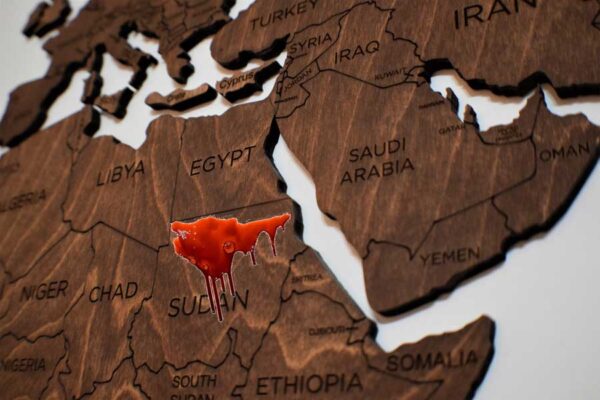
    ICNA CSJ (Council for Social Justice) has posted a short piece about the conflict that is escalating in Sudan, noting that it was in “the latter half of April when the army and a paramilitary group, the Rapid Support Forces (RSF), engaged in a power struggle.” Sudan has endured decades of conflicts that have resulted in loss of life, extreme food insecurity, psychological trauma, displacement from homes and communities, loss of livelihoods, and human rights abuses. The CSJ piece quotes the Director of the Geneva Centre for Africa Security and Strategic studies, David Otto: “[On] the same route that people are fleeing, what we may see in the nearest future if the fighting continues or spreads across, we’ll see weapons being trafficked, human trafficking happening and increasing volatility in the region.”

    Due to long-standing political and ethnic tensions and rivalries, Sudan has seen mass external migration but also internal displacement. Such conflicts result not just in violence and the ensuing issues of safety, but also political instability, economic challenges, and lack of basic survival services. The conflict in Darfur, for example, resulted in millions of people being displaced, leaving their homes and communities to seek safety elsewhere in the country. A new wave of internal displacement took place after the 2021 military coup.

    The CSJ piece also reports on neighboring countries such as Chad, Egypt, Eritrea, and Ethiopia which have seen a mass influx of individuals from Sudan who are fleeing the current conflict. CSJ notes that refugees fleeing to Egypt are feeling “marginalized and demeaned,” with reporting by the Guardian that states, “Terrified refugees found little welcome on the border with Egypt, where just a few local police officers had been dispatched to process thousands of exhausted people.”According to responsibestatecraft.org, more than 100,000 Sudanese have arrived in Egypt to date and some officials think it might soon reach a million.

    The UN World Food Programme (WFP) has issued a warning about food insecurity in Sudan. The WFP notes “an additional 2 – 2.5 million people in Sudan are expected to slip into hunger in the coming months as a result of the ongoing violence in the country. This would take acute food insecurity in Sudan to record levels, with more than 19 million people affected, two fifths of the population.”

    UN humanitarian agencies also estimate that more than 700,000 are now internally displaced and 150,000 people have fled the country. Talks between the warring parties have been held in Jeddah, Saudi Arabia and there are some reports of progress with a possible ceasefire in the works.

    ICNA is asking for Muslims to help the people of Sudan by donating to any trusted relief or humanitarian organization, thus providing support to the refugees including legal protections, economic assistance, and resettlement in host countries. If you would like to donate through ICNA CSJ, you can do so here.

  • Ramadan: Increasing Awareness of Its Blessings

    Ramadan: Increasing Awareness of Its Blessings

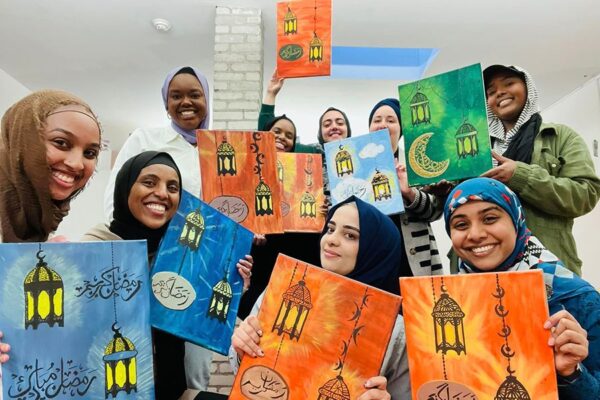
    Ramadan is the ninth month of the Islamic calendar, a blessed and sacred time for Muslims all around the world. During this month, Muslims fast from dawn until sunset, abstaining from food, drink, and sexual activity. This is a way of demonstrating devotion to Allah SWT and as a way to increase faith.

    The Prophet (s) has told us that Allah SWT says, “Fasting is Mine and it is I who give reward for it. One gives up his sexual passion, his food, and his drink for My sake. Fasting is like a shield. And he who fasts has two joys: a joy when he breaks his fast and a joy when he meets his Lord. The change in the breath of the mouth of one who fasts is better in Allah’s estimation than the smell of musk” (Bukhari).

    Fasting is the most well-known aspect of Ramadan, and it requires self-discipline and self-restraint. These are positive traits that benefit us year-round. Yet, there are many other blessings that come with this holy month. For one, Ramadan is an optimal time to increase one’s acts of worship and to engage in spiritual reflection and renewal. Muslims are encouraged to act out of good character at all times, yet Ramadan is the great opportunity to push a bit more, striving to overcome shortcomings that we sometimes indulge in. Coupled with spending more time in prayer and contemplation, this can lead to a deeper understanding of oneself and a greater sense of connection with Allah SWT.

    Ramadan is also a time of community. Muslims often gather with family and friends to break their fasts together, and many mosques host iftar dinners. This is especially important for those who may not have anyone to break their fast with. Some are converts and some live in areas where they may be a small minority. The community iftars allow them to feel connected to a larger network of Muslims, individuals and families who come together to share their faith.

    In addition, Ramadan is a time of generosity and charity. Muslims are encouraged to give to those in need, whether through donations to charity or relief organizations or by volunteering their time to help those less fortunate. This focus on giving back can help to foster empathy and compassion and can lead to a greater understanding and sensitivity to the challenges faced by others.

    Finally, Ramadan concludes with celebration. The end of the month is marked by the festival of Eid al-Fitr, a time of joy when Muslims come together to celebrate with family, friends, and the community. This celebration is a reminder of the blessings that come with the month of Ramadan, and of the importance of faith, family, and community in our lives.

    The blessings of Ramadan are many and varied. This holy month offers a unique opportunity for Muslims to connect with Allah SWT, with deeper levels of self, and with one another. It is a time to gain greater awareness of the many blessings in our lives, and to strive to be grateful. With Ramadan again here, we should spend some time focusing on the wide scope of potential for us to grow spiritually, to increase and strengthen our acts of worship, to incorporate good character traits, and to purify our hearts. This short piece mentions the following blessings:

    • increasing one’s acts of worship
    • demonstrating devotion to Allah SWT
    • deepening faith
    • finding a greater sense of connection to Allah
    • engaging in remembrance of Allah SWT and all His blessings
    • spending time in spiritual reflection
    • striving for spiritual and religious renewal
    • practicing self-discipline self-restraint
    • gaining deeper understanding of self
    • increasing one’s empathy and compassion for others
    • developing generosity and charity
    • feeling a sense of community and underscoring the importance of faith, family, and community
    • celebrating and finding joy

    “If you count the favors of Allah, you cannot enumerate them. Surely, Allah is Oft-forgiving, Most-merciful” (Qur’an 16:18)

  • It will take 60 seconds…

    It will take 60 seconds…

    Assalamu Alaikum,

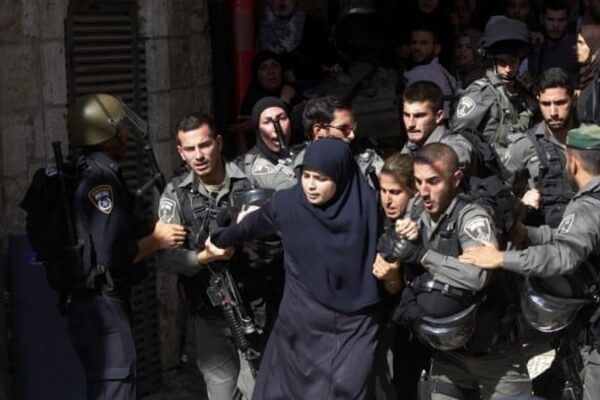
    On behalf of the US Council of Muslim Organizations (USCMO), we write to you with heavy hearts during these final days of the holy month of Ramadan. Our Palestinian siblings have endured relentless violence at the hands of the Israeli occupation forces at the sacred site of Al-Aqsa for the past several days. As of this writing, 20 have reportedly been killed (including 9 children) and over 800 have been injured.

    Hundreds of residents of the Jerusalem neighborhood of Sheikh Jarrah are on the verge of expulsion from their homes, and armed settlers and Israeli soldiers are terrorizing the community and those in solidarity with them.

    This is a time for all of us to stand together at this crucial moment and take a stand for Palestinian rights — especially here in the United States where our government finances Israel’s cruel military to the tune of $3.8 billion a year.

    This request is one of the most important we’ve ever made: Can you please take just a few minutes to call your Congressional Representative today?

    All you need to do is call (202) 224-3121, which is the House of Representatives switchboard, and you’ll be connected to your Representative’s office. Once you get a staff member on the line (or if you’re asked to leave a voice message), mention your name, your address, and ask your Representative to sign the Pocan -Newman letter that expresses concern about Israel’s imminent plan to forcibly displace nearly 2,000 Palestinians in the Jerusalem neighborhoods of Al-Bustan and Sheikh Jarrah. Ask that your Representative please add his or her signature to the letter so that the U.S. doesn’t remain silent while this injustice is taking place.

    The letter, circulated by Representatives Marie Newman and Mark Pocan, urges Secretary of State Tony Blinken and the Biden Administration to exert diplomatic pressure on Israel to stop this action. Many members of Congress have issued press releases or social media posts condemning Israel’s attacks. Call on your Representative to join them.

    While the videos of tear gas and sound grenades are heartbreaking and enraging, the imagery of tens of thousands of Palestinians praying Tarawih with resilience fills us with hope and commitment.

    Moreover, ICNA and USCMO have decided to designate Saturday, May 15, 2021, as a Day of Solidarity with Al Aqsa and Palestine. Stay tuned for more information.

    May our faith be as steadfast as theirs; while they brave a military assault, they remain unwavering. May our support for their struggle be just as unwavering.

    Mohsin Ansari MD
    Chairman, USCMO
    President, ICNA

    The Islamic Circle of North America is a leading American Muslim organization dedicated to the betterment of society through the application of Islamic values. Since 1968, ICNA has worked to build relations between communities by devoting itself to education, outreach, social services and relief efforts.

    —END—

    Islamic Circle of North America
    E-mail: ICNA PR Email
    Office: (718) 658-1199

  • Ramadan Latino Style

    Ramadan Latino Style

    Ramadan Latino Style: An Interview with Jamal Abdul-Karim

    Jamal A. (Diaz) Abdul-Karim is the director of the Upper Division of Al-Rahmah School in Baltimore County, Maryland. He is a convert of Cuban descent and a native of Manhattan, New York. He is married and has seven children, ages ranging from 29 to 50. Abdul-Karim holds a master’s degree in education and has been committed to serving the public and private educational sector for over four decades. He has conducted lecture series, authored research papers, and continues to work independently on cultural and community-based programs and events. We asked him to share his thoughts on celebrating the month of Ramadan as a Latino Muslim.

    How do you and your family prepare for the month of Ramadan?

    Ramadhan is a very unique and specially blessed period for all practicing Muslims. Our family prepares for it much like other Muslim families. We obtain what we need in food stuffs, while anticipating the benefits of worship, camaraderie, special events, and visitation of family and friends. Beyond that, we look forward to ways we can spiritually improve our personal lives and character. I feel the benefits are immeasurable.

    Do you help organize Ramadan events and iftars for the Latino community in your area?

    My family participated with many Ramadan events over the years in the local area, including when smaller venues were hosted by some of our Latino Muslim brothers and sisters. Usually, Latino-based foods, personal memories, and religious interaction are shared. Activities like this have been linked to larger venues in which I had the privilege to participate. Pursuant to these beautiful activities, I’ve been inspired to write articles, give interviews, and participate as a speaker/presenter in programs. Those programs focused on educating Muslims who aren’t aware of the impact that contemporary Latino Muslims are making and have made historically.

    For the most part, the Muslim community at large responds positively to our efforts. Yet, according to the actual statistics of how many Latino Muslims there are, or what active role we’ve played in history, other groups of Muslims continue to be unaware of the numbers and diverse backgrounds of Latino Muslims that live throughout the Americas.
    We are inextricably attached to the historical developments of these regional areas. The indigenous populations of Latinos that come from many of the contemporary inner cities were on the scene for decades. We’re on the rise, and the numbers continue to increase across the nation. Nevertheless, many brothers and sisters are still amazed when they learn some of the facts about Latino Muslims.

    How do your culture and traditions play a role in how you approach and celebrate Ramadan and Eid?

    For me, it’s a matter of reminiscence. Ramadan brings to mind a few of the former holiday celebrations. Homemade pina colada, helado de coco (coconut ice cream), mango or pineapple ice-cream (Cuban-style), yellow or red rice and pigeon peas, platanos (plantains or green banana), meat pies, peppers, fish in red sauce, avocado and lime sprits, or picante seafood (conch) salad, a taste of sofrito, so forth and so on, are a part of the festive atmosphere that I experienced during those holiday periods.

    My older daughter has undertaken to preserve parts of that tradition, and it’s a treat! We like the flavors, mixtures, and seasonings. When other Latino Muslims share their food with us, it is always something special. I believe that every group has something good to offer, and it’s no different for Latino Muslims. It’s an incorporated part of our Islamic diversity and heritage.

    Have you developed your own Ramadan/Eid traditions? If so, what are they?

    As far as traditions go, our basic activities follow the same pattern as other Muslims. Each household might have something special that they do, but the main focus is to worship Allah and gain as many blessing and benefits as we can. What’s special during this period is striving to perfect what goes on in the entirety of the year. Another focus is the fact that our dietary habits must conform to the Islamic recommendations, and we can enjoy all those aforementioned foods and dishes, by using available halal products. In that regard, we can indulge during Ramadhan in the same context, and enjoy that meat pie (empanada) with halal meat, flavor our arroz y gandules (rice and pigeon peas) with smoked halal turkey (instead of jamon/pork), we can drink the virgin mojitos (quite refreshing), and other things that are familiar and shared.
    In my family’s case, incorporating some Latino foods is an imperative for preserving some of the cultural things I grew up with. I believe this is a positive way to pass on what makes us who we are, and the identity that we choose to recognize as part of our family’s heritage. In the broader scheme of things, we are grateful to share this reality, because there is a legitimate place for it in Islam.
    How do you feel Ramadan compares to how you and your family celebrated the Christmas holidays?

    When I express what my former religious disposition was, it sometimes seems unusual to people, but I wasn’t a Christian. Yes, I was exposed to Christianity and its teachings, but my parents were open-ended about this. When it came to my siblings and me, they didn’t force Christianity down our throats. My father was strict in his mannerisms as a Jesuit Catholic, and my mother was raised in the Baptist Church. Yet, religious choice was no insistent issue. We were undoubtedly encouraged to believe in God. Initially, when I was young, my family attended an inter-denominational church. Its curriculum was the idea that true fellowship was composed of people of all denominations, expressed in the higher ideals of faith and brotherhood.

    For this reason, I was exposed to Jews, Christians, African Continentals, East Indians, and a host of other congregants that participated in that church. This early experience impressed me as a child, with its primary emphasis on brotherhood, and the unity and worship of God. I was free to explore other belief systems that reflected Afro-centric traditional beliefs, Asian teachings, world philosophy, and of course Islam. I believe I expressed it earlier, that former holiday times had a sense of spirituality in terms of the family traditions, as well as the custom of reunion among young and elder members. As with families that emphasize the importance of tradition, respect for elders, and being thankful, Islamic holidays emphasize the great blessing derived from commemorating the praises of Allah. He reminds us in Qur’an that one way we can celebrate the praises of Allah is by commemorating the special days He granted us.

    What distinguishes you as a Latino Muslim in your community? In other words, can people tell that you are a Latino Muslim?

    This is an excellent question, and honestly my physical appearance doesn’t necessarily convey to people that I’m a Latino Muslim. This comes with sharing personal information when the topic arises. Others are aware that I’ve been proactively involved with the Latino Muslim Da’wah Movement and programs, as part of Islamic education efforts. Besides my Latino brothers and sisters that know I’m of Latino descent, there might be telltale traces that emerge when I use a phrase in Spanish, or it’s been related by someone else that knows about my background. I have met other Muslim brothers and sisters who are like me, but they are more low-keyed about it. For instance, they may or may not speak Spanish, or they may not openly identify as Latino. They may even feel a sense of awkwardness about interacting with Latinos, let alone identifying as one.

    I’ve strived to approach this reaction, or sense of things, by stressing the fact that we are a diverse group of people. Some are completely immersed into the Latino experience, while others have come from multi- or bi-cultural Latino ethnicity. Rest assured, none of these things invalidate people, their roots, culture, or sense of ethnic identity. I see it as learning more about one’s personal history, how comfortable an individual might be, and their sense of how it relates to Islam.

    I have no problem with being identified as an African American. This presents no conflict for me. African indigenous culture and civilization is just a phenomenal reality that is a result of the global African diaspora. Allow me to remind you that Latinos come in all shapes, sizes, shades, and colors, and we speak Spanish, Portuguese, Dutch, French, English, and Creole and/or Patois.

    Do you have any special Ramadan experience or advice you would like to share specifically aimed at or regarding Latino Muslims in the community?

    Ramadan is a chance to renew our intentions, refresh our understandings, and invigorate our spiritual commitment. When the opportunities arise to share in the rich cultural experiences of Latino Muslims, I recommend that other Muslims explore, investigate, research, discuss, and attend programs that share vital information about Latino Muslims and their continued contribution to the Islamic world, and the world at large. We are fortunate to have in the midst our communities learned, dedicated, and continually advancing Latino Muslim brothers and sisters. The Latino Muslim community is expanding, and its profile reflects groups that come from mainland North America, Mexico, Central America, South America, and the Caribbean Islands. Muslims from these diverse areas can share their experiences with other people and represent each aspect of the region from which they originate. Sharing this type of da’wah will enhance the understanding of our Muslim ummah and reinforce the reality that Allah can bring Islam to any person’s heart and to any society He chooses.

    Finally, Latino Muslims continue to globally contribute to the advancement of Islam through academic education, Islamic scholarship, the medical and technological sciences, historical research, community development, the culinary arts, independent businesses, the sociopolitical realm, and various other fields of endeavor. The contributions of the Latino Muslims are paramount to the continued collective efforts to establish Islam in our regional communities and the Western Hemisphere.

  • Beyond Stereotypes

    Beyond Stereotypes

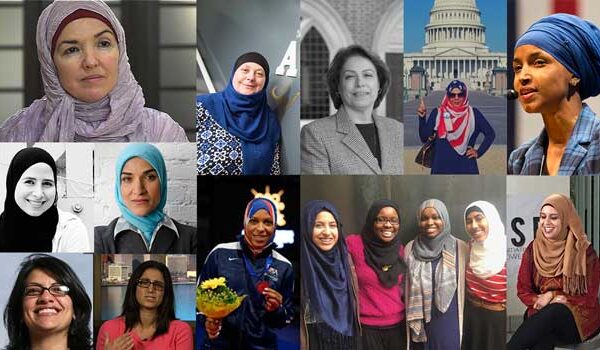
    Ilhan Omar

    Ilhan Omar, the 35-year-old Somali-American who has become one of two Muslim women elected to Congress in 2018, spent four years in a Kenyan refugee camp and then immigrated with her family to the U.S. at age twelve. She ran on a progressive platform which she calls “a politics of moral clarity and courage.” She will work toward cancelling student debt, tweeting in October, “Instead of providing a tax cut to the top 1%, we need to cancel the $1.4 trillion dollars in student debt weighing us down.” She also wants to reduce funding for “perpetual war and military aggression” and supports criminal justice reform. She has been recognized for her hard work with the “Commitment to Service Award,” the “Champion of Change Award” given by Minnesota Urban Debate League, “The Jeanne and Joseph Sullivan Award” given for commitment to advancing human rights and women’s leadership, “Hall of Fame Award” given by the National Association of Women’s Business Owners for women who advance business leadership of women, and the 2018 “Citizen of the Year” Award given by the Minneapolis Rotary Club, and more.
    Beyond stereotypes: contemporary Muslim women leaders, reformers, activists, and scholars

    Ibtihaj Muhammad

    Ibtihaj Muhammad began fencing as a 13-year-old and in 2016 became the first woman to compete in the Olympics wearing hijab. She received the bronze medal for Women’s Individual Sabre in the summer Olympics in Rio de Janeiro. “It’s a tough political environment we’re in right now. Muslims are under the microscope,” Muhammad said. “It’s all really a big dream — I don’t think it’s hit me yet. The honor of representing Muslim and black women is one I don’t take lightly.” She was a 3-time NCAA All-American and the 2005 Junior Olympic Champion. Ibtihaj graduated from Duke University in 2007 with a double major in international relations and African American studies. She serves on the U.S. Department of State’s Empowering Women and Girls Through Sport Initiative and gives of her time teaching fencing to inner city youth, a mentoring foundation started by Olympian Peter Westbrook.
    Beyond stereotypes: contemporary Muslim women leaders, reformers, activists, and scholars

    Rana Abdelhamid

    Rana Abdelhamid founded the Women’s Initiative for Self-Empowerment (WISE), a self-defense, leadership and entrepreneurship program for young Muslim women in New York City. She also created the photography series, “Hijabis of New York,” a social media project aimed at presenting Muslim women, through photographs and interviews, in their everyday lives. Abdelhamid has worked with Amnesty International USA for eight years on campaigns supporting women’s rights, and to advocate for the end of the use of torture. She is currently the youngest serving board member of Amnesty International USA. She earned her bachelor’s from Middlebury College in International Politics and Economics and a master’s degree in public policy from the John F. Kennedy School of Government at Harvard University. She has conducted extensive research on civic participation and mobilization of minority communities. Abdelhamid is a recipient of the United Nations Association of the USA Leo Nevas Human Rights Youth Award and received the Harry S. Truman Scholarship for public service leadership.

    Muslim Girls Making Change

    Kiran Waqar, Balkisa Abdikadir, Hawa Adam, and Lena Ginawi are high-school students in the small city of Burlington, Vermont. But once they created their slam poetry quartet, Muslim Girls Making Change, their voices could not be ignored. They perform their passionate poetry on issues of social justice and aim to break down stereotypes about Muslims and other minority communities. They have performed both in the U.S. and on the international stage. In June 2018, they won a National Education Association Human and Civil Rights Award — the SuAnne Big Crow Memorial Award, recognizing their social justice outreach. “Whenever you hear the word terrorism, I don’t want the first thing you think about is Islam, because Islam, to me, is a religion of peace,” Ginawi told the Associated Press.

    Zaineb Abdulla

    After Donald Trump became president, Muslims and others in minority communities felt increased fear. Hate-filled rhetoric filled the air waves. Iraqi-American Zaineb Abdulla, based in Chicago, took action. Trained in Brazilian Jui Jitsu, she launched a seminar for Muslim women who long have been targets for bigots. Her Hate Crime Survival Seminars “are designed to give women the tools they need to stand up and fight back,” says Abdulla. She added, “By working to increase self-esteem and self confidence in addition to basic self-defense knowledge, we are strengthening women in body, mind and spirit.” Abdulla, who is deaf, also co-founded Deaf Planet Soul, a non-profit organization in Chicago that serves and empowers the deaf and hard of hearing. She is currently pursuing her masters in deaf education and nonprofit management.

    Dr. Ingrid Mattson

    Dr. Ingrid Mattson is on outspoken academic and religious leader. Soon after 9/11, she wrote in an article, “So often, it seems, we have to apologize for reprehensible actions committed by Muslims in the name of Islam. We tell other Americans, ‘People who do these things (oppression of women, persecution of religious minorities, terrorism) have distorted the true Islam.’ And so often we have to tell other Muslims throughout the world that America is not as bad as it appears. We say, ‘These policies (support for oppressive governments, enforcement of sanctions responsible for the deaths almost 1 million Iraqi children, vetoing any criticism of Israel at the United Nations) contradict the true values of America.’ But frankly, American Muslims have generally been more critical of injustices committed by the American government than of injustices committed by Muslims. This has to change.”
    Mattson is currently the London and Windsor Community Chair in Islamic Studies at Huron University College at the University of Western Ontario, London, Canada. Since 2012, she has been a professor at Huron University College, teaching courses in classical Islamic thought; Islamic thought, culture and practices; Islamic ethics; and interpreting the Quran. She has her bachelor’s degree from the University of Waterloo in philosophy and fine arts and a doctorate in Near Eastern Languages and Civilizations from the University of Chicago. Dr. Mattson has received numerous awards and is the recipient of honorary doctorates from Trinity College, Hartford, and the Chicago Theological Seminary.

    Dr. Azizah al-Hibri

    Dr. Azizah al-Hibri was a Professor Emerita at the University of Richmond School of Law until her retirement in 2012. Her academic focus was the development of Islamic jurisprudence and law that are “gender equitable and promote human rights and democratic governance.” Dr. al-Hibri served as a commissioner on the U.S. Commission on International Religious Freedom, appointed by President Obama. She received the Virginia First Freedom Award from the Council for America’s First Freedom in 2007, the Dr. Betty Shabazz Recognition Award from Women in Islam in 2006, and the University of Richmond’s Distinguished Educator Award in 2004. She was named a Fulbright scholar in 2001. Dr. al-Hibri is also the founder and chairwoman of KARAMAH: Muslim Women Lawyers for Human Rights, a nonprofit organization “committed to promoting human rights globally, especially gender equity, religious freedom and civil rights in the United States.” Dr. al-Hibri earned a B.A from the American University of Beirut and a Ph.D. in philosophy as well as her J.D. from the University of Pennsylvania.

    Dalia Mogahed

    As former executive director of the Gallup Center for Muslim Studies, Dalia Mogahed combined her interest in collection and analysis of data and religion, particularly Islam. The organization is a non-partisan research center that surveys and analyzes the views and opinions of Muslims around the world. She has a B.S. in chemical engineering from the University of Wisconsin and an MBA from the Joseph M. Katz Graduate School of Business at the University of Pittsburgh. Mogahed was born in Cairo, Egypt and immigrated with her family to the U.S. when she was four-years-old. She is currently the Director of Research at the Institute for Social Policy and Understanding (ISPU) which “conducts objective, solution-seeking research that empowers American Muslims to develop their community and fully contribute to democracy and pluralism in the United States.” Her TED Talk on “What it’s like to be a Muslim in America” has been viewed 2.8 million times. In an interview, Mogahed said, “We can challenge Islamophobia like how we challenge any other form of bigotry or racism; we first have to learn what it is, and we have to educate ourselves on its fundamental manifestation…There are many subtle and insidious ways that racism and bigotry manifest, so when we educate ourselves on what those are, and how we can ourselves conform to them and have these implicit biases, we develop an awareness and ability to conquer those things.”

    Rashida Tlaib

    Palestinian-American Rashida Tlaib, along with Ilhan Omar, will take office on January 3. They are two Muslim women elected to Congress in November of last year. Tlaib, 42 years old, is a lawyer who was elected to represent Michigan’s 13th congressional district in the U.S. House of Representatives. She served in the Michigan House of Representatives from 2009 to 2012. Some of Tlaib’s priorities in Congress will be raising the minimum wage to $15, preventing cuts to Social Security, Medicare, and Medicaid, equal pay for equal work for women, overturning Citizens United, and restoring the Voting Rights Act. Tlaib is a progressive Democrat, along with others in the progressive wing including Elizabeth Warren, Bernie Sanders, and Kamala Harris. After serving in the Michigan legislature, Tlaib worked for the non-profit Sugar Law Center for Economic and Social Justice as an attorney and advocate. In that role, she worked on various campaigns including efforts to stop the dumping of toxic chemicals into the Detroit River, to stop tax breaks for the wealthy, and to combat bigotry.

  • Labeling Children as Learning-Disabled:  Offsetting the Potential Harm

    Labeling Children as Learning-Disabled: Offsetting the Potential Harm

    According to the Twenty-Ninth Annual Report to Congress by the U.S. Department of Education in 2010, as many as one out of five people in the U.S. has a learning disability, and roughly one million children receive special education in school. While it is good that children with learning disabilities are getting the specific services they need, there is also potential harm done by labeling children as learning-disabled, behaviorally-challenged, and so on; and this is an issue that parents and teachers should take seriously. The dangers of labeling go both ways: a perceived negative label such as “learning disabled” often sets a child up for academic failure and social rejection. A seemingly positive label such as “gifted” can make a child feel pressured to live up to that image and if they don’t, to feel like a failure. However, we live in a world in which labeling is, for now, inevitable and we have to find ways to offset any potential harm.

    Naming or characterizing abilities or disabilities allows a parent or teacher to utilize the right approaches in teaching and accommodating learning disabilities or handling disruptive and challenging behaviors. The problem with “naming” psychological, biochemical, and/or behavioral conditions is that the lines are often blurred as to the source of the symptoms. For example, the DEA (Drug Enforcement Administration) is alarmed that since the 1990s, Ritalin prescriptions have increased 500 percent. What in the past was seen as a child with high energy or disruptive behavior is now looked upon as a medical condition needing a pharmaceutical treatment. While there are some children who might genuinely have a biochemical imbalance, it seems certain that many more children are being treated with drugs because they exhibit behavioral issues that are a challenge in the family and the classroom and it is all too easy to drug the child rather than take the time and exert the energy to successfully address and effectively handle the challenging behaviors.

    A very interesting study was done that has far-reaching implications. Mothers of children diagnosed with ADHD were given mindfulness training. This training included: (a) contemplative and concentration exercises; (b) behavioral practices such as loving-kindness, compassion, and generosity; (c) cognitive strategies such as reflection on the transitory nature of events and circumstances; and (d) empathy practices that help a person “walk in another’s shoes.” The training provided to mothers did bring about improved behavior in the children. When the children were also provided the training, behavioral improvements were even more pronounced and some were able to be taken off their medication. This study appears to support the idea that if parents and teachers take the time and have the intention to look beyond the surface of the behavioral problem into the worth of the child — to do whatever it takes to assist him or her to find a more effective mode of coping, behaving, and responding to the world — that beneficial outcomes are possible.

    Contributed by LivingEman.com

  • Model for Civic Engagement – Dar al-Noor Masjid (MAV) in Manassas, VA

    Model for Civic Engagement – Dar al-Noor Masjid (MAV) in Manassas, VA

    Civic engagement for America’s Masajid could not be more crucial than now. America is facing challenges that can only be overcome by propelling the voices of reason into public and civic life and driving the voices of bigotry and closed- mindedness out of the public spotlight. We are facing the public rise of anti-Islamic sentiment while some of the country’s political leadership, both at the local and state levels and in Washington, D.C., have become detached from reality. Consequently, the safety and security of our families have become a growing concern for everyone. Muslim-Americans must engage in the civic arena in order to ensure, by Allah’s permission and will, that we contribute to the betterment of America, something that we, and all fair and decent citizens, want for ourselves and for our children.

    With civic engagement, your Masjid will have a voice in government decisions both big and small; your Masjid can achieve solutions for issues in the community; and your Masjid can do its part to ensure social justice and equality for all – with Allah’s guidance and help. Muslim-Americans’ civic engagement with their communities and our participation in the political process is a mutually beneficial affair. Engaging with our elected and public officials guarantees that the voices of Muslim-Americans are heard, especially on topics such as presenting accurate information about Islam, countering terrorism and violence in our communities, and finding sensible solutions to community issues.

    The Muslim Association of Virginia (MAV) has, in fact, been active in the civic arena for some 16 years now. Alhamdulillah, MAV has been successful in achieving major accomplishments for our community including the successful defeat of the anti-Sharia legislation in the Virginia Congress; the introduction and passing of a Halal bill in Virginia to regulate the labeling, identification, and sale of Halal products; lobbying for legislation granting students a religious holiday for Eid; and active voter registration which resulted in registering over 200 voters during Ramadan this year.

    MAV has identified some crucial steps and activities in a successful civic engagement program, and encourages all Masajid and Muslim organizations who have not already done so, to develop their own civic engagement program. Some of the steps and activities include:

    Set Up Voter Registration

    Your primary leverage with elected officials is demonstrating that you represent a large group of voters. In order to effectively represent your Masjid, you must ensure that its members are registered to vote. There are two ways to accomplish this goal: (1) your Masjid can set up its own voter registration team with registration tables at Jumu’ah prayers; or (2) you can bring in an outside organization that focuses on getting voters registered.

    Provide a Forum for Community Engagement

    The Masjid is a perfect space for school board or town hall meetings, and for debates between local, regional, and even national candidates. Not only does this benefit your community by bringing the information directly to your Masjid, but this also allows some non-Muslim members of the community an opportunity to set foot inside a Masjid for the first time in their lives. That opportunity to introduce community members of other faiths to your Masjid and their Muslim neighbors is critical to the success of your civic engagement program.

    Assist Homeless Shelters

    Show your community how vital charity is in Islam. Assist with food drives, help find shelter for families in need, visit the elderly at senior centers, become mentors/tutors for disadvantaged youth, volunteer at local schools or hospitals — your involvement in charity outside the Masjid demonstrates that you are dedicated to improving the community and, more importantly, that we care about our fellow citizens, Muslims and non-Muslims alike.

    Build a Relationship with Local Law Enforcement

    The security, good will, and community building that your Masjid receives from fostering a good relationship with local law enforcement is vital to the success of your civic engagement program. When a tragic event injures or takes the life of an officer protecting your community, be proactive about supporting the police station and the families of the officers. Your support of law enforcement events, memorials, and parades establishes a relationship of trust between the Masjid, its community, and local law enforcement. Inviting local law enforcement leaders to the Masjid is a great way to begin that relationship.

    Encourage Members of your Masjid to Get Involved

    Members of your Masjid should strive to serve on school boards, commissions, and civic associations, and to run for elected office. Having Muslims in those positions amplifies the voice of your Masjid and the Muslim community, from the grassroots level and up.

    Participate in Public Events

    Announce at your Masjid public events like parades and 4th of July celebrations and encourage attendance. If possible, provide transportation to such events to ensure turnout and that your community supports these events as a unified group. The more the wider community interacts with the members of your Masjid, the more successful your civic engagement program can, and will be, insha’Allah.

    Offer Elected Officials Speaking Time During Jumu’ah and Eid Prayers

    Invite local, state, and federal elected officials and candidates to speak at your Masjid. This benefits your Masjid in the following ways: 1) gives your members an opportunity to hear directly from officials and candidates; and 2) offers an opportunity for your members to speak directly to their elected official, asking questions to learn where that official stands on important issues. Set aside time (approximately 10-15 minutes) before the start of prayers to allow elected officials to speak to your community (for those officials who did not get to speak, acknowledge them and their attendance). It is vital that you make every effort to invite all candidates who are running for an elected office, regardless of party affiliation. Ensure that you are keeping a record of those invitations so that the non-profit status of your Masjid is protected and not placed in legal jeopardy.

    Support Sensible Elected Officials Regardless of Party Affiliation

    Do not engage with only one side of the political spectrum. Not every issue your Masjid encounters will be a shared concern of the major political party you (may) typically affiliate with. There are sensible elected officials in every party and it is important to have the opportunity to speak with them and raise issues, regardless of their political affiliation.

    Work Towards Common Goals

    When you engage an elected official, work towards achieving common goals rather than debating divisive issues. Your Masjid’s civic engagement program cannot solve every issue. Identify what issues are feasible for that elected official to accomplish and focus on those. Aggressively pursuing issues that the elected official is strongly opposed to, or where an agreement cannot be achieved, will usually result in little being accomplished and can burn rather than build bridges of understanding and cooperation. Choose your battles carefully.

    Organize with Others When Meeting Elected Officials

    Communicate with other Masajid, interfaith organizations, civic organizations, and local entities to encourage leaders from those organizations to attend meetings with elected officials alongside you. Showing unity and representation of a large voting bloc is important when speaking with elected officials. Don’t show up at the elected official’s office with a mob, however. Carefully choose leaders that represent a variety of organizations with goals and concerns in common with your Masjid.

    Know your Strengths and Abilities

    If you know you have large numerical or widespread support in the community – and can demonstrate or document it – strategically and tactically let officials know. Do not be hostile or overbearing at any time. Do not exaggerate your capabilities and strengths. Accentuate your good relations with other elected officials who support your position(s) and who may be allies to the particular official you are meeting with. Be organized in your presentations, making sure to highlight the key objectives or issues on your list.

    Establish Interfaith Engagement

    Reach out to other faith organizations in your area and work with them in all aspects of your civic engagement program. They likely already have some activities and strategies in place and may be willing to share what they have learned. And many faith organizations share similar values with Muslims. Remember, the more unity, the better!

    Promote on Social Media

    Remember that most Americans get their news and social views from what is on their social media feeds. Promote your Masjid and community events on social media and connect with other local organizations and your wider community.

    Determine the Intentions of Those Who You Engage With

    There are three reasons why another organization or an elected official is engaging with your Masjid:

    • They are focused on the best interests of the community
    • They are there for their own self-interest
    • They just need your Masjid for a photo opportunity
    • Know what you want to accomplish with those your Masjid engages with and focus your efforts on those who can produce positive results.

    Designate a Credible Spokesperson

    Your Masjid’s civic engagement program must have a credible spokesperson who can meet with elected officials, other organizations, and the wider community to successfully engage in the civic arena. The designated spokesperson does not need experience in politics; they just need to be able to accurately and effectively convey the community’s issues and messaging to elected officials.

    REMEMBER:

    In order for 501(c)(3) organizations to participate in civic political engagement, they must invite all candidates who are involved in an election and they must announce that they do not endorse or oppose any candidate.
    ——
    This article is compiled by Dar al-Noor Masjid (MAV) in Manassas, VA.

  • Duas from the Quran

    Duas from the Quran

    [button size=large style=round color=gray align=none url=https://messageinternational.org/wp-content/uploads/2016/09/Duas-from-Quran.pdf]Click here for Duas from the Quran[/button]