
Muslim engagement in U.S. politics spans decades, journeying from Republican to progressive. During that time, American Muslims also have become more intimately involved, shifting from a position as mere spectators to active civic engagement, then to voting and finally to holding office and acting as policy partners.
Let’s take a look at a general timeline of these events.
- In the 1960s the Nation of Islam influenced U.S. politics and the social justice scene not through elections but by shaping Black political consciousness, challenging racial injustice, and mobilizing large-scale civic action.
- Jesse Jackson, who ran for president in 1984 and 1988, was the first major presidential candidate to actively court and engage Muslims politically. The community, though minuscule, responded by acting as a national voting block.
- In 2000, George W. Bush was the first Republican candidate to court Muslims via systemic engagement and campaign promises including ending the Antiterrorism and Effective Death Penalty Act of 1996, inclusive religious freedom, and civil liberties, resulting in an endorsement by the American Muslim Political Coordinating Council. As a result, Muslim immigrants’ votes helped him win the presidency, most notably in Florida.
- After 9/11 in 2001, anti-Islamic sentiment surged and Muslims faced an unprecedented wave of surveillance, discrimination, hate crimes, detentions, and policy targeting. The community responded with civic engagement, holding open houses at mosques, building alliances to defend civil rights, and promoting voter registration. Soon Muslims were making a mark on national politics, with Keith Ellison becoming the first Muslim U.S. House of Representatives member in 2006, followed by André Carson in 2008.
- During his two presidential terms from 2008-2016, Pres. Barack Obama’s message of change brought many sideline constituencies into the electoral process, particularly younger citizens, including Muslims. What’s more, his Muslim heritage through his father generated even more excitement, but it also made him cautious about aligning too closely with the Muslim community, an unsurprising move considering his middle name, Hussein, prompted backlash in some political circles.
- Donald Trump’s presidency, first from 2016 – 2020 and his current term beginning in 2024, inspired many Muslims to seek political offices at all levels of government. They were likely inspired by what they perceive as hostile policies, including Trump proposing a blanket, yet temporary, Muslim ban during his first presidential campaign. This opened a floodgate of electoral successes at all levels of government that continues to this day. Muslim popular electoral journey shifted towards a ‘progressive wave’ under the guardianship of Sen. Bernie Sanders, who, in return, embraced the community with endorsements.
Overcoming Obstacles
 Today, Muslims are increasingly politically active, forming policy study think tanks and organizations to augment participation. The work is paying off. The 2018 mid-term elections resulted in two Muslim women, Ilhan Omar and Rashida Tlaib, being elected to the U.S. House of Representatives. These women gained national prominence when they formed an alliance with fellow Democratic lawmakers Alexandria Ocasio-Cortez and Ayanna Pressley, and are commonly referred to as “The Squad.” What’s more, Lateefah Simon became the first Muslim representative from California to serve in the U.S. House, having won election in 2024.
In 2018 Keith Ellison became the first Muslim to hold a state-wide public office when he was elected as Minnesota’s attorney general. Ghazala Hashmi became the second such person upon her election as lieutenant governor of Virginia in 2025. Both continue to serve their states.
In 2020, Pres. Joe Biden took care to include Muslims as part of his winning coalition, and he went on to appoint several Muslims to his administration, including the first Muslim federal judge, Zahid Qureshi.
However, things changed regarding Muslim and Arab support for Biden during the 2024 presidential primaries, largely in response to his administration’s foreign policy around the war in Gaza. In my view, this shift significantly contributed to Biden’s eventual withdrawal from the presidential race and Vice Pres. Kamala Harris’ loss against Trump despite the Democratic Party’s refusal to acknowledge it.
The 2026 midterm election have seen a progressive wave, as well. Two more Muslims seeking U.S. House seats won their primaries, including Dr. Adam Hamay of New Jersey and State Sen. Aisha Wahab from California.
Local Focus
Muslims are continuing to engage with and succeed in politics, securing seats in everything from local school boards and city council races to state and federal positions. Today, 46 Muslims serve in 23 state governments as part of the 230 Muslims holding elected positions across America.
Call to action
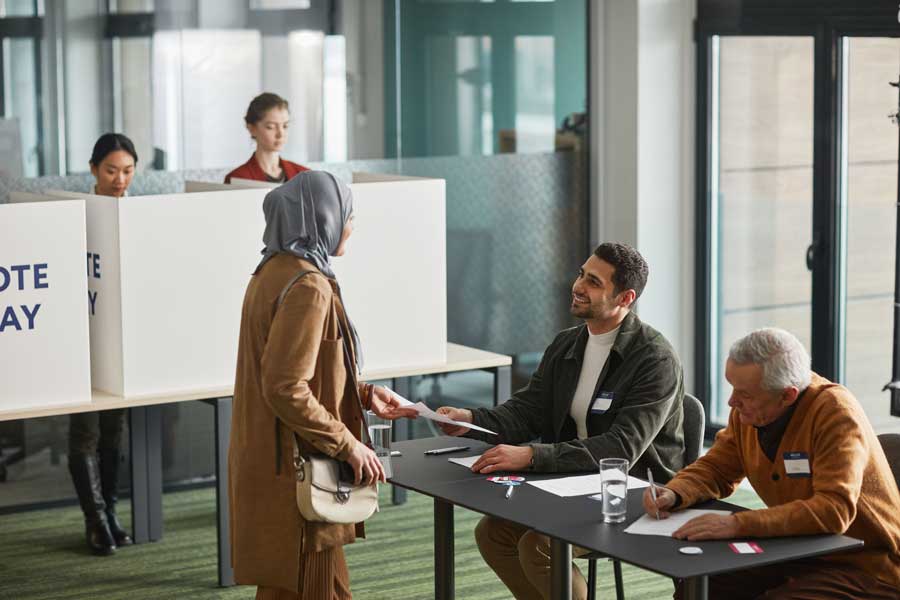
I call on you to vote without fail, particularly in your local primaries for state and federal offices, and encourage your family and friends to do the same. Meet with or donate to your preferred candidate, or take it even further by organizing a backyard party or home fundraiser. Perhaps even consider becoming a candidate yourself. No matter how you choose to participate, make sure you stay engaged!