بسم الله الرحمن الرحيم

Author: Staff Writer

  • History of Islam in Africa

    The Prophet Muhammad reminded the Muslim world, “We are a single community, distinct from others.” The distinction shapes the Muslim’s religious identity and underlines the nature of the Islamic ideal, whether the purity of the monotheistic concept, the uncompromising quest for morality, or the lifelong seeking of knowledge.  It also accentuates the common historical thread running through the international Muslim community.

    In Global, African, and Near Eastern studies, the role of the African Muslim may be the most overlooked by Western academia, and involve the most tenacious myths about the spread of Islam. The lack of African sources allowed scholars to make false assumptions as they evidenced the old axiom, “scholarship follows the national flag.” The dominance of Western scholarship resulted in complete silence about African creativity, innovation, exploration, trade, and skills in scholastic writings and textbooks.

    In 1945, British historian Hugh Trevor Roper galvanized the Eurocentric view when he wrote, “the only history in Africa is the history of Europe in Africa.” Given the self-perpetuation of cultural exceptionalism, it is not surprising that African history remains mythologized under the shadows of Euro-American history. Yet, the dissemination of Islam in Africa by first Arabs and then African Muslims, and the role that Islam and Muslims have played in the development of Africa, are essential to a balanced and accurate understanding of African history.

    Arab Eyes on Mediterranean Africa

    In the seventh century, Islam entered Africa from the northeast corner. Unbeknownst to the second caliph Umar Ibn al-Khattab, his most competent general, Amr Ibn al-As’, led as many as twelve thousand soldiers and archers across what is now the Red Sea and conquered the city of Fustat (which became Cairo in 920). With relative ease, Amr claimed Fustat from disillusioned and tired Byzantine troops who eventually fled. Under Umar’s caliphate, he established military garrison towns and Fustat was of the first.

    Umar reminded his soldiers who were stationed in both Syria and Egypt, “we are a nation of arms.” Yet, he forewarned his troops, Bedouin tribesman who he perceived as naive, to “co-exist with them [the local people], but not to assimilate.” After effortlessly seizing the former Roman-conquered cities of Cairo, Constantinople, Alexandria, and Tripoli, geographically strategic Egypt encouraged military movements west along the perilous Mediterranean shores. Gradually, Muslim armies rode south, along the hypnotizing White Nile (a tributary of the Nile in Egypt), exploring the land of Kemet, the Kushite, Ethiopia, and the east African panorama with its jagged coastline, and out into the temperamental Indian Ocean. From Alexandria, the jewel of Alexander the Great, it took Arab Bedouins seventy-five years and four enterprising generals to cross Mediterranean Africa, despite continuous resistance by Berber mountain clans.

    The objective of the law is not to apply technicalities regardless of their consequences, but to achieve the ultimate moral and ethical objectives that represent the essence of Godliness on this earth

    Arabs thought North Africa contained hidden wealth left by the Romans, but, surprisingly, they found nothing of such riches.  Resistance to their encroachments was led by the famous Berber, Kuysaila, who subsequently accepted Islam and rose to fame after assisting the Arab Bedouins along their march through Morocco. However, after hearing of the senseless slaughter of his mountain village by Umar Ibn al-Khattab’s aggressive maverick general, Uqba Ibn Nafi, Kuysaila retreated and waited two years in the Anti-Atlas Mountains of Morocco. Upon the commander’s return from his triumphal campaign to the Atlantic Ocean, Kuysaila retaliated for the slaughter of his people by killing Uqba.

    After conquering Alexandria, Arab Bedouins met the legendary and revolutionary Berber, Al-Kahina, a woman who, it was said, fought like a man. According to lore, when she was enraged her hair stood on end and her coal-black eyes widened in intensity. Al-Kahina organized thousands of Sanhaja fighters and with cunning and prowess used the mountains they knew so well to surprise, sabotage, and kill Arab soldiers, all the while maintaining hope of independence in the minds of the Berbers who were used to extended foreign invasions.

    By the twelfth century, Christians essentially disappeared from North Africa, while the Coptic population of Egypt shrunk to less than ten percent. For the most part, the Saharan trade, except for the period when Europeans traded for slaves and gold, remained exclusively a Muslim trade as late as the seventeenth century. On the other hand, during this time, Christians controlled the maritime trade of the Atlantic and Indian Oceans. Although Umar entered Egypt, all of North Africa was soon to become a prime focus under the Umayyad caliph Muawiyya and his son and successor, Yazid. It would not be, however, until the Abbasid reigns of al-Mansur, al-Mahdi, al-Hadi, and the great Harun ar-Rashid, that expenditures from state coffers maintained security in Africa.

    The puritanical African Murabitun or Almoravid, known in the west as the “Moors,” were a Berber dynasty of Morocco in the 11th century. They adhered to the Maliki School which continues to dominate sub-Saharan Africa. In accordance with the ethics of Islam, the Almoravid, under two great leaders, Abdullah Ibn Yasin and Ibn Tashfin, sought, to reform Africans gravitating away from orthodox Islam as established by the Prophet Muhammad. The Almoravid, who originated on the third cataract of the Northern Senegal River, marched in the hopes of eliminating pagan practices. In the process, they sent reformist signals to succeeding West African kings like Ahmed Tall, Uthman don Fodio, and Ibrahim Sori. While they attempted to reinvent the image of Islam in Africa, or duplicate the Abbasid period in Africa, reformists fought against persistent pre-Islamic cultural traditions.

    Basil Davidson, a British historian, measured the Abbasid Empire against West Africa’s golden era. “Centuries afterwards, in the Western Sudan, the great reforming movements associated with Uthman don Fodio would draw inspiration from a Utopian picture of the Abbasid era of the tenth and eleventh centuries, seeing in it the prototype of that ‘Rightly Guided Caliphate’ in which all Muslims had once enjoyed equality and justice. For them the ‘golden age’ of Islam could not possibly lie in Abbasid times. Rather it lay in the earliest years when, the ten years of the prophet’s rule in Medina, and perhaps the thirty years following his death were conceived as having formed an age in which human society had come as near to perfection as could be hoped for…”

    The African-born Almoravid movement sought to reform Mauritania, Guinea, Senegambia, and Mali in West Africa, and at the request of the twelve threatened Reyes de Tarifa (the twelve Muslim kings of splintered Andalusia), recaptured eleventh century Spain from Alfonso VI. The Almohads now sailed from North Africa to re-secure the law and order, and after reconnaissance, they reaffirmed Spain as Muslim, and so it remained until 1235.

    The Muslim world was recovering from a series of unpredictable onslaughts. In North Africa, now imbued with Sufism, we begin to see the wearing of amulets, the worship of saints and intercessors, the practice by some of making predictions about the future, and the dawn of the renowned mystical schools. The Fatimids replaced the Abbasid after their crushing defeat in 1258 at the hands of the Mongols in Baghdad, and reinvigorated the authenticity of heredity in Islam. Salah al-Din and his Ayyubids, known for their challenge of the Christian troops during the final Crusades, unseated the Fatimids in Cairo.

    As in the Middle East, in Africa the Arabic language preceded Islamization. Acclimatization to the use of Arabic brought about commercial profits and preceded religious conversions. Where the Sahara married the Sahel (a region between the Sahara  in the North and the Sudan savannas in the south), two worlds solidified through language and trade. By the eleventh century, an African trading expansion, with an emerging religious culture and the common commercial language of Arabic, became apparent. Conversion meant access to a wider platform of goods, traditional trade routes to the east, credit lines, adjusted pricing, and honor. Tauregs (the nomadic Berber people of the Saharan interior of North Africa) roamed both sides of the great divide, linguistically best equipped to profit from the crossroads of trade, and mediate differences between northern Saharans and sub-Saharans.

    The Portal into West Africa

    African Muslims produced five empires: Takur (what is now southeastern Mauritania, and Western Mali) which was lukewarm to Islam; the loosely governed Kanem (what is now the countries of Chad, Nigeria and Libya) and its successor-state Bornu; Ghana, although it never claimed Islam as the state religion but is considered by many the first African Muslim nation; Mali, the most written about; and Songhay the most fought over.

    Despite Islam beginning to penetrate the indigenous consciousness and cause a shift in daily religious practices, local customs and beliefs persisted, which centuries later was used to justify the most violent raids of the Sokoto dynasty under Uthman Don Fodio. The spread of Islam among the Yoruba began late, well after the nineteenth century conversions of Wolof (a West African state that ruled parts of Senegal from 1360 to 1890), and increased after Fulbe (an ethnic group spread over many countries, predominantly in West Africa) conquests of the 1800s. Except in Ilorin, because of resilient traditional beliefs, Islam straddled the religion of the people. West Africans developed a unique religious parallelism with Islam and because of its ability to co-exist, shared local authority.

    There are misunderstandings about the historical role of Arab Bedouin military conquests during the initial spread of Islam in Africa. Except for the 1591 marauding by al-Mansur’s Sanhaja Moroccan army led by Judah Pasha in Timbuktu, there were no military excursions below the Sahara. The second myth purports Arab Bedouin merchants brought Islam to Africa, and Arab military might destroyed African institutions and cultures. The spread of Islam south of the Sahara owes very little to Arab military occupation. What is more accurate is that Arab merchants reported to wealthy Arab sponsors the religious appetite Africans had for Islam. In time, teachers and imams relocated to African towns and became responsible for the spread of Islam. The role of the merchant was the introduction of Islam and a precursor of Arabization. It was, however, the scholarly community, the teachers and imams, who became the agents of Islamization. Merchants certainly inspired an intellectual curiosity about Islam, and on return to their homelands, they reported, as mentioned previously, the eagerness of the Africans to learn more about Islam. Typically, local West African rulers embraced Islam first and became the indigenous progenitors of the process of Islamization. Traveling scholars and imams, as long as they posed no threat to the existing socio-political order, completed the process of Islamization in both East and West Africa.

    The masses initially considered Islam an innovation, and had difficulty fitting a universalist concept into their local context. The introduction of Christianity in Africa experienced the same social phenomenon and challenge. There is a revealing axiom about religious duality in Africa: “Publicly rulers claimed Islam, however, in private feared the fetish” (fetish worship involved attributing supernatural powers to some natural or man-made object). In the middle of the fourteenth century, Ibn Batutta attested to the division between indigenous practices and classical Islam. Expressing abhorrence, he wrote of gambling, drinking, sexual deviance, nudity, and idol-worship in Mali under Mansa Musa. Records indicate these practices caused a sterner Askiya Muhammad of the Songhay Empire to be religiously and morally repulsed.

    At its peak, the Songhay Empire encompassed much of the territory that had belonged to the Mali Empire in the west. Malian hierarchy and early Abbasid infrastructure had its similarities and differences. African scholars of Timbuktu, unusually active in the political sphere, lived with more than a modicum of religious authority. The campaign to determine final authority played out between the civil authority of court qadis (judges) represented on one side, and the ulama (Muslim scholars) who embraced Islamic theology, on the other side. In dynastic form, the solution of the Abbasid royal courts was to absorb the ulama into the qadis community, control legal verdicts, and further their absolutist rule. In West Africa, where there was more success, the ulama and the qadis remained separate and empowered, each in their own sphere. As with the Abbasids, the kings of Mali lived in opulence and grandeur, secluded from the lay community. They adorned themselves with imported cloths and jewels. When entering the royal space, visitors sprinkled dust on their necks to designate their lowly position and absolute loyalty to the throne. The Mansas (kings or emperors) avoided demonstrations of their humanness, so they never slept, ate food, or changed clothes in front of others.

    By the ninth century, Arab merchants made substantial profits in the marketplace. There Arabs found willing urban consumers, presenting them with abundant supplies of material goods for sale. Even as early as the ninth century, slow commercial expansion of Takrur territories found receptive African converts. Among the newly converted, Islam signaled the religion of transactions, literacy, and recording and documentation, all hallmarks of development and progress. Despite tactical religious conversions and the admiration for Islam’s literacy and administrative expertise, religion had little impact in the countryside. Only by the late twelfth century did religious conversions in West Africa accelerate, marked by such conversions as the King of Gao in 1010 and the King of Kanem-Bornu in 1068.

    With the face of universal Islam peering over a pagan, parochial Africa, a second period begins in the thirteenth century. After southerly Taureg and Almoravid incursions, the empire of Ghana weakened through internal disputes and rival provinces. A pattern of dynastic disagreements and jockeying for the throne eventually shattered its strength, and diffused the wealth from the trade routes. The people of the rural areas, considered servile in status, but loyal to ancient traditions, reemerged, claiming positions of power. The demand from the countryside for increased participation in the towns created stress and political divisions which, like in the Umayyad Empire, ultimately caused its downfall.

    In the first quarter of the fourteenth century, Sundiata, a descendant of the royal Keita family, rose to take the mantle of the new Mali Empire. A marginal Muslim, Sundiata expanded the empire, increased production from the alluvial gold fields, developed the military, and claimed to be a liaison with the spirit world. Just decades later, under Mansa Musa, Mali became the first African Muslim state, with Islam as the state religion.  From Africa in History, Basil Davidson remarked about the Mali government, “It opens the way to a literate bureaucracy, to effective diplomatic links with distant powers, and to the inner reorganization of power and authority along the lines which cut across the separatist loyalties of traditional religion.” During the reign of Mansa Musa’s progressive government, Mali was Islamically reshaped, and repositioned. After completing the Hajj, Musa was recognized by Cairo as the western caliph of the Sudan (“land of the blacks”). During his reign, he sent a signal that tolerance of traditional and indigenous practices would remain; however, he alone would now be the representative of Allah.

    By borrowing from the larger Muslim world, Musa built a literate nation. He replicated the Abbasid learning centers, and although illiterate himself, Mansa Musa found inspiration in scholarship and encouraged study abroad. He opened schools for both genders, hired translators and copiers of the Qur’an, gave stipends to scholars, elevated the status of imams, and opened the royal court.  Known for his insistence upon civil law and highly reputed for his generosity, Mansa Musa became a household name. Pointing to his generosity with gold, an account of his visit to Egypt while on his way to hajj tells of the Egyptian economy taking a nosedive upon his departure.

    With internecine squabbling in Mali, succeeding Mansas never embraced the long-range vision of Mansa Musa, and this, along with fiscal mismanagement, resulted in the empire capitulating to the Songhay. The Songhay people took advantage of the Mansas’ weaknesses, and as the trade flowed away from the capital of Niani, the ambitious Songhay rose to take control. In the Songhay, the last of the large Muslim spheres of influence, the ulama were the avowed enemies of the founder Sunni Ali. After years of intense negotiations, though, they reasserted their loyalties to the king and found political justification to back Sunni Ali.  He was an ambitious leader, who like Sumanguru of Ghana and Sundiata of Mali, was also a charismatic magician, an astute politician, but, again, a nominal Muslim at best.

    The next in line in the Songhay Empire, Askiyah Muhammad, catapulted Islam to great importance in West Africa, and elevated Muslim expectations. Amongst the few to travel to Mecca, Muhammad realized the need for outside scholarly assistance, so he encouraged Muslim scholars from Morocco, Syria, and Andalusia to relocate to sub-Saharan Africa. Of the scholars migrating to the kingdom, the celebrated Al-Maghili commented about slavery among Muslims, saying that slaves are, “a hubus, an inheritance, or an endowment to be treated carefully.”

    The Songhay did not destroy domestic slavery, but did not benefit from the European slave trade. Unlike his predecessors, Muhammad lived in accordance with the Sunnah, read Arabic, and wholeheartedly subscribed to the Maliki School of jurisprudence. In the second half of the sixteenth century, in Jenne, one of the great learning centers in West Africa, a qadi who was a son of the chief of Kala, rejected his royal status to become a scholar.

    The Reach of Islam in East Africa

    In the early years of Islam in Africa, before the Malian Mansa left for Mecca, the principal interaction between Arabs and Africans was through the markets and the hajj. On the east coast of Africa, and based upon its proximity to the Arabian Peninsula, Arabs and Africans quickly became co-religionists, engaging in much cultural exchange. Under a veneer of Islam, Arabization spread, finding groups like the Funj, Wadai and Dar Fur willing adherents.

    East of the Nile River, Christianity dominated and thus stunted the growth of Islam for more than five hundred years. Until the nineteenth century, Islam in East Africa remained a coastal religion, with the majority of schools, mosques, and trade centered on the coast, whereas in West Africa Islam stretched into the interior. In writing about Muslims in East Africa, Randall Pouwels claims in The History of Islam in Africa, “The spread of Islam took place within a wider context—one of cultural influences and migrations. In West Africa, these movements were in the same direction, from north to south, as that taken by Islam. In East Africa on the other hand, migrations and the movements of goods, from the interior to the coast, were contrary to the direction Islam would have taken, that is to say from east to west.”

    Despite the unifying force of Islam, geography accounts for Africa becoming culturally disparate. And despite East Africa’s cultural link to the Arabian Peninsula, Arab Bedouins made their way to the Horn of Africa as late as 780, and the Islamic-Swahili civilization only became an indelible African phenomenon between 1200 and 1500.  Students from the Senegal, Mali, Ivory Coast, Nigeria, and Guinea regions of Africa were sent to the University of Sankore at Timbuktu, the University of Qayrawan at Fez, Al-Ahzar University in Cairo, the learning centers at Jenne, Kano, or to Birin Ngarzagamo. Based upon geography and the close proximity to the home of Islam, East African Muslims studied in Hadhramaut, Medina, and Mecca.

    By the beginning of the nineteenth century, a religious revival began, with wealthy Muslim landowners and traders uniting to build a Muslim presence. They segregated the sexes, established Muslim cemeteries, built mosques, schools, and libraries filled with manuscripts. The commitment to Islam furthered the reputation of East African Muslims. Thus, in the course of a few decades, East Africa became the home of Ismaili and Sufi communities, and attracted prominent Ahmadiyya scholars from India.

    Summary of African Reform Movements

    Traveling from Andalusia, the fiery al-Maghili warned African chiefs about maintaining a religious duality in the Dar ul-Islam. The sixteenth century began to heed such warnings, and ultimately brought about the era of classic African reform movements in several regions. During the Songhay Empire, Askiya Muhammad initiated severe attacks on villages which tolerated non-Islamic practices, and battles were fought in Kano during the reign of Muhammad Rumfa, related to the famous Sokoto reformist Uthman don Fodio. In the Bornu Empire, for a brief time Ali Ghaji cleared the way for Islam.

    Umar Ibn al-Khattab was adamant about his Arab Bedouin soldiers not disturbing the social order of conquered territories. He ordered his troops to ensure that churches, agriculture, and homes not be destroyed. In Umar’s decentralized form of governance, he sent signals about tolerance and keeping local cultures alive. In West Africa, the indigenous people were not invaded by foreign armies, so traditional customs persisted without a dramatic parting with the past. Through the Mali and the Songhay, the foundation of power depended upon the vibrancy of indigenous practices. By the end of the eighteenth century, classical forms of the new religion overrode the old parity between tradition and Islam, with Muslim reformers now considering a break with the traditional past a necessity demanded by Islam.

    Exposure to the outside world by pilgrims traveling to Mecca sparked a curiosity about the authenticity of African-Islamic practices. There were questions about the indigenous practices and traditions and whether they could be permitted by Islam. Then the eleventh century Almoravid dynasty, with a deep attachment to life on the Arabian peninsula, galvanized a puritanical Islam. This caused some African kings to re-evaluate their understanding and practice of Islam. The reform movements in Africa, however, also included destructive episodes such as the raids and chaos caused by the Ethiopian Muslim Ahmad Gran.

    Given the overemphasis placed on Arab history as the totality of Islamic history, it would be in the best interest of Western historians to assess anew the history of Islam in Africa, and for Muslims to re-engage the heritage and reawaken the vitality of Islam in Africa.

  • Energy at ICNA-MAS Convention… Its Electrifying!

    I stepped out of the airport and was confronted by the sight of eight boisterous girls stuffed into a minivan with their luggage and junk food. I was to be the ninth. I squeezed into a space on the floor, shouted my salams over the clamor, and we took off into the night.

    Thus began my first day at the ICNA-MAS Convention 2012. The last conference I had attended took place in ‘07; it seemed like forever ago. I couldn’t recall much other than long food lines and even longer lines for wudu.

    There is a certain high you experience when you are short on sleep, have more caffeine than is healthy in your system, have a terribly long list of things to do, are surrounded by friends in a similar situation

    We arrived at the Marriot Hotel in Hartford, CT at the indecent hour of 4:30 AM. After unloading our belongings, the nine of us crashed in a single room. Some sprawled over the beds; others claimed floor space and knocked out.

    Friday morning was busy with final set up and last minute shopping. We needed to buy all sorts of things, including stage decorations for the Youth Conference and snacks and posters for the “Sisters Only” sessions of the convention. A particular brother’s credit card became gold at this time.

    The drive into Hartford was beautiful. Downtown was a bit dead, but what’s not to like about a car ride with friends? The weather, the people, the context—everything came together to make it memorable. I was enjoying myself immensely, and the convention had yet to officially begin.

    Friday night we attended the first of several secret sessions at the conference. Sh. Abdul Nasir Jangda addressed some of the organizational issues we faced and gave practical advice on how to overcome the challenges we often confront when working for the deen.

    By this time, about eight girls had joined our growing family, and we divided into three rooms for the night. We slept less than two hours; but honestly, how can sleep compare to late night conversations and creating lasting bonds of sisterhood?

    The room was packed and overflowing. People were spread out over the floor and spilled out into the hallway. I loved it!

    Saturday morning dawned too bright and too early. There is a certain high you experience when you are short on sleep, have more caffeine than is healthy in your system, have a terribly long list of things to do, are surrounded by friends in a similar situation, and are at an Islamic conference. If you have not yet had the joy of the experience, you are seriously missing out.

    The first sessions started immediately after Dhuhr prayer. I’m positive the program organizers connived to make all the sessions equally appealing so as to cause distress to the attendees. I could not decide which session to attend. Eventually I chose the one most people were heading towards, Session 1 of Window to Islam, which was about Prophets Musa, Isa and Muhammad, peace be upon them. The room was packed and overflowing. People were spread out over the floor and spilled out into the hallway. I loved it.

    The next session I wanted to attend overlapped with the Window to Islam lecture, and so the second it finished, I almost ran to listen to Session 1 of the Youth Conference. But on the way out, I bumped into a friend I’d seen years ago on a different continent. Not only was I building new relationships, the convention was providing me with the chance to refresh old ones.

    Later in the day, ICNA Sisters’ Wing held a leadership dinner and invited women from all branches of ICNA to attend and build connections with one another. We got to interact with women who were accomplishing great things in their respective fields, whether it was counseling, disaster relief or social justice. We also got the chance to meet Ibtihaj Muhammad, a hijabi Muslim fencer, who will be representing the US in the 2012 Olympics. I was in awe of the talent I was surrounded by.

    We ended the program for the day in the final Main Hall session listening to Imam Suhaib Webb, Imam Omar Suleiman, Sh. Abdul Nasir Jangda and Br. Nouman Ali Khan. I was floored by the speeches; they were simply amazing. In particular, Imam Omar Suleiman’s story about his mother as his role model was deeply touching.

    After the end of the session, sometime after midnight, we came to the conclusion that we were all quite ravenous. To remedy this unfortunate state of affairs, we decided to go out on a night crawl of Hartford in search for food. “We” consisted of about fifteen girls. At this point we were severely sleep deprived and exhausted enough to drop down anywhere, but that didn’t stop us from returning to the Marriot lobby with the epitome of artery clogging food – Taco Bell and McDonald’s – and then proceeding to have a hot sauce eating competition. Yes.

    So much knowledge crammed over three days. So many memories crammed into three days.  So many strong bonds formed over three days

    Needless to say, we only caught a few hours of sleep that night. But we woke early to ensure we would make it to the early morning Youth Conference intensive session, Saved by the Deed. This session was personally the most beneficial of all sessions at the conference. May Allah reward the speakers for addressing important issues in a relevant and easily digestible way. “Everybody say Ameen.” Ameen!

    For most of Sunday, we flitted between listening to the Youth Conference sessions and taking care of other business. In between, I got my hands on a DSLR and took great joy in creeping around snapping photos of people. At 5 PM, we headed to the sisters-only entertainment session. We had been expecting a maximum of fifty people and had prepared food and other things accordingly, but things have a tendency to not go as expected. We had around two hundred women file into the room to be entertained. Alhamdulillah, the women leading the session did an excellent job at keeping everything under control and the audience left satisfied.

    Immediately following that session, Young Muslims Sisters’ held a gathering with current YMS members and former alumnae in which introductions were made and the alumnae gave valuable advice and related their experiences. I discovered a precious resource that I had previously been unaware of. These were people who had been through similar situations as myself and could dispense practical suggestions.

    After one more sisters-only lecture, we returned to the Main Hall for the family entertainment session; the session was great, but we had more fun joking among ourselves than actually listening to anything happening up on stage.

    Though I was exhausted to the point where lethargy had settled deep within my bones, I could not bear going to sleep and missing out on the last few hours I would have with my sisters at the convention. My flight back to Los Angeles was in a few hours and I wanted to squeeze as many memories as I could.

    So naturally we decided it would be a brilliant idea to go to the Marriot Pool Room after hours. Nothing feels as amazing as a Jacuzzi when you are tired and sore. We had a great time relaxing together, and left the pool despondent as we made our way to our separate rooms. I spent the last hour of my time in Hartford lounging in a hotel room with a dozen girls. It was the perfect end to an unforgettable weekend.

    And however cliché that may sound, that is exactly what it was. Unforgettable. So much knowledge crammed over three days. So many memories crammed into three days. So many strong bonds of friendship formed over three days.

    When you attend an Islamic conference, you don’t only go for the knowledge. It’s often also for the social experience—that incredible feeling of being surrounded by thousands of Muslims. The ICNA-MAS convention gives you that in spades.

    One of my friends said “You know you have been to an ICNA convention when you go home and you see a bunch of friend requests on Facebook.”

    Oh, hello there notifications.

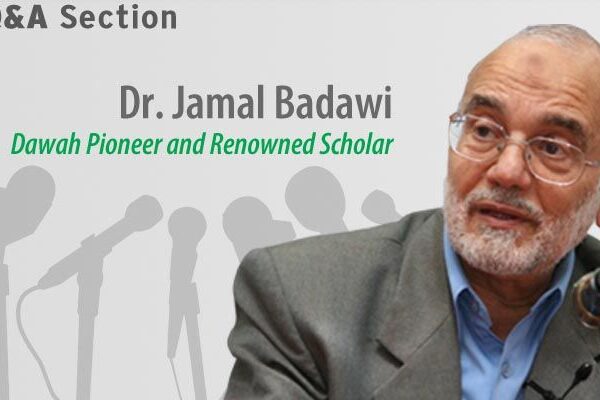
  • Q&A with Dr. Jamal Badawi

    Q&A with Dr. Jamal Badawi

    Can you summarize why the West has become fearful of Islam and Muslims?  Why does this image exist?

    Answer by Dr. Jamal Badawi

    Number 1: Because we are living in a world where there are a great deal of injustices to Muslims in various parts of the world, like Palestine and other places.

    And some of those injustices continued unabated not for a year or two, but for long periods of times, decades in some cases, in a world where the big powers should have used their moral authority in fact to try to restrain the aggressors against Muslims’ rights, dignity and property. But instead in fact they have been supporting them. At least this is the way it is perceived in the Muslim world.

    What we need to do is to take a cool-minded approach to try to analyze the reasons behind this radicalization

    We know from history that it is during the periods of social, economic and political turmoil that some extreme ideas emerge. And whether those ideas really are based on Islam or not, this is a very important question as people often mix between actions of Muslims and Islam in terms of its normative teachings.

    The normative teachings of Islam that are binding on all Muslims are derived from “correct” contextual interpretation of the Quran and the teachings of the Prophet Muhammad (peace be upon him); whereas opinions are subject to debate and the actions of Muslims are not definitive indication of Islam anymore than the actions of Christians or Jews are always consistent with the teachings of their faith. And we know that not only Muslims, but people of all faith communities, are not perfect in terms of history over centuries. This is the biggest mix.

    Once we deal with the problem at the roots and restore justice, the opportunity of radicalization that cause all that fear of Islam might be abated

    But what I’m saying basically is that it is in the context of that turmoil that among various faith communities extremist ideas, sometimes violent ideas, may emerge without necessarily having a good grounding in the scriptures, or more seriously when people twist the meanings of the scriptures, either because of ignorance or agendas or a combination of these, to justify their particular actions.

    Secondly of course, the turmoil that we have in the world today is actually getting us into a vicious cycle, because sometimes that violence or inappropriate behavior on the part of some is responded to by violence, and violence begets violence. And unfortunately we seem to be caught in this vicious circle of violence, and counter violence, and counter-counter violence.

    I think what we need to do is to take a cool-minded approach to try to analyze the reasons behind this radicalization, and maybe to be courageous enough and have the political will, not just the religious or spiritual, but the political will to try to mitigate those injustices that have contributed in the first place to these acts of violence.

    Most of the things that we hear about today are really relatively recent, recent years, or at most recent decades. I think once we deal with the problem at the roots and restore justice, the opportunity of radicalization that cause all that fear of Islam might be abated.

    The Media

    On the other hand, also the media stereotypes and images and focusing always on the negative aspects, this is the way media does business. Business has to sell, and they cannot sell what the good Samaritan did last night, but always sensational things take disproportionate exposure in the media, let alone the legacy of anti-Muslim, anti-Arab, anti-Islam kind of thing that existed in the western world, also contribute and reinforce this. Especially people who come or pose as experts of Islam and try to discover the “connection” between some violent actions and the teachings of the Quran based on very poor exegesis, if not outright distortion.

    These are a variety of factors. But I must say for the sake of honesty also that yes some actions of some people who claim to be Muslims sometimes reinforces this kind of image of fear.

    So there are a number of factors, both internal and external. It will take lots of hardwork on many different fronts to address this issue.

    About Dr. Jamal Badawi:

    Dr. Jamal Badawi is an Egyptian born Muslim Canadian. He is a former professor who taught at a number of schools including the Sobey School of Business, Saint Mary’s University in Halifax, Nova Scotia. He is a well-known author, activist, preacher and speaker on Islam. Dr. Badawi is the author of many books and articles on Islam. Currently, he is the Vice-Chairman of the Islamic University.

    For More Information:

    For more information on Islam, please visit www.WhyIslam.org, or call 877-Why-Islam.

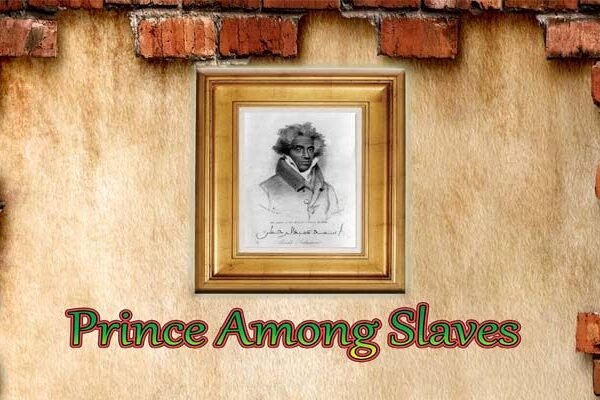
  • Prince Among Slaves

    Prince Among Slaves

    Prince Among Slaves is a nationally broadcast documentary, which is now a part of a major humanities outreach project.  The documentary is a production of Unity Productions Foundation (UPF) in association with Spark Media and Duke Media.   It tells the amazing story of an enslaved Muslim Prince from Africa who had an incredible life story.

    Overview

    Some biographies help us understand the broad historical themes and issues of the period during which the subject lived.  Others appeal to the universal emotions of the human experience.  And some simply entertain us with vivid characters and nearly novelistic events.  One compelling story that does all three is Prince Among Slaves.  A 60-minute documentary that was broadcast on PBS, it tells the true story of an African Muslim prince who was sold into slavery and brought to the American South in 1788.  His name was Abdul Rahman Ibrahima Sori, and he remained enslaved for forty years before ultimately regaining his freedom and returning to Africa.

    The broad outline of Abdul Rahman’s biography reads like a fabulous legend:  a young Muslim prince falls from a life of power and privilege into exile and enslavement in a strange land.

    The broad outline of Abdul Rahman’s biography reads like a fabulous legend:  a young Muslim prince falls from a life of power and privilege into exile and enslavement in a strange land.  There he endures unimaginable indignities, yet carves out a life, marries a woman enslaved like himself, and has children.  Then, through improbable circumstances, he is granted his freedom and returns to his homeland, manages to rescue his wife and some of his children from enslavement, and sees his royal status recognized in the very land that held him in bondage.  But the story of freedom sold and nobility dispossessed did not take place in some fictional realm or ancient land. Rather, it happened in the United States.

    Nothing bestrode this country’s early history like slavery. The trans-Atlantic trade in slaves was a cruel yet critical component of the settlement and continuation of the New World colonies.  Slavery supplied the foundation on which the great agricultural economies of the South—and the careers and fortunes of Washington, Jefferson, and other founding fathers—were built.  It was the great moral issue before which the country’s first patriots—men bold enough to have taken on the world’s most powerful empire—flinched when they wrote the Constitution.  And as the conflict between the institution of slavery and the country’s bedrock values of freedom and equality reached critical mass, it was slavery that accomplished what no foreign enemy could have done: it split the country.

    History divided Abdul Rahman’s life into three periods, and dramatically into three acts.

    Act I:  A Prince in Africa 

    Abdul Rahman Ibrahima Sori was born in 1762, son of Sori the almaami or king of the Fulbe, a predominantly Muslim population of cattle herders that ruled the West African country of Futa Jallon (an area now part of the Republic of Guinea) from his family’s traditional seat in Timbo, a town of airy, large-roomed houses surrounded by hedges and dominated by a large mosque.  Economically, the Fulbe were traders, acquiring salt and European manufactured goods in exchange for the products of Fulbe craftsmen, and in exchange, too, for slaves, members of rival tribes defeated in battle.

    As a son of the almaami, Abdul Rahman received a traditional Muslim education, beginning with learning to read and write passages from the Qur’an.  His aptitude for his studies persuaded his father to send him abroad for further education, first to Macina, in what is now Mali, then to Timbuktu, where he studied not only Islam, but also geography, astronomy, calculations, and the law.

    Battle, capture, the Middle Passage, from Africa to Dominica, to New Orleans and Natchez, from the auction block to a tobacco plantation, escape and surrender, all in a matter of weeks.

    At seventeen, Abdul Rahman returned to Timbo, entered the army, and quickly rose to the rank of commander. It was during this period that Ibrahima met a white person for the first time, John Coates Cox, a marooned Irish ship’s surgeon, who was found ill and insect-bitten, and brought to Sori, who provided shelter and care until Cox regained his health and returned to Ireland.  It was also during this period that Abdul Rahman married and fathered his first child—a son.

    In 1787, Sori dispatched Abdul Rahman, then in his late twenties, at the head of an army of two thousand to confront rival tribes then threatening the commerce on which the Fulbe depended.   The campaign went well at first, with Abdul Rahman’s army advancing easily against only scattered opposition. Flush with apparent success, Abdul Rahman Ibrahima sent his infantry home, retaining only a detachment of three hundred horsemen. The enemy, however, had not fled, but merely retreated to a more strategically advantageous position.  As Abdul Rahman and his cavalry entered a narrow mountain pass, they were engulfed in a hailstorm of gunfire.  By the time Abdul Rahman escaped the pass and reached the summit, he faced the enemy virtually alone.  In short order he was overwhelmed, stripped, bound, and walked barefoot a hundred miles, trailing behind his own horse.

    In March of 1788, just three months after he had left Timbo as commander of a powerful army, Ibrahima Abdul Rahman and about 160 other men were marched onto the river-running brig Africa, manacled, and led below deck to begin the long journey into slavery, down the Gambia River and across the Atlantic.

    After a trans-Atlantic voyage of 3000 miles, the Africa made landfall in tiny Dominica in the Windward Islands at the foot of the Caribbean Sea. There Abdul Rahman and fifty-six others from the Africa’s human cargo were sold for $4090, less than $72 each, and transferred to the cargo hold of another ship, the Navarro, for a 2600 mile journey across the Caribbean Sea to the Yucatan Channel, then north to Spanish-ruled New Orleans, and up the Mississippi to the river town of Natchez.  In Natchez, 6000 miles from Timbo, eight months from his reign as a prince, Abdul Rahman reached the end of his comandeered journey.

    Act II:  A Slave in America

    Natchez today is a river city of a little less than 20,000, trading on its plantation mansions and antebellum charm.  But the settlement Abdul Rahman first saw in August of 1788 was a collection of twenty houses, an old earth and wood fort, and a handful of taverns and stores to service the tobacco planters who lived inland along the creeks that fed the Mississippi.

    Abdul Rahman secured an appointment with the President and called on John Quincy Adams at the White House.

    Four planters examined the African captives on auction there on an August Saturday in 1788.   But only one of them, Thomas Foster, could pay cash. He purchased Abdul Rahman and Samba, a fellow Fulbe soldier who had served under Abdul Rahman’s command.   The two men were secured with rope and led to Foster’s land in the Pine Ridge area, six miles from Natchez.

    Thomas Foster was twenty-nine—the same age as Abdul Rahman—a tobacco farmer with a wife and three children, working a thousand acres.  Home was a fifty year-old blockhouse, little more than a hut (as a daughter later remembered). Here the entire family, including Foster’s mother, lived in a single room.  The rude building sat in the only five acres that had been fenced.  This land was to be Abdul Rahman’s home for the next forty years.

    A series of incidents quickly demonstrated to Abdul Rahman the depth of his fall and the bleakness of the future he faced.  Upon arriving at Foster’s land, Abdul Rahman (probably communicating through another African from a neighboring plantation) offered Foster a ransom for his freedom, a common strategy in West Africa, but an outlandish suggestion on the Mississippi River.  The offer was rejected out of hand.

    Further indignities awaited him.  In Futa Jallon, Abdul Rahman’s long, plaited hair had been a symbol of distinction. The plaits were immediately cut, though Abdul Rahman struggled so hard that he had to be tied to a tree. He was then confined to a shed for three days to to teach him submission.

    He was released to gather in the tobacco crop, the kind of labor that in his kingdom would have been performed by people far below Abdul Rahman’s caste and royal breeding.  He refused to go into the fields, and this time only whipping overcame his defiance.

    In due time, he managed to escape, slipping out of his bed one night, crossing the fields, and entering the trackless woods that lay beyond. Patrols were mustered but failed to find him.  Sadly, he had not been in the New World long enough to know where to flee to find his freedom, or whether, indeed, freedom was available to Africans anywhere on the new continent.  Suicide was foreclosed to him by his Muslim faith.  After several weeks in the forest, Abdul Rahman returned to the Fosters’ plantation.  Escape solved nothing. Now only his faith would give him the strength to accept his situation as the will of God, as a test in which he must endure and prevail.

    In April 2003, the first reunion of Abdul Rahman’s Liberian and American families was held in Natchez, Mississippi as part of a celebration of the 175th anniversary of his liberation. 

    Battle, capture, the Middle Passage, from Africa to Dominica, to New Orleans and Natchez, from the auction block to a tobacco plantation, escape and surrender, all in a matter of weeks—Abdul Rahman’s life had moved at a dizzying pace.

    Now it slowed.  Henceforth, his life would be measured not in hours, days and weeks, but in years and decades.  Outside the Foster plantation, the world moved on.  In Futa Jallon, Abdul Rahman’s father died, and was succeeded as almaami by his second son, Saadu.  Seven years later, Saadu was killed in a coup. That same year, 1795, Spain ceded the Natchez District to the United States, where it became part of the Mississippi Territory.  The new territory, with its agricultural economy and slavery,  joined America’s rapidly expanding western regions, helping to build the developing American economy. Its benefits and growing pains would no longer be Spain’s but America’s.

    On Thomas Foster’s Pine Ridge plantation, later known as Foster’s Fields, Abdul Rahman slowly pieced together a new life, albeit one of a slave. After his early escape attempt, he “sank into [being] a common slave,” as an acquaintance of his later life put it. Although farming had been considered déclassé for Fulbe soldiers, not to mention Fulbe royalty, Abdul Rahman became primarily a farm hand, working crops he was familiar with from Futa Jallon—tobacco, cotton, coffee and indigo—and tending farm animals. On occasion, he distinguished himself even now, drawing on his experience as a leader and a soldier, becoming in time the groom to Foster’s racing horses and gradually rising in the plantation’s hierarchy.

    He accepted his condition in other ways as well.  Although he had left behind in Africa a wife and child, in time he married a recently acquired woman, Isabella, a Christian.  Abdul Rahman did not convert to Christianity; rather, he maintained his Muslim faith.  Without a Qur’an, without pen or paper, he maintained his literacy in Arabic by tracing figures in the sand.  And he maintained a temperate life with its industrious character, tolerance, and obedience to the Will of God that had been cornerstones in his Muslim education and upbringing in Futa Jallon.

    These qualities—his intelligence, experience, and self-discipline—served him, and his purchaser as well.  Foster switched from tobacco to cotton, expanded his acreage, and became one of the area’s most prosperous planters. His original complement of three adult slaves grew to ten by 1795, to twenty in 1800, forty in 1810, seventy by 1818, and more than a hundred in 1819.

    Abdul Rahman’s status improved too, raising him to a position of authority on the plantation. As a result, Foster granted Abdul Rahman small but important privileges.  He enjoyed freedom of worship.  He tended a small garden and sold the excess in Natchez, keeping the proceeds. His family grew to nine.  His place on the periphery of the cash economy, his skill with the crops, and his acknowledged position on the Foster plantation made him a familiar figure in Natchez on weekends.

    Abdul Rahman’s success in dealing with the misfortunate changes in his life was due in large part to the moral and spiritual legacy he brought with him from Africa.  As a prince and commander, he was used to leading and directing others.  And his personal characteristics, proceeding from his Muslim faith, earned him in Natchez status, money, and a degree of autonomy in plantation life.  Nor was his experience unique.  Scholars have remarked that enslaved people of the Muslim faith were especially well equipped to survive slavery’s ubiquitous cruelty and oppression. “There is ample evidence,” says Dr. Sylviane Diouf, author of  Servants of Allah, “that the Muslims actively used their cultural and social background and the formation they had received in Africa as tools to improve their condition in the Americas.”

    Despite his capacity to adapt to the life he was forced to lead, even with the relative privileges granted and successes he achieved, Abdul Rahman still bore the stigmata of slavery.  From the day his hair was cut, he ceased caring for it, and it grew coarse and tangled.  His skin became weathered and dry.  A friend of long-standing recalled that over the course of their long acquaintance, he had not once seen Abdul Rahman smile.

    In 1807, a weekend trip into Natchez changed Abdul Rahman’s life forever.  While selling his produce by the road, he saw a familiar-looking white man in the streets.  After a moment’s hesitation, the man asked where in Africa Abdul Rahman was from.  When he replied that he was from Timbo, the man asked whether his name was Abdul Rahman.  It was Dr. John Cox, the Irish ship’s surgeon who, marooned in Africa in the early 1770s, had been nursed back to health in Timbo by Abdul Rahman and his father.

    The two embraced, and went to Cox’s rooms, where Abdul Rahman recounted the story of what had happened over the past two decades.  Together they went to the plantation to talk to Foster.  Cox asked Foster to name a purchase price for Abdul Rahman. When Foster refused, Cox stated his own price, and raised it in one-sided bidding until it reached $1000, almost twice the market price for a male slave at the Natchez slave auctions. Foster still refused: the auction price could not come close to the value Abdul Rahman had added to Foster’s fortune.

    Although Cox was unsuccessful in buying Abdul Rahman’s freedom, the two continued to see each other frequently over the years. Cox settled in Natchez.  Periodically, he renewed his offer to Foster; always it was refused. Although the friendship ended with Cox’s death in 1816, Cox’s son continued his father’s efforts to gain Abdul Rahman’s manumission.

    By the time of Cox’s death, Abdul Rahman’s relationship with the doctor, combined with his royal lineage and the tale of his dramatic escape and return, made him a figure of some prominence in Natchez, and his circle of acquaintances widened.  One newly acquired friend was Andrew Marschalk, a New York-born printer who had come to Mississippi with the Army in 1798.  Marschalk and Abdul Rahman may have met as early as 1803. Their relationship deepened over the years.  In letters to friends Marschalk extolled Abdul Rahman’s virtues.

    In 1821, Abdul Rahman was in Marschalk’s printing office, when he saw a book of type specimens, one of which was Arabic.  It was the first Arabic Abdul Rahman had seen since leaving Futa Jallon, and he quickly copied it and translated it into English.  He told Marschalk that he wished to write to his home country.

    Act III:  Freedom—To Redeem His Family from Slavery

    After forty years of slavery, events moved quickly.  Once Abdul Rahman wrote his “letter home” and gave it to publisher Andrew Marschalk in 1826, Marschalk wrote a cover letter and gave it and Abdul Rahman’s statement to Mississippi Sen. Thomas Reed, who in turn forwarded them to Secretary of State Henry Clay.  Clay then sent the documents to the U.S. Consul in Tangier, Morocco, who presented the case to the vizier of Moroccan Sultan Abd al-Rahman II.   The Sultan’s favorable response was duly returned to Clay. He read and passed it to President John Quincy Adams, who approved the purchase of Abdul Rahman from his owner.  Adams’ decision was duly sent to Marschalk, who then approached Thomas Foster, by this time one of Natchez’s wealthiest, most influential planters.

    For twenty years Foster had refused to sell this valuable slave at any price.  By 1827, however, Abdul Rahman was well into his sixties and his economic value to Foster was considerably diminished.  Foster now told Marschalk that if means were found by which Abdul Rahman could return to Africa, he would be released without payment.  But one condition was demanded— he was only willing to release Abdul Rahman if he would leave the United States.

    Marschalk relayed these terms to Henry Clay, who replied in February of 1828: “There is no difficulty in acceding to the conditions presented by Mr. Foster.  You will please to send Prince to [Washington]…for the purpose of his being transported to his native country.”   On February 22, less than a month after receiving Clay’s letter, Foster and Abdul Rahman rode into Natchez, and Foster deeded the slave in trust to Marschalk.  The forty years of Abdul Rahman’s slavery were indeed over, but he now faced perhaps his biggest challenge: how to also free his family.   A local fundraiser, on his behalf, helped obtain the money to buy the freedom of his wife, Isabella, in less than twenty-four hours.  But where to find the money to free nine more?

    Forty years before this, Abdul Rahman had traveled up the Mississippi to Natchez in the hold of a schooner.  On April 8, 1828, he headed upriver again, this time in the cabin of a steamboat, a transportation marvel invented during his years of bondage.  His ultimate destination was Africa, as Marschalk and Clay had promised Foster, but Abdul Rahman had his own priorities.  For him, a more important obligation took precedence over the agreement among Foster, Marschalk, and Clay—the obligation to redeem his children from slavery trumped everything.  Redemption cost money.  Abdul Rahman was going up the Mississippi to find a way to secure the necessary funds.

    He steamed first to Louisville, then to Cincinnati. From Cincinnati he headed north on the Ohio River to Wheeling, Virginia, then by stagecoach to Baltimore along the route now followed by Interstate 68.  At each stop he called on town leaders, giving them letters of introduction penned by Marschalk. More than once he walked the streets soliciting contributions.  In the next eight months, while the heat of a presidential election rose around him, Abdul Rahman raised $3,000, money that ultimately freed all but one of his children. In Baltimore he met Henry Clay, who was busy campaigning for President Adams in the election.  Clay urged him on to Washington D.C.

    The Washington Abdul Rahman visited on a rainy day in May, 1828 was one of the smaller cities on his tour, just a quarter the size of Baltimore and very much a work in progress, “[s]traggling out hither and thither,” wrote a visitor from Philadelphia just a few years later, “with a small house or two a quarter of a mile from any other.”  After  thirty years as capital of the young nation, Washington was home to the great-domed U.S. Capitol and the White House—and to the largest slave market in North America.

    Abdul Rahman secured an appointment with the President and called on John Quincy Adams at the White House. The meeting was cordial, but when Abdul Rahman asked directly for the President’s help in redeeming his children and grandchildren from slavery in Mississippi, Adams was sympathetic but non-committal. From the White House Abdul Rahman went next door to the State Department to meet with Clay.  Clay was cordial too, offering Abdul Rahman the hospitality of his own home, but like Adams he made no decision on the redemption of the former slave’s family. After just a few days in Washington, Abdul Rahman returned to Baltimore, then traveled north, bound for Philadelphia and Boston.

    Natchez received word of Abdul Rahman’s fundraising campaign with displeasure. Marschalk had personally vouched for Abdul Rahman’s character and for his desire to return immediately to Africa.    Foster was incensed.  Had not Clay given his word that Abdul Rahman would be at liberty only in Africa, not in the U.S.?   “I consider the contract entered into by [Clay] entirely violated,” he wrote.

    Back in New England, Abdul Rahman continued his resolute canvassing for assistance.  In Hartford he met Reverend Thomas Gallaudet, later the benefactor of education for the deaf, who took up his cause.  From his pulpit Gallaudet preached the importance of Abdul Rahman’s return to Africa.  “It would seem as if Providence had taken him under His peculiar care, and destined him…to be the means of opening into the very interior of Africa ‘a wide and effectual door’ for the diffusion of [the] Gospel.”  “I think I see Africa,” he told another audience, “pointing to the tablet of eternal justice, making us Americans tremble, while the words are pronounced, ‘Vengeance is mine, I will repay, saith the Lord.’”

    Gallaudet’s patronage re-energized the movement in support of  Abdul Rahman’s mission.  From Hartford Abdul Rahman went to New Haven, then to New York.  Wherever he went, Gallaudet wrote letters of introduction to philanthropists and advocates of colonization.  Prominent men agreed to contribute and to initiate arrangements for Abdul Rahman’s voyage.  From New York he traveled to Philadelphia, where he marched with Philadelphia free blacks in their New Year’s Day parade.  From Philadelphia, it was back to Baltimore.

    By now, his time in the United States was drawing to a close.   Andrew Jackson had won the 1828 election.  Inauguration Day would end the terms of Adams and Clay, and Abdul Rahman had been warned that Jackson’s new pro-slavery White House might return him to Natchez. On January 21, 1829, almost a year after leaving Mississippi, he and Isabella boarded the steamboat Virginia. After stopping to pick up fifteen freed people, the Virginia proceeded to Norfolk, the point of embarkation for the voyage to Liberia.  There Abdul Rahman and his traveling companions from the Virginia joined 136 other free blacks on board the Harriet, bound for Africa.  On February 7, less than a month before Inauguration Day, the Harriet cast off.

    On his return crossing, Abdul Rahman traveled not in the cargo hold but in the Harriet’s best cabin, a guest of the government of the United States.  After an uneventful thirty-eight days, the Harriet sailed into the harbor of Monrovia, the capital of Liberia.  Hundreds of settlers welcomed the new arrivals as they disembarked.  Forty-one years after being abducted, Abdul Rahman was back in Africa.

    Epilog: A Prince Returns to Africa

    No man can step into the same river twice, said the Greek philosopher Heraclitus, because neither the man nor the river remains the same.  The man who returned to Africa in 1828 was not the same man who had left in 1788.  And the continent to which he returned was not the place he had been torn from.

    Facing a seasonal delay before he could travel from Monrovia, the capital of Liberia, to Timbo, his home in Futa Jallon, Abdul Rahman set about planning his future.  He hoped in Timbo to complete his goal of buying his children’s freedom and bringing them to Africa. He also took seriously the dreams of the many businessmen who had contributed to his journey. “I shall try to bring my countrymen to the Colony [Liberia] and try to open the trade,” he wrote in a letter home. He hoped to divert at least some portion of Futa Jallon’s trade from British Sierra Leone to American Liberia.  A supporter raised $500 for Abdul Rahman to travel on to his birthplace and begin to lay the foundations for this trade.

    Mid-May brought the seasonal rains.  After four decades in the drier climate of Mississippi, Abdul Rahman was no longer used to the night chills that accompanied the monsoon and penetrated the bamboo walls of his makeshift cottage. Forty years of slavery had weakened his constitution, too.  June brought diarrhea, but he failed to consult a doctor.  As with many elderly people, the illness sapped his strength.  On July 6, 1829, at the age of sixty-seven, Abdul Rahman Ibrahima Sori died in Monrovia.

    That same year, Thomas Foster also died.  The fates of these two men could not be more ironic. While Abdul Rahman received a long obituary on the news of his death, Foster, the man of power and accomplishment, received no mention in the local Mississippi papers.   After his death, Foster’s holdings, including his slaves, were divided among his children.  All but one descendant agreed to sell Abdul Rahman’s children into freedom and, except for one son, Prince, all were freed and joined their mother in Monrovia.

    The story of the Prince is far from over. In April 2003, the first reunion of Abdul Rahman’s Liberian and American families was held in Natchez, Mississippi as part of a celebration of the 175th anniversary of his liberation.  There, Dr. Boubacar Barry, an African descendant from Timbo, author of Senegambia and the Atlantic Slave Trade, and a project advisor, made a presentation to his oldest living American relative.  “When they enslaved us,” Barry said, “the first thing they did was take our sandals.”  Then handing the American relative a gift of sandals made in Timbo he said, “Here are yours back that you may come and visit us someday.”

    For more information or to buy a copy of the film, go to www.upf.tv

    Alex Kronemer and Michael Wolfe

  • Interview: ICNA Relief

    ICNA has been involved in the relief work since its inception in 1968. In 1992, ICNA Relief was established as a separate department of ICNA in order to better coordinate social services for Muslims in America. ICNA Relief is a Domestic Faith Based Social Service and Disaster Relief Organization, serving the needs of the under privileged in America.

    Charity begins at home and the best charity is given our own back yards.

    Alhamdulillah ICNA Relief has 15 Field Offices in United States. Our programs include; Disaster Relief, Muslim family Service, Funeral Services, Foster Care, Feed the Hungry, Feeding the Hungry and Shelter Care for Women.
    The Message Magazine sat down with Sr. Malika Rushdan; Program Director ICNA Relief Boston Field Office to learn more about how ICNA Relief USA is working towards the alleviation of hunger in America.

    Q Who benefits from IR feeding programs?

    A Honoring the Prophetic tradition of caring for our neighbors, ICNA Relief USA serves all those in our community who are in need of food security, regardless of race, ethnicity or religious affiliation.

    ICNA Relief served 70,000 people in 2009.

    Q What type of feeding programs does IR provide?

    A ICNA Relief USA meets the needy where they are, in their homes, on the street and in underserved communities. We provide meals on wheels, soup kitchens, food pantries and food vouchers, ensuring that our programs are accessible to all those in need. To date ICNA Relief has established 16 feeding programs in 12 states.

    Q Why feed the hungry in America?

    A Contrary to common perception, the poor in America are not adequately provided for through Government assistance. Today’s welfare benefits have not kept up with recent inflation. I often find families whose Food Stamps run out before the end of the month. Traditionally Food Stamps are only sufficient to purchase 3 weeks of food per month at best. Many families find their cupboards bare at the end of the month.

    Q What makes ICNA Relief’s feeding programs unique?

    A ICNA Relief USA is meeting the dietary needs of Muslims by providing Halal meals through our feeding programs. This past summer ICNA Relief Boston became the first Halal Summer Foods Program sponsored by the USDA and the MA Department of Education, serving all out of school youth nutritious lunches over the summer. The program was open to any youth age 18 or younger in our surrounding area. We were happy to see both Muslim and non-Muslim youth participating in the program.

    Our Food Pantries are unique in that we are careful to select items which are more popular among Muslim immigrant populations such as Basmati rice, lentils, semolina, dry beans and grains. ICNA Relief USA is also one of the largest distributors of Qurbani meat in the US.

    Food Pantries locations:
    Melbourne, FL
    Boca Raton, FL
    New York, NY
    Boston, MS
    Detroit, MI
    Houston, TX
    Atlanta, GA
    Chicago, IL
    Bonifay, FL
    Somerset, NJ

    For more infomation, please visit www.ICNARelief.org or call at 718-658-7028.

  • Resilience and stability of Islamic finance

    Resilience and stability of Islamic finance

    01 April, 2009

    Abbas Mirakhor, former executive director at the International Monetary Fund (IMF), and Noureddine Krichene, economist at the IMF and former advisor at the Islamic Development Bank in Jeddah, examine the issue.

    In contrast to conventional finance which has periodically experienced crises, Islamic finance is considered as a stable financial system capable of promoting sustained growth of income and employment. Prohibiting interest, speculation, and debt trading, Islamic finance establishes one-to-one mapping of financial and real sectors of the economy. That is, it is based on real trade and production activities. The financial sector cannot expand beyond the real economy, and is immune to unbacked credit expansion and speculation that are characteristics of conventional finance and that have destabilized even the most sophisticated and complex financial systems.

    Conventional finance is inherently unstable

    The financial crisis that broke out in August 2007 is considered to be the worst in the post-war period. Representing the collapse of trillions of dollars of fictitious credit derivatives and the meltdown of uncontrolled credit growth, the scope of the crisis could reach unmanageable size. The crisis has shown that advanced financial systems are very vulnerable. Massive bankruptcies were avoided only at the cost of gigantic government bailouts. Capital markets are frozen. Consequent de-leveraging led in turn to an unexpected crash in stock markets, wiping out trillions of dollars in share values and in retirement investment accounts.

    Economic uncertainty has never been as high. Has the crisis been correctly tackled or has it only been made worse? Could affected industrial countries grow with unsustainable public debt? In view of the incredibly high liquidity injection by major central banks, is money supply growth out of control? What will be the crisis’ impact on growth and employment? What will be its fiscal and inflationary cost? While precise answers are not possible, the present crisis has already slowed down economic growth in industrial countries, triggered food riots and energy protests in many vulnerable countries, increased unemployment and imposed extraordinary fiscal costs. Notwithstanding its devastating consequences, the crisis has made the quest for financial stability a pressing and fundamental issue in economics and finance. Such was the purpose of the G20 Summits in November 2008 and April 2009.

    Financial instability has been a recurring phenomenon in contemporary economic history, affecting countries with varying intensity. The most enduring crisis was the Great Depression of 1929–33. Eminent economists who lived through the Great Depression fought very hard to establish a banking system capable of achieving and preserving financial stability. Their proposals became known as the Chicago Reform Plan, as they were elaborated by some members of the economic faculty of the University of Chicago. Although unaware of Islamic finance, their proposals were a natural restatement of some basic pillars of Islamic finance. The Chicago Plan basically divided the banking system into two components: a depository component with 100 per cent reserve requirement and an investment component with no money contracts and no interest payments, where deposits were considered as equity shares and were remunerated with dividends, and where assets’ and liabilities’ maturities were fully matched. Independently of this plan, Muslim economists reached the conclusion that if Islamic finance were to achieve stability, the banking system had to be organized along a similar ‘two-tier’ structure.

    In view of its devastating effects, considerable effort has been devoted to explaining the causes of financial instability and to prescribe remedies that would reduce risk of deep contraction in output, large-scale unemployment, bankruptcies, dramatic fall in real incomes and social hardship. The classical economists attributed financial instability to money and credit expansion. They considered excessive credit expansion and contraction to be caused by deviation of the money interest rate from a non-observable natural interest rate which equilibrates real savings and investment in the economy. The natural rate of interest was defined in many ways; mainly, it was seen as a rate of profit, productivity of capital in roundabout production, or marginal efficiency of capital.

    Irving Fisher, a prominent American economist of the Great Depression era, strongly argued that two dominant factors were responsible for each boom and depression: over-indebtedness in relation to equity, gold, or income which starts a boom, and deflation consisting of a fall in asset prices or a fall in the price level which starts a depression. He noted that over-investment and over-speculation were often important, but they would have far less serious results if they were not conducted with borrowed money. That is, over-indebtedness may reinforce over-investment and over-speculation.

    Another American economist, Hyman Minsky, considered that conventional finance dominated by interest-based debt contracts is inherently unstable. This assertion is based on a construct known as Financial Instability Hypothesis (FIH), which posits that stability is inherently unsustainable. A fundamental characteristic of a conventional financial system, according to Minsky, is that it swings between robustness and fragility and these swings are an integral part of the process that generates business cycles. In the early 1990s, Minsky addressed financial innovation, which he considered to be evolving at a fast pace and to be driven by fierce competition among financial institutions for profits. In his view, the proliferation of innovations in deregulated capital markets would lead to a huge inverted credit pyramid based on a thin real basis, i.e. over-leverage. Any small fall in expected cash flows would send this pyramid crumbling.

    Central banks’ cheap money policy is a key factor in a major financial crisis. Notably, the present crisis was caused by major central banks deliberately setting interest rates at record lows irrespective of risk. As a consequence, total credit expanded at an unsafe high rate of twelve per cent per year in the United States during 2001–08. This phenomenal credit growth was at the cost of creditworthiness and erosion of underwriting standards. George Soros wrote, ‘when money is free, the rational lender will keep on lending until there is no one else to lend to’. Rapidly expanding money and credit combined with an ideologically-based fierce de-regulation movement which began in the early 1980s in industrial economies and continued throughout the next two decades. It put at high risk the financial stability of these countries and, as the result of rapid financial globalisation, the rest of the world as well.

    Islamic finance is inherently stable

    The sources of financial instability in the conventional system, i.e. interest, unbacked credit, abundance of liquidity and highly leveraged financial transactions, as well as opportunities for speculation are by and large absent in an Islamic financial system basically because of absence of interest-based debt contracts and the 100 per cent reserve requirement that protects the nations’ payment system, thus ensuring the inherent stability of this system.

    In the Quran and Sunnah, Islamic finance has always been conceived as existing within an institutional framework composed of rules of behaviour such as sanctity of contracts, strict rules of conduct for all market participants, including rules regarding distribution and redistribution of income, and wealth resulting from production and sale of goods and services which guarantee equitable and just distribution in the society as well as rules regarding governance, transparency, cooperation and social solidarity. In such a system, finance will be guided toward employment creating investment and wealth creation.

    In Islamic finance there are no risk-free assets and all financial arrangements are based on risk and profit-and-loss sharing (PLS). Hence, all financial assets are contingent claims and there are no debt instruments with fixed or floating interest rates. Investment accounts could be conceived as non-speculative equity shares. The rate of return on financial assets is primarily determined by the return to the real sector, and therefore in a growing economy, Islamic banks will always experience net positive returns.

    Financial intermediation in Islam is different from that in a conventional system. Banks do not contract interest bearing loans and do not create and destroy money. They participate directly in production and trade operations on a PLS basis. Banks do not act as simple lenders; they have to be directly involved in trade and investment operations, and assume direct ownership of real assets.
    There is no credit creation out of thin air in Islamic finance. Under conventional fractional reserve banking, deposits at one bank can be instantaneously loaned out or used to purchase a financial asset and become
    reserves and a basis for a new loan at a second bank. The credit multiplier is determined by the reserve requirement and could be high. In case of securitisation and over-leverage, the credit multiplier is theoretically infinite, leading to violent asset and product price fluctuations. Such a phenomenon does not exist in Islamic banking because of the 100 per cent reserve requirement. Deposits intended by their owner for investment purposes find their way directly as investment in trade and production activities to create new jobs as well as lead to additional flows of goods and services. New money flows arise from the proceeds of sales of goods and services. Money expansion is determined by the savings ratio in the economy and the money multiplier is very small, ensuring price stability. Investment is equal to savings, and aggregate supply of goods and services is always equal to aggregate demand. The liabilities of the financial institutions are covered by tangible real assets that are owned directly by the institution. They are not covered by financial assets. Risks for Islamic financial institutions are mitigated as they relate essentially to returns from investment operations and not to the capital of these institutions.

    Architecturally, an Islamic banking system is composed of two tiers: amanah or safekeeping plus payments, transactions services, and transfer activities. In this tier, banks are required to keep 100 per cent reserves against deposits which remain highly liquid.

    The second tier is composed of investment activities whereby deposits are longer-term savings and placed for the sole purpose of investment in trade, leasing, and productive activities in agriculture, industry, and services. The most important characteristic of this activity is that it is immune to unbacked expansion of credit. Returns to invested funds arise ex-post from the profits or losses of the operation, and are distributed to depositors as shareholders of equity capital.
    The expansion of finance is fully determined by real growth in the economy and not by unstable speculative finance or money creation by financial institutions. Accordingly, an Islamic system would not be expected to experience deep boom and busts cycles. Moderate and brief booms and recession may be generated by good crops, productivity, technical change, or by adverse shocks. They cannot be generated by the financial system itself. Equilibrium in an Islamic economy thus structured will be stable and the rate of return to the financial sector will be fully aligned with the profit rate in the real sector of the economy.

    Risks in Islamic finance consist of credit risk, market risk, displaced commercial risk, operational risk, and governance risk. While the individual financial institutions engaged in investment activities face these risks, in and of themselves these are not systemic and do not impact the overall stability of the financial system, as this system is immune to speculative mania, liquidity expansion, and instability of returns. The latter is due to the fact that there is no value or maturity mismatching between assets and liabilities of the institutions. If asset prices decline, so will the liabilities, unlike what happens in a system dominated by interest-based debt contracts.

    Many types of financial transactions and instruments are excluded from Islamic finance, particularly interest rate-based bonds, securities, finance based on securitization of fictitious assets, speculative finance, hedge funds, and consumer finance that is not backed by real assets. In all of this type of finance, either the acquired assets are financial papers, or loans that are not backed by real assets and do not contribute to generate real activity and income.

    In Islamic finance, the central bank has the sole monopoly for creating money. An interest rate cannot be used as a policy instrument. The central bank does not refinance banks as in conventional banking. The central bank has to apply a quantitative ceiling on money aggregates. Such policy when and where implemented has been effective in maintaining financial stability and precluding speculative booms and inflation. Money injection occurs through the central bank buying foreign exchange, gold, or non-interest bearing government debt, possibly indexed to gold, a commodities basket, or a portfolio of real assets created by the government.

    Conclusion

    History is replete with episodes of instability of the conventional financial system. Prominent economists have argued that such a system is inherently unstable and prone to severe financial crisis. They have considered the interest rate to be a cause of large fluctuations in asset and commodity prices, a source of financial instability and cumulative inflation, and detrimental to long-term economic growth. They have called for a separation of deposit and investment banking.

    Islamic finance prohibits interest and speculation and engages directly in trade and investment operations. Unbacked expansion of credit is preempted, and banks cannot initiate and accentuate a speculative process. Credit is based on real savings. Hoarding for the sake of earning interest does not take place. Savings can only earn a return if directly invested in employment creating activities. Not only does hoarding earn no monetary reward, there is also a direct disincentive for doing so since whatever is hoarded is subject to zakat which will continuously erode its base. In such a system, no excess purchasing power can be created by a stroke of the pen. Money flows arise from sales of goods and services and transit through the banking system for payments or investment purposes. Islamic banks do not compete to issue loans to borrowers for liability management purposes arising from mismatched maturities between assets and liabilities; they compete only for real investment opportunities; their resources are reinvested in real activities. Given the stability of its financial system and resilience to monetary shocks, an Islamic economic system would experience sustained economic growth and avoid detrimental impacts on social justice since inflation cannot be used to tax creditors and wage earners in favour of debtors and speculators. Although reforms of the conventional system along the lines comparable to Islamic finance system were strongly advocated by some leading economists in the 1930s in the aftermath of the Great Depression, these reforms were not fully implemented. The intensity of recent financial instability has renewed calls for such reforms which many consider as the only path in the quest for stability. The chart below contrasts distinctive features of conventional and Islamic finance.

  • Interview with Sulayman S. Nyang

    Interview with Sulayman S. Nyang

    Mr. Nyang is originally from the Republic of Gambia, a small country on the bulge of West Africa. He received Islamic education at an early age and was later taught by Irish Catholic nuns and fathers who introduced him to Western studies. In 1965 he came to the United States, where he received a doctorate in government from the University of Virginia. From 1972 to 1975 he taught at Howard University in Washington, D.C., serving as an assistant professor of African Studies and acting director of the African Studies and Research Program. In 1975 he left for Saudi Arabia to serve for three years as the Head of Chancery and Deputy Head of Mission of the Gambia Embassy. He returned to Howard University in 1978, and since 1986 has been serving as director of the African Studies and Research Program. He has written on African, Islamic, Middle Eastern and South Asian affairs. He is actively involved in Muslim-Christian dialogues at the local, state, federal and international levels. Together with Professor Mumtaz Ahmad, he founded and co­ edited the American Journal of Islamic Studies in 1984, which was later renamed The American Journal of Islamic Social Sciences.

    The Message International: You are among the few scholars who are actively involved in Muslim growth studies in the West. What have you found?

    Sulayman Nyang: As one of the few scholars looking at Islam in the West, I would say that my research has led me to some interesting discoveries. My initial findings were reported in my article “Islam in the United States of America: A Review of the Sources,” published in The Search (1980) and Islamic Culture (1981). In that piece I identified the main sources on the Muslim experience in the United States and traced the history of various Muslim groups. In another essay written in 1985/86 and co-authored with Prof. Ahmad, I looked at the Muslim intellectuals in the United States. Three scholars were identified as dominant figures whose scholarship was beginning to influence Muslims in the United States. They were the late Professor Fazlur Rahman, late Professor Ismail al-Faruqi and Professor Sayyed Hossein Nasr, currently at George Washington University. This second report on the Muslims traced the beginnings of Muslim intellectualism in the United States and the different approaches taken by the three leading scholars of the community. I have written several other pieces which appeared in other journals. The latest is my essay on Islam and the Afro-American community, published in the latest issue of the Islamic H01izons (Plainfield, Indiana).

    My research shows that Islam is now a reality in America’s cultural and religious landscape, that the Muslim population is over three mil­ lion and growing, that its membership is multinational, multiethnic and multiracial. Furthermore, Muslims are now found in all walks of life: they are in the United States Space Program, at Silicon Valley, in the col­ leges and universities and in the heart of corporate America. To put the matter humorously, I would say we have come a long way. The Lebanese who jumped off a ship bound for the United States almost a century ago because there were no mosques in the United States, would be smiling in his grave if he were informed that former President Reagan once told the Soviets that he was coming from a country where there were churches, synagogues and mosques.

    MI: Can you give us an idea of Muslim state of affairs (demographic, political, educational) in the West, especially in the United States, in 2000?

    SN: With respect to the state of the Muslims in the United States by 2000, I would say that the number of Muslims will be much greater than what it is at the moment. This would be due to conversion and natural birth. Personally, I am very optimistic about the future of Islam in the country. As we move into the year 2000, we will see greater Muslim visibility in American society. Muslim names would be­ come more widely known and this would add to the prestige and power of the community. Politically, the diverse Muslim groups would become more conscious of the need for greater cooperation and unity. As a result of this awareness Muslims would receive more and more attention from politicians and political parties. Hopefully, the United States and other major players would join the Palestinians and Israelis in the resolution of the Middle East conflict. The settlement of that conflict would make our task in the United States easier. The Muslim community will hopefully cross this Rubicon, and many things that seem impossible today would become realities. I see a future America where talented and capable Muslims will rise to senior positions in the society.

    MI: As a Muslim from Gambia and one involved in Islamic work, what picture can you draw of the Muslims in Africa? Christian missions based in the West have pumped their economic and other resources in Africa to win converts. What impact have those missions had on African Muslims?

    SN: As an academic who originally came from Gambia, I would say the future of the Islamic movement in my country and Africa is of interest to me. Africa is the part of the world where Islam enjoys its highest rate of growth. This fact about Africa is not lost on those who are interested in African religions. Three points must be made about Islam in Africa. First of all, it should be borne in mind that, in spite of the limited resources available to local Muslims in individual countries of Africa, and foreign peddler of external religions has succeeded in converting many Muslims. Those who abandon Islam in Africa are usually young men and women who are attracted by the Western lifestyle of materialism and not by any religious beliefs of the Western society. Many of these may gravitate towards secular humanism or Marxism. However, it should be added that this tendency is now being reversed not only by the emergence of more active da’wah groups among Muslim youths and students at home and abroad, but also by the vigorous efforts of international Muslim organizations such as the Jama’at-e-Islami, al-Ikhwan al-Muslemoon (the Muslim Brotherhood), the Rabita al-Alam al-Islami (the Muslim World League) and Dawatul Is­ lamiyya (the Islamic Call Society). These different Muslim organizations have together created a flood of Islamic publications in many Muslim circles in Africa and are leaving a positive impact on the people of the continent.

    MI: Will the second or third generation Muslims in the United States assimilate in the local society, or will they form a strong sub-culture within the main culture? To what extent is the assimilation good for Muslims?

    SN: With regard to the possible assimilation of second and third generation Muslims into American society, I wish to state three points which I believe need greater attention of the Muslim community. The first point relates to the historical patterns of Muslim assimilation into American society. In the early days of Islam in the United States, the Muslims who came here were mainly from rural areas of the Middle East, South Asia, and Southern Europe. Because of their backgrounds, they knew little about their faith. Though most of them did not intend to spend their lives in the United States, in the end a number of factors led to their stay in the country. Those who settled permanently found the need for a mosque which would provide the religious support system for them. The ones at Ross, North Dakota; Cedar Rapids, Iowa; and Detroit, Michigan were among the earliest Arab Muslims to set up some sort of prayer structures. Those from the Punjab provinces of India and Pakistan established regular prayers for the first time at Willows, California. The South Europeans founded their places of worship in New York and New England areas. Not all these Muslims, however, survived the pressures of assimilation in the adopted society. Several of these early Muslims disappeared in the ocean of American names and faces. Soon we witnessed the Americanization of Muslim names; Muhammad became Mo, Michael or Mike; Sulayman – Saul or Solomon; Daud – David or Dave; Saeed – Sid; Ali – AI, Abubakar, Buck and Osman – Ose.
    But I should add that while some of these early Muslims fell by the wayside, those who remained steadfast in their faith managed to pass the torch of Islam to their children. It was definitely not an easy task. In retrospect one should give credit to those who formed the Federation of Islamic Associations and established mosques and centers for the protection of the religion of their children. Dr. Abdo El­ kholy has captured the experiences of these early Muslims in his pioneering study, Arab Moslems in the United States of America. Since the 1960s, when the Muslim Students Association (MSA) came into being, the Muslims in the United States have tried desperately to shield themselves from the tentacles of what some of them called “negative assimilation, into United States society.” By negative assimilation, they mean the disappearance of average Muslims in the United States’ secular culture. To prevent such assimilation, Muslims have set up Islamic centers and mosques to cater to their international students and local members in big and small areas of the United States. The second and third generation Muslims of the 1980s and 1990s have a greater security net to protect them from the secular humanism. But while noting the greater security made possible by the vast number of local groups which can serve as support systems, we should not gloss over the fact that many dangers still lie ahead as second and third generation Muslims grapple with the challenges of American society. They need a compass of moral guidance which must be fashioned by the parents through their exemplary lives and by the leadership of the mosque, or Islamic centers through the provision of adequate moral support.

  • Interview with Sh. Mohammad Yusuf Islahi

    Interview with Sh. Mohammad Yusuf Islahi

    By Mr. Naseem
    Sh. Islahi is the editor of “Zikra” a monthly Islamic magazine issues from Rampur, India, and author of “Everyday Fiqh” along with many other popular Islamic books and literature.

    Q. If there is a difference of opinion between my parents and wife, whose opinion should I adhere to?

    A. You should listen to the one whose opinion is based on the Qur’an and Sunnah. But since your question reflects the uneasy relationship between your parents and wife, I would like to elaborate upon my answer so that the problem can be taken care of in a true Islamic fashion. Your parents have certain rights. They have raised you with immense love and care and expect that you obey them. Your wife, too, has certain rights under the Sharia. One way for you to deal with the above problem is to give both of them their rights and thereby absolve your­ self of responsibility even if the uneasiness between them continues. The other is to analyze the problem and deal with it in a very tactful manner so that no one feels offended. If you can find a formula that is satisfying to both, it will be much better and more commendable in the eyes of Allah (swt).

    Q. What is your opinion on women’s employment? Is it okay for women to work if they can fulfill their duties as mother and wife at the same time?

    A. In the Islamic way of life, earning a living is a man’s responsibility, and taking care of the husband and children is a wife’s responsibility. It is a man’s duty to financially support his wife, so that she can devote her energies and time to her family. Allah says in Surah an-Nisa Ayah 34.
    Men are providers of women, because Allah has given some people precedence over others, and because men spend their wealth on them (women).
    On the other hand, men are urged to earn for their families and there is a severe warning if they fail to do so. Prophet Muhammad (peace be upon him) has said:
    It is enough for a man to become a sinner if he fails the people for whose livelihood, he is responsible.

    Similarly, the Prophet (pbuh) also explained the responsibility of a woman:
    And a woman is responsible for the home of her husband, and she will be accountable for it. Her responsibilities include not just the domestic chores, but also raising children.

    Now the question whether it is Islamically permissible for a woman to work, it should be understood that everything which is not prohibited by the Qur’an or the Sunnah is permissible. A woman is the co-owner of the family property and if she makes an effort to enhance the family wealth, it is perfectly all right. She can also acquire all kinds of education in accordance with the Islamic guidance. As far as acquiring Islamic education is concerned, it is her duty to do so. At times, working may be important for a woman due to financial and academic needs, and Islam does not prohibit this. However, if her work causes a violation of Islamic restrictions, such work is not permissible. If she works in an Islamic school, or is a physician specializing in women’s problems, she is doing a useful service to the society, and it is religiously rewarding. If a woman is intellectually and academically gifted, she can become a member of a legislature. She can also perform social work for women. In short, she should be able to utilize all her abilities in a way prescribed by Islam. However, the ideal role for women is to take care of the home, and for men to earn a living for the family.

    Q. While Islam has given many rights to women, it also has degraded them as a wife. For instance, it has allowed men to impose on them three rivals (wives). Moreover, a wife is not only under the control of her husband, but she also suffers in case of a difference of opinion between her and her in-laws. Why?

    A. Your complaint is based on the facts that men are allowed to have four wives and that they have been asked to be obedient to their parents because of which they often listen to their parents overruling their wives. First thing first. For women to · tolerate other wives of their husband is far better and easy than tolerating their mistresses and lovers. To prevent men from illicit relationship, Islam has allowed men to marry four wives. But not anyone who wants to marry four wives can do so. There are many severe conditions attached to polygamy which only a few men can fulfill. While Islam makes this allowance to satisfy men’s sexual urge in a legitimate manner, it also makes them responsible for the consequences of such relationship, including supporting those other wives, their children, and treating all wives equally. If we think carefully, we will find that the Islamic law protects women by preventing their husbands from going to prostitutes or having mistresses. Some may think that the West, which bars men from marrying more than one woman, is more protective of women’s rights. They are wrong. While the West disallows men to be bigamous, it has no laws to prevent them from having illicit sex. The only remedy for women in the West is to expose their husband’s infidelity in a court of law and seek a divorce on its basis. This solution may be okay for a childless woman, but those with children have to pay a dear emotional, economic, and psychological price.

    In reference to your second question, I would like to guess that you do not have a son yet, or if you do, he has not yet been married. Right now, you are looking at it from the point of view of a daughter-in-law. When you bring home your own daughter­ in-law, you will realize the sanity of the Islamic laws about parents’ rights versus wives’ rights. Perhaps then you will yourself wish for the same rights that other parents expect from their married children.