بسم الله الرحمن الرحيم

Author: Staff Writer

  • Islamic Declaration on Global Climate Change

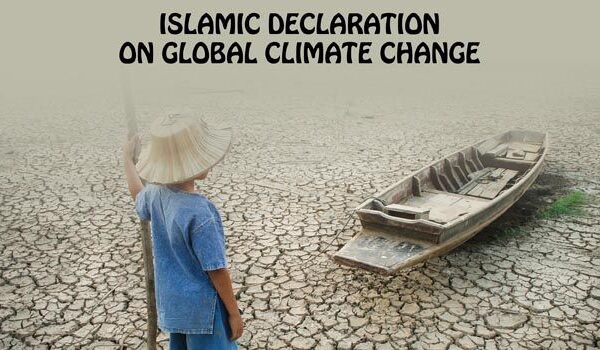
    Islamic Declaration on Global Climate Change

    Muslim scholars from 20 countries met for an International Islamic Climate Change Symposium on August 17-18, 2015 at Istanbul and issued what they term “An Islamic Declaration on Climate Change”, calling on the world’s 1.6 billion Muslims to do their part to eliminate dangerous greenhouse gas emissions and commit to renewable energy sources. We have presented below the entire text of the Declaration. (Editor)

    In the name of Allah, Most Merciful, Most Compassionate

    PREAMBLE

    God – Whom we know as Allah – has created the universe in all its diversity, richness and vitality: the stars, the sun and moon, the earth and all its communities of living beings. All these reflect and manifest the boundless glory and mercy of their Creator. All created beings by nature serve and glorify their Maker, all bow to their Lord’s will. We human beings are created to serve the Lord of all beings, to work the greatest good we can for all the species, individuals, and generations of God’s creatures.

    Our planet has existed for billions of years and climate change in itself is not new. The earth’s climate has gone through phases wet and dry, cold and warm, in response to many natural factors. Most of these changes have been gradual, so that the forms and communities of life have adjusted accordingly. There have been catastrophic climate changes that brought about mass extinctions, but over time, life adjusted even to these impacts, flowering anew in the emergence of balanced ecosystems such as those we treasure today. Climate change in the past was also instrumental in laying down immense stores of fossil fuels from which we derive benefits today. Ironically, our unwise and short-sighted use of these resources is now resulting in the destruction of the very conditions that have made our life on earth possible.

    The pace of Global climate change today is of a different order of magnitude from the gradual changes that previously occurred throughout the most recent era, the Cenozoic. Moreover, it is human-induced: we have now become a force dominating nature. The epoch in which we live has increasingly been described in geological terms as the Anthropocene, or “Age of Humans”. Our species, though selected to be a caretaker or steward (khalifah) on the earth, has been the cause of such corruption and devastation on it that we are in danger ending life as we know it on our planet. This current rate of climate change cannot be sustained, and the earth’s fine equilibrium (m?z?n) may soon be lost. As we humans are woven into the fabric of the natural world, its gifts are for us to savour. But the same fossil fuels that helped us achieve most of the prosperity we see today are the main cause of climate change. Excessive pollution from fossil fuels threatens to destroy the gifts bestowed on us by God, whom we know as Allah – gifts such as a functioning climate, healthy air to breathe, regular seasons, and living oceans. But our attitude to these gifts has been short-sighted, and we have abused them. What will future generations say of us, who leave them a degraded planet as our legacy? How will we face our Lord and Creator?

    We note that the Millennium Ecosystem Assessment (UNEP, 2005) and backed by over 1300 scientists from 95 countries, found that “overall, people have made greater changes to ecosystems in the last half of the 20th century than at any time in human history… these changes have enhanced human well-being, but have been accompanied by ever increasing degradation (of our environment).”

    “Human activity is putting such a strain on the natural functions of the earth that the ability of the planet’s ecosystems to sustain future generations can no longer be taken for granted.”

    Nearly ten years later, and in spite of the numerous conferences that have taken place to try to agree on a successor to the Kyoto Protocol, the overall state of the Earth has steadily deteriorated. A study by the Intergovernmental Panel on Climate Change (IPCC) comprising representatives from over 100 nations published in March 2014 gave five reasons for concern. In summary, they are:

    • Ecosystems and human cultures are already at risk from climate change;
    • Risks resulting from climate change caused by extreme events such as heat waves, extreme precipitation and coastal flooding are on the rise;
    • These risks are unevenly distributed, and are generally greater for the poor and disadvantaged communities of every country, at all levels of development;
    • Foreseeable impacts will affect adversely Earth’s biodiversity, the goods and services provided by our ecosystems, and our overall global economy;
    • The Earth’s core physical systems themselves are at risk of abrupt and irreversible changes.

    We are driven to conclude from these warnings that there are serious flaws in the way we have used natural resources – the sources of life on Earth. An urgent and radical reappraisal is called for. Humankind cannot afford the slow progress we have seen in all the COP (Conference of Parties – climate change negotiations) processes since the Millennium Ecosystem Assessment was published in 2005, or the present deadlock.

    • In the brief period since the Industrial Revolution, humans have consumed much of the non-renewable resources which have taken the earth 250 million years to produce – all in the name of economic development and human progress. We note with alarm the combined impacts of rising per capita consumption combined with the rising human population. We also note with alarm the multi-national scramble now taking place for more fossil fuel deposits under the dissolving ice caps in the arctic regions. We are accelerating our own destruction through these processes.
    • Leading climate scientists now believe that a rise of two degrees centigrade in global temperature, which is considered to be the “tipping point”, is now very unlikely to be avoided if we continue with business-as-usual; other leading climate scientists consider 1.5 degrees centigrade to be a more likely “tipping point”. This is the point considered to be the threshold for catastrophic climate change, which will expose yet more millions of people and countless other creatures to drought, hunger and flooding. The brunt of this will continue to be borne by the poor, as the Earth experiences a drastic increase in levels of carbon in the atmosphere brought on in the period since the onset of the industrial revolution.

    It is alarming that in spite of all the warnings and predictions, the successor to the Kyoto Protocol which should have been in place by 2012, has been delayed. It is essential that all countries, especially the more developed nations, increase their efforts and adopt the pro-active approach needed to halt and hopefully eventually reverse the damage being wrought.

    WE AFFIRM
    • We affirm that Allah is the Lord and Sustainer (Rabb) of all Praise be to Allah, Lord and Sustainer of all beings (1:1)

    He is the One Creator – He is al-Kh?liq.

    He is Allah – the Creator, the Maker, the Giver of Form (59: 24).

    He Who has perfected every thing He has created (32: 7).

    Nothing that He creates is without value: each thing is created bi ’l-haqq, in truth and for right. And We did not create the heavens and earth and that between them in play. We have not created them but in truth (44: 38).

    • We affirm that He encompasses all of His creation – He is al-Muh?t. All that is in the heavens and the earth belongs to Allah. Allah encompasses all things (4:125)
    • We affirm that – God created the Earth in perfect equilibrium (m?z?n); By His immense mercy we have been given fertile land, fresh air, clean water and all the good things on Earth that makes our lives here viable and delightful;

    The Earth functions in natural seasonal rhythms and cycles: a climate in which living beings – including humans – thrive;

    The present climate change catastrophe is a result of the human disruption of this balance –

    He raised the heaven and established the balance so that you would not transgress the balance. Give just weight – do not skimp in the balance. He laid out the earth for all living creatures. (Qur’an 55: 7-10)

    • We affirm the natural state (fitrah) of God’s creation – So set your face firmly towards the (natural) Way as a pure, natural believer, Allah’s natural pattern on which He made mankind. There is no changing Allah’s creation. That is the true (natural) Way. But most people do not know it. (Quran 30: 30)
    •  We recognize the corruption (fas?d) that humans have caused on the Earth due to our relentless pursuit of economic growth and consumption. Its consequences have been –
      • Global climate change, which is our present concern, in addition to:
      • Contamination and befoulment of the atmosphere, land, inland water systems, and seas;
      • Soil erosion, deforestation and desertification;
      • Damage to human health, including a host of modern-day diseases.

    Corruption has appeared on land and sea, Because of what people’s own hands have wrought, so that they may taste something of what they have done; So that hopefully they will turn back. (Qur’an 30: 41)

    • We recognize that we are but a miniscule part of the divine order, yet within that order, we are exceptionally powerful beings, and have the responsibility to establish good and avert evil in every way we can. We also recognize that
      • We are but one of the multitude of living beings with whom we share the Earth;
      • We have no right to oppress the rest of creation or cause it harm;
      • Intelligence and conscience behoove us, as our faith commands, to treat all things with care and awe (taqwa) of their Creator, compassion (rahmah) and utmost good (ihsan).

    There is no animal on the earth, or any bird that wings its flight, but is a community like you. (Qur’an 6: 38)

    The creation of the heavens and the earth is far greater than the creation of mankind, but most of mankind do not know it (Qur’an 40: 57)

    • We recognize that we are accountable for all our actions –

    Then he who has done an atom’s weight of good, shall see it; and he who has done an atom’s weight of evil, shall see it. (Qur’an 99:6-8)

    • In view of these considerations we affirm that our responsibility as Muslims is to act according to the example of the Prophet Muhammad (God’s peace and blessings be upon him) who –
      • Declared and protected the rights of all living beings, outlawed the custom of burying infant girls alive, prohibited killing living beings for sport, guided his companions to conserve water even in washing for prayer, forbade the felling of trees in the desert, ordered a man who had taken some nestlings from their nest to return them to their mother, and when he came upon a man who had lit a fire on an anthill, commanded, “Put it out, put it out!”;
      • Established inviolable zones (harams) around Makkah and Al-Madinah, within which native plants may not be felled or cut and wild animals may not be hunted or disturbed;
      • Established protected areas (himas) for the conservation and sustainable use of rangelands, plant cover and wildlife.
      • Lived a frugal life, free of excess, waste, and ostentation;
      • Renewed and recycled his meagre possessions by repairing or giving them away;
      • Ate simple, healthy food, which only occasionally included meat;
      • Took delight in the created world; and
      • Was, in the words of the Qur’an, “a mercy to all beings.”
    WE CALL

    We call upon the Conference of the Parties (COP) to the United Nations Framework Convention on Climate Change (UNFCCC) and the Meeting of the Parties (MOP) to the Kyoto Protocol taking place in Paris this December, 2015 to bring their discussions to an equitable and binding conclusion, bearing in mind –

    • The scientific consensus on climate change, which is to stabilize greenhouse gas concentration in the atmosphere at a level that would prevent dangerous anthropogenic interference with the climate systems;
    • The need to set clear targets and monitoring systems;
    • The dire consequences to planet earth if we do not do so;
    • The enormous responsibility the COP shoulders on behalf of the rest of humanity, including leading the rest of us to a new way of relating to God’s Earth.

    We particularly call on the well-off nations and oil-producing states to –

    • Lead the way in phasing out their greenhouse gas emissions as early as possible and no later than the middle of the century;
    • Provide generous financial and technical support to the less well-off to achieve a phase-out of greenhouse gases as early as possible;
    • Recognize the moral obligation to reduce consumption so that the poor may benefit from what is left of the earth’s non-renewable resources;
    • Stay within the ‘2 degree’ limit, or, preferably, within the ‘1.5 degree’ limit, bearing in mind that two-thirds of the earth’s proven fossil fuel reserves remain in the ground;
    • Re-focus their concerns from unethical profit from the environment, to that of preserving it and elevating the condition of the world’s poor.
    • Invest in the creation of a green economy.

    We call on the people of all nations and their leaders to –

    • Aim to phase out greenhouse gas emissions as soon as possible in order to stabilize greenhouse gas concentrations in the atmosphere;
    • Commit themselves to 100 % renewable energy and/or a zero emissions strategy as early as possible, to mitigate the environmental impact of their activities;
    • Invest in decentralized renewable energy, which is the best way to reduce poverty and achieve sustainable development;
    • Realize that to chase after unlimited economic growth in a planet that is finite and already overloaded is not viable. Growth must be pursued wisely and in moderation; placing a priority on increasing the resilience of all, and especially the most vulnerable, to the climate change impacts already underway and expected to continue for many years to come.
    • Set in motion a fresh model of wellbeing, based on an alternative to the current financial model which depletes resources, degrades the environment, and deepens inequality.
    • Prioritise adaptation efforts with appropriate support to the vulnerable countries with the least capacity to adapt. And to vulnerable groups, including indigenous peoples, women and children.

    We call upon corporations, finance, and the business sector to –

    • Shoulder the consequences of their profit-making activities, and take a visibly more active role in reducing their carbon footprint and other forms of impact upon the natural environment;
    • In order to mitigate the environmental impact of their activities, commit themselves to 100 % renewable energy and/or a zero emissions strategy as early as possible and shift investments into renewable energy;
    • Change from the current business model which is based on an unsustainable escalating economy, and to adopt a circular economy that is wholly sustainable;
    • Pay more heed to social and ecological responsibilities, particularly to the extent that they extract and utilize scarce resources;
    • Assist in the divestment from the fossil fuel driven economy and the scaling up of renewable energy and other ecological alternatives.

    We call on all groups to join us in collaboration, co-operation and friendly competition in this endeavour and we welcome the significant contributions taken by other faiths, as we can all be winners in this race.

    He (God) wanted to test you regarding what has come to you. So compete with each other in doing good deeds (Qur’an 5: 48). If we each offer the best of our respective traditions, we may yet see a way through our difficulties.

    Finally, we call on all Muslims wherever they may be –

    Heads of state, Political leaders, Business community, UNFCCC delegates, Religious leaders and scholars, Mosque congregations, Islamic endowments (awqaf), Educators and educational institutions, Community leaders, Civil society activists, Non-governmental organisations, Communications and media

    Do not strut arrogantly on the earth. You will never split the earth apart nor will you ever rival the mountains’ stature. (Qur’an 17: 37)

    We bear in mind the words of our Prophet (peace and blessings be upon him): The world is sweet and verdant, and verily Allah has made you stewards in it, and He sees how you acquit yourselves (Had?th related by Muslim from Abu Sa‘?d Al-Khudr?)

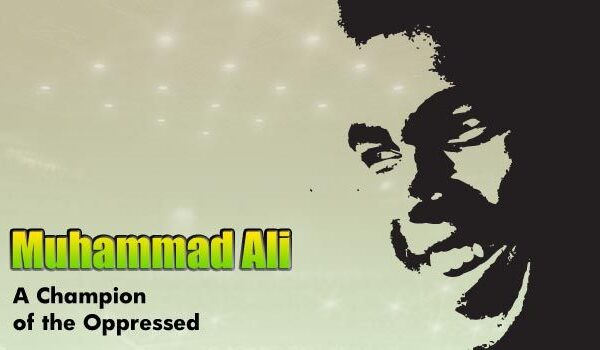
  • Muhammad Ali: A Champion of the Oppressed – ICNA Tribute

    Muhammad Ali: A Champion of the Oppressed – ICNA Tribute

    On June 3, 2016, America and the world lost one of the most beloved and transcendent figures of our time, Muhammad Ali. The Islamic Circle of North America joins the global community in praying for forgiveness of his sins and the highest reward in the Hereafter. Ameen.

    m-ali2016e

    Coming of Age in an Era of Bigotry and Discrimination

    While dominating and redefining the style of heavyweight boxing during the 1960s, Muhammad Ali’s impact would ultimately transcend sports. As a teenager with the uncommon name of Cassius Clay, he came to the world’s attention as a brash, overly confident, and good-looking boxer from Louisville, Kentucky. Sponsored by a group of wealthy White businessmen, young Cassius demonstrated his potential greatness in the ring by winning an Olympic gold medal in 1960 at the age of 19. This was the era of overt racism in America and the Civil Rights Movement engaged in nonviolent protests and demonstrations to push lawmakers to rescind the Jim Crow laws that mandated racial separation and institutionalized inequality. For African Americans at the time, success in the athletic world was a more viable option than a career in the academic, business, or professional fields. Muhammad Ali’s keen intellect was masked by his less than stellar accomplishments in the classroom, but boxing allowed him a pathway to excellence and recognition. All the while, he was developing a greater awareness of the plight of African Americans and how their lives were dominated and limited by bigotry and discrimination.

    Spiritual Journey

    m-ali2016dIn June 1962, Clay and his brother were invited to attend a Nation of Islam rally in Detroit to hear Elijah Muhammad preach. He had attended Nation of Islam rallies before outside of Miami where he was training to fight Sonny Liston for the heavyweight championship of the world, but he had never heard Elijah Muhammad speak in person. On the way to Detroit, Clay and his brother stopped at a luncheonette owned by the NOI, and this is where he met Malcolm X. They were introduced, but Malcom had no idea who Cassius Clay was at the time because he had not watched sports since he had been released from prison, and, Malcolm noted, they “were in two different worlds.” Muhammad Ali describes the encounter in the luncheonette and the speech of Elijah Muhammad as changing his life forever. Shortly after this experience in Detroit, Clay joined the NOI. Malcolm and Clay developed a short but intense friendship that ended when Malcolm split with the NOI. Muhammad Ali would later say that one of his deepest regrets in life was that he never had the opportunity to reconnect with Malcolm.

    A Champion of the Oppressed

    m-ali2016hOne of Muhammad Ali’s most iconic moments was when he refused induction into the U.S. Army in 1968, because, as he said then, “No Vietcong ever called me a nigger.” He further explained, “Why should they ask me to put on a uniform and go ten thousand miles from home and drop bombs and bullets on brown people in Vietnam while so-called Negro people in Louisville are treated like dogs and denied simple human rights?” As a result of his refusal, he was convicted of draft evasion, stripped of his boxing title, and thus deprived of his means of livelihood. He was also threatened with a five-year federal prison sentence and a fine of $100,000. His conviction was later overturned by the U.S. Supreme Court.

    Muhammad Ali was a champion of the rights of African Americans, Palestinians, and all oppressed people in the world. Even though he was vilified as being un-American for opposition to certain government policies, Ali was not only vindicated years later for his honorable positions, but passionately embraced by the American people and worldwide community. Muhammad Ali was not only a global cultural icon, but more importantly, he was a firm believer and practitioner of Islam. During his young boxing days, Ali had repeatedly said, “I am the greatest.” As an older, more mature, Muslim man, Ali said, “God gave me this illness [Parkinson’s] to remind me that I’m not Number One; He is.” He also is quoted as saying, “This life is not real. I conquered the world and it did not bring me satisfaction.” What did bring him satisfaction was helping others, advocating for the poor, needy, and oppressed, and supporting social justice issues.

    ICNA Loses a Strong Supporter and Dedicated Volunteer

    m-ali2016gMuhammad Ali always kept a pack of ICNA pamphlets on Islam with him. He used them to give his autograph whenever requested. He also used to autograph them before handing them out at the ICNA dawah booths where he regularly volunteered. In the mid-nineties when ICNA Chicago used to organize information booths on Islam outside the Dan Ryan train station, Muhammad Ali was a regular volunteer. “He would always ask for a pack of 250 of his favorite ICNA pamphlets: Islam Explained and You should know this man,” said Ikram Hussain, then President of ICNA Chicago Chapter. “He would distribute them in about 40 minutes while it took the rest of us 2-3 hours.”

    Ali was also an active volunteer with the ICNA meat distribution at Masjid Al-Faatir in South Side Chicago. “We remember his selfless devotion and passion to helping others as a volunteer with ICNA meat distribution during Eid-ul Adha,” said ICNA President Naeem Baig who used to volunteer with Ali. He was also part of ICNA’s Bosnia Task Force formed to stop the Bosnian genocide, a member of the national Muslim leadership delegation which met in 1993 with the United Nations Security Council members. When he addressed a packed press conference on the issue at UN Headquarters in New York, both journalists and diplomats crowded the room, interested in what Muhammad Ali had to say.

    m-ali2016iThere are few individual Muslims who have more positively influenced the image of Islam in America than our beloved and respected brother, Muhammad Ali. May Allah forgive his sins and grant him Jannatul Firdous (the highest level of Paradise). Ameen.

    m-ali2016c

  • What Non-Muslim Scholars Say About the Quran?

    What Non-Muslim Scholars Say About the Quran?

    Humanity has received Divine guidance through two channels: firstly, through the word of God as contained in revealed books; and secondly, through the Prophets who were chosen by Allah to communicate His will to human beings. The main scriptures revealed before the Quran, the Old Testament and the Gospel, were written down and then compiled as books long after they were revealed. On the contrary, the last revealed book, the Quran, is extant in its original form.

    Many non-Muslim searchers of truth have recognized the Quran as unique and indescribably powerful even if they did not recognize its divine source.

    Allah Himself guaranteed its preservation, and the whole of the Quran was committed to written form during the lifetime of Prophet Muhammad (pbuh), recorded on parchment and other available materials. Moreover, there were tens of thousands of companions of the Prophet who memorized the whole Quran and the Prophet himself used to recite it to the angel, Gabriel, once a year and twice when he was about to die. The first khaliph, Abu Bakr, entrusted the Prophet’s scribe, Zaid Ibn Thabit, with collecting and compiling the entire Quran into one volume. This volume was with Abu Bakr till his death. It was then passed on to the second khaliph, Omar, and after him to Hafsa, the Prophet’s wife.

    It was from this original copy that the third khaliph, Uthman, prepared several other copies and sent them to different Muslim territories. The Quran, so meticulously preserved, is the guidance for humanity for all time to come. God says in the Quran, “O mankind! There has come to you exhortation from your Sustainer, and a healing for that which is in your hearts, and guidance and mercy for those who believe. Say: In the bounty of God and in His mercy, let them rejoice; it is better than all that they amass” (Quran 10:57-58).

    The practicability of the Quranic teachings is established by the example of Muhammad (pbuh) and devoted Muslims throughout the ages. The guidance of the Quran is aimed at the general welfare of humanity in this life and salvation in the life to come. It advises man according to his nature and human condition. Thus, it speaks to the corporeal reality of human life while providing instruction for the purification of the heart and upliftment of the soul. The Quran makes it clear that God is unlike anything in the created world, and that people must not anthropomorphize God nor in any way deify man. Everything is carefully placed where it belongs in the total scheme of creation, and man is, in addition, instructed to believe in al-ghayb (the unseen), the realms beyond the grasp of human perception.

    The Claim that Muhammad (pbuh) Authored the Quran is Untenable

    Some claim that Muhammad (pbuh) was the author of the Quran. Yet, up until the first revelation to him and the inception of his prophethood, he was known for his unassailable honesty and integrity. Could then this man, known to his peers as al-ameen, the trustworthy one, come forth with an egregious falsehood, claiming that God chose him as a prophet and messenger? Could this man who could neither read nor write produce a book matchless in literary merit and the equivalent of which the whole legion of the Arab poets and orators of highest caliber could not produce? And could a man-made system of guidance so inspire millions of people around the world and form the basis for untold numbers of men and women to attain noble character? Could it provide the foundation, during the time of the Prophet (pbuh) and his successors, for establishing the best human society on earth?

    Maurice Bucaille, a French surgeon who studied the Quran and converted to Islam, wrote “The Bible, the Qur’an and Science” in 1976. He says in that book, “… the hypothesis advanced by those who see Muhammad as the author of the Qur’an [is] untenable. How could a man, from being illiterate, become the most important author, in terms of literary merits, in the whole of Arabic literature? How could he then pronounce truths of a scientific nature that no other human being could possibly have developed at that time, and all this without once making the slightest error in his pronouncement on the subject?”

    Quran’s Acclamations by Non-Muslims

    Many non-Muslim searchers of truth have recognized the Quran as unique and indescribably powerful even if they did not recognize its divine source. Below is a short list of the many accolades forthcoming from non-Muslim sources over time:

    “Here, therefore, its merits as a literary production should perhaps not be measured by some preconceived maxims of subjective and aesthetic taste, but by the effects which it produced in Muhammad’s contemporaries and fellow countrymen. If it spoke so powerfully and convincingly to the hearts of his hearers as to weld hitherto centrifugal and antagonistic elements into one compact and well-organized body, animated by ideas far beyond those which had until now ruled the Arabian mind, then its eloquence was perfect, simply because it created a civilized nation out of savage tribes, and shot a fresh woof into the old warp of history” — Dr. Steingass, quoted in T.P. Hughes’ “Dictionary of Islam,” p.528.

    “In making the present attempt to improve on the performance of my predecessors, and to produce something which might be accepted as echoing however faintly the sublime rhetoric of the Arabic Koran, I have been at pains to study the intricate and richly varied rhythms which – apart from the message itself – constitute the Koran’s undeniable claim to rank amongst the greatest literary masterpieces of mankind… This very characteristic feature – ‘that inimitable symphony,’ as the believing Pickthall described his Holy Book, ‘the very sounds of which move men to tears and ecstasy’ – has been almost totally ignored by previous translators; it is therefore not surprising that what they have wrought sounds dull and flat indeed in comparison with the splendidly decorated original” — Arthur J. Arberry, “The Koran Interpreted,” London: Oxford University Press, 1964, p. x.

    “However often we turn to it [the Qur’an] at first disgusting us each time afresh, it soon attracts, astounds, and in the end enforces our reverence… Its style, in accordance with its contents and aim is stern, grand, terrible – ever and anon truly sublime — Thus this book will go on exercising through all ages a most potent influence” — Goethe, quoted in T.P. Hughes’ “Dictionary of Islam,” p. 526.

    “The Koran admittedly occupies an important position among the great religious books of the world. Though the youngest of the epoch-making works belonging to this class of literature, it yields to hardly any in the wonderful effect which it has produced on large masses of men. It has created an all but new phase of human thought and a fresh type of character. It first transformed a number of heterogeneous desert tribes of the Arabian Peninsula into a nation of heroes, and then proceeded to create the vast politico-religious organizations of the Muhammadan world which are one of the great forces with which Europe and the East have to reckon today” — G. Margoliouth, Introduction to J.M. Rodwell’s, “The Koran,” New York: Everyman’s Library, 1977, p. vii.

    “A work, then, which calls forth so powerful and seemingly incompatible emotions even in the distant reader – distant as to time, and still more so as a mental development – a work which not only conquers the repugnance which he may begin its perusal, but changes this adverse feeling into astonishment and admiration, such a work must be a wonderful production of the human mind indeed and a problem of the highest interest to every thoughtful observer of the destinies of mankind” — Dr. Steingass, quoted in T.P. Hughes’ “Dictionary of Islam,” pp. 526-527.

    Maurice Bucaille, writing in “The Bible, the Qur’an and Science,” answers those who conclude that a human mind authored the Quran: “A totally objective examination of it [the Quran] in the light of modern knowledge, leads us to recognize the agreement between the two, as has been already noted on repeated occasions. It makes us deem it quite unthinkable for a man of Muhammad’s time to have been the author of such statements on account of the state of knowledge in his day. Such considerations are part of what gives the Qur’anic Revelation its unique place, and forces the impartial scientist to admit his inability to provide an explanation which calls solely upon materialistic reasoning.”

  • 100 Commandments and Doctrines from the Quran

    100 Commandments and Doctrines from the Quran

    1. Do not be rude in speech (3:159)

    2. Restrain anger (3:134)

    3. Be good to others (4:36)

    4. Do not be arrogant (7:13)

    5. Forgive others for their mistakes (7:199)

    6. Speak to people mildly (20:44)

    7. Be moderate in your bearing and the volume of your speech (31:19)

    8. Do not ridicule others (49:11)

    9. Be dutiful to parents (17:23)

    10. Do not say a word of disrespect to parents (17:23)

    11. Do not enter parents’ private room without asking permission (24:58)

    12. Commit to writing any transaction involving the taking or giving of loans (2:282)

    13. Do not follow anyone blindly (2:170)

    14. Grant more time to repay if the debtor is in hard times (2:280)

    15. Don’t be involved with usury or interest (2:275)

    16. Do not engage in bribery (2:188)

    17. Do not break any promise (2:177)

    18. Keep and fulfil all trusts (2:283)

    19. Do not mix the truth with falsehood (2:42)

    20. Judge with justice between people (4:58)

    21. Stand out firmly for justice (4:135)

    22. Wealth of the dead should be distributed among his family members (4:7)

    23. Women have the right of inheritance (4:7)

    24. Do not take for yourself the property of orphans (4:10)

    25. Protect orphans (2:220)

    26. Do not consume one another’s wealth unjustly (4:29)

    27. Facilitate peace between those in conflict (49:9)

    28. Avoid being suspicious (49:12)

    29. Spend wealth in charity (57:7)

    30. Encourage feeding of the poor (107:3)

    31. Seek out the needy and help them (2:273)

    32. Do not spend money extravagantly (17:29)

    33. Do not invalidate charity by bragging about your generosity (2:264)

    34. Honor guests (51:26)

    35. Enjoin virtue to others only after practicing it yourself (2:44)

    36. Do not engage in or spread corruption (2:60)

    37. Do not prevent people from going to houses of worship (2:114)

    38. Never engage in fighting as an aggressor but only in defense (2:190)

    39. Do not engage in compulsion regarding religion (2:256)

    40. Believe in all prophets (2:285)

    41. Do not have sexual intercourse during the menstrual period (2:222)

    42. Do not commit adultery (17:32)

    43. Choose leaders based on their merit (2:247)

    44. God does not burden a person beyond his capacity; nor should we (2:286)

    45. Do not become divided (3:103)

    46. Think deeply about the wonders of nature and the creation of this universe (3:191)

    47. Men and women have equal rewards for their deeds (3:195)

    48. Do not marry those related to you by blood (4:23)

    49. The man is the protector and supporter of the family (4:34)

    50. Do not be miserly (4:37)

    51. Do not envy others (4:54)

    52. Do not support or be an advocate for those who betray their trusts (4:105)

    53. Support one another in virtue and piety, not in sin or enmity (5:2)

    54. Be just and do not let hatred swerve you from justice (5:8)

    55. Do not consume dead animals, the blood of animals, or pork (5:3)

    56. Avoid intoxicants and alcohol (5:90)

    57. Do not gamble (5:90)

    58. Do not insult other people’s deities (6:108)

    59. Be honest; don’t cheat in any of your dealings (6:152)

    60. Eat and drink but be not excessive (7:31)

    61. Wear good clothing during prayer times (7:31)

    62. Protect and help those who seek protection (9:6)

    63. Strive for purity (9:108)

    64. Never give up hope of Allah’s Mercy (12:87)

    65. Know that Allah forgives a wrong done out of ignorance if the person repents and corrects himself (16:119)

    66. Inviting others to the way of God should be done with wisdom and graciousness (16:125)

    67. No one can bear another person’s sins (17:15)

    68. Do not kill your children for fear of poverty (17:31)

    69. Avoid vain talk (23:3)

    70. Respect other people’s privacy, especially in their own homes (24:27)

    71. Know that God provides security and peace to those who worship Him and act virtuously (24:55)

    72. Be modest and humble (25:63)

    73. Strive for reward in the Hereafter but do not neglect your affairs in this world (28:77)

    74. Invoke not any other deity along with God (28:88)

    75. Do not engage in homosexuality (29:29)

    76. Enjoin the right and forbid the wrong (31:17)

    77. Women should not display or flaunt their beauty and charms (33:33)

    78. God forgives all sins when the sinner repents and turns to Him (39:53)

    79. Repel evil by something that is better (41:34)

    80. Decide affairs by consultation (42:38)

    81. Know that there should be no monasticism in religion (57:27)

    82. Those who have knowledge will be given a higher rank by God (58:11)

    83. Treat non-Muslims in a kind and fair manner (60:8)

    84. Stay away from greed and stinginess (64:16)

    85. Do not ignore or push away the needy (93:10)

    86. Pardon and forgive the mistakes of others (3:135)

    87. Establish prayer and give in charity (31:4)

    88. Know that the bounty of God is better than anything man can amass or hoard (10:58)

    89. God puts love and affection between the hearts of those who believe in Him (8:63)

    90. Those who purify their souls succeed, and those who corrupt their souls fail (91:10)

    91. Those who believe in God find satisfaction in remembering Him (13:28)

    92. Those who believe and do good are given joy and peace of mind (13:29)

    93. Enjoin patience and compassion (90:17)

    94. Know that God gave humans hearing, sight, intelligence, and affections so that they might be grateful (16:78)

    95. Compete with one another in doing good (21:90)

    96. Know that God created the universe with meaning and purpose (3:191)

    97. Guard your modesty (23:5)

    98. Know that being just is next to piety (5:8)

    99. Fight when necessary to defend yourselves but do not aggress (2:190)

    100. Know that it is only righteousness that makes a person noble (49:13)


  • American Muslim Demographics

    American Muslim Demographics

    [button size=medium style=less_round color=gray align=none url=http://hipcast.com/podcast/HNTT6h7s]Click here to listen to this article in audio[/button]

    63%

    Almost two-thirds of American Muslim adults are first-generation immigrants from at least 77 different countries

    37%

    More than a third of Muslim American adults were born in the United States

    81%

    The vast majority surveyed, more than three-quarters, report that they are U.S. Citizens

    59%

    More than half of adult Muslims are between the ages of 18 and 39, compared with 40% of adults in the general public

    Source: Pew Research Survey 2011


  • Early American Mosques

    Early American Mosques

    Many early Muslim communities were comprised of a few individuals and/or families. They met in private homes for prayers, and rented out halls for the Muslim holidays.

    1900 – First Documented Communal Muslim Prayers

    Muslims of Arab descent in Ross, North Dakota gathered in homes for the first documented communal prayers held by American Muslims.

    1915 – Mosque Built in Biddeford, Maine

    Albanian Muslims built a mosque in Biddeford, Maine and established an Islamic association. In 1919, they established another mosque in Waterbury, Connecticut. These were among the first Islamic associations in America.

    1929 – Mosque Built in Rural North Dakota

    The small Ross community built the mosque, but in time it fell into disrepair as some Muslims relocated and others passed away. It was rebuilt in 2005 in memory of one of the town’s few remaining Muslims.

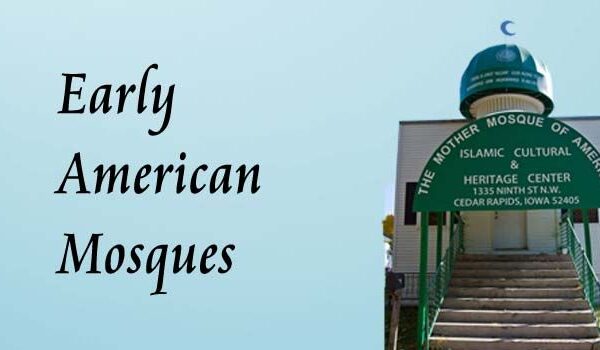
    1934 – The Mother Mosque of America

    Lebanese Muslims in Cedar Rapids, IA built this mosque in 1934; it is the longest continually standing Muslim house of worship still in use today.

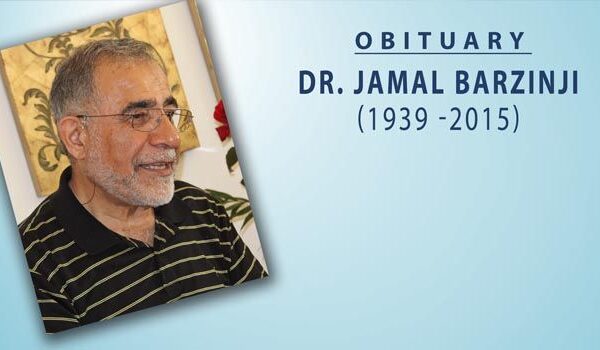
  • Obituary: Dr. Jamal Barzinji

    Obituary: Dr. Jamal Barzinji

    Dr. Jamal Barzinji, one of the key Muslim figures of North America and President of the International Institute of Islamic Thought (IIIT), passed away on September 26, 2015. He was instrumental in the founding of many major Muslim institutions, including the IIIT where he was a Trustee and previously Vice President for Research and Publications. He was also the founding general manager of North American Islamic Trust (NAIT), and a founding member of the Association of Muslim Social Scientists (AMSS) as well as the Association of Muslim Scientists and Engineers (AMSE). Dr. Barzinji devoted his entire life to the service of Islam. His organizational talents and skill were exceptional.
    Dr. Barzinji was born in Mosul, Iraq, on December 15, 1939. His illustrious father, Shaykh Muhammad al-Barzinji, instilled in him a deep and abiding love for Allah and Islam, a deep love and appreciation for the Arabic language, and a deep respect and devotion for truth and values. These were passions Dr. Jamal carried with him throughout his life, the strength of his convictions being translated into actions which he remained committed to till the very end.
    Dr. Barzinji worked to the highest standards and according to a powerful moral basis, upholding excellence in everything he did with an eye on final outcome and getting results. And he inspired this demanding work ethic from those he collaborated with, especially IIIT colleagues. He was hardworking and fair, valuing this quality in others. Yet, he was also forgiving of other people’s shortcomings and understood their limitations.
    With a love for literary merit, Dr. Barzinji appreciated correct usage of language and especially enjoyed beautiful linguistic expressions, whether in Arabic or in English. He would often repeat phrases or expressions that he found particularly eloquent. He was also deeply committed to interfaith education and relations. He believed that faith communities needed to provide spiritual answers to the challenges of our time. To that end, he was instrumental in IIIT decisions to commit resources to interfaith programs at various institutions, including Hartford Seminary (Hartford, CT), Nazareth College (Rochester, NY), and Huron University College at Western University (Lon- Excerpted and lightly edited from an obituary from the International Institute of Islamic Thought (IIIT). don, Ontario, in Canada).
    Dr. Barzinji urged Muslims to examine “what collective moral responsibility we have, as a community of faith, to build a better America, build a better nation—caring and gentle nation— which is, really, the Founding Fathers’ vision for America … There is also a big responsibility for people of faith to come together, to develop and articulate their position, and ‘sell’ their product of love, of affection, [of] good neighborly-hood, to the society at large to build that better society and better community.”
    He held executive positions in a number of organizations over the years. He was the President of the Muslim Students Association in its initial days, member of MSA’s Planning and Organization Committee, and member of the Islamic Society of North America (ISNA) Majlis Al-Shura (Board). He was also involved in the establishment of a variety of organizations, such as Mar-Jac Poultry, Safa Trust, Amana Mutual Funds, SAAR Foundation, Bank Islam Malaysia, and North American Islamic Trust (NAIT). He also served as the Dean of Kulliyyah (Faculty) of Islamic Revealed Knowledge and Human Sciences, the International Islamic University Malaysia, where he transformed the Kulliyyah into a world-class academic unit. Under Dr. Jamal’s leadership, the Kulliyyah reflected the philosophy of integration of knowledge that brought together the disciplines based on Divine Revelation with those that were rooted in humanistic and social science inquiry.
    In addition, Dr. Barzinji served as advisor and consultant to a series of educational, charitable, and professional organizations. He delivered many lectures and wrote articles on topics relevant to the Muslim community in America. As a result of his dedicated service to the American Muslim community, he was the recipient of many honors. In 2008, ISNA conferred its Dr. Mahboob Khan Community Service Award on Dr. Barzinji. He also received CAIR’s Lifetime Achievement Award in 2012. Dr. Barzinji had a PhD. and MSc. in Chemical Engineering, with a minor in Management, from Louisiana State University, U.S.A. (1974), and a BSc. in Chemical Engineering & Fuel Technology from the University of Sheffield, England (1962).
    He passed away on Saturday, September 26, 2015 after a long illness. He is survived by his wife, 6 children, and 13 grandchildren, not to mention innumerable friends, colleagues, and loved ones whose lives Dr. Barzinji touched in one way or another. His death is an immense loss for the global Muslim community and for humanity at large. We extend our heartfelt condolences to Dr. Barzinji’s family and pray that Allah grant his family, friends, and colleagues patience and strength in this time of sadness and loss. May Allah be pleased with Dr. Jamal Barzinji, and shower His blessings and mercy upon him, making it easier for those he has left behind to bear the sorrow of his absence. Ameen.
    ——-
    Excerpted and lightly edited from an obituary from the International Institute of Islamic Thought (IIIT).

  • Prophet Muhammad’s Farewell Sermon

    Prophet Muhammad’s Farewell Sermon

    The following sermon was delivered by Prophet Muhammad,
    peace be upon him, on the 9th day of Dhul Hijjah 10 A.H. (632 C.E.)
    in the Uranah valley of Mount Arafat in Mecca.
    After praising and thanking Allah (SWT), he said:

    “O People, lend me an attentive ear, for I know not whether after this year, I shall ever be among you again. Therefore listen to what I am saying to you very carefully and take these words to those who could not be present here today.
    O People, just as you regard this month, this day, and this city as sacred, so regard the life and property of every Muslim as a sacred trust. Return the goods entrusted to you to their rightful owners. Hurt no one so that no one may hurt you. Remember that you will indeed meet your Lord, and that He will indeed reckon your deeds. Allah has forbidden you to take usury (interest); therefore all interest obligations shall henceforth be waived. Your capital, however, is yours to keep. You will neither inflict nor suffer any inequity. Allah has Judged that there shall be no interest and that all the interest due to Abbas ibn ‘Abd’al Muttalib [the Prophet’s uncle] shall henceforth be waived.

    Beware of Satan for the safety of your religion. He has lost all hope that he will ever be able to lead you astray in big things, so beware of following him in small things.

    O People, it is true that you have certain rights with regard to your women, but they also have rights over you. Remember that you have taken them as your wives only under Allah’s trust and with His permission. If they abide by your right, then to them belongs the right to be fed and clothed in kindness. Do treat your women well and be kind to them for they are your partners and committed helpers. And it is your right that they do not make friends with any one of whom you do not approve, as well as never to be unchaste.

    O People, listen to me in earnest, worship Allah, say your five daily prayers (salah), fast during the month of Ramadan, and give your wealth in the obligatory alms-giving (zakat). Perform hajj if you can afford to.

    Beware of Satan for the safety of your religion. He has lost all hope that he will ever be able to lead you astray in big things, so beware of following him in small things.

    All mankind is from Adam and Eve. An Arab has no superiority over a non-Arab nor a non-Arab any superiority over an Arab; also a white has no superiority over a black nor does a black have any superiority over a white except by piety and good action. Learn that every Muslim is a brother to every Muslim and that the Muslims constitute one brotherhood. Nothing shall be legitimate to a Muslim which belongs to a fellow Muslim unless it was given freely and willingly. Do not, therefore, do injustice to yourselves.
    Remember, one day you will appear before Allah and answer for your deeds. So beware, do not stray from the path of righteousness after I am gone.

    O people, no prophet or apostle will come after me and no new faith will be born. Reason well, therefore, O people, and understand words which I convey to you. I leave behind me two things, the Qur’an and my example, the sunnah, and if you follow these you will never go astray.”

    All those who listen to me shall pass on my words to others and those to others again; and
    may the last ones understand my words better than those who listen to me directly.
    Be my witness, O Allah, that I have conveyed your message to your people”.

  • Why is there Evil and Suffering in the World

    Why is there Evil and Suffering in the World

    One of the most vexing questions for people is why God allows evil and suffering in the world. Some think that since God is all-powerful, He could create a world in which human beings always do good and no suffering exists. In fact, He has created a place of perpetual happiness, free of sin, hardship, pain, misfortune, or any sort of distress. That place, of course, is Paradise, in the Hereafter. If we accept that this world, on the other hand, is the place where humans are tested as to their faith and their deeds, so as to earn Paradise, then if follows that there must be the freedom to choose right from wrong. And some people choose to do wrong, resulting in suffering for themselves either in this world or in the Hereafter, and suffering for others in small or large number. Beyond that, there is also suffering as a result of natural occurrences like a hurricane or illness or death of a loved one.
    We are told in the Qur’an, “The One Who created death and life, so that He may put you to test, to find out which of you is best in deeds; He is the All-mighty, the All-forgiving” (Qur’an, 67:2). God, in His mercy, has built into His design, though, that whatever adversity we experience, it is a test that is inclined in our favor. The Prophet (peace be upon him) said: “How amazing is the case of the believer; there is good for him in everything, and this characteristic is exclusively for him alone. If he experiences something pleasant, he is thankful, and that is good for him; and if he comes across some adversity, he is patient, and that is good for him.” And he also said, “No calamity befalls a Muslim but that Allah expiates some of his sins because of it, even though it were the prick from a thorn.” This reinforces the idea in the first cited hadith that there is “good” in every circumstance for the believer, and explains further how the experience of hardship or adversity serves an important role: expiation of sins. Here we have a very specific description of how adversity is “good” for the believer (of course with the presumption that, as a believer, he will be patient in the face of adversity).

    In fact, He has created a place of perpetual happiness, free of sin, hardship, pain, misfortune, or any sort of distress. That place, of course, is Paradise, in the Hereafter.

    Adversity is good for us in other ways as well. When we face challenges and difficulties of every sort, this is what spurs our growth and, for believers, this is what allows for purification of the soul. In fact, it is through suffering that the soul opens itself to the healing and purifying agency of faith. The depths of soul are revealed to us through our encounters with hardship. And many times our suffering is the result of having made the wrong choice or decision, and the consequences of our wrongdoing or poor decision-making – suffering – can be the greatest teacher.
    Through the loss from a tornado or the pain of the thorn prick or the criticism from non-Muslims we develop gratitude for what we have, we can practice patience, and we can develop tolerance. By encountering situations in which we can choose to keep our souls pure or give in to corruption, we learn a sense of accountability. When we are provoked by a friend or co-worker we have opportunity to restrain our anger. How else might we learn good decision-making and appreciation of a clear conscience without being afforded the choice to act rightly or wrongly? Only in a world where there is exploitation and breaches of trust might we commit to fight for social justice and the proper discharge of power by government and other institutions. We yearn for peace because we have experienced conflict and the ravages of war. We appreciate love because we see hatred in too many corners. We honor kindness and caring and generosity because we know the scourge of meanness and greed.
    Both the beauty and the ugliness that reside in the world can turn our hearts to the Creator. This earth is where we are tested as to faith and deeds. The suffering is not without purpose. The test is not without reward for those “…who are patient in adversity out of a longing for their Sustainer’s countenance, and are constant in prayer, and spend on others, secretly and openly, out of what We provide for them as sustenance, and [who] repel evil with good. It is these that shall find their fulfillment in the hereafter: Gardens of perpetual bliss, which they shall enter together with the righteous among their parents, their spouses, and their offspring: and angels will come unto them from every gate [with the salutation]: ‘Peace unto you for that ye persevered in patience! Now how excellent is the final home!’” (Quran, 13:23-24)

  • ICNA Denounces Murders by ISIS

    ICNA Denounces Murders by ISIS

    The Islamic Circle of North America unequivocally
    condemns the brutal beheading
    of American journalist, James Foley,
    by the terrorist organization Islamic State
    of Iraq and Syria (ISIS). “Such actions are
    repugnant to humanity and illustrate a
    blatant disregard for the sanctity of innocent
    human life,” said Naeem Baig, president
    of ICNA. “They are a gross violation
    of Islamic values and principles which advocate
    justice and kind treatment, even in
    war.”
    The Qur’an instructs Muslims to act
    justly and never transgress limits, even in
    war, and this includes never targeting civilians.
    The Prophetic example is a model
    of this behavior. Muhammad (peace be
    upon him) treated prisoners with kindness,
    and ensured that everyone dealt
    with them with dignity. “There are never
    any possible justifications for such inhumane
    and abhorrent actions,” said Naeem
    Baig. “Their actions show an utter lack
    of understanding of faith and religion,”
    added Baig. “They are an affront to any
    human conscience.”
    For more information, please visit
    http://www.ICNA.org.