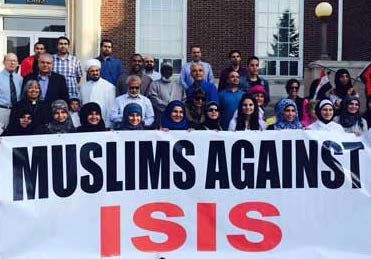
The US Council of Muslim Organizations (USCMO), a coalition of leading national and local Muslim organizations, has condemned the murder of American journalist James Foley at the hands of the socalled Islamic State of Iraq and Syria (ISIS). Members of USCMO include American Muslims for Palestine (AMP), Council on American-Islamic Relations (CAIR), Islamic Circle of North America (ICNA), Muslim Alliance in North America (MANA), Muslim American Society (MAS), Muslim Legal Fund of America (MLFA), Muslim Ummah of North America (MUNA), The Mosque Cares (Ministry of Imam W. Deen Mohammed), and American Muslim Alliance (AMA).
In a statement, USCMO expressed its deepest condolences to the Foley family, and wholly condemned the ideology and actions of ISIS, as have Muslim groups around the world including the Organization of Islamic Cooperation (representing 57 countries and 1.4 billion Muslims), the Muslim Council of Great Britain, the Arab League, Al-Azhar’s Grand Mufti Shawqi Allam in Egypt, and many others. “We are heartbroken by the brutal death of Mr. Foley,” said Oussama Jammal, USCMO secretary general. “It states in the Qur’an that the taking of one life is the equivalent of killing of all humankind and the saving of one life is equivalent to the saving of all humankind. Islam abhors and rejects the murder, mayhem and Terror being spread by this group of criminal individuals.”
Author: Staff Writer
-

US Muslim Organizations Condemn Murder, Denounce ISIS
-

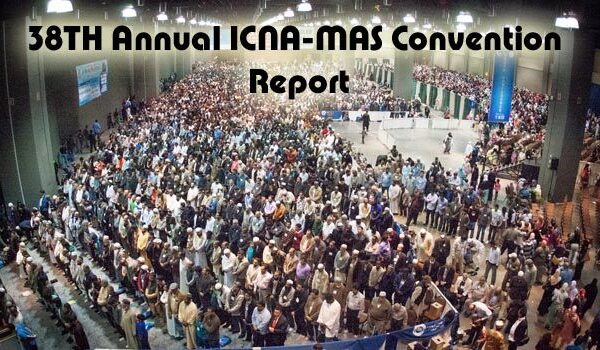
38TH Annual ICNA-MAS Convention Report
Alhamdulillah, the 38th Annual ICNA-MAS Convention, held in Hartford, CT over the Memorial Day weekend, was a huge success! The theme of this year’s convention was “Islam: The Pursuit of Happiness.” This year’s convention focused on the core driving force in every human’s life – The quest for true happiness. All praise is due to Allah, the Most High, who gave us the opportunity to make this convention possible. We also thank the Connecticut Convention Center and the City of Hartford for hosting us. The President of ICNA, Naeem Baig, said, “We thank Allah, subhanahu wa ta’ala, for such a wonderful event. And, we also thank our speakers and scholars, our attendees, vendors and volunteers all of whom made this convention a memorable event.”
Demographics
About 18,000 people attended the convention. Attendees came from 37 states, and among those, roughly 35 percent were youth. Over 78 percent of the participants attended all three days. Close to 14,000 unique viewers watched the convention programming by live webcast. Keynote and entertainment sessions on Sunday drew the most viewers. Attendees survey revealed that majority of convention delegates are multi-lingual and spoke over 40 languages representing almost entire Muslim world.
An Environment of Camaraderie and Fellowship
As in past years, attendees were excited about the opportunity to learn, to meet friends old and new, and to be in the company of brothers and sisters of diverse backgrounds from all over the country. The feelings of camaraderie and fellowship were palpable as attendees listened to inspiring speakers, enjoyed halal meals or snacks from the many stands set up throughout the facility, or browsed through the extensive bazaar.
Varied and Issue-Specific Programming
The convention featured 95 sessions that were designed to address the needs of all age groups and both genders, along with those of varying ethnic, professional, and educational backgrounds. There were 11 main sessions, 10 youth sessions, and 74 parallel sessions. The parallel sessions addressed topics such as marriage, family, and parenting issues, self-development, Muslim role models, reverts, and much more. New additions this year were Islamic Art and Arabic Language sessions.
Diverse Speakers and Field Experts
As always, a very diverse pool of speakers addressed this year’s convention, including leading scholars, academics, imams, and community activists. Among the 111 who gave presentations were Imam Siraj Wahhaj, Sh. Mokhtar Maghraoui, Sh. Yasir Qadhi, Nouman Ali Khan, Sh. Yusuf Islahi, Dr. Jamal Badawi, Imam Zaid Shakir, Sh. Yaser Birjas, Imam Suhaib Webb, Sh. Abdul Nasir Jangda, Wisam Sharieff, and Fr. John Crossin.
ICNA speakers who were showcased at the convention included Sh. Abdool Rahman Khan, Sh. Mokhtar Maghraoui, Dr. Zahid Bukhari, Imam Hafiz Zafeer, Imam Omer Sulieman, Dr. Irfan Khan, Dr. Khurshid Khan, Dr. Mohammad Yunus, Dr. Abaid Choudry, Jane Aslam, Javaid Siddiqi, Malika Rushdan, Dr. Zahid Bukhari, Hafiz Inyatullah, Sr. Sumara Khan, Sr. Farhana Matin, Dr. Mohsin Ansari, Sr. Saadia Yunus, Waqas Ahmad, Yasir Ali, Dr. Ahmadullah Siddiqi, Nahela Morales and Qasim Mazhar
Leaders of other national Islamic organizations were present. There were also family experts, community activists and leaders, interfaith leaders, entertainers, and sports celebrities who spoke and contributed to the diverse experience for all who attended. We thank all of our speakers, the majority of whom covered their own logistical expenses.
Main programs
The eleven main sessions at this year’s convention spoke to the theme which included the following topics: the trends in society, materialism and consumerism, social justice, and secrets of true happiness. The Keynote Session discussed faith as the source of true happiness, distinction between fun and happiness, and the moment of ultimate happiness.
ICNA Shariah Council
Saturday afternoon’s main session included a Q&A with the ICNA Shariah Council, featuring scholars from diverse backgrounds. The session was dedicated to answering any questions that the audience had.
Deen Intensives and Classes
The convention hosts a myriad of sessions in which field experts cover numerous aspects of a topic in a short period of time. This year, as last year, the program committee also catered to those who were interested in longer intensive classes for in-depth study of a particular topic. Sessions that were three-plus-hours long were held on the following topics:
- Intensive: The Seekers of Sustenance
- Understanding and Achieving Happiness
- The Gift of Merciful Love; Love me by / for the Love of Allah
- I CAN Learn Arabic! and Learn Quran in 48 Hours
Civil Rights Series
ICNA Council for Social Justice hosted attorneys and activists from various fields for brief presentations and Q&A. The topics included:
- Guilty of Being Muslim
- Preemptive Prosecution: Prison with No Crime
- Informants? How and Why do they do this?
There was also a screening of an award winning documentary “The Test of Freedom” showing how US Muslims live out their faith and confront discrimination facing growing hysteria and bias
Matrimonial Services
The matrimonial volunteer team assisted the match-making process throughout the convention. An office was set up to provide courteous service and a quiet setting for the application process. All applicants were then invited for a special session on Sunday night to have face-to-face meetings in the presence of their guardians and ICNA representatives. Additional sessions were held on Saturday night in which topics were discussed related to the spouse-selection process and getting married. The sessions were very well attended and went late into the night.
Youth Conference: The Seekers: A Quest for Hope
Thousands of youth made this summer unforgettable by starting it off at the Youth Conference 2013, a Young Muslims (YM) hosted event running parallel to the annual ICNA convention. They rejuvenated minds, bodies, and souls with dynamic speakers, intensive workshops, basketball tournaments, Qiraat competitions and entertainment sessions. The main sessions hosted by the Youth Conference were as follows:
- The Valley of Despair
- The Trail of Repentance
- Where Are We Headed: Trends in Society
- Crossroads of Hope: Journey to an American Muslim Identity
- The Peak of Serenity
Programming for Children by MCNA
MCNA held programs in children featuring reptile show, drumming sessions, arts & crafts, face painting, story telling, self-esteem workshops, group activities and motivational talks by youth. Alhamdulillah, activities were well received.
Midnight Basketball for Male Youth
Once again boys and young men were all marching at midnight towards the basketball courts set up by YM on Sunday night. This event is very popular among youth, young presenters, and some of the speakers whose hearts are particularly attuned to the young people. The basketball tournament runs from midnight to Fajr prayers.
Fun and Games by Camali for the Kids
Camali, the loveable Muslim character, was again a huge hit among children and parents. This year, mountain climbing and bungee jumping were the main attractions, packed with children at all times. Camali hosted shows at regular intervals and also performed a play in the main hall on Sunday. The attendance was impressive.
First Ever Mobile App for Convention
This year ICNA launched the first ever web app for iPhone and Android. The app which was downloaded by about 2700 people, allowed for people to watch the live stream, view the program including parallel programs, hotel information and accommodations, food menus, flight information, and much more.
Window to Islam
“A Window to Islam,” a diverse interactive gathering, provided an opportunity for people of all faiths and backgrounds to discuss a range of issues pertaining to Islam in America. This was a full-day program that featured informative sessions, extensive Q&A rounds, a dinner and time for socializing. This event featured the following sessions:
- Atheism
- Quran in the Scientific Revolution
- Modernity, Secularism and Islam
The prime objective of this session was to break stereotypes and provide the attendees with the opportunity to ask questions they may have and to interact with Muslims in a friendly and engaging atmosphere. One of the convention attendees accepted Islam and took his shahadah publicly during an entertainment session.
Islamic Bazaar
There was a convivial spirit in the air at the bazaar which featured roughly 300 booths. Beautiful and uplifting recitations of the Qur’an resonated from the audio/visual booths. Everyone enjoyed the wide variety of books, CDs and DVDs, gifts, and artwork. And the women also had much to see as they browsed through booths featuring hijabs, jilbabs, jewelry, scarves, and healthcare products. Many of ICNA departments had a strong showing on the bazaar floor, allowing the people to become more familiar with ICNA’s diverse services and projects. Businesses, as well as relief, dawah, and educational non-profit organizations also had a good presence.
Community Recognition Luncheon
This invitation-only luncheon was held on Sunday at noon. The event was attended by 200 distinguished guests. It featured an award presentation to following individuals:
- Imam Zaid Shakir
Life Time Achievement Award - Professor Jimmy Jones
Community Service Award - Michael Costelli (General Manager, Hartford Convention Center)
Appreciation of Service Award
Qiraat Competition
A competition was held for boys and girls on Sunday. Participants between the ages of eight and sixteen were divided into three categories and competed in two rounds.
Interfaith Dinner Session
The convention hosted an interfaith dinner on Sunday. Local leadership from all major faith groups was represented. Close to 125 individuals participated in this event. Interfaith leaders spoke in two main sessions as well. A special parallel session for Newtown Interfaith Panel Discussion on the Newtown Interfaith Experience was held on Saturday.
And the Survey Says…
- Masha Allah, 93.4% were satisfied with the convention while 3.3% were not.
- As for convention publicity, 42.2% heard about the convention via email, 32.2% via website, and 15.9% via social media. Confirming ICNA’s massive grassroots presence, close to 30% also heard about the convention from an ICNA volunteer.
- 79.4% attended the convention for its effective programs. 21.6% treated the convention as their family vacation. 58.3% appreciated the Isalmic environment. 25.9% enjoyed shopping in the bazaar.
- While main sessions, youth programs and parallel sessions were attended by everyone, 16.6% attended a non-English session as well.
- Food choices was the most complained-about issue.
- Sharing Some Comments and Feedback
- Alhamdullilah! 🙂
- Absolutely wonderful! My family and I look forward to it every year!
- Definately need a bigger place for this type of convention.
- I would like a more healthy food options like fruits and vegetables.
- Please arrange one room for mothers to attend to their babies.
- Very well organized but very hard to find hotel rooms.
- Conclusion
The annual convention, as always, is a huge undertaking. The task becomes even more daunting when performed by volunteers. These dedicated individuals work day and night to make sure that the convention delivers on promises made to participants. May Allah SWT reward them all for their sincere efforts, and forgive any shortcomings. May He make this a reason for all to be saved from Hellfire, and entered into Jannah. Ameen.
We invite all of you to be part of this dynamic team of volunteers. Join ICNA and the convention team to serve the cause of Islam. To volunteer, please email us at volunteer@icna.org. We also invite you to share your photos, blogs, and constructive criticism to further enhance this effort, insha’Allah. See you all next year!
-

HHRD’s Worldwide Campaign Updates
Updates from July-August 2013 Issue of The Message magazine.
“Help Syria Now” Campaign
According to the UN, from March 15, 2011 until April 30, 2013, more than 93,000 lost their lives and over 500,000 were injured due to the conflict in Syria. More than 5.75 million Syrians have been displaced from their homes, of which 4.25 million remain in Syria, while others are refuges in the nearby countries of Turkey, Lebanon, Jordan, Iraq, and a few others. HHRD’s (Helping Hand for Relief & Development) “Help Syria Now” campaign is focused on providing assistance to both the internally displaced persons (IDPs) inside of Syria (via Turkey) and refugees in Lebanon and Jordan. HHRD is now a registered NGO in Jordan, making it possible for HHRD local staff and volunteers to implement and monitor humanitarian assistance to the Syrian refugees as well as the IDPs. HHRD staff members from the U.S. visited Jordan, Lebanon, Turkey, and Syria in October 2012 and again in April 2013, to monitor all the ongoing efforts of HHRD in Syria. These important activities have been possible through the support of individual community patrons and donors. Through the end of June 2013, HHRD has distributed over $1 million worth of food rations, winter clothes, household items, hygiene items, and more, inside Syria and in the neighboring countries that are sheltering refugees. In addition, almost $1.5 million worth of in-kind gifts of medical supplies, equipment, food items, clothes, household items, hygiene items, and much more, have been sent via more than 15 containers to Lebanon, Jordan, Turkey, and Syria. These efforts are ongoing and patrons of humanity can visit www.HHRD.Org to offer their generous support during the month of Ramadan 1434 and beyond.
Overall HHRD Efforts:
More than 30,000 families have been assisted (more than 150,000 persons) with $1.82 million (including in-kind gifts).
The Orphan Support Program
The Orphan Support Program (OSP) of HHRD helps in identifying families in needy situations. It focuses on assisting children who have lost their parents and/or guardians and provides services to help them to fit into society in a healthy and productive way. Donations contribute toward the assistance of more than one orphan. Donations are used to provide for the orphans’ education, books, stationary items, and food in some instances. General Orphans Support can make a significant difference in an orphan’s life. We take care of following basic needs of the sponsored orphans:
- Subsistence — monthly ration, clothes, hygiene kits
- Education — includes school fee, books, school supplies, and two uniforms
- Health — includes medical checkups, immunizations
- Social Upliftment — includes extracurricular activities
- Child Protection Rights — includes inheritance issues and problems of family dysfunction or abuse
Orphan Sponsorship Program
With a presence in 11 countries across the globe, HHRD hopes to provide a better future for the children of this world with your donation of just $1 a day. HHRD allows you to support a specific child on an ongoing basis. Your donation, either through monthly or annual payment, is given directly to the orphan’s family or guardian. You will receive your orphan’s profile within two weeks of the first donation and the progress reports throughout the year. Orphans needing sponsorship reside in many countries including Pakistan, Kenya, Sri Lanka, Kashmir, Tunisia, Bangladesh, India, Palestine, Haiti, Afghanistan, Somalia, and Indonesia.
Islamic schools nationwide participated in HHRD’s “DREAM OF AN ORPHAN” Calendar competition. Hundreds of children’s drawings were submitted. and narrowed down to 12 winners, including one Grand Prize winner. The calendar cover displayed the Grand Prize drawing.
“Relief for Burma”
The country of Burma is located in Southeast Asia. The history of this country has been marked by one of the longest running civil wars between ethnic groups. Most significant is that 800,000 Rohingya Muslims have been subject to massacres, and for the past 70 years have been persecuted and discriminated against. The United Nations has said that these Muslims are, “The most persecuted minorities in the world.” They need government permission to get married, are not permitted more than two children, are subjected to arbitrary confiscation of land and property, forced labor at the age of seven, and discriminatory limitations to education. Systematic human rights violations have been definitely documented including genocide, systematic rape, child labor, slavery and human trafficking.
HHRD has joined hands with our partner agencies in Yangoon, Burma. As a result, more than 1500 families have received food rations in two locations, Eid ul Adha Udhiya has been performed; and refugees in India and Thailand are being assisted. HHRD has launched its “Burmese Relief Fund” where your donations help provide food and water for a family through HHRD has established a Myanmar office.Pakistan Earthquake
HHRD teams were in the region providing round-the-clock emergency relief to those affected by the 7.8 magnitude earthquake that rocked the area of Balochistan in April of this year. Nearly 4,000 people were provided with food supplies consisting of rice, oil, sugar, tea, candles, salt, lentils, and much more. Medical assistance was provided to over 300 people and over 300 tents were distributed. The Emergency Response Team visited more earthquake affected villages and distributed food packages, blankets, and tents to 105 families consisting of 735 individuals. HHRD team is actively participating in search and rescue operations via helicopter. The following relief items are urgently needed: immediate shelter (tents and tarps); basic food; drinking water; medicines; and medical relief camps.
HHRD established Skill Development Centers (SDCs) are providing opportunities, primarily for women, to learn skills necessary to earn an income. It helps them attain self-sufficiency, financial independence, and ultimately break the cycle of poverty.
Do your part – Help us Help the Helpless!
-
HHRD’s Syrian and Palestanian Relief Update
Spending time with Syrian refugees in Lebanon, Br. Irfan Khurshid and Br. Ilyas Hasan Choudry of Helping Hand for Relief & Development (HHRD) saw the heart-wrenching suffering of men, women, and children who have been displaced by the crisis in war-torn Syria. The Lebanese government is not allowing tented refugee camps, so Lebanese families are increasingly hosting displaced Syrians. There are reports of Lebanese individuals who drive to the border to pick up refugees and take them back to their homes. Lebanon faces its own economic and security concerns and already is stretched to outer limits by the decades-old refugee camps that have housed nearly half a million Palestinians. Some Syrians are now seeking shelter as well in these densely populated camps, taking up residence in squalid buildings whose hallways are strewn with trash, water is leaking from decrepit pipes, and exposed electrical wires hang everywhere. HHRD along with many other NGOs, are providing help to the refugees. The real story though, as shared by Br. Choudry, is the fierce human will for survival and the resilience of the human spirit amidst such tormenting circumstances. Br. Choudry describes their visit what they saw:
We distributed food rations and children’s gifts. We met some Syrian families… and…found brothers who were injured and in real bad condition. One of them has lost his legs; another had a brain injury. We also met Syrian families at an abandoned school, which has been converted into a refugee camp, where majority of the children were orphans, having lost their fathers. Some children were only a few months old. Wherever we went, we tried our best to make the children feel happy. So we played with them, raced with them, holding the smaller kids while racing the older ones. We gave them cookies and other treats. When we tried to take pictures, each child wanted to sit in our laps (maybe missing their fathers). Tears came to my eyes when one small child asked me to bend down and he kissed my cheek. I had the thought that in the U.S. we take these things for granted for our kids, and here this small child is so happy that he has given a special kiss on my cheek. This was the Gift of my lifetime.
I hugged the child and kissed him on the head. Another one looked at me, longing for a similar gesture. So I took his hand and kissed it. Other children, watching this, began to ask for my hand, kissed my hands, and put my hands on their eyes like it somehow soothed their souls for a moment in time. I wanted to cry aloud, but had to control myself. Totally heart wrenching!
Later on we went to a rehab and prosthetic center, where we met a lady, who read us a poem in Arabic. In the poem she said something like this – “World: So much has happened and you are quiet: Why? Why?!” This lady has lost two of her legs, lost her husband, lost her two children of four and two years. Yet, she was smiling, saying Allah SWT had written this in her fate and she has totally accepted it. Her only wish is to return back to a happy and prosperous Syria, living among her fellow country-persons. Really, I was dumbfounded, imagining what it would be like if I did not have my legs. What state would I be in? But here is someone who has lost everything but has gained so much in demonstrating her faith and trust in Allah SWT while suffering such extreme hardship.
At this center there was also a boy, all smiles, having lost one leg. His main concern was not that he has lost the leg, but perhaps that he will never ride a bike. The doctor who is treating him and working on his prosthetic is confident that soon he will able to ride a bike. This young and vulnerable boy will receive his first bike from his doctor. “
These are just a few of the untold numbers of stories of Syrian refugees, joining the ranks of millions of others worldwide who remain displaced. According to the 2006 World Refugee survey conducted by the U.S. Committee for Refugees and Immigrants (USCRI), roughly 33 million people are displaced from their homes. Twelve million are refugees seeking shelter in camps in countries other than their homeland; and 21 million are Internally Displaced Persons who remain in their own countries but are displaced from their homes by armed conflict and pervasive violence. According to the USCRI survey, the highest number of refugees and IDPs, roughly 4.2 million, are in the Middle East, comprised of Palestinians, Afghanis, and Iraqis; and now Syrians are swelling that number even further.
Br. Choudry also relates their experience in visiting a Palestinian camp during their time in Lebanon.
He says, “I never ever imagined such a horrible place to live: Absolutely unimaginable conditions they are facing. I have seen many Kutchi Abadis in Pakistan [unplanned settlements which arise with mass migration from rural areas to cities] which are almost similar to what I saw here. But I never thought people do Wudu and take showers with salt water… I did Wudu for Maghrib and my mouth was sour for many hours…Imagine living in a place where streets are about two to three feet wide, where all the utility wires and pipes are in the open going over your head and sometimes around your feet. Not suitable for human habitat at all, but our Palestinians brothers and sisters in humanity are living here for decades. How … Why…?”
Children grow up in these camps, playing among the tangled wires carrying bootlegged electricity and the open sewage flowing through gullies in the street. They live in small cramped quarters lacking ventilation and daylight. The children are surrounded by rampant crime and disease. The haunting question of “How…Why?…” follows the children’s every move. It should just as relentlessly pull at our sense of compassion and willingness to help.
Please do your part to help our brothers and sisters. Your donations help to provide food, shelter, medical supplies, warm clothing, blankets, and so much more. Remember the boy who lost a leg but dreams of one day riding his bike, a smile lighting up his face. Keep close to heart the woman who lost everything near and dear except her faith…and she too smiles. But that boy and that woman have shed countless tears, and the hearts of millions displaced from their homes are wrenched with sorrow and fear.
Remember also the tears of those who witness the tragedies and try to help, like Br. Choudry and Br. Kurshid. Please visit www.hhrd.org to do your part in bringing relief and restoring lives.
-
Mohammad Ali, Champion in the Ring to Champion of the Disadvantaged
In 1954 Muhammad Ali was 12 years-old and his bike was stolen after he left it in front of a Louisville, Kentucky department store. A police officer happened to be nearby and Ali approached him to report the theft. He told the officer that he wanted to “whup whoever stole it.” The officer, Joe Martin, was also the coach of a boxing program at Columbia Gym and told Ali that if he was going to “whup” somebody, he better learn to fight properly. Ali showed up the next day at the gym and the rest is history. Ali has said that Martin is the one who taught him to “float like a butterfly, sting like a bee.”
Considered one of the greatest, if not the greatest, in boxing history, Ali won three World Heavyweight titles. His words, however, speak of a deep understanding of the dedication it takes to excel: “Champions aren’t made in gyms. Champions are made from something they have deep inside them – a desire, a dream, a vision. They have to have last-minute stamina, they have to be a little faster, they have to have the skill and the will. But, the will must be stronger than the skill.”
Ali retired from boxing in 1981 and brought that same drive and dedication to social activism and humanitarian work. But as early as 1966, Ali was already showing his benevolence, visiting a home for orphans in Notting Hill, London, sitting with a large group of children and reading a book to them. This benevolence has been fully actualized over the years. As noted on the Muhammad Ali Center website, alicenter.org, Ali “has hand-delivered food and medical supplies to such needy sites as the Harapan Kita Hospital for Children in Jakarta, Indonesia; the street children of Morocco; and Sister Beltran’s orphanage for Liberian refugees on the Ivory Coast, to name just a few.”The Muhammad Ali Center was opened in 2005 in Louisville, Kentucky as the realization of Ali’s long-held desire of “creating a place to share, teach and inspire people to be their best and to pursue their dreams.” Despite a diagnosis of Parkinson’s disease in 1984, Ali has worked tirelessly to spread peace and freedom around the world. During his boxing days, Ali was known for his bravado, proclaiming himself “the greatest.” Yet, years later, as he matured and deepened in spiritual understanding, Ali said, “God gave me this physical impairment to remind me I am not The Greatest — He is.”
One touching story is told about a luncheon held in Muhammad Ali’s honor at Britannia Stadium in Stoke-on-Trent in Britain in 1997. Ali was there with his wife Lonnie. By 1997 his tremors were severe and his speech was slow and slurred. A man approached Ali and his wife and they recognized in him the tremors of Parkinson’s. The man told them that his teenage son was embarrassed about the way his hands shook and didn’t want to go anywhere with him in public, but that he loved Muhammad Ali and had enthusiastically come to this luncheon. Lonnie asked the man to bring his son to their table. The man and his son sat with the Ali’s for a while and finally Lonnie told the boy that her husband was never embarrassed by his condition and that it only made him stronger. She told him to be proud of his father and to help him, that their solidarity would make them both stronger. The father and son had tears in their eyes and hugged each other, thanking Muhammad Ali and his wife Lonnie for the inspiration.
This year Ali has turned 70. John Yarmuth,U.S. Representative from Kentucky, introduced the Muhammad Ali Legacy Act to “honor his values and build upon his humanitarian work.” The bill would allow non-profit organizations to work under the auspices of the State Department to promote the values that Ali has lived and worked by, including respect for all people, helping others, and promoting spirituality. It would also advocate peace-building, violence prevention, and the combatting of radicalism worldwide. On the floor of the House of Representatives, Yarmuth said about Ali, “He’s a man of peace and justice, of patience and grace, a visionary who changed the boxing world so he could change the entire world.”
None can argue that Muhammad Ali doesn’t do his part to change the world. Ali has said, “Service to others is the rent you pay for your room here on earth.” And serving others is what he has done, as a devotion, since retiring from boxing. According to the Muhammad Ali Center website, he travels “upwards of 200 days a year” and through his relief work has provided “an estimated 22 million meals to feed the hungry.” Ali has collaborated with Yank Barry through the Global Village Champion Foundation to provide humanitarian relief in numerous countries across the world including Albania, the Bahamas, Belarus, Bosnia and Herzegovina, Burundi, Buryatia, China, Colombia, Cote d’ Ivorie, the Democratic Republic of Congo, El Salvado, Guatemala, Honduras, Indonesia, Kazakhstan, Kenya, Liberia, Mexico, Morocco, Mozambique, the Netherlands, Nicaragua, Peru, Romania, Russia, Rwanda, South Africa, South Korea, Sudan, Turkey, Ukraine and Venezuela.
In recognition of his humanitarian work, Ali was appointed the United Nations Messenger of Peace in 1998 and in that role has hand-delivered food and medical supplies to poor and war-torn regions and populations around the globe. He supports a myriad of projects to end hunger and eradicate poverty, and to provide educational opportunities to children in the poorest communities. He has said, “To be able to give away riches is mandatory if you wish to possess them. This is the only way that you will be truly rich.” Whether it’s sending $100,000 to a senior citizen center for the handicapped to keep it from closing, helping to negotiate the release of hostages in Iraq in 1990, traveling to South Africa to meet with Nelson Mandela when he was released from prison, or being chosen to carry the inaugurating flame for the 1996 Olympics, Ali is always a commanding presence, eliciting love and admiration everywhere he goes. Called “Mr. International Friendship” by former President Jimmy Carter, Ali has more recently been characterized by President Obama as a “force for reconciliation and peace around the world.” In 1997 Muhammad Ali received the Arthur Ashe Courage Award and in 2005 he was awarded the Presidential Medal of Freedom.
While he came from a Baptist-Methodist background, Alijoined the Nation of Islam in 1964 and in 1975 embraced the tenets of Sunni Islam. In Muhammad Ali: His Life and Times, author Thomas Hauser quotes Ali on his experience when first becoming Muslim: “I’d sneak into Nation of Islam meetings through the back door. I didn’t want people to know I was there. I was afraid, if they knew, I wouldn’t be allowed to fight for the title. Later on, I learned to stand up for my beliefs.” Being outspoken about his beliefs and convictions led to him being seen as a controversial figure in his boxing days. The transformation to a person who is considered aphilanthropist and elder statesman is a remarkable story. These days he has replaced braggadocio with humbleness. “Faith is something you don’t brag about,” he said. “It’s not for publicity. In your heart and soul, only God knows that it’s good. He’s the only one you have to face in the end.”
In a book co-authored by Hauser and Ali himself, Healing: A Journal of Tolerance and Understanding,Hauser says, “Muhammad Ali is the most loved person in the world. Everywhere he goes, wherever he goes, people of all colors and religions crowd around, hoping to get close to him. I’ve seen it happen so many times, and each time, I ask myself, If we can all get together and have a meeting of the minds on Ali, why can’t we all get together, period? I look at this man and I say to myself, God is trying to tell us something.” Ali and Hauser articulate a beautiful message: “If today’s world is to be truly healed, that healing must be achieved one person at a time. The tolerance and understanding necessary to heal must come from each and every one of us, arising out of our everyday conduct, until decency reaches a flood tide.”
That commitment to healing through tolerance, understanding, and decency continues to impel Ali. He has long campaigned for debt relief for the poorest of countries, many of which are in Africa. A World Bank program called the Heavily Indebted Poor Countries Initiative (HIPC) was put in place in 1996 as a result of extensive lobbying by individuals and NGO’s. As of December of last year, 39 countries (of which 33 are in sub-Saharan Africa) were deemed by HIPC to be eligible. To date, 36 of those countries have received some debt relief. Such relief is conditioned upon meeting a range of economic management objectives, and that the savings be channeled into health care, agricultural development, and free primary education.
Now 70 years-old and slowed down by Parkinson’s, Muhammad Ali nonetheless continues on the path he has chosen, to feed the hungry, provide medical care, alleviate suffering, and stand up for those who have been denied freedom and dignity. And he reminds us that those of us who are able to give, to donate, to contribute to the betterment of this world, should remove the impediments wherever they might be — even if in our own souls — which keep us from the caring and generosity of spirit that Islam enjoins. Muhammad Ali, the man who went from champion in the ring to champion of the disadvantaged, says, “It isn’t the mountains ahead to climb that wear you out; it’s the pebble in your shoe.”
-
Africa Initiative of Helping Hand for Relief & Development
The year 2011 saw dramatic changes and upheaval in the North African nations of Algeria, Egypt, Tunisia, and Libya. Helping Hand for Relief & Development (HHRD), in partnership with local non-governmental organizations (NGOs), provided emergency humanitarian assistance to thousands in these countries, and is continuing to provide services. HHRD staff member Irfan Khurshid went into the affected areas to establish the partnerships and relief work.
In the middle of July, 2011, in the Horn of Africa (Eritrea, Djibouti, Ethiopia, Somalia, and Kenya) a severe food crisis occurred due to historic drought that threatens the lives and livelihood of more than 10 million people. Many refugees from Southern Somalia fled to the neighboring countries of Kenya and Ethiopia where they have to live in crowded camps near the borders, in unsanitary conditions.
The crisis warranted swift action by HHRD which, according to its mission, is committed to serve humanity by integrating resources for people in need, and striving to provide immediate response to disasters. HHRD has been working in the Horn of Africa, mainly through the Water for Life and Orphan Support programs, and seasonal projects like Iftar and Eid Gift Donations, in collaboration with partners Islamic Foundation of Kenya (IFK) and the Young Muslim Association (YMA).
Establishing HHRD Presence
The severe situation in the Horn of Africa called for sending emergency relief teams from HHRD Pakistan to Africa. The first team to arrive in July, 2011 on the eve of Ramadan 1432 included Azmat Akbar, Sajid Iqbal, and Uzair Khan. In partnership with partners IFK and YMA, members of HHRD Team started to establish food distribution, water provision, and medical assistance in ten villages near the border of Kenya and Somalia, where Somali refugees were living.
Immediate Respite
The objective of emergency response work is to save as many lives as possible, as mentioned in Qur’an 5:35: “…and if any one saved a life, it would be as if he saved the life of the whole people…”
In the first month, around 3,200 malnourished or undernourished families were reached (about 20,000 persons), and given food ration for one month. Also during the last ten days of Ramadan and on the occasion of Eid, a cooked meal was provided and gifts were distributed among the children. Affected populations in Garissa, Isiolo, Dada Jabula, Dadab, Iffo Camp, Garbatula, and several other villages were reached.
A second major project was started involving the trucking of water to five villages for three months, with a water tanker filling the water storage tank in each of the villages, including Sudah Lan, Hudumo, and Diisow 1 in Fafi District; and Diisow 2 and Agra Gudud in Dujis. Around 9,000 persons and 70,000 livestock benefited from this vital project. In addition to the food distribution and water provision, more than 6,000 individuals received medical treatment, 180 children were immunized, and 274 basic health awareness sessions were organized by HHRD in the Emergency Field Hospital in Dada Jabula, Kenya.
Celebrating Eid with Those in Need
The HHRD team was so moved by the plight of those they were striving to help through the blessings of Allah SWT that they decided to stay in Kenya for Eid, even though they certainly wished they could be in Pakistan to celebrate Eid with their own families. They celebrated Eid-ul-Fitr with the refugees from Somalia and the orphans HHRD is sponsoring in collaboration with the Islamic Foundation of Kenya and the Young Muslim Association (YMA).
Smiles Across Miles: In-Kind Gifts Program
A few weeks after arriving in Kenya, the HHRD team started the process of registering HHRD as a local Kenyan and Somali NGO as the first step in establishing the HHRD long-term development work in Africa. They also laid the groundwork for the In-Kind Gifts Program which transports containers of basic necessity items, food, and medical supplies and equipment donated in various cities throughout the U.S. Last year, in the month of Ramadan 1432, HHRD organized the Horn of Africa In-Kind Gifts Program (see the list of centers at http://www.hhrd.org/hhrd-In-KindDonation.aspx). Despite fasting and hot weather, a large number of donors and volunteers came out to be part of these important efforts, and around the time of Eid-ul-Fitr, the first container was shipped from Chicago. Many individuals of various other faiths also generously joined in the efforts.
One of these volunteers said: “We are working on a very hot day, when it is 100 plus degrees, for four to five hours to pack necessary things for those who have been facing harshness of weather and elements for months. I have really understood what it means to be hungry and thirsty while facing the severe weather. I want to thank Helping Hand for organizing this effort for humanity and creating opportunity for us here to be working with our own hands for humanity in dire need.”
At the time of this report, 15 containers have been shipped to the Horn of Africa valuing $1.2 million. Of these, nine containers have already been distributed, benefiting a population of 121,915 (20,320 families). Containers have included medical equipment and supplies, as well as food.
HHRD in Mogadishu, Somalia
In September 2011, as HHRD was about to register itself as an NGO in Somalia and Kenya, Country Director Pakistan of HHRD, Fazalur Rehman, visited the Horn of Africa to monitor and evaluate the progress of the relief work in Kenya and in Somalia.
Senior Leadership in Horn of Africa
An HHRD delegation of members of the Board of Director visited Africa once the registration was complete, in order to set up the Main Office of Africa Initiative in Nairobi, Kenya. This involved establishing the initial guidelines and protocols for the relief work and to make necessary outreach efforts to salient stakeholders in the initiative. Members of the delegation included Dr. Farrukh Raza, Chairman of HHRD; Fazalur Rehman, Country Director Pakistan; Dr. Zahid Bukhari, President of ICNA; and Irfan Khurshid, Director for International Affairs.
The rest of the Board members returned, while Irfan Khurshid, Director for International Affairs, went to Somalia and Tanzania to establish the office of Helping Hand in Mogadishu, and explore the possibilities of initiating projects in Tanzania.
Africa Summit
HHRD, in collaboration with the Islamic Circle of North America (ICNA), organized and held the Africa Summit 2011 in December of last year. The conference was a success as participants reached a consensus about the top four priority areas of long-term humanitarian work to be focused on in Africa: poverty eradication, health, education, and the empowerment of women.
Initial Steps Towards Long-Term Plan
Irfan Bashir joined HHRD as the Regional Director of Africa, and following the four key agenda items specified by the Africa Summit, the Africa team has gradually initiated some pilot projects in order to see how various development programs can be instituted in the African context. Some of these pilot projects include:
Provision of sustainable water facilities in drought-affected areas: Construction and installation of hand pumps; construction of VIP latrines; waste management and garbage disposal; hygiene promotion; and training of teachers. Over 23,000 people are expected to benefit from these projects.
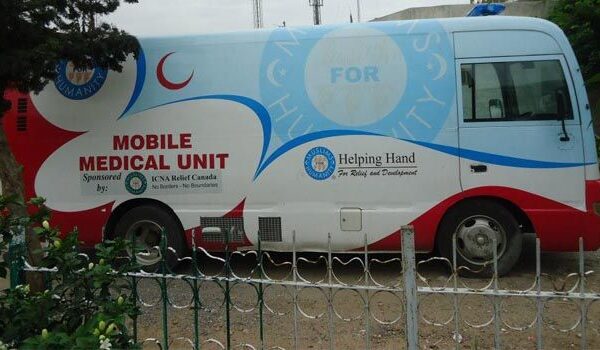
Mobile Health Units in Mogadishu, Somalia: Objectives are to reduce and control the outbreaks of various common diseases such as measles, diarrhea, and skin infections; to improve the health of the IDPs (internally displaced persons); to provide medical care for an increased number of individuals and, through patient education, to achieve better compliance with treatment protocols by the patients; eight medical camps were held and 548 patients were treated.
Mobile Health Unit in the Eastern Province of Kenya: Currently the number of patients taken care of by emergency healthcare and treatment are 1,870; conditions treated include respiratory infections, ringworm, tonsillitis, urinary tract infections, malaria, fever, eye infections, muscle pains, asthma, and diarrhea.
Skills Development Program (SDP): this program has recently been initiated, with the objectives of identifying potential trainees through a survey conducted by HHRD; to counsel potential trainees as to recommended training; to establish a vocational and skills development center at a selected location; to help facilitate trainees in areas of self-employment and income generation activities based on the skills acquired through SDP; and to develop linkages of skilled beneficiaries with market opportunities. In May 2012, two SDP centers in Kenya have been established, in Garissa and Isiolo, with computer training and tailoring training to be given to roughly 100 students in each SDP center.
Path Forward for HHRD in Africa
Following the recommendations from the Washington D.C. Africa Summit held by HHRD, as well as assessing the progress of work up to the current time in the Horn of Africa, HHRD will continue to move forward with short and mid-term relief, and long-term development programs, including but not limited to the following:
- In-Kind Gifts Program in Tanzania and Somaliland
- WASH Program in Tanzania
- Orphan Support Program in Tanzania
- Skill Development Program in Somaliland
- Establishment of microfinance activities
- Infrastructure Development Program
- Orphan Support Program
- Policy Making, Promotion, and Impact Assessment
- Coordination of networking with other stakeholders
- Long-Term Sustainability and Development Program in drought-affected areas and populations
-
Creating a Future for Somali Orphans
Helping Hand for Relief & Development (HHRD) is partnering with the Dr. Hawa Abdi Foundation (DHAF) to sponsor of 50 orphans in a one-year pilot project. DHAF is an internationally acclaimed organization whose founder, Dr. Hawa Abdi, has just been nominated for a Nobel Peace Prize this year. DHAF is an independent non-profit organization whose mission is to support emergency relief efforts in war-stricken Somalia. DHAF seeks to empower Somalis to take command of their own future. Since 1991, the organization has provided general, emergency, and maternal care to displaced Somalis, independent of their clan, gender, religious, or political affiliation. The DHAF camp, Waqaf-Dhiblawe, is presently hosting 90,000 internally displaced persons (IDPs).
For the last four years, DHAF has been running a small school in the camp. This school has 848 students and 15 teachers, offering courses for grades 1 through 8. The school is committed to providing quality education to the students in an equitable and efficient fashion. Half of the children are girls and all the students are provided with education at no charge. The school is continuously expanding, adding more rooms and classroom materials each year. Currently work is being done to create a co-op program to give the students employment opportunities when they graduate, through apprenticeships with a professional in the camp so that they can learn a trade and escape the cycle of poverty.
There are 50 students at this school who are orphans, who will be sponsored in the one-year pilot project of HHRD in collaboration with DHAF. Both HHRD and DHAF are solution-oriented organizations that seek to provide people with the skills, resources, and knowledge to stand on their own feet.
If this pilot project is successful, additional relief and development programs and projects will be jointly sponsored by HHRD and DHAF, and through the support of generous philanthropists across the U.S. like you.
Please visit www.HHRD.org for more information and donations.
-
History of Islam in Africa
The Prophet Muhammad reminded the Muslim world, “We are a single community, distinct from others.” The distinction shapes the Muslim’s religious identity and underlines the nature of the Islamic ideal, whether the purity of the monotheistic concept, the uncompromising quest for morality, or the lifelong seeking of knowledge. It also accentuates the common historical thread running through the international Muslim community.
In Global, African, and Near Eastern studies, the role of the African Muslim may be the most overlooked by Western academia, and involve the most tenacious myths about the spread of Islam. The lack of African sources allowed scholars to make false assumptions as they evidenced the old axiom, “scholarship follows the national flag.” The dominance of Western scholarship resulted in complete silence about African creativity, innovation, exploration, trade, and skills in scholastic writings and textbooks.
In 1945, British historian Hugh Trevor Roper galvanized the Eurocentric view when he wrote, “the only history in Africa is the history of Europe in Africa.” Given the self-perpetuation of cultural exceptionalism, it is not surprising that African history remains mythologized under the shadows of Euro-American history. Yet, the dissemination of Islam in Africa by first Arabs and then African Muslims, and the role that Islam and Muslims have played in the development of Africa, are essential to a balanced and accurate understanding of African history.
Arab Eyes on Mediterranean Africa
In the seventh century, Islam entered Africa from the northeast corner. Unbeknownst to the second caliph Umar Ibn al-Khattab, his most competent general, Amr Ibn al-As’, led as many as twelve thousand soldiers and archers across what is now the Red Sea and conquered the city of Fustat (which became Cairo in 920). With relative ease, Amr claimed Fustat from disillusioned and tired Byzantine troops who eventually fled. Under Umar’s caliphate, he established military garrison towns and Fustat was of the first.
Umar reminded his soldiers who were stationed in both Syria and Egypt, “we are a nation of arms.” Yet, he forewarned his troops, Bedouin tribesman who he perceived as naive, to “co-exist with them [the local people], but not to assimilate.” After effortlessly seizing the former Roman-conquered cities of Cairo, Constantinople, Alexandria, and Tripoli, geographically strategic Egypt encouraged military movements west along the perilous Mediterranean shores. Gradually, Muslim armies rode south, along the hypnotizing White Nile (a tributary of the Nile in Egypt), exploring the land of Kemet, the Kushite, Ethiopia, and the east African panorama with its jagged coastline, and out into the temperamental Indian Ocean. From Alexandria, the jewel of Alexander the Great, it took Arab Bedouins seventy-five years and four enterprising generals to cross Mediterranean Africa, despite continuous resistance by Berber mountain clans.
The objective of the law is not to apply technicalities regardless of their consequences, but to achieve the ultimate moral and ethical objectives that represent the essence of Godliness on this earthArabs thought North Africa contained hidden wealth left by the Romans, but, surprisingly, they found nothing of such riches. Resistance to their encroachments was led by the famous Berber, Kuysaila, who subsequently accepted Islam and rose to fame after assisting the Arab Bedouins along their march through Morocco. However, after hearing of the senseless slaughter of his mountain village by Umar Ibn al-Khattab’s aggressive maverick general, Uqba Ibn Nafi, Kuysaila retreated and waited two years in the Anti-Atlas Mountains of Morocco. Upon the commander’s return from his triumphal campaign to the Atlantic Ocean, Kuysaila retaliated for the slaughter of his people by killing Uqba.
After conquering Alexandria, Arab Bedouins met the legendary and revolutionary Berber, Al-Kahina, a woman who, it was said, fought like a man. According to lore, when she was enraged her hair stood on end and her coal-black eyes widened in intensity. Al-Kahina organized thousands of Sanhaja fighters and with cunning and prowess used the mountains they knew so well to surprise, sabotage, and kill Arab soldiers, all the while maintaining hope of independence in the minds of the Berbers who were used to extended foreign invasions.
By the twelfth century, Christians essentially disappeared from North Africa, while the Coptic population of Egypt shrunk to less than ten percent. For the most part, the Saharan trade, except for the period when Europeans traded for slaves and gold, remained exclusively a Muslim trade as late as the seventeenth century. On the other hand, during this time, Christians controlled the maritime trade of the Atlantic and Indian Oceans. Although Umar entered Egypt, all of North Africa was soon to become a prime focus under the Umayyad caliph Muawiyya and his son and successor, Yazid. It would not be, however, until the Abbasid reigns of al-Mansur, al-Mahdi, al-Hadi, and the great Harun ar-Rashid, that expenditures from state coffers maintained security in Africa.
The puritanical African Murabitun or Almoravid, known in the west as the “Moors,” were a Berber dynasty of Morocco in the 11th century. They adhered to the Maliki School which continues to dominate sub-Saharan Africa. In accordance with the ethics of Islam, the Almoravid, under two great leaders, Abdullah Ibn Yasin and Ibn Tashfin, sought, to reform Africans gravitating away from orthodox Islam as established by the Prophet Muhammad. The Almoravid, who originated on the third cataract of the Northern Senegal River, marched in the hopes of eliminating pagan practices. In the process, they sent reformist signals to succeeding West African kings like Ahmed Tall, Uthman don Fodio, and Ibrahim Sori. While they attempted to reinvent the image of Islam in Africa, or duplicate the Abbasid period in Africa, reformists fought against persistent pre-Islamic cultural traditions.
Basil Davidson, a British historian, measured the Abbasid Empire against West Africa’s golden era. “Centuries afterwards, in the Western Sudan, the great reforming movements associated with Uthman don Fodio would draw inspiration from a Utopian picture of the Abbasid era of the tenth and eleventh centuries, seeing in it the prototype of that ‘Rightly Guided Caliphate’ in which all Muslims had once enjoyed equality and justice. For them the ‘golden age’ of Islam could not possibly lie in Abbasid times. Rather it lay in the earliest years when, the ten years of the prophet’s rule in Medina, and perhaps the thirty years following his death were conceived as having formed an age in which human society had come as near to perfection as could be hoped for…”
The African-born Almoravid movement sought to reform Mauritania, Guinea, Senegambia, and Mali in West Africa, and at the request of the twelve threatened Reyes de Tarifa (the twelve Muslim kings of splintered Andalusia), recaptured eleventh century Spain from Alfonso VI. The Almohads now sailed from North Africa to re-secure the law and order, and after reconnaissance, they reaffirmed Spain as Muslim, and so it remained until 1235.
The Muslim world was recovering from a series of unpredictable onslaughts. In North Africa, now imbued with Sufism, we begin to see the wearing of amulets, the worship of saints and intercessors, the practice by some of making predictions about the future, and the dawn of the renowned mystical schools. The Fatimids replaced the Abbasid after their crushing defeat in 1258 at the hands of the Mongols in Baghdad, and reinvigorated the authenticity of heredity in Islam. Salah al-Din and his Ayyubids, known for their challenge of the Christian troops during the final Crusades, unseated the Fatimids in Cairo.
As in the Middle East, in Africa the Arabic language preceded Islamization. Acclimatization to the use of Arabic brought about commercial profits and preceded religious conversions. Where the Sahara married the Sahel (a region between the Sahara in the North and the Sudan savannas in the south), two worlds solidified through language and trade. By the eleventh century, an African trading expansion, with an emerging religious culture and the common commercial language of Arabic, became apparent. Conversion meant access to a wider platform of goods, traditional trade routes to the east, credit lines, adjusted pricing, and honor. Tauregs (the nomadic Berber people of the Saharan interior of North Africa) roamed both sides of the great divide, linguistically best equipped to profit from the crossroads of trade, and mediate differences between northern Saharans and sub-Saharans.
The Portal into West Africa
African Muslims produced five empires: Takur (what is now southeastern Mauritania, and Western Mali) which was lukewarm to Islam; the loosely governed Kanem (what is now the countries of Chad, Nigeria and Libya) and its successor-state Bornu; Ghana, although it never claimed Islam as the state religion but is considered by many the first African Muslim nation; Mali, the most written about; and Songhay the most fought over.
Despite Islam beginning to penetrate the indigenous consciousness and cause a shift in daily religious practices, local customs and beliefs persisted, which centuries later was used to justify the most violent raids of the Sokoto dynasty under Uthman Don Fodio. The spread of Islam among the Yoruba began late, well after the nineteenth century conversions of Wolof (a West African state that ruled parts of Senegal from 1360 to 1890), and increased after Fulbe (an ethnic group spread over many countries, predominantly in West Africa) conquests of the 1800s. Except in Ilorin, because of resilient traditional beliefs, Islam straddled the religion of the people. West Africans developed a unique religious parallelism with Islam and because of its ability to co-exist, shared local authority.
There are misunderstandings about the historical role of Arab Bedouin military conquests during the initial spread of Islam in Africa. Except for the 1591 marauding by al-Mansur’s Sanhaja Moroccan army led by Judah Pasha in Timbuktu, there were no military excursions below the Sahara. The second myth purports Arab Bedouin merchants brought Islam to Africa, and Arab military might destroyed African institutions and cultures. The spread of Islam south of the Sahara owes very little to Arab military occupation. What is more accurate is that Arab merchants reported to wealthy Arab sponsors the religious appetite Africans had for Islam. In time, teachers and imams relocated to African towns and became responsible for the spread of Islam. The role of the merchant was the introduction of Islam and a precursor of Arabization. It was, however, the scholarly community, the teachers and imams, who became the agents of Islamization. Merchants certainly inspired an intellectual curiosity about Islam, and on return to their homelands, they reported, as mentioned previously, the eagerness of the Africans to learn more about Islam. Typically, local West African rulers embraced Islam first and became the indigenous progenitors of the process of Islamization. Traveling scholars and imams, as long as they posed no threat to the existing socio-political order, completed the process of Islamization in both East and West Africa.
The masses initially considered Islam an innovation, and had difficulty fitting a universalist concept into their local context. The introduction of Christianity in Africa experienced the same social phenomenon and challenge. There is a revealing axiom about religious duality in Africa: “Publicly rulers claimed Islam, however, in private feared the fetish” (fetish worship involved attributing supernatural powers to some natural or man-made object). In the middle of the fourteenth century, Ibn Batutta attested to the division between indigenous practices and classical Islam. Expressing abhorrence, he wrote of gambling, drinking, sexual deviance, nudity, and idol-worship in Mali under Mansa Musa. Records indicate these practices caused a sterner Askiya Muhammad of the Songhay Empire to be religiously and morally repulsed.
At its peak, the Songhay Empire encompassed much of the territory that had belonged to the Mali Empire in the west. Malian hierarchy and early Abbasid infrastructure had its similarities and differences. African scholars of Timbuktu, unusually active in the political sphere, lived with more than a modicum of religious authority. The campaign to determine final authority played out between the civil authority of court qadis (judges) represented on one side, and the ulama (Muslim scholars) who embraced Islamic theology, on the other side. In dynastic form, the solution of the Abbasid royal courts was to absorb the ulama into the qadis community, control legal verdicts, and further their absolutist rule. In West Africa, where there was more success, the ulama and the qadis remained separate and empowered, each in their own sphere. As with the Abbasids, the kings of Mali lived in opulence and grandeur, secluded from the lay community. They adorned themselves with imported cloths and jewels. When entering the royal space, visitors sprinkled dust on their necks to designate their lowly position and absolute loyalty to the throne. The Mansas (kings or emperors) avoided demonstrations of their humanness, so they never slept, ate food, or changed clothes in front of others.
By the ninth century, Arab merchants made substantial profits in the marketplace. There Arabs found willing urban consumers, presenting them with abundant supplies of material goods for sale. Even as early as the ninth century, slow commercial expansion of Takrur territories found receptive African converts. Among the newly converted, Islam signaled the religion of transactions, literacy, and recording and documentation, all hallmarks of development and progress. Despite tactical religious conversions and the admiration for Islam’s literacy and administrative expertise, religion had little impact in the countryside. Only by the late twelfth century did religious conversions in West Africa accelerate, marked by such conversions as the King of Gao in 1010 and the King of Kanem-Bornu in 1068.
With the face of universal Islam peering over a pagan, parochial Africa, a second period begins in the thirteenth century. After southerly Taureg and Almoravid incursions, the empire of Ghana weakened through internal disputes and rival provinces. A pattern of dynastic disagreements and jockeying for the throne eventually shattered its strength, and diffused the wealth from the trade routes. The people of the rural areas, considered servile in status, but loyal to ancient traditions, reemerged, claiming positions of power. The demand from the countryside for increased participation in the towns created stress and political divisions which, like in the Umayyad Empire, ultimately caused its downfall.
In the first quarter of the fourteenth century, Sundiata, a descendant of the royal Keita family, rose to take the mantle of the new Mali Empire. A marginal Muslim, Sundiata expanded the empire, increased production from the alluvial gold fields, developed the military, and claimed to be a liaison with the spirit world. Just decades later, under Mansa Musa, Mali became the first African Muslim state, with Islam as the state religion. From Africa in History, Basil Davidson remarked about the Mali government, “It opens the way to a literate bureaucracy, to effective diplomatic links with distant powers, and to the inner reorganization of power and authority along the lines which cut across the separatist loyalties of traditional religion.” During the reign of Mansa Musa’s progressive government, Mali was Islamically reshaped, and repositioned. After completing the Hajj, Musa was recognized by Cairo as the western caliph of the Sudan (“land of the blacks”). During his reign, he sent a signal that tolerance of traditional and indigenous practices would remain; however, he alone would now be the representative of Allah.
By borrowing from the larger Muslim world, Musa built a literate nation. He replicated the Abbasid learning centers, and although illiterate himself, Mansa Musa found inspiration in scholarship and encouraged study abroad. He opened schools for both genders, hired translators and copiers of the Qur’an, gave stipends to scholars, elevated the status of imams, and opened the royal court. Known for his insistence upon civil law and highly reputed for his generosity, Mansa Musa became a household name. Pointing to his generosity with gold, an account of his visit to Egypt while on his way to hajj tells of the Egyptian economy taking a nosedive upon his departure.
With internecine squabbling in Mali, succeeding Mansas never embraced the long-range vision of Mansa Musa, and this, along with fiscal mismanagement, resulted in the empire capitulating to the Songhay. The Songhay people took advantage of the Mansas’ weaknesses, and as the trade flowed away from the capital of Niani, the ambitious Songhay rose to take control. In the Songhay, the last of the large Muslim spheres of influence, the ulama were the avowed enemies of the founder Sunni Ali. After years of intense negotiations, though, they reasserted their loyalties to the king and found political justification to back Sunni Ali. He was an ambitious leader, who like Sumanguru of Ghana and Sundiata of Mali, was also a charismatic magician, an astute politician, but, again, a nominal Muslim at best.
The next in line in the Songhay Empire, Askiyah Muhammad, catapulted Islam to great importance in West Africa, and elevated Muslim expectations. Amongst the few to travel to Mecca, Muhammad realized the need for outside scholarly assistance, so he encouraged Muslim scholars from Morocco, Syria, and Andalusia to relocate to sub-Saharan Africa. Of the scholars migrating to the kingdom, the celebrated Al-Maghili commented about slavery among Muslims, saying that slaves are, “a hubus, an inheritance, or an endowment to be treated carefully.”
The Songhay did not destroy domestic slavery, but did not benefit from the European slave trade. Unlike his predecessors, Muhammad lived in accordance with the Sunnah, read Arabic, and wholeheartedly subscribed to the Maliki School of jurisprudence. In the second half of the sixteenth century, in Jenne, one of the great learning centers in West Africa, a qadi who was a son of the chief of Kala, rejected his royal status to become a scholar.
The Reach of Islam in East Africa
In the early years of Islam in Africa, before the Malian Mansa left for Mecca, the principal interaction between Arabs and Africans was through the markets and the hajj. On the east coast of Africa, and based upon its proximity to the Arabian Peninsula, Arabs and Africans quickly became co-religionists, engaging in much cultural exchange. Under a veneer of Islam, Arabization spread, finding groups like the Funj, Wadai and Dar Fur willing adherents.
East of the Nile River, Christianity dominated and thus stunted the growth of Islam for more than five hundred years. Until the nineteenth century, Islam in East Africa remained a coastal religion, with the majority of schools, mosques, and trade centered on the coast, whereas in West Africa Islam stretched into the interior. In writing about Muslims in East Africa, Randall Pouwels claims in The History of Islam in Africa, “The spread of Islam took place within a wider context—one of cultural influences and migrations. In West Africa, these movements were in the same direction, from north to south, as that taken by Islam. In East Africa on the other hand, migrations and the movements of goods, from the interior to the coast, were contrary to the direction Islam would have taken, that is to say from east to west.”
Despite the unifying force of Islam, geography accounts for Africa becoming culturally disparate. And despite East Africa’s cultural link to the Arabian Peninsula, Arab Bedouins made their way to the Horn of Africa as late as 780, and the Islamic-Swahili civilization only became an indelible African phenomenon between 1200 and 1500. Students from the Senegal, Mali, Ivory Coast, Nigeria, and Guinea regions of Africa were sent to the University of Sankore at Timbuktu, the University of Qayrawan at Fez, Al-Ahzar University in Cairo, the learning centers at Jenne, Kano, or to Birin Ngarzagamo. Based upon geography and the close proximity to the home of Islam, East African Muslims studied in Hadhramaut, Medina, and Mecca.
By the beginning of the nineteenth century, a religious revival began, with wealthy Muslim landowners and traders uniting to build a Muslim presence. They segregated the sexes, established Muslim cemeteries, built mosques, schools, and libraries filled with manuscripts. The commitment to Islam furthered the reputation of East African Muslims. Thus, in the course of a few decades, East Africa became the home of Ismaili and Sufi communities, and attracted prominent Ahmadiyya scholars from India.
Summary of African Reform Movements
Traveling from Andalusia, the fiery al-Maghili warned African chiefs about maintaining a religious duality in the Dar ul-Islam. The sixteenth century began to heed such warnings, and ultimately brought about the era of classic African reform movements in several regions. During the Songhay Empire, Askiya Muhammad initiated severe attacks on villages which tolerated non-Islamic practices, and battles were fought in Kano during the reign of Muhammad Rumfa, related to the famous Sokoto reformist Uthman don Fodio. In the Bornu Empire, for a brief time Ali Ghaji cleared the way for Islam.
Umar Ibn al-Khattab was adamant about his Arab Bedouin soldiers not disturbing the social order of conquered territories. He ordered his troops to ensure that churches, agriculture, and homes not be destroyed. In Umar’s decentralized form of governance, he sent signals about tolerance and keeping local cultures alive. In West Africa, the indigenous people were not invaded by foreign armies, so traditional customs persisted without a dramatic parting with the past. Through the Mali and the Songhay, the foundation of power depended upon the vibrancy of indigenous practices. By the end of the eighteenth century, classical forms of the new religion overrode the old parity between tradition and Islam, with Muslim reformers now considering a break with the traditional past a necessity demanded by Islam.
Exposure to the outside world by pilgrims traveling to Mecca sparked a curiosity about the authenticity of African-Islamic practices. There were questions about the indigenous practices and traditions and whether they could be permitted by Islam. Then the eleventh century Almoravid dynasty, with a deep attachment to life on the Arabian peninsula, galvanized a puritanical Islam. This caused some African kings to re-evaluate their understanding and practice of Islam. The reform movements in Africa, however, also included destructive episodes such as the raids and chaos caused by the Ethiopian Muslim Ahmad Gran.
Given the overemphasis placed on Arab history as the totality of Islamic history, it would be in the best interest of Western historians to assess anew the history of Islam in Africa, and for Muslims to re-engage the heritage and reawaken the vitality of Islam in Africa.
-
Energy at ICNA-MAS Convention… Its Electrifying!
I stepped out of the airport and was confronted by the sight of eight boisterous girls stuffed into a minivan with their luggage and junk food. I was to be the ninth. I squeezed into a space on the floor, shouted my salams over the clamor, and we took off into the night.
Thus began my first day at the ICNA-MAS Convention 2012. The last conference I had attended took place in ‘07; it seemed like forever ago. I couldn’t recall much other than long food lines and even longer lines for wudu.
There is a certain high you experience when you are short on sleep, have more caffeine than is healthy in your system, have a terribly long list of things to do, are surrounded by friends in a similar situationWe arrived at the Marriot Hotel in Hartford, CT at the indecent hour of 4:30 AM. After unloading our belongings, the nine of us crashed in a single room. Some sprawled over the beds; others claimed floor space and knocked out.
Friday morning was busy with final set up and last minute shopping. We needed to buy all sorts of things, including stage decorations for the Youth Conference and snacks and posters for the “Sisters Only” sessions of the convention. A particular brother’s credit card became gold at this time.
The drive into Hartford was beautiful. Downtown was a bit dead, but what’s not to like about a car ride with friends? The weather, the people, the context—everything came together to make it memorable. I was enjoying myself immensely, and the convention had yet to officially begin.
Friday night we attended the first of several secret sessions at the conference. Sh. Abdul Nasir Jangda addressed some of the organizational issues we faced and gave practical advice on how to overcome the challenges we often confront when working for the deen.
By this time, about eight girls had joined our growing family, and we divided into three rooms for the night. We slept less than two hours; but honestly, how can sleep compare to late night conversations and creating lasting bonds of sisterhood?
The room was packed and overflowing. People were spread out over the floor and spilled out into the hallway. I loved it!
Saturday morning dawned too bright and too early. There is a certain high you experience when you are short on sleep, have more caffeine than is healthy in your system, have a terribly long list of things to do, are surrounded by friends in a similar situation, and are at an Islamic conference. If you have not yet had the joy of the experience, you are seriously missing out.
The first sessions started immediately after Dhuhr prayer. I’m positive the program organizers connived to make all the sessions equally appealing so as to cause distress to the attendees. I could not decide which session to attend. Eventually I chose the one most people were heading towards, Session 1 of Window to Islam, which was about Prophets Musa, Isa and Muhammad, peace be upon them. The room was packed and overflowing. People were spread out over the floor and spilled out into the hallway. I loved it.
The next session I wanted to attend overlapped with the Window to Islam lecture, and so the second it finished, I almost ran to listen to Session 1 of the Youth Conference. But on the way out, I bumped into a friend I’d seen years ago on a different continent. Not only was I building new relationships, the convention was providing me with the chance to refresh old ones.
Later in the day, ICNA Sisters’ Wing held a leadership dinner and invited women from all branches of ICNA to attend and build connections with one another. We got to interact with women who were accomplishing great things in their respective fields, whether it was counseling, disaster relief or social justice. We also got the chance to meet Ibtihaj Muhammad, a hijabi Muslim fencer, who will be representing the US in the 2012 Olympics. I was in awe of the talent I was surrounded by.
We ended the program for the day in the final Main Hall session listening to Imam Suhaib Webb, Imam Omar Suleiman, Sh. Abdul Nasir Jangda and Br. Nouman Ali Khan. I was floored by the speeches; they were simply amazing. In particular, Imam Omar Suleiman’s story about his mother as his role model was deeply touching.
After the end of the session, sometime after midnight, we came to the conclusion that we were all quite ravenous. To remedy this unfortunate state of affairs, we decided to go out on a night crawl of Hartford in search for food. “We” consisted of about fifteen girls. At this point we were severely sleep deprived and exhausted enough to drop down anywhere, but that didn’t stop us from returning to the Marriot lobby with the epitome of artery clogging food – Taco Bell and McDonald’s – and then proceeding to have a hot sauce eating competition. Yes.
So much knowledge crammed over three days. So many memories crammed into three days. So many strong bonds formed over three days
Needless to say, we only caught a few hours of sleep that night. But we woke early to ensure we would make it to the early morning Youth Conference intensive session, Saved by the Deed. This session was personally the most beneficial of all sessions at the conference. May Allah reward the speakers for addressing important issues in a relevant and easily digestible way. “Everybody say Ameen.” Ameen!
For most of Sunday, we flitted between listening to the Youth Conference sessions and taking care of other business. In between, I got my hands on a DSLR and took great joy in creeping around snapping photos of people. At 5 PM, we headed to the sisters-only entertainment session. We had been expecting a maximum of fifty people and had prepared food and other things accordingly, but things have a tendency to not go as expected. We had around two hundred women file into the room to be entertained. Alhamdulillah, the women leading the session did an excellent job at keeping everything under control and the audience left satisfied.
Immediately following that session, Young Muslims Sisters’ held a gathering with current YMS members and former alumnae in which introductions were made and the alumnae gave valuable advice and related their experiences. I discovered a precious resource that I had previously been unaware of. These were people who had been through similar situations as myself and could dispense practical suggestions.
After one more sisters-only lecture, we returned to the Main Hall for the family entertainment session; the session was great, but we had more fun joking among ourselves than actually listening to anything happening up on stage.
Though I was exhausted to the point where lethargy had settled deep within my bones, I could not bear going to sleep and missing out on the last few hours I would have with my sisters at the convention. My flight back to Los Angeles was in a few hours and I wanted to squeeze as many memories as I could.
So naturally we decided it would be a brilliant idea to go to the Marriot Pool Room after hours. Nothing feels as amazing as a Jacuzzi when you are tired and sore. We had a great time relaxing together, and left the pool despondent as we made our way to our separate rooms. I spent the last hour of my time in Hartford lounging in a hotel room with a dozen girls. It was the perfect end to an unforgettable weekend.
And however cliché that may sound, that is exactly what it was. Unforgettable. So much knowledge crammed over three days. So many memories crammed into three days. So many strong bonds of friendship formed over three days.
When you attend an Islamic conference, you don’t only go for the knowledge. It’s often also for the social experience—that incredible feeling of being surrounded by thousands of Muslims. The ICNA-MAS convention gives you that in spades.
One of my friends said “You know you have been to an ICNA convention when you go home and you see a bunch of friend requests on Facebook.”
Oh, hello there notifications.
-
Prophet Yusuf (p): From Trials to Triumph
In surah Baqarah, verse 253, as in so many verses in the Qur’an, we are told that Allah (SWT) does what He wills. We observe this principle in everyday life. We may plan one thing but if Allah (SWT) plans something else, then our plan can never be fulfilled. In the story of Prophet Yusuf (peace be upon him), one can clearly understand that whatever Allah wills to happen, does indeed happen. By his own scheming, one can neither succeed in defeating Allah’s plan nor in altering it. At the tender age of 17, Yusuf was sold into slavery in a land far from his home. He was then imprisoned for some period of time for an offence he did not commit, an offence which was totally outside the scope of his high moral character. From such depths of humiliation, Yusuf rose due to his strong faith and moral excellence to such an extent that the king gave him authority over all the granaries and storehouses of Egypt.
This is a unique story which has lessons of wisdom for all of us. Yusuf’s brothers thought that he was the main hurdle in getting the full attention of their father so they attempted, in their jealousy, to get rid of him by throwing him into a well. They were sure that their plan had worked. Little did they know that by their act of betrayal they were placing Yusuf on the first step of the ladder which would take him to the great heights of success that Allah (SWT) had planned for him. Their actions, in fact, eventually earned them utter humiliation, being forced to come to Egypt for provision as the land was beset by famine. It was Yusuf to whom they made their entreaty for food. Similarly, the king’s wife who had falsely accused Yusuf, eventually had to suffer the embarrassment of publicly confessing her sin.
Indeed, no one can humiliate an individual upon whom Allah (SWT) wants to bestow honor. On the other hand, when Allah (SWT) decides to bring about a person’s downfall, no one can stop it. All attempts to rescue such a person end in failure. If we fully understand this fact, then we will never try to cross the boundaries set by Allah (SWT). As for success and failure, they lie solely in Allah’s Hand. Those who are struggling in the way of Allah (SWT) and facing many difficulties should remember that Allah knows about their intentions, their efforts, and their suffering, and always helps the righteous people in ways that best suit and benefit their spiritual upliftment. Allah (SWT) made it possible for Yusuf to achieve great success because he faced all the difficult situations with taqwa and sabr, and as such, he never ceased striving for ihsan (Islamic excellence). And we must never forget that it is not enough to acquire knowledge, for one must embed this knowledge into the qalb (heart). Only then can we respond with taqwa and sabr, emulating the strength of ihsan as exemplified by Prophet Yusuf.
Through the story of Yusuf, Allah (SWT) comforted Prophet Muhammad (peace be upon him). The unjust treatment by Yusuf’s brothers was similar to the way the Makkan non-believers treated Prophet Muhammad (pbuh). He was reminded that just as Yusuf faced all the difficulties with piety and patience and then was ultimately granted success, he too would be strengthened and succored by Allah (SWT).
The resemblance was so close that the people of Quraish could see their faces in the story of the Yusuf. By linking the story of Yusuf to the encounter between Prophet Muhammad (pbuh) and the Quraish, the Qur’an is predicting the future of the Makkan people. Within one to two years of revelation of surah 12 which tells the story of Yusuf, Quraish planned harm against the Prophet Muhammad (pbuh) just as the envious and hateful brothers had plotted against Yusuf. The Prophet was forced to migrate from one land to another; but, here again, this migration only furthered his destiny, helping him in spreading Allah’s Message. He too was granted ascendancy and power in a manner that reminds one of Yusuf’s journey to Egypt from Palestine. Allah (SWT) says in the Qur’an, “Allah will exalt in degree those of you who believe” (58:11).
Prophet Muhammad (pbuh) returned to Makkah after conquering it without any bloodshed. What happened to the Makkans on the occasion of the conquest of Makkah? The Quraish stood humbled before Prophet Muhammad (pbuh) in the same way as the brothers of Yusuf were begging before him. Yusuf had the power to take revenge but he pardoned them by saying, “No blame lies with you today. May Allah (SWT) forgive you. He is the Most Merciful of those who are merciful.” Prophet Muhammad (pbuh) did not seek revenge against the Quraish, and repeated the same words as he pardoned them on the day of conquest of Makkah.
Today, we witness Muslims and Muslim countries all over the world facing hardships. The story of Yusuf reminds us that we should have strong faith that whatever is happening is the result of Allah’s Will and Plan. He is forever Good and Wise, and He Knows all things. Therefore, we must trust Him and treat these trials as a test and an opportunity to come back to Him. Indeed, in difficult times, we remember Allah (SWT) more than in good times.
As political upheaval is taking place in Egypt once again, it is a great lesson for all of us that Allah does what He wills, according to His plan; but His promise is that after every difficulty there is ease. We should remember the verse, “Verily, Allah does not change a people’s condition unless they change their inner selves” (Qur’an 13:11). Insha’Allah, these difficult times will put us on the first step of the ladder which can take us the great heights of success. Allah (SWT) knows best!
Let us make du’a to Allah (SWT) to give us qalb-as-saleem, peace of heart, so that we can respond in the wisest ways to the challenges and difficulties we face each and every day. Ameen.