
بسم الله الرحمن الرحيم

Author: Nadifa Abdi

  • ‘Lower to Them the Wing of Humility’ — Caring for Elderly Parents

    ‘Lower to Them the Wing of Humility’ — Caring for Elderly Parents

    By the year 2035, there will be roughly one million more older adults than children in the United States. America is catching up to what Japan is already experiencing, as that nation’s population is expected to decline by 20 million by 2050. Italy, Spain, Germany, and France have older populations than the U.S., and some Eastern European countries outpace Western Europe. The aging population can be attributed to the Baby Boomers. “Starting in 2030, when all boomers will be older than 65, older Americans will make up 21 percent of the population, up from 15 percent today” (Census.gov). The article goes on to say that because of that explosion in seniors, there will be an increased need for specialized healthcare, assisted living, and home care services.

    If Muslims parallel the larger society, then Muslims will face the same challenges and families may already be contemplating what healthcare options are available. With the last, substantial influx of Muslim immigrants taking place in the mid-1960s, they fall either within the Silent Generation or the Baby Boomers. Most African American Muslims today also fit within these two generations. Yet, as rapidly as Muslims are building mosques and schools, facilities for senior care are sadly lagging or almost non-existent. There could be several reasons for this: Muslims feel guilty about putting their parents in elder-care facilities, seeing it as representing lack of love and duty towards them and a failure to adhere to the tenets of Islam; there could be a small number of senior Muslims in a particular location so that building a senior facility is not possible; or the Muslim community is separated by ethnic divides, standing in the way of a collective, cohesive answer to address the needs of their aging population.

    The Rights of Parents and Elders

    Islam enjoins respect, care, and compassion toward parents by adult children. There are at least a dozen ayat and many ahadith that address the treatment of one’s nuclear and extended family members. Breaking the ties of kinship, the cornerstone of community and society, leads to conflict and demoralization. According to the book, Rights of Parents, parents even have rights upon their children after death. They are entitled to prayers for mercy and forgiveness, settling their outstanding debts, giving charity on their behalf, and reciting Qur’an at their gravesites.

    The Qur’an states in verses 17:23– 24, about parents: “Your Lord has decreed that you worship none but Him, and that you be kind to parents. Whether one or both of them attain old age in your life, say not to them a word of contempt, nor repel them, but address them in terms of honor. And, out of kindness, lower to them the wing of humility, and say, ‘My Lord! Bestow on them your mercy even as they cherished me in childhood.’” Another ayah (4:36) summarizes all those who have rights upon a Muslim. “Serve Allah, and join not any partners with Him; and do good—to parents, relatives, orphans, those in need, neighbors who are near and neighbors who are farther away, the companion by your side and the traveler, and what your right hands possess; for Allah loves not the arrogant, the vainglorious…”

    Several ahadith address the relationship of child to parent as well. Ibn Umar (r) said, “Making parents weep is part of disobedience and one of the major wrong actions. “So, it is evident that Muslim Americans with aging parents have a legitimate concern over how to care for their parents without ignoring religious duties or slighting parental rights. In the past, the extended family was in place to help with child rearing and caring for aging or ill parents. In Muslim-majority countries, there is still some semblance of that, although they too are losing ground in adhering to this long-held tradition. In the U.S., there are Muslims who don’t have extended family, are divorced, have an abusive family, or are the only Muslims in their families. It is time that Muslims tackle the concerns of those who, for one reason or another, are not able to physically take care of their elderly parents and/or other relatives.

    Facilities for Seniors For the general American population, there are options available for seniors if they are fully independent and relatively healthy. They can remain in their own homes or continue living with adult children or other relatives. Possible modifications may be needed such as mobility aids or at-home nursing visits. There are senior-only communities where one can either rent or buy a residence. These typically have a community center for socialization and outdoor amenities so that residents can remain active. The other commonly known types of senior housing are assisted living facilities and nursing homes. The level of assistance needed determines which an individual (or their family) would choose. The costs associated with either type of facility depends upon the location and the services available. The average costs nationally, for assisted living, are $4000 monthly. Nursing homes, however, can cost upwards of $7500 per month and are determined by the degree of care, services, location, and occupancy. Other supplementary services for seniors include memory care for those experiencing dementia; rehabilitation care for those recovering from severe illness or surgery; and hospice care for terminal patients.

    There have been a few attempts in major cities to either establish a facility for Muslims or to integrate Islamic components into existing facilities. Sajda and Rahmat Khan opened Fonthill Gardens, “a six-bed assisted-living home in Hawthorne, Calif., for the Los Angeles area’s aging Muslim population.” In Maryland, there is a women’s only assisted living facility, and in Dallas, the Texas Muslim Women’s Foundation (TMWF) opened a senior women’s facility for independent living in 2022. These three efforts are limited in the number of individuals they help, but their work is admirable and certainly can be duplicated. In Chicago, the Chicago Muslim Medical Alliance (CMMA) has advocated for halal meals, prayer areas, and Friday prayers at area nursing homes. The AMITA Health Adventist Medical Center Glen Oaks, in Glendale Heights (about 30 miles west of Chicago), has created a room for interfaith worshippers, including wudu space, multimedia Qur’ans, and prayer rugs.

    Taking care of elderly parents in one’s home is the most compassionate way to provide for them, as it keeps everyone together. There are cases, however, where in-home care is not possible, for one reason or another. This can especially be challenging when the elder individual has medical needs that are complex or demanding such that only a staffed medical facility can provide. For the past fifty years, institutional building in Muslim communities has been focused on the spiritual, educational, and social priorities — masjids, schools, community centers. These are all essential and good. Perhaps now, though, Muslim communities should start considering additional institutions that meet their aging populations’ medical, spiritual, and social needs – sooner rather than later.

  • Plagiarism: A ‘Cloak of Deception’

    Plagiarism: A ‘Cloak of Deception’

    Islam introduces or adjusts our ideas about ourselves or the world, and when necessary, corrects our understanding of previously held beliefs or viewpoints. Islam also highlights the idea of seeking knowledge which lit a fire beneath the early Muslims to try and understand the world around them. During Prophet Muhammad’s time, the striving for knowledge involved memorizing the verses of the Qur’an as they heard them. The Muslims also committed to memory what the Prophet said and did in order to preserve his teachings. This laid the foundation for the science of isnad – the chain of narrators going back to the Prophet, with each narrator substantiated as reliable and trustworthy in order for the hadith to be considered authentic.

    We see that referencing who the narrator heard the hadith from, and then each one in the chain referring back to the one he or she heard it from, is a form of citation. In our contemporary world, there is an issue that arises when a writer does not reference a source from which he or she took exact words or content, or even an original idea. This is the essence of plagiarism.

    Plagiarism, or presenting someone else’s information as your own, without proper attribution, is theft of intellectual property. This is on the rise in many fields including education, business, and science. Unfortunately, Muslims also commit plagiarism. According to an article at virtualmosque.com, “In many Islamic forums on the Internet and even established Islamic websites, we sometimes find entire articles copied verbatim from other sources without any link or reference being made to the site where it is originally published. Indeed, in all too many cases, even the article’s original author is not mentioned.”

    Plagiarism takes various forms but, according to details provided by Bowdoin College, the four common kinds of plagiarism are accidental, self, direct, and mosaic. It is conceivable that someone might forget or accidentally leave out quotation marks, attributions, or even sources when in a hurry or out of ignorance. That would be considered accidental or mosaic plagiarism. Mosaic, however, goes the extra step of using another’s content but just replacing words with similar meanings while following the original work very closely and not giving the appropriate credit. Self-plagiarism is a more common occurrence between late high school and early college years when a student might think that content previously written by him can be used in part or whole for a future class. However, according to Bowdoin College, if the previous professor(s) did not grant permission to reuse that work, it constitutes plagiarism. The most egregious form of plagiarism is simply lifting whole passages of someone’s work without attribution, sourcing, or quoting – direct stealing.

    Turnitin, a plagiarism checker used by students and teachers, catalogues other more current forms like text spinning (a software that rewrites the passage to fool the plagiarism checker) and AI programs that write some or all of an essay.

    There are common reasons that someone might plagiarize — it’s not a mystery. A student might be a procrastinator, not know any better, fear failure, feel pressured to get good grades, doesn’t care enough or has no fear of consequences. Colleges and universities all post academic rules for student conduct and always include plagiarism as a reason for expulsion. Since the Covid lockdown, plagiarism rates have gone up by 10 percent. This is the age of online research, social media postings, and “shares” where the lines have blurred for this generation between stealing and borrowing, or copying and sharing. The internet, though, has also made it extremely easy to find the original sources, thereby reducing the number of students getting away with written plagiarism. Plagiarism can be difficult to catch and remedy as classrooms today are crowded, leaving teachers with little time to learn a student’s writing style, so they have to rely on software like Turnitin. Many teachers may not have the time to assess why a student presented another’s work as their own and simply punish them with failure or expulsion.

    Stealing Intellectual Property

    A close relative of plagiarism is the stealing of intellectual property like music, art, technology, or in the case of Muslims, Qur’anic recitations, and music by Muslim artists. One can go on YouTube, TikTok, or other social media sites and view a video or post with Qur’anic verses played over nature images with recitation by a famous reciter, often without attribution and likely without permission. It is easy to find sampled Islamic songs, used without permission or royalties, as backgrounds to fundraising videos for masajid or nonprofit relief organizations. Artists like Maher Zain, Zain Bika, or countless others lose the income that their artistic property could have generated because a Muslim feels entitled to use another Muslim’s works, thinking that the artist will get their reward in the afterlife, or because the “borrowing” is done while working under the Islamic nonprofit umbrella. Therefore, they justify that since profit is not their motive, it feels okay.

    However, the seriousness of theft, according to Islam, is shown by the punishment meted out to the thief. The punishment for theft of physical property is cutting off the hand. According to the Qur’an, the most egregious form of theft carries a physical punishment that also acts as a deterrent to others. In Surah Al-Ma’idah, verse 38, Allah states; ‘‘[As for] the thief, the male and the female, amputate their hands in recompense for what they committed, an example from Allah. And Allah is Exalted in Might and Wise.” There are, however, multiple and precise parameters that are in effect, determining whether the most severe penalty is to be carried out. If, for example, the theft took place out of need such as hunger, the punishment can be mitigated. An article by Dr. Jonathan Brown at Yaqeen Institute details the many stipulations that determine the punishment for theft of physical property. The article also cites the hadith that informs the application of hudud punishments (punishments mandated by Allah SWT). The Prophet (s) said, “Ward off the hudud from the Muslims as much as you can, and if you find a way out for the person, then let them go. For it is better for the authority to err in mercy than to err in punishment.”

    While plagiarism is not theft of a physical object, it is still a form of theft. In our secular society, theft of intellectual property or plagiarism is not considered a crime but rather “a violation of honor and ethics,” according to Cornell’s Legal Information Institute. They also note, however, that “plagiarism can warrant legal action if it infringes upon the original author’s copyright, patent, or trademark.” In most cases of plagiarism by college students, punishments lean toward a failing grade or even expulsion from the school. In the case of journalists who plagiarize, they usually face public embarrassment and loss of prestige, or even loss of employment. Yet, these types of theft should not be seen as insubstantial. In the article at virtualmosque.com, the author cites the saying of Prophet Muhammad (s): “He who credits himself with what was not given to him is like one who wears a double cloak of deception” (Ibn ‘Abd al-Barr, Jâmi` al-Tahsîl).

    The Muslim who copies and pastes, changing a word here or there, or restructuring a sentence or paragraph, should ask himself, “Could I stand before Allah and claim all parts of this work as my own?” If the question gives pause or unease, then the only reasonable remedy is to give credit to whom it belongs. Plagiarism and intellectual misappropriation come down to trust. Can readers and viewers trust the source? Can writers and artists trust that their property will not be stolen? As the ayah in Suratul Nisa states, “Allah commands you to render trusts to their owners” (Qur’an 4:58).

  • Listening As If ‘All Ear’

    Listening As If ‘All Ear’

    Listening is a communication skill that many people assume they possess. In fact, listening, intentionally, is difficult to achieve. What most assume to be listening is actually the simpler act of hearing which involves the auditory receptors capturing the everyday noises of traffic, nature, and whatever other sounds capture our attention. Listening, on the other hand, is one of the foundational components of communicating in personal relationships, political discourse, business transactions, and especially important for Muslims, when being attentive to the recitation of the Qur’an. Most adults can learn to listen with full attention, as humans do this when in a verbal exchange that is very important to them.

    According to a recent Maryville University online article, there are four types of listening: deep, full, critical, and therapeutic. Each of these types of listening is useful in specific settings like social or personal relationships, work or school, or political discourse. For the purposes of this article, the point is that listening skills are extremely important in all aspects of everyday life, whether it is to establish rapport, gain understanding of what is said, evaluate information, or to show sympathy or support.

    It will not surprise readers that the world’s greatest example of a good listener is Prophet Muhammad (s). His engagement with others – the sahaba, his wives, the burgeoning Muslim community, even his enemies – demonstrated that he was the most attentive, active, empathetic listener. The way he listened to each person fostered rapport and built trust. As an active listener, he paid attention to the speaker’s words as well as their nonverbal cues. His intention, always, was to gain an understanding of the speaker’s point of view. What were they trying to say? Why were they saying it? What was their objective?

    When Prophet Muhammad (s) was in any sort of exchange with another individual, he would make eye contact, show his attentiveness by nodding, smiling, or some other facial expression. And he always refrained from interrupting. He might have asked questions or rephrased the speaker’s comment to clarify his own understanding. According to Khalid Iqbal, Founder of Rahmaa Institute, Prophet Muhammad (s) made each person communicating with him feel as if they were the most important person by turning his body completely towards the speaker and making eye contact. The speaker could finish their entire thought without interruption. He would then ask if the speaker had said everything he wanted to say. After the Prophet (s) made sure he understood the question or statement, his reply was complete, concise, and easy to understand. When dealing with disputing parties, he would listen to both sides before giving a decision.

    In the Qur’an, we read, “Among them are those who torment the Prophet, and say, ‘He is [all] ear.’ Say, ‘An ear that is good for you” (Qur’an 9:61). It describes individuals from Makkah who tried to turn the Prophet’s positive quality of listening to people — listening with total attention and caring to any person, regardless of who they were — into a negative. The verse admonished the hypocrites and according to one tafseer, listening and understanding the speaker’s perspective allowed a deeper connection between the Prophet (s) and the people. When someone actively listens, that does not necessarily mean that they will accept, believe, or agree with all that was said, just that they gave all their respect and undivided attention. Prophet Muhammad (s) was an active, empathetic, discerning listener regardless of the age, gender, or belief of the speaker.

    The Art of Communication: Speaking, Listening, Understanding
    Studies on effective leadership always include the requisite of listening skills. America touts its leadership style and political discourse as participative, open-minded, and tolerant so that the discussion encourages feedback, collaboration, and mutual understanding. This style, however, often seems to be on a superficial level. Life is moving at such a frenetic daily pace that communicating in good faith, and particularly with the capacity and willingness to listen in a penetrating and reflective way, has become a lost art. Today’s Muslim community, while seemingly more willing to communicate in an open and sincere way, also has too many distractions, making valuable real-life communication often fleeting and superficial. On the family level, husbands and wives may grow apart because they no longer meaningfully communicate, and their exchanges might be reduced to snippets: How’s work? Fine. How are you? Alhamdulilah. How are the kids? Fine, alhamdulilah. A child in the family may not have a parent who is willing to listen with patience and compassion. Or both parents may work or are busy with other activities.

    At the masaajid, leaders might not listen effectively to their community members – particularly women and youth. Imams are in the position to provide a listening ear, to provide advice, mediation, or comfort, but may not be trained to do so in an effective and positive way. Or there is so much need that he becomes overwhelmed. Thankfully, masaajid have moved towards providing counselors and other social service support for community members.

    Adding to that, as more people spend time on social media platforms, hidden behind a phone or keyboard, effective communication is lost because physical and auditory clues are missing. There is no ability to listen deeply or actively. Texts with emojis have replaced phone calls. Phone calls have replaced in-person conversations. Even Zoom lacks the intimacy of a personal conversation. An entire generation is growing up lacking in social skills, more introverted, unable to hold meaningful conversations or establish healthy and long-lasting in-person relationships.

    Prophet Muhammad (s) was a great leader who embodied the Islamic model of character and personality. His message of tawheed was what was important, and he never acted, or even considered himself, as special or privileged. He did not speak to aggrandize himself or put others down. People felt their voices were heard, and he fully participated in his community – nurturing, developing, and training future leaders. No leader can forego effective and caring communication and hope to be successful. Communication cannot be done without listening with fullest attention and care. Ibrahim ibn al-Junaid of Baghdad, a wise man, said to his son, “Learn the art of listening as you learn the art of speaking. Listening well means maintaining eye contact, allowing the speaker to finish the speech, and restraining yourself from interrupting his speech.” As with all things within the framework of Islam, knowledge and wisdom are present and available when it comes to communication — speaking, listening, and understanding. It is up to the each one of us how much or how little we learn and implement.

  • Say ‘Alhamdulillah’ for Blessings and Hardships

    Say ‘Alhamdulillah’ for Blessings and Hardships

    One of the simplest du’as that Muslims make for each other during times of stress or difficulty is, “May Allah give you patience.” Yet, many Muslims mistakenly think that sabr just means patience, but it entails so much more. Like most Arabic words, it has layers of meaning which are interconnected and provide a rich source of understanding for us. The meaning of sabr includes being steadfast, persevering, having forbearance, having restraint, as well as having patience. The Qur’an has dozens of verses that enjoin believers to practice sabr. And so, when Muslims face hardship, most often they say, “alhamdulillah,” (all praise is due to Allah), voicing their acceptance of the test of their eman and acknowledging Allah’s sovereignty. And they also try to feel gratitude no matter the situation, whether positive or negative. In fact, sabr and shukr are two halves of eman. Ibn Qayyim al-Jawziyyah has pointed out that Allah places sabr and shukr together in many verses. One such verse is, “Do you not see that the ships sail through the sea by the grace of Allah so that He may show you some of His signs? Surely in this are signs for whoever is steadfast [has sabr], grateful [has shukr]” (Qur’an 31:31). Other verses include 14:5, 34:19, and 42:33.

    In an article, Dr. Mufti Menk, a contemporary Muslim scholar, listed three categories of sabr: endurance, restraint, and acceptance. He explained that endurance is needed when one is carrying out the acts of worship like prayer or making Hajj. We experience physical hardship that can wear us down. One might add that emotional endurance is required in everyday living, in dealing with frustrations at work or at school, in relationships, in raising children, in doing simple chores or activities. Here, emotional endurance is necessary. Dr. Menk then says that restraint, on the other hand, is required when we are avoiding sinful behavior – whether the simple act of lowering the gaze, staying away from zina or alcohol, or any other harmful or immoral act. Acceptance, he continues, is to understand and internalize the decree of Allah — the good we are blessed with along with the bad things which challenge us.

    In actuality, both blessings and hardships are tests from Allah. As to hardships, Allah SWT says, “And We will surely test you with something of fear and hunger and a loss of wealth and lives and crops; but give good tidings to those with sabr” (2:155). We are taught to meet hardship with sabr and acceptance, and to be thankful for our blessings. Sabr is also a requisite of leadership. Our greatest examples of leadership in Islam were the prophets. No people were tested more by Allah than the many prophets he sent to guide us. “And We made from among them leaders guiding by Our command when they were patient [had sabr] and were certain of Our signs” (Qur’an 32:24).

    Demonstrating Sabr and Shukr

    Prophet Ayyub, for example, was blessed with a loving and believing wife as well as wealth, land, and many children. He was tested with the loss of his wealth, land, children as well as by contracting a skin disease. He accepted all his trials and with patience and perseverance. He had shukr despite all these losses. He did not ask for relief from his disease until he realized the toll it took on his wife. He then made du’a, praying “… ‘Indeed, adversity has touched me, and You are the most merciful of the merciful’” (21:83). Prophet Ayyub was returned to health and wealth, having proved his faith in Allah SWT, and his sabr and shukr in the face of adversity.

    The women mentioned in the Qur’an had their share of hardship and those who practiced sabr were rewarded. Asiya remained a believer despite being the wife of Pharoun and witnessing all his atrocities. She ultimately was tortured to death by his command due to her belief in Allah. Maryam and Sarah each experienced miraculous births, raising prophets in conditions that were less than ideal. Hajar was left alone in the desert with her baby Ismail. Her belief in Allah and in Ibrahim’s prophethood remained intact and was eventually rewarded. Despite their individual challenges, each remained faithful, steadfast, and thankful to Allah SWT.

    The best example from the Qur’an and sunnah regarding sabr is found in the life of Prophet Muhammad (s). He was relentlessly persecuted during his prophethood and endured physical abuse and many attempts to bribe him or threaten him to stop pursuing his prophetic mission. Yet he remained steadfast, never faltering in his devotion to Allah and never compromising his integrity or moral virtue. He exemplified kindness, fairness, trustworthiness, and generosity toward all. His followers learned, “When you ask for anything, ask it from God, and if you seek help, seek the help of God. Know that if the people were to unite to do you some benefit, they could benefit you only with what God had recorded for you, and that if they were to unite to do you some injury, they could injure you only with what God had recorded for you. The pens are withdrawn, and the pages are dry” (at-Tirmidhi).”

    Prophet Muhammad (s) taught us that the foundational principle of sabr, what lies at the heart of it, is a pure conviction that Allah is with the believer in all moments and all circumstances. If we accept Allah as the source of all – whether we perceive or experience it as a blessing or calamity – then we understand that He knows best our capacity to endure, and it is our challenge to remain steadfast and patient. At the same time, we should be thankful and say “alhamdulillah” in every circumstance. We can pray for intervention, relief, or strength. We can thank Allah. We can accept what we are given. All those responses have been demonstrated by the prophets and righteous people mentioned in the Qur’an. As Muhammad, the Seal of the prophets, told us, “How wonderful is the affair of the believer. Indeed, all of his affairs are good for him. This is for no one but the believer. If something good happens to him, he is grateful to Allah, which is good for him. And if something bad happens to him, he has sabr, which is good for him” (Sahih Muslim).

    The next time you or your loved one experiences difficulty, or even calamity, remember that Allah’s tests have barakah, if only we have the sabr to endure, accepting the test as an opportunity to demonstrate our faith, and praying that it is recorded as a merit on the scale of our belief and deeds. And, of course, we should say “alhamdulillah” for all things – good and bad.

  • Protecting the Bees for Survival and Sustainability

    Protecting the Bees for Survival and Sustainability

    Most of the sane world can agree that climate change is real, quantifiable, visible, and impactful. It affects weather patterns and causes extreme temperatures, droughts, floods, tornadoes, and hurricanes. Amid the political debates about climate change, the tangible ramifications of our changing environment cause death and destruction around the world. A not-so-visible sign, but one capable of causing an impact on a massive scale, involves the world’s food supply and a tiny insect mentioned by name in the Qur’an. Imagine — the fate of the humble honey bee intertwined with humans, the trustees of the Earth. If humans are the trustees, then honey bees are the loyal and tireless workers in the enterprise we call “nature.”

    Worldwide, honey bees are one of over 20,000 different bee species including about 4,000 wild native bee species in North America. They are the primary pollinators for vegetation – 75 percent of nuts, vegetables, and fruits produced in the United States and more than 80 percent of flowering plants. Most of the honey bees today are domesticated; even the decreasing number of hives in the wild are mostly domesticated bees which have swarmed and established a new home. Swarming is the term used to describe the event when the hive becomes overcrowded and roughly half the bees leave the original colony with the queen after grooming a new queen for the original colony.

    Honey bees are the most well-known species of bee and they pollinate crops as well as produce honey. All pollinators, including honey bees, account for pollinating the plants that provide one third of the world’s food supply and one half of the world’s fibers, raw materials, and oils. Many of those plants, in turn, are crucial to protect and feed wildlife, make medicines, prevent soil erosion, offset CO2 by producing oxygen, and clean waterways. While butterflies, moths, and other insects pollinate, what makes honey bees significant and indispensable are their numbers and efficiency – on average over 2,000 flowers can be pollinated in a single day by a single bee. Honey bees pollinate vegetation in the wild as well as in commercial pollination, with over 100 different crop types.

    Honey bees and other pollinators, however, are affected by the same climate extremes which threaten our planet’s ecosystem. In addition, they are dying from insecticides sprayed on large fields and private yards. Their biodomes are also reduced by single-crop vegetation and property construction, taking away large swaths of land that would normally support wildflowers, trees, and other plants.

    The number of bee colonies has drastically declined since 1947, from six million down to two and a half million in 2016. That is a 44-60 percent loss of domesticated bees in the U.S. alone. Wild or native bee pollination accounts for over $9 billion dollars in crops. Just in North America, over 4,000 wild bee species live solitary lives in all growing zones, in the Midwest grasslands, northwestern forests, and southwestern deserts. Sadly, they face the same harsh reality as honey bees and their numbers have seen significant decline as well. Globally, the loss of bee colonies is in the billions. Now, scientists are fearful that a new variant of a bee virus, the Deformed Wing Virus, carried by the varroa mite, could wipe out honey bees in the near future.

    Dr. Robert Paxton, a professor at the Martin Luther University in Germany, is an expert on bee diseases and has a warning for the world, “Our lab research has shown that the new, highly contagious variant is killing bees faster.” The varroa mite lays eggs on bee pupa in their hives, killing them. Variants are already increasing and each new version spreads to another continent. Paxton emphasized that, “Bees are the most important creature for mankind and the environment.” According to Achim Steiner, Executive Director of the U.N. Environment Programme, “Human beings have fabricated the illusion that in the 21st century they have the technological prowess to be independent of nature. Bees underline the reality that we are more, not less, dependent on nature’s services in a world of close to 7 billion people.”

    Protecting the Humble Honey Bee

    In Surah An-Nahl, a chapter in the Qur’an titled “The Bee,” Allah describes the usefulness of the small insect: “And your Lord inspired the bee: ‘take habitations in the hills and in the trees and in that which they construct. Then eat of all fruits, and follow the ways of your Lord, made smooth.’ There comes forth from their bellies a drink diverse of hues, wherein is healing for mankind. Indeed, in that is surely a sign for people who reflect” (Qur’an 16:68-69). The bee has the God-given instinct to pollinate and provide sustenance and healing for Allah’s other creatures. The surah is a reminder of Allah’s favors, an exhortation to humans to live in a righteous way, and a warning of the consequences for rejecting Allah and His signs. This same surah explains that Allah also provided an’am (a collective term which includes cattle, camels, sheep, goats, and other domesticated animals) as sources of food, clothing, and other resources. Another verse describes the beasts of burden like horses and donkeys. Yet, those creatures that Allah has given to humanity for their usefulness are also dependent on the survival of the tiny bee. It is a clear lesson on the interdependence of nature. There are pollinators and there are decomposers like beetles, flies, etc. Both types are necessary for a balanced and sustainable ecosystem that includes new growth and decay, a food chain that transfers matter and energy, and the interplay of factors and conditions that support the survival of animals, plants, and other organisms.

    Muslims can no longer afford to leave environmental stewardship to others. The Qur’an (30:41) admonishes and reminds Muslims over and over about the perils of ignoring His signs, “…So He may let them taste part of what they have done that perhaps they will return.” Open any news program at any time of day and there are active, climate-related disasters in the U.S. and the world. Bangladesh experiences floods almost yearly, droughts in African countries are on the rise, and the weather extremes across the U.S. have no end in sight.

    The Qur’an explains that the Earth provides sustenance for the survival of the descendants of Adam. The Earth, however, is also the place where human beings are tested as to their beliefs, their willingness to submit to Allah, and their demonstration of moral rectitude. We should remember the following hadith: “Whosoever of you sees an evil, let him change it with his hand; and if he is not able to do so, then with his tongue; and if he is not able to do so, then with his heart — and that is the weakest of faith” (Sahih Muslim). There are many general environmental groups that one can join. If helping the bees recover is of interest to you, there are several groups: beesponsible.com; the bee conservancy; plt.org; and planet bee foundation. A Muslim organization from Singapore, Greenfitree.org, has actionable plans on living a green life, addressing things like personal water conservation and green iftars.

    Every Muslim should know that humans are trustees (khulafah) of the Earth, but what does that mean in terms of personal responsibility? The Earth is a trust (amana) and if taken care of correctly by its trustees, through religious adherence and moral duty, there will be a sustainable balance of economic growth, environmental protection, and social responsibility. Today that means protecting the humble honey bee, if not on a grand scale, at least in your own backyard.

  • Ramadan, A Multicultural Experience in America

    Ramadan, A Multicultural Experience in America

    Multiculturalism has been a topic of discussion in North America since at least the 1930s. America embraced the idea of a melting pot, with minorities maintaining their languages and cultural traditions to more or less extent while still assimilating into the larger American ethos. In the late 1970s, Canada switched to the salad bowl metaphor — keeping the uniqueness intact, even if it created ethnic pockets which were not integrated at all. According to ThoughtCo, “Multicultural societies are characterized by people of different races, ethnicities, and nationalities living together in the same community. In multicultural communities, people retain, pass down, celebrate, and share their unique cultural ways of life, languages, art, traditions, and behaviors.” Both the U.S. and Canada, while having made positive strides, have a long way to go in honoring and fully embracing the multitudes of cultures that thrive within their borders, and treating all minorities as equal members of society, particularly when it comes to indigenous peoples who lag behind in acceptance.

    Islam, at its founding, was an example of diversity and over time grew into a multicultural empire the likes of which the world had never seen. Various dynasties of non-Arabs ruled, and even today, the largest populations of Muslims are found outside Arab countries. Islam is unique today for the many cultures represented in the 50 Muslim-majority countries, but also by the presence of Muslims in virtually every country in the world, sharing and spreading their one commonality — faith. With the much-anticipated month of Ramadan here once again, that multiculturalism which flourishes within the faith, is on full display.

    The Qur’an was first revealed to Prophet Muhammad (s) in Ramadan in 610 CE, and its recitation during taraweeh prayers and at home during the 30 days is central to fully participating in the holy month. There are general rituals that all Muslim cultures practice. Each day of Ramadan begins with waking up to eat suhoor before praying fajr. Then Muslims fast during the day and break the fast at Maghrib. Many then pray taraweeh at their local masjid. The aim of this holy month of Ramadan is an increase in prayers, recitation of the Qur’an, a deeper reflection on one’s life, and strengthening the relationship with Allah. The religious rituals bond Muslims in a shared and profoundly meaningful experience.

    It is easy to forget that Islam came to North America long before the formation of the United States and Canada. What is left of these first Muslim footprints are found in letters, oral stories, and books in libraries and museums. In the 1500s, explorer Mustafa Zemmouri traveled the Gulf Coast, Florida, and New Mexico. Enslaved men like Omar ibn Sayyid, Ayuba Sulieman Diallo, Bilali Mohammad, and Salih Bilali all wrote letters in Arabic with those back home or to other slaves. Yusuf Ben Ali, Salem Poor, Joseph Saba, Bampett Muhammad, and Peter Salem fought in the Revolutionary War. Those first Muslims recited Qur’an and prayed their five prayers as best they could under the harsh conditions of antebellum slavery. They prepared the sahoors and iftars for their families based on their own cultural upbringing from back home. African American Muslims today have found their own way to Islam and have created their own traditions.

    Ramadan Traditions Around the World

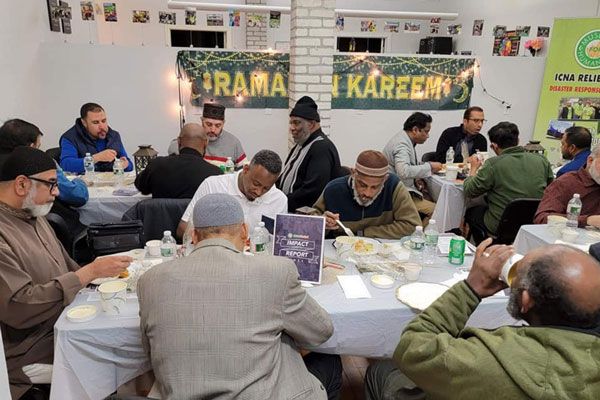
    Each culture in Muslim-dominant countries has their own special way of observing Ramadan with particular foods, décor, and even clothing. These traditions have traveled abroad to Western countries with those who have immigrated and have been sewn into the cultural fabric, especially in the United States and Canada which have large populations of Muslims from around the world. Masajid hold taraweeh prayers where a Senegalese individual may pray next to a convert or a Lebanese next to an Indian. Potluck iftars may serve basi-salte, roasted lamb leg, samosas, and stuffed grape leaves. With bi-cultural marriages, families can share Ramadan within the home by blending traditions or even creating new ones.

    Muslim immigrants can be found living in nations around the world and engage in rituals and traditions during Ramadan rooted in their location. In Java, Indonesia, for example, Muslims soak their bodies in springs or other fresh bodies of water the day before Ramadan begins. Padusan (to bathe) is a cultural adaptation in Indonesia. In the UAE, children chant for sweets in Sha’ban, two weeks before Ramadan begins. Their translated chant is, “Give to us and Allah will reward you, and help you visit Makkah.” And in South Africa, the maan kykers (moon watchers) travel to Three Anchor Bay in Cape Town to physically observe the new moon’s birth and announce the start of Ramadan.

    The Musaharati beat drums and chant to wake residents up for suhoor in Saudi Arabia. Drumming is also used in Turkey for the same reason and the drummers wear traditional Ottoman dress. Residents peek out of windows as they pass by. There are over 2000 drummers in Turkey who uphold this tradition. In Morocco, the nafars wake townspeople up, chanting prayers, while Lebanon and the UAE shoot cannons each day to let everyone know it is time to break their fast. Egyptians put out fanous (lanterns) in kaleidoscopic colors. Children wander the streets carrying the lanterns as they ask for sweets and small gifts.

    Ramadan is a blessed month for many reasons. In Western multicultural Muslim communities, we have the opportunity to practice our own traditions and also to experience the traditions of other cultures. This occasion to share and learn from other cultures can enrich us. As it says in the Holy Qur’an, “O humanity! Indeed, We created you from a male and a female, and made you into nations and tribes so that you may know one another. Verily the most honored of you in the sight of Allah is the most righteous among you. Indeed, Allah is the All-Knower, All-Aware” (Qur’an 49:13). If that spirit of Islam is allowed to envelope us and enter our minds and, especially, our hearts, we can heal the racial and ethnic rifts within our communities. That is the only way to represent the profound beauty of diversity in our everyday living and through our interactions with family, friends, neighbors, and strangers. Ramadan is the perfect time to explore these possibilities.

  • Interview: A Children’s Book on Using Positive Self-Talk

    Interview: A Children’s Book on Using Positive Self-Talk

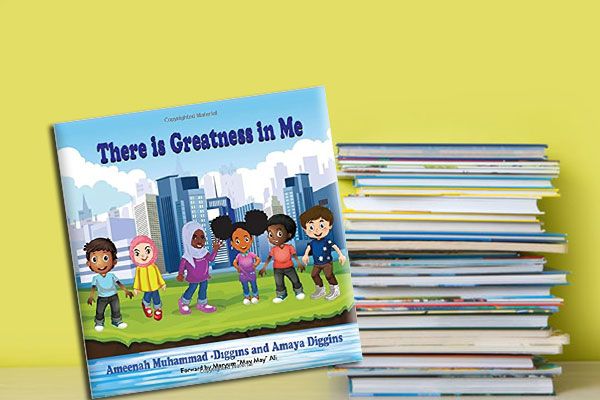
    Title: “There is Greatness in Me” Paperback length: 28 pages Author: Ameenah Muhammad Price: $15.00 at Amazon

    This is an interview with Sr. Ameenah Muhammad, an entrepreneur and writer. She is the author of “There is Greatness in Me,” a children’s book for ages 7-9. The interview has been slightly edited for length and clarity.

    Q – Sr. Ameenah, what was your inspiration for the book?

    A – Personally, I struggle with negative self-talk. I know that a lot of things we deal with as adults come from childhood insecurities. So, I wanted to empower children to have positive self-talk so that it’s repetitive and becomes deeply ingrained – “There Is greatness in me,” “If I believe it, I can achieve it,” “If I say bismillah…,” “If I fall down, I get back up.” So just to empower our little ones, our little Muslims — it’s important to empower them with this awareness and training when they’re younger so they can embrace it and have it become second nature by the time they’re older.

    Q – Did you consider writing it from a broader perspective for children in general, or did you feel that it was important for Muslim children specifically?

    A – Even non-Muslim parents have bought the book and they’ve said that it was inclusive in the way it addressed children’s openness to learning positive self-talk. There’s one illustration that shows “bismillah” on the wall of the girl’s bedroom; there are also two little girls wearing hijab on the book cover and an ayah [Qur’anic verse] in the back of the book. But in today’s world of diversity, the book is good for all children.

    Q – Yes, when I looked at the reviews on Amazon, it looked like many people from other cultures were really appreciative of the diversity, as well as the message of positivity that it was teaching children.

    A – A fun fact, Muhammad Ali – may Allah have Mercy on his soul and grant him Paradise – his eldest daughter wrote the foreword to the book.

    Q – Yes, I saw that, that’s awesome! How did you hook up with her or did you know her before?

    A – My father was really good friends with Muhammad Ali, so growing up we knew the family. She’s a little bit older than me but I knew how to get in contact with her and pitched her the idea of the story and asked if she would be willing to write the foreword for the book and she said, “Of course!” Alhamdulilah.

    Q – So, what is the most important thing about positivity for children you would want people to know about?

    A – I think that all of us have those notions where we have an idea that we want to do something and then when the going gets tough we start thinking, “Well, maybe that wasn’t such a good idea.” So, it’s important to just to have fortitude and to always rely on Allah and also rely on our inner spirit to keep going. Because sometimes we can get knocked down. Sometimes we have these aspirations and start to feel a little bad about ourselves but to just keep going and know that there’s a specialness in all of us, and “if we can believe it, we can achieve it.” We just have to get started and then maintain that motivation. That’s the main message of the book — to get started. Start where you are, keep going, have faith, and always empower yourself because we may not always have people around us telling us to keep going, telling us, “You can do it!” So, we have to draw on that from within.

    Q – Wow, that really impacted me because that’s exactly me. I say some of those same things, “I can’t do that because I have too much pressure from this or that.” That’s so powerful, masha’Allah, thank you for that. Do you think that self-talk is more important for Muslim children, or is it just positive self-talk for children in general?

    A – Here in America our children are sometimes in an uphill battle with some of the images and messages that they are taking in on a daily basis. So, it is important for them to have that fortitude inside that “my values that are instilled inside from my family, from my masjid, from my community, may not always look like the values outside my community but I’m going to stick to them and I’m going to keep going and keep pressing and I’m not going to be intimidated because I may look different, or I believe differently.” I think that our children definitely need a little bit more confidence and conviction because a lot of times there is going to be a rift between their values and the social values surrounding them, especially when they get older. When they’re younger, everybody’s just playing and having fun. When they get older, everybody around them starts having boyfriends and girlfriends, or people are starting to do things that are contrary to what their own values are telling them to do. So, we need to have that voice that says, “This is who I am, I’m going to continue to be me and have confidence.”

    Q – I guess people often have a hard time finding that confidence within and sometimes think that others have it easier than them. Do you find that?

    A – If you ask them, whoever they are, they’ll say the same thing. It’s all about perspective— everybody has this idea that “the grass is always greener on the other side.” But we’re all dealing with our own things. I think it all comes down to the confidence within ourselves. Because if we don’t have confidence within ourselves, it’s easy to say, “If I was this, I’d be that…” Everybody has their stuff.

    Q – I wanted to touch on social media and the effect of body image. It’s a huge concern for parents. Can you speak to that in regard to positivity?

    A – I think we have these ideals of what we think our bodies should look like based on images and photoshopping and slimming down everything. You can do things to photos and images and people are like, “Oh my gosh, her skin is so beautiful!” And they fall into a habit of comparing themselves to others. For years, after maybe looking outwardly for what we think is beautiful, maybe we can start to say, “I love myself for who I am.” And then if there’s something you want to work on, put in the work and go after it. People just have to be honest. I think it comes down to honesty. If we feel good about ourselves, great. But if we don’t feel good about ourselves, then we can start to do things to change that. We can eat healthier, for example, and make any positive changes in our lives that we want. It’s about what do you want for yourself. Also, don’t beat yourself up about things, sometimes we can be too hard on ourselves.

    Q – So what are some more examples of positive self-talk words that you use in your daily life or teach your children?

    A – One of the things I say to myself is, “Whether the sun is shining, or the rain is falling, alhamdulilah.” I also thank Allah all the time, even for things I could be mad or sad about. But we have choices about how we look at things. If we are grateful, Allah will bless us with more. It’s the simplest thing but we seem to forget.

  • ‘Hijab Is Our Crown, Not a Crime’

    ‘Hijab Is Our Crown, Not a Crime’

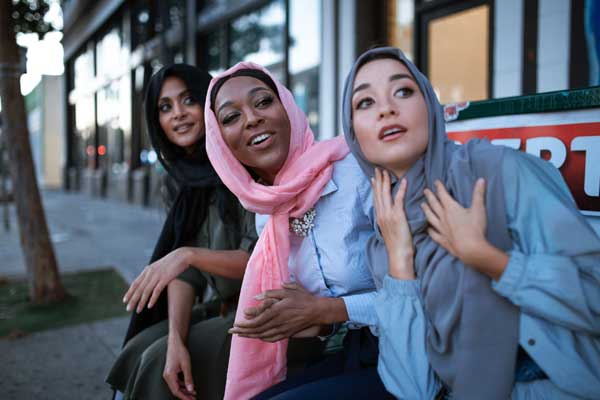
    How often does a simple hashtag launch a movement? Sometimes, with the mention of just one article of clothing. In the fall of 2013, the hashtag #IStandForHijab did just that, launched a movement, by asking for solidarity from other women. It invited their participation in donning hijab and experiencing what a hijabi’s day feels like in a society that relishes a woman exposing her beauty to all. World Hijab Day is in its tenth year, celebrated every February 1, since 2013.

    The brainchild of New Yorker Nazma Khan, the original hashtag has expanded into an international event encompassing 67 countries and participation from women with a wide range of religious affiliations or no affiliation at all. It was created to combat Islamophobia, as a direct response to anti-hijab sentiments spawned by 9/11. Khan uses her platform, World Hijab Day (WHD), to convey to non-Muslims what hijab represents to Muslim women and to help diffuse the misconceptions about Islam in general. Each year, social media posts show women wearing hijab in solidarity, from celebrities to politicians and everyone in between. The yearly event has been covered by national and international media including BBC, Huffington Post, The New York Times, Al-Jazeera, and CNN.

    In 2017, WHD was recognized by the state of New York, and the UK recognized the day with an event attended by Prime Minister Theresa May. A 2017 article in The Hollywood Reporter quoted Khan as saying, “In middle school, I was ‘Batman’ or ‘ninja.’ When I entered university after 9/11, I was called Osama bin Laden or terrorist. It was awful. I figured the only way to end discrimination is if we ask our fellow sisters [women] to experience hijab themselves.” According to the same article, New York City mayor, Bill de Blasio, tweeted, “Your hijab is beautiful, and we welcome you just as you are.” A male observer of World Hijab Day stated, “It’s commonly believed that wearing a veil is a form of sexual discrimination. I didn’t find it to be so. To my surprise, the veil was strangely liberating, an unapologetic form of self-expression” (Joe Galvez – Philippines, WHD.com).

    Encouraging Religious Tolerance and Much More

    Since its inception, WHD has morphed into a global phenomenon and today is a 501(c)3 non-profit organization. Their website states that they are, “a global movement to encourage religious tolerance, cultural understanding and international solidarity,” and “campaigning for a world where Muslims can proudly and freely practice their faith,” and, it says, they are “independent of any political ideology or economic interest.” The organization works throughout the year to dispel myths about not only hijab but Islam as well. They issue press releases, host annual events, publish educational blogs and hijab stories, and host hijab challenges and annual events like the 30-Day Ramadan Hijab Challenge.

    Participation on this ten-year anniversary is expected in over 150 countries. This year’s theme is, “Hijab is our crown, not a crime.” The hashtag #DressedNotOppressed directly addresses the core misunderstanding about hijab, and the theme alludes to countries limiting the rights of Muslim women to wear hijab or burqas in public spaces like schools or work. Recently, the highest court of the EU ruled in favor of employers banning “visible symbols of religious or political belief, such as headscarves” but urged member states to “consider the rights and interests of the employee, including by taking into account national legislation on freedom of religion” (Aljazeera, 2021).

    Despite positive strides made by WHD, across the world religious intolerance is on the rise, with attacks against Muslims, men and women, increasingly reported. According to the American Muslim Poll 2020, over 60 percent of Muslims report being discriminated against. Women who wear hijab and men with beards are the faces of Islam and are the ones who bear the brunt of attacks and vitriol. CAIR’s 2020 Annual Report showed that Muslim high school students are often victims of Islamophobia and get bullied or harassed. Girls have had their hijab pulled at or off, and 33 percent of Muslim students felt the need to change themselves to blend in. That might have included altering their names or using a nickname or removing hijab.

    It may take another ten years to normalize hijab in America, but for now, one can simply say the word “hijab” and be perfectly understood. This February 1st, like the nine previous ones, World Hijab Day will shine a positive light on Muslim women in hijab and for that single day, their fellow global citizens will be reminded about choice, and dignity, and that religious tolerance must apply to all.

  • Interview with the Founder of the ‘Isms Project’

    Interview with the Founder of the ‘Isms Project’

    The interview below is with Nailah Dean, a lawyer, writer, and creator behind the “Isms Project” (https://www.nailahdean.com/the-isms-project-nd), a photo series and narrative description that addresses the sexism, racism, colorism, and ageism which act as obstacles to Muslim women finding a prospective spouse. Using single Muslim women who are subject to these various “isms,” Dean hopes to “humanize” the issues and “illustrate some of the barriers to marriage.” I spoke to Sr. Nailah over Zoom to better understand the project and her concerns for the future of Muslim marriage in America.

    (Editor’s note: The following transcript of the interview has been lightly edited for length and readability.)

    Q: What do you think are the solutions to the problems of racism, sexism, ageism, and any other “ism” that makes it difficult for Muslim women in America to find a suitable spouse?

    A: In terms of solutions, I would definitely hope that the “isms” campaign creates more conversation and having these hard conversations amongst family members and between the generations, hopefully people would be able to recognize how wrong the prejudices are and start to open up their mental brackets and eliminate some of the “preferences” when they are searching for a spouse. I’ve already had men contact me during the past year, because I’ve been writing about these issues, and they write something like, “Thank you for sharing about the Black, Muslim female experience, I didn’t know what that was like…I’m going to think twice when I set my preferences to only one ethnicity going forward.”

    As to the issue of ageism, striking up these conversations can motivate men to think about their choices. They might ask themselves, “Why do I prefer someone ten years younger than me? Why don’t I look in my own age bracket? Is it really because I’m focused on increasing my chances for having children or is it because I want to have someone who’s more malleable?” Those kinds of conversations have been coming up in the comments sections of the various posts on these issues. That’s what I hope to encourage — those types of conversations to challenge people to examine their current ideas and attitudes.

    Q: What about in terms of a nationwide campaign, is there something that you’re doing on a larger scale?

    A: I would like to bring more awareness to the issues so that our local as well as regional and national leaders can use their platforms to speak on these issues and do so based on their Islamic knowledge and credibility. I’ve heard about the effects of parents limiting the choice of spouse for their son or daughter to one ethnicity or another and how damaging that is. So, when they talk about that in khutbas, I think that’s really effective, coming as it is from leadership. Hopefully they will also increase pre-marital workshops so that people know what the Islamic guidelines are for choosing a spouse. That would be really good. It’s definitely a challenge to get folks to pay attention to these kinds of things. That’s my goal at least.

    Q: Do you think that polygamy is a possible solution for some of the women?

    A: It can be for some people based on the individual, if that’s what someone wants. I hear that from some men as the solution for women over thirty who cannot find a spouse, but I don’t think that’s the only solution. I think that men can definitely consider women in their own age bracket, especially if they, themselves, are in their late thirties. There’s no reason for them to set their preferences for twenties only. We know that Khadijah (r) was much older than the Prophet when they married. I think the solution is for men not to be so limiting about age preference. Amongst matchmakers, they say that often a guy in his thirties wants a wife ten years younger. Even a man in his forties or fifties wants someone much younger than himself. I understand the fertility concerns but, once again, when Muslims are only one percent of the population in America, the older men, when they so often want someone quite a bit younger, that’s messing up the men in their twenties who want to get married. The younger men are ready, they have established themselves right after college, but they’re competing with older guys who are much more established in their careers and therefore financially set, and that is competition for the younger men, too often causing delays in their being able to marry. So, the age thing really messes people up on multiple levels.

    Q: You mention that some men are intimidated by successful women, by career women. Can you elaborate more on that?

    A: Some of the guys see a woman with a college degree or an established career and associate that, not just with being too busy to be a wife, that’s one issue that’s on their mind, but they also think of it as she’s going to be more opinionated and more difficult to handle. It’s that control issue that’s really at play here. These judgments are even before they start talking with the woman, just in the selection process, they make conclusions about these women. Maybe they had one bad experience but then after that they rule out women with advanced degrees or successful careers. There was one person I interacted with to try and matchmake with my friend, who’s a lawyer. He saw her picture and was interested, but once he found out her profession, he said “Nope, she’s too educated and too busy.” He added, “I don’t do lawyers and doctors.”

    The “too educated” part, that’s really offensive. We fought for a long time to be educated and then to find that this achievement stands as an obstacle to marriage — it’s really disheartening. I have several friends from Arab and South Asian households where the parents encourage the daughters to be high achieving. Then when it is time for their sons to marry, they encourage them to marry someone that’s going to prioritize being at home. It doesn’t align that you want your son to marry one type of woman who maybe isn’t as educated or advanced with her goals. Yet that same household, they’re pushing their daughters to become doctors or engineers and all of that. It doesn’t make sense how that’s going to work out. It’s two different expectations.

    Q: Are there any other things you would like Muslims, individuals and communities, to know?

    A: I just want people to hear the concerns of women. It’s very interesting how some don’t want to pay attention to women who are talking about problems they’re facing as they seek to find spouses. These people want to label the women as feminists or that they believe in ideas that don’t align with Islam. But Islam teaches that each individual should be seen for their character and their faith. Islam condemns the “isms,” that is, any stereotypical or discriminatory way of looking at people. There’s nothing wrong with women talking about the difficulties they face in seeking to marry. That’s one thing that I think is interesting, that some Muslims think it is taboo to talk about these issues and challenges, especially in public. But these are big challenges. Making a distinction against a woman as to her marriageability on the basis of her race or age or skin color, for example, is narrowminded. These attributes are natural and God-given. Such preconceived and damaging constraints on choosing a wife can only be addressed by acknowledging the issue exists and discussing ways to overcome it.

  • Ben & Jerry’s Ice Cream: The BDS Movement Gains Traction

    Ben & Jerry’s Ice Cream: The BDS Movement Gains Traction

    Support for Palestinian rights waxes and wanes in the public sphere. Attempts by activists to increase visibility of the plight of Gazans and the suffering in all the occupied lands under Israeli rule is instantly stomped out with cries of anti-Semitism. Now Ben & Jerry’s, a popular ice cream brand and socially conscious company, announced mid-July that they would no longer sell their products in the occupied territories, beyond the pre-1967 borders. The company’s founders, Ben Cohen and Jerry Greenfield, made their decision public on July 19, stating in part, “We believe it is inconsistent with our values for Ben & Jerry’s ice cream to be sold in the Occupied Palestinian Territory (OPT).”

    Those who support Israel unequivocally, including most politicians in the U.S. government, are more than disturbed by the position taken by Ben & Jerry’s. What they fear is a snowball effect. A decade ago, Ehud Barak, then Israel’s defense minister, presaged this development. Speaking at Israel’s Institute for National Security Studies, he stated, “We face a diplomatic tsunami that the majority of the public is unaware of,” and that “Israel’s delegitimization is in sight.” He also referenced the prime minister at that time, Benjamin Netanyahu, warning that he “was pushing Israel into a corner from which the old South Africa’s deterioration began.”

    The snowball has picked up speed. While Ben & Jerry’s issued a public statement about their decision, most don’t know that McDonald’s decided in 2013 not to open a franchise in the Israeli settlement of Ariel in the West Bank. According to an article in The Times of Israel in July of this year, McDonald’s decision was in line with their position that they would not operate anywhere in the occupied territories, including the Israeli settlements. McDonald’s did not publicize this decision and it flew under the radar. Not so with Ben & Jerry’s and their decision increases the mainstream denunciations of Israeli occupation and oppression of Palestinians.

    Mainstream Criticism of Occupation Grows

    The Israeli human rights organization B’Tselem has called the Israeli form of apartheid, a “regime of Jewish supremacy from the river to the sea.” In March, the International Criminal Court announced its decision to investigate the charge of war crimes in the West Bank, East Jerusalem, and the Gaza Strip since June 2014. A paper published in April this year by the Carnegie Endowment for International Peace declares that the Israelis and Palestinians “do not live as equals” and that the U.S. must “seek to mitigate the fundamental asymmetry of power between Israel, an occupying state, and Palestinians, an occupied people, and devise strategies to confront the enduring structural barriers to conflict resolution.” Human Rights Watch reported this year that Israeli “…authorities have dispossessed, confined, forcibly separated, and subjugated Palestinians by virtue of their identity to varying degrees of intensity. In certain areas, as described in this report, these deprivations are so severe that they amount to the crimes against humanity of apartheid and persecution.”

    These are just a few examples of the increasing criticism of Israeli policy and practice toward Palestinians. After Ben & Jerry’s took its stand, many tried to smear them as anti-Semitic. They responded to all the negative reactions in a Bottom of Form New York Times op-ed with the following: “The company’s stated decision to more fully align its operations with its values is not a rejection of Israel. It is a rejection of Israeli policy, which perpetuates an illegal occupation that is a barrier to peace and violates the basic human rights of the Palestinian people who live under the occupation. As Jewish supporters of the State of Israel, we fundamentally reject the notion that it is anti-Semitic to question the policies of the State of Israel.”

    Opposition to BDS

    For sixteen years the BDS movement has been urging the use of the same tactics which helped to end apartheid in South Africa. Yet, as the BDS movement gains strength, some Western governments have either ruled BDS as anti-Semitic (Germany) or passed laws to prevent boycotts of Israel (U.K). Since 2005, 35 U.S. states have also written resolutions and executive orders to punish boycotters or block pension fund investments to BDS-supporting companies, while others are placed on blacklists.

    According to an article on the news website Axios, Israel has created a special task force “to pressure Ben & Jerry’s ice cream and its parent company Unilever to reverse their decision to boycott Israeli settlements in the West Bank.” Many political leaders in Israel have accused the ice cream company of anti-Semitism and Gilad Erdan, the Israeli ambassador to the U.S. and the U.N., has contacted the governors of the 35 U.S. states that have sought to outlaw boycotting Israel. In a letter, he urged them to denounce Ben & Jerry’s and to take “any other relevant steps, including in relation to your state laws and the commercial dealings between Ben & Jerry’s and your state.” His letter continued, “We view this decision very severely, as it is the de-facto adoption of anti-Semitic practices and advancement of the de-legitimization of the Jewish state and the de-humanization of the Jewish people.” Ironically, Benjamin Netanyahu, Israel’s former Prime Minister, encourages boycotting Ben & Jerry’s, saying, “Now we Israelis know which ice cream NOT to buy.”

    Declining Support for Israel’s Occupation

    International support for Israel has been on the decline in the past decade as their human rights abuses continue and more and more Americans see the occupation for what it is. A Brookings Institution poll from 2019 showed that 48 percent of Democrats who know about BDS, support it. Yet, Israel reflexively paints critics of its policies as anti-Semitic. Now they have pushed that further, labeling Ben & Jerry’s move as a new type of terrorism. Israeli President Isaac Herzog stated, “The boycott of Israel is a new sort of terrorism, economic terrorism.”

    Lawsuits have challenged the anti-boycott laws in a number of states including Arkansas, Arizona, Georgia, Kansas, Maryland, and Texas. Four federal district courts have ruled that the boycotts are protected by the First Amendment and, as of July of this year, none of the anti-boycott laws has been upheld by the courts. As BDS continues to gain traction, there is enormous pressure from pro-Israel political and media forces in the U.S. While Ben & Jerry’s move is a minor economic threat to Israel, they fear this will signal to other corporations and companies that it is possible to follow suit.

    In recent times, Americans have risen up to highlight the need to face the malevolence of racism, and grassroots activists from different groups increasingly support one another’s movements, knowing that a struggle for the rights of indigenous people and other minorities in the U.S. intersects with the Palestinian struggle, and that each success advances the other movements for human rights and non-discrimination. BDS activists still have a target on their backs as governments, evangelicals, and Israel-firsters campaign hard to bring them down. Time will tell who will come out on top.