بسم الله الرحمن الرحيم

Author: Imam Jawad Ahmed

  • WhyIslam: From Idea to Major Dawah Organization

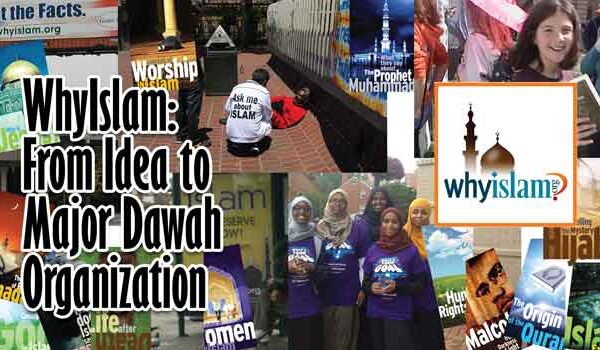
    WhyIslam: From Idea to Major Dawah Organization

    In 1998, a group of brothers from the Islamic Circle of North America’s New Jersey chapter got together with a desire to spread the true message of Islam to their American neighbors. They wanted to provide authentic information about Islam directly from the primary source, the Quran. Many ideas were floated and finally it was suggested to secure a toll-free number which people from all over America could call and talk to a Muslim. This would open channels of communication between American Muslims and their fellow citizens, many of whom never get to talk to a Muslim in their daily life, and most are shy to walk into a mosque to ask questions. The phone line would provide opportunity for dialogue with a Muslim, allowing any and all questions to be asked, as well as dispelling misconceptions about Islam and Muslims. Many names were discussed for the hotline and an associated website and finally a name was agreed upon: WhyIslam.

    This name was selected to create curiosity in the minds of Americans about the beliefs and practices of Islam, a religion with over a billion followers globally. Islam is the fastest growing religion in the world and, according to the Pew Research Center. Muslims are set to overtake Christians as the world’s largest religious group in the second half of this century.

    A Toll-free Hotline and Website

    It was not easy to secure the toll-free 800 number for Whyislam as an Ahmadiyyah group already had bought the 1-800-Whyislam number. It was decided to go with 1-877-Whyislam, to go along with the website www.whyislam.org. Since 1999, the toll-free number 1-877-Whyislam has provided service to callers in both English and Spanish. Initially very few calls would come in, as the hotline was not widely known, and we did not have the funds to advertise much. We did set up dawah booths and stalls at various shopping malls and parks as a way to promote the toll-free number. Over time, we also advertised in newspapers and magazines and on buses, radio, TV, and the internet. So, from a humble beginning twenty years ago of only a few calls a month answered by one volunteer, to currently almost 800 calls per month, is a great achievement. Alhamdulillah! Today 50 percent of our callers are repeat callers who have additional questions or want to engage in further discussion with a Muslim as they seek more knowledge about the religion.

    With regard to the WhyIslam website, the content and tech teams have worked enthusiastically over the past two decades to develop a really professional and user-friendly website with informative articles about Islam and Muslims, on foundational Islamic teachings, as well as articles on various relevant topics including the strength of character of Prophet Muhammad (pbuh), ethnicity in Islam, the Medina Charter and its representation of peace and pluralism, how the Quran has been preserved throughout the centuries, and so much more. Visitors to the website can order free brochures in English, Spanish, or Chinese, as well as an English translation of the Quran. They can also request one-to-one email correspondence with an associate or a mosque tour in their area. The WhyIslam website has been in the top ten websites about Islam and Muslims when searched on Google and other search engines. Alhamdulillah, we have distributed millions of Qurans and brochures over the past two decades throughout the United States.

    A Dedicated Team of Volunteers

    WhyIslam has a dedicated team of 24 volunteers taking calls on the hotline round the clock, 365 days a year. Our team includes bilingual associates who can also take calls in Spanish. The team receives ongoing training, in professionalism and courtesy as well as in Islamic knowledge, by an experienced and well-qualified Imam. He provides regular feedback by listening to recordings of the calls in order to ensure the highest quality service. Due to a high turnover of hotline volunteers, it is a constant challenge to recruit and train new volunteers.

    Although the hotline is based in New Jersey and run by the ICNA-NJ chapter, volunteers are from ICNA chapters across the nation. Initially calls were taken from all over the U.S. and Canada. Starting in 2010, we have also taken calls from the U.K. and Australia. In 2014 we started taking calls from France as we added a French-speaker to our volunteer roster. Toll-free numbers were acquired in those countries and then calls are routed to the headquarters in New Jersey. Alhamdulillah, we are now a global dawah hotline taking calls from three continents and five countries.

    Our volunteers, located in fifteen cities in nine different states, answer questions about Islam, as well as take orders for free literature and English translations of the Quran. If a particular caller wants to visit a mosque, then our volunteers arrange their visit with local masjid volunteers; or if the caller wants to take shahadah, then they facilitate that for them. For any individual who takes shahadah, the WhyIslam associate also arranges for a mentoring process by taking the revert’s contact information and passing it on to local volunteers in the revert’s area. Alhamdulillah, we have been having almost one shahadah a day on our hotline for the past decade. A Google search for a Muslim hotline or Islamic hotline shows our website and hotline as the first entry on the results page. This is due to the hard work of all brothers and sisters in WhyIslam who, over the last two decades, have worked tirelessly to make WhyIslam a known and trusted name across the country.

    Expanding Dawah Initiatives

    A huge spike in interest was after 9/11 when many Americans were curious to learn about Islam and read the Quran. Since then we have seen a rise in bulk orders as people have ordered in large quantities in order to distribute in their local area. Whyislam undertook an immense dawah challenge by going to Brazil during the 2014 World Cup to distribute free literature to soccer fans and local residents, as well as to set up a toll-free hotline there, operative during the six-week tournament. We got some calls on the hotline, taken by our U.S. associates in Spanish as well as in English. We set up dawah booths outside the soccer stadiums and distributed thousands of free brochures and free Quran translations in Spanish as well as English.

    WhyIslam has also created many major billboard campaigns across the U.S., disseminating various messages and themes such as “Islam: The Message of Abraham, Moses, Jesus and Muhammed” or “Muhammed always taught Love, Not Hate; Peace, Not Violence.” Another one features three women from different faiths wearing a headscarf, with the caption, “They wore it for the same reason.” The billboards offer viewers a free Quran and encourages them to call 877-WHY-ISLAM or visit www.whyislam.org.

    WhyIslam also organized a Global Dawah Day on July 4, 2014. Across the country, in many different cities, dawah booths were set up and street dawah was done by small teams of volunteers spreading out in groups of three or four individuals to initiate and engage with passers-by about Islam and providing free brochures and the Quran to those interested. Today we have brochures in four different languages (English, Spanish, Chinese, and French) and Quran translations in English and Spanish, along with a sister website in Spanish for our Latino neighbors and friends to learn about Islam.

    WhyIslam: Now a Major Dawah Organization

    WhyIslam started off with just a few volunteers. It has now grown to a major dawah organization with over a thousand volunteers and hundreds of chapters in many cities across the nation. All are busy in promoting the truth about Islam, working to remove misconceptions and confusions about the religion and its followers. The WhyIslam team started from humble beginnings and built, for the sake of Allah SWT, a well-run and professional outreach organization with countless volunteers and many employees. They diligently, and with devotion, manage daily dawah operations. What has been attained to date is a great and satisfying accomplishment, alhamdulillah. It has been a long journey thus far, but the road ahead is a challenging one as Islamophobia needs to be continually confronted and dismantled in today’s world.

    Future plans are to further expand dawah into additional languages so as to facilitate outreach to as many communities as possible. We also plan to do more dawah tours across the nation by visiting various communities and offering street dawah. There are plans to acquire a vehicle to transform it into a mobile dawah station, with teams going on the road to visit various cities across the nation. May Allah SWT accept all our efforts and always guide us to do the right thing for His deen.

  • Obituary: Dr. Ahmad Sakr

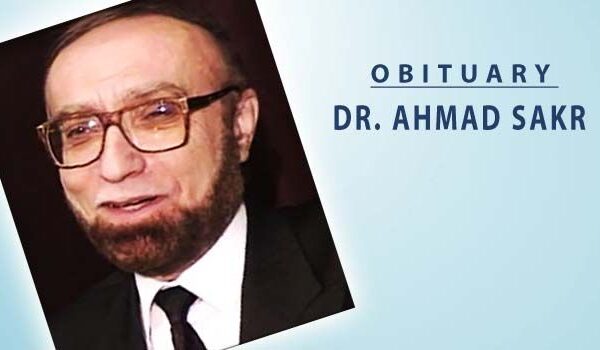
    Obituary: Dr. Ahmad Sakr

    Born in Beirut, Lebanon, Dr. Sakr got his Ph.D. from the University of Illinois. He was a founding member and president of the Muslim Students’ Association (MSA) as well as a founding member of the World Council of Mosques, Makkah. He was the first director and representative of the Muslim World League to the U.N.

    Dr. Ahmad Sakr passed away on November 23, 2015. May Allah SWT have mercy on him and admit Him to Paradise. The path Dr. Sakr followed was one that faithfully emulated our Prophet, may the peace and blessings of Allah be upon him. His dedication will always stand out in the beautiful memories we have of him, and will always remind us of the strengths and blessings of faith. He played an inspirational role in the founding of many Islamic institutions and centers, including the first Islamic college in the United States, the American Islamic College of Chicago. He was a founding member and president of the Muslim Students’ Association (MSA), and a founding member of the World Council of Mosques in Makkah. Dr. Sakr was a staunch supporter of ICNA, active in interfaith activities, published more than fifty books, and was a board member of the Islamic Food and Nutrition Council of America.

    Dr. Sakr was a selfless community leader and tireless Islamic worker. He was regularly invited to fundraise for various community projects and he did so without compensation. He happily accepted his role in serving communities around the country and beyond. He also offered his guidance and wisdom to individuals facing personal problems, be they Muslim or non-Muslim, and he was always tried to make himself available to those in need.

    One of the early Muslims hoping to build a strong community in America, Dr. Sakr collaborated with brothers and sisters from nations around the world who had settled in the U.S., helping to clear the path for the future Muslim generations in America. They prepared the foundation for the vibrant and active American Muslim spirit that we see around us today. They learned to adapt to a new culture, assimilating into the American fabric of life while holding strong to the teachings of Quran and Sunnah. Dr. Sakr’s confidence in meeting the challenges he and his contemporaries encountered set the bar high so that today’s generation can move forward armed with trust in Allah SWT, guided by His light and empowered through the knowledge of His deen. He was a father, an uncle, a teacher, and a counselor. He inspired in us the ability to channel the strength of Omar, the gentleness of Abu Bakr, the shyness of Othman, and the knowledge of Ali, may Allah bless them all.

    Dr. Sakr once shared with me an issue that bothered him. He said, “Why do the obstructionists do what they do, despite having knowledge and understanding that what we are trying to do to build Islam [in America] is a good thing? They make us fail in endeavors again and again.” I pondered this question for many years since then, and I finally realized the obstructionists’ aim was to disrupt our unity. I would say to Dr. Sakr, my teacher, if he were still with us, a phrase uttered by the Emperor of Rome, Marcus Aurelius: “What we do today echoes in eternity.” Thus, we must persevere to make today better.

    I would also say to him, “My teacher, you have departed from us as we face challenges today that are unprecedented. We have met the challenge of absolving our faith from the deception enacted by people from our own creed. We must now carry the torch of faith and pass it on, uncorrupted, to the next generation. Then, insha’Allah, we will deliver the new generation to a safe ground so they can grow into faith with the clarity that the Prophet, may the peace and blessings of Allah be upon him, left us with.

    “I say to you my teacher, we will, God willing, be the men and women who stand firm, carrying this generation on our shoulders and uplifting the spirit of the dejected. Allah only allows us to succeed when we care for the weak and empower the destitute. May Allah SWT allow us to meet on the Day of Judgment in the circle of the beloved Prophet and his companions. Ameen.”

  • Save Family, Save Society

    Allah (SWT) puts a heavy emphasis on family as a unit because it is the core of a thriving society. If the family unit consists of weak links, then society is always vulnerable to the exploitation of the evil elements that exist within. However, if the family unit is strong, comprising of bolstering bonds within, then the society transforms into an Ummah, one nation under Allah, indivisible by anything.

    “O! You who believe, save yourself and your families from Hell-fire, whose fuel are humans and stones (idols)…” (Al-Quran, 66:5).

    The important thing to notice in the above verse is that Allah (SWT) first asks each one of us to protect ourselves from activities that would lead to Hellfire, and then we should also worry about our loved ones who are linked to us through blood. No wonder when we travel in airplanes and the crew demonstrates safety measures before taking off, they always stress putting the mask on ourselves first and then on our loved ones. How ironic is the fact that if we do not save ourselves first, then we will not be able to save our loved ones either? Hence, being selfish here is justified for the collective good of the society, whereas in all other things we are encouraged to be generous and think of others before ourselves, but that would be disastrous here.

    Therefore, we are obliged by Allah (SWT) to be responsible for our children as they are the prime fruit of a family, and Allah (SWT) has entrusted us with nurturing them according to His teachings. If we pass this test of responsibility from Allah (SWT), then Paradise is the highest reward for it; otherwise, it is a straight route to Hellfire.

    “Verily your wealth and children are only a test, whereas Allah! With Him is a great reward (Paradise)” (Al-Quran, 64:15). Passing this test is not an easy task, as Allah (SWT) has forewarned us that our own family can be our enemies if they become an obstacle in our quest for Paradise by stopping us from implementing Allah’s rule in our lives.

    “O you who believe! Verily, among your wives and your children there are enemies for you; therefore beware of them” (Al-Quran: 64:14).

    On the contrary, if we groom and nurture our spouses and offspring in the shade of Quranic teachings and the sunnah of the Prophet (pbuh), then they become the most prized asset for us in this world and the next. This is the fulfillment of the trust of children bestowed upon us by the Creator who wants our legacy of good parenting to continue for generations to come. This can be done via optimal utilization of money and children, two of the most precious resources entrusted upon us by Allah (SWT).

    “Wealth and children are the adornment of the life of this world. But the good righteous deeds, that last, are better with your Lord for rewards and better in respect of hope” (Al-Quran, 18:46).

    How to convert our wealth and children into lasting good deeds for the next life is the real task of parenting and a challenge that we have to meet by utilizing them for the sake of this deen. The Quran is replete with incidences between Prophets of Allah and their children, which enlighten us on how to meet this challenge of parenting.

    First and foremost is the skill of communication between parents and children so that both are on the same mental wavelength and share the same vision, as we see in the example of Prophet Ibraheem and his young son Prophet Ismail.

    “And, when he (his son) was old enough to walk with him, he said: “O my son! I have seen in a dream that I am slaughtering you (offering you in sacrifice to Allah). So look what you think!” He said: “O my father! Do that which you are commanded, Insha’ Allah (if Allah wills), you shall find me of As-Sabirun (the patient)” (Al-Quran, 37:102).

    Even though Prophet Ibraheem was not obligated to ask his son before fulfilling the command of his Lord, he valued the opinion of his son and also strengthened their relationship by giving respect and honor to his son. Thus, Prophet Ibraheem taught all humanity a moral lesson of parenting that we ought to have a strong bond with our progeny, such that they will never let down their parents’ expectations. Prophet Ismail not only lived up to the expectations of his father here, but even went one step ahead in bolstering the will of Prophet Ibraheem in this severe test.

    The same is the case with the great grandson of Prophet Ibraheem when Prophet Yusuf confided in his father Prophet Yaqoob about his dream, and the father informed his son not to tell about it to other siblings because they might plot against him. Prophet Yaqoob strengthened his son’s will by reassuring him that Allah (SWT) has chosen Prophet Yusuf for a big task and test, as He did with his forefathers before, and that he will support every step of the way in his endeavors ahead.

    Strong communication within family members gels the unit into an unbreakable network, which can wither every storm of catastrophe headed in their direction, as we see in the example of Prophet Ibraheem and his wife Hagar. When Prophet Ibraheem left her and their newborn baby Ismail in the desert of Makkah by the Kaaba without any reason, the only thing she asked was that did Allah (SWT) order him to do this? The Prophet replied in the affirmative and Hagar relaxed saying if that is the case, then Allah (SWT) will never waste us, for He is the Master who will not let down His Slaves.

    This was the fruit of the tarbiyaah (nurturing) of Prophet Ibraheem with his wife Hagar that she did not argue with her husband even though she was being deserted with a newborn baby where there was no vegetation. Hence, the wife and son reaped the rewards of patience such that Allah (SWT) flowed pure zamzam water beneath the feet of baby Ismail and made the trekking of Safa and Marwah a lifelong ritual for Muslims until the Day of Judgment. Such are the dividends from the Creator when the family, as a unit, is in sync with its Master and His Commandments upon this earth.

    Thus, Allah (SWT) showers upon those families who remain steadfast and firm in their commitment to Him collectively as a unit and not individually, because baraka resides in collectiveness and not in individualism. For this, the family members have to sacrifice a lot as we observed in the above examples of the family of Prophet Ibraheem. He was tested by Allah (SWT) for his spouse, his sons, and even his father Azar, as Allah (SWT) informs us in the Quran.

    Truly, Prophet Ibraheem was tested the most from every aspect of family, such as a husband, father, and a son, but he never wavered in his loyalty and dedication to Allah’s path whatever came in his way. He addressed his father with utmost respect each time trying to persuade him to believe in Allah (SWT), whilst the father was adamant upon his disbelief and even threatened to punish Prophet Ibraheem. Yet, the forbearance of Prophet Ibraheem wins when he seeks the forgiveness for his father in spite of all this.

    Such is the legacy of the father of prophets, Prophet Ibraheem, as he has set the benchmarks in every dimension of grooming a tawheed-oriented family so that we look towards him as a role model when steering our society from all perils of its evils today.

  • Formula for Self Development

    Formula for Self Development

    Allah (SWT) puts a heavy emphasis on family as a unit because it is the core of a thriving society. If the family unit consists of weak links, then society is always vulnerable to the exploitation of the evil elements that exist within. However, if the family unit is strong, comprising of bolstering bonds within, then the society transforms into an Ummah, one nation under Allah, indivisible by anything.

    “O! You who believe, save yourself and your families from Hell-fire, whose fuel are humans and stones (idols)…” (Al-Quran, 66:5).
    The important thing to notice in the above verse is that Allah (SWT) first asks each one of us to protect ourselves from activities that would lead to Hellfire, and then we should also worry about our loved ones who are linked to us through blood. No wonder when we travel in airplanes and the crew demonstrates safety measures before taking off, they always stress putting the mask on ourselves first and then on our loved ones. How ironic is the fact that if we do not save ourselves first, then we will not be able to save our loved ones either? Hence, being selfish here is justified for the collective good of the society, whereas in all other things we are encouraged to be generous and think of others before ourselves, but that would be disastrous here.

    Therefore, we are obliged by Allah (SWT) to be responsible for our children as they are the prime fruit of a family, and Allah (SWT) has entrusted us with nurturing them according to His teachings. If we pass this test of responsibility from Allah (SWT), then Paradise is the highest reward for it; otherwise, it is a straight route to Hellfire.

    Subservience means transforming our organs and body parts to the conformity of Quran and Sunnah of the Prophet (pbuh)

    “Verily your wealth and children are only a test, whereas Allah! With Him is a great reward (Paradise)” (Al-Quran, 64:15). Passing this test is not an easy task, as Allah (SWT) has forewarned us that our own family can be our enemies if they become an obstacle in our quest for Paradise by stopping us from implementing Allah’s rule in our lives.

    “O you who believe! Verily, among your wives and your children there are enemies for you; therefore beware of them” (Al-Quran: 64:14).

    On the contrary, if we groom and nurture our spouses and offspring in the shade of Quranic teachings and the sunnah of the Prophet (pbuh), then they become the most prized asset for us in this world and the next. This is the fulfillment of the trust of children bestowed upon us by the Creator who wants our legacy of good parenting to continue for generations to come. This can be done via optimal utilization of money and children, two of the most precious resources entrusted upon us by Allah (SWT).
    “Wealth and children are the adornment of the life of this world. But the good righteous deeds, that last, are better with your Lord for rewards and better in respect of hope” (Al-Quran, 18:46).

    How to convert our wealth and children into lasting good deeds for the next life is the real task of parenting and a challenge that we have to meet by utilizing them for the sake of this deen. The Quran is replete with incidences between Prophets of Allah and their children, which enlighten us on how to meet this challenge of parenting.

    First and foremost is the skill of communication between parents and children so that both are on the same mental wavelength and share the same vision, as we see in the example of Prophet Ibraheem and his young son Prophet Ismail.

    “And, when he (his son) was old enough to walk with him, he said: “O my son! I have seen in a dream that I am slaughtering you (offering you in sacrifice to Allah). So look what you think!” He said: “O my father! Do that which you are commanded, Insha’ Allah (if Allah wills), you shall find me of As-Sabirun (the patient)” (Al-Quran, 37:102).

    Even though Prophet Ibraheem was not obligated to ask his son before fulfilling the command of his Lord, he valued the opinion of his son and also strengthened their relationship by giving respect and honor to his son. Thus, Prophet Ibraheem taught all humanity a moral lesson of parenting that we ought to have a strong bond with our progeny, such that they will never let down their parents’ expectations. Prophet Ismail not only lived up to the expectations of his father here, but even went one step ahead in bolstering the will of Prophet Ibraheem in this severe test.

    The same is the case with the great grandson of Prophet Ibraheem when Prophet Yusuf confided in his father Prophet Yaqoob about his dream, and the father informed his son not to tell about it to other siblings because they might plot against him. Prophet Yaqoob strengthened his son’s will by reassuring him that Allah (SWT) has chosen Prophet Yusuf for a big task and test, as He did with his forefathers before, and that he will support every step of the way in his endeavors ahead.

    Strong communication within family members gels the unit into an unbreakable network, which can wither every storm of catastrophe headed in their direction, as we see in the example of Prophet Ibraheem and his wife Hagar. When Prophet Ibraheem left her and their newborn baby Ismail in the desert of Makkah by the Kaaba without any reason, the only thing she asked was that did Allah (SWT) order him to do this? The Prophet replied in the affirmative and Hagar relaxed saying if that is the case, then Allah (SWT) will never waste us, for He is the Master who will not let down His Slaves.

    This was the fruit of the tarbiyaah (nurturing) of Prophet Ibraheem with his wife Hagar that she did not argue with her husband even though she was being deserted with a newborn baby where there was no vegetation. Hence, the wife and son reaped the rewards of patience such that Allah (SWT) flowed pure zamzam water beneath the feet of baby Ismail and made the trekking of Safa and Marwah a lifelong ritual for Muslims until the Day of Judgment. Such are the dividends from the Creator when the family, as a unit, is in sync with its Master and His Commandments upon this earth.

    Thus, Allah (SWT) showers upon those families who remain steadfast and firm in their commitment to Him collectively as a unit and not individually, because baraka resides in collectiveness and not in individualism. For this, the family members have to sacrifice a lot as we observed in the above examples of the family of Prophet Ibraheem. He was tested by Allah (SWT) for his spouse, his sons, and even his father Azar, as Allah (SWT) informs us in the Quran.

    If we apply Quranic and prophetic teachings to our body parts, then a transformation of our character may begin

    Truly, Prophet Ibraheem was tested the most from every aspect of family, such as a husband, father, and a son, but he never wavered in his loyalty and dedication to Allah’s path whatever came in his way. He addressed his father with utmost respect each time trying to persuade him to believe in Allah (SWT), whilst the father was adamant upon his disbelief and even threatened to punish Prophet Ibraheem. Yet, the forbearance of Prophet Ibraheem wins when he seeks the forgiveness for his father in spite of all this.

    Such is the legacy of the father of prophets, Prophet Ibraheem, as he has set the benchmarks in every dimension of grooming a tawheed-oriented family so that we look towards him as a role model when steering our society from all perils of its evils today.