بسم الله الرحمن الرحيم

Author: Ibnul Hind

  • The Concept of ‘Covenant’ in Islam

    The Concept of ‘Covenant’ in Islam

    The idea of “covenant” appears frequently in the Qur’an and sunnah, the primary sources of Islam. There are different types of covenants (e.g., between two people such as husband and wife, between business partners, between nations, etc.), but the one that is relevant in this discussion is the covenant between God and human beings. To better appreciate the concept, it is worthwhile to start from the basics.


    1. God is the creator of Adam and Eve. So, all people, being descendants of Adam and Eve, are brothers and sisters in humanity. Allah tells us in the Qur’an: “O humanity! Indeed, We created you from a male and a female, and made you into peoples and tribes so that you may know one another…” (Qur’an 49:13).
    2. As the human population increased across the globe and formed different tribes, communities, and nations, God sent messengers throughout history to the various groups, in their own language.“And We have already sent messengers before you. Among them are those [whose stories] We have related to you, and among them are those [whose stories] We have not related to you” (Qur’an 40:78).


    While the exact number of messengers is not known, it is said to be in the hundreds of thousands, according to Muslim scholars. However, the Qur’an mentions the names of only a few of them, and some of them are Israelite while others are not. They include Adam, Noah, Idrees, Abraham, Ishmael, Isaac, Jacob, Joseph, Ayyub, Shuaib, Moses, David, Solomon, Zakariah, Jesus and, finally, Muhammad, peace be upon them all.


    1. Muslims are to honor and respect all the messengers and prophets without distinction.“The Messenger believes, and so do the believers, in the guidance sent down upon him from his Lord: each of them believes in Allah, and in His angels, and in His Books, and in His Messengers. They say: ‘We make no distinction between any of His Messengers. We hear and obey. Our Lord! Grant us Your forgiveness; to You we are destined to return’” (Qur’an 2:285).
    2. The Qur’an also makes it clear that all prophets of God were exceptional people of highest character. On this basis, Muslims reject all of the “not so flattering” stories about various prophets in the Bible. Stories of incest, murder, adultery, cruelty, etc. that are attributed to holy prophets are false and, according to Islamic doctrine, interpolations by humans into the divine texts.
    1. The equality of mankind is a central aspect of the teaching of Islam. In the eyes of God, there are no differences of status or value among people based on race, ethnicity, tribe, nation, social status, etc. The only thing that matters is piety and God-consciousness. Prophet Muhammad did his utmost to root out among his followers the false constructs of worthiness, whether race or lineage or wealth, or any factor other than righteousness and good character.Equality, as prescribed by God, is exemplified in worship. In salah (the obligatory prayer), people stand side-by-side, all in equal status of humility before God. During Hajj, every male has to wear the same two-piece white cloth covering. The values hierarchy of the dunya is replaced in Islam: the only true superiority is righteousness and that is something that any individual can strive for and attain.

      “…Surely the most noble of you in the sight of Allah is the most righteous among you. Allah is truly All-Knowing, All-Aware” (Qur’an 49:13).

    Further, an individual should not take credit for those gifts from God that he or she did not earn, whether great intelligence, beauty, strength, talent, or any other God-given endowment.

    Prophet Muhammad, peace be upon him, said, “All mankind is from Adam and Eve; an Arab has no superiority over a non-Arab nor a non-Arab any superiority over an Arab; also a white has no superiority over a black nor a black any superiority over a white except by piety and good action” (from the last sermon of the Prophet).

    1. God instituted a covenant with each prophet that the revelation or the teaching he was given required him to witness and disseminate it faithfully. By extension, the followers of the prophets are to abide by the covenant about faith and righteousness.When people live by those covenants, God might reward the righteous people with favors in this earthly life. However, the real reward is in the next life yet to come.

    So, when Moses successfully freed the Israelites from clutches of Pharaoh, or King David ruled over his kingdom, or Muslims under the leadership of Muhammad defeated the Makkans after 23 years of oppression — these are examples of worldly rewards that God bestowed upon his messengers and righteous servants. These are not to be understood as God favoring any specific race or tribe or group. Rather it is God’s favor upon the righteous.


    1. God established a covenant with each and every human being.“And when your Lord took from the children of Adam, from their loins — their descendants — and made them testify of themselves, ‘Am I not your Lord?’ They said, ‘Yes, we have testified.’ Lest you should say on the day of Resurrection, ‘Indeed, we were of this unaware’” (Qur’an 7:172).


    Please note that this is the covenant with all of humanity and it is a most important covenant. God has embedded awareness of this covenant in our souls so that we can recognize the truth, about God and about His existence as Creator and Lord, and that none should be worshipped but Him.


    And so, recognizing and worshipping God is intrinsic knowledge in the human soul and in human nature. In fact, Islam is known as “deen al-fitrah,” the religion of human nature. This is because Islam aligns perfectly with the innate nature whose core is recognition of God and the covenant between Him and humankind. Thus, the natural inclination of an individual, unless he or she has been acculturated differently, is to worship and surrender to God, to recognize the messengers sent by God, and to conform to the divine message that they bring. This results in understanding reality, in using our reason and rationality to confirm and abide by the distinction between good and evil, to live our lives in a way that seeks a heavenly life after death, and to strive to acquire knowledge of, and live according to, the essential truths that make us human and impel us toward surrender to the one true God.

  • Religious Freedom in India Increasingly at Risk

    Religious Freedom in India Increasingly at Risk

    In late December of last year, six female students belonging to the Government Pre-University college in a small town in the state of Karnataka, India, were not allowed to attend classes wearing hijab. Photos showing them sitting on a staircase outside the classroom started gaining attention once it was reported by several national and international media sources. The students claimed the college was not allowing them to attend classes with their hijab, even though they had been doing so since they joined the college.

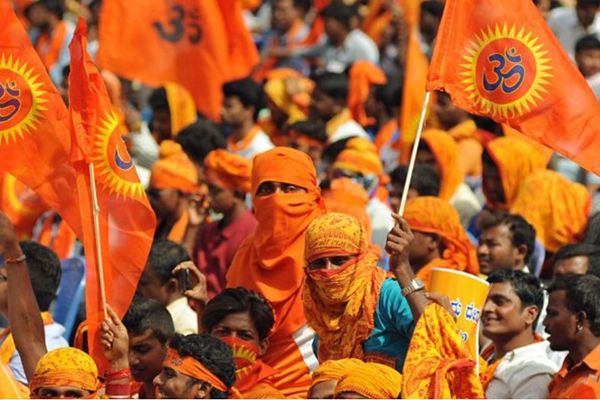
    Following this incident, a group of Hindutva male students at a college in Kundapur went to class wearing saffron shawls in protest of Muslim students attending classes wearing hijab. Then Hindutva-aligned students, both males and females, started coming to class in saffron shawls, and demanding a ban on hijab. Several elected members of the ruling BJP (Bharatiya Janata Party) started getting involved in this controversy. Then the government passed an executive order asking colleges and universities to enforce a dress code, though it left each college to define the code.

    The Muslims students filed for relief in the Karnataka High Court (HC). While this case was under review in the HC, a new video went viral of an incident of Hindutva young men harassing a Muslim girl in hijab. The girl, Muskan Khan, stood her ground when faced by the mob. This incident thrust the hijab controversy into national and international media and political discourse.

    The Case Before the Court and International Reactions

    The HC considered the case on the legal grounds of freedom of religion. The defendants were demanding the right to wear hijab as they claim that the Indian Constitution guarantees freedom of conscience and free profession, practice, and propagation of religion. The government, on the other hand, invoked public order to justify a ban on hijab. The Indian Express reports that the state issued a directive “validating decisions of state education institutions prohibiting Muslim girl students from wearing the hijab (headscarf).” The Karnataka government stated that “clothes which disturb equality, integrity and public law and order should not be worn.”

    On February 10, the full bench of Karnataka High Court adjourned the hearing until February 14 and issued the following observations: “…till the matter is pending consideration before the court, these students and all the stakeholders, they do not insist on wearing religious garments, may be headdress or saffron shawl. We will restrain everyone. Because we want peace and tranquility in the state. We are seized with the matter; we can continue the matter on the day-to-day basis.” Unfortunately, the judge’s interim order amounted to a suspension of the fundamental rights of the Muslim students until the court passes a final judgment. A higher bench in Karnataka was expected to take up the case. If Muslim students don’t get a favorable ruling, they might approach the Supreme Court of India. But it is a drawn-out legal process.

    Following that ruling, the Karnataka High Court in mid-March ruled that “There is absolutely no material placed on record to prima facie show that wearing of hijab is a part of an essential religious practice in Islam.” Heraa Hashmi is a writer and activist known as the American Muslim sister who created a 712-page list of Muslim individuals, scholars, organizations, and governments who have consistently condemned violence and terrorism in response to a non-Muslim classmate who asked why Muslims don’t condemn terrorism. Now, Hashmi wrote an article in March about the hijab situation in India, noting that the order from the court “cites certain passages from the Qur’an to establish – in their view as judges of a secular court with dubious levels of Islamic literacy and credentials to make theological prescriptions – Hijab as not obligatory, claiming that it ‘therefore cannot be made a quintessential aspect of the religion through public agitations or by the passionate arguments in court.’” She adds, “Consequently, the court found that the ban does not violate the constitutional rights of Muslim women. This startling verdict has widespread implications for similar cases across the country.” She further writes, “The three-judge bench declared that the Hijab is a ‘cultural practice’ and that it ‘is not a part of essential religious practices of Islam and thus, is not protected under Article 25 of the Constitution.’ They also introduced the verdict by quoting a US-based academic’s article that interprets the practice of veiling as one to distinguish social status and goes on to engage in poor attempts at tafsir (Qur’anic exegesis), hadith interpretation, and usul (methodology), stepping far beyond its bounds as a court. It is clear that the court was already assuming an ideological corruption of Muslims and their practices prior to this judgement.”

    Rashad Hussein, ambassador-at-large for the U.S. Office of International Religious Freedom, tweeted after the ruling, “Religious freedom includes the ability to choose one’s religious attire. The Indian state of Karnataka should not determine permissibility of religious clothing. Hijab bans in schools violate religious freedom and stigmatize and marginalize women and girls.”

    Nobel Laureate Malala Yusufzai tweeted, “College is forcing us to choose between studies and the hijab.” And Noam Chomsky, one of the West’s most eminent intellectuals, has recently said about the rise of Islamophobia, that it is “taking its most lethal form in India where the Modi government is systematically dismantling Indian secular democracy and turning the country into a Hindu ethnocracy. It is not just hijab that is under threat in India; the very existence of Muslims in that nation is in peril. After the ruling about hijab in Karnataka, Muslim vendors were prevented from doing business at Hindu religious premises. Then there was a call to boycott halal meat and, further, a controversy was raised on the use of loudspeakers for calling the adhan (the Muslim call to prayer). The apparent intent of the ruling party is to continue to demonize and dehumanize Muslims — the end result can be ethnic cleansing or even genocide.

    The Way Forward for Indian Muslims

    Systematic hate of Islam and Muslims has been spreading in India. A large section of the Hindu society has been radicalized. There are things that are beyond the control of Muslims in the Indian nation, but there are things they can and must do, including the following:

    1. The Muslim community should be educated and reminded about the meaning and purpose of their existence. Qur’an and Sunnah make it clear that Muslims are to be witnesses of truth and therefore willing to stand up and enjoin the right and forbid the wrong. The lives of Muslims —individuals, families, and communities— have to reflect these values.

    2. Muslims have masajid all across the country. But these masajid mostly function as a place for daily prayers. They should be used for social gatherings, religious advice and admonitions, education, administration of community affairs and challenges, and other functions and services to support the community.

    3. Indian Muslims should inform neighbors, co-workers, and society at large that Islam and Muslims have no intention to harm Hindus or their interests. On the contrary, the religion teaches Muslims to support the common good and to support justice for all.

    4. There are many marginalized groups in India. Working to support their rights is an Islamic obligation. This will demonstrate that Muslims stand for the human and civil rights of all people.

    5. The media, be it broadcast or social media, is the major source of spreading Islamophobia in Indian society. Muslims need to produce and distribute sound and accurate information to counter the misinformation and propaganda.

    6. Muslims should build alliances with people and organizations of conscience, both religious and secular, for the common goal of civility, equality, and justice in society.

  • The Ongoing Human Rights Violations in India

    The Ongoing Human Rights Violations in India

    This month has been a roller coaster for anyone watching the human rights situation in India. While the rightwing Hindutva party, Bharatiya Janata Party (BJP), has been in power in India since 2014, their foot soldiers have been busy gradually increasing their rhetoric to promote making India a Hindu Rashtra, that is, a Hindu nation where non-Hindus would become second class citizens, as originally conceived by the founders of the RSS (Rashtriya Swayamsevak Sangh, which means National Volunteer Organization).

    The RSS, founded in 1925, has a current membership of close to 6 million. There are so many issues related to the Hindutva rightwing groups, but a brief update will be presented in this short article.

    Preventing Muslims from Performing Prayers

    Gurgaon is a town in the state of Haryana, a bit over 19 miles from Delhi. There are not enough masajid in Gurgaon to accommodate all the Muslims for prayer and, as the immigrant Muslim population has increased over the years, Muslim leaders made arrangements with local authorities for Muslims to offer Friday prayers in public parks and open spaces. Yet rightwing groups have taken the law into their own hands and have often tried to forcibly prevent Muslims from offering their Friday prayers. One would expect in any country governed by the rule of law to rein in this intimidation, clearly illegal and discriminatory. But what we are seeing is that elected officials are giving in to the anti-Muslim rhetoric, signaling that governments themselves are either powerless to intervene, or worse, complicit in what the gangs on the streets are doing.

    The Wire, an Indian media source, writes, “Until last Friday, Muslims would gather on this spot in the afternoon to offer their customary juma namaz. From today, it ceases to be a space for them. They have been pushed out. From here and from 15 other spots in Gurgaon… This is about 2021. If you start counting from 2017, Muslims have been barred from nearly 70 spots.”

    One would have hoped that the police and authorities would assert themselves to prevent these discriminatory actions, arrest offenders, and subject them to the criminal justice system. But instead, the chief minister of Haryana, the Indian state in question, M.L. Khattar, caved into the demands of these law breakers, and declared that no prayer in public will be tolerated. While these types of activity by rightwing activists might be dismissed as the provocations and harassments of Hindu extremists, the reality is that this anti-Muslim attitude is common and widespread. A speaker at an event, attended by at least one BJP official, called for genocide of Muslims. The event was attended by more than 500 Hindu religious monks and leaders. The BJP, Prime Minister Modi’s party, has consistently denied wanting to transform India from being a secular, pluralistic nation into a Hindu nation. Yet, critics accuse them of ignoring or even inciting discrimination and persecution of Muslims and other minorities.

    Annapurna Bharti, secretary of Hindu Mahasabha, a political party, spoke at the event. He stated, “Nothing is possible without weapons. If you want to eliminate their population then kill them. Be ready to kill and be ready to go to jail. Even if 100 of us are ready to kill 20 lakhs [2 million] of them [Muslims], then we will be victorious, and go to jail… Like [Nathuram] Godse, I am ready to be maligned, but I will pick up arms to defend my Hindutva from every demon who is a threat to my religion.”

    The authorities, as usual, have been slow taking any action against these Hindutva extremists. One of them even boasted that the police “will be on our side.” Under tremendous international pressure, the government and the police finally acted, but only a few have been charged. One of those arrested in mid-January, Yati Narsinghanand, was initially charged with misogynistic speech. The authorities stated that his arrest was for “derogatory comments against women, not the Haridwar hate speech case right now.” They added, “He has been issued a notice in that case so far. He will be remanded for the hate speech case too; the procedure is on. We will include the hate speech case details also in the remand application.”

    Dividing People Along Religious Lines

    Fast forward a few weeks and we see another disturbing trend. The election commission of India announced state assembly [similar to state legislatures in the U.S.] elections in several states in India. Uttar Paradesh, with a population of more than 200 million, is one of them and is politically most significant. The current government in that state is run by BJP, with Yogi Adityanath as its chief minister. He is known to be an open Islamophobe and doesn’t hide his contempt for Muslims. It is not just his rhetoric; he has pursued anti-Muslim policies during his first term. He openly cites as one of his main achievements that of having put Muslims in their place.

    The main method BJP uses to win elections is to divide the electorate along religious lines and thus gain Hindu votes. However, the issue is not limited to elections anymore. It is has now become clear that the current situation is about the very survival of Muslims in India in the coming times. Gregory Stanton, the president of Genocide Watch (GW), testified in January before the U.S. Congress, warning about the possibility of genocide in India. He stated that now with Narenda Modi as prime minister of India, “under his BJP’s policies, he has used anti-Muslim, Islamophobic rhetoric, in fact, to build his political base.” He noted that GW has been speaking out, warning of “the threat of genocide in India since 2002.” Mr. Stanton stated that the U.S. government and other nations can take meaningful steps to preempt any such event from happening.

    The Indian government must wake up and save India from the brink. Subjugation, expulsion, or even extermination of minorities may be the main agenda of the Hindutva movement, but the Indian government is in a position to counter and oppose that agenda. Otherwise, India will descend into further crisis and international disrepute. Muslims and other minorities in India must be protected and afforded their full rights. We make du’a to Allah SWT that all decent people stand firm in support of those around the world who are subject to discrimination or persecution and push their governments to take action to prevent a potential genocide in India.

  • The Kashmir Conundrum

    The Kashmir Conundrum

    Kashmir has been in the news since India revoked Article 370 of the Indian Constitution on August 5, 2019. Article 370 gave special status to the state of Jammu and Kashmir, granting it limited autonomy. Many human rights groups have condemned the move by India. Pakistan voiced its outrage and Muslims around the world protested the action. Islam became the dominant religion in Kashmir in the 14th and 15th centuries when the majority of people became Muslim. In subsequent centuries, more than 90 percent of the population had converted to Islam. Kashmir became part of mainland India under the Mughal ruler Akbar in 1540.

    In 1819, the Sikh empire in the Indian subcontinent annexed Kashmir. However, Sikh rule ended when they lost the First Anglo-Sikh War in 1846. The British then sold the valley to Gulab Singh, the Raja of Jammu who was Hindu, thus establishing Dogra dynasty rule in Jammu and Kashmir. Dogra rule, under the jurisdiction of colonial Britain, lasted until 1947.The region was majority Muslim and they suffered under the rule of the Dogra Hindu elite from oppressive taxes, forced labor, and discriminatory policies and laws.

    On August 15, 1947 British rule in India ended with the Indian Independence Act. That Act also set forth the division of British India into two nations, India and Pakistan. The division was based on Hindu or Muslim majorities in each region.

    Options were given to the princely states (vassal states such as Jammu and Kashmir) to join either India or Pakistan. Since Kashmir was majority Muslims and adjacent to Pakistan, it was natural for all stakeholders to expect that Kashmir would choose to accede to Pakistan. However, the ruler of Kashmir, Hari Singh, wanted to remain independent. As violence escalated in the immediate aftermath of the partition of British India into two nations, things got really bad on both sides of the border of Kashmir. Almost a quarter million Muslims in Jammu were killed and more than half a million were pushed across the border to Pakistan. There was reciprocal violence on the Pakistani side, and it is recorded that in one town in Jammu, 20,000 Hindus and Sikhs were killed. Pro-Pakistan rebels took control of the western portion of Kashmir. These developments caused Maharaja Hari Singh to sign an Instrument of Accession with India in 1947. Then Indian troops were sent to Kashmir. The Instrument of Accession outlined a kind of autonomy for Kashmir, to the extent that even the elected ruler of Kashmir was called “prime minister” until 1965, while in other Indian states the ruler was called “chief minister.”

    In 1949, India incorporated the main points of the Instrument of Accession into its constitution as Article 370, and the eastern portion of the Kashmir region, Jammu and Kashmir, became a state of the Union of India. India considered Pakistan’s control of the western portion of the Kashmir region to be an illegal occupation. India took the matter to the U.N. and it passed Resolution 47, which called for the withdrawal of all Pakistani nationals who had entered Kashmir as fighters and asked India to reduce its armed forces to the minimum required to keep law and order. The Resolution also called for India to administer a plebiscite to allow people of Kashmir to choose whether to merge with India or Pakistan. However, neither India nor Pakistan was happy with the resolution at that time. A U.N. commission was appointed to mediate the issues and while a ceasefire occurred, a final truce could not be negotiated. As such, the plebiscite never came to pass.

    An Ongoing Conflict Between India and Pakistan

    The matter of Kashmir has been a major ongoing issue between India and Pakistan. These two nations fought a full-scale war in 1965 following clashes along the border. The war ended in a stalemate and did not resolve the problem. In the late 1980s, huge protests started in the Kashmir valley that later morphed into full-blown insurgency in the early 1990s. The insurgency was brutally repressed by the Indian military. Since the violent insurgency began in Kashmir, upwards of 40,000 Kashmiris have been killed and 8000 disappeared. Rape has increasingly been used by Indian forces. Countless women have been raped. In a landmark report, the U.N. concluded that no steps have been taken by India or Pakistan to improve the human rights situation in Kashmir.

    Instead, India has been blaming Pakistan for backing separatists in Kashmir, while Pakistan calls it the right of the people of Kashmir to demand independence from Indian occupation and says it only provides moral and diplomatic support to Kashmiris. Now, fast forward to the August 5 decision of the government of India to revoke Article 370/35A of the Indian Constitution, a provision that gave nominal autonomy to Jammu and Kashmir, including the right to its own constitution and authority for all matters except foreign affairs and defense. It also included the right to regulate residency and to deny property rights to outsiders. India’s rightwing government of BJP has been campaigning to remove the special status of Jammu and Kashmir for a long time. BJP decisively won the last general election in May 2019 and, with its increased strength in parliament, passed the bill to revoke Article 370.

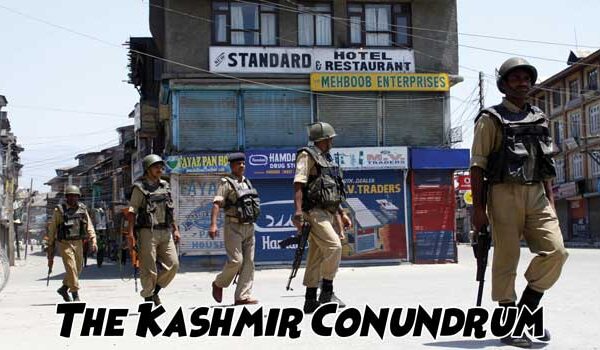
    Pakistan strongly objected to India’s decision and the issue has come into the international discourse as never before. Kashmir has been under virtual blockade since August 5. All means of communication were cut off for many weeks and, although some of the restrictions have been lifted, normal communications have not been restored. With the absence of all communications with the region, authentic news is hard to come by. There have been reports of killing and torture by military personnel. The National Federation of Indian Women sent representatives to Kashmir and they claim that 13,000 children, some as young as 14, have been detained since August 5.

    A Humanitarian Crisis

    People are not able to receive medical treatment on time, can’t call emergency services, pregnant women can’t get to the hospital, students can’t go to school, markets are shut down, and crops rot in the field. People are losing jobs and a large number of businesses have folded. The Kashmir Chamber of Commerce and Industry has estimated Rs100 billion losses (nearly $1.5 billion USD) between the start of the August 5 blockade and September. By now these losses have certainly doubled or tripled. The U.N. has called this blockade collective punishment. In a report, U.N. human rights experts stated, “The blackout is a form of collective punishment of the people of Jammu and Kashmir, without even a pretext of a precipitating offence.” There have been two hearings in the U.S. congress that have highlighted the plight of Kashmiris.

    The issue of political control over Kashmir is complicated by serious economic considerations. In The Diplomat, an international current affairs magazine for the Asia-Pacific region, the author of an article, Analysis: Why Kashmir Matters, writes, “The glacial waters that flow through Kashmir provide water and electricity to a billion people in India. Pakistan also relies heavily on glacial waters flowing from the region to prop up its agricultural sector.” However, it seems to many that the core perspective of the ruling elite of India today, the Hindutva brigade, is to show that they are capable of humiliating Muslims to avenge hundreds of years of Muslim rule. A senior Indian diplomat has called for the adoption of the “Israeli model” in Indian-administered Kashmir, to create Hindu settlements there.

    In the middle of this struggle between nations is the fate of 10 million people who have been long suffering. The only just and fair solution is for the U.N. to take an honest and decisive role in implementing U.N. Resolution 47 that it passed some 72 years ago. Through a referendum, the people of Kashmir, themselves, can exercise their right of self-determination.