بسم الله الرحمن الرحيم

Author: bocapro

  • Education for the Next Generation

    Education for the Next Generation

    The debate over “public school vs. Islamic school” is not new in America. Ever since the Muslim community started building full-time Islamic schools in the early 1990s, this topic has been part of regular and ongoing discussion and debate. Some passionately argue for Islamic schools while others oppose them because of their current flaws. As a result, American Muslim parents are more confused than ever before in deciding upon the right place for educating their children. Given that a proper and adequate education, both Islamic and academic, is critical to the health and success of our children and our communities, and that both sides of the argument have legitimate points, we have decided to revisit some of the issues here, as this insha’Allah can help parents make an informed decision about the education of their children.

    The soul of your child is like an uncut precious jewel entrusted into your care by Allah

    The arguments in favor of sending children to Islamic school can be summed up as follows: In full-time Islamic school, children are provided with an Islamic environment. The kids can pray in congregation and learn about Islam in positive and affirming ways. They have the opportunity to interact with and establish close relationships with other Muslim children in classes and during recess. They are protected from exposure to intense peer pressure relating to sex, drugs, alcohol, and violence. So their faith is strengthened rather than diminished by their school experience.Very importantly, the students are spared being bullied for their faith. In addition, Islamic schools are a place to build a healthy identity and sense of responsibility in our Muslim students as the aim of education, first and foremost, is to nurture and mentor our children to be conscious of their responsibility to Allah, the Creator, and then to fellow human beings.The Islamic school can attain to this objective. Public schools in America cannot.

    On the other hand, those who argue against sending our children to Islamic school suggest that regardless of the comparatively healthier environment, many Islamic schools continue to be disorganized, ill-equipped, and beset with numerous other shortcomings. For example, Islamic schools in America, it is argued, have developed their curricula unsystematically. Their curricula for Islamic and Arabic studies, which is considered to be the raison d’être of an Islamic school, is remarkably weak and unable to meet the requirements of Muslim students residing in the West. Thus, Islamic schools have become merely a refuge from the negative influences of public schools, rather than a superior option of education providing valuable resources and uniquely Islamic benefits for our children. In addition to that, Islamic schools typically have very limited budgets, running strictly on tuition payments and donations. Teachers’ salaries are less than half what they could receive in public schools. As a result, Islamic schools find it difficult to recruit and retain qualified teachers. Very few, if any, of the existing Islamic schools can educate a child in a professional, robust, and comprehensive way. And some point out that students graduate from the Islamic school without the personality assets and coping skills that are needed for them to navigate the challenges of high school or college campus.

    It is obvious that both positions, as stated above, have legitimate arguments and there is no easy answer or quick fix to this situation. Certain stipulations, however, must be made. First, Islamic education doesn’t mean that children should be brought up feeling as outliers to this nation and its people. Islamic education must aim to Islamize our children without de-Americanizing them. Islamization within an American context means that Islamic schools should promote integration of Muslim children in the larger American society and provide an education that makes them strong in faith as well as informed citizens and active contributors to the American society.

    Second, it must be remembered that the role of the parents and the family is crucial, and ultimately more important than which school the child attends. At the end of the day, it is parents’ first responsibility to ensure the proper development and training of their children. Unfortunately, many parents fail to recognize this fact. While a Muslim child absorbs Islamic values from a variety of sources including parents, teachers, peers, friends, and the social environment, parents play the most vital role. Therefore, they have to provide an Islamic environment at home first. It is hypocritical to speak and act in un-Islamic ways and yet expect, even demand that the child adhere to Islamic values. Parents should set the best examples for their children to emulate.

    One scholar has rightly stated: “The soul of your child is like an uncut precious jewel entrusted into your care by Allah. To you is given the awesome responsibility of shaping that precious jewel into a beautiful form, pleasing to the eye of Allah. “As parents, we must realize this divinely-ordained duty and be mindful about fulfilling this task. We should also remember that Islamic schools are not the entire answer, but one interlocking piece, albeit an important one, in a larger schema. That is to create an Islamic environment incorporating all the principles and values of Islam. May Allah SWT help us fulfill our obligations and enable us to facilitate each generation being better and more virtuous than the last.

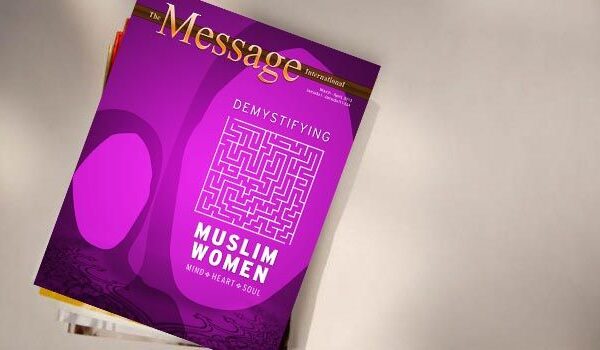
  • Editorial – Demystifying Muslim Women

    Editorial – Demystifying Muslim Women

    More often than not, Muslim women are portrayed in the West as victims of a repressive social order whose foundation, it is claimed, has been laid upon Islamic teachings and injunctions. The cure-all that follows this claim is very simple and straightforward: Muslim women must be “liberated” from their faith and protected from Shariah, their sacred law. Given that ignorance, cultural baggage, and lack of economic opportunity are widespread in the Muslim world and Muslim women, in particular, confront the limitations resulting from discrimination and inequality almost everywhere, the above portrayal should not be dismissed straightaway. As a matter of fact, gender-based inequality is a global phenomenon and there are a number of predominantly Muslim societies where gender discrimination is institutionalized and protected in the name of religion. Nevertheless, the above generalizations about Islam’s inherent oppression of Muslim women are not only incorrect and anti-historical, they are extremely offensive. It is regrettably true that while the “Muslim women” issue has long been hotly-debated in the West, the dominant talking points in the discourse on Muslim women are often misleading and superficial. Demystifying Muslim women is, therefore, a crucial need of our times and this is exactly the reason that we have attempted to address the subject in this issue.

    Here, all our authors have invariably made this case — that there are perceptual gaps, misgivings, and stereotypes almost everywhere. To quote Jasser Auda, “Women’s issues are the real test for the current Islamic reform. The reason is that groundless and unfair differentiation between men and women is deeply embedded in many popular opinions that we inherited from the eras of decline of the Islamic civilization.” Leslie Schaffer has also echoed this, as she implores: “May Allah SWT grant this ummah ever greater numbers of surpassing scholars, including female scholars of Islam, who are willing to revisit the issue of the status of woman and gender relations with courage, truthfulness, and piety.”

    Those who think that Islam is responsible for misogyny in the Muslim community would do well to look at the reality in both the religious doctrine and in Islamic history; and further, they could reach out to the Muslim community to compare their perspectives with the reality on the ground. Contrary to the widely-held notion, they would see that Islam empowers women as is evidenced by the great number of Qur’anic verses quoted in article after article in this issue, as well as the numerous instances of religiously observant Muslim women, both in Islamic history and in our contemporary world, who have strived towards and achieved professional, financial, and social success, fully in accordance with their understanding of religious precepts.

    Shaykh Akram Nadwi has conducted an impressive study on the role of the early female scholars of Islam wherein he reveals “the enormous contribution of women to the Islamic scholarly enterprise” and tells us that “not only were women scholars allowed to give binding religious verdicts (fatwas), but if they differed with their male contemporaries there would be absolutely no objections concerning their pronouncements. This was apparent from the earliest period.”It is so sad that the departure from this tradition marked the decline of Muslim scholarship and the downfall of their societies.

    After observing the glorious tradition of Islam, one commentator has rightly suggested, “Muslims can further the human rights agenda by re-examining the lives of the very first Muslim women who lived during Islam’s formative period as more than historical figures but as modern Islamic models to be emulated today. Indeed, these women embody viable political, social and financial models with modern applicability.” This point can hardly be overemphasized.

    As a matter of fact, using Shariah arguments to oppose unjust practices is not a completely new phenomenon. A famous incident from early Muslim history shows that women challenged even the highest political and religious authorities using arguments from the Qur’an. Once Omar ibn al-Khattab, the second caliph of Islamic history, stipulated a cap on the amount women could receive for their mahr, a gift given to the bride by her husband upon marriage. A woman objected, citing a Qur’anic verse related to mahr. Omar then realized his mistake and rescinded his pronouncement.

    Contrary to the stereotypical idea that women are unequal to men, the Qur’an declares that man and woman are equals in the Sight of God. Indeed, they are equal partners in bearing the heaviest responsibilities in Islamic life, and that is the responsibility of enjoining the right and forbidding the evil. The Almighty says: “The believers, men and women, are “auliya,” (helpers, supporters, friends, protectors) of one another, they enjoin (on the people) al-maaruf (righteousness), and forbid (people) from al-munkar (evil); they offer their prayers perfectly and give the zakat and obey Allah and His Messenger” (Qur’an 9:71).Therefore, both men and women must be regarded and treated as full and independent humans. In fact, they will stand, both women and men, before Allah on the Day of Judgment independently and fully accountable as human beings. Allah SWT has provided the most excellent way for human beings to live and behave within the guidance of Al-Qur’an, and He has left a completely comprehensive and unambiguous example of the perfection of human behavior in the documented words and actions of Prophet Muhammad (pbuh).

    To conclude, Prophet Muhammad (pbuh) is reported to have said, “None but a noble man treats women in an honorable manner, and none but an ignorant man treats women disgracefully.” This simple but profound message of the Prophet should suffice to open our eyes so that we might all see the truth.

  • Simplify Your Life

    Simplify Your Life

    The Sultans (a fictional family based on a composite of real-life cases) were the family everyone envied. They owned an elegant house in the most chic neighborhood in town. Their kids went to the best schools, got the highest grades, took part in many extra-curricular activities, and were well on their way to the best universities in the world. Mr. Sultan drove a shiny black BMW to work every day and Mrs. Sultan drove the family’s SUV to her work, picking up the kids from school on her way home and dropping them at their after-school activities. She would then head home to clean the house and cook the dinner. It was a picture-perfect family.

    Until you looked closer.

    Mrs. Sultan struggled daily to manage her time and take care of the chores that piled up day after day. Exhausted from the pressures at work, she would often drive back wondering why she was putting herself through all of this. Did she really enjoy her job or was she doing it only for the sake of the paycheck, or worse, only for the sake of the prestige it provided her? This is how she had imagined her life – a successful marriage, a good job, kids who excelled, a beautiful house, luxury cars, and regular exotic vacations. But still the doubts whirled in her head each day.

    We are told to buy now and pay later, entrapping us in a constant cycle of debt, stress, and never-ending desire

    Her husband would come home late, tired after a long day of work. Sometimes the kids would be asleep when he got back. Long hours and never-ending work were necessary to pay the bills – the mortgage, the utilities, the shopping, the kids’ many extra-curricular activities, and the vacations. The couple would have a brief, tired conversation, attend to the chores, and retire to bed only to wake up to another similar day. They would often wish for more time – more quality time to spend with the kids and with each other, more time for prayers and reading and reflecting on the Quran. If only they weren’t so busy and so tired. But they chugged along with the same routine each day, because this was the life they had dreamed of — wasn’t it? Or maybe it was just the life they had been taught to want.

    Sadly, the average middle-class American family has a similar story. The pursuit of the “American Dream” and the desire to “keep up with the Joneses” has consumed our lives. We want the best of everything and we are made to believe that all the material possessions we hoard will somehow bring us happiness and fulfillment. This dream life seems, though, to be like a mirage. You run and run, tiring yourself in the process, but you are never able to get to that goal of ultimate satisfaction or happiness. There is always something more to achieve. More money, more goods, more fame, more power. And all this time you battle with a void inside you – is this really what you wanted? Is this bringing you happiness? Are you missing out on genuine fulfillment in the mad race to acquire more?

    Allah (swt) talks about this attitude in the Quran: “The mutual rivalry for piling up [the good things of this world] diverts you [from the more serious things] until you visit the graves” (102:1-2). In fact, the culture of consumerism today envelops us, spurring us on with the desire to acquire more and more. We no longer aim to get what is enough. Instead, we keep asking how much more is possible. And the routines we have instituted to achieve this dream absorb us so much that we don’t even get time to slow down and think about what we are doing and why.

    In an article on consumerism, the popular blogger Abu Productive points to how the Muslim ummah got lost in a culture of consumerism more than 1000 years ago, eventually leading to its downfall. When the expanding empires brought riches to the Muslim world during the Golden age of the Islamic civilization, consumerism, corruption, and complacency set in and the Muslims began to forget their purpose. The Prophet (saw) has warned us about this: “By Allah, it is not the poverty about which I fear in regard to you but I am afraid in your case that [the worldly] riches may be given to you as were given to those who went before you, and you begin to vie with one another for them as they vied for them. And these may destroy you as these destroyed them” (Sahih Muslim).

    Sometimes we get so absorbed in the mad race to achieve more and more that we forget to enjoy what we already have. What use are all the “things” if we don’t even have a moment to relax, spend time with family, reflect on deeper issues, or contribute to the greater good? What use is all the convenience and comfort of luxury if we are constantly stressed? The credit culture part of this American dream helps weave this web of ambition, excess, and frenzy. We are bombarded with ads every day telling us that buying this purse or that pair of shoes will make us happier. We are told to buy now and pay later, entrapping us in a constant cycle of debt, stress, and never-ending desire.

    The only way to break free from this culture is to see it for what it is and realize how it pervasively affects us. Once we recognize that we do not really need everything we think we need, life can be perfectly comfortable and satisfactory without big houses, flashy cars, and elaborate vacations. Liberated from these self-imposed expenses with all their stresses and complexities, life can be much more peaceful and rewarding. The key is simplicity. Following are a few ways to simplify your life and survive in today’s achievement-cum-acquisition driven culture.

    Focus on the Purpose of Your Life as a Muslim

    How many times in the mad race to acquire more and achieve more do we forget the central purpose of our lives? How many times do we neglect the Quran, our prayers, and other religious obligations because we are too busy with the worldly things we’ve made priorities in our daily lives? Allah (swt) tells us in the Quran: “And I did not create the jinn and mankind except to worship Me” (51:56). We need to refocus our attention on this primary purpose of our lives. Ask yourself regularly if the way you are living your life is helping you fulfill that purpose? Take out time regularly to recharge your batteries by connecting with the Quran, prolonging your prayer, making du’a, and reflecting on your goals, behaviors, relationships, and life in general. If your career, education, or any other commitment does not allow you time to practice and improve your deen, then you need to re-evaluate your choices and priorities.

    In the Quran, Allah (swt) draws our attention to how this Book and the guidance contained in it are better than everything else we strive for: “O mankind! There has come to you a good advice from your Lord [i.e. the Quran, enjoining all that is good and forbidding all that is evil], and a healing for that [diseases of ignorance, doubt, hypocrisy, and the contentions among humans] which is in your breasts — a guidance and a mercy for the believers. Say: ‘In the Bounty of Allah, and in His Mercy – therein let them rejoice.’ That is better than what [the wealth] they amass” (10:57-58). Allah (swt) further tells us in another verse: “Wealth and children are [but] adornment of the worldly life. But the enduring good deeds are better to your Lord for rewards and better for [one’s] hope” (18:46).

    Abu Productive, in his article, draws attention to the concept of “zuhud” as the antidote for consumerism and materialism. He says that zuhud, according to the sunnah means “to hold dunya in your hand, but not letting it into your heart.” This means we should never forget the akhira while striving in the dunya and that we should not be obsessed with what we have in this world. Zuhud is often translated as asceticism. But asceticism, in English, is defined as self-denial or self-mortification for religious reasons, and abstaining from the normal pleasures of life or denying oneself material satisfaction. Zuhud is renouncing anything that would obstruct gaining nearness to Allah. It does not mean, however, forbidding or denying the permissible. Ibn Al-Qayyim said, “I heard Shaikh Al-Islam Ibn Taymiyyah say, ‘Az-Zuhd entails abandoning what does not bring about benefit in the Hereafter.’” Acquiring more and more, working to attain status and immoderate wealth, is placing too much emphasis on the dunya, as if it were a place of permanence and ultimate importance. But the Prophet (saw) advised the believer to be like a traveler in this world.

    Cut Down on Excessive Purchases and Wants

    Combatting the culture of materialism and excessive emphasis on achievement would require us to live simply and distinguish between our needs and our wants. Before you purchase anything, stop and think whether you really need it. Do not let yourself be driven by the ad industry into wanting everything you see. Life can be perfectly fulfilling without all these excessive material possessions.

    It helps to make a list of the things you really need and avoid wavering from that list when you go shopping. Cut down on excessive television and mall trips which only create more desires. More importantly, stop comparing yourself to others. Our religion teaches us to look to those who have less than us in worldly possessions, and to those of a higher ranking than us in terms of righteousness. That helps keep us focused on proper goals and encourages us to put our efforts in the right direction.

    Every time you feel pressured to do something because of “what people will say,” stop yourself and think about what your Lord will think of you if you do it. If it’s not something harmful to your deen, still consider whether you really want to do it or are just doing it out of a need to “fit in,” gain approval from peers, show off, or any other egotistic reason. Consider how it will affect your conscience, your family life, and the quality of your life in general.

    Cultivate Gratitude and Give Generously

    Feeling grateful and giving generously is another antidote to the “hoard more” culture that surrounds us. If you can afford to buy new things, then make sure you give your no-longer-needed-or-wanted things to charity. There is no use cluttering your home, your mind, and your heart. Also, teach yourself to give things you love for the sake of Allah (swt). Such charity strengthens your eman and brings you back to the true purpose of your life.

    Try to give some of your time to the community or to the cause of your deen. Volunteer at a food bank or homeless shelter or any relief effort or good cause sponsored by your Islamic center. This will help you slow down, reflect on the purpose of your life, and will surround you with righteous people who have a goal higher than mere worldly ambition. Seeing and interacting with people who may not be as privileged as you in worldly resources will also help you cultivate gratitude for the things you have, and to realize that material possessions are not the only means to happiness and satisfaction. Those who have dedicated their lives to charitable causes vouch for the fact that giving brings happiness and satisfaction like no other thing in the world.

    Slow Down and Enjoy Life: You Do Not Have to be Perfect!

    Often we get so involved in the mad race to achieve more and more that we forget to even live the lives we already have. We don’t take time to enjoy. Avoiding comparisons with others who have more or achieve more will help you look at what you already have and be grateful for that. Enjoy the blessings Allah has given you, spend time with your family and just be yourself. Break away from the constant urge to tick things off of that to-do list.

    Slow down and relax. You will realize life is a lot more fulfilling when you avoid obsessing over the next thing that has to be done. Being a perfectionist stands in the way of happiness and realizing this is key to living a simple life. You don’t have to always measure up to the standards society sets for you or unrealistic standards you set for yourself. Make your own health-and-deen-enhancing standards and goals, and slot in time to actually live the life you work and strive for.

    There is a famous fable that throws light on the quest for perfection and fulfillment. It’s called the “The Missing Piece.” The story is about a circle that was missing a piece – a large triangular wedge that had been cut out of it. The circle wanted to be whole and therefore set out to look for its missing piece. Since the circle was incomplete, it rolled very slowly while searching for the piece that would complete it. So as it rolled slowly through the world, it admired the flowers along the way, chatted with the butterflies, and enjoyed the sunshine. It found many pieces but none of them fit so it rolled on and kept searching, enjoying the world around it as it went. One day the circle found a piece that fit perfectly, and with that piece in place, it began to roll very fast – too fast to admire the flowers or enjoy the sunshine. The world seemed so different when it rolled through it so fast. The circle decided it was better off without the missing piece. It enjoyed life more without the perfection and the dizzying pace that came with it. So, it left the missing piece by the side of the road and rolled away slowly.

    This story contains a powerful message about “seeming” perfection and the quest for fulfillment. Sometimes fulfillment and satisfaction do not lie in being perfect. They are found in enjoying life with its imperfections and our own. Thus, we slow down and have the time to experience the world. We do not have to run after the perfect dream envisioned for us by society. We do not have to have big houses, flashy cars, high-powered jobs, and elaborate vacations to be happy. Happiness lies in fulfilling our purpose in life and being grateful for the blessings Allah (swt) gives us. We are travelers in this world and we have a higher purpose. We have responsibilities and obligations, relations with family and friends to uphold, and goals to achieve. Life is a lot more than just “to-do” and “to-buy” lists. We have to simplify our lives, slow down, and “admire the flowers along the way, chat with the butterflies, and enjoy the sunshine.”

    Happy living!

  • Putting the Puzzle Pieces Together: Violence in Post 9/11 America

    Putting the Puzzle Pieces Together: Violence in Post 9/11 America

    In 1886, approximately a century after the establishment of the republic of the United States of America, the people of France gifted to this nation a 151-foot, green-colored statue appropriately designated the Statue of Liberty. The iconic statue, located in New York Harbor, represents Libertas, the Roman goddess of freedom. The robed female hoists a torch of freedom in her right hand, cradles a tablet evoking the law in her left, with a broken chain at her feet. For 127 years, the Statue of Liberty has welcomed immigrants to the shores of this country as a symbol of cherished religious, social, and economic freedoms that typically had little parallel in their countries of origin. The statue was closed to tourists for security and safety reasons from 2001 until 2009 following the horrific tragedy of September 11, 2001. However, the significance of the temporary closing of the popular tourist site paled in comparison to the seismic shift in the nation’s military, legislative, and social agenda in the aftermath of 9/11.

    By no means is every gun owner a bigot, but every weapon in the hands of a bigot is a threat to the security of the country

    In the months following 9/11, the Bush Administration advanced the government policy of an open-ended war on Al-Qaeda, the presumed perpetrators of the attacks on the Twin Towers and Pentagon, but also against any and all unaffiliated terrorists (which came to indiscriminately include legitimate resistance fighters and anti-imperialist “extremists” )found anywhere in the world. The United States unleashed a devastating invasion of Afghanistan in October 2001 with the stated intention of destroying Al-Qaeda training camps and removing the Taliban government of Mullah Omar, a supporter of Al-Qaeda. Although US troops have been reduced, the United States military and untold numbers of private military/security contractors are present in Afghanistan to this day. The United States invaded Iraq in 2003 resulting in a virtual total destruction of the infrastructure of the country. After withdrawing military personnel in December 2011, a reputed 100,000 US military contractors remain. The Patriot Act (Providing Appropriate Tools to Interrupt and Obstruct Terrorism Act of 2001) hastily passed the United States Congress in October 2001 with the majority of its members admitting that they never read the document. The civil liberties of American citizens were seriously eroded by the Patriot Act, as it seriously reduced restrictions on law enforcement in their gathering of intelligence within the United States, along with the implementation of other repressive measures. The United States Treasurer was empowered to regulate financial transactions like those of Muslim charities, while immigration and law enforcement officers were given expanded authority to detain and deport immigrants on suspicion of terrorism, oftentimes using the flimsiest of pretexts. Also, the Patriot Act expanded the definition of terrorism to include domestic terrorism.

    Even though the United States was the beneficiary of emotional and material support from across the globe immediately following the 9/11 attack, that repository of sympathy turned to animus as many felt America’s worldwide anti-terror campaigns — which included extraordinary renditions, torture (euphemistically called enhanced interrogation techniques), and domestic crackdown on civil liberties — were unjustifiable. On the home front, savage verbal and physical attacks were conducted against Arabs and Muslims as prejudices and racism found a fertile environment from which to operate. Seemingly overnight, Muslims in the United States were viewed as being less than authentic Americans and belonging to a subculture of “others” who could never be trusted. Tim Wise, an anti-racist writer, educator, and activist insightfully stated in an article entitled Terrorism and Privilege: Understanding the Power of Whiteness, “…White privilege is knowing that if this bomber turns out to be white (Boston Marathon bomber), the United States government will not bomb whatever cornfield or mountain town or stale suburb from which said bomber came, just to ensure that others like him or her don’t get any ideas.” “…White privilege is knowing he or she will be viewed as an exception to an otherwise non-white rule, an aberration, an anomaly.” “…White privilege is knowing that even if the bomber turns out to be white (Boston Marathon bomber), no one will call for whites to be profiled as terrorists as a result, subjected to special screenings or threatened with deportation.” To substantiate his assertions, Wise lists over 50 white American domestic terrorists — such as Adam Lanza who killed his mother, 20 kindergarten students, and six adults in Sandy Hook Elementary School in Newtown, Connecticut — whose horrendous deeds did not result in reprisals against white Christian males.

    From the terror stoplight-like display warnings during the Bush Administration to frequent announcements by Homeland Security under the Obama Administration of another domestic terror plot being foiled (more often than not, the plot materialized with the prompting and planning of an agent provocateur) the American public arguably feels less secure than at any time since September 11, 2001. Although ownership of a firearm is not necessarily correlated to being afraid of a foreign or domestic terror attack, there is a reasonable connection between the two.

    Firearm manufacture and sales in the United States are a $33 billion industry. About 250,000 workers are employed in the firearm manufacturing industry, involving every state in the union. Of the $11.7 billion annual sales in firearms in the US, 60 percent are purchased by civilians, 15 percent by law enforcement, and 25 percent by the military. One half of six million guns manufactured in the United States each year are pistols with only 25 percent being hunting guns of various sorts. According to a recent survey by the Gallop Poll, 47 percent of Americans acknowledge having guns in their homes or somewhere on their property. New markets are targeted by gun manufacturers to guarantee future gun consumers. Hot pink colored rifles are designed with females in mind and magazines such as Junior Shooters propagandizes the idea that by the age of eight, boys and girls should own their own weapons and know how to shoot.

    For the vast majority of Americans, ownership of weapons has nothing to do with any thought or intention of harming Muslims and is motivated solely by a desire to responsibly own weapons. Feelings of insecurity, however, can evoke in people dormant bigotry, a sense of “others” trespassing on their rights and privileges, and a xenophobic paranoia that they have to hunker down and protect their own person and family, property, and exclusivist patrimony. By no means is every gun owner a bigot, but every weapon in the hands of a bigot is a threat to the security of the country. At the same time, growing numbers of American pundits and citizens are critical of the all-consuming “war on terror” and question whether there are ulterior motives related more to imperial design than to protecting the American people. There are, for sure, those who foment feelings of insecurity among Americans for some contemptible expediency, whether it be factions within the government who wish to exploit crises to further political aims and unpopular policies, or fear-mongering demagogues who advance their careers with Islamophobic rhetoric. Sadly, the lethal combination of bigotry of all kinds including that which results from Islamophobic misinformation, feelings of distrust and insecurity among the general population, and the easy availability of deadly weapons, jeopardizes the safety of all Americans, not just Muslims, especially in the current incendiary times.

    The lethal combination of bigoted paranoia and/or misguided opinion based on misinformation and the easy availability of deadly weapons jeopardizes the safety of all Americans, not just Muslims, especially in our current environment. For the vast majority of Americans, ownership of weapons has nothing to do with harming Muslims and is motivated solely by their right in this country to responsibly own weapons. By no means is every gun owner a bigot, but every weapon in the hands of a bigot is a threat to the security of the country.

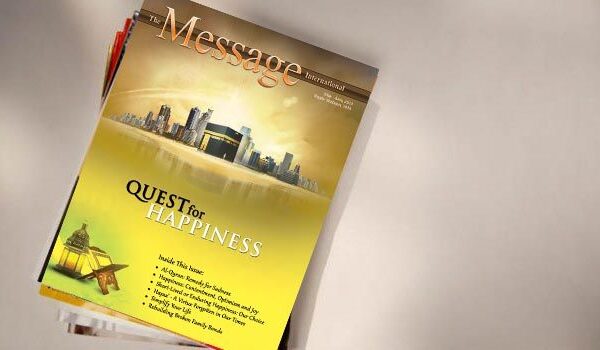
  • Quest for Happiness

    Quest for Happiness

    We all want to be happy in life. Who doesn’t? Yet, it’s an undeniable fact that people, more often than not, search for happiness through wrong means and in wrong places. Many times people even resort to self-destructive things in the attempt to escape the troubles and worries of life. But, then what do they experience? They get nothing but suffering and more miseries. As the saying goes, “They go from the frying pan into the fire.”

    If a person’s material wealth is not supplemented with inner wealth through spiritual guidance, such worldly elements are only a source of evil and destruction

    One may argue that the question of “right” and “wrong” is a relative matter, as is the case of the concept of happiness. One thing, however, can neither be denied nor disputed: Those who do not possess the asset of faith are quite vulnerable against those of the forces of life and nature that are unfavorable, and when things don’t go as planned or expected, or adversity strikes, these people experience despair, anger, and/or emptiness. Sometimes, they even turn to activities that are ruinous to their health and general well-being, and detrimental to social stability. Faith in God, on the other hand, gives a visage of perfect beauty to man’s life, because when one knows very well that existence does not perish with death, it creates an inner peace. It allows a person to traverse the entire course of life with steadiness and moderation.

    Faith, if sincere, produces righteous conduct, and whenever these two confirm each other, God’s grace transforms human life. Instead of being troubled and worried, people gain peace and contentment; and instead of being assailed at every turn by assaults of disappointment, panic, regret, or frustration, they enjoy calm and serenity. How does it happen? Well, sincere obedience and worship of God establish a strong relationship between man and his Creator, and this becomes the pathway of attaining to a balanced and righteous character. With this Divine guidance, an infallible source of wisdom and strength, the precious blessings of security, satisfaction, contentment, and happiness grace the believer’s life.

    Sadly enough, many people simply don’t realize or reflect upon this most important reality of life. They think that the acquisition of wealth, or some other worldly achievement, alone, will bring happiness. But genuine happiness is some inner tangibility that is not acquired by the mere fulfillment of external or material needs. If a person’s material wealth is not supplemented with inner wealth through spiritual guidance, such worldly elements are only a source of evil and destruction. Examples are plenty, and present all around us.

    Now, what does Islam offer and prescribe here? The Islamic teachings make us aware of the inner truth of this ephemeral world, and that the human nafs (soul or self) is composed of a complex mixture of opposing forces of good and evil. We are instructed that the nafs that tempts us to evil is called nafs al-ammarah (the imperious, carnal self), and the nafs that reproaches us when we commit a sin or evil is called nafsal-lawamah (the reproaching self). There is another nafs which is called nafs al-mutma’innah (the restful, contented soul). This is the stage when one is well pleased and happy with one’s Creator and His commands and refrains from any kind of transgression. To attain this quality, a person has to look beyond the limited horizons of a world where sin is often equated with good pleasure and sophistication, and righteousness and doing good out of religious devotion are made to seem odd and naive. In other words, a person’s vision must transcend the boundary of this temporary life and have conviction in resurrection (life after death). One must constantly remember that at the threshold of death, the door to another world will open, and every soul will enter an eternal life of which the joys of reward and the agonies of punishment are incomparable to anything we know in the dunya. It is relevant here to note that sins and crimes, including those carried out in the name of religion, no matter how the perpetrators try to justify them, are barriers to happiness for the criminal, the victims, and society at large. One scholar has said, “A criminal is always more unhappy than his victim, for a criminal who is not punished could be among the most miserable of people”.

    The Qur’an declares: “And whosoever follows My guidance, on them shall be no fear nor shall they grieve” (Qur’an, 2:38). In another place, we are told: “Such are the ones who believe, and whose hearts find rest in the remembrance of Allah. Surely, in the remembrance of Allah do hearts find rest. So those who believe [in the message of the truth] and work righteousness are destined for happiness and a blissful end”(Qur’an, 13:28-29).

    Having said this, we must mention too that faith is the wellspring of elevated thoughts, attitudes, and behaviors that lighten our load, strengthen our bonds of kinship and friendship, and spur us to stand up for fairness and justice everywhere. Does not this pave the way for happiness, personally and collectively?

    Prophet Muhammad (pbuh) thus advised mankind to contemplate and supplicate the following: “O Merciful Lord! Our hearts are in Your finger grip; You handle them as You like. Please make our hearts submit to Your deen [chosen way of life] and make our hearts satisfied with Your remembrance; and send down Your tranquility on our hearts and keep us on the path of piety, and make us worthy of it.” May God Almighty make it happen and grant us the happiness found in faith. Ameen.

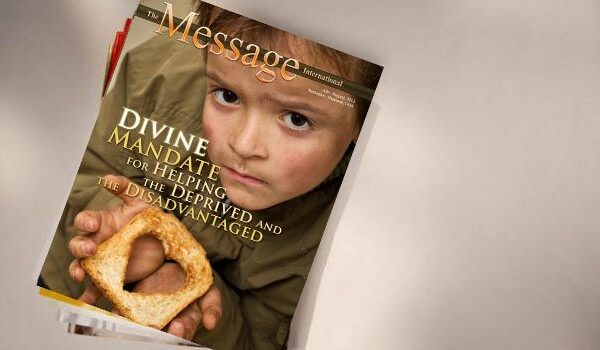
  • Divine Mandate for Helping the Deprived and the Disadvantaged

    Divine Mandate for Helping the Deprived and the Disadvantaged

    Human life is ever vulnerable and unpredictable. It’s also a fact of life that nobody is immune from this uncertainty. People face misfortune for countless reasons. Even when someone faces a difficult situation due to his or her ownmistakes, that doesn’t mean the person should be ignored or not afforded sympathy. Helping people in need is, in fact, an innate inclination of the human conscience.

    No person stretches his hand out to give in charity without it first falling into the hand of Allah (SWT) before it falls into the hand of the needy

    Anyone who is familiar with world religions recognizes that piety and charity have been defining characteristics of all revealed faiths. According to Islam, piety cannot be attained if giving in charity is neglected. As the Qur’an says: “You cannot attain to righteousness unless you spend (in charity) out of what you love” (Al-Qur’an, 3:92).In fact, when someone suffers from hunger, illness, poverty, or any other misfortune or calamity, it is certainly a test from Allah (SWT). However, what we must be mindful of is that it is not just a test for that particular individual, but a test for all others as well, especially for those who are capable of alleviating the suffering of the afflicted one.

    In numerous places of the Qur’an, Allah (SWT) has reminded us about our responsibility toward less fortunate people. Only a few citations may suffice to indicate how serious it is according to Islam. In Surah Al-Ma’un, Allah (SWT) declares that harshness to orphans and neglect of the poor is a sign of disbelief and of denial of the Day of Judgment: “Have you seen the one who denies the religion? Such is he who repulses the orphan, and who does not urge others to feed the poor. Woe to worshippers, who are neglectful of their prayers, those who make a show [of piety], and refuse to render small acts of kindness [towards others]” (Al-Qur’an, 107:1-7). In SurahAl-Muddathir, one of the earliest revelations of the Qur’an, a moving scene from the Day of Judgment has been presented: “In Gardens they will ask the evildoers: ‘What caused you to enter the hell-fire?’ They will say, ‘We were not of those who prayed and we did not feed the poor. But we used to talk vanities with vain talkers and denied the Day of Judgment until it came to us that which is certain’” (Al-Qur’an, 74:39-45). In SurahAl-Fajr, Allah (SWT) calls to the people of ignorance who claim tohave a religion that brings them close to Allah:“No indeed! You do not treat the orphans with respect nor do you urge one another the feeding of the poor; and you devour the whole of inheritance greedily, and you love the wealth with all your hearts” (Al-Qur’an, 89:17-20).

    It is worth noting that zakat (poor dues) is one of the five pillars of Islam, which indicates the importance of helping the deprived and the disadvantaged. Zakat is actually an institution aimed at eradicating poverty by providing financial protection to the poor, the needy, the old and the weak, the unemployed, the disabled, the widows, and so on, regardless of whether they asked for it or not. Allah (SWT) has declared in the Qur’an that in everyone’s wealth there is a portion for the people who are deprived and disadvantaged:”And in their wealth and possession, there is right for the [needy], who asked and who [for some reasons] was deprived” (Al-Qur’an,51:19). Zakat is, therefore, not a worldly innovation, it’s a divine intervention. It is not giving any amount the giver wishes, as the rate of zakat is fixed and has to be paid accurately. If implemented properly, zakat functions as a means to eradicate poverty in the society; and it also simultaneously molds individuals into responsible and caring persons who are always ready to help the poor and those who are unfortunate.

    As a matter of fact, Islam is based upon two things: 1) haququllah — the rights of God; and 2) haququlibad — the rights of God’s creation. The Qur’an makes it evidently clear that there is no piety without charity. Love for God veritably entails loving and serving humanity. Prophet Muhammad (pbuh) exhorted us saying: “The highest level of the intellect, after belief in God, is to be of service to the creation.” According to another tradition,Ibn Abbas (RAA) narrates that the Prophet (SWT) said: “No charity ever decreased any wealth. No person stretches his hand out to give in charity without it first falling into the hand of Allah (SWT) before it falls into the hand of the needy.”

    Imam Ibn Rajab rightly explained: “Human beings are obligated to give thanks to Allah every single day for His blessings on them by performing acts of virtue and charity on a daily basis. These include all acts of benevolence and compassion, helping those in distress or need, treating others compassionately, rendering acts of kindness towards them, protecting them against harm or injury, as well as any act of kindness towards each and every creature of God.”

    To sum up, the moral edifice of Islam requires Muslims to help people in need, whether they be on the right path or not, Muslims or non-Muslims. Giving in charity is not just an act of individual volition and inclination, but an incumbent duty upon all Muslims who are bestowed with wealth or any other resource such as time and energy to volunteer. To attain the good pleasure of God Almighty, we must submit ourselves to this divine commandment sincerely and wholeheartedly.


  • Educacion sobre el Islam en nuestro idioma – Hablamos Islam

    Educacion sobre el Islam en nuestro idioma – Hablamos Islam

    El grupo Hablamos Islam, anteriormente conocido como “Primexample” o “Latino Muslim Outreach Project” (LMOP) fue creado por una familia de musulmanes conversos cuyo esfuerzo de educar sobre el Islam se dirigía hacia ambos latinos y no-latinos.

    Fundador, Hernán Guadalupe, de padres Ecuatorianos, se crio en una comunidad predominantemente latina en Union City, Nueva Jersey. Luego de su conversión al Islam en el 2001, comenzó a asistir a la mezquita llamada Islamic Education Center of North Hudson (IEC), uno de los centros islámicos con mayor porcentaje de musulmanes hispanos en los estados unidos. Poco tiempo después, también entraron al Islam su hermano, Diego, y su madre, Martha. Pasaron tres años, y Hernán se casó con Wendy Díaz, una conversa puertorriqueña que había abrazado el Islam en el año 2000 y vivía en Maryland. Ambos colaboraron con el comité de propagación islámica (dawah) de la mezquita IEC para organizar varios eventos y también trabajaron con WhyIslam, quienes se dedican al dawah a escala nacional. Hacían trabajo voluntario por WhyIslam, manejando kioscos o mesas en centros comerciales, repartiendo literatura sobre el Islam, y ayudando a nuevos conversos.

    Motivados por enseñarles a sus familiares no-musulmanes sobre su fe, Hernán y Wendy, junto a Diego, comenzaron LMOP y PrimeXample, cuyo nombre se refería al excelente ejemplo y carácter del Profeta Muhammad, (que la paz y bendiciones de Allah estén con él). Bajo este grupo, los tres se dedicaron a traducir muchos artículos sobre el Islam del inglés al español y también dieron lecturas en varias universidades en el noreste sobre varios temas de la religión, Islam. Una de las lecturas se titulaba, “Latinos in Islam: Rediscovering our Roots,” la cual presentaba las similitudes entre la cultura latina y el Islam debido a la historia que comparten. Eventualmente, el nombre LMOP fue disuelto para no causar malas interpretaciones ya que el dawah era dirigido a todos, no sólo a los latinos. Los esfuerzos continuaron con PrimeXample, utilizando el internet para difundir información y colaborando con asociaciones estudiantiles musulmanas en las universidades y mezquitas para planificar eventos educativos.

    Después de un tiempo, y luego de haber vivido en Egipto por un año para aprender el árabe, Hernán y Wendy, también conocidos como Abu y Umm Uthman (El padre y la madre de Uthman), decidieron disolver PrimeXample y enfocarse más en el dawah para la comunidad latina. Cambiaron el nombre a “Hablamos Islam” que representa todo lo que el proyecto implica; hablar sobre el Islam con el propósito de educar sobre ello en el idioma español. Este servicio es dirigido a latinos que han abrazado el Islam y también a aquellos que tienen curiosidad o motivación para aprender sobre la religión. Abu Uthman dice, “Existen muchos recursos sobre el Islam en inglés hoy en día, sin embargo hacen falta más en español y eso es lo que Hablamos Islam quiere facilitar, insha’Allah.”

    Actualmente, la página web www.hablamosislam.com ofrece artículos, videos, y fatawa en español y es una de las más populares entre la comunidad musulmana latina, alhamdulillah. Tras buscar información sobre el Islam dirigida hacia los niños, los fundadores de Hablamos Islam se dieron cuenta que estos recursos estaban escasos y tomaron la iniciativa de también formar la página infantil: www.hablamosislamninos.com. Con el motivo de ofrecer recursos educativos para los padres e hijos musulmanes de habla hispana, Hablamos Islam Niños ha publicado cuatro libros infantiles sobre el Islam, tres de ellos siendo bilingüe español/inglés, y ha creado un programa llamado “Hablamos Islam con Ahmed” que le enseña a los niños aspectos del Islam en una manera divertida y en el idioma español. Estos programas se encuentran en la página web y también en YouTube bajo el nombre “Hablamos Islam.” Igualmente brindan páginas para colorear y aprender, poemas, e información para padres para apoyarlos en la enseñanza del Islam para sus pequeños, insha’Allah. Además, existe una página en Facebook, donde muchos entusiastas se congregan para saber las últimas noticias sobre el proyecto, Hablamos Islam.

    Con la ayuda de Allah y el apoyo de muchos hermanos y hermanas, Hablamos Islam planea hacer mucho más para los hispanoparlantes y musulmanes latinos en todas partes del mundo, insha’Allah. Desean aumentar la conciencia sobre la escasez de recursos islámicos para niños en español, insha’Allah, y han logrado que dos tiendas musulmanas vendan sus libros bilingües, masha’Allah. Igualmente, por medio de donaciones, han podido repartir libros gratuitos en Puerto Rico, Ecuador, y Colombia. Su meta es poder imprimir y repartir más libros en todo Latinoamérica, España, y los Estados Unidos, insha’Allah, y además aumentar el número de videos y artículos en su página web. Actualmente, sus libros están por venta en la página web oficial de Hablamos Islam Niños y también en la página: www.nuestratiendita.bigcartel.com. Todas las ganancias van directamente a la producción de más recursos en español.

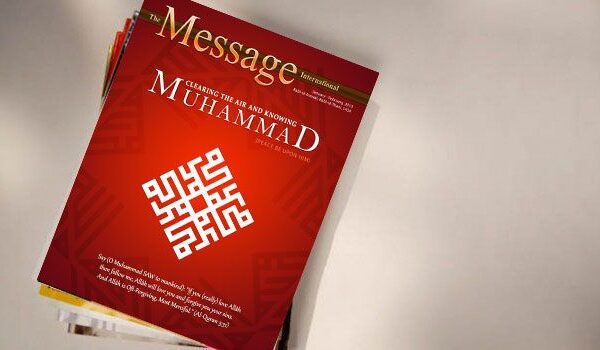
  • Editorial: Clearing the Air and Knowing Muhammad (pbuh)

    Editorial: Clearing the Air and Knowing Muhammad (pbuh)

    “Perhaps the world was never in greater need of an accurate account of Prophet Muhammad’s life than it is now.” So states Adil Salahi, author of Muhammad: Man and Prophet. It’s true that after 9/11, for whatever reason(s), awareness of Islam and Prophet Muhammad (peace and blessings of God be upon him) has increased considerably. Yet many people still do not really know who he was and what legacy he left behind. Sam Bacile’s infamous film, a French magazine’s cartoon caricatures, and hate-filled remarks made by right-wing propagandists are clear reminders that many people’s understanding of Prophet Muhammad (pbuh) is flawed and far from the facts.

    Such a lack of knowledge, however, is rather surprising; for unlike most other prophets or religious personalities whose life stories are full of myths or legends, Prophet Muhammad (pbuh) lived in the full light of history. Almost every aspect of his life was recorded by those who lived with him and knew him intimately, and so we do not have to guess at what he said or did. When we read this vast body of literature, we can see that he was a man of exalted character and enlightened personality, one who was kind and just to all people, regardless of whether they treated him well or with antagonism. His distinctive benevolence extended even to animals and plants. The revolutionary message conveyed by Prophet Muhammad changed not only his own society, but the very course of history, a fact historians have unanimously noted. Today, some 1,400 years later, more than 1.3 billion people revere him and follow him as God’s last messenger.

    The veneration of Prophet Muhammad (pbuh) is not limited to his followers, however. Many great philosophers, thinkers, and reformers of other faith traditions have praised him and said that it would be to humanity’s great benefit to follow his teachings. Today, no matter how caustically Islamophobes taunt him or libel Islam, the fact is that Prophet Muhammad (pbuh) never preached any doctrine that guided to other than peace, justice, and mercy. It’s simply mind-boggling that he would be made responsible for an individual Muslim’s misreading of his message and committing wrongdoing in the name of Islam. Contrary to the widely held notion in the West and some parts of the East, the very concept of “holy war” does not even exist in Islam. The Qur’an is categorical in denouncing all wars of aggression. “And fight in God’s cause against those who wage war against you, but do not commit transgression—for, verily, God does not love transgressors” (Al-Baqarah 2:190). The Qur’an also forbids Muslims from fighting, attacking, or harming anyone who allows others to live in peace. “Thus, if they let you be, and do not make war on you, and offer you peace, God does not allow you to harm them” (An-Nisaa’ 4:90).

    Prophet Muhammad (pbuh) preached peace, mercy, and respect toward all of humanity. His heart was filled with love for people irrespective of their social standing, color, race, or gender. He eliminated the roots of racism, termed it satanic, and advised his followers to regard all people as their brothers and sisters, with no man or woman higher in rank than any other except through virtue. He cautioned, “One who has even the least amount of pride in his or her heart won’t be able to enter into Heaven.” The Prophet never endorsed any impolite or indecent manner of behavior, let alone injustice done to anybody. He said, “Those who commit injustice upon people in this world will be the greatest losers in the Hereafter and will find their place in the Hellfire.” The Prophet thus taught people how to live among others in simple and modest grace, looking always to bring benefit, never offending, never causing harm or distress.

    The Prophet’s embodiment of this manner of living was testified to by every one of his companions, including Anas ibn Malik, who served the Prophet for ten years. He said that the Prophet never ever rebuked him. “When I did something, he never questioned my manner of doing it; and when I did not do something, he never questioned my failure to do it. He was the most good-natured of all men.” Indeed, the Prophet was an extremely kind-hearted person. “Repel evil with what is good” was his dictum and his practice. He was considerate to his family and friends. He was a loving father, a generous husband, and a caring neighbor. He treated equally, without bias or favoritism, friends and strangers, the powerful and the weak, the wealthy and the poor. And his compassion and generosity to those in need naturally endeared him to those who came to know him, and gained him respect, admiration, and love from both close companions in his lifetime and those who study his biography from the distance of time or place. He exemplified the best of human conduct in all situations and the Qur’an, fittingly, describes him as “uswatun hasana,” the best example to emulate (Al-Ahzab 33: 21).

    How can anyone mock and malign such a towering figure in the annals of history? This is a man who should be cherished by the whole of humanity because of his pure and noble soul. Surely, it’s either ignorance or prejudice that permits of belligerence toward him. Those who engage in such vilification, so decidedly unjustified, insult our collective human conscience and intelligence.

    Prophet Muhammad (pbuh), the man, is the greatest testimony to the truth he preached. Let us know this man, explore his guidance, and embrace his example.

  • A Sitting with the Prophet Muhammad (pbuh)

    A Sitting with the Prophet Muhammad (pbuh)

    Khalid ibn al-Walid (may Allah be pleased with him) narrated the following: “A Bedouin came one day to the Messenger of Allah (peace be upon him) and said to him: “O Messenger of Allah! I have come to ask you a few questions about the affairs of this life and the Hereafter.” The Prophet of Allah replied: “Ask what you wish.”

    Their exchange continued as follows:

    Bedouin: I would like to be the most learned of men.

    Prophet (pbuh): Fear Allah, and you will be the most learned of men.

    Bedouin: I wish to be the richest man in the world.

    Prophet (pbuh): Be contented, and you will be the richest man in the world.

    Bedouin: I would like to be the most just man.

    Prophet (pbuh): Desire for others what you desire for yourself, and you will be the most just of men.

    Bedouin: I want to be the best of men.

    Prophet (pbuh): Do good to others and you will be the best of men.

    Bedouin: I wish to be the most favored by Allah.

    Prophet (pbuh): Engage much in Allah’s praise, and you will be most favored by Him.

    Bedouin: I would like to complete my faith.

    Prophet (pbuh): If you have good manners you will complete your faith.

    Bedouin: I wish to be among those who do good.

    Prophet (pbuh): Adore Allah as if you see Him. If you don’t see Him, [know that] He sees you. In this way you will be among those who do good.

    Bedouin: I wish to be obedient to Allah.

    Prophet (pbuh): If you observe Allah’s commands you will be obedient.

    Bedouin: I would like to be free from all sins.

    Prophet (pbuh): Bathe yourself from impurities and you will be free from all sins.

    Bedouin: I would like to be raised on the Day of Judgment in the light.

    Prophet (pbuh): Don’t wrong yourself or any other creature, and you will be raised on the Day of Judgment in the light.

    Bedouin: I would like Allah to bestow His mercy on me.

    Prophet (pbuh): If you have mercy on yourself and others, Allah will grant you mercy on the Day of Judgment.

    Bedouin: I would like my sins to be very few.

    Prophet (pbuh): If you seek the forgiveness of Allah as much as you can, your sins will be very few.

    Bedouin: I would like to be the most honorable man.

    Prophet (pbuh): If you do not complain to any fellow creature, you will be the most honorable of men.

    Bedouin: I would like to be the strongest of men.

    Prophet (pbuh): If you put your trust in Allah, you will be the strongest of men.

    Bedouin: I would like to enlarge my provision.

    Prophet (pbuh): If you keep yourself pure, Allah will enlarge your provision.

    Bedouin: I would like to be loved by Allah and His messenger.

    Prophet (pbuh): If you love what Allah and His messenger love, you will be among their beloved ones.

    Bedouin: I wish to be safe from Allah’s wrath on the Day of Judgment.

    Prophet (pbuh): If you do not lose your temper with any of your fellow creatures, you will be safe from the wrath of Allah on the Day of Judgment.

    Bedouin: I would like my prayers to be responded to.

    Prophet (pbuh): If you avoid forbidden actions, your prayers will be responded.

    Bedouin: I would like Allah not to disgrace me on the Day of Judgment.

    The Prophet (pbuh): If you guard your chastity, Allah will not disgrace you on the Day of Judgment.

    Bedouin: I would like Allah to provide me with a protective covering on the Day of Judgment.

    Prophet (pbuh): Do not uncover your fellow creature’s faults, and Allah will provide you with a covering protection on the Day of Judgment.

    Bedouin: What will save me from sins?

    Prophet (pbuh): Tears, humility, and illness.

    Bedouin: What are the best deeds in the eyes of Allah?

    Prophet (pbuh): Gentle manners, modesty, and patience.

    Bedouin: What are the worst evils in the eyes of Allah?

    Prophet (pbuh): Hot temper and miserliness.

    Bedouin: What assuages the wrath of Allah in this life and in the Hereafter?

    Prophet (pbuh): Concealed charity and kindness to relatives.

    Bedouin: What extinguishes hell’s fires on the Day of Judgment?

    Prophet (pbuh): Patience in adversity and misfortunes.


  • Spanish: Allah Rescata a un Boricua con el Islam

    Bismillahi Rahmanir Raheem. En el nombre de Allah el Clemente el Misericordioso. Que la paz de Allah este con Su último mensajero, el sello de los profetas, Muhammad. Y que la paz de Allah este con todos los que sigan sus pasos hasta el Dia del Juicio.

    Mi familia querida

    Fui bendecido con padres de origen puertorriqueño. Soy el menor de tres hijos que nacimos en Nueva York, y nos criamos entre Puerto Rico y Nueva Jersey.

    Mi familia fue bendecida con mi madre, quien antes de casarse con mi querido padre, era una monja. Mi madre les enseñaba a más de 50 niñas en el convento en Nueva York. Estudió sicología en la Universidad de Fordham. Mi madre tenía preguntas sin respuestas y eso la llevó a dejar el convento y luego se casó con mi padre. Mi madre nos enseño a siempre suplicarle a Dios por nuestra comida, al despertar, y antes de dormir. En Puerto Rico estableció el catecismo en nuestro hogar para los niños del barrio. Mi padre era un gran trabajador; nos llevaba a trabajar para aprender como sobrevivir. Desde pequeño aprendi a hacer pizza, huevos revueltos, y sandwiches. Mi padre jugaba con nosotros videojuegos y deportes en sus días libres. Mis hermanos mayores siempre jugaban comigo, me llevaban al cine, y siempre nos divertíamos juntos.

    El Islam y el baloncesto

    Desde pequeño era un fanático de Michael Jordan y los Chicago Bulls. Los Bulls ganaron 3 campeonatos y luego Jordan se retiró. Me quede como un niño sin estrella. Me puse a buscar y elegí como jugador favorito a Chris Jackson de los Denver Nuggets, que luego acepto el Islam y se cambió el nombre a Mahmoud Abdul Rauf. En ese tiempo no se tenía mucho acceso a ver juegos de otros equipos, a menos que esos equipos jugaran con el equipo local. La manera que me mantenía al día era coleccionando tarjetas. Una vez estuve leyendo las tarjetas de Mahmoud Abdul Rauf y encontré información acerca del Islam, como el significado de su nombre y sobre la peregrinación hacia la Meca.

    Como no tenía acceso de ver muchos juegos de Denver tuve que escoger uno de dos equipos locales que eran los Knicks de Nueva York o los Nets de Nueva Jersey. Elegí a los Knicks porque nací en Nueva York y como jugador favorito elegí a John Starks. Ese año los NY Knicks llegaron a las finales contra los Houston Rockets. Los Houston Rockets tenían a la leyenda, Hakeem Olajuwon, quien estaba ayunando durante los juegos para el campeonato. Muchos de los Knicks le hablaban basura y él pacientemente respondía con su juego.

    Los Rockets tenían la oportunidad de ganar juego con un lanzamiento por Starks, pero fue bloqueado por Hakeem y Houston ganó el campeonato de la NBA. Este fue mi primer contacto con el Islam, pero durante ese tiempo no estaba interesado en la religión.

    Las dificultades de un joven

    Mientras estaba en la escuela Secundaria de Union Hill, localizada en Union City Nueva Jersey, comencé a fumar cigarros porque todos mis amigos lo hacían. Después de la escuela íbamos a jugar baloncesto y algunas veces las personas que esperaban su turno para jugar tomaban cervezas o fumaban marihuana. A consecuencia, de joven me la pasaba jugando baloncesto, cantando reggaeton en las discotecas, tomando alcohol y “jangeando” con las amistades. Tuve algunas malas experiencias como la pérdida de un amigo que se ahogo mientras dormía intoxicado con alcohol a la edad de 18 años. También me envolví con una pandilla, en la que conocí a mi gran amigo, Carlos Hernández de Colombia, quien vivió unas semanas en mi casa. A Carlos le gustaba leer mucho y un día fue conmigo a la biblioteca pública y por él me robe una copia del Corán. Los miembros de la misma pandilla de la que yo era parte mataron a dos de mis amigos con quienes yo estuve el día anterior. Esa tragedia me afectó mucho. Día tras día pensaba en tres cosas: La muerte, la enfermedad, y la seguridad de mi familia. En esos momentos perdí la confianza de todo ser humano con excepción de mis padres, pero ellos no tenían le experiencia para ayudarme en mi caso. Decidí buscar de Dios. Fui a seis diferentes iglesias para buscar la Biblia de cada iglesia.

    Mi jornada espiritual

    Mi Jornada comenzó en el año 1998 cuando me sentía sin dirección, sin tener la habilidad de confiar en otro ser humano. Visité las iglesias del pueblo y adquirí 6 biblias. Mientras leía y comparaba entre ellas, me acorde del Corán que mi amigo, Carlos, dejó en mi hogar. Lo busqué y comencé a leer diariamente las 6 biblias y el Corán. Interesantemente, me enteré de la acusación contra la Biblia del Rey James de parte de la Nueva Revisada, que dice en la introducción: La Biblia Rey James tiene graves errores. Me puse a pensar, ¿cómo una Biblia Sagrada va a criticar a otra Biblia Sagrada? Pensé que eso es obra del ser humano no de Dios.
    Luego leí en la Introducción del Corán, traducido por Abdullah Yusuf Ali, que “este Corán es una confirmación del mensaje de Moisés, Jesús, Muhammad, y todos los profetas de Dios. También dice que el Corán permanece en árabe, en su forma original sin haber sido cambiado milagrosamente por más de 1400 años y millones de personas se lo han memorizado. Esto me impresionó.

    Mi lectura del Corán

    Continué la búsqueda y me apegue a la lectura del Corán. Quise aplicar toda orden que leía. Leí un versículo que decía:
    Establece el salat desde que el sol comienza a declinar hasta la llegada de la oscuridad de la noche, así como la recitación del alba. Es cierto que la recitación del alba queda atestiguada. {Sagrado Corán 17:78} Tras leer ese versículo, me levantaba a medianoche en secreto, entre yo y Allah, a leer el Corán mientras mi familia dormía. Sentí una fuerza interior cada vez que hacia un acto para complacer a Allah.

    Luego leí un versículo relacionado con el hablar bien:
    ¡Vosotros que creéis! Temed a Allah y hablad acertadamente. Él hará buenas vuestras acciones y os perdonará las faltas. Y quien obedece a Allah y a Su mensajero ha triunfado con gran éxito. {Sagrado Corán 33:70-71} Enseguida después de leer ese versículo comencé a poner mucho esfuerzo pare controlar mi manera de hablar. Y solamente esforzándome para hablar bien o mantenerme en silencio.

    Me mantuve leyendo el Corán por nueve meses consecutivos y a través de la lectura y la aplicación me di cuenta que gradualmente iba curándome del vicio de fumar cigarrillos y tomar alcohol. Esa fuerza interna me hizo confiar más y más en el Sagrado Corán. Finalmente después de 9 meses de lectura del Corán tome la decisión el 24 de septiembre de 1999 para aceptar el Islam. Acepte el Islam en el NHIEC: Centro de Educación Islámico del Norte de Hudson en Union City con el Sheij Mohammed Al Hayek, quien regularmente ofrecía clases en ingles para nuevos musulmanes. Dos años después, mi querida madre y mi querido padre también aceptaron el Islam. Alabado sea Allah.

    Esfuerzos en divulgar el Islam

    En el año 2002 establecí una clase en español en NHIEC titulada “Entendiendo el Islam”. Luego, en una reunion del Comité de Dawah, el Imam Al Hayek me preguntó si tenía una idea para un evento dirigido a la comunidad latina. Yo sugerí El Día de los Latinos Musulmanes. Através del maravilloso esfuerzo del Comité de Dawah se llevó acabo el primer evento en el 2002. Continúe mis esfuerzos haciendo las clases semanales desde el 2002 hasta el 2004.

    Mi paso hacia estudiar el árabe y los estudios islámicos

    En el 2004 recibí la maravillosa noticia que se me ofrecía una beca para estudiar en Egipto; el idioma árabe en el Instituto Eqraa y estudios islámicos en la Universidad de Al Azhar. Estudie en Egipto desde el 2004 hasta el 2007, completando 5 años de materia en 3 años en Al Azhar. Alabado sea Allah. Conocí maravillosos hermanos y hermanas latinos en Egipto, quienes ayudaron a ubicarme. Entre ellos: Abdul Rahman Khairo de Colombia, Sheikh Uzman de Argentina, Dr. Juan Yahya Suquillo visitaba y siempre nos daba buenos consejos, y también conocí a nuestro querido hermano Mujahid Fletcher, el fundador de IslamInSpanish. Pasamos noches hablando de cómo poder servir a nuestra comunidad Latino/Hispana.

    IslamInSpanish: Mi nueva familia

    En el año 2010 traslade a mi familia de Nueva Jersey hacia la maravillosa ciudad de Houston, con el propósito de trabajar en Iman Academy, una escuela Islámica como maestro y trabajar con IslamInSpanish. Me junte a IslamInSpanish por su extraordinaria misión de producir multimedia educando a los latinos sobre el Islam.

    Ha sido una maravillosa experiencia poder trabajar con IslamInSpanish en el servicio de nuestra comunidad latina, grabando los programas de IslamInSpanish en el Studio de Andalucía Center con “La Voz de IslamInSpanish”, el narrador oficial Abu Mujahid Fletcher. IslamInSpanish tiene mucho que ofrecerle a la comunidad latina. ¡Alabado sea Allah!
    Materia de Educación Islámica en www.islaminspanish.org

    La comunicación con la comunidad latina por medio de Facebook en la página: facebook.com/IslamEnSpanish
    Material disponible para la venta en: http://www.dar-us-salam.com/
    Presentaciones nacionales e internacionales: Contáctelos via: info@islaminspanish.org. http://www.facebook.com/IslamEnSpanish

    Elegido Imam para la comunidad de Beaumont Texas

    A finales del año 2011 recibi una oferta para ser un Imam en Beaumont, Texas. Honestamente, mi primera respuesta fue no, estaba super contento viviendo en Houston, y con mis trabajos en Iman Academy y en IslamInSpanish. Claro que estaba extremamente ocupado y no tenía mucho tiempo para mi familia. Mi maravillosa esposa me dijo: Vamos a dondequiera que vayamos. Hice la oración Istikhara (La Consulta con Dios), analicé la oferta y me dije a mi mismo, “Con esta oferta podría balancear mi vida y manejar mi tiempo mas adecuadamente. Podría hacer dawah, continuar mis estudios del Islam, pasar tiempo con mi familia colectivamente e individualmente y ser un ejemplo musulmán. Después de la oración Istikhara consulte con Isa Parada, Abdullah Oduro, Mujahid Fletcher, Abu Mujahid Fletcher, mi madre, y tome la decisión de aceptar la oferta como Imam de la Sociedad Islámica de Triplex. En el mes de enero del 2012, fundamos la escuela Al Hidaya, una escuela suplementaria que se lleva acabo los fines de semana.

    La Mision de Al Hidaya es: “Desarollar en los jóvenes un amor por Allah como su Dios, un amor por el Islam como su modo de vivir, un amor por Muhammad (Que la paz sea con él) como el sello de los Profetas, y un amor por el Corán como la guía para la humanidad.” En Al Hidaya, los estudiantes aprenden el árabe, estudios islámicos, la lectura del Corán, baloncesto y artes marciales. Al Hidaya constituye de maravillosos estudiantes, maestros, y voluntarios.

    Otros programas de IST (Islamic Society of Triplex):
    (1) KnewU: Clases para nuevos musulmanes en ingles. Programa fundado por Abdullah Oduro.

    (2) La Explicación del Corán

    (3) Visitas a la prisión

    (4) Programa para jóvenes

    (5) El Dialogo Religioso

    (6) Noches de Película