بسم الله الرحمن الرحيم

Author: bocapro

  • Climate Change and Our Responsibility

    Climate Change and Our Responsibility

    Climate change is a serious global concern, and with the passage of time, the situation is worsening. In 2007, scientists from the International Panel on Climate Change (IPCC) predicted that sea levels could rise 7-23 inches by the year 2100. That report did not take into account the impact of melting glaciers.

    Our concern for the environment must go beyond words and translate into actions

    By 2014, the IPCC’s Fifth Assessment Report factored in the melting of the ice sheet, and projected a global sea level rise of 10 to 38 inches by the turn of the century. Densely populated coastal communities and the infrastructure that supports them would be severely affected worldwide. Some areas would be flooded, or at least more vulnerable to destruction from deadly storms. In some regions, drought could be more frequent and long-lasting. Even seemingly less dramatic local changes in temperature, precipitation, and soil moisture can severely affect agriculture and food supplies, human health, water availability, and much more. As a result, habitats and resources could be decimated, and various plant and animal species, as well as countless human lives, could be lost. Many experts are warning that we are fast approaching a tipping point at which time the harm cannot be contained and the wide-ranging effects irreversible.

    The cause of climate change and global warming has been debated extensively and the scientific consensus is that there is a natural variability in climate but that human activity has pushed that variability to extremes. Recent studies also suggest that most of the warming over the last 50 years is due to human activity. In its 2007 report to the United Nations, the IPCC concluded that it is more than 90 percent likely that the accelerated warming of the past 50-60 years is due to human contributions. In this context, it is worth mentioning what the Quran declared fourteen hundred years ago: “Corruption has appeared on land and sea because of what people’s own hands have wrought, that He may make them taste something of what they have done, in order that they may turn back” (Quran 30: 41).

    In Quran and hadith, we are reminded that humanity is designated as caretakers of this earth. The Quran says, “It is He who has appointed you vicegerent on the earth…” (Quran 6:165). The Prophet (peace be upon him) has also said, “The world is beautiful and verdant, and verily God, the exalted, has made you His stewards in it, and He sees how you acquit yourselves” (Muslim). In order to carry out this trust, we need to behave with moderation and responsibility. There is no denying that the use of fossil fuels threatens to destroy the gifts – beauty, balance of nature, and resources — bestowed on us by God. Our failure to appreciate and care for these gifts poses such a serious threat, and yet humanity continues on the path of abusive exploitation of the earth.

    Having been inspired by Islamic teachings, Muslim environmental activists from 20 countries gathered in Istanbul last year and issued an “Islamic Declaration on Climate Change,” calling on the world’s 1.6 billion Muslims to do their part to eliminate dangerous greenhouse gas emissions and commit to renewable energy sources. The Declaration noted the following: “We recognize that we are but a miniscule part of the divine order, yet within that order, we are exceptionally powerful beings, and have the responsibility to establish good and avert evil in every way we can. We have no right to oppress the rest of creation or cause it harm. Intelligence and conscience behoove us, as our faith commands, to treat all things with care and awe (taqwa) of their Creator, compassion (rahmah) and utmost good (ihsan).” The Declaration also calls upon people everywhere and all national leaders to “commit themselves to 100% renewable energy and/or a zero emissions strategy; invest in decentralized renewable energy, which is the best way to reduce poverty and achieve sustainable development; and realize that to chase after unlimited economic growth in a planet that is finite and already overloaded is not viable. Growth must be pursued wisely and in moderation; placing a priority on increasing the resilience of all, and especially the most vulnerable.”

    For the last few years, at the initiative of the United Nations, World Environment Day is observed annually on June 5th to create greater awareness of climate change. In conferences and summits, leaders and activists commit to minimizing further environmental degradation in the attempt to protect the world from the serious threats resulting from climate change. These are, no doubt, good initiatives. Yet, some individuals in our own country, including politicians and lawmakers, continue to deny climate change. And even when grand initiatives are put forth, they are too often unmatched by implementation. This issue of our magazine focuses on the need for practical action. Indeed, our concern for the environment must go beyond words and translate into actions.

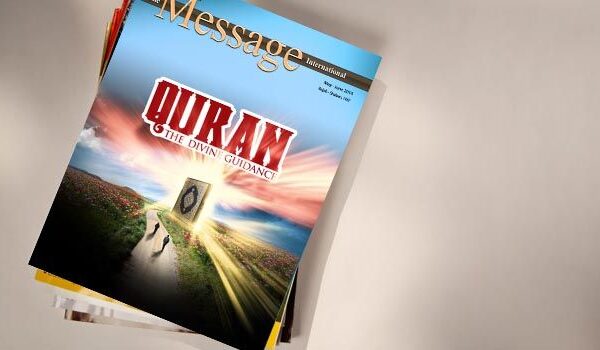
  • Quran: The Divine Guidance

    Quran: The Divine Guidance

    “We have sent our messengers with clear evidences and sent down with them the Scripture and a balance that the people may maintain [their affairs] in justice” (Quran 57:25).

    “Surely, this Quran guides to that which is most just and upright” (Quran 17:9).

    The primary purpose of the Quran is to define the true set of beliefs with regard to the Creator and His creation, and to implement these beliefs in a system of laws that will benefit humanity in this life and the next.

    These are just two out of many verses in which the Quran describes itself. Those familiar with the subject matter of the Quran, no matter whether they recognize it as divine scripture, would agree that it is a book providing guidance for individuals, families, and society. It is a book that has profoundly influenced people around the world for centuries. The Quran continues to enlighten, and to change the lives of people from all walks of life. After simply reading a few passages of this magnificent book, a good number of people have embraced Islam. And the number of converts increases day by day. This is indeed one of the miraculous powers of the Quran.

    One analyst rightly says, “The primary purpose of the Quran is to define the true set of beliefs with regard to the Creator and His creation, and to implement these beliefs in a system of laws that will benefit humanity in this life and the next” (see “The Eternal Miracle of the Qur’an” by Yasir Qadhi in The Message International, May-June 2011, p.21). Interestingly, while there are people in the West who are obsessed with propagating a tag line that Islam oppresses women, those who convert to Islam in the West are overwhelmingly female. And these women are typically not unsophisticated individuals or social misfits; they are rather well-educated and accomplished. They have read the Quran, studied Islam, and made an informed decision. They were not deceived by those who spread fictions about the Quran. Instead they were moved to check it out for themselves. To quote Ustad Nouman Ali Khan, “This book has been attacked before and it will be attacked again. It is Allah’s word and no amount of criticism is going to take away from its glory” (see “Quran and Me,” in The Message International, May-June 2011, p.25).

    Any close and careful reading of the Quran reveals that this unique book presents a comprehensive system that balances human beings’ personal needs with the general good. It gives humanity a formula that speaks to moral and spiritual issues as well as practical, everyday affairs and aspirations. It has been said that there are three pillars upon which social justice in Islam is built: the absolute freedom of conscience; human equality as to worth, rights, and opportunities; and the reality of human and social interdependence. Each one of these pillars is necessary to the integrity and stability of social justice. Freedom of conscience, for example, allows the human being to choose voluntarily what he or she believes about God and the meaning and purpose of life. The one who chooses submission to God finds psychological and emotional liberation from thralldom to other people, material things, or any other earthly influence or relative power. That individual realizes it is Allah who creates man, provides him with sustenance, and holds him accountable in a final reckoning as to his belief and his deeds. Allah, the Almighty, says in the Quran: “Say: O people of the scripture [Jews and Christians], come to a word that is just between us and you, that we worship none but God, and we associate no partners with Him, and that none of us shall take others as lords besides God” (3:64).

    Interlocking with man’s freedom of conscience and right to choose his ultimate destiny is the principle of equality. Islam presents this principle to the world, that in spite of outward differences, all human beings are equal in human worth, in their basic civil, political, social, and economic rights, and in their claim to fair opportunity, without discrimination or politically imposed impediment. The Quran declares, “O people, We have created you from a male and a female, and formed you into nations and tribes that you might know one another. Indeed, the noblest of you in the sight of Allah is the most righteous of you. Surely Allah is wise and all-knowing” (49:13). This verse makes it clear that the diversity of nationalities, races, and cultures among human beings allows for greater discernment and understanding of the human condition. False notions of superiority set the stage for discrimination based on outward, superficial characteristics. This is nothing but folly, leading to injustice and conflict.

    The third pillar, human and social interdependence, is further commitment to mutual understanding and tolerance. Humanity is one family and each person is integral to the common good and social progress. This interdependence ties people together through empathy and affection; it also fosters positive, moral, and concrete action such as helping the needy and vulnerable.

    Social justice is one of the most important values and gifts of Islam, and Prophet Muhammad and his companions built a strong, stable society that reflected fraternity and fairness across the board. Those who want to understand firsthand, are invited to read the Quran, to experience for themselves the beauty and powerful appeal of Divine guidance and wisdom in its uncompromising call for social justice and peace.

  • Muslim Contributions to America: Taking It to the Next Level

    Muslim Contributions to America: Taking It to the Next Level

    “Have you ever been to a Muslim hospital? … Have you witnessed a Muslim charity? Can you show me one Muslim signature on the Constitution, Declaration of Independence, or Bill of Rights? Have you ever seen a Muslim do anything that contributes positively to the American way of life?” These were the exact words of a public statement made by a Michigan Republican National Committeeman not too long ago. This perspective is not unique, for we have heard a similar statement or narrative from other people as well. One may wonder if this is sheer ignorance or deliberate propaganda.

    Today Muslims are on the front lines of campaigns to support social justice and end civil rights abuses

    Recently, in the wake of the anti-Muslim statements made by Republican presidential candidate Donald Trump, the UK’s daily Guardian published an article providing a brief but compelling survey of contributions made by Muslims in shaping, developing, and serving America (google: the guardian, Muslims who shaped America). The article observes, “What Trump doesn’t seem to grasp is his own country’s history, and how many American achievements worth celebrating are the work of the kind of people – Muslims – he wants to keep out.” The article also commented that even a partial list of “some of the things Muslims have done for the US…is still more impressive than what Trump has done for his homeland.”

    Did the author, Stuart Jeffries, overstate the case? Actually, no. He acknowledges that his list is far from exhaustive but it nonetheless shows that Muslims have been part of American society right from its inception. That story is not well-known, however, as Muslims in America have always been a minority. Nevertheless, Islam has been present and notable all along. Professor Richard Turner, for example, mentions that while researchers disagree over the number of Muslim slaves that were brought to the Americas, they agree that many Muslim slaves were educated and literate in Arabic and they “often occupied leadership roles in the jobs that slaves performed on plantations in the American South…Their names, dress, rituals, and dietary laws were perceived as powerful significations of Islamic identities in the slave community.” To name just a few, Bampett Muhammad was a soldier who fought for the Virginia Line between the years 1775 and 1783 under Commander-in-Chief of the Continental Army, George Washington, in the war against British colonialism. A North African Arab, Yusuf Ben Ali, also fought along with him. A Muslim American soldier, Peter Buckminster, is the man who killed British Major General John Pitcairn at the battle of Bunker Hill. Buckminster later changed his surname to Salem or Salaam.

    There is evidence that founding fathers John Quincy Adams and Thomas Jefferson were quite familiar with Islam and possessed copies of the Holy Quran in their personal libraries. It is worth noting that Keith Ellison, the first Muslim elected to congress, used Jefferson’s nearly 250¬?year¬?old Quran to be sworn in on as a U.S. congressman. Many Americans don’t know that in 1777, Morocco, a Muslim nation, was the first country to formally recognize the United States as an independent nation. The vast majority of early Muslims present in the U.S. were Africans brought to this country as slaves in the 17th century. The next major wave of Muslims coming to America was in the mid-19th century through to the 1920s, with large numbers emigrating from the Middle East, mostly from Lebanon and Syria, many of whom settled in the American Midwest. Muslim immigrants, like all those who sought opportunity in America, settled in their new home, and established deep and sturdy roots for the generations to come. Achievements by Muslim Americans followed, and as proud citizens they contribute to American society as educators, doctors, engineers, athletes, lawmakers, and soldiers. Statistics provided by the American Medical Association indicate that ten percent of all American physicians are Muslim. Today Muslims are on the front lines of campaigns to support social justice and end civil rights abuses. Muslim charity groups in the United States are too numerous to catalog, though the Bay Area Islamic Networks Group, the UMMA Clinic in Los Angeles, the Chicago-based Inner-City Muslim Action Network, and Dearborn’s ACCESS are examples of groups that provide crucial services for the needy and empower the underprivileged. In 2013, the Muslim charity Helping Hand for Relief and Development (HHRD) was rated among the top ten charities in the United States.

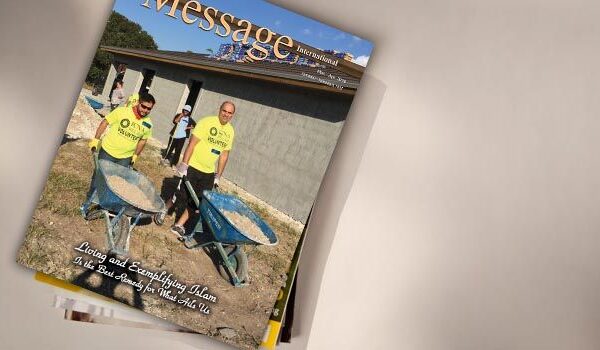
    In this issue we look at ways by which American Muslims are thoroughly engaged in further extending their contribution and service to their local communities and to this richly diverse nation. Striving for harmony in every aspect of life through Allah’s guidance, participating fully in civic life, realizing the essential connection between proper human assumption of trusteeship of this earth and the development of ethical character, and duly disseminating the reality about Islam’s call for moderation rather than extremism in any form – these are some of the areas in which American Muslims are demonstrating their commitment to assimilation. But this is qualified assimilation into the American fabric of daily life, one that does not compromise the Islamic principles and values that make the history and contemporary presence of Muslims in America a profound and inspiring story. We must celebrate this!

  • Muslim Roots in America

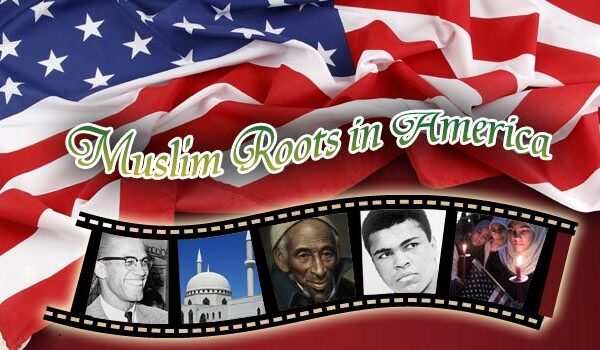
    Muslim Roots in America

    [button size=medium style=less_round color=gray align=none url=http://hipcast.com/podcast/HsJd6gfs]Click here to listen audio podcast of this article[/button]

    Islam and Muslims have been part of American history for centuries, but most people are unaware of this fact. They think Islam in the United States is a relatively recent phenomenon and, hence, alien and un-American. In reality, there is a centuries-long recorded history of a Muslim presence in America, and Muslim Americans have contributed much to the nation they call home, as noted by President Barrack Obama: “They have fought in our wars, they have served in our government, they have stood for civil rights, they have started businesses, they have taught at our universities, they’ve excelled in our sports arenas, they’ve won Nobel Prizes, built our tallest building, and lit the Olympic Torch.” This record of contribution and service is extensive, but Islamophobes, sadly, overlook or conceal this fact.

    Far from being a foreign presence, Muslims have exerted a positive influence on American culture even greater than their numbers would suggest from the very beginning.

    Their aim, by any and all means, is to rip out the interlaced thread of Muslim historical and contemporary presence from the American tapestry. But do they not realize that tearing out one thread can unravel the whole? Still they want to ostracize Muslim Americans, to blame the Muslim community collectively for any extremist act anywhere on the globe by any individual(s) who purport to represent the Muslim faith. Yet we hear little about Christian terror groups around the world like The Army of God and The Concerned Christians in the U.S., Eastern Lightening in China, and The Lord’s Resistance Army operating in various countries in Africa, all of which are actively carrying out terror attacks in the name of Christianity.

    It’s truly unfortunate that whenever a Muslim commits an act of terror, the media lets stand, and even exacerbates, the false notion that Muslim extremism is a unique phenomenon. Then we hear Donald Trump call for profiling and increased surveillance on Muslim communities, and a total ban on Muslim immigration to the U.S. Thankfully, political leaders from both parties have either denounced or distanced themselves from Trump’s Islamophobic remarks.

    Negative attitudes toward Muslims in America, however, is far from fading and many Americans only know about Muslims through negative media coverage. A YouGov poll found that more than two-thirds of people surveyed have no Muslim friends or co-workers. Asked if they have ever been inside a mosque, 87 percent of respondents said no. This underscores how important it is to make our fellow Americans familiar with Islam, Muslims, and the historical presence of Muslims in our nation. Noted author Jerald Dirks has pointed out in his book “Muslims in American History: A Forgotten Legacy” that “written documentation, linguistic evidence, and reports of early Spanish explorers of the New World suggest Muslim contact with the Americas prior to Columbus. Muslims and Moriscos sailed with Columbus and were part of many of the Spanish explorations of the New World. Muslims comprised a significant percentage of the enslaved Africans who were brought to the Americas, and many Islamic residuals have found their way into contemporary African-American life and culture… Beginning in the late 19th century, successive waves of Muslim immigrants enriched America, and the phenomenon of Americans converting to Islam became increasingly widespread.”

    James H. Hutson who has worked for the Manuscript Division of the Library of Congress and authored many books, including “Religion and the Founding of the American Republic” (1998), has written, “The Founders of this nation explicitly included Islam in their vision of the future of the republic….Far from fearing Islam, the Founders would have incorporated it into the fabric of American life.” Lynn Stuart Parramore, with a doctorate in cultural theory, has written, “…Thomas Jefferson purchased a Quran to learn about the Islamic legal code – the same Quran that was used in the swearing in of Muslim Keith Ellison to the U.S. Congress. In 1776, John Adams published ‘Thoughts on Government,’ which praised the prophet Muhammad as a ‘sober inquirer after truth.’ Ben Franklin set up a non-sectarian meetinghouse in Philadelphia, declaring in his autobiography that ‘even if the Mufti of Constantinople were to send a missionary to preach Mohammedanism to us, he would find a pulpit at his service.’”

    As we see, Islam and Muslims are not a new or foreign presence in this country. Muslims’ love for, and attachment to, America is no less than that of any other community or faith group. To quote Dr. Parramore once more: “Muslims wish to be seen as Americans, and a look at America’s Islamic roots proves that they have every right to be – even more, perhaps, than those who rail against them. It’s time to clarify the confusion about the role of Islam in early America and remind ourselves that far from being a foreign presence, Muslims have exerted an influence on American culture even greater than their numbers would suggest from the very beginning. The real foreign presence is Islamophobia, which is completely at odds with America’s founding principles.” We hope that all Americans will get the memo that Muslims, as in the past, are contributing to and serving the American ideal, and will continue to do so, eager to enhance the common good and help fulfill America’s greatest potential.


  • Muslims Have Been Here for Centuries

    Muslims Have Been Here for Centuries

    Islamic presence in the Americas since the 1400s is well documented
    1178 – Muslims Sail to America

    A Chinese source known as the Sung Document records Muslim sailors journeying to a land known as Mu-Lan-Pi, which some researchers identify as the American continent.

    1300s – African Muslims Explore the New World

    According to some scholars, Abu Bakari, a king of the Muslim state of Mali in West Africa, initiated a series of sea voyages to North America beginning in the early 1300s. About the same time, Mandingo Muslims from Mali and other parts of West Africa are said to have arrived in the Gulf of Mexico and traveled up the Mississippi River to explore the interior of the North American continent.

    1527 – Spanish Explorers and Spanish Refugees

    Estevanico of Azamor, a Moroccan Muslim, arrived in Florida with the expedition of Panfilo de Narvaez in 1527. He stayed in America and joined expeditions across the continent to Arizona and New Mexico. By the late 1700s, historical records indicate the presence of Spanish “Moors” living in South Carolina, many of whom were expelled from their homeland by edict of the Spanish Crown.

    1530 – African Slaves Begin to Arrive in the Americas

    During three centuries of the slave trade, over 10 million Africans were enslaved and brought to the Americas. Scholars estimate that 10-30 percent of these slaves were Muslim, although practicing Islam had to be done in secret, and many slaves were forced to convert to Christianity.

    1807 – Freed Muslim Slave Puts Down Roots in America

    Yarrow Mamout is an example of Muslim ex-slaves putting down roots in the U.S. Enslaved at 16 and brought to Maryland from Guinea in 1752, Mamout was set free in 1801 and became an early shareholder in Columbia bank, the second chartered bank in the country. Today, portraits of Mamout hang in the Historical society of Pennsylvania and the Georgetown Public Library in Washington.

  • Some Notable and Renowned American Muslims

    Some Notable and Renowned American Muslims

    [button size=medium style=less_round color=gray align=none url=http://hipcast.com/podcast/HDYwjjSs]Click here to listen audio podcast of this article[/button]

    Malcolm X

    Malcolm Little, born in 1925, became a drug addict and petty criminal. He converted to Islam while in prison, named himself Malcolm X, and began a quest for knowledge that continued throughout his life. Affiliated with the Nation of Islam, he became disillusioned with its teaching of black supremacy and after traveling in Africa and the Middle East, and making Hajj in 1964, he embraced the teachings of orthodox Islam and took the name Al-Hajj Malik Al-Shabazz. In 1965 he was assassinated. “The Autobiography of Malcolm X” is considered one of the most important nonfiction works of the 20th century.

    Muhammad Ali

    Muhammad Ali, born Cassius Marcellus Clay, Jr. in 1942 in Kentucky, is a former professional boxer, generally considered one of the greatest heavyweights in the history of the sport. Arguably the most recognized and loved sports figure of the past 100 years, he was crowned “Sportsman of the Century” by Sports Illustrated and “Sports Personality of the Century” by the BBC. Ali is also known for his dedication to his faith, his principled stance against the Vietnam War, his humanitarian work, and his fundraising for research on Parkinson’s disease.

    Hakeem Olajuwon

    Olajuwon, a 12-time NBA All-Star, led the Houston Rockets to two NBA championships. After he retired in 2002, his #34 jersey was retired by the Rockets, and a monument honoring him is outside the Rockets’ arena. He was inducted into the Basketball Hall of Fame in 2008.

    Keith Ellison and Andre Carson

    In 2006, Keith Ellison was the first American Muslim elected to the U.S. House of Representatives. He is now in his fourth term representing a Minnesota district. In 2008, another Muslim, André Carson, won a congressional seat for Indiana.

    Fazlur Rahman Khan

    Acclaimed as an engineer and architect, Khan designed systems for high-rise building construction. Two of his most notable achievements are Chicago’s John Hancock Center and the Sears Tower.

    Fareed Zakaria

    CNN talk show host and editor-at-large for TIME magazine

    Dr. Mehmet Oz

    Surgeon and TV host

    Shahid Khan

    Owner of an NFL team, the Jacksonville Jaguars

    Jawed Karim

    Co-founder of YouTube

  • Timeline of Major Milestones in American Muslim Politics

    Timeline of Major Milestones in American Muslim Politics

    Click here for the timeline of major milestones related with Islam and Muslims in American Politics

    [button size=medium style=less_round color=gray align=none url=http://hipcast.com/podcast/HXx5rrWs]Click here to listen audio podcast of this article[/button]


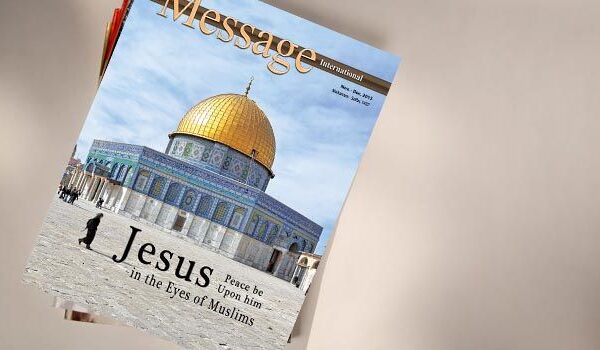
  • Jesus in the Eyes of Muslims

    Jesus in the Eyes of Muslims

    Most Christians in the U.S. know very little about the religion of their Muslim neighbors. This lack of knowledge, compounded by media misinformation, can lead to bigotry and a breakdown of social harmony. It is, therefore, very important for Muslims to step up and provide authentic information to demystify Islam and Muslims for those who are willing to listen with open mind and heart. This is critical to supporting and protecting the healthiness of America’s pluralistic society. A good step in this direction is to spell out what Muslims believe about Jesus, peace be upon him.

    From an Islamic point of view, a person can’t claim to be a Muslim in the first place if he or she denies the prophethood of Jesus (peace be upon him).

    Many Christians are surprised when they find out that Muslims respect and love Jesus, considering him a great messenger from God, sent to humanity. From an Islamic point of view, a person can’t claim to be a Muslim in the first place if he or she denies the prophethood of Jesus. Believing in all the messengers of God, including him, is an article of faith in Islam. In reference to Jesus as a messenger of God, the Quran says: “The Messiah [Jesus], son of Mary, was no more than a Messenger before whom many Messengers have passed away; and his mother adhered wholly to truthfulness…” (Quran 5:75). The Quran also confirms Jesus’ miraculous virgin birth: “She said, ‘My Lord, how can I have a child when no mortal has touched me?’ He said, ‘Even so, God creates what He wills. If He decrees a thing, He says to it only: Be! And it is’” (Quran 3:45-47). Muslims thus believe that Jesus was born miraculously without a father, by the command of God, the same command that brought Adam into being without a father or a mother. The Quran says: “The case of Jesus with God is like the case of Adam. He created him from dust, and then He said to him, ‘Be!’ and he came into being” (Quran 3:59).
    Muslims also venerate Jesus’ mother, Mary, and she is regarded as one of the most righteous and pure women to ever have lived. An entire chapter of the Quran is entitled “Mary.” The Quran says:“Behold! The angel said: ‘God has chosen you and purified you and has chosen you above the women of all nations. O Mary! God gives you the good news of a word from Him, whose name shall be Messiah, Jesus son of Mary, honored in this world and the hereafter, and one of those brought near to God’”(Quran3:42). Testifying to the miracles performed by Jesus, the Quran also mentions that Jesus told people: “I have come to you with a sign from your Lord. I make for you the shape of a bird out of clay, I breathe into it, and it becomes a bird by God’s permission. I heal the blind from birth and the leper. And I bring the dead to life by God’s permission….” (Quran 3:49).
    Having noted the high esteem that Jesus is held in by Islam and Muslims, it is important to mention a number of issues that Muslims and Christians disagree about. One such issue is clerical celibacy by which priests are not permitted to marry. This chiefly applies to the Roman Catholic Church, not to the Protestant denominations. More broadly, monastic asceticism (withdrawing from worldly affairs to live an austere life of rigorous spiritual devotion, thus denying oneself all worldly pleasure), like celibacy, is a later innovation, not taught by Jesus. Islam also teaches that the New Testament has undergone many changes, deletions and embellishments over the centuries, departing in serious ways from the original teachings of Jesus. Muslims reject as well the doctrine of original sin, as this was added into church doctrine by St. Augustine around the year 400.
    Most significantly, though,is that Muslims venerate Jesus as a divinely inspired human, but not as a divine being himself, or that he was “the son of God,” as this is seen as a blasphemous and untenable notion.God says in the Quran regarding the Trinity: “People of the Book (Jews and Christians)! Do not exceed the limits in your religion, and attribute to God anything except the truth. The Messiah, Jesus, son of Mary, was only a Messenger of God, which He bestowed on Mary, and a spirit proceeding from Him: So believe in God and in His Messengers, and do not say ‘Trinity.’ Desist – it would be better for you. God is indeed just One God. Far be it from His glory that He should have a son. To Him belong all that is in the heavens and on the earth. God is sufficient for a guardian” (Quran 4:171).
    To sum up,Jesus is revered by both Muslims and Christians and, therefore, common ground is established for interfaith relations, cooperation, and mutual understanding. Prophet Muhammad (pbuh) once said,“Whoever bears witness that there is no god but God Alone, with no partner or associate, and that Muhammad is His servant and messenger, and that Jesus is His servant and messenger, a word which God bestowed upon Mary and a spirit created by Him, and that Heaven is real, and Hell is real, God will admit him through whichever of the eight gates of Heaven he wishes” (Bukhari and Muslim). May God Almighty help us all come to common terms,submit ourselves fully to our Creator,and grant our salvation hereafter. Ameen.

  • The Virtues of Volunteerism

    The Virtues of Volunteerism

    “Time is money!”This is nothing short of a mantra in America and in many other parts of the world. It’s understandable that people are concerned with earning a living and having enough money to survive, to succeed.But what about the people who spend substantial time, talent, and wealthnot for self-interest or personal advantage,but for the benefit of other human beings and betterment of the society?Are theyfoolishly unconcerned about their own lives? No, they possess higher values and their altruism moves them to act, and they attain a loftier position among us.

    It’s important to mention that volunteerism is valued highly byall religions, cultures, and secular society. However, no system or group gives volunteerism as much importance as Islam does.In the Quran, Allah (SWT) says, “And whoever volunteersto do good—then, indeed Allah is knowing and appreciative” (Al-Baqarah, 2:158).If we look at history, we also findthat all Prophets voluntarily gave of their time and efforts to bring qualitative changes in the society.For instance, Prophet Musa volunteered to water the flocks of Prophet Shuaib’s daughters when he noticed they were not able to do so. The Quran says: “…and when he [Musa] came to the well of Madyan,he found there a crowd of people watering [their flocks] and he found apart from them two women driving back their flocks. He said, ‘What is your circumstance?’ They said, ‘We do not water until the shepherds take away[their flocks]; and our father is an old man.’ So he watered [their flocks] for them(Al-Qasas: 23-24). Another example was of Dhul-Qarnayn who offered to set up a dam between two mountains for the sake of people who sought his assistance. Allah says, “They [the people]said,‘O Dhul-Qarnayn, indeed Gog and Magog are great corrupters in the land. So may we pay you a tribute on conditionthat you erect a barrier between us and them?’” (Al-Kahf94). He turned down their proposal and built the structure voluntarily, saying “…that in which my Lord has established me is better [than what you offer], but assist me with strength. I will make between you and them a dam” (Al-Kahf: 95).

    The moral mandate of Islam requires that a Muslim be kind, considerate, and compassionate to his or her fellow human beings

    Prophet Muhammad (peace and blessings of God be upon him) is reported to have said, “Among people, the one who is most beneficial to humanity is also most beloved in the sight of Allah.”In another hadith, the Prophet (pbuh) said, “Every Muslim has to give in charity.” The people asked, “O Prophet of Allah! If someone has nothing to give, what will he do?”The Prophet said, “He should work with his hands and benefit himself andthen give in charity [from what he earns].” The people further asked, “If he cannot do even that?” He replied, “Then he should command good and forbid evil and this will be regarded as charitable acts.”(Bukhari, Muslim). Venerating such acts of volunteerism, Prophet Muhammad also said,“Whoever removes one of the hardships of a believing soul, Allah will remove from him one of the distresses in the hereafter. Whoever solves someone else’s problem, Allah will make things easy for him in this world and in the life hereafter. Allah is ever assisting his servant as long as he is assisting his brother” (Sahih Muslim). What these prophetic statements reveal is that volunteerism, acting in charitable ways, is a sublime characteristic of the Islamic personality. The moral mandate of Islam requires that a Muslimbe kind, considerate, and compassionateto hisorher fellow human beings. Love of God veritably entails loving and serving God’s creation.

    The significance of volunteerism in Islam can also be understood from a Quranic commandment wherein Allah (SWT) cautions the believers: “You cannot attain to righteousness unless you spend [in charity] out of what you love” (Surah Al-Imran, 3:92). In other words, there is no piety in Islam without benevolence and charity. In Surah Al-Baqarah, verse 272, Allah(SWT) tells us: “Whatever wealth you spend in charity, it is to your own advantage; provided you give so asto seek the pleasure of Allah. Whatever wealth you spend for the sake of Allah will be paid back to you in full, and you will not be wronged.” In Surah Al-Imran, verse110, Allah (SWT) further declares to believers:“You are the best people ever raised up for the good of mankind;you enjoin what is good and forbid evil and believe in Allah.” Prophet Muhammad also exhorted: “The highest level of the intellect, after belief in God, is to be of service to the creation.”Prophet (pbuh) thus advised usto be not only generous but also merciful. He said: “If you are not merciful to people, Allah will not be merciful to you.”

    Everyone, of course, should be concerned with his/her own life. We all want to survive and thrive. Islam points our attention, however, to altruistic values that should be interwoven into the fabric of our inner beingsand our daily lives –acting in charitable ways, volunteering to do good for the sake of Allah– energetically striving to create a more benevolent and just society.

  • Let Us Know Muhammad (peace be upon him)

    Let Us Know Muhammad (peace be upon him)

    “Perhaps the world was never in greater need of an accurate account of Prophet Muhammad’s life than it is now.” So states Adil Salahi, author of Muhammad: Man and Prophet. While awareness of Islam and Prophet Muhammad has increased considerably in recent years, many people still do not really know who he was and what legacy he left behind. The Charlie Hebdo caricatures of Prophet Muhammad are a reminder that the understanding many people have about the Prophet is extremely flawed and far from factual. And the murder of the magazine’s editor and other staff members by extremists results from the gaping incongruity of those who call themselves followers of Muhammad yet act in ignorance of and utter contradiction to his teachings.

    The misinformation about the Prophet, however, is rather surprising. The accounts of most prophets and religious figures are mixed with myths and legends while Muhammad’s life story was documented by his contemporaries in the full light of history. Almost every aspect of his life was recorded by those who lived with him and knew him well. The vast body of literature affirms that he was a man of exalted character, one who was just, kind, and compassionate to all people, even when he encountered hostility and rejection. For example, when the Makkan leaders unleashed their persecution against him and his companions, he could still be heard saying, “O Allah! Forgive my people, for they don’t know.” Later, when he went to Ta’if, a village about 50 miles southeast of his hometown, Makkah, to spread Islam, they set the street urchins upon him, who chased him and threw rocks at him until they drove him out of town. Even at that point, when he was utterly exhausted and bleeding from head to toe, he supplicated, “O my Lord, guide my people along the true path, as they are ignorant of the truth.” His revolutionary message changed not only his own society, but the very course of history, a fact that even his bitterest enemies have acknowledged. Today, over 1,400 years later, more than 1.5 billion people revere him and follow him as God’s last messenger.

    The Prophet (pbuh) taught us how to live among people like flowers, not thorns

    The veneration of Muhammad is not limited to his followers, however. Many great philosophers, thinkers, and reformers have praised him and said that it would be to humanity’s great benefit to follow his teachings. Today, no matter how much Islamophobes try to degrade him or characterize Islam as barbaric and destructive, the fact is that Prophet Muhammad never preached violence. On the contrary, his message was one of benevolence, understanding, and forgiveness.

    The overzealous and clearly misguided Muslims who claim to be defending the honor of the Prophet by committing acts of mayhem and violence, need to know that a true defense of the Prophet will never be achieved through bullets and bombs. The only way to defend him is to honor his legacy by living a life of integrity, fairness, and mercy. We cannot become emotionally overblown and act irrationally every time an Islamophobe insults Islam or our Prophet. He (peace be upon him) is loved and respected by multitudes around the world, and no one can sully or lessen this devotion and love in our hearts. Reacting vehemently, unjustly, or even criminally when some express their hatred of Islam and the Prophet only serves to alienate non-Muslims. In fact, the Prophet taught us how to live among people like flowers, not thorns.

    The Prophet’s own example was testified to by Anas ibn Malik who served him for ten years. He said that the Prophet never, ever rebuked him. “When I did something, he never questioned my manner of doing it; and when I did not do something, he never questioned my failure to do it. He was the most good-natured of all men.” Indeed, the Prophet was an extremely tender-hearted person. “Repel evil with good” was his dictum. He was a loving father, a devoted and kind husband, and a caring neighbor. He had a dignified and noble demeanor, but he took no special privileges and comported himself like a common man. He treated everyone, friend and stranger, the powerful and the weak, with equal respect and generosity. His manner of living naturally endeared him to those who came in contact with him, and gained him respect, love, and admiration.

    The world has witnessed many prophets including the towering figures of Abraham, Moses, and Jesus. Muhammad paid high tribute to all of them and made it incumbent upon his followers to do the same. Countless individuals have contributed to human civilization, but none of them matched the achievements and impact of Muhammad. His greatness is truly unique. A mercy to mankind, he is the most remarkable man to have walked the earth in quest of universal truth and social justice. Rather than being mocked and maligned, he should be recognized as a paragon of moral excellence and spiritual merit, nothing short of the pride of all humankind! Muhammad, the man, is the greatest testimony to the truth he preached. Let us know him, explore and embrace his teachings, and make this world a better place to live, for ourselves and the generations to come.