بسم الله الرحمن الرحيم

Author: bocapro

  • Hunger: Our Responsibility and Ultimate Reality!

    Hunger: Our Responsibility and Ultimate Reality!

    For the first time in human history, the number of people suffering from chronic hunger has reached one billion! Today, one out of every six persons in the world is starving. According to a UN report, about 25,000 people die every day of hunger or hunger-related causes. More unfortunately, it is children who die most often. Even in America, 49 million people go hungry every night. The other picture, however, reveals that there is plenty of food in the world for everyone. Why then, is there such a sad scenario? Addressing the issue of hunger, therefore, is not only important—it’s imperative!

    Sure, there has hardly been a time in history when hunger has not touched humanity. The question is how we can and should deal with the current alarming situation—a situation that is no less than a calamity. Given that many factors cause and contribute to famine and hunger, dealing with them is undoubtedly a daunting task. The problem becomes even more insurmountable when the hungry are trapped in systemic, silent and severe poverty.

    Hunger is a ‘silent epidemic’ that is very seldom addressed in our society with utmost care, urgency or seriousness. It’s almost like a slow poisoning, where the symptoms don’t appear serious, but death is inevitable. In our society, when poor people don’t have any money or means to buy (or get) food, they are unable to nourish themselves. Persistent food insecurity thus causes tremendous health damage to both kids and adults. .As they are constantly malnourished, the adults become weaker and often sick and because of this they become unable to work which then makes them even poorer and hungrier. Studies show how this downward spiral often continues until death visits these ill-fated people.

    In the sight of God, harshness, carelessness or even insensitivity to the suffering of the poor, helpless and hungry is tantamount to denying the religion and the Day of Judgment

    Our war against hunger, therefore, needs to be not only stronger, but also humane, effective and comprehensive. We shouldn’t forget that the current hunger situation exposes the ugly face of our societal injustices and corrupt practices. While there is no denying that numerous organizations, agencies and individuals are working sincerely to address the challenge of hunger, it is also true that our sadist mentality of letting people suffer is much more dominant than our efforts to help people out of this hellhole. “Greed is good” is still the guiding mantra and obsession for many of us. Even when we want to take any new initiative to address hunger, we think repeating rhetoric will suffice. This is actually a sign of our insensitivity, if not insanity!

    It’s time that we look at our own lifestyles dispassionately and determine if we are positioned to perpetuate hunger or committed to eradicate it. We can’t deny the gravity of the situation, our responsibility and our ultimate reality. One may ask: what is that reality? The Qur’an tells us, as do almost all the religious scriptures in one way or another: Does the human being think that no one has power over him because he has at his disposal enormous amount of material wealth? Does the human being think that no one sees him?(90:5-7) In another place of the Qur’an, God Almighty warns us: But you prefer the life of this world, although the Hereafter is better and everlasting. (87:16-17)

    Sometimes people think that prayer and performance of certain religious duties will suffice for them to earn the pleasure of God. Some also believe that fighting hunger is the duty of the government alone, not theirs. But these are mistaken views, for in the sight of God, harshness, carelessness or even insensitivity to the suffering of the poor, helpless and hungry is tantamount to denying the religion and the Day of Judgment. In the Qur’an, Allah (SWT) says: “Have you observed the person who belies the religion and denies the Judgment? That is the person who repulses the orphan without care or consideration and does not concern himself nor encourages others to feed the hungry and help the needy.”(107:1-3) In Surah Al-Mudathir, a moving scene from the Day of Judgment has been presented in which the righteous people in their heavenly gardens ask the disbelievers and liars, who are encompassed by the fires of Hell, the reasons for their punishment. They are told that among the reasons are “neglecting the rights of the poor, letting the hapless people get afflicted by hunger, lack of clothing and suffering, and turning faces away from this suffering humanity.”

    Hunger is a test for those who are inflicted by this calamity, but it’s a bigger test for those who have wealth and yet they are not helping those who suffer. To attain the grace of God, we have to be God conscious, remember our accountability to Him and be compassionate to His creation. He is indeed our Lord and to Him is our return. That is our ultimate reality!

  • Searching porn on internet

    What should a mother do when she finds out her son has been searching for pornography on the internet?

    A by Imam Jawad Ahmed: First of all, the mother should not confront the child head on because this will cause the child to become rebellious and do this evil act more in secrecy. Secondly, the mother needs to tackle this issue with love, affection and by understanding the cause of this problem. Therefore, she needs to sit down and have a very open, heart to heart talk with her son alone and not in front of anyone. She should ask him in a nice way why he did such an act, and make him realize the dangers and consequences of this act, including quotes of ayat from Quran about “fahishah” and ahadith of Prophet (saw) about the punishment of the eye for bad deeds.

    Next she should restrict Internet access for the son at home, or allow usage only under her supervision until he regains her trust. Of course, she should put parental control and filters on the Internet to block such sites, and at the same time monitor her son’s friends and weed out the bad ones who might have incited this act in her child.

    Finally, she needs to enroll her son in Islamic activities and classes in the masjid and local community, so her son does not have any “free” time to waste on Internet surfing. If all this does not help, then she can apply “grounding” rules or taking back certain privileges from her son until he shows improvement. Of course she should pray to Allah in tahajjud for saving her son from such evils, and also make sure her son is regular in prayers and recitation of the Quran on daily basis.
    May Allah protect our children from Satan and his tricks, Ameen!

  • Wife Responsibilities with In-Laws

    Wife Responsibilities with In-Laws

    Q What is a woman’s responsibility when it comes to her in-laws?

    A by Sh. Abdool Rahman Khan: The relationship with in-laws is nothing new in Islam. It is perhaps as old as human beings themselves. At the same time the Quran and Sunnah have defined for us our boundaries on human relations; what our responsibilities and duties to each other are, starting with parents and moving on to kith and kin. It should be noted that responsibility is not a one way street. While a child has to fulfill his duties towards his parents, for example, the parents also in return have duties towards their children. Too often we tend to ignore that relationships are two-way and we demand our rights without thinking about our own responsibilities.

    Another point to note is that we allow customs and culture to overtake what Islam requires of us. Many of these cultures have their root in other religions and beliefs. In some cultures the in-laws literally make the laws and the woman is often treated no more than a slave. In other or the same cultures the mother-in-law decides everything for her son and daughter-in-law to the point that permission must be sought even for breathing. There are numerous horror stories right here in the U.S. of the ill treatment by mothers-in-law of their daughters-in-law. At the same time, there are wonderful stories of the love and care between mothers-in-law and daughters-in-law.

    Let me begin by saying that it is not obligatory for a woman in Islam to obey any one of her in-laws, whether it is her mother-in-law, father-in-law, brother-in-law or sister-in-law in anything, no matter how small or how big, except if it is a Shari’ah obligation that has to be carried out or a Shari’ah prohibition that should be stopped. As for her husband, obedience to him is necessary providing that his orders do not contain exploitation, injustice and deviation from the Shari’ah.

    Allah SWT says, “Men are in charge of women by [right of] what Allah has given one over the other and what they spend [for maintenance] from their wealth. So righteous women are devoutly obedient, guarding in [the husband’s] absence what Allah would have them guard.” (4:34)

    It is also not permissible for any of the in-laws to enter the bedroom except by permission, and in case the in-law is a male the presence of a mahram is required so that there is no room for suspicion or fitnah. Rasulullah (S) said: “Beware of entering upon women.” A man from the Ansar said, “O Messenger of Allah! What about Al-Hamu, or the wife’s in-law (the brother of her husband or his nephew, etc.)?” The Prophet, peace and blessings be upon him, replied: “The in-law of the wife is death itself.” Commenting on this Hadith, Imam An-Nawawi, may Allah bless him, states:

    “Al-Layth Ibn Sa`d holds that the ‘the in-law’ refers to a relative of the husband (other than his father and sons) such as his brother, nephew, and cousin, etc., with whom marriage would be permissible for her, if she were to be divorced or widowed.“ Those who are described of death are the husband’s brother, cousin, uncle, and all those who are not Mahram for the wife. Hijab therefore must be worn in front of male in-laws except for the husband’s father or grandfather or the husband’s son (from another marriage) or grandsons.

    It is also not allowed for them (in-laws) to force the woman to cook for them or doing other house chores. It should be from her kindness that she does these things and not expectations and demands of the in-laws. Similarly in-laws should not interfere in husband and wife disputes. This is often is where things get a lot messier.

    Similarly a woman does not have to take in-laws permission to visit her relatives; her husband’s permission is sufficient. It is also not their right to know the secrets of what goes on between the husband and the wife. It should be noted here that a man must be kind and obedient to his parents and it is expected that the wife helps him to fulfill his kindness towards them. The woman should be very respectful and kind towards her in-laws.

    There is no harm to live with in-laws except that privacy for the wife is provided and again expectations are within the Shari’ah and not culture. If they live separately then visitations and kindness must be done accordingly.

    Before I close I wish to say that when it comes to defining relationship let the Shari’ah prevail in our lives. If we allow culture and customs to take precedence over Shari’ah problems will arise from day one, and on the Day of Judgment the questions are severe. On the other hand the wife should exercise patience and kindness towards her husband and his relatives, as she would like the same from him towards her parents and relatives. At weddings I always try to advise that if your son is getting married then think that you are blessed by having a daughter added to your family and if your daughter is getting married think of it that you are blessed with a son added to your family.

    May Allah SWT help us all in fulfilling our duties to one another.

  • Confusion over Counseling Must End!

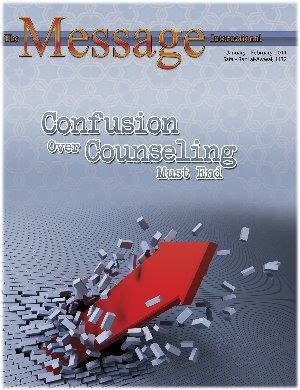
    Confusion over Counseling Must End!

    [one_fifth] Recently, the Pew Research Center, in association with Time magazine, conducted a study that revealed what it termed ‘the rapidly changing notions of the American family’. According to this study, about 29 percent of children under 18 now live with a parent or parents who are unwed or no longer married, which is a fivefold increase from 1960. Broken down further, the study reports, about 15 percent have parents who are divorced or separated and 14 percent who were never married. About 39 per cent of Americans believe marriage is becoming (or has already become) obsolete. This picture has been corroborated by the latest U.S. census data released in September 2010 that showed marriages hit an all-time low of 52 percent for adults 18 and over. While compared with this general picture of the society, the status of American Muslim families is not gloomy or bleak—so to say. Family values still define and dominate the Muslim community. This commendable distinction, however, is facing serious challenges these days. Many social ills that have afflicted other communities are also visible (though relatively to a lesser degree) among many American Muslim families. Far from being stable and setting examples for others, these families are presenting disturbing and dismaying behaviors and trends.

    Why is this degeneration? Some suggest that it is caused by the forces of the dominant cultural pattern. To quote a community leader: “The forces of the media; the presence of guns, alcohol, and drugs; the proliferation of adultery and fornication; and, the atmosphere of a society lacking guidance all contribute to the challenges faced by our communities”. While there may be some truth in this observation, such an outlook, however, can’t help us pinpoint the areas where we can bring about changes or intervene effectively. Therefore, more prudent approach would be to explore our state of affairs from an introspective and self-empowering viewpoint.

    To be honest, almost all Muslims in North America are going through some sort of transition. Those who are new converts (revert) to Islam have to navigate the transition from their old family, culture, friends, etc. to an entirely new ideological and cultural milieu. On the other hand, the immigrants transit from a stable extended-family environment to single unit families, whilst the second generation adults face transition from their parents’ cultures to still emerging ‘Muslim American culture’. Like any transition, these transitions are bringing stresses to Muslim family lives.

    Yet, it won’t be untrue or overstating the case that Muslim families are at a higher risk for several other reasons and one of them is that a majority of the America Muslim community is yet to understand and appreciate the need and value of professional (Islamic) family counseling, let alone take the advantage of this highly effective tool.  As Leslie Schaffer and Kamal Sharaawy have rightly pointed out, “In the eyes of the Muslim community, counseling is still a stigma. They think that seeking counseling is something to be ashamed of, like it would tarnish their reputation and stereotype them as mentally ill or personally dysfunctional/deficient or Islamically weak. In addition, Muslims traditionally have been discouraged from disclosing personal or family difficulties to anyone outside the family. Feeling that counseling is a violation of family confidentiality contributes to seeing it as a stigma”.

    The truth, however, is that “counseling is an important conduit for personal development”. Islam not only teaches us to give good advice to others, and to offer guidance and support when needed, we are also encouraged to seek counsel from others. However, when it comes to family counseling, in many cases, friends, family, and Islamic leaders may be good listeners or well wishers, but they are not necessarily trained to offer appropriate counseling and support. Therefore, we shouldn’t hesitate to seek professional advice and support if we feel that we can’t cope.

    Given the turbulent currents raging against family stability, and due to human nature which is ever vulnerable, there will always be problems and challenges. The key is to recognize the challenge – sit together (or alone) and develop a plan to work on it. And when we can’t make progress, we should seek help – there is no need or reason to feel shy or ashamed. For, if the situation gets worse, a lot would be at stake. More importantly, facing and addressing a problem is always better sooner than later. “If one delays to consult beyond a threshold, it is very difficult to back track”. Let’s remember this!

  • About Us

    The Message International, a premier Muslim magazine based in New York City, New York, is a publication of Islamic circle of North America (ICNA). It has been serving for over 4 decades, published bi-monthly and available mainly through subscription. Since digital age impacted all sphere of life, readership was no exception, declined in paper readership and Covid-19 resulted in transforming the publication to online. The year 2020 has been a significant year in this respect, and Message International is excited to be able to reach it’s readers globally and connect with them through their feedback.

    Alhamdulillah, The Message has maintained uninterrupted publication since it started in July 1989. While the magazine’s target audience is primarily Muslim, its contents are designed to appeal to people with diverse interests, irrespective of their religious denomination and / or personal convictions. The Message magazine is considered to be an effective tool from which both Muslims and non-Muslims can learn about Islam, Muslim community affairs in North America, and Muslim concerns and perceptions regarding national and international issues.

    The Message has developed a pool of writers who are unique in many ways. Some are very distinguished scholars and community leaders; others are relatively younger, but equally promising and resourceful. They speak of guidance and salvation, and, at the same time, they propagate tolerance, mutual understanding, fraternity, peace and Justice for all in the society. Typically, each issue of the magazine includes six to seven articles related to the cover story.

    The cover stories are chosen based on the pressing needs and burning issues of the time. Other regular features include editorials, letters, opinions, interviews, Dawah, family forums, book reviews, and daily lives of Muslims and, of course, youth related issues. Additionally, national and overseas news are reported. The magazine advertises Islamic products, books, audio/videos, charities, et cetera, but The Message International does not publish advertisements that are vulgar, against basic Islamic norms and / or lacking in credibility.

    The Message staff is quite aware of the difference between this magazine and other publications. Our main goal was to create a Time or Newsweek for the Muslim community of North America. We want to reflect Muslims as a whole. That’s why a title make ‘ICNA Bulletin’ or ‘ICNA Message’ was not sufficient. “The Message” was chosen as the title for the magazine because Muslims believe in a divine and integrated message, a message for all humanity, without distinction based on race, geography or class.

    All in all, The Message International is a publication that sets out to be distinctive. The magazine continues to struggle to become a quality, professional magazine for both Muslims and non-Muslims in North America. It appeals to Muslims by refreshing their knowledge of Islam, and, frequently, forcing them to look at different views on the same topic. At the same time, it attracts non-Muslims by teaching them about the Islamic faith in lucid and relatable terms, by telling the “other” side of the story, a “side” that chronicles the beauty of Islam and engages the intellectual mind.

    The magazine has maintained, with integrity, its commitment towards these objectives, and we are determined to continue to move in the same direction in future, insha’ Allah.

  • Advertise

    Magazine Circulation

    One of the Oldest and yet Continuously Published Magazine Reaching Diverse Muslim Community…

    The Message International is a mainstream Islamic magazine that is distributed throughout the United States.  In addition to regular subscribers, our magazine is distributed at major Islamic Centers, Mosques and Community Centers across the country.

    Currently we are printing 30,000 copies for every issue and our readership represents a broad cross-section of the Muslim population in this country.

    A Magazine with Unique Qualities:

    • Produces Candid stories, news, views and refreshing ideas
    • Brings educational and balanced coverage of current events
    • Presents alternative perspective to American audience
    • Portrays the beauty of Islam and engages intellectual minds

    Made to Fit YOUR Advertising Needs…

    You can place Help Wanted Ads, Upcoming Community Programs, Product Information and Services Offered in a magazine that is read by thousands of Muslims nationally.

    Advertising with us is EASY, SIMPLE and Effective…

    The closing date to receive Ads is the 15th of the next month following our bi-monthly publication.  For example, for inclusion in the May-June issue, Ads must be received by the 15th of March.  The Closing date for ads that require artwork by The Message International Advertising Department is the 10th of the Next month following our bi-monthly publication.  An additional fee will be charges for Ads that require artwork by The Message International.

    DISCOUNTS:
    Multiple runs: 3x per year-10% off;  6x per year 15% off

    Message Advertisement Rates are as follows:

    All advertisements are full color!

    Back Cover
    $1999 (Reserved)

    Inside Covers
    $1499 (Reserved)

    Third page
    $1299 (Reserved)

    Full Page
    $999

    Half Page
    $549

    1/3 Page
    $349

    1/4 Page
    $249

    2 ½  x  2 ½
    $99

  • Book Review: Losing My Religion

    Book Review: Losing My Religion

    Jeffrey Lang, Losing My Religion: A Call for Help (Beltsville, MD: Amana Publications, 2004). 504 pages. ISBN: 1-59008-027-0.
    This article written for Message Int. and printed in the January/February 2005 adition

    Jeffrey Lang’s latest book, Losing My Religion, is a bold attempt to shake the Muslim leadership in North America out of its deep slumber. As he makes clear throughout this call to action, the Muslim community is losing its grim battle to retain Muslim youth in its fold and is failing to attract new adherents.

    When Lang chose Islam, his parents were just as rattled as many Muslim parents are when their children abandon their traditional upbringing by smoking pot, drinking alcohol, being jailed, or suddenly deciding to marry a non-Muslim. When Lang’s 9-year old daughter casually asked him: “Daddy, what would you do if I became a Christian someday?” he felt terribly disappointed about not making Islam a clear choice for everyone. His daughter continued: “I’m not really thinking about becoming Christian, Daddy, but I sometimes think it would be a lot easier not to be a Muslim.””

    Why should a person follow Islam, a religion that makes many demands upon one’s life?

    Lang’s book is a serious attempt to address this crucial question for both new immigrants as well as Americans who were born and raised as Muslims. Spread over 500 pages, the book has only three chapters and a two-anda-half page “Parting Remarks.” Lang appeals to activist American Muslim youths and converts to play their pivotal role of explaining to the world why Islam is the rational choice for creating God’s kingdom on Earth and for human salvation here and in the Hereafter.

    Millions of Americans are seeking spiritual growth and fulfillment, for they are not satisfied with their birth religion. But they are afraid of Islam, for in their minds it is associated not with inner and outer peace, as the name implies, but with images of burning Twin Towers, suicide bombers, and irrational bloodthirsty killers who slaughter innocent captives.

    Crucial to the survival of any religion is its members ability to retain its community’s children and attract new adherents. On both counts, Lang’ asserts that “the Muslim community in not doing at all well.” Muslim immigrants, as well as new reverts to Islam, face an uphill task in keeping their family members attached to Islam. The trickle of new converts has almost dried up, especially after 9/11. [NOTE: THIS CONTRADICTS YAHIYA EMERICK’S ASSERTION IN HIS ARTICLE THAT THERE ARE MORE NEW MUSLIMS AFTER 9/11 THAN BEFORE]

    Lang’s major theme is “the disillusion of American Muslim youth.” Almost every Muslim family in North America can relate to Sohail’s tale of parental disillusionment. Most Muslim parents try to raise their children in the traditional manner: making sure that they can read the Qur’an;’ pray regularly; attend the week-end Islamic schools, camps, and conferences; and participate in the community’s social functions. However, this often creates a false sense of security, which causes them to be quite rattled when their glass menagerie shatters and their ideal Muslim children graduate into the real world, beyond parental oversight and supervision.

    Large numbers of Muslims reverts, and spiritual seekers are forsaking the American Islamic community, a fact that causes Lang to warn: “Many of these will inevitably abandon the religion.”

    The usual explanation offered by the community’s elders is peer pressure or the devastating effects of the American melting pot. However, they have little else to offer as a remedial antidote and are only remotely aware of what Lang calls “intellectual confrontation.” On the one hand, Islam is subtly and overtly demeaned by the media and anti-Islam websites, and, on the other, an extreme, virulent, and irrational interpretation of Islam has assumed center stage.

    Lang finds that most North American mosques impose, in the name of Islam, traditions and beliefs of questionable necessity that obfuscate the fundamental message of God’s revelation to humanity. The overriding negative impression of Islam, flowing from within and without, is driving individuals away from the faith in droves. Instead of seeing Islam as a path to spiritual growth, enlightenment, and fulfillment, many disengaged Muslims see a stagnant, retrogressive, and patriarchal remnant of “a lagging culture, mired in meaningless controversies and hollow, lifeless formalism.”

    He wants young American Muslims to respond rationally to Islam’s detractors and also to reassess the vast tradition that has come down to us in the name of Islam. They can do this, for they have been taught how to search, question, critique, and analyze, and, moreover, are willing to separate religion from culture. Thus, they can distinguish between Islam’s essentials and its time- and place-bound interpretations. His advice to them is:

    “Always pursue the truth, for God is Truth, and always pray for and trust in His guidance … never forgetting that to Him, and Him alone you have surrendered –not to a tradition, or a school of thought, or a local community, or culture, or a scholarly legacy – and that your living, striving sacrifice and dying, all is for Allah.”

    The book is a must-read for every Muslim who cares about Islam and Muslims, and for all those who wish to take God’s guidance to every corner of the globe. His language flows with life and vibrancy. This very fascinating and insightful book comes from a person who chose God over tradition, and rational behavior over blind faith.