بسم الله الرحمن الرحيم

Author: bocapro

  • Changing the Narrative About Islam: Now More Important than Ever

    Changing the Narrative About Islam: Now More Important than Ever

    For years we have been decrying Islamophobia, the irrational fear and hatred of Islam and Muslims. We say again and again that this is simply an extra-ordinary hate campaign that has spread ubiquitously throughout society and threatens all Americans because it breeds distrust and division. That is not just a self-deflecting perception. It is a very real phenomenon that has now spawned the recent execution-style killing of three innocent American-born Muslim students at the University of North Carolina at Chapel Hill.
    What is at the base of this bigotry, so extreme that a man feels driven to mercilessly kill his Muslim neighbors, ostensibly over a parking spot? One observer rightly said, “This is not at all surprising given the systematic vilification and stereotyping of Islam and Muslims perpetrated by the powerful media outlets for years–all intended to paint Muslims as ‘the demon’ to be defeated or eliminated…”

    One recent academic study found that since the 9/11 attacks the U.S. mainstream media has been dominated by a virulent anti-Islam discourse. Christopher Bail, an assistant professor of sociology at the University of North Carolina, conducted the study, “The Fringe Effect: Civil Society Organizations and the Evolution of Media Discourse about Islam since the September 11th Attacks,” which was published in the American Sociological Review. He writes that following 9/11 most media outlets engaged in “pro-Muslim discourses” but that “anti-Muslim fringe organizations dominated the mass media via displays of fear and anger.” He continues, “Institutional amplification of this emotional energy created a gravitational pull or ‘fringe effect’ that realigned inter-organizational networks and altered the contours of mainstream discourse itself.”

    The crucial challenge is how to change the negative narrative about Islam in a broad-based way to reach the greatest number of Americans

    The outcome today, sadly, is that many do not find it politically incorrect to engage in or listen to bigoted, hateful speech about Muslims. It is not surprising then that anytime a Muslim commits a crime of violence anywhere in the world, Muslims everywhere, including America, are blamed as a collective: guilt by association. The recent Charlie Abdo murders cued the usual media chorus of demands that Muslims denounce terrorism – as if they hadn’t, loudly, again and again, in the aftermath of 9/11.
    Religious tolerance, nonetheless, is deeply embedded within our American heritage and national character. In fact, Muslims involved in interfaith, dawah, and personal efforts to provide accurate facts about Islam find that most Americans are fair-minded and easily grasp that they have been misled by propagated distortions about Islam and Muslims. In line with the American tradition, many then take a principled stand against the bigotry aimed at American Muslims. So the crucial task and challenge is how to change the negative narrative about Islam in a broad-based way so as to reach the greatest number of Americans. That alone can empty and void the tinderbox of hostility that exploded in Chapel Hill.

    In order to stand up to the multimillion dollar Islamophobia industry, Muslim-American organizations, professionals, and activists need to be adequately represented within our national, state, and local policy-making process. In addition, we need to recognize the simple ironic truth that “the freedom of the press belongs to those who own it.” Investment in building credible media outlets is imperative, providing sources of information that are dedicated to speaking truthfully to the people generally, about all things pertaining to America and its place in the world, and in particular presenting accurate reportage and coverage of Muslims, their religion, and issues important to them as a community integral to the American way of life.

    A few years back, while addressing the challenges of growing Islamophobia in America, one scholar suggested some “Dos and Don’ts” which are here pertinent and worth mentioning:

    “First, we Muslims cannot wallow in victim status. This is not a time for self-pity, nor is it a time to be paralyzed by fear. Prejudice is ultimately a product of ignorance. So we must broaden our contacts in our neighborhood and participate in local get-togethers and meetings on civic issues. Second, we should write short letters that are to the point and e-mail or tweet them to our local newspaper when it publishes something non-factual about Islam. Third, listen to local radio and TV talk shows, and call in to present your positive comments. Appreciate their efforts to be balanced before correcting them. Fourth, develop personal contacts with the media and become a source person on issues related to Islam and Muslims. Often, they do not know who to contact when they need specific information, and so they just turn to a few ‘experts’ who always feed them negative and biased views.”

    Last but not the least, we should always keep in mind that it is “better to light a candle than to curse the darkness.” We should engage ourselves in positive and proactive efforts, lighting millions of candles for truth, justice, and peace. To dispel the darkness, Islam advises us, through the Quran and our beloved Prophet (pbuh), to “repel evil with what is better.” May Allah (swt) help us all.

    Ameen.

  • Dealing with Deniers of Divine Reality

    Dealing with Deniers of Divine Reality

    Freedom of choice is a unique privilege and blessing enjoyed by mankind. This choice is given not without purpose, however. It is central to the divine plan. As the Qur’an says: “He Who created death and life to test which of you is best in action – He is the Almighty, the Ever-Forgiving” (Qur’an 67: 2). Since human beings are endowed with the capacity for discernment and reason, and given that they are held accountable for their actions with consequence of ultimate reward or punishment, it follows in perfect congruity that each human being is accorded the right to choose a way of life for himself.

    Signs are everywhere in the world around us and deep within our own selves, testifying to the existence of One God

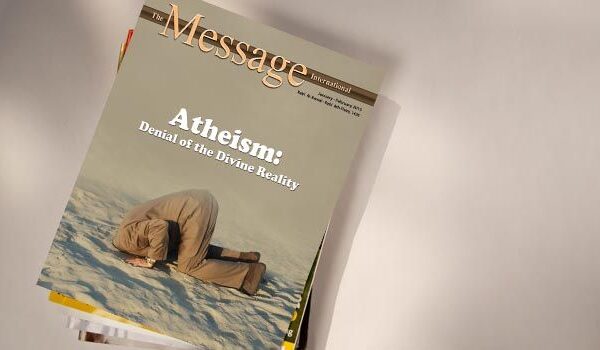
    People’s right to submit to their Creator, as well as their right to deny submission, is an inherent natural right, a proper claim which no person or society should hinder. There are cases in which a person identifies as an atheist but later on submits to God and finds peace of mind and heart. Each individual has his or her own spiritual journey and this must be respected. This is fundamental to the plan of God that there be no coercion in religion. Otherwise, submission to Him would not be a voluntary choice, thus losing its most profound meaningfulness.
    How magnanimous God Almighty is that He doesn’t compel people to submit to Him. In Qur’an, while addressing this subject, Allah (swt) declares: “There shall be no compulsion in [acceptance of] the religion. The right course has become clear from the wrong. So whoever rejects taghut [false gods; transgression] and believes in Allah has grasped the most trustworthy handhold with no break in it. And Allah hears and knows all things” (Qur’an 2:256). And in another verse we are told, “And say: The truth is from your Lord, so whoever wills – let him believe; and whoever wills – let him disbelieve” (Qur’an 18:29). Those who disbelieve, who refuse to submit to God, don’t realize that man’s high status – revolving around the freedom of choice – is fully realized by voluntary submission to the Creator.
    To reaffirm this divine scheme, Allah (swt) further tells us: “And had your Lord willed, those on earth would have believed – all of them entirely. Then, [O Muhammad], would you compel the people in order that they become believers?” (Qur’an 10:99). And further, “But if Allah had willed, they would not have taken false gods. And We have not appointed you over them as a guardian, nor are you a manager over them” (Qur’an 6:107). Unfortunately, some individuals in the Muslim world seem to have failed to understand this unmistakable principle of religious freedom. Many times they take a very stringent approach when they deal with people of other faiths, and even with their own coreligionists. Their discourses don’t reflect Islam’s encompassment of diversity and it’s enjoining of tolerance, respect, and benevolence. Their tough manner reflects their cultural characteristics and/or their own personal inclinations, not Islamic values or practices. Naturally, and regrettably, such an overzealous and misguided approach adds to the factors creating confusion, conflict, and extremism in the Muslim world and beyond.
    As a matter of fact, coercion runs counter to the core message of Islam. One must look at how the Qur’an addresses the human mind and intellect. “What, do they not ponder the Qur’an? Or is it that there are locks upon their hearts?” (Qur’an 47:24). Allah (swt) in the Qur’an asks us over and over again to open our eyes and minds and hearts and examine the wonders of the universe with its remarkable design. The signs are everywhere in the world around us and deep within our own selves, testifying to an intelligent cause behind this creation – that is God – and to the meaning and purpose He has made to pervade the entirety, from the world of quantum physics to the macrocosm, and everything in between. One writer eloquently depicts this omnipresent divine reality: “The truth is that, without belief in God, the universe remains as unexplainable as the entire mechanism of light and motion is without belief in electric waves. Thus the option one has to take is not between the universe without God and the universe with God. Rather, the option actually is between the universe with God, or no universe at all. Since we cannot, for obvious reasons, opt for the latter proposition, we are, in fact, left with no other option except the former, that is, the universe with God.”
    Therefore, with rational minds and open hearts we find contentment in submission to the Creator, for there is nothing in the created world that stands on its own without His sustaining grace. And the believers’ approach to those who have not yet submitted must align with the way of Prophet Muhammad (peace be upon him), according to instruction by God Almighty in the Qur’an: “Say: ‘O mankind, the truth has come to you from your Lord, so whoever is guided is only guided for the good of his own soul; and whoever goes astray, does so to their own loss. And I am not [set] over you to arrange your affairs” (Qur’an 10:108). May God Almighty enable us to understand this message and reach out with humility and compassion to those who have yet to comprehend and submit to the divine reality. Ameen.

  • Tawakkul: Trust and Reliance in Allah (swt)

    Tawakkul: Trust and Reliance in Allah (swt)

    Tawakkul means perfect reliance and trust. The root of tawakkul is wao-kaf-lam. One of the words derived from this root is wakil – the person whom we trust. The person who trusts someone is called mutawakkil. Naturally, every one of us wants the best wakil for guidance in all our affairs, and who could we trust more than our Creator, Allah (SWT)? In Surah Al-Imran, Allah (SWT) says, “Allah [alone] is sufficient for us, and He is the best Disposer of affairs” (Qur’an 3:173). Is anyone more capable to guide us than Allah (SWT)? But unfortunately, because of our weak eman, we put our trust in worldly sources of advice and assistance to resolve our problems. This includes, but is not limited to, visiting graves of saints, making du’as to dead people, putting one’s entire trust in a doctor or specific treatment for a cure. On the contrary, Allah (SWT) tells us in Surah Ibrahim, “And in Allah let the believers put their trust” (Qur’an 14:11).

    In our everyday life, we should remember the meaning of tawakkul (trust) exhibited to us by the Prophet (pbuh).

    Ibn Abass (RA) narrated that the Prophet (pbuh) said that he was shown a huge crowd of people and was told, “This is your nation out of whom seventy thousand shall enter paradise without reckoning.” Then the Prophet (pbuh) entered his house without telling his companions who they (the 70,000) were. So the people started to wonder about these 70,000. When the Prophet heard of their discussions, he came out and said, “Those people are those who do not treat themselves with amulets, nor do they believe in bad or good omens, nor do they get themselves branded [cauterized], but they put their trust in their Lord” (excerpted from a hadith in Sahih Bukhari). This is truly a great reward for the mutawakallen in the Hereafter. May Allah (SWT) make us one of them, ameen.
    On the contrary, for people who depend on worldly means more than Allah (SWT), they may succeed in this dunya in terms of wealth or fame or other worldly accomplishments, but these are only temporary things which will vanish when they die or on the Day of the Judgment, whichever comes first. They will be held accountable for their deeds and have to face the torment as they excluded themselves from the list of believers who put trust in Allah (SWT) alone.
    In Surah Al-Imran, Allah (SWT) says, “O you who believe! Fear Allah as He should be feared, and die not except in a state of Islam” (Qur’an 3:102). To die as a Muslim with complete submission to Allah (SWT), we have to follow the Qur’an and Sunnah, to try to be Ibad-ur-Rahman, servant of the Beneficent. We have to be like Yaqoob (AS) when his two sons Yusuf and Bin-Yameen were separated from him, instead of begging the rulers of the time, he turned to Allah (SWT), and said, “I expose my distress and anguish only onto Allah…” (Qur’an 12:86). This is the ideal behavior of a true believer as he is fully aware that for everything the final decision is from our Creator and Sustainer, Allah (SWT). We notice the firm conviction of Yaqoob (AS) in his trust in Allah as the story progresses. When his sons tell him about the allegation that Bin Yameen stole a cup and was detained in Egypt, he said, “So patience is most fitting! It may be that Allah will bring them all unto me. Lo! He, only He, is the Knower, the Wise” (Qur’an 12:83). Allah (SWT) responded to his trust by reuniting the entire family in Egypt.
    When Ibrahim (pbuh) declared the truth that Allah (SWT) is the only one who deserves to be worshipped and He does not have any partners, his people decided to punish him by throwing him into the fire. According to the hadith in Sahih Bukhari (narrated by Ibn Abass), Prophet Ibrahim (pbuh) reacted by saying, “For us Allah suffices. He is the best disposer of affairs.” We are told that the angels of fire and rain were waiting for Allah’s orders to extinguish the fire, but Allah (SWT) directly spoke to the fire, “We said ‘O Fire, be cool and safe for Ibrahim (AS).’” Jabir (RA) narrated an incident that happened during the Dhat-ur-Riqa’ expedition. The Prophet (pbuh) was resting under a shady tree, and a non-believer sneaked up on him. He drew his sword and said to the Prophet who was at that moment unarmed, “Who will stop me from killing you now?” The Prophet peace be upon him answered, “Allah!” In one version of the hadith, the sword then fell from the man’s hand. This incident highlights the Prophet’s (pbuh) immense confidence and trust in Allah (SWT).
    In our everyday life, we should remember the meaning of tawakkul (trust) exhibited to us by the Prophet (pbuh). He said to one of his companions, “Tawakkul means that you should tie your camel first and put your trust in Allah (SWT).” Definitely Allah (SWT) is the One who provides for us, but this does not mean that we simply sit idle and wait for miracles. Rather, we have to struggle in every aspect of our lives and then put our trust in Allah (SWT) for favorable results. To achieve these qualities, we must again turn to the Sunnah. According to the narration of Ibn Abbas (RA), the Prophet (pbuh) used to pray, “Allah, to You I have submitted and have become obedient; in You do I believe and in You do I seek my judgment. O Allah, I seek refuge with You through Your Honor; there is none worthy of worship except You alone that You safeguard me against deprivation. You are the eternal who never dies whereas human beings and jinns will all die” (Agreed upon).
    May Allah (SWT) grant us wisdom to follow the verse from Surah Al-Ahzab, “And put your tawakkul in Allah, for Allah is Sufficient as a Wakil [trustee and disposer of affairs]” (Qur’an 33:3). May Allah (SWT) give us the tawfiq (good fortune) to have fullest conviction of Allah’s Lordship – and the patience and thankfulness that are yielded from that conviction – to be, each one of us, a mutawakkil. Ameen.

  • Tafseer of Verse 13 of Surah Al-Hujurat

    Tafseer of Verse 13 of Surah Al-Hujurat

    In this verse, the whole of mankind has been addressed to reform it of the great evil that has always caused disruption in the world, that is, the prejudices due to race, nationality, or other group affiliation. On account of these prejudices, man in every age has generally drawn around himself some closed circles, and regarding those born within those circles, they are seen as his own people, and those outside the accepted group as “others.” These circles have been drawn on the basis of accidental birth and not on rational or moral grounds. Born in a particular family, tribe, or race, or in some particular geographical region, or in a nation having a particular ethnicity or speaking a particular language – these are the chance factors by which the circles are established.

    The Creator divided human communities into nations and tribes for that was a natural way of creating cooperation and affection-enhancing social experience

    Superiority of One’s Own Group

    Discrimination toward “others” involves looking upon one’s own group as superior, and this has resulted in the worst forms of hatred, conflict, and tyranny. New philosophies have been propounded based on such supremacism, new religions invented, new codes of law developed, and new moral principles framed; so much so that nations and empires have made this distinction a permanent way of life. A supremacist mindset gave birth to class distinctions (varnashrama) among the Hindus, according to which superiority of the Brahmins was established and all other human beings came to be regarded as inferior and unclean, and the shudras (the working, servant caste, the lowest of the four varna) were subjugated in the depths of disgrace and degradation. Jewish people regard themselves as the chosen people of God and even in the practice of their religious rites look upon non-Jews as inferior in rank and human worth. It is a tragic irony that the concept of the chosen people and its conflation with superiority as claimed by Jewish people was ruthlessly matched by the supremacist ideology of Nazi Germany.

    Another example is in the atrocities that have been committed against people of color in Africa and America on account of the white man’s notion of his own supremacy. The treatment that the Europeans meted out to the indigenous Indian race in America and to the weak nations of Asia and Africa has the same concept underlying it. These ethnocentrists thought they had the right to plunder the wealth of other peoples and take them as their slaves, exterminating them if need be to advance their agenda of exploitation.

    Three Cardinal Truths

    One can easily see how devastating is the error of fanatic tribal loyalty to one’s own group, unequivocally condemned by the above Qur’anic verse. In just two lines, AIlah has drawn the attention of all mankind to three cardinal truths:

    (1) The origin of all human beings is one and the same. The human species has sprung up from one man and one woman. Thus, aII races found in the world today are, in fact, the branches of one initial race that started with one mother and one father. In this process of creation there is no basis whatever for the artificial divisions and distinctions which humans have established based on false notions. One God alone is the Creator of all, having made all people from one and the same substance. it is not the case that some people have been made from some pure and superior substance and some others from an impure and inferior substance.

    (2) In spite of being one in origin, it is natural that human beings have been divided into nations and tribes. Obviously alI individuals on the earth could not belong to one and the same family. With the increase of the population, it was inevitable that countless families should arise, and then tribes and nations emerging in time. Similarly, it was inevitable that after settling in different regions of the earth, the various populations developed distinctive genetic traits such as color of skin and facial features due to geography, climate, and reproductive separateness from other groups. Distinct social features such as language also developed among the particular populations. But these natural differences never demanded that distinctions of human value and rank should be established, that one group should claim superiority over others, that skin color or any other accident of birth should bring favor and preference to one and deprivation and abasement to another. The Creator divided human communities into nations and tribes for that was a natural way of creating cooperation and affection-enhancing social experience and a common way of life among them. But due to ignorance, those natural differences among mankind – created by Allah to be a means of recognition, a way to acquire greater understanding and awareness of the human condition – became an expression of ego, overweening pride, and impulse to debase and exploit others. Every kind of injustice and tyranny emerged from that ignorance.

    (3) The third cardinal truth proclaimed in verse 49:13 is that the only basis of surpassing merit and excellence is that of piety and moral elevation, yielded by God-consciousness. The substantive thing that makes one person superior to any other is that he or she, with greater God-consciousness, is a devoted avoider of evils, a follower of the way of piety and righteousness. Such an individual, regardless of race or nation, is elevated on account of personal merit. And the one who is bereft of that merit of character is of less stature, whether black or white, male or female, born in the east or the west.

    Confirming the Superiority of Taqwa

    These same truths that have been stated in this brief verse of the Qur’an, have been explained in greater detail by the Holy Prophet in his addresses and traditions. In the speech that he made on the conquest of Makkah, after going round the Ka’bah, he said: “Thank God Who has removed from you the blemish of ignorance and its arrogance. O people, men are divided into classes: the pious and righteous, who are honorable in the sight of Allah, and the sinful and vicious, who are contemptible in the sight of Allah; whereas aII men are the children of Adam and Adam was created by Allah from clay” (Baihaqi, Tirmidhi).

    On the occasion of the Farewell Pilgrimage, in the midst of the Tashriq days (the eleventh, twelfth and thirteenth of Dhu’l-Hijjah, during which the Prophet forbade fasting), the Prophet addressed the people, and said: “O people, be aware: your God is One. No Arab has any superiority over a non-Arab, and no non-Arab any superiority over an Arab, and no white has any superiority over a black, and no black any superiority over a white, except on the basis of taqwa (piety). The most honorable among you in the sight of Allah is he who is the most pious and righteous of you. Say if I have conveyed the Message to you?” And the great congregation of the people responded, saying: “Yes, you have, O Messenger of Allah.” Thereupon the Holy Prophet said: “Then Iet the one who is present convey it to those who are absent” (Baihaqi).

    In a hadith he has said: “You are all the children of Adam, and Adam was created from dust. Let the people give up boasting of their ancestors, otherwise they will stand more degraded than a mean insect in the sight of Allah” (Bazaar). In another hadith the Holy Prophet said: “Allah will not inquire about your lineage on the Day of Resurrection. The most honorable in the sight of AIIah is he who is most pious” (Ibn Jarir). In still another hadith he said: “Allah does not see your outward appearances and your possessions, but He sees your hearts and your deeds” (Muslim, lbn Majah).

    These teachings cannot remain confined to words only, as Islam aims to establish a universal brotherhood of the believers on such basis, disallowing any distinction on account of color, race, language, or nationality, bestowing on all human beings equal rights. Even the opponents of Islam have had to admit that no match is found in any religion or any ideological system as to the principle of human equality and unity that has been given practical shape in the Muslim society. Islam is the only religion which has united multiple races and communities, scattered to all corners of the earth, into one universal Ummah.

    A Misunderstanding in the Case of Marriage

    In this connection, a misunderstanding needs to be addressed. In the case of marriage, the importance that Islamic law gives to the likeness of socio-economic status between prospective spouses has been taken by some people to imply that a person of the upper class is better than one who is of a lower socio-economic status, and that marriage between these two is objectionable. But this, in fact, is a wrong idea. According to Islamic law, any Muslim man can marry any Muslim woman, but the success of the matrimonial life depends on maximum harmony and understanding between the spouses as regards characteristics, habits, ways of living, family traditions, and economic and social status. Where there is unusual difference and disparity between the man and the woman in this regard, lifelong companionship will be difficult. That is why Islamic law discourages such marriages; not, as claimed by some, that one of the spouses is elevated and the other lowly.

    As we have shown in this article, the true character and merit of a human being is defined by Allah. The standards of distinction that human beings have set up of their own accord and by their own design are not acceptable to or approved by AIIah. It may be that the one who has been regarded as a person of high rank in this world will be declared as the lowest of the low in the final judgment of AIIah; and maybe the one who has been looked upon as a very lowly person here, will attain to a very high rank in the Hereafter. The real importance is not of the honor or dishonor of worldly considerations and its emphasis on ego aggrandizement, but of the honor or dishonor that one will receive from Allah. Therefore, what every human being should be most concerned about is that he should create in himself those genuine qualities and characteristics which make him worthy of honor in the sight of AIlah.

  • Racism After Ferguson:  Where Do We Go From Here?

    Racism After Ferguson: Where Do We Go From Here?

    Following the fatal shooting in Ferguson on August 2014 of an unarmed African American teenager, Michael Brown, by white police officer Darren Wilson, protests were sparked in Ferguson. The protests spread nationwide in November when a Missouri grand jury decided not to indict Wilson and then the soon-to-follow decision not to indict the Staten Island police officer who put a chokehold on Eric Garner, resulting in his death. The killing of Michael Brown, along with other similar incidents throughout the country, has heated up a debate about racism, excessive force by police officers, and the targeting of young black men. Some Americans are asking the hard questions: Where do we go from here? How can we stop this heinous extrajudicial killing of African American males by law enforcement in the streets of our cities? More fundamentally, how can we as a nation address racism and improve race relations in America?

    Many Americans now recognize what African Americans have been  saying for a long time –  that there is institutional  racism and there is  still much work to do…”

    A Guardian columnist, Isabel Wilkerson, has recently noted, “Not terribly long ago in a country that many people misremember, if they knew it at all, a black person was killed in public every four days for often the most mundane of infractions, or rather accusation of infractions – for taking a hog, making boastful remarks, for stealing 75 cents. For the most banal of missteps, the penalty could be an hours-long spectacle of torture and lynching. No trial, no jury, no judge, no appeal. ” While America has come a long way from that horrific stage in its history, one wonders if we are regressing. How is it possible that coming well into the new century, the rate of police killings of black Americans is nearly the same as the rate of lynching during a time when blacks were denied due process and whites discriminated against and victimized them with impunity?

    Isabel Wilkerson has also said, “ Even though white Americans outnumber black Americans fivefold, black people are three times more likely than white people to be killed when they encounter the police in the US, and black teenagers are far likelier to be killed by police than white teenagers.” Imam Khalid Griggs has rightly observed: “Ferguson and St. Louis, Missouri are, unfortunately, not aberrations, but social barometers of the relationship of the law enforcement community to African American males nationwide. Urban enclaves have too often been reduced to being incubators for the Prison/Industrial Complex and its voracious appetite to incarcerate Black males.”

    The tragedy in Ferguson makes it imperative that Americans of all races and backgrounds call for national action to address the issues of systemic racism and police profiling – issues that the shooting of Michael Brown brought to the surface. That these issues have been simmering for a long time is without question, and we must be willing to confront racism, whether overt or hidden away under the cover of political correctness. A position paper on racism put out by the Australian Psychological Society describes the challenge: “Modern racism still involves a rejection of minority groups and discrimination, but is now framed in terms of values and ideology rather than a straightforward dislike. Research has demonstrated that the modern variant of racism is more insidious, entrenched, resilient and difficult to counteract.”

    If there is any good to have come out of the heartbreaking Ferguson incident is that many Americans now recognize what African Americans have been saying for a long time – that there is institutional racism and there is still much work to do to create a society in which people ‘’will not be judged by the color of their skin, but by the content of their character.’’ It is encouraging that President Obama has issued an executive order to establish oversight of the increasing militarization of police departments; it also calls for funding for body cameras for officers.

    We urge all Americans to contact their elected officials to support passage of the End Racial Profiling Act (ERPA) and any similar legislation that addresses unconstitutional actions by law enforcement. We also call upon the Department of Justice to complete its independent investigation of the killing of Michael Brown in a transparent and thorough manner. We strongly feel that people of conscience in all walks of life must work together to seek an end to racial profiling and the injustices perpetrated against racial, ethnic, or religious minorities.

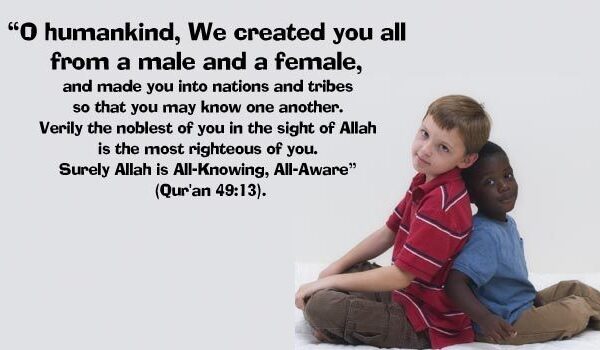
    Last but not least, we would like to remind everyone that racism is primarily a moral and spiritual problem. The pathology of racism therefore requires a spiritual remedy at both the individual and the collective levels. We pray that our fellow citizens recognize this. Then we might all open our minds and hearts to the spiritual cure Islam freely offers. The Qur’an declares: “O Mankind, We created you from a single [pair] of a male and a female and made you into nations and tribes, that you may know one another. Verily the most honored of you in the sight of God is he who is the most righteous of you” (Qur’an 49:13). This is indeed divine wisdom that can break the vice grip of racism. The quicker we recognize this and submit ourselves to it, the better for all of us.


  • Dawah Campaign in Brazil:  Important Lessons

    Dawah Campaign in Brazil: Important Lessons

    “Who is better in speech than he who invites people to Allah and does righteous deeds, and says ‘I am of those who have submitted [to Allah]’” (Qur’an 41:33).

    “Invite to the way of your Lord with wisdom and beautiful preaching; and argue with them in ways that are best and most gracious…” (Qur’an 16:125).

    The baseline of effective dawah is good conduct and the best moral behavior

    Many of us are familiar with the above divine exhortations, but how many of us act upon them? If we are honest with ourselves, we will acknowledge that the answer is very few. Beside the fact that Allah swt exhorts us to disseminate the religion and we are not sufficiently living up to that obligation, is the dreadful reality that those extremists who engage in appalling, inhumane, and un-Islamic behaviors present themselves as true followers of the deen, and the non-Muslim world is confused, not knowing what to think about Muslims and Islam. Misconceptions about Islam and Muslims abound in today’s world and the need for dawah – conveying the true message of Islam to the non-Muslims – is more pressing than ever before. And so, during the FIFA World Cup 2014 soccer tournament, hosted by Brazil, WhyIslam, the largest dawah network in America, found the perfect opportunity for propagating Islam. More than five million people from all over the world attended the event, and of course the locals were out en masse and WhyIslam was able to offer dawah to the Brazilian residents of the host cities as well. The outcome was a grand success, for it set an important milestone for dawah work among Brazilians as well as creating a template for dawah campaigns at similar large events in the future.

    Sr. Wendy, one of the volunteers, says that the WhyIslam volunteers “prepared well before they launched this campaign. They began their massive undertaking months in advance, networking with organizations and individuals in the development of a strategic plan. It was decided that the propagation efforts in Brazil would culminate with a global day of outreach, termed ‘Global Dawah Day’ to be held on July 5. In order to promote and fund the project, WhyIslam elaborated a successful marketing campaign, using advertising in photos, videos, email blasts, and posting to social media outlets like YouTube, Facebook, and Twitter.”

    The resonating theme for WhyIslam’s endeavor was “What is Your Goal? (in Spanish “¿Cuál es tu meta?” and in Portuguese “Qual é o seu objetivo?”) The slogan aimed at raising questions in people’s minds and initiating conversations about the meaning of life, how to find one’s purpose, what happens when you die, and similar concerns about existence. A website (www.whatisyourgoal.org) was set up for individuals, groups, and organizations to register their dawah event and to follow the endeavors and accomplishments of the crew in Brazil. The official flyer for Global Dawah Day was printed on cards, banners, posters, and purple T-shirts that were provided to eager volunteers on six continents who were inspired to participate in the World Cup street dawah and/or Global Dawah Day. Many organizations came forward. WhyIslam printed and distributed thousands of brochures in English, Spanish, French, and Portuguese, as well as translations of the meaning of the Qur’an to World Cup spectators and locals in Brazil.

    During the World Cup, Sr. Wendy says that “volunteer groups distributed flyers and engaged passersby, vendors, taxi drivers, and anyone with whom they came in contact in conversations about Muslims and Islam. The regular driver for the American team, a man named Carlos, accepted Islam during their stay, stating that the team’s generosity and respect toward the people of Brazil profoundly moved him. He witnessed the WhyIslam volunteers distributing food and toiletries to poor families in the slums of Sao Paulo and he was intrigued by the regular visits to the musalla, or Islamic prayer space.” There were several other incidents of “Shahadah pronouncements” that moved the dawah volunteers deeply.

    What lessons can be drawn from this trip? The first and foremost lesson is that similar efforts should take place with increasing frequency. Second, the baseline of effective dawah is good conduct and the best moral behavior. The third lesson we can learn from the WhyIslam dawah campaign is that when engaging in dawah one needs some solid basic knowledge about Islam and good communication skills. One effective approach when doing street dawah is to ask what the person knows about Islam as this opens a conversation during which any misconceptions can be addressed and information beyond whatever they already know can be offered. The fourth lesson we can learn is that inviting people to Islam, especially when doing street dawah, is a very challenging task. One must be ready and able to hear negative comments, even insults. In all situations, patience is a must. Allah swt has commanded, “And bear patiently the vain things they utter, and part from them graciously” (Qur’an 73:10).

    The best lesson, however, is that dawah is an endeavor that brings great fulfillment, greater than the satisfaction from worldly success of any sort -“If Allah would guide one person, through you, to Islam, it is better than the whole world and whatever is in it” (Al-Bukhari).


  • Prophet Muhammad (pbuh)’s Care for the Poor

    Prophet Muhammad (pbuh)’s Care for the Poor

    The Prophet, peace be upon him, wanted every individual in society to care for others and to help them as much as they could. Prophet Muhammad (pbuh) feared for his nation prosperity more than poverty:

    “By Allah, it is not poverty which I fear for you, but I fear in your case that riches may be given to you as were given to those who had gone before you, and that you begin to vie with one another for them as they vied for them, and that they may destroy you as they destroyed them” (Al-Bukhari).

    The Prophet’s mercy upon the poor  was due to his compassion for their suffering,  but he also aimed to teach them to be  resourceful in any way they could in order to provide for themselves and their families

    Yet, he realized that poverty is quite a great trial. Therefore, he used to supplicate to Allah: “O Allah, I seek refuge in You from disbelief and poverty” (Abu-Dawud). He also said: “Steady us in our faith, and protect us from poverty” (Muslim). Because the Prophet realized the severity of hardship that poverty is and its attenuating impact on people, he had great compassion for the poor, and living among them, his life and that of his family were not different from the poor and the challenges they faced. Lady Aisha, may Allah be pleased with her, narrated: “The family of Muhammad did not eat their fill for three successive days till he died” (Al-Bukhari).

    He treated the poor with mercy and kindness, and he used to give them whatever he could, although he, himself, was poor. He also used to teach his companions to have mercy upon the poor as well. Consider his words: “O son of Adam! It is better for you if you spend your surplus [wealth], for if you withhold it, it is evil for you. There is [however] no reproach for you [if you withhold the essentials] for a living. And begin [charity] with your dependants; and the upper hand is better than the lower hand” (Muslim).

    He also said: “If anyone gives as sadaqa [charity] the equivalent of a date from that [which was] earned honestly, for Allah accepts that which is lawful, the Lord would accept it with His Right Hand, and even if it is a date, it would be fostered in the Hand of the Lord, as one of you fosters his colt, till it becomes bigger than a mountain” (Al-Bukhari). At another time he said: “Nothing is more delighting to me than this that Uhud should be of gold for me, and no dinar is left with me out of it before three nights pass except a dinar which I would set aside for the repayment of debt upon me” (Al-Bukhari).

    The Prophet’s Mercy

    The Madinan society was generally poor and there are many narrations that demonstrate the Prophet’s mercy. We have selected just a few to illustrate his exceeding compassion and generosity, and to show how he taught his companions, even if they were poor themselves, to share what they had. Consider what the Prophet told Abu-Dharr, may Allah be pleased with him, who was very poor: “Abu-Dharr, when you prepare the broth, add water to it and invite your neighbor over (Muslim). He also used to teach women to share with their neighbors: “O Muslim women, none of you should consider even a sheep’s trotter [the foot, used for food] too insignificant to give to her neighbor” (Al-Bukhari). He wanted every individual in the society to care for others and to help them as much as they could.

    One day, Jabir ibn-Abdullah, may Allah be pleased with him, invited the Prophet to eat with him at his house. Although the Prophet was starving, he did not want to go alone. He took some of the Muhajirin (immigrants from Makkah) and the Ansar (residents of Madinah) along with him, and miraculously, the little amount of food available at Jabir’s house was enough to satisfy all those who attended (Al-Bukhari). Abu-Talha, may Allah be pleased with him, also invited the Prophet to eat and the Prophet did the same thing – he took along all the people present in the mosque at the time, and again, a wondrous thing happened and everyone was satisfied.

    There was another incident which Jareer ibn-Abdullah, may Allah be pleased with him, narrated: “Some desert Arabs clad in wool clothes came to Allah’s Messenger. He saw them in sad plight as they had been hard pressed by need. He (the Prophet) exhorted people to give charity, but they showed some reluctance until [signs] of anger were seen on his face. Then a person from the Ansar came with a purse containing silver. Then came another person and then other persons followed them in succession until signs of happiness were seen on his face. Thereupon Allah’s Messenger said: ‘He who introduced some good practice in Islam which would be followed after him [by others], he would be assured of reward like the one who followed it, without their reward being diminished in any respect. And he who introduced some evil practice in Islam which would be followed subsequently [by others], he would be required to bear the burden like that of the one who followed this [evil practice] without their being diminished in any respect’” (Muslim). The Prophet was always keen to help the poor by giving them what he had, and when he could not find anything, he would ask his companions to help so as not to leave a poor person without help.

    The Generous Hosts

    Abu-Huraira narrated: “A person came to Allah’s Messenger (peace be upon him) and said, ‘I am hard pressed by hunger.’ The Prophet (pbuh) sent a message to one of his wives but she said, ‘By Him Who has sent you with Truth, there is nothing with me but only water.’ He then sent the message to another, and she gave the same reply, until all of them gave the same reply. The Prophet then said, ‘Allah would show mercy to him who will entertain this guest tonight.’ A person from the Ansar stood up and said, ‘Messenger of Allah, I am ready to entertain him.’ He took him to his house and said to his wife, ‘Is there anything with you [to serve the guest]?’ She said, ‘No, but only sustenance for our children.’ He said, ‘Distract their attention with something, and when the guest enters extinguish the lamp and give him the impression that we are eating.’ So they sat down, and the guest had his meal. When it was morning he went to Allah’s Messenger (pbuh) who said, ‘Allah was well pleased with what you both did for your guest last night.’”

    Mercy was so evident in Madinah at the time of the Prophet, peace be upon him, who never stopped giving despite his continuous suffering. Sahl ibn-Saad narrated: “A woman brought a woven burda [sheet] having edging [border] to the Prophet. Then Sahl asked them whether they knew what a burda is; they said that a burda is a cloak and Sahl confirmed their reply. Then the woman said, ‘I have woven it with my own hands and I have brought it so that you may wear it.’ The Prophet accepted it, and at that time he was in need of it. So he came out wearing it as his waist-sheet. A man praised it and said, ‘Will you give it to me? How nice it is!’ The other people said, ‘You have not done the right thing as the Prophet is in need of it and you have asked for it when you know that he never turns down anybody’s request.’ The man replied, ‘By Allah, I have not asked for it to wear it but to make it my shroud.’ Later it was his shroud.”

    The Prophet always considered giving to be better than keeping, and consequently, he continuously gave. Among the best descriptions of his merciful attitude is what Lady Aisha narrated: “We slaughtered a sheep and gave away most of it. I told the Prophet only a small piece was left. He then said in all his wisdom, ‘All of it is remaining [through charity] but that piece’” Such was his life and his mercy!


    Out of the Poverty Trap

    It should not be perceived that by the Prophet’s giving and encouraging his companions to give that he condoned asking for help if one had the means to earn or procure what he needed for himself and his family. On the contrary, he was keen on teaching others the importance of working to fulfill one’s own needs. He wanted the people to avoid the disgrace of asking and begging, and he also wanted every individual to enjoy the sweetness of giving. Anas ibn-Malek, may Allah be pleased with him, narrated: “A man from the Ansar came to ask the Prophet (pbuh) for charity. The Prophet asked about what he had at home [that could be used to procure some provisions] and the man said that he had some fabric which they used to wear sometimes and other times to sit on. The Prophet instructed him to bring it. Then he asked if any of his companions would like to purchase the fabric. A man offered to buy it for one dirham. The Prophet asked for a higher price, until a man offered two dirhams for it. The Prophet took the money and gave it to the poor man. The Prophet told him to buy food for his family with one dirham and to use the other to buy an axe-head and bring it back to him. The Prophet then tied a handle to the axe-head and asked the man to use it to cut wood, then sell it. And so the man went to cut wood and proceeded to sell it. He collected ten dirhams which he used for food and clothes. The Prophet said to the man, ‘This is better than asking for charity which you will be asked about on the Day of Judgement. Asking charity is permissible for only three cases: extreme poverty, paying off a large fine, or for paying blood-money in case of killing someone by mistake.’”

    The Prophet’s mercy upon the poor was due to his compassion for their suffering, but he also aimed to teach them to be resourceful in any way they could in order to provide for themselves and their families. He wanted to facilitate their well-being in this worldly life and in the hereafter and therefore his approach was truly balanced and comprehensive. It was the Prophet’s humility, mercy, and kindness that Allah spoke about in His Book: “And in no way have We sent you except as a mercy to the worlds” (Qur’an, 21:107).

    This article was originally published on http://en.islamstory.com

  • The Joy of  Caring and Sharing

    The Joy of Caring and Sharing

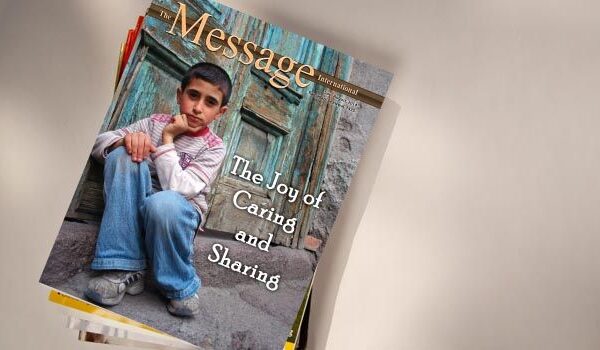
    Muslims everywhere—young and old, weak and strong, materially well-off or not—observe fasting in the month of Ramadan, striving for greater discipline, deeper faith, and increased compassion and generosity. Charitableness is not supposed to be confined to the month of Ramadan, however, as caring and sharing should be part of a Muslim’s personality and they should exemplify this throughout the year, in all aspects of daily living. As the Qur’an declares: “You cannot attain to righteousness unless you spend out of what you love” (Al-Quran, 3:92). Prophet Muhammad (peace be upon him) has said: “It’s better to give than to receive.” Through fasting, Muslims learn how to practice self-discipline, delay gratification, and sacrifice for the sake of Allah (swt) and the good He enjoins. During Ramadan, Muslims are reminded to be kind, considerate, and compassionate toward fellow human beings.

    Caring and sharing should be part of a Muslim’s personality and they should exemplify this throughout the year, in all aspects
    of daily living

    One may ask why the Islamic teachings so strongly emphasize giving. We might even ask why one should care about others. In fact, helping people in need is an innate inclination of the human conscience. As such, charity has been a defining characteristic of all revealed religions; and Islam, like other faiths, distinctly links the trait of piety, a pivotal goal of religiosity, with the compassion and call to action of charitableness. It is extremely important for us to realize that the misfortunes that befall people in this world are due to a myriad of reasons: government policies, economic exploitation, corruption, poverty, famine, drought, disease and illness, personal irresponsibility, and so on. Human life is unpredictable and ever vulnerable and nobody is immune from adversity. Even when someone faces an unfortunate situation due to his or her own mistakes, that doesn’t mean the person should be ignored or disregarded without sympathy. We must extend our benevolence and helping hand toward any suffering individual.

    Many verses in the Quran underscore the profound merit of charity: “Those who spend their wealth by night and day, in secret and in public, shall have their reward with their Lord. On them shall be no fear nor shall they grieve [in the hereafter]” (Al-Quran, 2:274). “And be steadfast in your prayer and pay charity; whatever good you send forth for your future, you shall find it with Allah, for Allah is well aware of what you do” (Al-Quran, 2:110). “The likeness of those who spend their wealth for Allah’s sake, is as the likeness of a grain [of corn], it grows seven ears, every single ear has a hundred grains, and Allah multiplies [increases the reward] for whom He wills, and Allah is All-Sufficient for His creatures’ needs, All-Knower” (Al-Quran, 2: 261). “Whoever works righteousness, whether a male or a female, while he [or she] is a true believer, verily to him We will give a good life [in this world], and We shall pay them certainly a reward in proportion to the best of what they used to do” (Al-Quran, 16: 97).

    Showing mercy to those in straitened financial circumstances and granting them a respite until they have enough to repay their debt, or forgoing the amount in view of a borrower’s hardship, is such an extremely praiseworthy act that Allah (swt) has specifically mentioned this in the Quran: “If the debtor is in a difficulty, grant him time till it is easy for him to repay. But if you remit it by way of charity, that is best for you if you only knew” (Al-Quran, 2:280).

    Since Allah (swt) has praised those who make a constant allocation in their wealth for the poor and has promised them multiplied rewards for their charity, we should be happily doing this and encourage others to do so. Allah (swt) further tells us in the Quran: “Who is he that will loan to Allah a beautiful loan which Allah will double unto his credit and multiply it many times?” (Al-Quran, 2: 245). These verses put extra emphasis on the importance of this issue and show that it is foundational in the development and realization of faith, a part of which is to acknowledge the needs of our brothers and sisters in faith as well as all of humanity.

    We know that when the Prophet Muhammad (peace be upon him) first received Divine Revelation, he was in a state of bewilderment. He returned home and asked his wife to cover him up in a blanket or bed-covering and explained what had happened to him. Her response was quick and profoundly reassuring: “Allah will never disgrace you. You unite family relations, you bear the burden of the weak, you help the poor and the needy, you entertain the guests and endure hardships in the path of truthfulness.” We should note that Khadijah’s (may Allah be pleased with her) description of her blessed husband revolved around his altruism, compassion, and generosity toward others. According to an authentic hadith, Abu Hurayrah (may Allah be pleased with him) has narrated that Prophet Muhammad (pbuh) said, “The one who removes the suffering of a believer from the sufferings of this world, Allah will relieve him from his suffering on the Day of Resurrection. And the one who paves the way for someone who is insolvent, Allah will make things easy for him in the Hereafter…..” (Muslim: 38/2699). This truly exemplifies what Islam teaches us about caring and sharing in our relations with others! May Allah (swt) enable us to understand and practice these golden teachings of Islam.


  • Faith, Submission, and Service:  Important Questions

    Faith, Submission, and Service: Important Questions

    What is Islam? What does it mean and what does it stand for? More specifically, who is a Muslim and when a Muslim says he/she has submitted to Allah, what are the obligations and duties to the Creator, to fellow human beings, and to the rest of the creation? How can a Muslim transform his or her faith into action and contribute to making this world a better place? These are some of the important questions we, as Muslims, are supposed to think about and answer for ourselves in order to practice our religion the best possible way. In so doing, we are better equipped to provide proper understanding of Islam to others who are confused or misguided by the wrongdoing of deviant Muslims or by the propaganda of Islamophobes. The theme of this year’s ICNA convention is “Islam: Faith, Submission, and Service.” We are pleased to address this topic in some detail in this current issue of the Message.

    If Islam is understood and implemented properly, the fruits of faith not only benefit individuals…but the society as a whole

    The call of Islam brings forth our curiosity about life and inspires us to observe, think about, and analyze human existence on this earth. At the same time, it provides answers to all of humanity’s perennial questions: Where did we come from? Where are we heading? What is the purpose of life? With the guidance of Islam, we are infused with motivation to search for ultimate truth; and the answers Islam provides have clarity and a compelling, elegant quality that motivate us to try harder, reach farther, and act in a manner that is pleasing to those around us and, most importantly, pleasing to our Creator.

    Etymologically, the term Islam is derived from two meanings. The first is salaam which simply means peace; and the other is submission which is a conscious willing surrender to the Will of God. When put together, these two meanings indicate that Islam is the attainment of peace through voluntary submission to the Will of God.

    As to who is a Muslim, we can answer this from three perspectives. First, from the jurisprudential point of view, a Muslim is a person who believes in Tawhid (oneness of God), all the prophets and messengers that were sent by God throughout history including the last one, Prophet Muhammad (peace be upon him), and accepts the last revealed scripture, the Qur’an, as the singular and ultimate guide of life. Second, in Islam, faith is not merely lip service—it must translate into action. In this sense, a Muslim is a person who submits himself or herself unreservedly to God’s Will and obeys His precepts as set forth in the Quran and transmitted to mankind by Muhammad (pbuh), His last Messenger. It is important to mention that when a person submits to God, it is taken into account that each of us is imperfect and will fall short in some ways. However, the willingness and the intention to implement what the Qur’an and the example of the Prophet require of us —that is what is necessary. In Qur’an, Allah SWT says: “It is not fitting for the believing man or for the believing woman that whenever Allah and His Messenger have decided any matter, they should have any other opinion” (Holy Quran 33:36).

    From an Islamic point of view, when any individual in any place or time in history has to the best of his or her ability searched for the truth and then submitted his or her will to the Will of God, he or she is regarded as a Muslim. In the Qur’an, Prophet Joseph is quoted as saying, “Creator of the heavens and the earth, You are my protector in this world and in the hereafter. Take my soul as a Muslim [i.e. one submitting to Your Will) and unite me with the righteous” (112:101). In 10:84, Moses is quoted as saying, “O my people, if you do really believe in God then in Him put your trust if you are Muslims.”And finally, Allah SWT says, “And behold! I [God] inspired the disciples to have faith in Me and My apostle [Jesus]. They said, ‘We have faith. Bear witness that we bow to God as Muslims’” (Qur’an, 5:111).

    The third perspective to consider as to who is a Muslim is to realize that one who submits strives to please Allah through serving humanity. Allah SWT is kind to those who are kind to those who inhabit the earth. Thus, if someone stretches his hand out to you to seek help and it returns empty, you then have refused, in a manner of speaking, to help Allah. The Prophet (pbuh) said: “The most beloved people to Allah SWT are those who help and benefit others the most, and the most beloved actions to Allah SWT is pleasure and happiness that you cause to enter the heart of a Muslim, or to solve one of his problems, or to pay off his debt, or to prevent him from being hungry.”

    The above discussion can be summed up by saying that faith, if sincere, produces righteous conduct, and whenever these two confirm each other, God’s grace transforms human life. Instead of being troubled and worried, people then gain peace and contentment; and instead of being self-centered, greedy, and uncaring, they become kind-hearted, empathic, and generous in helping others. If Islam is understood and implemented properly, the fruits of faith not only benefit the individual who practices Islam, but also those in his or her family, circle of friends, community, and society as a whole. May Allah SWT help us all to practice our religion properly.


  • Education for the Next Generation

    Education for the Next Generation

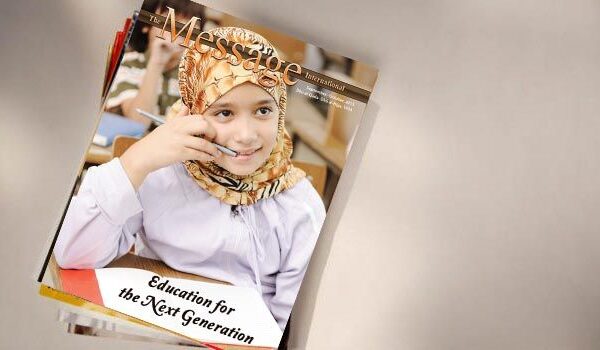
    The debate over “public school vs. Islamic school” is not new in America. Ever since the Muslim community started building full-time Islamic schools in the early 1990s, this topic has been part of regular and ongoing discussion and debate. Some passionately argue for Islamic schools while others oppose them because of their current flaws. As a result, American Muslim parents are more confused than ever before in deciding upon the right place for educating their children. Given that a proper and adequate education, both Islamic and academic, is critical to the health and success of our children and our communities, and that both sides of the argument have legitimate points, we have decided to revisit some of the issues here, as this insha’Allah can help parents make an informed decision about the education of their children.

    The soul of your child is like an uncut precious jewel entrusted into your care by Allah

    The arguments in favor of sending children to Islamic school can be summed up as follows: In full-time Islamic school, children are provided with an Islamic environment. The kids can pray in congregation and learn about Islam in positive and affirming ways. They have the opportunity to interact with and establish close relationships with other Muslim children in classes and during recess. They are protected from exposure to intense peer pressure relating to sex, drugs, alcohol, and violence. So their faith is strengthened rather than diminished by their school experience.Very importantly, the students are spared being bullied for their faith. In addition, Islamic schools are a place to build a healthy identity and sense of responsibility in our Muslim students as the aim of education, first and foremost, is to nurture and mentor our children to be conscious of their responsibility to Allah, the Creator, and then to fellow human beings.The Islamic school can attain to this objective. Public schools in America cannot.

    On the other hand, those who argue against sending our children to Islamic school suggest that regardless of the comparatively healthier environment, many Islamic schools continue to be disorganized, ill-equipped, and beset with numerous other shortcomings. For example, Islamic schools in America, it is argued, have developed their curricula unsystematically. Their curricula for Islamic and Arabic studies, which is considered to be the raison d’être of an Islamic school, is remarkably weak and unable to meet the requirements of Muslim students residing in the West. Thus, Islamic schools have become merely a refuge from the negative influences of public schools, rather than a superior option of education providing valuable resources and uniquely Islamic benefits for our children. In addition to that, Islamic schools typically have very limited budgets, running strictly on tuition payments and donations. Teachers’ salaries are less than half what they could receive in public schools. As a result, Islamic schools find it difficult to recruit and retain qualified teachers. Very few, if any, of the existing Islamic schools can educate a child in a professional, robust, and comprehensive way. And some point out that students graduate from the Islamic school without the personality assets and coping skills that are needed for them to navigate the challenges of high school or college campus.

    It is obvious that both positions, as stated above, have legitimate arguments and there is no easy answer or quick fix to this situation. Certain stipulations, however, must be made. First, Islamic education doesn’t mean that children should be brought up feeling as outliers to this nation and its people. Islamic education must aim to Islamize our children without de-Americanizing them. Islamization within an American context means that Islamic schools should promote integration of Muslim children in the larger American society and provide an education that makes them strong in faith as well as informed citizens and active contributors to the American society.

    Second, it must be remembered that the role of the parents and the family is crucial, and ultimately more important than which school the child attends. At the end of the day, it is parents’ first responsibility to ensure the proper development and training of their children. Unfortunately, many parents fail to recognize this fact. While a Muslim child absorbs Islamic values from a variety of sources including parents, teachers, peers, friends, and the social environment, parents play the most vital role. Therefore, they have to provide an Islamic environment at home first. It is hypocritical to speak and act in un-Islamic ways and yet expect, even demand that the child adhere to Islamic values. Parents should set the best examples for their children to emulate.

    One scholar has rightly stated: “The soul of your child is like an uncut precious jewel entrusted into your care by Allah. To you is given the awesome responsibility of shaping that precious jewel into a beautiful form, pleasing to the eye of Allah. “As parents, we must realize this divinely-ordained duty and be mindful about fulfilling this task. We should also remember that Islamic schools are not the entire answer, but one interlocking piece, albeit an important one, in a larger schema. That is to create an Islamic environment incorporating all the principles and values of Islam. May Allah SWT help us fulfill our obligations and enable us to facilitate each generation being better and more virtuous than the last.