
بسم الله الرحمن الرحيم

Author: bocapro

  • The Help of Allah Is Always Near

    The Help of Allah Is Always Near

    For over three decades, Muslims worldwide have suffered from increasing terrorist assaults by individuals and various agencies of states. Muslim-majority nations such as Iraq, Libya, and Syria that were once thriving economically and socially have been reduced to either failed states or dependent wards of colonizing forces. India has the largest Muslim population, approximately 175 million, of any non-Muslim majority country in the world. Despite being nearly 15 percent of the Indian population, Indian Muslim sare experiencing physical assault, murder, rape, illegal confiscation of property, and other atrocities perpetrated by ultra-Hindu nationalists operating with virtual impunity. Prime Minister Narendra Modi’s party, BJP, has as its ideological underpinning the fascist-like philosophy of Hindutva, a form of ethnic and Hindu absolutism that devalues and discriminates against Muslims, Sikhs, Christians and other non-Hindus. Muslims in the Central African Republic, Palestine, Myanmar, Kashmir, and China are similarly being victimized by political doctrines and rulers who have created untenable living conditions for Muslims in their home countries. Despite mass demonstrations worldwide decrying the ethnic and/or cultural cleansing affecting millions of Muslims, appeals to executive and legislative bodies to intervene have been largely ignored. Even with declarations from the United Nations and human rights bodies that acts of genocide are being committed against Muslim men, women, and children, the carnage against the ummah (global community) of Prophet Muhammad (peace be upon him) continues unabated.

    The Qur’an tells us, “They were touched by poverty and hardship and were shaken until even their messenger and those with him said, ‘When will the help of Allah come? ’Unquestionably, the Help of Allah is always near”(2:214)

    Imams and Muslim lecturers frequently decry this devaluation of human life. They see the unprecedented number of indiscriminate killings as evidence that the Day of Judgment is close. Of course, the precise timing is known only to Allah. The Qur’an and hadith do not depict a God who is uninvolved or neutral about oppressive power relationships, whether between individuals, communities, or nations: “Allah is on the side of those who fear Him and do good”(Qur’an 16:127).In an authentic hadith, the Prophet said, “Beware of the supplication of the oppressed for there is no barrier between him and Allah” (Sahih Muslim). And in another hadith, he (pbuh) relates that Allah said, “I have forbidden oppression for Myself, and I have made it forbidden amongst you, so do not oppress one another” (Sahih Muslim).

    The Qur’an and Prophetic sayings are replete with stories and exhortations intended to underscore the preeminence of safeguarding justice in the individual and collective lives of human beings. But ridding a society of oppression and exploitation requires more than passionate feeling, speaking, and action. It requires that Muslims change what is in themselves; in other words, Muslims must transform themselves through submission. For example, Prophet Musa (peace be upon him)was vehemently opposed to the tyrannical regime of Pharaoh who insisted that his subjects revere him as their god. But Pharaoh’s demise and the destruction of his oppressive reign was only realized after Prophet Musa (pbuh) had been thoroughly guided by Allah to worship Him exclusively and to have total reliance on Him in all circumstances in life. The successful social revolution brought about under the leadership of Prophet Musa (pbuh) against insurmountable odds was the result of total submission to divine guidance, not the execution of ingenious man-made plans. The best example, of course, is the total transformation of Arabian society and the establishment of the Islamic state in Madinah under the leadership of Prophet Muhammad (peace be upon him), a profound social, economic, political, and spiritual revolution that amazingly came to fruition in a mere 22 years.

    Today, the destruction of Muslim societies by nations coveting their natural resources and strategic locations has sadly become so common place that it is easy to end up desensitized. The 24-hour news cycle and internet information outlets provide inexhaustible coverage. Some Muslims feel overwhelmed and some debate endless lyat gatherings. While staying informed, reflecting on what is happening around the world, praying for those who are oppressed, and being a social justice activist are all good and necessary, the need for spiritual self-improvement, however, is at the heart of the matter. Increasing our God-consciousness gives us discernment and allows us to see things for what they are, without distortion. With God-consciousness our prayers are more sincere, and our activism infused with patience and perseverance. And so, we remember that believers have always faced tremendous trials. The Qur’an tells us, “They were touched by poverty and hardship and were shaken until even their messenger and those with him said, ‘When will the help of Allah come? ’Unquestionably, the Help of Allah is always near”(2:214).
    We must take charge of our own selves; we must act as the compassionate witness to suffering and provide relief whenever we can; we must be centered emotionally and mentally so that we can stand our ground no matter the difficulties or opposition we face; we must find an inner anchoring of morality so that we don’t justify or engage in denial when we fall short of doing the right thing; we must increase our gratitude and remember Allah often. It is His wisdom that directs us outwardly to demand justice for all human beings. It is also His wisdom that directs us inwardly, for “…Indeed, Allah will not change the condition of a people until they change what is in themselves…”

  • Women and the Future of the United States

    Women and the Future of the United States

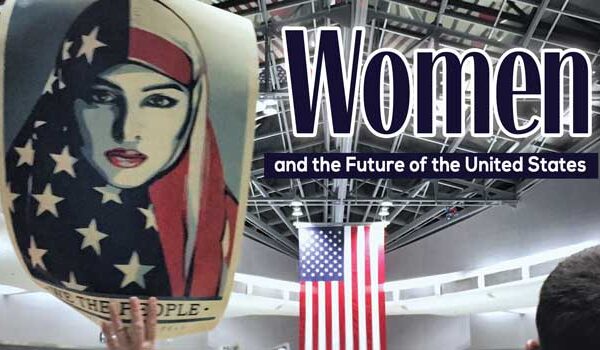
    There has been perhaps no more celebrated an icon of immigrants’ dreams and aspirations of freedom than the Statue of Liberty. Crafted by the French sculptor Frederic Auguste Bartholdi and financed by the government of France, the imposing depiction of Libertas, the Roman goddess of liberty, was dedicated on Ellis Island, off the shores of Manhattan, on October 28, 1886. The inscription on Lady Liberty reads, “Give me your tired, your poor, your huddled masses yearning to breathe free, the wretched refuse of your teeming shore…” As the statue was immortalized in prose, poetry, and the hearts of countless immigrants over the many decades, a tad more than 50 percent of the U.S. population — women — continue to yearn and fight for their freedom and equality to reach full fruition.

    Perceptions of women must be recalibrated in the minds of men so that they realize the honor and respect due to the female gender. When men deny women their rights, ordained by Allah SWT, they have doomed themselves and society to imbalance and defect

    The first women’s rights convention in the United States was the Seneca Falls Convention held in western New York state on July 19-20, 1848. It was organized by local Quaker women in conjunction with Elizabeth Stanton, a women’s rights activist, and Lucretia Mott, a Quaker from Philadelphia. At the time of the historic convention, women were generally not allowed to speak in public meetings or religious gatherings or vote; in various states, only women who were married were permitted to own property, but they were not allowed to manage it except when their spouse was incapacitated. Lucretia Mott was a true maverick and reformer, an articulate and outspoken advocate for the rights of women during an age when women were politically powerless and constrained to an inferior social status. Attendees at the Seneca Falls Convention focused on issues such as denial of property rights, inequality of opportunities in education and employment, being deprived of the right to vote, denial of the right to participate and be represented in government, and other rights and privileges customarily granted to men.

    Frederick Douglass, an advocate for social justice, abolitionist, and orator, was also a prominent supporter of women’s rights. He attended the convention and eloquently expressed, “In respect to political rights, we hold woman to be justly entitled to all we claim for men. We go further and express our conviction that all political rights which is expedient for men to exercise, it is equally so for women. And if that government only is just which governs of a woman, and if that government only is just which governs by the free consent of the governed, there can be no reason in the world for denying to woman the exercise of the elective franchise, or a hand in making and administering the law of the land.” Susan B. Anthony, a friend of Elizabeth Stanton, was an anti-slavery activist, leader in the temperance movement, and the primary leader of the Women’s Suffrage Movement. The sustained efforts of the Movement resulted in Congress passing the 19th Amendment to the U.S. Constitution in 1920, allowing women to vote in all American states.

    While much progress has been made in granting women their full rights, more needs to be done. According to the U.S. Census Bureau, women constituted 50.8 percent of the U.S. population in 2017 and comprised approximately half of the workforce. Yet, roughly one in eight women in 2016 lived in poverty. Pew reports that 42 percent of working women say they have experienced some form of gender discrimination at work and roughly 22 percent report being sexually harassed in the workplace. As of 2018, White women were paid 77 cents for every dollar paid to White men, Black women were paid 61 cents, Native American women 58 cents, and Latinas 53 cents. In 2006, according to the World Economic Forum, the U.S. ranked third worldwide in economic gender equality; by 2016, the U.S. had dropped to 26th place. To understand that discrimination and negative attitudes toward women have consequences beyond economic status, consider that eight and a half million women each year are victims of domestic violence and three or more women are murdered by their partners each day.

    There are many obstacles placed in front of women that account for the income and education gaps between males and females in this nation. El Hajj Malik Shabazz (Malcolm X) so astutely noted, “One thing that I became aware of in my traveling recently through Africa and the Middle East, in every country that you go to, usually the degree of progress can never be separated from the woman. If you are in country that’s progressive, the woman is progressive…But in every backward country you’ll find the women are backward, and in every country where education is not stressed it’s because the women don’t have education.”

    Perceptions of women must be recalibrated in the minds of men so that they realize the honor and respect due to the female gender. When men deny women their rights, ordained by Allah SWT, and the opportunities to fulfill their greatest potential, they have doomed themselves and their society to imbalance and defect. In contrast, fully supporting the rights of women can bring light and grace to this nation.

  • Dawah in the 21st Century United States

    Dawah in the 21st Century United States

    The quest for religious freedom and choice is indelibly etched throughout the history of the 242-year-old social and political experiment known as the United States of America. Here, members of immigrant faith communities from across the globe have practiced and propagated, with relative openness and freedom, their religious beliefs with less interference and government opposition than in their origin countries, including Muslim-majority countries. The young nation’s first amendment to the U.S. Constitution provides that “Congress shall make no law respecting an establishment of religion, or prohibiting the free expression thereof…” The declaration by the United States government that it is committed to and will protect individual expressions of “freedom of religion” has been a comforting hope for those suffering religious persecution in their countries.
    King Henry VIII of England ignited a crisis among European Christians when, in the 1530s, he broke away from Pope Clement II and the Catholic Church, declared his spiritual supremacy over the Pope, and initiated the Church of England. His actions fomented theological divisions among European Christians, setting the stage for some Christians to abandon their ancestral homelands to seek freedom across the ocean to practice their faith without interference. Some of the earliest European settlers in North America were English Protestants known as Puritans. Puritans sought to purify the Church of England from Roman Catholic doctrine, contending that the Church of England was not fully purged of Catholic practices. These Puritans, called Pilgrims, settled the first English colonies in the country, with the Massachusetts Plymouth Colony in 1620 and the Massachusetts Bay Colony in 1629. The prevailing narrative about the settlement and occupation of this country purports that the majority of European immigrants settling in this country were driven by a quest for freedom to practice their religion. This is a partial truth. Also spurring immigration to the colonies was a desire to increase wealth through the acquition of resource-rich land. Convicted criminals were sent to the colonies, particularly by England, to rid the country of their criminal element. Some colonies rejected those transported convicts, but others utilized them as cheap labor, paying the shippers for convicts who were then put to work as indentured servants in agriculture, ship building, iron manufacturing, and other occupations.To varying degrees, persons have been motivated to immigrate to the United States, since its founding, for reasons of religious freedom and material gain.

    ICNA has, by the Grace of
    Allah, identified dawah and service to humanity as utmost priorities over the course of its 50-year organizational existence

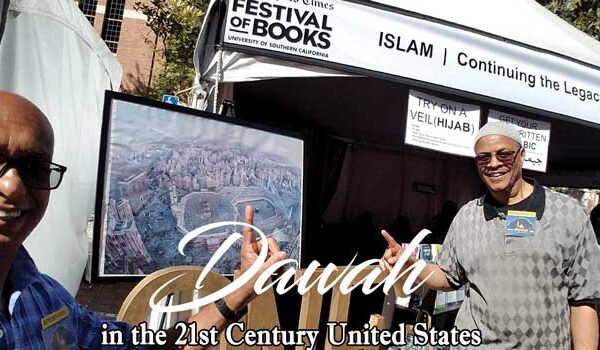
    Except for African Muslims forcibly brought to the United States via the Trans-Atlantic slave trade, Muslims, like other faith practitioners, have come to this country and experienced varying levels of receptivity to their faith by the American populace and local, state, and national governments. One constant in the lives of Muslims in America is dedication to dawah, the invitation to submit to Allah, and the response by persons of varying backgrounds and ethnicities. From the turn of the 20th century until the 1980s, the most visible da’ees, callers to Islam, were inner city African American Muslims who utilized every available means including canvassing neighborhoods, publishing brochures and flyers about Islam, and lecturing on high school and college campuses. As the number of Muslims from Muslim-majority countries increased in visibility throughout the American landscape and their dawah efforts increased as well, larger numbers of the American public were exposed to the clarion call of Muslims: “La illaha illah, Muhammadar Rasulullah,” there is no god but Allah, and Muhammad is His Messenger. Organized dawah efforts in the United States have contributed to Islam being the fastest growing religion in the United States, a statistic that is rarely challenged even by the most Islamophobic groups. This organized call of dawah has reached to the halls of government and business, to ethnic enclaves, colleges and universities, and jails and prisons throughout America. An interesting footnote about this proliferation of the systematic call of Islam is that the incarcerated population has experienced the most rapid and consistent increase in the number of new Muslims in recent years.
    The Islamic Circle of North America (ICNA) has, by the Grace of Allah, identified dawah and service to humanity as utmost priorities over the course of its 50-year organizational existence. Why Islam, Gain Peace, Embrace, Message Magazine, Noor Magazine, ICNA Council for Social Justice, ICNA Relief, Helping Hand for Relief and Development, Young Muslim Brothers, Young Muslim Sisters, ICNA Sisters, all divisions of ICNA, have embraced the mission of dawah as an essential element of their work. The work of ICNA is to continue the Prophetic mission of calling to submission to our Creator, Allah, and embracing in every aspect of our individual and collective lives the guidance of Islam. We know that ultimately it is not in our control to bring about the conversion of individuals to Islam, as that profound matter of the heart is the sole purview of Allah. How else can we account for the consistent growth in the number of Muslims in this country, even in this Islamophobic environment, where there is the freedom to choose any religion from a multiple of choices. We must know that Allah guides American men and women to Islam despite misrepresentations of the religion by adversaries, and notwithstanding the failings of Muslims.

  • Walking the Red Path in Islam

    Walking the Red Path in Islam

    Anthropologists and archaeologists are generally unified in their view that Native Americans (Red Indians) were the original inhabitants of the Western hemisphere. The ancestors of modern-day Native Americans are uniformly heralded as the “First Americans,” whether the hypothesis is that migrants arrived in the Americas when the South American and African continents were physically joined, or that a mass migration came from eastern Asia across the Bering Straits to the southern-most regions of South America. Evidence of Islam among Native Americans during the pre-Columbian period is mostly sketchy as there is relatively little research on the subject. Notable exceptions are the works of a few individuals including Shaykh Abdullah Hakim Quick, Dr. Jerald Dirks, and Kambiz Ghanea Bassiri. Further historical documentation of indigenous people embracing Islam through their interaction with Muslim Malian explorers in the Americas in the early 1300s, as well as the Natives’ synergy with runaway Muslim African slaves in the United States, holds the promise of validating and building upon preliminary research in this recent field of study. While there is abundant historical research about the relationships between Europeans and Native Americans, and Europeans and Africans in America, definitive works about the relationships between Native Americans and Africans in America, from the 15th to the 19th centuries, have yet to be written. Dr. Carter G. Woodson, heralded as the “Father of Black History,” in 1920 referred to the absence of research in this area as, “…one of the longest unwritten chapters in the history of the United States.”

    The interaction of Natives and Africans in America is exemplified by a number of well-known historical figures. Crispus Attucks is recognized as the first martyr of the American Revolution. He was fatally shot by British troops during a street fight between American colonists and British soldiers in 1770. Tensions ran high due to the heavy taxes imposed by Britain. The incident became known as the Boston Massacre. Attucks was a Black Natick (Nantucket) Indian. Similarly, the father of the Back to Africa Movement, Paul Cuffee, was of Black and Indian (Dartmouth) parentage. He was a successful shipowner in Massachusetts, and in 1815 he transported and resettled in Sierra Leone 38 Black freedmen and former enslaved Blacks. Another example, one of the most notable and effective abolitionists of the mid-19th century, was Frederick Douglas, also of mixed Native American and African American ancestry. Following two previous failed attempts at freedom, Douglas escaped from a Baltimore plantation to New York, eventually settling in Massachusetts where he became known as a brilliant orator, author, and compelling abolitionist voice.

    Attucks, Cuffee, and Douglas are only three examples of prominent, major figures in American history who were of Black and Native American heritage. The European-American genocide against Native Americans and the trans-Atlantic trade of enslaved Africans created the political and social crucible in which the two cultures converged, cross fertilized, and developed varying degrees of mutual dependence and cooperation. Nowhere was this forced interaction more evident than the colonial lands known as La Florida, now the states of Georgia, Alabama, and Florida. Manifest Destiny, the White Supremacist doctrine that drove European-Americans to impose their political sovereignty and expanding geographical boundaries on those they considered inferior, facilitated Native, Black, and Muslim interaction, necessitated by their struggle for survival.

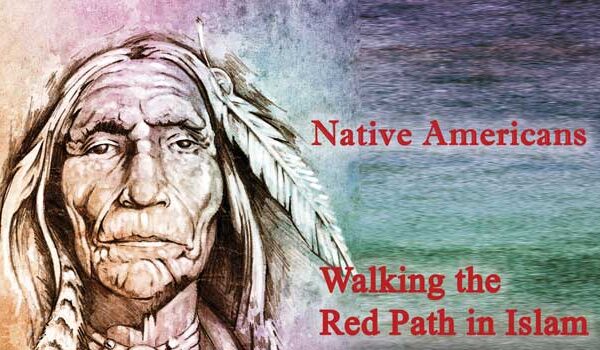
    The presence of indigenous (Native American) Muslims in the U.S. is a subject that titillates the imagination. A relatively small number of indigenous people live outside the 326 designated reservations across this country. Native Muslims are only a small percentage of the ever-diminishing indigenous population in the U.S. Nonetheless, their presence and as yet untapped cultural and religious influence on Muslims and non-Muslim Native Americans outweigh their modest numbers. Native Muslims are potentially the conduits to provide much-needed human and financial resources from the Muslim community to Native populations. More importantly, Native Muslims can bring the Islamic call of submission to the One God, Allah, and the following of His last Messenger, Muhammad (peace be upon him), to this indigenous demographic. Too many Americans perceive Native Americans in a stereotypical, often demeaning and inaccurate way. Until a few short decades ago, the entertainment industry, particularly movies and TV westerns, as well as print journalism, depicted Native Americans as either murderous savages or lazy, groveling primitives, unable to cope with civilization’s advances. Such false and dehumanizing images of First Americans were, historically, important tools of White Supremacist ideology, serving to assuage the consciences of American settlers. In later years, American corporations coveted Native American lands for the natural resources and/or oil pipelines access.

    Native Americans are neither noble savages or helpless dependents incapable of charting their collective or personal destinies. They are victims of three centuries of structural racism and America’s insatiable lust to control and possess material and human resources within or outside its lawful grasp. In the coming years, the longest unwritten chapter of American history, the interrelatedness of African American and American Indian histories, will finally be disclosed. And it will include the historical Muslim presence and, insha’Allah, the mass return of First Americans to Islam.

  • Ramadan: Spiritual Detoxification of the Soul

    Ramadan: Spiritual Detoxification of the Soul

    The Ummah (world community) of Prophet Muhammad ibn Abdullah (peace be upon him) is invariably heralded as including individuals from every race, ethnicity, and nation on earth. While the 1.7 billion adherents of Islam comprise an unparalleled cultural and linguistic human mosaic, Muslims are nevertheless inextricably bound by certain fundamental beliefs and practices that define the faith. One such universally-accepted article of faith is the annual observance of the 29 or 30-day fast during the month of Ramadan, the ninth month on the Muslim calendar. The requirement for every able-bodied Muslim who is not traveling to refrain from eating or drinking anything during the daylight hours, reconnect to the Quran, increase acts of worship, avoid profane, useless speech and all evil and bad deeds, and increase acts of charity is universally accepted as being mandated in the Quran. The Quran instructs: “Ramadan is the month in which was sent down the Quran as a guide to mankind, also clear [Signs] for guidance and judgment [between right and wrong]. So, every one of you who is present [at his home] during that month should spend it in fasting, but if anyone is ill or on a journey, the prescribed period [should be made up] by days later…” (Quran 2:185).

    When people travel throughout the Muslim world during Ramadan, they observe differences in the decorations of masajid, homes, shops, a wide variety of specialty dishes and drinks, and the notifications for the beginning and ending of the daily fast. In Egypt, colorful lanterns, reputedly dating back to the Fatimid Caliphate, adorn the urban landscapes. Drummers walk through neighborhoods rousing people to get up for their pre-fast meal, suhoor, and cannons blast in Cairo to announce the ending of the day’s fast. Variations of these practices can be found in Morocco and other north African countries. In Pakistan, Malaysia, west and east Africa, decorations and fasting period notifications may differ, but the theme of special sweets and drinks like baklava and hibiscus rose petal drinks during Ramadan are commonplace.

    Yet, regardless of the cultural practices of Muslims during the month of Ramadan, the essence of this month— self-purification and character building that is sustainable throughout the other eleven months— must never be diminished or obscured. Prophet Muhammad (peace be upon him) has warned that some fasters will only experience thirst and hunger, cut off from any deeper spiritual experience. Unfortunately, lavish iftar (breaking of the fast) meals and eating until dawn are far too commonplace. How can a faster be reminded of the daily plight of the poor when, consciously or subconsciously, he attempts to eliminate hunger pains through over-indulgence before and after fasting? The everyday Prophetic example of Muhammad (peace be upon him) was to eat enough to sustain his health, that is to fill the stomach one third with food, one third with water, and leave one third for ease of breathing. This daily eating regimen of Prophet Muhammad (peace be upon him) is to be emulated, making it more egregious for fasters to over-indulge to the point of gluttony, especially during the sacred month of Ramadan.

    Sleeping during the daylight hours also negates the positive challenges and benefits of fasting. The daylight hours of fasting are to be used to practice constructive character traits and to eliminate negative ones. Yet, sleeping during the hours of fasting is an act of laziness and indulgence, the opposite of an Allah-fearing personality. Ramadan is not the time for a daily hibernation from the service of Allah. Some of the most profound events in the history of Islam, such as the battle of Badr and the conquest of Makkah, and the recapture of Jerusalem from the Crusaders by Salahudeen Ayyubi, occurred during this glorious month of character building and self-discipline.

    The month of Ramadan is an annual gift from our Creator to the Ummah of Prophet Muhammad, a wonderful opportunity to purify ourselves through sustainable character development, self-restraint and discipline, and acts of charity and goodness. Displays of laziness, over-indulgence, or selfishness are unacceptable character defects for Muslims throughout the year, but especially repugnant during the month of Ramadan. Ramadan is that glorious time of the year for the spiritual detoxification of our souls. By the Grace of Allah, relief efforts of Muslim organizations, during the month of Ramadan and throughout the year, are helping to address the material needs of the homeless, hungry, and neglected. One such organization is Helping Hand for Relief and Development. Based in the United States with relief efforts throughout the world, HHRD helps those in need throughout South Asia, Africa, the Caribbean, and Latin America, with the valuable help of donors. ICNA Relief performs a similar charitable function in the United States and its territories such as Puerto Rico and the U.S. Virgin Islands. HHRD and ICNA Relief represent a Muslim collective response to meeting the requirements of the needy. Let us continue the process of self-purification during the month of Ramadan and beyond by supporting these efforts and doing what we are personally capable of doing.

  • Protecting Our Children:Stop School Bullying

    Protecting Our Children:Stop School Bullying

    Public school education in the United States was first mandated by the General Court of the Massachusetts Bay Colony in 1647. The intent of the judicial mandate was to teach Puritan values to children of the Colony and develop their literacy skills by primarily reading the Bible. In 1779, Thomas Jefferson, Founding Father and third president of the United States, proposed a two-track educational system for the young nation, one in which children of the land-owning aristocrats would learn the essential sciences while children of the landless poor would be instructed on fulfilling their place in society. Jefferson further proposed offering a few scholarships to gifted poor children, described by Jefferson as “raking a few geniuses from the rubbish.”

    The Pennsylvania State Constitution mandated in 1790 that public education would be free, but only for the poor. It was envisioned that the affluent would be able to pay for their education by using their own resources. This 1790 state constitutional article seems to have presaged the de facto two-tier educational system that exists to this day in the United States. Wealthy school districts typically provide better facilities, ample and first-rate instructional materials, and accomplished, qualified teachers to their students. Urban and mostly impoverished districts generally lag in human and physical resources necessary to transmit the requisite knowledge and skills to compete in today’s high-tech environment.

    School bullying reflects the intimidation and harassment that occurs in the larger society.

    A free, tax-based public-school system was established in Boston in 1817. Wealthy businessmen and artisans were the primary supporters of the tax-based system while wage earners opposed the additional tax liability. The first public high school in the United States opened in Boston in 1820 and, seven years later, the state of Massachusetts adopted a law providing a universal public-school system for all grades, free of charge. In contrast, from the 17th to the 19th century, draconian laws and practices restricted the education of children and adults in Southern states. Enslaved children and adults were forbidden by law to learn to read and write. Punishment for defiance of these laws was swift and severe—thosecaught defying this inviolable code were either flogged or killed. Instructors who were repeat offenders likely suffered the same fate as the slaves who were intent on learning.

    The Jim Crow years of separate and unequal public accommodations, including schools and classrooms, militated against any potential for mutual racial and ethnic understanding, and calcified the polarization of the races. In the educational realm, Natives Americans fared no better than African Americans. From 1880 to 1920, over 100,000 Native American children were forcibly removed from their families and sent to boarding schools established under the auspices of the federal government. Native American boarding schools were ostensibly designed as part of a benevolent educational experiment to save Native Americans from eventual extinction.But by stripping children of all vestiges of their tribal culture, language, names, and identity, government boarding schools hoped to “kill the Indian and save the man,” In the words of Richard H. Pratt, an army officer who founded such a school in 1879.

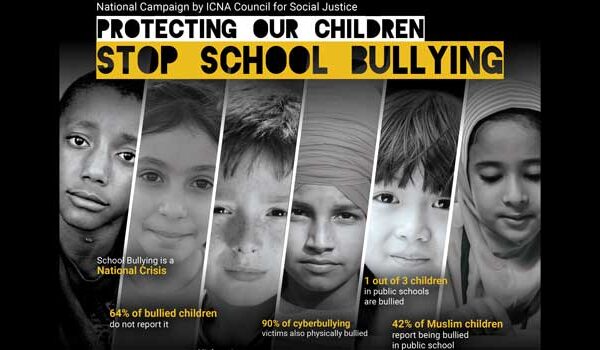
    After over 250 years of legally-imposed segregation, children of various racial, ethnic, and socio-economic profiles were socially ill-equipped to harmoniously matriculate with students different from themselves, once schools were desegregated.School bullying was a natural consequence of America’s sordid history of White supremacy and racial discrimination. Bullying can be defined as the use of aggression, intimidation, or mistreatment to hurt, dominate, humiliate, or exclude others. Victims of school bullying seldom report their victimization to teachers, school administrators, or their parents. The fear of reprisals is reported to be the most common reason why children refuse to tell others that they have been bullied. Alarmingly, school bullying has been a major catalyst in the increased rate of suicide among 10 to 14-year old children.With the advent of social media, school bullies have the capacity to target their victims 24 hours a day. Cyberbully is a frightening phenomenon that prevents young people from finding sanctuary from bullies even in their own homes since cyberbullying is not restricted by location, time, or presence of any authority figure.

    School bullying reflects the intimidation and harassment that occurs in the larger society. Every day, impressionable youth increasingly see acts of bullying, incivility, and bigotry being normalized and even trivialized. Among all public-school students in America today, Muslim children have the highest reported rate of being victimized by bullies. No child should be made to feel unsafe, vulnerable, and unprotected while in school. Child psychologists uniformly state that childhood trauma will likely have a deleterious effect on their mental and emotional makeup as adults. The Islamic Circle of North America, through its Civic Engagement Division, ICNA Council for Social Justice, has initiated a one-year National Campaign, “Protecting Our Children: Stop School Bullying.” The Campaign is designed to not only raise awareness about school bullying, but to also galvanize others to address this dangerous stalker — school bullying — in our midst. To find out how you can get involved or for additional information, contact Rameez Abid, (844) JUSTICE, orvisit facebook.com/bullying.

  • Slaughter of Syrian Innocents

    Slaughter of Syrian Innocents

    Since its inception as a nation, America’s foreign policy has been driven by a deep sense of white supremacy and divine right. Under the rubric of Manifest Destiny, the young nation’s first imperialistic adventure was its near century-long continental expansion from the Atlantic to Pacific coasts. Millions of Native Americans were either slaughtered or forcibly removed from their lands to desolate, barren internment camps euphemistically called Indian reservations. After emerging victorious from the Mexican-American War, 1846-1848, America claimed ownership of present-day California, half of New Mexico, most of Nevada, Utah, and Arizona, parts of Colorado, Wyoming, and expansion of the borders of Texas to the Rio Grande River. Mexicans living in territories formerly owned by the country of Mexico now faced the imminent prospect of racist attacks from rampaging White American settlers unless they fled to Mexico for sanctuary.

    If all we can do is make dua (prayer) for the Syrian people and the Ummah of Prophet Muhammad (peace be upon him), at least we must do that;

    At the turn of the 20th century, American colonial and imperialistic ambitions had extended well beyond continental North America. The United States defeated Spain in the Spanish-American War in 1898. America emerged from this war as a global power as Spain renounced all claims to the Philippines, Guam, and Puerto Rico, ceding them to the United States. The standard bearer for American designs for empire building in the 20th century was Teddy Roosevelt. Fast forward to the 21st century, we find the 43rd president, George W. Bush. Known as a lovable rogue rather than an unyielding ideologue, W’s administration, as the face of “The New World Order” of the neo-cons, unleashed the unparalleled destructive might of the American military on the oil and natural gas-rich Muslim Middle East. Since the invasion and occupation of Iraq by the United States in 2003, American imperialism has been primarily responsible for turning Iraq into a staging ground and battlefield for ISIS, Libya into a failed state, and Afghanistan into the world’s largest opium exporter on the planet with productions soaring.
    Yet, the deadliest conflict of the 21st century is in Syria. Before the slaughter of innocents began in Syria in 2012, the country was one of the “pearls” of the Middle East. Once rich in ancient archaeological sites, strong trade and economic infrastructure, high educational achievement levels, a vibrant film and innovative IT sector, the once proud nation of Syria has been turned into rubble. It is a virtual killing field where military forces from America, France, United Kingdom, Russia, and Iran, along with a motley crew of shadowy terrorist groups, hold terrorized Syrian men, women, and children hostage while the killing goes on in the name of a multiplicity of dubious causes. International Human Rights groups estimate the number of Syrians killed at 350-500,000, a disproportionately high number of them innocent, non-combatant civilians. At least six million Syrians have fled the country or are internally displaced. The misery index of the Syrian people has only been further exacerbated by the latest front man for the military-industrial complex, the 45th president of the United States. As an ever-increasing number of Syrian citizens flee the ubiquitous combat zones of their country, the Trump administration vigorously attempts to block Syrian refugees from coming to this country.

    We have to realize that although Assad, and his father before him, has persecuted many, he should not become the next name in the long line of leaders of sovereign countries who have been brought down by the West. The Syrian conflict is quite complicated and not a simple Sunni vs. Alawite/Shi’a conflict as many, including many Muslims, see it. It is more so a proxy war, the U.S. and its allies against Russia, Iran, and Hezbollah, using mercenaries and even terrorists to accomplish their goals, including regime change, with no regard for the welfare of the Syrians. We have to realize that the West acts according to its own interests, and the feigned outrage over the slaughter of innocents as a reason for intervening is only justification to further perceived national interests. When those interests are hegemonic, we end up with a world of chaos and suffering. As American Muslims, we can join with other Americans in calling for a moral and just foreign policy. We must recognize that the white supremacy that informs the current foreign policy is the same white supremacy that keeps African Americans and other minorities in a state of economic, social, and political subjugation. We can demand, along with all like-minded Americans, that our nation live up to its potential, to live its ideals rather than using those ideals and values as a cover for ignoble actions. If all we can do is make dua (prayer) for the Syrian people and the Ummah of Prophet Muhammad (peace be upon him), at least we must do that; but let us each take action and do something to help, according to our capacity.

  • Harmonious Relations Among Jews, Christians, and Muslims: Historical Examples

    Harmonious Relations Among Jews, Christians, and Muslims: Historical Examples

    In studying history and the phases of peace and conflict, one is quickly exposed to the common arguments about norms and exceptions. One opinion holds that peace is the norm throughout history and that war is the exception, and this position is ardently supported by peace studies programs worldwide. On the other hand, opposing opinion posits that war has been the norm throughout history and peace was the exception, using evidence of the great number of conflicts and wars that have been documented and studied.

    Ultimately, as human beings we must ask ourselves if we truly want to establish harmony globally, and what obstacles, if any, are present and require clear resolutions. In order to achieve local and global harmony, one must study the circumstances and dynamics of intra- and intergroup co-existence in recorded history. Thus, regardless of one’s opinion about the norms and exceptions throughout history, there are striking precedents that illustrate to the modern reader how harmony was established among various ideological and political groups, and that harmony is, in fact, a documented reality and an achievable one at that. Following are important examples from history that illustrate harmony among three religious groups: Jews, Christians, and Muslims.

    The Tribe of Banu Najraan

    During the era of Prophet Muhammad (peace be upon him), a delegation arrived from the tribe of Banu Najraan in order to meet and ask questions of the Prophet, as his message had spread far and wide in the region. The people of Najraan, supported financially by the Byzantine ruler, sent a delegation of 60 people to Madinah, and they were received in the mosque of the Prophet (pbuh), where they prayed to the east. Many issues were raised and a variety of questions were asked over the course of several hours. When they discussed the nature of God, the Prophet (pbuh) recited Surat Al-Ikhlaas (chapter 112 in the Quran, “Sincerity”) in which God says: “Say: He is Allah, the One. Allah, the Eternal, the Absolute. He begets not nor was He begotten. And there is none comparable unto Him” (112: 1-4).

    Some members of the Najraan delegation were moved by the meaning of the recitation, while others disagreed as they believed that Jesus is the begotten son of God, and himself divine. On the following day, verses related to Jesus were revealed to Prophet Muhammad (pbuh), and he recited them to the Najraan delegation: “The nature of Jesus, in the sight of God, is the same as Adam, whom He created from dust and said to him, ‘Be,’ and he was. This is the truth from your Lord. Be not, therefore, one of the doubters. Should anyone argue with you about him after what has been given to you of true knowledge, say to them, ‘Let us summon our children and your children, our women and your women, and ourselves and yourselves. Let us then all pray humbly and invoke the curse of God on the liars” (3: 59-61).

    Most of the Najraan delegation could not accept that Jesus was merely a mortal man and a prophet; yet, God, Himself, challenged them with the above verses. The delegation initially agreed to meet for the challenge, but they feared the anger and curse of God, so they decided to decline. Nevertheless, the delegation requested a peace treaty and Prophet Muhammad (pbuh) agreed by the following day. Based only on their short time with the Prophet, they promised to accept the terms of the peace treaty without question, as they had seen fairness and honesty in the character of the Prophet (pbuh).

    The following excerpt of the peace treaty is relevant to our modern times and a reminder of pluralistic harmony and co-existence: “Najraan has the protection of God and the pledges of Muhammad, the Prophet, to protect their lives, faith, land, property, those who are absent and those who are present, and their clan and allies. The Najraans need not change anything of their past customs. No right of theirs or their religion shall be altered. No bishop, monk or church guard shall be removed from his position.”

    The treaty continues: “Whatever they have is theirs, no matter how big or small. They are not held in suspicion and they shall suffer no vengeance killing. They are not required to be mobilized and no army shall trespass on their land. If any of them requests that any right of his should be given to him, justice shall be administered among them. He who takes usury on past loans is not under my protection. No person in Najraan is answerable for an injustice committed by another.”

    The above treaty provided autonomy with regard to political administration, cultural tradition, and religious beliefs, for not only Christians but any non-Muslim citizen living under the Islamic government. This example is just one of many, including the well-known Madinah Charter. For centuries, many just Muslim rulers adhered to the principles and guidelines contained in the treaty when dealing with non-Muslims in local and distant lands.

    The Suit of Armor

    Throughout Islamic history, there have been clear-cut examples of justice being rendered in an unbiased way in cases of a Muslim violating the rights of a non-Muslim under an Islamic authority. The issue of justice is raised here due to its significant positive impact on achieving harmony locally and globally. One exemplification of justice is the following incident: A man named Taima stole a suit of armor from Qataada, his neighbor. Qataada had hidden the armor inside a sack of flour so when Taima took it, the flour leaked out of the sack through a hole, and flour fell from the armor, leaving a trail up to his house. Taima then left the armor in the care of a Jewish man named Zayed, who kept it in his house. When the people searched for the stolen armor, they followed the trail of flour to Taima’s house but did not find it there. When confronted, he swore to them he had not taken it and knew nothing about it. The people who were supporting Qataada also swore that they had seen Taima breaking into Qatada’s house at night, and had subsequently followed the tell-tale trail of flour, which had led them to his house. Nevertheless, after hearing Taima swearing he was innocent, they left him alone and looked for further clues, finally finding a thinner trail of flour leading to the house of Zayed, and so arrested him.

    The Jewish man told them that Taima had left the armor with him, and some Jewish people confirmed his statement. The tribe to which Taima belonged sent some of their men to Prophet Muhammad (pbuh) to present his side of the story, and asked them to defend him against the accusation. The delegation told the Prophet,” If you do not defend our clansman, Taima, he will lose his reputation and be punished severely, and the Jewish man will go free.” The Prophet (pbuh) was persuaded to believe the delegation’s side of the story and was about to punish the Jewish man when God revealed the following Quranic verses to vindicate the Jewish man : “Indeed, We have revealed to you, [O Muhammad], the Book in truth so you may judge between the people by that which God has shown you. And do not be an advocate for the deceitful. And seek forgiveness of God. Indeed, God is ever Forgiving and Merciful. And do not argue on behalf of those who deceive themselves. Indeed, God loves not one who is a habitually sinful deceiver. They conceal [their evil intentions and deeds] from the people, but they cannot conceal [them] from God, and He is in their midst when they plot by night in words that He does not approve. And God ever is encompassing of what they do. Lo! You argue on their behalf in [this] worldly life – but who will argue with God for them on the Day of Resurrection, or who will be their defender?” (4: 105-109).

    The Conquest of Jerusalem
    It is well established that Umar ibn al-Khattaab, the second caliph, during the opening of Jerusalem in the year 637, issued a decree to the people of the city that they would be protected in their places of worship. At the time, the authority presiding over Jerusalem was the renowned Patriarch Sophronius, a representative of the Byzantine government. During the battle, a countless multitude of Muslims had surrounded Jerusalem, but Sophronius refused to surrender the holy city except to Umar in person.

    Umar, who was situated in Madinah, heard about the condition of Sophronius, and he set out with a companion on just one donkey. By the time of their arrival, it was not easy for those who had never seen Umar to distinguish him from his servant, due to his humble dress and modest character. Sophronius was greatly impressed by this and gave Umar a tour of the city, which included the famous Church of the Holy Sepulchre.

    When the time for prayer came, Umar indicated that he needed to pray, and Sophronius invited him to pray inside the church. However, Umar adamantly refused and he insisted that if he prayed in the church, Muslims in later times would use his visit there as an excuse to convert it into a mosque, and this would essentially deprive Christians of one of their holiest sites. Umar prayed near by the famous church and the Muslims ended up building a mosque at the site fifty-five years later. The Mosque of Umar stands to this day across the road from the Church of the Holy Sepulchre.

    After the peaceful surrender of Jerusalem, Jews, who had been banned from Jerusalem for over five centuries, were finally given permission to worship and reside in Jerusalem with complete religious freedom. Umar gave a speech that became known for centuries later and promoted an unparalleled treaty of co-existence and religious tolerance. The treaty, referred to as Umar’s Assurance, became a recognized standard for relations between Muslims and Christians throughout the Byzantine Empire and eventually throughout the world. It established the rights of minorities and promoted tolerance to a great degree, and forced conversion to Christianity in the Byzantine Empire was no longer a respected or sanctioned act, following the speech of Umar.

    Co-existence in Spain

    Society under Islamic rule in Spain, referred to as Al-Andalus by the Arabs, was known for its religious tolerance and peaceful co-existence. Christians and Jews, along with Muslims, held high positions in the courts and in society, and they collectively shared in the wealth of Cordoba, the capital of Al-Andalus. Professor Zachary Karabell, in Peace Be Upon You, stated about that era: “Jews tended to benefit both in Spain and the Mediterranean world. In the towns and cities, Jews found themselves in unique positions as intermediaries between Muslim-dominated Spain and the rest of the world. Having suffered severe discrimination at the hands of the Visigoths, Jewish communities under the Muslims enjoyed more freedom, affluence, and social standing than any Jewish community would until the nineteenth century.”

    There are countless other examples of peace and harmony between various groups, politically and religiously, ethnically and racially, and these examples should continue to be highlighted, studied, and imitated in the modern context in order to achieve world peace. Ultimately, the vast majority of mankind genuinely wants to live in peace and desires that same atmosphere of harmony for humanity worldwide. The world is exhausted from the various wars and conflicts that are ongoing, and all decent people are appalled by the horrendous humanitarian crises around the world that result from the mayhem and destructive power of war.

    Many researchers and commentators point to various sources of contemporary conflict. These include predatory capitalism, imperialistic national ambitions, ethnocentrism and racism, and ideologies of exceptionalism and superiority. Many groups and individuals around the world tirelessly advocate for a more just and egalitarian global power structure, for the upholding of civil and human rights and international law, and for a principled assurance of social justice for all human beings. We must maintain a realistic optimism and utilize every means to achieve local and global harmony.

  • In the Footprints of the Prophets: The Path to Social Justice

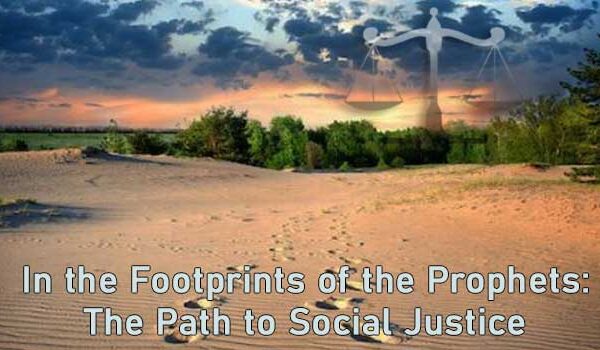
    In the Footprints of the Prophets: The Path to Social Justice

    One of the sad failings of human beings has been to devise social and political constructs that are inimical to the timeless, instructive guidance of Divine revelation and prophetic traditions. Prophets were the progenitors of religious beliefs and practices that were often contrary to the dominant ethos of their contemporary societies. Notably, they were fearless claimants to being standard bearers for social justice in the societies in which they lived. The Quran states that Allah sent messengers to every people so that they could serve Him and avoid evil (Quran 16:36). In any oppressive society, the elites strive to dis-empower the people.

    A common refrain for this decade must be “justice for all.” Any nation that ignores the pleas of the oppressed and utilizes rights-abusing tools of suppression and oppression is destined to be relegated, ignobly, to the trash bins of history.

    The way to counter their stranglehold is attainment of true knowledge of the Creator and knowing how to uplift and purify the self. In the teachings of all unadulterated revealed scriptures, God (Allah) is the firmest ally and advocate for the oppressed. Witness the Pharaonic System confronted by Prophet Musa (peace be upon him). After three thousand years of the masses being indoctrinated to worship their contemporary pharaoh while viewing themselves as inferior human beings, Prophet Musa (peace be upon him), by the Mercy of Allah, was able to lead a physical liberation movement of the Bani Israel that simultaneously freed scores of Egyptians from mental bondage as well. Prophet Musa hated the system of oppression that plagued his people, but it was only after he received Divine guidance that he was able to transform the existing social order.

    The transformative power of tauheed (belief in and worship of the one and only God) was evidenced in an even more dramatic and startling fashion with the 23-year mission of Prophet Muhammad ibn Abdullah (peace be upon him). After more than 120,000 prophets and messengers, it can be said that the final Messenger, Muhammad (pbuh), led a movement that revolutionized Arabian society in every dimension of its existence, and thereby manifested a practical guide for all generations to come. The victimization of women, the poor, orphans, slaves, those belonging to less powerful tribes, and non-Arabs by the ruling Quraysh elite was ideologically vanquished by the Divine guidance and wisdom espoused by Muhammad. This set the stage for an egalitarian society founded on a system of justice where no one was oppressed. This Islamic movement likewise freed the ruling elites from their own mental entrapment that caused them to attempt to usurp the sovereignty of the Creator. Oppressive societies have always temporarily triumphed by obscuring absolute truths from the masses of the people. The teachings of Prophet Muhammad (pbuh) went against the ethos of the time, an ethos by which the dominant elites, positioned through tribal and inherited privilege, ruled over and were served by those outside of their racial, ethnic, or class delineations. These unjust social practices were smashed in the brief span of two decades by the movement led by Prophet Muhammad (pbuh).

    In one of the more odious ironies of history, the United States of America was formulated on the propositions of “liberty or death,” espoused by Patrick Henry, a patriot who captured the sentiments of colonists burdened beyond their capacity by British royals in the so-called mother country. This rebellion against exorbitant taxation and imperial imposition on the colonies led not only to the Revolutionary War and subsequent independence from Great Britain, but the formulation of a Constitution that seemingly broke with the Old World norms of social, economic, and political control by the aristocracy. Unfortunately, the pronouncement by the Constitution to “establish justice” and that of the Declaration of Independence about the right to “life, liberty, and the pursuit of happiness,” at least as applicable to all citizens, never reached fruition as the new nation built its industrial and capitalist economy and the national wealth by enslaving Africans for over 245 years, all within the framework of laws. Millions of Africans, at least one-third of whom were Muslims, toiled under this pernicious system as a sad example of the cruelty of human beings toward fellow humans. Enslaved Africans were denied the opportunity to learn how to read and write in English for fear that any acquired knowledge militated against their ongoing subjugation. The Divine imperative to seek knowledge from the cradle to the grave was thwarted by cruel machinations of the slave owners, including U.S. presidents. Native Americans also suffered unspeakable abuse by the new nation. Native land was seized by forcible expulsion of indigenous people by federal troops and local vigilantes, as well as by unapologetic extermination. In a little-known fact of American history, Natives were enslaved in southwestern states including California, though not to the numerical extent of the kidnapped Africans. How could such cruelty and suffering become so commonplace in a land ostensibly based on freedom, equality, and justice?

    Sadly, while physical slavery of Africans in America and the genocide of Native Americans have long since been outlawed, discrimination against, and abuse of, these populations and others such as Latinos, immigrants, and Muslims, are ongoing and deeply entrenched. The present climate of religious, racial, and class strife necessitates that Believers and other Americans who are committed to fair play in the distribution of wealth and the equitable availability of opportunities and privileges, and most importantly, in the rejection of discrimination and hate, must “stand firm for justice” (see Quran 4:135). A common refrain for this decade must be “justice for all.” Any nation that ignores the pleas of the oppressed and utilizes rights-abusing tools of suppression and oppression is destined to be relegated, ignobly, to the trash bins of history.

  • The 2016 Election:  Voting for Diversity, Pluralism, and Justice

    The 2016 Election: Voting for Diversity, Pluralism, and Justice

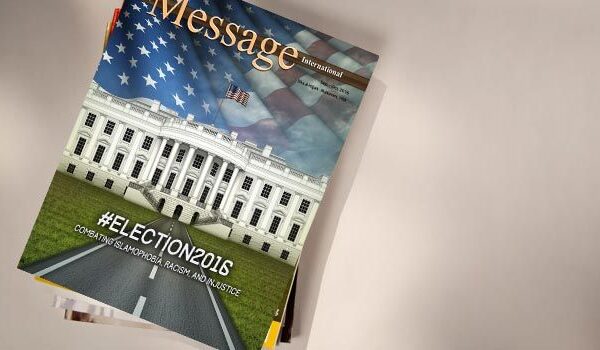
    Since September 11, 2001, the American Muslim community has gone through a journey of social and political ups and downs. And in our current turbulent times, public opinion about Islam and Muslims is worsening once again. Hate crimes against Muslims and their masajid are increasing across the country while Islamophobia has become, unfortunately, mainstream during this presidential campaign of 2016. However, at the same time, a good number of individuals, both professionals and regular folk, have spoken forcefully and persuasively in support of the Muslim community, and occasionally American Muslims receive positive media coverage; this was the case during the funeral services of Muhammad Ali in early June, and after the speech of Khizr Khan on the last night of the Democratic Convention in July. The late Imam W. D. Muhammad used to say, “This is the worst time for Muslims in America and this is also the best time for Muslims in America.”

    A window of opportunity has been opened as Muslims respond in a variety of effective ways to the challenge of combatting Islamophobia and presenting a positive and accurate narrative to the American public

    Acts of discrimination, bigotry, and racism against non-White or non-Christian minority groups are not uncommon phenomena in America. The U.S. used to be considered a WASP (White Anglo Saxon Protestant) nation. That dominant group always felt anxiety and reacted unfavorably towards the growth of other minority groups or the influx of new immigrants they didn’t identify with. However, religion as an election issue has not been very common in American political history. Religion did play a role in the presidential elections of 1928 and 1960, when Alfred Smith and John F. Kennedy, respectively, were the nominees of the Democratic Party. They both were Catholic and the Republican Party launched a nasty campaign suggesting their loyalty would be split between the Pope and the U.S. Constitution.

    In the 2016 presidential election cycle, even though Muslims constitute less than 2 percent of the total American population, Muslims and their faith have been front and center. Trump and his campaign have been creating fear and hatred toward Muslims, but also toward Mexicans and women. Three disturbing notions or developments affecting Muslims have arisen, all fomented by Trump and his surrogates: 1) All Muslims are suspect of holding extremist views or sympathies; 2) Muslim Immigration should be banned until the development of a proper vetting process; and 3) Islamophobic rhetoric has gone mainstream.

    The hope for those who are deeply concerned about a Trump presidency is that enough independents will be disgusted with Trump’s extremist views and positions — xenophobic, Islamophobic, and misogynistic — to block his ascendency to the “highest office in the land.” Independent voters tend to identify with one party or the other, but they also tend to be more moderate as compared to those who belong to either the Republican or Democratic parties. Interestingly, according to Gallup, in 2014, Americans self-identified in the following ways: 38% conservative; 24% liberal; and 34% moderate. The percentage of self-identified moderates has shrunken from 43% in 1992 to 34% today. That coincides with the political polarization that we are seeing during the current election cycle. During the same time frame, 1992 through 2014, the percentage of liberals has grown from 17% in 1992 to 24% today; conservatives have likewise increased, but at a much smaller percentage, from 36% in 1992 to 38% today. It remains to be seen if the majority of Americans will turn away from the hatemongering of the Republican candidate.

    Donald Trump, who has no prior political or government experience, has become the Republican nominee, attracting a significant number of Republicans, especially less educated, White, working class and older Americans who feel threatened with changing demographics and a perceived loss of their political power and social dominance, especially after Obama was elected. Those who want to “take back the country” feel lost in a society that embraces diversity and pluralism. They are most comfortable with a White dominated culture that harkens back to earlier times when racism and discrimination were socially and politically unchallenged, for the most part. Precisely for these reasons, this election has also become more important than other critical elections.

    Muslims should be ready for a long struggle. Islamophobia will not go away in the short term. A window of opportunity, however, has been opened as Muslims respond in a variety of effective ways to the challenge of combatting Islamophobia and presenting a positive and accurate narrative to the American public. The One America Campaign and Million Voters Registration Drive, for example, are national initiatives under the banner of the US Council of Muslim Organizations (USCMO). There is no doubt that Muslims are growing in resilience, showing political maturity in an atmosphere that is too often hostile, suspicious of their American identity and loyalty. We should continue to be involved in the political process, locally and at the state and federal levels. And we must join with other concerned Americans who stand for ethics in politics as in personal life, and who rally against bigotry and discrimination wherever it appears. We must do our part to ensure that this election of 2016, a contest for the soul of America, leads to celebration of diversity and pluralism and, more importantly, justice for all its citizens.