بسم الله الرحمن الرحيم

Author: bocapro

  • Spanish: Allah Rescata a un Boricua con el Islam

    Bismillahi Rahmanir Raheem. En el nombre de Allah el Clemente el Misericordioso. Que la paz de Allah este con Su último mensajero, el sello de los profetas, Muhammad. Y que la paz de Allah este con todos los que sigan sus pasos hasta el Dia del Juicio.

    Mi familia querida

    Fui bendecido con padres de origen puertorriqueño. Soy el menor de tres hijos que nacimos en Nueva York, y nos criamos entre Puerto Rico y Nueva Jersey.

    Mi familia fue bendecida con mi madre, quien antes de casarse con mi querido padre, era una monja. Mi madre les enseñaba a más de 50 niñas en el convento en Nueva York. Estudió sicología en la Universidad de Fordham. Mi madre tenía preguntas sin respuestas y eso la llevó a dejar el convento y luego se casó con mi padre. Mi madre nos enseño a siempre suplicarle a Dios por nuestra comida, al despertar, y antes de dormir. En Puerto Rico estableció el catecismo en nuestro hogar para los niños del barrio. Mi padre era un gran trabajador; nos llevaba a trabajar para aprender como sobrevivir. Desde pequeño aprendi a hacer pizza, huevos revueltos, y sandwiches. Mi padre jugaba con nosotros videojuegos y deportes en sus días libres. Mis hermanos mayores siempre jugaban comigo, me llevaban al cine, y siempre nos divertíamos juntos.

    El Islam y el baloncesto

    Desde pequeño era un fanático de Michael Jordan y los Chicago Bulls. Los Bulls ganaron 3 campeonatos y luego Jordan se retiró. Me quede como un niño sin estrella. Me puse a buscar y elegí como jugador favorito a Chris Jackson de los Denver Nuggets, que luego acepto el Islam y se cambió el nombre a Mahmoud Abdul Rauf. En ese tiempo no se tenía mucho acceso a ver juegos de otros equipos, a menos que esos equipos jugaran con el equipo local. La manera que me mantenía al día era coleccionando tarjetas. Una vez estuve leyendo las tarjetas de Mahmoud Abdul Rauf y encontré información acerca del Islam, como el significado de su nombre y sobre la peregrinación hacia la Meca.

    Como no tenía acceso de ver muchos juegos de Denver tuve que escoger uno de dos equipos locales que eran los Knicks de Nueva York o los Nets de Nueva Jersey. Elegí a los Knicks porque nací en Nueva York y como jugador favorito elegí a John Starks. Ese año los NY Knicks llegaron a las finales contra los Houston Rockets. Los Houston Rockets tenían a la leyenda, Hakeem Olajuwon, quien estaba ayunando durante los juegos para el campeonato. Muchos de los Knicks le hablaban basura y él pacientemente respondía con su juego.

    Los Rockets tenían la oportunidad de ganar juego con un lanzamiento por Starks, pero fue bloqueado por Hakeem y Houston ganó el campeonato de la NBA. Este fue mi primer contacto con el Islam, pero durante ese tiempo no estaba interesado en la religión.

    Las dificultades de un joven

    Mientras estaba en la escuela Secundaria de Union Hill, localizada en Union City Nueva Jersey, comencé a fumar cigarros porque todos mis amigos lo hacían. Después de la escuela íbamos a jugar baloncesto y algunas veces las personas que esperaban su turno para jugar tomaban cervezas o fumaban marihuana. A consecuencia, de joven me la pasaba jugando baloncesto, cantando reggaeton en las discotecas, tomando alcohol y “jangeando” con las amistades. Tuve algunas malas experiencias como la pérdida de un amigo que se ahogo mientras dormía intoxicado con alcohol a la edad de 18 años. También me envolví con una pandilla, en la que conocí a mi gran amigo, Carlos Hernández de Colombia, quien vivió unas semanas en mi casa. A Carlos le gustaba leer mucho y un día fue conmigo a la biblioteca pública y por él me robe una copia del Corán. Los miembros de la misma pandilla de la que yo era parte mataron a dos de mis amigos con quienes yo estuve el día anterior. Esa tragedia me afectó mucho. Día tras día pensaba en tres cosas: La muerte, la enfermedad, y la seguridad de mi familia. En esos momentos perdí la confianza de todo ser humano con excepción de mis padres, pero ellos no tenían le experiencia para ayudarme en mi caso. Decidí buscar de Dios. Fui a seis diferentes iglesias para buscar la Biblia de cada iglesia.

    Mi jornada espiritual

    Mi Jornada comenzó en el año 1998 cuando me sentía sin dirección, sin tener la habilidad de confiar en otro ser humano. Visité las iglesias del pueblo y adquirí 6 biblias. Mientras leía y comparaba entre ellas, me acorde del Corán que mi amigo, Carlos, dejó en mi hogar. Lo busqué y comencé a leer diariamente las 6 biblias y el Corán. Interesantemente, me enteré de la acusación contra la Biblia del Rey James de parte de la Nueva Revisada, que dice en la introducción: La Biblia Rey James tiene graves errores. Me puse a pensar, ¿cómo una Biblia Sagrada va a criticar a otra Biblia Sagrada? Pensé que eso es obra del ser humano no de Dios.
    Luego leí en la Introducción del Corán, traducido por Abdullah Yusuf Ali, que “este Corán es una confirmación del mensaje de Moisés, Jesús, Muhammad, y todos los profetas de Dios. También dice que el Corán permanece en árabe, en su forma original sin haber sido cambiado milagrosamente por más de 1400 años y millones de personas se lo han memorizado. Esto me impresionó.

    Mi lectura del Corán

    Continué la búsqueda y me apegue a la lectura del Corán. Quise aplicar toda orden que leía. Leí un versículo que decía:
    Establece el salat desde que el sol comienza a declinar hasta la llegada de la oscuridad de la noche, así como la recitación del alba. Es cierto que la recitación del alba queda atestiguada. {Sagrado Corán 17:78} Tras leer ese versículo, me levantaba a medianoche en secreto, entre yo y Allah, a leer el Corán mientras mi familia dormía. Sentí una fuerza interior cada vez que hacia un acto para complacer a Allah.

    Luego leí un versículo relacionado con el hablar bien:
    ¡Vosotros que creéis! Temed a Allah y hablad acertadamente. Él hará buenas vuestras acciones y os perdonará las faltas. Y quien obedece a Allah y a Su mensajero ha triunfado con gran éxito. {Sagrado Corán 33:70-71} Enseguida después de leer ese versículo comencé a poner mucho esfuerzo pare controlar mi manera de hablar. Y solamente esforzándome para hablar bien o mantenerme en silencio.

    Me mantuve leyendo el Corán por nueve meses consecutivos y a través de la lectura y la aplicación me di cuenta que gradualmente iba curándome del vicio de fumar cigarrillos y tomar alcohol. Esa fuerza interna me hizo confiar más y más en el Sagrado Corán. Finalmente después de 9 meses de lectura del Corán tome la decisión el 24 de septiembre de 1999 para aceptar el Islam. Acepte el Islam en el NHIEC: Centro de Educación Islámico del Norte de Hudson en Union City con el Sheij Mohammed Al Hayek, quien regularmente ofrecía clases en ingles para nuevos musulmanes. Dos años después, mi querida madre y mi querido padre también aceptaron el Islam. Alabado sea Allah.

    Esfuerzos en divulgar el Islam

    En el año 2002 establecí una clase en español en NHIEC titulada “Entendiendo el Islam”. Luego, en una reunion del Comité de Dawah, el Imam Al Hayek me preguntó si tenía una idea para un evento dirigido a la comunidad latina. Yo sugerí El Día de los Latinos Musulmanes. Através del maravilloso esfuerzo del Comité de Dawah se llevó acabo el primer evento en el 2002. Continúe mis esfuerzos haciendo las clases semanales desde el 2002 hasta el 2004.

    Mi paso hacia estudiar el árabe y los estudios islámicos

    En el 2004 recibí la maravillosa noticia que se me ofrecía una beca para estudiar en Egipto; el idioma árabe en el Instituto Eqraa y estudios islámicos en la Universidad de Al Azhar. Estudie en Egipto desde el 2004 hasta el 2007, completando 5 años de materia en 3 años en Al Azhar. Alabado sea Allah. Conocí maravillosos hermanos y hermanas latinos en Egipto, quienes ayudaron a ubicarme. Entre ellos: Abdul Rahman Khairo de Colombia, Sheikh Uzman de Argentina, Dr. Juan Yahya Suquillo visitaba y siempre nos daba buenos consejos, y también conocí a nuestro querido hermano Mujahid Fletcher, el fundador de IslamInSpanish. Pasamos noches hablando de cómo poder servir a nuestra comunidad Latino/Hispana.

    IslamInSpanish: Mi nueva familia

    En el año 2010 traslade a mi familia de Nueva Jersey hacia la maravillosa ciudad de Houston, con el propósito de trabajar en Iman Academy, una escuela Islámica como maestro y trabajar con IslamInSpanish. Me junte a IslamInSpanish por su extraordinaria misión de producir multimedia educando a los latinos sobre el Islam.

    Ha sido una maravillosa experiencia poder trabajar con IslamInSpanish en el servicio de nuestra comunidad latina, grabando los programas de IslamInSpanish en el Studio de Andalucía Center con “La Voz de IslamInSpanish”, el narrador oficial Abu Mujahid Fletcher. IslamInSpanish tiene mucho que ofrecerle a la comunidad latina. ¡Alabado sea Allah!
    Materia de Educación Islámica en www.islaminspanish.org

    La comunicación con la comunidad latina por medio de Facebook en la página: facebook.com/IslamEnSpanish
    Material disponible para la venta en: http://www.dar-us-salam.com/
    Presentaciones nacionales e internacionales: Contáctelos via: info@islaminspanish.org. http://www.facebook.com/IslamEnSpanish

    Elegido Imam para la comunidad de Beaumont Texas

    A finales del año 2011 recibi una oferta para ser un Imam en Beaumont, Texas. Honestamente, mi primera respuesta fue no, estaba super contento viviendo en Houston, y con mis trabajos en Iman Academy y en IslamInSpanish. Claro que estaba extremamente ocupado y no tenía mucho tiempo para mi familia. Mi maravillosa esposa me dijo: Vamos a dondequiera que vayamos. Hice la oración Istikhara (La Consulta con Dios), analicé la oferta y me dije a mi mismo, “Con esta oferta podría balancear mi vida y manejar mi tiempo mas adecuadamente. Podría hacer dawah, continuar mis estudios del Islam, pasar tiempo con mi familia colectivamente e individualmente y ser un ejemplo musulmán. Después de la oración Istikhara consulte con Isa Parada, Abdullah Oduro, Mujahid Fletcher, Abu Mujahid Fletcher, mi madre, y tome la decisión de aceptar la oferta como Imam de la Sociedad Islámica de Triplex. En el mes de enero del 2012, fundamos la escuela Al Hidaya, una escuela suplementaria que se lleva acabo los fines de semana.

    La Mision de Al Hidaya es: “Desarollar en los jóvenes un amor por Allah como su Dios, un amor por el Islam como su modo de vivir, un amor por Muhammad (Que la paz sea con él) como el sello de los Profetas, y un amor por el Corán como la guía para la humanidad.” En Al Hidaya, los estudiantes aprenden el árabe, estudios islámicos, la lectura del Corán, baloncesto y artes marciales. Al Hidaya constituye de maravillosos estudiantes, maestros, y voluntarios.

    Otros programas de IST (Islamic Society of Triplex):
    (1) KnewU: Clases para nuevos musulmanes en ingles. Programa fundado por Abdullah Oduro.

    (2) La Explicación del Corán

    (3) Visitas a la prisión

    (4) Programa para jóvenes

    (5) El Dialogo Religioso

    (6) Noches de Película

  • Spanish: De Juan a Shafiq

    Desde mi niñez yo siempre supe que era una persona “espiritual”. Por alguna razón yo me sentía distinto a los otros niños que me rodeaban y a veces por eso mismo también me sentía aislado. Yo era diferente y soy diferente.

    Para comenzar, yo soy de descendencia latina. Mis padres inmigraron a Nueva York desde la Republica Dominicana en los años 60. Desemejante a la depresión que existe actualmente aquí, en esos tiempos era una era industrial con muchas posibilidades de empleo. Típicamente, como otros latinos, yo me crie dentro de la fe católica. Yo pase por todos los ritos que hacen a una persona católica; fui bautizado, hice mi comunión y confirmación. Hasta serví como monaguillo por un tiempo. Pero cuando llegue a la adolescencia, comencé a perder la paciencia con el catolicismo.

    Parte de ello fue porque no obtenía las respuestas que buscaba. Comencé a explorar diferentes religiones y espiritualidades. Durante mi adolescencia, ya había leído el Nuevo Testamento entero, algo que no es fácil para un jovencito. Yo me sentí especialmente incomodo con el culto a los santos. Yo descubrí que hay tanto escrito en la Biblia que no es seguido por la iglesia y eso me angustiaba. Cuando llegue a la edad de 16 años, puedo decir con toda confianza que había abandonado la religión católica. Sin embargo, me consideraba “cristiano”. Visité diferentes iglesias de varias denominaciones y vi muchos televangelistas, pero no surgía ningún sentimiento de pertenencia. Una de las razones que no me gustaba el cristianismo era por la cantidad de desacuerdos entre las denominaciones. Existía una complejidad en el cristianismo, o así yo pensaba, que me mantuvo pensando.

    Como mencione, estuve buscando en otras religiones. Específicamente, estudie sobre el judaísmo, budismo, hinduismo, santería, y varios otros movimientos y cultos. Del judaísmo, estuve de acuerdo con todo lo que era verdad, y me pareció más verdadero que el cristianismo. Pero no podía enfrentarme a la vida sin Jesús. Para mí eso era muy importante. De hecho, en el Islam, yo no perdí a Jesús, que la paz este con él. El budismo me parecía muy esotérico, un poco complicado, y poco fuerte. La gota que derramó el vaso fue cuando trate de visitar un templo budista en Manhattan. Cuando toque la puerta, las personas que estaban a cargo del templo vinieron a la puerta, muy calladas, para mirar por el agujero, y esperando que yo me fuera, se apartaron en silencio sin abrir la puerta. Yo toque nuevamente y me quede parado ahí por algunos minutos esperando que alguien me ayudara pero no regresaron.

    El sistema de casta y el número grandioso de dioses y diosas en el hinduismo me repugnaba. Aunque me interesaba sociológicamente y hasta algunas enseñanzas me influyeron (como por ejemplo, el vegetarianismo) pero no podía aceptar postrarme ante otros dioses. Los dioses de la santería también me repugnaban. La idea era muy extraña para mí, así que no la podía entretener seriamente. Cualquier persona que conoce algo de la santería sabe que es una religión muy secreta y eso me fastidiaba. Si tu tienes la verdad, no hay nada que esconder. Los movimientos de la nueva era me parecían muy complejos y a veces hasta tontos. No digo que nada de lo que vi en mis viajes y en mi búsqueda me gusto. Vi algunas cosas que me gustaban y algunas me llamaban la atención pero no tenían mi interés completo.

    Al llegar a los 19 años, había renunciado al cristianismo por completo pero continuaba mi búsqueda. Esta búsqueda me llevó a leer sin parar, algo que hago hasta ahora. A la edad de 20 años, un amigo me regaló un libro sobre el Islam, o lo que pensaba era el Islam. Era un libro publicado por el culto Ansar, si no se acuerdan de quienes eran, pues solían vender inciensos y perfumes. Después de leer sobre ellos por 2 años y medio, me decidí ser “musulmán” a la edad de 23 años. La verdad es que no considero que me convertí realmente en musulmán porque sus enseñanzas no eran el Islam puro. Por mi intensa experiencia en la lectura, me di cuenta que habían muchos errores en la doctrina Ansar, pero continué con ellos porque no me relacionaba con nada más. No conocía a otros musulmanes reales que me pudieran guiar. Solo Dios me podía guiar, y Lo hizo. Yo notaba mientras leía los libros Ansares que el líder de este movimiento cambiaba su fe y doctrina cada vez. Eso me parecía extraño y me desconcertaba. Dure 2 años dentro de este movimiento.

    Un día mientras asistía a Yummah (el sermón del viernes) en la mezquita central en Manhattan, un hermano hispano se dio cuenta que llevaba un símbolo en mi yalabiya (vestido islámico) que traicionaba mi lealtad a los Ansares. Un hermano fue tan amable de tomar su tiempo para hablar conmigo. No hablamos el inglés muy bien porque no era su primer idioma, pero trató lo más que pudo para explicarme que era un error estar con ese grupo. Él me presento a otros hermanos y me dio un libro que me ayudo. El libro se llamaba, “El Culto de los Ansares”, por Bilal Phillips. Después de leerlo yo sabía que estaba equivocado por haberles seguido a ellos. Después de todo este episodio, yo tome mi Shahada (testimonio de fe) nuevamente con Alianza Islámica, una organización Sunita en Manhattan. Tenía 25 años en ese tiempo. Alá me guió a la verdad, y también el hecho que nunca deje de leer, y también por la amabilidad de ese hermano quien me ayudó. Hasta ahora, ese es el final de mi viaje espiritual. Hasta hoy me encanta leer y estoy constantemente aprendiendo pero ya no estoy buscando la verdad porque para mí, la verdad es el Islam.

    Desde entonces, sin embargo, ayude en la formación de LADO, una organización dedicada a la difusión del Islam, específicamente a los hispanos pero naturalmente también a cualquier persona que este interesado. Tomamos el tiempo para hablar con reporteros que están curiosos de saber por qué los hispanos llegan a abrazar el Islam. Hemos hecho conexiones con muchos otros musulmanes, ambos hispanos y no-hispanos. De igual forma, les hemos respondido a muchas personas que buscan respuestas para las preguntas de la vida y están pensando en el Islam. Sobre mi familia, todos saben que soy musulmán y no voy a dar marcha atrás. Inicialmente fue un poco difícil. Mi papá pensaba que me lavaron el celebro. Mi mamá temía por mi seguridad. Muchos años han pasado desde mi conversión y ninguna de mi familia me desprecia y yo tampoco tengo problemas con ninguno de ellos.

  • Editorial: Repel Evil with What is Better

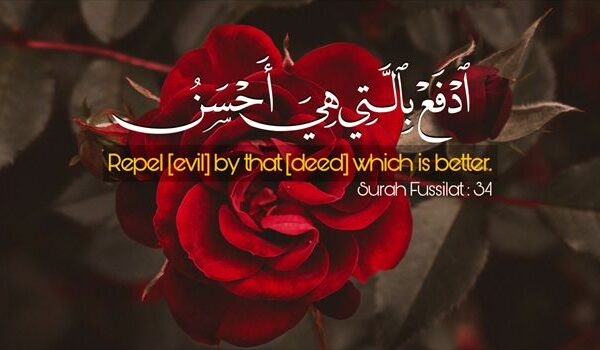
    Editorial: Repel Evil with What is Better

    Once again a depraved and dangerous game is being played, one with the aim of increasing religious tensions across the globe. This time it’s a film that defames the Prophet of Islam. Predictably, too many Muslims have reacted with fierce intensity, and with deadly consequence. We deplore and condemn both the audacious bigotry of the film-maker as well as the inexcusable violence of the protestors. The protesters cannot counter the fraudulent claims of the film, “Innocence of Muslims” — no matter how profane and bigoted it is — with behavior that itself harms the image of Islam and its Prophet, and Muslims everywhere. The treachery of the Islamophobes defies sanity; but that does not justify reactions that disregard all civility.

    The Islamophobic campaign is nothing new in America. It is even worse in Europe. The film made by Nakoula Basseley Nakoula, a California man who was convicted in 2009 of bank fraud, is not the first effort to denigrate Islam and Prophet Muhammad (pbuh), nor will it be the last. In the recent past, there have been countless attempts by Islamophobes to incite a fierce reaction in the Muslim community. In some cases, the provocateurs succeeded in eliciting a violent response. On other occasions, their hate-mongering plots faded into obscurity, especially when Muslims decided to ignore them or chose to counter/correct them through dialogue and other civil means. The results were obviously positive: the challenges soon turned into opportunities where Muslims were able to present the truth of Islam to their fellow citizens.

    Those who seek to inflame passions will continue their brazen incitements, hoping that Muslims will take the bait. They can then say, “See how violent the Muslims are.” The incitements will remain unabated; but Muslims must stop reacting and instead respond to the evil with something that is civil and intelligent, that which puts the bigotry to shame. In fact, the Quran itself commands Muslims to “repel evil with what is better” (surah 41: verse 34). The Quran also says: “O you who believe! Be steadfast in the cause of Allah, bearing witness in equity; and let not a people’s enmity incite you to act otherwise than with justice. Be always just, that is nearer to righteousness. And fear Allah. Surely, Allah is aware of what you do” (surah 5: verse 9).

    The overzealous Muslims, who claim to be defending the honor of the Prophet by attacking the embassies and committing acts of mayhem and destruction, and even murder, need to reflect on how Prophet Muhammad (pbuh) would have responded to a provocation like the film. The Prophet was a man of patience, peace, and mercy. Even though he was attacked and insulted many times throughout his life, he responded with a high-minded and measured perspective, always inclined to compassion and forgiveness, and never acting out of revenge or in a violence-driven way. Engaging in wanton acts of violence and senseless killing can only serve to defile his sublime legacy in the minds of those who don’t know him. Muslims in the Middle East and around the world must remember this: We honor the Prophet by following his example of tolerance and patience in the face of hostility.

    It is true and unfortunate that some biased individuals and organizations are stirring up hatred against Islam and Muslims with unrelenting persistence. The film that is center stage in the current turbulence is a manifestation of exceeding ignorance and the most ignoble foolishness in its scandalous attack against the Prophet, Islam, and Muslims. To make it worse, some people are defending this insanity calling it “freedom of expression.” However, there are huge numbers of people in America and elsewhere who have condemned this film and among them are leaders of various faiths, especially Christianity and Judaism.

    Muslims must think deeply before reacting tempestuously. For overreacting to such provocations will only make things worse. Resorting to violence shouldn’t be an option at any time. The maker and sponsors of the anti-Prophet film have undoubtedly put forth a piece of propaganda promoting the worst kind of bigotry; still, this should never be an excuse to commit any act of violence against a person or any destruction of property.

    We are certainly not suggesting that Muslims stop defending the Prophet. But the best way to defend the Prophet is by conveying to people who he really was, and by emulating his sublime character. We cannot become emotionally overblown and act irrationally every time an Islamophobe insults Islam. We should act with utmost maturity and deal with caution, care, and prudence. The Prophet (peace be upon him) is loved and respected by hundreds of millions of people around the world, and no one can take this veneration from our hearts. So we should not fall into the trap of those who want to use our anger as a way to instill hatred in the minds and hearts of non-Muslims. Indeed, there is no God-conscious faith or love for the Prophet in reacting in a brutal and destructive way.

    We call on Muslims around the world to “repel evil with what is better.” That might entail ignoring a provocation, like the film in question, that is ugly in its purpose but supremely foolish in its content. It might require presenting a reasoned argument as to why some anti-Islam talking point is erroneous. In all cases, repelling evil with what is better demands speech and behavior that is measured, civil, and judicious.

  • Editorial – Helping Hand in Africa: Let’s Care and Share

    Editorial – Helping Hand in Africa: Let’s Care and Share

    People are suffering everywhere in the world today. The suffering of the people of Africa, however, is perhaps the worst, due to both natural and man-made disasters. Poverty, illiteracy, political and ethnic conflicts, drought, famine, epidemics—by any count or measure, the suffering of the people of Africa is beyond description and imagination. The challenges facing this continent, therefore, are daunting, and the responsibility of the rest of the humanity toward the African situation is inescapable.

    What exactly is the scenario of suffering in Africa today? Beyond the well-known fact that Africa has the highest proportion of population in extreme poverty is the reality of the worst drought in 60 years, according to the United Nations, which is affecting at least 10 million people in the Horn of Africa. Some areas are suffering famine and, at the same time, enduring rising food prices. Countries such as Ethiopia, Kenya, Somalia, Uganda, and Djibouti have been affected the most. Then there are other, just as pernicious, perennial problems. For example, 200,000 child slaves are sold every year in Africa. There are an estimated 8,000 female child slaves in West Africa alone (sources: BBC 5 October, 2001 and the Anti-Slavery Society, a British organization committed to the worldwide abolition of slavery). About 12 to 14 million African children have been orphaned by HIV/AIDS (source: World Bank/UNICEF). Nearly 2 million children under 14 years of age are HIV positive (source: UNICEF). A startling 43 percent of children in Sub-Saharan Africa do not have safe, accessible drinking water (source: UNICEF); and 64 percent of children in Sub-Saharan Africa do not have adequate sanitation (source: UNICEF).   Four million people are still food-insecure in Somalia alone, and 3.7 million Somalis are in desperate need of health care (source: United Nations). The list of problems goes on and on.

    If you are not merciful to people, Allah will not be merciful to you

    What should be the role of Muslims, then, toward the suffering of their African brothers and sisters? Is there any justification for us to be indifferent? The answer is absolutely “No”! This moral consciousness galvanizes countless numbers of Muslim individuals and many Muslim charitable organizations, such as Helping Hand for Relief & Development. They are providing great services for distressed humanity all over the world, including Africa. We commend their services and as a gesture of appreciation, we have provided some coverage on the programs and services of HHRD in Africa in this issue of The Message International. We hope this will inspire many others to contribute to the efforts in whatever way they can.

    The issues that cause or exacerbate the suffering in Africa cannot be ignored. How can we, the Muslim community in other parts of the world, turn a blind eye while all over Africa there are children being orphaned at a rate that history has never seen before? In Qur’an, in Surah Al-Fajr, Allah SWT calls to the people of ignorance who claim to adhere to a religion that brings them close to Allah: “No indeed! You do not treat the orphans with respect nor do you urge one another the feeding of the poor and you devour the whole of inheritance greedily, and you love wealth with all your hearts” (Al-Quran 89:17-20). The Qur’an also describes a scene from the Day of Judgment in which the righteous people in their heavenly Gardens ask those who are being engulfed by the fires of Hell what the reasons are for their punishment. Among the reasons cited are neglecting the rights and needs of the poor, allowing people to suffer with hunger or thirst, lack of shelter, or other adversity, and turning callously away from those afflicted and miserable human beings. Indeed, the moral mandate of Islam requires that a Muslim be kind, charitable, and merciful to his/her fellow human beings. Love for God veritably entails loving and serving humanity.

    The Qur’an further reminds us, saying: “You cannot attain to righteousness unless you spend (in charity) out of what you love” (Surah Al-Imran, 3:92).  In other words, there is no piety without charity. Prophet Muhammad (pbuh) also exhorted: “The highest level of the intellect, after belief in God, is to be of service to the creation.”

    It should be mentioned that foremost among God’s attributes are mercy and compassion (in Arabic, Rahman and Rahim). The Qur’an declares that “God has enjoined upon Himself (the rule of) rahmah” (6:12). The root meaning of Rahman and Rahim is “womb” which characterizes a place where something is formed, nourished, and protected. The family is a place where human ties are formed and nourished and protected, whether a single family unit or the entire human family. Indeed, our local and global human ties must be characterized by the compassion that Allah SWT enjoins upon Himself and us.

    One of the practical purposes of fasting during the month of Ramadan is “to help one empathize with the hunger pangs of those less fortunate, to enhance sensitivity to the suffering of others, and to develop compassion for the poor and destitute.”

    Prophet Muhammad (pbuh) is referred to by the Qur’an as the Mercy to the world (21:107); and in one of his sayings, the Prophet (pbuh) warned the believers: “If you are not merciful to people, Allah will not be merciful to you.” May Allah SWT guide us and help us to be mindful and dutiful toward hapless humanity.

  • Caricature and Hysteria Over Shariah Must End

    Caricature and Hysteria Over Shariah Must End

    An organized minority can act and appear like a majority. This is part of our high school civics   knowledge. One of our founding fathers—Benjamin Franklin—also reminded us about it. That only a few individuals can mislead and literally fool the entire nation by manufacturing a threat—one which has no credible basis whatsoever—is nonetheless surprising; yet most people in our society don’t seem to be aware of this manipulative exercise, unfortunately. The recent hysteria over shariah in America is the case in point.

    Muslims constitute less than two per cent of the U.S. population. Among them, the number of practicing Muslims is even much less. But what we are being told day and night is that “sharia is taking over America.” The absurdity of this accusation is evidently clear: in order for shariah to become law of the land, majority people would have to support this.Then we must ask: who is behind the “No Shariah” campaign and what is the motive? The New York Times reports: “It is the product of an orchestrated drive that began five years ago in Crown Heights, Brooklyn, in the office of a little-known lawyer, David Yerushalmi, a 56-year-old Hasidic Jew with a history of controversial statements about race, immigration and Islam. Despite his lack of formal training in Islamic law, Mr. Yerushalmi has come to exercise a striking influence over American public discourse about sharia.” (Andrea Elliott, “The Man Behind the Anti-Shariah Movement”, NYT, July 31, 2011) Michael Collins Piper of American Free Press also writes: “Working with a cadre of conservative public-policy institutes and former military and intelligence officials, Mr.Yerushalmi has written privately financed reports, filed lawsuits against the government and drafted the model legislation that recently swept through the country—all with the effect of casting shariah as one of the greatest threats to American freedom since the Cold War.”

    Fear Inc., The Roots of the Islamophobia Network in America, another important study on the subject reveals that the “No Shariah” campaign is basically comprised of five interlocking elements. The first is the funding source: only seven contributors have given nearly $43 million to anti-Muslim organizations and think tanks in the past decade. The second constituent part is played by five Islam-bashing scholars and policy experts and their organizations. The third element in the anti-shariah campaign is the religious right, and the fourth is comprised of the media enablers. The fifth component involves political players like Michele Bachmann, Herman Cain, Newt Gingrich, and their ilk.

    What do these people say about shariah? Anti-shariah campaigners suggest that the shariah law will replace the American constitution and American laws; that Muslims are using stealthy techniques and agendas with the express aim of “destroying Western civilization from within”; that shariah oppresses women and institutes harsh penal laws. The proponents of “No sharia” campaign are imploring the legislators both at the state and federal level, as well as the presidential candidates, “to protect the constitution by repudiating shariah law.”

    The fact, however, is that shariah, historically, has been considered and made use of when relevant or suitable in American courts, in exactly the same way as other religious and foreign laws have been applied, with the same objective of serving the cause of justice for litigants from a particular religious or foreign background or community, and yet, wholly consistent with the law of the land. As professor Abed Awad has rightly mentioned: “Shariah is protected by the 1st Amendement and any attempt to restrict it is unconstitutional… As long as a provision in Jewish law, canon law or shariah does not offend our constitutional protections and public policy, courts will consider it.” In fact, a federal court has recently held that a ban on shariah would likely violate the Supremacy Clause of the Constitution and the First Amendment.

    Since confusions and misgivings about shariah abound, a few notes on the concept and contents of shariah would be of help. Shariah literally means way or path–Muslims apply the shariah in their lives every day when they pray, fast or carry out their religious obligations. Shariah is not just a set of punishments. It is comprehensive code of conduct that guides Muslim beliefs and practices. The interpretation of Shariah is considered to be valid so long as it protects and advocates for life, property, family, faith, and intellect.  Ibn Qayyim al-Jawziyyah, one of Islam’s leading scholars, said, “Shariah in its entirety is justice, mercy and wisdom. Any rule which transforms justice to tyranny, mercy to its opposite, the good to the evil, and wisdom to triviality does not belong to the Shariah.”

    Abraham Foxman, National Director of the Anti-Defamation League (ADL) rightly says “concerns about a ‘creeping Sharia law’ are the stuff of pure paranoia.” He also says that these are the results of “pernicious conspiracy theories.” Indeed, the main purpose behind the anti-shariah campaign is to generate Islamophobia and the perception that Islam and Muslims shouldn’t be part of the American society.

    Islamic Circle of North America (ICNA) therefore has taken up the task of dispelling the myths about shariah and communicating the truth to the American public. To this end, ICNA has launched a year-long nation-wide campaign under the theme “Defending Religious Freedom — Understanding Shariah.” Our purpose is to present the facts through open dialogue. We sincerely believe that truth has its own power which, if presented accurately and faithfully, will prevail over falsehood. Our fellow Americans deserve to know the truth and we must not fail them.

  • Syria: The Iron Hand of Injustice

    Syria: The Iron Hand of Injustice

    When Kofi Annan, the former Secretary General of the United Nations and Special Envoy to Syria, recently embarked on his peacemaking mission to Syria, most Syria watchers dubbed his task “mission impossible” due to the regime’s history of dogged entrenchment and defiance of world opinion. The skepticism seemed more than justified when the Assad regime rejected Annan’s appeals for unimpeded access to trouble spots by foreign observers and unrestricted cross border movement by international aid organizations. Since March 2011, the Assad regime has killed over 8,000 men, women, and children in a brutal attempt to suppress anti-government protests that simmered to a boil in the wake of the Arab Spring and regime changes in Tunisia, Egypt, and Libya. With over 7,000 registered refugees in North Lebanon alone, and an additional 4,000 south of Beirut, Syrians are attempting to flee to neighboring countries for safety. The plight of these victims is further complicated by the complex geo-political dynamics of the area where sectarian and tribal considerations often supersede government loyalty.

    Since 1963, Syria has been ruled by the Assad family who are members of the 12 percent Alawite community, while 74 percent of Syrians are Sunni Muslims. Only ten percent are Christians, three percent are Druze, with statistically small populations of Ismailis and Yezidis, and a few Jews. Alawites claim to be a part of mainstream Shi’ism although they believe in the divinity of Ali ibn Abu Talib, the son-in-law and cousin of Prophet Muhammad (peace be upon him).The sect synthesizes tenets of Islam, Christianity, and Gnosticism and believes matter is evil and that emancipation comes through esoteric knowledge of spiritual truth, Zoroastrianism, and neo-Platonic thought. Alawites also believe that the five pillars of Islam are allegorical and not required beliefs and duties.

    Political rule of Syria was established by Hafez al-Assad in 1963and has remained until now the Assad family business. Born in 1930 in the western Syrian village of Qardaha to a poor uneducated family, Hafez al-Assad was a young British Meteor jet pilot in the Syrian military when he joined the Arab nationalist Baath Party. He moved through the military ranks quickly, going from the rank of major to general within one year. Assad promoted himself to president in 1970 and then established an extensive network of spies, collaborators, and informers to work in conjunction with heavily-armed militias and paramilitary units. His unbridled brutality was on display in 1982 when he ordered the slaughter of approximately 70,000 men, women, and children in the Syrian city of Hama when they declared the city an Islamic state and voiced their independence from the Syrian government.

    To guarantee loyalty, Assad filled key political and military positions with Alawites, heavily favoring social and economic development in areas populated by his sectarian loyalists. Assad made strategic alliances in the business sector with rich entrepreneurs in Damascus and Aleppo, thereby placing a stranglehold on the economy and ensuring that his family would be the primary beneficiaries of Syrian commercial activity. Assad provided for the minimum needs of the city dwellers while grossly neglecting the countryside, creating widespread disaffection for his iron-fisted rule.

    When Hafez al-Assad died in 2000, his son Bashar al-Assad, was summoned by the family to return from London where he was a practicing, Western-educated ophthalmologist. Initially, the 34-year-oldBasharwas not considered the consensus choice by his relatives to run the “family business.” That distinction rested with his brother Maher, reputed to reflect more closely their father’s temperament and penchant for brutality. The family, however, ultimately selected Bashar as the nation’s next chief executive; but the matriarch of the family business is the wife of the late Hafez and mother of Bashar and Maher, Anisa Makhlouf al-Assad. The Syrian people had high expectations for Bashar as he immediately shut down the notorious Mezze Prison shortly after taking office, gradually releasing thousands of political prisoners and lifting the decades-long state of emergency for a brief period. Bashar’s flirtation with liberal rule proved to be short-lived as he reacted to government protestors with increased violence, detention, and torture.

    An Opposition Coalition is Formed

    The Syrian National Council (SNC), formed in 2011 during the uprising and currently based in Istanbul, Turkey, is presently the primary opposition group to the Assad regime. The SNC National Charter calls for an end to the rule of Syria by the al-Assad family and the establishment of a modern, civil, democratic state. Some Syrians and international observers, however, have voiced suspicion about the independence of the SNC as it relates to agendas of certain other countries. There are also doubts about Burhan Ghalioun, the group’s present leader and whether the SNC can mature into a coherent political opposition.

    The group has tempered or changed many of its earlier pronouncements like not wanting to establish a no-fly zone or have direct military intervention by the international community. But the brutality of the government’s tenacious cling to power has astounded even the most anti-Assad opposition leaders. Yet, as previous Western interventions in countries like Iraq and Afghanistan have demonstrated, human carnage can increase when outside nations get involved in civil uprisings. All agree that the slaughter of the people of Syria must stop, but genuine intentions by those who intervene to alleviate the suffering of the people must not come at the expense of the sovereign right of the nation to safeguard its Islamic identity and its time-honored culture and traditions. There are no easy solutions or ready-made instructions on how to successfully remove brutal dictators, but the civil and political rights for the people of Syria and other similarly conflicted nations must be restored.

  • Spiritual Awakening: Beautifying the Heart and Life

    Spiritual Awakening: Beautifying the Heart and Life

    We, human beings, of past, present and future, are in absolute need of Divine grace and the opportunity to earn His pleasure. Our human power — no matter how great — can’t give us immortality and eternal bliss. With or without our consent, we are heading to the clutches of death. But as we all know, death is not the end. Death is simply the start of a journey from this world to the Divine presence. To God is our ultimate return and on the Great Day of Final Judgment, we will be asked about, and held accountable for, our thoughts, intentions, feelings, motives, and actions. Not one human soul can escape this reality, no matter how much he denied during his lifetime this meeting with the Lord, the Almighty God.

    Yet how many of us lead our lives with full consciousness of this reality? Why can’t we keep this awareness as we ought to do? Why do many of us fail to elevate ourselves? God Almighty, our creator who knows all of our affairs—hidden or manifest — tells us in the Qur’an: “Verily, he truly prospers who purifies himself and glorifies the name of the Guardian-Lord, and (lifts his heart) in prayer. But you prefer the life of this world, whereas the life hereafter is better and ever- lasting. This indeed is what is taught in the former scriptures, the scriptures of Abraham and Moses” (Surah Al-A’la: 15-20).These verses of the Qur’an are very revealing and eye-opening, and therefore require further elaboration so that we might deeply contemplate and comprehend their meaning.

    Prophet Muhammad (pbuh) said, “If someone wants to know what position he enjoys in the eyes of God, he has only to look at what place he gives to God [in his heart and life].”

    The first and foremost point is the emphasis on purification—cleansing ourselves from all manner of defilement. We are created in a very complex fashion and our minds, hearts, and physical bodies are in constant fluctuation and vulnerable to imbalance. Likewise, our faith increases and decreases, and so our manners in dealing with other people can be of greater or lesser quality. Therefore, it’s a matter of ongoing struggle, to engage in the process of contemplation and self-examination, continually striving to perfect our manners in our relationship with ourselves, with others, and above all, in our relationship with our Lord. This battle of our inner forces, of the heart and the ego, is the scene for the “testing period” here on earth. As God the Almighty states in the Qur’an, it is “He who created death and life in order to test which of you is best in deed”(Qur’an 67:2). Prophet Muhammad (peace be upon him) also reminded us: “Be heedful! There is a piece of flesh in your bodies that when it is well, the rest of you is well, and when it is sick, the rest of you is sick. Know that it is the heart” (Bukhari and Muslim).Veritably, a heart is healthy when it is cleansed of wrongful concerns and heedless impulses, those being put right by the practice of good morals and genuine surrender to Allah SWT.

    It is the case that every soul is created in a pure form, but as we live and engage in human society, our personalities are shaped by multiple influences. Some are positive and some are negative. Therefore, we have to consciously strive to discern what elevates us and what debases us, and use our God-given faculties to cultivate the best elements within ourselves and eliminate the rest. Only a sound heart will find entry into Paradise.

    The second point we can glean from the above verse is that the constant remembrance of God is the key to spiritual elevation and success. Prophet Muhammad (pbuh) said: “If someone wants to know what position he enjoys in the eyes of God, he has only to look at what place he gives to God [in his heart and life]” (Hakim). Indeed, a God-oriented life for man starts by his remembering God and following His commandments in every sphere of his life. The remembrance of God should never be absent from our hearts and minds no matter where we are and whoever or whatever we are dealing with. Indeed, successful will be the ones who earn God’s grace on the Day of Judgment, whose balance of good deeds will be weightier than that of their bad deeds; and that only proceeds from a cultivated habit of remembering God and what He has ordained.

    The third point is that the attitude and approach toward this worldly life must be proper. We should not sacrifice Akhirah (the life hereafter) which is permanent and real, for Dunya (this worldly life) which is transitory and illusionary. As Hasan Al-Basri so rightly and eloquently stated, “What is this world but a dream that a sleeper sees—he delights in it for a few moments, and then wakes up to face reality.”The “reality” he refers to is accountability in the Hereafter. Along these same lines, the Prophet (peace and blessings of Allah be upon him) advised us that we should have “an indifference towards the abode of delusions.” Indeed, “disconnecting one’s heart from the life of this world,” as Imam Ghazali has pointed out, “is not fully achieved unless one also possesses a balanced character and a sound and upright heart.” Ibn Abbas (may Allah be pleased with him) reported that the Prophet (pbuh) said, “Good character and morals transform errors as water melts ice, while bad character alters good deeds as vinegar cuts honey” (Tabarani and Baihaqi). Therefore, when we err, we shouldn’t lose sight of the fact that every mistake is an opportunity and a signal that it is time to grow in our relationship with Allah (SWT). And as we turn to Him walking, He turns to us rushing. May Allah (SWT) help us experience this spiritual awakening and enable us to beautify our hearts and lives with His Divine Light. Ameen.

  • African American Muslims and the Social Justice Movement

    African American Muslims and the Social Justice Movement

    The Quran and Sunnah (authentic traditions of Prophet Muhammad, peace be upon him) are clear in articulating the purpose of revelation as being the liberation of human beings from the false worship of anything other than the Creator and the establishment of justice for all creation, including the human and natural worlds. According to the Quran, the most definitive historical account of the transcendent struggle between truth (haqq) and falsehood (batil), societal justice must be based on divinely revealed principles if human efforts are to be beneficial in both this world and the life to come. Through total submission to this Divine dictum, mankind positions itself to be expunged of the soul-deforming conditions of racism, sexism, classism, religious bigotry, and economic exploitation. The message of all of the Prophets was that of worshipping the One God only and establishing the inherent dignity and humanity of all human beings. As a result, the first and largest group to affirmatively respond to the call of a prophet were the poor and oppressed.

    Slavery in History, Arab Society, and Islamic Practice

    Slavery, one of the oldest human practices of oppression, evolved to be the most repugnant institution in human history. Although it was not until the advent of the trans-Atlantic slave trade that race became the exclusive criterion for subjugation in chattel slavery, pre-Islamic Arabs similarly associated the worst forms of enslaved labor as being the sole domain of blacks. The number of sub-Saharan African blacks enslaved by Arabs during the trans-Saharan slave trade is commonly believed to be approximately equal to the number of black Africans enslaved during the 376 years of the trans-Atlantic slave trade. Prophet Muhammad, peace be upon him, did not completely eliminate slavery from Arab society, but the economic and social incentives to keep slaves were removed by Islam. Abu Dharr, one of the illustrious companions of Prophet Muhammad, peace be upon him, when asked why one of his slaves dressed in clothing like his, responded that he heard the Messenger of Allah (pbuh) say, “Your slaves are your brothers whom Allah has placed in your hands. He who has his brother in his hands must feed him what he eats; clothe him with that which he wears. He should not burden him with that which is beyond his capacity, but if he entrusts him with that, he should lend him a hand.” In his Farewell Sermon, delivered on the occasion of Hajj, Prophet Muhammad warned, “…Neither does an Arab have excellence over a non-Arab. Neither does (one with) white skin excel over (one with) black. But, of course, excellence is only on the basis of taqwah (God-consciousness, fear of God, righteousness).”

    Slavery, one of the oldest human practices of oppression, evolved to be the most repugnant institution in human history.

    Of the untold millions forcibly extracted from their homelands during the trans-Atlantic slave trade, historical evidence suggests that one of every third African enslaved in the United States was a Muslim. Great dignity was conferred upon luminary companions of Prophet Muhammad (pbuh) such as Bilal ibn Rabah, a former Abyssinian (Ethiopian) slave who became Prophet Muhammad’s (pbuh) muezzin (caller to prayer), close companion, and treasurer of the Islamic state; Umm Ayman, the African woman referred to by Prophet Muhammad (pbuh) as “My Mother” and a “Woman of Paradise”; the unnamed Black woman who chose to be patient with her epileptic condition and was told by the Prophet (pbuh) that she would gain Paradise — such dignity decries the humiliations and affronts systematically meted out to African Muslim slaves in the United States. As a matter of fact, King Ferdinand and Queen Isabella of Spain, the patrons for the voyages of Christopher Columbus, issued a royal edict in the early 1500s making it a crime to transport African Muslims into the Western Hemisphere, a crime that could be punishable by death. In fact, British and Spanish slavers attempted to eradicate the practice of Islam or Arabic speech among slaves even before the unfortunate humans reached western shores. Slaves who exhibited unrelenting resistance to their new state of dehumanizing servitude were typically taken to various Caribbean islands for “seasoning,” a process of breaking the slaves’ will and craving for freedom. Seasoning involved unspeakable acts of barbarity against the slaves in an attempt to break their spirit. Muslim slaves, strong in their faith and uncompromising in their refusal to submit body or soul to any master but Allah SWT, were often identified by their enslavers as being more rebellious and inclined to attempt escape. Yet, again probably due to their religion and its emphasis on self-governance and industriousness, they were also seen as very competent when assuming responsibilities on the plantations.

    Slave Rebellions, Revolts, and Conspiracies

    Runaway slave advertisements during the colonial period frequently mentioned slaves with obvious Muslim names such as Osman, Amir, and Samba, a common Muslim name in West Africa. Contrary to the popular American narrative that depicts slaves as contented, happy, child-like figures, historians like Herbert Aptheker document over 200 known slave rebellions, revolts, and conspiracies, the largest of which was the Black Seminole Rebellion from 1835 through 1838. Runaway slaves from Georgia and Alabama found refuge with the proud, independent Seminole Indians of Florida, intermarrying and fighting alongside them against the U.S. Army. The Seminoles, the only native nation that was not forced to sign a debasing treaty with the United States government, incorporated African Muslim styles of dress and numerous Muslim practices into their culture, strongly indicating the presence of escaped Muslim slaves in their ranks.

    Countless African Muslim slaves maintained their faith throughout their horrific sojourn in captivity in a foreign land.

    According to research done by the Islamic History Project Group and compiled in the book A History of Muslim African Americans, “…in 1742, a group of Moors (code for African Muslims) was accused of starting a riot in New York City. Twenty-one of the accused were killed or lynched and 23 were banned from New York… In the 1700s, a group of Muslims lived among the Mohican in Connecticut… One of the children of Uncas, immortalized as the Last of the Mohicans, had a son named Mohamet.” In 1839, a ship transporting 53 West Africans destined to be sold as slaves, docked in the port of Havana, Cuba. After being sold, the West Africans were placed as human cargo on the slave ship Amistad. After enduring inadequate food rations, merciless beatings, and disgrace by the ship’s captain and crew, one of the slaves, a young African by the name of Cinque, secretly plotted with the other slaves to take over the ship and sail back to Africa. Taking advantage of stormy seas, Cinque and the other slaves seized control of the ship and demanded to be returned to Africa. Unfortunately, they were tricked into sailing straight for America by the two ship’s officers who survived the rebellion, and were then captured by a United States naval vessel. Tried in a court of law, the slaves were granted their freedom, and returned to the African continent. Cinque was reportedly not a Muslim, but the Steven Spielberg film, Amistad, in highlighting the historical fact that Muslims were on board the ship, showed them collectively praying, notwithstanding that they were chained together.

    There is also solid anecdotal evidence, still in the process of being historically substantiated, to suggest that the leader of the famed 1822 slave rebellion in Charleston, South Carolina, Denmark Vesey, was a Muslim. The evidence contends that he found a platform to espouse his liberation theology through the more-acceptable-to-whites vehicle of the Christian Church. And the Vesey rebellion was impressive. According to Thomas Higgison, the author of an article on Vesey in an 1861 edition of The Atlantic Monthly Magazine, the revolt was “The most elaborate insurrectionary project formed by American slaves. In boldness of conception and thoroughness of organization, there has been nothing to compare it with.”

    Attempts to Eradicate Islam Amongst Slaves

    American enslavers and plantation owners were far more inclined than their European counterparts to punish slaves for practicing any visible remnants of Islam. For example, the Muslim slaves in Bahia, Brazil were in such sufficient numbers and social proximity to each other that they were able to wage jihad and successfully, although for a short period of time, declare an Islamic state in 1835. Contemporary research shows that the revolt emerged from a  profound conviction of Islamic belief and principle in establishing a just social order, this encompassing and subsuming the motive to free themselves and others who were enslaved.

    During the decades of the mid to late 1960s and throughout the 1970s, African American Muslims were the dominant force on the American Muslim landscape.

    Countless African Muslim slaves maintained their faith throughout their horrific sojourn in captivity in a foreign land. The bloody conflict known as the Civil War resulted in the legal dissolution of the system of chattel slavery in the United States. Muslims, such as Muhammad Ali ibn Said, distinguished themselves in battle fighting on the side of Union forces against Confederate troops. Said was a member of the 55th All Colored Regiment of the State of Massachusetts, formed after the 54th All Colored Regiment which was immortalized in the dramatic film Glory starring Denzel Washington. With the end of legalized slavery in the United States in 1865, and during Reconstruction, a relatively brief period from 1865 until 1877,  the nation flirted with more liberal political and social involvement for freedmen. However, the United States reverted to virulently anti-black, exclusionary laws, policies, and practices first euphemistically called Black Codes and later labeled Jim Crow.

    Jim Crow and Institutional Racism

    The racial apartheid practices of Jim Crow would remain the law of the land for almost another century until the U.S. Congress passed the 1964 Civil Rights Bill. From 1890 to 1920, it is conservatively estimated that approximately 5,000 African Americans were lynched by white supremacists, mostly in the South. African Americans desperately yearned for respite from pain, suffering, and systematic denial of the most basic freedoms extended to even the most recent immigrants. In 1850, Presbyterian missionaries brought a brilliant young man from St. Thomas, U.S. Virgin Islands, to the United States to attend theology school. Because of his dark complexion and the stifling system of institutional racism in America, Edward Wilmot Blyden was not only rejected for admission to the theology school, but had to flee the country to Liberia to avoid being forcibly placed into slavery. Blyden became intrigued by the Arabic language, Islam, and the Muslims he encountered in Liberia and Sierra Leone. He went to Syria to study and master the Arabic language. In his classic work, Islam, Christianity and the Negro Race, Blyden extols the virtues of Islam, specifically its apparent absence of racism and affirmation of the positive aspects of African culture. There is scant historical evidence that suggests that Blyden ever embraced Islam and appears to have died as a Presbyterian minister, albeit one with tremendous respect for Islam. Blyden was a forerunner among African and African American Christians who viewed Islam as a viable option for struggling people of African descent.

    Toward Universal Rights: Garvey to Malcolm X and Beyond

    At the turn of the 20th century, arguably the largest ever membership organization of African people was formed by the native Jamaican, Marcus Mosiah Garvey. Even though Garvey was Christian, he acquainted Africans throughout the Diaspora, especially the United States, with Islamic concepts and activist Muslims. Garvey was highly influenced by Duse Muhammad Ali, an Egyptian/Sudanese Muslim who was founder and editor of the journal African Times and Orient Review, whom he met in London. The slogan of the Universal Negro Improvement Association (UNIA), founded by Garvey, was “One God, One Land, One Destiny,” a theme that Garvey attributed to the Muslim, Ali. A number of proto-Islamic or even pseudo-Islamic organizations, such as Drew Ali’s Moorish Science Temple of America and Elijah Muhammad’s Lost Found Nation of Islam attempted to mobilize African Americans to reclaim their identity and glorious history by casting off the cultural and religious imperiousness emanating from the White church, and identifying with their “original religion,” Islam. These efforts were made more attractive to African Americans when the crimes against black people by the “White Man’s Religion” were catalogued, and the racism-free accounts of the practice of West and North African Muslims were highlighted.

    It is, however, the opportune time for a unified effort by Muslim individuals and organizations to champion social justice issues in a thoughtful, systematic, and balanced way.

    The disseminations by these groups, as well as subsequent authentic Islamic efforts in the African American community, highlighted Islam as a cornerstone for the social and religious redemption of the Black community, as well as for America in general. Malcolm X, El Hajj Malik Shabazz, was undoubtedly the foremost exponent of the social justice gospel of Islamic activism and principled struggle against all manifestations of oppression, particularly against the “Dark World.” Malcolm uniquely combined the qualities of master orator, inspiring mobilizer, and skilled organizer. As the National Spokesman and Organizer for the Nation of Islam for 12 years, Malcolm adeptly appealed to the most uneducated elements and social outcasts in Black American society while simultaneously attracting the intellectual curiosity and support, if not outright organizational commitment, of better educated Blacks. However, it was not until Malcolm’s official departure from the organizational constraints of the Nation of Islam in March 1964 that he was able to broaden his influence and appeal to the intellectual elite of Black social activists.

    He also provided an ideological foundation for the globalization of Black activism in the 1960s by broadening the objectives of the civil rights movement to include that of human rights, and Pan-Africanism and Pan-Islam. Dr. Martin Luther King, Jr., despite his life being tragically cut down at the age of 39, had realized and begun to articulate the idea that the civil rights movement was actually a universal human rights struggle. African American college students, intellectuals and scholars, and social activists—including former Black Panther Party leader Dhoruba bin Wahad; former Student Non-Violent Coordinating Committee Chairman (SNCC) H. Rap Brown (Imam Jamil Abdullah Al-Amin); revolutionary poet Askia Muhammad Toure; Revolutionary Action Movement founder, Max Stanford; Black Panther martyr Zayd Shakur— embraced Islam as a social change vehicle. This, in part or in full, was due to the dynamic influence of Malcolm X. Others like Huey Newton and Bobby Seale, co-founders of the Black Panther Party, Howard Fuller, the founder of Malcolm X University in Durham, North Carolina, and many activists for social change in the African American community were profoundly influenced by Malcolm X.

    Changing Demographics

    During the decades of the mid to late 1960s and throughout the 1970s, African American Muslims were the dominant force on the American Muslim landscape. During this period, immigrant Muslims were typically absent from public discourse and community action on domestic social justice issues, remaining socially inconsequential during this turbulent era. Hence, the mantle of Muslim activism was borne virtually alone by African American Muslims, a phenomenon that attracted large numbers of African American university students and other activists. As the number of African American Muslims grew, prison inmates began to embrace orthodox Islam, where once the prisons were almost the exclusive recruiting ground for the Nation of Islam. The decade of the 1980s ushered in an explosion in the number of large Islamic Centers founded and run by immigrant Muslims, located primarily in suburban America. Far from the urban centers where African American mosques and Muslims were principally located, these centers facilitated an exodus from the urban core of immigrant, and even some African American, Muslims.

    The social dysfunction and oppression that once provided some of the impetus for inner city dawah (inviting to Islam) and relief activities, gave way to an out-of sight, out-of-mind mentality. While these suburban Islamic Centers accommodated the growth of the Muslim population, both immigrant and African American, in countless locations across the country, they nonetheless failed to understand or address many of the unique challenges and complexities confronting African American Muslims particularly, and the inner city population in general. Many African American Muslim professionals and other skilled, highly-motivated individuals were assimilated into these suburban Centers so that the affiliation with, and financial support of, a great number of urban mosques dwindled and they were closed down. African Americans witnessed a similar co-opting of affiliation or patronage in the aftermath of the civil rights movement when newly-passed legislation made it possible for Blacks to give their business to what had been Whites Only establishments, resulting in the closure of a vast majority of Black businesses when the more highly capitalized White-owned commercial options, were available.

    Uniting to Champion Social Justice Issues

    The combination of the closure of inner city mosques, African American Muslims moving on from inner city issues to more global ones as addressed by suburban Centers, and the neglect of issues of urgent concern to African American Muslims, have all contributed to a virtual abandonment of hot-button issues affecting African Americans and this country. One such issue is the more than 2.4 million human beings who are incarcerated in the United States, a number not seen in any other country in the world. The majority of those incarcerated are African Americans and, to an increasing degree, Hispanic. The Prison Industrial Complex in America has the financial incentive to keep expanding this industry of servitude. Michelle Alexander asserts in her scathing condemnation of the Prison Industrial Complex and criminal justice system, The New Jim Crow: Mass Incarceration in an Age of Color Blindness, that more African Americans are incarcerated in federal penitentiaries, state prisons, and local jails than the number of slaves in the U.S. in 1850, 15 years before Emancipation. The 13th Amendment to the U.S. Constitution prohibits slavery and indentured servitude except when persons have been convicted of a crime. Muslims as well are increasingly being incarcerated as a direct result of entrapment and targeted prosecution, but except for the extraordinary efforts of a handful of individuals and organizations, Muslims in America seldom expend resources for the reform of these issues related to the criminal justice system.

    It is, however, the opportune time for a unified effort by Muslim individuals and organizations to champion social justice issues in a thoughtful, systematic, and balanced way. This goes hand-in-hand with dawah efforts. ICNA has made tremendous strides in this regard through programs like Why-Islam, ICNA Council for Social Justice, ICNA Relief, and Helping Hand. The future of Islam in the United States will be determined by how resolute we are in crossing all false  lines of division, for the betterment of Muslims and all the citizens of this land. And Allah knows best.

  • Editorial: Race Against Racism and Injustice

    Editorial: Race Against Racism and Injustice

    Speaking out against racism and injustice is easy, but keeping oneself free from their poisons is not as simple.  Too often people denounce racism not because they abhor it as personal belief, state policy, or humankind’s pathology of hate and thus want to eliminate its scourges from society once and for all. Rather, a public stance against racism is often dictated by utilitarian consideration and calculation. After all, the social, political and even financial cost for being exposed as “racially insensitive” is steep in America today, as evident in many downfalls from political office. Our politicians therefore are keen to craft their language with anti-racist rhetoric, seeking always to maximize their political gains and support. The worst case is an ethos in which people speak the language that is politically correct, but they continue to feel and act otherwise. Their formula is very simple, as described by K. Taylor in Civil rights and civil wrongs: Racism in America today: “…(they) Acknowledge that the problem exists, while actively undermining any effort to deal with the problem.” Such dissembling is often concealed by high-minded sentiments. Former president George W. Bush while visiting Africa in 2003, said in one of his speeches: “My nation’s journey toward justice has not been easy and it is not over. The racial bigotry fed by slavery did not end with slavery or with segregation. And many of the issues that still trouble America have roots in the bitter experience of other times.” Yet, Bush and his party stalwarts continued dismantling affirmative action and legislating discriminatory policies that put   minorities at ongoing disadvantage and caused great despair in so many aspects of their lives.

    Racism is primarily a psycho-moral and spiritual problem. Therefore, the pathology of racism requires a spiritual remedy at both the individual and collective levels

    Racism has many forms and faces. We know it can be blatant or subtle and disguised. Thus it’s no wonder that the ascendancy of an African American man to the highest office of the United States didn’t dismantle the racist structure of the society. While Barak Obama’s election is certainly an historic achievement and milestone, we have to face the ugly reality that racism still manifests in treacherous ways and at all levels of our society.  As a position paper on racism put out by the Australian Psychological Society describes, “Modern racism still involves a rejection of minority groups and discrimination, but is now framed in terms of values and ideology rather than a straightforward dislike. Research has demonstrated that the modern variant of racism is more insidious, entrenched, resilient and difficult to counteract.”
    So, how does humanity climb out of this xenophobic hell-hole? The answer begins to emerge when we consider that despite all the historic legislation and policy changes put in place to address racial injustice, our society continues to suffer from the disease. Indeed, racism is primarily a psycho-moral and spiritual problem, so “while man’s actions can be legislated, their hearts and fears cannot.” Therefore, the pathology of racism requires a spiritual remedy at both the individual and the collective levels.

    We pray that our fellow citizens and the whole of humanity come to recognize that a spiritual approach is needed. Then we might all open our minds and hearts to the spiritual cure Islam freely offers. The Qur’an declares: “O Mankind, We created you from a single (pair) of a male and a female and made you into nations and tribes, that you may know each other. Verily the most honored of you in the sight of God is he who is the most righteous of you” (Qur’an 49:13). This is divine declaration that no individual or group is superior to any other, except by way of virtue and rectitude of action.
    Prophet Muhammad (peace be upon him) emphasized this principle: “O people, remember that your Lord is One. An Arab has no superiority over a non-Arab nor a non-Arab any superiority over an Arab; also a black has no superiority over a white, nor a white any superiority over a black, except by piety and good action (taqwa). Indeed the best among you is the one with the best character (taqwa)” [excerpted from the Prophet’s Last Sermon].

    This is not a glib slogan; it’s a genuine reminder and warning, for its rejection is tantamount to abandoning Islam and its non-compliance a return to jahiliyyah (darkness, ignorance). In any case, the consequence is the sin of vain glory and ultimate destiny in the hellfire. The Prophet (pbuh) thus warned: “Whoever has pride in his heart equal to the weight of an atom shall not enter Paradise.” A companion asked: “What about a person who likes to wear beautiful clothes and fine shoes,” and the Prophet said: “God is beautiful and likes beauty, while pride is rejecting the truth because of self-esteem and looking down on other people” (Muslim). The Prophet also said: “Let people stop boasting about their ancestors. One is only a pious believer or a miserable sinner. All men are sons of Adam, and Adam came from dust” (Abu Dawud, Tirmidhi).

    With such clear and coherent wisdom the Prophet (pbuh) purified his society from racism with its attendant injustices. To likewise cleanse the soul of our nation, we must embrace and fulfill the divine teachings, unifying hearts and minds against the infernal menace of racial supremacism. May God Almighty enable us to do this!

    Ameen.

  • New Media Trends of Social Networking

    Social media sites offer a virtual space where people can foster discussion and promote open dialogue while reaching out to a broad audience. Facebook, Twitter, YouTube, and various other social media platforms provide an interactive space where one can share perspectives on prominent issues or acquire detailed information about some niche hobby.  These platforms give people a voice, especially when and where communication and free speech are restricted.

    Let’s be optimistic and choose to believe that the greatest good can come from the trends inaugurated by electronic media and social networking

    One has to accept that “what comes with the territory” of a free-for-all  space in a virtual environment is that any and all views are out there floating in cyberspace.  Thus the opponents of Islam are also utilizing the opportunity to spread their views. To counter any misleading and/or disinforming propaganda, we can reach out to non-Muslims directly and provide accurate information as well as refutations of false, hypocritical, or stereotypical arguments.

    The positive changes that the world has seen in Tunisia, Egypt, Libya, and many other countries are clear evidence that political repression cannot stop truth and justice from laying claim to the course of history when people rally in solidarity and determination to bring about change. These uprisings of the will of the people could not have been possible without the social media playing a crucial role in informing, mobilizing, and connecting people.  In fact, as Nadine Jurrat points out in Citizen Journalism and the Internet, “In repressive countries, eye witness reports and images taken by ordinary citizens are often the only testimony available and can help influence international politics.” Yet social media networking can just as well be a simple, positive experience for Muslims — to hang out, to interact, to experience a different culture, or best of all, to create a global Muslim culture.

    We can use social media to advantage in various ways: 

    1. Increasing message awareness and building relationships;
    2. Debunking myths and misunderstandings about Islam;
    3. Learning about other Muslim groups, cultures and organizations so as to promote understanding and appreciation of the diversity within Islam; and
    4. Making our organizations and centers more inclusive of Muslims across race, nationality, gender, age, and schools of thoughts.

    For greatest effectiveness in using social media networking, Muslims should abide by the best standards of online conduct and personal integrity. This includes being careful not to engage in or express biased perspectives; making sure that we care about justice across the board so we don’t fall into the trap of crying out for the redress of grievances only when the affliction is our own, and keeping silent when others are oppressed;  when participating in discussions or posting a blog, abiding by right-minded standards of “citizen journalism” like never plagiarizing others’ material, being sure of our facts, and avoiding the further spreading of unsubstantiated rumor or hearsay.

    The Internet has given ordinary citizens the ability to transmit information globally. That was a power once reserved for only the very largest media corporations and news outlets. People can now participate in “citizen journalism” with little to no professional skills, with only the willingness and enthusiasm to engage and interact with others.  ICNA has its presence on almost all the social media networking sites including Facebook, Twitter, LinkedIn, and YouTube.  However, many Muslims still do not use these sites frequently and effectively. 

    Following are a few examples of networking sites that give us access to a variety of good causes and  outreach from a diversity  of Muslim individuals.  AmericanMuslimMom.com is an online blog community whose stated mission is “To enlighten, educate, and empower moms, especially American Muslim moms living in America and abroad to take action.”  It is designed to “help Muslim moms raise the next generation of pious believers in Islam.” Muslimvoices.org aims “to promote intercultural dialogue and understanding between Muslims and non-Muslims through podcasts, videos, public events, art exhibits and discussions.”  Alwahy.com claims to be the largest Muslim social media site created for the modern needs of the ummah.   These are but a few examples from among the hundreds of social media networking sites operated by Muslims.  The traditional media will continue to provide news and information, to influence people, shape opinions, and too often, create myths and reinforce stereotypes.  However, the new media techologies and various social networking sites offer tremendous opportunities for ordinary people to become “citizen journalists,”conveying their views and sharing their perspectives with others. 

    What is needed is the clarity and commitment to strive for the high-mindedness of those mentioned in the Quran: “And who is better in speech than the one who prays unto God and does righteous deeds and says ‘I am a Muslim’” (Quran, 41:33).  We can strive for that objective knowing that “Indeed, Allah loves it when any one of you acts, so let him perfect it (reported by Al-Bayhaqi in Shoua’ab Al-Eman).