

بسم الله الرحمن الرحيم

Tag: Islamic Moral Code

  • Poor People’s Campaign: A National Call for Moral Revival

    Poor People’s Campaign: A National Call for Moral Revival

    Historians and scholars of social justice movements alike routinely credit Dr. Martin Luther King, Jr. as being the catalyst and preeminent leader of the Civil Rights Movement of the mid-1950s to late 1960s. He was vilified by Southern and Northern racists and fervently avoided by more conservative, accommodationist African American ministers, politicians, and community leaders. King, nevertheless, galvanized the masses of Southern Blacks to embrace non-violent civil disobedience as a vehicle for social change and equality. His April 4, 1967 speech, “Beyond Vietnam: A Time to Break Silence,” in New York City’s Riverside Church was for the most part negatively received, and his already diminishing support took a further hit that he never recovered from, even up to the time of his assassination exactly one year later. There existed an unwritten rule that Civil Rights leaders like King should refrain from publicly sharing their personal opinions on United States policy decisions involving international issues like the Vietnam War and stick to domestic race relations.

    King felt strongly, though, that the money allocated to violence, death, and destruction of Brown people on the other side of the world was well within his purview. In addition to the injustice of the war culture, the money could be better spent on improving the quality of life for poor people here at home. In an exhibition of principled courage on behalf of the poor, King articulately pointed out that President Johnson’s War on Poverty was a failed campaign and would continue to be as long as the Vietnam War continued to garner the lion’s share of the federal budget.

    Dr. King Calls Upon Government to Alleviate Poverty

    After the financial and human resources of the Southern Christian Leadership Conference (SCLC) plummeted following his Beyond Vietnam speech, King sought means to invigorate the once potent support base for his work. He announced, at a retreat for the SCLC in November 1967, his intention to organize a national Poor People’s Campaign the following year in Washington, D.C. This idea was the brainchild of Marion Wright, the dynamic director of the National Association for the Advancement of Colored People’s Legal Defense Fund in Jackson, Mississippi. The proposed Poor People’s Campaign was to be launched on Mother’s Day, May 12, 1968. Its aim was to systematically call upon Congress and then-President Lyndon Johnson, through a multiracial coalition of African Americans, White Americans, Native Americans, and Hispanic Americans, for the alleviation of poverty in the United States. King hoped that “poor people of all colors and backgrounds would win their right to a decent life and respect for their culture and dignity.”

    By 1967, the Black Freedom Movement was influenced by young African Americans who accepted non-violence as a situational strategy but rejected it as a philosophy to live by. The leaders included H. Rap Brown (Imam Jamil Al-Amin), Stokely Carmichael (Kwame Toure), Huey Newton, Angela Davis, Bobby Seale, Kathleen Cleaver, and Attorney Chokwe Lumumba. King envisioned the Poor People’s Campaign as a “…Middle ground between riots on the one hand and timid supplications for justice on the other… Let’s find something that is so possible, so achievable, so pure, so simple.” Rev. King remarked, “that even the backlash can’t do much to deny it. And yet something so non-token that even the black nationalists can’t disagree with it that much.” The Mother’s Day March received commitments of support from the leaders of Native Americans, Chicanos, Puerto Ricans, women rights groups, anti-war groups, and various White American social justice groups.

    A New Leader for the SCLC

    Rev. King was tragically assassinated on April 4, 1968, approximately one month before the Poor People’s Campaign. Against protestations from leading members of his staff, Dr. King went to Memphis, Tennessee following repeated appeals from the leaders of the sanitation workers to physically appear in the city to support their strike. Following King’s assassination, Rev. Ralph Abernathy, a fellow activist and close friend of King, became the new leader of SCLC. The difficult decision was made to continue the campaign as planned, starting with thousands of women converging on Washington, D.C. on Mother’s Day, to demand from legislators economic equality and removal of the structural racism barriers that impeded, if not prohibited, economic opportunities for all Americans. Resurrection City, a temporary settlement of wooden and tin shacks, tents, and improvised sleeping arrangements, was erected on the Washington Mall. The encampment dwellers were plagued with seemingly unending rain, mud, and extreme heat for one month. Every day, participants visited legislators and their staff members, calling for action on their demands. The presence of Dr. King was sorely missed, but this did not diminish the significance and historic nature of the 1968 Poor People’s Campaign. The Interior Department forced Resurrection City to shut down after its permit of occupancy expired.

    Fast Forward to June 20, 2020

    The social and economic crucible that existed over half a century ago for Blacks and other people of color in the U.S. necessitated a civil and human rights struggle to bring about meaningful change. Frederick Douglass, 19th century abolitionist and arguably one of the greatest orators and lifetime champions for the oppressed, is famously quoted as saying, “Power concedes nothing without a demand, it never has, and it never will.” It is unfortunate that the economic conditions today in the United States for the poor are relatively the same, or in some instances worse, than they were in the 1950s and 60s. Fortunately, there are individuals today who demonstrate fervent commitment, as did Dr. King, to meet the “fierce urgency of now.” Speaking in 1957, Dr. King stated, “In this juncture of our nation’s history, there is an urgent need for dedicated and courageous leadership.” Many people see Dr. William J. Barber, II, a North Carolina-based pastor, political activist, and member of the national board of the NAACP, as an example of the type of leadership that is needed during turbulent times.

    In 2006, Rev. Barber, then-president of the North Carolina NAACP, and a group of activists brought together sixteen progressive statewide organizations to launch the Historic Thousands on Jones Street coalition (HKONJ). Those sixteen grew to more than two hundred civic and religious groups. “We recognized that many of the same political forces that are against say gender rights, are often also against education equality, environmental justice, and policies that help the poor,” states Rev. Barber. In 2013, he started the Forward Together Moral Movement, nicknamed Moral Monday, a series of weekly protests on the grounds of the state capital in Raleigh, North Carolina. Over 1,000 religious leaders, social activists, teachers, union members, voting rights advocates, elected officials, and others were willfully arrested as they silently protested harsh and immoral laws in the halls of the General Assembly.

    The Moral Monday gatherings evolved into a genuine fusion movement of interests and constituencies at unprecedented levels in the state. In a report put out by The Poor People’s Campaign, “The Souls of Poor Folk,” the authors state “…the Fusion coalition, avoiding partisan and ideological divisions and focusing on common moral and democratic values, stitched together a huge coalition of poor, wealthy, and middle class, medical professionals and the uninsured, Christians, Jews, Muslims, and people from other faith traditions alongside non-religious citizens who shared their belief in a social order grounded in love…” Never one to rest on his laurels, Rev. Barber resigned from the presidency of North Carolina NAACP in May 2017 and, along with Rev. Liz Theoharis, Co-Director of the Kairos Center at Union Theological Seminary in New York, organized the Poor People’s Campaign: A National Call for Moral Revival. Rev. Barber readily acknowledges that Dr. King and the 52nd anniversary of the historic Poor People’s Campaign were his inspirations to organize this year’s event. Since 2017, Rev. Barber and Rev. Theoharis have visited 25 cities, conducting organizing sessions for the national mobilization of Poor People’s Campaign: A National Call for Moral Revival on June 20, 2020 in Washington, D.C. The report, “The Souls of Poor Folk,” states, “The Poor People’s Campaign has developed out of years of organizing across the United States. In communities across this land, people impacted by systemic racism, poverty, ecological devastation, the war economy and our distorted moral narrative have said the same thing: ’We want to be free! We need a Moral Revival to make this county great for so many for whom it has not yet been…’ We face a crisis in America: more than two in five Americans are poor or low-income, while millions of children and adults continue to live without access to health care, housing, clean water, or good jobs. At the same time, the issues of poverty and racism have been forced to the margins of the moral narrative and debate in our society.” Tens of thousands of men, women, and children of all races, religions, and ideological perspectives are expected to converge on the nation’s capital for the group’s Mass Poor People’s Assembly and Moral March on Washington.

    Barber inspires others to stand tall and hold up the banner that proclaims our commitment to continue the efforts of individuals like Dr. Martin Luther King, Jr. Barber states, “We’ve got to hold up the banner until every person has health care, we’ve got to hold it up until every child is lifted in love, we’ve got to hold it up until every job is a living-wage job, until every person in poverty has guaranteed subsistence.” On Saturday, June 20, the attention of the nation will likely be transfixed on Washington, D.C, not on the usual political rhetoric from Beltway politicians, but on the voices of poor and low-wealth individuals and families. Like their counterparts from decades ago, they have been systematically denied access to opportunities to change their families’ socio-economic condition. It is also likely that echoes from the words and commitment of Rev. King may resonate with the crowd some 52 years after his demise.
  • A Quest for Understanding  the Islamic Moral Code

    A Quest for Understanding the Islamic Moral Code

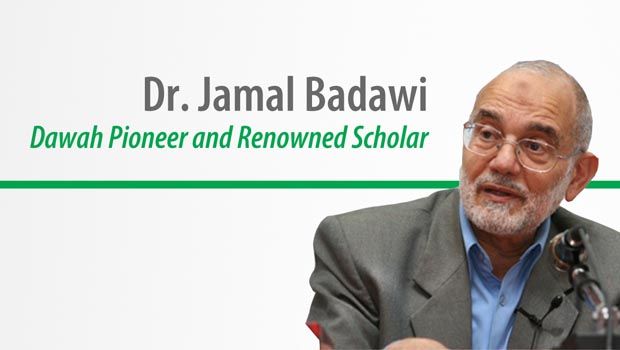
    Dr. Jamal Badawi is one of the foremost Islamic scholars of North America. Currently, he is “Professor Emeritus” at St. Mary’s University in Halifax, Nova Scotia, Canada. During its May, 2008 Convocation, Saint Mary’s University granted him an Honorary Doctorate of Civil Law in recognition of his promotion of “a better understanding of Islam” and contribution ” to civil society around the world.”Dr. Badawi is the author of several works on Islam, including books, monographs, and articles. Some of his works have been translated into several languages. In addition to his participation in lectures, seminars, and interfaith dialogues in North America, Dr. Badawi has been frequently invited as guest speaker on Islam in nearly 38 other countries. He serves on the boards of the Islamic Fiqh Council of North America, The European Council of Fatwa and Research and the International Union of Muslim Scholars.

    The main objective is to build or create an Islamic personality, a personality which lives by its deep faith in God and in loving, conscious submission and commitment to God.

    Q What are the major objectives of the Islamic moral code?

    A The main objective is to build or create an Islamic personality, a personality which lives by its deep faith in God and in loving, conscious submission and commitment to God. We want to create a personality which is nourished by divine love and restrained from temptation by the fear of displeasing God, a personality which understands and accepts its role and mission on earth as trustee of God. This would give the personality a sense of responsibility, sense of direction, clarity of vision and meaning to their existence on earth. Now if we have a large number of people who meet these criteria or are close to it we would form an Islamic community which is involved in ordaining the good and fighting off the evil and injustice in society. In other words it is not just individual salvation or individual moral elevation but something that needs to be done at a collective level within society in order for the human race as a whole to participate in fulfilling this responsibility of being the trustee of God. There is no wonder that we find that the last Prophet of Islam, Prophet Muhammad (pbuh), said in a famous hadith narrated in the collection of Malik “I was sent in order to perfect moral quality to bring perfection, completeness and comprehensiveness into the highest and most noble moral qualities that have been preached by all the prophets.”

    Q How does the Islamic moral code relate to faith?

    A Some people tend to feel that faith and moral conduct don’t have a one-to-one type of relationship. This is not so in Islam as any reform at an individual or social level must start with moral transformation. Some might appeal to patriotism, the power of the law or fear of punishment by political authorities to encourage people to practice or follow the moral code. However, if one really wants to have any profound moral elevation or a reform which is not temporary, the civilization must be concurrent with the moral code that was revealed by God. We find that the Quran has its own unique way of interpreting history. One verse in the Quran (13:11) says “Verily never will Allah change the condition of a people until they change it themselves [with their own souls].” We can talk about change in society, building this institution, removing that institution or reforming that system but it is all superficial until people change what is in their own hearts and their own commitment to God. Another place where this is found in the Quran is in (8:53): “Because Allah will never change the grace which He hath bestowed on a people until they change what is in their [own] souls.” This shows an interpretation of history and the rise and fall of different civilizations in the past and how many times, just like our present civilization, where God endows people with plenty of blessings, resources, richness and luxuries that no previous generations enjoyed but it all can be destroyed because this blessing can be changed if people change themselves and become ungrateful and disgraceful.

    We find that Prophet Muhammad (pbuh) answered the question of morals and faith in a very eloquent way in a few of his sayings. In a narration by Ahmad, one time the Prophet asked the people around him “Who among you is the most beloved by me and who will be the closest to me on the Day of Judgment?” They asked “Who would it be?” He replied “The best of you in manners and morals?” In the collection of hadith by Al-Tabarani the Prophet said that “Among the believers who are most complete in belief are the best in behavior.” In this case faith and behavior go hand in hand. In dozens of places, whenever the Quran addresses faith it also addresses good deeds. An example that is found in the Quran is “those who believe and do righteous good deeds.” Another saying by the Prophet is that “Faith is not something that comes by wishful thinking but is something that is entrenched in the heart and is confirmed by deeds.”

    Q What is the relationship of the moral code to acts of worship?

    A A Muslim’s entire life can be a continuous act of worship so long as it is done with good intentions and within the boundaries that God has placed. In Islam there are five pillars and we will take prayer, which is preformed five times a day, as an example. If one tries to relate prayer to morals one will discover that what is meant by them is not the mere ritual or movement but the whole act of prayers is a type of moral training. Prayers are moral training on a conscious loving submission to the will of God, humbleness before God, and a reminder for the individual to keep away from evil. In the Quran in (29:45) it says, “Prayer restrains from shameful and unjust deeds; and remembrance of Allah is the greatest [thing in life] without doubt. And Allah knows the [deeds] that you do.” In another collection of hadith by Al-Bazzar it is reported that God says that “I accept prayers only from those who humble themselves before My Glory, did not oppress any of My creatures, those who did not spend the night [repenting] while insisting on something wrong and immoral that they have done, those who remember Me during the day, those who are kind and merciful to the destitute, wayfarer, the widow, and those who are compassionate to those who are suffering or injured.” This is the essence of what is meant by the prayer.

    Another pillar of Islam is the zakah, or payment of poor’s dues. The intention behind zakah is not a kind of tax that one has to pay reluctantly and grudgingly. Zakah in essence relates to morality because it is a religious duty, not just something that is imposed by the state. It represents the expression of love, compassion, and mutual concern towards people who are less fortunate. An example of this is found in the Quran in (9:103): “Of their goods, take alms, so you might purify and sanctify them.” It purifies from the feeling of selfishness and lack of concern for others. Again the same term used for charity is used not only for paying money to those who are needy but as the prophet of Islam says “A good word is also an act of charity.”

    Fasting is another pillar of Islam and again the idea behind it is not only to temporarily restrain one’s self from food and drink from dawn to sunset. Like the Prophet said that some people fast and the only benefit they get from their fast is hunger and thirst, while the main moral lesson in fasting is training of the person to permanently restrain from evil. This is why the Quran in (2:183) says that “Fasting is prescribed to you as it was prescribed to those before you, that you may [learn] self-restraint.”

    Finally, hajj, the pilgrimage, is not about traveling and wearing specific clothing and going through certain rights. Pilgrimage is full of lessons of moral behavior [such as] patience, and the meeting of roughly two million people in the same place going through the same difficulties and being patient with one another. The Quran in (2:197) requires there be no argument or indecency during the pilgrimage. If we look at the acts of worship which are purely acts of devotion and worship aside from the rest of a person’s life, we find that the connection between worship and the moral codes is so strong that they are just inseparable.

    Q What is Islam’s stand on people who are active in their acts of worship but their personal behavior does not seem to be consistent with their apparent devotion?

    A The Quran does not separate belief from actions. From an Islamic point of view the lack of practice of the moral code in one’s life is an evidence of weak faith regardless of what the person claims to be. The real evidence of faith is its translation into actions and real concrete behavior on the part of the individual. Answers to this question can be found in some of the beautiful sayings of Prophet Muhammad (pbuh). Some people mentioned to the Prophet “Such and such woman prays a lot, pays lots of charity, and fasts beyond the minimum required fasting; however she seems to have the habit of hurting her neighbors with her tongue.” He replied, “She is in the hellfire.” All her worship did not make up for the lack of moral behavior. Then they asked him about “A woman who prays the minimum and a little bit more, doesn’t fast as much, and she doesn’t pay as much in charity (all the charity she can give are small pieces of cheese) but she doesn’t hurt her neighbors.” He said “She is in paradise.” So in this case the woman made less acts of worship but there was still clear evidence of faith.

    In a narration by Muslim, Prophet Muhammad said to his companions, “Do you know who is truly bankrupt?” They answered that the bankrupt one is someone who doesn’t have any money or property. He replied “No the one who is really bankrupt is the one who comes in the Day of Judgment with impressive things in his record like prayers, charity and all that and he cursed and swore at such and such a person, made false accusations against such and such person, he usurped unjustly the property of such and such a person, killed such and such person and beaten such and such person. All this person’s acts of credit will be taken and given by way of retribution to those whom he wronged until all the deeds that should have helped him get into paradise are exhausted and when there are still people who have been wronged by him who did not get their rights, then God will take from their evil deeds and add them to his own till he is thrown into the fire.”

    In another collection of hadith by Al-Bayhaqi, Prophet Muhammad said, “Good character and moral conduct melts sins and mistakes as water melts ice.” We all know we are sinners but by good deeds we can reconcile ourselves to God. Actually in this hadith he was echoing a verse in the Quran which says “Good deeds wipe away sins.” The Prophet continued that “bad character spoils good deeds just like vinegar spoils honey.” Like I said earlier, we are not saying moral character and good behavior is a substitute for faith as one can act nicely but because of rejection of faith or God, he could be in trouble. Neither one is a replacement of the other; both should go hand-in-hand.


    Q Should moral codes be updated to take into consideration new circumstances or contemporary approach?

    A If what is meant has to do with updating the fundamental principals or foundations of the moral code then the answer is definitely no. If what is meant by this is the extension of the application of the moral code or adapting the application, not the principle, then the answer is yes. When we talk about the fundamental injunctions as explained in the Quran and the sayings and deeds of Prophet Muhammad, the source of this information is revelation which comes from God. If any human being says that we are more up-to-date than God, this means they are claiming knowledge that exceeds the knowledge of God. The point that is to be made is that the basic principals that come from revelation are not bound to time. No human being, no institution religious or otherwise, no group of scholars can meet in a convention and decide to do this or that. Indeed if we open the door for this kind of relativism of our moral principles, then if people’s biases and deviations go down a certain way, then the moral standards would follow the same path and we would have nothing firm to stand upon. Islam tells us to hold firm to the revelation of God as it contains ultimate wisdom. And instead of lowering the morals, let’s elevate people’s moral behavior so that they come close to these standards. Islam is in no way against dynamic change in society; but [at the same time], if we start tampering with fundamental principles, we will have no structure and no foundation to stand on.