بسم الله الرحمن الرحيم

Tag: Islam

  • Hajj in the Bible

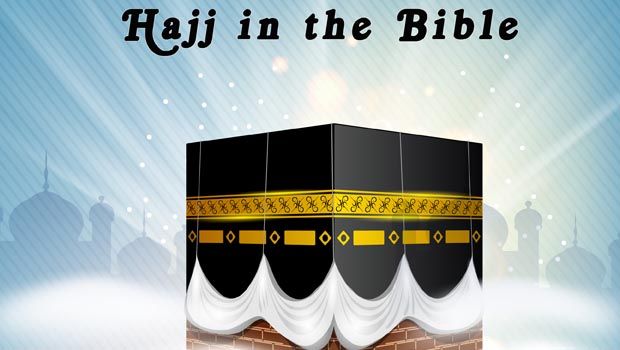
    Hajj in the Bible

    When many Jews and Christians view Islam from the outside, they find parallels to their own faiths that usually inspire a great deal of curiosity. These parallels are often doctrinal, sometimes regarding the biographies of Prophets shared between the three Abrahamic faiths like Moses and Jesus (peace be upon them). Yet, sometimes striking parallels are found by the more discerning eye. Deep inquests often reveal textual and lexical similarities that are difficult, if not impossible, to explain by mere theories of one tradition borrowing from another.

    The book of Exodus contains the following verse in reference to a Hajj in the time of Moses: “And this day shall be unto you for a memorial; and ye shall keep it a feast to the LORD throughout your generations; ye shall keep it a feast by an ordinance forever” (Exodus 12:14).

    As millions upon millions of Muslim devotees engage in the rites of the Hajj pilgrimage, one of the five pillars of Islam, we can peer into the terms used in this age-old practice that lead us to a time long before the Prophet Muhammad (pbuh) was even born. Let us look at the word al-Hajj itself. Typically, the entire Arabic vocabulary, like its sisters in the Semitic linguistic group, consists of words structured from trilateral tri-consonantal roots. In this case the root is hajaj. According to the classical Arabic lexicon Lisan al-Arab it is defined as follows: “Purpose. As in, ‘So-and-so did hajj unto us,’ which means he presented himself before us.”

    So the general lexical meaning of the word is “intended purpose.” In the context of the Hajj, the Ka`bah within the Meccan Sanctuary is the intended destination and purpose. To list usages of this word in an Islamic context would be, for most Muslims, an appeal to the very obvious as stories of its wonder and splendor that have been related to them since childhood. However, if we peer beyond the context of Islamic rites and deep into the past, do we find this word used in the previous traditions of the Old Testament? The answer is in the affirmative. The book of Exodus contains the following verse in reference to a Hajj in the time of Moses: “And this day shall be unto you for a memorial; and ye shall keep it a feast to the LORD throughout your generations; ye shall keep it a feast by an ordinance forever” (Exodus 12:14).

    In this verse, the King James translators rendered the uninflected noun Khag as “feast.” This word Khag is wholly cognate to the Arabic Hajj. Elsewhere in the verse the word Khag is inflected as khagotem and takhaguhu. One must pay attention to the fact that the Hebrew phonetic “kh” is the pharyngeal fricative “h” in Arabic. Also, one must note that the phonetic “g” is cognate to the Arabic “j.” So for analytical purposes in this context the verse would be rendered: “And this day shall be unto you for a memorial; and ye shall keep it a Hajj to the LORD throughout your generations; ye shall keep it a Hajj by an ordinance forever.” Another verse using this root is the following: “And afterward Moses and Aaron went in, and told Pharaoh, ‘Thus saith the LORD God of Israel, Let my people go that they may hold a feast unto me in the wilderness” (Exodus 5:1).

    “This Qur’an could not have been authored by any other than God, as it rectifies what came before it and elucidates what was in the previous scriptures. Let there be no doubt that this is, indeed, from the Lord of all Worlds” (Qur’an 10:37).

    The inflected word that the King James translators rendered “feast” is yakhugg? which is cognate to the Arabic “yuhajju,” so for analytical purposes the verse would be rendered in this context as: “And afterward Moses and Aaron went in, and told Pharaoh, Thus saith the LORD God of Israel, Let my people go, that they may hold a Hajj unto me in the wilderness.” This is not to suggest that Moses and Aaron went to Mecca and performed Hajj as Muslims know it today. It is merely to exemplify that a consecrated journey and pilgrimage unto God at His Temple did, indeed, precede the rise of Islam in the 7th Century CE. An additional and astonishing dimension to this that makes the concept of lexical borrowing between the Old Testament and the Qur’an improbable, if not outright impossible, is found in an alternate form of the root in Hebrew, Khug. Friedrich Wilhelm Gesenius (1846) defines this word: “To describe a circle, to draw a circle, as with compasses. Job 26:10…m. a circle, sphere, used of the arch or vault of the sky, Pro. 8:27; Job 22:14; of the world, Isa. 40:22.” Let us look at the verses he has cited:

    “When he prepared the heavens, I was there: when he set a compass upon the face of the depth” (Proverbs 8:27).

    “Thick clouds are a covering to him, that he seeth not; and he walketh in the circuit of heaven” (Job 22:14).

    “It is he that sitteth upon the circle of the earth, and the inhabitants thereof are as grasshoppers; that stretcheth out the heavens as a curtain, and spreadeth them out as a tent to dwell in” (Isaiah 40:22).

    Thus, this word not only means sacred pilgrimage and feast unto God in the Bible, it also means to encircle. To any Muslim this will be a striking discovery.

    Semitic languages have been, since time immemorial, broad and deep systems of expression where one word’s many variant, but supplementary, meanings all coalesce to a greater understanding of that lexeme. So in this case we have a root which has a form meaning a feast, also meaning a pilgrimage, and in one form meaning to encircle! The Hajj pilgrimage, which is at its core an encircling of the Ka`bah, called Tawaf, is concluded with none other than the Feast of the Sacrifice, Eid al-Adha, to commemorate Abraham’s willingness to sacrifice his son at God’s command. Borrowing all these meanings buried in lexica that did not even exist until hundreds of years after the life of the Prophet Muhammad (pbuh) would require nothing short of a Semitic linguist and Biblical scholar. It should be noted that the Bible itself would not be available until 200-300 years after the passing of the Prophet Muhammad (The International Standard Bible Encyclopedia, vol. 4, Geoffrey W. Bromiley, p. 982). Such lexical depth and lucidity is consistently found throughout the Qur’an as God has stated therein:

    “This Qur’an could not have been authored by any other than God, as it rectifies what came before it and elucidates what was in the previous scriptures. Let there be no doubt that this is, indeed, from the Lord of all Worlds” (Qur’an 10:37).

    —–Shibli Zaman—-

    Did Jesus (pbuh) personally claim divinity?

    The response to this question could be found in the following Qur’anic verses: “At length she brought the (babe) to her people, carrying him (in her arms). They said: ‘O Mary! Truly an amazing thing hast thou brought! O sister of Aaron! Thy father was not a man of evil, nor thy mother a woman unchaste!’ But she pointed to the babe. They said: ‘How can we talk to one who is a child in the cradle?’ He said: ‘I am indeed a servant of Allah. He hath given me revelation and made me a prophet; And He hath made me blessed wherever I be, and hath enjoined on me Prayer and Charity as long as I live; (He) hath made me kind to my mother, and not overbearing or miserable; So peace is on me the day I was born, the day that I die, and the day that I shall be raised up to life (again)!’ Such (was) Jesus the son of Mary: (it is) a statement of truth, about which they (vainly) dispute. It is not befitting to (the majesty of) Allah that He should beget a son. Glory be to Him! When He determines a matter, He only says to it, ‘be’, and it is. Verily Allah is my Lord and your Lord; therefore serve Him: this is a Way that is straight. But the sects differ among themselves: and woe to the unbelievers because of the (coming) Judgment of a Momentous Day! How plainly will they see and hear, the Day that they will appear before Us! But the unjust today are in error manifest! Warn them of the Day of Distress, when the matter will be determined: for (behold,) they are negligent and they do not believe! It is We Who will inherit the earth, and all beings thereon; to Us will they all be returned” (19:27-40).

    Actually, the Quranic verses cited above point out that Jesus, himself, proclaimed his humanity and that he was a servant of Allah and a prophet, clearly not divine. He actually rebuked the people who would develop those philosophical ideas after he is gone. An example is when Satan came to Prophet Jesus and tried to tempt him as it appears in the book of Matthew (4:1-11). Now the question is how can Satan tempt God? This is only conceivable if the person who is subjected to temptation is a human being and that is what Jesus spoke of. Also, on many occasions Jesus had gone to the wilderness or mountains to pray. Now what does it mean that Jesus is praying? He is praying to someone who is greater than himself. He is praying to his God and Lord, and in accordance to the definition of the Trinity this doesn’t make sense. Nobody prays to himself; so why would Jesus pray to himself if he was God?

    In the book of Matthew, Jesus denies any knowledge of the unseen or the last hour (24:36). Again the knowledge of the unseen is definitely one of the divine attributes and if somebody doesn’t know the future then he is not God – he is a human being. He may be pious, he may be a messenger, but he is not God. Additionally, the Gospel of Mark says that when someone ran after Jesus and said ‘Good Master’ Jesus would reply, “Why do you call me good? No one is good—except God alone” (10:17-18). Here this doesn’t mean that Jesus is not good but that goodness, in the absolute sense, is a divine attribute and that is not to be used as a description of him. In the Gospel of John, Jesus admits and says that “father is greater than I” (14:28), which is very clear evidence he never meant that he is divine and even denied it and clarified that he is simply a human and messenger of God. That is exactly what the Qur’an, 600 years later, confirms.

  • Let Us Know Muhammad (peace be upon him)

    Let Us Know Muhammad (peace be upon him)

    “Perhaps the world was never in greater need of an accurate account of Prophet Muhammad’s life than it is now.” So states Adil Salahi, author of Muhammad: Man and Prophet. While awareness of Islam and Prophet Muhammad has increased considerably in recent years, many people still do not really know who he was and what legacy he left behind. The Charlie Hebdo caricatures of Prophet Muhammad are a reminder that the understanding many people have about the Prophet is extremely flawed and far from factual. And the murder of the magazine’s editor and other staff members by extremists results from the gaping incongruity of those who call themselves followers of Muhammad yet act in ignorance of and utter contradiction to his teachings.

    The misinformation about the Prophet, however, is rather surprising. The accounts of most prophets and religious figures are mixed with myths and legends while Muhammad’s life story was documented by his contemporaries in the full light of history. Almost every aspect of his life was recorded by those who lived with him and knew him well. The vast body of literature affirms that he was a man of exalted character, one who was just, kind, and compassionate to all people, even when he encountered hostility and rejection. For example, when the Makkan leaders unleashed their persecution against him and his companions, he could still be heard saying, “O Allah! Forgive my people, for they don’t know.” Later, when he went to Ta’if, a village about 50 miles southeast of his hometown, Makkah, to spread Islam, they set the street urchins upon him, who chased him and threw rocks at him until they drove him out of town. Even at that point, when he was utterly exhausted and bleeding from head to toe, he supplicated, “O my Lord, guide my people along the true path, as they are ignorant of the truth.” His revolutionary message changed not only his own society, but the very course of history, a fact that even his bitterest enemies have acknowledged. Today, over 1,400 years later, more than 1.5 billion people revere him and follow him as God’s last messenger.

    The Prophet (pbuh) taught us how to live among people like flowers, not thorns

    The veneration of Muhammad is not limited to his followers, however. Many great philosophers, thinkers, and reformers have praised him and said that it would be to humanity’s great benefit to follow his teachings. Today, no matter how much Islamophobes try to degrade him or characterize Islam as barbaric and destructive, the fact is that Prophet Muhammad never preached violence. On the contrary, his message was one of benevolence, understanding, and forgiveness.

    The overzealous and clearly misguided Muslims who claim to be defending the honor of the Prophet by committing acts of mayhem and violence, need to know that a true defense of the Prophet will never be achieved through bullets and bombs. The only way to defend him is to honor his legacy by living a life of integrity, fairness, and mercy. We cannot become emotionally overblown and act irrationally every time an Islamophobe insults Islam or our Prophet. He (peace be upon him) is loved and respected by multitudes around the world, and no one can sully or lessen this devotion and love in our hearts. Reacting vehemently, unjustly, or even criminally when some express their hatred of Islam and the Prophet only serves to alienate non-Muslims. In fact, the Prophet taught us how to live among people like flowers, not thorns.

    The Prophet’s own example was testified to by Anas ibn Malik who served him for ten years. He said that the Prophet never, ever rebuked him. “When I did something, he never questioned my manner of doing it; and when I did not do something, he never questioned my failure to do it. He was the most good-natured of all men.” Indeed, the Prophet was an extremely tender-hearted person. “Repel evil with good” was his dictum. He was a loving father, a devoted and kind husband, and a caring neighbor. He had a dignified and noble demeanor, but he took no special privileges and comported himself like a common man. He treated everyone, friend and stranger, the powerful and the weak, with equal respect and generosity. His manner of living naturally endeared him to those who came in contact with him, and gained him respect, love, and admiration.

    The world has witnessed many prophets including the towering figures of Abraham, Moses, and Jesus. Muhammad paid high tribute to all of them and made it incumbent upon his followers to do the same. Countless individuals have contributed to human civilization, but none of them matched the achievements and impact of Muhammad. His greatness is truly unique. A mercy to mankind, he is the most remarkable man to have walked the earth in quest of universal truth and social justice. Rather than being mocked and maligned, he should be recognized as a paragon of moral excellence and spiritual merit, nothing short of the pride of all humankind! Muhammad, the man, is the greatest testimony to the truth he preached. Let us know him, explore and embrace his teachings, and make this world a better place to live, for ourselves and the generations to come.

  • Adiyy ibn Hatim

    Adiyy ibn Hatim

    When the Prophet (pbuh) announced openly his call to guidance and truth and Arabs from one region after another accepted his teachings, Adiyy, an Arab king who was the son of the famous Hatim at-Taai, saw in the Prophet’s mission a threat to his own position and leadership. Although he did not know the Prophet personally, and had never met him, he developed strong feelings of enmity towards him. He remained antagonistic to Islam for close to twenty years until at last God opened his heart to the religion of truth and guidance. The way in which Adiyy became a Muslim is a remarkable story. He himself narrated the story:

    Wealth flowed among the Muslims so much so that when the town-criers called on people
    throughout the Muslim domain to come and collect Zakat, no one was found in need to respond

    Adiyy Goes to Syria to Be With Christians

    “There was no man among the Arabs who detested God’s Messenger, may God bless him and grant him peace, more than I, when I heard about him. I was then a man of status and nobility. I was a Christian. From my people I took a fourth of their booty as was the practice of other Arab kings. When I heard of the Messenger of God, peace be on him, I hated him. When his mission grew in strength and when his power increased and his armies and expeditionary forces dominated east and west of the land of Arabs, I said to a servant of mine who looked after my camels, ‘Get ready a fat camel for me which is easy to ride and tether it close to me. If you hear of an army or an expeditionary force of Muhammad coming towards this land, let me know.’ One evening, my servant came to me and said, ‘Yaa Mawlaya! What you intended to do on the approach of Muhammad’s cavalry to your land, do it now.’ ‘Why?’ [I asked him]. ‘I have seen scouts searching close to the habitations. I asked about them and was told that they belonged to the army of Muhammad,’ he said. ‘Bring the camel which I ordered you to get ready,’ I said to him. I got up then and there, summoned my household [including] my children and ordered them to evacuate the land we loved. We headed in the direction of Syria to join people of our own faith among the Christians and settle among them.”

    Sister Seeks Help from the Prophet

    “We left in too much haste for me to gather together our entire household. I had left my own sister in our Najd homelands together with the rest of the Tayy people. I did not have any means to return to her. So I went on with those who were with me until I reached Syria and took up residence there among people of my own religion. As for my sister, what I feared for her happened. News reached me while I was in Syria that the forces of Muhammad entered our habitations and took my sister together with a number of other captives to Yathrib. There she was placed with other captives in a compound near the door of the Masjid. The Prophet, peace be upon him, passed by her. She stood up before him and said, ‘Yaa Rasulullah! My father is dead and my guardian is not here. Be gracious to me and God will be gracious to you!’ ‘And who is your guardian?’ asked the Prophet. ‘Adiyy ibn Hatim.’ she said. ‘The one who fled from God and His Prophet?’ he asked. He then left her and walked on. On the following day, the same thing happened. She spoke to him just as she did the day before and he replied in the same manner. The next day, the same thing happened and she despaired of getting any concession from him for he did not say anything.”

    “Then a man from behind him indicated that she should stand up and talk to him. She therefore stood up and said: ‘O Messenger of God! My father is dead and my guardian is absent. Be gracious to me and God will be gracious to you.’ ‘I have agreed,’ he said. Turning to those about him, he instructed, `Let her go, for her father loved noble ways, and God loves them.’ ‘I want to join my family in Syria,’ she said. ‘But don’t leave in a hurry,’ said the Prophet, ‘until you find someone you can trust from your people who could accompany you to Syria. If you find a trustworthy person, let me know.’ She stayed in Yathrib until a group arrived among whom was someone she could trust. So she went the Prophet and said: ‘O Messenger of God! A group of my people have come to me and among them is one I can trust who could take me to my family.’ The Prophet, peace be on him, gave her fine clothes and an adequate sum of money. He also gave her a camel and she left with the group.”

    Prophet’s (pbuh)Generosity

    “Thereafter we followed her progress gradually and waited for her return. We could hardly believe what we heard about Muhammad’s generosity towards her in spite of my attitude to him. When she stood before us, she snapped sharply at me and said: ‘The one who severs the tie of kinship is a wrongdoer. You took your family and your children and left the rest of your relations and those whom you ought to have protected.’ ‘Yes, my sister,’ I said, ‘don’t say anything but good.’ I tried to pacify her until she was satisfied. She told me what had happened to her and it was as I had heard. Then I asked her, for she was an intelligent and judicious person, ‘What do you think of the mission of this man [meaning Muhammad peace be on him]?’ ‘I think, by God, that you should join him quickly.’ she said. ‘If he is a Prophet, the one who hastens towards him would enjoy his grace. And if he is a king, you would not be disgraced in his sight while you are as you are.’”

    Adiyy Meets the Prophet (pbuh) in Madinah

    “I immediately prepared myself for travel and set off to meet the Prophet in Madinah without any security and without any letter. I had heard that he had said: ‘I certainly wish that God will place the hand of Adiyy in my hand.’ I went up to him. He was in the Masjid. I greeted him and he said: ‘Who is the man?’ ‘Adiyy ibn Hatim,’ I said. He stood up for me, took me by the hand and set off towards his home. By God, as he was walking with me towards his house, a weak old woman met him. With her was a young child. She stopped him and began talking to him about a problem. I was standing [all the while]. I said to myself, ‘By God, this is no king.’ He then took me by the hand and went with me until we reached his home. There he got a leather cushion filled with palm fiber, gave it to me said: ‘Sit on this!’ I felt embarrassed before him and said, ‘Rather, you sit on it.’ ‘No, you,’ he said. I deferred and sat on it.”

    Adiyy Declares His Acceptance of Islam

    “The Prophet, peace be on him, sat on the floor because there was no other cushion. I said to myself, ‘By God, this is not the manner of a king!’ He then turned to me and said, ‘Yes, Adiyy ibn Hatim! Haven’t you been a Rukusi, professing a religion between Christianity and Sabeanism?’ ‘Yes,’ I replied. ‘Did you not operate among your people on the principle of exacting from them a fourth, taking from them what your religion does not allow you?’ ‘Yes,’ I said, and I knew from that he was a Prophet sent [by God]. Then he said to me, ‘Perhaps, O Adiyy, the only thing that prevents you from entering this religion is what you see of the destitution of the Muslims and their poverty. By God, the time is near when wealth would flow among them until no one could be found to take it. Perhaps, O Adiyy, the only thing that prevents you from entering this religion is what you see of the small number of Muslims and their numerous foe. By God, the time is near when you would hear of the woman setting out from Qadisiyyah on her camel until she reaches this house, not fearing anyone except Allah. Perhaps what prevents you from entering this religion is that you only see that sovereignty and power rest in the hands of those who are not Muslims. By God, you will soon hear of the white palaces of the land of Babylon opening up for them and the treasures of Chosroes the son of Hormuz fall to their lot.’ ‘The treasures of Chosroes the son of Hormuz?’ I asked (incredulously). ‘Yes, the treasures of Chosroes the son of Hormuz,’ he said. Thereupon, I professed the testimony of truth, and declared my acceptance of Islam.”

    One report says that when Adiyy saw the simplicity of the Prophet’s lifestyle, he said to him, “I testify that you do not seek high office in this world nor corruption,” and he announced his acceptance of Islam. Some people observed the Prophet’s treatment of Adiyy and said to him, “O Prophet of God! We have seen you do something which you have not done to any other.” “Yes,” replied the Prophet. “This is a man of stature among his people. If such a person comes to you, treat him honorably.”

    Adiyy ibn Hatim, may God be pleased with him, lived for a long time. He later said, “Two of the things [which the Prophet spoke of] came to pass and there remained a third. By God, it would certainly come to pass. I have seen the woman leaving Qadisiyyah on her camel fearing nothing until she arrived at this house [of the Prophet in Madinah]. I myself was in the vanguard of the cavalry which descended on the treasures of Chosroes and took them. And I swear by God that the third event will be realized.” Through the will of God, the third statement of the Prophet, on him be choicest blessings and peace, came to pass during the time of the devout and ascetic Khalifah, Umar ibn Abd al-Aziz. Wealth flowed among the Muslims so much so that when the town-criers called on people throughout the Muslim domain to come and collect Zakat, no one was found in need to respond.

  • Denying God, Denying Reality

    Denying God, Denying Reality

    Does God Exist?

    This is the question I’ve constantly discussed with Atheist academics. The discussion is often put forward in different guises but the premise is always the same; does God exist and what evidence is there to support this belief?
    In fact, I would argue that we don’t need any evidence for God’s existence. So the question itself needs debating. It shouldn’t actually be “does God exist?”, but rather “what reasons do we have to reject His existence?”
    Now, don’t get me wrong, I believe we have many good arguments which support a belief in God. The point I am raising here, however, is that we don’t require any evidence for His existence: God is an axiomatic belief. In other words, God’s existence is self-evidently true. Also known as a ‘basic belief’ in the language of philosophy.
    The idea of self-evident truths are accepted by all. Take science for example: science takes the world’s reality as a self-evident truth; it believes that the world is real. In other words, the physical world is separate and external from our minds and our thoughts.
    So you may be thinking, ‘I believe that the real world is real, as I can touch and feel it. I believe the world is real because other people also say that the world is as tangible to them as it is to me.’
    However, this doesn’t prove anything. Touching and feeling something doesn’t prove that what you touch and feel is external to your mind. The thinking and feeling could simply be happening by the workings of your brain. Consider this; maybe your brain is in a jar on the Moon. There is an alien who has placed probes in it, who is making you think and feel what you’re feeling right now.
    You don’t actually have substantial evidence for the reality of the world you experience. Evidence based on experience is unreliable as the experience could simply be produced in the brain. Evidence based on philosophy or complex logic is also a product of the mind. The external world may have no real existence apart from what is going on in your skull.
    On reading this you may demand proof, proof that the real world is external to the brain… but we don’t have any proof. Actually, we don’t need it. That’s why we call the belief in the real world an axiom, a self-evident truth or a basic belief. Therefore, I would argue, that rejecting God’s existence is equivalent to rejecting that the world is real because they are both self-evident truths.
    This is not a type of special pleading for God because there are a myriad of other self-evident truths and axioms that we believe in. These include:
    The existence of other minds
    The existence of objective moral values
    The existence of logical truths
    The validity of our reasoning
    The law of causality

    Self-evident truths, axioms and basic beliefs are cross cultural in that they are not culturally bound. They are also innate in that they are not acquired via any form of information transfer, and they are also foundational. What is meant by foundational is that they provide the basis for a coherent worldview. These aspects of self-evident truths will be explained further while addressing the key objections to this argument.

    Objection #1: What about the great pumpkin, or the spaghetti monster?

    There are some objections to this argument. Some atheists and sceptics will say: ‘What about the great pumpkin, or the spaghetti monster?’ They highlight that if God is a self-evident truth, if God is axiomatic, then why can’t the spaghetti monster, or the great pumpkin be self-evident truths as well?

    There are three ways of dealing with this false contention:

    A Cross Cultural Belief: The ‘spaghetti monster’ and the ‘great pumpkin’ are not natural tendencies. There is not a broad natural tendency to believe in a ‘spaghetti monster’ or ‘great pumpkin’. These are not natural tendencies, they are culturally bound. For example, if I believe in a spaghetti monster, I would have to have been brought up in a culture in which you are taught about spaghetti and monsters. However, the idea of God, the basic underlying idea of a creator, of a supernatural cause for the universe, is cross-cultural. It is not contingent on culture but transcends it, just like the belief in causality and the existence of other minds.

    An Innate Belief: Properly basic beliefs, axiomatic beliefs, and self-evident truths, do not require information transfer. For me to understand what a spaghetti monster is, I require information to be transferred to me. For example, I require knowledge of western cuisine and Italian culture. But when it comes to the idea of God’s existence as the creator of the universe, you do not require any information transfer, whether from culture, or education. This is why sociologists and anthropologists argue that even if atheist children were stranded on a desert island, they would come to believe that something created the desert island.[1]
    This is very critical to understand because we frequently hear ‘God is no different than believing in the spaghetti monster’. This is not true. If you understand self-evident truths, axiomatic and basic beliefs then you would see that they do not require information transfer. The basic concept of God does not require information transfer. The idea that monsters exist, or even that spaghetti exists, requires information transfer. Therefore the spaghetti monster is not a self-evident truth.

    A Foundational Belief: The third point is that basic and axiomatic beliefs are foundational: they provide a basis for a coherent world view. They answer questions and facilitate knowledge. For example, God’s existence, explains conscious emergence, the fact that we have consciousness within a material world.[2] It answers the questions for which we have no answer, like the question of language. Currently, evolutionary paradigms can’t explain the development of language.[3] It also explains the existence of objective moral truths and offers a foundation for explaining why things happen.
    Let’s apply this to another self-evident truth: the validity of our reasoning. Trusting our minds and the very fact that we can reason to the truth is a basic belief. If we did not hold such a belief then how could we trust our minds? How could we reason to the truth? How could we understand the universe and ourselves? These questions are indicative of the foundational nature of the validity of our reasoning.

    God’s existence provides a foundation for a coherent world view, facilitates knowledge and answers key fundamental questions. A belief in the spaghetti monster or the belief in the great pumpkin, only provides the foundation for a few laughs.

    Objection #2: Wasn’t the belief in a flat earth once self evidently true?

    Another objection is the belief that the earth was flat. This was once a self-evident truth, it was a basic belief. As science has progressed we have found that this is not the case. We now know that the world is round. I don’t want to get into a big philosophical discussion about basic beliefs or self-evident truths and if they can be changed by future scientific evidence but what I will say is this problem is not applicable to God’s existence. God, by definition, is a non-observed being and is outside of His universe. For example, if I made a chair, I obviously remain distinct and disjoined from the chair. I am outside of the chair. Likewise, the creator is distinct and external to the universe.[4] Therefore, the creator cannot be observed. We can’t observe what’s outside of our universe. So, from this perspective, the objection doesn’t apply: it is only applicable to things which can be observed.
    Science is based on a theory of knowledge called Empiricism. Empiricism stems from the idea that you can only have knowledge of something from experience based on direct or indirect observation.[5] An empirical rejection of God is impossible as it requires evidence from observation to form conclusions. To deny something that cannot be observed, by using the theory of knowledge that can only form conclusions based on observations, is absurd. The scientific world can never deny God’s existence because science can only deal with things that you can observe. This is why the philosopher of science Elliot Sober, in his essay Empiricism asserts that science is limited to questions which observation can explain,
    “At any moment scientists are limited by the observations they have at hand…the limitation is that science is forced to restrict its attention to problems that observations can solve.”[6]
    God is not observed. How can you use the observed world to deny that which cannot be observed? It’s impossible. This is why science can never directly reject God’s existence. It can only do one of two things:
    Stay silent on the matter
    Suggest some evidence that can be used to infer His existence

    A common reply to this answer includes ‘if it cannot be observed, you cannot believe it’. This is a misplaced assertion because observations do not encompass all phenomena. There are many things we believe in that we cannot observe. The Philosopher John Cottingham exposes this problem in his book Rationalism:
    “But what about ‘all water at a given atmospheric pressure boils at 100 degrees Celsius’? Since this statement has the form of an unrestricted universal generalization, it follows that no finite number of observations can conclusively establish its truth. An additional and perhaps even more worrying problem is that when we reach the higher levels of science…we tend to encounter structures and entities that are not observable in any straightforward sense. Atoms, molecules, electrons, photons and the like are highly complex theoretical constructs…here we seem to be very far removed from the world of direct ‘empirical observation’…”[7]

    Objection #3: The belief in God is not universal

    A final key objection is that since self-evident truths must be universal, the existence of millions of atheists worldwide suggests that the God’s existence is not self-evident.

    There are two reason why this objection is false:

    Self-evident truths do not have to be universal: Self-evident truths, basic beliefs or axioms can be individualized and do not have to have universal appeal. Take for example your mother; you have a basic belief that the lady that you call your mother is the one that gave birth to you. You do not have a home DNA test kit and accept the fact that she is your mother because for you it is self-evidently true. However, to someone else, the lady that you call your mother could be your aunty, step-mother or adopted guardian. Basic beliefs and self-evident truths do not have to be universal. They can be individualized.
    The belief in God is universal: In spite of the number of atheists in the world, the belief in God is universal. A universal belief does not mean every single person on the planet must believe in it. A cross cultural consensus is enough evidence to substantiate the claim that God’s existence is a universal claim. Evidently there are more theists than atheists in the world, and this has always been the case from the beginning of recorded history.

    In order for atheists and sceptics to effectively challenge this thesis, they will have to explain that God is not a self-evident truth. They will have to explain that God is not a foundational belief, is culturally bound and is only acquired via information transfer.

    Our Innate Nature (fitrah)

    This whole idea of basic beliefs, of self-evident truths concerning God’s existence, is in line with the Islamic theological tradition concerning the fitrah. The fitrah is an Arabic word that essentially means the natural state, the innate nature, or the innate disposition of the human being. This innate nature acknowledges God and wants to worship Him.[8] As the Prophet Muhammad (upon whom be peace) said in an authentic prophetic tradition, “that every child is born in a state of fitrah. Then his parents make him a Jew, a Christian or a Magian…”.[9]
    The concept of the fitrah has been a topic of scholarly discussion in the Islamic intellectual tradition. The 14th century theologian and polymath Ibn Taymiyyah explained that “affirmation of a Maker is firmly-rooted in the hearts of all men…it is from the binding necessities of their creation…”[10] The 12th century scholar Al-Raghib al-Asfahani similarly asserts that knowledge of God “is firmly-rooted in the soul”.[11]
    In spite of this, the fitrah can be ‘veiled’ or ‘spoiled’ by external influences. These influences, as indicated by the above Prophetic tradition, can include parenting, society and peer pressure. These influences can cloud the fitrah and prevent it from acknowledging the truth. In this light Ibn Taymiyyah argues that when the natural state of someone is “altered” that person may need “other evidences” for God’s existence:
    “Affirmation of a Creator and His perfection is innate and necessary with respect to one whose innate disposition remains intact, even though alongside such an affirmation it has many other evidences for it as well, and often when the innate disposition is altered…many people may be in need of such other evidences.”[12]
    These other evidences can include rational arguments. Ibn Taymiyyah asserts that the originated being “itself knows through clear reason that it has an originator”.[13] However these rational arguments must conform to Islamic theology and not adopt premises that contradict it. From this perspective, it is important to know that belief in God is not inferred from some type of inductive, deductive, philosophical or scientific evidence. Instead, this type of evidence acts as a trigger to wake up the fitrah, the innate natural disposition to believe in God. In addition to this, a key principle is that the Qur’anic arguments ‘unveil’ or ‘uncloud’ the fitrah. These Quranic arguments include encouraging reflection, pondering, and introspection:
    “Thus do We explain in detail the signs for a people who give thought.” The Qur’an 10:24
    “Indeed in that is a sign for a people who give thought.”
    The Qur’an 16:69
    “Or were they created by nothing? Or were they the creators (of themselves)? Or did they create heavens and earth? Rather, they are not certain.”
    The Qur’an 52:35-36

    Evidence Supporting the Fitrah

    Interestingly, the Islamic concept of the fitrah is supported by psychological, sociological and anthropological evidence. Below are some brief examples:

    Psychological evidence: the academic Olivera Petrovich conducted some studies concerning the psychology of the human being and God’s existence. She concludes that the belief in a non-anthropomorphic God is the natural state of a human being. Atheism is a learned psychology.[14] Theism is our natural state.
    “The possibility that some religious beliefs are universal (e.g., basic belief in a non-anthropomorphic God as creator of the natural world) seems to have a stronger empirical foundation than could be inferred from religious texts. Some of the initial findings of research into early religious understanding are consistent with other areas of developmental research which suggest that there are cognitive universals in a number of domains of human knowledge…”[15]

    Sociological evidence: Take for instance, Prof Justin Barrett. Professor Barrett’s research in his book Born believers: the science of children’s religious belief looked at the behaviour and claims of children. He concluded that the children believed in what he calls “natural religion”. This is the idea that there is a personal being that created the entire universe. That ‘being’ cannot be human – it must be divine, supernatural.
    “Scientific research on children’s developing minds and supernatural beliefs suggests that children normally and rapidly acquire minds that facilitate belief in supernatural agents. Particularly in the first year after birth, children distinguish between agents and non-agents, understanding agents as able to move themselves in purposeful ways to pursue goals. They are keen to find agency around them, even given scant evidence. Not long after their first birthday, babies appear to understand that agents, but not natural forces or ordinary objects, can create order out of disorder…This tendency to see function and purpose, plus an understanding that purpose and order come from minded beings, makes children likely to see natural phenomena as intentionally created. Who is the Creator? Children know people are not good candidates. It must have been a god…children are born believers of what I call natural religion…”[16]

    Anthropological evidence: Consider the atheism of communist Russia and communist China. They still had signs of what you would call a worship instinct, a sanctification instinct, awe of a greater being, which relates to the fitrah. For example their big statues of Stalin and Lenin were almost revered. When you look at different cultures you can see this worship instinct coming through. This instinct even manifests itself in Atheist cultures.

    In summary, to deny God is like denying the real world is actually real. We previously discussed self-evident truths and that the reality of our world is one of them, although we have no evidence for it. This is why if you deny God, Who is also a self-evident truth, you are denying reality itself. And this was confirmed via the teachings of our beloved Prophet (upon whom be peace) over 1400 years ago.

    “Can there be doubt about Allah, Creator of the heavens and earth?”
    The Qur’an 14:10

    Footnotes
    [1] BBC Radio 4 Today, 24 November 2008 http://news.bbc.co.uk/today/hi/today/newsid_7745000/7745514.stm. Accessed 17 December 2014.
    [2] For more on this please read “Consciousness and the New Scientist Magazine”, Hamza Andreas Tzortzis, 2014. http://www.iera.org/research/essays-articles/consciousness-and-the-new-scientist-magazine-reflections-on-false-materialist-assumptions-hamza-tzortzis. Accessed 17 December 2014.
    [3] “This highlights an important and difficult challenge facing the study of language evolution: the need for cooperation between different disciplines and between researchers working on different aspects of the problem. Without this cooperation a satisfactory account of the evolution of human language, and therefore of human language itself, is likely to be elusive.” ([Prefinal Draft] Kirby, S. (2007). The evolution of language. In Dunbar, R. and Barrett, L., editors, Oxford Handbook of Evolutionary Psychology, pp. 669–681. Oxford University Press.)
    [4] “To Ibn Taymiyya, the term ‘created’ implies something distinct and disjoined from God…” (Perpetual Creativity in the Perfection of God: Ibn Taymiyya’s Hadith Commentary on God’s Creation of this World. Jon Hoover. Journal of Islamic Studies 15:3 (2004) pp. 296.)
    [5] Elliot Sober “Empiricism” in The Routledge Companion to Philosophy of Science. Edited by Stathis Psillos and Martin Curd. 2010, p. 129.
    [6] Ibid, pp. 137-138.
    [7] John Cottingham. Rationalism. Paladin. 1984, pp. 109 -110.
    [8] Ibn Qayyim argued that the fitrah is truly an inborn predisposition to acknowledge Allah, the Oneness of Allah and the religion of Islam (al-Asqalani, Fathul Bari, p. 198).
    [9] Sahih Muslim
    [10] Dar’ al-Ta’arud 8/482
    [11] al-Dharee’ah p. 199
    [12] Majmu’ al-Fatawa 6/73
    [13] Nubuwwat, 266
    [14] Infants ‘have natural belief in God’. The Age National (Australia) http://www.theage.com.au/national/infants-have-natural-belief-in-god-20080725-3l3b.html. Accessed 17 December 2014.
    [15] Key Psychological Issues in the Study of Religion. Olivera Petrovich. psihologija, 2007, Vol. 40 (3), str. 351-363
    [16] Justin L. Barrett. Born Believers: The Science of Children’s Religious Belief. Free Press. 2012, pp. 35 – 36.

  • The Big Questions

    The Big Questions

    At some point in our lives, everybody asks the big questions: “Who made us,” and “Why are we here?” So who did make us? Most of us have been brought up more on science than religion, and to believe in the Big Bang and evolution more than God. But which makes more sense? And is there any reason why the theories of science and creationism cannot coexist?

    Should we not show good manners and thank our Creator for His gifts now, and subsequently for the rest of our lives? Don’t we owe Him that? You answered “Yes.” You must have.

    Important Questions

    The Big Bang may explain the origin of the universe, but it doesn’t explain the origin of the primordial dust cloud. This dust cloud (which, according to the theory, drew together, compacted and then exploded) had to come from somewhere. After all, it contained enough matter to form not just our galaxy, but the billion other galaxies in the known universe. So where did that come form? Who, or what, created the primordial dust cloud? Similarly, evolution may explain the fossil record, but it falls far short of explaining the quintessential essence of human life—the soul. We all have one. We feel its presence, we speak of its existence and at times pray for its salvation. But only the religious can explain where it came from. The theory of natural selection can explain many of the material aspects of living things, but it fails to explain the human soul.

    Furthermore, anyone who studies the complexities of life and the universe cannot help but witness the signature of the Creator. Whether or not people recognize these signs is another matter—as the old saying goes, denial isn’t just a river in Egypt. (Get it? Denial, spelled “de Nile” … the river Ni … oh, never mind.) The point is that if we see a painting, we know there is a painter. If we see a sculpture, we know there’s a sculptor; a pot, a potter. So when we view creation, shouldn’t we know there’s a Creator? The concept that the universe exploded and then developed in balanced perfection through random events and natural selection is little different from the proposal that, by dropping bombs into a junkyard, sooner or later one of them will blow everything together into a perfect Mercedes.

    Chaos or Controlled Events?

    If there is one thing we know for certain, it is that without a controlling influence, all systems degenerate into chaos. The theories of the Big Bang and evolution propose the exact opposite, however—that chaos fostered perfection. Would it not be more reasonable to conclude that the Big Bang and evolution were controlled events? Controlled, that is, by the Creator?

    The Bedouin of Arabia tell the tale of a nomad finding an exquisite palace at an oasis in the middle of an otherwise barren desert. When he asks how it was built, the owner tells him it was formed by the forces of nature. The wind shaped the rocks and blew them to the edge of this oasis, and then tumbled them together into the shape of the palace. Then it blew sand and rain into the cracks to cement them together. Next, it blew strands of sheep’s wool together into rugs and tapestries, stray wood together into furniture, doors, windowsills and trim, and positioned them in the palace at just the right locations. Lightning strikes melted sand into sheets of glass and blasted them into the window-frames, and smelted black sand into steel and shaped it into the fence and gate with perfect alignment and symmetry. The process took billions of years and only happened at this one place on earth—purely through coincidence. When we finish rolling our eyes, we get the point. Obviously, the palace was built by design, not by happenstance. To what (or more to the point, to Whom), then, should we attribute the origin of items of infinitely greater complexity, such as our universe and ourselves?

    Another argument to dismiss the concept of Creationism focuses upon what people perceive to be the imperfections of creation. These are the “How can there be a God if such-and-such happened?” arguments. The issue under discussion could be anything from a natural disaster to birth defects, from genocide to grandma’s cancer. That’s not the point. The point is that denying God based upon what we perceive to be injustices of life presumes that a divine being would not have designed our lives to be anything other than perfect, and would have established justice on Earth. Hmm … is there no other option?

    We can just as easily propose that God did not design life on Earth to be paradise, but rather a test, the punishment or rewards of which are to be had in the next life, which is where God establishes His ultimate justice. In support of this concept we can well ask who suffered more injustices in their worldly lives than God’s favorites, which is to say the prophets. And who do we expect to occupy the highest stations in paradise, if not those who maintain true faith in the face of worldly adversity? So suffering in this worldly life does not necessarily translate into God’s disfavor, and a blissful worldly life does not necessarily translate into beatitude in the hereafter. I would hope that, by this line of reasoning, we can agree upon the answer to the first “big question.” Who made us? Can we agree that if we are creation, God is the Creator?

    Why Are We Here?

    If we can’t agree on this point – that God is the Creator – there probably isn’t much point in continuing. However, for those who do agree, let’s move on to “big question” number two—why are we here? What, in other words, is the purpose of life? Well, why are we here? To amass fame and fortune? To make music and babies? To be the richest man or woman in the graveyard? – for, as we are jokingly told, “He who dies with the most toys wins.” No, there must be more to life than that, so let’s think about this. To begin with, look around you. Unless you live in a cave, you are surrounded by things we humans have made with our own hands. Now, why did we make those things? The answer, of course, is that we make things to perform some specific function for us. In short, we make things to serve us. So by extension, why did God make us, if not to serve Him?

    If we acknowledge our Creator, and that He created humankind to serve Him, the next question is, “How? How do we serve Him?” No doubt, this question is best answered by the One who made us. If He created us to serve Him, then He expects us to function in a particular manner, if we are to achieve our purpose. But how can we know what that manner is? How can we know what God expects from us. Well, consider this: God gave us light, by which we can find our way. Even at night, we have the moon for light and the stars for navigation. God gave other animals guidance systems best suited for their conditions and needs. Migrating birds can navigate, even on overcast days, by how light is polarized as it passes through the clouds. Whales migrate by “reading” the Earth’s magnetic fields. Salmon return from the open ocean to spawn at the exact spot of their birth by smell, if that can be imagined. Fish sense distant movements through pressure receptors that line their bodies. Bats and blind river dolphins “see” by sonar. Certain marine organisms (the electric eel being a high-voltage example) generate and “read” electric fields, allowing them to “see” in muddy waters, or in the blackness of ocean depths. Insects communicate by pheromones. Plants sense sunlight and grow towards it (phototropism); their roots sense gravity and grow into the earth (geotropism). In short, God has gifted every element of His creation with guidance. Can we seriously believe he would not give us guidance on the one most important aspect of our existence, namely our raison d’etre—our reason for being? That he would not give us the tools by which to achieve salvation?

    And would this guidance not be . . . revelation?

    Think of it this way: Every product has specifications and rules. For more complex products, whose specifications and rules are not intuitive, we rely upon owner’s manuals. These manuals are written by the one who knows the product best, which is to say the manufacturer. A typical owner’s manual begins with warnings about improper use and the hazardous consequences thereof, moves on to a description of how to use the product properly and the benefits to be gained thereby, and provides product specifications and a troubleshooting guide whereby we can correct product malfunctions. Now, how is that different from revelation? Revelation tells us what to do, what not to do and why, tells us what God expects of us, and shows us how to correct our deficiencies. Revelation is the ultimate user’s manual, provided as guidance to the one who will use us—ourselves. In the world we know, products that meet or exceed specifications are considered successes whereas those that don’t are … hmm … let’s think about this. Any product that fails to meet factory specifications is either repaired or, if hopeless, recycled. In other words, destroyed. Ouch. Suddenly this discussion turns scary-serious. Because in this discussion, we are the product—the product of creation.

    But let’s pause for a moment and consider how we interact with the various items that fill our lives. As long as they do what we want, we’re happy with them. But when they fail us, we get rid of them. Some are returned to the store, some donated to charity, but eventually they all end up in the garbage, which gets … buried or burned. Similarly, an under-performing employee gets … fired. Now, stop for a minute and think about that word. Where did that euphemism for the punishment due to an under-performer come from? Hmm … the person who believes the lessons of this life translate into lessons about religion could have a field day with this. We should remember that both Old and New Testaments are filled with analogies, and Jesus Christ taught using parables. So perhaps we had better take this seriously. No, I stand corrected. Most definitely we should take this seriously. Nobody ever considered the difference between heavenly delights and the tortures of hellfire a laughing matter.

    The Need for Revelation

    But many people would question my assertion: Why does mankind need revelation? Isn’t it enough just to be good? Isn’t it enough for each of us to worship God in our own way? Regarding the need for revelation, I would make the following points: Life is full of injustices, but our Creator is fair and just and He establishes justice not in this life, but in the afterlife. However, justice cannot be established without four things—a court (i.e., the Day of Judgment); a judge (i.e., the Creator); witnesses (i.e., men and women, angels, elements of creation); and a book of laws upon which to judge (i.e., revelation). Now, how can our Creator establish justice if He did not hold humankind to certain laws during their lifetimes? It’s not possible. In that scenario, instead of justice, God would be dealing out injustice, for He would be punishing people for transgressions they had no way of knowing were crimes.

    Why else do we need revelation? To begin with, without guidance mankind cannot even agree on social and economic issues, politics, laws, etc. So how can we ever agree on God? Secondly, nobody writes the user manual better than the one who made the product. God is the Creator, we are creation, and nobody knows the overall scheme of creation better than the Creator. Are employees allowed to design their own job descriptions, duties and compensation packages as they see fit? Are we citizens allowed to write our own laws? No? Well then, why should we be allowed to write our own religions? If history has taught us anything, it is the tragedies that result when mankind follows its caprice. How many who have claimed the banner of free thought have designed religions that committed themselves and their followers to nightmares on Earth and damnation in the hereafter?

    So why isn’t it enough just to be good? And why isn’t it enough for each of us to worship God in our own way? To begin with, peoples’ definitions of “good” differ. For some it is high morals and clean living, for others it is madness and mayhem. Similarly, concepts of how to serve and worship our Creator differ as well. More importantly and to the point, nobody can walk into a store or a restaurant and pay with a different currency than the merchant accepts. So it is with religion. If people want God to accept their servitude and worship, they have to pay in the currency God demands. And that currency is obedience to His revelation. Imagine raising children in a home in which you have established “house rules.” Then, one day, one of your children tells you he or she has changed the rules, and is going to do things differently. How would you respond? More than likely, with the words, “You can take your new rules and go to Hell!” Well, think about it. We are God’s creation, living in His universe under His rules, and “go to Hell” is very likely what God will say to any who presume to override His laws with their own.

    Sincerity becomes an issue at this point. We should recognize that all pleasure is a gift from our Creator, and deserving of thanks. If given a gift, who uses the gift before giving thanks? And yet, many of us enjoy God’s gifts for a lifetime and never give thanks. Or give it late. The English poet, Elizabeth Barrett Browning, spoke of the irony of the distressed human appeal in “The Cry of the Human”:

    And lips say “God be pitiful,”
    Who ne’er said, “God be praised.”

    Should we not show good manners and thank our Creator for His gifts now, and subsequently for the rest of our lives? Don’t we owe Him that? You answered “Yes.” You must have. Nobody will have read this far without being in agreement, but here’s the problem: Many of you answered “Yes,” knowing full well that your heart and mind do not wholly agree with the religions of your exposure. You agree we were created by a Creator. You struggle to understand Him. And you yearn to serve and worship Him in the manner He prescribes. But you don’t know how, and you don’t know where to look for the answers. And that, unfortunately, is not a subject that can be answered in an article. Unfortunately, that has to be addressed in a book, or maybe even in a series of books. The good news is that I have written these books. I invite you to start with “The Eighth Scroll.” If you’ve liked what I’ve written here, you’ll love what I’ve written there.

  • Entrevista: Mujahid Fletcher (Islam in Spanish)

    Entrevista: Mujahid Fletcher (Islam in Spanish)

    Nacido y criado en Colombia hasta la edad de 8 años, Mujahid Fletcher emigró con su familia a Houston, TX. Sin embargo, tras una adolescencia llena de violencia pandillera y serios problemas, sus padres lo mandaron de vuelta a su país de origen donde, Fletcher dice, su vida dio un giro positivo. Permaneció en Colombia dos años y regresó nuevamente a Houston. Poco tiempo después, un amigo le hablo acerca del Islam. Después de estudiar la religión por un año, decidió abrazar el Islam, y luego fundó IslamInSpanish (IslamEnEspañol), una organización sin fines de lucro que ofrece productos y servicios audiovisuales islámicos en español. IslamInSpanish recientemente celebró su décimo aniversario con un banquete y recaudación de fondos en Dallas, TX.

    P ¿Cuáles han sido algunas de las dificultades que has encontrado como un nuevo musulmán?

    R Algunos meses después de que me convertí en musulmán, ocurrieron los atentados del 11 de septiembre, y me di cuenta durante ese tiempo que no había ninguna materia en español para darle a mi padre ni a cualquier otra persona que quería saber del Islam. La Sociedad Islámica de Greater Houston me pidió que hablara con la prensa hispanohablante para informar al público sobre el Islam, y después de explicarle más a mi papá acerca de la religión, él se convirtió tres meses después de mí. Luego me dijo que si no existía ningún material audiovisual para educar a la gente latina acerca del Islam, entonces debería ser mi responsabilidad producirlo. Este reto me llevo a mí y a mi esposa a matricularnos en el Instituto de Arte de Houston para obtener licenciaturas en Multimedia y Diseño Gráfico. Lo que nos motivo fue el hecho de que los musulmanes parecían muy débiles o no suficientemente preparados para presentar al Islam en los medios de comunicación de una manera efectiva, de tal manera que hicimos esto nuestro objetivo en la vida, y nos graduamos con honores siendo una pareja joven de nuevos musulmanes latinos de 22 y 24 años.

    P ¿Qué has contribuido para el dawah a los hispanohablantes y en general (incluyendo a tu familia)?

    R Una de mis humildes contribuciones al dawah en el idioma español es la fundación de IslamInSpanish, que por más de diez años ha producido el material islámico audiovisual en español tan necesario para educar a los latinos sobre el Islam a nivel mundial. Yo soy el fundador, y como tal, un productor de cine y televisión. Mi padre ha sido el narrador y mi esposa es la diseñadora gráfica para la compañía. Mi madre, mi suegra y su hermana, y muchos otros en nuestra familia han abrazado el Islam, al igual que miles de otros a nivel mundial por medio de nuestra página web www.IslamInSpanish.org y otros medios sociales como www.Facebook/IslamEnSpanish, nuestro canal en YouTube IslamInSpanishTV que tiene miles de visitantes, y a través de canales locales de televisión y también internacionales desde Madrid, España.

    P ¿Qué otro tipo de servicios ofrece IslamInSpanish?

    R También se nos invita a lugares públicos como universidades, Iglesias, sinagogas, Sam’s Club, convenciones, y otras avenidas, para hablar en inglés y en español acerca de lo que es el Islam y el punto de vista latino dentro del Islam. Yo, personalmente, he tenido la oportunidad de hablar en la Universidad de Harvard, la Universidad Rutgers, iglesias Unitarias, estaciones de radio católicas, Sam’s Club para entrenamiento de sensibilidad cultural durante el mes de Ramadán, y estaré hablando en una clase de confirmación en una sinagoga el próximo mes. Los propietarios de negocios musulmanes incluso piden que visitemos a sus empleados que están interesados en aprender del Islam.

    P ¿Cuáles son algunos de los obstáculos que ha tenido que superar en sus proyectos educativos?

    R Un problema que tenemos es que la producción de multimedia es costosa por el hecho de que requiere personal con entrenamiento técnico y requiere mucho tiempo. A pesar de las limitaciones presupuestarias y el desafío de encontrar las personas con las habilidades para llevar a cabo nuestros proyectos de producción ambiciosos, IslamInSpanish ha producido el primer set de 26 CDs de una traducción española del Corán, así como la producción de audios en español de otras obras clásicas como Los 40 Hadices de Al Nawawi, El Néctar Sellado (Biografía del Profeta Muhammad), y CDs muy informativos como Conozca a Jesús y María en el Islam, Conozca el Corán, y Conozca al Profeta del Islam.

    P En tu opinion, ¿Cuáles son algunos de los más grandes logros de?

    R Hoy somos la primera fuente auténtica de multimedia islámico en español para educar a los latinos sobre el Islam, y ahora después de diez años estamos a punto de viajar a zonas donde las personas quizás no sepan de nosotros o donde no se han celebrado eventos en vivo, con el fin de aumentar nuestro alcance y la conciencia. En los últimos cinco años hemos recaudado e invertido 200.000 dólares en nuestro estudio de producción llamado “Centro de Artes de Medios de Andalucía (www.AndaluciaCenter.org).” Hemos producido en los últimos diez años, más de 500 títulos de audiolibros y 200 programas de televisión hasta la fecha.

    Llevamos a cabo una firma de puertas abiertas para los latinos no musulmanes en los EE.UU. titulado “Raíces islámico en la cultura latina” – “Raíces Islámicas en la Cultura Latina” – donde cientos de personas han abrazado el Islam. Otros talleres de eventos en vivo se les da a los no musulmanes. Dos clases de español semanales se llevan a cabo en Houston y dos sermones españoles se entregan mensualmente, que es una actividad pionera que esperamos, en el futuro, que tendrá lugar durante todo los EE.UU.

    P ¿Cuál es la mejor manera de presentar el Islam a los latinos aquí [en nuestros países]?

    R En primer lugar, hemos aprendido que la clave es conectarse con la gente basada en la situación que se encuentran. En general, todos queremos el bien para nosotros mismos y para nuestras familias. Si hay una oportunidad para ayudar a alguien, mucha gente lo haría. La manera que nos dirigimos a las personas cuando hablamos con ellos es de la misma manera que nosotros quisiéramos que ellos nos hablen. Nunca se trata de debatir o discutir, porque esto abre la puerta de la negatividad. Esto es una regla mayor que se encuentra en el Islam y es una regla universal.

    En segundo lugar, nos acercamos a la gente para levantar los puentes de comprensión entre nosotros a nivel humano para poder conocernos bien. Si no nos conocemos, eso es cuando los problemas ocurren; no importa la raza, cultura, o afiliación religiosa. Y hemos sido creados para conocernos, basado en un verso en el Corán, en la Surah (Capítulo) al-Huyurat 49:13 –

    “¡Oh, humanos! Os hemos creado a partir de un hombre [Adán] y una mujer [Eva], y [de su descendencia] os congregamos en pueblos y tribus para que os conozcáis unos a otros. En verdad, el más honrado de vosotros ante Alá es el más piadoso. Ciertamente Alá es Omnisciente y está bien informado de lo que hacéis”.

    En tercer lugar, el idioma juega un papel enorme en la comunicación, por eso escogimos el nombre IslamInSpanish. Hablamos el idioma de nuestra gente, porque esta es la manera de comunicar el mensaje de manera natural – en nuestro propio idioma –como hicieron los mensajeros enviados por Alá, tal como Adán, Noé, Abrahán, Moisés, Jesús, y Muhammad (que la paz este con todos ellos). Alá menciona esto en el Corán en la Surah Ibrahim 14:4 –

    “Todos los Mensajeros que enviamos hablaban el idioma de su pueblo para transmitirles claramente el Mensaje. Pero sabed que Alá extravía a quien Le place y guía a quien quiere; ciertamente Él es Poderoso, Sabio”.

    Por lo tanto, se establece el sentido más profundo de comunicación entre ambas partes, y el corazón del que escucha se conecta al corazón del que habla basado en la cultura y el idioma que comparten. Esta es la razón que los eventos de IslamInSpanish son organizados en el idioma de la gente que sirven. Si la audiencia habla inglés, podemos presentar la información en inglés también, pero cuando una persona de habla hispana escucha la misma información en su lengua natal, su impacto y efecto son duraderos y los lleva al punto de aceptación, o al menos, de empatía hacia el Islam y los musulmanes.

    Para más información acerca de IslamInSpanish, consulte:

    La página web: www.IslamInSpanish.org

    Número telefónico gratuito: 1 (877) 717-4961

    www.IslamInSpanish.org

    www.facebook.com/islamenspanish

    www.youtube.com/user/IslamInSpanishTV


  • Los Ansar de hoy

    Los Ansar de hoy

    Cuando los primeros seguidores del Mensajero de Alá, que la paz y bendiciones de Allah estén con él, estaban sufriendo persecución, siendo humillados y hasta torturados por sus propios parientes, Alá abrió el camino para que emigraran a la ciudad de Yathrib.

    La próxima vez que los vea, muéstreles su amor y apoyo, pregúnteles si necesitan ayuda, invíteles a su hogar, pregúnteles acerca de sus familias y sus hijos, y comparta su conocimiento con ellos sin esperar nada a cambio, excepto ganar la complacencia de Alá

    El Profeta Muhammad, que la paz esté con él, se reunió con una delegación de 12 creyentes de la ciudad conocida ahora como Medina en el Monte Aqabah en las afueras de la Meca quienes le ofrecieron un compromiso de lealtad. Le aseguraron al Profeta que protegerían a los nuevos musulmanes de cualquier daño de la misma manera que protegerían a sus propias esposas e hijos y que si alguna gente alzara sus espadas contra ellos, estarían listos para defenderlos. Después de este pacto, el Profeta les permitió a sus seguidores, los Mujayirin o emigrantes, a escapar a Medina, y cuando casi todos se fueron, entonces él también emigró.

    Los Mujayirin fueron los primeros en convertirse al Islam, y debido a su fe en el Profeta, que la paz esté con él, sufrieron bastante, a veces a manos de sus familiares. Por lo tanto, después de la Hégira, el Profeta estableció lazos de hermandad entre ellos y los musulmanes de Medina, que llegaron a ser conocidos como los Ansar, o los “ayudantes”. Los Ansar proporcionaron refugio, hospitalidad y protección, incluso ofreciendo compartir la mitad de sus riquezas y posesiones con sus nuevos hermanos en la fe. Alá menciona su generosidad en el Corán:

    “Los que han creído, emigrado y luchado con sus bienes y sus personas en el camino de Alá, así como los que han dado asilo y socorro, ésos son los aliados unos de otros”. (Al-Anfal 8:72)

    Se puede hacer una comparación de los Mujayirin de esa época con los nuevos conversos de hoy en que ellos similarmente han embarcado en un camino de fe y muchos se han enfrentado a numerosas dificultades y críticas de sus propias familias por la decisión. La conversión es un tiempo de prueba, cuando los nuevos musulmanes están luchando para aprender e implementar los principios básicos de su fe, mientras tratan de explicar sus acciones a sus padres, familias, amistades, compañeros de trabajo y clases, etc., y Shaitan está ocupado intentando desviarlos del camino.

    Durante esta transición, nuevos musulmanes necesitan ayuda de sus “Ansar”, o aquellos que han nacido y se han criado en el Din, que tienen la ventaja de tener la oportunidad de vivir el Islam desde una temprana edad. Los “nacidos musulmanes”, como se les llaman, tienen la responsabilidad de acoger a sus nuevos hermanos y hermanas, proporcionar la cordialidad y hospitalidad para ellos, educarlos, y refugiarlos de cualquier daño que reciban de los que se oponen y abusan de ellos, como los Ansar de Medina hicieron por los Muhayirin de la Meca, ganándoles un alto estatus con Alá, subjanaju wa ta a’la.

    A menudo, la única vez que los nuevos musulmanes reciben un abrazo de amabilidad es cuando proclaman el testimonio de fe, pero luego son abandonados a luchar solos, cuando ellos ni siquiera saben cómo hacer la ablución o rezar, o los principios básicos del Islam, y mucho menos cómo leer el Corán o pronunciar las letras árabes. Muchos se quedan solos para celebrar durante las fiestas de Eid, y algunos se sienten fuera de lugar al entrar en las mezquitas porque incluso no se encuentran ni con una sonrisa de sus hermanos y hermanas.

    Esta edición de la revista El Mensaje Internacional destaca quién es quién en el dawah en español y dispone de las narraciones de algunos de los latinos que han abrazado el Islam. Mientras lee estas historias de conversión inspiradoras, por favor recuerde a todos nuestros nuevos hermanos y hermanas en la fe. La próxima vez que los vea, muéstreles su amor y apoyo, pregúnteles si necesitan ayuda, invíteles a su hogar, pregúnteles acerca de sus familias y sus hijos, y comparta su conocimiento con ellos sin esperar nada a cambio, excepto ganar la complacencia de Alá. Puede ser que si se enteran de algún bien a través de usted, Dios le recompensará cada vez que lo pongan en práctica. El Mensajero de Alá, que la paz esté con él, dijo: “El que llama a la guía tendrá una recompensa similar a la de aquellos que la sigan, sin que la recompensa de cualquiera de ellos se disminuya en absoluto.” (Sajih Muslim: 2674)

    Que Alá haga nuestros caracteres e iman igual como los de los Mujayirin y los Ansar, que fortalezca nuestros lazos de hermandad como los de los Mujayirin y los Ansar, y que Él se complazca con nosotros como está complacido con ellos. Amen.


  • Islam Condemns Extremism

    Islam Condemns Extremism

    Anyone who is familiar with Islamic teachings knows very well that Islam forbids the killing of innocent people. Allah SWT says in the Qur’an: “And do not slay the life which God has made sacred, except rightfully. This is what He has charged you with that perhaps you will understand”(6: 151). It is indeed a clear violation of Islamic guidance to slay a soul—any soul—because he or she does not believe in Islam. As we know from the seerah, Prophet Muhammad (pbuh) himself led many expeditions and never engaged in any coercive action, let alone threatening with death, those who did not believe in the religion he preached.

    Those who are confused about heinous acts of terroristic death and destruction should review commandments that Allah SWT enjoins upon Muslims that make perfectly clear the egregiousness of such actions

    Allah SWT says in the Qur’an, “On that account [Cain’s killing of Abel] We ordained for the Children of Israel that if any one kills a person – unless it be for murder or for spreading mischief in the land – it would be as if he killed all mankind. And if any one saved a life, it would be as if he saved the life of the all mankind. Then although there came to them Our messengers with clear signs, yet, even after that, many of them continued to commit excesses in the land” (5:32).

    Upholding Justice

    Islam, of course, prescribes punishments for serious wrongdoing, as does every society and most religions. However, Islam posits certain qualifications regarding offenses and punishment. For one thing, people must be made aware of what constitutes an offense; that is, there must be exhortation to abide by the law and warning about punishment. Also, punishment is not to be applied in a cruel manner. And very importantly, if there is any doubt about whether an individual committed a wrong, punishment is not to be applied. This was the way of the Prophet (pubh) and he has said, “Avoid applying penalty if there are doubts.” Also if there are extenuating circumstances, that is taken into account such as when Omar ibn Al-Khattab suspended the punishment for theft during a famine.

    The importance of law and order, however, matches the enjoinment to fairness and mercy in a society so that Muslims are admonished to uphold justice in incontrovertible terms. The Qur’an tells us, “O you who believe! Stand out firmly for justice, as witnesses to Allah, even as against yourselves, or your parents, or your kin, and whether it be [against] rich or poor: for Allah can best protect both. Follow not your own desires lest you swerve, and if you distort or decline to do justice, verily Allah is well-acquainted with all that you do” (4:135). The universal profoundness of the wisdom in this verse is proclaimed on a conference room wall at the Harvard Law School Library, along with testimonies to the human quest for justice such as a quote from the Magna Carta, and statements by Thomas Aquinas, Benjamin Franklin, Martin Luther King, Jr., and Nelson Mandela.

    Reviewing Allah’s Commands

    The absolute requisite of justice for a peaceful and prosperous society has been preserved in the Islamic doctrine and legal code and in the minds of ordinary Muslims over the course of fourteen centuries. Hence the killing by ISIS of journalists, aid workers, or common citizens is nothing less than treacherous, entirely contrary to the teachings of Islam, the religion of mercy brought by the messenger of Allah (pbuh) to humanity. Those who are confused about heinous acts of terroristic death and destruction should review commandments that Allah SWT enjoins upon Muslims that make perfectly clear the egregiousness of such actions.

    First, as stated above, coercing an individual to accept Islam is forbidden. Allah SWT says: “There is no compulsion in religion. Rectitude has become clear from error …” (Qur’an 2: 256). In addition, the Qur’an declares, “And if your Lord willed, all who are in the earth would have believed together. Would you then compel people until they are believers?” (10: 99). Islam, indeed, came with a message for all humankind and it’s followers are asked to invite others to join in belief. But the decision is one which is voluntary and must come from the heart.

    The Qur’an says, “And say: The truth is from your Lord; so whoever will, let him believe, and whoever will, let him disbelieve” (18: 29).

    Second, Muslims are enjoined to be tolerant, moderate, and balanced in their understanding and practice of religion. The Qur’an declares: “And thus We have made you a moderate nation, so that you become witnesses over mankind and so that the Messenger becomes a witness over you” (2: 143).

    The third point is that we are warned to avoid pronouncing our belief while not making effort to ensure that our words are backed up by our actions. The Prophet (pbuh) has warned us that “There will definitely be a people after me from my nation who recites the Quran yet it will not even reach beyond their throats. They will pass through the religion as an arrow passes through a target; then they will not return back to it [the target, i.e., the religion]. They are the worst of people, the worst of all creatures.” Al Hasan al Basri warned us that “religion will be lost as a result of the practice of both the excessive and the negligent.”

    The Prophet (pbuh) specifically mentions that extremism in faith leads to its destruction. Ibn ‘Abbas reported, “The Prophet told me ‘Come, pick some pebbles for me!’ I picked some pebbles fairly huge. When I gave these pebbles to him, he said, ‘Use pebbles similar to these [in throwing], and beware against exaggerating in your religion, for those before you were destroyed because of their exaggeration in religion.”

    Abu Hurayrah relates that the Prophet (pbuh) said “This religion is easy. No one becomes harsh and strict in the religion without it overwhelming him. So fulfill your duties as best you can and rejoice. Rely upon the efforts of the morning and the evening and a little at night and you will reach your goal” (Sahih al-Bukhari).

    Factors Leading to Extremism

    When we examine the factors that can lead to extremism, the first and most obvious one is weak knowledge of the deen. This article has presented basic Islamic precepts that every Muslim should know, including the idea that unjustly killing one individual is akin to killing all humanity; that one has to be just and work for justice broadly even when it impugns one’s own action or position, or that of one’s relative (and by extension, one’s group by affiliation whether religious, political, tribal, or national – honesty and fairness trump loyalty to the group when it does wrong); that Muslims are to be a nation of the middle way, that is, moderate, tolerant, and balanced in all things; that being excessive, harsh, or strict in religion brings ruin; and finally, that there must be no coersion with regard to matters of religion and certainly not in forcing a person to accept Islam.

    We must make sure that our youth are advised by parents, teachers, and imams to not be fooled by those with extreme views, whether about religion or worldly circumstances

    A second factor that can lead to extremism is the tendency of human beings to pick and choose what suits their lower desires rather than making effort to understand the Qur’an, the sunnah and the seerah as a whole. That is the only way to avoid the costly mistake of approaching any particular verse in isolation, without the context, qualification, and nuance that is brought to light when counterpoised with other related verses and relevant ahadith of the Prophet (pbuh).

    A third factor that can lead to extremism is lack of sabr and the impulse to vent rage at the oppression that many Muslims are enduring at the hands of dictators and tyrannical ideologies that threaten their survival, let alone any semblance of peace and prosperity. The story of Abu Jandal is instructive in this regard. A Muslim in Makka, Abu Jandal (RA) was suffering great persecution by the Quraish. They kept him constantly in chains. On hearing about the arrival of the Prophet (pbuh) in Hudaibiyah, he managed to escape and reach the Muslim camp just when the truce was about to be signed. His father, Suhail (till then a non-Muslim), was the Quraishi envoy in the negotiations for the treaty. When he saw his son, he smote him on his face and insisted on taking him back to Makka. The Prophet (pbuh) asserted that since the treaty had not till then been signed, its application in Abu Jandal’s case was premature (a clause of the treaty was that if a Quraishite, wanting to pledge his Islam, went to Muhammad without the permission of his guardian, he was to be delivered back to the Quraish). Suhail, however, would not listen to any argument and was not inclined to leave his son with the Muslims, even at the personal request of the Prophet (pbuh), and would even have renounced the truce if it was not agreed that his son would return with him to Makka. Abu Jandal (RA) complained vehemently about the hardships he endured from the Quraish but, much to the grief of the companions, the Prophet (pbuh) agreed to the demand that he be returned to Makka. The Prophet enjoined patience on Abu Jandal and comforted him, saying, “Do not be distressed, O Abu Jandal, Allah will shortly open a way for you.”

    Guiding Our Youth

    We must make sure that our youth are advised by parents, teachers, and imams to not be fooled by those with extreme views, whether about religion or worldly circumstances. They must be taught that extremism leads to bigoted and immoderate madness, utterly far from the way of the religion and the Prophet (pubh). Our youth must be guided to learn only from authentic Islamic sources and to be duly cautious about what they find on the internet so as to not get trapped by people whose ideas wreak havoc and bring only misery and devastation.

    Rather, they should be taught to live their lives according to the beautiful principles of Islam and to make sincere du’a for themselves, the ummah, and humanity at large for resolution of conflicts and the path to peace being illuminated by the wisdom provided by Allah SWT and His messenger (pbuh). They need to remember that the Prophet (pbuh) warned: “There will come towards the end of time a people who will be young in age, having reckless and deficient intellects. They will speak with the statements of the best of creation, yet they will pass through Islam just as an arrow passes through a target. Their faith will not even reach beyond their throats….” And parents need to take more interest in, and maintain awareness of, our children’s views on issues pertaining to the deen. They must make sure to set a proper example in word and action so that extremist sentiment has no place to grow within the minds and hearts of our children and youth.

    Finally, the masajid and Islamic centers have an important part to play in combating extremism. Khateeb must address these issues in unequivocal terms and clarify areas of confusion and remind all members of the congregation of the Islamic teachings that oppose extremist thought or action. We must express conspicuously and decisively that extreme views are un-Islamic and lead to severe consequences.

    It is time that we avert and collapse all forms of extremism by exemplifying the true mercy of God, whose religion and message are distinguished by caring, compassion, and overriding humaneness.

    Prophet Muhammad is the superlative example and teacher of such nobility, saying, “… Be merciful to those on the earth and the One above the heavens will have mercy upon you (Al-Tirmidhi). And to those who dare think that he intends us to understand that such mercy is to be extended only to those who profess Islam, let them reflect on this: Some companions said to the Prophet during a time of great persecution, “Pray to God against the idolators and curse them.” The Prophet replied, “I have not been sent to lay a curse upon men but to be a blessing to them” (Sahih Muslim).


  • Salim Mawlah Abi Hudayfah

    Salim Mawlah Abi Hudayfah

    In giving advice to his companions, the noble Prophet, peace be on him, once said: “Learn the Quran from four persons – Abdullah ibn Masud, Salim Mawla Abi Hudhayfah, Ubayy ibn Kab, and Muadh ibn Jabal.” Here we will focus on Salim Mawla Abi Hudhayfah, one of the four companions mentioned, in whom the Prophet had so much confidence that he considered him a hujjah or competent authority to teach the Quran and be a source of reference for it. Salim was a slave and when he accepted Islam he was adopted as a son by a Muslim, Abu Hudhayfah ibn Utbah, who was formerly a leading nobleman of the Quraysh. When the practice of adoption (in which the adopted person was called the son of his adopted father) was banned, Salim simply became a brother, a companion and a mawla (protected person) of the one who had adopted him. Through the blessings of Islam, Salim rose to a position of high esteem among the Muslims, by virtue of his noble conduct and his piety.

    In giving advice to his companions,  the noble Prophet, peace be on him, once said:  “Learn the Quran from four persons –
    Abdullah ibn Masud, Salim Mawla Abi Hudhayfah,  Ubayy ibn Kab, and Muadh ibn Jabal.”

    Both Salim and Abu Hudhayfah accepted Islam early. Abu Hudhayfah himself did so in the face of bitter opposition from his father, the notorious Utbah ibn Rabi’ah, who was particularly virulent in his attacks against the Prophet, peace be upon him, and his companions. When the verse of the Quran was revealed abolishing adoption, people like Zayd and Salim had to change their names. Zayd who was known as Zayd ibn Muhammad had to be called after his own natural father. Henceforth he was known as Zayd ibn Harithah. Salim however did not know the name of his father. Indeed, he did not know who his father was. However he remained under the protection of Abu Hudhayfah and so came to be known as Salim Mawla Abi Hudhayfah. In abolishing the practice of adoption, Islam wanted to emphasize the bonds and responsibilities of natural kinship. However, no relationship was greater or stronger than the bond of Islam and the ties of faith which was the basis of brotherhood. The early Muslims understood this very well. There was nobody dearer to any one of them after Allah and His Messenger than their brethren in faith.

    We have seen how the Ansar of Madinah welcomed and accepted the Muhajirin from Makkah and shared with them their homes and their wealth and their hearts. This same spirit of brotherhood we see in the relationship between the former Quraysh aristocrat, Abu Hudhayfah, and Salim, who before becoming a Muslim was viewed by the Quraysh as a despised and lowly slave. Such is the unique greatness of Islam. Ethnic background and social standing are not signifiers of greatness in the sight of God. Only faith and taqwa bring distinction and elevation as the verses of the Quran and the sayings of the Prophet emphasize over and over again: “The most honorable of you in the sight of God, is the most God-fearing of you,” says the Quran. “No Arab has an advantage over a non-Arab except in taqwa (piety),” taught the noble Prophet. He also stipulated, “The son of a white woman has no advantage over the son of a black woman except in taqwa.” In the new society formed by Islam in justice and dignity for all, Abu Hudhayfah found honor for himself in protecting the one who had been a slave.

    In this rightly-guided Islamic society which destroyed unjust class divisions and false social distinctions, Salim found himself, through his honesty, his faith, and his willingness to sacrifice, in the front line of the believers. He was the “imam” of the Muhajirin from Makkah to Madinah, leading them in Salat in the masjid at Quba which was built by the blessed hands of the Prophet himself. He became a competent authority in the Book of God so much so that, as mentioned above, the Prophet recommended that the Muslims learn the Quran from him. Salim was even further blessed and enjoyed a high esteem in the eyes of the Prophet, peace be on him, who said to him, “Praise be to God Who has made among my ummah such as you.” Even his fellow Muslim brothers used to call him “Salim min as-Salihin,” Salim one of the righteous. The story of Salim is like the story of Bilal and that of many other slaves and poor persons whom Islam elevated from slavery and degradation and made them, in the society of guidance and justice, imams, leaders, and military commanders.

    Salim’s personality was shaped by Islamic virtues. One of his traits was his outspokenness when he felt it was his duty to speak out, especially when a wrong was committed. A well-known incident to illustrate this occurred after the liberation of Makkah. The Prophet sent some of his companions to the villages and tribes around the city. He specified that they were being sent as du’at to invite people to Islam and not as fighters. Khalid ibn al-Walid was one of those sent out. During the mission, however, to settle an old score from the days of jahiliyyah, or ignorance, he fought with and killed a man. Beyond the fact that the Prophet had instructed them to invite to Islam, not to fight, the man had even made it known that he was now a Muslim. Accompanying Khalid on this mission was Salim and others. As soon as Salim saw what Khalid had done, he went up to him and reprimanded him, listing the mistakes he had committed. Khalid, the great leader and military commander both during the days of jahiliyyah and now in Islam, was silent. Khalid then tried to defend himself with increasing fervor. But Salim stood his ground and stuck to his view that Khalid had committed a grave error.

    Salim did not look upon Khalid as an abject slave would look upon a powerful Makkan nobleman. Not at all. Islam had placed them on an equal footing. It was justice and truth that had to be defended. He did not look upon him as a leader whose mistakes were to be covered up or justified but rather as an equal partner in carrying out a responsibility and an obligation to act according to the instructions of the Prophet. Neither did he come out in opposition to Khalid out of prejudice or passion but out of sincere advice and willingness to censure when criticism was needed and appropriate. Such sincerity and straightforwardness are repeatedly emphasized by the Prophet himself when he said: “Ad-dinu an-nasihah. Ad-dinu an-nasihah. Ad-dinu an-nasihah.” “Religion is sincere advice. Religion is sincere advice. Religion is sincere advice.” When the Prophet heard what Khalid had done, he was deeply grieved and made long and fervent supplication: “O Lord, I am innocent before You of what Khalid has done.” And he asked: “Did anyone reprimand him?” The Prophet’s anger subsided somewhat when he was told: “Yes, Salim reprimanded him and opposed him.”

    Salim was never slow or negligent in his worship nor did he miss any campaign. The strong relationship based on faith between him and the Prophet and all the companions, and which existed between him and Abu Hudhayfah, grew with the passing days. When the Prophet, may God bless him and grant him peace, passed away, Abu Bakr assumed responsibility for the affairs of Muslims and immediately had to face the conspiracies of the apostates which resulted in the terrible battle of Yamamah. Among the Muslim forces which made their way to the central heartlands of Arabia was Salim and Abu Hudhayfah. At the beginning of the battle, the Muslim forces suffered major losses. The Muslims fought courageously as individuals but the strength that comes from solidarity was initially absent. Khalid ibn al-Walid then regrouped the Muslim forces and inspired them to unify and coordinate their fighting force. Abu Hudhayfah and Salim embraced each other and made a vow to seek martyrdom in the path of the religion of truth and thus attain felicity in the hereafter. Yamamah was their tryst with destiny. To spur on the Muslims, Abu Hudhayfah shouted, “O people of the Quran! Adorn the Quran with your deeds,” as his sword flashed through the army of Musaylamah the imposter like a whirlwind.

    With renewed courage, Salim plunged into the battle. When the standard-bearer of the Muhajirin, Zayd ibn al-Khattab, fell, Salim bore aloft the flag and continued fighting. His right hand was then severed and he held the standard aloft with his left hand while reciting aloud the verse of the glorious Quran: “How many a Prophet fought in God’s way and with him large bands of godly men! But they never lost heart if they met with disaster in God’s way, nor did they weaken nor give in. And God loves those who are firm and steadfast” (Quran 3:146). What an inspiring verse for such an occasion! And what a fitting epitaph for someone who had dedicated his life to the cause of Islam!

    A wave of apostates then overwhelmed Salim and he fell. Some life remained with him until the battle came to an end with the death of Musaylamah. When the Muslims went about searching for those who were hurt or slain, they found Salim in the last throes of death. As his lifeblood ebbed away he asked them, “What has happened to Abu Hudhayfah?” The reply was “He has been martyred.” Salim said, “Then put me to lie next to him.” They said, “He is close to you, Salim. He was martyred in this same place.” Salim smiled a last faint smile and spoke no more. Both men had achieved what they had hoped for. Together they entered Islam. Together they lived. And together they were martyred. Salim, that great believer passed away, returning to his Lord. The great Umar ibn al-Khattab spoke of him as he lay dying: “If Salim were alive, I would have appointed him my successor.”


  • Racism After Ferguson:  Where Do We Go From Here?

    Racism After Ferguson: Where Do We Go From Here?

    Following the fatal shooting in Ferguson on August 2014 of an unarmed African American teenager, Michael Brown, by white police officer Darren Wilson, protests were sparked in Ferguson. The protests spread nationwide in November when a Missouri grand jury decided not to indict Wilson and then the soon-to-follow decision not to indict the Staten Island police officer who put a chokehold on Eric Garner, resulting in his death. The killing of Michael Brown, along with other similar incidents throughout the country, has heated up a debate about racism, excessive force by police officers, and the targeting of young black men. Some Americans are asking the hard questions: Where do we go from here? How can we stop this heinous extrajudicial killing of African American males by law enforcement in the streets of our cities? More fundamentally, how can we as a nation address racism and improve race relations in America?

    Many Americans now recognize what African Americans have been  saying for a long time –  that there is institutional  racism and there is  still much work to do…”

    A Guardian columnist, Isabel Wilkerson, has recently noted, “Not terribly long ago in a country that many people misremember, if they knew it at all, a black person was killed in public every four days for often the most mundane of infractions, or rather accusation of infractions – for taking a hog, making boastful remarks, for stealing 75 cents. For the most banal of missteps, the penalty could be an hours-long spectacle of torture and lynching. No trial, no jury, no judge, no appeal. ” While America has come a long way from that horrific stage in its history, one wonders if we are regressing. How is it possible that coming well into the new century, the rate of police killings of black Americans is nearly the same as the rate of lynching during a time when blacks were denied due process and whites discriminated against and victimized them with impunity?

    Isabel Wilkerson has also said, “ Even though white Americans outnumber black Americans fivefold, black people are three times more likely than white people to be killed when they encounter the police in the US, and black teenagers are far likelier to be killed by police than white teenagers.” Imam Khalid Griggs has rightly observed: “Ferguson and St. Louis, Missouri are, unfortunately, not aberrations, but social barometers of the relationship of the law enforcement community to African American males nationwide. Urban enclaves have too often been reduced to being incubators for the Prison/Industrial Complex and its voracious appetite to incarcerate Black males.”

    The tragedy in Ferguson makes it imperative that Americans of all races and backgrounds call for national action to address the issues of systemic racism and police profiling – issues that the shooting of Michael Brown brought to the surface. That these issues have been simmering for a long time is without question, and we must be willing to confront racism, whether overt or hidden away under the cover of political correctness. A position paper on racism put out by the Australian Psychological Society describes the challenge: “Modern racism still involves a rejection of minority groups and discrimination, but is now framed in terms of values and ideology rather than a straightforward dislike. Research has demonstrated that the modern variant of racism is more insidious, entrenched, resilient and difficult to counteract.”

    If there is any good to have come out of the heartbreaking Ferguson incident is that many Americans now recognize what African Americans have been saying for a long time – that there is institutional racism and there is still much work to do to create a society in which people ‘’will not be judged by the color of their skin, but by the content of their character.’’ It is encouraging that President Obama has issued an executive order to establish oversight of the increasing militarization of police departments; it also calls for funding for body cameras for officers.

    We urge all Americans to contact their elected officials to support passage of the End Racial Profiling Act (ERPA) and any similar legislation that addresses unconstitutional actions by law enforcement. We also call upon the Department of Justice to complete its independent investigation of the killing of Michael Brown in a transparent and thorough manner. We strongly feel that people of conscience in all walks of life must work together to seek an end to racial profiling and the injustices perpetrated against racial, ethnic, or religious minorities.

    Last but not least, we would like to remind everyone that racism is primarily a moral and spiritual problem. The pathology of racism therefore requires a spiritual remedy at both the individual and the collective levels. We pray that our fellow citizens recognize this. Then we might all open our minds and hearts to the spiritual cure Islam freely offers. The Qur’an declares: “O Mankind, We created you from a single [pair] of a male and a female and made you into nations and tribes, that you may know one another. Verily the most honored of you in the sight of God is he who is the most righteous of you” (Qur’an 49:13). This is indeed divine wisdom that can break the vice grip of racism. The quicker we recognize this and submit ourselves to it, the better for all of us.