بسم الله الرحمن الرحيم

Tag: Islam

  • Do You Know America’s First Muslims?

    Do You Know America’s First Muslims?

    [button size=medium style=less_round color=gray align=none url=http://hipcast.com/podcast/HW2v7KKs]Click here to listen audio podcast of this article[/button]


    Estevanico (Stephen the Moor)

    Estevanico, also known as Stephen the Moor, was born in Morocco around 1503 and raised as a Muslim. He was sold into slavery and in 1527 his owner, Andres de Dorantes, took him on an expedition to Florida, along with six hundred colonists and soldiers. During his time with Dorantes, Estevanico converted to Christianity. After encountering hostile Native Americans, the surviving contingent of colonists and soldiers escaped by barge, sailing toward Mexico, but ended up in Texas. After being enslaved by Indians, only four men survived — Estevanico, Dorantes, Cabeza de Vaca, and Alonso Castillo. These four traveled for eight years across northern New Spain (present-day U.S. Southwest and northern Mexico), reaching Spanish forces in Mexico City in 1536. He is said to have been the first African man in North America.

    Omar ibn Sayyid

    Omar ibn Sayyid was born around 1770 in what is present-day Senegal. He was an educated Muslim man who was kidnapped from his home at age 37, transported to South Carolina and sold into slavery, remaining enslaved until he died, in 1864. He converted to Christianity while a slave, but wrote heartfelt reminiscences of his early days as a Muslim and some scholars maintain that he stayed true to Islam throughout his life. He wrote 14 manuscripts, all in Arabic, including his autobiography which begins with verses from the Quran.

    Adbul Rahman Ibrahima Sori

    A man who spent 40 years as a slave in Natchez, Mississippi, Abdul Rahman Ibrahima Sori, was born in 1762, a prince from the Kingdom of Futa Jallon, a territory in present-day Republic of Guinea. He was sold into slavery in 1788, at the age of 26. Upon being freed in 1829, he and his wife set sail for Timbuktu, his birthplace, but they made it only as far as the American colony in Monrovia, Liberia on the west coast of Africa. He died soon after arriving, while his nine children remained enslaved in America. His remarkable story is told in a 2008 film, “Prince Among Slaves” which includes the reunion of Abdul-Rahman’s descendants, from both Liberia and the U.S., in 2003.

    Abu Bakr Al-Siddiq

    From a family of learned and prosperous Muslims in Mandingo (now Ghana), Abu Bakr Al-Siddiq was taken as a prisoner of war at the age of 15, sold into slavery and sent to Jamaica in 1807 to work on a plantation. He was forced to change his name and convert to Christianity, but he always thought of himself as Abu Bakr, maintained his faith as a Muslim, and years later wrote a short autobiography in Arabic. Abu Bakr compiled detailed lists of trade routes in Western Africa, and some of his works were later translated into English.

    Salih Bilali

    Most of his life was spent as a slave on St. Simon’s Island, Georgia, a long way from where Salih Bilali was born, in Massina (present-day Mali) in the 1770s. Then he was kidnapped and sold into slavery around 12 years old, ending up in the Bahamas where he worked as a slave until he was purchased by the Couper family of Georgia. Bilali was characterized by his owner’s son as the most religious man he had ever known, stating that Bilali’s last words before his death were “Allah is God and Mohammed his prophet.” (The above image is an artist’s rendering of a native of Hausa, said to resemble Salih Bilai. Image from African Muslims in Antebellum America.)

    Bilali Mohamed

    Bilali Mohamed was born in Timbo, Guinea around 1770. His family was Muslim and highly educated. He was enslaved as a teenager and taken to the Caribbean where he worked for 10 years, and then sold to a planter on Solepo Island, Georgia. Among the slaves, Bilali was seen as a leader and a teacher and some of his writings are preserved in the Georgia State Library in Atlanta. Upon his death in 1857, a 13-page Arabic manuscript was found and it has come to be called the Bilali Mohamed Document. It is a statement of Islamic beliefs. Bilali is also known for motivating his fellow slaves during the War of 1812 as they defended the island from the British. (Image of Bilali Mohamed descendant, Shad Hall of Sapelo. Photo circa 1930s, from African Muslims in Antebellum America.)

    Ayuba bin Sulaiman

    Ayuba bin Sulaiman, known in Europe and the U.S. as Job Ben Solomon, was born in 1701 of a religious Muslim family, was well-educated, and became a merchant. He was captured and sold into slavery in 1731 and sent to Annapolis, Maryland where he spent two years on a tobacco plantation. He was briefly imprisoned after attempting to escape from the plantation. He was later purchased by a British man and granted his freedom, and in 1734 he sailed back to Africa where he stayed until he died, in his seventies. He was known for his intelligence and conveyed a great pride in his African and Muslim identity.

    Mahommah Gardo Baquaqua

    Born around 1830 in Djougou (now Benin in West Africa), Mahommah Gardo Baquaqua was from a Muslim family of merchants. He was captured and shipped to Brazil as a slave in 1845. After two years, his owner, a ship captain, took him on a voyage to New York where abolitionists secured Baquaqua’s freedom. He made his way to Haiti and worked there for a time, converting to Christianity. He returned to New York in 1849, enrolled in college, but in 1853 he moved to Canada and collaborated with a local writer to produce his biography.

    Mahammed Ali ben Said (Nicholas Said)

    Mahammed Ali ben Said, later named Nicholas Said, was born in 1836 in northern Africa. When Said was around 15 years old, he was enslaved and transported across the desert, subsequently being owned by masters of various nationalities including Arab, Turk, and Russian. He was eventually hired as a valet to a European man and traveled with him to America. Said became a teacher in 1862 in Michigan and fought in the Civil War as part of the 55th Regiment of Massachusetts Colored Volunteers. His autobiography was published in the Atlantic Monthly in 1867 in which several references to Allah are found. He died in 1882.

  • American Muslim Demographics

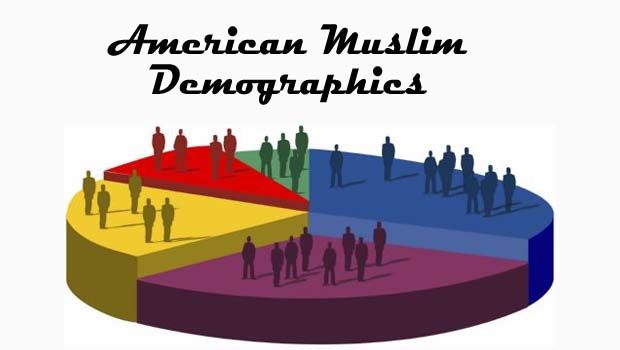
    American Muslim Demographics

    [button size=medium style=less_round color=gray align=none url=http://hipcast.com/podcast/HNTT6h7s]Click here to listen to this article in audio[/button]

    63%

    Almost two-thirds of American Muslim adults are first-generation immigrants from at least 77 different countries

    37%

    More than a third of Muslim American adults were born in the United States

    81%

    The vast majority surveyed, more than three-quarters, report that they are U.S. Citizens

    59%

    More than half of adult Muslims are between the ages of 18 and 39, compared with 40% of adults in the general public

    Source: Pew Research Survey 2011


  • Lessons of the ‘War on Terror’ Can Provide Strength

    Lessons of the ‘War on Terror’ Can Provide Strength

    Fifteen years ago, who would have foreseen that the United States government would be openly engaged in widespread assassinations around the world, “targeted killings” of individuals, including U.S. citizens, deemed enemies in the endless “war on terror,” without trial? The symptoms of the domes-tic war on terror, similarly, feel unreal. That a number of politicians and public officials in 2015 are openly calling for internment of Muslims or identity cards bearing our religion, without apparent detriment to their popularity, has many of us feeling shaken.

    Why do the war on terror and parallel systems operate to marginalize and repress the voices of “minority” communities?

    Government targeting of Muslims, and the public animosity the war on terror has directed against our communities, have been tremendously isolating. Following recent attacks in Paris, many have commented that the climate of bigotry and rates of hate crimes against Muslims may be at their most in-tense levels since immediately after the World Trade Center attacks in 2001. Within our Muslim com-munities, morale is low, and fatigue and anxiety about our future in the United States is high.

    But a cursory look at history demonstrates that our current experience, while it may feel unprecedented to many of us, is far from unusual. The war on terror today provides an infrastructure to re-press political dissent, like so many systems before it. If we are to remain resilient in our determined efforts to stop this endless war, and its accompanying erosion of civil rights at home, we must under-stand the parallels to previous times of repression and the elements that inevitably come into play. Only in that way can we build solidarity and collaborative strength with other targeted communities.

    ‘Countering Violent Extremism’ (CVE)

    Before discussing historical and contemporary parallels relevant to the war on terror, it is useful to ex-amine a broad-based campaign heavily informing our current experience in the United States, as well as in Australia, Canada, as well as many countries internationally: “countering violent extremism” or CVE.

    If there is an empowering lesson, then, to be drawn from the escalation of the “war on terror,” perhaps it is that policymakers recognize our growing potential to secure influence.

    CVE represents one of the latest forms of interference in Muslims’ self-determination and privacy within the war on terror. It is based on empirically debunked ideas that ideology increases propensity for violence, and that identifying supposed “vulnerabilities” to “extremism” can help predict and pre-vent violence. Through CVE, the U.S. government seeks to outsource ideological profiling and deprogramming to teachers, school counselors, psychologists, public health professionals, and other social services providers — encouraging these trusted professionals to view First Amendment protected activity, or routine adolescent behavior, as pre-criminal indicators of so-called radicalization or “extremism.”

    The language promoting CVE is calibrated to resonate with social service professionals’ deep commitment to the well-being and success of their patients, clients, and students. As a counterterrorism lexicon would likely raise red flags about CVE’s incompatibility with missions to promote health and education, in the United States — as in the U.K. before us — euphemisms like “community resilience” are often used to promote CVE.

    The ongoing war on terror must also lead us to more a critical understanding of race.

    Whereas many Muslims have grown accustomed to believing our religious gatherings and even secular events are likely to be monitored by law enforcement, CVE has further eroded our expectations of privacy such that many of us are uncertain under what circumstances the utilizing of social services will remain safe and confidential. CVE seeks to permeate the last vestiges of normal social interaction, privacy, and dignity for our communities — our schools, our interactions with trusted health care providers, and even parent-child relationships.

    Historical Parallels

    War on terror practices have numerous parallels in American history. Contextualizing the targeting of Muslim communities today is instructive for understanding the nature of the domestic war on terror.

    Shortly after the Russian Revolution and the end of World War I, at a time of heightened social activism, the U.S. government carried out the Palmer Raids of 1919-1920 against suspected anarchists, communists, and leftists. Led by U.S. Attorney General A. Mitchell Palmer, the campaign imprisoned, without access to counsel, thousands of U.S. citizens, and deported hundreds of immigrants without due process. The Palmer Raids were directed primarily at minorities suspected of disloyalty — especially German, Irish, and Russian immigrants — and were, of course, only one piece of the Red Scare era that treated political “radicals” as national security threats.

    A later shameful manifestation of American policing of suspect communities was the internment of Japanese Americans during World War II. Following the attacks on Pearl Harbor by the Japanese military, President Franklin D. Roosevelt suspended certain constitutional protections through Executive Order 9066, allowing for the military to designate areas from which “any or all persons” could be excluded. Approximately 120,000 Japanese Americans living on the West Coast of the United States — the majority U.S. citizens — were relocated to concentration camps where they were held, for years, without opportunity to challenge their incarceration. These egregious violations of Japanese Americans’ human rights were ostensibly motivated by national security concerns, though Japanese Americans themselves were often told the relocation was for their own “protection.” Today, this episode is widely understood as a result of intense racism and irrational fears about Japanese Americans’ loyalty to the United States. Yet, it is clear from recent calls for internment of Muslim Americans that the repugnance of rounding up and interring Japanese American citizens has not been universally acknowledged and condemned.

    During the Cold War (the period following WWII, up to the early ‘90s), the FBI pursued the covert COINTELPRO (Counter Intelligence Program) to infiltrate, disrupt, and undermine the political activism of a number of perceived radical groups. Launched in 1956, the program focused on communist and socialist groups as well as antiwar activists, Black liberation activists, and civil rights leaders including Martin Luther King and Malcolm X, the American Indian Movement, advocates for Puerto Rican independence, feminist groups, and others. The program officially ended in 1971, but its tactics have echoes in modern surveillance of antiwar, Black liberation, and other activists. For contemporary activists, COINTELPRO’s stratagem of sowing mistrust and factionalism within activist movements to debilitate them, continues to bear lessons for movement organizing.

    These historical episodes help underscore that abuse of the human and civil rights of targeted com-munities and groups — often through suspension of constitutional protections — have frequently been justified with appeals to national security. Yet, disclosure over the decades since WWII, through declassified internal government documents, academic research, independent investigative journal-ism, and the testimony of whistleblowers, demonstrates that the motivation behind these programs and policies was instead the undermining of political dissent and the freedoms of speech, press, and assembly.

    Contemporary Parallels

    We need not look further than the present day to understand the ways the struggles of various tar-geted communities are intertwined. While the exact tools of repression and political control vary, there are similarities between the treatment of Muslims in the domestic war on terror and the treat-ment of other racial minorities — in particular Black and Latino Americans. The new Jim Crow system ensnares Black Americans and other minorities in a complex of discrimination and vastly disproportion-ate incarceration, denied rights as veritable second-class citizens; and racialized immigration enforcement against Latino Americans constitutes an additional prong of an American racial caste system.

    Clearly, just as slavery and Jim Crow (the system of anti-black laws in place following the abolition of slavery in the 19th century, through to the mid-20th century) obstructed Black Americans’ political voice and extracted profits from their forced labor, modern systems such as gang watch-listing, the school-to-prison pipeline, racialized policing and the “war on drugs,” mass incarceration, disenfranchisement of the formerly incarcerated, and surveillance of Black Liberation activists perpetuate Black Americans’ political marginalization and repression. Mass incarceration fragments Black American, including many Black Muslim, communities — arguably more directly than the division of Muslim communities through war on terror surveillance — by physically separating families.

    Latino influence in the United States is similarly repressed through discriminatory immigration laws that racially engineer our populace. Latino immigrants face heightened barriers to documentation and citizenship compared to many other groups. Aggressive prosecutions and long sentences for victim-less immigration offenses (such as “entry without inspection”) disproportionately target Latinos and thereby inflate Latino incarceration rates. “Local enforcement” deportation programs like the “Priority Enforcement Program” or “PEP” (formerly known as “S-Comm” or “Secure Communities”) also dis-proportionately target Latinos. The disruption to Latino communities of ongoing family separation through deportation — often to countries where deportees’ lives may be endangered — cannot be overstated.

    Many Muslim immigrants have also experienced our immigration system being wielded to suppress our political participation under the war on terror. For Muslims, of course, discriminatory immigration practices are predicated on national security pretexts. For example, under CARRP (the “Controlled Application Resolution and Review Program”), wrongful delays and effective denials of Muslims’ immigration and citizenship applications result from immigration officials’ deference to intelligence agencies — primarily the FBI. The fact that CARRP’s victims are generally not found to have any background warranting deportation, but are allowed to languish in the United States for years without approval of their applications or explanation for effective denials, undercuts the claim that CARRP advances national security. CARRP does, however, suppress rates of Muslim citizenship.

    Impacts on Our Communities of the Ongoing War on Terror

    It is not surprising that the war on terror has diminished our communities’ capacity to effectively organize and advocate. When, at the start of this “war,” Muslims came under increasing attack in public discourse and through government practices, many initially found our spaces of worship to provide sanctuary. But as it grew clear that mosques and Muslim Student Associations had become spaces of government surveillance, many who once took comfort in our prayer spaces have been alienated by a sense that these places of religious dedication and social participation no longer belong to us, but have been leveraged as law enforcement tools. In the current phase of this ongoing “war,” CVE pro-grams threaten to destroy the remaining privacy and dignity for Muslim communities in the U.S. and internationally — as they have already begun to do, for example, in the UK.

    Widespread suspicion of Muslims is not only an external societal challenge; extensive use of inform-ants and, now, CVE campaigns that threaten to intensify divisions among those law enforcement agencies view as “Good Muslims” and “Bad Muslims,” have undermined our community cohesion, as well. We face a danger, born of repeated targeting, of further internalizing our suspect community status.

    What Sort of Threat Are We?

    Why do the war on terror and parallel systems operate to marginalize and repress the voices of “minority” communities? There is, of course, no finite set of architects of the war on terror, the “war or drugs,” or the new Jim Crow. But when any community’s or activist group’s advocacy is viewed as threatening to existing power structures, policy choices will reflect fear of, and the impulse to quash, their dissent and their ability to coordinate and organize for change. One possible way to understand the war on terror, then, is as an accumulation of laws and practices reflecting fear of Muslim power and seeking to limit Muslim influence, domestically and internationally.

    As Muslims, many of us have family and friends living in Muslim-majority countries that have the un-sought distinction of being of particular strategic interest to the United States. Because so many Muslim-majority countries bear witness to, and suffer, the effects of western imperialism, Muslim power threatens to educate the broader western publics about these impacts and spark a discussion about the role of state violence in perpetuating conflicts. Advancement of climate justice and human rights — in particular, accountability for state and corporate violence and equitable enforcement of international law — may be perceived as threatening to western hegemony. The war on terror operates domestically to fragment, isolate, and disempower communities so that many are afraid to vocally object to foreign policy and mobilize for change. It is no coincidence that CVE in the U.K., under the name of “Preventing Violent Extremism” or “Prevent,” has labelled misconception and/or rejection of UK foreign policy” as a so-called grievance which “may play an important part in the early indoctrination of vulnerable individuals into the acceptance of a radical view and extremist ideology.”

    Muslims’ status and targeting as a perceived political threat is, of course, not unique. Muslim and Latino immigrants alike are witnesses to the impacts of the international “wars” on terror and drugs, of American corporate practices, international trade policies, and the conduct of foreign regimes sup-ported by the U.S. government. The primary targets of the new Jim Crow — Black Americans, including Black Muslim Americans — are also authoritative witnesses to the impacts of the “war on drugs” and domestic state violence. Black Americans’ continued subjugation, over-policing, and mass incarceration accrues profits to the prison and military industries and supplies cheap prison labor. Domestic counterterrorism policies, meanwhile, operate to chill Muslims’ dissent against international war on terror campaigns like the drone program, which kills numerous civilians, and U.S. government support for authoritarian regimes with abysmal human rights records.

    Strength in Connecting Struggles

    The vehemence of attacks against Muslim communities, and the ubiquitousness of discourse discussing Muslims as fascinating objects to be analyzed, subdued and “integrated,” suggest our power is viewed as a growing threat. If there is an empowering lesson, then, to be drawn from the escalation of the war on terror, perhaps it is that there is a growing recognition of our potential to organize and mobilize for change. Why else would CVE seek to extend ideological deprogramming into our children’s schools, our doctors’ offices, and our family relationships? Why else would social media, a tool so powerful in the unfinished Arab Spring, be increasingly portrayed as a potential vehicle of “material support” for terrorists or a dangerous brainwashing tool?

    Our American Muslim history is inextricably tied with social justice struggles — in particular the struggles of Black Muslim Americans — that long predate the war on terror. We have, therefore, within our American Muslim communities, tremendous experience and expertise to guide us in this struggle. We must also listen to other targeted communities to better understand their struggles and to join and amplify our collective voices in order to more effectively combat the efforts to censor and silence us.

    The ongoing war on terror must also lead us to more a critical understanding of race. The purpose of “whiteness,” in a caste system, is its supremacy, and white supremacy cannot exist without relation to other, subjugated races. “Whiteness,” in other words, is not an incidental feature of birth, genetics, and cultural identity, but a wedge, advancing an agenda to divide communities with shared interests. This division is accomplished by encouraging the silence of those who benefit from white supremacy, and creating an environment of fear and fragmentation among those who suffer discrimination, and pressures to distance themselves from other “suspect communities.” A racial caste system will always divide us, sabotage effective organizing, and perpetrate ongoing injustice against the most targeted members of our society. Rather than seek advancement within this caste system, we must all commit to dismantle it.

    When communities are isolated, dehumanized, and vilified in an attempt to prevent their influence, a commitment to engage in ideological “moderation” is no solution. The abdication of radical politics will only allow for the continuation of destructive policies and practices we have the power and obligation to change. This is not the time to restrain urgent calls for human rights and justice. When asked about “our solution” to the problems the terror and drug wars ostensibly seek to end, let us have the courage to reframe the question. Let us speak boldly together about the imperialism, environmental devastation, and state violence that endanger our communities and feed conflict. Let us join our struggles and reclaim our power together.

  • Interview: From MSA to ICNA and ISNA

    Interview: From MSA to ICNA and ISNA

    Dr. Talat Sultan, originally from Pakistan, immigrated to the U.S. in 1962. He earned his Master’s in Islamic history and culture from the University of Karachi and then a Doctorate of Education from UCLA. He has served as the principal of a number of Islamic fulltime schools in Memphis, Chicago, Phoenix, and Alexandria, Virginia. Dr. Sultan taught and served as the chair of the Division of Education and Psychology at Barber-Scotia College in North Carolina for 14 years, and as a professor of research in Islamic education at Umm Al-Qura University, in Makkah, Saudi Arabia. His further contributions include serving as the Director of Education for ISNA, the first President of ICNA from 1968 to 1975 and then again 2003-05, and president of AMSS (Association of Muslim Social Scientists).

    Question: What did the early Muslim immigrants to the U.S. find with regard to Islamic groups and organizations?

    In the 1950s, many Muslim youth started coming to the U.S. for higher education. When they arrived, they did not find very many organized Islamic groups here. The largest national organization of Muslims –Nation of Islam — was not an authentic Islamic organization. It was led by a self-proclaimed prophet, Elijah Muhammad, who had mixed some Islamic tenets with his own distorted beliefs. The only other national organization was the Federation of Islamic Associations (FIA). It was a loose association of a few Islamic centers that held an annual convention to provide an opportunity for Muslims, especially Muslim youth, to socialize. Many Islamic norms were violated in that process.

    Question: How did the organizational work begin that led to the formation of MSA, and how did it progress over those early years?

    Muslim students started to form Islamic organizations on their campuses. Some efforts were made in 1950s to forge a union of all campus organizations on the national level, but financial considerations became the main obstacle. The second such known effort took place on January 1, 1963 when it was resolved that we would work hard for the sake of Allah SWT to overcome all difficulties and within a period of three months, we established a network of communication with 200 universities and colleges. Dr. Ahmad Sakr, who recently passed away, may Allah SWT have mercy on him, was a graduate student in Food Technology at the University of Illinois, Champaign – Urbana, and he hosted the first convention of the Muslim Student Association of U.S. and Canada in April, 1963. Five universities were represented, with 15 individuals in attendance. That convention heralded the coming of ISNA, the national organization that was officially founded in 1982.

    MSA’s motto, “And hold firmly to the rope of Allah all together, and do not become divided…” (Quran 3:103), clearly reflects the very purpose of the organization, given that there was at that time no authentically Islamic national organization to unify Muslims. This was, indeed, the need of the hour and soon MSA became not only an association of chapters on almost all major campuses in the U.S. and Canada, but also an organization representing various Islamic centers. The MSA annual conventions soon became a gathering of people from around the world.

    Question: What was the focus of MSA in the early years?

    A number of projects were developed that focused on providing support and guidance to Muslims, including the establishing of congregational prayer on campuses, development of a network of Islamic centers, providing assistance in funeral services and burials, and other services. One initiative was North American Islamic Trust (NAIT), the financial arm of the MSA, focused on the financial and investment needs of Muslim individuals, organizations, and businesses. It set up a special fund to accept deposits from Islamic centers, then making interest-free investments and providing them with halal, profit-and-loss-sharing returns. NAIT also offered legal and arbitration services. Initially established in the early 1970s with Dr. Jamal Barzingi (M) as its first general manager, NAIT continues today to provide capital growth and investment services. Some of its other general managers have included Dr. Abu Saud (M), Br. Mohammad Badr, Dr. Yaqub Mirza, and Br. Mohammad Naziruddin Ali (M).

    MSA also focused on dawah among Muslims, including arranging weekly meetings, regional conferences, and annual conventions. Their tarbiyah, or educational initiatives, focused mostly on organizing youth camps and an annual imam training program. MSA published a regular MSA Newsletter and later, since the 1970s, the ISNA magazine, Islamic Horizons, first on a monthly and now on a bi-monthly basis. In the ‘70s and ‘80s, an important scholarly journal, Al-Ittihad, was published annually. NAIT also established American Trust Publications (ATP), a publishing division, in 1976, which has published original books on Islam, as well as translating a number of important works into English.

    There were another two marvelous divisions. One was the Audio-Visual Center which over the years produced cassette tapes of Quranic recitation for distribution around the world, as well as tapes of the proceedings of conferences and conventions held by MSA and then ISNA. The other important division was the Islamic Book Service (IBS) which distributed books and tapes in the U.S. and overseas. For a while, under the direction of another dedicated MSA leader, Br. Abdul Mateen Chida (M), a printing division, International Graphics, was also established, but it was later sold to a private Islamic enterprise.

    Question: Did MSA develop educational projects and what, if any, initiatives were put forward to establish Islamic schools?

    When MSA’s permanent headquarters was established in 1974 at Indianapolis, an education committee was established. As chairman of the committee, my first responsibility was to conduct teacher training workshops. In 1982, we decided to establish two model fulltime Islamic schools. The first school was established in Toronto under the leadership of Br. Abdullah Idris Ali who served as its first principal. This effort became a stepping stone for the establishment of many excellent schools nationwide.

    MSA also established a program to assist Islamic centers in their development of weekend Islamic schools. They published the “Manual for Weekend Islamic Schools” and it was widely distributed. The book, “A Guide for Muslim Parents & Teachers for Educating Muslim Children and Youth” was published in 1979 by Dr. Anis Ahmed, the second director of education. When I succeeded him, it was recognized that the need was not restricted to weekend schools as there were quite a few fulltime Islamic schools looking for similar guidance. So I started my work on “Curriculum Guide for Islamic Studies” that was published by Umm Al-Qura University in 1992, and distributed by ISNA to all fulltime and weekend Islamic schools. Another important educational activity was the annual meeting of fulltime Islamic school (FTIS) administrators. A comprehensive study of these schools was also conducted. These meetings were the predecessor of two ISNA educational activities that continue to this day: the Annual Education Forum and CISNA (Council for Islamic Schools of North America). The Council works to help FTIS to acquire accreditation.

    Question: How was MSA, and then ISNA, involved in dawah work?

    One of the most important challenges MSA recognized from its inception was to bring the so-called Nation of Islam within the purview of authentic, mainstream Islam. Regular contact was established with the NOI leaders including Warith Deen Muhammad (M), the son of Elijah Muhammad, who succeeded him as the imam and leader of the group. MSA organized an Imam Training Camp for the Bilalians (the first alternative name to NOI). A stalwart of Islamic work in North America, Imam Siraj Wahaj, emerged from that process to influence and support NOI to move onto the path of mainstream Islam.

    In order to further enhance dawah among new Muslims and non-Muslims, the Islamic Teaching Center (ITC) was established by the dynamic and enthusiastic efforts of Dr. Altijani Abu-Guderi (M), a former president of MSA and the first director of education. He became the first director-general of ITC. I was a member of the ITC Board of Trustees from the start. I later served as its acting director-general for a year.

    Beside imam training and scholarship programs, ITC’s major thrust was its dawah project for those who were incarcerated. Br. John Sullivan was our devoted director of correctional facilities and carried out a correspondence course for the new Muslim inmates. He and his team visited the correctional facilities regularly. It was around the same time that Muslim chaplains began being hired by the prisons as well as by the military, in no small way through the efforts of Br. John and his dedicated team.

    Question: Were there other programs or initiatives that were part of the MSA/ISNA agenda?

    One of the responsibilities of the director of education was to hold the Youth Committee meetings. I prepared a proposal for the organization of Muslim Youth of North America (MYNA), and it was approved by the Executive Council in 1983. It is still an active constituent of ISNA and its president sits on the Majlis Shura.

    Another major MSA project was the initiation of three professional organizations. The first was the Islamic Medical Association, which is now IMANA, established in late 1960s. The Association of Muslim Scientists & Engineers (AMSE) was founded in the early 1970s. The third organization is the Association of Muslim Social Scientists (AMSS). It was founded in 1972, an inspiration of the great scholar and professor, Ismail Faruqi (shaheed), who was its first president.

    Question: Can you describe the transition from MSA to ISNA?

    MSA was a student organization, but those of us who graduated from our respective universities and colleges continued to carry our MSA membership. By 1977, almost 70 percent of the membership was non-student. The same year, about fifteen years since MSA’s establishment, it was felt that there was a need to hold a meeting of all core members. Roughly 70 brothers and sisters assembled at the newly acquired headquarters in Plainfield, IN during the December holidays. They appointed an Future Vision Committee to review organizational progress. I served as a member of that committee.

    The committee recommended that an umbrella organization, with the name Islamic Society of North America, be formed. All other organizations would become constituent parts of ISNA. The Council of Presidents (AMSS, AMSE, IMA, and MSA) approved the proposal and appointed a Steering Committee to work on the constitution of ISNA and outline a schedule of implementation. I was Chairman of the Council of Presidents, and after much hard work by the committee, I presented the resolution to establish ISNA and it was unanimously adopted during the 19th MSA convention. That was the last MSA convention, in May of 1981. After the constitution was approved by the membership, Br. Ilyas Ba-Unus was elected as its first president.

    The primary focus of work under ISNA was the same as that of MSA. And in the same spirit as MSA’s mission, ISNA’s new motto was “Indeed, this community of yours is a single community and I am your Lord, so obey Me” (Quran 23:52). Muslim unity was the foremost concern, with education as the second highest priority on our agenda.

    Question: Can you please describe how ICNA was established?

    In the years leading up to the establishment of ISNA, many of us recognized the need for a grassroots dawah movement to invite non-Muslims to Islam and to educate Muslims about Islam as a way of life and daily dedication to Allah SWT. Those involved in this dawah work would need to be committed to developing their Islamic character, striving only for the sake of Allah SWT, and to utilizing all legal and peaceful means to accomplish this work. In September, 1968, the Halqa-e-Ahbab (Circle of Friends) was established. I was chosen as its first president. On January 1, 1970, during a special meeting in Northville, Michigan, the first constitution was adopted. The name was changed to Halqa Ahbab-e-Islami (Islamic Circle of Friends). Formal membership was introduced. I was re-elected as the president and, in 1974 at Columbia University, the first public event was held with Maulana Sayyid Abul Ala Mawdudi who was on a personal visit to the U.S. The regional meetings of Islamic Circle of Friends were held during the regional conferences of MSA. The first separate regional conference was organized by the Eastern Region that included our largest unit, New York, held in Sanford, Connecticut in 1974. By 1977, the work was expanded to 16 cities. The first national convention was held in 1976 in Chicago.

    I served seven years as president and then Dr. Anis Ahmed was elected in 1975. But in 1977, I was again made acting President as Br. Anis had to complete his dissertation. During that time, I drafted the proposed new constitution and after a great deal of discussion, the draft was approved by the Shura. A special meeting of all the members was held on Thanksgiving weekend in November, 1977 at the Islamic Center in Jersey City. About 70 members attended. The debate continued for three days and nights! Finally the constitution of the Islamic Circle of North America (ICNA) was adopted. ICNA now has chapters across the U.S. and focuses its work on education, outreach to the greater American community and interfaith cooperation, and social services.

    Over the years, ICNA has launched many initiatives that have grown to national prominence, like ICNA Relief, Helping Hand for Relief and Development, 877-Why-Islam and GainPeace dawah projects, Muslim Alert Network, Sound Vision, Muslim Savings Investment, Muslim Children of North America, ICNA Sisters Wing, Young Muslims, The Message magazine, Council for Social Justice, Islamic Learning Foundation, Muslim Family Day, Muslim Family Services, among many others.

    I have been blessed by Allah SWT to have been part of this movement and have the opportunity to continue on this path, fulfilling my dream of doing Islamic work and dawah in America. Alhamdulillah.

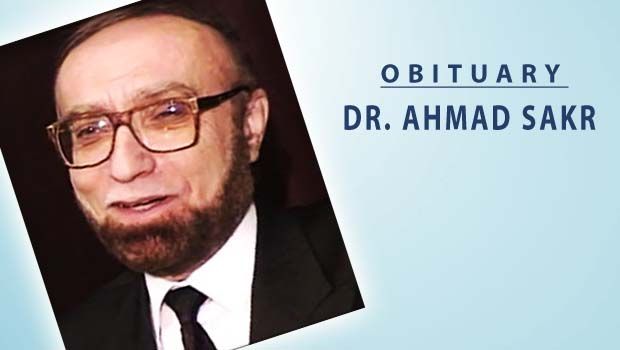
  • Obituary: Dr. Ahmad Sakr

    Obituary: Dr. Ahmad Sakr

    Born in Beirut, Lebanon, Dr. Sakr got his Ph.D. from the University of Illinois. He was a founding member and president of the Muslim Students’ Association (MSA) as well as a founding member of the World Council of Mosques, Makkah. He was the first director and representative of the Muslim World League to the U.N.

    Dr. Ahmad Sakr passed away on November 23, 2015. May Allah SWT have mercy on him and admit Him to Paradise. The path Dr. Sakr followed was one that faithfully emulated our Prophet, may the peace and blessings of Allah be upon him. His dedication will always stand out in the beautiful memories we have of him, and will always remind us of the strengths and blessings of faith. He played an inspirational role in the founding of many Islamic institutions and centers, including the first Islamic college in the United States, the American Islamic College of Chicago. He was a founding member and president of the Muslim Students’ Association (MSA), and a founding member of the World Council of Mosques in Makkah. Dr. Sakr was a staunch supporter of ICNA, active in interfaith activities, published more than fifty books, and was a board member of the Islamic Food and Nutrition Council of America.

    Dr. Sakr was a selfless community leader and tireless Islamic worker. He was regularly invited to fundraise for various community projects and he did so without compensation. He happily accepted his role in serving communities around the country and beyond. He also offered his guidance and wisdom to individuals facing personal problems, be they Muslim or non-Muslim, and he was always tried to make himself available to those in need.

    One of the early Muslims hoping to build a strong community in America, Dr. Sakr collaborated with brothers and sisters from nations around the world who had settled in the U.S., helping to clear the path for the future Muslim generations in America. They prepared the foundation for the vibrant and active American Muslim spirit that we see around us today. They learned to adapt to a new culture, assimilating into the American fabric of life while holding strong to the teachings of Quran and Sunnah. Dr. Sakr’s confidence in meeting the challenges he and his contemporaries encountered set the bar high so that today’s generation can move forward armed with trust in Allah SWT, guided by His light and empowered through the knowledge of His deen. He was a father, an uncle, a teacher, and a counselor. He inspired in us the ability to channel the strength of Omar, the gentleness of Abu Bakr, the shyness of Othman, and the knowledge of Ali, may Allah bless them all.

    Dr. Sakr once shared with me an issue that bothered him. He said, “Why do the obstructionists do what they do, despite having knowledge and understanding that what we are trying to do to build Islam [in America] is a good thing? They make us fail in endeavors again and again.” I pondered this question for many years since then, and I finally realized the obstructionists’ aim was to disrupt our unity. I would say to Dr. Sakr, my teacher, if he were still with us, a phrase uttered by the Emperor of Rome, Marcus Aurelius: “What we do today echoes in eternity.” Thus, we must persevere to make today better.

    I would also say to him, “My teacher, you have departed from us as we face challenges today that are unprecedented. We have met the challenge of absolving our faith from the deception enacted by people from our own creed. We must now carry the torch of faith and pass it on, uncorrupted, to the next generation. Then, insha’Allah, we will deliver the new generation to a safe ground so they can grow into faith with the clarity that the Prophet, may the peace and blessings of Allah be upon him, left us with.

    “I say to you my teacher, we will, God willing, be the men and women who stand firm, carrying this generation on our shoulders and uplifting the spirit of the dejected. Allah only allows us to succeed when we care for the weak and empower the destitute. May Allah SWT allow us to meet on the Day of Judgment in the circle of the beloved Prophet and his companions. Ameen.”

  • Some Notable and Renowned American Muslims

    Some Notable and Renowned American Muslims

    [button size=medium style=less_round color=gray align=none url=http://hipcast.com/podcast/HDYwjjSs]Click here to listen audio podcast of this article[/button]

    Malcolm X

    Malcolm Little, born in 1925, became a drug addict and petty criminal. He converted to Islam while in prison, named himself Malcolm X, and began a quest for knowledge that continued throughout his life. Affiliated with the Nation of Islam, he became disillusioned with its teaching of black supremacy and after traveling in Africa and the Middle East, and making Hajj in 1964, he embraced the teachings of orthodox Islam and took the name Al-Hajj Malik Al-Shabazz. In 1965 he was assassinated. “The Autobiography of Malcolm X” is considered one of the most important nonfiction works of the 20th century.

    Muhammad Ali

    Muhammad Ali, born Cassius Marcellus Clay, Jr. in 1942 in Kentucky, is a former professional boxer, generally considered one of the greatest heavyweights in the history of the sport. Arguably the most recognized and loved sports figure of the past 100 years, he was crowned “Sportsman of the Century” by Sports Illustrated and “Sports Personality of the Century” by the BBC. Ali is also known for his dedication to his faith, his principled stance against the Vietnam War, his humanitarian work, and his fundraising for research on Parkinson’s disease.

    Hakeem Olajuwon

    Olajuwon, a 12-time NBA All-Star, led the Houston Rockets to two NBA championships. After he retired in 2002, his #34 jersey was retired by the Rockets, and a monument honoring him is outside the Rockets’ arena. He was inducted into the Basketball Hall of Fame in 2008.

    Keith Ellison and Andre Carson

    In 2006, Keith Ellison was the first American Muslim elected to the U.S. House of Representatives. He is now in his fourth term representing a Minnesota district. In 2008, another Muslim, André Carson, won a congressional seat for Indiana.

    Fazlur Rahman Khan

    Acclaimed as an engineer and architect, Khan designed systems for high-rise building construction. Two of his most notable achievements are Chicago’s John Hancock Center and the Sears Tower.

    Fareed Zakaria

    CNN talk show host and editor-at-large for TIME magazine

    Dr. Mehmet Oz

    Surgeon and TV host

    Shahid Khan

    Owner of an NFL team, the Jacksonville Jaguars

    Jawed Karim

    Co-founder of YouTube

  • Muslims Have Been Here for Centuries

    Muslims Have Been Here for Centuries

    Islamic presence in the Americas since the 1400s is well documented
    1178 – Muslims Sail to America

    A Chinese source known as the Sung Document records Muslim sailors journeying to a land known as Mu-Lan-Pi, which some researchers identify as the American continent.

    1300s – African Muslims Explore the New World

    According to some scholars, Abu Bakari, a king of the Muslim state of Mali in West Africa, initiated a series of sea voyages to North America beginning in the early 1300s. About the same time, Mandingo Muslims from Mali and other parts of West Africa are said to have arrived in the Gulf of Mexico and traveled up the Mississippi River to explore the interior of the North American continent.

    1527 – Spanish Explorers and Spanish Refugees

    Estevanico of Azamor, a Moroccan Muslim, arrived in Florida with the expedition of Panfilo de Narvaez in 1527. He stayed in America and joined expeditions across the continent to Arizona and New Mexico. By the late 1700s, historical records indicate the presence of Spanish “Moors” living in South Carolina, many of whom were expelled from their homeland by edict of the Spanish Crown.

    1530 – African Slaves Begin to Arrive in the Americas

    During three centuries of the slave trade, over 10 million Africans were enslaved and brought to the Americas. Scholars estimate that 10-30 percent of these slaves were Muslim, although practicing Islam had to be done in secret, and many slaves were forced to convert to Christianity.

    1807 – Freed Muslim Slave Puts Down Roots in America

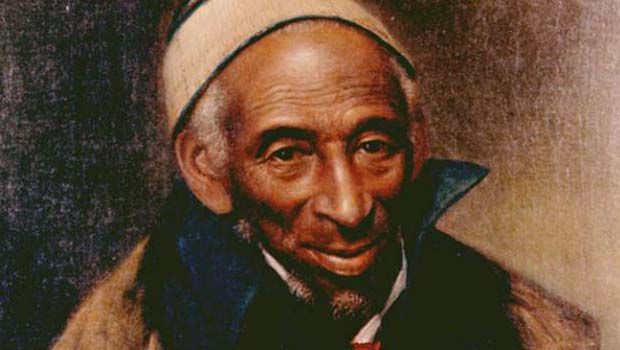
    Yarrow Mamout is an example of Muslim ex-slaves putting down roots in the U.S. Enslaved at 16 and brought to Maryland from Guinea in 1752, Mamout was set free in 1801 and became an early shareholder in Columbia bank, the second chartered bank in the country. Today, portraits of Mamout hang in the Historical society of Pennsylvania and the Georgetown Public Library in Washington.

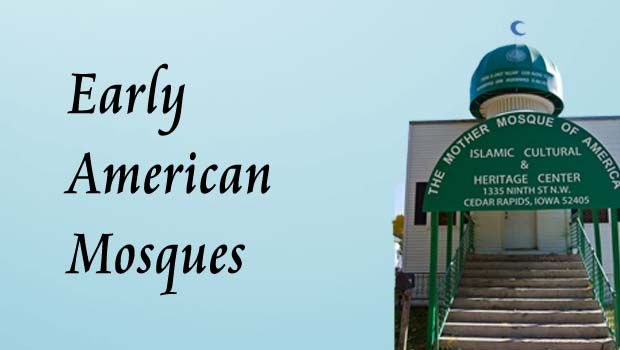
  • Early American Mosques

    Early American Mosques

    Many early Muslim communities were comprised of a few individuals and/or families. They met in private homes for prayers, and rented out halls for the Muslim holidays.

    1900 – First Documented Communal Muslim Prayers

    Muslims of Arab descent in Ross, North Dakota gathered in homes for the first documented communal prayers held by American Muslims.

    1915 – Mosque Built in Biddeford, Maine

    Albanian Muslims built a mosque in Biddeford, Maine and established an Islamic association. In 1919, they established another mosque in Waterbury, Connecticut. These were among the first Islamic associations in America.

    1929 – Mosque Built in Rural North Dakota

    The small Ross community built the mosque, but in time it fell into disrepair as some Muslims relocated and others passed away. It was rebuilt in 2005 in memory of one of the town’s few remaining Muslims.

    1934 – The Mother Mosque of America

    Lebanese Muslims in Cedar Rapids, IA built this mosque in 1934; it is the longest continually standing Muslim house of worship still in use today.

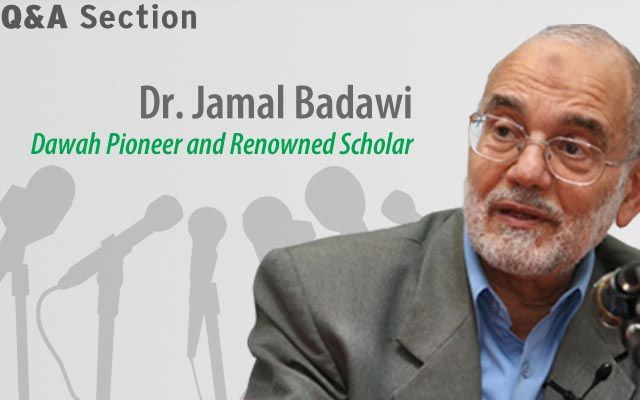
  • Interview: Dr. Jamal Badawi – Knowing Jesus

    Interview: Dr. Jamal Badawi – Knowing Jesus

    Understanding and Misunderstanding about Jesus:A Conversation with Dr.Jamal Badawi

    Q:  How many times was Jesus mentioned in the Qur’an and what is the extent of coverage given to his life in the Qur’an? 

    Jamal Badawi:  There are at least eleven chapters in the Qur’an where the name of Jesus or mention of him, his birth and life are mentioned.  This is nothing extraneous or exterior to the belief of a Muslim.  The chapters that contain mention of Prophet Jesus are 2, 3, 4, 5, 9, 19, 21, 23, 43, 57 and 61. There are one hundred and fourteen chapters in the Qur’an and eleven of them mention Jesus. This shows the substantiality of Prophet Jesus.

    The nineteenth chapter in the Qur’an is titled after Jesus’ mother, Surah Maryam or Chapter of Mary.  Chapter three is titled after Mary’s family and is called Al’Imran or The Family of Imran.  Chapter five is titled Al Ma’ida or The Table and tells the Islamic version of The Last Supper.  So the titles of three chapters in the Qur’an are related in some form or another to the story of Jesus (PBUH) as is presented in the Qur’an.

    Q:  Did Mary, according to the Qur’an, predict her predicament?  Did she know beforehand that she was going to be with child, and that child was going to be Jesus and that his status in life was going to be that important?

    JB: According to the Qur’an, she did have some notion or at least an idea of the kind of miracle that was going to take place through her.  According to the Qur’an, there is no dispute on the birth of Jesus as a virgin birth.  She gave birth before she married Joseph the carpenter.  As I said, the way he was born is the most outstanding miracle of Prophet Jesus (PBUH).

    The summary of the verses in regards to Jesus, show that at one point Mary was alone in a place secluded from her family and there appeared to her the angel of God in the form of a human being.  In the beginning she was scared since she was alone. She implored him not to get near her if he really feared God.  He told her not to be afraid, he was not there to hurt her and he was simply coming to bring her the news of the birth of a noble and pure child.

    The translation from the Qur’an says, “Relate in the Book (the story of) Mary, when she withdrew from her family to a place in the East.  She placed a screen (to screen herself) from them; then We sent her our angel, and he appeared before her as a man in all respects.  She said: ‘I seek refuge from thee in (Allah) Most Gracious: (come not near) if thou dost fear Allah.’  He said: ‘Nay, I am only a messenger from thy Lord, (to announce) to thee the gift of a holy son.’  She said: ‘How shall I have a son, seeing that no man has touched me, and I am not unchaste?’  He said: ‘So (it will be): Thy Lord saith – That is easy for Me, and (We wish) to appoint him as a Sign unto men and a Mercy from Us:’ It is a matter (so) decreed’” (19:16-21). This is how the news of the future birth of Jesus was related to Mary.

    Q:  Did Mary deliver Jesus in the normal way- was her childbearing and delivery like everyone else? Were there any miracles in this respect again?

    JB: There is no evidence in the Qur’an that the delivery was unusual. The pregnancy was just like any other woman’s pregnancy.  In fact, the Qur’an talks about Mary suffering the agony of childbirth like any other woman.  The Qur’an also says that she was very distressed psychologically because she was worried about what her people would think of her and how she was going to explain this virgin birth.  She was afraid nobody would believe her.  The Qur’an also indicates that something miraculous happened immediately after Jesus was born.  Jesus assured her and told her what to do when people asked her questions or made accusations against her.The Qur’an states, “So she conceived him, and she retired with him to a remote place.  And the pains of childbirth drove her to the trunk of a palm-tree: She cried (in her anguish): ‘Ah! If only I had died before this! If only I had been a thing forgotten and out of sight!’  But (a voice) cried to her from beneath the (palm-tree): ‘Grieve not! For thy Lord hath provided a rivulet beneath thee; and shake towards thyself the trunk of the palm-tree: It will let fall fresh ripe dates upon thee. So eat and drink and cool (thine) eye. And if thou dost see any man, say: I have vowed a fast to (Allah) Most Gracious, and this day will I not enter into talk with any human being’” (19:22-26).

    The Qur’an continues, “At length she brought the (babe) to her people, carrying him (in her arms). They said: ‘O Mary! Truly an amazing thing hast thou brought!  O sister of Aaron! Thy father was not a man of evil, nor thy mother a woman unchaste!’  But she pointed to the babe. They said: ‘How can we talk to one who is a child in the cradle?’  He said: ‘I am indeed a servant of Allah. He hath given me revelation and made me a prophet; And He hath made me blessed wherever I be, and hath enjoined on me Prayer and Charity as long as I live; (He) hath made me kind to my mother, and not overbearing or miserable; So peace is on me the day I was born, the day that I die, and the day that I shall be raised up to life (again)!’  Such (was) Jesus the son of Mary: (it is) a statement of truth, about which they (vainly) dispute.  It is not befitting to (the majesty of) Allah that He should beget a son. Glory be to Him! When He determines a matter, He only says to it, ‘be’, and it is.  Verily Allah is my Lord and your Lord; therefore serve Him: this is a Way that is straight.  But the sects differ among themselves: and woe to the unbelievers because of the (coming) Judgment of a Momentous Day!  How plainly will they see and hear, the Day that they will appear before Us! But the unjust today are in error manifest!  Warn them of the Day of Distress, when the matter will be determined: for (behold,) they are negligent and they do not believe!  It is We Who will inherit the earth, and all beings thereon; to Us will they all be returned” (19:27-40).

    Q:  Does the Qur’an say that Jesus had only a mother and no father?

    JB:Who is Eve’s father (the first woman)?  Who is Adam’s father?  If a person doesn’t have a physical human father, does this imply that he is divine or he is God?  Then Eve must have been God and Adam must have been God, because they both don’t have parents!  The Qur’an answers this question in one verse, “The similitude of Jesus before God is as that of Adam; He created him from dust, then said to him, ‘be.’ And he was.  The truth (comes) from God alone; so be not of those who doubt” (3:59-60). In accordance to this verse, it simply says that God, who was able to create Adam and Eve without a father or mother, can just as easily create Jesus without a father.  Indeed we should remember it is not only the birth of Prophet Jesus (PBUH) that is miraculous;the birth of any human being is miraculous.  If we study how the various genetic characteristics are passed on, from parents and each of their larger family gene pools to the couple’s children, we should view that as a miracle in itself.  All we can say is that it is both miraculous and unusual in the case of Prophet Jesus.

    The point to remember here is that God isn’t bound to follow the same laws that we consider to be laws of nature, because God himself created nature and these laws.  He can break the rules whenever He wishes; this of course may not necessarily be the pattern as most of the time there is harmony between what we see as natural laws and the will of God, but He has the power whenever He wants to give us certain DivineSigns that break from the norm.

    The Qur’an says, “Behold! The angels said: ‘O Mary! Allah giveth thee glad tidings of a Word from Him: his name will be Christ Jesus, the son of Mary, held in honor in this world and the Hereafter and of (the company of) those nearest to Allah.  He shall speak to the people in childhood and in maturity. And he shall be (of the company) of the righteous.’  She said: ‘O my Lord! How shall I have a son when no man hath touched me?’ He said: ‘Even so: Allah creates what He wills: When He hath decreed a plan, He but saith to it, ‘be,’ and it is!  And Allah will teach him the Book and Wisdom, the Law and the Gospel, and (appoint him) an apostle to the Children of Israel (with this message)’” (3:45-49).

    It is obvious from this that the will of God doesn’t need a human medium to create a pregnancy.  If He decides it He can just order that a child be conceived by a virgin.  God has various unusual methods in creation and the creation of Prophet Jesus (PBUH) completes the picture.  First, was the creation of people without a father or mother, which is the case with Adam.  Then there is the creation of a human being from a man’s rib (side), which is obviously Eve.  Third, there is the normal creation of a human being, both from a mother and a father and that is every one of us.  Last, is the creation of a human being from a mother and not a father.  This beautifully completes the various miracles of God, which are all equally important and stunning.

    Q: What is the difference between Islam’s understanding of the phrase ‘Holy Spirit’ with that of Christians?

    JB:The general understanding of the Holy Spirit is influenced by Greek philosophy, particularly the Platonic ideologies. The gospel of John shows this influence quite extensively. The whole idea of God as the Father, the Son and the Holy Ghost is based very closely on this same Greek philosophy that the Spirit of God or the Holy Spirit or Holy Ghost is a component of God.

    The Qur’an has two different kinds of expressions for the word spirit.  The equivalent Arabic word for the word spirit is rooh’.  In reference to Jesus, in particular, we find that the Qur’an mentions that Jesus was a spirit proceeding from God.  There is also the expression of Holy Spirit/Ghost and each has a different meaning.First, let’s take what the Qur’an means when it says that Jesus was a spirit proceeding from God. Is it exclusive to Jesus or does it apply to other people as well?  The answer is that it applies to all because the word rooh’ appears in the Qur’an in meanings that relate to the context of the verse.  For example, in 42:52 the word spirit is used to refer to revelation (the Holy Book) and that it is a spirit from God.  In 58:22, for example, the spirit is used in a sense of support from God -“and strengthened them with a spirit from Himself.”  It is also used as the secret of life or the source of our spirituality.  This is what is referred to in the Qur’an in respect to Jesus (PBUH) as well as to other human beings.  Chapter 4 verse 171 mentions the spirit in reference to Jesus.  It was also mentioned in a general sense to refer to all human beings because all of us have something of the spirit of God in us.  The Qur’an says, “But He fashioned him in due proportion, and breathed into him something of His spirit” (32:9). This refers to the creation of all human beings.  This means that every human being derives his spirituality, his instinctive natural feeling of a connection with his Creator, from the spirit of God that was breathed into him at the time of creation.

    The other usage of the term Holy Ghost or Holy Spirit is actually used specifically for archangel Gabriel.  He is called Roohul Qudoos which means Holy Spirit or AlRoohul Ameen which means Honest Spirit.  The Qur’an mentions him as the angel who brought revelation to prophets in the past, including Prophet Muhammad.The Qur’an says,“We gave Moses the Book and followed him up with a succession of apostles; We gave Jesus the son of Mary Clear (Signs) and strengthened him with the Holy Spirit. Is it that whenever there comes to you an apostle with what ye yourselves desire not, ye are puffed up with pride? Some ye called impostors, and others ye slay!” (2:87).

    And in another verse, we are told:“Then will Allah say: ‘O Jesus the son of Mary! Recount My favor to thee and to thy mother. Behold! I strengthened thee with the Holy Spirit, so that thou didst speak to the people in childhood and in maturity. Behold! I taught thee the Book and Wisdom, the Law and the Gospel and behold! Thou makes out of clay, as it were, the figure of a bird, by My leave, and thou breathes into it and it becomes a bird by My leave, and thou halest those born blind, and the lepers, by My leave. And behold! Thou brings forth the dead by My leave. And behold! I did restrain the Children of Israel from (violence to) thee when thou didst show them the clear Signs, and the unbelievers among them said: ‘This is nothing but evident magic’” (5:110).All of these verses show that Roohul Qudoos is actually referring specifically to Gabriel.  According to Islam, Gabriel and all other angels are creations of Allah- they are not part of Him.  They are all servants of God just as the prophets are.

    Q: Is there any way that a Muslim can reconcile himself with the ideas of the son of God or ‘Lord’ as they are explained in Biblical literature (The New Testament)?

    JB:In all fairness to our Christian brothers and sisters, I cannot answer that question unless I explain, first, how the Bible uses the term Lord and the term son of God.  This might be the most conclusive evidence, not from a Muslim’s point of view, but from the Bible itself.Take the word Lord, everybody knows that this term doesn’t necessarily mean divine.  In England, there are many Lords but no one would say that there are so many Gods there.  Lord means master.  It is believed that this was the exact meaning people meant when they addressed Jesus as Lord in the New Testament.

    The second term is the son of God. There is ample evidence in The Old Testament that son of God is used for a person who is close to God because of his spirituality and faith, but never because of his divinity.  The Book of Exodus says that Israel was called the first born son of God (4:22-23) but nobody says that he is divine.  In the psalms of David, David is referred to as the son of God (2:7).  In the first Chronicle, Prophet Solomon is also referred to as the son of God (2:10).Ezra (Uzair in the Qur’an, see 9:30) is referred to in the Old Testament.  He lived in 450 B.C. and was regarded as a son of God because of his crucial role, during the Babylonian exile, in recollecting the law of the Torah about a thousand years after Moses.  Evidence from The Old Testament itself shows that the term son of God was used in a metaphoric sense,not in an exclusive or divine sense.

    Even The New Testament uses it in a similar way as The Old Testament.  For example, the book of Matthew says, “Blessed are the peacemakers, for they will be called sons of God” (5:9). There are similar quotations in Matthew (5:45 and 23:9).  In fact, The Old Testament even uses theterm “sons”of God. In the book of Job, this term is used as a plural. It is quite apparent that when Jesus (PBUH) used the term father to refer to God or son to refer to himself, he only meant it in the metaphoric sense. He meant it in the same way that all human beings are children of God because we depend on Him and that God is the father because he loves and cares for all of us.

    Q:  What does the Qur’an have to say about the scope of the mission of Jesus Christ on earth?

    JB: The Qur’an is very clear about the fact that the mission of Prophet Jesus (PBUH) was explicitly and exclusively to guide the people of Israel.  The Qur’an says, “And (appoint him) an apostle to the Children of Israel, (with this message)” (3:49).  It also says, “O Children of Israel! I am the apostle of Allah (sent) to you” (61:6). Also, it discusses the various Israelite prophets saying, “And in their footsteps We sent Jesus the son of Mary, confirming the Law that had come before him” (5:46). Therefore, the Qur’an is very clear about what the mission of Jesus was, and the information found in The New Testament itself attests to this fact.

    Two very explicit quotations regarding Prophet Jesus (PBUH) show the similarity between the Bible and the Qur’an on this point.  The Gospel of Matthew tells the famous story of the Canaanite woman who wanted Jesus to cure her daughter. He says, “I was sent only to the lost sheep of Israel.”  He was very explicit and refused, and later on responded because of her faith (15:24). In Matthew, Jesus was giving instructions to the five disciples: “These twelve, Jesus sent out with the following instructions: ‘Do not go among the Gentiles or enter any town of the Samaritans. Go rather to the lost sheep of Israel” (10:5-6). Again, he is repeating the same principle that he was sent as an Israelite prophet.  This is also implied in Matthew with a very similar confirmation (19:28).  Indeed one can say that there is no evidence in the three synoptic Gospels, Matthew, Mark and Luke, of any clear and decisive statements quoting Jesus that his message is universal and that he was sent for all human beings.

    In fact, I would like to make two comments here to avoid any misunderstanding of these quotations.  The conclusiveness of the expressions of the words of Jesus as quoted in the Gospels definitely overshadow any claim that was developed much later on.  The words of Jesus are more credible than what developed later on when the notion of deifying Jesus gained momentum.The other observation is that although both the Qur’an and the Gospels support that Jesus’ mission was to the children of Israel, it doesn’t mean that none of his teachings can be valid and applicable for those who are not from the Israelites.  In fact, the teachings of all the prophets are relevant for all time and all people, especially concerning the moral aspects and the knowledge of God.  Even though the mission is valid for all time and people, God decided to send one final and universal message with Prophet Muhammad roughly 600 years after Prophet Jesus, may peace and blessings be upon them both.

    Q:  What are the miracles of Jesus? Does the Qur’an touch upon that?

    JB:Well of course the discussion of the virgin birth as one of the miracles has already been covered.  He was also given miracles, like other prophets, to support his mission.  The Qur’an states, “And (appoint him) an apostle to the Children of Israel, (with this message): ‘I have come to you, with a Sign from your Lord, in that I make for you out of clay, as it were, the figure of a bird, and breathe into it, and it becomes a bird by Allah’s leave. And I heal those born blind, and the lepers, and I quicken the dead, by Allah’s leave.And I declare to you what you eat, and what you store in your houses. Surely therein is a Sign for you if you did believe’” (3:49). Prophet Jesus’ miracles, include healing, bringing people back from the dead, and knowing what people store in their homes, are each qualified by Jesus saying“by Allah’s leave,” because God gave him this knowledge and ability.

    Q: Does the Qur’an mention that Jesus was given a divine book or the Gospel?

    JB:The Qur’an mentions a number of Holy Books or scriptures given top articular prophets. These include specific books like the Zaboor (normally interpreted as the psalms from David), the Suhoof (leaves of Prophet Abraham) and the Torah.  The Qur’an mentions the Gospel as Al Injeel, which in Arabic translates to The Good News.  The Qur’an mentions Al Injeel not only once but twelve times in six different chapters.The Qur’an mentions,in the context of other Holy Books,Al Injeel or the Gospel as a book given to Jesus.This leaves a distinct impression that the Qur’an is not referring to The Good News in general but to this specific one given to Jesus.  This may sound quite fascinating that most of our Christian brothers believe that the Gospel simply is the biography of Jesus written by the four writers and not necessarily something that was explicitly revealed to Jesus the same way it was to Muhammad or Moses.

    I have gone through some references that address, as part of Biblical studies,the comparison of the Synoptic Gospels (Matthew, Mark, and Luke) to find what sources they are drawn from. In one reference they refer to a Gospel called “Q”which, it is hypothesized, was a source of information for the Synoptic Gospels.  This means, in accordance with Biblical studies, not Muslim sources, that there was probably an earlier Gospel from which the Synoptic Gospels were sourced. This could possibly be the original Gospel Muslims believe was given to Jesus.Let’s not forget that there is also the issue of the canonized Gospels.  The history of the Church shows that there have been large numbers of Gospels and it was only in the fourth century that the church canonized the four Gospels and the others were burned.  It is quite possible,based on both Christian and Muslim sources, that Jesus did have a separate, independent Holy book that was unfortunately lost to history.

    Q:  What about the end of his mission?  Do Muslims agree with the Christian version of Jesus’ crucifixion and ascension?

    JB:There is very little information available concerning this question; therefore I’ll stick to what the Qur’an has to say. Many of the early Christian sects disputed whether it was Jesus or Judah who had been put on the cross.The Qur’an says, “That they rejected Faith; that they uttered against Mary a grave false charge; that they said (in boast), ‘We killed Christ Jesus the son of Mary, the Messenger of Allah’- but they killed him not, nor crucified him, but so it was made to appear to them, and those who differ therein are full of doubts, with no (certain) knowledge, but only conjecture to follow; for of a surety they killed him not. Nay, Allah raised him up unto Himself; and Allah is Exalted in Power, Wise” (4:156-158). According to this specific text of the Qur’an, it’s conclusive that Jesus was not the one put on the cross, no matter how commonly believed it may be.


    Q:  Has Jesus personally denied his divinity?

     Jamal Badawi:  The response to this question could be found in the following Qur’anic verses:“At length she brought the (babe) to her people, carrying him (in her arms). They said: ‘O Mary! Truly an amazing thing hast thou brought!  O sister of Aaron! Thy father was not a man of evil, nor thy mother a woman unchaste!’  But she pointed to the babe. They said: ‘How can we talk to one who is a child in the cradle?’  He said: ‘I am indeed a servant of Allah. He hath given me revelation and made me a prophet; And He hath made me blessed wherever I be, and hath enjoined on me Prayer and Charity as long as I live; (He) hath made me kind to my mother, and not overbearing or miserable; So peace is on me the day I was born, the day that I die, and the day that I shall be raised up to life (again)!’  Such (was) Jesus the son of Mary: (it is) a statement of truth, about which they (vainly) dispute.  It is not befitting to (the majesty of) Allah that He should beget a son. Glory be to Him! When He determines a matter, He only says to it, ‘be’, and it is.  Verily Allah is my Lord and your Lord; therefore serve Him: this is a Way that is straight.  But the sects differ among themselves: and woe to the unbelievers because of the (coming) Judgment of a Momentous Day!  How plainly will they see and hear, the Day that they will appear before Us! But the unjust today are in error manifest!  Warn them of the Day of Distress, when the matter will be determined: for (behold,) they are negligent and they do not believe!  It is We Who will inherit the earth, and all beings thereon; to Us will they all be returned” (19:27-40).

    Actually, the Quranic verses cited above point out that Jesus, himself, proclaimed his humanity and that he was a servant of Allah and a prophet, clearly not divine. He actually rebuked the people who would develop those philosophical ideas after he is gone. An example is when Satan came to Prophet Jesus and tried to tempt him as it appears in the book of Matthew (4:1-11).  Now the question is how can Satan tempt God?  This is only conceivable if the person who is subjected to temptation is a human being and that is what Jesus spoke of.  Also, on many occasions Jesus had gone to the wilderness or mountains to pray.  Now what does it mean that Jesus is praying?  He is praying to someone who is greater than himself.  He is praying to his God and Lord, and in accordance to the definition of the Trinity this doesn’t make sense. Nobody prays to himself; so why would Jesus pray to himself if he was God?

    In the book of Matthew, Jesus denies any knowledge of the unseen or the last hour (24:36).  Again the knowledge of the unseen is definitely one of the divine attributes and if somebody doesn’t know the future then he is not God – he is a human being.  He may be pious, he may be a messenger, but he is not God. Additionally, the Gospel of Mark says that when someone ran after Jesus and said ‘Good Master’ Jesus would reply, “Why do you call me good? No one is good—except God alone” (10:17- 18). Here this doesn’t mean that Jesus is not good but that goodness, in the absolute sense, is a divine attribute and that is not to be used as a description of him.  In the Gospel of John, Jesus admits and says that “father is greater than I” (14:28), which is very clear evidence he never meant that he is divine and even denied it and clarified that he is simply a human and messenger of God.  That is exactly what the Qur’an, 600 years later, confirms.

  • I Never Loved Jesus Until I Found Islam

    I Never Loved Jesus Until I Found Islam

    I remember fragrant and tasty family dinners at my grandparents’ house. A picture on the wall near the dining table of a blue-eyed man with long,light-brown hair gazed at us while we ate. I knew he was supposed to be Jesus because there was a heart with thorns over his chest, an image I had seen in church. There were crosses throughout the house andI often saw my grandmother sitting with her rosary beads, faithfully repeating her prayers. Whenever I slept at their house on the weekend,she would take me with her to church on Sunday morning.Although my immediate family did not attend church regularly, we did go on holidays such as Christmas, Easter and Palm Sunday. I performed in church nativity plays on occasion and attended Sunday school, where we studied the bible and Christian doctrine, intermittently until the age of 13.

    “There is nothing worthy of worship except Allah, The Creator of all, and I testify that Muhammad is His servant and messenger.”

    In spite of all this, I can’t remember ever feeling affection for Jesus. I never felt connected to him, or that I needed to know more about him. Infact, I can’t recall ever paying him much mind at all. Other than exclaiming, “Jesus Christ!” upon stubbing my toe, he really had no meaningful presence in 22 years of my existence.I had no interest in the bible either,though I remember listening attentively and asking questions in bible classes as a child, but there was little resulting impact on my life.

    As I grew into adulthood, my apathy towards, not only Christianity, but also religion in general, changed to disdain. I couldn’t listen to a word about religion or hear the word “Jesus!” or even “God”uttered, without rolling my eyes and sneering haughtily. As I began submersing myself in philosophies,reading Kant, Hegel, Nietzsche, Sartre, Camus and others, it felt as if I had found my niche. I subsequently developed a kind of arrogance. I felt superior to religious adherents because I was able to acknowledge that I didn’t know, while it seemed those who followed religions claimed a certainty I considered irrational. I was sure that uncritically believing an old book could not constitute, or substitute for,a genuine seeking of truth. I sought to use my mind, not resort to some ancient book for assistance in living my life!My disgust for religion was so great, that if someone had offered me millions of dollars to join one faith or another, I would have undoubtedly declined.

    One of my preferred authors was Bertrand Russell, who saw religion as manmade and harmful, inhibiting critical thinking and inducing irrational fears. He also saw religion as a major cause of human misery, created through persecutions and war-making carried out by the devotees of the various religions. He painted a picture of a world better off with free-thinking people, released from what he saw as unwarranted faith in an unseen realm and misguided devotion to antiquated books.I remember laughing out loud while reading “Hey, Is That You God?” by Dr. Pasqual Schievella, in which he derided the concept of God through satirical dialogue. It all seemed so logical and satisfying.

    Determined to Debunk Religions

    I really cannot be sure whether or not I had ever heard of Islam before September 11, 2001, but obviously with that abhorrent crime came the knowledge that there was this other religion out there.Although it seemed to me much more complex than the notion that the attacks were driven by something inherent in Islam, my contempt for religion was still validated when I thought about a religion being even indirectly related to this atrocity. My knowledge of geopolitics was limited at that time, but informed enough to know there were major conflicts occurring in the world resulting in inevitable turmoil and bloodshed. After the 9/11 attacks, I began studying politics and paying attention to current events like never before. At the same time,for me, it wasn’t enough to merely believe the world was better off without religion. I wanted to systematically prove religions were no more than a hoax, by demonstrating how they are flawed and therefore manmade. I purposefully set out to do just that.That meant I would have to read the religious “scriptures.”And so I bought and read the bible. I read the Bhagavad Gita (the Hindu scripture) painstakingly, as well as books on Buddhism.

    I remember reading the bible on a warm sunlit day, sitting under the trees in the backyard of my family home. I was shocked when I read in both Leviticus and Deuteronomy: “The pig is also unclean; …You are not to eat their meat or touch their carcasses” (Deuteronomy 14:8).I was confused. I had not heard of this before.Essentially everyone I had ever known had readily eaten bacon and pork chops. I pressed on. I read many unsettling stories in the bible and eventually I took a hiatus from it, going back to it occasionally, laboriously making my way through, and finally completing it years later.

    The Quran Turned Me Around, Exhilarated Me

    I had expectations about the Quran based on my readings of the other religious books. I assumed it would be painful, difficult reading: jumbled, unclear stories I would have to struggle to make sense of. Worse, I expected it to be filled with hatred and bigotry. I resolved, nonetheless, that the end goal was well worth my suffering. Fortunately, I was able to acquire a paperback translation of the Quran for free. I didn’t even stop to chat with the oddly dressed MSA students standing at the table stacked with books. I curtly asked, “Is it free?” When they replied in the affirmative, I grabbed one and continued on my way. I had no interest in them, only the free book to assist me in accomplishing my goal of debunking religions once and for all. But as I read that Quran, as its cover became worn and its pages tattered, I became more and more subdued. It was distinct from the other religious books I had read. Its straightforward message was well defined and consistent throughout. One day, a friend of mine began ranting about how God in Islam is angry and vengeful. I instinctively opened up the Quran (which was always near at hand) and easily flipped to one of the many verses that said, “Surely, Allah is Forgiving, Merciful.”

    I felt as if the Quran was speaking directly to me – even responding to my life as it unfolded. It was an “old book” but somehow it was entirely relevant and there was something captivating about its cadence and imagery and the way it communicated to me intimately.Its exquisite beauty moved me in ways I hadn’t felt when reading other scriptures, reminiscent only of the moments I had spent out west, staring out over a seemingly endless desert landscape. I found it exhilarating like running barefoot in the sand under the stars with powerful ocean waves crashing at my side. And yet, the Quran appealed to my intellect in the most logical and coherent way. It points out signs of God everywhere in the created world and then tells us to think and to ponder all the innumerable signposts pointing to an intelligent order. It rejects the notion of blind faith, encouraging the use of our God-given intellectual faculties including logic, reason, and deduction. It directs us toward recognition of the Creator, virtue, and service of humanity. It declares in unmistakable terms the duty to stand up for social justice.

    Thirsting for Knowledge

    After some time and a number of life-changing experiences,I developed an insatiable thirst to know more about Islam. My project to debunk all religions was all but forgotten.I began reading other books about Islam. I found that the Quran contained prophecies, as did many of the ahadith. I noticed that Prophet Muhammad was corrected by God several times in the Quran. This seemed inexplicable if he had, in fact, been its author. I began walking down a new path,guided by the amazing Quran, paired with the beautiful paragon of devotion:Prophet Muhammad. This man showed no signs of being a liar or a fraud in his claim to being God’s messenger. Praying through the nights, seeking God’s forgiveness for his oppressors, encouraging kindness, refusing wealth and power, and persevering with the pure message of devotion to God alone, he endured unfathomable hardship.

    It was all so uncomplicated. All things in the material universe have been created.All this complexity and diversity could not unfold out of nothingness, and display such surpassing intelligence in design and ordering. So we should naturally follow the guidance of the One who created us and the earth and the vast cosmos. I remember the warm,glowing lighting in my apartment and the way the air felt electric with meaningfulness on the night I read this verse:“Have those who disbelieved not considered that the heavens and the earth were a joined entity, and We split them asunder?And We made from water every living thing. Then will they not believe?” (Quran 21:30).

    My mind, itself, was split asunder when I read this -to me, this sounded like the Big Bang! And every living thing from water… isn’t that what science says? I was astonished. It was the most exciting and yet frightening time of my life. I read and studied and double-checked book after book until one night I sat in the library at my school, Pratt Institute, staring wide-eyed at the piles of open books, my mouth agape, in shock. I couldn’t believe what was happening. I realized I had encountered the truth. The truth I had been so sure did not exist. The library closed, forcing me to forsake the pile of books I had been devouring and walk back to my Brooklyn apartment. It was a mild autumn night.
    The Moment of Truth
    The asphalt and trees glistened in the gleam of orange-hued streetlights. I was deep in thought. I had just come to a realization I had imagined impossible. I had discovered that my preconceptions about all religions being man made had been obliterated by Islam. Momentarily, I walked on the thin line between submitting to truth and persisting in denial.The years that had led me up to that point in time – the travels, the conversations, the long nights gazing into space, the hours spent pouring over book after book on Islam – culminated in this critical moment. Should I affirm what I knew could be none other than the truth, accept this treasure and the responsibility that comes with it? Or, pretend as if I had never found it in the first place? I knew I had to accept it…and it felt so exhilarating. I wanted to scream in joy!
    Alone on the sidewalk, I paused under a glowing street lamp and I spoke to my Creator, for the very first time knowing with surety that He was there; that He was listening and knew exactly what had transpired in my heart. I didn’t even have to move my lips to declare: “There is nothing worthy of worship except Allah, The Creator of all, and I testify that Muhammad is His servant and messenger.”And with that I entered into Islam. It was the beginning of a new chapter in the story that is my life, the greatest and happiest of all my days. For sure, it was the day that led to even more peace and contentment than I had ever hoped for. Through the Quran I found knowledge of my Creator. I found that He knows me and always has, that He knew my sincerity in seeking to know the truth.
    Coming Full Circle to Jesus

    It was only because of the certainty that I have in Islam, established by the many proofs and signs that led me to accept it, that I believe without a doubt, that Jesus was born of a virgin mother, that I believe 100 percent that he healed lepers and the blind, and even raised the dead, by God’s will. It is only due to the surety that deepens as my knowledge and practice of Islam grows, that I know for sure that Jesus will return to Earth naturally. I felt compelled to look back at the bible after learning about Jesus in Islam. The Quran mentions that God had given him the Injeel (translated by some, as the Gospel). I learned a lot about the compilation of the bible and that still other “gospels” of Jesus exist that have not been included in the Canon established under the rule of Constantine in 325A.D. Indeed,as the Quran suggests, fragments of the original, unchanged message of Jesus still remain, sparkling like bits of gold from the pages of the Christian scriptures.

    For example, Jesus is reported to have said, “By myself I can do nothing; I judge only as I hear, and my judgment is just, for I seek not to please myself but Him who sent me” (John 5:30).This and many other examples are perfectly congruent with Islam.In “The Gospel of Nazarenes,” which is not included in the canonical Bible, one can find many passages confirmed in the Quran. Of particular interest to me is where Jesus is reported to have said, “No blood offering, of beast or bird, or man, can take away sin, for how can the conscience be purged from sin by the shedding of innocent blood? Nay, it will increase the condemnation” (Gospel of the Nazarenes, Lection 33 verse 2).This statement completely contradicts the modern Christian doctrine that Jesus was sacrificed by crucifixion for the sins of humanity, based on the statements of Paul, who authored much of what is followed in the bible today.

    Amazingly, all of this brought me full circle, back to Jesus, one of the icons I had grown up with, yet had remained impervious to the significance, until my acceptance of Islam. All of the ambiguity and confusion that previously surrounded him was wiped away. I went from seeing him as an enigmatic figure — a man-god on a poster staring at me with impenetrable eyes while I dined with my grandparents — to a real person. Now, as a Muslim, I see and understand Jesus as an honorable and pious human being I could understand, learn from, respect, and truly love. And I have come to love him, and all of God’s chosen ones – for their forbearance and strength, for their selflessness and fortitude in the face of such extreme adversity, for their sincere, unselfish and unwavering devotion to their Maker and Sustainer to Whom all will return. All of them, including Jesus, are tangible examples of how to be successful in this life and in the hereafter.Through Islam, the truth about Jesus and all the prophets of God – indeed, the truth itself – has been made manifest and affirmed in my mind and heart.