بسم الله الرحمن الرحيم

Tag: ICNA

  • Early American Mosques

    Early American Mosques

    Many early Muslim communities were comprised of a few individuals and/or families. They met in private homes for prayers, and rented out halls for the Muslim holidays.

    1900 – First Documented Communal Muslim Prayers

    Muslims of Arab descent in Ross, North Dakota gathered in homes for the first documented communal prayers held by American Muslims.

    1915 – Mosque Built in Biddeford, Maine

    Albanian Muslims built a mosque in Biddeford, Maine and established an Islamic association. In 1919, they established another mosque in Waterbury, Connecticut. These were among the first Islamic associations in America.

    1929 – Mosque Built in Rural North Dakota

    The small Ross community built the mosque, but in time it fell into disrepair as some Muslims relocated and others passed away. It was rebuilt in 2005 in memory of one of the town’s few remaining Muslims.

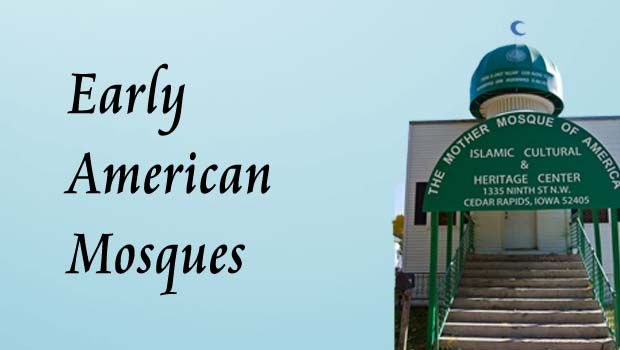
    1934 – The Mother Mosque of America

    Lebanese Muslims in Cedar Rapids, IA built this mosque in 1934; it is the longest continually standing Muslim house of worship still in use today.

  • Timeline of Major Milestones in American Muslim Politics

    Timeline of Major Milestones in American Muslim Politics

    Click here for the timeline of major milestones related with Islam and Muslims in American Politics

    [button size=medium style=less_round color=gray align=none url=http://hipcast.com/podcast/HXx5rrWs]Click here to listen audio podcast of this article[/button]


  • Do You Know America’s First Muslims?

    Do You Know America’s First Muslims?

    [button size=medium style=less_round color=gray align=none url=http://hipcast.com/podcast/HW2v7KKs]Click here to listen audio podcast of this article[/button]


    Estevanico (Stephen the Moor)

    Estevanico, also known as Stephen the Moor, was born in Morocco around 1503 and raised as a Muslim. He was sold into slavery and in 1527 his owner, Andres de Dorantes, took him on an expedition to Florida, along with six hundred colonists and soldiers. During his time with Dorantes, Estevanico converted to Christianity. After encountering hostile Native Americans, the surviving contingent of colonists and soldiers escaped by barge, sailing toward Mexico, but ended up in Texas. After being enslaved by Indians, only four men survived — Estevanico, Dorantes, Cabeza de Vaca, and Alonso Castillo. These four traveled for eight years across northern New Spain (present-day U.S. Southwest and northern Mexico), reaching Spanish forces in Mexico City in 1536. He is said to have been the first African man in North America.

    Omar ibn Sayyid

    Omar ibn Sayyid was born around 1770 in what is present-day Senegal. He was an educated Muslim man who was kidnapped from his home at age 37, transported to South Carolina and sold into slavery, remaining enslaved until he died, in 1864. He converted to Christianity while a slave, but wrote heartfelt reminiscences of his early days as a Muslim and some scholars maintain that he stayed true to Islam throughout his life. He wrote 14 manuscripts, all in Arabic, including his autobiography which begins with verses from the Quran.

    Adbul Rahman Ibrahima Sori

    A man who spent 40 years as a slave in Natchez, Mississippi, Abdul Rahman Ibrahima Sori, was born in 1762, a prince from the Kingdom of Futa Jallon, a territory in present-day Republic of Guinea. He was sold into slavery in 1788, at the age of 26. Upon being freed in 1829, he and his wife set sail for Timbuktu, his birthplace, but they made it only as far as the American colony in Monrovia, Liberia on the west coast of Africa. He died soon after arriving, while his nine children remained enslaved in America. His remarkable story is told in a 2008 film, “Prince Among Slaves” which includes the reunion of Abdul-Rahman’s descendants, from both Liberia and the U.S., in 2003.

    Abu Bakr Al-Siddiq

    From a family of learned and prosperous Muslims in Mandingo (now Ghana), Abu Bakr Al-Siddiq was taken as a prisoner of war at the age of 15, sold into slavery and sent to Jamaica in 1807 to work on a plantation. He was forced to change his name and convert to Christianity, but he always thought of himself as Abu Bakr, maintained his faith as a Muslim, and years later wrote a short autobiography in Arabic. Abu Bakr compiled detailed lists of trade routes in Western Africa, and some of his works were later translated into English.

    Salih Bilali

    Most of his life was spent as a slave on St. Simon’s Island, Georgia, a long way from where Salih Bilali was born, in Massina (present-day Mali) in the 1770s. Then he was kidnapped and sold into slavery around 12 years old, ending up in the Bahamas where he worked as a slave until he was purchased by the Couper family of Georgia. Bilali was characterized by his owner’s son as the most religious man he had ever known, stating that Bilali’s last words before his death were “Allah is God and Mohammed his prophet.” (The above image is an artist’s rendering of a native of Hausa, said to resemble Salih Bilai. Image from African Muslims in Antebellum America.)

    Bilali Mohamed

    Bilali Mohamed was born in Timbo, Guinea around 1770. His family was Muslim and highly educated. He was enslaved as a teenager and taken to the Caribbean where he worked for 10 years, and then sold to a planter on Solepo Island, Georgia. Among the slaves, Bilali was seen as a leader and a teacher and some of his writings are preserved in the Georgia State Library in Atlanta. Upon his death in 1857, a 13-page Arabic manuscript was found and it has come to be called the Bilali Mohamed Document. It is a statement of Islamic beliefs. Bilali is also known for motivating his fellow slaves during the War of 1812 as they defended the island from the British. (Image of Bilali Mohamed descendant, Shad Hall of Sapelo. Photo circa 1930s, from African Muslims in Antebellum America.)

    Ayuba bin Sulaiman

    Ayuba bin Sulaiman, known in Europe and the U.S. as Job Ben Solomon, was born in 1701 of a religious Muslim family, was well-educated, and became a merchant. He was captured and sold into slavery in 1731 and sent to Annapolis, Maryland where he spent two years on a tobacco plantation. He was briefly imprisoned after attempting to escape from the plantation. He was later purchased by a British man and granted his freedom, and in 1734 he sailed back to Africa where he stayed until he died, in his seventies. He was known for his intelligence and conveyed a great pride in his African and Muslim identity.

    Mahommah Gardo Baquaqua

    Born around 1830 in Djougou (now Benin in West Africa), Mahommah Gardo Baquaqua was from a Muslim family of merchants. He was captured and shipped to Brazil as a slave in 1845. After two years, his owner, a ship captain, took him on a voyage to New York where abolitionists secured Baquaqua’s freedom. He made his way to Haiti and worked there for a time, converting to Christianity. He returned to New York in 1849, enrolled in college, but in 1853 he moved to Canada and collaborated with a local writer to produce his biography.

    Mahammed Ali ben Said (Nicholas Said)

    Mahammed Ali ben Said, later named Nicholas Said, was born in 1836 in northern Africa. When Said was around 15 years old, he was enslaved and transported across the desert, subsequently being owned by masters of various nationalities including Arab, Turk, and Russian. He was eventually hired as a valet to a European man and traveled with him to America. Said became a teacher in 1862 in Michigan and fought in the Civil War as part of the 55th Regiment of Massachusetts Colored Volunteers. His autobiography was published in the Atlantic Monthly in 1867 in which several references to Allah are found. He died in 1882.

  • American Muslim Demographics

    American Muslim Demographics

    [button size=medium style=less_round color=gray align=none url=http://hipcast.com/podcast/HNTT6h7s]Click here to listen to this article in audio[/button]

    63%

    Almost two-thirds of American Muslim adults are first-generation immigrants from at least 77 different countries

    37%

    More than a third of Muslim American adults were born in the United States

    81%

    The vast majority surveyed, more than three-quarters, report that they are U.S. Citizens

    59%

    More than half of adult Muslims are between the ages of 18 and 39, compared with 40% of adults in the general public

    Source: Pew Research Survey 2011


  • Entrevista: Mujahid Fletcher (Islam in Spanish)

    Entrevista: Mujahid Fletcher (Islam in Spanish)

    Nacido y criado en Colombia hasta la edad de 8 años, Mujahid Fletcher emigró con su familia a Houston, TX. Sin embargo, tras una adolescencia llena de violencia pandillera y serios problemas, sus padres lo mandaron de vuelta a su país de origen donde, Fletcher dice, su vida dio un giro positivo. Permaneció en Colombia dos años y regresó nuevamente a Houston. Poco tiempo después, un amigo le hablo acerca del Islam. Después de estudiar la religión por un año, decidió abrazar el Islam, y luego fundó IslamInSpanish (IslamEnEspañol), una organización sin fines de lucro que ofrece productos y servicios audiovisuales islámicos en español. IslamInSpanish recientemente celebró su décimo aniversario con un banquete y recaudación de fondos en Dallas, TX.

    P ¿Cuáles han sido algunas de las dificultades que has encontrado como un nuevo musulmán?

    R Algunos meses después de que me convertí en musulmán, ocurrieron los atentados del 11 de septiembre, y me di cuenta durante ese tiempo que no había ninguna materia en español para darle a mi padre ni a cualquier otra persona que quería saber del Islam. La Sociedad Islámica de Greater Houston me pidió que hablara con la prensa hispanohablante para informar al público sobre el Islam, y después de explicarle más a mi papá acerca de la religión, él se convirtió tres meses después de mí. Luego me dijo que si no existía ningún material audiovisual para educar a la gente latina acerca del Islam, entonces debería ser mi responsabilidad producirlo. Este reto me llevo a mí y a mi esposa a matricularnos en el Instituto de Arte de Houston para obtener licenciaturas en Multimedia y Diseño Gráfico. Lo que nos motivo fue el hecho de que los musulmanes parecían muy débiles o no suficientemente preparados para presentar al Islam en los medios de comunicación de una manera efectiva, de tal manera que hicimos esto nuestro objetivo en la vida, y nos graduamos con honores siendo una pareja joven de nuevos musulmanes latinos de 22 y 24 años.

    P ¿Qué has contribuido para el dawah a los hispanohablantes y en general (incluyendo a tu familia)?

    R Una de mis humildes contribuciones al dawah en el idioma español es la fundación de IslamInSpanish, que por más de diez años ha producido el material islámico audiovisual en español tan necesario para educar a los latinos sobre el Islam a nivel mundial. Yo soy el fundador, y como tal, un productor de cine y televisión. Mi padre ha sido el narrador y mi esposa es la diseñadora gráfica para la compañía. Mi madre, mi suegra y su hermana, y muchos otros en nuestra familia han abrazado el Islam, al igual que miles de otros a nivel mundial por medio de nuestra página web www.IslamInSpanish.org y otros medios sociales como www.Facebook/IslamEnSpanish, nuestro canal en YouTube IslamInSpanishTV que tiene miles de visitantes, y a través de canales locales de televisión y también internacionales desde Madrid, España.

    P ¿Qué otro tipo de servicios ofrece IslamInSpanish?

    R También se nos invita a lugares públicos como universidades, Iglesias, sinagogas, Sam’s Club, convenciones, y otras avenidas, para hablar en inglés y en español acerca de lo que es el Islam y el punto de vista latino dentro del Islam. Yo, personalmente, he tenido la oportunidad de hablar en la Universidad de Harvard, la Universidad Rutgers, iglesias Unitarias, estaciones de radio católicas, Sam’s Club para entrenamiento de sensibilidad cultural durante el mes de Ramadán, y estaré hablando en una clase de confirmación en una sinagoga el próximo mes. Los propietarios de negocios musulmanes incluso piden que visitemos a sus empleados que están interesados en aprender del Islam.

    P ¿Cuáles son algunos de los obstáculos que ha tenido que superar en sus proyectos educativos?

    R Un problema que tenemos es que la producción de multimedia es costosa por el hecho de que requiere personal con entrenamiento técnico y requiere mucho tiempo. A pesar de las limitaciones presupuestarias y el desafío de encontrar las personas con las habilidades para llevar a cabo nuestros proyectos de producción ambiciosos, IslamInSpanish ha producido el primer set de 26 CDs de una traducción española del Corán, así como la producción de audios en español de otras obras clásicas como Los 40 Hadices de Al Nawawi, El Néctar Sellado (Biografía del Profeta Muhammad), y CDs muy informativos como Conozca a Jesús y María en el Islam, Conozca el Corán, y Conozca al Profeta del Islam.

    P En tu opinion, ¿Cuáles son algunos de los más grandes logros de?

    R Hoy somos la primera fuente auténtica de multimedia islámico en español para educar a los latinos sobre el Islam, y ahora después de diez años estamos a punto de viajar a zonas donde las personas quizás no sepan de nosotros o donde no se han celebrado eventos en vivo, con el fin de aumentar nuestro alcance y la conciencia. En los últimos cinco años hemos recaudado e invertido 200.000 dólares en nuestro estudio de producción llamado “Centro de Artes de Medios de Andalucía (www.AndaluciaCenter.org).” Hemos producido en los últimos diez años, más de 500 títulos de audiolibros y 200 programas de televisión hasta la fecha.

    Llevamos a cabo una firma de puertas abiertas para los latinos no musulmanes en los EE.UU. titulado “Raíces islámico en la cultura latina” – “Raíces Islámicas en la Cultura Latina” – donde cientos de personas han abrazado el Islam. Otros talleres de eventos en vivo se les da a los no musulmanes. Dos clases de español semanales se llevan a cabo en Houston y dos sermones españoles se entregan mensualmente, que es una actividad pionera que esperamos, en el futuro, que tendrá lugar durante todo los EE.UU.

    P ¿Cuál es la mejor manera de presentar el Islam a los latinos aquí [en nuestros países]?

    R En primer lugar, hemos aprendido que la clave es conectarse con la gente basada en la situación que se encuentran. En general, todos queremos el bien para nosotros mismos y para nuestras familias. Si hay una oportunidad para ayudar a alguien, mucha gente lo haría. La manera que nos dirigimos a las personas cuando hablamos con ellos es de la misma manera que nosotros quisiéramos que ellos nos hablen. Nunca se trata de debatir o discutir, porque esto abre la puerta de la negatividad. Esto es una regla mayor que se encuentra en el Islam y es una regla universal.

    En segundo lugar, nos acercamos a la gente para levantar los puentes de comprensión entre nosotros a nivel humano para poder conocernos bien. Si no nos conocemos, eso es cuando los problemas ocurren; no importa la raza, cultura, o afiliación religiosa. Y hemos sido creados para conocernos, basado en un verso en el Corán, en la Surah (Capítulo) al-Huyurat 49:13 –

    “¡Oh, humanos! Os hemos creado a partir de un hombre [Adán] y una mujer [Eva], y [de su descendencia] os congregamos en pueblos y tribus para que os conozcáis unos a otros. En verdad, el más honrado de vosotros ante Alá es el más piadoso. Ciertamente Alá es Omnisciente y está bien informado de lo que hacéis”.

    En tercer lugar, el idioma juega un papel enorme en la comunicación, por eso escogimos el nombre IslamInSpanish. Hablamos el idioma de nuestra gente, porque esta es la manera de comunicar el mensaje de manera natural – en nuestro propio idioma –como hicieron los mensajeros enviados por Alá, tal como Adán, Noé, Abrahán, Moisés, Jesús, y Muhammad (que la paz este con todos ellos). Alá menciona esto en el Corán en la Surah Ibrahim 14:4 –

    “Todos los Mensajeros que enviamos hablaban el idioma de su pueblo para transmitirles claramente el Mensaje. Pero sabed que Alá extravía a quien Le place y guía a quien quiere; ciertamente Él es Poderoso, Sabio”.

    Por lo tanto, se establece el sentido más profundo de comunicación entre ambas partes, y el corazón del que escucha se conecta al corazón del que habla basado en la cultura y el idioma que comparten. Esta es la razón que los eventos de IslamInSpanish son organizados en el idioma de la gente que sirven. Si la audiencia habla inglés, podemos presentar la información en inglés también, pero cuando una persona de habla hispana escucha la misma información en su lengua natal, su impacto y efecto son duraderos y los lleva al punto de aceptación, o al menos, de empatía hacia el Islam y los musulmanes.

    Para más información acerca de IslamInSpanish, consulte:

    La página web: www.IslamInSpanish.org

    Número telefónico gratuito: 1 (877) 717-4961

    www.IslamInSpanish.org

    www.facebook.com/islamenspanish

    www.youtube.com/user/IslamInSpanishTV

     

  • Racism After Ferguson:  Where Do We Go From Here?

    Racism After Ferguson: Where Do We Go From Here?

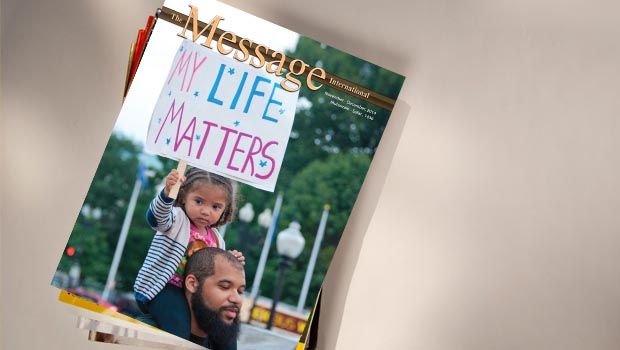
    Following the fatal shooting in Ferguson on August 2014 of an unarmed African American teenager, Michael Brown, by white police officer Darren Wilson, protests were sparked in Ferguson. The protests spread nationwide in November when a Missouri grand jury decided not to indict Wilson and then the soon-to-follow decision not to indict the Staten Island police officer who put a chokehold on Eric Garner, resulting in his death. The killing of Michael Brown, along with other similar incidents throughout the country, has heated up a debate about racism, excessive force by police officers, and the targeting of young black men. Some Americans are asking the hard questions: Where do we go from here? How can we stop this heinous extrajudicial killing of African American males by law enforcement in the streets of our cities? More fundamentally, how can we as a nation address racism and improve race relations in America?

    Many Americans now recognize what African Americans have been  saying for a long time –  that there is institutional  racism and there is  still much work to do…”

    A Guardian columnist, Isabel Wilkerson, has recently noted, “Not terribly long ago in a country that many people misremember, if they knew it at all, a black person was killed in public every four days for often the most mundane of infractions, or rather accusation of infractions – for taking a hog, making boastful remarks, for stealing 75 cents. For the most banal of missteps, the penalty could be an hours-long spectacle of torture and lynching. No trial, no jury, no judge, no appeal. ” While America has come a long way from that horrific stage in its history, one wonders if we are regressing. How is it possible that coming well into the new century, the rate of police killings of black Americans is nearly the same as the rate of lynching during a time when blacks were denied due process and whites discriminated against and victimized them with impunity?

    Isabel Wilkerson has also said, “ Even though white Americans outnumber black Americans fivefold, black people are three times more likely than white people to be killed when they encounter the police in the US, and black teenagers are far likelier to be killed by police than white teenagers.” Imam Khalid Griggs has rightly observed: “Ferguson and St. Louis, Missouri are, unfortunately, not aberrations, but social barometers of the relationship of the law enforcement community to African American males nationwide. Urban enclaves have too often been reduced to being incubators for the Prison/Industrial Complex and its voracious appetite to incarcerate Black males.”

    The tragedy in Ferguson makes it imperative that Americans of all races and backgrounds call for national action to address the issues of systemic racism and police profiling – issues that the shooting of Michael Brown brought to the surface. That these issues have been simmering for a long time is without question, and we must be willing to confront racism, whether overt or hidden away under the cover of political correctness. A position paper on racism put out by the Australian Psychological Society describes the challenge: “Modern racism still involves a rejection of minority groups and discrimination, but is now framed in terms of values and ideology rather than a straightforward dislike. Research has demonstrated that the modern variant of racism is more insidious, entrenched, resilient and difficult to counteract.”

    If there is any good to have come out of the heartbreaking Ferguson incident is that many Americans now recognize what African Americans have been saying for a long time – that there is institutional racism and there is still much work to do to create a society in which people ‘’will not be judged by the color of their skin, but by the content of their character.’’ It is encouraging that President Obama has issued an executive order to establish oversight of the increasing militarization of police departments; it also calls for funding for body cameras for officers.

    We urge all Americans to contact their elected officials to support passage of the End Racial Profiling Act (ERPA) and any similar legislation that addresses unconstitutional actions by law enforcement. We also call upon the Department of Justice to complete its independent investigation of the killing of Michael Brown in a transparent and thorough manner. We strongly feel that people of conscience in all walks of life must work together to seek an end to racial profiling and the injustices perpetrated against racial, ethnic, or religious minorities.

    Last but not least, we would like to remind everyone that racism is primarily a moral and spiritual problem. The pathology of racism therefore requires a spiritual remedy at both the individual and the collective levels. We pray that our fellow citizens recognize this. Then we might all open our minds and hearts to the spiritual cure Islam freely offers. The Qur’an declares: “O Mankind, We created you from a single [pair] of a male and a female and made you into nations and tribes, that you may know one another. Verily the most honored of you in the sight of God is he who is the most righteous of you” (Qur’an 49:13). This is indeed divine wisdom that can break the vice grip of racism. The quicker we recognize this and submit ourselves to it, the better for all of us.


  • Charity and Service to Others

    Charity and Service to Others

    The Prophet stated: “Every Muslim should give charity.” He was asked, “What if one cannot?” He replied, “Then he should go find work and help himself and others.” He was asked, “What if one cannot?” The Prophet replied,“Then he should help someone in need.” He was asked, “What if one cannot?” He replied, “Then he should command what is right or good.” The Prophet was asked, “What if one cannot?”He replied, “Then at least he should refrain from evil, and that would be charity for him” (Bukhari, Muslim).

    The spirit of charity, volunteerism, and service to others is a hallmark of Islam and among its greatest teachings. The Prophet never lost an opportunity to convey this message to others, and on this foundation he built a prosperous and charitable society oriented to public service.

    Prophet Muhammad exhibited this generosity of character in his own life in a marvelous way. Before he became a Prophet, he earned the greatest respect and regard from his contemporaries by being al-Sidiq (the truthful) and al-Amin (the trustworthy). People confided in him, went to him to arbitrate differences, sought his advice, and even entrusted their valuables to his safekeeping. It was these ethical qualities in his early life that enabled him to be a successful Messenger later on. And so, when the first revelations came down to anoint him as a Messenger of the Divine and he rushed home fearful and full of great distress, his wife Khadijah, beloved supporter and confidante, consoled him and gave him confidence by reminding him of his impeccable character and service to others: “No, rejoice! By God, He would never disgrace you! For you uphold the ties of kinship, always speak the truth, bear the people’s burdens, help the destitute, honor guests, and serve those whose rights are due.”

    This tradition of service continued throughout his prophet-hood and became an integral part of his mission and message. When he arrived in his adopted home of Madinah to establish the first Islamic society, his very first words to the people summed up that message: “People, spread peace among yourselves, uphold family ties, feed each other, and pray during the night while the rest of the people sleep, and you shall enter Paradise in peace!” The formula was simple. Build a peaceful society which consists of service to others (your families and those who are needy) and service to God (in the form of prayers). That, in essence, is the road to salvation. The balance between the body and spirit, between personal and civic responsibilities, and between spirituality and the mundane affairs of life is wonderful guidance bequeathed by Islam to humanity.

    As part of this prophetic lesson, Prophet Muhammad emphasized the need for financial independence so that one can be in a position to help others. Charity, primarily in the form of donations, is a responsibility of every believer. This can be monetary donation or other type of material provision, depending upon the need. And for those unable to afford such, the Prophet strongly urged them to find work to earn something with their own hands so that they could help themselves and then others. In other words, tangible donations are among the greatest forms of charity and financial independence is, therefore, a desirable value in Islam.

    Yet, for those who truly are not in a position to give material assistanceto others, then the Prophet recommended they find some other means to help someone in need. Financial assistance takes precedence but if that is simply not possible, then service to others is a priority. The principle of charity is so important that no single person is exempt from practicing it, even those who cannot afford it.For those who are neither in the position to give nor in a position to help, then they were urged to at least enjoin something that is good or virtuous. That could entail, for example, teaching someone something beneficial, speaking out for social justice, or promoting some worthy cause. Finally, those not in a position to practice any of these approaches must, at the very least, stay away from wrongdoing of any sort which indirectly protects people from that potential harm.

    So charity and public service should involve everyone in a sound and healthy society. There are no exceptions because there are many forms of giving and helping. In our current political atmosphere where public assistance and providing for those in need have been assailed by some in the public discourse, these lessons on charity are very timely. There are, indeed, hopeful signs as the majority has rejected a selfish and self-serving political agenda—as the recent elections have shown. And in the aftermath of Hurricane Sandy, we recognize once again that we live in difficult times; and that the tenuousness of this life is best dealt with by engaging and cooperating with those whose spirit of charitableness is ever ready to provide support and relief to those in need.

  • Editorial: Our Collective Role  in Spanish Dawah

    Editorial: Our Collective Role in Spanish Dawah

    More than 1,400 years ago, Prophet Muhammad, peace be upon him, said: “Surely, this religion will reach the boundaries of the day and night and Allah will not spare a rural or an urban dwelling except that He would cause Islam to enter it…”(Ahmad and Ibn Hibban, classified as authentic). We are witnessing the realization of this prophecy today, as Islam continues to spread from the East to the West, including North and South America, where the number of Muslims will more than double by the year 2030, according to statistical projections.

    Many of the new Muslims are Latinos who are living in the US and in Latin America. Recent studies such as the The American Mosque 2011 Report reveal that the number of Latino converts in the US has been steadily increasing since the year 2000, more so than any other racial or ethnic group. Similar trends are occurring in neighboring Mexico and further south in Central and South America, where the primary language is Spanish.

    Spanish is the second most widely spoken language in the world, and the official language of 21 countries. With over 50 million native speakers and second-language speakers, the United States has the second largest Spanish-speaking population in the world, after Mexico. Spanish is the most studied foreign language in the US.

    In the Qur’an, God says, “And We sent not a Messenger except with the language of his people, in order that he might make (the Message) clear for them. Then Allah misleads whom He wills and guides whom He wills. And He is the All-Mighty, the All-Wise”(Qur’an, 14:4). This points to the importance of providing educational materials about Islam in all languages. And due to the dramatically rising number of Spanish-speaking Muslim converts in the US, the need for resources in Spanish cannot be ignored.

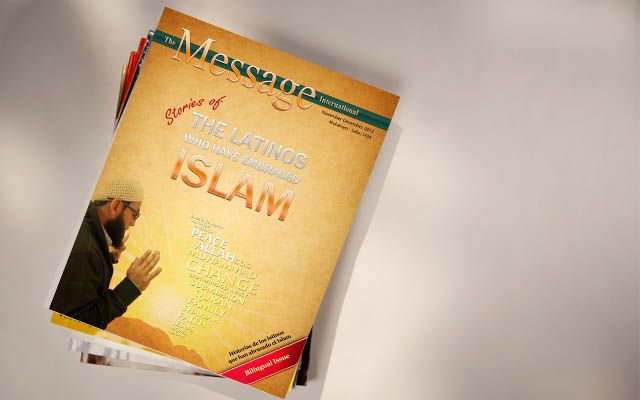
    ICNA and its WhyIslam project are among the few organizations providing services for this demographic, with Spanish-speaking operators on the 1-877-WhyIslam hotline, educational material in Spanish, Spanish sessions during the annual ICNA-MAS convention, and The Message International magazine now featuring articles in the Spanish language.

    Islam is an integral part of Latino history and culture and as such, Hispanics who choose to become Muslim are merely rediscovering and embracing their past. Through our efforts, with God’s help, we can share the message with our brothers and sisters in humanity and facilitate the success of their transition.

  • Finding God and a Purpose in Islam

    Finding God and a Purpose in Islam

    My name is Martha Guadalupe; I am originally from Ecuador, but live in New Jersey, and I have been Muslim since 2003, alhamdulillah (all praise is due to Allah).Why did I embrace Islam? Interestingly, every time I have been asked this question, I have a different story to tell. There is never enough time to say it all. I recently saw a post on Facebook which drew my attention. It stated: “Searching for happiness, I found Islam.” What I can say is, “While searching for God, I found Him in Islam,” alhamdulillah!

    At first I was not the one who was searching for this beautiful religion. My family and I had distanced ourselves from the Catholic religion, but I never stopped worshipping God, praying to Him, asking him to guide my children by whatever means would permit them to reach Him, and to never abandon them. I was sure that God always protected us and that He was the only one who provided us with everything we need.

    It so happened that on September 11, 2001, my son Hernan (the eldest and a university student at the time) visited us in the evening and told my husband and me that he had accepted the Islamic religion. In my ignorance, I responded, “What is that?” He explained to me that it was the true religion of Allah, and I remember saying to him, “If this is the path that will take you to God, blessed be His Name, then may He continue guiding you,” and I hugged him.

    It was my eldest son who brought the religion of Islam to our home but a month after he became a Muslim, my second son did so as well, alhamdulillah. Then I began to learn for myself about the basics of this religion. Hernan would tell me about the life of Prophet Muhammad (may peace and blessings be upon him), that he was the last and seal of all the Prophets. At first I found it strange because for me, the last prophet had been Jesus (may peace be upon him).

    Whenever he could, Hernan would teach me about Islam. I began to worry because during one of our conversations, he told me about the punishments in the hereafter for those who did not obey the laws of God. That filled my heart with terror, and I feared God more than ever. “What will happen if I don’t follow what God wants? What will happen if I don’t have any time left? What will happen if I don’t wake up?,” I would ask myself. This is one of the reasons why I began to reflect deeply about what was better for me. I wanted to be a good servant so that God would not punish me.

    Two years later I accepted this wonderful religion. Now I am a proud Muslim, alhamdulillah. I won’t say that the change was easy. At first, it was very difficult, but Allah eased the way and I have been able to persevere, breaking through barriers and overcoming all obstacles in my path. I know that Allah has always guided me, but I had been blind for a portion of my life. Today everything is clear and I am very happy knowing that I am a humble servant of Allah; to Him we belong, and to Him we will return.

    In my daily living, my faith imbues all aspects of my outlook on life with hope and trust in God. When I left my job, I said to myself, “If Allah has taken me away from this job which has been very good, it is because He has something better for me.”I have always loved sewing and I used to make clothes for girls, but had stopped doing so 11 years previously. Then during a conversation, I heard some sisters speaking about how they would like to buy Islamic clothing online but it was too expensive. I suggested, “If you want, I can make the clothing for you at a much lower price, insha’Allah.” With the help of Allah, and my sons, I decided to start my own business, which we called, “Modasty Designs,” alhamdulillah. The business has been successful at a national level due to internet sales and Islamic conferences, and above all, Muslim women in my locality who ask me to make their clothes. It is always a pleasure for me and I am here to serve my Muslim community, insha’Allah.

    Since I have been Muslim, I dedicate myself to prayer and following the Sunnah, or the teachings of Prophet Muhammad (may peace and blessings be upon him). May Allah bless us, protect us, and guide us always. Ameen.

  • My Conversion Story

    My Conversion Story

    It’s hard to believe how different my life was just three years ago. Alhamdulilah, Allah (SWT) blessed me by guiding me to the straight path. My story was written by Allah (SWT) and happened solely by His will. In early 2009, I attended a wedding at a Catholic church, and subhan’Allah, I don’t know what it was about the wedding ceremony, but I walked out of that church knowing that I no longer wanted to be Christian. I didn’t know what I wanted to be, but I knew I didn’t want to be Jewish because I knew the conversion process was very lengthy and involved.

    I had an Egyptian Muslim friend during that period who I spent a lot of time with. I witnessed the unity of the their family during Ramadan and it was something that really stood out and appealed to me. I sat at my computer one day and I googled “what does it take to become Muslim,” and to my surprise, all it took was saying a few words!

    I told my Muslim friend and family that I wanted to be Muslim and they were very excited. I was given a Quran, but truth be told I didn’t really read it much. I did know, however, that I wanted to take my shahada before Ramadan of 2009.

    It happened one June day. I was on my way home from a trip to Los Angeles and I was walking to my car, and at that moment I was overwhelmed with a feeling of absolute, one hundred percent certainty, that I was ready to take my shahada. I really didn’t know much about Islam at that point, but it was implanted into my heart at that moment that I was ready to become Muslim. The next Friday I took my shahada. I didn’t know how to pray until my first day of Ramadan 2009. Fortunately, after that Ramadan, at the end of October, I found the M.E.C.C.A. Center and their New Muslims Program. It has been an amazing journey ever since.

    I have been blessed to be able to use my professional expertise to help Muslims. I am a movement therapist and nutrition coach and have been in the health and fitness industry for over 20 years. I operate a training and nutrition business in Manhattan and my students have nicknamed me “the hijabi drill sergeant.” In addition, I run Fit For Allah, a group strength-training class held weekly at the MECCA center in Manhattan, and work as director for the non-profit, health and fitness organization, Nadoona.

    Through this organization and their Nadoona Body Makeover, I am able to create and design individualized programs for weight loss. It is very fulfilling to bring an entirely new perspective to the fitness industry, utilizing the teachings of the Quran and Sunnah. I begin each class with a du’a, striving for the pure intention to spread health and fitness for the sake of Allah SWT.