بسم الله الرحمن الرحيم

Author: Danielle LoDuca

  • Walking the Path of the Prophets

    Walking the Path of the Prophets

    Intrigued by its striking architecture, I wandered into an ornately decorated Buddhist Temple the way one wanders into a museum. Through two heavy columns bearing carvings of stylized foliage, a larger-than-life, golden Buddha sat wearing a cheerful smile. I was smiling too, entertained by the exotic spectacle: bright garlands, faux flowers, smoky incense, and the offerings of fruit presented by the locals with lowered heads.

    A tourist far from home, I noticed that the restaurant owners who lovingly and graciously fed me their flavorful delicacies also provided food to their family god-statues. To me, this religious devotion was merely a component of an intriguing culture — like the conical hats worn by street vendors selling luscious, freshly harvested bananas; or the groups of men and women practicing Tai Chi quietly in the public square, their deliberate motions as if slowing the passage of time before the sun had fully risen; or the fish soup hungrily enjoyed by everyone for breakfast.

    “The Messenger of God is an excellent model for those of you who put your hope in God and the Last Day, and remember Him often”

    My momentary presence there in Southeast Asia was no more impactful than a bird on one’s windowsill. The religion and culture of the people were curious blends of beauty and mystery, as paintings or artifacts in a gallery. Yet, the rhythm and peculiarities of their lives felt no more extraordinary than that of the Americans I knew who flowed in and out of churches, synagogues, restaurants, and malls. The typography may differ, as do beliefs, customs, and etiquette, but the human essence present in each is the same. The number of religions flourishing through the vast continents of the Earth – now and throughout the millennia – I surmised, must be innumerable. What a strange phenomenon that there were so many religions, such a variety of beliefs, and the adherents of each religion think that only theirs is true!

    Confusion and Competition

    Richard Dawkins once quipped, “How thoughtful of God to arrange matters so that, wherever you happen to be born, the local religion always turns out to be the true one.” Dawkins is being sarcastic, implying that the only conclusion is that none of the religions is true. Any other possibility hadn’t occurred to me either. The quantity alone seemed to indicate that God and religion were invented by the human mind, perhaps as some theorists suggest, out of evolutionary need. If one of these belief systems could be uniquely true, how unfortunate for the children born anywhere but in that land! Moreover, how could a person be expected to decipher truth from falsehood when faced with so many choices – literally a world of different religions? I found it far more reasonable to assume that religion was simply a product of human ingenuity, one that may eventually become as obsolete as the telegraph.
    It is perhaps easier to accept the view that religion is no more than a human adaptation than to analyze the vast range of perspectives and understandings which vary not only from religion to religion, or sect to sect, but even from individual to individual.

    Countless religions, too many interpretations, and then a multitude of people who don’t believe in any god or supernatural life force – all of them certain they are “right” and others, with their varying beliefs, wrong. Would Earth be a more peaceful place if we were to view one another’s religious choices the way I witnessed the Buddhists’ worship – like a thoughtful and intrigued onlooker? Critics of religion often see as a major and inescapable flaw in being religious the animosity that seems to erupt between people of different faiths, purportedly resulting from the belief that one, uniquely, holds the truth and all others are indoctrinated in falsehood.

    Islam: Everyone Has Access to Salvation

    Adherents of many religions often profess that salvation is only for people of a particular label. The word Islam, however, isn’t a label in the usual sense. Translated, Islam means simply “submission to God” and the word Muslim means “one who submits.” The Quran repudiates the exclusivist claims of religious adherents, using Jews and Christians by way of example: “And they say, ’None will enter Paradise except one who is a Jew or a Christian.’ That is [merely] their wishful thinking. Say, ‘Produce your proof, if you should be truthful’” (Quran 2:111). Then we can consider the following verse: “And whoever desires other than Islam as religion — never will it be accepted from him, and he, in the Hereafter, will be among the losers” (Quran 3:85). This is not to be taken as referring to a nominal title or label. The verse clearly mentions “whoever desires other than Islam,” which is a conscious choice of the person to reject submission to God (Islam) and desire another form of worship. A person born before the advent of Muhammad or in a part of the world where Islam is not known, is not included among the losers, since they did not make a conscious choice to reject Islam. People who are uninformed about Islam or are misinformed about it are not held responsible. Such will be given the opportunity to choose or to reject in the hereafter, as mentioned by the Prophet: “The one who passed away between Prophets will say, ‘O Lord! Your Messenger did not come to me.’ Then a Messenger will be sent to him saying, ‘Enter the fire.’ By the One in whose Hand is my soul, if they enter it, it will be cool and safe” (as-Silsilah as-Sahihah).

    A non-Muslim, uninformed about Islam, may enter paradise, whereas a Muslim, informed about Islam, might be consigned to hell. Islam doesn’t promise success or failure according to one’s label, but rather on one’s belief in, and surrender to, the one God, and his or her actions: “Whoever submits his face to God while being a doer of good will have his reward with his Lord. And no fear will there be concerning them, nor will they grieve” (Quran 2:112). Islam defies many of the assumptions and criticisms made about religion, acknowledging the existence of other religions and the reality that some might have originated with the teachings of a true prophet sent by God but which were subsequently altered or corrupted over time. Islam paints a picture of divine revelation spread over time and geography, a broad and encompassing paradigm that ties religions loosely together as part of a bigger picture.

    One Common Thread

    I remember introducing my children to a Christian neighbor years ago. Her pleasant smile twisted momentarily, slightly taken aback. She made eye contact and said, “Those sound like biblical names.” And indeed, my children’s names are found in the Bible, as well as the Quran. In that moment, my family’s Islamic faith was fundamentally linked with our neighbor’s faith. If she had assumed our religions were disparate prior to that introduction, she became aware they were related, even if she didn’t know exactly how. Jews claim Moses brought the truth, Christians claim Jesus brought the truth, and Muslims claim Muhammad brought the truth. Yet, Muhammad, who transmitted the Quran to us by God’s will, claimed that all of them brought the truth, along with Adam, Noah, Abraham, David, and every other prophet sent by God.

    The Quran reminds the Jews and Christians who dispute with one another over religion about their common roots: “They say, ’Be Jews or Christians [so] you will be guided.’ Say, ’Rather, [we follow] the religion of Abraham, inclining toward truth, and he was not of the polytheists’” (Quran 2:135). It goes on to stimulate thinking with a question: “Or do you say that Abraham and Ismael and Isaac and Jacob and the descendants were Jews or Christians?” (Quran 2:140). Islam, a word denoting the peaceful yielding to the command and rule of the Divine Creator, is free from the constraints of time and place.
    According to Islam, all of the prophets taught worship of God alone – Islam – and everyone who followed them were, by definition, “submitters” or in Arabic, Muslims: “[It is] the religion of your father, Abraham. God named you Muslims before and in this [revelation] … So establish prayer and give charity and hold fast to God. He is your protector; and excellent is the protector, and excellent is the helper” (Quran 22:78).

    Departure from the Way

    So, why all the diversity of religious belief? Over time, the original messages calling people to this straight path were altered, through human error, mistranslations, and/or modifications of Scripture including additions and deletions of text. This is not a shocking concept. Jews, Christians, and Muslims are aware that human beings have altered God’s teachings, sometimes deliberately and sometimes through error or misunderstanding; and sometimes have rejected God’s revelations altogether, all resulting in deviation from His guidance. An example of this phenomenon familiar to all three traditions is the story of the Children of Israel who, although Moses taught the worship of God alone, chose to worship a golden calf (Exodus 32:1; Quran 2:51) According to the New Testament, Jesus rebuked his people for departing from the path saying, “For you ignore God’s law and substitute your own tradition” (Mark 7:8).

    Moses, Jesus, and Muhammad: An Invitation to Walk with Them

    We read in the Quran the following: “This is My path, which is straight, so follow it; and do not follow [other] ways, for you will be separated from His way” (Quran 6:153). It is precisely because the original messages from God were lost, altered, or forgotten that, out of His Mercy and Generosity, He repeatedly sent prophets and messengers to help guide whoever was willing, back to the path. Moses, Jesus, and Muhammad were each tasked with this profound responsibility. They were appointed to present themselves as messengers of an unseen God, calling to success in this life and in the life to come in the Hereafter. Yet, throughout their struggles to help people who often rejected their help, they pushed on with fortitude and benevolence.

    “Then We gave Moses the Scripture, completing [Our favor] upon the one who did good and as a detailed explanation of all things and as guidance and mercy that perhaps they would believe in the meeting with their Lord” (Quran 6:154). The prophets followed each other as if in one another’s footsteps: “And in their footsteps We sent Jesus the son of Mary … We sent him the Gospel: therein was guidance and light, and confirmation of the Law that had come before him” (5:46). Jesus preached, “It is God Who is my Lord and your Lord; then worship Him. This is a Way that is straight” (Quran 3:51).
    In response to the rejection of the people to whom these prophets were sent, the messengers from God remained patient. God reminded them that they were sent to convey the message and invite their people, but not as managers over them: “But if they turn away — then We have not sent you, over them as a guardian; upon you is only to convey [the message]” (Quran 42:48).

    Our Challenge: Follow Those Footsteps

    The Quran is the final criterion intended to help humanity find their way back to the original path: “And We have revealed to you, the Book in truth, confirming that which preceded it of the Scripture and as a criterion over it… Had God willed, He would have made you one nation, but [He intended] to test you in what He has given you; so race to [all that is] good. To Allah is your return all together, and He will [then] inform you concerning that over which you used to differ” (Quran 5:48). It is our job to seek truth, and the more sincere we are in doing so, especially if we appeal for help from the Divine, All-Powerful Creator, the more easily we will begin to find what we seek.

    Whatever path one is on, wherever we may be in the world and at whatever stage of life, we can ask ourselves: Is this what God wants of me? Do I have evidence of a message directly from Him telling me so? For the Buddhists presenting offerings to statues, the Christians calling on Jesus as the son of God, and everyone else, if we want to earnestly strive to achieve our purpose, we’ve got to ask ourselves these questions and then persevere until we find the answers. Like Moses, Jesus, and Muhammad, once the path is made clear, our duty is to patiently persevere upon it. Allowing our footsteps to fall into those of the prophets, we take on the responsibility of safeguarding and practicing the truth and passing it on to future generations.

    “The Messenger of God is an excellent model for those of you who put your hope in God and the Last Day, and remember Him often” (Quran 33:21).

  • Un-Islamic, Radical Terrorists: A Tool for Election Hype

    Un-Islamic, Radical Terrorists: A Tool for Election Hype

    Neighbors were frightened of Mohamed Lahouaiej-Bouhlel, the man who plowed a truck into a celebratory crowd in Nice, France, killing more than 80 people and injuring over 200. People who knew him explained that he was anything but a devout Muslim. He had a record of petty crime, often displayed unrestrained bouts of anger, drank alcohol, used drugs, and neglected to pray or fast. Bouhlel, in recent times, was convicted of assaulting a motorist, and abused his estranged wife. In fact, he had a history of mental illness documented by visits to psychologists in Tunisia. What remains unclear is whether or not he had any direct links to terrorist networks.

    Inflammatory speech invariably has a negative impact on the unity of our nation

    Gunman Omar Mateen, who opened fire inside a nightclub in Orlando Florida, had a long history of behavioral problems, documented by school records over the years. He was expelled, arrested and eventually enrolled in an alternative high school after numerous fights in which he injured other students, and what one of his teachers noted as his “inability to show self-control.” According to witness Patience Carter, who survived the Orlando rampage, Mateen announced his motive as he murdered club-goers, saying he wanted “Americans to stop bombing his country.” His parents were originally from Afghanistan.

    Richard Reid, also known as “the shoe bomber,” attempted to take down an American Airlines passenger plane in 2001 by igniting explosives contained in his shoes. Upon his arrest, he told officials conducting his interrogation, “Your government has sponsored the torture of Muslims in Iraq and Turkey and Jordan and Syria with their money and weapons. It’s in your hands.” Like the others, Reid had a history of delinquency and criminal offences. When he was born, his father was absent, having been incarcerated for car theft. After dropping out of school at the age of 16, Reid pursued a life of crime, often winding up in prison himself.

    “Do you think that you will enter Paradise without such [trials] as came to those who passed away before you? … Yes! Certainly, the Help of God is near!” (Quran 2:214)

    ISIS entry form documents of roughly 4,000 foreign recruits recently released to the Associated Press prove what Muslims have been saying for years. In an August 19 article in the Times of Israel, the authors note that the terrorist organization known as ISIS, “preys on those with minimal connection to Islam, because the more they know the less likely they are to endorse its methods.” Recruiting members largely ignorant of Islamic teachings, allows extremist organizations to indoctrinate them with a distorted version of Islam, designed to help advance its aggressive territorial expansion and slaughter of innocent men, women, and children.

    Compulsive Use of Misnomer: ‘Islamic’ Terrorism

    According to these and many more examples, it appears that an overwhelming number of terrorists display similar characteristics: ignorance and lack of devotion to Islam, mental illness, recurrent criminal behaviors, and violence towards innocent people. They are motivated – not by religion – but by geopolitical grievances and a thirst for vengeance. Despite these glaring facts, and their availability to the public, we continue to witness the term “Islamic” consistently being attached to heinous terrorist crimes and their perpetrators.

    Certain politicians, TV personalities, and pundits help form public sentiment surrounding attacks, branding them as “Islamic” while the shock and horror are fresh, and details that undermine the “Islamic terror” narrative are yet unavailable. Information acquired in the investigations following attacks, in most of the cases, tends to paint an entirely different picture: individuals with a criminal history and psychological and behavioral issues, who are motivated by anger and driven by very real and disturbing geopolitics.

    The confidence with which the initial speculations were presented, and the subsequent time that elapses in which people return to their daily routines, inevitably renders subsequent investigations and analysis far less newsworthy. The lack of sensation and inconsistency with the favored theme of “Islamic terror” renders almost inconsequential the ensuing findings such as non-existent religiosity, lack of clear ties to terrorist networks, no overtly political motivations, records of criminal activity, and/or histories of mental health problems.

    A Tool for Election Hype

    While we can’t always assume that the statements made by political candidates are intentionally misleading, this election season is a perfect example of disinformation about Islam and Muslims being used for political gain. From the inflammatory rhetoric of reality star and now presidential candidate, Donald Trump, to the attempts to garner attention by former Republican Speaker of the House Newt Gingrich, we are seeing a lot of very strong words being thrown around without much concern for the real consequences they have for average Muslim citizens. And inflammatory speech invariably has a negative impact on the unity of our nation. Polarizing rhetoric such as Trump’s infamous call for Muslims to be banned from entering the United States, and his blanket (and frequently grammatically challenged) statements like “I think Islam hates us,” have done more than raise eyebrows.

    Newt Gingrich, on national television went so far as to say, “Western civilization is in a war. We should frankly test every person here who is of Muslim background and if they believe in sharia, they should be deported. Sharia is incompatible with Western civilization.” Statements like these have proven to elicit intense levels of bigotry, hatred, and violence that have apparently been pent-up in a portion of the American electorate.

    The Pressure of Polarization

    These alarmist calls from powerful people to equate Islam with terrorism urge the general populations of Western countries to associate all Muslims with violence and danger, thus engendering distrust and fear of all things Islamic. Consequently, we are seeing an unprecedented rise in crimes against Muslims in the United States and elsewhere ranging from verbal abuse and discrimination to physical assaults, and sadly, hate-motivated murder. We can sense the increasingly negative sentiments in our neighborhoods and communities. Many of us feel awkward, ashamed, and even frightened to go to public places immediately after tragedies such as the recent attacks in France, San Bernardino CA, and Orlando FL. The pressure may be felt even more by those of us who outwardly appear to be Muslim, primarily women who cover and men who choose to wear ethnic clothing and kufis.

    David Lisnard, mayor of Cannes in southern France, fueled controversy with incendiary statements regarding Muslim women who choose to go swimming, yet insist on covering their bodies while doing so. Referring to a ban on Muslim swimwear he said, “I simply forbid a uniform that is the symbol of Islamic extremism.” Thierry Migoule, Cannes’ head of municipal services, echoed the mayor’s sentiments, saying, “We are not talking about banning the wearing of religious symbols on the beach… But ostentatious clothing, which refers to an allegiance to terrorist movements which are at war with us.” Yes, they both just said that any Muslim woman who chooses to cover her body while swimming is displaying support for terrorism and extremism. Do they hope to force Muslim women to acquiesce to their standards of fashion and stop standing out so confidently in their voluntary modesty? Whatever it is behind those words, the result is the same: an increasingly polarized population, pitting the general population against Muslims.

    These politicians have whitewashed the complexity of reality and presented a simplistic picture to the public: good vs. evil – and they are defining what means good and what means evil. People are afraid for their lives, for their futures. These politicians are capitalizing on that fear and telling all of us: choose a side – or else. This, in turn causes innocent people to appear guilty.

    The Heat is On

    Being under constant suspicion can cause individuals to feel guilty – even when totally innocent. Dalia Mogahed explained how she felt after 9/11, saying, “Not only had my country been attacked, but in a flash, somebody else’s actions had turned me from a citizen to a suspect… for the first time in my life, [I was] afraid for anyone to know I was a Muslim.” This guilt by association is advanced and reinforced by few, but very loud voices. After the Nice attacks, Kelvin Mackenzie, a columnist from the UK’s Sun newspaper, wrote a controversial column questioning why a “young woman wearing a hijab” had been allowed on television to report on the attack in Nice. He was horrified that the reporter, Fatima Manji, was visibly Muslim. He asked. “Was it appropriate for her to be on camera when there had been yet another shocking slaughter by a Muslim?”

    Avoiding the Herd Mentality

    More than one-third of those killed by the attacker in Nice were Muslims. According to a report published by the Counter Terrorism Center at the US Military Academy, Al-Qaeda kills over seven times more Muslims than non-Muslims. The majority of ISIS’ victims are Muslims. If it’s offensive for a Muslim to report a terror attack on television, is it also offensive for us to mourn our dead? We have to reject this idea outright and think critically: was it wrong for a Christian to report on the murder of Dr. George Tiller by anti-abortionist terrorist Scott Roeder in 2009, or the Centennial Olympic Park bombing in 1996 by Eric Rudolph who had ties to the white supremacist “Christian Identity” theology and movement? In fact, both Roeder and Rudolph had ties to another Christian terrorist group, The Army of God. To suggest that a Christian reporter should not cover a terror act committed by a fellow Christian is clearly, easily, and immediately recognized as preposterous.

    In the face of this monumental and growing problem, I refuse to allow others to determine how I feel about myself. As Muslims, we have to be the masters of our own thoughts and allow no one to convince us we are guilty by association due to our faith. That our modest attire or names or beards are incriminating, that the word “Islamic” must appear next to its antithesis, terrorism… No! The Quran differentiates between human beings who reason and those who follow the crowd without intelligent thought: “Or do you think that most of them listen or use their reason? No, they are but like cattle. Rather, they are even less conscious of the right way” (Quran 25:44).

    Fighting Doubts

    Prophet Muhammad said, “The people will see a time of [much-needed] patience in which someone adhering to his religion will be as if he were grasping a hot coal” (Tirmidhi). It’s becoming clearer that this applies to our current time. Some of us feel like giving up. Being under constant scrutiny, guilt-tripped, cursed at, ridiculed, and hated – it is exhausting. It might appear easier if we just took our headscarves off, shaved our beards, and changed our names. The thing is, though, the solution is in the same hadith – the heart of the issue — that we adhere to our faith. Letting go of it will never lead us to success or ease.

    We’ve Got a Choice to Make

    It’s election season. Time to make a decision. And while it’s important to exercise your right at the polls, there’s an even more important choice to make, right now. Allah says, “The truth is from your Lord, so whoever wills – let him believe; and whoever wills – let him disbelieve” (18:29). Our akhirah is waiting and the choices we make today will be there for us to see, either as witnesses against us or in our favor. It helps to remind ourselves again and again:

    “Do you think that you will enter Paradise without such [trials] as came to those who passed away before you? … Yes! Certainly, the help of God is near!” (Quran 2:214). All of this life is intended to be a test. If it weren’t this or that test, it would be something else. So, remember the advice of Jacob to his sons, “Despair not of relief from God. Indeed, no one despairs of relief from God except the disbelieving people” (Quran 12:87).

    All the Information We Need

    It’s about time that we turn off our TVs, sign out of our social media accounts and turn to the Quran. The Quran provides the bigger picture and lays out a plan for the future – putting everything into proper perspective: “So be patient. Indeed, the promise of God is truth. And ask forgiveness for your sin and exalt with praise of your Lord in the evening and the morning. Indeed, those who dispute concerning God’s signs without authority having come to them – there is not within their hearts except pride, [the extent of] which they cannot reach. So seek refuge in God. Indeed, it is He who is the Hearing, the Seeing” (Quran 40:55-56).

    Allah’s plan is geared towards our success, if we choose to follow it. With Allah’s help, we can make our ummah great again. “O you who believe! Persevere in patience and constancy; vie in such perseverance; strengthen each other; and fear Allah that you may be successful” (Quran 3:200).

  • Ideas for an Eco Friendly Vacation

    Ideas for an Eco Friendly Vacation

    “We don’t have to engage in grand, heroic actions to participate in the process of change. Small acts, when multiplied by millions of people, can transform the world.” — Howard Zinn

    This summer, live in the moment and connect with your family, yourself, and your Lord

    With the frightening implications of global climate change confronting us, we cannot afford to ignore the effects of human activity, individual and collective, on our planet. We’ve all contributed to the worsening disaster that is global warming, and it’s time to rethink our behavior and take into consideration the environment in all that we do – even when planning our summer vacation. You don’t have to forsake taking a vacation to be a person of conscience and action. Psychologically and emotionally we require non-working periods to revitalize our productivity and creative spirit. Working hard without intermittent periods of rest and relaxation is counterproductive and our physical health, mental outlook, and family relationships all suffer as a result.

    Summertime is a great chance to rejuvenate with a pleasurable and satisfying vacation. If you are motivated to make lifestyle choices that are eco-friendly, easy on the wallet, and revitalizing without requiring travel, accommodations, and itinerary planning, consider crafting the perfect vacation while staying close to home – a staycation.

    Transform this summer into an opportunity to reduce your negative impact on environment

    Transform this summer into a great opportunity to reduce your negative impact on the environment. Make it a fresh start and get motivated to make lifestyle changes that are more responsible, conscientious, and pleasing to Allah, all while having a great time. Here are some tips to start planning now for an awesome summer vacation that is also eco-friendly.

    An Eco-friendly and Fun Staycation to Remember

    Since climate change is fueled by greenhouse gas emissions, and, according to the Union of Concerned Scientists, “transportation produces almost 30 percent of all U.S. global warming emissions,” a stay-at-home vacation makes perfect sense. You don’t need to travel to faraway lands to make this summer amazing. Face it — we tend to explore places far away from home more than we do our own local area. This is natural to an extent. But if you think about it, you’ll discover that there is much you haven’t explored in your own locality. By staying local and driving shorter distances and/or avoiding air travel, you’ll reduce your family’s emissions of greenhouse gasses. Aviation contributes almost ten percent of the impact of human activity in producing climate change. You can look for nearby nature parks, playgrounds, museums, etc., and focus on quality experiences rather than distance. You’ll save money and time, without the exhaustion from days spent travelling that come with long distance vacations.

    Disconnect to Connect

    One of the reasons we like to “go away” on vacation is that it literally removes us from our daily routines and all the things that seem to weigh us down. This summer, allot yourself specific days and times to take care of necessary business. Aside from those scheduled times, put your devices away — turn off the TV, and put your phone on silent. Avoid distractions to make the most of your staycation. Worried that chores or drudgery might intercede and take away the fun? Try budgeting some of the money you are saving by not travelling to get some help with the housework, or by scheduling in the laundry and chores on specific days, and then stick to the schedule.

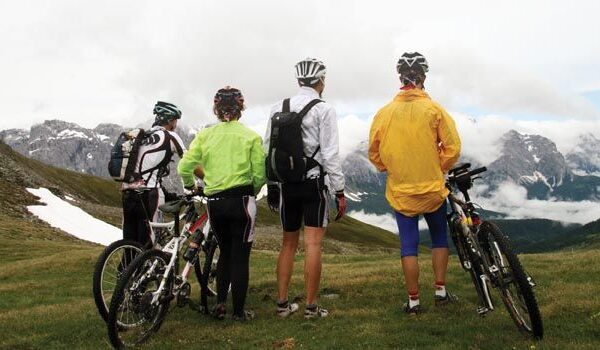
    Camping with your family is a wonderful chance to enjoy a pioneering experience in nature

    Unwind, tune in to the people around you, look into the eyes of your loved ones, listen to each other and be present. This is also the perfect time to become absorbed in your prayers, increase your khushua and read the Quran. Stop the hurry and harried habits of everyday living. Take moments to observe the world around you and reflect. We often undervalue downtime and occasions spent with the people in our lives. This summer, live in the moment and connect with your family, yourself, and your Lord.

    Get Back to Nature

    “The creation of the heavens and the earth is far greater than the creation of mankind, but most of mankind do not know it” (Quran 40:57). This verse beckons us to take note of the greatness of Allah’s creation, to open our eyes and see the beauty and order in nature all around us. How easy it is to live in our heads, constantly spinning the lesser narratives of our personal lives! Sure, that’s part of the human condition. But we should avoid getting too self-absorbed. The signs of Allah SWT are certainly in our own selves, but also in the expanse of the natural world. And far too many of us live lives cut off from nature. So be sure to schedule time in natural spaces to encourage appreciation of Allah’s creation and to cultivate greater realization of our role as stewards of the earth. You can plan an outing to a nearby nature preserve, take family walks through your neighborhood, or even explore your own backyard. Find out about local wildlife and look for insects and other creatures in your surroundings. Take some time to just slow down and be observers.

    As adults we sometimes have to revive the natural curiosity we had as children. Take a closer look at the leaves on trees and bushes. Notice the way the colors of the flowers vary. Watch the squirrels and birds as they frolic from branch to branch. Stargaze. Breathe deeply, take note of the nourishing air and let yourself relax. Converse about how each part of nature has a role to play. Remember the following profound verse: “Indeed, in the creation of the heavens and the earth and the alternation of the night and the day are signs for those of understanding” (Quran 3:190). So make a point to reflect and ponder over the signs of Allah, everywhere pointing to His lordship, majesty, and wisdom, and let it draw you closer to Him.

    Choose an Alternative Method of Transportation

    If you limited your travel to places you could go by only walking or riding a bike, how would that affect your life? This question will draw attention to the way technology and the use of energy enables us to live comfortably in our contemporary world. Unless you live in an urban area, you most likely need to use a car for necessities like groceries. Learn about how people around the world get their necessities. Some people have to walk miles just to get water. By realizing the importance of energy in getting from place to place, we can begin to appreciate what Allah has given us by way of transportation. This may also lead us to think about more responsible ways to travel. Maybe your family will want to consider investing in a more eco-friendly car like a hybrid or electric vehicle. Next time you do decide to go long distance, try taking a train, which produces significantly less emissions, and can be both fun and relaxing.

    Go Camping

    Camping is the original low-impact, eco-friendly vacation choice. It costs little to nothing and is an opportunity to discover a lot about yourself. In our modern era, many of us have grown accustomed to conveniences and even luxuries. Challenge yourself and find out how you react when you spend time “roughing it.” Camping with your family is a wonderful chance to enjoy a pioneering experience in nature, and to cooperate for basic survival needs – finding level ground, pitching a tent, collecting firewood, cooking over the fire or on a propane stove, and so on. This will inevitably increase your gratitude for all the ease Allah has given you in your normal daily living, and engender in you more compassion and empathy for the millions around the world who do not have the same conveniences you do. Read about and discuss the simplicity of the life of Prophet Muhammad and think about how you can change your lifestyle to better emulate his ways.

    Make Conservation a Family Affair

    Conservation may not sound like an integral part of a memorable vacation, but it’s a great time to institute changes and involve the whole family in the endeavor. Be sure, however, to have fun doing it. Include the following points in your conservation learning project:

    Water: We know that Prophet Muhammad encouraged us to conserve water, even if we are making wudu beside a river, so try to be as modest as possible in the amount of water that you use. You can take an active role in protecting your community’s water sources by finding out where your water comes from and how free it is from contamination. According to the Environmental Illness Resource (ei-resource.org), municipal water supplies can have any number of common contaminants including chlorine, fluoride, pesticides, fertilizers, heavy metals, petrochemicals, dioxins, radioactive materials, and microorganisms. Find out information about the health risks posed by each. You can read about the many issues involving water and what you can do to help protect our water supplies. Get started here: http://www.nature.org/ourinitiatives/habitats/riverslakes/placesweprotect/where-does-your-water-come-from.xml. You can also schedule a visit to your municipal water source.

    Food: Industrialized food production is a significant contributor to the production of greenhouse gases that contribute to climate change. Do your part to reduce this problem by changing your family habits. Purchase locally grown produce because it does not need to be transported over long distances. One of the most significant sources of industrial emissions is the meat industry. Prophet Muhammad did not consume meat as often as most people in the West do today. Try reducing your meat consumption and find out if there are any organic meat farmers nearby. Get the whole family involved in trying new, meatless recipes.

    Grow together: Plan ahead and start growing some edible plants at home now so they’ll be ready to enjoy this summer. Watching your plants grow is exciting and even kids enjoy eating veggies they get to pick themselves. If you have extra, fresh produce makes great gifts for your neighbors.

    Avoid processed, packaged foods: Packaging production contributes to greenhouse gas emissions. Although pre-packaged foods seem convenient especially while vacationing, preparing fresh and healthy snacks in reusable containers doesn’t take as much energy as you might think and does not produce packaging waste, which only ends up in landfills.

    Brainstorm: Hold a brainstorming session on how to alter some of your daily habits and establish a more environmentally friendly lifestyle. Make resolutions and keep them as a family.

    Get Everyone Involved

    Making decisions together gets everyone excited. Sit down as a family to discuss planning for your eco-friendly summer vacation. Do some research about climate change and global warming. Get the kids involved too. Listen to their input and pursue any interests that come out through discussion, such as how scientists measure the effects of climate change. And read books on the environment together. Let each person present a fact and brainstorm ideas for activities that have little negative impact on the environment. By getting everyone involved in the planning process, it’s more likely that the whole family will look forward to and enjoy your summer activities and buy in to the idea of making conscientious lifestyle changes.

    Once you’ve brainstormed and narrowed down how you want to spend your eco-friendly summer, try writing down all the activities you want to enjoy. Place them on a calendar, and as each activity approaches, remind the family and do simple and fun creative things before and after the activity to stretch your vacation experience. For example, if your family is going to visit a butterfly wonderland, get some books from the library beforehand and learn the names of butterflies, their diet, population, behavior, and so on. After the visit, you could read as a family if and how climate change has affected butterflies worldwide.

    Make it Memorable

    Research suggests that many people actually enjoy the anticipation of a vacation more than the vacation itself. Planning and building up the excitement for whatever activities you choose to do will help make the most of your eco-friendly staycation. Be sure to document your adventures with lots of photos and recap your experiences together at the end of the day or over a meal. To further cement your memories, consider creating a photo album or scrap book or family journal. If you prefer to keep your memories online, try creating a family email address, then send your pictures, videos, and written reflections to it. Later you can open the emails and rehash all the great times you had and the eco-friendly choices you made.

    An Eco-friendly Staycation is the Best Choice This Summer

    When you think about planning a memorable and satisfying summer vacation, “eco-friendly” may not be the first thing that comes to mind, but there are many reasons it should be near the top of your list. Human-induced climate change is a global shift that portends devastating consequences and ramifications. If left unaddressed, the resulting severe weather events may lead to shortages in food, water, and fertile, hospitable land. The scarcity of resources will inevitably lead to violent conflict.

    While it may seem to be a problem too large for any one of us to change on our own, if each of us begins to change our habits, together we can help reinstate the balance of nature and preserve the integrity of our planet. It’s about more than ensuring a healthy planet for our children and future generations. It’s also about our responsibility to our Maker and Sustainer, Allah. He is Ar-Rahman, the Most Merciful, and has blessed humanity with a beautiful planet, functioning eco systems, clean air to breathe, regular seasons, oceans and forests teeming with life. Use this summer vacation as a fun time to unwind and relax. But also use it to refresh your intention to be a faithful steward of the earth.

  • Post 9-11: Adversity Transforming and Strengthening the Muslim Community

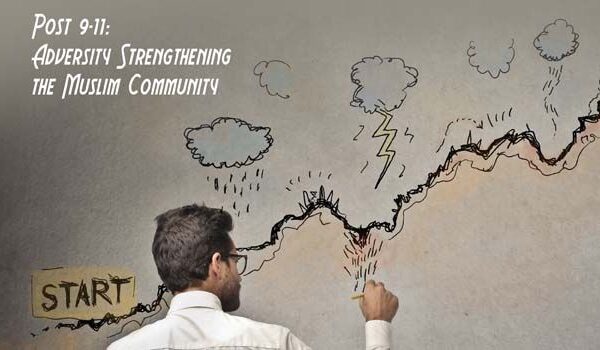
    Post 9-11: Adversity Transforming and Strengthening the Muslim Community

    [button size=medium style=less_round color=gray align=none url=http://hipcast.com/podcast/HVtq3mxs]Click here to listen audio podcast of this article[/button]

    Terror in Paris. Mass killing in San Bernardino. These words were burned into my mind in the past few months as we were faced yet again with the horrific slaughter of innocent people, and also with a media barrage once more blurring the line between Islam — and the majority of Muslims in the world — and terrorism. The American consciousness is infused with very selective portrayals of world events, portrayals that present the “other” — foreign, dangerous — at fundamental odds with everything “we”’ stand for. The notion that “we” solely uphold the highest standards of civilization and humanitarian ideals, in contrast to the rest of the world, permeates the information we receive from news and entertainment, and is further given currency by all those around us who have been equally indoctrinated. The result is the perception of an actual “us vs. them” scenario. In the minds of so many, the identity of “them” is equated with Muslims.

    It is not an “us vs. them” scenario. The vast majority of those killed or wounded by ISIS are Muslims.

    Muslim leaders worldwide have roundly condemned ISIS, and the vast majority of Muslims around the world consider ISIS to be utterly contrary to Islamic teachings and principles. Yet, despite the near universal denunciation of terrorism, the media hypes up fear and hysteria about Islam and Muslims in the wake of a terror attack, seldom providing contextualization, larger perspective, or an agenda that brings Americans together. This results in American Muslim citizens (as well as Muslims in many other Western countries) being targeted as part of a backlash after each event; many report living in fear, always looking over their shoulders, taking extra precautions like standing farther away from the edge of platforms in train stations, women wearing hats rather than hijab, and men shaving their beards.

    Progress Has Been Made

    Although at times the current state of affairs seems dismal, we have to note that much progress has been made by our communities since the horrific attack on American soil, the September 11 attacks of 2001. Much of that progress, taking many forms of dawah dovetailing with a good number of Americans getting curious about Islam, is in fact directly related to those awful attacks and the resulting near-obsession in the media about Islam and Muslims, however negative. It’s the proverbial silver lining in a terrible event.

    The allegations against Islam have caused many to question themselves, and to feel inclined to know their religion more profoundly than before.

    For many Muslims, being wrongfully accused of moral depravity and being associated by default with a miniscule minority of extremists who happen to be very loud, has lit a fire of motivation. In some respects, it is as if there is a renaissance of Islamic learning, practice, and a new fervor for civic involvement. Many Muslims have been harshly awakened, as if from a deep slumber, by these events. The allegations against Islam have caused many to question themselves, and to feel inclined to know their religion more profoundly than before. Many want to know Islam’s stance on violence and revenge, on tolerance and forgiveness. The struggle to gain greater knowledge facilitates a deeper connection with the Quran and Prophet Muhammad, peace be upon him. For many of those who have begun reading the Quran more intently, and have put increased importance on learning about the life of the Prophet, they have found doors opening to a more purposeful life, filled with greater humility, gratitude, and faith.

    Islam Brought Into Daily Awareness

    For many non-Muslims, these events have brought Islam out of the peripheries of consciousness into the forefront of their daily awareness. It’s no longer just a boring page in a history textbook, but something that actually affects life in the real world. Personally, before 9/11, I had barely an awareness that there was a religion called Islam. The attacks, and the fear and agitation I felt as a result, caused more than cognizance. It motivated me to try to discredit religions altogether through research and logical analysis.

    Many Americans today, faced with the ongoing turmoil in the world and the increasing number of terror incidents, want further information about Islam and Muslims.

    It was 9/11 that spurred me and many other Americans to read the Quran for ourselves. Some felt motivated by macabre curiosity, others asked the question, “How can this be? What kind of religion actually encourages killing civilians?” A number of individuals had an intuition that it was not, in fact, the religion, but political agendas and grievances behind these acts. Looking into Islam became necessary for those of us who craved to understand our vulnerability and how to respond to threats to the safety and well-being of our families and nation. My journey of inquiry ultimately led me to embrace Islam as my religion and way of life. I discovered that rather than promoting violence and chaos, Islam inspires profound peace.

    Many Americans today, faced with the ongoing turmoil in the world and the increasing number of terror incidents, want further information about Islam and Muslims. Initiatives such as the WhyIslam billboards and the mobile advertising trucks of HateBusters (a non-profit charitable organization “dedicated to teaching people how to like people and how to oppose hate”), and numerous websites are furthering the conversation by providing public access to authentic sources of the tenets and teachings of Islam. When activists, Muslim and non-Muslim, present credible and thought-provoking information to the public, discourse becomes more genuine and more aligned with reality, helping to break down stereotypes and fear.

    By Allah’s Mercy, and the increase in the number of Americans researching Islam, many Americans are adopting Islam as their way of life. It is estimated that some 20,000 Americans accept Islam every year. This means that the fabric of the American Muslim community is changing. It’s becoming even more diverse, and with more native-born American Muslims, Islam is becoming less foreign to the American public, challenging the standard stereotypes. I would argue that having more Americans, especially of European descent, accepting and adopting Islam, causes many non-Muslim American families to feel differently when they hear Islamophobic rhetoric. Knowing the people who are being targeted is very different from when the victims are completely unknown.

    Identity and Civil Rights

    For Muslims, terrorism and the resulting backlash against Muslims has raised the question of identity. American Muslims who are deeply moved and disturbed by attacks on their country, yet also suffer from a backlash of hate and bigotry based on guilt by association, at first may feel obliged to choose between being Muslim or being American. But the vast majority of American Muslims have taken ownership both of their Islamic and their American identities. In fact, since the September 11 attacks, mosques and Islamic centers have increased by more than 74 percent. Numerous programs disseminating Islamic knowledge to both Muslim and non-Muslim audiences have also cropped up across the country.

    By Allah’s Mercy, and the increase in the number of Americans researching Islam, many Americans are adopting Islam as their way of life.

    Meanwhile American Muslims are increasing their civic involvement and currently two Muslims are members of the House of Representatives, Keith Ellison and Andre Carson, and several others have been elected at the state level. Muslims have garnered a much greater presence in the media since 9/11 as well, appearing as guests and experts in mainstream media, both TV and radio. We are also taking advantage of social media to make our presence and ideas known. Muslims have also recognized that, as citizens, we have constitutional rights to practice our religion freely. With the help of organizations like CAIR, Muslims are reporting discrimination, litigating their cases, and in a growing number of cases, winning in court. We are becoming savvier, more confident in the knowledge that many Islamic and American principles and values are identical or compatible.

    According to a 2011 Department of Justice report titled “Confronting Discrimination in the Post-9/11 Era: Challenges and Opportunities Ten Years Later,” the FBI reported a 1,600 percent increase in hate crimes against Muslims in 2001, following 9/11. The report notes that the initial spike went down but “it was soon replaced by other bias-related incidents, including discrimination in education, employment, and religious land use.” Government officials moved to strengthen existing civil rights laws and to ensure the rights of Muslim Americans and other individuals, like Sikh and South Asian Americans, who were targeted following the 9/11 attacks. Dr. James Zogby, founder and president of the Arab American Institute, has stated, “The threats were nothing new. My life had been threatened before. My office had been firebombed in 1980. Never a prosecution – ever. Since 9/11, three people who threatened my life have gone to jail. I’m not proud of it, but I’m pleased to know that there is somebody there to defend me.”

    The DOJ Civil Rights Division has put out statements encouraging the inclusion and embrace of American Muslims, to counter the impulse amongst some Americans to demonize, exclude, or merely tolerate Muslims. They have stated in no uncertain terms that anyone who infringes upon another’s rights, will be brought to justice. They have increased outreach to vulnerable communities and listened to concerns. Amber Khan, the Corporate Secretary of Muslim Advocates, has noted that “DOJ leaders within the first few months after 9/11 attended more than 100 meetings and events with representatives from the Arab, Muslim, Sikh, and South Asian communities.”

    Greater Muslim Presence, Representation, and Responsibility

    The fact that a new generation of American-born Muslims is coming of age and choosing from a broad range of professions, including those in politics and media, means that we will have greater presence and representation, with Muslim narratives, concerns, and contributions becoming more and more mainstream and familiar to the broader American public. Muslim women journalists wearing hijab, as well as Muslim politicians or political commentators, all without foreign accents and who appear culturally current and natural, help transfer Muslims, in the collective consciousness, out of the realm of foreign and strange. This is an important step in creating a distinction in the public mind and discourse between Muslims and terrorists.

    Although much progress has been made, we are still at the beginning of an era of change. The fact that mosques and Islamic centers have increased is good – but, are these centers truly ready for this new era? While years ago it was acceptable to have Islamic centers catering exclusively to immigrant populations, today we must transform all our places of worship into facilities that are welcoming to all. We need more programs to help Muslims acquire knowledge and develop a truly Islamic character. We also need to increase outreach initiatives and programs to encourage the participation of our non-Muslim neighbors. And with the large number of converts to Islam, all of our Islamic centers should have services supporting and assisting new Muslims so that they feel an integral part of their new community as they journey on their path of seeking knowledge and practicing Islam in their daily lives. Also, the fraternity of believers is an area that needs development. Fractured communities erode unity and solidarity and programs and events are needed to foster a sense of fellowship and love for all Muslims, regardless of ethnicity or culture.

    Because Islam was meant as a mercy for mankind, our centers should reflect that principle and wherever there is a masjid, the residents in the neighborhood should feel that it is indeed a blessing. This can occur if we collectively work to improve our communities and the lives of our neighbors, whether it be by cleaning up the streets, providing assistance to the less fortunate, or by hosting beneficial events for the entire community. Our presence, as a minority, in this nation obliges us to be visible and positive representatives of Islam. It is our responsibility to spread the word about Islam. And remembering all of Allah’s prophets can serve to give us great strength. In the face of adversity they persisted with patience, integrity, and unwavering commitment to Allah and the message of true success, the surrender to God alone. That is our path and they are the best models for us to emulate.

    If we do our part, perhaps we can turn the tables and be the reason our non-Muslim neighbors are curious about Islam, rather than as a result of atrocities. Perhaps when we work harder to be good Muslims, better neighbors, friends and citizens, people will not respond to acts of terror with fear, suspicion, and hatred toward all Muslims. They need to know that these actions contradict Islam and that the vast majority of Muslims condemn and abhor them. It starts with each one of us. If we follow the beautiful guidance in the Quran, we will find that indeed Allah is the best of helpers:

    “And strive for Allah with the striving due to Him. He has chosen you and has not placed upon you in the religion any difficulty. [It is] the religion of your father, Abraham. Allah named you ‘Muslims’ before [in former scriptures] and in this [revelation], that the Messenger may be a witness over you and you may be witnesses over the people. So establish prayer and give zakat and hold fast to Allah. He is your protector; the best to protect and the best to help” (Quran 22:78).

  • I Never Loved Jesus Until I Found Islam

    I Never Loved Jesus Until I Found Islam

    I remember fragrant and tasty family dinners at my grandparents’ house. A picture on the wall near the dining table of a blue-eyed man with long,light-brown hair gazed at us while we ate. I knew he was supposed to be Jesus because there was a heart with thorns over his chest, an image I had seen in church. There were crosses throughout the house andI often saw my grandmother sitting with her rosary beads, faithfully repeating her prayers. Whenever I slept at their house on the weekend,she would take me with her to church on Sunday morning.Although my immediate family did not attend church regularly, we did go on holidays such as Christmas, Easter and Palm Sunday. I performed in church nativity plays on occasion and attended Sunday school, where we studied the bible and Christian doctrine, intermittently until the age of 13.

    “There is nothing worthy of worship except Allah, The Creator of all, and I testify that Muhammad is His servant and messenger.”

    In spite of all this, I can’t remember ever feeling affection for Jesus. I never felt connected to him, or that I needed to know more about him. Infact, I can’t recall ever paying him much mind at all. Other than exclaiming, “Jesus Christ!” upon stubbing my toe, he really had no meaningful presence in 22 years of my existence.I had no interest in the bible either,though I remember listening attentively and asking questions in bible classes as a child, but there was little resulting impact on my life.

    As I grew into adulthood, my apathy towards, not only Christianity, but also religion in general, changed to disdain. I couldn’t listen to a word about religion or hear the word “Jesus!” or even “God”uttered, without rolling my eyes and sneering haughtily. As I began submersing myself in philosophies,reading Kant, Hegel, Nietzsche, Sartre, Camus and others, it felt as if I had found my niche. I subsequently developed a kind of arrogance. I felt superior to religious adherents because I was able to acknowledge that I didn’t know, while it seemed those who followed religions claimed a certainty I considered irrational. I was sure that uncritically believing an old book could not constitute, or substitute for,a genuine seeking of truth. I sought to use my mind, not resort to some ancient book for assistance in living my life!My disgust for religion was so great, that if someone had offered me millions of dollars to join one faith or another, I would have undoubtedly declined.

    One of my preferred authors was Bertrand Russell, who saw religion as manmade and harmful, inhibiting critical thinking and inducing irrational fears. He also saw religion as a major cause of human misery, created through persecutions and war-making carried out by the devotees of the various religions. He painted a picture of a world better off with free-thinking people, released from what he saw as unwarranted faith in an unseen realm and misguided devotion to antiquated books.I remember laughing out loud while reading “Hey, Is That You God?” by Dr. Pasqual Schievella, in which he derided the concept of God through satirical dialogue. It all seemed so logical and satisfying.

    Determined to Debunk Religions

    I really cannot be sure whether or not I had ever heard of Islam before September 11, 2001, but obviously with that abhorrent crime came the knowledge that there was this other religion out there.Although it seemed to me much more complex than the notion that the attacks were driven by something inherent in Islam, my contempt for religion was still validated when I thought about a religion being even indirectly related to this atrocity. My knowledge of geopolitics was limited at that time, but informed enough to know there were major conflicts occurring in the world resulting in inevitable turmoil and bloodshed. After the 9/11 attacks, I began studying politics and paying attention to current events like never before. At the same time,for me, it wasn’t enough to merely believe the world was better off without religion. I wanted to systematically prove religions were no more than a hoax, by demonstrating how they are flawed and therefore manmade. I purposefully set out to do just that.That meant I would have to read the religious “scriptures.”And so I bought and read the bible. I read the Bhagavad Gita (the Hindu scripture) painstakingly, as well as books on Buddhism.

    I remember reading the bible on a warm sunlit day, sitting under the trees in the backyard of my family home. I was shocked when I read in both Leviticus and Deuteronomy: “The pig is also unclean; …You are not to eat their meat or touch their carcasses” (Deuteronomy 14:8).I was confused. I had not heard of this before.Essentially everyone I had ever known had readily eaten bacon and pork chops. I pressed on. I read many unsettling stories in the bible and eventually I took a hiatus from it, going back to it occasionally, laboriously making my way through, and finally completing it years later.

    The Quran Turned Me Around, Exhilarated Me

    I had expectations about the Quran based on my readings of the other religious books. I assumed it would be painful, difficult reading: jumbled, unclear stories I would have to struggle to make sense of. Worse, I expected it to be filled with hatred and bigotry. I resolved, nonetheless, that the end goal was well worth my suffering. Fortunately, I was able to acquire a paperback translation of the Quran for free. I didn’t even stop to chat with the oddly dressed MSA students standing at the table stacked with books. I curtly asked, “Is it free?” When they replied in the affirmative, I grabbed one and continued on my way. I had no interest in them, only the free book to assist me in accomplishing my goal of debunking religions once and for all. But as I read that Quran, as its cover became worn and its pages tattered, I became more and more subdued. It was distinct from the other religious books I had read. Its straightforward message was well defined and consistent throughout. One day, a friend of mine began ranting about how God in Islam is angry and vengeful. I instinctively opened up the Quran (which was always near at hand) and easily flipped to one of the many verses that said, “Surely, Allah is Forgiving, Merciful.”

    I felt as if the Quran was speaking directly to me – even responding to my life as it unfolded. It was an “old book” but somehow it was entirely relevant and there was something captivating about its cadence and imagery and the way it communicated to me intimately.Its exquisite beauty moved me in ways I hadn’t felt when reading other scriptures, reminiscent only of the moments I had spent out west, staring out over a seemingly endless desert landscape. I found it exhilarating like running barefoot in the sand under the stars with powerful ocean waves crashing at my side. And yet, the Quran appealed to my intellect in the most logical and coherent way. It points out signs of God everywhere in the created world and then tells us to think and to ponder all the innumerable signposts pointing to an intelligent order. It rejects the notion of blind faith, encouraging the use of our God-given intellectual faculties including logic, reason, and deduction. It directs us toward recognition of the Creator, virtue, and service of humanity. It declares in unmistakable terms the duty to stand up for social justice.

    Thirsting for Knowledge

    After some time and a number of life-changing experiences,I developed an insatiable thirst to know more about Islam. My project to debunk all religions was all but forgotten.I began reading other books about Islam. I found that the Quran contained prophecies, as did many of the ahadith. I noticed that Prophet Muhammad was corrected by God several times in the Quran. This seemed inexplicable if he had, in fact, been its author. I began walking down a new path,guided by the amazing Quran, paired with the beautiful paragon of devotion:Prophet Muhammad. This man showed no signs of being a liar or a fraud in his claim to being God’s messenger. Praying through the nights, seeking God’s forgiveness for his oppressors, encouraging kindness, refusing wealth and power, and persevering with the pure message of devotion to God alone, he endured unfathomable hardship.

    It was all so uncomplicated. All things in the material universe have been created.All this complexity and diversity could not unfold out of nothingness, and display such surpassing intelligence in design and ordering. So we should naturally follow the guidance of the One who created us and the earth and the vast cosmos. I remember the warm,glowing lighting in my apartment and the way the air felt electric with meaningfulness on the night I read this verse:“Have those who disbelieved not considered that the heavens and the earth were a joined entity, and We split them asunder?And We made from water every living thing. Then will they not believe?” (Quran 21:30).

    My mind, itself, was split asunder when I read this -to me, this sounded like the Big Bang! And every living thing from water… isn’t that what science says? I was astonished. It was the most exciting and yet frightening time of my life. I read and studied and double-checked book after book until one night I sat in the library at my school, Pratt Institute, staring wide-eyed at the piles of open books, my mouth agape, in shock. I couldn’t believe what was happening. I realized I had encountered the truth. The truth I had been so sure did not exist. The library closed, forcing me to forsake the pile of books I had been devouring and walk back to my Brooklyn apartment. It was a mild autumn night.
    The Moment of Truth
    The asphalt and trees glistened in the gleam of orange-hued streetlights. I was deep in thought. I had just come to a realization I had imagined impossible. I had discovered that my preconceptions about all religions being man made had been obliterated by Islam. Momentarily, I walked on the thin line between submitting to truth and persisting in denial.The years that had led me up to that point in time – the travels, the conversations, the long nights gazing into space, the hours spent pouring over book after book on Islam – culminated in this critical moment. Should I affirm what I knew could be none other than the truth, accept this treasure and the responsibility that comes with it? Or, pretend as if I had never found it in the first place? I knew I had to accept it…and it felt so exhilarating. I wanted to scream in joy!
    Alone on the sidewalk, I paused under a glowing street lamp and I spoke to my Creator, for the very first time knowing with surety that He was there; that He was listening and knew exactly what had transpired in my heart. I didn’t even have to move my lips to declare: “There is nothing worthy of worship except Allah, The Creator of all, and I testify that Muhammad is His servant and messenger.”And with that I entered into Islam. It was the beginning of a new chapter in the story that is my life, the greatest and happiest of all my days. For sure, it was the day that led to even more peace and contentment than I had ever hoped for. Through the Quran I found knowledge of my Creator. I found that He knows me and always has, that He knew my sincerity in seeking to know the truth.
    Coming Full Circle to Jesus

    It was only because of the certainty that I have in Islam, established by the many proofs and signs that led me to accept it, that I believe without a doubt, that Jesus was born of a virgin mother, that I believe 100 percent that he healed lepers and the blind, and even raised the dead, by God’s will. It is only due to the surety that deepens as my knowledge and practice of Islam grows, that I know for sure that Jesus will return to Earth naturally. I felt compelled to look back at the bible after learning about Jesus in Islam. The Quran mentions that God had given him the Injeel (translated by some, as the Gospel). I learned a lot about the compilation of the bible and that still other “gospels” of Jesus exist that have not been included in the Canon established under the rule of Constantine in 325A.D. Indeed,as the Quran suggests, fragments of the original, unchanged message of Jesus still remain, sparkling like bits of gold from the pages of the Christian scriptures.

    For example, Jesus is reported to have said, “By myself I can do nothing; I judge only as I hear, and my judgment is just, for I seek not to please myself but Him who sent me” (John 5:30).This and many other examples are perfectly congruent with Islam.In “The Gospel of Nazarenes,” which is not included in the canonical Bible, one can find many passages confirmed in the Quran. Of particular interest to me is where Jesus is reported to have said, “No blood offering, of beast or bird, or man, can take away sin, for how can the conscience be purged from sin by the shedding of innocent blood? Nay, it will increase the condemnation” (Gospel of the Nazarenes, Lection 33 verse 2).This statement completely contradicts the modern Christian doctrine that Jesus was sacrificed by crucifixion for the sins of humanity, based on the statements of Paul, who authored much of what is followed in the bible today.

    Amazingly, all of this brought me full circle, back to Jesus, one of the icons I had grown up with, yet had remained impervious to the significance, until my acceptance of Islam. All of the ambiguity and confusion that previously surrounded him was wiped away. I went from seeing him as an enigmatic figure — a man-god on a poster staring at me with impenetrable eyes while I dined with my grandparents — to a real person. Now, as a Muslim, I see and understand Jesus as an honorable and pious human being I could understand, learn from, respect, and truly love. And I have come to love him, and all of God’s chosen ones – for their forbearance and strength, for their selflessness and fortitude in the face of such extreme adversity, for their sincere, unselfish and unwavering devotion to their Maker and Sustainer to Whom all will return. All of them, including Jesus, are tangible examples of how to be successful in this life and in the hereafter.Through Islam, the truth about Jesus and all the prophets of God – indeed, the truth itself – has been made manifest and affirmed in my mind and heart.

  • By Time, Volunteer

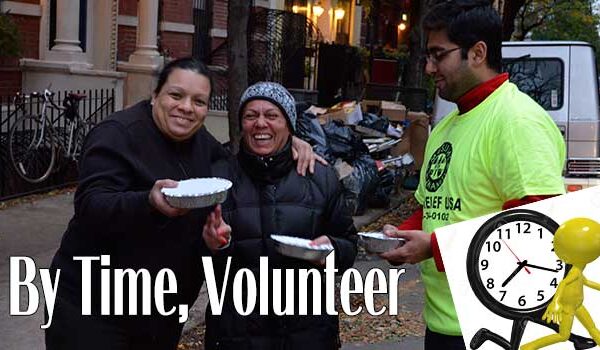
    By Time, Volunteer

    It’s August, but Elizabeth has already started sewing dolls at her church for the gift boxes they distribute to needy children during the winter season.This year she’s donated one sewing machine and lent another. They work in shifts, sometimes more than ten women of varying ages at a time, preparing presents to bring smiles to children’s faces. These women give up their time to bring a touch of happiness to young souls confronted with adversity. Although the children often live in far reaches of the earth, Elizabeth and her co-volunteers can touch them with their compassion, and experience joy in knowing their efforts make a positive difference in their lives.

    The first time I noticed she gave of herself in this way was last winter. One particularly frigid evening, I crossed the yard and rang her doorbell. I remember standing in the entryway; her cozy home was filled with warmth. As we chatted in the dim light, I could see gift boxes all lined up on her sofa. She had been lovingly filling them with gloves and knit hats and toothbrushes for children in need of basic necessities.Her gifts would deliver more than supplies—she hoped that they would convey to them the knowledge that they are cared for, that their lives matter.

    When we learn about average people who generously offer up so much of themselves and so much of their time in order to do good, how can we have any excuse not to do the same?

    When her good friend Marion fell ill with cancer, it was Elizabeth who drove her to appointments, made phone calls, and looked out for her best interests. She told me that she does these things because she is able to — as if not doing it would be a waste of the ability she’s been given. Further motivation comes from the pleasure she feels by doing good for others. She quoted Longfellow, who said, “The highest love of all finds its fulfillment not in what it keeps, but what it gives.”

    I praised her for her loving, giving nature, but she insisted that whatever she has done, is pale in comparison to her friend Marion’s efforts. Marion regularly worked for the homeless and underprivileged, making sandwiches for shelters, collecting clothing and other supplies.She baked and decorated special cupcakes every month for the residents of a shelter, whose co-president thanked her,saying,“the colorful and festive creations spoke to our guests of respect, dignity and care… They spread happiness.” She provided her extraordinary cupcakes and the resulting happiness, consistently,for ten years. This is just a fraction of the time she spent dedicated to helping others. She made it her duty to assist blind church members to attend services, by personally driving them each week, and often out to lunch each Sunday as well.

    She was even charitable towards animals and helped animal shelters, knowing they were under-funded, providing them supplies, and by clipping coupons she knew could help them save money. Elizabeth told me that Marion would often stop if she saw items being discarded, and collected and distributed useful things to organizations she knew could use them.

    Volunteers in My Neighborhood

    Amazingly, in my neighborhood, fervent volunteers surround me on three sides.Next door to my right, Jeanne is always on the move. When she’s not taking care of her elderly mother, or her three grown children, she’s using her talent for photography to further the work of her church. She sees her efforts as a volunteer and in any realm of serving others, as a way to serve God. Using the gifts she believes God has provided her to help others, helps her to thrive as well. She surrounds herself with people who also wish to be servants, living their lives for a higher purpose.

    I sometimes cross paths with Laura, who lives across the street. She dedicated many months working in shelters with displaced families who lost their homes in the destruction of Hurricane Sandy. On one occasion I found her returning home from cleaning up a church whose funding couldn’t keep the building properly maintained, damaging their reputation in the community. Laura and others stepped in to see to it that the church wouldn’t have to worry about insulting chatter.

    There is a man in my neighborhood that struggles to get by. I see him daily, painstakingly collecting bottles in the stifling heat of summer and in the freezing cold depths of winter. He is currently months away from losing his home because he is unable to pay his taxes, at which point he will be resigned to living in his car. In the midst of the foreclosure on his home, he met a homeless man and took him in.

    These are just a few people I know, within walking distance of my home. They value giving of themselves. They are rewarded with pleasure and satisfactionby doing good to others, and all recognize that they have been given abilities that are useful and should be used for worthy causes; to make the world —one person, home, or community at a time — a better place. They are people with lives, friends, families, jobs, etc., who choose to truly value their health and free time,avoiding what prophet Muhammad cautioned usabout when he said: “There are two blessings about which most people are deluded: good health and free time” (Al-Bukhari).

    Time is Fleeting

    Allah, theAll- Knowing, has reminded us of the passing of time throughout the Quran.He has sworn by the decline of time:“By [the passing of]time, surelymankind is in loss,” (Quran 103:1-2). When He first sent Adam and Eve to earth, He informed them their stay would be “for a time” (7:24),emphasizing that life on earth is not permanent. He has informed us that on the Day of Judgment, our lives on earth will seem like nothing more than “a day or part of a day”(23:113).

    With these reminders, and the fact that not a single one of us knows exactly how much time we have left in our fleeting lives, we ought to be using our time as wisely as possible. That being said, take a moment to think about how you are using your time. You’ve been given 24 hours every day. How are you spending them?Do you ever find yourself saying, “I have no time”?Do you ever feel that there is not enough time to volunteer or to provide assistance to others? Do you believe that you couldn’t possibly devote time to yourcommunity center ormasjid?Now imagine that you are invited to engage inyour favorite activity, or maybe toattenda wedding. Are you able to make time for it?
    It’s true that time is very limited, but we often shuffle our schedules and priorities in order to make room for the things we want to do. When we truly wantto undertake noble endeavors,when we desire to help other people and our communities thrive, we will also begin to make room for those things, even if we have the busiest of schedules. Prophet Muhammad instructed us to take advantage of our health while we are well. In the stories of my neighbors, all of their actions were related to the fact that they felt they were ableto act. The manin danger of losing his house still had a roof over his head; therefore, he offered to share it with someone who did not. Jeanne has a knack for photography and so she utilizes her gift to improve her community. Elizabeth realizes that she has been blessed with comforts unavailable to many around the world, and so uses the resources she has, to provide for the less fortunate.
    In my community during Ramadan, I am always amazed and in awe of the people who regularly serve iftar to hundreds of fasting Muslims. They work non-stop serving the food and even dessert before they finally sit down to eat themselves. Some of the core women I know who do this are older women. They are taking advantage of their health while they have it. They realize that they have this capability and with it they are feeding hundreds of fasting people.

    What Do They Get in Return?

    In addition to the types of rewards like the ones my neighbors described, such as pleasure, satisfaction, and fulfilling a sense of duty, these Muslims also maintain hope for rewards in the hereafter.Prophet Muhammad, may Allah’s peace and blessings be upon him, said, “Whoever gives iftar to one who is fasting will have a reward like theirs, without detracting from the reward of the fasting person in the slightest” (Tirmidhi).So, for all the Muslims who feed other fasting people — whether two, or dozens, or hundreds —for each day they provide iftar,they are promised a reward that is multiplied, beyond their own individual fasting.And Prophet Muhammad described fasting as a shield, a protection from Hell.He also said that fasting is a means of attaining joy when the one who fast smeets his or her Lord. Clearly they’ve made an excellent exchange. All that for a few extra hours of effort!
    When we learn about average people who generously offer up so much of themselves and so much of their time in order to do good, how can we have any excuse not to do the same when we know that Allah has told us: “Whoever volunteers good – then indeed, Allah is appreciative and Knowing” (Quran 2:158). And how can we not take action when Prophet Muhammad has informed us, “Allah will not cease to help His servant as long as that servant is helping his brother” (Muslim).We all claim to want Paradise, but we must put in the effort.

    What Is Holding So Many of Us Back?

    Choosing to spend our own time to provide some benefit to others is a personal responsibility. It is also an extremely virtuous way to use our God-given faculties and abilities. It is a way to show gratitude to our Maker, using the gifts He’s given us to seek His pleasure by caring for His creation. Yet, for whatever good we do, we will be the beneficiaries of the rewards promised to us by the Almighty Lord of the Worlds. If we choose not to do much, we are the ones missing out. It’s like Allah told us in the Quran:“Whoever acts righteously,benefits his own soul; and whoever works evil, does so against himself. Your Lord is not unjust to His servants” (Quran 41:46).

    There is plenty of reason to do good if we are seeking to benefit our own souls. Beyond that, if we take a look at our communities, and at the state of the ummah, it is easy to conclude that a lot of work must be done. Why do we tend to expect someone else to do it? Most of our organizations are struggling, stretched thin, often with little funding and insufficient personnel. There is no need to wait around for them to come to us asking for our help. Each one of us should, instead, be offering our services to organizations striving to serve our growing communities.

    Time to Act!

    Instead of thinking about what is not being done by our organizations, think about how you can help. What are your talents or abilities? Where do you see the greatest needs? Are the bathrooms not clean enough for the worshippers in your masjid? Why not offer to clean them every weekend? Do you feel that your Islamic center should be doing more to reach out to the surrounding non-Muslim community to build bridges and promote understanding and neighborly love? Why not be the one to initiate and establish an outreach program? Not sure what needs to be done? Contact them and let them know your strengths and when you can devote some time. If you have a family, it may be even better to collectively decide to devote time to your local Muslim organization. This way you’ll get more quality time with your family, while encouraging one another to do good and to put faith into action.

    Avoid being deceived into feeling that time is ample and that your health is permanent. Resolve to use them to do more. Start now. You’ll not only find the pleasure of service, but if Allah wills, you will find Allah’s rewards greater and more lasting than whatever you give. May Allah SWT guide all of us to give of ourselves to our family, friends, and communities with pleasure and sincerity for His sake.May He increase our faith through our works and strengthen our communities such that they begin to reflect the true beauty of Islam. Ameen.

    Danielle LoDuca is a third generation American. Although raised as a Catholic, she considered herself agnostic and was disdainful of religion until she chose Islam in 2002. Danielle holds a BFA from Pratt Institute, and has pursued post-graduate studies in Education as well as studies of Arabic and Islam at The Foundation for Knowledge and Development. She writes about Islam and how it relates to American culture and values, in order to familiarize Americans with the truth about what she calls, “the most misunderstood way of life” — Islam. She welcomes questions and invites everyone to read her blog, http://youramericanmuslimneighbor.com/, and to interact with her on Facebook at https://www.facebook.com/danielle.loduca. She can be reached by email at DanielleLoDuca@gmail.com