بسم الله الرحمن الرحيم

Author: Layla Khan

  • Sha’ban: The Lead-up to Ramadan

    Sha’ban: The Lead-up to Ramadan

    The month of Ramadan is approaching quickly. Every year we set goals for ourselves with the intention of making this Ramadan better than the last. We want to stay motivated and consistent but what we often don’t realize is that motivation and consistency don’t manifest overnight. You can’t start Ramadan with a list of things you want to achieve that you don’t normally do. You need to choose which acts of ibadah will be most beneficial and most realistic for you. You might want to read three Islamic books and read the entire Qur’an this year, but how often do you read normally? If you’re an avid reader, this might be a small feat. But if you’re not a big reader, this might prove difficult.

    Your goals should start out small and realistic or else you will lose motivation early in the month. Making a checklist or keeping a journal can help you keep track of your goals. Make a checklist of what you want to complete and a list of du’as you want to make during the month and, specifically, when you break your fast. The Messenger of Allah (s) said, “Verily, the supplication of a fasting person is not turned away at the time of breaking fast” (Sunan Ibn Majah).

    Ramadan is a time where we try to develop new habits or improve old ones, but habits take time to form. If you want to stay consistent with your sunnah prayers, dhikr, Qur’an reading, and fasting, these habits need to be started before Ramadan in order to help establish a routine you can carry into the month. Implementing some of these habits during the month of Sha’ban cannot only help you prepare for Ramadan, but there is blessing in starting it in Sha’ban as well. Aisha reported: “The most beloved month to the Prophet (s) for fasting was Sha’ban, then he would connect it with Ramadan (Sunan Abu Dawud).

    In another hadith, the Prophet (s) said, “It is a month (Sha’ban) people neglect between Rajab and Ramadan. It is a month in which the deeds are raised to the Lord of the worlds, and I like for my deeds to be raised while I am fasting.” Fasting during Sha’ban is a sunnah that has so much wisdom behind it. The first few days of fasting can be brutal for some of us, especially those of in school or those who work because it disrupts schedules, and that disruption can also affect our ibadah and motivation. If your energy and motivation start to dwindle in the first few days, that will only make the rest of the month harder. Practicing fasting and other acts of ibadah during Sha’ban can help you adjust your schedule and get used to your new routine so that you can give your entire focus on keeping up those habits during Ramadan.

    Preparing for Ramadan involves more than establishing habits regarding ibadah. There are also other things we can do before the month starts to make sure we give Ramadan our full attention. Do your major grocery shopping and spring cleaning now. Learn or write down new recipes if you want to incorporate new dishes into your suhoor and iftar. During Ramadan, cook meals that will boost energy. A healthy body is a healthy mind. Before each Ramadan, we should also revisit the virtues of this month. What makes Ramadan so special to Muslims? What were the historical events that took place during Ramadan? The more we understand the virtues of Ramadan, the more eager we will be to complete our ibadah and purify our intentions. We should also make plenty of du’as before the start of Ramadan. We should ask Allah to allow us to see another Ramadan, to be able to fast and take full advantage of the blessings of this month. Yahya ibn Abi Kathir, may Allah have mercy on him, used to supplicate with this du’a, “O Allah! Safeguard me for Ramadan, safeguard Ramadan for me and accept it from me — O the most merciful of all those who show mercy!” Ameen.

  • Literacy: An Islamic Obligation

    Literacy: An Islamic Obligation

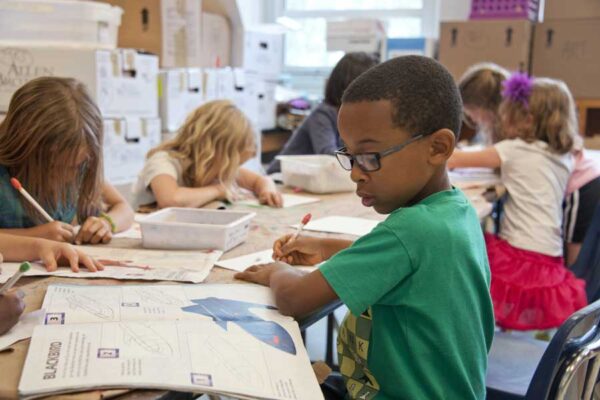
    The U.S is one of the most advanced nations in the world but has a shockingly high level of illiteracy. According to the National Center for Educational Statistics, 21 percent of American adults are illiterate or functionally illiterate (functional illiteracy is lacking the proficiency in reading and writing skills that allows for adequate functioning in everyday life). This crisis is largely ignored and under-researched, and at the same time education for millions of children continues to be underfunded. Just as shocking is the fact that 54 percent of American adults, aged 16-74, lack proficiency in reading. They read below what is equivalent to a 6th-grade level. In addition, even those who can read might be lacking in their ability to comprehend what they read.

    According to the Correctional Education Association, 75 percent of U.S inmates are illiterate. Poverty is linked to both illiteracy and criminal activity. Under-educated and/or illiterate individuals who serve time in prison and then are released have high recidivism rates because these individuals have few employment and other options. Studies from the Correctional Service of Canada have shown that prison education programs have a positive impact on incarcerated individuals.

    Causes of Illiteracy in the U.S.

    There are a number of causes of the high rate of illiteracy in the U.S. One of those causes is a family history of illiteracy. Our first teachers are our parents. They teach us the alphabet, colors, and numbers before we go to school. Parents with little schooling are not equipped to teach their children, and the children arrive at kindergarten or first grade already lacking a foundation that would facilitate their learning and school success.

    Coming from a family with a history of illiteracy means that the family is more likely to be struggling economically, focusing on survival needs. Some families simply don’t emphasize education or have the ability or inclination to provide resources to support their child’s academic success. Other causes include undiagnosed learning disabilities. This is especially common in low-income communities. Parents don’t recognize the signs of a learning disability; if they do recognize a problem, they don’t know where to get help for their child. In addition, schools in low-income communities don’t have the necessary resources to properly support children who experience obstacles to learning.

    Another factor that contributes to illiteracy is having English as a second language. Immigrants who come to this country have to learn how to speak English in order to communicate, but they don’t necessarily have to learn how to read and write if their job doesn’t require it. Even those who learn how to read and write in order to obtain citizenship, don’t regularly practice English. Learning another language as an adult is not easy, especially when you have a job and a family — how much time do you really have to dedicate to becoming proficient in a second language?

    The Islamic Perspective on Literacy, Education, and Lifelong Seeking of Knowledge “Read in the name of thy Sustainer, who has created — created man out of a clinging substance. Read! And your Lord is the Most Generous. Who taught by the pen, taught man what he did knew not” (Qur’an 96:1-5).

    As Muslims, we know it is obligatory upon us to seek knowledge, both religious and worldly knowledge. Even if we come from a background where our parents couldn’t seek a formal education, they still valued education and pushed future generations to learn and seek knowledge. This is one of the many blessings of practicing Islam. The verses above, from Surah al-Alaq, were the first verses of the Qur’an revealed to Prophet Muhammad (s) by the angel Jibril. Thus, the first commandment given to humanity by Allah was to read. This commandment was given, at first, to a society of people who were mainly illiterate. Now the Muslim community is amongst the most educated communities in the world.

    We are also told in the verses that Allah taught the use of the pen. The pen symbolizes the writing down of information and knowledge in order to communicate it to others. This knowledge can then be passed down from generation to generation. In another verse in the Qur’an, we are informed that “…He taught Adam the names of all things…” (2:31). According to commentary in Muhammad Asad’s translation of the Qur’an, this refers to man’s capacity for conceptual thinking, his inclination to “name,” that is, to define things. Naming things includes material objects, values, feelings, systems, natural phenomena, and so on. Being taught the “names” of all things underscores humanity’s capacity to identify and conceptualize, to reason, to reflect, and to understand. But at the most fundamental level, the abilities to read and to write, to define things, to use reason, to understand — these all point to the need for literacy.

    Doing Our Part to Promote Literacy

    There are many different ways we can promote literacy and the most effective way is to start locally, in our own communities. Donating to programs that promote early education, volunteering as tutors at after-school programs, volunteering to teach reading to incarcerated individuals, and donating books — all these efforts can help to promote literacy. Educate yourself on what programs exist in your community that you can support.

    As Muslims, we are taught not only to seek knowledge, but to share it. Abu Hurairah narrated that the Prophet (s) said, “When a person dies, his deeds are cut off except for three: ongoing charity, knowledge that others benefit from, and a righteous son who supplicates for him” (al-Tirmidhi). The Prophet (s) also said, “The best of charity is when a Muslim man gains knowledge, then he teaches it to his brother” (Sunan Ibn Majah).

  • Gratitude: A Central Part of Every Muslim’s Life

    Gratitude: A Central Part of Every Muslim’s Life

    Jabir (ra) reported that the Prophet (s) said, “Whoever is not grateful for small things will not be grateful for large things.” And the companion of the Prophet (s), Abdullah Ibn Masood (ra) said, “Eman is two halves, half sabr (patience and perseverance) and half, shukr (gratitude).”

    Gratefulness is an essential aspect of Islam. The Prophet (s) said, “Whoever does not thank people, does not thank Allah” (al-Tirmidhi). It should be a central part of every Muslim’s life. Not only is it an important part of our worship, but it also has a profound effect on our mental health and well-being. Research shows that it can reduce stress, improve sleep, and enhance interpersonal relationships. When engaging in negative or counterproductive thoughts, expressing gratitude can shift the mind to a more positive, beneficial outlook. Gratitude for even small things keeps you more satisfied with what you have instead of focusing on what you don’t have. Gratitude reduces feelings of regret, envy, resentment, and frustration, all of which weigh us down mentally and emotionally. A study done by Harvard Health showed that people who reflected on the things they were grateful for were more optimistic about their lives and had fewer doctor visits than those who focused on things that caused them irritation.

    Effects of Gratitude on Stress

    We all know what some of the most common stressors are —an exhausting work or school schedule, parenting, a tumultuous relationship, loss of a loved one, experiencing abuse, a serious health diagnosis, and the list just goes on. While it is natural to feel fatigue or disappointment or fear when challenged with life’s inevitable stressors, we should aim to stay centered and God-conscious, realizing that the ups and downs of life are part of the test of our faith. Striving to maintain some degree of equanimity is important as stress can cause high blood pressure, erratic heart rhythm, higher stress hormone levels, increased blood pressure, depression, anxiety, difficulty sleeping, and/or irritability.

    Even with the daily small inconveniences, disappointments, frustrations, and other challenges, gratitude can offset stress. Dr. Emmons, author of “The Little Book of Gratitude,” states that gratitude can reduce cortisol, a stress hormone, by 23 percent, thereby reducing the health problems associated with high levels of stress. When we express gratitude, our brain releases the chemicals serotonin and dopamine. Serotonin causes us to feel happier, calmer, and more focused. Dopamine is a reward chemical that makes us feel more motivated and productive. These are commonly known as the “happy hormones” that give us overall positive mood and emotions. Thanking others and the Almighty can open the doors to a happier life.

    Gratitude and Everyday Relationships

    Everyone likes to feel appreciated by those around them, whether spouses, children, friends, or co-workers. The best way to show appreciation is to express it, and there are countless ways to do that. Expressing your gratitude for those around you fosters stronger, healthier and more loving relationships with those people. A 2011 study done by psychologist Nathan Dewall demonstrates that showing appreciation enriches and increases your social circle. People like being around those who make them feel good. One of the ways to show gratitude to your closest loved ones is learning their love language. It may be words of affirmation, acting in ways that help them or serve them, or physical touch and show of affection. Giving gifts, however small, is of course a show of gratitude. The Prophet (s) said: “Give each other gifts and you will love each other” (al-Adab al-Mufrad).

    Overcoming Trauma Through Gratitude

    Gratitude has also been shown to help people overcome trauma. A 2006 study published in Behavior Research and Therapy found that war veterans who routinely expressed gratitude showed lower rates of PTSD. The practice of gratitude demonstrated a positive effect on motivation and higher self-esteem, and an overall increase in days experienced as pleasant. The study suggests that gratitude “may have salutary effects on everyday functioning.”

    We go through many emotions after a traumatic experience, and many people keep their emotions bottled up and then withdraw from social interactions. Gratitude can help people climb out of that state of isolation and work through their emotions. You don’t necessarily have to change how you feel about your situation. You can still feel angry or sad. These emotions aren’t abnormal and ignoring them can put you right back into feelings of withdrawal, but there has to be a balance of emotions. You have to “look on the bright side,” to put things in a more positive perspective, if you want to move forward. Practicing gratitude can be an important part of that process.

    The Prophet said, “How wonderful is the affair of the believer! Indeed, all of his affairs are good for him. This is for no one but the believer. If something good happens to him, he is grateful to Allah, which is good for him. And if something bad happens to him, he has patience, which is good for him” (Muslim). We should never stop being grateful for what we have, for our blessings both big and small, and for the people around us, family and friends, who we care about and who care about us.

  • Srebrenica: Forgotten by the Ummah

    Srebrenica: Forgotten by the Ummah

    Srebrenica. The site of one of the worst atrocities to occur on European soil since World War II. This July will mark the 27th anniversary of the genocide. The Bosnian town is situated in the easternmost part of the country, sharing a border with Serbia. Before the war, Bosniak Muslims and ethnic Serbians lived side by side in Bosnia. They lived in what we falsely believed to be unity and mutual respect. In reality, suppressed ethnic tensions in Bosnia manifested into a bloody four-year war. During the years leading up to the war, Bosnia was still part of a nation known as the Socialist Republic of Yugoslavia. In Yugoslavia, ethnocentrism was highly discouraged as we were all part of a collective Yugoslav nationalist identity. Which sounds like a good thing, except that what was constituted by Yugoslavia as “nationalism” was biased against Bosniaks.

    As Bosniaks, we could not talk about the history of our region. My mother remembers her time at school in Yugoslavia. They were taught about Serbian and Croatian historical figures and stories, and left out the stories about Bosniak Muslim figures, and Bosniak figures predating Islam. Talking about pre-Ottoman Bosnia and Bosniaks was considered ethnocentric. Academics such as Alija Izetbegovic were jailed for speaking about the history of Bosnia. The Yugoslav mainstream erased parts of our history to perpetuate the notion that the Bosniak ethnicity doesn’t exist, that we were just Serbian or Croatian people who converted to Islam when the Ottomans took over region. Ethnic Serbs resented Bosniaks for following Islam and “abandoning” the religion of our ancestors. Serbian school children would call their Muslim classmates “Turks” in a denigrating way.

    Resentments and Hatreds Manifested Through Genocide

    I remember my aunt taking me to her village one summer. We passed by a bus stop that she used to take every day to go to school. She told me how she remembered the day she got on the bus and all her Serbian classmates started looking at her differently, treating her differently. Like she was no longer their classmate, she was now their enemy. That was the day she knew that war was going to happen, and that it would change their lives forever. Despite Yugoslavia masking the resentment Serbian extremists had for Bosniak Muslims, these resentments and hatred ultimately manifested themselves through genocide.

    Throughout the duration of the Bosnian war, there was a struggle to take over control of the town of Srebrenica which was home to both ethnic Serbs and Bosniak Muslims. The town was under the control of the Bosnian-Serb army for several weeks during the start of the war.They are officially referred to as the “Bosnian-Serb” army because the soldiers were Bosnian nationals and ethnic Serbs. During those weeks, Serbian forces expelled and killed Bosniak civilians in an attempt to ethnically cleanse the town of Bosnian Muslims. In May 1992, the town was recaptured by Bosnian Muslim forces. After Srebrenica was declared a “Safe Area” in April 1992 by the UN, there was an agreement reached to demilitarize the town. Under this agreement, Bosniaks had to surrender their weapons and ammunition. Despite the fact that Srebrenica was now declared a demilitarized zone, Serbian forces were still attacking Bosniaks. In 1993, the UN condemned Serbian forces for starting a “slow motion process of genocide.” However, the UN did little to stop Serbian forces from advancing on Srebrenica besides condemning their actions and calling for a cessation of the hostile advance. By early 1995, Serbian forces had taken control over most of the territory surrounding Srebrenica and the situation in the city was disastrous. Humanitarian aid was being withheld from the town, leaving its citizens to die from starvation. Serb forces continued their advances on the town, and in July, Srebrenica fell into the hands of the Bosnian-Serb Army.

    The process of genocide began. Men and women were separated. The women and children were gathered and put on buses headed toward refugee camps in the northern town of Tuzla. The men and boys were taken to schools, community buildings, and fields where they were gathered in groups to be systematically killed by the Bosnian-Serb forces. Over the course of several days, 8,372 Bosnian men and boys were slaughtered. Many of them tried to flee Srebrenica through the forest to reunite with their families in Tuzla. Most were captured by Serbian soldiers and tortured and killed. Many of them died of wounds, exhaustion, and starvation. Nedzad Avdic was only 17 years old when he and his male family members were taken to a killing field. He was shot three times by Serbian soldiers and left for dead in a pile of corpses, men and boys who had been shot and killed. With the help of another wounded survivor, he managed to escape to Bosnian-Muslim controlled territory. They are some of the few male survivors from Srebrenica.

    The family of Hatidza Mehmedovic were not as fortunate. Hatidza lived in Srebrenica with her husband and two sons, Almir and Azmir. On July 11th, 1995, Hatidza would see her sons and husband for the last time. Her youngest son held on to her while begging her to go. He begged her to leave but couldn’t bring himself to let go of her. Her husband and sons took the forested route to Tuzla to try and avoid being captured by the Bosnian Serb soldiers. She boarded a bus with other women and young children and when she arrived, she waited for her sons and husband. After a few days, she realized they did not make it. Bosnian Serb soldiers pretending to be UN soldiers captured the men trying to escape Srebrenica on foot. A year after the war ended, Hatidza received a phone call informing her that remains of her husband and son Azmir were found, but they did not find her son Almir. It took her three years to find out what happened to the rest of her family. Only a few bones of her husband and sons were found. She also lost her brothers, her nephews, her cousins, and their children. Their entire bloodline was wiped out in a matter of days.

    While the men were the main targets of this genocidal campaign, women and girls were not spared. Bosniak Muslim women were repeatedly assaulted by Serbian soldiers. They taunted them, assaulted them in front of family members, and left them alive only so that they would have to live with the trauma. Children were killed in front of their parents and grandparents. Women and children who weren’t able to flee on buses had to flee through the forest on foot. Pregnant women, women with infants in their arms that they couldn’t feed, and women with children so young that they could not understand they needed to be quiet in order for the Serbs to not be able to locate them — many of these people died on their way to safety, their bodies yet to be found. Hundreds of victims are still declared missing because of how the Bosnian-Serb soldiers strategically hid mass graves, and how they randomly distributed the bodies and even body parts. When some victims are found, only parts of their bodies are recovered, while the other parts are still missing in different mass graves.

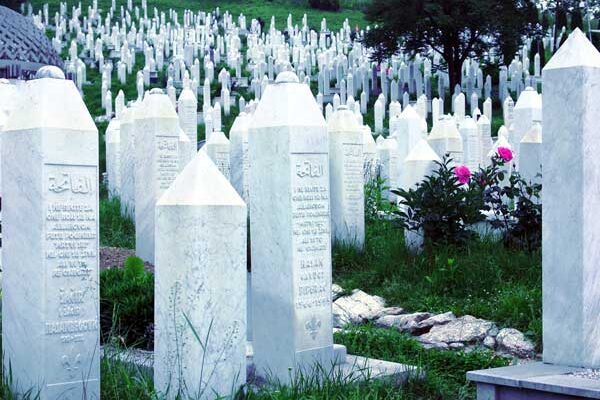
    Every year on July 11th, the bodies of victims found in mass graves are laid to rest in the Memorial Center Potocari. Last year, 19 victims were laid to rest. This year, there will be 18 more victims laid to rest. The funerals never end. Every year, someone receives a phone call that their husband, son, father, brother, uncle, or other male relative has been found. Every year, many mothers of Srebrenica pass away without ever having buried their sons and other loved ones. The pain and suffering are unimaginable. This is a war, one of many wars, that ravaged the Balkans in the 1990s. Bosniak Muslims were not the only victims of Serbian aggression, and Srebrenica is not the only town where genocide occurred. However, as the descendant of a Bosnian genocide survivor, I rarely hear about the Bosnian war being discussed in Muslim communities. I rarely hear about the suffering my people still endure in Bosnia and the political turmoil that makes another war and another genocide a real threat to the country.

    We Cannot Forget Bosnia’s Suffering

    I find it sad, and shameful. No one, besides Bosnians and a few supporters, have advocated against genocide denial, or for the international recognition of the genocide. Several UN officials such as Phillip Corwin and Lew MacKeznie still engage in genocide denial. Academics such as Noam Chomsky and Michael Parenti who are highly respected have continuously denied the horrific events that took place in Bosnia. In a 2006 interview, Noam Chomsky claimed that concentration and death camps were just “refugee camps” where people were free to leave any time they wanted too. My uncle was starved and tortured in one of these camps. He barely survived the beatings in the concentration camp that Chomsky describes as a camp for refugees. Michael Parenti, author of “To Kill a Nation: The Attack on Yugoslavia,” has written that the mass killings of Bosnian Muslims never took place.

    When one part of the ummah hurts, we all hurt. But Bosnia has become a forgotten part of the ummah. Bosnia’s suffering, my family’s suffering, have been forgotten. I write this article not only to educate people on what happened in Srebrenica, but also to call on people to teach others and to advocate for Bosnia. Advocate for peace in Bosnia against aggressors who threaten another war. Most importantly, I ask you to pray for Bosnia. Pray for those who lost their lives, those who are still living with the pain and trauma of war, and for the future generations of Bosniak Muslims who carry the burden and sadness our parents carry. Pray that one day, Bosniaks will truly be able to find peace and healing.