بسم الله الرحمن الرحيم

Author: Laura El Alam

  • No, My Husband Didn’t Convert Me

    No, My Husband Didn’t Convert Me

    I met a new sister at the masjid last week. Like many people who were born to a Muslim family in a Muslim-majority nation, she was curious to know how I, a white American, had come to Islam. I started to explain my story. “Well, my husband is a Muslim. . .” I began. “Oh,” she interrupted, “So he converted you?” I suppressed a sigh. I cannot count the times people have assumed that my husband “converted” me. Whenever I hear that phrase, I cringe. I’ve encountered it frequently from non-Muslims who have misconceptions about Islam, and sadly I even hear it from Muslims who should know better. No, my husband did not convert me, and here is a breakdown of why that question is so problematic.

    Belief in Islam Cannot Be Forced

    One of the fundamental tenets of Islam is found in Surat al-Baqara, verse 256: “There is no compulsion in religion” (Qur’an 2:256). Adherence to Islam must be sincere and come from the heart; otherwise, it is without meaning. No one can force someone to submit to Allah SWT, and in fact pressure or coercion will usually backfire, causing the person to resent the thing that is being forced upon them as well as the person who is pressuring them. Therefore, it is impossible to “convert” someone. We can invite them to Islam and teach them about it, but only Allah SWT can guide them. Their eventual acceptance or rejection is completely up to them, and their acts of worship will only be meaningful if done willingly, for the sake of Allah SWT.

    Converts Have Minds of Their Own

    When people make an assumption that someone must have “converted” the person who accepted Islam, that is discounting the person’s autonomy and dignity. It implies that they had no choice in the decision and sounds as if they were forced against their will. Furthermore, it minimizes the many significant changes the convert undertook to embrace an Islamic lifestyle. Converts often sacrifice many things and transform their lives upon embracing Islam. Some converts are rejected by friends and family because of their choice to become Muslim. Many make drastic changes to their lifestyle, breaking habits and eliminating practices that aren’t in accordance with Islam and forming new ones that are.

    From the start, converts must learn a great deal to practice their new faith, including the necessary steps for properly making wudu and performing salat, as well as memorizing short Qur’anic verses in Arabic in order to pray. They must master a new way of dressing, eating, and interacting with others. This monumental effort on their part should never be minimized by suggesting that someone “converted” them. Allah SWT guided them, and they converted themselves!

    Let’s Stop Stereotyping Muslim Men

    Another problem with the assumption that a Muslim man “converted” his wife is that it plays into the ugly stereotype of the overbearing, oppressive Muslim man. The notion that husbands coerce their wives into practicing their faith is harmful to people’s perception of Islam. In the life of Prophet Muhammad (peace and blessings be upon him), we have the ideal of manhood. He was known to be gentle, good natured, exceedingly kind and loving while still being an effective, strong, and courageous leader. When non-Muslims think of Muslim men, they should think of positive qualities like the ones exemplified by our Prophet. So, it’s partly up to us Muslims to end the narrative of overbearing husbands who “convert” their women. I always make sure to point out to people how, before I accepted Islam, my husband patiently answered my questions about his faith and never forced or pressured me. It is sad that I have to defend him to Muslims and non-Muslims alike, and that I need to clarify this matter repeatedly.

    Muslims Should Practice Adaab When Listening

    Adaab, good manners, is a fundamental trait of Muslim character. If we ask someone a question, particularly a personal one like “How did you come to accept Islam?” — we should observe certain rules of etiquette. First, we should not interrupt the speaker. Interrupting others is a negative habit that many of us have, and while many overlook it as a minor flaw or a cultural tendency, it is in fact a serious shortcoming. Some people interrupt because they are impatient or have poor impulse control. In some cases, it comes from being self-centered, even arrogant, that we are more interested in being heard than in listening, and that we believe our own thoughts and opinions are more important or valid than those of the person who is speaking.

    Having asked about a person’s experience or perspective, we should listen without immediately imposing our own interpretation on it. We should respect it and acknowledge that it is their reality, whether we can relate to it or not. Too many times people second-guess a convert’s story, saying things like I mentioned above, that her husband “converted” her, or something like “Your experience couldn’t have been that hard!” When a Muslim doesn’t respect a convert’s words, they are diminishing their brother’s or sister’s experience. Every Muslim should look to form a bond with new Muslims, to encourage them and make them feel welcome. Those who are rude or judgmental risk alienating the convert or even driving them away from Islam! So, instead of interrupting or challenging a convert, we should listen to what he or she has to say. We should consider their perspective, even if it causes us to grapple with our own concept of reality. Converts can teach us a great deal about the strengths and weaknesses of our ummah.

    A Learning Opportunity for Both

    One further point is important. If, in the future, someone else presumes my husband “converted” me, it can be a learning opportunity for both of us. Since I want to practice what I preach, I should assume the best about every person I encounter. I can answer him or her in a way that allows them to gain greater self-awareness. When I convey the points I have presented in this article, starting with “belief in Islam cannot be forced,” and I speak with sincerity and humility, I allow the other person to hear me and think about what I have said without feeling defensive or embarrassed. As for myself, I can remember that the Prophet (peace and blessings be upon him) said, “Indeed, Allah loves it when any one of you acts, so let him perfect it” (Al-Bayhaqi in Shoua’ab Al-Eman). I can improve the way I answer when someone asks me how I came to Islam. Rather than state at first, “Well, my husband is a Muslim…” I can start out with something like, “I found out about Islam when I was 23 years old and spent two years soul-searching and learning more about it. The more I investigated and found answers, the more I became convinced that Islam is the truth.” Answering in that way, I present myself as the protagonist of my own spiritual journey. The fact that my husband was the one who introduced me to Islam, or even that he is one of the main teachers who provided the answers to my questions, does not change the truth of my narrative. Proceeding in this way allows the listener to focus on me and my journey; at the same time, I am ensuring that the stereotype about husbands “converting” their non-Muslim wives does not take root. In this way, I would, insha’Allah, be perfecting how I “act” when someone asks me how I came to Islam.

    Next time you meet a female who embraced Islam, please don’t assume her husband — or anyone else — “converted” her. In fact, don’t make any assumptions at all! She is a unique individual whose heart was guided by Al-Hadi, the Ultimate Guide. Her one-of-a-kind story was written in the best way by the Best Planner. If she shares her experience with you, consider yourself blessed, listen respectfully, and be prepared to learn and grow, right along with the convert to Islam.

  • Nine Steps of Effective Dawah

    Nine Steps of Effective Dawah

    Allah SWT tells us in the Qur’an, “Invite all to the way of your Lord with wisdom and good instruction, and only discuss with them in the best manner” (16:125). He also says,“There is no compulsion in religion” (Quran 2:256). In these two verses we see that dawah— inviting others to Islam — is a delicate balancing act. On one hand, our Creator commands us to call others to our deen, but He SWT simultaneously reminds us that belief cannot be forced upon anyone. Therefore, dawah must be given gently, diplomatically, and strategically. Wisdom and kindness — not arrogance or attempt to control— must be our driving intention and approach.

    Indeed, calling others to Islam is an art form that should be planned and practiced. Imagine how well we could convey the beauty and message of our faith if we invested some time perfecting our delivery!
    Here are some strategies we can implement when inviting others to Islam:

    1. Choose the right time. Not every interaction is appropriate for an impromptu talk about Islam. If a non-Muslim approaches us with a question, however, that is often a good time to give dawah. For instance, if someone asks, “Why do you wear a headscarf” or “Why don’t you drink alcohol?” — it is a great opportunity to say, “I’m glad you asked. To understand that, I would need to tell you a little bit about Islam.Can I share that with you?”

    2. Know your audience. We should try to anticipate the mindset of the person we are talking to and cater our words to them. We can attempt to dispel some of the misconceptions about Islam they might have due to their background, culture, or the media’s portrayal of Muslims. We can also try to identify common ground within our respective religious beliefs. For instance, Christians often appreciate Islam’s reverence for Mary (Mariam), the mother of Jesus (‘Isa). Regardless of their religious beliefs, most people share at least some core values like honesty, charity, and kindness, and these can be a springboard for agreement and discussion.

    3. Speak with passion and sincerity, but don’t sound too eager and or that you need to convince them of anything. Rarely do people embrace Islam after one conversation! Sometimes it takes months or even years of discussion, so take it slowly and follow the lead of the person you are talking to. If they seem eager for more information, keep answering their questions, but if they seem to lose interest, we should end the conversation gracefully. This will give the listener the chance to contemplate what we’ve said and to part ways on a positive note. They will realize we are not pushy and will be more likely to approach us again with questions.

    4. Don’t monopolize the conversation. Dawah is not a debate, and it’s not about proving that you are right and they are wrong. Interrupting, arguing, or dominating the conversation will only come across as rude and overbearing. When the person speaks, we should listen attentively and respectfully, especially if we disagree with their point of view. In fact, the foundation that has to be laid is one of establishing a rapport with them and making it clear that we care about what they are saying and what their viewpoint is. When we do state our opinion, we must do it politely. Remember, Allah SWT says, “…only discuss with them in the best manner.”

    5. Always keep in mind that our actions speak louder than our words.Adaab or good manners are critically important in Islam. In fact, much of our dawah is actually unspoken. When non-Muslims see us engaging in acts of kindness, being honest or generous or self-disciplined, they automatically have insight into our deen. They know what Islam is through our actions, and so while we should always behave as if Allah SWT is watching (because He is), we should also remember that non-Muslims are watching us for clues that illustrate who we are and what we believe.

    6. Describe how Islam benefits them. Give some examples of how our beautiful faith enhances life for people like them. Are they females who express frustration with rampant sexism? Explain how Islam empowers women. Are they men who lament the widespread lack of morals in today’s society? Explain how Islam emphasizes the importance of morality and how it is meant to permeate everything we do on a daily basis.

    7. Talk in a way that is easy to understand. Avoid words your listener would not understand, including commonly-used Arabic words that many of us use spontaneously without conscious thought, but non-Muslims aren’t familiar with.

    8. Practice giving dawah with a Muslim friend and give each other feedback. Role-play different conversations, with one person giving dawah and the other asking questions. This will help polish our technique and think of suitable answers to tough questions.

    9. End with a call to action. Experts always advise ending a pitch with a call to action — an invitation to take a desired next step. If the non-Muslim seems interested in what we have said, we can end the conversation with a specific call to action such as “Why don’t you check out this reputable Islamic website” or “I can tell you where to get a translation of the Quran” or “Maybe you’d like to visit to a local mosque” or “Here’s a great book that explains the basics of Islam.” It might even be useful to keep a list of resources on your phone so you can have them readily available. The WhyIslam website https://www.whyislam.org/ is one excellent resource for non-Muslims.

  • The Lesson Buried in the Sting

    The Lesson Buried in the Sting

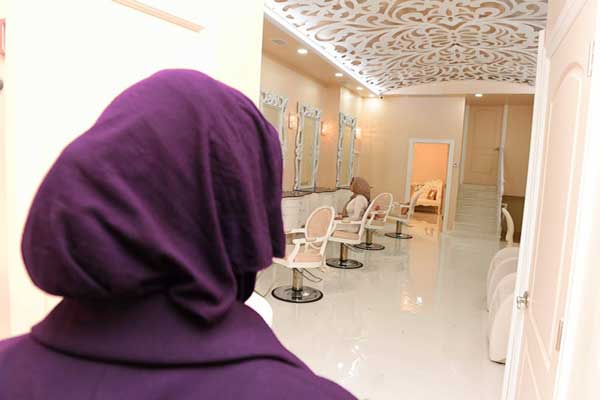
    Smiling in pleasant anticipation, I entered the tiny hair salon on the bustling street corner in Fez. The sign above the door proclaimed “For women only” in Arabic and French. What a treat to be able to let my hair down, literally and figuratively, knowing that men wouldn’t enter the shop! Having my hair styled in a proper salon was one of those small but significant luxuries of visiting my husband’s homeland, Morocco.

    As an American Muslim who wears a khimar, I’ve had to find creative ways to get my hair cut in the States. Since almost every mainstream salon here is accessible to males and females, I can’t just walk in, remove my scarf, and relax. When I’m unable to locate or afford a stylist who makes house calls, I tend to go to mainstream establishments and ask if they have a room in the back that offers privacy. Most don’t offer secluded styling areas, but over the years some helpful, bemused staff members have found creative ways to accommodate me. As a result, I’ve had my hair cut in stuffy employee break rooms amongst half-eaten sandwiches and even in janitors’ closets surrounded by mops and brooms!

    But here I was in Morocco where Islamic traditions were understood and honored. This salon’s only customers were women, and the stylists were female too. Sitting in the bright main area in a comfortable chair, I unwrapped my hijab fearlessly and felt a wave of gratitude as my hairdresser said, “Bismillah” before she started snipping. Ahh! I thought, This is how a haircut should be!

    These Were My Sisters in Faith

    While the stylist herself did not wear khimar, and neither did the other women around us, they were my sisters in Islam. They were fascinated by me because I was clearly a foreigner but also a Muslim, so I was both strange and familiar to them. Through my translator (my husband’s sweet cousin who had accompanied me), the staff and customers peppered me with questions: “How long have you been a Muslim?” “What do you think of Morocco?” “Is it hard to wear hijab in the United States?” They nodded towards my teenage daughter, who was with me, and inquired, “She wears hijab, too? Even in America? Willingly?”

    When my stylist had finished cutting, brushing, and blow drying my hair, the onlookers gave their warm approval. She had done an excellent job. I thanked her and began to put my scarf back on.
    “Noooo!” chorused all the women around me, “You’ll mess up your hairdo!”
    “But I’m leaving now,” I explained. “I have to cover it.”
    “Don’t cover it too much, then,” my stylist advised. “Just wrap the scarf loosely so you don’t ruin
    the style.”

    She attempted to arrange it for me, with the result that half of my hair was showing. The women nodded their approval. “Thank you for your hard work,” I replied through my translator, “I really like the hairstyle. But for me, hijab needs to be 100 percent.”I wrapped the scarf snugly and got up to leave. Then one of the women fired a final, lethal shot. I hadn’t seen it coming — not there in Morocco surrounded by my sisters in faith. I guess that’s why it hurt so much.“But you look so much younger and prettier without it!”

    Now, I’m aware that those same words have been said to countless women who cover their hair and bodies for the sake of Allah SWT. I don’t pretend to be the only one who has dealt with this situation. It seems to be a favorite test of the Shaytan, who knows our weaknesses and seeks to exploit them through the poisonous words of people around us. When uttered by non-Muslims, those words are hurtful. But when they are said by our sisters in faith, they sting even more.

    I believe there are some Muslim women who are so self-confident that they don’t need anyone’s validation of their beauty, physical or otherwise. No petty, biting words can pierce their innate sense of worthiness and dignity. Their relationship with Allah SWT is so strong they don’t doubt their inherent value for a second. Sadly, I think those self-confident women are few and far between. Most of us have grown up believing that others’ opinions determine our beauty. Deep down, many of us have bought into the lie that our physical appearance is more important than our inner light.

    Therefore, when someone says we look younger and prettier without hijab, most of us immediately deduce that we look old and ugly with it. High-minded as we try to be, few of us desire to look old and ugly. This fear and insecurity can make us start to question or even resent our modest Islamic attire.
    I might have wallowed in my own feelings of resentment and self-doubt in that moment, but I was more focused on my teenage daughter, who had been listening to the whole conversation. Through the salon mirror, I could see her reflection. She was clearly filled with fury on my behalf. Her face had turned red and she was fighting back angry tears. She, too, had been told by non-Muslim friends that she looked “so much prettier” without her hijab. For a teenager in a non-Muslim environment, in this age of filtered, flawless selfies and the glorification of exhibitionism, the concept of not being pretty enough can be devastating. And here her mother was being told the same thing by adult Muslim women who should know better! No wonder my daughter was upset.

    With Hindsight, Distance, and Perspective

    Instead of coming up with a clever reply to the commenter, I focused my energies on consoling my daughter and getting out of the salon as quickly as possible. As we walked home, I’ll admit I felt deflated. Half an hour before I had been feeling pampered and safe amongst sisters, but I now felt diminished and even foolish, somehow, although I had done nothing wrong. The thrill of a new hairstyle was gone. I found myself wondering exactly how old and unattractive I looked with my hijab and contemplating how much nicer it felt to be praised and showered with compliments. Then I pondered why strangers’ opinions mattered so much to me and whether that made me a weak Muslim. All of this inner turmoil — plus my daughter’s indignation — were caused by people who should have been supporters.

    If I were able to go back in time, now that I have the benefits of hindsight, distance, and perspective, I would have said to the sisters in the salon, “You have chosen not to prioritize hijab, and that is between you and Allah SWT. But what if your offhand words to me, perhaps unintended, preyed on my insecurities so much that I decided to remove hijab permanently? Would you want that on your conscience on Judgement Day? When Allah SWT asks you what you did to help your sisters in faith, will you be able to say you encouraged them to practice their faith courageously and fully? As a convert to Islam, I might be particularly susceptible to the opinions of ‘born Muslims.’ Do you really want to admit to Allah SWT that instead of advising me to strive to please Him, you enticed me to disobey Him? To doubt my worth and question my priorities? To believe that my physical attractiveness was more important than my integrity? Please, sisters, we all need to think before we speak. The Messenger of Allah, peace and blessings be upon him, said, ‘Most of the sins of the children of Adam are on their tongues’” (al-Tabarani).

    To myself and my daughter I would say, “Don’t grieve over those hurtful words. Thank Allah for this test because it will only strengthen you. Never, ever prioritize people over your Creator. Never seek their approval more than His. Remember that no matter what you do, many people will not be pleased. Even if you put all of your effort into beautifying yourself with the perfect hair, makeup, physique, and clothing and display all of it to the world, they will still find fault. Some people are insecure, some jealous, some shallow, and some misguided. You are not the problem, and neither is your hijab. If you seek to please Allah SWT you will always win. Do not resent the people who put your faith to the test. Make dua’a for them, identify the lesson buried in the sting, and march forward, away from caring about the approval of others, always with your eyes on the prize: Paradise.”

    Having recounted this story, I would like to add that a number of remarkable Moroccan women were among those who inspired me to become Muslim in the first place. My sister-in-law is an exceptionally bright, capable, and strong mother, wife and professional. When I first met her, she told me with unmistakable passion and sincerity that she loved Islam and loved her hijab and would never give them up, insha’Allah. Her words and conviction impressed me profoundly. My mother-in-law is the most patient, sincere, and gentle person I’ve ever met, masha’Allah. She is a walking example of reliance on Allah SWT and trust in His plan. My husband’s Moroccan family, in general, welcomed me warmly before I became a Muslim, supported and loved me unconditionally, and later celebrated my conversion. I know Allah SWT has seen all of their contributions to my growth and that He SWT will reward them, insha’Allah.

    Words are powerful and we must choose them carefully. We all have the potential to support one another and enjoin each other to good, or to disparage, harm, or even mislead. Let us choose wisely, knowing that one day we will answer for our decisions.

  • Finding Tranquility and a Connection with Our Creator Through Nature

    Finding Tranquility and a Connection with Our Creator Through Nature

    A few years ago, my family moved from Southern California to Massachusetts. It was an enormous transition for us; moving from the West coast to the East involved saying goodbye to many beloved friends as well as bidding adieu to California’s warm and mild climate. We would soon find that New England’s seasons embody the extremes, from the humid, scorching summers to the bitterly cold, snow-encrusted winters. As challenging as they are, though, the dramatic seasons bring forth beautiful changes to the landscape. All of it is a testament to the power of the Creator who initiates life and sustains the universe.

    During the pandemic my family has explored local hiking trails in all seasons and weathers. When the lockdown started back in March, we enjoyed watching spring bloom around us with its countless delicate yellow-green buds and glorious flowers. It was a joy to smell the earth coming back to life after lying dormant for so many frozen, barren months. Each drop of spring rain was a blessing that nourished the earth. Then it was summer, and everything around us was lush and green. The heat and humidity made us grateful for the shade of the trees and the coolness of the lakes. My absolute favorite time of year, autumn, was especially wonderful this year. I savored the crisp coolness and the glorious transformation of the deciduous trees as their leaves turned hues of brilliant red, yellow, and orange. For me, it is worth enduring all the discomforts of summer and winter in order to enjoy two months of a New England autumn.

    Now it is winter, and still the worldwide pandemic rages on. My family is experiencing the dichotomy of this particular season in Massachusetts where the pristine, beautiful stillness of a fresh snowfall goes hand in hand with the treacherous ice and freezing temperatures. The extreme climate here has inspired me to appreciate Allah’s (SWT) majesty more than ever. I cannot gaze upon the wonder of His creation without feeling grateful and humbled. In the daily struggles of coping with the pandemic and all the tedium, fear, and inconvenience that it entails, the restorative powers of nature have helped my mental health enormously. I frequently walk to a small pond near our home and there I find a great deal of beauty to soothe my soul. A graceful blue heron gliding over the water, industrious beavers collecting sticks for their dam, and wild turkeys strutting through the leaves all remind me of the magnificence and mercy of the Creator. When the human world seems unbearable, sometimes, with its nonstop news of tragedy and strife, nature is blessedly reassuring and calming. It centers us, humbles us, and reminds us that Allah’s creation is vast, precious, awe-inspiring, and not to be taken for granted. As Allah SWT tells us in the Qur’an, “Have they not observed the sky above them, how We constructed it, and decorated it, and it has no rifts? And the earth, how We spread it out, and set upon it mountains, and made to grow therein every beautiful kind; an insight and a reminder for every servant who turns [to Allah]. And We brought down from the sky blessed water and produced with it gardens and grain to harvest. And the soaring palm trees, with ranged clusters…” (50:6-10).

    Focusing on the Beauty Around Us

    Just as a photographer carefully chooses which subject to zoom in on and capture with a snapshot, when we consciously choose to focus our lens on the beauty around us, we can see Allah’s presence very clearly in nature. It is possible to find immense comfort and inspiration there. To do this, it is not necessary to lose ourselves in a massive forest (although that can be a wonderful experience). It is usually enough to find a tree-lined street, park, or garden — anyplace with an abundance of living things. A lake or pond is always a wonderful place for reflection (both literal and contemplative), but even a simple bird bath or fountain can remind us of the healing and life-giving miracle of water, from which all things were made: “…And We created from water every living thing…” (Qur’an 21:30). In the Qur’an Allah also describes the blessing of water: “…We send down pure water from the sky, that We may give life thereby to a dead land, and We give to drink, thereof, many cattle and men that We have created” (Qur’an 25:49). If we stop to admire and appreciate the incomparable blessing of water, we can remember how Allah nourishes, refreshes, and sustains life with it.

    Connecting with nature is especially important in this particular time, when so many of us are tethered to our computers for work or school. In the natural world we can’t help but relax a little and marvel at Allah’s generosity. We are reminded that He SWT loves beauty and is the source of all beauty. Anything that appeals to our senses and inspires or moves us deeply is, at its core, a reflection of His incomparable greatness. The delicate petals of a flower in bloom can remind us of Al-Latif, the Sublimely Subtle, who delivers kindness to His creation in the gentlest and most precise and insightful ways. The formidable force of the wind can help us recall Al-Qadir, the All-Powerful, who is the only One who controls the cosmos. Indeed, He SWT is the One who determines whether that wind will destroy an entire town or pass by so harmlessly that even a bird’s nest is undisturbed.

    Finding Solace and Inspiration in Nature

    In nature we also witness how Allah SWT provides for the animals by creating them with instincts to build homes, find food, migrate thousands of miles, or hibernate through a long, cold winter. We are reminded that He SWT takes care of His creation — from a maple tree to a fox to a human — with unparalleled insight and wisdom. Prophet Muhammad (peace and blessing be upon him) said, “If you were to rely on Allah as He should be relied on, He would provide for you as He provides for the birds. They go out early in the morning hungry and return in the evening full” (at-Tirmidhi). Even our dua should be affected by forces of nature. The Prophet (peace and blessings be upon him) said, “Two prayers (dua) are not rejected: the dua when the call to prayer (athan) is made and the dua made when it rains” (Mustadrak Al-Hakim). If you live in a rainy climate, imagine how many powerful and meaningful supplications you can make!

    When the tedium and stress of our lives are weighing us down, nature can be our place of refuge and connection with our Lord. A Muslim must always try to keep a healthy perspective about this life’s trials. Difficulties are inevitable and can even be a source of blessings if we remember to be patient. The Prophet (peace be upon him) said, “Wondrous is the affair of the believer for there is good for him in every matter and this is not the case with anyone except the believer. If he is happy, then he thanks Allah and thus there is good for him; and if he is harmed, then he shows patience and thus there is good for him” (Muslim). No matter where we live and what kind of climate we encounter, we can appreciate Allah and grow closer to Him SWT through our contemplation of the beauty around us. The sunrise and sunset, the moon and stars, the tree branches that bow in submission — all are products of His incomparable creative power. They all submit to His perfect plan. In the beauty of nature let us find the solace and inspiration we need to grow closer to our Rabb and endure the trials of this dunya. Ameen.