بسم الله الرحمن الرحيم

Author: Farah Onaid

  • Down Syndrome Awareness Month: Hamza, the Joy of Our Family

    Down Syndrome Awareness Month: Hamza, the Joy of Our Family

    I stared at her in utter shock trying to make sense of what I’d just heard her say. The words reverberated in my head like some distant thumping, bringing a lump to my throat that I couldn’t swallow. Was this really happening to me! I felt her soft touch on my shoulder as she gently reiterated for the third time, “It is a difficult decision, you don’t have to decide now. Think about it and I’m available to answer your questions.” I looked up at her in disbelief. How could a doctor be suggesting such a thing when my life was not in any danger? I took a deep breath and sighed as Dr. Anette gently rubbed my shoulder, and then I looked at her and crisply replied, “I’m keeping my baby no matter what.” “Think about it,” she went on, “it’s not that simple. There are a lot of challenges…heart defects, hearing problems, digestion issues, childhood cancer, early onset of Alzheimer’s….and she went on and on, not once mentioning that my baby would still just be a baby, a child who loves and cries, who wants to snuggle and play, who is oblivious to his or her challenging diagnosis and just wants to be loved!

    Her voice faded away as I made my way out of her office, walking in a trance. “So, what did the doctor say?” I heard my husband ask excitedly. “Everything okay?” I took a deep breath, looked into his eager eyes, held his hands and gently whispered, “I am a high-risk candidate for carrying a baby with Down Syndrome. The doctor presented an option.” Confused, my husband repeated what I said. “Presented an option?” I replied, “She said we can terminate the pregnancy and be free of numerous challenges and hardships.” As I spoke, my voice quivered, and the color of my husband’s face changed. Only Allah knows how much we had yearned for this baby, what we had endured to get here and now when we were just months away from holding him in our arms, we were being told that it may be better to abort him! All because he may be born with Down Syndrome.

    Over the next few months, every time I walked into Dr. Anette’s office for my regular checkup, I was offered the option, until finally Dr. Anette suggested I should talk to a psychologist about it! I had kept my cool every time she suggested “the option,” politely informing her that we are happy and content with our decision to welcome our baby. But that day, I exploded. “The diagnosis of Down Syndrome is not the worst thing that can happen to an expectant parent,” I vehemently retorted. “Are you a parent?” I asked Dr. Anette, “Don’t people with Down Syndrome deserve a right to live and be included in this life? Aren’t there solutions for all the medical challenges they have? How could terminating life be the only solution and that too, one that relieves the parent of a ‘burden’ — the unborn baby!” I was 24 weeks now and Dr. Anette, ignoring my imploring questions, calmly went on to say that this was the last week that we could undergo the procedure to terminate my baby with Down Syndrome. I rushed out of her office and asked to talk to her supervisor. Upon listening to my sense of frustration that the doctor had over and over asked if I wanted to terminate my pregnancy, “terminate” my baby, he professionally informed me that she was doing her job and it was her duty to inform me about the option to terminate my pregnancy after finding out that my baby would be born with Down Syndrome! That was the moment I realized that not only would I have to deal with medical challenges facing my baby, but also immense social and emotional challenges. But I was determined to be his advocate and voice.

    Fast forward 10 years and Hamza is the joy of our family. He is the best gift that Allah could have given us. His smiles, hugs, and kisses can cheer the saddest person and his overall presence is energizing. He has his fair share of challenges, which he struggles with. But the best part is he never gives up and perseveres through the most difficult tasks, just at his own pace. He is my teacher in life, and I wouldn’t change one chromosome in him!

    Down Syndrome Awareness Month

    October is Down Syndrome Awareness Month and a time to celebrate people with Down Syndrome and make others aware of their abilities and accomplishments. Down Syndrome is named after the English doctor John Langdon Down who was the first to categorize the common characteristics of people with the condition. The colors for Down Syndrome awareness are blue and yellow.

    Down Syndrome is the most common genetic disorder. While there are three types of Down Syndrome, one type, Trisomy 21, accounts for 95 percent of people with Down Syndrome. In this type, the individual has three copies of chromosome 21 rather than the usual two. There is about 1 in 700 babies with Down Syndrome born each year in the U.S. The chances of having a baby with Down Syndrome are higher in older women.

    Some common physical characteristics include almond-shaped eyes slanting upwards, poor muscle tone, short stature, a flat nasal bridge, a protruding tongue, and a single deep crease across the center of the palms. People with Down Syndrome may have some or all of these physical characteristics, as well as a number of others. The presence of part or whole of the extra chromosome also affects a person’s cognitive ability, causing intellectual disability. Yet, studies have shown that children with Down Syndrome learn best alongside their typically developing peers and so need to be included in such settings or least-restrictive learning environments. They have mild to moderate developmental delays and reach milestones later than their typically developing peers. Early Intervention techniques and therapies in the first five years are critical to the optimal development and progress of children with Down Syndrome. Medical issues can vary from mild to severe. Around half of all people with Down Syndrome have congenital heart defects and there may be a higher risk of respiratory problems, hearing issues, thyroid conditions, early onset of Alzheimer’s, and childhood Leukemia. Fortunately, medical advancements have made it possible to address these issues. In the 1960s, the life expectancy of a person with Down Syndrome was 25 years, but with medical advancements, the life expectancy has expanded to 60 years.

    Sadly, however, even with all the medical advancements, inclusion with peers in academic settings, and early intervention techniques — all improving the lives of people with Down Syndrome —the number of abortions of Down Syndrome fetuses is increasing around the world. In the U.S., the rate of terminating a Down Syndrome fetus is over 70 percent and in Europe the numbers are even more staggering. Iceland claims to have “cured” Down Syndrome, the “cure” being almost 100 percent termination of Down Syndrome fetuses. The push to eliminate these beautiful souls is on the increase every decade.

    Back to Hamza’s Story

    The journey of raising a child with Down Syndrome can be daunting and intimidating. The challenges can vary from mild to extreme, but with far better guidance and resources easily accessible now, all of these can be overcome. Hamza is the purest soul I have ever met in my 50 years of life. He is extremely sociable and loves people. His smiles are contagious, and his hugs are healing. He is a willing learner, mostly, and though he struggles hard to achieve basic tasks, he never gives up. His resilience to keep on trying his best to participate and interact is admirable. He is pure joy and the sunshine in one’s darkest hour. He can put a smile on the saddest face with his charming personality. Yet, he has his moments too. He has the full spectrum of human feelings and desires to be loved and included.

    Unfortunately, our communities are not fully aware of, and comfortable with, Down Syndrome. Although research verifies that inclusion benefits children with Down Syndrome, schools are still reluctant to implement this. Sadly, many parents of typically developing children fear that their children will regress if they are around children with cognitive and developmental delays. In fact, being with children with Down Syndrome can increase understanding and compassion. Yet, many children with Down Syndrome are rejected and denied their right to participate in various social and athletic programs. It does require additional effort and planning to include children with Down Syndrome in all activities, but that is the way forward. They can learn and participate, just at a different pace.

    There are many ways to support greater awareness of Down Syndrome and to participate in, and advocate for, inclusion. You and your child can befriend a child with Down Syndrome and his or her family; you can participate in the annual Buddy Walks (held in about 40 states across the country); you can join and volunteer in groups that provide information and resources such as the National Down Syndrome Society (NDSS), Down Syndrome Advocacy Foundation (DSAF), and Gigi’s Playhouse (across the country). There are numerous books available for children and adults about Down Syndrome. You can follow Facebook and Instagram pages such as Parents of Children with Down Syndrome or Noah’s Dad for valuable and informative resources and latest developments. Hope Story, of which I am a Hope Advocate, is a non-profit group aiming to educate and support parents who have received prenatal diagnosis of Down Syndrome. We are open and happy to talk to the expectant parent(s), offering hope, information, and support as we share our own family’s story of living with and loving a child with Down Syndrome.

    In conclusion, as a parent of a child with Down Syndrome, I encourage people to learn more about Down Syndrome and open their minds and hearts to such individuals. They have a beauty all their own and can teach many things about life, adversity, and joy. Without exaggeration, knowing and interacting with a person with Down Syndrome can greatly enrich your life!

  • Helping Teens Set Goals and Stay Focused on Them

    Helping Teens Set Goals and Stay Focused on Them

    Developmental psychology proposes that everything that happens to us impacts, to lesser or greater degree, the way our brain develops. So, on top of our basic brain structure and inherent temperaments, the role of parents is key in providing experiences that will help develop a resilient, well-integrated brain. Parents who speak to their children about emotions and how to understand and manage them, facilitate their children developing emotional intelligence. Likewise, children, whose parents nurture a sense of curiosity and courage, are more eager to explore ideas and opportunities in the world and to develop aspirations and willingness to set goals for themselves. One of the biggest mistakes that parents make is wanting their children to live in the image of the parents and according to their definition of success. When children nourish their own dreams and develop their own goals, they are much more likely to succeed.

    A study by the Statistic Brain Research Institute finds that 45 percent of Americans usually make goals; 17 percent infrequently make goals; and 38 percent never make goals. The study also claims that a mere 8 percent of people achieve their New Year’s resolution, with 92 percent failing to attain their goal. So how do we get our teens to set goals and stay focused on them? Presented below is a widely used criteria, SMART, guidelines that can be used in the setting and attaining of goals. Also noted are ways that parents can support their teens in the process. Pertinent verses from the Qur’an are presented for each point.

    S = Specific
    M = Measurable
    A = Attainable
    R = Relevant
    T = Time-bound

    Goals Must Be Specific

    In the Qur’an, Allah states, “We shall set up scales of justice for the Day of Judgment, so that not a soul will be dealt with unjustly in the least, and if there be the weight of a mustard seed, We will bring it; and sufficient are We as reckoners” (21:47). Allah’s plan for accountability is so specific that the smallest deed, so small it is compared to the size of a mustard seed, will be placed on the scales of justice.

    Likewise, our aspiring teen must be very specific in his or her goal. If the goal is long-term, even a life goal, then there should be milestones that the teen should aim for, on a daily, weekly, monthly, and yearly basis. For example, if the goal is to be an NBA player, there can be daily practice times allotted, monthly skill attainments, and a year by which the teen aims to get drafted to an NBA team.

    The parental involvement here should be one of encouragement for their teenager to make specific goals, goals that are defined and laid out with milestones that are very specific. Here, again, it’s important that parents not impose their desire to see their children striving for goals that would be a reflection of the parents and their vision and priorities. The role of the parent is to help the teen draft their own goal, on their own terms.

    Goals Must Be Measurable

    Striving toward a goal is a process and there must be milestones that are achieved in pursuit of the goal. Each milestone that is met is a further motivation to stay on track and push further along the way. These milestones are like stages in a development of a skill or a mastery of some sort. In the Qur’an, Allah talks about the stages of development of the human fetus. “Verily We created man from an essence of clay; then We made the drop into a clinging substance, then fashioned it into a lump. Then We created the lump into bones and then clothed the bones with flesh; and then We produce it as another creation. So blessed is Allah, the best of creators” (Qur’an 23:12-14).

    Allah outlines the stages of development with discernible outcomes and benchmarks, and we know from the study of fetal development that there is a clear timing for each stage of development of the fetus in the womb. So, our young aspiring NBA player must highlight important skills and experience that he wants to attain by a certain time. This is how he will measure his progress as he works toward his goal. The parents can help the teen by reminding him that the milestones are important but that he can always reassess where he is on the path and make necessary or desired adjustments. Milestones are simply measurable signifiers in an ongoing development as one aims toward mastery.

    Goals Must Be Attainable

    Allah mentions in the Qur’an, “And establish prayer and give zakat and obey the Messenger – that you may receive mercy” (24:56). And in another verse, He says, “O you who believe! Verily, intoxicants and games of chance and idols and divining arrows are an abomination from the work of Satan. So, avoid it so that you may be successful” (5:90). These verses indicate some things that believers should do and some things they should avoid in order to achieve the ultimate goal! In the same way, the teen who sets a goal must know what to do and what to avoid in order for his or her goal to be attainable. If not, they have nothing but a formula for failure.

    Now if the measurable benchmarks set by our potential NBA player are too demanding, cultivating unhappiness or frustration, they will not be attained. Avoiding unrealistic benchmarks guards against the teen feeling demotivated and deterred from continuing on his path toward the goal. The parent can help the teen draft their daily schedules in alignment with the goal. Help them come up with a list of priorities — for example, schoolwork, religious duties and activities, social and recreational time, in addition to working toward the goal. The parent can discuss with the teen the importance of refraining from anything that may lead to hurdles or setbacks in attaining the goal such as occupying their valuable time in wasteful activities. It is imperative for the parent to set an example through role modeling by setting of priorities in their own life and working toward attainable goals.

    Goals Must Be Relevant

    A very critical aspect of a goal is that it be relevant to the individual, an objective that is ardently desired, and not an idea for a goal presented by someone else. It must make sense for the teen for it to be deemed doable and create the inner spark to chase it. The Qur’an makes clear why practicing Islam and worshipping Allah as prescribed is relevant to human beings and why it is the ultimate goal. “Their Lord gives them good tidings of mercy from Him and approval and of gardens for them wherein is enduring pleasure, abiding therein forever. Indeed, Allah has with Him a great reward” (9:21-22).

    The goal chosen by a teenager must be relevant to him or her. It must have significance to them personally for them to stay motivated and work hard toward their objective. Even the action plan that the teen makes must be appropriate and relevant to their particular circumstances. If Michael Jordan used to practice 20 hours a day and eat six eggs for breakfast, that does not mean that the teen who aspires to play in the NBA needs to do the same. The parent can help the teen make sure that their chosen goal really matters to them and that they are willing to put in the time and effort to achieve it.

    Goals Must Be Time-Bound

    Finally, every goal must be time-bound. We are reminded in the Qur’an that we have a prescribed time in this world to accomplish what we set out to do. We are reminded that this life is fleeting and time-bound. “Allah is the one who created you from weakness, then made after weakness strength, then made after strength weakness and white hair. He creates what He wills, and He is the Knowing, the All-powerful” (30:54).

    Likewise, the teen must keep in mind that his goal must be time-bound as well, not open-ended so that he or she feels too casual and easygoing about it. The point here is that time plays a pivotal role in working toward and achieving one’s goal. A parent can help their teen by advising him or her to mark certain dates on their calendar to revisit their goal and check how much has been achieved and if not, amend and refresh certain areas to facilitate achieving their target. One common obstacle to achieving a goal is the constant barrage of distractions. It is up to the parents to demonstrate patience and self-discipline in their own lives to set a good example for their teen.

    A Valuable Gift

    Summing it up, the SMART acronym provides a set of criteria that can be used in goal-setting. Thus, we know that goals must be specific. And indeed, every specific and attainable goal is healthy and beneficial for your teen. Encourage your teen to set their goals high, but to make sure their milestones are measurable and that the goal itself, as well as its actionable parts, are relevant to them, something that matters to them personally. Work diligently with your teen towards achieving their goals by guiding them to filter out distractions, making sure they realize that the best use of time is essential to achieving any goal, that goals must be time-bound. There will be pitfalls and hurdles along the way in the journey, but help your teen remember that it’s all about rising after a fall and picking up the positive momentum once again. Through SMART, parents can give their teens a valuable gift —the gift of setting and achieving goals. In this way they will thrive and, in shaa’ Allah, be successful in their lives!

  • Inspiring the Love of Learning in Children

    Inspiring the Love of Learning in Children

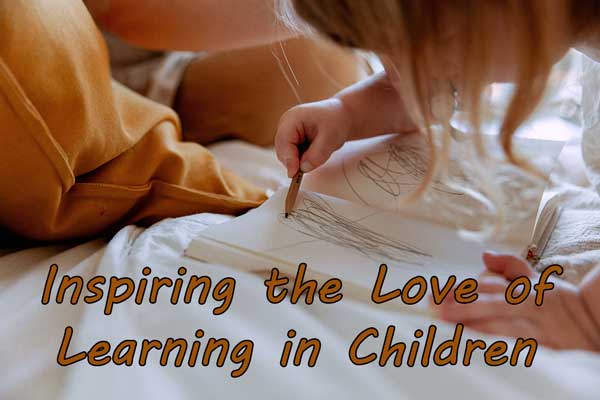
    It is nothing less than divine wisdom that the first word revealed in the Quran is “read.” Allah says, “Read in the name of your Lord who created, created man from a clinging substance. Read, and your Lord is most generous, who has taught by the pen, taught man what he did not know” (Qur’an 96:1-5).This very first revelation to Prophet Muhammad (s) conveys to us the importance of reading and writing, of learning and seeking knowledge. In fact, Allah created children with the innate desire to learn. Even before the first year, a child begins to observe and explore his or her environment. They are curious and even employ simple investigative learning techniques— they use all their senses to explore an object, touching it, putting it in their mouth to taste it, shaking it, pulling on it, etc. There is so much they want to experience, especially in the formative years. Unfortunately, this innate desire is often crushed by parental dismissal of the creative and explorative capacity in their children and then by schools that overly emphasize regimentation.

    The Qur’an is resplendent in providing examples of learning through engaging with our environment,from the vast expanse of the galaxy to the depths of the oceans. Winds and clouds, what is within soil, the life-giving properties of water, the alternation of night and day, and so many more references to the world of nature — all are presented as being signs of Allah.The Qur’an encourages humans to engage in deep reflection and critical thinking. Aptly put, learning is a lifelong journey! As parents and teachers, it is our responsibility to encourage and provide the most appropriate learning circumstances and conditions to help our children achieve that “aha!” moment. This can be done through facilitating children to expand their inherent inquisitive nature. This also builds their confidence in themselves and encourages them to lead a more content and satisfying life.

    So how do we take on this task?It isall up to us and our readiness to educate ourselves, engage in reflection and critical thinking ourselves, and make the needed efforts to enable our children to become lifelong learners and explorers! Below are strategies that can support you and your child in developing the love and passion for learning.

    Strategies for Lifelong Learning

    Reading together: There cannot be enough emphasis on the impact of reading to children, especially reading aloud. Apart from arousing and increasing their curiosity and stimulating their imagination, reading to children develops a sense of confidence and competence in them. Because of the intimacy involved in reading to children, it  leaves a lifelong positive emotional impact and favorable attitude towards reading as the child grows up.Trips to libraries continue to infuse the desire to read in the child until he or she becomes an independent reader who loves to explore and learn.

    Active listening: This communication skill, one that must be learned,will be so valuable in both the professional and personal life of the child as their life unfolds.Active listening requires the listener to fully concentrate, understand, and then respond to what was said. Itcan be beautifully incorporated into the reading program by asking higher order questions. Here are some examples of questions that can be asked when reading with young children:

    • What was the problem in the story? Was it solved?
    • What was the lesson in the story?
    • How are you like the main character in the story?How are you different?
    • Which character in the story would you choose for a friend?
    • Did anything in the story surprise you?

    The parent has the opportunity when the child answers each question to model active listening. And the child is practicing active listening when the parent asks questions about what they are reading. Active listening improves the child’s attention span and increases engagement,creating a space for the child to respond appropriately and in a timely manner.

    Learning through play: As cliche as this phrase may seem in the world of progressive education, it is by far the most successful model in achieving the desire to learn.Playing helps children learn communication skills, develop their motor skills, and helps with problem solving,all great ingredients for a love relationship with learning.Unstructured play is a great tool to encourage children to learn how to engage with their environment and to learn independently. Researchers agree that play provides a strong foundation for intellectual growth, creativity, and problem solving— the perfect combination for cultivating a habit of lifelong learning.

    Connecting with nature: Children spend more time viewing television and playing video games on computers than they do being physically active outside. Day-to-day life, for too many young children, is a blur of color, movement, and blaring sounds on screens. Add processed food that is high in calories and sugar to the sedentary aspect of sitting in front of screens and children are being set up for counter-productive habits and ill health as they get older.

    Spending a lot of time in the natural world is healthy. Viewing the natural landscape during walks,feeling the wind, enjoying the warmth of the sun, stargazing — these experiences in nature are not only healthy for the child, it is an opportunity to discuss on a simple level how all these elements are signs of Allah, meant to inspire us to think and reflect about the creation and increase our faith.Immersing the child in nature so that it becomes a positive habit is also a way to build resilience to stress. Studies show that direct access to nature can improve physical, mental, emotional, and spiritual health.

    Exercising the mind, body, and soul: The body needs lots of exercise and for small children, this can be as simple as playing outside. And just as our bodies need exercise to thrive, our mental and cognitive faculties are like a muscle and need to be exercised. Simple games such as alternately cross-tapping the knees with the hands or putting together puzzles are a great starting place.Games for the brain are things like a face memory game, a spot-the-difference game, a match-up card game, etc. Whether store-bought or home-made,these sharpen cognitive skills, build memory and quick thinking, increase vocabulary, build the child’s capacity to reason, plan, visualize, focus, and pay attention.

    The soul also needs to be nourished to remain pure and devoted to Allah. Establishing salah and adhering to all the pillars of Islam and the articles of faith are definite enhancers in fueling and cultivating the love of Learning.

    Implementing organization and structure: Last but not least is discipline. Helping children develop and foster their own self-discipline is so important. Allah created the night and day,giving an outward structure to our daily lives. Then He provided us with the five pillars of the religion and, without doubt, prayer, fasting, and charity all facilitate a disciplined approach to life. These give us benchmarks of faith and regular habits of living and worshipping.

    Providing structure for children and setting up routines for daily living that are consistent and predictable are important.Setting limits and boundaries for children helps create a balance and gives them a sense of security and stability. It also makes them feel in control of their environment which is key in the development of self-confidence.A  lack of structure, even for young children, can lead to a haphazard existence, void of motivation, goal-setting, or striving for excellence. This is a path to low self-esteem and a stunted sense of possibility for achievement.Organization and structure must be part of the daily life schedule. An ideal sleep-wake cycle that includes seven to eight hours of sleep, monitoring and controlling screen times,regular family mealtimes, as well as some basic daily chores—all have a lasting impact on the overall well-being of the growing child.

    To conclude, the parent is the most important influencer in infusing the love of learning in children.Role modeling, including the way you yourself are disciplined,organized, and demonstrating a love of learning,has a strong and lasting effect on how deeply children fall in love with the seeking of knowledge.An expert in early childhood education once said, “You have to love to learn in order to be able to teach children to love learning.” So true.

  • Feel Like Complaining? Try Caring for Others

    Feel Like Complaining? Try Caring for Others

    There is a common sentiment that humans feel when a calamity or misfortune strikes -“Why me? Why did this happen to me?” In that moment there is a sudden surge of emotions – confusion, devastation, and fear. But in the face of trials and tribulations, we must be steadfast and remind ourselves of our duty towards Allah, our trust in Him, and our belief that every test is a means to increase our faith and earn the ultimate reward: “Whoever works righteousness, man or woman, and has faith, verily, to them will We give a new Life, a life that is good and pure, and We will bestow on such their reward according to the best of their actions” (Qur’an 16:97).

     It is certainly understandable that it helps to be optimistic when extending care to another person.

    The Qur’an tells us that the path of belief and righteousness is one that requires strength and fortitude: “And what will explain to you what the steep path is? It is the freeing of one from bondage; or the giving of food in a day of hunger to an orphan, relative, or to the needy in distress. Then will he be of those who believe, enjoin patience and perseverance, and encourage kindness and compassion. Such are the Companions of the Right Hand” (90:12-18). These verses elucidate the importance of good deeds, of kindness, compassion, helping others and caring about other people when they suffer. And the reward promised to those who persevere on the steep path of purifying the heart and building a good character is to be among the”Companions of the Right Hand.” These are the people who will be in gardens of bliss in the Hereafter (see 56:27-40). A fundamental provision for the journey on the steep path is being content with the decree of Allah. This enables us to cope with tough situations in a way that accords with the teachings of the Qur’an and Sunnah. Then, rather than asking “Why me?” we are prompted by our faith to say “Indeed we belong to Allah , and indeed to Him we will return” (Qur’an 2:156).

    Even at times when we are facing more minor difficulties, some people fall into a negative mindset, feeling sad, hopeless, or bitter. They are apt to complain about their plight as if they expected every day to be smooth and easy and without challenge. One of the best ways to combat such a mindset which is excessively focused on self and feeling like a victim, is to help others and find ways to ease their burdens. This inevitably puts things in a larger perspective and brings a sense of purpose and fulfillment.

    Caring for Others – A Gate to Goodness

    Our beloved Prophet (pbuh) demonstrated simple yet exceptionally effective ways to care for others that had a profound effect on the community. Abu Dharr (may Allah be pleased with him) reported that the Prophet (pbuh) said, “Indeed the gates to goodness are many: glorifying God, praising Him, magnifying Him, saying ‘There is no god but Allah,’ enjoining the good and forbidding the wrong, removing [any source of] harm from the road, making the deaf hear [by helping them in things that are obstructed by their deafness], guiding the blind, showing the seeker his need, striving as far as your two legs can carry you and with deep concern to give succor to him who asks, carrying with the strength of your arms [the burdens of] the weak. All these are charity.” And he added, “And your smiling in the face of your brother is charity, your removing of stones, thorns, and bones from people’s paths is charity, and your guiding a man gone astray in the world is charity for you” (Authenticated by Al-Albani).

    We want to enter the “gate of goodness” and how simple is it to remove impediments from people’s paths? Wintertime is a great opportunity to shovel for neighbors especially the elderly. We can help by running errands for the those who are old or frail or sick. And certainly we can smile often, spreading an upbeat attitude and good cheer.. All these and countless other acts are doable and they are opportunities to earn Jannah-the ultimate reward.

    With respect to neighbors, Prophet Muhammad (pbuh) preached and practiced exemplary caring behavior. Ibn Umar and Aishah (may Allah be pleased with them) reported: “The Messenger of Allah (pbuh) said, “Jibril kept recommending treating neighbors with kindness until I thought he would assign a share of inheritance [to them]” (Bukhari and Muslim). Abu Dharr (may Allah be pleased with him) reported: “The Messenger of Allah (pbuh) commanded me thus, ‘O Abu Dharr! Whenever you prepare a broth, put plenty of water in it, and give some of it to your neighbors’” (Muslim).

    Aishah (may Allah be pleased with her) reported: “I said, ‘O Messenger of Allah (pbuh), I have two neighbors. To which of them should I send a present?’ He replied, ‘To the one whose door is nearer to you’” (Bukhari). Abdullah bin `Umar (may Allah be pleased with him) reported: “The Messenger of Allah (pbuh) said, ‘The best of companions with Allah is the one who is best to his companions, and the best of neighbors to Allah is the one who is the best of them to his neighbor’”(Tirmidhi).

    Altruism, Optimism, and Patience – Essential Traits

    Islam teaches us to cultivate altruism, to have unselfish caring for the welfare of others. The Prophet (pbuh) said: “No one of you [truly] believes until he loves for his brother what he loves for himself” (Bukhari and Muslim). He also said: ”The most beloved of people to Allah is he who brings most benefit [to others], and the most beloved of deeds according to Allah SWT is that you bring happiness to a fellow Muslim …” (Al-Tabarani). A quintessential example of altruistic behavior is that of the Ansar, the people of Madina who welcomed and hosted the Muslims from Makkah (“ansar” means “helpers”). Abu Hurayra narrated (may Allah be pleased with him): “The Ansar were so generous that they said to the Prophet, ‘Please divide the date-palm trees between us and them (with the Muhajirin or the emigrants from Makkah).’ The Prophet (pbuh) said, ‘No.’ The Ansar said, ‘Let them do the labor for us in the gardens and share the date-fruits with us.’ The Emigrants said, ‘We accepted this’ [as they did not want things for free]” (Bukhari). Such was the extent of the altruistic attitude and behavior of the Ansar and the mutual love and caring that grew between the Ansar and Muhajirin.

    It is clear that Islam enjoins upon us to be caring about others and help them in any way we can. In addition to a foundation of altruism, another trait that is essential when we endeavor to help others is optimism. Knowing that the one in need is likely to be under duress and feeling burdened, interacting with him or her with an optimistic attitude is beneficial. Of course one must take into account the seriousness of the difficulty they are facing and not overdo the optimism. Otherwise it could backfire and come across as inappropriate and insensitive. But maintaining a demeanor that is calm, hopeful, and encouraging – all aspects of optimism – is certainly beneficial. Keep in mind that optimism is contagious and research shows that people who are optimistic lead happier and healthier lives.

    There is another interesting point about optimism. It is certainly understandable that it helps to be optimistic when extending care to another person. However, optimism comes full circle because when a person helps another in need, he comes to more appreciate the countless blessings of Allah (swt) bestowed upon himself, thus augmenting his already positive, optimistic outlook. And his state of gratefulness only increases his blessings. The Qur’an states: “If you are grateful, I will certainly give you more …” (14:7).

    Another essential trait to cultivate in order to empathically and attentively extend help and care to others is patience. In the verses mentioned above about the “steep path” (90:12-17), helping one’s own relative or the orphan or the needy is associated with sabr, which is patience and perseverance.

    The Qur’an also states: “Seek Allah’s help with patient perseverance and prayer. It is indeed hard except for those who are humble” (2:45). What is noteworthy here is that Allah points out to us that it is hard to be patient and alerts us to the reality that only through humbleness might we be patient and inclined to supplicating Him for help. This makes sense that humbleness yields patience, both of which are necessary and predispose a person to expend of time and resources to help others. Those who are arrogant, impatient, and intolerant are not likely to feel compelled to help those in need.

    Array of Benefits and Blessings by Caring for Others

    What we can see is that caring for others, in addition to supporting the welfare and well-being of others, provides a wide array of benefits and blessings for ourselves. It is an antidote to feeling sad, hopeless, or bitter. Rather than complaining about our own difficulties or setbacks, we can take action by first resolving as best we can our personal challenges and then leaving it up to Allah (swt) to take care of the rest. Then we can offer some of our time and energy and resources to help others. We’ve also seen that caring for others is a gateway to goodness and an opportunity to earn Jannah. And finally, we see that the duty to care about and help others as ordained by Allah (swt) requires us to cultivate altruism, optimism, and patience – all indispensable traits for those who navigate the steep path of purifying the heart and building a good character. Each day is a new journey, an opportunity to seek the pleasure of Allah (swt) by performing heartfelt acts of kindness and caring.


  • Teaching Children About Gratefulness

    Teaching Children About Gratefulness

    In a world where the worst behavior is often celebrated, where rudeness, immodesty, and lack of caring about others are too commonplace, it is beneficial to reflect upon the beautiful hadith of our Prophet Muhammad (peace be upon him): “The best of the believers is the one with the best manners” (Bukhari).When we speak about manners, we mean socially acceptable and appropriate behaviors such as respect, compassion, and caring for everyone, in alignment with the teachings of Qur’an.

    With belief, what greater gift can we give them?

    To say that we believe in the Message of the Qur’an is one thing. But only the one who is thankful, pleased, and appreciative of that Message —filled with gratitude — will strive to live his or her life consistent with the manners, virtues, and values of true belief. The Qur’an says about the essential value of gratitude:

    “Then remember Me; I will remember you. Be grateful to Me, and do not reject Me” (2:152).

    “…and be grateful to Allah, if it is Him you worship” (2:172).

    “…This is by the grace of my Lord! —to test me whether I am grateful or ungrateful! And if any is grateful, truly his gratitude is for his own soul; but if any is ungrateful, truly my Lord is free of all needs, Supreme in honor!”(27:40).

    “And remember! Your Lord caused to be declared: ‘If you are grateful, I will add more (favors) unto you; but if you show ingratitude, truly My punishment is terrible indeed’” (14:7).

    We deduce from the above verses that success and happiness come from being truly thankful. Varied research conducted over the decades also indicates that grateful people lead happier and more optimistic lives. For this virtue —thankfulness — to be ingrained and inherent in every Muslim, it is of utmost importance that it be taught from a very tender age. The Qur’an and the life of our Prophet Muhammad (peace be upon him) provide the best guidance, revealing how we can help our children grow into adulthood with established values of gratitude and contentment, a baseline for a happy and fulfilled life.

    This article explains the stages in the teaching of thankfulness to children based on the principles of the Qur’an and Sunnah. The teaching and learning journey begins in the lap of the parents and extends throughout the childhood years. The stages of this process are categorized in the following way: 1) role modeling; 2) guided practice; 3) independent practice; and 4) review and assessment. However, it must be remembered that these stages are flexible and to be adapted to the learning capacity of the child. Therefore if there is a need at times to revert back to a previous stage in the sequence, that is perfectly acceptable.

    Role Modeling

    This stage that begins in the lap of the mother is extremely important as young children are very impressionable. The way we speak to, speak about, and most importantly, behave—responding with maturity or reacting out of impulse and ego—toward different people and situations in our lives, that our children are watching. And, without doubt, children copy their parents’ behaviors. To inspire positive behaviors in our children, we as parents have to be inspired by an exemplary model— Prophet Muhammad (peace be upon him). Allah describes Prophet Muhammad in this way: “And thou [standest] on an exalted standard of character”(68:4). “Ye have indeed in the Messenger of Allah a beautiful pattern [of conduct] for any one whose hope is in Allah and the Final Day, and who engages much in the praise of Allah” (33:21).

    To teach through role modeling the trait of thankfulness, we must embody that trait. We can express out loud our gratitude to Allah SWT by saying alhamdulillah when things are going well, and especially when we are frustrated or stressed. This illustrates to our children throughout our daily living that we remember the many bounties Allah SWT has bestowed upon us. Imagine a situation in which a parent feels impatient, frustrated, annoyed, or pressured and reacts by cursing or blaming or yelling or any other form of out-of-control behavior. Now imagine a situation in which a parent, feeling the same stressors, instead says out loud in front of the child, “Alhamdulillah, I feel really frustrated [or annoyed, angry, sad, resentful, etc.] but this is the perfect time to practice being patient [or forgiving, understanding, tolerant, etc.]. Let me breathe deeply and settle my emotions and then I’ll see how best to deal with this.” The contrast is a simple but powerful lesson about how our own traits of character, our speech and behavior as role models, teach our children in the most direct and influential way. Just as important is that we thank others, particularly our spouses and our children when they have done something good or caring or generous. We should also express gratitude on a regular basis for the good things provided to us, for some simple pleasure or comfort, for the beauty of nature, for loving relatives and good friends, and so on. Children are much more likely to feel that way themselves if the parents have been a good example of thankfulness in its endless variety of expression.

    Of course, embodying gratitude must be accompanied by other virtues such as compassion. We observe from the life of the Prophet Muhammad (peace be upon him), the emphasis laid on showing compassion to children. Anas ibn Malik (may Allah be pleased with him), a companion of the Prophet (pbuh), narrates: “I never saw anyone who was more compassionate towards children than Allah’s Messenger. His son Ibrahim was in the care of a wet nurse in the hills around Madinah. He would go there, and we would go with him, and he would enter the house, pick up his son and kiss him, then come back” (Muslim)”

    Children who are nurtured in a loving environment develop confidence and optimism, essential ingredients in the recipe for an approach toward life that is positive, hopeful, and open to experiences that bring greater self-awareness and affirmation. All this induces in the growing child a sense of gratitude. An important part of this is appreciating positive behaviors in our children. Ibn Abbas (may Allah be pleased with him) narrates: “One day I prepared some water in a pot so that the Prophet could perform ablution. When the Prophet saw the pot, he asked who had prepared it. Once he learned that it was me who had prepared it, he prayed for me, ‘O Allah! Increase his understanding in religion’” (Bukhari).When a child receives appreciation and encouragement, s/he will no doubt be motivated to do more good, to feel the satisfaction of having done his or her best, and to be thankful for the opportunities to build a good and fulfilling life.

    Guided Practice

    Guided practice is a teaching technique by which the child is guided by a parent or mentor to work on specific skills or traits, to gain experience through practice in a particular area, all under the watchful eye of the adult. A simple example would be a family sitting together after salat and one of the parents suggesting that they spend the next week focusing on a particular trait. It could be gratitude or patience or kindness or whatever they decide for the first week. They could, together, come up with their own creative guidelines. They could, for example, decide to express gratitude to various other family members at least five times (or any other number of times) per day. They could also stipulate that if a family member did something for them and they forget to say “thank you,” that the giver could say nicely “alhamdulillah” as reminder to the receiver to express their gratitude. The way a family might structure this exercise is completely open-ended and great opportunity for creative ideas and family bonding. Remember to keep the exercise positive and affirmative, never presenting it as a harsh duty or using the exercise to criticize or reprimand.

    There are countless other forms that guided practice can take. A mother, for example, can tell her four-year-old child that they will practice gratitude together on their daily walk through the park. They can each find one thing in the natural setting or share one positive thought about something for which they are grateful to Allah SWT. This can become a satisfying routine that beautifully bonds the parent and child in a shared exercise in gratitude.

    Independent Practice

    The process of developing cognitive, emotional, and social skills continues throughout childhood and into the teenage years. It is a precarious phase in the life of the child when s/he is moving into young adulthood and is afforded the opportunities to make decisions, handle hard situations, choose where to focus their academic and social attention, and behave in ways that show commitment to the boundaries and values they have been taught.

    In other words, the child will now demonstrate whether or not he or she is able and willing to display and execute self-regulating skills. Let the teen know in no uncertain terms that the ability and commitment to being a self-regulating young adult — demonstrating self-restraint where needed, gaining ever greater awareness of and ability to express their emotions, and handling their relationships in a positive and caring way — are, at bottom line, a demonstration of their gratitude to Allah SWT for the bounties and opportunities He has provided them.

    What parents need to know during this stage is the importance of staying connected emotionally with the teen, monitoring their activities and behaviors and social interactions enough to maintain control and ensure the teen’s safety and propriety; while at the same time, always deepening the bonds of trust by letting the teen explore, move out of his/her comfort zone, and take appropriate and affirmative risks to enlarge their sense of self and willingness to engage in the world. This is how they find their own happiness and fulfillment while contributing to the common good.

    Again, with gratitude in mind, parents can encourage their teens to engage in good deeds, be it to help in a soup kitchen, run errands for an elderly neighbor, or participate in a street cleaning project. They may choose to join a debating club at school or run for class president so as to utilize the talents and gifts Allah SWT has bestowed upon them. This is also a form of gratitude. Let them know they can come to you with any problem, discuss any difficulty they are facing — they can lean on you when necessary — but that you want them to make decisions while still consulting you for guidance. The parents set limits while providing space, redirect and facilitate their way when the going gets rough for the teen, rather than criticizing them. Ensure them that you, the parent(s), are one hundred percent behind them, supporting them, and cheering them on. This strategy builds confidence and confidence breed happiness and optimism.

    Review and Assessment

    When children can navigate through life’s challenges with confidence and resilience, they become happy individuals who are optimistic and, very likely, thankful for all the good things in their lives. The significance of review and assessment throughout the child’s growth and development lies in the important practice of self-examination and reflection on the goals we strive for and how well we are doing in that process. In general terms, as Muslims we are blessed with numerous opportunities to review and reflect on our behaviors and actions. The month of Ramadan is a very special and blessed month in the Islamic calendar and we must seize this opportunity to check our teaching while encouraging children to enhance their capacity to do good, establish or amend behaviors and seek the blessings of Allah. A practical example of review and assessment is the family mentioned above who together decide to practice a particular trait for one week (or it could be for one month). After that period of time they could again sit together after prayer and share their experiences, give each other feedback (and it must always be constructive feedback, expressed in a loving way even if it is pointing out some deficit), and hone their exercise guidelines with further collaboration, brainstorming, and creative suggestions.

    We can also teach our children to spend ten minutes each night before sleeping to review their day’s activities, to reflect upon the things that worked well and to commit to improving in areas where they fell short. This, of course, must be done with the cognitive and emotional level of maturity of each individual child in mind. And this should be presented and taught to the child with a positive attitude, explaining how this helps them to acquire greater awareness and understanding of self. And we must make sure they understand that the development of self is a life-long, gradual process. Patience is required of us as the parents/teachers, and patience is required of the child as she or he strives to become the best human being they can possibly be. The Qur’an emphatically states about patience: “O you who believe, seek help through patience and prayer. Indeed, Allah is with the patient”(2:153). This necessitates that, as adults, we need to practice the virtue of patience consciously and with conviction. By embodying the virtues including tolerance, forgiveness, patience, kindness, compassion, and gratitude, we are providing our children with the greatest chance to dedicate their time and energies so that those qualities become imbued in their own lives. With belief, what greater gift can we give them?


  • Teaching Children the Love of Learning and Time Management

    Teaching Children the Love of Learning and Time Management

    This article examines how children can be taught to develop a love for learning based on the Qur’an and the teachings of the Prophet Muhammad (peace and blessings be upon him), and hence become self-regulating, disciplined, and time-conscious individuals. It is no secret that Islam states: “Say: Are those who know equal to the ones who do not know?” (39:9).And another verse states, “Read in the name of your Lord who created, created man from a clinging form. Read! Your Lord is the Most Generous, Who taught by means of the pen; taught man what he did not know” (96:1-5).

    With great open-ended questions and discussions, we can invite children to develop their own ideas

    These verses advise mankind to seek knowledge and develop critical thinking. In another verse in the Qur’an we are told: “(This is) a Book which We have sent down to you, full of blessings that they may ponder over its verses, and that men of understanding may remember” (38:29).It is important to mention that the word “men” in the above verse refers to humankind, both men and women. The Qur’an repeatedly reminds mankind to ponder, think, and analyze in order to understand.

    Children Innately Love Learning

    Very early on, children begin exploring their capabilities and the world around them. Young children are not thinking to themselves, “I am learning,” but that is exactly what they are doing as they investigate everything they come in contact with. Children know how to take the smallest observation, object, or surprise and turn it into a learning experience. They employ investigative techniques without any cognitive awareness of what they are doing. They simply are curious and want to find out the what, where, how, and why of everything around them. The task of nurturing a child’s love of learning rests first with the mother and then with the teacher. A teacher must be capable of expanding and building the inquisitive nature of children when they transition to school by creating an environment that reflects the interests, learning styles, families, and cultures of the children. Teachers are responsible for creating an environment of support that allows children to develop their own ideas, express their feelings, take risks, make choices, and most of all, grow to be strong, thinking individuals.

    The key, here, is to teach through role modeling, be it the love of learning, self-discipline, or time management

    The first of all teachers and the best examples of such, are the Prophets (peace and blessings be upon them).All the prophets, from Prophet Adam through to Prophet Muhammad (peace and blessings be upon them), comprise a chain of remarkable teachers and educators. Allah (swt) says in the Qur’an: “He it is Who sent among the unlettered ones a Messenger from among themselves, reciting to them His Verses, purifying them and teaching them the Book and Wisdom” (62: 2). And in another verse, “And taught you that which you knew not. And ever great is the Grace of Allah unto you “(4: 113).

    Investigation and Collaboration

    In her presentation to the Scholastic Early Childhood Summit, renowned early childhood educator Lilian Katz spoke about the need to change the teaching emphasis from an “industrial model” of outcomes based on the standards, to “standards of experiences” that all children should have. She further pointed out that we need to look first at ourselves as teachers and then to our environment to be sure that we create a classroom climate that encourages investigation and collaboration. We foster a love of learning not so much by the special materials or activities, but through a responsive, inquisitive attitude. When we provide plenty of time for open-ended, constructive play every day, we create opportunities for children to explore the joy of learning.

    At the same time, we can extend children’s learning experiences by engaging children in meaningful dialogue about their activities. With great open-ended questions and discussions, we can invite children to develop their own ideas and construct their own learning by expanding, clarifying, and developing their thinking. It is important to note that it is not just children’s engagement in activities that is important. It is our skillful and conscious interactions with children that construct knowledge and build a love of learning.

    Now let us examine the Prophet’s (peace and blessings be upon him) ways of interacting and engaging constructively with children and hence developing their love for learning. The lessons we learn from the example of the Prophet are numerous. Though all of them cannot be discussed in an article as short as this one, below is a broad categorization of some of the most important ways and strategies the Prophet (pbuh) employed in guiding and nurturing children to learn.

    Equal Love for All Children

    The Prophet (pbuh) demonstrated deep love for children. Usamah ibn Zayd (may Allah be pleased with him) narrated: “Allah’s Messenger used to put me on [one of] his thighs and put Al-Hasan ibn `Ali on his other thigh, and then embrace us and say, ‘O Allah! Please be merciful to them, as I am merciful to them’” (Bukhari).Narrated Abu Hurairah (may Allah be pleased with him):“Allah’s Messenger kissed Al-Hasan ibn `Ali while Al-Aqra` ibn Habis At-Tamim was sitting with him. Al-Aqra` said, ‘I have ten children and have never kissed one of them.’ The Prophet cast a look at him and said, ‘Whoever is not merciful to others will not be treated mercifully’” (Bukhari). Anas ibn Malik (may Allah be pleased with him), the servant of the Prophet, (pbuh), had another recollection: “I never saw anyone who was more compassionate towards children than Allah’s Messenger. His son Ibrahim was in the care of a wet nurse in the hills around Madinah. He would go there, and we would go with him, and he would enter the house, pick up his son and kiss him, then come back” (Muslim).

    Extensive research on parenting has been conducted and we find in all these studies that among the leading factors affecting the positive development of children are love, tolerance, and positive reinforcement. Love is the most powerful tool to infuse confidence and boost self-esteem in children. When children feel loved, first and foremost, by their parents, they experience a surge of empowerment which fuels their inquisitive and exploratory nature, thus enabling them to be eager learners. On the other hand, children who grow up in a home of neglect, often turn out to possess low self-esteem and have violent and aggressive behaviors.

    Being Patient and Tolerant

    Narrated Umm Khalid: “I [the daughter of Khalid ibn Said] went to Allah’s Messenger with my father and I was wearing a yellow shirt. Allah’s Messenger said, ‘Sanah, Sanah!’ (`Abdullah, the narrator, said that Sanah meant “good” in the Ethiopian language). I then started playing with the seal of prophethood [between the Prophet’s shoulders] and my father rebuked me harshly for that. Allah’s Messenger said, ‘Leave her.’ The Prophet then invoked Allah to grant her a long life thrice” (Bukhari). Another companion, recalling his childhood, said: “In my childhood I used to fell dates by throwing stones at palm trees. Somebody took me to the Prophet who advised me to pick up the dates lying on the ground but not to fell them with stones. He then patted me and blessed me” (Abu Dawud).

    Narrated A’ishah (may Allah be pleased with her): “The Prophet (peace and blessings be upon him) took a child in his lap … and then the child urinated on him, so he asked for water and poured it over the place of the urine” (Bukhari). Being tolerant of children’s behaviors within limits means that we actually role model the very trait that we desire to see in the child. Reprimanding and admonishing them hardly ever works and we see from the above hadith of the Prophet (pbuh) that he always demonstrated positive behavior even when the children displayed negative behaviors.

    Ignoring Inappropriate Behaviors

    Many of the inappropriate behaviors of young children can simply be ignored or disregarded. The Prophet is our best example in this regard. Anas bin Malik (may Allah be pleased with him) said: “The Messenger of Allah had the best disposition among people. One day he sent me on an errand and I said, ‘By Allah, I will not go,’ but it was in my mind that I would do as the Messenger of Allah had ordered me. I went until I came upon children playing in the street. Then the Messenger of Allah arrived and he caught me by the back of my neck from behind. As I looked at him, I found him smiling, and he said, `Unays [nickname of Anas], did you go where I asked you to go’?’ I said, `O Messenger of Allah, yes, I am going’” (Bukhari).

    Restitution is also important when a child does something wrong. He/she should be provided with alternatives and opportunities to do something right to make up for it, which we see was very common in the example of our Prophet (peace and blessings be upon him). This also builds the character and decision-making ability in the children.

    On Self-Discipline and Time Management

    Let us now turn our focus to two very important characteristics that every individual must possess to be a successful Muslim here and in the Hereafter: self-discipline and time management. The Qur’an states: “O you who have faith! Be maintainers of justice and witnesses for the sake of God, even if it should be against yourselves or [your] parents and near relatives, and whether it be [someone] rich or poor, for God has a greater right over them. So do not follow [your] desires, lest you should be unfair, and if you distort [the testimony] or disregard [it], God is indeed well aware of what you do” (4:135).In this ayaat, the advice is two-fold; firstly, to observe Allah’s (swt) Will, to fear Him and to obey Him, and secondly, to forbid our soul from doing what is wrong and harmful to us. This is possible only when we have some degree of self-control.

    Acknowledging one’s shortcomings is one of the first steps in disciplining the self. Whoever acknowledges his/her shortcomings has embarked on the path to self-discipline. A fundamental principle about change and growth is put forth in the verse: “Verily, Allah will not change the condition of a people as long as they do not change their state themselves” (13:11).So whoever tries to change for the sake of Allah (swt), Allah (swt) will help him change. Each person becomes individually responsible for his/her own self, and will be questioned individually and accordingly, as Allah (swt) says: “There is none in the heavens and the earth but comes unto the Most Gracious (Allah) as a slave. Verily, He knows each one of them, and has counted them a full counting. And every one of them will come to Him alone on the Day of Resurrection [without any helper, or protector or defender]” (19:93-95).

    As to time management, a Muslim’s first source of guidance in life is the Qur’an, and so we turn to the Book of Allah (swt) for our initial inspiration about time management. The Qur’an, in several places, emphasizes the importance of time and its productive usage. Among the most powerful surahs and ayaat, pointing to the importance of time management are the ayaat of Surah Al-Asr where Allah (swt) swears by time: “By the [token of] time [through the ages]! Verily man is in a state of loss. Except those who believe and do righteous deeds, and exhort one another to truth and exhort one another to steadfastness. ”Anything that Allah (swt) swears by in the Qur’an is a tremendous matter – such as ‘Wa al-Fajr’ (by the dawn) or ‘Wa al-Shams’ (by the sun). Beginning with an oath is a method to draw the attention of the listener and lay emphasis on the words. On the importance of time management Prophet Muhammad (peace and blessings be upon him) said: “The majority of humanity is at a loss as they do not recognize the value of two of Allah’s (swt) gifts: health and [discretionary] time” (Bukhari and Muslim).

    From the above ayaat and ahadith, we observe that Islam is not merely a set of rules that we must adhere to regarding prayer and fasting, but also concerning our interaction with others, our use of time, and personal productivity. It is important to maintain consistency and balance in our lives, and we can look to our Prophet Muhammad (peace and blessings be upon him) for the perfect example in how to do so. The holy Prophet (peace and blessings be upon him) stated, “Humankind will remain standing on the Day of Resurrection until he is asked about four things: his life and how he spent it, his youth and how he used it up, his property and how he acquired and managed it, and his knowledge and how he utilized it” (Bukhari).This elucidates clearly that time management is of utmost importance in organizing oneself to be successful. It is important to plan our day around our five daily prayers, and not vice versa, in order to become a disciplined and diligent time manager.

    Tying the importance of the above ayaat and hadith to teaching them to children, first and foremost it must be remembered that learning self-discipline is a life-long process and all children will struggle with self-discipline at various times. Parents can give children age-appropriate tools to help them practice using self-discipline throughout their childhood and teenage years. As discussed earlier in this article, there are lots of ways from the examples in the life of the Prophet Muhammad (peace and blessings be upon him) to teach children the love of learning and hence self-discipline and time management skills. Parents must use the variety of learning rules with the Prophet’s discipline and time management strategies to help children become more responsible. The key, here, is to teach through role modeling, be it the love of learning, self-discipline, or time management.

    The good news is that the more self-disciplined children become, the more positively and effectively they will be able to manage their time and will require less discipline from parents. When a child takes responsibility, for example, to brush his teeth on his own, get ready for school on time, and do his homework, it means less arguing, nagging, and negative consequences. This gives parents more time to focus on teaching new skills and building a positive relationship.

  • How to Develop Healthy New Habits Among Children in Ramadan

    How to Develop Healthy New Habits Among Children in Ramadan

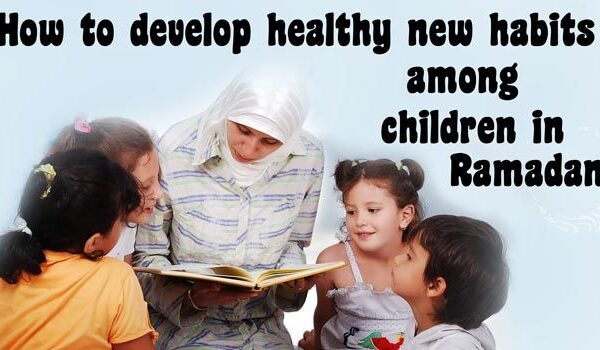
    The blessed month of Ramadan is the best month to establish, review, replenish, and fortify healthy habits. In the example of our Prophet Muhammad‘s (SAW) life, we observe that he reviewed the entire Qur’an with Hazrat Jibra’eel (AS) in the month of Ramadan. We also find numerous ayaat in the Qur’an and sahih hadith about the reward being exponentially multiplied for good deeds in this month. It is indeed an opportunity to make extra efforts in instructing our children and helping them to build a good character.

    Establishing a healthy habit during the month of Ramadan is most effective when we follow the six steps of conceptual learning and interface that process with the practice and objectives of fasting

    Although healthy habits can be developed and fortified as a lifelong discipline, the month of Ramadan is especially an opportune time to cultivate and nurture a healthy habit as we are granted a lot of barakah during this month. Certain habits such as regularity in salah, punctuality with work or school, regular recitation of the Qur’an, improved sleep-wake cycles, time management, and community service are easier to implement and practice during this month. With Ramadan coinciding with the summer vacation from school, it is only wise that we spend this “extra time” in helping our kids develop healthy habits.

    Establishing a healthy habit during the month of Ramadan is most effective when we follow the six steps of conceptual learning and interface that process with the practice and objectives of fasting. The six steps are goal-setting, role-modeling, guided practice, independent practice, assessment, and review. Below is an explanation of each step with examples of how to integrate it with the lessons that we derive from the Qur’an and sunnah about the month of Ramadan and the benefits and blessings of fasting, and so making it more meaningful for our children.

    Goal-Setting

    Goal-setting can be done before the month of Ramadan begins, thus emphasizing the importance of preparation and organizational skills. To establish a goal, the best way is to ask the child what goal he/she would like to work on and why he/she feels the need to acquire this habit. In the example of our Prophet Muhammad (SAW), we learn that his way of answering many questions was by posing a question, thus initiating a thread of critical thinking. Then encourage the child to ponder over the benefits of acquiring the new habit. Getting them to write down their goal, the benefits, and details of an action plan is always a good idea so that the goals can be reviewed and modified during the course of practice. The best time for this dialogue is when the child has displayed a positive behavior and the parent expresses approval and appreciation of the good behavior. The dialogue then serves as a reinforcement, thus building on their good behavior. Asking the child to choose a goal to work on shifts responsibility to the child and allows him or her to own the intention and the effort, which children love. Ramadan is a favorable month to begin as we know that Allah (SWT) chose this month to reveal the code of life. Tying the short-term goals established with your child with the ultimate goal of Ramadan, and doing so in a positive and encouraging way, definitely enhances and motivates the child to set and work toward his/her goal. However, in order to make the dialogue effective, it must be kept short with the parent listening most of the time, simply leading and facilitating the child to take initiative.

    Role-Modeling

    Having set the goal, it is most important to provide positive role-modeling by the parents. If, for example, the habit chosen by the child is regularity in fajr salah, then the parents need to set the best example. With the barakah of the blessed month of Ramadan, we have a lot of time during the day to get chores done, obligations fulfilled, and even time to rest. Utilize this time with your child by demonstrating a healthy habit. Managing your time effectively, as a parent, by following a well-planned routine definitely proves to be a good example of role-modeling to the child. Activities that demonstrate time management and structured work schedules do wonders as tools for teaching and role-modeling.

    Guided Practice

    Remember that every child is a unique individual and so the pace at which they learn will vary, even among siblings. Encourage them to help each other attain their goals through physical activities and games that incorporate team work and sharing, thus tying one of the purposes of fasting with their goals, as this is also the month of earning maximum reward for the smallest good deeds. At this stage, the child will benefit from being reminded, if necessary, to stay on track. Encourage them to also maintain a diary/log of the challenges they encounter in trying to practice the habit. This will help them reflect on their behavior with respect to the habit and modify the action plan and address any shortcomings.

    Independent practice

    This is the stage during which the child practices the habit without being reminded; consistent recognition and reward is still needed from the parents. A beneficial way to strengthen this phase is to encourage the children to conduct story-telling sessions and recitation competitions with their peers where the adults are the audience and not the judges. Choose specific parables from the Qur’an and examples from the sunnah on the topic of, or relevant to, Ramadan and/or their chosen goals, and make it an enjoyable learning session for the kids.

    Assessment

    The best time in Ramadan to assess the children is during the last ten days as we know the reward is exponentially multiplied. This can be a simple conversation with the child during which he/she expresses their own self-assessment as to how they did in practicing the new habit. The parent then can share with the child their assessment. If the child has fallen short, the parent can frame this in a positive way, explaining that there is always opportunity to improve. If the child has done well, the parent can reward the child with praise for their achievement. The child can also be told that given their increased strength and maturity of character, they can take on some additional responsibility or chore within the household. This too should be framed in positive terms. This builds the child’s self-esteem, thus encouraging him/her to practice the new habit consistently.

    Review

    Though the habit being established should be reviewed at each of the above mentioned stages and even between the stages, it is important to have a conclusive review. The best day would be the day of Eid. The culmination of the month of Ramadan in Eid implies a feeling of fulfillment of one’s duty as well as gratitude toward Allah (SWT) for enabling us to do so. Likewise, a thorough review of the six stages and the challenges faced during the stages is essential after a thirty day practice schedule, in determining the next step. Encouraging remarks and actions by adults, even if the child has not reached the desired goal, must be incorporated to help the child consistently practice the habit.

    To sum up, the essence of the whole exercise is to make the connection between the habits or actions that we are encouraging in the child and the teachings of the Qur’an and sunnah. The absence of this connection is what causes children to deviate and be unsure and confused. To build a strong connection, it is important in the different stages of learning, to incorporate age and theme appropriate activities in order to yield effective results.