بسم الله الرحمن الرحيم

Author: Ekramul Haque

  • The Killing Fields of Bhagalpur

    By Omar Afzal

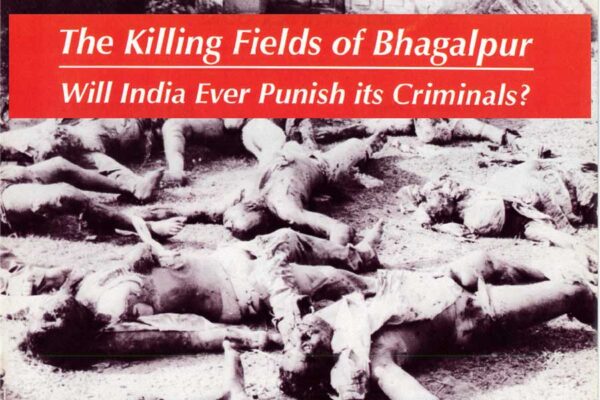
    The massacre of innocent Muslims in Bhagalpur City and surrounding villages in the last week of October 1989 may be added to a very short list of mind-boggling tales of human savagery. The grim details are still not fully known and perhaps the full story may never see the light of the day.

    The local administration has put the casualty figure to a 1,000 dead and several thousand uprooted. Unofficial estimates are as high as 3,000 dead, a thousand unaccounted for and more than 50,000 homeless. The number of injured may be around 8,ooo.

    The medieval atrocities of Genghiz Khan pale in comparison to what the Hindu mobs did in several villages of the Bhagalpur District. A frenzied mob swooped on the village in the Jagdishpur block, killed everyone it could and buried them in a field. To cover its heinous acts, it leveled the mass graves and planted vegetables over them. In Chakjhoura Village, dead bodies and human limbs were found hidden in a paddy field. The corpse-filled ponds of Chanderi were perhaps the ultimate in human barbarism. As an Indian journalist put it, “a monster stalks Bhagalpur.” The most shocking aspect of the anti-Muslim terror in Bhagalpur is the connivance of police, army and local administration. The High Court in Patna, capital of the northeastern state of Bihar, has asked army Maj. G.P.S. Virk to explain why he left 100 Muslims, mostly women and children, of Chanderi Village in the protective custody of the local police and failed to report when he found them “missing” the next day.

    The Bihar Military Police is also said to have helped the killer Hindu mobs. Not only that Hindu policeman often turned their backs at the killings, they also killed and maimed people when they were handed to them for safe keeping. After a home-made bomb was thrown at the police party, allegedly by Muslims, the police went on a looting rampage. Some uniformed policemen are reported to have set fire to a mosque. A commander of the BSF could not ‘believe his eyes when he saw Hindu policemen standing on both sides of a narrow lane clobbering Muslim men, women and children, who were rescued from riot-affected areas. Because of the complicity of police, military and local administration, some of the most brutal killing were not reported until recently. Bhagalpur police are notorious for violence. In 1980, several Bhagalpur policemen were arrested for acid-blinding four defendants who were under trial.

    Not has the Western media not been interested in doing investigative reports on the Bhagalpur killings, the Indian media, has not been fair to the victims either. Without exception, Indian newsmen have caned the anti-Muslim violence “communal riots” and some have shied away from saying that the victims were Muslim. Instead they have referred to them as members of a “minority.” Why are they ashamed of calling a spade a spade, or of blaming the police for complicity? Because it would tarnish India’s image as the land of “Ahimsa?’5 (nonviolence).

    The writer,’ who works at Cornell University in Ithaca, New York, was in India recently.

  • Explaining Who We Really Are

    Explaining Who We Really Are

    The West’s Islamophobia never ends. As communism exiles itself into history; the West is tirelessly talking about “Islamic fundamentalism” as its new archenemy. In recent months, the Western news media have intensified their campaign: contain Islam or be ready for the extinction of the Euro-American civilization.

    Now that the Cold War is over and communism Is collapsing, what more is there to fear? For many Western commentators, the answer is Islam. They see its rise as the new principal threat to Western security and values, a menacing force in an area extending from Yugoslavia to the deserts of Central Asia – the so-called “Crescent of Crisis,” writes Shireen T. Hunter in the Tampa Tribune.

    “During the 1980s, the growing strength of Islamic fundamentalism and the in­creasing support for militant Islamic movements within the Middle East and parts of Asia have been of major concern to most Western analysts,” opines Avrum J. Gray of the Houston Post.

    Vice President Dan Quayle was not far behind. In a commencement address at the U.S. Naval Academy in Maryland in May, he said: “We have been surprised this past century by the rise of communism, the rise of Nazism. and the rise of radical Islamic fundamentalism…let us always be prepared.”

    Islam in the category of communism and Nazism? Mr. Quayle must be out of his mind, or words. Or was he..?

    Around the same time, the National Endowment for the humanities paid 10,000 of our tax dollars to Bernard Lewis, a British-born Jew, to lecture Americans on Why Muslims Hate America.

    In one of the many speeches, called the Jefferson Lecture, Mr. Lewis declared that Muslim “hatred” of America was in part an outgrowth of their ” humiliation – a growing awareness, among theirs of an old, proud and long-dominant civilization, of having been overtaken, overborne and overwhelmed by those whom they had long regarded as their inferiors.”

    North of the American border, a Canadian professor at Manitoba University was busy organizing a conference on Islamic terrorism in the 1990s and its Threat to North America.

    Although Muslims succeeded in having the term Islamic replaced by Middle Eastern, the conference’s ire was still solely directed at the Muslims. Israel, the real cause, and often the practitioner of terrorism, was neither implicated nor criticized!

    Given the frequent occurrences of anti-Muslim incidents, one wonders if it is a case of Muslims hating the West or vice versa.

    Why are Muslims feared, rather than admired and emulated as they once were? Why does a community that once inspired the world with its indomitable spirit, enlightened achievements, religious confidence, and tolerance, invite all the negative attributes today?

    That Muslims everywhere are going back to their natural roots and shedding alien, unworkable ideologies imposed on them, is reassuring. But what also needs a clear, if not greater, priority is the allaying of fears in Western minds that Islamic ascendancy would bring doom to non-Muslims.

  • In Mandela, Americans Celebrate Their Own Victory Over Racism

    In Mandela, Americans Celebrate Their Own Victory Over Racism

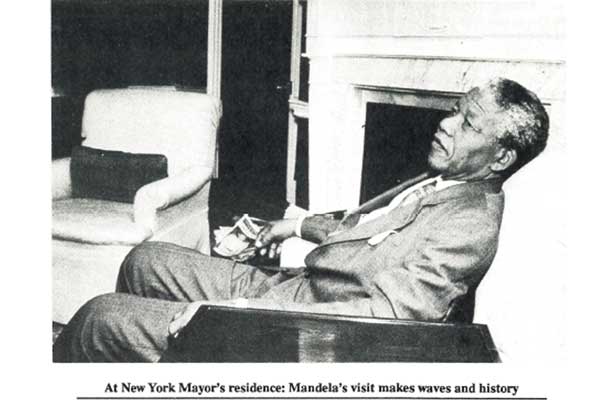
    He came, he saw, he conquered. That’s how Nelson Mandela concluded his trip to the United States. To Americans, who love celebrities to the extent that they often create them, this South African was nothing but a legend deserving unfettered praise and support. And in the case of New York City, he was a hometown hero.

    Mandela’s welcome was indeed awe-inspiring, but the pomp and praise surrounding it made some uneasy from this country to South Africa. A number of Americans wrote newspaper articles urging Mr. Mandela to renounce the use of violence, and on NBC a white South African supporter of the deputy president of the African National Congress commented, “Mr. Mandela is to be respected, but he’s not God.” Minor protests against Mr. Mandela also came from Cuban-Americans, who were angered by his remarks on Fidel Castro, and from Jews, who fumed over his support for Yasir Arafat.

    Mr. Mandela wound up his whirlwind eight-city tour of the United States with millions of dollars for ANC and a Congressional assurance that sanctions against the racist Pretoria government would continue. The European community, fully cognizant of the aura of his personality and the international support he enjoyed, also declared to keep the economic pressure against South Africa going.

    Mandela Motorcade in N.Y.
    Mandela motorcade in Manhattan, N.Y.: A brief show of harmony in a racially divided city

    What is it that has made Mr. Mandela into a living folk-hero for many Americans? The answer perhaps lies in America’s own racist past. To many Americans, racism is still a burden on their conscience and Mr. Mandela, who is a victim of racism, reminded them of the haunting legacy and the need to bury it once and for all. Mr. Mandela’s epic fame in this country is partly a result of his 27 1/2 years of imprisonment in South Africa for advocating an armed struggle against apartheid. He has easily dwarfed, even drowned out (not by design), other leaders of ANC, including its president, Walter Sisulu. Like one has to die to be called a martyr, he had to serve hard labor to eventually become a legend.

    But the way Mr. Mandela was treated here was also a tribute to the African-American community, whose political clout equals, sometimes even exceeds, that of the Jewish community. Had it not been for the leadership of people like Martin Luther King Jr., Elhajj Malik Shabazz (Malcolm X), and Rev. Jesse Jackson, the African-American pride would still be dormant, and the Mandela visit unexciting.

    The man deserves credit for expressing his views unhindered in adversity. On several occasions, Jewish activists badgered him with their usual salvos about Israel. First, they went to Switzerland to meet Mr. Mandela before he stepped on U.S. soil. Their threat: If you say anything positive about Palestine Liberation Organization, we will make your life miserable during the U.S. visit. Jews said after the meeting that they were satisfied with Mr. Mandela’s position on Israel and called off their planned protest.

    But Mr. Mandela, in New York, praised the Palestinian struggle and called Yasir Arafat, Fidel-Castro, and Muammar el-Qaddafi his comrades in arms. He said virtually the same things wherever he went in the United States, including in a televised “Town Meeting” hosted by Ted Koppel. Mr. Koppel, the much-admired Jewish host of ABC’s “Nightline” program, challenged Mr. Mandela’s views on the three of America’s most notorious villains. Mr. Mandela’s answer: These people are my friends who have supported our struggle to the hilt. On one occasion he also said that Israel’s and America’s enemies did not necessarily have to be everyone’s enemies.

    The ANC leader’s wariness of Israel is understandable. While the international community has condemned South Africa for apartheid, with many countries having no diplomatic or commercial relationship with it, Israel has exchanged military technology, intelligence, and trade with the Pretoria government. On the other hand, Messrs. Qaddafi, Arafat, and Castro have been supporting ANC in their struggle to gain their human rights.

    Mr. Mandela was also blunt when he told President George Bush on his own turf that he was “not briefed properly” by his intelligence about the situation in South Africa. Mr. Bush wants to reward South Africa for its progress toward racial equality under the stewardship of President F.W. de Klerk, a step Mr. Mandela says is premature. For a man whose arrest 27 summers ago was allegedly facilitated by the American Central Intelligence Agency, the more-than-warm welcome in the United States, including an opportunity to lecture a joint session of Congress, was beyond any leftist revolutionary could have expected. And the fact that his call to a violent struggle was tolerated by the highest echelons of the American government, while similar tactics of the PLO are condemned, is a sign of time and a reaffirmation of the fad that in politics anything is possible.

  • The Cry for Justice in Bhagalpur

    The Cry for Justice in Bhagalpur

    That it took India several months to fathom the depths of anti-Muslim bestiality in Bhagalpur tells something important about its attitude towards the country’s largest religious minority.

    Although some estimates put the death toll in Bhagalpur and 150 adjoining villages at 1,500, an accurate figure may never be known. Because of police complicity and official coverup in the massacre, many mass graves may never be “discovered” and bodies from ponds and wells never pulled out. Indeed, the ones that were dumped in the River Ganges can never be redeemed. One report has it that the local police poured chemicals in a well, which contained bodies of the victims, to expedite decomposition.

    The more than 10,000 Muslim refugees who have lived to tell their harrowing tales have once again found that getting justice in India is next to impossible. The thriving Bhagalpur Muslim community that once was, has been reduced to gutted houses, mosques, and shops. The living has not only to mourn their dead, but also to find a haven where they can nurse their psychological wounds and build their lives far from the reach of vicious Hindus. Whether they can find such a refuge in India, their ancestral land, is a matter of open debate.

    The immediate cause of the Bhagalpur massacre was Hindu provocation and efforts to bait Muslims into the Babari Masjid-Ram Janmabhoomi controversy in Ayodhya. That dispute is far from settled and may erupt into a civil war if New Delhi continues to pander to the fanatic Hindus. In Bhagalpur, the murderers not only violated Muslim lives and properties but also the Indian Constitution, which guarantees basic freedoms to all citizens.

    Bhagalpur cries for justice. But justice requires more than cosmetic changes and official statements. The new government in New Delhi, which is strongly represented by the Hindu nationalist Bharatiya Janata Party, has to rise above party politics to deliver what it must. It is an ironic parallel that Prime Minister V.P. Singh and his predecessor, Rajiv Gandhi, came to power in the wake of the butchering of a minority: Muslims in Mr. Singh’s case, and Sikhs in Mr. Gandhi’s.

  • From Jahiliya to Jihad: The Story of Arabs in Israel

    From Jahiliya to Jihad: The Story of Arabs in Israel

    “We belong to the area called the Arab Triangle, which is in the center of the holy land… King Abdullah gave us, land and people, to Israel in 1949… Since I949 until 1967, we knew nothing about our origins or civilization; we knew nothing about Islam, we only had a few scattered copies of the Quran in the scattered old mosques in Arab villages… We sank into complete darkness, ignorance and impiety…the 1967 war, although a military and political holocaust of Arabs and Muslims, was the beginning of our awakening, because for the first time we came in touch with people living in the occupied territories, the Islamic books and schools… now we really became aware of our indivisible relationship with Arabs and Muslims with whom we have to cooperate to achieve our sacred goals.”

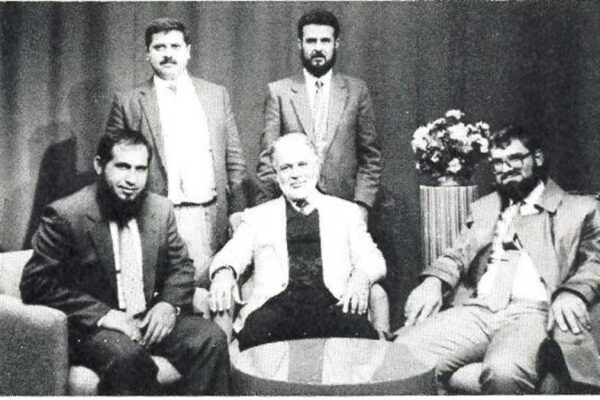
    The story of Ibrahim Abdullah, mayor of an Israeli Arab village called Kfar Qasem, is the story of 800,000 Palestinians living in Israel. The existence and the role of these Palestinians is hardly known to the world, which has seen the Palestinian struggle mainly through the eyes of the PLO and, more recently, in-tifada. Mr. Abdullah, 30, and four other young Muslim mayors from Israel recently came to the United States to tell whoever they could find about the lives, struggles and challenges of Israeli Palestinians. The following story is based on an interview by The Message International with Mr. Abdullah; Jomah Kassasi, mayor of Rahat; Kamel Rayan, mayor of Kfar Bara and Tawfik Khatib, mayor of Jaljulia. Mayor Raid Salah of Umm Fahem, although part of the group, was in Detroit at the time of the interview. Due to his fluency in English, Mr. Abdullah spoke for the group.

    It is a sad irony that in the land of Al-Quds many Muslim Arabs lived a life of Jahiliya for nearly two decades. Indeed, Israel’s policies of cultural annihilation of its Arab subjects could not be more successful. But things are changing, and Palestinian Muslims living within Israel have rediscovered themselves and their mission. They are no longer resigned to their fate, or without a dint in their eyes. Israel’s evil occupation has proved to be a two-edged sword. While Israeli inhumanity and creeping annexation of Palestinian lands have made it the Goliath of our times, they have also brought helpless Palestinians face to face with their natural ally, Islam. The February 1989 elections in Israel were a turning point in the lives of Palestinian Muslims. From a feeling of dejection, frustration and apathy, Muslims of a nameless Islamic movement for the first time contested and won mayoralties in several Arab towns of Israel. And the results were astonishing from any standard.

    In Umm el-Fahem, 75 percent voted for an Islamic candidate. Support for Islamic contestants was also strong in Kfar Bara (70 percent), in Rahat (65 percent) and Kfar Qasem (60 percent). In Nazareth, a stronghold of Communists for 20 years, Islamic candidates won six of the municipality’s 19 seats.

    Their newly found success is seen by some Christians as a hopeful sign for them as well. During the electoral campaign in Umm el-Fahem, a Christian doctor told the audiences: “If you really want to overcome all your problems, you have to support the Islamic movement, because I believe that Islam is the solution.” After Muslims bagged six seats in Nazareth, a place of religious significance for Christians, a priest congratulated Muslims for defeating the atheists. Another Christian, a professor of religious studies in Nazareth, also sent in his commendations.

    “There is a strong cooperation between Muslims and Christians, and those sincere Christians do really believe that Islam is the solution,” Mr. Abdullah said.
    Although their election to power in municipal governments has not affected an Israeli law that bars them from making contacts with out-side Arab governments or movements, it has transformed them into a respected power bloc within Israel. Long committed to a non-political struggle, these Muslims have reversed themselves in order to bring an end to their exploitation, says Mr. Abdullah.

    “We saw that a lot of Israeli parties — whether Communist Party, Arab Progressive Party or Arab Republican Party — did not really penetrate into the hearts of the people or touch the elements of their own faith; they only exploited the Arab masses for elections; they did not remember that there are more than 800,000 Palestinians in Israel, the same number as in the occupied territories. When they spoke of Palestinians’ rights to a homeland, they only spoke about those living in those territories and no one said that the other 800,000 people also have the right to be involved in a future settlement (of the Palestinian problem). So, we came to the conclusion that as an Islamic movement we have to work with the people and help them overcome their difficulties.”

    Although Palestinian Muslims in the country distrust all Israeli parties, they have found an unnatural sympathizer in leftist politicians. Mr. Rayan, mayor of Kfar Bara, said through an interpreter that Palestinians have stopped trusting all Israeli parties because of their role in the massacre of Arabs. On the other hand they see leftist members of Israeli parliament working hard for the Palestinian cause.

    The Islamic movement does not have a political party, nor people in the Knesset, the Israeli parliament. The reason, according to Mr. Abdullah, is simple: Israeli parties, whether Labor or Likud, are united against any resurgence of Arab or Islamic power. He challenged the myth that the Labor Party was favorably disposed towards Palestinians.
    “The Labor Party ruled Israel for 40 years and it was the direct reason for the collapse of the Islamic communities.”

    The Israeli leftists are helping Islamists apparently not because of their views but because of their own sympathy for the left-oriented PLO. But there is more to it. Some Israeli leftists see in these Palestinians a reflection of the Jewish pioneers who settled in Palestine in the early and middle part of the 20th century and exploited all the legal remedies.

    The ultimate aim of the Islamic movement in Israel, which predates intifada, is not just the creation of an Islamic Palestinian state, some-thing that their counterpart in the occupied territories already wants, but the establishment of an Islamic caliphate in the world. But for now, Mr. Abdullah has tempered his hopes with the realities in Israel and wants to address the more urgent problems.

    “Believe me we are not idealists; we are not living in mosques or on the moon. We are struggling for equality and peace.”
    According to Mr. Abdullah the disparities be-tween and Arabs and Jews of Israel are glaring. While Jewish towns and settlements are basking in the glow of modern technology and amenities, those inhabited by Arabs are struggling for Tel Aviv’s attention for some of the basic needs of life. Not only that, they are being gradually deprived of their lands as a result of Israel’s voracious territorial appetite.

    “If I were to compare the situation of Arab cities and villages with that of Jewish cities and villages, I would say that we are living at the beginning of the 20th century and they at the end of it. When I look to the East, I see four Jewish settlements which are more developed than some of the suburbs of Washington, D.C. In Kfar Qasem, Israelis have confiscated more than 70 percent of the land, although people have documents proving their ownership; first those lands were confiscated for military purposes, but afterwards were given to Jewish farmers. In Jaljulia, you cannot find a single centimeter for the future generation, and anyone who wants to guarantee the future of his son or daughter, must buy the land that was once his own. And you can say this about all the lands that belong to the 800,000 people.”

    The ties that bind these Palestinians to their lands are so strong that many of them would not leave their towns and villages even if a Palestinian state were to be founded in the occupied territories. At least Mr. Abdullah won’t.

    “We are not going to move, because we believe we belong to our land and not to the country; countries always change.”

    While the Islamic movement in Israel grows in its unique ways, there are indications that Palestinians in the occupied territories have increasingly looked to Islam for emancipation. A recent poll by the Jerusalem Post showed that 60 percent of West Bank residents sup-ported an Islamic Palestinian state, as opposed to 27 percent who supported a democratic state and 7 percent who said they wanted a socialist state. In Gaza Strip, where Hamas is very strong, the support for a Islamic Palestinian state is believed to be even greater.

    The reports about Islam being the choice of an overwhelming number of Palestinians makes Mr. Abdullah think that the PLO today is not the sole representative of Palestinians, only a formal one. The signs of strains between Islamic elements and PLO members were quite visible until a few months ago. The struggle between two competing forces had even pervaded Israeli jails, where members of Hamas and the PLO clashed with each other.

    “I heard a lot of stories about members of the Islamic movement being severely punished by PLO members in the jails because they were caught reading the Qur’an, or spreading Islamic thought.”
    The clashes had become so frequent and open that Yasir Arafat had to intervene personally and appeal for unity. Although he has succeeded in restoring calm in the name of a common goal, uneasiness still prevails on both sides.

    Mr. Arafat knows the power and dynamism of the Islamic movement in the occupied territories. While he may not like the independent approach of Ikhwan al-Muslemoon, or the Muslim Brotherhood, he knows that their support is crucial for the success of intifada. To garner support for PLO, Mr. Arafat met with Mohammed Abu Nash, a leader of the Ikhwan in Egypt, recently. Mr. Abu Nash is said to have told the PLO chairman that he feared the Islamic movement would be the first to be slaughtered after the establishment of a Palestinian state.

    PLO’s approach, apart from being un-Islamic, is lately seen as harmful to the Palestinian cause. From its recognition of Israel and the United Nations resolution 242 and 338 to the renunciation of its charter as null and void, the PLO has created a credibility problem for it-self in the eyes of many Palestinians. So much so that some influential people with ties to the PLO, such as Edward Said of Columbia University in New York, have publicly ex-pressed their misgivings about some of its actions.

    Although Israel has erected a Berlin Wall of sorts between the Palestinians living under its direct rule and those in the occupied territories, that does not prevent the Islamic movement in Israel from doing its bit for the intifada. For instance, before Mr. Abdullah and his colleagues came to the United States, they distributed 24 truckloads of food, milk and other necessities of life among the Palestinians living on the West Bank and Gaza Strip. The Islamic movement also keeps abreast of the developments in the occupied territories and informs Israeli Palestinians through its two publications Saw ul Haq and AsSimt. The secular publications, according to Mr. Abdullah, ignore the news about Islamic movement and cover mostly PLO-related activities.

    The delegation of Arab mayors left United States impressed, hopeful and evermore determined. It was the first of its kind to visit the United States, and so it met with many surprises. It learned that over six million Muslims lived in this country, and that many American politicians, including the few Congressmen and the Undersecretary of State for Near East and Middle East Affairs it met, didn’t know how Israel treated Palestinians. It also visited Muslim communities in New Jersey, New York, Pennsylvania and Michigan. But strong as it was in its resolve to carry on Islamic work in Israel, the delegation looked to American Muslim community for financial and moral support.

    “We are living at the crossroads; either to be agents of Israel or seek independence. We are members of the Islamic movement, and we will never give up. But we cannot develop anything in our villages and cities because of insufficient funds from Israel. We want them (the American Muslim community) to make up for the deficiency imposed on us by Israel,” Mr. Abdullah said.

  • Beginning a New Decade, With Help From the Old

    Beginning a New Decade, With Help From the Old

    Those of us who have survived the 1980s will remember it for major upheavals in the world. From the Iran-Iraq War to the Soviet invasion of Afghanistan and Israeli bombings of Lebanon, from proxy wars in Asia, Africa and Latin America, to the in­ famous Rushdie affair, it was indeed one of the most eventful decades ever. Although the future is hard to predict, based on emerging Soviet-American relations and developments in Eastern Europe, we may expect the ’90s to be safer, less fractious and more exciting. As Muslims, however, we not only have to be watchful of the new relationship between the world’s two superpowers, which are rightly believed to be behind most of the global troubles since the advent of the Cold War, but also take stock of our own progress, or lack of it, in the ’80s. To borrow a usage which has al­most become a cliché in the realm of politics, are Muslims better off today than they were 10 years ago? The answer would be a conditional yes.

    Like the Europe’s Dark Ages, which began after the sack of Rome in 476 and lasted until the end of the 10th century, Muslims have con­tinued to be in a stage of intellectual stagnation, widespread poverty and ignorance. Our political inspiration still comes from Mos­cow or Washington and we have largely been defensive about our own values. Our economic and educational fate is tied to Western institutions, no matter how corrup­tive their influence may be. When a Muslim child grows up anywhere in the world, he only sees manifestations of Western progress, discoveries and inventions around him. Naturally, he believes what he sees. For him, the Golden Age of Islam belongs in fairy-tale books and has no relevance in today’s world of nuclear-powered ballistic missiles. and test­ tube babies.

    The ’80s were full of drama, hope and despair for the Muslim world. In many ways it was the decade of Ayatollah Khomeini, who ousted a man who was enthroned by the American Central Intelligence Agency and symbolized corruption and exploitation, and opposed Islam. The Ayatollah also alarmed the Western world, whose economic and cultural colonialism he so vocally challenged. Had Imam Khomeini not been embroiled in an avoidable war by his detractors, the Iranian revolution would have spent its energies on building the plundered nation and strengthening Islamic forces across the globe.

    The Gulf War, started as a result of the Iraqi aggression, was one of the tragic developments of the ’80s. It sapped the energy of an Islamic state and sent a secular Muslim country and its misled supporters into a nationalistic frenzy. Iran and Iraq are faced with a colossal reconstruction task in the ’90s and beyond as a result of ravages the war. Un­fortunately, those in the West who may have brought Iraq into the war, are the ones to benefit during the relative peace. The sight of Kuwaiti oil tankers being escorted by the United States Navy against attack from Iranian gunboats has been permanently etched into our memories. And what a painful sight it was, seeing an adversary of Islam replaying “The Lawrence of Arabia,” this time not against the Ottoman Empire, but the Is­lamic Republic of Iran. Who could question the Western pride in being a savior of the Arabs? The Gulf War once again reminded us that unless we give up our petty nationalisms, the goal of Islamic unity will always be un­realizable.

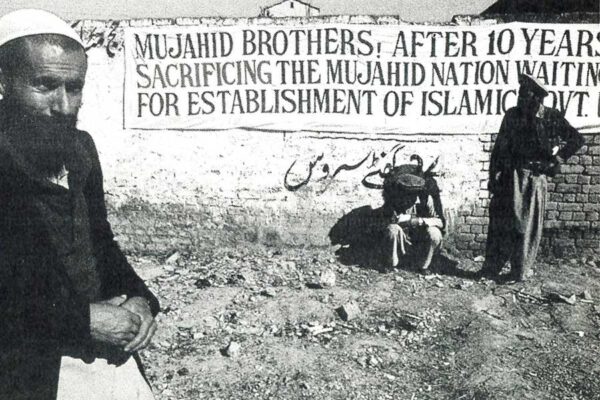
    Not far from the scene where Muslims shed Muslim blood, the Communists were at work in Afghanistan, converting a Muslim country into a Communist satellite. After losing a mil­ lion Muslims – mainly Afghan, but some of other nationalities – the mujahedeen have rid their country of the foreign invaders. The Islamists have won a battle, but the war is not yet over. In Kabul, local Communists are still entrenched in power as a result of the Soviet arms and economic support. The mujahedeen, on the other hand, are finding it hard to get a matching support from the United States. Pakistan, the lifeblood of the mujahedeen sup­ply line until late 1988, has scaled back its commitment under the government of Prime Minister Benazir Bhutto. The end of the honeymoon between the United States and mujahedeen is not surprising; it was an un­natural and self-contradictory alliance to begin with. But what is worrisome for the mujahedeen is the possibility of Moscow and Washington conspiring to keep Afghanistan from becoming an Islamic state. The lessons that the mujahedeen have learned in the ’80s should help them chart better plans for the ’90s. The Afghan Interim Government, based in Peshawar, Pakistan, has to bring an end to the infighting if it is to succeed. In Afghanis­ tan, not only more than a million Muslims lost their lives, but many also destroyed their minds, due to the more than a decade of Com­munist indoctrination.

    The ’80s also saw a new turn in the 41-year old Palestinian struggle to regain nationhood. Begun on December 8, 1987, the intifada, or uprising, has now entered its third year and shows no sign of letting up. Interestingly, the intifada has come not from Palestinians living in areas occupied in 1948, but young men in Gaza and the West Bank, occupied by Israel in 1967. This post-’67 generation of Palestinians has seen nothing except a ruthless occupier, misery, squalor, despondency and death. Although carried out mainly by several factions of PLO, the intifada also depends heavily on the support of lkhwan al-Mus­lemon and the Islamic Jihad, which are specially strong in Gaza. Hamas, the military arm of Ikhwan is a force that cannot be ig­nored by the leftist PLO.

    In unseen ways, an Islamic movement is also gaining ground in Israel proper. For obvious reasons, this movement has no direct links with intifada, but its goals are no different. Like the Ikhwan, it not only wants an Islamic Palestine in Gaza and the West Bank but on the entire territory Palestinians were expelled from. In the event of a weakening of Israel and an escalation of the struggle, this movement can be extremely helpful in providing intelligence information and working from within Israeli ranks. Five Muslim mayors from Israel came to the United States last month to sensitize American lawmakers and the Muslim community about the situation at home. These people were not just any Muslim mayor of any Israeli municipalities, but Islamists who came to power for the first time since Israel was created. They are unwilling to move to Gaza and the West Bank even if a Palestinian state is founded there, arguing that the whole of Palestine is theirs and they should not leave their ancestral land to the Israelis. So in reality Israelis have to contend with two kinds of in-tifada, one vocal and outside, and the other silent, but at home. While the one on the territory may end in the ’90s, the one within Israel could continue to work into the next century.

    Elsewhere in the Middle East, Islamic movements made important gains during the last decade. In Jordan, Ikhwan al-Muslemoon, or Muslim Brotherhood, won nearly one-third of the 80 parliamentary seats in that country’s first elections in more than two decades. Although political parties are still banned in Jordan, the Ikhwan was allowed to function, because it is registered as a charity. Ikhwan’s gains in Jordan came only few years after thousands of their members were massacred in Syria by Hafez Al-Assad’s government. In Egypt, Islamists have an important presence and during the last decade they increased their pressure on Cairo’s secular and pro-West government to introduce Islam. In Lebanon, where peace has remained elusive, Muslims were able to have the country’s charter revised to give Muslims power in proportion to their majority population. They have a way to go, however.

    One of the most unhappy events of the ’80s was the publication of “The Satanic Verses.” This sacrilegious and highly profane book, written by a former Muslim named Salman Rushdie, deeply offended Muslims. The book was not only anti-Muslim and vulgar, it also seemed to be part of a larger smear campaign against Islam. Muslim anger erupted in the streets of Pakistan, Bangladesh, the United States and Britain, to name a few, and demanded that the book be banned and copies already in the market recalled. Scores of Muslims lost their lives in protests in several countries. Some nations banned it, others showed a double standard and defended it in the name of freedom of speech.

    Here at home, headquarters of Penguin’s American subsidiary, Viking, Muslims tried to get American ears for their outrage over the book. The media continued to treat their efforts as bad copy, until the late Ayatollah thundered from Qom and demanded the head of the blasphemer. The edict in Iran proved to be a double-edged sword: while on the one hand it sent Mr. Rushdie into hiding and his media supporters vying for a Muslim statement, on the other it made many Muslims uneasy with a summary death sentence. Many disagreed with Imam Khomeini, others argued that a death sentence against Mr. Rushdie, an apostate and a traitor, could be executed only by an Islamic state after due process, while yet others agreed.

    In the wake of the controversy, Muslims have learned a lot about Western attitude and how an anti-Islamic publication should be countered. So in this respect, the ’80s were singularly important.

    The Rushdie affair also showed the weakness and divisions within the Organizations of Islamic Conference (OIC). Although united in the name of Islam, many OIC members preferred expediency over the call of duty when time for action against blasphemy arrived. This and other lame-duck examples of OIC have made it ineffective and arguably worthless.

    The ’80s witnessed a tragic exodus of Bulgarians of Turkish origin. More than 300,000 Bulgarian Muslims crossed into Turkey to escape religious persecution in their country. Ankara later closed its borders saying the move would make a negotiated settlement of the problem possible. Now that Bulgaria is in the throes of an ideological change, one might hope that its society would be more tolerant of Muslims.

    West of Bulgaria, a few Muslim schoolgirls took France by storm by refusing to remove their headscarves on religious grounds. France is home to 3 million (mostly Arab) Muslims from North Africa, a majority of whom have remained close to Islam. While the school authorities made concessions to the religious requisites of those enviable Muslim girls, France’s right-wing National Front has waged an anti-Arab campaign.

    In Africa, Sudan made significant progress towards enforcement of Islamic laws. The new civilian-military government has between four and six Ikhwans or pro-Ikhwan elements in its ranks, and has rebuked Christian rebels who demanded that Sudan refrain from making Islam the law of the land. As the 20th century comes to a close, it is gratifying to note that Islam has outperformed well-funded Christian missions in Africa who had claimed that they will make the continent a sea of Christianity within the century.

    Here at home, Muslims grew in number and political and social clout in the ’80s. An estimated 6 million and growing, the North American Muslim community took important steps towards solving some pressing problems. At least two interest-free institutions, Baitul Maal, in New Jersey and California-based Muslim Savings and Investments Inc., were established. Small groups in different areas also pooled their resources to meet their financial needs without the scourge of interest, or riba. These measures are by no means enough to serve all Muslims, but their success would likely attract wealthy Muslim entrepreneurs to invest in Islamic banking on a large scale. Progress has also been made in the area of Islamic propagation and activism. Hundreds of Muslim organizations have sprung up continent-wide in the last decade to deal with urgent problems and get the community to participate in the political process of their respective countries. The native North American community has also grown and matured. It has set up Islamic schools and centers and is now an important force on the continent. While redoubled efforts are needed in all areas, particular emphasis must be given to creating a strong interaction between native Muslims and the immigrant Muslim community. Discontent over a lack of coordination between the two communities was often expressed in the ’80s, and the problem must be corrected before it comes to a boil. Another important problem North American Muslims have to tackle is a growing Qadiani activism. Qadianis, also known as Ahmadis, have introduced themselves as Muslim, despite consensus in the Muslim world to the contrary. They have also curried favor with some un-suspecting non-Muslims and media men over their alleged persecution in Pakistan. These people have to be exposed for what they are.

    In the Caribbean, Islam continued to make inroads. The struggle and triumphs of many devoted Muslims in the region are detailed in an article appearing in this issue.

    The ’80s became a turning point in superpower relations, and created a need for Muslim countries to reflect on their alliances and be watchful for emerging adversaries. The Cold War, long a driving force for East and West, was replaced by an American-Soviet cooperation that the world has not seen since the end of the World War II. Soviet Glasnost and Prestrolka created a jolting effect on subservient countries of Eastern Europe, where disgruntled people thronged the streets to demand political freedom and an end to Communist rule. From Poland to East Germany, from Czechoslovakia to Hungary and Bulgaria, Soviet satellites went into a freedom frenzy. Many in Europe have since debated the two Germanys’ open desire for reunification, and what it would mean for world peace. As Eastern Europe became infused with democratic ideas, the Western Europe moved increasingly towards lowering trade and other barriers and consolidating itself as a formidable economic and political block. The unfolding drama of the two Europes will continue in the ’90s.

    What do changes in Europe and East-West relations mean for the Muslim world? Some, yesterday’s enemies — the United States and the Soviet Union – become today’s friends, and as Europe tries to regain its pre-World War II dominance in world affairs, Muslims will have to rely on themselves. Their continued dependence on foreign arms, technology, education, training and finance will push them in a deeper morass and keep the Ummah from ever becoming proud, independent and self-sufficient. While the ’80s were exceptionally eventful for Muslims of the world, who now number more than a billion, there was no But faith in Islam’s indestructibility is not enough; Muslims have to strengthen their ties among themselves and rise above the regional political alliances such as the Gulf Cooperation Council. As yesterday’s enemies — the United States and the Soviet Union — become today’s friends, and as Europe tries to regain its pre-World War II dominance in world affairs, Muslims will have to rely on themselves. Their continued dependence on foreign arms, technology, education, training and finance will push them in a deeper morass and keep the Umniah from ever becoming proud, independent and self-sufficient. While the ’80s were exceptionally eventful for Muslims of the world, who now number more than a billion, there was no significant progress in addressing these serious issues. While the world is gearing up to adjust itself to shifting alliances and ideologies, Muslims have watched and remained immobilized. Are Muslims doing this to let the chips fall where they may, or is it because they think no matter what they do, the world leadership belongs to others.

    Muslims in the ’90s and beyond will no doubt increase in number, through births and con-versions, but will they also increase their overall consciousness and throw the yoke of economic and political subservience? The answer is that they better. Muslim progress in the future is inextricably tied to a feeling of goodness, pride and confidence about themselves, and a yearning to join forces and seek political, social and economic solutions in the Islamic way of life. As Communism has failed, so will Capitalism; it is only a matter of time. A system based on economic tyranny, exploitation, greed and corruption may last awhile, but cannot endure. But while these so-called panaceas of human ailments will be discovered and discarded, our task will be to put Islam on its pedestal and show the world that it works, even today.

  • Must Lessons of History Be Disregarded?

    Must Lessons of History Be Disregarded?

    With this issue we enter a new decade, both Christian and Islamic, and prepare for a final hop into the 21st century.

    1410 years of Muslim history has taught us something about the rise and fall of the Ummah, and nations. The irony is that for several centuries we have ignored the wisdom that history offers, and remained under varying forms of colonization. The days of physical control of Muslims by European powers are long over, but our minds and thoughts are still manipulated by neo-colonialists.

    An estimated 1 billion plus Muslims are second only to Christians in the numbers game, but they are dependent on the West for political thoughts, finances, education and technological developments. Why?

    The answer perhaps is simple. We have repudiated, even denigrated, our own past and looked for progressive solutions in the West. We have tried to copy the West in all aspects of life and in the process have gotten ridiculed and frustrated. We have been ashamed of saying that Islam is the panacea for our problems and the world’s.

    While stagnant Muslim societies have generally leaned towards the West, in the last 70 years some have also tried to copy the Soviet Union, a country founded on the negation of God. Muslim flirtation with Moscow can be described as but total insanity. Communism was doomed to failure from the very beginning, the recent upheaval in the Soviet block only makes it formal. The fall of capitalism is not far off. Those of us who live in capitalist societies are already seeing manifestations of that failure everyday.

    The centuries of subjugation has also demoralized many Islamic scholars, thinkers and intellectuals, who haven’t even tried to articulate a system that roots in the Qur’an and Sunnah and is practical for our times. The onus on them great, only if they realize.

    As the 20th century draws to a close, let’s pledge ourselves to undoing the mistakes of the past, to rediscovering Islam and our potentials, and to reversing our recent history!