بسم الله الرحمن الرحيم

Author: BurhanulHaq Brula

  • Afghanistan: The Way Forward

    Afghanistan: The Way Forward

    On August 30th, at 11:59 p.m. Kabul time, Major General Chris Donahue was the last American soldier to leave Afghanistan. After 20 years, 172,390 deaths, and $2 trillion American dollars, the Afghan war has finally ended. The United States, despite spending $2 trillion dollars and potentially killing nearly 50,000 civilians through airpower alone (according to the UK watchdog Airwars), has almost nothing to show for it. The government the U.S. helped to install, and supported throughout the two decades in Afghanistan, disintegrated in a matter of weeks, leading to accusations that it was just another “puppet” government. The Afghan National Army, equipped and trained by the Americans for two decades, dissolved with every step the Taliban took, and many even took their American arms and joined forces with the Taliban. The Taliban, armed with outdated AK-47’s and dusty old motorbikes that transported three or four men at a time, now have billions of dollars’ worth of American technology, including helicopters and at least one Super Tocano, a light attack aircraft, part of the arsenal used to relentlessly target and bomb the Taliban for twenty years. And with one last drone strike on the eve of departure, America killed ten civilians, including one aid worker for an American NGO, and 7 children. U.S. officials first claimed that they were targeting an ISIS-K affiliate but later admitted those killed were civilians with no connection to ISIS-K. For America, all these points added up to debacle and humiliation, but while the criticism of America will endure for the foreseeable future, the future of Afghanistan and its people is perhaps a more pressing matter.

    No foreign power has fully controlled Afghanistan since before the Soviet invasion of 1979. For forty years, the country has been in a constant state of war, with civilians largely paying the price. Now, with the Taliban in complete control after the American withdrawal, and the capture of Panjshir, the people of Afghanistan have finally seen an end to war. No matter how the Taliban decide to rule, it is much more likely that peace will prevail in the war-torn nation. The speed of the Taliban victory, along with the crowds that greeted them as they swept through Afghanistan, suggest that Afghans want to see peace more than anything. This also makes the Taliban’s victory more of a moral one than a military one; despite the many doubts surrounding the Taliban’s ability to rule, they seem to have popular support outside of Kabul. It is now the new government’s responsibility to not only provide peace, but also uphold promises of development, justice, and progress. The appointed leader of the newly dubbed Islamic Emirate of Afghanistan, Hibatullah Akhunzada, has called for ex-officials and fleeing Afghans to return, offering those who worked with America a “general amnesty.” Several senior members of the Taliban, including spokesperson Sohail Shaheen, have repeatedly called for fleeing Afghans to remain and help “rebuild the country” without fear of retribution. Many of those fleeing are from the educated and professional class, people who Afghanistan desperately needs for a rebuild. With cash reserves frozen by the U.S. and the IMF, the Taliban needs those knowledgeable and skilled workers, as well as support from the international community.

    A Moral Obligation to Support the Afghan People

    The United States and NATO always claimed to have been fighting for the people of Afghanistan and their well-being. Now, when the U.N. warns that Afghanistan can fall into nearly universal poverty by 2022, the West must finally fulfill those promises. Isolating the new Afghan government would only result in greater human catastrophe. The international community, if acting in the best interest of the Afghan people, must return Afghan foreign reserves and reestablish the external aid that composed 40 percent of Afghanistan’s GDP, to keep poverty at bay. Although the United States pledged $64 million in aid, that figure is less impressive when juxtaposed with the $2 trillion the U.S spent on military operations that have destroyed the central Asian nation. Not only do American policymakers owe an explanation to American taxpayers for a $2 trillion war, but with that kind of money, Afghanistan would have had the 9th highest GDP in the world, if only those sums were invested into building the nation instead of devastating it.

    Not only does the United States have a moral obligation to support the people of Afghanistan after two decades of war, but it is also in America’s interest to prevent the growing influence of authoritarian powers such as Russia and China, which are certainly eyeing the vacuum left behind America’s withdrawal. If the United States cuts off ties with the new government entirely, it risks allowing China and Russia to extend their spheres of influence in a geopolitically critical region. Moreover, perhaps the most important player in this region is Afghanistan’s southeastern neighbor, Pakistan. Pakistan has absorbed an estimated 2.5 million Afghan refugees, although there are likely many more. An end to the war in Afghanistan, regardless of who composed the government, was always in Pakistan’s best interest, to Washington D.C.’s frustration at times. The fact that the Afghan government, which collapsed with surprising speed as the Taliban moved closer to Kabul, had close ties to India only adds to Pakistan’s satisfaction. However, Pakistan’s greatest fear is another influx of refugees, and the rising poverty in Afghanistan only increases this fear. Throughout the course of the war, Pakistan and the U.S. have had an uneasy relationship, but Washington can finally gain some leverage with its old ally by promising poverty-reducing aid to Afghanistan in return for Pakistan’s consistent cooperation on regional security concerns. Winning Pakistan’s hand of friendship—one that Pakistan has increasingly extended to China in recent years—could be a significant gain for the U.S.

    There still remains quite a bit at stake in Afghanistan, even for a humiliated America. Repeating the mistakes of the Soviet withdrawal will only increase the likelihood of that retreat’s aftermath, which included a civil war and the rise of groups like Al-Qaeda. If nothing else, America has a clear moral obligation to provide aid to a country it helped ruin, even if that means working with the Taliban. Along with their more diplomatic appearance, the Taliban proved “helpful and useful” partners during the evacuation process, in the words of U.S. General Kenneth McKenzie. It is also in the Taliban’s best interest to work with Washington D.C. in distributing aid, hence the Taliban’s repeated calls for Afghans not to flee the country, as professional aid workers might be among those trying to leave.

    In the context of a circling Russia and China, as well as the possibility of earning consistently positive relations with Pakistan, it is in America’s best interest to not cut itself off from the region at this crucial time. And for nearly 40 million exhausted Afghans, that seems to be the best way forward.

  • Politics, Principles, and Progress

    Politics, Principles, and Progress

    We are often told as children to avoid discussing the sensitive topics of religion and politics with anyone other than those who think similarly to us. An even greater offense, however, is to associate the two together when discussing government. Since the beginning of modern history, the idea of a secular state has become a symbol of a progressive society, while bringing religion into politics is deemed archaic. This mode of thought has confined religion to places of worship and households, and forced religion to accept a new status, one that is, as Thomas Jefferson put it, “a matter which lies solely between man and his God.” It has transformed religious thought into something that is malleable within one’s own personal beliefs yet remains under the banner of a particular religion.

    Perhaps no other religion illustrates this better than Christianity which has an estimated 200 denominations in the United States alone and an astounding 45,000 denominations globally, according to the Center for the Study of Global Christianity. However, one religion, Islam, continues to push against this tide, insisting that more than a religion, it is a singular way of life for collective society as well as a matter of individual belief. Although this perspective has caused many to view Islam skeptically, particularly in the Western world, it has undoubtedly preserved the authenticity of Islam to a great extent—and if its ideals are kept intact, it will continue to do so.

    An Entire System of Life

    In order to understand why Islam resists being restricted to only a personal relationship with God, as many other religions have been, it is essential to understand that Islam is a religion in which the worship of God occurs not only in a mosque, but in all aspects of life. Although it does emphasize having a personal relationship with God with no intermediaries, Islam proposes to liberate man from injustice and to establish a decent, caring society; and these objectives cannot be completed within the walls of a mosque or a home. Therefore, Islam is as much of a political and economic system as it is a social and spiritual one. In fact, in his book, “100 Most Influential People in the World,” American author Michael H. Hart claimed that Muhammad (s) was the most influential figure of all time due to him being “supremely successful” in not only spreading a new theology but also as a political figure.

    It is no coincidence that Islam spread over twice as much land as the Roman Empire did in a far shorter amount of time. While institutions such as the medieval Catholic Church were discredited for constant clashes with monarchs and governments, the Islamic Caliphate attracted new subjects due to a government that did not quarrel with religious institutions but did enforce the laws of the faith.

    Islam makes it compulsory for all its adherents to struggle against injustice in every sphere of life, even if only in one’s heart. The Prophet (s) said, “Whosoever of you sees an evil action, let him change it with his hand; and if he is not able to do so, then with his tongue; and if he is not able to do so, then with his heart—and that is the weakest of faith” (Muslim). This is why politics, economics, culture, and faith are not separate conceptions for Muslims—they are all branches of the same tree of life.

  • Islam and Liberalism: At the Crossroads

    Islam and Liberalism: At the Crossroads

    Islam today is at a unique point in its history, a crossroads with diverging directions. One of these roads is the tried and trusted road of the Prophet (s) and the other road is one of compromise, one which, although Islamic in name, is in several aspects a severe deviation from authentic Islam. The trusted road of the Prophet (s) is undoubtedly “the road less travelled.” As to the latter, it is the road that the vast majority of Muslims today have begun to tread, one which has compromised with and conceded to other ideologies in many regards, often portraying itself as the road of progress and modernity. Although there are many offshoots of this road, perhaps the one that most tread is that of “liberal” Islam, one which keeps the name of Islam while inviting liberal values and ideas into its fold. Although there are certainly admirable qualities that liberalism and Islam share, including ideas on social justice, human welfare, and human rights, there are also critical differences in the root doctrines of the two that must be understood.

    On its 175th anniversary in 2018, The Economist magazine, a renowned promoter of liberalism, published a manifesto for “renewing” the ideology it has championed for nearly two centuries. It stated that at the core of liberalism is freedom in the sense that it is “not only just and wise but also profitable…to let people do what they want.” In the eyes of most liberal thinkers, it is through human reason and debate that social and moral progress is made; and that freedom to innovate and engage in enterprise creates the conditions for material progress. This is certainly a progressive mindset which can allow man to improve his material well-being. However, this school of thought fails to take into account the fact that the unguided human inherently seeks self-interested, even selfish, ends, often irrespective of the morality of his actions.

    Progress Without Compromising Morality

    A common argument for liberal pro-choice advocates, for example, is that terminating an unborn child removes an inconvenient burden on the parents, who for whatever reason do not wish to raise the child. However, this compromising of morality in favor of comfort is against the very tenants of Islam. Islam makes it clear that life is a constant struggle to maintain one’s integrity, to stand firm for justice, and to live a life of determined moral choices.

    As to material progress, it is in no way hindered by Islam. In fact, it is strongly promoted and encouraged. However, this must be within the bounds of morality so as not to deny or infringe on the rights of others. While Islam derives laws of justice and morality from the All-Knowing God, liberalism derives such laws from imperfect human beings. Freedom of thought and ideas is one of liberalisms greatest facets, for it allows for freedom of conscience, to follow one’s own religious and moral beliefs, and also encourages individual and collective growth and progress, and it is a value cherished by Islam as well. However, every freedom must have bounds, for a boundless freedom is neither just, wise, nor profitable.

    Welfare for All

    The second tenet of liberalism as stated by The Economist manifesto is that “human society…can be an association for the welfare of all.” In terms of collective welfare, Islam and liberalism find much in common, especially on topics such as healthcare, immigration, and welfare programs, for example. Their common goal is to have social systems that empower, energize, and give equal opportunity to all. However, liberalism is handicapped in trying to meaningfully enforce its ideas of collective welfare. For example, in terms of taxation, liberals often advocate heavy taxes on the wealthy, but in many cases, this discourages growth of businesses, free markets, and innovation. In an Islamic system, however, instead of being forced to pay heavy taxes that discourage one from excelling in business, Muslims are explicitly encouraged to give charity — some put estimates of annual zakat donations at $1 trillion — and promised a reward “…which Allah will double unto his credit and multiply it many times” (2:245). This way, citizens are much more willing to contribute their wealth, as they are not being forced to in any regard and do so out of their desire to please God.

    Continuing with the second tenet of liberalism, the manifesto goes on to state that “The ruling class live in a bubble. They go to the same colleges, marry each other, live in the same streets and work in the same offices.” Despite its efforts, liberalism has never been able to create the social justice it desires. This is due to the fact that it does not take into account human nature. Those who possess wealth and power are most often unable to relate to the challenges and suffering of the masses or to spend what they have for the welfare of others, for they see their status as a result of their own merit and have little incentive to stay away from arrogance and greed.

    In contrast, however, it is well known how affluent early Muslims such as Abu Bakr (r) prayed, ate, and fought shoulder by shoulder with those who were poor or of a lower social standing, including former slaves like Bilal (r). What keeps humans accountable for their treatment of those of a lower social or economic status is their fear of God, who commands that we view others according to their piety, not their wealth. Liberalism has been unable to create a self-enforcing system such as this, as only belief in a divine source of guidance can mold and reform character. The authority of the state is unable to do this.

    The Road Less Travelled

    Today, Islam is at a crossroads. The decline of the once prosperous civilization in the Muslim world and the self-proclaimed progressive society of the West has convinced many gullible and unsuspecting Muslims that the time of the true Islam is over, and the road to a “liberal” Islam infused with ideas from Western civilization is the one to tread. However, as the Irish playwright George Bernard Shaw said, “Islam is the best religion, and Muslims are the worst followers.” For Muslims and mankind to truly progress, they should turn back to Islam, not away from it, and to alter and compromise the absolute core tenets of the religion while still calling it Islam is defamation of truth and breach of trust. Islam is not a compromise religion — a religion which evolves over time to fulfill the desires of its followers. Islam is a way of life that stands on its own, spiritually, culturally, economically, socially, and politically. It must be accepted in its entirety, or else one does not completely submit to the will of God, and one who does not submit entirely to God cannot call themselves a Muslim.

    Although there are several areas where liberals and Muslims have common ground — and in these areas Muslims should work with liberals to move towards their common goals — alliances that Muslims have made with liberals in the Western world, with the Democratic party in the United States for example, can only be temporary. For soon, Muslims will behave less like Muslims and more like secular liberals. This phenomenon is already alarmingly prevalent particularly among Muslim youth in the West. In order to reclaim the former eminence of a divinely revealed ideology that works towards the establishment of a society that upholds justice and morality, Muslims today must choose the correct road when at the crossroads — the road less travelled. “And whoever obeys Allah and His Messenger and fears Allah and is conscious of Him – it is those who are the successful ones” (Qur’an 24:52).

  • The Power of Protests

    The Power of Protests

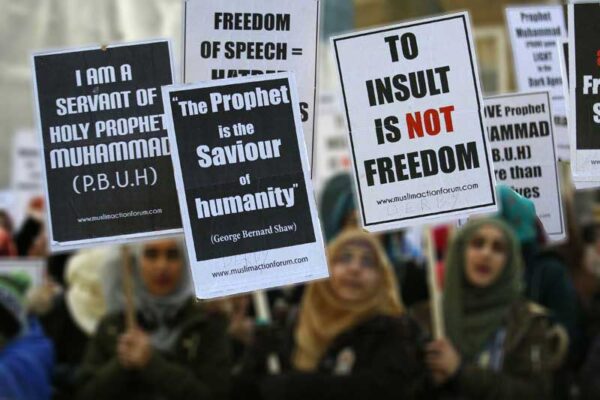
    In January of 2015, two young Muslim men burst into the offices of Charlie Hebdo, a satirical French magazine in Paris. They found the room where fifteen staff members were having an editorial meeting and opened fire. Sigolène Vinson, a crime reporter, survived after one of the gunmen told her that she would be spared because she was a woman, and that she should convert to Islam and read the Qur’an. The two young men were later shot to death by French police. The motive for the attack was clear — the magazine had previously published insulting images of Prophet Muhammad (s) which, to Muslims, is a major sin.

    The magazine has a long history of publishing such content. In February of 2006, Charlie Hebdo published similarly insulting cartoons and sold hundreds of thousands of editions in France, despite protests. The French president at the time, Jacques Chirac, condemned the cartoons and stated, “Anything that can hurt the convictions of someone else, in particular religious convictions, should be avoided.” Despite the condemnation and protests, a Pew Global Attitudes Survey at the time found that 67percent of French people believed that the controversy was caused by “Muslim intolerance” and only 28percent believed that it was caused by “Western disrespect.” Similar survey results were found in other European countries including Spain, Germany, and the United Kingdom. Not surprisingly, Muslim majority-countries such as Jordan, Egypt, Indonesia, and Turkey had the opposite perspective. In Turkey for instance, 84 percent of respondents stated that Western disrespect was the primary reason for the controversy, with only 8 percent citing Muslim intolerance as the main factor.

    In retrospect, protests by Muslims in 2006, although large, were not enough to alter sentiment and produce change. Then, following the 2015 attack on the Charlie Hebdo office, Muslims found themselves caught between condemning the attack and affirming their condemnation of the cartoons. And, again, there was little perceptible change in public opinion.

    Protests Finally Bring Results

    A more recent cartoon controversy in France in October 2020, however, was a different story. A Muslim immigrant killed Samuel Paty, a teacher, for showing insulting caricatures of Prophet Muhammad (s) to his class during a discussion of free speech. The French government showed support for “French Republican values” by proposing legislation (that some have called an “Islamic separatism” bill) that would indirectly limit the functioning of all private schools including Islamic schools and allow the government to shut down places of worship (without specifically naming mosques) for “promoting extremism.” Local officials in Montpellier and Toulouse even projected the offensive cartoons onto government buildings to show “solidarity” with the deceased teacher. These measures have resulted in outrage and alienate French Muslims even further from mainstream society.

    The response from the Muslim world this time was incredibly powerful. Protests and boycotts ensued, from Morocco to Bangladesh, Russia to Indonesia, and everywhere in between. President Erdogan of Turkey was very vocal and emphatic, calling for his citizens to boycott French goods. The Pakistan All Traders Association, which consists of nearly eight million traders, initiated a boycott of French products as well. In Egypt, Chechnya, Iraq, and India, protesters could be seen burning the French flag and pictures of Mr. Macron. Kremlin spokesperson Dmitry Peskov even stated that a publication such as Charlie Hebdo could not exist in his country because in Russia, “faiths live in respect of each other.” Whereas previously the United States had supported its European counterparts in cases such as these, the Trump administration’s silence perhaps spoke louder than its words could have. After the deluge of protests, boycotts, and outrage directed towards Mr. Macron, he appeared in an Al-Jazeera interview trying to explain his actions, although not directly apologizing for them.

    Despite the anger towards France, many Muslims feel that their message has been conveyed. Just five months after the killing of Paty, a teacher at the Batley Grammar School in England displayed insulting cartoons about Prophet Muhammad (s), similar to the ones Charlie Hebdo had published. In contrast to the “defense of free expression” attitude that Europeans have typically taken in the past, this time the school officials suspended the teacher immediately and publicly apologized to the Muslim community. Their response was applauded in England by Muslims and non-Muslims alike, setting a fresh precedent for dealing with intentional insult to a world religion. It is not at all far-fetched to believe that the school’s response was influenced by the recent situation in France, showing that the outrage and protests that Muslims collectively displayed had their purpose fulfilled. While the results of the Pew Global Attitudes Survey in 2006 would likely not have changed after the 2015 attacks, perhaps they might have showed some movement in public sentiment after the protests in the final months of 2020. Although the Batley Grammar School incident is only a small—but certainly positive—step for Muslims in Europe and across the world, it has shown that protests have power, especially protests as energetic and resolute as those by Muslims around the world just a few months ago.

  • Staying Focused on Your Goals: Challenges, Obstacles, and Solutions

    Staying Focused on Your Goals: Challenges, Obstacles, and Solutions

    As human beings, we all have dreams that we wish to achieve in life. However, some of us continue to dream, while others wake up and chase those dreams, giving them form so that they become practical and attainable goals. When chasing a dream, one will encounter many obstacles and challenges, and upon encountering these barriers, many people cease the chase and return to the dreaming phase. Some of the most common of these barriers include vague or disorganized goal-setting, inconsistent work ethic, and procrastinating behaviors. Those who overcome these barriers are precise in their goal-setting and consistent in their action,avoiding procrastination by having a detailed schedule. These qualities lead them to become dream chasers, those who are able to wake up and take the proper steps to achieve their dream.

    Setting a Clear Goal and Being Consistent

    Before beginning to work towards a goal, one must set a clear goal first. Although this may seem like the simplest step, it is often the first obstacle in the path to achieving a goal. Oftentimes, we set unclear goals, and our pursuit of them is confused and disorganized. It is as if we are searching for something but are unsure of what we are searching for. As the famous author Jack Canfield once said: “Vague goals produce vague results.” Perhaps one of the most common goals that people set is “losing some weight.” What people fail to do is define exactly how much weight they wish to lose and the daily exercises they will engage in to achieve that goal. When they find that their disorganized efforts are not resulting in progress, they give up. This lack of clarity is what makes all sorts of individuals cease their pursuit of a dream. When setting your goal, you must be as specific as possible. Instead of saying that you want to “lose weight,” your goal should be that you want to “lose ten pounds in ten weeks by losing a pound a week.” Without specificity, we often find ourselves dreaming about an elusive goal instead of methodically pursuing that goal. It’s also important to articulate why you want to achieve a particular goal. If you want to lose weight, you might list that you want to do soin order to be healthier, to have more energy, to feel more comfortable in your clothing, and to be more confident in everything you do. Knowing why you want to achieve a goal, and keeping those intentions or purposes in mind, helps to stay motivated. The Prophet (s) said, “Actions are but by intention…” In fact, the intention of an action, in this case action toward a goal, is its foundation.

    On the road to achieving any dream, a lack of consistency is a major obstacle. Consistency is an integral part of achieving any goal, and it is what really sets the dreamers apart from the dream chasers. Dream chasers are the ones who do not wait for a moment of brilliant motivation, rather, they are the ones who achieve their goals by consistently taking small steps every single day to edge closer to their goal. The Prophet (s),for the first 13 years of his mission, consistently preached to whoever would listen and saw minimal success. It is estimated that when he left Mecca for Medina, there were only around 100 Muslims, meaning he gained an average of fewer than ten followers a year. Today, there are 1.8 billion Muslims, comprising the majority of the population in 49 out of the 195 countries in the world.The Prophet was disciplined, consistent, and dedicated to his goal despite encountering major obstacles all along the way.

    If your dream is to score high on the SAT, then you must work towards this goal every single day, set aside a specified amount of time each day to work towards this goal. If your goal is to be an elite athlete, then you must practice and work towards this goal every single day. In his book Outliers, author Malcolm Gladwell demonstrated that in order to achieve greatness in any field it is necessary to dedicate at least 10,000 hours towards it. He was referring to expertise and mastery in a complex task such as grandmaster level in chess or world-class neurosurgery. Goals like these require years of consistent practice and discipline. Many goals, however, are more modest but still require disciplined consistency, making it clear that in order to achieve any dream, consistency is perhaps the most important quality in the process.

    Overcoming Procrastination

    Another major challenge for young men and women in achieving a dream is procrastination. Oftentimes, people lose interest in their goals simply because they put no pressure on themselves to achieve a goal. They do not have any schedules or deadlines that push them to be resolute and consistent with their efforts. This leads to conscious or unconscious procrastination and a vague hope that “somehow and sometime” the dream will achieve itself. This mindset is similar to thinking that we can just leave everything to Allah to take care of, rather than taking whatever action is needed. A man once asked the Prophet (s) if he should tie his camel and trust in Allah or leave the camel untied and just trust that Allah will keep it safe. The Prophet (s) replied, “Tie her and trust in Allah.” This wisdom clearly demonstrates the necessity of taking action; and regarding goals, consistent action is absolutely necessary. One cannot simply postpone the dream and hope for it to occur itself; it requires consistent effort, and procrastination derails that effort completely. In order to achieve any dream, create a precise schedule and impose deadlines on yourself to keep yourself motivated and consistent. If your goal is to write and publish a book within a year, do not leave the task to the final few months. Start early, write every day, set yourself page-count deadlines, and make sure that you meet your realistic deadlines. Every deadline is simply a step closer to your ultimate goal, step by step to reach the summit of your dream.

    In summary, one’s thought process when working to achieve a goal should be clear and practical— having a clear goal of what you want to accomplish, knowing why you want to achieve that goal, having a disciplined action plan, and being consistent. Lastly, no matter how demanding, challenging, or frustrating the process may be, do not abandon your goal. Albert Einstein once remarked that “It’s not that I am so smart, it’s just that I stay with problems longer.” He’s talking about being patient and perseverant. Sabr, in fact, is an amazing Islamic trait and its meaning is both patience and perseverance! The Prophet (s) said,“Whoever persists in having sabr, Allah will give him sabr. Nobody can be given a blessing better and more comprehensive than sabr” (Bukhari). Therefore, be patient and persevere, put your trust in Allah, and follow through with your plan to achieve your goal.

    Dream Chasers

    Many young men and women today have dreams, in fact, almost all of them do. However, very few are able to recognize and implement the steps necessary to achieve those dreams. Instead, they find themselves chasing vague ideas, being inconsistent, or pushing away their deadlines until they forget the goal entirely. A small minority of people, however, understand the process of goalsetting and achieving. Those who successfully chase their dreams are crystal clear about their end goal and why they are working toward it.They consistently and methodically work towards their goal on a daily basis and have clear schedules and deadlines that keep them on track to achieve their dream. This small minority are not just dreamers, they are dream chasers, and through understanding the methodology to set and achieve goals, one can join this select group.

  • Islam and Nationalism: Prioritizing Our Loyalties

    Islam and Nationalism: Prioritizing Our Loyalties

    At the dawn of humankind, humans first organized into small, isolated groups in order to sustain their survival. Soon, they grew into clans and tribes as populations and food supply increased. As they grew ever larger,some tribes in a particular geographical territory, with a shared cultural, linguistic, historical, and ethnic background,became a nation, and as they formed their own governments, they officially gave birth to their own “nation-state.” These nation-states would then continue to grow, and some of them had a desire for greater resources or land, or even for sheer ethnic dominance, and these would aggress against other nation-states, often justifying their aggression by pointing out the differences between nations. This overzealous tribalism was rampant in pre-Islamic Arabia where tribes that were formed based on distinct lineage would savagely and unjustly wage war against neighboring tribes in pursuit of resources or tribal dominance. Arabia was plagued by barbaric warfare and hostility among various groups until the rise of Islam which, ultimately, dissolved all tribal, ethnic, and racial divisions to amalgamate the entire peninsula and then more distant lands. Islam consolidated all the nations of Arabia and beyond as one people, one ummah. However, that ummah has now been shattered as a result of Muslims putting their differing nationalities above their common faith.

    One of the greatest challenges for today’s Muslims, therefore, is to recognize the distinction between their nationality and their faith. Oftentimes, these two conflicting ideologies are intertwined, and this serves to divide Muslims, as well as the rest of mankind, along ethnic, cultural, and/or racial lines. Since the European powers divided much of the Muslim world into separate nation-states in the early 20th century, the Europeans have, to a certain degree, not been the ones engaged in direct conflict with the Muslim nations.Instead, the entanglements that the West left behind has led to Muslims engaging in conflict with one another. The borders created by the West have had a devastating effect on the Islamic world, as Muslims today are quick to forget their common faith in favor of their differing nationalities, an ideological conflict of nationalism and Islam.

    The conflict emerges when nationalism becomes excessive and chauvinistic, a blind and biased loyalty that Prophet Muhammad (s) warned against. Wathila ibn Al-Aqsa’ reported that he asked the Prophet, “O Messenger of Allah, is it part of tribalism that a man loves his people?” The Prophet said,“No, rather it is tribalism that he supports his people in wrongdoing” (Sunan Ibn Majah). Nationalism, in its primary dictionary definition, is “spirit or aspirations common to the whole of a nation.” When nationalism goes beyond that sentiment and becomes excessive patriotism, a chauvinism that exalts one’s own nation as culturally superior to all others, it becomes characterized by blind devotion and, oftentimes, aggression. That is akin to “supporting his people in wrongdoing” and, as such, is condemnable.In a value system grounded in truth, this excessive nationalism can only be seen as detrimental to any nation, and currently, its effects are showing on the Muslim world. Islam certainly does not eschew the natural distinctions that coalesce around race, ethnicity, or culture. It does, however, provide a means to transcend all diversities through a universalizing framework of Islamic belief.

    Although hyper-nationalism may contain a share of superficial benefits, its deleterious effects are realized when one analyzes its principal pillars of perceived, or even contrived,victimization (which is used to justify a nation’s aggression toward other nations) and ethnic superiority, both of which are directly contradictory to precepts of a common and cooperative humanity. In order for Muslims to be a force for good in this world, they must eschew the ideological pitfalls of chauvinistic nationalism, which at present, keeps them in conflict and disarray.

    Playing the Victim Role

    Nationalist leaders, of the chauvinistic type,know that having a real or imagined enemy effectively mobilizes a population to their call. When danger is invoked by a leader who wants to justify his policy of aggression against other nations, he presents himself as the one who can protect his people. Adolf Hitler is well known to have portrayed post-WWI Germany as having been “betrayed” and ravaged culturally and economically by Jews, making it easy for him to gain support for his genocidal policies. In the Muslim world, the Kurds claim land in Iran, Turkey, Syria, and Iraq, asserting that those four nations robbed Kurdistan in the 20th century. Kurdish nationalist groups continue to fight against four different Muslim nations, with the wars creating great destruction in the Middle East. Most recently, the Trump administration created fear of an immigrant “invasion,” words echoed by the 2019 El Paso shooter, who murdered twenty-three Latino individuals in Texas.

    Although it is certainly true that there are real oppressors and their victims, it is also true that false victimhood is often created by a hyper-nationalist leader to achieve some objective. The false projection of fear and victimhood that fuels this warped nationalism is exactly what Muslims must counter; but instead, many have played the victim role themselves—and to a devastating degree. Instead of creating fear of an imagined enemy, Umar bin Al-Khattab (r) emphasized the necessity of self-reflection when he stated that Muslims should “fear their sins more” because “your sins are more dangerous to you than your enemy.” As moral decay encompasses a society, it is easy to point towards an external foe instead of improving a nation itself and the individuals that constitute its population. They fail to recall that “Verily, Allah will not change the condition of a people until they change what is in themselves” (Qur’an 13:11).

    Brothers and Sisters Divided by Borders

    Once a sense of fear and anger is created, a debased and twisted nationalism can be used to engineer support for noxious foreign policy campaigns. Cultural, religious, ethnic and other differences can easily be exploited.Unfortunately, in the Muslim world today, such differences have pitted Muslims against one another, exacerbated by artificial borders created by European colonial powers. Several Muslim nation-states have taken it a step further, creating enmity towards other nations and sometimes even fomenting military confrontations with them. Saudi Arabia has created animosity with Turkey by not only condemning Turkish political maneuvers on the international stage but also by having the Saudi Ministry of Education declare the Ottoman Caliphate as the “Ottoman Occupation” in textbooks — clearly portraying Turkey as a former oppressor.Saudi Arabia and Iran’s rivalry is well known, and although the rise of Islam managed to quell the Arab-Persian rivalry and establish Muslim brotherhood, the decline of Islam has seen it reemerge. In the 1960s, Arab nation-states bordering the Persian Gulf insisted on renaming the body of water the “Arabian Gulf.” In 2016, the Grand Mufti of Saudi Arabia, Abdul-Aziz ibn Abdullah, even went so far as to claim that Iranians were “not Muslims, for they are the descendants of Zoroastrians and their enmity towards Muslims, especially the Sunnis, is very old.” In light of the fact that Sunnis and Shias tend to share beliefs in the vast majority of theological matters, it is evident that a good portion of the bitter rivalry is a result of stark nationalism and has been an immense factor in the several proxy wars that are destabilizing the Middle East today. Even the relatively recent “Islamic Revolution” in Iran, although a promising break from the shackles of colonialism, has now turned out to be little more than a strictly “Iranian Revolution,” and instead of exporting Islamic reforms, the Revolution has left Iran more isolated than ever. Further East, Pakistan and Bangladesh, despite being united under the banner of Islam as one of the largest Muslim countries in the world in 1947, were soon broken up in the bloody 1971 war. Although the war began as a result of political turmoil, some of the worst atrocities committed during the war were a result of ethnic divisions.

    However, Islam teaches us to rise above these differences, always insisting that faith comes before race, culture, and ethnicity. The Qur’an states that “Among His signs is the creation of the heavens and the earth and the diversity of your languages and your colors. Verily, there are signs for people of knowledge” (Qur’an 30:22). This verse is a clear indication of the fact that ethnic and racial differences are simply a sign of Allah’s creative power, not to be used to divide people. Furthermore, in Prophet Muhammad’s (s) final address to the Muslim community, he emphasized that “There is no superiority of an Arab over a non-Arab, or of a non-Arab over an Arab, and no superiority of a white person over a black person or of a black person over a white person, except on the basis of personal piety and righteousness.” Ironically, humankind has turned race, culture, and ethnicity into expressions of superiority and oppression rather than recognizing the beauty of diversity in humanity and finding ways to cooperate and support the common good.

    In the Qur’an, Allah addresses not only Muslims but all of humanity, stating: “O mankind, We created you all from a male and a female, and made you into nations and tribes so that you may know one another. Verily the noblest of you in the sight of Allah is the most righteous of you. Surely Allah is All-Knowing, All-Aware” (Qur’an 49:13). The Creator makes it clear that not only are all human beings from the same parents, but also that our differences in race or ethnicity are naturally meant for us to cooperate and create a world of goodness and social justice. Islam does not at all find fault in having temperate pride in one’s nation and its culture, language, and heritage. However, Islam denounces these factors being used to create conflict among nations. Islam is a uniting factor for all of mankind regardless of nationality, yet Muslims today have forgotten this and it has predictably devastated the Islamic world.

    Envisioning a United Ummah

    Islam is not constrained by any border, and perhaps the greatest testament to Islam’s universal appeal is that despite being the birthplace of Islam, the Arab world today contains just 20 percent of the world’s Muslims. However, since Muslims too often have put their national loyalty before their faith, the results are plain for all to see. As long as Muslims choose to claim victimhood more than engaging in self-reflection,enablingdivisive nationalist sentiment, they will remain stuck. The discord created by borders drawn by foreign powers aiming to benefit themselves alone is exacerbated by the blinders Muslims place upon themselves.With opaque filters of debased nationalism layered upon their concept of self, identity, and faith, their vision of an enlightened future is blurred and nothing can change for them. But by turning back to what made Muslims great— the guidance laid out by the Qur’an and Sunnah—Muslims still have hope to be a united ummah and become what they were meant to be: a light for all humankind, a beacon of inclusiveness and mutuality that cuts through all artificial boundaries arising out of race, ethnicity, or culture.

  • The Burqa Ban: Déjà Vu from the Dark Ages

    The Burqa Ban: Déjà Vu from the Dark Ages

    During the Dark and Medieval Ages of Europe, religious intolerance was encouraged by the Catholic Church as well as the various European kingdoms scattered across the continent. They would often call for “inquisitions,” where Catholic militias and gangs would purge Jews, Muslims, and non-Catholic Christians from their localities. Minorities were either expelled, killed, or forcibly converted to Catholicism. Many were also forced to live in ghettos; in fact, the word “ghetto” originated in Italy to describe a Jewish locality in Venice. Although the inquisitions have long ended in Europe, a new approach for a similar objective — to root out the beliefs, traditions, and/or symbols of the “other” — has been undertaken, and intolerance is now resurfacing.

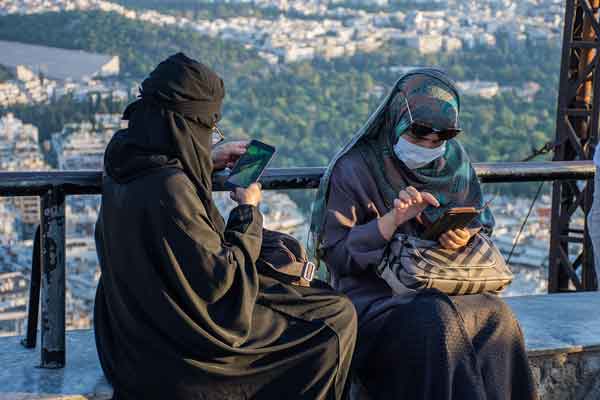
    Today, several European countries including Austria, Belgium, Denmark, France, the Netherlands, and most recently Switzerland, have imposed complete or partial bans on the Islamic dress for women, namely the hijab, niqab, and burqa. In these states, fines or jail time has been prescribed as punishment for those wearing a burqa or niqab in public and wearing even the hijab at a university or school is enough to warrant removal from the institution. Claiming concern about security, female liberty, and secularism, many European countries have given Muslims, and Muslim women in particular, two practical options: integrate into European society by compromising their faith or practice their faith elsewhere to avoid the punishment. Similar to the Medieval Ages, Europe today refuses to validate and give full rights to “others,” and instead of encouraging the diversity and freedom of expression that secularism champions, it has given Muslims the option to either give up the tenets of their faith or face the consequences — a dangerous déjà vu from the Dark Ages.

    The Claim of Security

    One of the most widespread claims against the burqa or niqab being worn in public is that they are a security concern. In April of 2017, Paul Nuttal, a now-former member of the European Parliament representing the United Kingdom Independence Party, claimed that “if CCTV is to be effective, in an age of heightened terror, you need to see people’s faces.” Mr. Nuttal was a vocal advocate for a ban on burqas and niqabs in the United Kingdom throughout his tenure. However, when asked to provide data as to how effective a burqa ban would be, The Home Office, Scotland Yard, and the National Police Chiefs Council all told Fact Check they were not aware of any statistics showing the proportion of people who cannot be identified on CCTV, or any records of the reasons why. David Videcette, a former officer with Scotland Yard’s Anti-Terrorist Squad, asserted that burqas did not pose a security threat, stating that “CCTV generally often just shows people’s bodily movements and what they did somewhere, as opposed to identifying them facially.” Instead of providing increased security, the burqa bans may be emboldening those who see Muslim women as targets for harassment. The Collective Against Islamophobia in France stated in a 2011 report, the same year that France imposed the burqa ban, that 94 percent of victims of anti-Muslim physical and verbal abuse are women, and over 84 percent of all reported Islamophobic acts are targeted at women. The report also stated that the increasing Islamophobic attacks are often aimed at Muslim women who are singled out because they are wearing a hijab, burqa, or niqab. Interestingly, since the start of the COVID-19 Pandemic, European countries such as France have imposed strict guidelines for the required use of face masks in public and no security concerns were raised by either politicians or the populace.

    The Claim of Female Oppression

    Many European politicians have also claimed that the burqa is a symbol of female oppression imposed by Muslim men. Former French president Nicolas Sarkozy, who is often seen as the pioneer of the “burqa ban” movement, stated in 2009 that the burqa is “a problem of liberty and women’s dignity,” before also stating that the burqa is “not a religious symbol, but a sign of subservience and debasement.” Several European politicians have made similar claims. Ironically, these self-portrayed champions of female liberty refuse to take into account the opinions of those who they claim to be liberating. In all of the “burqa ban” debates in European parliaments, not one burqa- or niqab-wearing Muslim woman was consulted, which makes it difficult to take at face value the seemingly good intentions of these politicians. It has indeed been mostly men creating legislation regarding the manner in which a woman dresses — a major issue that modern feminists should oppose and bring to light. Moreover, the European Court of Human Rights out rightly rejected the argument that a burqa ban was necessary for liberating women, commenting that “A State Party cannot invoke gender equality in order to ban a practice that is defended by women.” The applicant in that particular case asserted that she wore the niqab voluntarily like the vast majority of Muslim women who wear the burqa and niqab did. If European politicians are actually concerned for the rights of Muslim women, perhaps they should consult some of the “victims” before speaking for them.

    The Claim of Secularism

    Perhaps the greatest element of irony in the arguments of those who want to ban the burqa or niqab being worn in public is the claim of defending the values of secularism. European politicians such as Mr. Sarkozy have often stated their intention to “protect secular values” and maintain the separation of church and state when imposing bans on hijabs in schools and universities. However, even a superficial analysis of the tenets of secularism shows that the freedoms of religion and expression are well supported and encouraged in a secular society. In openly secular societies such as the United States, for example, the French burqa ban was strongly condemned. Former spokesperson of the State Department, Philip Crowley, bluntly declared that “We [The United States] do not think that you should legislate what people can wear or not wear associated with their religious beliefs,” before further asserting that “in the United States, we would take a different step to balance security and to respect religious freedom and the symbols that go along with religious freedom.” Furthermore, Article Nine of the European Convention of Human Rights addresses the freedoms of religion and expression, giving the right to practice one’s religion “in public or private, through worship, observance, practice, and teaching.” Amnesty International, in response to a ban on face veils in Belgium, explicitly stated that it “would violate the right to the freedom of expression, and of religion, of women who choose to express their identity or their beliefs in this way.” When Switzerland moved to ban the burqa in March of 2021, Ravina Shamdasani, the United Nation’s Human Rights Office spokeswoman, expressed her dismay at Switzerland “joining the small number of countries where actively discriminating against Muslim women is now sanctioned by law.” She further stated that the move was “deeply regrettable.”

    For years, European politicians have claimed that the burqa ban is in the interest of security, women’s rights, and the values of secularism. However, as a study by Shaira Nanwani of Emory University found, “the burqa ban is disproportionate to both of its stated aims of promoting gender equality and promoting public safety.” Not only does the ban fail in its alleged aims of promoting security and female liberty, it is also clearly not in line with secular values. The upholders of secularism, especially feminists, must now work to save secularism in the cradle which birthed it — Europe. Several European states have sent a strong message to Muslims: give up your religion or face the consequences. This is the same message that Europe sent to Jews, Muslims, and other minorities during the Dark and Medieval Age Inquisitions. Given that none of the stated objectives of the burqa ban have been achieved, it is time to wonder if modern Europe’s motives are the same as they were all those centuries ago.

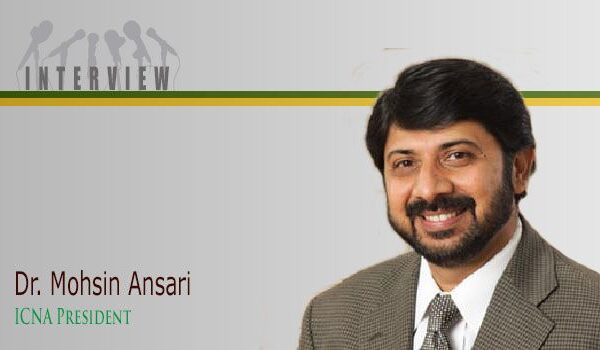
  • Interview with ICNA President, Dr. Mohsin Ansari

    Interview with ICNA President, Dr. Mohsin Ansari

    Q: Dr. Ansari, can you please tell us about yourself and your family life?

    A: I am a Muslim American, physician by profession, and I am constantly looking for opportunities to get involved in the healing process in all aspects of human life. I try to manage my time as best as I can between various responsibilities as a husband, father of five, and only son to my aging father.

    With regard to family, my wife is an electrical engineer by profession, and she helps me out in my medical office for the management of my practice as well. Alhamdulillah, she is involved with ICNA’s work in the sister’s division. Allah has also blessed me with five sons, all of whom are part of ICNA and its activities. Four of them have actually gone overseas to work on projects with Helping Hand.
    Alhamdulillah, Allah has blessed me with a family that helps in my work with ICNA, and without their support, it would have been difficult to spend time away from them, but alhamdulillah they are very understanding and supportive. Their verbal and active support, as well as their duas and encouragement, are very important for me and help me perform my duties as ICNA’s humble worker.

    My oldest son is Muadh Ansari and he is in his first year of medical school. Haris Ansari is my second son and, in sha’a Allah, he is going to start medical school this year. Hassan Ansari, the third son, is currently in the second year of his undergraduate program at the University of Maryland. My fourth son, Hamzah Ansari, is going to, in sha’a Allah, start college this year as a student at the University of Maryland. Finally, Amar Ansari, my youngest son, is homeschooled but is also doing a full-time Hifz program, and alhamdulillah he is doing very well in this program. All of them, alhamdulillah, are heavily involved with Islamic work and ICNA with its activities and various entities.

    As far as hobbies are concerned, I have always been a sportsman and I have played several sports throughout my life and I still try to do so. I played cricket in my college days and even up to now. I also play badminton and table tennis. When I was younger I did quite a bit of martial arts and still try to practice as my body allows me to do so! Apart from that, traveling to different places and countries has always been something I liked to do. These are my personal hobbies. Spending time with my family on vacations and playing various sports are things I try to do whenever I get the chance.

    Q: Please share your experience growing up in Pakistan during your student life?

    A: I moved to the U.S. when I was thirty years old, so before that, the time I spent in middle school, high school, college, and medical school were all memorable times as a student in Pakistan. I was fortunate enough to be accompanied by friends who were very dedicated Islamic workers. When I was in 10th grade, I got affiliated with a student organization that was working to help improve the conditions of students in Pakistan but at the same time tried its best to help students live the life of true Muslims and follow the religion of Islam. That organization created the basis of everything which I am today.

    Like hundreds and thousands of people across the world who are serving in different communities and countries, I would say the organization provided a huge amount of leadership for Islamic leaders throughout the world. Whether you go to South Africa, Japan, the U.K, Canada, America—everywhere in the world—wherever Islamic work was started, sustained, and run successfully, you will see people who were trained by this organization. Hence the time I spent in my college days and in medical school gave me a very good experience of balancing life as a student and the guidelines given to us by the Prophet (pbuh). Lastly, all the young people in the world bring so much energy, drive, ambition, and enthusiasm and that time as a student provided the basis of my personality and my lifelong commitment to Islamic work. These were just a few things I would like to share about my growing up in Pakistan. It was just extremely memorable and my student life built the foundation of everything I was able to do later in my life.

    Q: What inspired you to join ICNA and when did you become a member of its general assembly?

    A: As I already mentioned, when you work for the cause of Islam and you decide that you want to spend your life in accordance with the Qur’an and Sunnah, it is not something that you do as just as a student or at any particular age. The commitment to the religion of Allah (SWT) is a lifelong commitment. Since I was already involved in a lot of Islamic work before coming to the United States, although I came to the United States for higher studies and medical training, it was at the same time very clear in my mind that I had to follow the guidelines of the deen and work for the cause of Islam. The activism and the effort to establish the deen of Allah around me was the goal I adopted during my student life and I wanted to continue it with ICNA. ICNA was the only organization in the country that was pursuing the goal of improving the lives of individuals and the lives of collective Muslims in order to achieve the goal of pleasing Allah.

    My inclusion to ICNA and becoming a GA member was also very different and unique. I arrived in the United States on November 19th, 1993 on a very cold snowy day in New York City. The brother who came to receive me was one of the friends who worked with me during my Islamic work in Pakistan. Many of the ICNA brothers know him, his name is Rashid Siddiqui, and he is currently serving as the vice president of ICNA and is also a cardiologist by profession. He received me at the JFK International Airport and the first thing he told me was “Mohsin Bhai (brother), we are not going home yet, we are going to the central office of ICNA to make you fill out the form to become an MGA.” He reminded me that there was no gap in the life of a Muslim for working in the cause of Allah. He told me that although I had just arrived from Pakistan, that there should not be a single day that I do not continue the work I had done in Pakistan. I filled out the paperwork in the headquarters of ICNA in Jamaica, New York. It was only then that I went home to where I was supposed to stay. This is how I became a member of the General Assembly of ICNA.

    Q: What has been your role and responsibilities within ICNA in the past and how has ICNA played a role in turning you into how you define yourself today?

    A: In ICNA, I have been given different responsibilities. I worked as a regional president of ICNA and later, around 2003, I was elected as part of the ICNA national shura for the first time. I had been part of the shura until I completed my four-year term. Moreover, I worked in the capacity of the chairman of the board of directors of ICNA Relief for almost seven years. I was then given the responsibility of chairman of Helping Hand USA, which I left around September 2020. Then, within 2-3 months, I was elected as the president of ICNA, my current position. These are the different responsibilities I have been given throughout my time in ICNA. However, each of these responsibilities had a different flavor and experience.

    The work in the humanitarian field has impacted my mindset, opinions, and my approach to the work a lot. Being part of ICNA Relief, Helping Hand, and as a person who has been involved in these activities, I truly believe in the compassion, love, and belief that our work changes so many lives. I met many orphans who Helping Hand takes care of around the world, visited many refugee camps in Syria and Lebanon, got involved in shelter homes, and helped feed the hungry in the United State with ICNA Relief. All these activities gave me a huge insight in the suffering of fellow human beings in a variety of ways. That also made me think that whatever we are doing in the humanitarian area is vital, and it really changes the lives of so many. Many of the orphans who I have met have left a very long-lasting effect on my approach, commitment, and determination towards the work of the deen of Allah. Charity and humanitarian work are part of this deen. The hugs, the kisses, the love, the appreciation, the duas, and the thankfulness in the eyes of these orphans and refugees make me feel extremely committed to the work which we do, and every time it energizes me to do more for the future, and to do more and sacrifice more as much as we can so that the lives of these underprivileged people can be better.

    Q: Please elaborate for us a full picture of ICNA as a whole organization, its niche and how you plan to take it to the next step?

    I have always said that ICNA is a one-stop-shop. That means that ICNA is the only Muslim organization in this country that provides the opportunity to do good for every single individual—both non-Muslims and Muslims. In our neighborhoods, populations, and circle of friends, especially among Muslims, we have many who are interested in doing charity and humanitarian work. ICNA has immense and great opportunities available whether they want to do international relief work through HHRD, they want to feed the hungry, they want to serve in a shelter home, or help people during a natural disaster. Every single opportunity is there to provide for those interested in charity work. Similarly, there are many Muslims who are interested in doing dawah work and they want to spread the deen of Allah, they want to reach out to Muslims and non-Muslims to let the people know what Islam is, and let them realize the true character of Islam. That is what attracts and excites them the most.

    ICNA’s dawah organizations like Why Islam and Gain Peace, with their extensive networks and the immense number of opportunities, allow them to perform the dawah work that they want to do. Similarly, the ICNA Sisters division provides an opportunity to Muslim sisters, both English speakers and non-English speakers, to do a lot of great work. The sister’s division has grown immensely in the last 20 years and has done amazing work in improving lives and the commitment towards Islam for so many sisters. There is a lot of opportunity for Muslim sisters who want to join the work and make efforts for the deen of Allah. Similarly, many other areas, such as the Young Muslims, gives the opportunity for our youth to do a lot for the young Muslims in this country. Hence, the youth have the opportunity to participate in halaqahs (study circles), improve their level of education, attend seminars, and go to conferences.

    All the youth have the opportunity to grow in their relationship with Allah when they join ICNA. There are so many other divisions of ICNA which provide the opportunity for volunteer work, activism, and the spread of the deen. Our social justice department provides opportunities for those eager to work in social justice fields as well. As I said, ICNA is a one-stop-shop— there are so many things that ICNA has done and ICNA has provided the opportunity for every taste. They are all good deeds and it is up to the person to choose where to work for the deen of Allah and humanity. ICNA has something for each person living in this country who wishes to work for goodness. As far as ICNA’s niche is concerned, as I said, it is everything—whether it’s charity, dawah, or conventions, ICNA has proved that it can do a lot of good in many areas.

    Q: Under your leadership, how will ICNA equip and strengthen itself to deal with the modern-day challenges?

    A: If we analyze the current overall situation of American Muslims and Muslims around the world, there are a couple of things that stand out as challenges to Islam and Muslims, particularly American Muslims. One is Islamophobia and the false allegations made against Islam, Muslims, and Islamic organizations. The second is obviously the effort to grow and develop the organization itself. ICNA has planned to deal with all these issues this year. As far as exterior challenges are concerned, we have planned a very organized effort where we will use all resources—media, advocacy, public relations— to let the world know who we are and what we do. The work of ICNA, particularly the humanitarian work, which has positively impacted the lives of millions around the world, needs to be elaborated on and become more well known. What the Islamophobes do is that they not only attack us, but they also detract from our ability to help those who need our aid.

    When they attack ICNA, Helping Hand, or ICNA Relief, it takes our focus away from charity work and towards answering the Islamophobes. It also has the potential to cut down on the financial support we get from our donors. The Islamophobic attacks may scare and confuse some donors which can result in the reduction of the support we give to orphans, refugees, and those in dire need of help. So, our goal to deal with the external challenges is to let the world know that Islamophobes have an agenda which is not only to attack us but with the result that it deprives the millions of people of the charity they receive from ICNA, Helping Hand, ICNA Relief, and other Muslim charities.

    Internally, this year we have focused on introducing several new areas of our work. We want to safeguard our organization, we want to ensure we follow the best organizational models, and we want to enhance our work not only in number but also by making sure we fulfill every single requirement that is given to us by the laws applying to a 513c organization. To achieve that we have created several new departments and one of them is the Growth and Development department. ICNA attracts so many people—25,000 attend the national convention, 50,000 attend the ICNA Six Flags events, and thousands attend regional conventions—and many of these people know ICNA but are only loosely attached to it. They are familiar with ICNA but they are not really “part” of ICNA. Our goal is to increase our membership and growth. That is why our new Growth and Development department, under the leadership of Dr. Arif Mannan, has been created. Similarly, for all the challenges which 501(3)c organizations including Helping Hand, ICNA Relief, and ICNA face, we have created a legal department. Under the leadership of one of our senior attorneys, Br. Hamid Siddiqui, we have created ICNA’s Legal department which will guide all the entities and divisions of ICNA about the legal issues. ICNA’s membership and leadership will be able to get an initial consultation and if needed, we can be directed to further legal assistance from other entities.

    Another department which we have added this year is our Compliance department. The growth of ICNA has been, alhamdulillah, phenomenal. But this growth also comes with more responsibility and more scrutiny, so we want to conduct “self-policing.” We want to make sure that we police ourselves, and that is why we have created a Compliance and HR department headed by Dr. Shahid Mansoor. Also, this year our focus has again been on youth, so our new vice president, Br. Salman Mujahid, will lead the department of ICNA Youth to focus on the younger Muslims.

    One more thing that has been on many minds for many years is that Islamic movements across the world have always had immense support from literature and those who have provided us necessary guidelines. However, the need to change some of the details and practical aspects of that literature needs to be evaluated. That literature will be print or social media, anything that will reach the masses and improve their tarbiyah, mindset, and anything that will attract the young living in this country, written in a more understandable and familiar language to the American population. So, a new department under the leadership of Dr. Shahid Rafiq has been created and will be called the Publication and Research department. As a vice president, Dr. Shahid and his team will work to produce social media and literature which will be modified so it is up-to-date according to the current needs of American, European, and English-speaking Muslims. That was a much-needed department, and we have decided to focus on producing literature applicable to the current age and trends. Insha’Allah, we will commit financial resources and efforts to produce something which will be beneficial for decades to come.

    Q: What is the greatest challenge Muslims are facing in America, and under your leadership, what is the solution ICNA has to offer?

    A: I largely answered this question previously, where I stated that the major challenges we face are both external and internal. The biggest external challenge we face is the misinformation of Islamophobes against Muslims in general and the misinformation of Islamophobes against Islamic work, movements, and organizations. They are not only targeting the religion of Islam and Muslims only, but they are also targeting organized Islamic work. ICNA has taken on the responsibility to let the world know how beneficial Islamic work is. Let everyone know that our existence depends on the good work that Islamic movements have done and are how they are needed across the world. I see Islamophobia as the biggest challenge externally for Muslims in this country and outside the country, and I see the education of Muslims about the positive impact and need for Islamic movements and organized work is another challenge we face; and insha’Allah we would like to educate Muslims about the benefits of Islamic work today and in the past.

    Q: Has recent instability in America’s socio-political arena changed ICNA’s approach to its outreach, activism, or other domestic services, and if so, to what extent?

    A: ICNA’s approach to current problems is the same approach that our Prophet taught us, that all humans are equal, as he said in his last sermon which guided humanity almost 1500 years ago. This still remains the hallmark and solution to problems not only in America but all across the developed and underdeveloped world. No white is superior to a black and no black is superior to a white. No Arab is superior to a non-Arab and no non-Arab is superior to an Arab. These were the words that were told to us by our Prophet before he left the world. He made it clear that all humans are equal and suggested that the only thing that will help us is to take care of each other. He also mentioned women’s rights and taking care of Muslims as well as fellow human beings. All these are guidelines for Muslims in the current socio-political arena. ICNA’s Social Justice department has geared its efforts to address these issues. They are not new, and we are not changing ourselves, we are just presenting our true image to the world. We are a religion, a faith, and a group of people who believe in our default mindset that all humans are equal. No one is superior on the account of gender, ethnicity, or skin color. Establishing those guidelines of our religion and conveying them to the people of this country is the challenge, and ICNA’s Social Justice department, as well as ICNA’s other entities, will work on it.

    Q: In a polarized political atmosphere, how will ICNA seek to establish a socio-political Muslim presence without compromising on Islamic social, moral, and religious values?

    A: We all know very well that ICNA is a 513c organization that cannot, should not, and will not be directly involved in political activism. However, we are the largest Muslim grassroots organization in this country. Hence, the members, supporters, volunteers, and affiliates of ICNA look towards ICNA for guidelines and leadership. They want to know what ICNA thinks about certain issues. In the last four years, hatred against minorities, Muslims, and people of color was promoted by some parties in the U.S. ICNA has taken a stand through its subsidiaries to let the world know the true Islamic social, moral, and religious values. They are based on justice, equality, fairness, and respect. There is a hadith of the Prophet where he states that those who do not respect the elders and are not kind to the youngsters are not among us. This basically sets the guidelines of how an individual Muslim should be: respect for our elders, which is not emphasized in modern societies, taking care of young ones by being kind, merciful, and helping them take responsibility for their lives in this world and the next.

    The Prophet said that the best thing a father can leave behind is solid (righteous) children. I believe that it is important to convey this message. At the same time, there are some basic Islamic values. Whether it is the hijab of sisters, salat, zakat—whatever it is, we need to make sure the world knows that the basic attributes of our religion are here to stay and we need to explain them better. We need to let people know what Sharia means and what Jihad means. We need to make sure people know how Islam approaches non-Muslims, the rights of women, and the rights of minorities. It is very important that though we are not a political organization, at the same time our membership and followers need guidelines. Insha’Allah ICNA will provide the guidelines, leadership, mindset, education, and resources to ensure the world and American Muslims who seek ICNA’s leadership, that they will receive the proper answers.

    Q: What are ICNA’s most significant goals for the next ten years and how will ICNA methodically work to accomplish them?

    A: ICNA is an organization that has always looked for improvement and an ongoing development of an organizational vision. That is one of the reasons that, alhamdulillah, ICNA has taken care of many challenges and has continued to grow. ICNA’s leadership and shura have created a plan called “Vision 2030.” The plan is basically to envision what ICNA will be in 2030. Under the leadership of one of our vice presidents, Br. Sa’ad Kazmi, he and his team have worked tirelessly and have spent hundreds and hundreds of hours to develop a plan as to how ICNA will grow, most effectively deal with challenges, safeguard the organization, improve its image in society, and what ICNA will be ten years from now. The development of the Vision 2030 plan has already been completed, and it’s in the works of being implemented in the next few months.

    The plan is extremely detailed and significant because it will help ICNA grow, help Muslims living in North America, and implement a vision and plan. For example, ICNA’s plan in the next two years is to reach out to every single Islamic center in America and reach out to every single Muslim community, big or small. Our goal is that an ICNA entity, whether it is ICNA itself or any of its subsidiaries, will be established in every single Muslim community in the next two years. Insha’Allah, that is our goal. Similarly, our dawah department has started a very comprehensive plan, and under the leadership of one of our vice presidents Br. Farhan Pervez, our goal in the next several years is to reach every single American household. You heard it right! Every single American home. It is an extremely ambitious plan but we, in shaa’ Allah, with the help of Allah and our fellow Muslims, are very much determined to achieve this goal of introducing our great religion to every single household in this country. There are many things we have adapted to achieve this goal, utilizing social media tools and other similar tools. This is briefly the game plan for the next ten years. ICNA is an organization with a vision, and we are looking forward to our ten-year plan and, insha’Allah, may Allah guide us, we will achieve the implementation of this plan.

  • Nazi Germany and Hindutva India: A Fascist Road to Ethnic Purity

    Nazi Germany and Hindutva India: A Fascist Road to Ethnic Purity

    In the summer of 2019, Tabrez Ansari, a 24-year-old Muslim man in the Jharkhand state of India, was accused of stealing a motorbike by a Hindu mob. Ansari was tied to a pole and forced to chant “Jai Shri Ram,” a Hindu slogan that translates to “Hail Lord Ram.” For twelve horrific hours he was flogged with metal rods. Two police officers were later suspended because they failed to inform senior officials about the case and “tried to stop it themselves.” Whether the police officers truly attempted to save Ansari is questionable, considering the twelve hours it took for the police to finally break up the mob. Astonishingly, the police decided to take him to the police station first, to file charges for his alleged theft of a motorbike, even though he was in serious need of medical attention. He was not taken to a hospital until four days later when his condition worsened. He died at the hospital due to a skull fracture and other bodily injuries.

    Alarmingly, Ansari is one of many similar cases. Muslims in India are in greater danger today than ever before, and much of the threat can be traced to the ruling party in India, the Bharatiya Janata Party, and the ideology it stands for, Hindutva (an ideology distinct from the religion of Hinduism). The Rashtriya Swayamsevak Sangh (RSS) is an extremist Hindu nationalist movement and one of the main promoters of the Hindutva ideology. One of the founders of the RSS, Madhavrao Sadashivrao Golwalkar, was an open admirer of Adolf Hitler and his policy towards the Jews of Europe. Golwalkar claimed that Germany demonstrated that a multi-racial and multi-cultural nation cannot flourish and in that, he wrote, there was “a good lesson for us in Hindustan [India] to learn and profit by.” In fact, it was an RSS member who assassinated Mahatma Gandhi due to Gandhi’s “soft” attitude towards Muslims. Throughout the history of modern India, the RSS has been responsible for numerous hate crimes towards Muslims and other minorities including Christians, Sikhs, and even lower caste Hindus such as Dalits. With six million members, the RSS — effectively the parent organization to the ruling BJP — has dominated politics in India since 2014. Subsequently, the hate-mongering and systematic oppression of Muslims has risen to unprecedented levels, and the steps that are being taken by the Indian government to alienate and perhaps eliminate Muslims from India are shockingly similar to the steps that the Nazis implemented against the Jewish community of Germany in the mid 20th century.

    Parallels Between Anti-Semitic and Anti-Muslim Rhetoric

    Prior to systematically murdering Jews in concentration camps, the Nazis undertook certain steps to alienate Jews from German society and to create public hatred towards them. The first of these was anti-Jewish rhetoric in posters, newspapers, and especially public speeches and radio addresses. Adolf Hitler would often refer to Jews as “traitors” and “enemies” to ensure that Jews were seen as pariahs in society.

    As early as 2015, just one year after the BJP took power, a BJP member of parliament, Sakshi Maharaj, addressed the killing of Mohammad Akhlaq, a Muslim who was accused of illegally slaughtering cows for beef. He stated, “We won’t remain silent if somebody tries to kill our mother. We are ready to kill and be killed.” In 2017, Raman Singh, BJP chief minister in the state of Chhattisgarh, blatantly stated that “We will hang those who kill cows,” while Vikram Saini, a BJP lawmaker from Uttar Pradesh, claimed that he would “break the hands and legs of those who do not consider cows their mother and kill them.”

    Whereas Adolf Hitler regularly blamed Jews for societal issues such as German poverty, unemployment, and food insecurity, Anantkumar Hedge of the BJP parliament nonsensically blamed Muslims for spreading the coronavirus, calling it “Corona Jihad.” Another politician, Raja Singh, has called for Rohingya Muslim immigrants to be shot, has called Muslims traitors, and threatened to demolish mosques. Even at the highest level of government, Islamophobic remarks are made. Prime minister Narendra Modi and the president of the BJP, Amit Shah, regularly refer to Muslims as “termites,” “traitors,” and “infiltrators,” much like Adolf Hitler attaching similar labels to Jews during public addresses. A shocking Facebook post by Sunita Singh Gaud, the leader of the BJP’s women’s wing, called for “Hindu brothers” to gang-rape Muslim women on the streets and “hang them in the middle of the bazaar for others to see.” The striking parallels between the Nazi party’s and the BJP’s hate-mongering attitude towards minorities are indeed disturbing, and it has led inevitably to public sentiment turning against Muslims.

    Marriage Laws: ‘Race-mixing’ and ‘Love Jihad’

    The Nazis also claimed that “race-mixing” through marriage weakened Germany. “The Law for the Protection of German Blood and Honor” prohibited marriage and extramarital relations between Jews and persons of German blood. These were declared strictly criminal acts and the law was enforced starting in 1935.

    Recently, the state of Uttar Pradesh in India introduced the “Prohibition of Unlawful Conversion of Religious Ordinance” which effectively bans interfaith marriages due to fears of what many Hindu nationalists call “love jihad.” They claim that Muslim men “lure” Hindu women into marriage and then “force” them to convert to Islam. However, when ordered by a court to look into the matter, India’s National Investigation Agency found no evidence of coercion or “love jihad” after investigating numerous interfaith marriages. Although arrests have been made under the new law, perhaps the most dangerous aspect of the law is the symbolic alienation of Muslims and the implication that Muslims are trying to “take over” Hindu India. Equally troubling is that other Indian states are adopting similar laws. Protests have been raised against the religiously discriminatory law in the officially secular nation of India, but to no avail.

    Citizenship Barriers: India’s Red Letter

    In 1935, the Nazi government adopted the Nuremberg Laws that declared that reclassified Jewish citizens as state subjects with no citizenship rights. This disenfranchising decree was perhaps one of the most effective in establishing Jews as pariahs, paving the way for further injustice and intolerance.

    Instead of outwardly declaring Muslims as foreigners in India today, the BJP has cleverly and systematically managed to create a path towards that very objective. In 2019, the BJP declared plans to extend nationwide the National Register of Citizens (NRC), the register having already been implemented in the state of Assam in 2015. Establishing the register is purportedly to identify and deport “illegal immigrants.” It dictates that all citizens must provide proof that their families lived in India as early as 1951. Those who cannot produce proof are effectively stripped of their Indian citizenship or declared illegal immigrants. Activists have claimed that Muslims who have lineage tracing back at least to 1951 are being excluded from NRC electoral lists. Fears of mass voter exclusion were raised in the recent 2019 elections when activists claimed that nearly forty million Muslims were barred from voting because they were not included on NRC electoral lists.

    The Indian government has, in contrast, provided a fast track to citizenship for refugees through the Citizenship Amendment Act (CAA). The only issue is that the legislation fast tracks citizenship based on religion and applies to Hindus, Buddhists, Jainists, and other “persecuted” religious minorities while glaringly excluding Muslims from the list. This is especially worrying for recent Muslim refugees who fled the 2017 ethnic cleansing of Rohingya Muslims in Myanmar. Much like the Nazis who marked Jewish identification papers with a red-letter J, for Jude (Jew), to prevent them from obtaining citizenship, the CAA effectively does the same to Muslims, ensuring that they have no path to citizenship and, therefore, establishes them as illegal immigrants. Although India claims to be a secular state, the inclusion of religion as a factor in dictating citizenship status is an act that goes against the very idea of a secular nation.

    Hate Crimes and Injustice: India’s Ongoing Kristallnacht

    Hateful rhetoric and discriminatory social legislation inevitably cause a rise in hate crimes. Deepankar Basu, an economist from the University of Massachusetts Amherst, found that since the BJP and Modi took power in 2014, there has been a 300 percent increase in hate crimes against minorities, especially Muslims. He details his findings in his paper, “Majoritarian Politics and Hate Crimes Against Religious Minorities in India, 2009-2018.” He writes:

    Thus, BJP’s spectacular electoral victory in 2014 sent a signal to those holding strong anti-Muslim sentiments that such sentiments were widely held in society. Since the election campaigns by key BJP leaders had demonized and vilified Muslims, its victory made it acceptable to verbally and physically attack Muslims. Since key political leaders did not strongly condemn such attacks and law enforcement officials were lax, it reinforced the attacks on Muslims by creating and sustaining a culture of impunity. It is this social atmosphere that encouraged violent, and often lethal, attacks on Muslims across India.

    Mr. Basu emphasizes the role of the BJP government in facilitating the rise in hate crimes, especially the lack of prosecution of perpetrators. Perhaps the most striking evidence of this fact is how in January 2020, a gunman opened fire at a group of Muslim protesters while the Delhi Police looked on without taking any action. Similarly, the Nazi government rarely brought those who committed crimes against Jews to justice. During the Kristallnacht Pogrom (Night of Broken Glass), approximately 1,400 synagogues were burned and 7,000 Jewish-owned stores and hundreds of homes were damaged and looted, and close to one hundred Jews were murdered, while the Nazi government did virtually nothing to stop the chaos. Prime Minister Narendra Modi is not unfamiliar with pogroms such as these, as he was chief minister in the state of Gujarat in 2002 when more than 2,000 Muslims were killed and many Muslim women raped. Due to his role in that pogrom, Modi was barred from entering the U.S. in 2005.

    Human Rights Watch has stated that authorities in India’s Gujarat state were still “subverting justice, protecting perpetrators, and intimidating those promoting accountability” even a decade after the riots. Recent pogroms such as the 2020 Delhi riots, where nearly fifty Muslims were killed and dozens of mosques were burned, have yet to see perpetrators brought to justice — giving extremists a green light to continue their violence. The parallels between the injustice towards Muslims in India and Jews in Nazi Germany are exemplified by the systematic facilitation of extremist hate and violence against minority groups, yet another step towards ethnic cleansing.

    The Final Step

    After socially and politically alienating Jews, Adolf Hitler commenced what he called “The Final Solution.” This consisted of the complete extermination of Jews, and in 1938, 30,000 Jews were sent to concentration camps, the first of about six million. Reports have trickled out of Indian Occupied Kashmir of Hindu gangs being given free rein to murder Muslims and loot Muslim properties. Although these crimes are hard to verify due to the tight lockdowns, curfews, and internet blockages the Indian government has imposed, they may not be surprising when put into the context of the BJP’s history of dealing with Muslims.

    It is important to bear in mind that Adolf Hitler was not the first person in history to ethnically cleanse a people or to commit genocide; he simply followed the steps that allowed him and others before him to do so, gradually and systematically. Now, those very steps are being taken against the Muslims of India, and if we are to learn the lessons of history, there is only one step remaining: full ethnic cleansing, either by forced emigration or the ultimate evil of genocide.

  • Plight of the Uyghurs: The Muslim World Looks On

    Plight of the Uyghurs: The Muslim World Looks On

    Today, it is very easy to criticize nations and their leaders and policies when it comes to their dealings with Muslims. Nevertheless, it appears that this has become difficult for some.The Uyghurs of Xinjiang, a Western Chinese province, are ethnically a Turkic people who still refer to their land as “East Turkestan.” The vast majority of Uyghurs are also Muslim, and they are being persecuted by the Chinese state in camps much akin to the gulags of Stalin’s Russia. However, the response of the Muslim world — silence, or in some cases support of China’s persecution —is just as deplorable as the actions of the Chinese Communist Party.

    Oppressed by the State

    Xinjiang is home to roughly 12 million Uyghurs who speak a Turkic dialect unique to that region. Xinjiang was annexed by the Chinese government in 1949, but many Uyghurs, as mentioned, continue to refer to their homeland as East Turkestan. Xinjiang contains abundant oil and mineral resources that are crucial to China’s Belt and Road Initiative, a massive project which aims to re-establish a new “Silk Road”  connecting China to Asia, Africa, and Europe through several corridors, aimed at increasing trade and stimulating economic growth.

    In August 2018, a United Nations human rights panel announced that they had several reliable reports that there were roughly two million Uyghurs who were forced into “political camps for indoctrination.” Although China originally denied these allegations, satellite imagery showing what were clearly prison-like camps led the government to concede that they had created “re-education centers” for the Uyghurs. The Chinese government claimed that they were necessary to stop the spread of radical Islamic terrorism, pointing to previous terrorist attacks in 2013 and 2014 for which Uyghur separatists had claimed responsibility. However, in response to the crimes of a few individuals, the Chinese government  decided to punish the entire Uyghur-Muslim population.

    In 2017, the Xinjiang government passed laws banning long beards and veils for women. Thousands of mosques in the region were demolished or converted to bars, wedding halls, or pig pens. According to an article inThe Economist, Uyghur families are forced to spy on other families and report anything suspicious to authorities. On other occasions, the Chinese government sends “guests” to live in the homes of Uyghur families and report any “suspicious” activity, which includes reading the Qur’an, fasting in Ramadan, or praying. If anyone is found to be engaging in such activity, they are likely to be shipped to an internment camp. Moreover, Dr. Adrian Zenz, a senior fellow in China studies at the Victims of Communism Memorial Foundation in Washington, D.C., found that more than 10,000 children in the county of Yarkand in Xinjiang, mostly Uyghur children, had one or both parents sent to internment camps. The actual number of Uyghur children with one or both parents detained in camps is unknown.

    Dr. Zenz also reports that when parents are sent to the camps, the children are put in orphanages or boarding schools, and in 2019, there were nearly 900,000 Uyghur children in boarding facilities, compared to 500,000 just two years earlier. Reports of forced sterilization of Uyghur women are gaining attention and in some areas of Xinjiang, Uyghur birthrates were 60 percent lower in 2018 than in 2015. Many Uyghur women are forced to marry ethnically Han Chinese men to be spared from internment in the camps.

    In an interview featured in The Economist, Zumrat Dawut detailed the horrors of her experience as a Uyghur in China. She was forced into an internment camp because she had received calls from family members overseas. Ms. Dawut recalled how her children were regularly questioned by officials at their school on whether she used Islamic greetings, read the Qur’an, or talked about Prophet Muhammad (s). Uyghur children are forced to learn Han Chinese customs and culture while being taught that their religion should be abandoned in favor of “Xi Jinping Thought.” In the camp, any mention of God earns an immediate brutal beating.

    Shameful, Sinful Silence

    China’s systematic internment and persecution of Muslims in Xinjiang is one of the greatest violations of human rights in our current times. However, what is perhaps even more disgraceful is the deafening silence of the Muslim world on the state of the Uyghurs.

    In July of 2019, a group of 22 countries—which were all European except Australia, Canada, and Japan—signed a one-page letter to the United Nations Human Rights Council condemning the Chinese government for the “large scale arbitrary detentions of Uyghurs.” Not one Muslim country signed the statement. It is even more shameful that just days later, 37 countries signed a statement defending China’s “remarkable achievements” in protecting their country against “terrorism, separatism, and religious extremism.” The Muslim-majority countries that signed this statement included Algeria, Syria, Saudi Arabia, Pakistan, Egypt, Qatar, Bahrain, Kuwait, and the United Arab Emirates. Two months later, the United States formally condemned China’s “horrific” repression of the Uyghur Muslims. It would take almost another year for the United States to impose sanctions on Chinese companies suspected of utilizing forced Uyghur labor.However, that is unlikely to deter China from continuing its abhorrent policies towards the Uyghurs.

    Turkey has been one of the few Muslim-majority countries to strongly condemn China’s actions, calling them a “great shame for humanity” and stating that China’s “torture and political brainwashing” must come to an end. Turkey has also provided a haven for an estimated 50,000 Uyghurs in spite of its recent economic woes, making it the largest refuge for the Chinese Uyghurs.

    Prime Minister Imran Khan of Pakistan refused to condemn China’s treatment of the Uyghurs, citing China’s economic ties to Pakistan. Other Muslim countries with strong economic ties to China, including Saudi Arabia, Egypt, and the United Arab Emirates, have forcibly deported Uyghurs back to China and put them at risk of being placed into internment camps, according to a BBC report.

    It is abundantly clear that the Muslim world has not only turned a blind eye to the plight of the Uyghurs, but even supported the Chinese government’s abominations against them. This makes the Muslim world complicit in the persecution of their own fellow Muslims, an utterly disgraceful blot on the Ummah. Albert Einstein once said that “The world will not be destroyed by those who do evil, but by those who watch them without doing anything.” This statement cannot be more applicable than it is today, and it is completely aligned with Islamic principles. Those who believed that so-called Muslim governments would raise their voices about  the oppression that the Uyghurs are enduring were proved wrong. It is now imperative for Muslims living in the United States as well as in Muslim-majority countries to fulfill their religious obligation and protest, urging  their governments to act against China’s cruelty. To watch as Muslims are persecuted is nothing less than being complicit in oppression. Silence on these matters is not just shameful, it is sinful.