بسم الله الرحمن الرحيم

Tag: what is islam

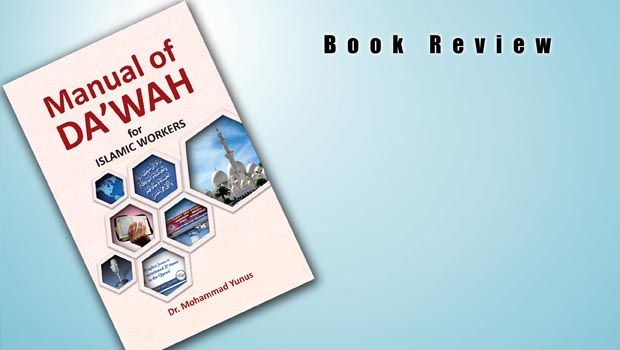
  • Book Review: Manual of Dawah for Islamic Workers

    Book Review: Manual of Dawah for Islamic Workers

    Paperback:  151 pages
    Author:  Dr. Mohammad Yunus (former Ameer of ICNA)
    Publisher: Islamic Circle of North America (ICNA)
    Year Published: 2016 (revision #4)

    Library of Congress Catalog Card #: 83-82068
    International Standard Book #: 0-9691479-1-0

    Review by Dr. Talat Sultan, former Ameer of ICNA

    Dawah, or sharing the true message of Islam, is a fundamental responsibility of every Muslim. It is also a collective obligation of the Muslim ummah. The Quran proclaims: “Thus have we appointed you as a community of the middle way so that you may be witness to mankind and that the Messenger may be a witness to you…” (Baqarah, 2:143). The Quran also tells us: “You are the best community that has been raised up for mankind. You enjoin the doing of what is right and forbid the doing of what is wrong, and you believe in God…” (Ali Imran, 3:110). And Prophet Muhammad (peace be upon him) said, “You should pass it on to others even if you know just one sentence [of Islamic knowledge].”

    Islamic Circle of North America, as an Islamic movement, has been carrying out this task over more than four decades as a leading dawah, educational, and social service organization. The “Manual of Dawah for Islamic Workers,” prepared by Dr. Mohammad Yunus for ICNA’s dawah department, was first published in August, 1983 as a guidebook for Muslims in general, and ICNA workers in particular, to carry out the obligation of dawah in a well-informed and effective manner. Now, ICNA has published its completely revised and updated 4th edition.

    The book starts out by introducing the concept of dawah in the light of Quran and of the sunnah of our beloved Prophet (pbuh) so that the reader understands clearly why it is important to carry out this essential obligation of outreach to people, a legacy of all the prophets of Allah. The book then outlines the contents of the dawah message to fellow Muslims and to non-Muslim audiences, as suitable to each. It then emphasizes that the character and conduct of the daiyah is of paramount importance, as the backbone and embodiment of the words of dawah.

    Various techniques of dawah are presented, geared to individual or collective audiences, from spouse and children in one’s own home, to other relatives and friends, to people in the larger community. Part V provides the reader with information about Christianity, its various doctrines, its scriptures, and the position of Jesus (peace be upon him) in the Quran. Part VI presents the activities and accomplishments of WhyIslam (WhyIslam.org) and Gain Peace (GainPeace.com), two highly successful dawah projects of ICNA. Their various programs are outlined, with statistics showing the encouraging results of the ongoing dawah work. Finally, a list of recommended books is provided for those who are serious and determined to further develop their skills in dawah. There is also a list of books that are recommended for distribution to individuals and groups who are the recipients of one’s dawah activities and efforts.

    The preface of the 1983 manual says, “The act of submitting to Allah requires that every heart beat of a Muslim must carry the message to those around him, that there is no god but Allah and therefore, He alone is the final authority. Concern and unequivocal commitment to Allah’s orders are not the only tools for an Islamic worker. He employs the best available technique of mass communication in a systematic manner for taking Allah’s message to all.” That message is compelling today as it was three decades ago. The “Manual of Dawah” has helped many over the years who thus strive to carry out dawah work, whether on their own or through an organization such as ICNA.

    This valuable manual is recommended reading for every Muslim who realizes that it is his/her obligation to share the truth and the beauty of Islam with fellow citizens.

  • Model for Civic Engagement – Dar al-Noor Masjid (MAV) in Manassas, VA

    Model for Civic Engagement – Dar al-Noor Masjid (MAV) in Manassas, VA

    Civic engagement for America’s Masajid could not be more crucial than now. America is facing challenges that can only be overcome by propelling the voices of reason into public and civic life and driving the voices of bigotry and closed- mindedness out of the public spotlight. We are facing the public rise of anti-Islamic sentiment while some of the country’s political leadership, both at the local and state levels and in Washington, D.C., have become detached from reality. Consequently, the safety and security of our families have become a growing concern for everyone. Muslim-Americans must engage in the civic arena in order to ensure, by Allah’s permission and will, that we contribute to the betterment of America, something that we, and all fair and decent citizens, want for ourselves and for our children.

    With civic engagement, your Masjid will have a voice in government decisions both big and small; your Masjid can achieve solutions for issues in the community; and your Masjid can do its part to ensure social justice and equality for all – with Allah’s guidance and help. Muslim-Americans’ civic engagement with their communities and our participation in the political process is a mutually beneficial affair. Engaging with our elected and public officials guarantees that the voices of Muslim-Americans are heard, especially on topics such as presenting accurate information about Islam, countering terrorism and violence in our communities, and finding sensible solutions to community issues.

    The Muslim Association of Virginia (MAV) has, in fact, been active in the civic arena for some 16 years now. Alhamdulillah, MAV has been successful in achieving major accomplishments for our community including the successful defeat of the anti-Sharia legislation in the Virginia Congress; the introduction and passing of a Halal bill in Virginia to regulate the labeling, identification, and sale of Halal products; lobbying for legislation granting students a religious holiday for Eid; and active voter registration which resulted in registering over 200 voters during Ramadan this year.

    MAV has identified some crucial steps and activities in a successful civic engagement program, and encourages all Masajid and Muslim organizations who have not already done so, to develop their own civic engagement program. Some of the steps and activities include:

    Set Up Voter Registration

    Your primary leverage with elected officials is demonstrating that you represent a large group of voters. In order to effectively represent your Masjid, you must ensure that its members are registered to vote. There are two ways to accomplish this goal: (1) your Masjid can set up its own voter registration team with registration tables at Jumu’ah prayers; or (2) you can bring in an outside organization that focuses on getting voters registered.

    Provide a Forum for Community Engagement

    The Masjid is a perfect space for school board or town hall meetings, and for debates between local, regional, and even national candidates. Not only does this benefit your community by bringing the information directly to your Masjid, but this also allows some non-Muslim members of the community an opportunity to set foot inside a Masjid for the first time in their lives. That opportunity to introduce community members of other faiths to your Masjid and their Muslim neighbors is critical to the success of your civic engagement program.

    Assist Homeless Shelters

    Show your community how vital charity is in Islam. Assist with food drives, help find shelter for families in need, visit the elderly at senior centers, become mentors/tutors for disadvantaged youth, volunteer at local schools or hospitals — your involvement in charity outside the Masjid demonstrates that you are dedicated to improving the community and, more importantly, that we care about our fellow citizens, Muslims and non-Muslims alike.

    Build a Relationship with Local Law Enforcement

    The security, good will, and community building that your Masjid receives from fostering a good relationship with local law enforcement is vital to the success of your civic engagement program. When a tragic event injures or takes the life of an officer protecting your community, be proactive about supporting the police station and the families of the officers. Your support of law enforcement events, memorials, and parades establishes a relationship of trust between the Masjid, its community, and local law enforcement. Inviting local law enforcement leaders to the Masjid is a great way to begin that relationship.

    Encourage Members of your Masjid to Get Involved

    Members of your Masjid should strive to serve on school boards, commissions, and civic associations, and to run for elected office. Having Muslims in those positions amplifies the voice of your Masjid and the Muslim community, from the grassroots level and up.

    Participate in Public Events

    Announce at your Masjid public events like parades and 4th of July celebrations and encourage attendance. If possible, provide transportation to such events to ensure turnout and that your community supports these events as a unified group. The more the wider community interacts with the members of your Masjid, the more successful your civic engagement program can, and will be, insha’Allah.

    Offer Elected Officials Speaking Time During Jumu’ah and Eid Prayers

    Invite local, state, and federal elected officials and candidates to speak at your Masjid. This benefits your Masjid in the following ways: 1) gives your members an opportunity to hear directly from officials and candidates; and 2) offers an opportunity for your members to speak directly to their elected official, asking questions to learn where that official stands on important issues. Set aside time (approximately 10-15 minutes) before the start of prayers to allow elected officials to speak to your community (for those officials who did not get to speak, acknowledge them and their attendance). It is vital that you make every effort to invite all candidates who are running for an elected office, regardless of party affiliation. Ensure that you are keeping a record of those invitations so that the non-profit status of your Masjid is protected and not placed in legal jeopardy.

    Support Sensible Elected Officials Regardless of Party Affiliation

    Do not engage with only one side of the political spectrum. Not every issue your Masjid encounters will be a shared concern of the major political party you (may) typically affiliate with. There are sensible elected officials in every party and it is important to have the opportunity to speak with them and raise issues, regardless of their political affiliation.

    Work Towards Common Goals

    When you engage an elected official, work towards achieving common goals rather than debating divisive issues. Your Masjid’s civic engagement program cannot solve every issue. Identify what issues are feasible for that elected official to accomplish and focus on those. Aggressively pursuing issues that the elected official is strongly opposed to, or where an agreement cannot be achieved, will usually result in little being accomplished and can burn rather than build bridges of understanding and cooperation. Choose your battles carefully.

    Organize with Others When Meeting Elected Officials

    Communicate with other Masajid, interfaith organizations, civic organizations, and local entities to encourage leaders from those organizations to attend meetings with elected officials alongside you. Showing unity and representation of a large voting bloc is important when speaking with elected officials. Don’t show up at the elected official’s office with a mob, however. Carefully choose leaders that represent a variety of organizations with goals and concerns in common with your Masjid.

    Know your Strengths and Abilities

    If you know you have large numerical or widespread support in the community – and can demonstrate or document it – strategically and tactically let officials know. Do not be hostile or overbearing at any time. Do not exaggerate your capabilities and strengths. Accentuate your good relations with other elected officials who support your position(s) and who may be allies to the particular official you are meeting with. Be organized in your presentations, making sure to highlight the key objectives or issues on your list.

    Establish Interfaith Engagement

    Reach out to other faith organizations in your area and work with them in all aspects of your civic engagement program. They likely already have some activities and strategies in place and may be willing to share what they have learned. And many faith organizations share similar values with Muslims. Remember, the more unity, the better!

    Promote on Social Media

    Remember that most Americans get their news and social views from what is on their social media feeds. Promote your Masjid and community events on social media and connect with other local organizations and your wider community.

    Determine the Intentions of Those Who You Engage With

    There are three reasons why another organization or an elected official is engaging with your Masjid:

    • They are focused on the best interests of the community
    • They are there for their own self-interest
    • They just need your Masjid for a photo opportunity
    • Know what you want to accomplish with those your Masjid engages with and focus your efforts on those who can produce positive results.

    Designate a Credible Spokesperson

    Your Masjid’s civic engagement program must have a credible spokesperson who can meet with elected officials, other organizations, and the wider community to successfully engage in the civic arena. The designated spokesperson does not need experience in politics; they just need to be able to accurately and effectively convey the community’s issues and messaging to elected officials.

    REMEMBER:

    In order for 501(c)(3) organizations to participate in civic political engagement, they must invite all candidates who are involved in an election and they must announce that they do not endorse or oppose any candidate.
    ——
    This article is compiled by Dar al-Noor Masjid (MAV) in Manassas, VA.

  • Helping Hand (HHRD) Strengthens Muslims in Mexico

    Helping Hand (HHRD) Strengthens Muslims in Mexico

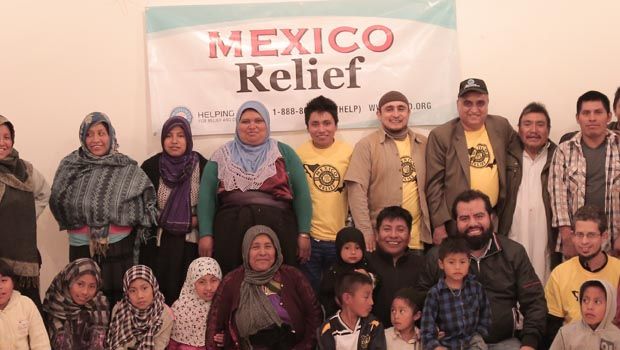
    While most children his age attend school fulltime, our young brother Nooruddin spends many of his days making sweet desserts to sell on the streets of Mexico City. Each batch takes him three hours to prepare. Once the desserts are finished, he cools and wraps them to sell for a small profit of 15 pesos each, about $1USD. On a good day, he can sell 30 desserts, earning about $30 to help his father, who suffers from heart problems, provide for their family. Nooruddin and his family are among a growing minority of Mexicans who have come to accept Islam as their religion, and like millions of other people across Mexico, poverty is their way of life.

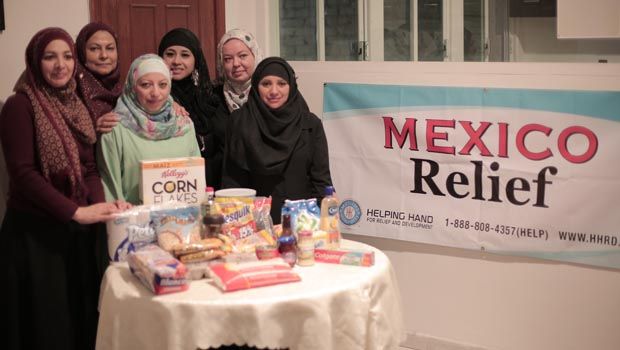
    Helping Hand for Relief and Development (HHRD) is one of the few Islamic NGOs focusing attention on aiding Muslim families in Mexico with long-term relief and development programs. Since 2012, HHRD has been working in various parts of Mexico to aid families with food packages including Zabihah compliant meals and Ramadan iftars, diabetes screening programs, school supplies, and gift bags for children. “I don’t know if maybe the impression is that Muslims in Mexico are self-subsidized and self-supporting, but it’s not true,” said the Libyan Ambassador to Mexico, Muftah Altayar.

    According to a 2009 PEW report, the number of Muslims in Mexico is approximately 110,000, accounting for less than one percent of the total population. However, by the mercy of Allah and then the outreach efforts of both Mexican and immigrant Muslims, Islam in Mexico is spreading. “Alhamdulilah, in Mexico it is very easy to talk in the universities and the high schools. They invite us to talk about Islam because the people really want to learn about Muslims,” said Imam Isa Rojas, the first Mexican graduate of the Islamic University of Medina, Founder of the Al-Hikmah Center in Mexico City, and active caller to Islam in Mexico. “The people want to know about Islam because they don’t have a negative opinion about Muslims like they do in Europe or perhaps in the United States.”

    Mexico City, the bustling capital located in the center of the country, has upwards of 3,000 Muslims living within its borders, many of whom are converts. In the Southeast region of Mexico lays the Free and Sovereign State of Chiapas. It is a lush and culturally rich land with an estimated 100-300 Mexican converts to Islam who have established a small but growing Muslim community in the city of San Cristobal de las Casas. However, many of the brothers and sisters in this area struggle with basic necessities such as job security, education and healthcare.

    While in Chiapas this past year, HHRD volunteers were given a tour of the community by Brother Yahya Gómez, one of the prominent Mexican converts to Islam and activists in Chiapas. The homes were simple structures of wood plank walls and metal sheet roofs, made to house only a few people. However, it was not uncommon to see extended families of 15 or more relatives living together in the same space. Men in the community can only secure work as manual laborers, if they are able to find work at all.

    “It’s in very bad shape. You have a few families living in one house. It’s more a kind of temporary shelter; I cannot say it is a house. It needs renovation… I say they need a new house in its place,” said HHRD International Program Director, Irfan Khurshid, when he witnessed the poor living conditions.

    For only $27,000 per home, HHRD’s Home Renovation and Building Project can provide for current homes in Chiapas to be upgraded or completely redone to provide safer, more spacious homes for growing families, including all necessary plumbing, electric, and construction costs. Some homes will even be completely rebuilt in safer neighborhoods that are closer to the local masjid.

    To further aid Muslim families in Chiapas, HHRD is implementing a Micro Finance Initiative that will provide interest-free small business loans to individuals with the ambition to become self-sustaining. With small loans ranging from $1,500 to $4,000, participants in the program can learn skilled trades and begin to operate their own businesses in the fields of carpentry, sewing, baking, or auto mechanics to help raise themselves and their families out of poverty.

    “This micro financing project is so amazing because it takes a simple donation, you know somebody can give $1,000 or $2,000 to help a Muslim start up a company,” said Boonaa Mohammed, a volunteer who recently traveled with HHRD to Chiapas. “It will take that money and allow them to buy whatever necessary tools are mandatory for the specific trade. It will give them the bare minimum. And then once they have actually been able to become successful in their trade and they have that money, they give it back to the charity which then gives it back to another Muslim that wants to, again, prove themselves through a trade.”

    HHRD is also in the process of establishing a Skills and Vocational Training Center in Chiapas to assist unemployed individuals gain the education and training needed to earn steady and halal sources of income. “In this center we can teach them different skills and they can learn a trade so that they can start their own business or find different jobs,” said Khurshid. “This will help them economically and will help them educate their children because many of the children from these unemployed and low income families have not had access to an education.”

    In addition to these large scale development projects, HHRD is also in the process of starting an In-Kind Gift Program to provide immediate necessities to families in Chiapas, Rosarito, and Mexico City, as well as an Educational Support Program where donors can sponsor a child for only $1 per day to help provide them with necessary school supplies.

    “Often times, in North America, when we look at converts and reverts, there are so many difficulties they have integrating within our Muslim communities,” said Mohammed. “Now imagine a community of reverts and converts trying to integrate into a non-Muslim society that doesn’t have a strong basis of Islam for them to fall back on. It is imperative that we offer our support in whatever way that we can and know that whoever gives for the sake of Allah, subhana wa ta ala, the sadaqa will never go to waste.”

    To get involved with Helping Hand for Relief and Development programs in Mexico, visit their website www.hhrd.org, contact info@hhrd.org, or call 1-888-808-HELP (4357).

  • Al Servicio de la Comunidad Mexicana

    Al Servicio de la Comunidad Mexicana

    Hace solo cuatro años que el primer informe fue escrito acerca del Proyecto WhyIslam en México, pero mucho ha ocurrido desde entonces. La campaña mexicana comenzó con un deseo de repartir ropa islámica y literatura a una comunidad creciente en la Ciudad de México llamada Centro Al Hikmah. Siete organizaciones se unieron para contribuir a la causa, donando todo lo necesario. Durante su vacación, Nahela Morales, una conversa mexicana, distribuyó los artículos a la comunidad islámica en junio de 2012. El viaje tuvo tanto éxito que se convirtió en un esfuerzo anual.

    El interés aumentó cuando personalidades muy conocidas como Nouman Ali Khan, Omar Suleiman, y Boonaa Mohammed respaldaron los proyectos en México. En 2013, Nouman Ali Khan viajó al estado mexicano de Chiapas, al pueblo de San Cristobal de las Casas, como parte del segundo viaje de divulgación en México. Se conmovió tanto al ver las condiciones de vida tan pobres en las que viven las familias musulmanas indígenas, que decidió filmar un recorrido de un hogar típico, una estructura humilde hecha de paredes de madera cubiertas en plástico para que no entre la lluvia, un techo de chapa, y piso de tierra. El video fue lanzado en el canal de YouTube de WhyIslam y lo han visto más de 215.000 personas.

    La meta para ese año era comenzar planes para renovar la mezquita, Al Kauthar. A través del uso de medios de comunicación y campañas para recaudar fondos, Morales logró reunir más de $30.000 para el material islámico y alimentos a distribuir durante el mes de Ramadán, y el proyecto de renovación para la mezquita. Sin embargo, las metas futuras eran ofrecer apoyo continuo a las familias necesitadas en este sector y proporcionar renovaciones a sus casas. Esto provocó planes para establecer un capítulo de Mano Amiga para la Ayuda y el Desarrollo en México, o HHRD (Helping Hand for Relief and Development).

    En 2014 Boonaa Mohammed viajó con HHRD y un equipo de grabación a México para producir documentales que llaman la atención necesaria a esta causa.

    El Profeta Muhammad, la paz sea con él, una vez aconsejó a Aisha cuando ella deseaba ofrecer un regalo a un vecino; le dijo que debía dar “a aquel cuya puerta está más cerca a la tuya”. La idea de ayudar a nuestros hermanos y hermanas en México nace de este consejo, siendo que México es uno de solo dos países que comparte una frontera con los EE.UU. También es el país más grande de América Latina con la población musulmana más pequeña. Sin embargo, los musulmanes están creciendo en número y necesitan ayuda. Alhamdulillah, hemos sido bendecidos con la capacidad de ayudar a nuestros hermanos por lo que pedimos su continuo apoyo y oraciones.

    Esperamos que ustedes disfruten leer algunos relatos y artículos informativos de nuestros hermanos y hermanas de México y de habla hispana, y que también los recuerden en sus oraciones. YazakumAllahu khaiyran.


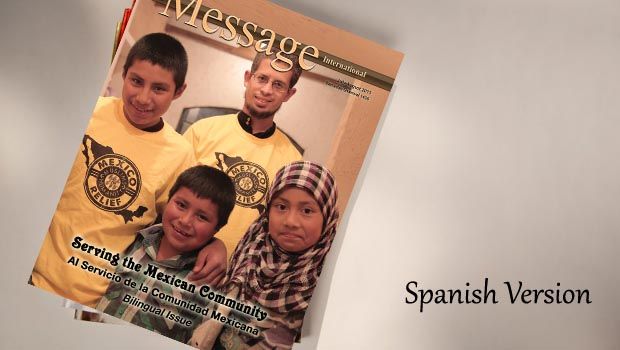
  • Serving the  Mexican Community

    Serving the Mexican Community

    It was only four years ago that the first story about WhyIslam in Mexico was written, but many exciting events have transpired since then. The Mexican campaign began with a desire to deliver Islamic attire and literature to a growing community in Mexico City, Al Hikmah Center. Seven organizations joined forces to contribute to the cause, donating everything from Islamic CDs to siwaks. During her vacation, Nahela Morales, a Mexican convert, distributed the items to the Islamic community in June of 2012. The trip was so successful that it became an annual effort and each year expanded to cover more than five cities within the country.

    Interest really took off when well-known lecturers and personalities such as Nouman Ali Khan, Omar Suleiman, and Boonaa Mohammed endorsed the projects in Mexico. In 2013, Nouman Ali Khan even traveled to the Mexican state of Chiapas, to the Islamic village in San Cristobal de las Casas, as part of the second annual dawah trip to Mexico. He was so moved by the poor living conditions of the indigenous Muslim families that he filmed a video tour of a typical home, a humble structure with walls made of planks and plastic covering to keep out the rain, a tin rooftop, and a dirt floor. The video was released on WhyIslam’s YouTube channel and has over 215,000 views.

    The goal for that year was to begin plans to renovate the town’s masjid Al Kauthar. Through the use of social media and fundraising campaigns, Morales was able to gather over $30,000 for Islamic material and food for distribution during Ramadan, and the masjid renovation project. However, future goals were to offer continuous support to needy families in this sector and to provide home renovations and reconstructions. This sparked plans to launch Mexico Relief Project by Helping Hand for Relief and Development.

    In 2014 Boonaa Mohammed traveled with HHRD and film crews to Mexico to produce documentaries that bring the necessary attention to this cause.

    The Prophet Muhammad, peace be upon him, once advised Aisha when she desired to offer a gift to a neighbor, that she should give, “to the one whose door is nearer to you.” The idea of helping our brothers and sisters in Mexico is one that stems from neighborliness, in the sense that Mexico is one of only two countries which share a border with the US. It is also the largest Latin American country with the smallest Muslim population; however, the Muslims are growing in number and need assistance. Alhamdulillah, we have been blessed with the ability to aid our brethren so we ask for your continued support and prayers.

    We hope that you will enjoy reading some stories and informative articles from our Mexican and Spanish-speaking brothers and sisters, and that you will also remember them in your prayers. JazakumAllahu khaiyran.

  • El Coran abrio mi corazon

    El Coran abrio mi corazon

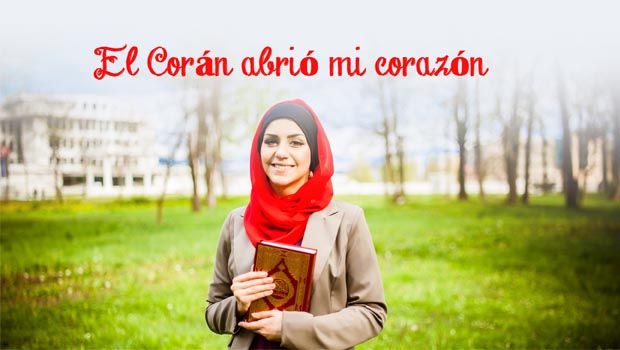
    Mi nombre es Margarita Aguirre y soy de la ciudad de Guadalajara, Jalisco, México. Nací en el seno de una familia católica practicante. Recuerdo que cuando estaba en la preparatoria tuve mi primer acercamiento al Islam sin darme cuenta. En el periódico mural de mi preparatoria expusieron un “poema” que me llamó la atención. Recuerdo que lo anote en mi libreta favorita de poemas porque me encanto. En la parte inferior del poema decía simplemente: “El Corán”. Pensé que este era un libro de poemas, y por lo tanto no busque más información.

    Pasaron los años y nuevamente me vi cara a cara con el Corán. En mi profesión como maestra y hasta ahora me apasiona mucho todo lo que tenga que ver con la historia. Fue así que leyendo libros de historia conocí las tantas religiones del mundo, y entre ellas el Islam. Un día organicé para mis alumnos una clase tratando sobre las distintas religiones del mundo. Durante la clase volví a revisar la palabra “Corán” en los libros de historia. En ese momento comprendí que este libro no era uno de poesías, sino más bien un libro que leen los musulmanes igual como los cristianos leen la Biblia.

    Fue una sorpresa muy grande para mí porque pensé que la Biblia era el único libro de Dios. Recuerdo que al terminar esa jornada de trabajo llegue a mi casa buscando aquello que había escrito durante la preparatoria y lo encontré. En ese momento quise saber más sobre el Islam. Ese fue el acercamiento más impactante, porque después comenzó mi búsqueda para información acerca de los musulmanes y el Islam. En realidad no había tenido un buen concepto del Islam pero quise indagar y darme cuenta por mí misma lo que era esa religión y por qué los musulmanes también contaban con un libro de Dios.

    Pensé que debía aumentar mi conocimiento de la religión y busque por el internet una página que hablara acerca del Islam. Las publicaciones de esa página me gustaban mucho, y así comencé a aprender. El administrador de la página me explicó ampliamente sobre la religión y despejó todas mis dudas. Yo como buena investigadora seguía corroborando lo que me decía el hermano de la página pero por mi propia cuenta, hasta que un día decidí bajar el Corán en forma electrónica.

    Al inicio, este Corán contenía la biografía del Profeta Muhammad, que la paz sea con él, y me impresionó, pues encontré una buena base para conocer quien había fundado el Islam. Recuerdo que cuando comencé a leer los versos del Corán mi corazón sintió que esas eran las palabras de Dios; que estaba leyendo las mismísimas palabras de Alá.

    Me sentí tan conmovida que no pude resistir más la verdad que mi corazón había reconocido. Esta hermosa religión que ha cambiado mi vida, es una fuente de bienestar y alegría para el corazón. Pues Dios en su grande sabiduría nos dejó todo el conocimiento que necesitamos a través del Sagrado Corán y la Sunnah de nuestro Profeta Muhammad, que la paz sea con él. Más importante aún es que fue en esta religión que realmente conocí la unicidad de Dios, Todopoderoso, y aprendí cómo amarlo como un Dios Único. Así me sentí completa y pude entender tantas cosas. El Islam perfeccionó mi alma y mis sentimientos y todas mis dudas quedaron resueltas, ¡Alhamdulillah! Y como Alá nos dice en el Sagrado Corán: “Esta es la escritura, exenta de dudas, como dirección para los temerosos de Alá” (El Coran, 2:2).

    Mi primer Ramadán fue de entrega total a mi Dios. Me sentía muy emocionada; para ese tiempo habían pasado dos meses desde que me convertí al Islam. Había declarado mi Shahada, o testimonio de fe, a larga distancia con un hermano Marroquí, porque no conocía ningunos musulmanes mexicanos. Luego busque una comunidad musulmana en mi ciudad y para mi gran sorpresa, encontré otros musulmanes en Guadalajara. ¡Yo hasta había pensado que era la única en México! Pude hacer el Shahada nuevamente con mis hermanas musulmanas en la mezquita. Alhamdulillah, pase un Ramadán hermoso, siguiendo todo lo establecido en el cumplimiento del ayuno, no solamente dejando el alimento durante el horario prescrito, sino también todo lo que afectara el alma como las malas conductas y acciones.

    Doy gracias a Dios que me haya dado la guía del Islam como religión y estilo de vida, pues nunca me había sentido tan feliz, Alhamdulillah.


  • Una Nueva Traduccion del Sagrado Coran al Idioma Espanol

    Una Nueva Traduccion del Sagrado Coran al Idioma Espanol

    Se despertó en mí el interés de hacer una traducción del Sagrado Corán que se preocupara me-nos por parecer árabe o por intentar imitar la calidad literaria del texto original, y estuviera pen-sada más en transmitir de forma correcta y directa todos aquellos significados, profundos y espi-rituales, pero también de un gran orden social, que había comprendido al leerlo y estudiarlo en su idioma original.

    –Isa García

    Un poco de historia

    Cuando acepté el Islam y lo asumí como forma de vida, estaba sediento de saber, quería conocer lo mejor posible la fuente primera del conocimiento, la revelación divina: el Sagrado Corán. Sabía desde el principio que el Corán fue revelado en árabe, y que este texto es original: ha sido pre-servado y mantenido intacto a lo largo de más de 14 siglos. Pero al no saber árabe, tuve que re-mitirme a diferentes traducciones que se han hecho al español.

    Lo que encontré llegó en ocasiones a decepcionarme, pues el texto aparecía muchas veces con-fuso o incongruente.

    Comprendí que esto se debía, principalmente, a dos factores. El primero, que muchas traduccio-nes han sido elaboradas por personas que no tenían el suficiente conocimiento del Islam, su mensaje y su historia, y que por ello confundían conceptos o incluso, en algunos casos de forma premeditada, trastocaban los sentidos para desacreditar al Islam y su libro sagrado.

    El segundo, que en su mayoría las traducciones son demasiado literalistas, imitan el estilo árabe en la traducción, no solamente en la expresión del significado sino en el orden mismo de las pa-labras, de modo que no se apegan a la gramática del español y por ello resultan confusas. A esto debe agregársele que algunas de las traducciones al español utilizan un lenguaje antiguo y lejano al que solemos utilizar en el continente americano, y que a la vez carecen en su mayoría de notas aclarativas sobre el contexto histórico o las implicaciones legales.

    Más tarde, cuando tuve la oportunidad de estudiar el idioma árabe y acceder a los significados del Sagrado Corán en su idioma original, comprendí que en la traducción me había perdido de mucho. Si bien es cierto que ninguna traducción podrá jamás acercarse a la belleza narrativa, poética y retórica del Corán, ni reproducir a la vez su sonoridad y las múltiples formas en que puede ser recitado, también es cierto que las traducciones, unas más que otras, fallan en trans-mitirle al lector la verdadera esencia del mensaje coránico.

    Esto despertó en mí el interés de hacer una traducción del Sagrado Corán que se preocupara menos por parecer árabe o por intentar imitar la calidad literaria del texto original, y estuviera pensada más en transmitir de forma correcta y directa todos aquellos significados, profundos y espirituales, pero también de un gran orden social, que había comprendido al leerlo y estudiarlo en su idioma original.

    Gracias a Dios pude por fin embarcarme en una traducción del Sagrado Corán pensada para la población hispanoparlante del mundo, pero principalmente para el público latinoamericano. Jun-to con un equipo de colaboradores expertos, he procurado poner al alcance de musulmanes y de no musulmanes, el mensaje del Islam de la forma más cercana posible a la revelación original en idioma árabe, pero utilizando a la vez un lenguaje sencillo y explicaciones claras de los términos, de manera que el contenido del texto resulte fácil de comprender.

    Antecedentes

    Si bien el Islam no es hoy día una de las religiones con mayor número de fieles en América Latina, se está expandiendo rápidamente por todo el continente. Ya existen mezquitas en todas las ca-pitales y ciudades importantes de Hispanoamérica y también está creciendo mucho entre la po-blación latina de Estados Unidos.

    Teniendo en cuenta la mala imagen que proyectan los medios de comunicación del Islam y de los musulmanes, contar con una traducción del Corán al idioma español que transmita de forma di-recta y sencilla el verdadero mensaje del Islam, cada vez se hace más importante y urgente por dos razones:

    Primera, porque los musulmanes que no conocen el idioma árabe necesitan leer los significados del Corán en su idioma para comprender y practicar mejor su religión, y así ser buen ejemplo de lo que es realmente un musulmán.

    Segunda, porque los no musulmanes que desean conocer el Islam necesitan tener una fuente confiable de información, que les permita formarse una opinión basada en lo que enseña real-mente el Corán, y no en estereotipos y concepciones erróneas que han permanecido durante siglos en muchas obras de orientalistas y en algunas de las traducciones del Corán.

    De ahí que el objetivo de esta traducción es presentar a los hispanoparlantes el verdadero men-saje del Corán, tal como ha sido conocido, entendido y practicado por los eruditos del Islam y por los musulmanes devotos durante más de 1.400 años, para ello se basa en un lenguaje claro, sen-cillo, directo y actual, pensando en el público latinoamericano.

    Distribución de copias impresas y versión digital

    El objetivo de esta traducción es su distribución gratuita para que de esta manera llegue al máxi-mo público posible.

    Para conseguir este objetivo se ha distribuido una versión digital en formato PDF, se ha agregado a distintas aplicaciones con múltiples traducciones y en breve saldrá una aplicación propia para lectura y audio.

    También se han hecho múltiples impresiones para su distribución gratuita. La primera de ellas fue de 50.000 copias de tamaño bolsillo para distribuir durante la Copa Mundial de Futbol en Brasil 2014.

    También se imprimieron 100.000 copias en Qatar para distribuir a nivel mundial, y en América La-tina se han hecho pequeñas impresiones en países como Bolivia, Colombia, Guatemala y México. En España ha comenzado un proyecto de distribución para el que ya han impreso 10.000 copias.

    Creo que es necesario que los musulmanes se unan y colaboren en la impresión de esta traduc-ción con el objetivo de acercar el mensaje del Islam a los musulmanes y no musulmanes.

    Sobre el traductor

    Isa García nació en Argentina, es licenciado en Lengua Árabe y en Teología Islámica de la Univer-sidad de Umm Al-Qura de la ciudad de La Meca en Arabia Saudí, especializado en la misma en los “Orígenes de las tradiciones Proféticas”. Cursó estudios en mediación y resolución de conflictos en Estados Unidos. Ha sido director del departamento de español en las editoriales International Islamic Publishing House y Darussalam, y de diferentes páginas web islámicas. Permanentemen-te dicta conferencias en diferentes países de América Latina y Europa, y en Estados Unidos. Ha trabajado como traductor del árabe y del inglés al español durante los últimos 15 años, y es tam-bién autor de obras sobre teología islámica y distintos temas sociales que afectan a la comunidad islámica. Fue nombrado por la revista The Muslim 500 como uno de los musulmanes más influ-yentes del mundo en los años 2013 y 2014.

  • Una Mision de Amor

    Una Mision de Amor

    A medida que inicié mi viaje más importante de Dawah a México, me puse a reflexionar y pensar en mis últimas tres misiones de divulgación. “¿Por qué era este el más importante?”, Me pregunté a mí misma, siendo que estaba viajando con menos equipaje y sola. Sin embargo, la respuesta era que iba para llamar a mi abuelita al Islam, mientras se encontraba en su lecho de muerte, y no sería algo fácil. Ver a mi familia angustiada y sentimental sería difícil, también. Hice este viaje en exclusiva para ella, para mi abuelita. Ella pidió verme y yo tomé esta solicitud como mi última oportunidad para transmitir el mensaje del Islam a ella. Mientras estaba volando sobre el Golfo de México le supliqué al Todopoderoso que abriera su corazón e hiciera que sus últimas palabras sean las mejores palabras, las palabras de Tauhid.

    Ha sido bastante tiempo desde que soy musulmana y he pasado por varias pruebas pero esta era la primera vez que Alá me estaba probando con la muerte. La muerte siempre parece estar tan lejos hasta que lo estás presenciando realmente. Para una conversa, la muerte es aún más aterradora y una de nuestras peores pesadillas. La idea de perder a un familiar me recuerda a nuestro amado Profeta Muhammad, la paz sea con él, cuando intentó llamar a su tío, Abu Talib, al Islam sin éxito.

    Hoy estoy experimentando esto con la posibilidad de perder a mi abuela quien me acogió desde los 3 meses hasta los 5 años. Durante visitas previas, nos habíamos sentado a conversar pero debido a su edad, siempre terminaba la conversación para evitar molestarla. He suplicado muchísimo, pidiéndole a mi Creador que me ayude con las mejores palabras para decirle. Como dije anteriormente, este viaje era diferente porque no llevaba 10, 11, o 12 maletas llenas de donaciones para los musulmanes de México, ni iba con un grupo de voluntarios. En el pasado, visitaba a mi familia por algunos días antes de visitar a las comunidades musulmanas para proporcionarles materiales islámicos, para dar una lectura o para ayudar a restaurar una mezquita. Sin embargo, me sentí más bendecida en poder compartir una conversación privada con este ser tan maravilloso quien me cuidó incondicionalmente.

    Al llegar, rompí en llanto viéndola tan débil, delgada y con oxígeno; como mínimo fue devastador. Una tía me aconsejó que saliera y me lavara la cara porque mi abuelita me necesitaba fuerte y no llorando. Cuando regresé al cuarto me fije en una pintura de la Virgen de Guadalupe, una imagen de María, la madre de Jesús, que es venerada e incluso adorada en México, y claro, me incomodó un poco porque la consideraba un obstáculo para mi misión.

    Mi abuela se despertó y al ver que yo estaba allí, ella sonrió y me pidió que me acercara. La abracé como siempre, apretándola con todas mis fuerzas. Ella gritó y dijo: “¡Tú me vas a romper!” Nos reímos y nos contemplamos la una a la otra. Yo le dije que la amaba y que todo iba a estar bien. Ella preguntó por mi hijo y le dije que estaba bien y en la escuela. Le dije, “Estoy aquí para ti, para cuidarte sin interrupciones, sólo tú y yo”.

    Mi visita fue corta pero pareció larga debido a los momentos agradables que pasamos juntas. Yo tuve la oportunidad de darle de comer, bañarle y durante todo tuvimos varias conversaciones acerca de la unicidad de Dios. Una hermana de la comunidad de la Ciudad de México llamada Nabíla se unió a mí para ofrecer su apoyo, el mejor regalo que Dios me envió, mashaAllah. Con su ayuda, pudimos hablar con ella y el resto de mi familia sobre el Islam. También durante su visita dimos Shahada a una joven local que se encontró con ella en el autobús de camino a verme. Al tercer día de mi visita, mientras la hermana Nabíla y yo salimos, el retrato de la Virgen de Guadalupe había sido retirado de la pared.

    La última noche que pasé al lado de mi abuelita le pregunté si creía en Dios como el Todopoderoso y el único Creador y ella me respondió que sí. Le pregunté: “¿Quién es Jesús?” Ella respondió: “Un mensajero de Dios”. Le pregunté si ella cree que él es el hijo de Dios, a lo que ella respondió que no. Trate de introducir la segunda parte del testimonio de la fe, pero ella se sintió abrumada. Me pidió que dejara las cosas así, ya que nunca había oído hablar del Profeta Muhammad, la paz sea con él. Al regresar a los Estados Unidos le comenté al imam local del incidente y él me informó que debido a su edad avanzada (104 años) y condición, fue suficiente, y Alá sabe mejor.

    Hoy me siento aquí muy agradecida por la oportunidad de completar esta misión y la oportunidad de ver a mi abuela por diferentes motivos. Fue maravilloso pasar tiempo con ella a pesar de que extrañe mucho a mi hijo, ya que nunca había estado lejos de él. Tampoco había visto a toda mi familia tan unida y dispuesta a escuchar lo que tenía que decir. Todos hicieron muchas preguntas y, por primera vez, después de todos estos años, sentí su aceptación y amor. Le pido a Dios que guíe nuestras familias, que nos dé la sabiduría para transmitir el hermoso mensaje del Islam, que los colme con la misma dulzura que hemos sido bendecidos y que nos permita vernos tanto en esta vida como la siguiente. Amen.

  • A Mission of Love

    A Mission of Love

    As I embarked on my most important dawah trip to Mexico, I began to reflect and think of my past three outreach missions. “Why was this the most important?” I asked myself, “I am traveling with the least amount of luggage and alone.” The answer was that I was going in order to call my elderly grandmother to Islam, while she lay on her deathbed, and it would not be easy. Seeing my family in distress and emotional would be hard, as well. I booked this trip exclusively for her, my “Abuelita,” my grandma. She requested to see me, and I took this request as my last opportunity to convey the message of Islam to her. As I was flying over the Gulf a Mexico I prayed for the Almighty to open her heart and make her last words be the best words, words of tawheed.

    It’s been quite some time since I became Muslim and I have been tested in various ways but this was the first time Allah was testing me with death. Death always seems so distant until you are actually experiencing it. As a convert, death is even more frightening, and one of our biggest challenges is losing a family member who does not embrace Islam. I am reminded of our beloved Prophet, peace be upon him, when he called his uncle, Abu Talib, to Islam, but to no avail.

    Today I am experiencing this with the possibility of losing my grandmother who took care of me from the tender age of 3 months until I was almost 5 years old. In previous visits we sat and had several conversations but due to her age I have always dropped the conversation to avoid upsetting her. I have made tons of du’a and asked my Creator to help me with the best words to say to her. Again, this trip was different because I was not carrying 10, 11, or 12 pieces of luggage full of donations for the Muslims in Mexico, nor did I have a group of volunteers. In the past I would come to visit my family a couple of days at a time before visiting Muslim communities to either provide them with Islamic material, give a talk, or help restore/rebuild a masjid. However, I feel more blessed to be able to have a one-on-one conversation with this wonderful woman who unconditionally cared for me.

    Upon my arrival, I broke down so see her so weak, thin and with oxygen; it was devastating to say the least. I was advised by an aunt to step out, wash my face, and come back. She told me that she needed me to be strong and not crying, so I did just that. When I came back to the room I noticed a huge poster of the virgin of Guadalupe, a depiction of Mary, the mother of Jesus, that is revered and even worshipped in Mexico, and of course, I was a bit bothered by it because I saw it as an obstacle to my mission.

    My grandmother woke up and when she saw that I was there, she smiled and asked me to come close. I hugged her as always, so tight and with all my might. She yelled and said, “You are going to break me!” We both laughed and gazed at each other. I told her I love her and that everything was going to be okay. She asked about my son and I told her he was fine and at school. I told her, “I am here for you, to care for you without interruptions, just me and you.”

    My visit was short but seemed long because of the quality time we spent together. I got a chance to feed her, bathe her and throughout all that we had several conversations about the oneness of God. A sister from the Mexico City community named Nabila joined me to offer her support, the best gift Allah sent my way, mashaAllah. With her help, we were able to speak to her and the rest of my family about Islam. Also during her visit we gave Shahada to a local young girl whom she ran into on the bus on her way to see me. By the third day of my stay, while Sister Nabila and I had stepped out, the poster of the virgin of Guadalupe had been removed from the wall.

    The last night I spent by my grandmother’s side I asked her if she believed in God as the Almighty and sole Creator and she said yes. I asked her, “Who is Jesus?” She replied, “A messenger of God.” I asked if she believed he is the son of God, to which she replied no. We tried covering the second part of the testimony of faith but she was overwhelmed. She asked me to leave it at that, since she had never heard of the Prophet Muhammad, peace be upon him. Upon returning to the States I asked the local imam about the incident and he informed me that due to her advanced age (104) and condition, it was enough and Allah knows best.

    Today I sit here so grateful for the opportunity to complete this mission and the opportunity to see my grandmother on different grounds. It was wonderful to spend quality time with her even though I missed my son so much, as I had never been apart from him. I had also never seen my entire family so united and willing to hear what I had to say. Everyone asked tons of questions and for once, after all these years, I felt their acceptance and love. I ask Allah to guide our families, to give us the wisdom to convey the beautiful message of Islam, to shower them with the sweetness we have been blessed with, and to allow us to see one another both in this life and the next. Ameen.


  • Combating Domestic Violence as a Muslim Woman

    Combating Domestic Violence as a Muslim Woman

    Violence against women is a matter that should concern us all, yet it seems only a few people are concerned. Throughout the world, one in three women is beaten or suffers some type of abuse in her lifetime. According to data from the World Health Organization, 70 percent of women who are killed, die at the hands of their partner or ex-partner.

    Violence against women is present in all societies in the world regardless of political or economic system, regardless of social status of perpetrator or victim, level of education, ethnicity, financial situation, culture, or religion. This everyday reality is manifested many different ways and it takes place in a number of settings; and my own country, Mexico, is of course no exception. In Mexico, violence against women is a social problem that hides itself within the home. Many female victims of domestic violence live with their enemy in the same house and are exposed to danger day to day.

    I am a psychologist working for an institution that provides psychological support to women who have been victims of family violence. Every day I hear stories of how their husbands beat them, threaten them, are unfaithful to them, insult them, and sadly some women have also died while making an attempt tto escape the violence. This is a hidden reality many choose not to talk about. My work is a positive challenge in my life, alhamdulilah; it is what I love doing. I feel very blessed for having the opportunity to be able to listen to women who put in my hands their hope of coming out of a problem that affects their lives and the lives of their children.

    I am Muslim, Mexican and defend women’s rights. This probably comes as a surprise to many of the women who come into my office; some of them even think it is contradictory. “Are you telling me that it is not?” A woman once asked me, “How can a woman who covers her head out of submission (she said referring to my hijab), tell me how I can escape the violence I am dealing with, when she herself cannot escape her own submission?” I smiled smiled and answered her with confidence. My hijab is my best tool for giving dawah.

    In fact, it was my inconformity and sense of injustice regarding violence against women that brought me closer to Islam. I also had a wrong idea about the situation of Muslim women, which I see now reflected in the faces of many of my patients when they see me for the first time; many express their surprise, and others – even if they don’t say anything – have a look of astonishment or shock on their faces.

    I could say that I do see my old self mirrored in some of them; who I was when I first met Muslim women smiling and happy, when they talked to me about the value of women in Islam, when I read about the rights of women in Islam. I used to ask myself, “Is this possible?” trying to understand. And this is why I do enjoy so much explaining to them why I am a Muslim, with my own words and with my behavior.

    Islam came to complement my life and it has helped better understand the work I do. It helped me understand my own value as a woman. Men mistreat women because of ignorance and failure to properly understand power dynamics. Muslims, men and women, must work together to combat domestic violence.