بسم الله الرحمن الرحيم

Tag: muhammad

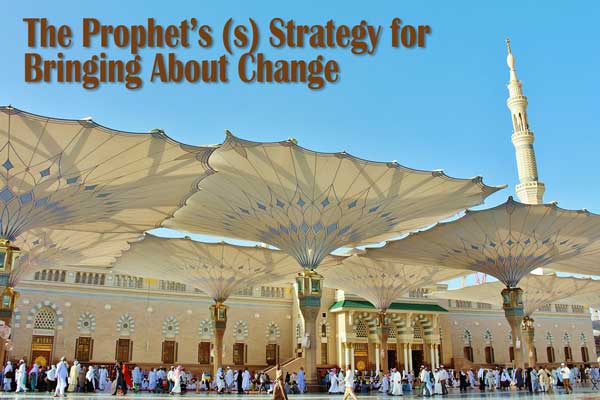
  • The Prophet’s (s) Strategy for Bringing About Change

    The Prophet’s (s) Strategy for Bringing About Change

    All praises are for Allah, The Almighty, and may His peace and blessing be upon His true servant and final Messenger Muhammad, on his Companions, and his family.

    One of the greatest achievements of Rasoolullah (s) was the way he transformed the Arabian society. Within 23 years of the start of his mission, Islam had become the way of life for most of Arabia. Knowing this awe-inspiring achievement, one asks how an entire society which, at first, was hostile to Islam and hostile to Prophet Muhammad (s) not only embrace Islam but defend it with their lives and their wealth. They were transformed from enemies of Islam to becoming the torchbearers of Islam.

    That first generation was known as the unique generation and the best generation of this Ummah. Rasoolullah (s) prepared them in such a way that many of them became leaders, and by the end of the Khulafa’ee Rashideen (the rightly-guided khalifs) period, Islam had reached Palestine, Syria, all of Mesopotamia, Persia, North Africa, Cypress, Europe, and China. This great achievement happened, first and foremost, by the Will of Allah SWT, and then with the selfless dedication, commitment, and great leadership Rasoolullah (s).

    What is also very amazing is the manner of such transformation when there was no mass media or technology like we have in modern times. The challenge for the Ummah today is how to use the Sunnah of Rasoolullah (s) to bring about positive changes in a world so filled with distress, conflict, and oppression. Today’s world is characterized by an unstable environment and an uncertain future. How eager is the world awaiting someone, some group, or some divine guidance to deliver it from its woes? How badly is the need to eradicate the evils of hatred, fascism, exploitation, racism, and injustice! Moreover, mankind now faces a public health devastation the likes of which has not been witnessed for almost one century: the COVID19 pandemic.

    Imam Malik (may Allah’s mercy be on him) said, “The latter generations of this Ummah will never be rectified except by means of that which rectified the earlier generation” (Majmoo’ Al-Fataawa by Ibn Taymiyyah). In examining the approach of Rasoolullah (s) in bringing about such positive changes, there are two main areas of focus.

    The first is the individual effort which covers the following:

    a) clarity about the mission
    b) firm faith and taqwa
    c) justice and mercy
    d) genuineness
    e) being pro-active
    f) dedication to Allah and sincerity

    The second area is the collective effort, and this includes the following:

    a) brotherhood and love
    b) mutual consultation
    c) collective discipline
    d) constructive criticism

    The Individual Efforts Exemplified by Rasoolullah (s)

    At the individual level, one of the fundamental focuses of Rasoolullah (s) was to provide clarity about his mission. Lack of direction gives way to confusion and doubt. Allah SWT says in the Qur’an, “He it is Who has sent His Messenger with guidance and the religion of truth to make it clear over all [other] religions even though the Mushrikûn [those who associate partners with Allah] hate [it]” (61:9).
    Rasoolullah (s) took every opportunity available to him to explain the Deen of Allah to humanity. He trained the best of the Ummah, making it clear that this mission is about the Creator and what He SWT wants from His creation. Even when pressed by Quraish to make compromises on faith, he stood firm about his Islamic mission, never wavering.

    The second point to note was the emphasis Rasoolullah (s) placed on taqwa (piety which includes humility; being conscious of Allah’s presence; and fearing Him at all times), not only for the leader but also for every believer. It is the only criterion by which people are judged in Islam. Allah SWT says, “O mankind! We created you from a single [pair] of a male and a female, and made you into nations and tribes, that you may know each other. Verily the most honored of you in the sight of Allah is the most righteous of you. And Allah has full knowledge and is well-acquainted” (Qur’an 49:13).
    Power and authority can easily make a person arrogant. While taqwa is much more than being humble, it is among the many meanings of the term. Humility is especially important for a leader since he is entrusted with the affairs of the community. Not seeking a leadership position is part of taqwa. One sees from the Seerah (biography) of the Prophet (s) that his personal honesty and integrity had already earned him the title of al-amin (the trustworthy one) in Makkah, even before being commissioned as Prophet. Similarly, modesty and humility were apparent in the conduct of the Khulafa ar-Rashidoon, rightly-guided successors, referring to the first four khaliphs following the death of the Prophet (s).
    In his first speech as khalifah of the Muslims, Abu Bakr Siddiq proved himself an ideal of modesty and humility. There was total absence of the kind of arrogance as can be found in modern-day rulers when they assume power. In his acceptance speech, Abu Bakr (r) said, “O People! Here I have been assigned the job of being a ruler over you while I am not the best among you. If I do well in my job, help me. If I do wrong, correct me. Truthfulness is fidelity and lying is treason. The weak shall be strong in my eyes until I restore to them their lost rights, and the strong shall be weak in my eyes until I have restored the rights of the weak from them. No people give up fighting for the cause of God, but God inflicts upon them miserable subjection; and no people give themselves to lewdness, but God envelops them with misery. Obey me as long as I obey God and His Prophet. But if I disobey God’s command or His Prophet’s, then no obedience is incumbent upon you. Rise to your prayer, that Allah SWT may bless you.”

    The third point to note in the individual effort of Rasoolullah (s) in bringing about such positive change is his justice and compassion throughout his mission. In order to bring about changes in the world, the Muslim Ummah must exemplify the qualities of ‘adl (justice) and rahmah (compassion) as demonstrated by Rasoolullah (s). Justice and compassion go hand in glove. Rasoolullah (s) was relentless in his pursuit of fairness and justice. As Allah SWT commands: “O you who believe! stand out firmly for Allah, as witnesses to fair dealing, and let not the hatred of people make you swerve to wrong and depart from justice. Be just— that is next to piety, and fear Allah. For Allah is well acquainted with all that you do” (Qur’an 5:08).

    In very clear terms, Rasoolullah (s) voiced his commitment to justice. Aisha (r) reported: “The Quraysh had been anxious about a woman who had committed theft and they said, ‘Who will speak to the Messenger of Allah about her?’ Some said, ‘Who would dare to but Usama, one beloved by the Messenger of Allah?’ Thus, Usama spoke to him and the Messenger of Allah, peace and blessings be upon him, said, ‘Do you intercede regarding a punishment prescribed by Allah?’ The Prophet then stood up and addressed the people, saying, ‘O people, those who came before you were destroyed because if a person of high status committed theft among them, they would spare him, but if a person of lower status committed theft, they would apply the punishment upon him. By Allah, if Fatima, the daughter of Muhammad, were to steal, I would have cut off her hand’” (Muslim).

    As to compassion, the greatest testimony to that is Allah SWT saying in the Qur’an, “And We have not sent you [O Muhammad], except as a mercy to the worlds” (21:107). Abu Hurairah relates that Rasoolullah (s) kissed his grandson Hasan ibn Ali. Aqr’a ibn Habis, who was with him at the time, said, “I have ten sons and have never kissed any of them.” The Prophet looked at him and said, He who has no compassion will receive none” (Bukhari and Muslim). The Seerah of Rasoolullah (s) is full of accounts and descriptions of his compassion for the people.

    Another aspect of the approach of Rasoolullah (s) to bring about change in society was his authenticity and genuineness in character. His entire life has been documented and preserved in a manner unmatched by any other person’s biographical account. And this was done at a time when all documentation and recording was done by hand, and even writing paper was very scarce. This body of information is known as the ahadith. These record the actions, statements, acknowledgements, and descriptions of Rasoolullah (s). All of this was documented, mostly by memory at first, and later codified by various hadith collectors, and preserved for all time. Rasoolullah’s Seerah covers all aspects of human life, from the most sublime such as beliefs and rituals of worship to the most practical such as details about cleanliness of the body.

    The next aspect of the individual qualities of bringing about change is getting involved in social justice issues, eradicating social illnesses, and empowering the underprivileged. These were some of the hallmarks of his activism even before prophethood. An example of that was the “Hulf al-Fudool,” a pact he helped to establish in Makkah before his prophethood. A powerful Makkan merchant cheated a trader from Yemen out of his fair due. The Yemeni made his claim in the Kaaba. A group of notables, among them young Muhammad, vowed to restore his right and thereafter that of anyone else who was wronged. The dedication of Rasoolullah (s) to social justice was testified to by his first wife. When he was given the first revelation, he became frightened and upon reaching home, he confided in Khadijah (r) about his encounter with Angel Jibreel (as). She calmly responded to him: “I swear by Allah that He shall never humiliate you. By Allah, you keep good relations with your kith and kin, you speak the truth, you bear people’s burden, you help the destitute, you entertain guests, and you help against the vicissitudes which affect people” (Muslim).

    Finally bringing about change at the individual level calls for dedication to Allah SWT with utmost sincerity. Rasoolullah (s) was always in a state of dedication to his Lord through prayer, fasting, charity, and with the most virtuous words and actions. He would pray till his knee would get swollen and when asked why so much worship when he is already granted forgiveness from his Lord, he simply replied, “Shall I not be a grateful servant?”(agreed upon). Throughout his entire life, he was known for his sincerity, even among his enemies. When Heraclius, the Byzantine emperor, questioned Abu Sufyan (who was not yet a Muslim) about the integrity of Muhammad (s), he had only the best characterizations to state about him. Later on, when Abu Sufyan became a Muslim, he related the details of the questioning and his answers about the sincerity of Rasoolullah (s).

    The Collective Efforts in the Approach of Rasoolullah (s) in Bringing About Positive Change

    Rasoolullah’s life was the best example of superlative personal character. He also, however, fully established, and showed by his example, the necessary efforts on a collective level in the efforts to bring about positive change,

    He taught, facilitated, and exemplified brotherly and sisterly love. He engaged in mutual consultation with his companions, demonstrating for all of us the way of cooperation, unselfish persuasion, and principled advocacy. He was always looking to unify the people, engaging them in the affairs of the community with the aim of guarding and enhancing the common good. He showed his companions, and by extension us and the whole of humanity, how to be disciplined on the individual and collective levels. This entails dedication to truth, striving for self-awareness, and practicing self-restraint, and encouraging the same in one another. He also exhibited the greatest ability to offer constructive criticism, to correct others without blaming or indulging in a sense of superiority or self-righteousness.

    Changes cannot be come about until and unless the Muslim individual and the Ummah as a whole strive to exemplify, through their lives, the teachings of Muhammad (s). Praising him at particular times does not represent being a true follower of Muhammad (s). The true follower will strive to revive the Sunnah of Rasoolullah (s). He will call others to be part of this movement that brings about good in society. He will walk the walk of Rasoolullah (s). Ibn Umar (r) used to put a slight bounce in his walk because he said this is how Rasoolullah (s) used to walk. He used to rest under a particular tree because he said Rasoolullah (s) rested under that tree. These examples simply show how the Companions were so eager to emulate Rasoolullah (s).

    The Sahabah (r) were the keenest to exemplify the way of Rasoolullah (s) and thus, after his passing, they took Islam with the same spirit to the whole world. In this pandemic and global disarray, the world needs men and women who can truly demonstrate the teachings of Rasoolullah (s) and bring wisdom and justice and mercy back to the forefront. The good thing in our time is that we have the means to communicate to the whole world, and we can present and represent Rasoolullah (s) to the whole world with the click of a button. Each and every one of us can spread the message of Rasoolullah (s). From our own living rooms, we can reach out to the world and let them know of the greatest benefactor to humanity: Muhammad Mustapha, salallahu alaihi wa salaam.
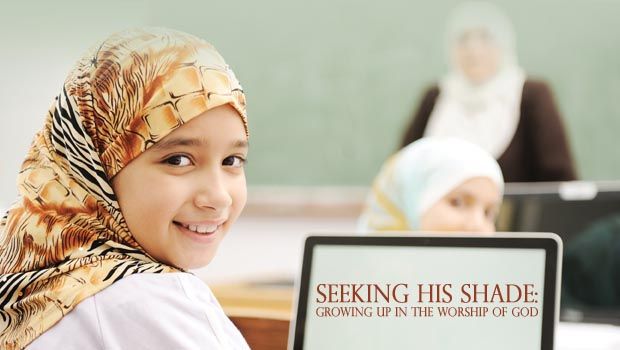
  • Seeking His Shade: Growing up in the Worship of God

    Seeking His Shade: Growing up in the Worship of God

    Have you ever heard the saying — Youth is wasted on the young? Those of us who can still lay claim to being young often have no real sense of the value of our youth. We’re strong in body, passionate in emotion, and have ample free time that makes older folks envious. There are young people who use their youthful years wisely, and others who fritter it away as though it holds no worth, thinking, “I’ll change sooner or later but I’ve got time to do whatever I want now.”

    Youth is a time of exploration. Older youth don’t yet have the family, financial, and civic responsibilities of an adult; but they have time, energy, health, and exuberant curiosity to explore, develop skills, and grow in knowledge

    Prophet Muhammad (pbuh) said, “Take benefit of five before five: your youth before your old age, your health before your sickness, your wealth before your poverty, your free time before you are preoccupied, and your life before your death.” Youth is mentioned as one of the categories here because it involves the part of your life where you are at your peak health. It’s the time when you’re in a position to lay a foundation for the rest of your life, to institute habits of discipline, to practice virtues, to learn how to think and reason and use common sense. This is the time when you’re able to begin an exciting journey of discovery, of contribution and service, of beneficial impact on your community and the world.

    In the era of the Prophet (pbuh), youth was not seen as a barrier to accomplishing things. There were military leaders who were teenagers. There were Quranic scribes who, in our times, would be considered too young to take on such an important task. There were scholars who were raised in the presence of the Prophet, listening to his words and absorbing his wisdom at tender ages. For these individuals, their youth was an asset, never a limitation. We’re often (mistakenly) taught that as young people we do not have the skills, patience, or dedication to contribute in a substantive way to our communities and to the larger ummah. But as we’ve mentioned, throughout Islamic history many young people achieved great things.

    The very act of having good people in your life can make or break your status with God. Your peers affect you in ways that you may not comprehend at first glance.

    Prophet Muhammad (pbuh) said, “There are seven whom Allah will shade in His Shade on the Day when there is no shade except His Shade.” Among the seven he mentioned is a young person who grows up in the worship of Allah. How can we ensure that Allah (SWT) grants us this status on the Day of Judgment? And how can we capitalize on our time to make sure we’ve fulfilled our greatest potential during the dynamic and bountiful years of our youth?

    Surround Yourself with Good Friends

    I couldn’t be more grateful to my parents who strove to put me in the presence of intelligent and well-mannered people, including my peers. They always knew where I was and with whom. They knew my friends’ parents, and the kinds of people they were. I’ll openly admit that as a child, this was often irritating to me. I didn’t want to have to answer a million questions about who my friends were or where we were going and for how long. I wanted my “freedom.” Now, as an adult and as a parent, I have come to sincerely appreciate the effort that my parents exerted so that I would be in the company of good, trusted people. The very act of having good people in your life can make or break your status with God. Your peers affect you in ways that you may not comprehend at first glance.

    For example, in Surat al-Kahf, Allah (SWT) mentions the story of a group of young men who escaped their town and secluded themselves in a cave because they were the only ones who believed in one God. Allah (SWT) caused them to sleep for 309 years. As part of the story, Allah (SWT) describes the group, saying: “They will say there were three, the fourth of them being their dog; and they will say there were five, the sixth of them being their dog – guessing at the unseen; and they will say there were seven, and the eighth of them was their dog. Say, [O Muhammad], ‘My Lord is most knowing of their number. None knows them except a few. So do not argue about them except with an obvious argument and do not inquire about them [among the speculators] from anyone’” (18:22). It may seem like the dog is mostly irrelevant in the story, but the fact that Allah (SWT) mentions him several times is no coincidence. Scholars of tafseer have explained that the reason the dog is mentioned so often is that it was in the company of these righteous young people. Being in the company of these believers was enough for the dog to be honored to the level of being mentioned three separate times in this Quranic verse. This is the blessing of righteous companionship!

    Not only do we need to surround ourselves with good people, we also need to ensure that we become the sellers of musk. Every person who sits with us should leave with something beautiful.

    Similarly, in a beautiful hadith Qudsi, Allah (SWT) explains that the angels search for groups of people who are remembering Allah, and they surround them with their wings. At the end of the hadith, Allah (SWT) says: “Bear witness that I have forgiven them.” Then one of the angels would ask, “Among those assembled, there is one who is not of them [i.e., a sinner]; he only came for some other need.” Allah would reply: “Even so, they are one another’s companions and their companions shall not suffer.” Just our presence with the people who remember Allah can be a means for us to be forgiven!

    Having righteous companionship can affect our status with Allah (SWT). Good people remind us of our blessings and remind us to be grateful for them. Good people can lift us up in times of distress so that we don’t get lost in our pain. Good people help our hearts stay open and receptive to Allah’s message and guidance. Prophet Muhammad (pbuh), said, “The likeness of a righteous friend and an evil friend is the likeness of a perfume seller and a blacksmith. As for the perfume seller, he may either bestow something on you or you may purchase something from him, or you may benefit from his sweet smell. And as for the blacksmith, he may either burn your clothes or you may be exposed to his awful smell.”

    Not only do we need to surround ourselves with good people, we also need to ensure that we become the sellers of musk. Every person who sits with us should leave with something beautiful.

    Read, Read, and Read Some More

    As a child, I would walk to the nearby library with my siblings and we would each take out at least ten books at a time. Once we got home, we would hole ourselves up in our rooms, devouring the books one by one. This was our entertainment before the advent of hand-held devices. Our mother would have to pry books out of our hands in order for us to eat or sleep at a decent time.

    Growing up this way made us into voracious readers. Although many of us have succumbed to the allure of hand-held devices, there is still no greater pleasure than holding a book and reading in silence. Reading opens the mind to frames of reference other than our own. It enriches our vocabularies so that we might become articulate speakers and writers. It lets us glimpse realities that we haven’t lived, and helps us develop understanding and empathy. “Read!” was the first word ever revealed to our beloved Prophet (pbuh). Years later, after a victorious battle in which the Muslims captured a number of their enemies, Prophet Muhammad advised that if any of them would teach ten children how to read and write, they would be freed. The ability to read and write was given such significant value that teaching it was considered enough of a ransom to warrant an enemy’s freedom. Allah (SWT) tells us in the first verses revealed: “Read! — in the Name of your Lord Who created, created man from a clinging substance. Read! — and your Lord is the Most Generous, Who taught by the pen, taught man that which he knew not” (96:1-5).

    In the Quran and the Prophetic traditions, there is great emphasis placed on reading, learning, and contemplating. Attaining to knowledge is given such a high status that even the Prophet himself would supplicate to Allah, saying “My Lord! Increase me in knowledge.” Reading is the gateway into the world of learning. It is the start of a life-long journey of reflection and exploration. The Quran advises, “Say, [O Muhammad], ‘Travel through the land and observe how He began creation. Then Allah will produce the final creation. Indeed, Allah is able to do all things’” (29:20).

    Reading isn’t just an intellectual exercise. It’s about expanding your mind to a point where you start to recognize and appreciate all the signs that Allah (SWT) has placed on this earth. So for a portion of each day, put aside social media, gaming, and TV and read! Read and strive to understand the Quran; read about the amazing scholars, writers, and inventors who came before us. Read about history, politics, economics, psychology, physics, linguistics, alternative energy sources, health and fitness… the list is endless. And the capacity to expand our minds and deepen our understanding is relatively endless as well.

    Grow Your Passions and Be Active

    Once you reach the age of puberty, you are held accountable for all that you do, and that thought can be daunting. But you also have the opportunity to do good and therefore cement your status as a “youth who grew up in the worship of God.” Youth is a time of exploration. Older youth don’t yet have the family, financial, and civic responsibilities of an adult; but they have time, energy, health, and exuberant curiosity to explore, develop skills, and grow in knowledge.

    Take courses outside of school, develop interesting hobbies, volunteer with your school’s MSA or other groups, work on neighbourhood projects or political campaigns that you believe in. You can even start a small business on your own or with a group of other like-minded peers. The opportunities are quite literally endless. But above all, remember that you are doing all of these things so that Allah will accept you as a youth who took advantage of his or her years before old age. And most of all, remember that you are doing all of these things as part of your worship, as a demonstration that your words and deeds flow from your eman; and your eman, in turn, is constantly growing and informing your daily living with a believer’s sense of meaningfulness and purpose. Ensure that this intention is present, and He will bless all that you do.

    Remember that Your Surroundings Don’t Define You

    I know how difficult it is to grow up in a place where others often belittle your identity, or look at you with suspicion. Perhaps you may feel that you’re at a disadvantage because you live somewhere remote, unable to learn at the feet of scholars, or you live in an environment not conducive to Islamic beliefs. But I remind myself constantly of the examples of the righteous people who came before me – some of whom had to live and preach in much more difficult circumstances. Prophet Musa (pbuh) was raised in the household of one of the worst oppressors and transgressors in history — Pharaoh himself. His adoptive mother Aasiya (may Allah be pleased with her) was in the same boat, but she had it even worse – she was married to Pharoah. And yet both of them rose above these toxic influences surrounding them – Musa (pbuh) became a prophet and messenger whose brilliant example is immortalized in the Quran. Aasiya became a martyr whose strength inspires us to this day, and whose dying words have become part and parcel of our beliefs: “My Lord, build for me near You a home in Paradise.”

    The opposite is also true. You can grow up in the best and most loving, supportive environments for a believer and still go astray. Take for example Prophet Nuh’s (pbuh) son. Regardless of the fact that his father was a prophet, Nuh’s son vehemently disbelieved in the truth. Even as the waves of the flood were getting higher and more violent, he refused to board his father’s ark and eventually perished. You are not defined solely by your surroundings. You are defined only by your own worship of God and your dedication to goodness in all facets of your life. Despite your flaws and sins (we all have them) – you’re so much stronger than you think.

    I pray that I and each person reading this meet under the Shade of Allah (SWT) because we used our youthful years to worship Him (SWT). Ameen.


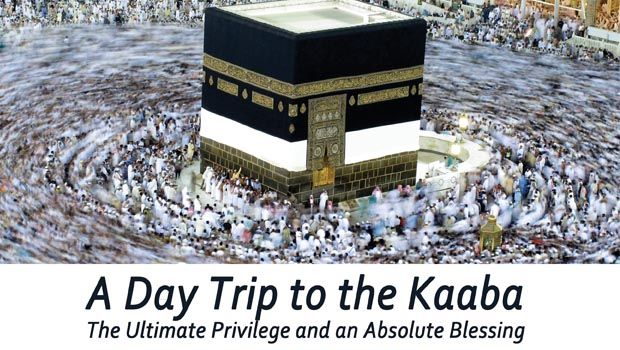
  • A Day Trip to the Kaaba: The Ultimate Privilege and an Absolute Blessing

    A Day Trip to the Kaaba: The Ultimate Privilege and an Absolute Blessing

    At seven in the morning I would step out of my house into glorious sunshine and board the bus with my neighbours, who were also my colleagues, my friends, and my newly adopted family. In a state of Ihram and donned in two pieces of white cloth, the men would take the front of the bus. The women would be armed with their prayer beads and supplies of breakfast snacks as we yet again shared our overwhelming awe of being absorbed in the present moment: a day trip to the glorious Kaaba.

    We were a group of British and South African teachers living out an adventure in Jeddah, Saudi Arabia. The reasons to emigrate were many, but the common thread was our desire to be within close proximity to our spiritual home. The frustrations and stresses of working within a Saudi system paled in comparison to standing in front of the Kaaba, or in front of the beloved Prophet Muhammed’s (peace be upon him) grave and amongst thousands of worshippers who shared the same desire and passion to immerse themselves in contemplation of the oneness of God — escaping from the earthly world and into the ephemeral where the human heart can find complete rest and tranquillity.

    Words cannot convey the immensity of gratitude that ran through me each time I visited the two holy cities. Inevitably, large crowds of worshippers brought with them many challenges that had to be overcome; patience, respect, and understanding were all part of the process in ensuring that the full benefits of the Umrah trips were gained. However, during periods when international visas were closed, uninterrupted meditations were an absolute blessing. I would place my hands on the wall of the Kaaba fully absorbed in the moment. Deep in heartfelt prayers, I had the privileged opportunity to pray for all of humanity. From my late father who passed away prematurely from pancreatic cancer to the stranger who laboured endlessly to fund his child’s education, I asked Allah to grant them all peace in this world and the hereafter.

    Medina was a more relaxed experience compared to Mecca, and during the periods of closed visas, it offered an even more incredible opportunity to feel the love of the beloved prophet (pbuh). Through the blessings of Allah, I could sit close to the Prophet’s grave, taking my time in offering the two rakats of prayer and simply absorbing the immense strength of spirituality that seemed to have a unique and powerful vibe exclusively reserved for the city of Medina.

    My one year stay in Jeddah was an eclectic mix of experiences. Frustration, anger, and disappointment was balanced out with inspiring nature and beautiful friendships. But my greatest motivation was always my deep desire to be spiritually moved, to be fully absorbed into a world of prayer where only God exists. Mecca and Medina fulfilled this desire, and as I sit in my home in the UK watching the autumn change into winter, I cannot express enough gratitude for the blessings of having said time and time again, “Let’s go for a day trip to the Kaaba!”

    It is narrated on the authority of the amir al-muminin (leader of the believers), Abu Hafs Umar bin al-Khattab (may Allah be pleased with him), who said, “I heard the Messenger of Allah (peace be upon him), say, ‘Actions are according to intentions, and everyone will get what was intended. Whoever migrates with an intention for Allah and His messenger, the migration will be for the sake of Allah and his Messenger. And whoever migrates for worldly gain or to marry a woman, then his migration will be for the sake of whatever he migrated for’” (Bukhari and Muslim).

  • Serving the  Mexican Community

    Serving the Mexican Community

    It was only four years ago that the first story about WhyIslam in Mexico was written, but many exciting events have transpired since then. The Mexican campaign began with a desire to deliver Islamic attire and literature to a growing community in Mexico City, Al Hikmah Center. Seven organizations joined forces to contribute to the cause, donating everything from Islamic CDs to siwaks. During her vacation, Nahela Morales, a Mexican convert, distributed the items to the Islamic community in June of 2012. The trip was so successful that it became an annual effort and each year expanded to cover more than five cities within the country.

    Interest really took off when well-known lecturers and personalities such as Nouman Ali Khan, Omar Suleiman, and Boonaa Mohammed endorsed the projects in Mexico. In 2013, Nouman Ali Khan even traveled to the Mexican state of Chiapas, to the Islamic village in San Cristobal de las Casas, as part of the second annual dawah trip to Mexico. He was so moved by the poor living conditions of the indigenous Muslim families that he filmed a video tour of a typical home, a humble structure with walls made of planks and plastic covering to keep out the rain, a tin rooftop, and a dirt floor. The video was released on WhyIslam’s YouTube channel and has over 215,000 views.

    The goal for that year was to begin plans to renovate the town’s masjid Al Kauthar. Through the use of social media and fundraising campaigns, Morales was able to gather over $30,000 for Islamic material and food for distribution during Ramadan, and the masjid renovation project. However, future goals were to offer continuous support to needy families in this sector and to provide home renovations and reconstructions. This sparked plans to launch Mexico Relief Project by Helping Hand for Relief and Development.

    In 2014 Boonaa Mohammed traveled with HHRD and film crews to Mexico to produce documentaries that bring the necessary attention to this cause.

    The Prophet Muhammad, peace be upon him, once advised Aisha when she desired to offer a gift to a neighbor, that she should give, “to the one whose door is nearer to you.” The idea of helping our brothers and sisters in Mexico is one that stems from neighborliness, in the sense that Mexico is one of only two countries which share a border with the US. It is also the largest Latin American country with the smallest Muslim population; however, the Muslims are growing in number and need assistance. Alhamdulillah, we have been blessed with the ability to aid our brethren so we ask for your continued support and prayers.

    We hope that you will enjoy reading some stories and informative articles from our Mexican and Spanish-speaking brothers and sisters, and that you will also remember them in your prayers. JazakumAllahu khaiyran.

  • De Mexico a Medina: La Historia de Rafael

    De Mexico a Medina: La Historia de Rafael

    Mi interés en el islam nació cuando apenas tenía 17 años. Comencé a leer el Corán en español desde mi computadora y lo termine completamente, alhamdulillah. Aunque inicialmente mi intención era común, simplemente por leerlo sin interés en particular, desde el principio supe que no se trataba de un libro común y corriente como cualquier otro que había leído antes. Pues desde la primera página se hacían agradecimientos y se engrandecía a Dios de una manera especial y distinta a lo que yo estaba familiarizado. Seguía leyendo y tenía una sensación extraña, sin afán de exagerar sentía mucha paz y tranquilidad cuando me sentaba frente a mi computadora a leerlo, contemplando verso por verso.

    Siempre me ha gustado la ciencia, y me impresionó que muchos hechos demostrados científicamente en los últimos siglos aparecieran en el Corán. Hechos como la teoría del Big Bang, la expansión del universo, la composición de la tierra y del espacio, los procesos embrionarios, entre muchos otros; los identifiqué y me asombró que estaban descritos de una manera entendible para cualquier persona con cualquier nivel de educación. Además, encontré al Corán completo en cuanto a regulaciones familiares, sociales, militares, en asuntos de justicia, de creencia, de modales… en fin, de todo. Entonces no demoré prácticamente nada en aceptar que el Corán no era sino revelación divina y decidí aceptar el Islam.

    En un día feriado de mi país, que luego me enteré coincidía con la noche número 27 de Ramadán, tomé la bicicleta de mi padre para ir al lugar donde los musulmanes de mi ciudad se reunían. Aunque estaba lejos de mi casa y tuve que pasar por lugares peligrosos para llegar hasta allá, todo resultó perfecto. Hice mi Shahada (el testimonio de la fe) y me trataron de manera excelente. Me regalaron un tapete para rezar y libros. Todo lo escondí bajo mi playera para que mis padres no supieran cuando llegué, luego de media noche. Mi familia, que es católica, no supo de mi conversión al Islam hasta un par de años después, pues escondía signos de mi cambio. Sin embargo ya notaban algunas diferencias en mí, como cuando me escondía a ciertas horas para rezar mis cinco oraciones y no comía ni tomaba todo lo que ellos preparaban.

    Después de mi Shahada, he sido muy bendecido, y noto que ciertamente Alá es Quien escucha las súplicas, pues cada una de las cosas por las que llego a quejarme, o que necesito, recibo más de lo necesario desde que pongo mis asuntos en manos de Alá.

    Alhamdulilah, tuve la oportunidad de asistir a la Universidad Islámica de Medina en Arabia Saudita, donde estudié por alrededor de 1 año. Pude aprender a leer el Corán en árabe, y aprendí un poco del idioma cuando había llegado sin saber si quiera las letras del alfabeto árabe. Allí conocí excelentes personas quienes exhortan e invitan al bien y a practicar el Islam de la mejor manera cada vez. Además del conocimiento que uno obtiene, que realmente es invaluable, recibí la herencia de los profetas, la motivación para enseñar a los demás acerca del Islam.

    También tuve la ventaja de conocer bonitos lugares. El simple hecho de visitar una mezquita ya era de gran valor para mí, pues en mi ciudad no contamos con ninguna. Y ¿qué mejor que llegar a la ciudad que acogió a nuestro amado Profeta Muhammad, que la paz sea con él, y después tener la posibilidad de realizar el Hajj (la peregrinación)? Es algo inolvidable que espero todos tengamos la oportunidad de hacer. Aconsejo a todos francamente que se esfuercen para ir, especialmente aquellos que desestiman esta obligación del musulmán. Ir a la Meca y realizar el Hajj, te cambia la vida.

    Tuve que regresar de Medina por motivos familiares, y aunque debo reconocer que eso me entristeció, a los pocos meses Allah me concedió poder tener matrimonio con una excelente mujer con quien soy feliz y me siento orgulloso de compartir mis momentos.

    Actualmente el Islam en mi ciudad, Guadalajara, continúa creciendo aunque lentamente. Puede decirse que cada mes hay nuevos(as) musulmanes(as). Tenemos menos de 5 musalas (salas para rezar), pero generalmente la gente no nos molesta si rezamos en público o invitamos a las personas al Islam abiertamente. Podría decir que es más el interés y la curiosidad que los acosos y malos comentarios. Sin embargo, es un triste hecho que las mujeres son las más propensas al maltrato de la gente.

    Insha’Allah, la situación de los musulmanes mejore en todo el mundo. Sin embargo antes tenemos que estar conscientes que el cambio debe darse primero de nuestra parte, teniendo buenas intenciones, haciendo e invitando hacia al bien, y reprobando el mal. Para esto, no hay algo mejor que buscando el conocimiento en el Sagrado Corán, o revisando la vida ejemplar de nuestro Profeta, que Allah le conceda la paz y las bendiciones.


  • La paz que faltaba

    La paz que faltaba

    Mi camino hacia el Islam ha tomado muchos giros y vueltas a lo largo de Latinoamérica y aquí en los Estados Unidos, donde finalmente me convertí en musulmán. Mis padres son de Chile. Eran refugiados políticos exiliados a México por ser socialistas. En los años 70, ser un socialista en América Latina era sinónimo de ser un rebelde. No había muchas opciones en ese momento; eras de la izquierda o eras de la derecha. En 1973, Chile sufrió uno de los más crueles golpes de estado que la humanidad jamás había visto. Mi padre fue encarcelado y torturado antes de ser exiliado. Unos meses después conoció a mi madre, que era también una refugiada política chilena. En 1976, yo nací en la Ciudad de México. Mis padres, mi hermana y yo vivimos relativamente felices como una típica familia mexicana de clase media, excepto por una cosa: mis padres eran agnósticos. No ser católico en México era casi impensable.

    En 1989, cuando la democracia fue reestablecida en Chile, mis padres decidieron regresar. En ese tiempo tenía 12 años de edad. Chile es un país pequeño dominado por una de las iglesias más conservadoras del mundo. Como en México, crecí rodeado de mensajes católicos en la radio, en la televisión, y en las calles. En mi propia inocencia, siempre me había gustado la idea de Dios, de un solo Dios, pero eso no era lo que estaba presenciando. ¿Cómo podría un chico de una familia agnóstica siempre creer en Dios? En mi casa ese asunto nunca fue un tema de conversación. “La religión es el opio de las masas”, mi padre solía decir. Sin embargo, con los años, mi deseo por una conexión espiritual siguió aumentando.

    Cuando era adolescente, fui expuesto a la Capoeira, una danza brasileña y arte marcial, durante unas vacaciones con mis padres en Brasil. En Chile, comencé a tomar clases de Capoeira que ayudaron a llenar el vacío de mi espiritualidad carente. En el año 2000, fui aceptado a la facultad de negocios en Chile y también estudié Capoeira todos los días. Mi vida se volvió muy ocupada, “demasiado ocupada” para la religión.

    En 2003, conocí a mi esposa, una hermosa mujer estadounidense que estaba enseñando Inglés en Santiago, Chile. Ella venía de una familia católica y por lo tanto me acercó más a la religión. En 2005, me trasladé a los EE.UU. y en el 2006 nos casamos en una iglesia católica en Richmond, Virginia. En 2008, abrí mi propio estudio para enseñar diversos estilos de artes marciales, el ejercicio y el baile. Ese mismo año, mi primera hija, Priya, nació, y en 2010 me convertí en propietario de una casa. En un período de sólo cinco años había logrado el “sueño americano”, cosas que algunas personas no logran en toda su vida. Sin embargo, aún algo faltaba.

    El 2012 fue uno de los años más difíciles de mi vida. Mi arrogancia me llevó a romper mi tendón rotuliano y tardé casi un año en recuperarme. Ese mismo año, mi segunda hija, Mireya, nació. En 2013, comencé mi búsqueda espiritual. Empecé a investigar la religión yoruba, la santería, pero no me sentí identificado con ella.

    En diciembre de 2014, pasé la Navidad con mi familia en Chile. Después de la cena de Navidad fui a mi habitación a dormir, pero quedé despierto sentado en mi cama. Los recuerdos de mi adolescencia y mi juventud vinieron a mí y comencé a llorar. Llore mucho. No recuerdo por cuánto tiempo, tal vez cinco o 10 minutos, pero recuerdo poniendo mis rodillas en el suelo y los brazos en una posición de súplica. Y me quedé allí, preguntando, pidiendo realmente, a Dios que me guiara y me ayudara a acercarme a Él. Después de eso, encendí la televisión y mostraban un programa sobre la vida de Jesús. Una gran cantidad de preguntas vinieron a la mente como, “¿Será él Dios”? Entonces busqué en Google la palabra “Jesús” y de alguna manera aterricé en una página de discutiendo Jesús y el Islam. Entonces investigué las palabras “Islam” y “Profeta Muhammad”. Al final, no pude dormir hasta las 5 o 6 de la mañana.

    Alrededor de las 11 de la mañana, me desperté. Mi madre me dijo que debí haber estado cansado por lo mucho que había dormido. Le dije entonces que yo quería convertirme en musulmán pero ella no me creyó. Cuando llegué a los Estados Unidos de nuevo, llamé a un amigo musulmán para ver si me podía llevar a una mezquita. Allí, sentí tanta paz y armonía. Luego, otro amigo, que es de Turquía, me ayudó a tomar mi Shahada, el testimonio de la fe. También conocí a un hermano de Gambia, un estudiante en mi estudio, que me ayudó a visitar diferentes mezquitas y reunirme con algunos imanes. Al llegar el mes de Ramadán, me di cuenta que estaba rodeado por una buena comunidad de hermanos para ayudarme en mi camino.

    Mi esposa ha sido un gran apoyo para mí. Hemos estado casados ya por 10 años. Me considero una persona impulsiva y solía enfadarme con ella por cosas insignificantes. Pero ahora trato de recordar este hadiz: “El hombre fuerte no es quien sabe luchar; el hombre fuerte es aquel que puede controlarse a sí mismo en un momento de ira”. (Sahih Bujari, Libro 73, #135)

  • Una Nueva Traduccion del Sagrado Coran al Idioma Espanol

    Una Nueva Traduccion del Sagrado Coran al Idioma Espanol

    Se despertó en mí el interés de hacer una traducción del Sagrado Corán que se preocupara me-nos por parecer árabe o por intentar imitar la calidad literaria del texto original, y estuviera pen-sada más en transmitir de forma correcta y directa todos aquellos significados, profundos y espi-rituales, pero también de un gran orden social, que había comprendido al leerlo y estudiarlo en su idioma original.

    –Isa García

    Un poco de historia

    Cuando acepté el Islam y lo asumí como forma de vida, estaba sediento de saber, quería conocer lo mejor posible la fuente primera del conocimiento, la revelación divina: el Sagrado Corán. Sabía desde el principio que el Corán fue revelado en árabe, y que este texto es original: ha sido pre-servado y mantenido intacto a lo largo de más de 14 siglos. Pero al no saber árabe, tuve que re-mitirme a diferentes traducciones que se han hecho al español.

    Lo que encontré llegó en ocasiones a decepcionarme, pues el texto aparecía muchas veces con-fuso o incongruente.

    Comprendí que esto se debía, principalmente, a dos factores. El primero, que muchas traduccio-nes han sido elaboradas por personas que no tenían el suficiente conocimiento del Islam, su mensaje y su historia, y que por ello confundían conceptos o incluso, en algunos casos de forma premeditada, trastocaban los sentidos para desacreditar al Islam y su libro sagrado.

    El segundo, que en su mayoría las traducciones son demasiado literalistas, imitan el estilo árabe en la traducción, no solamente en la expresión del significado sino en el orden mismo de las pa-labras, de modo que no se apegan a la gramática del español y por ello resultan confusas. A esto debe agregársele que algunas de las traducciones al español utilizan un lenguaje antiguo y lejano al que solemos utilizar en el continente americano, y que a la vez carecen en su mayoría de notas aclarativas sobre el contexto histórico o las implicaciones legales.

    Más tarde, cuando tuve la oportunidad de estudiar el idioma árabe y acceder a los significados del Sagrado Corán en su idioma original, comprendí que en la traducción me había perdido de mucho. Si bien es cierto que ninguna traducción podrá jamás acercarse a la belleza narrativa, poética y retórica del Corán, ni reproducir a la vez su sonoridad y las múltiples formas en que puede ser recitado, también es cierto que las traducciones, unas más que otras, fallan en trans-mitirle al lector la verdadera esencia del mensaje coránico.

    Esto despertó en mí el interés de hacer una traducción del Sagrado Corán que se preocupara menos por parecer árabe o por intentar imitar la calidad literaria del texto original, y estuviera pensada más en transmitir de forma correcta y directa todos aquellos significados, profundos y espirituales, pero también de un gran orden social, que había comprendido al leerlo y estudiarlo en su idioma original.

    Gracias a Dios pude por fin embarcarme en una traducción del Sagrado Corán pensada para la población hispanoparlante del mundo, pero principalmente para el público latinoamericano. Jun-to con un equipo de colaboradores expertos, he procurado poner al alcance de musulmanes y de no musulmanes, el mensaje del Islam de la forma más cercana posible a la revelación original en idioma árabe, pero utilizando a la vez un lenguaje sencillo y explicaciones claras de los términos, de manera que el contenido del texto resulte fácil de comprender.

    Antecedentes

    Si bien el Islam no es hoy día una de las religiones con mayor número de fieles en América Latina, se está expandiendo rápidamente por todo el continente. Ya existen mezquitas en todas las ca-pitales y ciudades importantes de Hispanoamérica y también está creciendo mucho entre la po-blación latina de Estados Unidos.

    Teniendo en cuenta la mala imagen que proyectan los medios de comunicación del Islam y de los musulmanes, contar con una traducción del Corán al idioma español que transmita de forma di-recta y sencilla el verdadero mensaje del Islam, cada vez se hace más importante y urgente por dos razones:

    Primera, porque los musulmanes que no conocen el idioma árabe necesitan leer los significados del Corán en su idioma para comprender y practicar mejor su religión, y así ser buen ejemplo de lo que es realmente un musulmán.

    Segunda, porque los no musulmanes que desean conocer el Islam necesitan tener una fuente confiable de información, que les permita formarse una opinión basada en lo que enseña real-mente el Corán, y no en estereotipos y concepciones erróneas que han permanecido durante siglos en muchas obras de orientalistas y en algunas de las traducciones del Corán.

    De ahí que el objetivo de esta traducción es presentar a los hispanoparlantes el verdadero men-saje del Corán, tal como ha sido conocido, entendido y practicado por los eruditos del Islam y por los musulmanes devotos durante más de 1.400 años, para ello se basa en un lenguaje claro, sen-cillo, directo y actual, pensando en el público latinoamericano.

    Distribución de copias impresas y versión digital

    El objetivo de esta traducción es su distribución gratuita para que de esta manera llegue al máxi-mo público posible.

    Para conseguir este objetivo se ha distribuido una versión digital en formato PDF, se ha agregado a distintas aplicaciones con múltiples traducciones y en breve saldrá una aplicación propia para lectura y audio.

    También se han hecho múltiples impresiones para su distribución gratuita. La primera de ellas fue de 50.000 copias de tamaño bolsillo para distribuir durante la Copa Mundial de Futbol en Brasil 2014.

    También se imprimieron 100.000 copias en Qatar para distribuir a nivel mundial, y en América La-tina se han hecho pequeñas impresiones en países como Bolivia, Colombia, Guatemala y México. En España ha comenzado un proyecto de distribución para el que ya han impreso 10.000 copias.

    Creo que es necesario que los musulmanes se unan y colaboren en la impresión de esta traduc-ción con el objetivo de acercar el mensaje del Islam a los musulmanes y no musulmanes.

    Sobre el traductor

    Isa García nació en Argentina, es licenciado en Lengua Árabe y en Teología Islámica de la Univer-sidad de Umm Al-Qura de la ciudad de La Meca en Arabia Saudí, especializado en la misma en los “Orígenes de las tradiciones Proféticas”. Cursó estudios en mediación y resolución de conflictos en Estados Unidos. Ha sido director del departamento de español en las editoriales International Islamic Publishing House y Darussalam, y de diferentes páginas web islámicas. Permanentemen-te dicta conferencias en diferentes países de América Latina y Europa, y en Estados Unidos. Ha trabajado como traductor del árabe y del inglés al español durante los últimos 15 años, y es tam-bién autor de obras sobre teología islámica y distintos temas sociales que afectan a la comunidad islámica. Fue nombrado por la revista The Muslim 500 como uno de los musulmanes más influ-yentes del mundo en los años 2013 y 2014.

  • Una Mision de Amor

    Una Mision de Amor

    A medida que inicié mi viaje más importante de Dawah a México, me puse a reflexionar y pensar en mis últimas tres misiones de divulgación. “¿Por qué era este el más importante?”, Me pregunté a mí misma, siendo que estaba viajando con menos equipaje y sola. Sin embargo, la respuesta era que iba para llamar a mi abuelita al Islam, mientras se encontraba en su lecho de muerte, y no sería algo fácil. Ver a mi familia angustiada y sentimental sería difícil, también. Hice este viaje en exclusiva para ella, para mi abuelita. Ella pidió verme y yo tomé esta solicitud como mi última oportunidad para transmitir el mensaje del Islam a ella. Mientras estaba volando sobre el Golfo de México le supliqué al Todopoderoso que abriera su corazón e hiciera que sus últimas palabras sean las mejores palabras, las palabras de Tauhid.

    Ha sido bastante tiempo desde que soy musulmana y he pasado por varias pruebas pero esta era la primera vez que Alá me estaba probando con la muerte. La muerte siempre parece estar tan lejos hasta que lo estás presenciando realmente. Para una conversa, la muerte es aún más aterradora y una de nuestras peores pesadillas. La idea de perder a un familiar me recuerda a nuestro amado Profeta Muhammad, la paz sea con él, cuando intentó llamar a su tío, Abu Talib, al Islam sin éxito.

    Hoy estoy experimentando esto con la posibilidad de perder a mi abuela quien me acogió desde los 3 meses hasta los 5 años. Durante visitas previas, nos habíamos sentado a conversar pero debido a su edad, siempre terminaba la conversación para evitar molestarla. He suplicado muchísimo, pidiéndole a mi Creador que me ayude con las mejores palabras para decirle. Como dije anteriormente, este viaje era diferente porque no llevaba 10, 11, o 12 maletas llenas de donaciones para los musulmanes de México, ni iba con un grupo de voluntarios. En el pasado, visitaba a mi familia por algunos días antes de visitar a las comunidades musulmanas para proporcionarles materiales islámicos, para dar una lectura o para ayudar a restaurar una mezquita. Sin embargo, me sentí más bendecida en poder compartir una conversación privada con este ser tan maravilloso quien me cuidó incondicionalmente.

    Al llegar, rompí en llanto viéndola tan débil, delgada y con oxígeno; como mínimo fue devastador. Una tía me aconsejó que saliera y me lavara la cara porque mi abuelita me necesitaba fuerte y no llorando. Cuando regresé al cuarto me fije en una pintura de la Virgen de Guadalupe, una imagen de María, la madre de Jesús, que es venerada e incluso adorada en México, y claro, me incomodó un poco porque la consideraba un obstáculo para mi misión.

    Mi abuela se despertó y al ver que yo estaba allí, ella sonrió y me pidió que me acercara. La abracé como siempre, apretándola con todas mis fuerzas. Ella gritó y dijo: “¡Tú me vas a romper!” Nos reímos y nos contemplamos la una a la otra. Yo le dije que la amaba y que todo iba a estar bien. Ella preguntó por mi hijo y le dije que estaba bien y en la escuela. Le dije, “Estoy aquí para ti, para cuidarte sin interrupciones, sólo tú y yo”.

    Mi visita fue corta pero pareció larga debido a los momentos agradables que pasamos juntas. Yo tuve la oportunidad de darle de comer, bañarle y durante todo tuvimos varias conversaciones acerca de la unicidad de Dios. Una hermana de la comunidad de la Ciudad de México llamada Nabíla se unió a mí para ofrecer su apoyo, el mejor regalo que Dios me envió, mashaAllah. Con su ayuda, pudimos hablar con ella y el resto de mi familia sobre el Islam. También durante su visita dimos Shahada a una joven local que se encontró con ella en el autobús de camino a verme. Al tercer día de mi visita, mientras la hermana Nabíla y yo salimos, el retrato de la Virgen de Guadalupe había sido retirado de la pared.

    La última noche que pasé al lado de mi abuelita le pregunté si creía en Dios como el Todopoderoso y el único Creador y ella me respondió que sí. Le pregunté: “¿Quién es Jesús?” Ella respondió: “Un mensajero de Dios”. Le pregunté si ella cree que él es el hijo de Dios, a lo que ella respondió que no. Trate de introducir la segunda parte del testimonio de la fe, pero ella se sintió abrumada. Me pidió que dejara las cosas así, ya que nunca había oído hablar del Profeta Muhammad, la paz sea con él. Al regresar a los Estados Unidos le comenté al imam local del incidente y él me informó que debido a su edad avanzada (104 años) y condición, fue suficiente, y Alá sabe mejor.

    Hoy me siento aquí muy agradecida por la oportunidad de completar esta misión y la oportunidad de ver a mi abuela por diferentes motivos. Fue maravilloso pasar tiempo con ella a pesar de que extrañe mucho a mi hijo, ya que nunca había estado lejos de él. Tampoco había visto a toda mi familia tan unida y dispuesta a escuchar lo que tenía que decir. Todos hicieron muchas preguntas y, por primera vez, después de todos estos años, sentí su aceptación y amor. Le pido a Dios que guíe nuestras familias, que nos dé la sabiduría para transmitir el hermoso mensaje del Islam, que los colme con la misma dulzura que hemos sido bendecidos y que nos permita vernos tanto en esta vida como la siguiente. Amen.

  • A Mission of Love

    A Mission of Love

    As I embarked on my most important dawah trip to Mexico, I began to reflect and think of my past three outreach missions. “Why was this the most important?” I asked myself, “I am traveling with the least amount of luggage and alone.” The answer was that I was going in order to call my elderly grandmother to Islam, while she lay on her deathbed, and it would not be easy. Seeing my family in distress and emotional would be hard, as well. I booked this trip exclusively for her, my “Abuelita,” my grandma. She requested to see me, and I took this request as my last opportunity to convey the message of Islam to her. As I was flying over the Gulf a Mexico I prayed for the Almighty to open her heart and make her last words be the best words, words of tawheed.

    It’s been quite some time since I became Muslim and I have been tested in various ways but this was the first time Allah was testing me with death. Death always seems so distant until you are actually experiencing it. As a convert, death is even more frightening, and one of our biggest challenges is losing a family member who does not embrace Islam. I am reminded of our beloved Prophet, peace be upon him, when he called his uncle, Abu Talib, to Islam, but to no avail.

    Today I am experiencing this with the possibility of losing my grandmother who took care of me from the tender age of 3 months until I was almost 5 years old. In previous visits we sat and had several conversations but due to her age I have always dropped the conversation to avoid upsetting her. I have made tons of du’a and asked my Creator to help me with the best words to say to her. Again, this trip was different because I was not carrying 10, 11, or 12 pieces of luggage full of donations for the Muslims in Mexico, nor did I have a group of volunteers. In the past I would come to visit my family a couple of days at a time before visiting Muslim communities to either provide them with Islamic material, give a talk, or help restore/rebuild a masjid. However, I feel more blessed to be able to have a one-on-one conversation with this wonderful woman who unconditionally cared for me.

    Upon my arrival, I broke down so see her so weak, thin and with oxygen; it was devastating to say the least. I was advised by an aunt to step out, wash my face, and come back. She told me that she needed me to be strong and not crying, so I did just that. When I came back to the room I noticed a huge poster of the virgin of Guadalupe, a depiction of Mary, the mother of Jesus, that is revered and even worshipped in Mexico, and of course, I was a bit bothered by it because I saw it as an obstacle to my mission.

    My grandmother woke up and when she saw that I was there, she smiled and asked me to come close. I hugged her as always, so tight and with all my might. She yelled and said, “You are going to break me!” We both laughed and gazed at each other. I told her I love her and that everything was going to be okay. She asked about my son and I told her he was fine and at school. I told her, “I am here for you, to care for you without interruptions, just me and you.”

    My visit was short but seemed long because of the quality time we spent together. I got a chance to feed her, bathe her and throughout all that we had several conversations about the oneness of God. A sister from the Mexico City community named Nabila joined me to offer her support, the best gift Allah sent my way, mashaAllah. With her help, we were able to speak to her and the rest of my family about Islam. Also during her visit we gave Shahada to a local young girl whom she ran into on the bus on her way to see me. By the third day of my stay, while Sister Nabila and I had stepped out, the poster of the virgin of Guadalupe had been removed from the wall.

    The last night I spent by my grandmother’s side I asked her if she believed in God as the Almighty and sole Creator and she said yes. I asked her, “Who is Jesus?” She replied, “A messenger of God.” I asked if she believed he is the son of God, to which she replied no. We tried covering the second part of the testimony of faith but she was overwhelmed. She asked me to leave it at that, since she had never heard of the Prophet Muhammad, peace be upon him. Upon returning to the States I asked the local imam about the incident and he informed me that due to her advanced age (104) and condition, it was enough and Allah knows best.

    Today I sit here so grateful for the opportunity to complete this mission and the opportunity to see my grandmother on different grounds. It was wonderful to spend quality time with her even though I missed my son so much, as I had never been apart from him. I had also never seen my entire family so united and willing to hear what I had to say. Everyone asked tons of questions and for once, after all these years, I felt their acceptance and love. I ask Allah to guide our families, to give us the wisdom to convey the beautiful message of Islam, to shower them with the sweetness we have been blessed with, and to allow us to see one another both in this life and the next. Ameen.


  • Combating Domestic Violence as a Muslim Woman

    Combating Domestic Violence as a Muslim Woman

    Violence against women is a matter that should concern us all, yet it seems only a few people are concerned. Throughout the world, one in three women is beaten or suffers some type of abuse in her lifetime. According to data from the World Health Organization, 70 percent of women who are killed, die at the hands of their partner or ex-partner.

    Violence against women is present in all societies in the world regardless of political or economic system, regardless of social status of perpetrator or victim, level of education, ethnicity, financial situation, culture, or religion. This everyday reality is manifested many different ways and it takes place in a number of settings; and my own country, Mexico, is of course no exception. In Mexico, violence against women is a social problem that hides itself within the home. Many female victims of domestic violence live with their enemy in the same house and are exposed to danger day to day.

    I am a psychologist working for an institution that provides psychological support to women who have been victims of family violence. Every day I hear stories of how their husbands beat them, threaten them, are unfaithful to them, insult them, and sadly some women have also died while making an attempt tto escape the violence. This is a hidden reality many choose not to talk about. My work is a positive challenge in my life, alhamdulilah; it is what I love doing. I feel very blessed for having the opportunity to be able to listen to women who put in my hands their hope of coming out of a problem that affects their lives and the lives of their children.

    I am Muslim, Mexican and defend women’s rights. This probably comes as a surprise to many of the women who come into my office; some of them even think it is contradictory. “Are you telling me that it is not?” A woman once asked me, “How can a woman who covers her head out of submission (she said referring to my hijab), tell me how I can escape the violence I am dealing with, when she herself cannot escape her own submission?” I smiled smiled and answered her with confidence. My hijab is my best tool for giving dawah.

    In fact, it was my inconformity and sense of injustice regarding violence against women that brought me closer to Islam. I also had a wrong idea about the situation of Muslim women, which I see now reflected in the faces of many of my patients when they see me for the first time; many express their surprise, and others – even if they don’t say anything – have a look of astonishment or shock on their faces.

    I could say that I do see my old self mirrored in some of them; who I was when I first met Muslim women smiling and happy, when they talked to me about the value of women in Islam, when I read about the rights of women in Islam. I used to ask myself, “Is this possible?” trying to understand. And this is why I do enjoy so much explaining to them why I am a Muslim, with my own words and with my behavior.

    Islam came to complement my life and it has helped better understand the work I do. It helped me understand my own value as a woman. Men mistreat women because of ignorance and failure to properly understand power dynamics. Muslims, men and women, must work together to combat domestic violence.