بسم الله الرحمن الرحيم

Tag: islamic circle of north america

  • Harmony through Allah’s Divine Guidance

    Harmony through Allah’s Divine Guidance

    All praises are for Allah, The Almighty, and may His peace and blessing be upon His true servant and final messenger, Muhammad, on his companions, and his household. Allah SWT says: “So direct your face toward the religion, inclining to truth, [according to] the natural disposition by which Allah has created people. No change should there be in the creation of Allah. That is the true faith, but most of the people do not know” (Quran 30:30).

    According to the Islamic prescription for a harmonious social life, there is to be no superiority on account of class, color, ancestry, or wealth.

    Allah SWT, the Creator of all that exists, has designed the universe and legislated laws that govern it so that all things function in a harmonious way. We, therefore, realize how the universe moves in perfect harmony by His laws, for if it did not then the entire universe would be in total chaos. There are billions of galaxies in the universe; and in our own Milky Way galaxy, it is estimated that there are 100 billion to ten trillion planets! Each one runs in its own orbit so they do not collide and bring about chaos and destruction; except on the Day of Judgment, then they will all collide. That brings the end of this life and ushers us into the Hereafter. So often Allah SWT, the Creator, draws our attention to the cohesiveness of the universe. In Surah Yaseen, Allah SWT mentions how the sun and the moon each “swim” in their own orbits. These two heavenly bodies, among trillions, are mentioned because we have knowledge about them and because the sun and moon have direct effect upon our lives here on earth.

    Allah SWT informs: “It is not permitted to the sun to catch up to the moon, nor can the night outstrip the day. All of them swim along in their orbits” (Quran 36:40). Allah SWT also tells us how the heavenly bodies move with His command: “Indeed, your Lord is Allah, Who created the heavens and the earth in six days, and then He rose over the Throne. He brings the night as a cover over the day, which is in haste to follow it, and He created the sun, the moon, the stars — subject to His Command. Surely, His is the creation and the command. Blessed be Allah, the Lord of the worlds!” (Quran 7:54). Thus, there is complete obedience to His commands, and when there is complete obedience, there is complete harmony. This is His Divine Wisdom, evident in the creation, and Allah SWT, the Creator, knows best His creation. He says: “Should He not know – He that created? And He is the One that understands the finest mysteries [of His Creation and] is well-acquainted [with them]” (67:14). With His Divine wisdom and knowledge, Allah SWT has created man to be part of this universe. Like the command He has given to the heavens, He has bequeathed to mankind laws and regulations to follow and obey in order to have peace and harmony. He has blessed human beings with the capacity to acquire knowledge, to think and ponder, and with an intellect to distinguish right from wrong. Humanity and jinn are two known creations of Allah SWT that have been given the freedom of will and action.

    Among the good qualities that we ought to inculcate in our lives and invite others to include humbleness, modesty, decency, truthfulness, honesty, politeness, tolerance, compassion, generosity, forgiveness, optimism, fairness, sincerity, self-restraint, etc.

    Unfortunately, with intellect and freedom of choice, many individuals have turned away from Divine Guidance. So many have chosen the evil way, forsaking a moral and upstanding life. Professor Andrew Delbanco, in his insightful book “The Death of Satan: How Americans Have Lost the Sense of Evil,” writes: “…more and more our society, our nation is turning their backs on God and good morals.” Lionel Tiger writes in “The Manufacture of Evil”: “Once upon a time, evil was personified. Evil was Mephistopheles or the Devil. Almost flavorful, altogether identifiable, a clarified being from another world…” And what has happened now? Evil has faded into a sea of moral ambiguity.

    The handiwork of Satan is manifest everywhere. He has his associates and agents among mankind who support the demise of morality and decency, affecting almost every aspect of human life. He incites them with confused and conflicting ideologies and notions of every sort, opening the door to criminal, depraved, and unjust behaviors. Voltaire once said: “Certainly anyone who has the power to make you believe absurdities has the power to make you commit injustices.” He goes on to say: “If you do not use the intelligence with which God endowed your mind to resist believing impossibilities, you will not be able to use the sense of injustice which God planted in your heart to resist a command to do evil.” Thus, Satan has sown the seeds of conflict throughout human affairs, and God’s laws have been violated, with nations at war with each other, corrupt government officials, families plagued by divorce and parent-child problems, high rates of murder and other crimes, gangs terrorizing communities, media promoting and sensationalizing violence, alarming rates of substance abuse, widespread lewdness and promiscuity, and never ending displays of ego gratification through celebrity worship and lust for power and wealth. And the list goes on…

    By and large we have allowed these things to happen. We have not joined together as we should have, to stop our society from losing its moral high ground. There is so much hatred, bigotry, and more recently, Islamophobia, that adds fuel to fire. But with all this burning hatred and intolerance, it is a unique opportunity for Muslims to call people back to the core values of morality and decency. Like the prophets throughout history, and particularly the five Messengers renowned for their strong will and determination – Prophet Nuh, Prophet Ibrahim, Prophet Musa, Prophet ‘Eesa, and Prophet Muhammad (peace and blessings of Allah be upon all of them). They have all gone through that inferno of hatred and intolerance from their own people. But they never gave up. In fact, they took every opportunity to bring about good in their respective societies. When the Quraish discouraged people from entering Islam, Rasoolullah (pbuh) would use the opportunity to explain to them the beliefs and principles of Islam and how it brings about human salvation. Allah SWT has indeed guided mankind in every aspect of life. By way of example let us examine a few.

    Spiritual Life

    Allah SWT has informed us of the true purpose of life. It is to be His true servant through worship and obedience to Him alone. The Quran says: “And I [Allah] created not the jinns and humans except that they should worship Me [alone]” (Quran 51:56). In order to genuinely worship God, one must have unshakable belief in His existence. Coupled with strong beliefs, acts of worship bring about decent moral behavior. Take prayer for example. If done with sincerity, it protects us from committing sins or engaging in wrongful deeds. ”…And perform the prayer. Verily, the prayer prevents immorality and wrongdoing…” (Quran 29:45). As to other aspects of worship, fasting helps a person develop self-restraint and the capacity to delay gratification; charity or zakaah inculcates the values of generosity and compassion and counters greed and miserliness; and the pilgrimage humbles us and helps us to enlarge our perspective and feel a solidarity with the vast human family, as we see the assembly of pilgrims coming from all over the world, each individual hoping for the mercy and forgiveness of Allah SWT.

    Intellectual Life

    The very first revelation given to Prophet Muhammad (pbuh) is a command to illuminate our minds with knowledge, for it is knowledge that dispels the darkness of ignorance and evil. Allah SWT commands, “Read! In the Name of your Lord Who has created — created man from a clinging substance. Read! And your Lord is the Most Generous, Who has taught by the pen, taught man that which he knew not” (Quran 96:1-5). Knowledge is the cure for ignorance. In fact, it is only through knowledge of the religion, true knowledge of Allah SWT, and knowledge of self that human beings can be saved from misery, in this life and in the Hereafter. We are told in the Quran, “Say: Are those who know equal to those who know not? It is only men of understanding who will take heed” (Quran 39:9).

    Personal Life

    Regarding our personal lives, Islam provides guidance as to cleanliness of the body, our clothes, our surroundings, and places of worship. Cleanliness, as Rasoolullah (pbuh) puts it, is half of faith. Islam also guides human beings as to what to consume, with most food available from earth’s bounty being permissible and good, and a few things being prohibited, such as pork. We are further prohibited from wasting food as that indicates ungratefulness for the sustenance provided by Allah SWT. The Quran says, “…do not squander senselessly. Verily, the squanderers are, indeed, of the ilk of the devils, as Satan is ever ungrateful to his Lord” (17:26-27). Sadly, surveys shows that every year, from the more than 350 billion pounds of edible food available for human consumption in the United States, nearly 100 billion pounds – including fresh vegetables, fruits, milk, and grain products – are thrown away by retailers, restaurants, and consumers. This waste alone adds up to $48 billion.

    Social and Political Life

    Allah’s prescription for a harmonious social life includes equality, justice, helping those in need, and each individual developing a benevolent character. Imam Al-Ghazaali named some of the qualities that the Prophet (pbuh) called for, such as doing good deeds; submitting to Allah’s will; bestowing favors on others; feeding the needy; extending greetings; visiting the sick; escorting the bier of a Muslim; protecting one’s neighbor whether Muslim or not; honoring the aged; making peace between people; and being easygoing.

    Further, according to the Islamic prescription for a harmonious social life, there is to be no superiority on account of class, color, ancestry, or wealth. One of the most shameful of social evils is the feeling of superiority over others. This was Iblees’s downfall when he told Allah SWT that he would not prostrate to Adam because Allah had created him from fire and Adam from clay, and in his thinking, this rendered him better than Adam. How many wars have been fought because one nation felt superior to another? Allah SWT informs us that our differences are only by His command and wisdom. It is for us to learn about one another, not to despise one another. He says, “O mankind, indeed We have created you from male and female and made you peoples and tribes that you may know one another. Indeed, the most noble of you in the sight of Allah is the most righteous of you. Indeed, Allah is Knowing and Acquainted” (Quran 49:13).

    We are reminded of the sermon Rasoolullah (pbuh) gave at the Farewell Pilgrimage in which he said: “All mankind is from Adam and Eve; an Arab has no superiority over a non-Arab nor a non-Arab any superiority over an Arab; also a white has no superiority over a black, nor a black any superiority over a white — except by piety and good action. Learn that every Muslim is a brother to every Muslim and that the Muslims constitute one brotherhood. Nothing shall be legitimate to a Muslim, which belongs to a fellow Muslim unless it was given freely and willingly. Do not therefore, do injustice to yourselves.” SubhanAllah! Compare that wisdom to our situation today! There is so much discrimination and discord based on race, ethnicity, family status, and wealth, even among the Muslim ummah. How do we expect success and harmony when we ignore Allah SWT’s Divine Command?

    On a global level, millions have perished in the two world wars, in Mao Tse Tung’s China, in Stalinist Russia, in the Vietnam War, as just a few examples. The carnage continues into this 21st century with regional wars, sectarian conflicts, murders, domestic violence and so on. Man has disregarded God’s laws and has ended up in never-ending conflict and destruction. Rasoolullah (pbuh) predicted that a time would come when there would be large scale killing.

    Moral Life

    Islam provides injunctions and principles, in a broad-based and precise way, for a harmonious life, built on a foundation of enjoining what is right and shunning and preventing what is evil. An individual’s moral development brings growing discernment as to what is right and what is wrong, and dedication to ethical and refined living. Regarding one of the main objects for which the Prophets and Messengers were sent, Prophet Muhammad has said: “I have been sent by God to teach moral virtues and to evolve them to highest perfection.” He also mentions: “On the Day of Recompense, nearest to me will be the one who displays in his daily life the best of manners.”

    Among the things we ought to reject are arrogance, vanity, immodesty, lewdness, lying, cheating, foul language, hatred, envy, backbiting, slandering, stinginess, vindictiveness, pessimism, unfairness, deceptiveness, self-indulgence, and impulsiveness.

    And among the good qualities that we ought to inculcate in our lives and invite others to include humbleness, modesty, decency, truthfulness, honesty, politeness, tolerance, compassion, generosity, forgiveness, optimism, fairness, sincerity, and self-restraint.

    Imam Ibn Al-Qayyim wrote in “Madarij Al-Salikeen”: “Religion is all moral character, and whoever bests you in moral character will best you in religion.” In conclusion, if human beings follow the laws of Allah they will succeed and have peace and harmony. But if they ignore God’s guidance they will face severe consequences. Not only will they spread misery in this world, but each one shall be brought before the Creator on the Day of Judgment to answer for his or her deeds. Islam changed the Arabian society from the depths of darkness to the most accomplished society mankind had ever witnessed. The Muslim ummah is meant to be an example for humanity. In this regard, Imaam Malik (RA) said: “The latter part of this ummah will not be rectified except by that which rectified its earlier part.”

  • Stop Ignoring the Issue of Sexual Abuse

    Stop Ignoring the Issue of Sexual Abuse

    She looked at herself in the mirror with tears streaming down her face. She could no longer keep it inside and felt that she had to tell her mother today. But, would her mother even believe her that her uncle had been touching her in places that no one should be touching? This was her mother’s brother. How would her mother react when she hears that it had been going on for a few weeks, ever since her uncle had moved in with them? He had warned her not to say a word, and that it was all her fault anyway that this was happening. She was 13 and afraid, but knew she had to tell her mother or it would never stop. If it didn’t stop, she didn’t know what she was going to do. The thought of it was unbearable. She wiped her tears and opened the door, ready to talk to her mother, but who did she find waiting for her when she opened the door? Her uncle…

    According to the National Institute of Justice Report, three out of four adolescents who have been sexually assaulted were victimized by someone they knew well

    Sexual abuse is a more common phenomenon in the Muslim community than we would ever care to believe, yet we do not face it head on as we should. It is a topic that people ignore and when it is brought up, heads begin shaking, as if to say “Shh! There’s no need to talk about that…Muslims don’t do that.” Yes, it is considered taboo, but the very fact that we won’t talk about this dire issue allows abuse to persist. Young girls and boys are afraid to tell anyone when it happens to them, and parents are reluctant to teach their children about boundaries, gently yet directly letting their children know that no one has the right to touch their private parts, or touch them in any way that makes them uncomfortable. If a child is not equipped with that knowledge, when an incident occurs, he or she suffers in the agony of silence and shame. And if the abuse is suspected or found out, it is too often ignored or hushed up, particularly if the abuser is considered religious or is a respected family member. This is a terrible betrayal of the child.

    Victimized by Someone They Knew

    According to statistics by the Crimes Against Children Research Center, 1 in 5 girls and 1 in 20 boys are victims of sexual abuse. These numbers are believed to be lower than the actual number of cases since most sexual abuse of children goes unreported. And when we think of sexual abuse, we may automatically think of a stranger as being the perpetrator of these acts, but this is not usually the case. According to the National Institute of Justice Report, three out of four adolescents who have been sexually assaulted were victimized by someone they knew well. The same is the case for younger children.

    It is just not enough to teach children about “stranger danger” since the person more likely to sexually abuse a child is one who has easy access to him or her and earns the child’s trust, like a family member, teacher, religious figure, or family friend. The emotional and psychological consequences of this betrayal, from both the abuser and those who cover it up, are catastrophic. If we don’t do something as a community to tackle this issue, we are responsible for acquiescing to, and enabling, this abuse and betrayal.

    A Campaign to Raise Awareness About Sexual Abuse

    We, as community members, must raise awareness about this shattering issue. Families and communities are broken apart when sexual abuse occurs. But our children are precious, and shame and fear must not win out over doing what is right. The worry about life being disrupted, or the ruinous consequences for the perpetrator, if he or she is within the family or community circle, must not be stronger than the fear of a child being set up for lifelong pain and misery.

    We must clearly convey this message about sexual abuse in workshops, Islamic schools, and masaajid so that people are informed and equipped with the tools on how to appropriately handle such a situation. Community leaders and imams must be at the forefront of this campaign to raise awareness by organizing or supporting workshops and events on this topic. The community can invite Muslim mental health professionals to provide informative lectures on sexual abuse. The future of the ummah depends on our willingness to face all issues, however challenging or ugly. We must show ourselves to be among those who stand up for justice, even if against ourselves or our inner circle, and especially for the protection and defense of our children. We must be silent no more.

  • Muslim Contributions to America: Taking It to the Next Level

    Muslim Contributions to America: Taking It to the Next Level

    “Have you ever been to a Muslim hospital? … Have you witnessed a Muslim charity? Can you show me one Muslim signature on the Constitution, Declaration of Independence, or Bill of Rights? Have you ever seen a Muslim do anything that contributes positively to the American way of life?” These were the exact words of a public statement made by a Michigan Republican National Committeeman not too long ago. This perspective is not unique, for we have heard a similar statement or narrative from other people as well. One may wonder if this is sheer ignorance or deliberate propaganda.

    Today Muslims are on the front lines of campaigns to support social justice and end civil rights abuses

    Recently, in the wake of the anti-Muslim statements made by Republican presidential candidate Donald Trump, the UK’s daily Guardian published an article providing a brief but compelling survey of contributions made by Muslims in shaping, developing, and serving America (google: the guardian, Muslims who shaped America). The article observes, “What Trump doesn’t seem to grasp is his own country’s history, and how many American achievements worth celebrating are the work of the kind of people – Muslims – he wants to keep out.” The article also commented that even a partial list of “some of the things Muslims have done for the US…is still more impressive than what Trump has done for his homeland.”

    Did the author, Stuart Jeffries, overstate the case? Actually, no. He acknowledges that his list is far from exhaustive but it nonetheless shows that Muslims have been part of American society right from its inception. That story is not well-known, however, as Muslims in America have always been a minority. Nevertheless, Islam has been present and notable all along. Professor Richard Turner, for example, mentions that while researchers disagree over the number of Muslim slaves that were brought to the Americas, they agree that many Muslim slaves were educated and literate in Arabic and they “often occupied leadership roles in the jobs that slaves performed on plantations in the American South…Their names, dress, rituals, and dietary laws were perceived as powerful significations of Islamic identities in the slave community.” To name just a few, Bampett Muhammad was a soldier who fought for the Virginia Line between the years 1775 and 1783 under Commander-in-Chief of the Continental Army, George Washington, in the war against British colonialism. A North African Arab, Yusuf Ben Ali, also fought along with him. A Muslim American soldier, Peter Buckminster, is the man who killed British Major General John Pitcairn at the battle of Bunker Hill. Buckminster later changed his surname to Salem or Salaam.

    There is evidence that founding fathers John Quincy Adams and Thomas Jefferson were quite familiar with Islam and possessed copies of the Holy Quran in their personal libraries. It is worth noting that Keith Ellison, the first Muslim elected to congress, used Jefferson’s nearly 250¬?year¬?old Quran to be sworn in on as a U.S. congressman. Many Americans don’t know that in 1777, Morocco, a Muslim nation, was the first country to formally recognize the United States as an independent nation. The vast majority of early Muslims present in the U.S. were Africans brought to this country as slaves in the 17th century. The next major wave of Muslims coming to America was in the mid-19th century through to the 1920s, with large numbers emigrating from the Middle East, mostly from Lebanon and Syria, many of whom settled in the American Midwest. Muslim immigrants, like all those who sought opportunity in America, settled in their new home, and established deep and sturdy roots for the generations to come. Achievements by Muslim Americans followed, and as proud citizens they contribute to American society as educators, doctors, engineers, athletes, lawmakers, and soldiers. Statistics provided by the American Medical Association indicate that ten percent of all American physicians are Muslim. Today Muslims are on the front lines of campaigns to support social justice and end civil rights abuses. Muslim charity groups in the United States are too numerous to catalog, though the Bay Area Islamic Networks Group, the UMMA Clinic in Los Angeles, the Chicago-based Inner-City Muslim Action Network, and Dearborn’s ACCESS are examples of groups that provide crucial services for the needy and empower the underprivileged. In 2013, the Muslim charity Helping Hand for Relief and Development (HHRD) was rated among the top ten charities in the United States.

    In this issue we look at ways by which American Muslims are thoroughly engaged in further extending their contribution and service to their local communities and to this richly diverse nation. Striving for harmony in every aspect of life through Allah’s guidance, participating fully in civic life, realizing the essential connection between proper human assumption of trusteeship of this earth and the development of ethical character, and duly disseminating the reality about Islam’s call for moderation rather than extremism in any form – these are some of the areas in which American Muslims are demonstrating their commitment to assimilation. But this is qualified assimilation into the American fabric of daily life, one that does not compromise the Islamic principles and values that make the history and contemporary presence of Muslims in America a profound and inspiring story. We must celebrate this!

  • Muslim Roots in America

    Muslim Roots in America

    [button size=medium style=less_round color=gray align=none url=http://hipcast.com/podcast/HsJd6gfs]Click here to listen audio podcast of this article[/button]

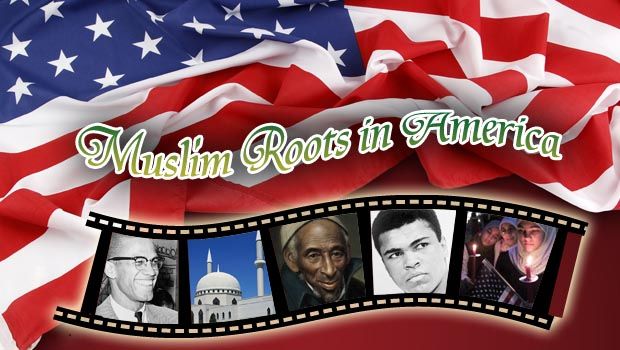
    Islam and Muslims have been part of American history for centuries, but most people are unaware of this fact. They think Islam in the United States is a relatively recent phenomenon and, hence, alien and un-American. In reality, there is a centuries-long recorded history of a Muslim presence in America, and Muslim Americans have contributed much to the nation they call home, as noted by President Barrack Obama: “They have fought in our wars, they have served in our government, they have stood for civil rights, they have started businesses, they have taught at our universities, they’ve excelled in our sports arenas, they’ve won Nobel Prizes, built our tallest building, and lit the Olympic Torch.” This record of contribution and service is extensive, but Islamophobes, sadly, overlook or conceal this fact.

    Far from being a foreign presence, Muslims have exerted a positive influence on American culture even greater than their numbers would suggest from the very beginning.

    Their aim, by any and all means, is to rip out the interlaced thread of Muslim historical and contemporary presence from the American tapestry. But do they not realize that tearing out one thread can unravel the whole? Still they want to ostracize Muslim Americans, to blame the Muslim community collectively for any extremist act anywhere on the globe by any individual(s) who purport to represent the Muslim faith. Yet we hear little about Christian terror groups around the world like The Army of God and The Concerned Christians in the U.S., Eastern Lightening in China, and The Lord’s Resistance Army operating in various countries in Africa, all of which are actively carrying out terror attacks in the name of Christianity.

    It’s truly unfortunate that whenever a Muslim commits an act of terror, the media lets stand, and even exacerbates, the false notion that Muslim extremism is a unique phenomenon. Then we hear Donald Trump call for profiling and increased surveillance on Muslim communities, and a total ban on Muslim immigration to the U.S. Thankfully, political leaders from both parties have either denounced or distanced themselves from Trump’s Islamophobic remarks.

    Negative attitudes toward Muslims in America, however, is far from fading and many Americans only know about Muslims through negative media coverage. A YouGov poll found that more than two-thirds of people surveyed have no Muslim friends or co-workers. Asked if they have ever been inside a mosque, 87 percent of respondents said no. This underscores how important it is to make our fellow Americans familiar with Islam, Muslims, and the historical presence of Muslims in our nation. Noted author Jerald Dirks has pointed out in his book “Muslims in American History: A Forgotten Legacy” that “written documentation, linguistic evidence, and reports of early Spanish explorers of the New World suggest Muslim contact with the Americas prior to Columbus. Muslims and Moriscos sailed with Columbus and were part of many of the Spanish explorations of the New World. Muslims comprised a significant percentage of the enslaved Africans who were brought to the Americas, and many Islamic residuals have found their way into contemporary African-American life and culture… Beginning in the late 19th century, successive waves of Muslim immigrants enriched America, and the phenomenon of Americans converting to Islam became increasingly widespread.”

    James H. Hutson who has worked for the Manuscript Division of the Library of Congress and authored many books, including “Religion and the Founding of the American Republic” (1998), has written, “The Founders of this nation explicitly included Islam in their vision of the future of the republic….Far from fearing Islam, the Founders would have incorporated it into the fabric of American life.” Lynn Stuart Parramore, with a doctorate in cultural theory, has written, “…Thomas Jefferson purchased a Quran to learn about the Islamic legal code – the same Quran that was used in the swearing in of Muslim Keith Ellison to the U.S. Congress. In 1776, John Adams published ‘Thoughts on Government,’ which praised the prophet Muhammad as a ‘sober inquirer after truth.’ Ben Franklin set up a non-sectarian meetinghouse in Philadelphia, declaring in his autobiography that ‘even if the Mufti of Constantinople were to send a missionary to preach Mohammedanism to us, he would find a pulpit at his service.’”

    As we see, Islam and Muslims are not a new or foreign presence in this country. Muslims’ love for, and attachment to, America is no less than that of any other community or faith group. To quote Dr. Parramore once more: “Muslims wish to be seen as Americans, and a look at America’s Islamic roots proves that they have every right to be – even more, perhaps, than those who rail against them. It’s time to clarify the confusion about the role of Islam in early America and remind ourselves that far from being a foreign presence, Muslims have exerted an influence on American culture even greater than their numbers would suggest from the very beginning. The real foreign presence is Islamophobia, which is completely at odds with America’s founding principles.” We hope that all Americans will get the memo that Muslims, as in the past, are contributing to and serving the American ideal, and will continue to do so, eager to enhance the common good and help fulfill America’s greatest potential.


  • Patience During the Times of Trials and Tribulations

    Patience During the Times of Trials and Tribulations

    [button size=medium style=less_round color=gray align=none url=http://hipcast.com/podcast/HyDCP9ks]Click here to listen audio podcast of this article[/button]

    These days Muslims are being tested, from being mocked at to intrusions of surveillance, the threat of expulsion, and even vile remarks towards Allah SWT, The Creator and Sustainer of all that exists. In these tough times, it is faith in Allah SWT, sabr (patience and perseverance) and tawakkul (trust in and reliance on Him SWT) that bring about calmness amidst the chaos and turmoil, bestowing peace and tranquility to the hearts. Moreover, sabr provides illumination – light, guidance, and clarity – in moments of darkness, as Rasoolullah (peace be upon him) said, “… patience is illumination.”

    The example of a believer is that of a fresh tender plant; from whatever direction the wind comes, it bends it, but when the wind becomes quiet, it becomes straight again.

    Often sabr is translated as patience or withstanding with patience whatever difficulty has befallen a person. One may think that it is a passive state of accepting the tests and trials of this dunya, including those inflicting injustice or oppression. But another meaning of sabr is “tasabbur” or perseverance. This is the ability to continue on in spite of difficulties, with steadfastness and unwavering purpose. So sabr is not fatalistic resignation, a passive acquiescence to a situation or circumstances. Both aspects of sabr, patience and perseverance, are required when going through trials and tribulations. And let us be reminded that Allah SWT is with those who have sabr: “And be patient and persevering, for Allah is with those who patiently persevere” (Quran 8:46). For sure, Allah SWT tests the believers throughout their lives, from childhood to old age. Our status in this life can change instantly, from richness to poverty, ease to hardship, joy to sadness, health to sickness, security to fear – life has ups and downs and phases of good or ill fortune.

    He SWT tested each and every one of the Prophets and He likewise tests each one of us. He tests us as individuals, as families, as communities, and as nations. And certainly He SWT tests the Muslim ummah. As He SWT says in the Quran: “…Do people think that they will be left alone because they say, ‘We believe,’ and will not be tested.” More importantly, in each of these tests the believers are measured as to how truthful they are to their belief. Allah SWT says in the very next verse: “And We indeed tested those who were before them. And Allah will certainly make known those who are true, and will certainly make known those who are liars” (Quran 29:1-3).

    Rasoolullah (pbuh) endured all that persecution with sabr and tawakkul in Allah SWT, with grace, tolerance, forbearance, self-control, and absolute resolve. He never gave up.

    So these difficult times we are enduring are part of the test. Rather than shaving one’s beard or taking off the hijab, Muslims should feel honored to visibly represent Islam, a declaration that fear will not extinguish faith! When the genocide took place in Bosnia two decades ago, many Bosnians did not even know how to perform wudhu; but when they were threatened with oppression or even slaughter just because they had a Muslim name, they stood fortified in their faith, proud to be Muslim. Indeed, we must never think that anyone will enter Jannah without being tested. Allah SWT says: “Or do you think that you will enter Paradise without such [trials] as came to those who passed away before you? They were afflicted with severe poverty and ailments and were so shaken that even the Messenger and those who believed along with him said, ‘When [will come] the Help of Allah?’ Yes! Certainly, the Help of Allah is near!” (Quran 2:214).

    Practicing Sabr – Three Requisite Ways

    In Islam, there are three requisite ways in which we must strive to practice sabr. Indeed, in our circumstances today, sabr becomes waajib or compulsory.

    First: Sabr in handling challenges and tests from Allah

    Allah gives the most striking examples of sabr in the lives of the Prophets, as they showed patience and perseverance in situations that tested the very mettle of their faith. A few examples are Prophet Yusuf (pbuh), as a child, being thrown into a well and abandoned by his own brothers; Prophet Yunus (pbuh) in the belly of a whale for three days; Prophet Ayoub (pbuh) tested with loss of health, wealth, and family. And of course all of the prophets were tested and demonstrated great sabr, but there are five who are referred to as “ulul azm,” those with exceptional azm, an unfaltering and unwavering resoluteness of belief and action. These five are Prophets Noah, Abraham, Moses, Jesus, and Muhammad, peace be upon all of them. They never deviated from their devotion to Allah, and remained resolute only for Allah SWT’s pleasure.

    In fact, Allah tests most those that He loves. Rasoolullah (pubh) said: “The Prophets, then the righteous, then those nearer to perfection – a man will be tested with regards to religion. Hence if he is firm in his religion his test will increase, and if he is weak in his religion it is lightened. And a servant will continue to have tests until he walks this earth without any sins.” Of course, both good and ill fortune can be a test. Yet we are assured that every test and trial brings good as long as we demonstrate gratitude in times of ease and sabr in times of hardship. Rasoolullah (pbuh) describes this: “Strange are the ways of a believer for there is good in every affair of his, and this is not the case with anyone else except in the case of a believer; for if he has an occasion to feel delight, he thanks [Allah SWT], thus there is a good for him in it; and if he experiences trouble and has sabr, there is a good for him in it.”

    Today, as we are bombarded with bigotry, rejection, hatred, and even physical abuse, we must not give up, but be steadfast and persevere. This is what causes our iman to increase in Allah SWT. We are reminded of what Prophet Musa (pbuh) said to the Bani Israil: “Moses said to his people, ‘Seek help in Allah and be patient. Indeed, the earth belongs to Allah. He causes to inherit it whom He wills of His servants. And the [best] outcome is for the righteous” (Quran 7:128).

    Second: Sabr in obeying Allah’s commands

    Throughout our daily lives, especially when performing our ibaadaat (acts of worship), we are taught to be patient and to be steadfast in obeying Allah’s orders. The obedience of a Muslim towards Allah SWT and his Messenger (pbuh) must be based on and backed by a strong character of sabr. This is because without patience and perseverance, it is hard for us to consistently perform all our religious obligations with complete sincerity and devotion. With regards to exercising patience, Allah SWT says, “And await in patience the command of your Lord; for verily you are in Our sight. And celebrate the praises of your Lord when you arise” (Quran 52:48).

    Indeed, patience and perseverance are required because our salaah, zakaah, and fasting, our zhikr of Allah SWT, or wearing the Muslim-identifying hijab or a beard, are not always easy and convenient. They require us to have sabr in fulfilling them. Sometimes they become a test for us, yet we have to try our best to fulfill them, for none but Allah SWT. Unfortunately there are those who reject Allah SWT spend their wealth to prevent those who believe from worshipping Allah SWT. But patience and perseverance is required to withstand such onslaughts. Allah SWT says, “Indeed, those who disbelieve spend their wealth to avert [people] from the way of Allah. So they will spend it; then it will be for them [a source of] regret; then they will be overcome. And those who have disbelieved – unto Hell they will be gathered” (Quran 8:36).

    Third: Sabr in refraining from Allah SWT’s prohibitions

    Sabr is required to hold oneself accountable for all actions, and that means, with regard to Allah SWT’s prohibitions, practicing restraint and holding back from all that is forbidden, disobedient, or harmful to one’s character or religious state and standing in the eyes of Allah. We practice patience in the face of annoyance or frustration so that we don’t engage in loss of temper or unfair criticism. When we experience sorrow or suffering or misfortune, we are patient, persevering with faith and guarding against bitter complaint or hopelessness. By practicing sabr in daily living, at times when things just don’t go right or as planned, we fortify our capacity to refrain from the haram, those things that are explicitly forbidden such as fornication and adultery, usury, using or consuming intoxicants, backbiting or suspicion, exploitation or fraud in business practices and dealings, and all other forbidden or unlawful things as specified by Allah SWT. We should remember that Allah is the All-Seeing and All-Knowing. We are also reminded of His promises of reward if we exercise sabr in refraining from His prohibitions.

    Benefits in Practicing Sabr

    1. Sabr results in Allah’s mercy and guidance. Allah Says in the Qur’an: “They are those on whom are the blessings from their Lord, and receive His Mercy; and it is they who are the guided ones” (Quran 2:157). Allah also says: “… those who have sabr and do right actions, for them is forgiveness and a great reward” (Quran 11:11).
    2. Sabr leads to intelligence in thought and action. One of the major factors preventing people from acting in reasonable, thorough, or prudent ways is their impulsive thinking and behavior. Sabr is the remedy for that since it is the willingness to take the appropriate or necessary time to think things through, to think before acting, to avoid being hasty or careless or reckless. With sabr, one is organized and methodical, not haphazard. One is conscious of cause and effect and considers consequences that follow one’s actions. Sudden intense emotion or desire, not countered by sabr, shuts down the mind and pushes people to act without thinking. For this reason, when he was asked for advice by one of his companions Rasoolullah (pbuh) replied, “Don’t get angry.” And the companion kept on asking for more advice, and each time Rasoolullah responded: “Don’t get angry.”
    3. Every single time we practice sabr when difficulty or hardship befalls us, Allah removes some of our sins. The Prophet (pbuh) said, “No fatigue, nor disease, nor sorrow, nor sadness, nor hurt, nor distress befalls a Muslim, even if it were the prick he receives from a thorn, but that Allah expiates some of his sins for that.”
    4. Allah SWT grants true leadership to those with sabr. He SWT says, “And We made from among them leaders guiding by Our command, so long as they exercised sabr and were certain of Our signs” (Quran 32:24).
    5. Most importantly, the reward for demonstrating sabr in this life will be in the highest plains of Jannah. May Allah SWT make us amongst those who attain that great reward. He SWT tells us: “And those who have believed and done righteous deeds — We will surely assign to them of Paradise lofty dwellings beneath which rivers flow, wherein they abide eternally. Excellent is the reward of the [righteous] workers who persevere in patience and upon their Lord rely” (Quran 29:58-59).

    Some Methods for Acquiring Sabr

    In these troubling times, increasing our sabr is essential. Here are a few ways to do that:

    • Make zhikr of Allah SWT — These days we should be engaged in zhikr (remembrance) of Allah. Our morning and evening zhikr (al-ma’thuraat, prophetic supplications) should be recited for protection and for peace of mind. Allah the Almighty says in the Quran: “…Verily in the remembrance of Allah do hearts find rest!” (Quran 13:28). When we do our part to defend Islam, the Prophet (pbuh), and ourselves, we feel good about that. And when fair-minded non-Muslims defend our rights, we feel supported and reassured of goodness in humanity. It is, however, our remembrance of Allah, of His help, support, and the certainty of success that brings about the greatest joy. Allah SWT tells the believers: “Allah made it not but as a message of good news for you and as an assurance to your hearts. And there is no victory except from Allah, the All-Mighty, the All-Wise” (Quran 3:126).
    •  Keep in mind the qadr of Allah SWT — We must keep in mind that everything comes from Allah SWT. We must be firm in our belief and faith in qadr, divine destiny, that Allah SWT has planned the entire universe and the existence of all things with His perfect justice and wisdom, and that only He possesses profound and complete knowledge of the past, present, and future. With this foremost in our minds, we will be able to put our trust in Him, fully aware that He decrees things according to a wisdom far beyond our comprehension, and that Allah SWT is in control of everything. “Unquestionably, His is the creation and the command; blessed is Allah, Lord of the worlds” (Quran 7:54).
    •  Gain strength from the Sunnah of Rasoolullah (pbuh) — Whatever the adversity or heartache we experience, we must not give up. We gain strength from the life of Rasoolullah (pbuh). During the Makkan period, from the time Rasoolullah declared his prophethood until he was expelled, he suffered torments and persecution by the Quraysh, almost beyond human endurance:
    • mockery, threats, verbal abuse, accusations of being a sorcerer, poet, liar, or madman; clamorous noise made while the Quran was being recited
    • open hostility and campaigning against Rasoolullah by kin (Abu Jahl and Abu Lahab)
    • rejection by his own people and the result that he had no clan protection; devastating boycott of his entire tribe; expulsion
    • pressure on his close family members to force him to stop preaching; torture of some of his followers such as Bilaal (RA) and killing of some such as Sumayyah (RA) and her husband Yasir (RA); offering to Abu Talib to exchange Umaarah, the son of one of the Quraysh leaders, for Rasoolulah, in an effort to stop the Prophet’s mission
    • Quraysh instigating some among the People of The Book to confront Rasoolullah (pbuh) with hard questions about religious matters, hoping he would be unable to answer correctly or effectively
    • camel entrails being thrown on him; being pelted with stones and expelled from Taif; assassination attempt; confiscation of property; plotting by various tribes to eliminate the Muslims

    Rasoolullah (pbuh) endured all that persecution with sabr and tawakkul in Allah SWT, with grace, tolerance, forbearance, self-control, and absolute resolve. He never gave up. In fact, every time they endured persecutions, he and his companions became stronger. And many who engaged in harassing and oppressing the Muslims, themselves, in time, became upright Muslims, devoted to and defending Islam. One only need to look at the example of Abu Sufyan who was the leader of the disbelievers. In the end, he accepted Islam, and from his generation came the Umayyad Dynasty. And let us never lose sight of the fact that because of the patience and perseverance of Rasoolullah, the world today is filled with 1.8 billion Muslims, found in every nook and corner of the globe, just as Rasoolullah (pbuh) predicted: “This message will reach to wherever the night and day have reached. Allah shall not leave any home built by clay or stones or by animal skin [tent] except Allah will make this religion to enter it, to give honor to those who are honorable and to disgrace those who are disgraceful. Allah shall give honor to Islam, and Allah shall give dishonor to unbelief” (Musnad Ahmad).

    Let me end with an inspiring statement from Rasoolullah (pbuh): “The example of a believer is that of a fresh tender plant; from whatever direction the wind comes, it bends it, but when the wind becomes quiet, it becomes straight again. Similarly, a believer is afflicted with calamities. And an impious wicked person is like a pine tree which keeps hard and straight till Allah cuts it down when He wishes.” We can understand from this that the believer endures all difficulties with sabr until Allah provides relief. The believer can be blown about, shoved off-center, buckled, knotted up, or wrenched by the windy storms of ignorance – its hatred, bigotry, and hostility. But, as a believer, he or she again and again will straighten up, stand upright and tall in dignity, and be ready to move ahead with resolve and vigor.

    O Allah SWT! Guide our people to the Straight Path and protect us all! Those among us whose imaan is weak, let them be strengthened through these trials. Help us to remain truthful to our faith. Help us to speak truth. And guide the Muslim ummah to ever greater righteousness, integrity, and justness as we sustain ourselves and strengthen ourselves through sabr and tawakkul. Ameen.

  • Post 9-11: Adversity Transforming and Strengthening the Muslim Community

    Post 9-11: Adversity Transforming and Strengthening the Muslim Community

    [button size=medium style=less_round color=gray align=none url=http://hipcast.com/podcast/HVtq3mxs]Click here to listen audio podcast of this article[/button]

    Terror in Paris. Mass killing in San Bernardino. These words were burned into my mind in the past few months as we were faced yet again with the horrific slaughter of innocent people, and also with a media barrage once more blurring the line between Islam — and the majority of Muslims in the world — and terrorism. The American consciousness is infused with very selective portrayals of world events, portrayals that present the “other” — foreign, dangerous — at fundamental odds with everything “we”’ stand for. The notion that “we” solely uphold the highest standards of civilization and humanitarian ideals, in contrast to the rest of the world, permeates the information we receive from news and entertainment, and is further given currency by all those around us who have been equally indoctrinated. The result is the perception of an actual “us vs. them” scenario. In the minds of so many, the identity of “them” is equated with Muslims.

    It is not an “us vs. them” scenario. The vast majority of those killed or wounded by ISIS are Muslims.

    Muslim leaders worldwide have roundly condemned ISIS, and the vast majority of Muslims around the world consider ISIS to be utterly contrary to Islamic teachings and principles. Yet, despite the near universal denunciation of terrorism, the media hypes up fear and hysteria about Islam and Muslims in the wake of a terror attack, seldom providing contextualization, larger perspective, or an agenda that brings Americans together. This results in American Muslim citizens (as well as Muslims in many other Western countries) being targeted as part of a backlash after each event; many report living in fear, always looking over their shoulders, taking extra precautions like standing farther away from the edge of platforms in train stations, women wearing hats rather than hijab, and men shaving their beards.

    Progress Has Been Made

    Although at times the current state of affairs seems dismal, we have to note that much progress has been made by our communities since the horrific attack on American soil, the September 11 attacks of 2001. Much of that progress, taking many forms of dawah dovetailing with a good number of Americans getting curious about Islam, is in fact directly related to those awful attacks and the resulting near-obsession in the media about Islam and Muslims, however negative. It’s the proverbial silver lining in a terrible event.

    The allegations against Islam have caused many to question themselves, and to feel inclined to know their religion more profoundly than before.

    For many Muslims, being wrongfully accused of moral depravity and being associated by default with a miniscule minority of extremists who happen to be very loud, has lit a fire of motivation. In some respects, it is as if there is a renaissance of Islamic learning, practice, and a new fervor for civic involvement. Many Muslims have been harshly awakened, as if from a deep slumber, by these events. The allegations against Islam have caused many to question themselves, and to feel inclined to know their religion more profoundly than before. Many want to know Islam’s stance on violence and revenge, on tolerance and forgiveness. The struggle to gain greater knowledge facilitates a deeper connection with the Quran and Prophet Muhammad, peace be upon him. For many of those who have begun reading the Quran more intently, and have put increased importance on learning about the life of the Prophet, they have found doors opening to a more purposeful life, filled with greater humility, gratitude, and faith.

    Islam Brought Into Daily Awareness

    For many non-Muslims, these events have brought Islam out of the peripheries of consciousness into the forefront of their daily awareness. It’s no longer just a boring page in a history textbook, but something that actually affects life in the real world. Personally, before 9/11, I had barely an awareness that there was a religion called Islam. The attacks, and the fear and agitation I felt as a result, caused more than cognizance. It motivated me to try to discredit religions altogether through research and logical analysis.

    Many Americans today, faced with the ongoing turmoil in the world and the increasing number of terror incidents, want further information about Islam and Muslims.

    It was 9/11 that spurred me and many other Americans to read the Quran for ourselves. Some felt motivated by macabre curiosity, others asked the question, “How can this be? What kind of religion actually encourages killing civilians?” A number of individuals had an intuition that it was not, in fact, the religion, but political agendas and grievances behind these acts. Looking into Islam became necessary for those of us who craved to understand our vulnerability and how to respond to threats to the safety and well-being of our families and nation. My journey of inquiry ultimately led me to embrace Islam as my religion and way of life. I discovered that rather than promoting violence and chaos, Islam inspires profound peace.

    Many Americans today, faced with the ongoing turmoil in the world and the increasing number of terror incidents, want further information about Islam and Muslims. Initiatives such as the WhyIslam billboards and the mobile advertising trucks of HateBusters (a non-profit charitable organization “dedicated to teaching people how to like people and how to oppose hate”), and numerous websites are furthering the conversation by providing public access to authentic sources of the tenets and teachings of Islam. When activists, Muslim and non-Muslim, present credible and thought-provoking information to the public, discourse becomes more genuine and more aligned with reality, helping to break down stereotypes and fear.

    By Allah’s Mercy, and the increase in the number of Americans researching Islam, many Americans are adopting Islam as their way of life. It is estimated that some 20,000 Americans accept Islam every year. This means that the fabric of the American Muslim community is changing. It’s becoming even more diverse, and with more native-born American Muslims, Islam is becoming less foreign to the American public, challenging the standard stereotypes. I would argue that having more Americans, especially of European descent, accepting and adopting Islam, causes many non-Muslim American families to feel differently when they hear Islamophobic rhetoric. Knowing the people who are being targeted is very different from when the victims are completely unknown.

    Identity and Civil Rights

    For Muslims, terrorism and the resulting backlash against Muslims has raised the question of identity. American Muslims who are deeply moved and disturbed by attacks on their country, yet also suffer from a backlash of hate and bigotry based on guilt by association, at first may feel obliged to choose between being Muslim or being American. But the vast majority of American Muslims have taken ownership both of their Islamic and their American identities. In fact, since the September 11 attacks, mosques and Islamic centers have increased by more than 74 percent. Numerous programs disseminating Islamic knowledge to both Muslim and non-Muslim audiences have also cropped up across the country.

    By Allah’s Mercy, and the increase in the number of Americans researching Islam, many Americans are adopting Islam as their way of life.

    Meanwhile American Muslims are increasing their civic involvement and currently two Muslims are members of the House of Representatives, Keith Ellison and Andre Carson, and several others have been elected at the state level. Muslims have garnered a much greater presence in the media since 9/11 as well, appearing as guests and experts in mainstream media, both TV and radio. We are also taking advantage of social media to make our presence and ideas known. Muslims have also recognized that, as citizens, we have constitutional rights to practice our religion freely. With the help of organizations like CAIR, Muslims are reporting discrimination, litigating their cases, and in a growing number of cases, winning in court. We are becoming savvier, more confident in the knowledge that many Islamic and American principles and values are identical or compatible.

    According to a 2011 Department of Justice report titled “Confronting Discrimination in the Post-9/11 Era: Challenges and Opportunities Ten Years Later,” the FBI reported a 1,600 percent increase in hate crimes against Muslims in 2001, following 9/11. The report notes that the initial spike went down but “it was soon replaced by other bias-related incidents, including discrimination in education, employment, and religious land use.” Government officials moved to strengthen existing civil rights laws and to ensure the rights of Muslim Americans and other individuals, like Sikh and South Asian Americans, who were targeted following the 9/11 attacks. Dr. James Zogby, founder and president of the Arab American Institute, has stated, “The threats were nothing new. My life had been threatened before. My office had been firebombed in 1980. Never a prosecution – ever. Since 9/11, three people who threatened my life have gone to jail. I’m not proud of it, but I’m pleased to know that there is somebody there to defend me.”

    The DOJ Civil Rights Division has put out statements encouraging the inclusion and embrace of American Muslims, to counter the impulse amongst some Americans to demonize, exclude, or merely tolerate Muslims. They have stated in no uncertain terms that anyone who infringes upon another’s rights, will be brought to justice. They have increased outreach to vulnerable communities and listened to concerns. Amber Khan, the Corporate Secretary of Muslim Advocates, has noted that “DOJ leaders within the first few months after 9/11 attended more than 100 meetings and events with representatives from the Arab, Muslim, Sikh, and South Asian communities.”

    Greater Muslim Presence, Representation, and Responsibility

    The fact that a new generation of American-born Muslims is coming of age and choosing from a broad range of professions, including those in politics and media, means that we will have greater presence and representation, with Muslim narratives, concerns, and contributions becoming more and more mainstream and familiar to the broader American public. Muslim women journalists wearing hijab, as well as Muslim politicians or political commentators, all without foreign accents and who appear culturally current and natural, help transfer Muslims, in the collective consciousness, out of the realm of foreign and strange. This is an important step in creating a distinction in the public mind and discourse between Muslims and terrorists.

    Although much progress has been made, we are still at the beginning of an era of change. The fact that mosques and Islamic centers have increased is good – but, are these centers truly ready for this new era? While years ago it was acceptable to have Islamic centers catering exclusively to immigrant populations, today we must transform all our places of worship into facilities that are welcoming to all. We need more programs to help Muslims acquire knowledge and develop a truly Islamic character. We also need to increase outreach initiatives and programs to encourage the participation of our non-Muslim neighbors. And with the large number of converts to Islam, all of our Islamic centers should have services supporting and assisting new Muslims so that they feel an integral part of their new community as they journey on their path of seeking knowledge and practicing Islam in their daily lives. Also, the fraternity of believers is an area that needs development. Fractured communities erode unity and solidarity and programs and events are needed to foster a sense of fellowship and love for all Muslims, regardless of ethnicity or culture.

    Because Islam was meant as a mercy for mankind, our centers should reflect that principle and wherever there is a masjid, the residents in the neighborhood should feel that it is indeed a blessing. This can occur if we collectively work to improve our communities and the lives of our neighbors, whether it be by cleaning up the streets, providing assistance to the less fortunate, or by hosting beneficial events for the entire community. Our presence, as a minority, in this nation obliges us to be visible and positive representatives of Islam. It is our responsibility to spread the word about Islam. And remembering all of Allah’s prophets can serve to give us great strength. In the face of adversity they persisted with patience, integrity, and unwavering commitment to Allah and the message of true success, the surrender to God alone. That is our path and they are the best models for us to emulate.

    If we do our part, perhaps we can turn the tables and be the reason our non-Muslim neighbors are curious about Islam, rather than as a result of atrocities. Perhaps when we work harder to be good Muslims, better neighbors, friends and citizens, people will not respond to acts of terror with fear, suspicion, and hatred toward all Muslims. They need to know that these actions contradict Islam and that the vast majority of Muslims condemn and abhor them. It starts with each one of us. If we follow the beautiful guidance in the Quran, we will find that indeed Allah is the best of helpers:

    “And strive for Allah with the striving due to Him. He has chosen you and has not placed upon you in the religion any difficulty. [It is] the religion of your father, Abraham. Allah named you ‘Muslims’ before [in former scriptures] and in this [revelation], that the Messenger may be a witness over you and you may be witnesses over the people. So establish prayer and give zakat and hold fast to Allah. He is your protector; the best to protect and the best to help” (Quran 22:78).

  • Islam Has Been Part of American History Since Its Founding

    Islam Has Been Part of American History Since Its Founding

    [button size=medium style=less_round color=gray align=none url=http://hipcast.com/podcast/Hc90ZYxs]Click here to listen audio podcast of this article[/button]

    Muslims are feeling unwelcome in America today, but followers of Muhammed were living here before the arrival of English in Spanish-controlled Florida and French Louisiana, where slaves were imported from the Senegambia region of Africa, home to a large Muslim population.

    Muslims wish to be seen as Americans, and a look at America’s Islamic roots proves that they have every right to be – even more, perhaps, than those who rail against them.

    Influenced by the tolerance of the Enlightenment, America’s founders considered Islam’s place in the new republic despite widespread fear of Barbary pirates and a sense of European rivalry with the Ottoman Empire. As befitting a student of law in a religiously diverse land, Thomas Jefferson purchased a Quran to learn about the Islamic legal code – the same Quran that was used in the swearing in of Muslim Keith Ellison to the U.S. Congress. In 1776, John Adams published “Thoughts on Government,” which praised the prophet Muhammad as a “sober inquirer after truth.” Ben Franklin set up a non-sectarian meeting house in Philadelphia, declaring in his autobiography that “even if the Mufti of Constantinople were to send a missionary to preach Mohammedanism to us, he would find a pulpit at his service.”

    Tea Partiers occasionally know and distort these facts, but they are completely ignorant about another side of American Islam. Until recently, the study of the African transmission of Islam to America has been neglected, partly because materials are scarce, and partly because early observers were often ignorant of Islam or had reasons for downplaying the fact that God-fearing, literate people among the enslaved had to be written off as heathen and backwards in order to justify the institution.

    And yet the numbers of enslaved Africans who were Muslims was significant: Conservative estimates put the number at 10 percent of all slaves, with some estimates running as high as 30 percent. A hodgepodge of sources – from plantation records to runaway slave advertisements to WPA interviews – show that Muslims went to great lengths to observe their religion; that Islam was a marker of status in the larger African American society; and that African American culture reflects the influence of early Muslims. On Sapelo Island, Georgia, for example, the congregation of the First African Baptist Church always prays to the east, the direction in which the church is pointed, and bodies are buried pointing to the east. The Nation of Islam may have been the 20th-century manifestation of a very ancient connection to a religion that had lived on in the South for centuries among African Americans even though it was overtaken by Christianity. Historian Michael Gomez points out that Elijah Muhammad, born in 1898 in Georgia, grew up at a time when Islam may still have been practiced by African-born Muslims, and the children and grandchildren of early Muslims were likely aware of their Islamic heritage.

    The real foreign presence is Islamophobia, which is completely at odds with America’s founding principles.

    On plantations throughout the South, particularly in the early period of slavery, it would have been possible to see enslaved Africans with names like Mustapha and Fatima kneeling on prayer mats, their faces turned toward the rising sun. (Writing of “Arabic-Africans” along the coast of Georgia, Joel Chandler Harris called them “not the most numerous, but the most noticeable” type.) Some planters particularly sought slaves from Senegambia for their knowledge of rice cultivation, and some Southern slave owners considered Muslims superior to non-Muslims as workers, though others considered their education and literacy to be dangerous.

    Polls show that Americans remain unfamiliar with Islam, and according to the ACLU, anti-mosque activity has bubbled up in more than half of U.S. states in the last five years. Yet Islam is inextricably woven into the fabric of American history, from the distinctive service of Muslims in all American wars, including the Revolution, to the legacy of their descendents, which include notable figures. (Abolitionist Frederick Douglass changed his name from Frederick Bailey, and it is possible that the name “Bailey” is a form of the Arabic common name “Bilali.”)

    Muslims wish to be seen as Americans, and a look at America’s Islamic roots proves that they have every right to be – even more, perhaps, than those who rail against them. It’s time to clarify the confusion about the role of Islam in early America and remind ourselves that far from being a foreign presence, Muslims have exerted an influence on American culture even greater than their numbers would suggest from the very beginning. The real foreign presence is Islamophobia, which is completely at odds with America’s founding principles.

    For further information on America’s Islamic roots, see Allan D. Austin’s “African Muslims in Antebellum America.” Helpful articles include Michael Gomez’s “Muslims in Early America” published in the Journal of Southern History and Thomas Custis Parramore’s “Muslim Slave Aristocrats in North Carolina” published in the North Carolina Historical Review. I was aware of this history as a child because the last historian mentioned is my late father.

  • America’s ‘Peculiar Institution’: Slavery and the Making of a Nation

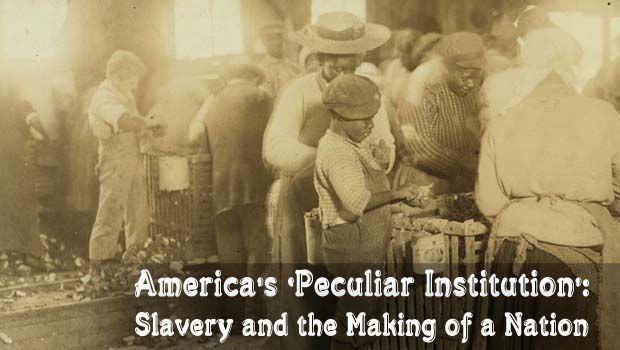
    America’s ‘Peculiar Institution’: Slavery and the Making of a Nation

    [button size=medium style=less_round color=gray align=none url=http://hipcast.com/podcast/HrrzzsXs]Click here to listen audio podcast of this article[/button]

    Slavery, in all its hideous iterations throughout history, was, paradoxically, the outgrowth of “civilization.” In more primitive groupings of human beings such as hunters/gatherers or subsistence farmers, slaves would have been viewed as burdensome additions to an already tenuous existence. There was no hidden or apparent advantage in being responsible for the food and shelter of another person when survival, itself, was difficult and uncertain. With the development of villages and towns, along with the establishment of commercial farming and craft development, cheap or unpaid workers became desirable. There were many ways for a free person to end up as a slave, including inability to pay off a debt, being captured by adversaries during raids, kidnappings, or wars. Slaves and their societal status have been outlined in ancient legal works such as the Babylonian Code of Hammurabi, and in religious texts such as the Old Testament, the Quran, and the authentic traditions of Prophet Muhammad (pbuh). Slavery has also been chronicled in the practices of ancient Egypt, Greece, and Rome. With the advent of Islam, all justifications for enslaving another human being were eliminated except for prisoners of war. However, Muslims were commanded to feed them the same food as they ate, to clothe them as they were clothed, and not to overburden them.

    Slavery in the U.S. was more brutal, and culturally and religiously destructive than its counterparts in the Caribbean, Central and South America where slavers did not routinely separate slaves of the same tribe, family, language, or religion.

    Throughout the annals of history, slavery was mostly a life-long condition of brutal bondage with escape being an offense punishable by death. The Old Testament stipulates that if a person from the Hebrew tribes had a Hebrew slave, after six years that slave was to be released. That did not apply to “foreigners,” meaning anyone who was not a Hebrew, and enslaved persons from other nations or temporary residents living among the Hebrew people, could be enslaved for life. The Quran and Sunnah of Prophet Muhammad (pbuh) provided any and all slaves the potential for freedom, and those who owned slaves were given religious incentives to liberate them. In a narration contained in Sahih Bukhari, narrated by Abu Hurayra, The Prophet (pbuh) said, “Whoever frees a Muslim slave, Allah will save all the parts of his body from the (Hell) Fire as he has freed the body parts of the slave.”

    The Transatlantic Slave Trade – Unrivaled Brutality

    Of all the historical periods of slavery, with its cruelty and exploitation for personal and economic gain, the transatlantic slave trade is perhaps unrivaled in its brutality, and its continuing detriment to African-American social and economic life in the U.S. is highly visible. The first recorded shipment of African slaves to the Americas was captained by Sir John Hawkins, a pirate, merchant, British naval commander, and slave trader. In October 1562, John Hawkins set sail from England to Sierra Leone on a 700-ton ship purchased by King Henry VIII and loaned to him by Queen Elizabeth. Hawkins named the vessel “The Good Ship Jesus,” despite his plundering and pirating and, ironically, he was known as a religious gentleman who insisted that each member of his crew “serve God daily.”

    Black slaves built the White House and U.S. Congress, as well as many university buildings in the Northeast and South.

    Hawkins was aware of the Spanish and Portuguese need for African slaves to transport to the New World to labor in their newly colonized lands in the Western Hemisphere. Upon arriving in Sierra Leone, Hawkins and his crew joined in the country’s native wars, and at one point set fire to a village of 8,000 inhabitants. Five hundred natives of Sierra Leone were captured by Hawkins and his men, “partly by the sword, and partly by other means,” according to Hawkins own description. One of the other means was to deceive the unsuspecting Africans by telling them that if they came with him peacefully, without resistance, he guaranteed for them free land and riches. Queen Elizabeth gave her permission for Hawkins to transport Africans to the New World “only if they did so by their own free consent.”

    Hawkins was not yet done as he pirated a Portuguese ship, commandeering 70,000 pieces of gold. His human cargo of 500 Africans was smuggled in and sold on the island of the Dominican Republic, a Spanish possession. The official policy of the Spanish government at that time was that slavery was not allowed in their Western possessions. The 1531 decree by King Ferdinand and Queen Isabella forbidding the presence of African Muslims in the West was officially still in effect, but rarely enforced. Slaving was a profitable enterprise. While the Spanish government offered a weak pretense that they did not want slaves in the West, the British played no such charade. In 1619, a Dutch ship, the White Lion, pirated 20 enslaved Africans from a Spanish ship. Landing in the English colony of Jamestown, Virginia for repairs, the Dutch sailors sold the slaves to the colony in exchange for food and supplies.

    Chattel Slavery and Tobacco

    The newly-arrived slaves in Jamestown started a 240-year love affair between the land that was to become the United States of America and the immensely profitable institution of chattel slavery. The British immediately understood the profitability of tobacco once the Native Americans introduced them to smoking and the medicinal use of the plant. Virginia was an ideal climate for tobacco production. After receiving a favorable review of tobacco from England, the British in Virginia proceeded to drive Native Americans off their ancestral homelands so that tobacco and British colonizers could replace them. Although the British, Spanish, and Portuguese attempted to enslave Native Americans, it was quickly determined that Native Americans were not easily subjugated. Foremost among the reasons was that Native Americans had the advantage of intimately knowing the land. It was virtually impossible to capture them once they escaped their bondage. Secondly, the Europeans brought diseases against which the Native Americans had no immunity, and over a short period of interaction with Europeans, disease decimated their once prolific numbers, killing up to 95 percent of the population.

    White supremacy and racism, and its despicable outgrowth, chattel slavery, fueled the economic engine of this nation’s past.

    The colonization of North American territory in the late 1500s, 1600s, and 1700s by the British, Spanish, and French corresponded with the rapidly developing slave population in this country. As the British demand for tobacco increased, tobacco growing states like Virginia, North and South Carolina, and Georgia increased their growing and production. Planting and harvesting tobacco were labor-intensive operations that motivated an ever-rising demand from planters for slave labor. The transatlantic slave trade also generated a new class of slavery-related jobs in the colonies, including brokers, patty rollers (slave patrols), and overseers, as well as a new class — ultra-wealthy landowners who planted vast tracts of tobacco. This wealthy planter class (“planter” generally defined as an owner of property and 20 or more slaves) included most of the “Founding Fathers” of the American republic including George Washington, Thomas Jefferson, and James Madison. As a result, the American Constitution and the Declaration of Independence, undoubtedly beautifully-worded documents, elucidate the rights and privileges of White, male land owners, including the right to vote, hold public office, or serve on juries. Excluded from the Constitutional assurance of these rights were those who did not own property, as well as females, African Americans, Native Americans, and non-White immigrants. For the purpose of taxation, African slaves were designated three-fifths of a human being.

    When the United States entered the business of transporting human cargo in the bowels of slave ships from Africa to America, the cruelness of the slave trade exponentially increased. American slavers preferred the less expensive markets in Central or East Africa to the more common areas on the coast of West African. To increase their profit margins, American slavers also specialized in capturing and buying African children since more of them could be crammed in holding areas below deck. Slavery in the U.S. was more brutal, and culturally and religiously destructive than its counterparts in the Caribbean, Central and South America where slavers did not routinely separate slaves of the same tribe, family, language, or religion. Thus, In Brazil, the mainly Muslim slaves held on to their religious beliefs and practices, and among them were very learned Muslims. A well-known rebellion took place in Bahia, a northeastern state, in 1835. The Muslim slaves organized a revolt against their enslavers, calling it a jihad. Their struggle to obtain freedom was short-lived, but it shows the critical mass of Muslims that existed in Bahia at the time.

    The Cotton Gin – Growing Profits and Demand for More Slaves

    The last two decades of the 1700s, following the American Revolution and the founding of the United States of America, saw the abolition of slavery in a number of Northern states, and the abolitionist movement grew. George Washington, first president of the U.S., had owned 318 slaves at the highest point, and had sanctioned slavery throughout most of his life. But in a letter to his secretary and close friend Tobias Lear in 1794, five years before his death, Washington wrote about selling a lot of his land in the Southern state of Virginia. “I have another motive,” he wrote, that “is indeed more powerful than all the rest, namely to liberate a certain species of property which I possess, very repugnantly to my own feelings; but which imperious necessity compels.” The more industrialized North was naturally less dependent on slave labor than the mostly agriculture South. Northern states, however, were the primary brokers of Southern products to be distributed on the world market. In addition to cotton, the South was the primary producer of agricultural products for export to England. As cotton production increased, primarily due to the needs of England, the capacity of the South to meet demands seemed doubtful at best. Growing and picking cotton was not only labor intensive, but required tedious and time-consuming effort to separate the sticky seeds from the cotton.

    In 1793, a Massachusetts farmer named Eli Whitney invented a machine, the cotton gin, which would revolutionize cotton production. Before the cotton gin, it took 10 hours to produce one pound of cotton. The cotton gin would eventually produce 1,000 pounds a day at a fraction of the cost. This revolutionary invention increased cotton production from 138,000 pounds a year to 1,600,000 pounds. “King Cotton” would grow to become 50-60 percent of the new nation’s exports. Before the cotton gin, the full production of cotton, by hand, could not be done quickly and cotton was not profitable. When the cotton gin quickened and increased production, slavers needed greater numbers of slaves in the field to keep up with demand. So the cotton gin not only made cotton growing profitable, it further entrenched slavery as a Southern profit-making institution.

    In fact, chattel slavery was the engine that ran the economic expansion during the 17th and 18th centuries. Thomas Jefferson pushed Congress to outlaw the importation of slaves into the United States after January 1, 1808. This action was of great benefit to his home state of Virginia since it would become the slave breeding capital of the country after this legislation became law. Northern businessmen invested heavily in slavery, and the profitable buying and selling of African men, women, and children was augmented by the financial instruments that were created to facilitate and capitalize on slavery — “bonds backed by asset securitization,” the assets being the slaves themselves. Thus, human beings were used as collateral by the slave holders and traders to borrow money from banks.

    In fact, many major corporations, including Lehman Brothers, JP Morgan Chase, Brown Brothers Harriman, Barclays, and Wachovia, have acknowledged and apologized for their involvement and profiteering from the slave trade. With the ascension of the South’s “King Cotton,” the balance of power significantly shifted from the North to the South.

    Slavery: ‘Our Peculiar Institution’

    Slavery in the United States was a near-perfect confluence of the country’s push for economic expansion, religious justification for slavery (Genesis 9:20-27 for example), legal sanctioning and institutionalizing of White supremacy, and pseudo-scientific theories of the day that posited the inferiority of non-White races.

    The dehumanizing, exploitation, and brutality against Black slaves in the United States represented one of the longest, most sustained assaults on human life and dignity in history. Slaves were characterized as sub-human, savages to be trapped like animals and brought to America to serve, without compensation, the interests of White supremacy. Black slaves built the White House and U.S. Congress, as well as many university buildings in the Northeast and South. In his monumental book, “Race, Slavery, and the Troubled History of America’s Universities,” Craig Steven Wilder writes, “American colleges were not innocent or passive beneficiaries of conquest and colonial slavery…The academy never stood apart from American slavery, in fact, it stood beside the church and state as the third pillar of a civilization built on bondage.” White supremacy and racism, and its despicable outgrowth, chattel slavery, fueled the economic engine of this nation’s past. In countless ways, the discrimination, brutality, and denial of rights continue into the present.

    Those who participated in and profited from slavery euphemistically referred to it as “Our Peculiar Institution.” Better to call a spade a spade and realize that slavery was America’s “vile institution.” The racism at its core monopolized and kept power in White hands. It supported and vitalized wealth building for Whites only, and created a seemingly permanent underclass of African Americans whose ancestors toiled and suffered so that prosperity and power and privilege for the dominant class could be built upon their backs.

  • Interview: From MSA to ICNA and ISNA

    Interview: From MSA to ICNA and ISNA

    Dr. Talat Sultan, originally from Pakistan, immigrated to the U.S. in 1962. He earned his Master’s in Islamic history and culture from the University of Karachi and then a Doctorate of Education from UCLA. He has served as the principal of a number of Islamic fulltime schools in Memphis, Chicago, Phoenix, and Alexandria, Virginia. Dr. Sultan taught and served as the chair of the Division of Education and Psychology at Barber-Scotia College in North Carolina for 14 years, and as a professor of research in Islamic education at Umm Al-Qura University, in Makkah, Saudi Arabia. His further contributions include serving as the Director of Education for ISNA, the first President of ICNA from 1968 to 1975 and then again 2003-05, and president of AMSS (Association of Muslim Social Scientists).

    Question: What did the early Muslim immigrants to the U.S. find with regard to Islamic groups and organizations?

    In the 1950s, many Muslim youth started coming to the U.S. for higher education. When they arrived, they did not find very many organized Islamic groups here. The largest national organization of Muslims –Nation of Islam — was not an authentic Islamic organization. It was led by a self-proclaimed prophet, Elijah Muhammad, who had mixed some Islamic tenets with his own distorted beliefs. The only other national organization was the Federation of Islamic Associations (FIA). It was a loose association of a few Islamic centers that held an annual convention to provide an opportunity for Muslims, especially Muslim youth, to socialize. Many Islamic norms were violated in that process.

    Question: How did the organizational work begin that led to the formation of MSA, and how did it progress over those early years?

    Muslim students started to form Islamic organizations on their campuses. Some efforts were made in 1950s to forge a union of all campus organizations on the national level, but financial considerations became the main obstacle. The second such known effort took place on January 1, 1963 when it was resolved that we would work hard for the sake of Allah SWT to overcome all difficulties and within a period of three months, we established a network of communication with 200 universities and colleges. Dr. Ahmad Sakr, who recently passed away, may Allah SWT have mercy on him, was a graduate student in Food Technology at the University of Illinois, Champaign – Urbana, and he hosted the first convention of the Muslim Student Association of U.S. and Canada in April, 1963. Five universities were represented, with 15 individuals in attendance. That convention heralded the coming of ISNA, the national organization that was officially founded in 1982.

    MSA’s motto, “And hold firmly to the rope of Allah all together, and do not become divided…” (Quran 3:103), clearly reflects the very purpose of the organization, given that there was at that time no authentically Islamic national organization to unify Muslims. This was, indeed, the need of the hour and soon MSA became not only an association of chapters on almost all major campuses in the U.S. and Canada, but also an organization representing various Islamic centers. The MSA annual conventions soon became a gathering of people from around the world.

    Question: What was the focus of MSA in the early years?

    A number of projects were developed that focused on providing support and guidance to Muslims, including the establishing of congregational prayer on campuses, development of a network of Islamic centers, providing assistance in funeral services and burials, and other services. One initiative was North American Islamic Trust (NAIT), the financial arm of the MSA, focused on the financial and investment needs of Muslim individuals, organizations, and businesses. It set up a special fund to accept deposits from Islamic centers, then making interest-free investments and providing them with halal, profit-and-loss-sharing returns. NAIT also offered legal and arbitration services. Initially established in the early 1970s with Dr. Jamal Barzingi (M) as its first general manager, NAIT continues today to provide capital growth and investment services. Some of its other general managers have included Dr. Abu Saud (M), Br. Mohammad Badr, Dr. Yaqub Mirza, and Br. Mohammad Naziruddin Ali (M).

    MSA also focused on dawah among Muslims, including arranging weekly meetings, regional conferences, and annual conventions. Their tarbiyah, or educational initiatives, focused mostly on organizing youth camps and an annual imam training program. MSA published a regular MSA Newsletter and later, since the 1970s, the ISNA magazine, Islamic Horizons, first on a monthly and now on a bi-monthly basis. In the ‘70s and ‘80s, an important scholarly journal, Al-Ittihad, was published annually. NAIT also established American Trust Publications (ATP), a publishing division, in 1976, which has published original books on Islam, as well as translating a number of important works into English.

    There were another two marvelous divisions. One was the Audio-Visual Center which over the years produced cassette tapes of Quranic recitation for distribution around the world, as well as tapes of the proceedings of conferences and conventions held by MSA and then ISNA. The other important division was the Islamic Book Service (IBS) which distributed books and tapes in the U.S. and overseas. For a while, under the direction of another dedicated MSA leader, Br. Abdul Mateen Chida (M), a printing division, International Graphics, was also established, but it was later sold to a private Islamic enterprise.

    Question: Did MSA develop educational projects and what, if any, initiatives were put forward to establish Islamic schools?

    When MSA’s permanent headquarters was established in 1974 at Indianapolis, an education committee was established. As chairman of the committee, my first responsibility was to conduct teacher training workshops. In 1982, we decided to establish two model fulltime Islamic schools. The first school was established in Toronto under the leadership of Br. Abdullah Idris Ali who served as its first principal. This effort became a stepping stone for the establishment of many excellent schools nationwide.

    MSA also established a program to assist Islamic centers in their development of weekend Islamic schools. They published the “Manual for Weekend Islamic Schools” and it was widely distributed. The book, “A Guide for Muslim Parents & Teachers for Educating Muslim Children and Youth” was published in 1979 by Dr. Anis Ahmed, the second director of education. When I succeeded him, it was recognized that the need was not restricted to weekend schools as there were quite a few fulltime Islamic schools looking for similar guidance. So I started my work on “Curriculum Guide for Islamic Studies” that was published by Umm Al-Qura University in 1992, and distributed by ISNA to all fulltime and weekend Islamic schools. Another important educational activity was the annual meeting of fulltime Islamic school (FTIS) administrators. A comprehensive study of these schools was also conducted. These meetings were the predecessor of two ISNA educational activities that continue to this day: the Annual Education Forum and CISNA (Council for Islamic Schools of North America). The Council works to help FTIS to acquire accreditation.

    Question: How was MSA, and then ISNA, involved in dawah work?

    One of the most important challenges MSA recognized from its inception was to bring the so-called Nation of Islam within the purview of authentic, mainstream Islam. Regular contact was established with the NOI leaders including Warith Deen Muhammad (M), the son of Elijah Muhammad, who succeeded him as the imam and leader of the group. MSA organized an Imam Training Camp for the Bilalians (the first alternative name to NOI). A stalwart of Islamic work in North America, Imam Siraj Wahaj, emerged from that process to influence and support NOI to move onto the path of mainstream Islam.

    In order to further enhance dawah among new Muslims and non-Muslims, the Islamic Teaching Center (ITC) was established by the dynamic and enthusiastic efforts of Dr. Altijani Abu-Guderi (M), a former president of MSA and the first director of education. He became the first director-general of ITC. I was a member of the ITC Board of Trustees from the start. I later served as its acting director-general for a year.

    Beside imam training and scholarship programs, ITC’s major thrust was its dawah project for those who were incarcerated. Br. John Sullivan was our devoted director of correctional facilities and carried out a correspondence course for the new Muslim inmates. He and his team visited the correctional facilities regularly. It was around the same time that Muslim chaplains began being hired by the prisons as well as by the military, in no small way through the efforts of Br. John and his dedicated team.

    Question: Were there other programs or initiatives that were part of the MSA/ISNA agenda?

    One of the responsibilities of the director of education was to hold the Youth Committee meetings. I prepared a proposal for the organization of Muslim Youth of North America (MYNA), and it was approved by the Executive Council in 1983. It is still an active constituent of ISNA and its president sits on the Majlis Shura.

    Another major MSA project was the initiation of three professional organizations. The first was the Islamic Medical Association, which is now IMANA, established in late 1960s. The Association of Muslim Scientists & Engineers (AMSE) was founded in the early 1970s. The third organization is the Association of Muslim Social Scientists (AMSS). It was founded in 1972, an inspiration of the great scholar and professor, Ismail Faruqi (shaheed), who was its first president.

    Question: Can you describe the transition from MSA to ISNA?

    MSA was a student organization, but those of us who graduated from our respective universities and colleges continued to carry our MSA membership. By 1977, almost 70 percent of the membership was non-student. The same year, about fifteen years since MSA’s establishment, it was felt that there was a need to hold a meeting of all core members. Roughly 70 brothers and sisters assembled at the newly acquired headquarters in Plainfield, IN during the December holidays. They appointed an Future Vision Committee to review organizational progress. I served as a member of that committee.

    The committee recommended that an umbrella organization, with the name Islamic Society of North America, be formed. All other organizations would become constituent parts of ISNA. The Council of Presidents (AMSS, AMSE, IMA, and MSA) approved the proposal and appointed a Steering Committee to work on the constitution of ISNA and outline a schedule of implementation. I was Chairman of the Council of Presidents, and after much hard work by the committee, I presented the resolution to establish ISNA and it was unanimously adopted during the 19th MSA convention. That was the last MSA convention, in May of 1981. After the constitution was approved by the membership, Br. Ilyas Ba-Unus was elected as its first president.

    The primary focus of work under ISNA was the same as that of MSA. And in the same spirit as MSA’s mission, ISNA’s new motto was “Indeed, this community of yours is a single community and I am your Lord, so obey Me” (Quran 23:52). Muslim unity was the foremost concern, with education as the second highest priority on our agenda.

    Question: Can you please describe how ICNA was established?

    In the years leading up to the establishment of ISNA, many of us recognized the need for a grassroots dawah movement to invite non-Muslims to Islam and to educate Muslims about Islam as a way of life and daily dedication to Allah SWT. Those involved in this dawah work would need to be committed to developing their Islamic character, striving only for the sake of Allah SWT, and to utilizing all legal and peaceful means to accomplish this work. In September, 1968, the Halqa-e-Ahbab (Circle of Friends) was established. I was chosen as its first president. On January 1, 1970, during a special meeting in Northville, Michigan, the first constitution was adopted. The name was changed to Halqa Ahbab-e-Islami (Islamic Circle of Friends). Formal membership was introduced. I was re-elected as the president and, in 1974 at Columbia University, the first public event was held with Maulana Sayyid Abul Ala Mawdudi who was on a personal visit to the U.S. The regional meetings of Islamic Circle of Friends were held during the regional conferences of MSA. The first separate regional conference was organized by the Eastern Region that included our largest unit, New York, held in Sanford, Connecticut in 1974. By 1977, the work was expanded to 16 cities. The first national convention was held in 1976 in Chicago.

    I served seven years as president and then Dr. Anis Ahmed was elected in 1975. But in 1977, I was again made acting President as Br. Anis had to complete his dissertation. During that time, I drafted the proposed new constitution and after a great deal of discussion, the draft was approved by the Shura. A special meeting of all the members was held on Thanksgiving weekend in November, 1977 at the Islamic Center in Jersey City. About 70 members attended. The debate continued for three days and nights! Finally the constitution of the Islamic Circle of North America (ICNA) was adopted. ICNA now has chapters across the U.S. and focuses its work on education, outreach to the greater American community and interfaith cooperation, and social services.

    Over the years, ICNA has launched many initiatives that have grown to national prominence, like ICNA Relief, Helping Hand for Relief and Development, 877-Why-Islam and GainPeace dawah projects, Muslim Alert Network, Sound Vision, Muslim Savings Investment, Muslim Children of North America, ICNA Sisters Wing, Young Muslims, The Message magazine, Council for Social Justice, Islamic Learning Foundation, Muslim Family Day, Muslim Family Services, among many others.

    I have been blessed by Allah SWT to have been part of this movement and have the opportunity to continue on this path, fulfilling my dream of doing Islamic work and dawah in America. Alhamdulillah.

  • Obituary: Dr. Ahmad Sakr

    Obituary: Dr. Ahmad Sakr

    Born in Beirut, Lebanon, Dr. Sakr got his Ph.D. from the University of Illinois. He was a founding member and president of the Muslim Students’ Association (MSA) as well as a founding member of the World Council of Mosques, Makkah. He was the first director and representative of the Muslim World League to the U.N.

    Dr. Ahmad Sakr passed away on November 23, 2015. May Allah SWT have mercy on him and admit Him to Paradise. The path Dr. Sakr followed was one that faithfully emulated our Prophet, may the peace and blessings of Allah be upon him. His dedication will always stand out in the beautiful memories we have of him, and will always remind us of the strengths and blessings of faith. He played an inspirational role in the founding of many Islamic institutions and centers, including the first Islamic college in the United States, the American Islamic College of Chicago. He was a founding member and president of the Muslim Students’ Association (MSA), and a founding member of the World Council of Mosques in Makkah. Dr. Sakr was a staunch supporter of ICNA, active in interfaith activities, published more than fifty books, and was a board member of the Islamic Food and Nutrition Council of America.

    Dr. Sakr was a selfless community leader and tireless Islamic worker. He was regularly invited to fundraise for various community projects and he did so without compensation. He happily accepted his role in serving communities around the country and beyond. He also offered his guidance and wisdom to individuals facing personal problems, be they Muslim or non-Muslim, and he was always tried to make himself available to those in need.

    One of the early Muslims hoping to build a strong community in America, Dr. Sakr collaborated with brothers and sisters from nations around the world who had settled in the U.S., helping to clear the path for the future Muslim generations in America. They prepared the foundation for the vibrant and active American Muslim spirit that we see around us today. They learned to adapt to a new culture, assimilating into the American fabric of life while holding strong to the teachings of Quran and Sunnah. Dr. Sakr’s confidence in meeting the challenges he and his contemporaries encountered set the bar high so that today’s generation can move forward armed with trust in Allah SWT, guided by His light and empowered through the knowledge of His deen. He was a father, an uncle, a teacher, and a counselor. He inspired in us the ability to channel the strength of Omar, the gentleness of Abu Bakr, the shyness of Othman, and the knowledge of Ali, may Allah bless them all.

    Dr. Sakr once shared with me an issue that bothered him. He said, “Why do the obstructionists do what they do, despite having knowledge and understanding that what we are trying to do to build Islam [in America] is a good thing? They make us fail in endeavors again and again.” I pondered this question for many years since then, and I finally realized the obstructionists’ aim was to disrupt our unity. I would say to Dr. Sakr, my teacher, if he were still with us, a phrase uttered by the Emperor of Rome, Marcus Aurelius: “What we do today echoes in eternity.” Thus, we must persevere to make today better.

    I would also say to him, “My teacher, you have departed from us as we face challenges today that are unprecedented. We have met the challenge of absolving our faith from the deception enacted by people from our own creed. We must now carry the torch of faith and pass it on, uncorrupted, to the next generation. Then, insha’Allah, we will deliver the new generation to a safe ground so they can grow into faith with the clarity that the Prophet, may the peace and blessings of Allah be upon him, left us with.

    “I say to you my teacher, we will, God willing, be the men and women who stand firm, carrying this generation on our shoulders and uplifting the spirit of the dejected. Allah only allows us to succeed when we care for the weak and empower the destitute. May Allah SWT allow us to meet on the Day of Judgment in the circle of the beloved Prophet and his companions. Ameen.”