بسم الله الرحمن الرحيم

Tag: islamic circle of north america

  • Combating Domestic Violence as a Muslim Woman

    Combating Domestic Violence as a Muslim Woman

    Violence against women is a matter that should concern us all, yet it seems only a few people are concerned. Throughout the world, one in three women is beaten or suffers some type of abuse in her lifetime. According to data from the World Health Organization, 70 percent of women who are killed, die at the hands of their partner or ex-partner.

    Violence against women is present in all societies in the world regardless of political or economic system, regardless of social status of perpetrator or victim, level of education, ethnicity, financial situation, culture, or religion. This everyday reality is manifested many different ways and it takes place in a number of settings; and my own country, Mexico, is of course no exception. In Mexico, violence against women is a social problem that hides itself within the home. Many female victims of domestic violence live with their enemy in the same house and are exposed to danger day to day.

    I am a psychologist working for an institution that provides psychological support to women who have been victims of family violence. Every day I hear stories of how their husbands beat them, threaten them, are unfaithful to them, insult them, and sadly some women have also died while making an attempt tto escape the violence. This is a hidden reality many choose not to talk about. My work is a positive challenge in my life, alhamdulilah; it is what I love doing. I feel very blessed for having the opportunity to be able to listen to women who put in my hands their hope of coming out of a problem that affects their lives and the lives of their children.

    I am Muslim, Mexican and defend women’s rights. This probably comes as a surprise to many of the women who come into my office; some of them even think it is contradictory. “Are you telling me that it is not?” A woman once asked me, “How can a woman who covers her head out of submission (she said referring to my hijab), tell me how I can escape the violence I am dealing with, when she herself cannot escape her own submission?” I smiled smiled and answered her with confidence. My hijab is my best tool for giving dawah.

    In fact, it was my inconformity and sense of injustice regarding violence against women that brought me closer to Islam. I also had a wrong idea about the situation of Muslim women, which I see now reflected in the faces of many of my patients when they see me for the first time; many express their surprise, and others – even if they don’t say anything – have a look of astonishment or shock on their faces.

    I could say that I do see my old self mirrored in some of them; who I was when I first met Muslim women smiling and happy, when they talked to me about the value of women in Islam, when I read about the rights of women in Islam. I used to ask myself, “Is this possible?” trying to understand. And this is why I do enjoy so much explaining to them why I am a Muslim, with my own words and with my behavior.

    Islam came to complement my life and it has helped better understand the work I do. It helped me understand my own value as a woman. Men mistreat women because of ignorance and failure to properly understand power dynamics. Muslims, men and women, must work together to combat domestic violence.

  • My Advice to New Muslims

    My Advice to New Muslims

    Oftentimes when a person embraces Islam, he or she is unsure of what steps to take next. After much effort to arrive at the decision to proclaim the shahadah, the testimony of faith, with conviction and sincerity, their journey continues. Knowing where to go from there can help a new Muslim steer clear of hardships and misguidance. I am a Latino convert of over twenty years who has had a chance to study Islam and Arabic in the US and Saudi Arabia. In this article, I offer my advice to new Muslims.

    Learn About Allah

    The science which deals with this is called al-tawhid, which means “to single out Allah in worship”. Actually, al-tawhid is classified into three categories – tawhid al-rub?b?yah (singling out Allah in His Lorship), tawhid al-asm?’ wa al-sif?t (singling out Allah in His Names and Characteristics), and tawhid al-uluh?yah (singling out Allah in worship).

    Getting to know Allah is very important. Having newly entered Islam, one might still have a lot of misunderstandings about his/her Lord. In Islam, we recognize that our original state of being is one of not having knowledge, and Allah sent prophets to us to teach us about Allah and the correct way to worship Him. Allah says “We have sent to every nation a messenger (saying) “Worship Allah and avoid worship of other than Allah.” This knowledge is the most important thing a Muslim can learn and the first obligation upon him/her. One should be continually learning, recognizing, purifying, and acting upon tawhid.

    The first words uttered to enter Islam – “L? il?ha illa All?h” – are related to al-tawhid. These words are in fact a statement confirming al-tawhid. They should also be the last words a Muslim says just before he/she dies. That being the case, we can say that al-tawhid should also be the last matter in life.

    Learn the Qur’an

    Allah sent the Qur’an to us as a guide to live by, to judge by it, to recite it, to use it as a cure, to learn and teach it, to reflect upon its words, and to make it the center of our lives. Indeed, the Qur’an is one of the greatest miracles. We should spend time learning how to recite it in its original language. We should read its translation in the language we are most fluent and comfortable with. We should also invest time in our lives to familiarize ourselves with its verses. Indeed, every single verse is itself a sign (?yah) from Allah. It is Allah’s Message to us and instructions on how to live our lives and fulfill what Allah wants us to do.

    Start Praying Immediately

    Prayer is an essential part of Islam. The prophet (peace be upon him) said, “The covenant that distinguishes between us and them is the prayer, so whoever abandons it has disbelieved.” (Reported by Ahmad, Al-Nisai, and Al-Tirmidhi).

    Avoid Bad Company

    It is very important for new Muslims to stay away from bad company. Why do I say this? There are many negative and destructive behaviors that some people see as normal or even praiseworthy. Some individuals accept certain actions as being normal or acceptable; for example, dating and premarital sex, unnecessary intermixing of the genders, drinking alcohol and going to nightclubs, etc. These people have not yet understood the importance of living a pious life or felt the impact of establishing regular prayer. They may not even accept the existence of a Creator. This type of bad company might divert you – intentionally or unintentionally – from your new chosen life. They are not upon the correct path; so how can you expect them to aid you on the path that you have already chosen and recognized to be the one and only truth?

    Attend the Masjid Regularly/Get Involved

    Islam is a religion in which community is very important. Prayers are preformed in congregation five times a day. Males should try to make a great effort to attend all of these five prayers or as many as he can in the masjid if there is no difficulty in him doing this. Women are certainly allowed to pray in the masjid, but are encouraged to pray at home when children or other home matters demand attention. I would also suggest getting involved in whatever capacity you can at the local masjid.

    Learn Arabic

    Arabic is the language of Islam since the revelation was revealed through this language. Arabic is a universal language and is spoken by believers all around the world. The more we understand Arabic, the better we can understand the Qur’an.

    I would suggest learning as much of the Arabic language as possible. Focus on the correct recitation of the words, and on understanding their meaning.

    Additionally, one should not make it a stumbling block to learning or practicing the religion. At times, Muslims get diverted from other matters and may not even pray or memorize the Qur’an with the excuse that he/she has not mastered Arabic yet. Not knowing enough Arabic should never be used as an excuse for one to fall short in other areas.

    Learn the Seerah

    Muslims should learn about the Prophet Muhammad’s (peace be upon him) life. Seerah is the science which teaches about the life of the Prophet Muhammad. We should learn about his life and take lessons from it. We should also learn how he dealt with situations and try our best to model our lives according to his life. Indeed, Allah said, “You have in the Messenger of Allah the best example.” All of our actions in life should accord with his Sunnah (way of life, instruction, actions, and tacit approval).

    Learn About he Early Muslims

    There are often times where Muslims differ on issues related to the religion. Sometimes these differences are legitimate, and sometimes they are not. Allah says, “If you differ in anything, bring it back to Allah and his Messenger.” This means that we should resolve our problems by going back to Allah’s Qur’an, and in our times since the Messenger is not alive, we should go back to his Sunnah. However, there may still exist some differences of opinion on the interpretation of the Qur’an and Sunnah. Therefore, we should rely on the interpretation of the early Muslims, namely the Prophet’s Companions, their followers, and the followers of the followers. By this we can get the best and most accurate interpretation of Islam.

    If these early generations of Islam had a consensus on a particular matter, then it is not permitted to differ in that matter. If they differed on something, then the varying viewpoints are acceptable. We should never rely on our own opinion on things that have already been established or make it an issue of disunity among the Muslims.

  • The Missing Peace

    The Missing Peace

    My path towards Islam has taken many twists and turns throughout Latin America and here in the USA, where I finally became a Muslim. My parents are from Chile. They were political refugees exiled to Mexico because they were Socialists. In the 70s, to be a Socialist in Latin America was synonymous with being a rebel. Having political views that were left-leaning was very dangerous at that time. In 1973, a military coup d’état in Chile resulted in years of brutal political repression. My father was imprisoned and tortured before being exiled. A few months later he met my mother, who was also a Chilean political refugee. In 1976, I was born in Mexico City. My parents, my sister and I lived as a relatively happy, typical Mexican middle class family except for one thing: my parents were agnostic. To not be Catholic in Mexico was almost unthinkable.

    In 1989, when democracy was reinstated in Chile, my parents decided to return. I was a 12-year-old boy. Chile is a small country, dominated by one of the most conservative churches in the world. Like in Mexico, I grew up surrounded by Catholic messages over the radio, on television, and in the streets. In my own innocent way, I always liked the idea of God, of one God, but that was not what people believed. How could a boy from an agnostic family firmly believe in God? In my house that topic was never a theme of conversation. “Religion is the opium of the masses,” my father used to say. Over the years, my desire for a spiritual connection continued to increase.

    As a teenager, I was exposed to Capoeira (a Brazilian dance/martial art form) during a family vacation to Brazil. In Chile, I began taking Capoeira classes which helped to fill the void of my lacking spirituality. In 2000, I was accepted to the school of business in Chile and I studied Capoeira every day. My life became busy, “too busy” for religion.

    In 2003, I met my wife, a beautiful American woman who was teaching English in Santiago, Chile. She came from a Catholic family and thus, I came closer to the religion. In 2005, I moved to the USA and in 2006 we married in a Catholic Church in Richmond, Virginia. In 2008, I opened my own studio to teach different styles of martial arts, fitness and dance. That same year my first daughter, Priya, was born and in 2010 I became a home owner. In a period of only five years I had achieved the “American dream”, things that some people do not achieve in their entire life. But something was still missing.

    2012 was one of the hardest times in my life. My arrogance led me to tear my patella tendon which took almost a full year to recover. That same year my second daughter, Mireya, was born. In 2013, I began my spiritual-religious search. I started investigating the Yoruba religion, Santeria, but I did not feel identified with it.

    In December of 2014, I spent Christmas with my family in Chile. After Christmas dinner I went to my room to sleep, but stayed awake just sitting on my bed. Memories of my adolescence and my youth came to me and I began to cry. I cried a lot. I can’t remember for how long, maybe for five or 10 minutes, but I remember putting my knees on the floor and my arms in a supplication position. And I stayed there, asking, really asking, for God to guide me and help me to come closer to Him. After that, I turned on the TV and it was showing a program about the life of Jesus. A lot of questions came to mind like, “Is he God”? Then I googled the word “Jesus” and somehow landed on a page discussing Jesus and Islam. Then I researched the words “Islam” and “Prophet Muhammad.” By the end, I didn’t sleep until 5 or 6 am.

    Around 11am, I woke up. My mother said I must have been tired because of how much I had slept. I told her then that I wanted to become a Muslim but she didn’t believe me. When I arrived in America again, I called a Muslim friend to see if he could take me to a mosque. There, I felt so much peace and harmony within myself. Then another friend, who is from Turkey, helped me to take my Shahada, the testimony of faith. I also met a Gambian brother, a student at my studio, who helped me visit different mosques and meet with some imams. By Ramadan time, I realized that I was surrounded by a nice community of brothers to help me in my journey.

    My wife has been a tremendous support to me. We have been married for 10 years now. I consider myself an impulsive person and I used to get angry with her for insignificant things. But now I try to remember this hadith: “The strong person is not the good wrestler. Rather, the strong person is the one who controls himself when he is angry.” (Sahih al-Bukhari, Book 73, #135)

  • The Qur’an Opened My Heart

    The Qur’an Opened My Heart

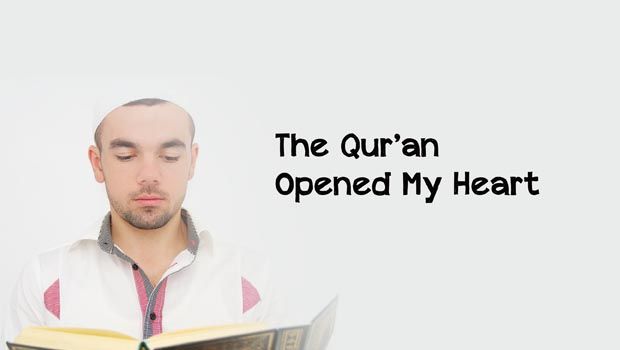
    My name is Margarita Aguirre and I am from the city of Guadalajara in Jalisco, Mexico. I was born in the midst of a practicing Catholic family. I remember that while I was in high school, I had my first encounter with Islam without realizing it. On our school’s bulletin board, they displayed a “poem” that caught my attention. I remember jotting it down in my favorite poetry journal because I loved it. At the end of the poem, it simply read: “The Qur’an.” I thought that it must have referred to a book of poetry, and so I did not think to look for any more information.

    Years passed and again I came face-to-face with the Qu’ran. In my profession as a teacher, and until now, I have always been passionate about everything that has to do with history. Consequently, it was while I was reading about history that I learned about all the many world religions, including Islam. One day, I planned a lesson dealing with world religions for my students. It was during that particular class that I again found the word, “Qur’an” in the history books. Then I realized that this book was not a book of poetry, but rather a book that Muslims read, similar to the Bible for Christians.

    It was a huge surprise for me, because I used to think that the Bible was God’s only book. I recall that at the end of my work day, I went home and searched for what I had written in my journal all those years ago during high school, and I found it. It was then that I wanted to know more about Islam. That was the most striking incident that occurred which sparked my search for information about Muslims and Islam. In fact I did not have a good concept about Islam but I wanted to explore and understand the religion myself, and I wanted to know why Muslims also had a holy book.

    During my investigation I found an internet page with information about Islam. I really enjoyed reading the articles, and that is how I began learning. The site manager explained a lot about the religion and answered all my questions, dispelling any doubts. I would double check whatever the brother said, just to be certain, until one day I decided to download a copy of the Qur’an.

    In the beginning, this Qur’an contained a biography of the Prophet Muhammad, peace be upon him, and it impressed me. I finally learned firsthand about the person who had established the Islamic teachings. When I began reading the verses of the Qur’an, my heart recognized that they were God’s words; that I was reading the very words of Allah.

    I felt so moved that I could no longer resist the truth that my heart had acknowledged. This beautiful religion that has changed my life is a fountain of wellbeing and joy for the heart. God, in His divine wisdom has left us with all the knowledge we need in the Holy Qur’an and in the Sunnah of our Prophet Muhammad, peace be upon him. More importantly is that it was in this religion that I finally understood God’s Oneness, and I learned how to love Him alone. I felt complete and I understood so many things. Islam perfected my soul and my feelings, and all my doubts were resolved, Alhamdulillah. And as Allah tells us in the Qur’an, “This is the Book about which there is no doubt, a guidance for those conscious of Allah,” (Qur’an, 2:2).

    My first Ramadan was about total surrender to God. I was very excited; it had only been two months since my conversion. I had declared my testimony of faith long distance with a Moroccan brother, because I did not know a single Muslim in Mexico. Later I searched for an Islamic community in my city, and to my surprise, I found other Muslims in Guadalajara. Until that time I had thought that I was the only one in Mexico! I was able to say the Shahada again with my Muslim sisters in the mosque. Alhamdulillah, it was a wonderful Ramadan for me, as I observed the fast, and not only did I leave food and drink during the prescribed times, but I also abstained from everything that was harmful to the soul, such as bad manners and evil actions.

    I give thanks to God for having guided me to Islam as my religion and way of life, for I have never been happier, alhamdulillah.


  • A New Translation of the Holy Qur’an in the Spanish Language

    A New Translation of the Holy Qur’an in the Spanish Language

    There was an interest in me that was awakened in translating the Holy Qur’an that was not so much devoted to imitating the style of the original in Arabic or in copying the literary style of the original, but rather in transmitting in the correct and most direct way all of the meanings, both profound and spiritual, as well as describing the whole approach of it all, that I had understood when reading and studying it in its original language. –Isa García.

    A Little History

    When I embraced Islam and accepted it as my way of life, I was thirsty for knowledge. I wanted to learn as much as possible about the primary source of knowledge, the divine revelation: the Holy Qur’an. I knew from the beginning that the Qur’an was revealed in Arabic, and that this text was the original; that it had been preserved and safeguarded intact for more than 14 centuries. But since I did not know Arabic, I had to refer to the various Spanish translations that were available.

    What I found disappointed me, because many times the text was confusing and incoherent. I understood that the reason for this was due to two factors. The first was that many of these translations were done by people who did not have the necessary knowledge about Islam, its message, and its history. Because of this, certain concepts were misinterpreted and erroneous. In some cases, there were premeditated attempts to discredit Islam and its holy book by altering the meanings.

    Furthermore, most of the translations are too literal, imitating the Arabic style not only in the expressions used but also in the word order. The result was that the normal grammar and syntax used in the Spanish language were not utilized, resulting in confusing translations. Add to this the fact that the language used is archaic and almost foreign, in a style that is seldom used in Latin America. Also, most of these translations do not have clarifying notes regarding historical and legal contexts.

    Later on, when I had the opportunity to study the Arabic language and I began accessing the meanings of the Holy Qur’an in its original language, I understood that I had lost much of the meanings and contexts through the translations I had read. It is a fact, however, that there are no translations that can approximate the beautiful narrative and the poetic rhetoric of the Qur’an, nor can any translation reproduce its eloquence or the multiple ways in which it can be recited. It is also true that the translations, some more than others, fail to convey to the reader the real essence of the Quranic message.

    This awoke in me an interest in translating the Holy Qur’an that was not so much devoted to imitating the style of the original in Arabic or in copying the literary style of the original, but rather in transmitting in the correct and most direct way all of the meanings, both profound and spiritual, as well as describing the whole approach of it all, that I had understood when reading and studying it in its original language.

    Alhamdulillah, I could finally embark on making a translation of the Holy Qur’an for the benefit of the Spanish-speaking world, but mostly for the benefit of Latin America. Along with a team of experts, I have tried to provide Muslims and non-Muslims with the message of Islam in the closest possible form to the original revelation in Arabic, but at the same time using language that is simple and plain, and also using explanatory notes for certain terms so that the content of the text is easy to understand.

    Current Trends

    While Islam still is not one of the major religions with a large number of followers in Latin America, it is growing rapidly throughout the continent. There are now mosques in all of the major cities in Latin America and conversion to Islam is also a growing phenomenon among the Hispanic populations of the United States.

    The fact that the media projects a bad image of Islam and Muslims, having a translation of the Qur’an in the Spanish language that transmits its message in a direct and simple way has become urgent and of the utmost importance for two reasons:

    Firstly, for those Muslims who do not know the Arabic language, they need to read the meanings of the Qur’an in their language to understand and better practice their religion. In this way, they can be good examples of what it is to be a Muslim.

    Secondly, for those non-Muslims who desire to learn about Islam, they need a reliable source of information. This will let them form their own opinions based on what the Qur’an actually teaches and not on stereotypes and erroneous ideas that have lasted for centuries in many of the works by Orientalists and in some of the translations of the Qur’an.

    From there, the objective of this translation is to present to Spanish-speakers the real message of the Qur’an, how it was known, understood, and practiced by the scholars of Islam and by the devout Muslims for more than 1,400 years. The translation is based on clear and simple language with a direct and contemporary message with the Latin American public in mind.

    Distribution of Printed and Digital Versions

    The goal of this translation is free distribution so that in this way it can be available to the maximum number of people possible.

    To achieve this goal, it has been distributed in a digital version in PDF. It has been added to various programs on multiple platforms. It will soon come out in its own unique reading and audio format.

    Also, many were printed for the free distribution to the public. The first edition included 50,000 pocket-sized books for free distribution during the 2014 World Cup in Brazil.

    Also, 100,000 copies were printed in Qatar to be distributed throughout the world. In Latin America, in particular, many small printings have been made in Bolivia, Colombia, Guatemala, and Mexico. In Spain, the distribution has begun for a project that has already printed 10,000 copies.

  • Duas from the Quran

    Duas from the Quran

    [button size=large style=round color=gray align=none url=https://messageinternational.org/wp-content/uploads/2016/09/Duas-from-Quran.pdf]Click here for Duas from the Quran[/button]

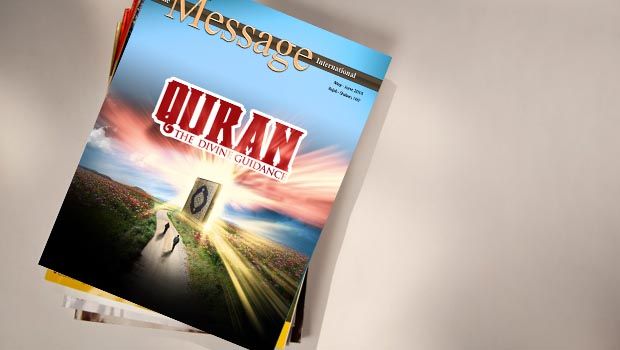
  • Quran: The Divine Guidance

    Quran: The Divine Guidance

    “We have sent our messengers with clear evidences and sent down with them the Scripture and a balance that the people may maintain [their affairs] in justice” (Quran 57:25).

    “Surely, this Quran guides to that which is most just and upright” (Quran 17:9).

    The primary purpose of the Quran is to define the true set of beliefs with regard to the Creator and His creation, and to implement these beliefs in a system of laws that will benefit humanity in this life and the next.

    These are just two out of many verses in which the Quran describes itself. Those familiar with the subject matter of the Quran, no matter whether they recognize it as divine scripture, would agree that it is a book providing guidance for individuals, families, and society. It is a book that has profoundly influenced people around the world for centuries. The Quran continues to enlighten, and to change the lives of people from all walks of life. After simply reading a few passages of this magnificent book, a good number of people have embraced Islam. And the number of converts increases day by day. This is indeed one of the miraculous powers of the Quran.

    One analyst rightly says, “The primary purpose of the Quran is to define the true set of beliefs with regard to the Creator and His creation, and to implement these beliefs in a system of laws that will benefit humanity in this life and the next” (see “The Eternal Miracle of the Qur’an” by Yasir Qadhi in The Message International, May-June 2011, p.21). Interestingly, while there are people in the West who are obsessed with propagating a tag line that Islam oppresses women, those who convert to Islam in the West are overwhelmingly female. And these women are typically not unsophisticated individuals or social misfits; they are rather well-educated and accomplished. They have read the Quran, studied Islam, and made an informed decision. They were not deceived by those who spread fictions about the Quran. Instead they were moved to check it out for themselves. To quote Ustad Nouman Ali Khan, “This book has been attacked before and it will be attacked again. It is Allah’s word and no amount of criticism is going to take away from its glory” (see “Quran and Me,” in The Message International, May-June 2011, p.25).

    Any close and careful reading of the Quran reveals that this unique book presents a comprehensive system that balances human beings’ personal needs with the general good. It gives humanity a formula that speaks to moral and spiritual issues as well as practical, everyday affairs and aspirations. It has been said that there are three pillars upon which social justice in Islam is built: the absolute freedom of conscience; human equality as to worth, rights, and opportunities; and the reality of human and social interdependence. Each one of these pillars is necessary to the integrity and stability of social justice. Freedom of conscience, for example, allows the human being to choose voluntarily what he or she believes about God and the meaning and purpose of life. The one who chooses submission to God finds psychological and emotional liberation from thralldom to other people, material things, or any other earthly influence or relative power. That individual realizes it is Allah who creates man, provides him with sustenance, and holds him accountable in a final reckoning as to his belief and his deeds. Allah, the Almighty, says in the Quran: “Say: O people of the scripture [Jews and Christians], come to a word that is just between us and you, that we worship none but God, and we associate no partners with Him, and that none of us shall take others as lords besides God” (3:64).

    Interlocking with man’s freedom of conscience and right to choose his ultimate destiny is the principle of equality. Islam presents this principle to the world, that in spite of outward differences, all human beings are equal in human worth, in their basic civil, political, social, and economic rights, and in their claim to fair opportunity, without discrimination or politically imposed impediment. The Quran declares, “O people, We have created you from a male and a female, and formed you into nations and tribes that you might know one another. Indeed, the noblest of you in the sight of Allah is the most righteous of you. Surely Allah is wise and all-knowing” (49:13). This verse makes it clear that the diversity of nationalities, races, and cultures among human beings allows for greater discernment and understanding of the human condition. False notions of superiority set the stage for discrimination based on outward, superficial characteristics. This is nothing but folly, leading to injustice and conflict.

    The third pillar, human and social interdependence, is further commitment to mutual understanding and tolerance. Humanity is one family and each person is integral to the common good and social progress. This interdependence ties people together through empathy and affection; it also fosters positive, moral, and concrete action such as helping the needy and vulnerable.

    Social justice is one of the most important values and gifts of Islam, and Prophet Muhammad and his companions built a strong, stable society that reflected fraternity and fairness across the board. Those who want to understand firsthand, are invited to read the Quran, to experience for themselves the beauty and powerful appeal of Divine guidance and wisdom in its uncompromising call for social justice and peace.

  • Why Have We Normalized Islamophobia?

    Why Have We Normalized Islamophobia?

    The horrific attacks in Paris and San Bernardino have captured headlines and triggered responses from journalists, politicians, and religious leaders. Some Western heads of government have once again threatened a global war against terrorism, while some political commentators have even invoked World War III.

    A cottage industry of ideological, agenda-driven, anti-Muslim polemicists has sprung up, consisting of pundits, bloggers, authors, lobbyists, elected officials, and their resourceful and wealthy funders.

    In the United States, Republican presidential candidates and some thirty governors have called for a freeze on accepting refugees fleeing the civil war in Syria. Donald Trump, the leading Republican candidate for president of the United States, has pushed the envelope to its extreme, advocating a temporary freeze on all foreign Muslim immigration, as well as the monitoring or even the forced closure of American mosques. The result? Trump soared in the polls, as did fellow presidential candidate Ben Carson, who stated that “for a Muslim to become president of the United States…you have to reject the tenets of Islam.” In Europe, far-right political candidates continue to make political headway. The far-right Front National party of Marine Le Pen won nearly 30% of the vote in the recent French regional elections; although the party did not win any of the regions outright, the strong showing positions Le Pen as a future presidential candidate.

    Fear of Islam and Muslims in general—not just Muslim extremist and terrorist movements specifically—have become normalized in popular culture in both America and Europe. The anti-Islamic and anti-Muslim hate speech, bias, discrimination, and hate crimes—commonly referred to as Islamophobia—are on the rise. Islam Muslims and the vast majority of Muslims have been brush-stroked by and often equated with the kind of militant extremism and terrorism practiced by a mere fraction of Muslims, obscuring the fact that the vast majority of terrorist victims are themselves Muslim. This, in turn, has had a significant impact on the growth of Islamophobia as well as the domestic policies that have threatened Muslim civil liberties. But what are its causes?

    Is Islam the primary cause and catalyst for terrorism?

    Major polls have consistently reported that Islam is a significant component of religious and cultural identity in Muslim countries and communities globally, and thus an attractive tool for violent extremists as an instrument for legitimation and mobilization. However, the primary catalysts for extremism and terrorism are political grievances often intertwined with the use or misuse of religion. Osama Bin Laden and others like him appealed to long-standing political grievances among many in the Muslim world, the mainstream non-violent majority and extremists alike: Western influence, invasion, occupation; Western support for authoritarian regimes that claim to speak for all Muslims; uncritical bias and support for Israel from the American government in the Palestinian-Israeli conflict. Add to this the Iraqi and Syrian (Shiah-dominated) governments’ repression and killing of tens of thousands of civilians and other crimes.

    “Trump is ISIS’s greatest triumph: the perfect Manchurian Candidate who, instead of offering specific and realistic policies, preys on the fears of the public, doing ISIS’s job for them.”

    ISIS has shown a particular talent for coopting and exploiting all of these issues. Their execution videos, released when ISIS called itself the Islamic State of Iraq (October 2006–April 2013, Al-Furqan Media Foundation), underscored the importance of political grievances for legitimation of their actions and as a tool for recruitment.

    In addition to this, public displays of Islamophobia in the West, from political speeches and demonstrations to negative portrayals of Muslims in the media and hate crimes, are also effective tools for recruitment. Major studies have also found that Islamophobia increases significantly not only with incidents of domestic terrorism but also at election time, as seen in the 2008 and 2012 presidential and the 2010 Congressional elections. During those races, Newt Gingrich, Rick Santorum, Herman Cain and others sought to gain attention by making reckless statements about Muslims. In 2010 in particular, the public debate over the so-called “Ground Zero” mosque in New York became fodder for candidates looking for media coverage. Today, that trend continues with candidates such as Trump, Carson, Cruz, and others.

    Most Americans—who live in a country with a relatively small Muslim population—say they know little or nothing about Islam. Thus, it is not surprising that when terrorists commit their acts of violence in the name of Islam in Paris and San Bernardino, they are drawn to demagogues in America like Donald Trump and in Europe who bring Muslims and the Islamic faith to the forefront of the political debate.

    As Kareem Abdul-Jabbar recently wrote in the New York Times: “Trump is ISIS’s greatest triumph: the perfect Manchurian Candidate who, instead of offering specific and realistic policies, preys on the fears of the public, doing ISIS’s job for them.”

    To what extent has media contributed to the problem?

    Media Tenor, in its 2011 report “A New Era for Arab-Western Relations,” found that out of nearly 975,000 news stories from US and European media outlets, networks significantly reduced coverage on events in MENA to actions of Muslim militants. A comparison of media coverage in 2001 versus 2011 demonstrates the shocking disparity of coverage. In 2001, 2% of all news stories in Western media presented images of Muslim militants, while just over 0.5% presented stories of ordinary Muslims. In 2011, 25% of the stories presented militant image, while the images of ordinary Muslims remained stuck at 0.5%.

    The net result is an astonishing imbalance of coverage: an exponential increase in coverage of militants but no increase at all over the 10 year period in the coverage of ordinary Muslims—and that despite census figures confirming a rapidly growing Muslim population. The situation got worse, for example—between 2007 and 2013, 80% of all American news coverage about Muslims/Islam was negative.

    Over the past decade, there has been an explosion of social media websites targeting the Muslim community, with serious international and domestic consequences. A cottage industry of ideological, agenda-driven, anti-Muslim polemicists has sprung up, consisting of pundits, bloggers, authors, lobbyists, elected officials, and their resourceful and wealthy funders.

    An August 2011 Center Report, Fear, Inc., documented, based on IRS information, that $42.6 million flowed from seven foundations over ten years to support Islamophobic authors and websites. A CAIR Report in 2013, “Legislating Fear: Islamophobia and its Impact in the United States,” reported that the inner core of the US-based Islamophobia network enjoyed access to at least $119,662,719 in total revenue between 2008 and 2011.

    Totally lost or obscured in the fear and fog of war are the facts on the ground regarding American Muslims. Data from major polls (Gallup, Pew and others) and studies have reported that the vast majority of Muslims in America, for example, are educationally, economically, socially, and religiously an integral part of our American mosaic: members of Congress, the military, corporate, education and religious leaders, physicians, lawyers, engineers, scientists and small business owners. American Muslims were among the victims and first-responders on 9/11. In contrast, Muslim terrorists are a fraction of a fraction of 1%. No wonder that the US Attorney General, Senior Pentagon and Department of Homeland Security, as well as leaders in the Democratic and Republican parties, have rejected Donald Trump’s outrageous and inflammatory rhetoric and its threat to American principles and values and to the civil liberties of American Muslims.

    House Speaker Paul D. Ryan (R-Wis.) offered the simplest and most direct rebuttal Tuesday, the day after Trump called for a ban on Muslims entering the United States: “Freedom of religion’s a fundamental constitutional principle,” Ryan said.

    “It’s a founding principle of this country….This is not conservatism. What was proposed yesterday is not what this party stands for, and more importantly, it’s not what this country stands for. Not only are there many Muslims serving in our armed forces dying for this country, there are Muslims serving right here in the House, working every day to uphold and to defend the Constitution…. Some of our best and biggest allies in this struggle and fight against radical Islamic terror are Muslims—the vast, vast, vast majority of whom are peaceful, who believe in pluralism, freedom, democracy, individual rights. I told our members this morning to always strive to live up to our highest ideals, those principles in the Constitution on which we swear every two years that we will defend.”

    As President Barack Obama recently observed: “[I]t is the responsibility of all Americans—of every faith—to reject discrimination. It is our job to reject religious tests on who we admit into this country. It is our responsibility to reject proposals that Muslim Americans should somehow be treated differently. Because when we travel down that road, we lose…We were founded upon a belief in human dignity—that no matter who you are, or where you come from, or what you look like, or what religion you practice, you are equal in the eyes of God and equal in the eyes of the law.”

    A lot of things went wrong this past year, but there may be a silver lining. As Islamophobia intensified and gained more media attention, many Americans and the international community took notice. Google searches of the term “Islamophobia” spiked dramatically after Paris and San Bernardino. Prominent journalists, government and religious leaders, politicians, scholars, and members of the general public started calling out Islamophobia with more force, and leaders on both the right and left stood in solidarity with Muslims. Dozens of interfaith efforts also popped up around the country. So, despite the fact that Islamophobia was at its worst in 2015, there are reasons to hope that we are turning a corner.

  • The Universal Ethos of Moderation: Dismantling Extremism

    The Universal Ethos of Moderation: Dismantling Extremism

    Discussion continues among Americans about terrorism, extremism, jihad, and Islam. The discourse has three basic viewpoints. Put in simplistic frames, the anti-Islam perspective sees Islam as the “mother lode of bad ideas” and Muslims as an irredeemable enemy who evokes the specter of extremism and barbarity convulsing out of religious affiliation. The anti-Islam group voice alarm at the danger lurking at unsecured borders and in unsurveilled living rooms. The liberals, representing the second perspective, recoil at blanket condemnations of Islam and Muslims. Appreciators of pluralist society and multi-culturalism, they eagerly call for respect of Islamic and all other cultural traditions. This voice defends Muslims as a vast majority of peace-loving individuals who have had their religion taken hostage by extremists. The liberals are alarmed at the spreading bigotry that resonates with a wide swath of the American population, as fear and aversion cut through minds and hearts, ratcheted up by bellicose ultra-nationalists and ideologues. The third voice in this discourse, the Muslim one, is largely unceasing recitals of Islamic first principles — “Islam is peace” or the like — and dissimilitude to so-called “jihadists.” The response, both by choice and public demand, is an effort to answer for the political radicalization and terroristic behavior of individuals who commit incomprehensible violence and destruction — all in the name of Islam.

    Trying to Change the Narrative

    When Muslims say “Islam is peace” or “terrorism is un-Islamic” or “Muslim Americans are loyal to America” or “the extremists have hijacked the religion,” it makes no dent in the mindset of the antagonist of Islam. He seems determined to ignore any facts or any pronouncements that are contrary to his preconceived notion of who Muslims are and what Islam teaches. Yet, Muslims have been condemning terrorism ever since 9/11, with sincerity, without fail, loudly and clearly, as reflected in the public record. But the pronouncements are never enough to satisfy minds intent on ostracizing. And so demands for Muslim denunciation of terrorism continue unabated, and like a carnivorous plant, the antagonist sets his traps and gobbles up the condemnations like a feast of delectable insects. But his appetite is insatiable.

    When Muslims say “Islam is peace” or “terrorism is un-Islamic” or “Muslim Americans are loyal to America” or “the extremists have hijacked the religion,” it makes no dent in the mindset of the antagonist of Islam.

    With abhorrence deep-seated and habitual, he declares over and over that Islam and the Quran teach hatred and violence. Yet, going directly to the Quran, one is hard-pressed to find a scintilla of evidence of the purported malevolence. That does not stop the maligning of Islam, the faith of nearly one-fourth of the world’s population, even in academic circles. In the past 15 years, the dominant literature on “Islamic terrorism” has characterized the phenomenon as expression of religious fanaticism, intrinsic to Islam. An influential expositor on religious terrorism, Bruce Hoffman, in his book “Inside Terrorism,” writes, “For the religious terrorist, violence is first and foremost a sacramental act or divine duty executed in direct response to some theological demand or imperative. Terrorism thus assumes a transcendental dimension, and its perpetrators are consequently unconstrained by the political, moral or practical constraints that may affect other [secular] terrorists.”

    Liaquat Ali Khan, professor of law at Washburn University School of Law, writing in the Washburn Law Journal in 2005, describes the mindset of Hoffman and his ilk in his article, “The Essentialist Terrorist”: “There is a coordinated effort on part of academics, scholars, think-tankers, journalists and others to create a profile of Muslim militants as essentialist terrorists who commit heartless violence because they are spiritually addicted to violence. These authors argue that no concrete grievances or violations of rights cause Muslim militancy.” Khan notes that these writers obscure, knowingly or ignorantly, the core beliefs of Islam, thus making the case, quite successfully for those not familiar with authentic sources of the religion, that Islam and terrorism pivot from the same violence-prone provenance.

    Modern-Day Universal Civil and Political Rights

    Before taking a look at primary sources of Islamic doctrine appertaining to violence, warfare, taking of life, and related issues, it is useful to note that modern-day international law codifies rules for military action. In brief, these prescribe that wars be fought to achieve stated lawful aims; that military engagement should be brought to an end as quickly as possible; that unnecessary destruction should be avoided; that prisoners of war should be treated humanely and justly; that all civil and political rights must be respected; and that non-combatants should be protected from harm and hardship, among other rights of people and constraints upon warring parties.

    A Muslim cannot control how other people live their lives, can take responsibility only for his or her own words and actions, and regardless of the ignorance of any other person(s), the duty is to spread peace (28:55).

    International law also codifies the right to defend against aggression and to resist colonial and foreign domination and foreign occupation. In accordance with international human rights law, there are real and legitimate grievances — political, social, and economic — suffered by Muslims. Countries in the Middle East are targeted again and again by exploitative external actors, often colluding with internal authoritarians, resulting in egregious and contemptible violations of human rights. A birthright of individuals, the claim to self-determination, is encoded in Article 1 of the International Covenant on Civil and Political Rights (ICCPR). This treaty asserts the right of all peoples to “freely determine their political status and freely pursue their economic, social and cultural development,” among many other stipulated rights. The majority of nations in the world, including the United States, have ratified and signed on to this international treaty. The ICCPR, along with the Universal Declaration of Human Rights, and provisions in the U.N. Charter, comprise the body of international human rights law. Accordingly, human beings and states have the right to resist an aggressor and defend sovereign territory, including the right to use force. These legal forms of violence are also accorded legitimacy in any struggle for “liberation from colonial and foreign domination.”

    A great number of U.N. General Assembly resolutions have affirmed this legal right of resistance. United Nations General Assembly Resolution A/RES/33/24 of 29 November 1978 states, in part, that it “Reaffirms the legitimacy of the struggle of peoples for independence, territorial integrity, national unity and liberation from colonial and foreign domination and foreign occupation by all available means, particularly armed struggle” (emphasis added). Accordingly, the Iraqis who rose up to fight the military invasion in 2003 were not insurgents or terrorists. They were engaged in a lawful armed struggle to resist a foreign invasion.

    Universal Ethical Principles and Rights Codified in Islam

    The ethical principles codified in contemporary international law (albeit, too often ignored by modern states) with regard to warfare, prisoners of war, protection of civilians, and so on, were heralded centuries ago in Islamic law and tradition. Islam makes clear that there are uncompromising political, moral, and practical constraints in place. There are some general principles expressed in Quran and hadeeth that apply to any conflict or response to being wronged. For example, verse 41:34 instructs believers to repel the evil deed with something better; and there are Prophetic sayings such as “There should be neither harming nor reciprocating harm” (Ibn Majah and others); and “Do not be people without minds of your own, saying that if others treat you well, you will treat them well; and that if they do wrong, you will do wrong to them. Instead, accustom yourselves to do good if people do good, and not to do wrong [even] if they do evil” (Al-Tirmidhi). Getting more specific, there are many Quranic verses that speak to the constraints placed upon Muslims who engage in armed conflict. Some of these are as follows:

    Muslims are not to aggress or begin hostilities (see Quran 2:190)

    If the enemy inclines to peace, Muslims must do the same (Quran 8:61); if the enemy desists from fighting, then hostility must cease (see Quran 2:193)

    Those who are wronged or oppressed have every right to defend themselves, but they must guard against requiting that grievance with actions that may, in turn, slide into evil; so that making peace is preferable, if possible, and rewarded by God (Quran 42:40-42). Muhammad Asad writes in his commentary, “Hence, most of the classical commentators (e.g., Baghawi, Zamakhshari, Razi, Baydawi) stress the absolute prohibition of ‘going beyond what is right’ (i’tida’) when defending oneself against tyranny and oppression”

    Islam is, indeed, a religion of moderation, not one of extremism;.. peace is the objective, not conflict or war.

    While humans are given the right to defend themselves against wrongdoing and oppression, they are nonetheless advised to be patient in adversity and ultimately to forgive (Quran 42:43)

    Captives of war are to be set free or ransomed (Quran 47:4) — perhaps with the exception of war criminals, according to Shaykh Yusuf Al-Qaradawi in “Fiqh of Jihad”).

    Consider the Prophetic saying that there should be neither harm nor reciprocating harm, along with this verse: “…take not life, which God has made sacred, except by way of justice and law: thus does He command you, that you may understand” (6:151). These two Islamic teachings — on their own — dismantle the myth that “violence is first and foremost a sacramental act or divine duty” disseminated by the “violence is intrinsic to Islam” propagandists. These two teachings also demolish the justifications made by those who engage in terror in the name of Islam, who target non-combatants and civilians. Add to them the following hadith: “All creation is the family of God, and the person most beloved by God is kind and caring toward His family” (Agreed upon). These are not doctrines that proffer violence as divine duty; these are doctrines, promulgated a millennium and a half ago, that predate and foreshow the loftiest of contemporary humanitarian law.

    As to why fighting is sometimes necessary, the Quran cogently states: “And if God had not enabled people to defend themselves against one another, corruption would surely overwhelm the earth: but God is limitless in His bounty unto all the worlds” (2:251). And another verse: “And how could you refuse to fight in the cause of God and of the utterly helpless men and women and children who are crying, ‘O our Sustainer! Rescue us from this town whose people are oppressors, and raise for us, out of Thy grace, a protector, and raise for us, out of Thy grace, one who will bring us succor!” (4:75).

    In addition, the Prophet (pbuh) put in place many guidelines including the prohibition on killing children, women, the elderly, the sick or wounded, individuals in places of worship, or animals except for food; the forbidding of destruction of towns or villages or any places of human habitation; the prohibition of spoiling cultivated fields and gardens or uprooting or destroying trees. The many Quranic and Prophetic guidelines and instructions provide ethical principles of warfare, clearly and compellingly forwarded by Islam, very similar in detail and substance to modern-day laws of warfare.

    Skewing the Definition of Terrorism

    One important point should be made here. When it comes to Muslims, the following are all lumped together: acts of self-defense against an invading force, acts of resistance against colonialist domination, desperate acts of rage against tyranny and oppression, or deranged acts of murder by the criminally-minded, by one individual or a group. All these acts get labelled as terrorism, even if the targets are military rather than civilian. But the untold millions of men, women, and children killed by bombs, drone attacks, political sanctions, and all the other “counter-terror” or “counter-insurgency” campaigns, are whitewashed as unfortunate collateral damage in the “War on Terror.”

    Section 2656f(d) of Title 22 of the United States Code defines the term “terrorism” as “premeditated, politically motivated violence perpetrated against non-combatant targets by subnational groups or clandestine agents.” It is not unintentional that “subnational” groups only fit the definition. What about “national” groups, i.e., countries, which engage in “politically motivated violence perpetrated against non-combatant targets”? To cut to the chase, we can quote Noam Chomsky as he poses the obvious question: “I don’t know what name you give to the attack that’s killed maybe a million civilians in Iraq and maybe a half a million children, which is the price the Secretary of State [Madeline Albright] says we’re willing to pay. Is there a name for that?”

    Skewing the Meaning of Jihad

    The Arabic word jihad means “struggle,” or exerting oneself to the utmost in any good or beneficial endeavor. Yet, mention of the word causes immediate paroxysms of fear and disdain in the minds of many Americans. Sheikh Rashid Al-Ghannoushi, points out in “What is New about Al-Qaradawi’s Fiqh of Jihad?” (available online) that Shaykh Al-Qaradawi makes clear distinction between jihad and qital (fighting), noting that the Quranic command to undertake jihad is a Makkan verse, at a time when there was no fighting. Jihad in that verse referred to the jihad of dawah. Al-Qaradawi quotes Shaykh Ibn Taymiyya, that jihad “can be with the heart, by calling to Islam, by countering invalid arguments, by advising or facilitating what is beneficial to Muslims, or by one’s body — that is, fighting.” Shaykh Al-Ghannoushi stresses, though, that “The natural state of affairs in relations between Muslim and others is peace and cooperation in goodness. Islam abhors war and only engages in it unwillingly and as a necessity.”

    Professor T.J. Winter (Shaykh Abdal Hakim Murad), the Shaykh Zayed Lecturer of Islamic Studies in the Faculty of Divinity at Cambridge University and Director of Studies in Theology at Wolfson College, has aptly noted, “Terrorism is to jihad what adultery is to marriage.” Al-Ghannoushi, along these lines, observes that irhab, terrorism, as carried out by groups in the name of Islam, is illegitimate, that declaring “war on the whole world is an illegitimate use of jihad in an inappropriate setting, terrorizing innocent people – Muslims and non-Muslims – in order to achieve alleged political ends inside or outside Muslim lands, flagrantly contravening the principles and ethics of jihad in Islam. Hence Al-Qaradawi [in Fiqh of Jihad] condemned violent acts committed by extremist groups in Muslim and non-Muslim countries against innocent people, whether tourists or others. He further stripped the indiscriminate killing and shedding of innocent lives committed by these groups of any legitimacy.”

    Bernard Lewis, Professor Emeritus at Princeton University, is considered in Western circles to be a leading scholar and expert on the Middle East. He is an unapologetic critic of modern Muslim societies and cannot, therefore, be accused of being an apologist for Islam. Yet, he writes quite forthrightly in his book, “Islam: The Religion and the People”: “Muslim fighters are commanded not to kill women, children, or the aged, unless they attack first; not to torture or otherwise ill-treat prisoners; to give fair warning of the opening of hostilities or their resumption after a truce; and to honor agreements… At no time did the classical jurists offer any approval or legitimacy to what we nowadays call terrorism. Nor indeed is there any evidence of the use of terrorism as it is practiced nowadays” (p. 151). Writing in the Wall Street Journal on September 27, 2001, following the 9/11 attacks, Lewis states: “What the classical jurists of Islam never remotely considered is the kind of unprovoked, unannounced mass slaughter of uninvolved civil populations that we saw in New York…For this there is no precedent and no authority in Islam.”

    Dismantling Extremist Ideology

    Shaykh Al-Ghannoushi writes, “Al-Qaradawi is extremely careful to distinguish between extremist groups that declare war on the whole world, killing indiscriminately, tainting the image of Islam and providing its enemies with fatal weapons to use against it, on the one hand, and on the other groups resisting occupation. And as much as he condemns the former and delegitimizes its foundations, he defends the latter, and calls on the Ummah to support them, particularly in Palestine, as long as their operations are against military targets.” Al-Ghannoushi goes on to summarize Shaykh Al-Qaradawi’s dismantling of each and every argument used by those who wage war on the world. The ideology of ISIS is founded on the theory of the entire world being the abode of war if it is not the abode of Islam, with corresponding aberrations including expansion of territory under their control through use of ultraviolent and terroristic means, including suicide bombings against Muslim authority such as in their May 2015 offensive against Ramadi, in Iraq; forcible conversions to Islam; and acts of cruelty, persecution, and murder against local populations, both Muslim and non-Muslim, that shock and appall the staunchest heart.

    In order to achieve their dominationist ambitions, they must disregard the multitude of verses in the Quran, above and beyond the many already cited, that declare that even when fighting becomes inevitable against aggressors, Muslims are not to exceed limits of morality and decency (2:190); that there is no compulsion in religion (2:256); that when an individual rejects Islam, Muslims are to remember that their responsibility is only to deliver the message (3:20).

    This point, that there is no coercion in Islam and that Muslims are only to deliver the Message and leave the decision to embrace or reject as a matter between that individual and God — there are so many verses in the Quran that convey this same principle: the Prophet was not sent as a “keeper over them” (4:80, 6:104, 6:107, 27:92); that nothing is incumbent on the Prophet but to deliver God’s message (5:99); that Muslims must keep in mind that whoever cleaves to the truth does so for his own good and those who stray harm only themselves, and that, again, the Prophet, and by extension, Muslims in general, are not custodians over them (10:108); that Muslims are to exhort others wisely and discuss with them in the best manner, knowing that God sees who is on the right path and who goes astray (16:125); that a Muslim cannot control how other people live their lives, can take responsibility only for his or her own words and actions, and regardless of the ignorance of any other person(s), the duty is to spread peace (28:55).

    Those who founded and direct ISIS, and all those who follow their ideology and participate in their terror campaign, must ignore all the above verses and the many more that are spread throughout the Quran. They have to ignore the divine injunctions, listed above, that warn against aggression, or refusing to accept overtures of peace, about not allowing persecution to ultimately turn the persecuted into a persecutor.

    They spurn the Quranic ordinance that all people have the right to due process, that life may be taken only within the parameters of justice and law, that Islam must not be forced upon any individual in that only by voluntary choice does it have any meaning and value for that person. Extremists also have to ignore all the Prophet’s warnings about not harming non-combatants, restraining from treachery, destruction of vegetation or animals, or places of human habitation. And then there is a clincher: “And if your Lord had pleased, surely all those who are on the earth would have believed — all of them; will you then force men till they become believers?” (10:99).

    Moderation, Not Extremism

    In what universe could the verse just cited conjure up a world in which Muslims are bent on world domination, where non-Muslims are forced to convert, where intolerance rules the day?! Shaykh Al-Qaradawi writes, “[W]e can live, under Islam, in a world that promotes peace and security rather than fear, tolerance rather than fundamentalism, love rather than hatred. We can live with the United Nations, international law, human rights conventions and environmentalist groups.” Al-Ghannoushi underscores that “Al-Qaradawi has developed a principal theory in contemporary Islam, from which all his views and stances emanate, and to which he tirelessly calls, widening its appeal and marginalizing its opponents – that is the principle of Islamic Wasatiyya or moderation. This was inspired by the verse in the second chapter of the Qur’an, ‘And thus we made you into a middle (wasat) nation.’ Thus, he presents Islam as the middle position between opposing and conflicting rigid positions; as the middle ground that brings all together, a middle position between materialism and spiritualism, between individualism and collectivism, between idealism and realism, etc.”

    One cannot read the many verses and hadeeth throughout this article and come away with anything but conviction that Islam is, indeed, a religion of moderation, not one of extremism; that is seeks to bring succor to the world, not terror; that peace is the objective, not conflict or war; that freedom of conscience is to be safeguarded rather than corralled or obliterated. Next time someone asks you about Islam’s position on violence, terrorism, or jihad, have ready on your tongue some of the salient points, some of the eloquent verses, some of the revealing hadith. It may be your coming-of-age child who asks, so learn the points, verses, and hadith by memory, so that you can speak from the heart. Make that a spiritual jihad against terrorism.

    Will the antagonists listen to an authentic reading of Islam? Some yes, some no. “And say: ‘The truth is from your Lord.’ Then whosoever wills, let him believe, and whosoever wills, let him disbelieve” (Quran 18:29).

  • Rising to the Next Level: Institution Building and Civic Engagement

    Rising to the Next Level: Institution Building and Civic Engagement

    Mosques and other Islamic organizations and institutions have never been more active and widespread than they are today. The imperative for greater engagement in society, and increased activities to serve the needs of the growing community, have also never been more pronounced. Muslims have launched initiatives like One America and Canadian Muslim Vote to encourage participation in federal elections. Mosques like the Islamic Society of Central Jersey have opened their doors to those of other faiths in events like “Common Ground Connection,” and others like the Ummah Mosque in Halifax and Worcester Islamic Center have held open houses and “Meet a Muslim” days to welcome non-Muslim neighbors, show them hospitality and friendship, and answer their questions about Islam. Individual Muslims, on their own initiative, have held events like “Meet a Muslim Family” or “Talk to a Muslim” in the wake of growing Islamophobia. Mosques, Islamic centers, and organizations have participated in soup kitchens and meal programs for the homeless and needy, as well as running food banks and free medical clinics for the underserved like the Muslim Welfare Center in Scarborough in Toronto and at the Islamic Association of Collin County in Plano, Texas.

    Often, the biggest obstacle in the way of any institution’s ability to properly serve the needs of its community is a lack of knowledge and understanding of what those needs really are.

    Many mosques and Islamic centers have educational programs including daily or weekly classes on various topics, as well as classes catering especially to the youth, in addition to organizing and coordinating programs for Muslims as well as non-Muslims. Conferences like those held by ICNA, ISNA, Reviving the Islamic Spirit, and ILEAD promote education and awareness. Various Muslim media initiatives like The Muslim Link, Message International, Islamic Horizons, Illume, AltMuslim, and others, provide a voice to communities, aim to correctly represent Muslim concerns and interests, and provide an alternative to mainstream media.

    Yet at the same time, Muslims are facing challenges that need to be addressed more than ever before. While many institutions are active in promoting engagement and serving community needs, others are not doing much. “I think the Muslim community is finally waking up,” says Azra Baig, an elected member of the Board of Education in South Brunswick, New Jersey. “9/11 was definitely a wake-up call, but I think people have just gotten more comfortable after that. But I think with what has happened recently at San Bernardino – the terrorist attacks and the Islamophobia and anti-Muslim remarks by candidates for elections, I think people are finally waking up to the need to get more engaged and more involved. I’ve heard it so many times in the polls – when someone knows a Muslim, they are more comfortable regarding Islam and different aspects, but if their only source of information is the media, then I don’t blame them for being scared, how else are they learning about Islam and Muslims?” While many great efforts are being made by organizations and individuals, a lot more needs to be done. Below are a number of suggestions based upon my discussion with various activists, and community leaders and members, and my research into actions our organizations can take to better meet the challenges of today.

    Create Awareness Among the Leadership

    For any effective changes to take place in our institutions, it is vital that our leadership be well-informed and aware of the needs and problems of the community they serve. Many mosque boards are made up of first generation immigrants, those who have not grown up in Western societies and therefore do not fully understand the problems faced by the youth, are not inclined to promoting political participation, and tend to be somewhat conservative and resistant to change. Also, says Asif Hirani, Program Director at WhyIslam, many of them “do not understand the importance of interfaith activities because they may not be as important in their Muslim majority countries.” He adds, “We need to create awareness in the leadership of the masjids and among board and shura members. In terms of keeping our masjids open, we also need to change the culture of our masjids.” For effective civic engagement and educational and counseling activities to properly meet the needs of the community, it is essential that board members and community leaders be those with an awareness and understanding, based on experience, of present-day Western society and culture.

    Conduct a Survey About Community Needs

    Often, the biggest obstacle in the way of any institution’s ability to properly serve the needs of its community is a lack of knowledge and understanding of what those needs really are. Without adequate information, any available funds are just funneled into activities which may or may not be relevant or adequately serve the needs of the community. Each region and each community has different needs based on its demographics. Masjids with a membership primarily of professionals will have different needs from those of a lower income community. Those with more third generation immigrants have different needs than those with many newly arriving immigrants. It is important to know who makes up the community, what the most pressing needs are, and what issues are important to community members.

    Knowing all of this can help an institution or mosque cater to the specific needs of the community in terms of designing classes or lectures, mobilizing support for social services, acting as advocate at city council meetings, or presenting issues to boards of education. As such, a survey should include questions about marital status, household composition including gender and age of each family member, ethnicity, country of origin, length of residence in the U.S., education, professional or employment status, and income range. The survey can also solicit information about what social, economic, and political issues the respondents consider important, what they expect their institutions to advocate for them, and on what issues and/or topics they want educational opportunities by way of lectures, workshops, or classes.

    Surveys can be in paper form or provided on an Islamic center’s website. Additional methods can be used in tandem, such as assigning individuals or teams to solicit the information from community members; events and meetings can also be held to solicit information, discuss issues, and brainstorm activities and services to meet community needs.

    Designate Teams or Individuals for Specific Tasks

    Once a community’s needs are identified, tasks must be prioritized and funds and resources channeled accordingly. Depending on the size of the community, the amount of work needed for a particular task, and the resources available, the institution must designate either an individual or a team for each task or project. For example, an individual or team should be made responsible for social justice issues, and for representing the mosque or the community at city council meetings or in meetings with regional representatives. Another team could be assigned to deal with media outreach, and so forth. “I go to meetings and sometimes I’m the only Muslim over there,” says Rameez Abid, Communications Director for the ICNA Council for Social Justice. Regarding Muslim advocacy for social justice issues like homelessness, hunger, and civil rights, he says, “I think one person dedicated to this cause can do it as a volunteer. If they can’t find someone to do it, I suggest hiring someone part time to do it. It is very important.”

    It is important that an organization assign specific individuals or teams for the various tasks so that no one person or team is overwhelmed with too many responsibilities. In that way, also, the interests, skills, and expertise of available individuals are utilized in an effective way. “Religious leaders have their own roles to play and they are already overworked,” says Amira Elghawaby, Communications Director at the National Council of Canadian Muslims (NCCM). “The roles within mosques and institutions have to be broadened to bring in more people who are keen in different areas of work and so associations and mosques can foster greater involvement because they often do have some funding available to support this kind of work.”

    Elghawaby says this could include the mosque hiring and training their own people to help represent the community and provide a Muslim perspective at municipal and other local events. They can also hire or train individuals to focus on the local media, foster relationships, and thus represent the community in that way. There can be positions open to interns and volunteers to assist the person(s) assigned to the job. This is a good way to get students to fulfill their volunteer hours and internship requirements by benefiting the community.

    Government and the Media Relationships

    Muslims need to build good relationships with their government representatives at the local and regional level in order to communicate the Muslim perspective and concerns. This requires inviting local and state officials to the mosque or other Islamic events, meeting with them about specific concerns or priorities, and attending important events organized by them. Azra Baig says, “It’s important because they want to hear from us and they do represent us. If they are going to support us, we need to support them on the various issues. We need to be there when they have their press conferences, their petitions, we have to vote and a vote helps – especially this coming election the Muslim vote is going to matter.”

    Baig says building a good relationship with the media is also vital because “the media is also our voice.” This includes issuing press releases and sending out invitations for events. An effective media strategy also means following mainstream media reporting about Muslims and responding when relevant or necessary. Nazim Bakshn, a researcher and journalist, says that engagement with the media includes making spokespersons, analysts, and scholars available to provide commentary and analysis when events involving or relevant to Muslims take place.

    Represent Community in the Mainstream

    Our institutions and mosques must step out of the traditional roles they are used to and be ready to rise to the next level. They of courses need to serve as a place of worship and spiritual guidance for the Muslim community, but also as a platform for activism and advocacy. As part of a society where Muslims are a minority, it is easy for our institutions to stay in their comfort zones, insular and disconnected to the larger community. But it is increasingly important for our institutions to step out of their own circle and be a part of the mainstream. This includes advocating causes that benefit the wider society, transcending boundaries of race, ethnicity, and religion. It also means representing the concerns and interests of the Muslim community at city council meetings or presenting issues to the board of education. Rameez Abid notes, “We cannot be isolationist,” adding, “In order to secure our rights, we have to secure others’ rights as well and that is part of our deen.”

    Build a Stronger Social Media Presence

    In this digital age of pervasive social media, it is important to utilize the tools of the time to spread our message and benefit our communities more widely. “Many a time, many members of the community are not aware of the activities at the masjid,” says Muhammad Ibrahim Ali, an Arabic instructor at Taqwa seminary and Bayyinah. “So for example the event is over and they get to know [too] late – so it’s very important for them [organizations] to improve their social media presence and not only to improve, they have to compete with the other organizations – even utilizing modern methods of media marketing.” Our Prophet (pbuh) also used the technique of his time to get his message across to a wider audience. For instance, he went to Mount Safa to call out to people to deliver his message when he wished to invite the Quraish openly to Islam. The custom was to go to Mount Safa when one had an important message to announce to the people at large.

    Come Together and Unite with Others

    Although each institution works independently, it is vital that links be maintained with other institutions and that the institutions stand united on a variety of causes, cooperating by sharing resources, expertise, information, ideas, and personnel. “Unity is something that strengthens all communities,” says Elghawaby. “I think that we need to come together at the local level for sure to find out what’s going on in our communities and who is doing what… how can we either replicate or complement or contribute to these efforts on a professional national scale and in a way that the work that is done is not lost in someone’s mind, it becomes part of our institutional memories.”

    Professionalism and Concerted Effort

    Organizations today base their operations on goal-setting, efficiency, productivity, and streamlining of systems. “I think the really most important thing is to approach these issues with a very high degree of professionalism,” says Elghawaby. She says one of the challenges is that there will always be well-meaning individuals who work as activists on one cause or another, and that this is valuable work. But the drawback is “when an individual undertakes this work, not with an institution, then there is going to be the loss of the memory of what they have done, so there is no institutional memory to the type of work or relationships they fostered. Once they lose interest or once they don’t have time to continue their work, it sort of disappears so that is one reason why it is so critical to engage institutions.”

    Elghawaby continues, “I think it’s really important that this work is done with professionalism and with real goal-setting in mind. It cannot be done in a way that’s sort of ad hoc. It really has to be a concerted effort.” Her organization has recently launched an initiative called “Stronger Together” which aims to galvanize Canadian Muslims in every major city to be more civically engaged, and to advocate both on local and national issues. The organization has put up a pledge on its website inviting people to commit to greater activism. The organization will then map out all those who took the pledge and cluster them together in teams according to their geographic areas, and then provide support and training on how to get involved in various issues. Their first campaign is about a Canadian anti-terror bill, C-51, and will be encouraging participants to approach their local parliament members and talk to them about the legislation. This is a good example of how institutions can work in an organized and efficient manner to promote more civic engagement. It is important for our institutions to learn from one another and pool resources, ideas, and expertise to better serve the community. Our organizations must rise to the next level, promote civic engagement and meet the various needs of the community.