
بسم الله الرحمن الرحيم

Tag: hispanic

  • El Coran abrio mi corazon

    El Coran abrio mi corazon

    Mi nombre es Margarita Aguirre y soy de la ciudad de Guadalajara, Jalisco, México. Nací en el seno de una familia católica practicante. Recuerdo que cuando estaba en la preparatoria tuve mi primer acercamiento al Islam sin darme cuenta. En el periódico mural de mi preparatoria expusieron un “poema” que me llamó la atención. Recuerdo que lo anote en mi libreta favorita de poemas porque me encanto. En la parte inferior del poema decía simplemente: “El Corán”. Pensé que este era un libro de poemas, y por lo tanto no busque más información.

    Pasaron los años y nuevamente me vi cara a cara con el Corán. En mi profesión como maestra y hasta ahora me apasiona mucho todo lo que tenga que ver con la historia. Fue así que leyendo libros de historia conocí las tantas religiones del mundo, y entre ellas el Islam. Un día organicé para mis alumnos una clase tratando sobre las distintas religiones del mundo. Durante la clase volví a revisar la palabra “Corán” en los libros de historia. En ese momento comprendí que este libro no era uno de poesías, sino más bien un libro que leen los musulmanes igual como los cristianos leen la Biblia.

    Fue una sorpresa muy grande para mí porque pensé que la Biblia era el único libro de Dios. Recuerdo que al terminar esa jornada de trabajo llegue a mi casa buscando aquello que había escrito durante la preparatoria y lo encontré. En ese momento quise saber más sobre el Islam. Ese fue el acercamiento más impactante, porque después comenzó mi búsqueda para información acerca de los musulmanes y el Islam. En realidad no había tenido un buen concepto del Islam pero quise indagar y darme cuenta por mí misma lo que era esa religión y por qué los musulmanes también contaban con un libro de Dios.

    Pensé que debía aumentar mi conocimiento de la religión y busque por el internet una página que hablara acerca del Islam. Las publicaciones de esa página me gustaban mucho, y así comencé a aprender. El administrador de la página me explicó ampliamente sobre la religión y despejó todas mis dudas. Yo como buena investigadora seguía corroborando lo que me decía el hermano de la página pero por mi propia cuenta, hasta que un día decidí bajar el Corán en forma electrónica.

    Al inicio, este Corán contenía la biografía del Profeta Muhammad, que la paz sea con él, y me impresionó, pues encontré una buena base para conocer quien había fundado el Islam. Recuerdo que cuando comencé a leer los versos del Corán mi corazón sintió que esas eran las palabras de Dios; que estaba leyendo las mismísimas palabras de Alá.

    Me sentí tan conmovida que no pude resistir más la verdad que mi corazón había reconocido. Esta hermosa religión que ha cambiado mi vida, es una fuente de bienestar y alegría para el corazón. Pues Dios en su grande sabiduría nos dejó todo el conocimiento que necesitamos a través del Sagrado Corán y la Sunnah de nuestro Profeta Muhammad, que la paz sea con él. Más importante aún es que fue en esta religión que realmente conocí la unicidad de Dios, Todopoderoso, y aprendí cómo amarlo como un Dios Único. Así me sentí completa y pude entender tantas cosas. El Islam perfeccionó mi alma y mis sentimientos y todas mis dudas quedaron resueltas, ¡Alhamdulillah! Y como Alá nos dice en el Sagrado Corán: “Esta es la escritura, exenta de dudas, como dirección para los temerosos de Alá” (El Coran, 2:2).

    Mi primer Ramadán fue de entrega total a mi Dios. Me sentía muy emocionada; para ese tiempo habían pasado dos meses desde que me convertí al Islam. Había declarado mi Shahada, o testimonio de fe, a larga distancia con un hermano Marroquí, porque no conocía ningunos musulmanes mexicanos. Luego busque una comunidad musulmana en mi ciudad y para mi gran sorpresa, encontré otros musulmanes en Guadalajara. ¡Yo hasta había pensado que era la única en México! Pude hacer el Shahada nuevamente con mis hermanas musulmanas en la mezquita. Alhamdulillah, pase un Ramadán hermoso, siguiendo todo lo establecido en el cumplimiento del ayuno, no solamente dejando el alimento durante el horario prescrito, sino también todo lo que afectara el alma como las malas conductas y acciones.

    Doy gracias a Dios que me haya dado la guía del Islam como religión y estilo de vida, pues nunca me había sentido tan feliz, Alhamdulillah.


  • Una Nueva Traduccion del Sagrado Coran al Idioma Espanol

    Una Nueva Traduccion del Sagrado Coran al Idioma Espanol

    Se despertó en mí el interés de hacer una traducción del Sagrado Corán que se preocupara me-nos por parecer árabe o por intentar imitar la calidad literaria del texto original, y estuviera pen-sada más en transmitir de forma correcta y directa todos aquellos significados, profundos y espi-rituales, pero también de un gran orden social, que había comprendido al leerlo y estudiarlo en su idioma original.

    –Isa García

    Un poco de historia

    Cuando acepté el Islam y lo asumí como forma de vida, estaba sediento de saber, quería conocer lo mejor posible la fuente primera del conocimiento, la revelación divina: el Sagrado Corán. Sabía desde el principio que el Corán fue revelado en árabe, y que este texto es original: ha sido pre-servado y mantenido intacto a lo largo de más de 14 siglos. Pero al no saber árabe, tuve que re-mitirme a diferentes traducciones que se han hecho al español.

    Lo que encontré llegó en ocasiones a decepcionarme, pues el texto aparecía muchas veces con-fuso o incongruente.

    Comprendí que esto se debía, principalmente, a dos factores. El primero, que muchas traduccio-nes han sido elaboradas por personas que no tenían el suficiente conocimiento del Islam, su mensaje y su historia, y que por ello confundían conceptos o incluso, en algunos casos de forma premeditada, trastocaban los sentidos para desacreditar al Islam y su libro sagrado.

    El segundo, que en su mayoría las traducciones son demasiado literalistas, imitan el estilo árabe en la traducción, no solamente en la expresión del significado sino en el orden mismo de las pa-labras, de modo que no se apegan a la gramática del español y por ello resultan confusas. A esto debe agregársele que algunas de las traducciones al español utilizan un lenguaje antiguo y lejano al que solemos utilizar en el continente americano, y que a la vez carecen en su mayoría de notas aclarativas sobre el contexto histórico o las implicaciones legales.

    Más tarde, cuando tuve la oportunidad de estudiar el idioma árabe y acceder a los significados del Sagrado Corán en su idioma original, comprendí que en la traducción me había perdido de mucho. Si bien es cierto que ninguna traducción podrá jamás acercarse a la belleza narrativa, poética y retórica del Corán, ni reproducir a la vez su sonoridad y las múltiples formas en que puede ser recitado, también es cierto que las traducciones, unas más que otras, fallan en trans-mitirle al lector la verdadera esencia del mensaje coránico.

    Esto despertó en mí el interés de hacer una traducción del Sagrado Corán que se preocupara menos por parecer árabe o por intentar imitar la calidad literaria del texto original, y estuviera pensada más en transmitir de forma correcta y directa todos aquellos significados, profundos y espirituales, pero también de un gran orden social, que había comprendido al leerlo y estudiarlo en su idioma original.

    Gracias a Dios pude por fin embarcarme en una traducción del Sagrado Corán pensada para la población hispanoparlante del mundo, pero principalmente para el público latinoamericano. Jun-to con un equipo de colaboradores expertos, he procurado poner al alcance de musulmanes y de no musulmanes, el mensaje del Islam de la forma más cercana posible a la revelación original en idioma árabe, pero utilizando a la vez un lenguaje sencillo y explicaciones claras de los términos, de manera que el contenido del texto resulte fácil de comprender.

    Antecedentes

    Si bien el Islam no es hoy día una de las religiones con mayor número de fieles en América Latina, se está expandiendo rápidamente por todo el continente. Ya existen mezquitas en todas las ca-pitales y ciudades importantes de Hispanoamérica y también está creciendo mucho entre la po-blación latina de Estados Unidos.

    Teniendo en cuenta la mala imagen que proyectan los medios de comunicación del Islam y de los musulmanes, contar con una traducción del Corán al idioma español que transmita de forma di-recta y sencilla el verdadero mensaje del Islam, cada vez se hace más importante y urgente por dos razones:

    Primera, porque los musulmanes que no conocen el idioma árabe necesitan leer los significados del Corán en su idioma para comprender y practicar mejor su religión, y así ser buen ejemplo de lo que es realmente un musulmán.

    Segunda, porque los no musulmanes que desean conocer el Islam necesitan tener una fuente confiable de información, que les permita formarse una opinión basada en lo que enseña real-mente el Corán, y no en estereotipos y concepciones erróneas que han permanecido durante siglos en muchas obras de orientalistas y en algunas de las traducciones del Corán.

    De ahí que el objetivo de esta traducción es presentar a los hispanoparlantes el verdadero men-saje del Corán, tal como ha sido conocido, entendido y practicado por los eruditos del Islam y por los musulmanes devotos durante más de 1.400 años, para ello se basa en un lenguaje claro, sen-cillo, directo y actual, pensando en el público latinoamericano.

    Distribución de copias impresas y versión digital

    El objetivo de esta traducción es su distribución gratuita para que de esta manera llegue al máxi-mo público posible.

    Para conseguir este objetivo se ha distribuido una versión digital en formato PDF, se ha agregado a distintas aplicaciones con múltiples traducciones y en breve saldrá una aplicación propia para lectura y audio.

    También se han hecho múltiples impresiones para su distribución gratuita. La primera de ellas fue de 50.000 copias de tamaño bolsillo para distribuir durante la Copa Mundial de Futbol en Brasil 2014.

    También se imprimieron 100.000 copias en Qatar para distribuir a nivel mundial, y en América La-tina se han hecho pequeñas impresiones en países como Bolivia, Colombia, Guatemala y México. En España ha comenzado un proyecto de distribución para el que ya han impreso 10.000 copias.

    Creo que es necesario que los musulmanes se unan y colaboren en la impresión de esta traduc-ción con el objetivo de acercar el mensaje del Islam a los musulmanes y no musulmanes.

    Sobre el traductor

    Isa García nació en Argentina, es licenciado en Lengua Árabe y en Teología Islámica de la Univer-sidad de Umm Al-Qura de la ciudad de La Meca en Arabia Saudí, especializado en la misma en los “Orígenes de las tradiciones Proféticas”. Cursó estudios en mediación y resolución de conflictos en Estados Unidos. Ha sido director del departamento de español en las editoriales International Islamic Publishing House y Darussalam, y de diferentes páginas web islámicas. Permanentemen-te dicta conferencias en diferentes países de América Latina y Europa, y en Estados Unidos. Ha trabajado como traductor del árabe y del inglés al español durante los últimos 15 años, y es tam-bién autor de obras sobre teología islámica y distintos temas sociales que afectan a la comunidad islámica. Fue nombrado por la revista The Muslim 500 como uno de los musulmanes más influ-yentes del mundo en los años 2013 y 2014.

  • Una Mision de Amor

    Una Mision de Amor

    A medida que inicié mi viaje más importante de Dawah a México, me puse a reflexionar y pensar en mis últimas tres misiones de divulgación. “¿Por qué era este el más importante?”, Me pregunté a mí misma, siendo que estaba viajando con menos equipaje y sola. Sin embargo, la respuesta era que iba para llamar a mi abuelita al Islam, mientras se encontraba en su lecho de muerte, y no sería algo fácil. Ver a mi familia angustiada y sentimental sería difícil, también. Hice este viaje en exclusiva para ella, para mi abuelita. Ella pidió verme y yo tomé esta solicitud como mi última oportunidad para transmitir el mensaje del Islam a ella. Mientras estaba volando sobre el Golfo de México le supliqué al Todopoderoso que abriera su corazón e hiciera que sus últimas palabras sean las mejores palabras, las palabras de Tauhid.

    Ha sido bastante tiempo desde que soy musulmana y he pasado por varias pruebas pero esta era la primera vez que Alá me estaba probando con la muerte. La muerte siempre parece estar tan lejos hasta que lo estás presenciando realmente. Para una conversa, la muerte es aún más aterradora y una de nuestras peores pesadillas. La idea de perder a un familiar me recuerda a nuestro amado Profeta Muhammad, la paz sea con él, cuando intentó llamar a su tío, Abu Talib, al Islam sin éxito.

    Hoy estoy experimentando esto con la posibilidad de perder a mi abuela quien me acogió desde los 3 meses hasta los 5 años. Durante visitas previas, nos habíamos sentado a conversar pero debido a su edad, siempre terminaba la conversación para evitar molestarla. He suplicado muchísimo, pidiéndole a mi Creador que me ayude con las mejores palabras para decirle. Como dije anteriormente, este viaje era diferente porque no llevaba 10, 11, o 12 maletas llenas de donaciones para los musulmanes de México, ni iba con un grupo de voluntarios. En el pasado, visitaba a mi familia por algunos días antes de visitar a las comunidades musulmanas para proporcionarles materiales islámicos, para dar una lectura o para ayudar a restaurar una mezquita. Sin embargo, me sentí más bendecida en poder compartir una conversación privada con este ser tan maravilloso quien me cuidó incondicionalmente.

    Al llegar, rompí en llanto viéndola tan débil, delgada y con oxígeno; como mínimo fue devastador. Una tía me aconsejó que saliera y me lavara la cara porque mi abuelita me necesitaba fuerte y no llorando. Cuando regresé al cuarto me fije en una pintura de la Virgen de Guadalupe, una imagen de María, la madre de Jesús, que es venerada e incluso adorada en México, y claro, me incomodó un poco porque la consideraba un obstáculo para mi misión.

    Mi abuela se despertó y al ver que yo estaba allí, ella sonrió y me pidió que me acercara. La abracé como siempre, apretándola con todas mis fuerzas. Ella gritó y dijo: “¡Tú me vas a romper!” Nos reímos y nos contemplamos la una a la otra. Yo le dije que la amaba y que todo iba a estar bien. Ella preguntó por mi hijo y le dije que estaba bien y en la escuela. Le dije, “Estoy aquí para ti, para cuidarte sin interrupciones, sólo tú y yo”.

    Mi visita fue corta pero pareció larga debido a los momentos agradables que pasamos juntas. Yo tuve la oportunidad de darle de comer, bañarle y durante todo tuvimos varias conversaciones acerca de la unicidad de Dios. Una hermana de la comunidad de la Ciudad de México llamada Nabíla se unió a mí para ofrecer su apoyo, el mejor regalo que Dios me envió, mashaAllah. Con su ayuda, pudimos hablar con ella y el resto de mi familia sobre el Islam. También durante su visita dimos Shahada a una joven local que se encontró con ella en el autobús de camino a verme. Al tercer día de mi visita, mientras la hermana Nabíla y yo salimos, el retrato de la Virgen de Guadalupe había sido retirado de la pared.

    La última noche que pasé al lado de mi abuelita le pregunté si creía en Dios como el Todopoderoso y el único Creador y ella me respondió que sí. Le pregunté: “¿Quién es Jesús?” Ella respondió: “Un mensajero de Dios”. Le pregunté si ella cree que él es el hijo de Dios, a lo que ella respondió que no. Trate de introducir la segunda parte del testimonio de la fe, pero ella se sintió abrumada. Me pidió que dejara las cosas así, ya que nunca había oído hablar del Profeta Muhammad, la paz sea con él. Al regresar a los Estados Unidos le comenté al imam local del incidente y él me informó que debido a su edad avanzada (104 años) y condición, fue suficiente, y Alá sabe mejor.

    Hoy me siento aquí muy agradecida por la oportunidad de completar esta misión y la oportunidad de ver a mi abuela por diferentes motivos. Fue maravilloso pasar tiempo con ella a pesar de que extrañe mucho a mi hijo, ya que nunca había estado lejos de él. Tampoco había visto a toda mi familia tan unida y dispuesta a escuchar lo que tenía que decir. Todos hicieron muchas preguntas y, por primera vez, después de todos estos años, sentí su aceptación y amor. Le pido a Dios que guíe nuestras familias, que nos dé la sabiduría para transmitir el hermoso mensaje del Islam, que los colme con la misma dulzura que hemos sido bendecidos y que nos permita vernos tanto en esta vida como la siguiente. Amen.

  • A Mission of Love

    A Mission of Love

    As I embarked on my most important dawah trip to Mexico, I began to reflect and think of my past three outreach missions. “Why was this the most important?” I asked myself, “I am traveling with the least amount of luggage and alone.” The answer was that I was going in order to call my elderly grandmother to Islam, while she lay on her deathbed, and it would not be easy. Seeing my family in distress and emotional would be hard, as well. I booked this trip exclusively for her, my “Abuelita,” my grandma. She requested to see me, and I took this request as my last opportunity to convey the message of Islam to her. As I was flying over the Gulf a Mexico I prayed for the Almighty to open her heart and make her last words be the best words, words of tawheed.

    It’s been quite some time since I became Muslim and I have been tested in various ways but this was the first time Allah was testing me with death. Death always seems so distant until you are actually experiencing it. As a convert, death is even more frightening, and one of our biggest challenges is losing a family member who does not embrace Islam. I am reminded of our beloved Prophet, peace be upon him, when he called his uncle, Abu Talib, to Islam, but to no avail.

    Today I am experiencing this with the possibility of losing my grandmother who took care of me from the tender age of 3 months until I was almost 5 years old. In previous visits we sat and had several conversations but due to her age I have always dropped the conversation to avoid upsetting her. I have made tons of du’a and asked my Creator to help me with the best words to say to her. Again, this trip was different because I was not carrying 10, 11, or 12 pieces of luggage full of donations for the Muslims in Mexico, nor did I have a group of volunteers. In the past I would come to visit my family a couple of days at a time before visiting Muslim communities to either provide them with Islamic material, give a talk, or help restore/rebuild a masjid. However, I feel more blessed to be able to have a one-on-one conversation with this wonderful woman who unconditionally cared for me.

    Upon my arrival, I broke down so see her so weak, thin and with oxygen; it was devastating to say the least. I was advised by an aunt to step out, wash my face, and come back. She told me that she needed me to be strong and not crying, so I did just that. When I came back to the room I noticed a huge poster of the virgin of Guadalupe, a depiction of Mary, the mother of Jesus, that is revered and even worshipped in Mexico, and of course, I was a bit bothered by it because I saw it as an obstacle to my mission.

    My grandmother woke up and when she saw that I was there, she smiled and asked me to come close. I hugged her as always, so tight and with all my might. She yelled and said, “You are going to break me!” We both laughed and gazed at each other. I told her I love her and that everything was going to be okay. She asked about my son and I told her he was fine and at school. I told her, “I am here for you, to care for you without interruptions, just me and you.”

    My visit was short but seemed long because of the quality time we spent together. I got a chance to feed her, bathe her and throughout all that we had several conversations about the oneness of God. A sister from the Mexico City community named Nabila joined me to offer her support, the best gift Allah sent my way, mashaAllah. With her help, we were able to speak to her and the rest of my family about Islam. Also during her visit we gave Shahada to a local young girl whom she ran into on the bus on her way to see me. By the third day of my stay, while Sister Nabila and I had stepped out, the poster of the virgin of Guadalupe had been removed from the wall.

    The last night I spent by my grandmother’s side I asked her if she believed in God as the Almighty and sole Creator and she said yes. I asked her, “Who is Jesus?” She replied, “A messenger of God.” I asked if she believed he is the son of God, to which she replied no. We tried covering the second part of the testimony of faith but she was overwhelmed. She asked me to leave it at that, since she had never heard of the Prophet Muhammad, peace be upon him. Upon returning to the States I asked the local imam about the incident and he informed me that due to her advanced age (104) and condition, it was enough and Allah knows best.

    Today I sit here so grateful for the opportunity to complete this mission and the opportunity to see my grandmother on different grounds. It was wonderful to spend quality time with her even though I missed my son so much, as I had never been apart from him. I had also never seen my entire family so united and willing to hear what I had to say. Everyone asked tons of questions and for once, after all these years, I felt their acceptance and love. I ask Allah to guide our families, to give us the wisdom to convey the beautiful message of Islam, to shower them with the sweetness we have been blessed with, and to allow us to see one another both in this life and the next. Ameen.
     

  • Combating Domestic Violence as a Muslim Woman

    Combating Domestic Violence as a Muslim Woman

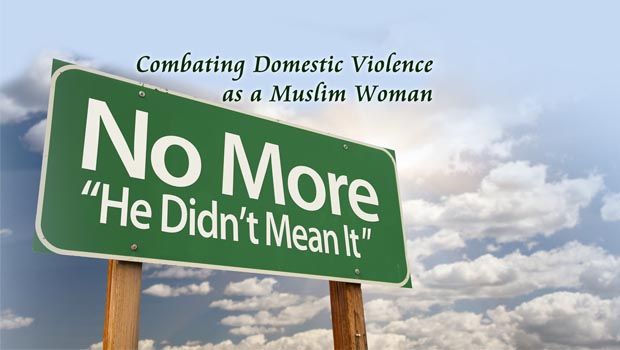
    Violence against women is a matter that should concern us all, yet it seems only a few people are concerned. Throughout the world, one in three women is beaten or suffers some type of abuse in her lifetime. According to data from the World Health Organization, 70 percent of women who are killed, die at the hands of their partner or ex-partner.

    Violence against women is present in all societies in the world regardless of political or economic system, regardless of social status of perpetrator or victim, level of education, ethnicity, financial situation, culture, or religion. This everyday reality is manifested many different ways and it takes place in a number of settings; and my own country, Mexico, is of course no exception. In Mexico, violence against women is a social problem that hides itself within the home. Many female victims of domestic violence live with their enemy in the same house and are exposed to danger day to day.

    I am a psychologist working for an institution that provides psychological support to women who have been victims of family violence. Every day I hear stories of how their husbands beat them, threaten them, are unfaithful to them, insult them, and sadly some women have also died while making an attempt tto escape the violence. This is a hidden reality many choose not to talk about. My work is a positive challenge in my life, alhamdulilah; it is what I love doing. I feel very blessed for having the opportunity to be able to listen to women who put in my hands their hope of coming out of a problem that affects their lives and the lives of their children.

    I am Muslim, Mexican and defend women’s rights. This probably comes as a surprise to many of the women who come into my office; some of them even think it is contradictory. “Are you telling me that it is not?” A woman once asked me, “How can a woman who covers her head out of submission (she said referring to my hijab), tell me how I can escape the violence I am dealing with, when she herself cannot escape her own submission?” I smiled smiled and answered her with confidence. My hijab is my best tool for giving dawah.

    In fact, it was my inconformity and sense of injustice regarding violence against women that brought me closer to Islam. I also had a wrong idea about the situation of Muslim women, which I see now reflected in the faces of many of my patients when they see me for the first time; many express their surprise, and others – even if they don’t say anything – have a look of astonishment or shock on their faces.

    I could say that I do see my old self mirrored in some of them; who I was when I first met Muslim women smiling and happy, when they talked to me about the value of women in Islam, when I read about the rights of women in Islam. I used to ask myself, “Is this possible?” trying to understand. And this is why I do enjoy so much explaining to them why I am a Muslim, with my own words and with my behavior.

    Islam came to complement my life and it has helped better understand the work I do. It helped me understand my own value as a woman. Men mistreat women because of ignorance and failure to properly understand power dynamics. Muslims, men and women, must work together to combat domestic violence.

  • Muslim and Mexican in Turkey

    Muslim and Mexican in Turkey

    How I came to embrace Islam is a painful memory. However, I am grateful to God for everything that I had to endure to be where I am now. My first encounter with Islam was in 2009, when I met a Turkish Muslim online. I began investigating the religion and learned little by little through our friendship.

    The year that changed my life was 2010; it was then that I was diagnosed with lupus erythematosus. The news was difficult to bear. I knew absolutely nothing about this serious disease or its effects. The doctors told me that it is an incurable disease, but subhanAllah, glory be to Allah, for five years I have survived because of the strength of God’s infinite mercy. I consider my illness a blessing because despite the lows and relapses I have had to struggle with since being diagnosed, it has helped me to mature and strengthen my faith.

    I have realized that the life of this world is temporary; I am only here to learn and to serve the Most High, and for every pain, for every relapse, for every loss, I know that God will reward me in Jannah, in Paradise, insha’Allah. Perhaps my health will decline more with each passing day, perhaps I will have to make more sacrifices, perhaps I will lose something or someone; Allah knows best, but as a Muslim what I will never lose is my faith and strength in Allah.

    In 2011, I traveled to Turkey and heard the Adhan, the call to prayer, for the first time in my life, and I also visited a mosque. Since that first trip, I focused more on Islam because there were things about my Muslim friend that drew my attention. He spoke so highly of the Prophet Muhammad, peace be upon him, and he advised that in order to know more about Islam, I had to learn about the Prophet, read about his life, and love who he was.

    That same year I was blessed with the opportunity of becoming a mother, but because of health issues, at five months gestation, on November 17, 2011, my pregnancy was interrupted. While in the operating room the doctors asked if I was Catholic, to which I responded, “No, my religion is Islam.” From that moment I considered myself a Muslim at heart although I had not officially converted.

    I was devastated because I understood that now I had to face two losses; not only because my baby died, but the man I considered my partner had abandoned me. I fell into a deep depression. I could not wait to get out of that crisis. I lost everything and even after several months I felt the same. One day in February 2012, I decided to log into Facebook to see what had happened during my absence. Coincidentally, a Muslim friend of mine was also logged on and he asked me how I was doing. Since I needed to get everything off my chest and speak with someone who viewed life differently, through another perspective, another culture, another religion, I vented. He was patient enough to read through everything I posted, until I finished.

    His response was, “I will send you something that will help you,” and that is how my first copy of the Qu’ran came to my hands. The first Surah, or chapter, which I read was Al Kauthar, and the verse that opened my eyes was, “Therefore turn in prayer to your Lord and sacrifice,” (108:2). It was after I read those words that I realized why I was going through such painful hardships; I had to sacrifice something that was never meant for me, something that in the end would not make me happy. Allah had already determined my destiny. I began reading more of the Qur’an and exploring Islam until finally, on May 2, 2012, I made the decision to declare my faith in a mosque in Mexico City.

    It has been four years since I entered Islam, Allahu akbar – God is Great. My life did not end with the loss of a partner and a child. On the contrary, I became stronger and found my real love, Allah, may He be glorified and exalted, and my true faith. I understood that in order to obtain happiness, one has to sacrifice and leave everything in God’s Hands.

    I married that Muslim friend who sent me a copy of the Qur’an, and now I live in Turkey. I arrived here in 2013, and moved to a city called Erzurum, where people are religiously devoted, conservative, and kindhearted. They have helped me to increase my faith. I attend Qur’an class five days a week, where I have learned to recite in Arabic and am attempting to memorize the entire Book. Insha’Allah, God willing, I can return to Mexico to share my knowledge.

    I made the decision to memorize the Qur’an because during the time I was living as a Muslim in Mexico, there was a young convert whom I believed to be knowledgeable who would say things that puzzled me. He even tried to teach me things that were contrary to the Sunnah, or Prophetic traditions, and I felt disappointed. That is why I wanted to understand the Arabic and memorize the Qur’an so that no one else could confuse me and also because every Muslim should learn the Holy Qur’an and live in accordance to the Sunnah.

    As a convert I felt even more compelled to seek knowledge. If people who are born and raised Muslims can learn, then I can do the same. Being a convert is no excuse for me, just as not having been raised in an Islamic environment is no justification for not seeking knowledge. From the very moment that I declared my Shahada, it became a commitment for me to change my life. I wanted to practice everything that Islam teaches and to always have the thirst for learning more and more about my faith, Alhamdulillah.

    Life in Turkey has not been easy since I have had to learn and adjust some of my behavior, but above all live a life in accordance with the Qur’an and the Sunnah. Here in Turkey was where I saw a woman covering her face with a veil for the first time, and men with long beards and tasbih beads making constant dhikr (remembrance of God). Men and women are segregated and the government puts a lot of love and effort into the month of Ramadan.

    In Turkey when people discover you are a Muslim from the West, they are filled with surprise and admiration, and at the same time, they offer their love and support. I consider this country the place that opened its doors to me and adopted me, and where I don’t feel excluded or judged because of my religion.

    I remember that in Mexico I used to be pointed out and ridiculed for wearing hijab. I used to be the center of attention and I believed in Turkey things would be different, but they are not. I am still the center of attention, but because I am a Muslim Latina, Alhamdulillah, and that is beautiful.

    Recently, during a family reunion, someone asked me, “Has your life changed after your conversion? Do you like it? How is your life now?” I simply responded, “Of course my life has changed, and for the better, alhamdulillah. Life in Islam is a new life.”


  • From Mexico to Madinah: The Story of Brother Rafael

    From Mexico to Madinah: The Story of Brother Rafael

    My interest in Islam began when I was only 17 years old. I started to read the Qur’an in Spanish from my computer and finished reading it completely, Alhamdulillah. Although I initially read it without any particular aim in mind, from the very beginning I knew that this was not a book like any other book I had read before. I noticed from the very first page that God was being praised and honored in such a unique way, in a manner that I had never experienced. I continued reading and a strange sensation came over me. Without wanting to exaggerate, I felt a lot of peace and tranquility when I sat in front of my computer and read it carefully, verse by verse.

    I have always liked science and I was amazed that many scientific facts, which have only been proven in the last few centuries, appeared in the Qur’an. Things such as the Big Bang theory, the expansion of the universe, the structure of the earth and space, the stages of the embryo in the mother’s womb, and many others were discussed in detail in the Qur’an. It was very surprising to me that they were described in such a clear way, understandable to any person with any level of education. I found that the Qur’an provides details about individual life, family issues, social justice, rules of engagement in battle, and, of course, worship of God. After reading it, I did not waste time in accepting that the Qur’an was a divine revelation and I decided to accept Islam.

    During a holiday in my country, which happened by coincidence to be the night of the 27th of Ramadan, I took my father’s bicycle and rode to the place where the Muslims in my city gathered. Although it was very far from my house and I passed by dangerous neighborhoods to get there, everything turned out perfect. I proclaimed my Shahada (testimony of faith) and everyone treated me well. They gave me a prayer rug and books, which I hid beneath my t-shirt so that my parents would not know, and I arrived back home after midnight. My Catholic family did not know about my conversion to Islam until a few years later. I used to hide the signs that I changed. Nevertheless, they noted a few things about me that were different. I used to withdraw from the family at certain times so that I could pray my five daily prayers, and sometimes I did not eat or drink everything they served.

    After my Shahada, I received many blessings. I noticed that it is certainly Allah that hears our supplications. Everything that I feel discomfort with is eased, and anything that I could need, I receive more than I ask for when I put my trust completely in Allah.

    Alhamdulillah, I had the opportunity to travel to Saudi Arabia and study at the University of Madinah for about a year. I was able to learn to read the Qur’an in Arabic and some of the language itself when I arrived not even knowing a single letter of the Arabic alphabet. Once there, I met excellent people who exhort and invite others to do good deeds and practice Islam in the best way. Apart from the knowledge that I received, which is invaluable, I also received the legacy of the prophets, the motivation to teach others about Islam.

    I also had the chance to see beautiful places. The simple act of visiting a masjid was of such great value to me since in my native city there are none. And, what is better than arriving at the city that gave refuge to our beloved Prophet Muhammad, peace be upon him, and then having the possibility of performing the Hajj? It is something unforgettable that I hope we all have the opportunity to accomplish. I advise you all sincerely to strengthen yourselves, especially those who value too little this Islamic obligation. If you visit Makkah and perform the Hajj, it will change your life!

    Unfortunately, I had to leave the city of Madinah due to family problems. Although it made me sad, a few months later Allah made it possible for me to marry an excellent woman with whom I am very happy and feel proud to share my moments.

    At the present time, Islam in my city, Guadalajara, continues to grow. Although it is growing at a slow pace, it can be said that there are new Muslims every month. We have less than five musallas, congregational prayer areas, but generally the people do not bother us if we pray in public or if we publicly invite others to Islam. There is more curiosity and interest in Islam than any harassment or rude comments. However, it is a sad fact that female converts are more likely to face opposition than the men.

    Insha’ Allah, the situation of the Muslims will get better throughout the world. However, before anything, we should be conscious that any change has to first come from our part by having sound intentions, performing righteous deeds, inviting others towards the good and condemning the evil. For this, there is nothing better than finding the wisdom in the Holy Qur’an, or following the excellent example of our Prophet, peace be upon him.


  • My Advice to New Muslims

    My Advice to New Muslims

    Oftentimes when a person embraces Islam, he or she is unsure of what steps to take next. After much effort to arrive at the decision to proclaim the shahadah, the testimony of faith, with conviction and sincerity, their journey continues. Knowing where to go from there can help a new Muslim steer clear of hardships and misguidance. I am a Latino convert of over twenty years who has had a chance to study Islam and Arabic in the US and Saudi Arabia. In this article, I offer my advice to new Muslims.

    Learn About Allah

    The science which deals with this is called al-tawhid, which means “to single out Allah in worship”. Actually, al-tawhid is classified into three categories – tawhid al-rub?b?yah (singling out Allah in His Lorship), tawhid al-asm?’ wa al-sif?t (singling out Allah in His Names and Characteristics), and tawhid al-uluh?yah (singling out Allah in worship).

    Getting to know Allah is very important. Having newly entered Islam, one might still have a lot of misunderstandings about his/her Lord. In Islam, we recognize that our original state of being is one of not having knowledge, and Allah sent prophets to us to teach us about Allah and the correct way to worship Him. Allah says “We have sent to every nation a messenger (saying) “Worship Allah and avoid worship of other than Allah.” This knowledge is the most important thing a Muslim can learn and the first obligation upon him/her. One should be continually learning, recognizing, purifying, and acting upon tawhid.

    The first words uttered to enter Islam – “L? il?ha illa All?h” – are related to al-tawhid. These words are in fact a statement confirming al-tawhid. They should also be the last words a Muslim says just before he/she dies. That being the case, we can say that al-tawhid should also be the last matter in life.

    Learn the Qur’an

    Allah sent the Qur’an to us as a guide to live by, to judge by it, to recite it, to use it as a cure, to learn and teach it, to reflect upon its words, and to make it the center of our lives. Indeed, the Qur’an is one of the greatest miracles. We should spend time learning how to recite it in its original language. We should read its translation in the language we are most fluent and comfortable with. We should also invest time in our lives to familiarize ourselves with its verses. Indeed, every single verse is itself a sign (?yah) from Allah. It is Allah’s Message to us and instructions on how to live our lives and fulfill what Allah wants us to do.

    Start Praying Immediately

    Prayer is an essential part of Islam. The prophet (peace be upon him) said, “The covenant that distinguishes between us and them is the prayer, so whoever abandons it has disbelieved.” (Reported by Ahmad, Al-Nisai, and Al-Tirmidhi).

    Avoid Bad Company

    It is very important for new Muslims to stay away from bad company. Why do I say this? There are many negative and destructive behaviors that some people see as normal or even praiseworthy. Some individuals accept certain actions as being normal or acceptable; for example, dating and premarital sex, unnecessary intermixing of the genders, drinking alcohol and going to nightclubs, etc. These people have not yet understood the importance of living a pious life or felt the impact of establishing regular prayer. They may not even accept the existence of a Creator. This type of bad company might divert you – intentionally or unintentionally – from your new chosen life. They are not upon the correct path; so how can you expect them to aid you on the path that you have already chosen and recognized to be the one and only truth?

    Attend the Masjid Regularly/Get Involved

    Islam is a religion in which community is very important. Prayers are preformed in congregation five times a day. Males should try to make a great effort to attend all of these five prayers or as many as he can in the masjid if there is no difficulty in him doing this. Women are certainly allowed to pray in the masjid, but are encouraged to pray at home when children or other home matters demand attention. I would also suggest getting involved in whatever capacity you can at the local masjid.

    Learn Arabic

    Arabic is the language of Islam since the revelation was revealed through this language. Arabic is a universal language and is spoken by believers all around the world. The more we understand Arabic, the better we can understand the Qur’an.

    I would suggest learning as much of the Arabic language as possible. Focus on the correct recitation of the words, and on understanding their meaning.

    Additionally, one should not make it a stumbling block to learning or practicing the religion. At times, Muslims get diverted from other matters and may not even pray or memorize the Qur’an with the excuse that he/she has not mastered Arabic yet. Not knowing enough Arabic should never be used as an excuse for one to fall short in other areas.

    Learn the Seerah

    Muslims should learn about the Prophet Muhammad’s (peace be upon him) life. Seerah is the science which teaches about the life of the Prophet Muhammad. We should learn about his life and take lessons from it. We should also learn how he dealt with situations and try our best to model our lives according to his life. Indeed, Allah said, “You have in the Messenger of Allah the best example.” All of our actions in life should accord with his Sunnah (way of life, instruction, actions, and tacit approval).

    Learn About he Early Muslims

    There are often times where Muslims differ on issues related to the religion. Sometimes these differences are legitimate, and sometimes they are not. Allah says, “If you differ in anything, bring it back to Allah and his Messenger.” This means that we should resolve our problems by going back to Allah’s Qur’an, and in our times since the Messenger is not alive, we should go back to his Sunnah. However, there may still exist some differences of opinion on the interpretation of the Qur’an and Sunnah. Therefore, we should rely on the interpretation of the early Muslims, namely the Prophet’s Companions, their followers, and the followers of the followers. By this we can get the best and most accurate interpretation of Islam.

    If these early generations of Islam had a consensus on a particular matter, then it is not permitted to differ in that matter. If they differed on something, then the varying viewpoints are acceptable. We should never rely on our own opinion on things that have already been established or make it an issue of disunity among the Muslims.

  • The Missing Peace

    The Missing Peace

    My path towards Islam has taken many twists and turns throughout Latin America and here in the USA, where I finally became a Muslim. My parents are from Chile. They were political refugees exiled to Mexico because they were Socialists. In the 70s, to be a Socialist in Latin America was synonymous with being a rebel. Having political views that were left-leaning was very dangerous at that time. In 1973, a military coup d’état in Chile resulted in years of brutal political repression. My father was imprisoned and tortured before being exiled. A few months later he met my mother, who was also a Chilean political refugee. In 1976, I was born in Mexico City. My parents, my sister and I lived as a relatively happy, typical Mexican middle class family except for one thing: my parents were agnostic. To not be Catholic in Mexico was almost unthinkable.

    In 1989, when democracy was reinstated in Chile, my parents decided to return. I was a 12-year-old boy. Chile is a small country, dominated by one of the most conservative churches in the world. Like in Mexico, I grew up surrounded by Catholic messages over the radio, on television, and in the streets. In my own innocent way, I always liked the idea of God, of one God, but that was not what people believed. How could a boy from an agnostic family firmly believe in God? In my house that topic was never a theme of conversation. “Religion is the opium of the masses,” my father used to say. Over the years, my desire for a spiritual connection continued to increase.

    As a teenager, I was exposed to Capoeira (a Brazilian dance/martial art form) during a family vacation to Brazil. In Chile, I began taking Capoeira classes which helped to fill the void of my lacking spirituality. In 2000, I was accepted to the school of business in Chile and I studied Capoeira every day. My life became busy, “too busy” for religion.

    In 2003, I met my wife, a beautiful American woman who was teaching English in Santiago, Chile. She came from a Catholic family and thus, I came closer to the religion. In 2005, I moved to the USA and in 2006 we married in a Catholic Church in Richmond, Virginia. In 2008, I opened my own studio to teach different styles of martial arts, fitness and dance. That same year my first daughter, Priya, was born and in 2010 I became a home owner. In a period of only five years I had achieved the “American dream”, things that some people do not achieve in their entire life. But something was still missing.

    2012 was one of the hardest times in my life. My arrogance led me to tear my patella tendon which took almost a full year to recover. That same year my second daughter, Mireya, was born. In 2013, I began my spiritual-religious search. I started investigating the Yoruba religion, Santeria, but I did not feel identified with it.

    In December of 2014, I spent Christmas with my family in Chile. After Christmas dinner I went to my room to sleep, but stayed awake just sitting on my bed. Memories of my adolescence and my youth came to me and I began to cry. I cried a lot. I can’t remember for how long, maybe for five or 10 minutes, but I remember putting my knees on the floor and my arms in a supplication position. And I stayed there, asking, really asking, for God to guide me and help me to come closer to Him. After that, I turned on the TV and it was showing a program about the life of Jesus. A lot of questions came to mind like, “Is he God”? Then I googled the word “Jesus” and somehow landed on a page discussing Jesus and Islam. Then I researched the words “Islam” and “Prophet Muhammad.” By the end, I didn’t sleep until 5 or 6 am.

    Around 11am, I woke up. My mother said I must have been tired because of how much I had slept. I told her then that I wanted to become a Muslim but she didn’t believe me. When I arrived in America again, I called a Muslim friend to see if he could take me to a mosque. There, I felt so much peace and harmony within myself. Then another friend, who is from Turkey, helped me to take my Shahada, the testimony of faith. I also met a Gambian brother, a student at my studio, who helped me visit different mosques and meet with some imams. By Ramadan time, I realized that I was surrounded by a nice community of brothers to help me in my journey.

    My wife has been a tremendous support to me. We have been married for 10 years now. I consider myself an impulsive person and I used to get angry with her for insignificant things. But now I try to remember this hadith: “The strong person is not the good wrestler. Rather, the strong person is the one who controls himself when he is angry.” (Sahih al-Bukhari, Book 73, #135)

  • Entrevista: Mujahid Fletcher (Islam in Spanish)

    Entrevista: Mujahid Fletcher (Islam in Spanish)

    Nacido y criado en Colombia hasta la edad de 8 años, Mujahid Fletcher emigró con su familia a Houston, TX. Sin embargo, tras una adolescencia llena de violencia pandillera y serios problemas, sus padres lo mandaron de vuelta a su país de origen donde, Fletcher dice, su vida dio un giro positivo. Permaneció en Colombia dos años y regresó nuevamente a Houston. Poco tiempo después, un amigo le hablo acerca del Islam. Después de estudiar la religión por un año, decidió abrazar el Islam, y luego fundó IslamInSpanish (IslamEnEspañol), una organización sin fines de lucro que ofrece productos y servicios audiovisuales islámicos en español. IslamInSpanish recientemente celebró su décimo aniversario con un banquete y recaudación de fondos en Dallas, TX.

    P ¿Cuáles han sido algunas de las dificultades que has encontrado como un nuevo musulmán?

    R Algunos meses después de que me convertí en musulmán, ocurrieron los atentados del 11 de septiembre, y me di cuenta durante ese tiempo que no había ninguna materia en español para darle a mi padre ni a cualquier otra persona que quería saber del Islam. La Sociedad Islámica de Greater Houston me pidió que hablara con la prensa hispanohablante para informar al público sobre el Islam, y después de explicarle más a mi papá acerca de la religión, él se convirtió tres meses después de mí. Luego me dijo que si no existía ningún material audiovisual para educar a la gente latina acerca del Islam, entonces debería ser mi responsabilidad producirlo. Este reto me llevo a mí y a mi esposa a matricularnos en el Instituto de Arte de Houston para obtener licenciaturas en Multimedia y Diseño Gráfico. Lo que nos motivo fue el hecho de que los musulmanes parecían muy débiles o no suficientemente preparados para presentar al Islam en los medios de comunicación de una manera efectiva, de tal manera que hicimos esto nuestro objetivo en la vida, y nos graduamos con honores siendo una pareja joven de nuevos musulmanes latinos de 22 y 24 años.

    P ¿Qué has contribuido para el dawah a los hispanohablantes y en general (incluyendo a tu familia)?

    R Una de mis humildes contribuciones al dawah en el idioma español es la fundación de IslamInSpanish, que por más de diez años ha producido el material islámico audiovisual en español tan necesario para educar a los latinos sobre el Islam a nivel mundial. Yo soy el fundador, y como tal, un productor de cine y televisión. Mi padre ha sido el narrador y mi esposa es la diseñadora gráfica para la compañía. Mi madre, mi suegra y su hermana, y muchos otros en nuestra familia han abrazado el Islam, al igual que miles de otros a nivel mundial por medio de nuestra página web www.IslamInSpanish.org y otros medios sociales como www.Facebook/IslamEnSpanish, nuestro canal en YouTube IslamInSpanishTV que tiene miles de visitantes, y a través de canales locales de televisión y también internacionales desde Madrid, España.

    P ¿Qué otro tipo de servicios ofrece IslamInSpanish?

    R También se nos invita a lugares públicos como universidades, Iglesias, sinagogas, Sam’s Club, convenciones, y otras avenidas, para hablar en inglés y en español acerca de lo que es el Islam y el punto de vista latino dentro del Islam. Yo, personalmente, he tenido la oportunidad de hablar en la Universidad de Harvard, la Universidad Rutgers, iglesias Unitarias, estaciones de radio católicas, Sam’s Club para entrenamiento de sensibilidad cultural durante el mes de Ramadán, y estaré hablando en una clase de confirmación en una sinagoga el próximo mes. Los propietarios de negocios musulmanes incluso piden que visitemos a sus empleados que están interesados en aprender del Islam.

    P ¿Cuáles son algunos de los obstáculos que ha tenido que superar en sus proyectos educativos?

    R Un problema que tenemos es que la producción de multimedia es costosa por el hecho de que requiere personal con entrenamiento técnico y requiere mucho tiempo. A pesar de las limitaciones presupuestarias y el desafío de encontrar las personas con las habilidades para llevar a cabo nuestros proyectos de producción ambiciosos, IslamInSpanish ha producido el primer set de 26 CDs de una traducción española del Corán, así como la producción de audios en español de otras obras clásicas como Los 40 Hadices de Al Nawawi, El Néctar Sellado (Biografía del Profeta Muhammad), y CDs muy informativos como Conozca a Jesús y María en el Islam, Conozca el Corán, y Conozca al Profeta del Islam.

    P En tu opinion, ¿Cuáles son algunos de los más grandes logros de?

    R Hoy somos la primera fuente auténtica de multimedia islámico en español para educar a los latinos sobre el Islam, y ahora después de diez años estamos a punto de viajar a zonas donde las personas quizás no sepan de nosotros o donde no se han celebrado eventos en vivo, con el fin de aumentar nuestro alcance y la conciencia. En los últimos cinco años hemos recaudado e invertido 200.000 dólares en nuestro estudio de producción llamado “Centro de Artes de Medios de Andalucía (www.AndaluciaCenter.org).” Hemos producido en los últimos diez años, más de 500 títulos de audiolibros y 200 programas de televisión hasta la fecha.

    Llevamos a cabo una firma de puertas abiertas para los latinos no musulmanes en los EE.UU. titulado “Raíces islámico en la cultura latina” – “Raíces Islámicas en la Cultura Latina” – donde cientos de personas han abrazado el Islam. Otros talleres de eventos en vivo se les da a los no musulmanes. Dos clases de español semanales se llevan a cabo en Houston y dos sermones españoles se entregan mensualmente, que es una actividad pionera que esperamos, en el futuro, que tendrá lugar durante todo los EE.UU.

    P ¿Cuál es la mejor manera de presentar el Islam a los latinos aquí [en nuestros países]?

    R En primer lugar, hemos aprendido que la clave es conectarse con la gente basada en la situación que se encuentran. En general, todos queremos el bien para nosotros mismos y para nuestras familias. Si hay una oportunidad para ayudar a alguien, mucha gente lo haría. La manera que nos dirigimos a las personas cuando hablamos con ellos es de la misma manera que nosotros quisiéramos que ellos nos hablen. Nunca se trata de debatir o discutir, porque esto abre la puerta de la negatividad. Esto es una regla mayor que se encuentra en el Islam y es una regla universal.

    En segundo lugar, nos acercamos a la gente para levantar los puentes de comprensión entre nosotros a nivel humano para poder conocernos bien. Si no nos conocemos, eso es cuando los problemas ocurren; no importa la raza, cultura, o afiliación religiosa. Y hemos sido creados para conocernos, basado en un verso en el Corán, en la Surah (Capítulo) al-Huyurat 49:13 –

    “¡Oh, humanos! Os hemos creado a partir de un hombre [Adán] y una mujer [Eva], y [de su descendencia] os congregamos en pueblos y tribus para que os conozcáis unos a otros. En verdad, el más honrado de vosotros ante Alá es el más piadoso. Ciertamente Alá es Omnisciente y está bien informado de lo que hacéis”.

    En tercer lugar, el idioma juega un papel enorme en la comunicación, por eso escogimos el nombre IslamInSpanish. Hablamos el idioma de nuestra gente, porque esta es la manera de comunicar el mensaje de manera natural – en nuestro propio idioma –como hicieron los mensajeros enviados por Alá, tal como Adán, Noé, Abrahán, Moisés, Jesús, y Muhammad (que la paz este con todos ellos). Alá menciona esto en el Corán en la Surah Ibrahim 14:4 –

    “Todos los Mensajeros que enviamos hablaban el idioma de su pueblo para transmitirles claramente el Mensaje. Pero sabed que Alá extravía a quien Le place y guía a quien quiere; ciertamente Él es Poderoso, Sabio”.

    Por lo tanto, se establece el sentido más profundo de comunicación entre ambas partes, y el corazón del que escucha se conecta al corazón del que habla basado en la cultura y el idioma que comparten. Esta es la razón que los eventos de IslamInSpanish son organizados en el idioma de la gente que sirven. Si la audiencia habla inglés, podemos presentar la información en inglés también, pero cuando una persona de habla hispana escucha la misma información en su lengua natal, su impacto y efecto son duraderos y los lleva al punto de aceptación, o al menos, de empatía hacia el Islam y los musulmanes.

    Para más información acerca de IslamInSpanish, consulte:

    La página web: www.IslamInSpanish.org

    Número telefónico gratuito: 1 (877) 717-4961

    www.IslamInSpanish.org

    www.facebook.com/islamenspanish

    www.youtube.com/user/IslamInSpanishTV