بسم الله الرحمن الرحيم

Author: Saulat-Pervez

  • A Lifetime of Service

    A Lifetime of Service

    In 1987, he walked 2500 km across the Arabian Peninsula in order to perform Hajj and collect funds for a charitable hospital in Karachi. He was 66 years old.

    In 1998, he skydived from 10,500 ft to raise funds for Support a Child, Save the Nation, a philanthropic project for Pakistan, India, and Bangladesh, which aims to eradicate child labor through education. He was 77 years old.

    In 2004, he walked 100 km from Whitby to Mississauga in Canada to raise funds for a Seniors’ Home. He was 82 years old.

    Popularly known as the “Volunteer Charity Walker from Pakistan,” his name was Major Muhammad Abbas Ali, a retired officer of the Pakistan Army. “The rich pay zakat on their wealth; I pay zakat on my health as well,” he often said.

    Perhaps his biggest achievement in life was the organization which he founded along with his wife, Sarwar Jahan Begum, at the age of 72, known as Muslim Welfare Centre (MWC) in Ontario, Canada. Initiated with an interest-free loan of $14,000, it began in a tiny room which served as a Halal Food Bank for the destitute.

    “It was a miracle of Allah, it was a golden opportunity to fulfill our ardent desire to serve humanity in distress… We jumped in the field of welfare of the needy with the banner ‘Service to Humanity is Service to Allah’ … We started serving the needy with grocery irrespective of religion, nationality, caste, or creed. Within a couple of years time, we were not only able to clear the loan but when we looked at the bank balance, it had soared to $80,000,” wrote Major Abbas, remembering the early days of his organization and the generosity of the community.

    Both husband and wife, tirelessly and selflessly, devoted themselves to the center, aided by likeminded individuals who also committed themselves to this noble task. Over time, the organization expanded and took up more and more causes. Today, MWC is operating four Halal Food Banks in Ontario and Montreal, serving over 6500 needy families on a monthly basis. In addition, MWC is operating Halal Meals on Wheels, distributing about 350 lunch packs to the homeless people in Toronto downtown area every Saturday; warm clothes and blankets are also distributed during winter through this project.

    In 1996, MWC established Muslim Welfare Home, a shelter for needy women and children, which operates 24 hours a day, 7 days a week, with a full-time staff on duty. So far, over 3500 single women and mothers with children, irrespective of their backgrounds, have benefited from this shelter. Moreover, MWC has launched a free medical clinic in Toronto for those who do not have health coverage.

    In 1999, MWC opened a branch office in Pakistan and introduced its welfare project, Support a Child, Save the Nation. At present, MWC is operating two schools in poor localities of Karachi and providing primary to secondary education to over 650 children. It costs only $1 a day or $30 a month to sponsor a child. The child receives free education, uniform, books, stationary, shoes, etc. Support is provided to the child’s family too in terms of grocery along with assistance on a monthly basis to help them cope and encourage the family to keep their child in the school. Furthermore, MWC is running two medical clinics in poor localities in Karachi, staffed by qualified doctors. Medical examination and medicines are free at all locations.

    MWC has initiated a water exploration project in the Thar Desert region of Pakistan as well. They are digging wells and installing tube wells in the desert communities to provide water to the local population. An ongoing project, 50 wells have been dug in remote villages. Recently, MWC sent $160,000 worth of food boxes, medicines, and cash in relief efforts to the flood victims in Pakistan. More than 3000 food boxes were sent via PIA from Canada in addition to 3.5 tons of food, baby milk and toiletries.

    Major Abbas passed away in 2009 at the age of 82. Sarwar Jahan Begum died in March, 2013, at the age of 84. A team of dedicated directors carry on the work begun by Major Abbas and his wife.

    During his life, Major Abbas received more than 20 awards from various organizations, including UNICEF, Canadian Association of Pakistani Media, and the Consulate General of Pakistan. Posthumously, he has been honored with the Lifetime Achievement Award in Canada. Additionally, McLevin Park at 180 McLevin Ave., Scarborough, has been renamed “Major Muhammad Abbas Ali Park” in recognition of his humanitarian services to the community at large.

    According to his wife, “Major Abbas was not only the founder of MWC, he was a true leader, filled with tremendous determination, dedication and patience. He was a source of inspiration, and a great mentor, who left behind a strong team of equally dedicated and capable staff, volunteers and directors.”

    Major Abbas and Sarwar Jahan Begum are admirable role models, people whose steely will and selfless mission enabled them to help the impoverished humanity of our world despite the frailty of their years. Their organization continues to sustain the humanitarian work they established. What a wonderful sadqah-e-jaariyah! May Allah, subhanahu wa ta’ala, enable us to follow in their footsteps. Ameen.

  • The Final Prophet of God: Muhammad (pbuh)

    The Final Prophet of God: Muhammad (pbuh)

    Muhammad (p), the final prophet of Islam, is widely considered one of the most influential men in history. Today, nearly one fourth of the world’s population follows the message he delivered. Despite Muhammad’s (p) lasting influence, many misconceptions continue to surround his persona and his teachings. This brief introduction of Muhammad (p) summarizes his life and highlights what esteemed non-Muslim scholars have said about him.

    So, who was Muhammad (p)?

    “He was Caesar and Pope in one; but he was Pope without Pope’s pretensions, Caesar without the legions of Caesar: without a standing army, without a bodyguard, without a palace, without a fixed revenue; if ever any man had the right to say that he ruled by the right divine, it was Mohammed, for he had all the power without its instruments and without its supports. He cared not for the dressings of power. The simplicity of his private life was in keeping with his public life.” –Reginald Bosworth Smith

    Muhammad’s (p) life began in a seemingly conventional manner in the deserts of Arabia in the sixth century. When he turned 40 years old, God tasked him with prophethood and began revealing His final book, the Quran, to him. As a prophet, Muhammad (p) called people to the divine teachings of Islam. He encouraged them to worship the One God and to uphold a morally upright life.

    Studying Muhammad’s (p) life is crucial to understanding his momentous journey from being an apparently ordinary human to fulfilling his destiny as the final prophet chosen by God (Allah in Arabic). It also helps one gain a deeper insight into the religion of Islam and the lives of Muslims.

    MUHAMMAD (P): THE MAN

    Muhammad (p) was born in 570 C.E. in Mecca. He was orphaned at a young age; his father died before his birth, followed by his mother six years later. Muhammad’s (p) grandfather, and then his uncle, cared for him for the remainder of his youth. As a result, no single figure molded Muhammad’s (p) beliefs and outlook on life from an early age.

    As a young boy, he worked as a shepherd. This was significant, as he noted much later, “All the prophets of God were shepherds.” Muhammad (p) then adopted the premier Arab occupation of trading and was widely respected for his integrity and sincerity. However, despite his intelligence, he could not read or write, nor was he skilled in composing poetry, a hallmark of Arab society. Therefore, the claim that Muhammad (p) authored the Quran is unfounded. To this effect, God declares in the Quran, “[Muhammad] does not speak from his own desire. The Quran is nothing less than a revelation that is sent to him” (53:3-4).

    Prior to prophethood, Muhammad (p) was greatly regarded for his superior character and exceptional manners, earning him the title of the ‘Truthful One.’ Meccans entrusted him with their possessions for safekeeping and he was often asked to mediate disputes as an impartial judge.

    At the same time, Muhammad (p) detested the polytheistic Arab customs and did not participate in idolatry.

    He was also deeply bothered by the many social evils in Arabia, such as the ill treatment of women, widespread alcoholism, constant warfare and subjugation of the poor. He often escaped the atmosphere of Mecca to a cave outside the city, isolating himself for days at a time in meditation.

    Although Muhammad’s (p) pre-prophetic life was highly reputable, it does not indicate that he was poised to make any significant worldly impact. Yet, these life experiences and the development of his character were God’s way of preparing Muhammad (p) for the monumental task ahead.

    MUHAMMAD (P): THE PROPHET

    One night, in the year 610 C.E., God sent the angel Gabriel with revelation to Muhammad (p). This was one of the most significant events in human history. It marked the beginning of his prophethood and transformed his life entirely. As the prophet of God receiving divine inspiration, all his endeavors henceforth were devoted to leading humanity back to the pure worship of God. He led an earnest life based on the most sublime values, initiating tremendous changes in Arabia and beyond.

    Whereas earlier he removed himself from the social and spiritual corruption in Mecca, he now proactively worked to reform it. Muhammad (p) called his fellow Meccans to cease their worship of idols and to affirm the Oneness of God; he also invited them to a life of righteousness and piety. He warned them of an afterlife where they will be held accountable for their earthly deeds and also gave joyful news of paradise to those who believed and lived a God-conscious life.

    Like previous prophets, Muhammad’s (p) message was rejected by many of his people. They insisted on maintaining the religious and social customs of their ancestors. The elite mocked Muhammad (p), accusing him of deceit and madness – the same man whom they freely trusted and honored before. Only a few people believed in him, particularly the poor and disadvantaged who were attracted to his message due to its emphasis on equality and justice.

    Prophet Muhammad (p) and his small group of followers endured persecution for 13 years in Mecca. Eventually, they were forced to leave Mecca and migrate to Medina, a city whose people eagerly welcomed them. Here, Muhammad (p) established the very first Islamic society which eliminated the spiritual and social problems rampant in the Arabian Peninsula. Freedom of religion was instituted in Medina; women were honored and respected as equals; racial discrimination was practically eliminated; tribal warfare was replaced with united ties of brotherhood; usury and alcohol were completely forbidden.

    The French historian, Alphonse de Lamartine, has stated: “If greatness of purpose, smallness of means, and astounding results are the three criteria of human genius, who could dare to compare any great man in modern history with Muhammad?”

    When comparing his life before and after becoming a messenger, it becomes clear that God enabled him to attain this stature and renown through his prophethood. By the end of his life in 622 C.E., the powerful teachings of Islam had overcome even its most ardent enemies. Convinced by the truth of Muhammad’s (p) message and inspired by the purity of his character, the entire Arabian Peninsula embraced Islam.

    Yet, some individuals have alleged that Muhammad (p) was not a true messenger of God but a sham; this reflects a poor understanding of his teachings, personality and life achievements. Many non-Muslim intellectuals throughout history have attested to the impossibility of this view. The British historian, Dr. Montgomery Watt, addresses this perspective in his writing, “His readiness to undergo persecutions for his beliefs, the high moral character of the men who believed in him and looked up to him as leader, and the greatness of his ultimate achievement all argue his fundamental integrity. To suppose Muhammad an impostor raises more problems than it solves. Moreover, none of the great figures of history is so poorly appreciated in the West as Muhammad.”

    In Life of Mohammed, the famous American intellectual, Washington Irving, wrote: “In his private dealings, he was just. He treated friends and strangers, the rich and poor, the powerful and weak, with equity, and was beloved by the common people for the affability with which he received them, and listened to their complaints… In the time of his greatest power he maintained the same simplicity of manners and appearance as in the days of his adversity… He was displeased if, on entering a room, any unusual testimonials of respect were shown to him.”

    MUHAMMAD (P): THE LEGACY

    In the century following Muhammad’s (p) death, Islam expanded in all directions, absorbing the Persian and Byzantine Empires to the North, reaching as far as Spain in the West and extending its borders to include parts of India and China to the East. This rapid spread of Islam in such a short period of time has caused many to marvel at how a man with a simple message could produce such an astonishing impact on the world.

    Mahatma Gandhi, a champion of peace in modern times, said about his experience of studying the life of Muhammad (p), “I wanted to know the best of the life of one who holds today an undisputed sway over the hearts of millions of mankind… I became more than ever convinced that it was not the sword that won a place for Islam in those days in the scheme of life. It was the rigid simplicity, the utter self-effacement of the Prophet, the scrupulous regard for pledges, his intense devotion to his friends and followers, his intrepidity, his fearlessness, his absolute trust in God and in his own mission. These and not the sword carried everything before them and surmounted every obstacle.”

    Similar admiration was expressed by British intellectual and women’s rights activist, Annie Besant: “It is impossible for anyone who studies the life and character of the great Prophet of Arabia, who knows how he taught and how he lived, to feel anything but reverence for that mighty Prophet, one of the great messengers of the Supreme.”

    Muhammad (p) was the final prophet in a long line of messengers sent by God which included, among others, Adam, Noah, Abraham, Moses and Jesus, peace be upon all of them. Like previous prophets, Muhammad (p) called people towards belief in the One God and taught them to be just and merciful. His life and teachings have been meticulously documented by thousands of historical sources dating back to his companions.

    Michael M. Hart, a Jewish-American historian, placed Muhammad (p) first in his book, The 100: A Ranking of the Most Influential Persons in History. According to Hart,

    “He was the only man in history who was supremely successful on both the religious and secular levels… It is this unparalleled combination of secular and religious influence which I feel entitles Muhammad to be considered the most influential single figure in human history.”

    Muhammad (p) was indeed one of the most important men in human history; his impact on the world continues to be felt strongly today. Reflecting on his remarkable life and amazing accomplishments leads to an inevitable question: Was Muhammad (p) simply an extraordinary person or did his greatness result from his being a genuine prophet of God?

    Without a doubt, the answer to this question carries great implications. We encourage you to delve deeper into the study of Muhammad’s (p) life and explore this potentially life-changing question yourself.

    Note: The (p) next to Prophet Muhammad (p) represents the invocation Muslims say with his name: May God’s peace and blessings be upon him.

  • Islam in Europe: A Forgotten History

    When we study European history, it generally traces the roots of Western civilization to the Greeks and Romans, followed by a dark period called the Middle Ages in which Europe languished in gloom. We are told that this bleak era eventually gave way to the Renaissance after Europeans rediscovered their classical Greek and Roman scholarship. This movement became the precursor to the modern world as we know it today: progressive, technological, scientific – confirming the assertion that almost all great inventions have had their origins in the Western world.

    Yet, this narrative of history doesn’t answer many crucial questions: Was all of Europe covered with a dark cloud during the Middle Ages? How was the rest of the world faring at the same time – did any inventions take place in any other part of the world or Europe?
    How did the Europeans rediscover their classical roots? How did this regained scholarship enable Europe to emerge out of darkness and achieve all the greatness that it has?

    This is where another – seemingly disconnected – history steps in. It is an account that neatly fills in all the missing gaps and crevices in the history of Europe as it is taught – yet, sadly, this record is usually expunged from history books.

    Europe: Re-Visiting History

    Europe itself is often thought of as Eastern and Western Europe, which goes back to the time of the Holy Roman (Western) Empire and the Byzantine (Eastern) Empire. The Eastern countries consist of Belarus, the Czech Republic, Hungary, Poland, Ukraine, among others, on its north side and the Balkans – such as Greece, Albania, Bulgaria, Montenegro, Serbia, Romania, Hungary – as well as Turkey to its south. The Western nations include Spain, Italy, France, Germany, Austria, England, Sweden, Norway, and Denmark. Russia is considered a Euro-Asiatic state.

    The Islamic empire had spread into Eastern Europe first through Turkey and then into the Balkans as well as eastern Russia; the fall of Constantinople in 1453 A.D. established the Ottoman rule in Southeastern Europe. The fact that many of their counterparts today (such as Bosnia, Kosovo, Albania, Bulgaria, etc.) boast either an Islamic identity or a Muslim majority vouches for this reality.
    As for Western Europe, Muslims occupied Spain in 711 A.D. and made inroads into France soon thereafter; however, they were decisively driven out of France in a series of battles by Charles Martel by 800 A.D. Muslims also ruled southern Italy for about a 200 years between the ninth and eleventh centuries, although it was sometime in the thirteenth century when all Muslims were expelled from Sicily, an island off the coast of Italy.

    Spain

    After a coup overturned the Umayyad rule in Damascus in 750 A.D. and the victors massacred the royal Umayyad family, Abdul Rahman, the lone surviving relative of the caliph, escaped. He traveled south to North Africa, narrowly missing his pursuers, and eventually entered Muslim Spain, a pro-Umayyad constituency which at the time was beset with infighting and rivalries. By 756 A.D., he had united the different factions under his leadership and re-established Umayyad rule in far-away Cordoba in Spain, also known as al-Andalus.

    This marked the beginning of a glorious era in which al-Andalus became known, on the one hand, for its architectural grandeur, aesthetic gardens, intellectual achievements, scientific inventions, and cultural advancements, and on the other, for a spirit of tolerance and mutual respect among people of differing faiths, also known as convivencia.

    At a time when Western Europe was, quite literally, plunged in darkness, there was street lighting and running water in Cordoba. The Great Mosque of Cordoba dazzled its visitors with its intricate calligraphy and imposing arches. Cordoba’s sprawling gardens, and the later cities of Madina al-Zahra and al-Hamra, showcased the power, splendor, and luxury of Muslim Spain.

    The Umayyad rule lasted through the 11th century, followed by North African Muslim rulers reigning Spain until the 13th century. Infighting and rivalries had reduced their unity to individual kingdoms which enabled the northern Christian rulers to regain those territories. At this point, Cordoba was lost and Toledo became the next major Muslim city. However, Muslims soon lost Toledo as well, and the last Muslim stronghold in Spain was Granada where Muslims continued to rule for the next two centuries, until Queen Isabella and King Ferdinand conquered it in 1492 – incidentally, the same year when Christopher Columbus discovered the Americas.

    Sicily

    The Emirate of Sicily, located in the south of Italy, was a part of the larger Islamic Empire from the ninth to the eleventh centuries, under a variety of rulers. Under Muslim administration, Sicily flourished: its population doubled, people of different ethnic and religious backgrounds co-existed harmoniously, agriculture prospered, exports increased, and irrigation systems improve. The conquerors redistributed large estates into smaller holdings, spurring an end to the economic and social depression. Many new crops were introduced such as cotton, hemp, date palm, sugar cane, mulberries, and citrus fruits. Related industries grew, such as textiles, sugar, rope-making, matting, and paper (which was later introduced to Europe via Sicily). Sicilian silks were also internationally known for their fine quality and beauty.

    Muslims lost Sicily to the Normans in the late eleventh century, but continued to live in the multcultural island peacefully. The Normans preserved the Muslim heritage so much so that Arabic continued to be the lingua franca in Sicily for the next 100 years. King Roger II spoke Arabic and employed Muslim scientists and architects in his court; Muslim soldiers were also a part of his army. He continued to use the agricultural and industrial methodologies adopted by the former Muslim rulers of Sicily. Palermo, the Sicilian hub under Muslim rule, was maintained as the capital under the Normans. Roger II commissioned al-Idrisi to draw a world map; it proved to be the most advanced ancient map. Al-Idrisi also compiled the greatest geographical treatise of the Middle Ages, known as the Book of Roger.

    Ibn Jubair visited Sicily in the late 12th century after being shipwrecked on his return from a pilgrimage to Mecca. He was very surprised by the warm reception he encountered at the hands of the Normans. Of Palermo, ibn Jubair recounted, “The capital is endowed with two gifts, splendor and wealth. It contains all the real and imagined beauty that anyone could wish. Splendor and grace adorn the piazzas and the countryside; the streets and highways are wide, and the eye is dazzled by the beauty of its situation. It is a city full of marvels, with buildings similar to those of Cordoba, built of limestone… There are so many mosques that they are impossible to count. Most of them also serve as schools. The eye is dazzled by all this splendor.”

    Unfortunately, this spirit of convivencia did not last. As with Spain, all Muslims were evicted from Sicily and by the end of the thirteenth century, only the traces they left behind showed in Sicilian architecture, Arabized words in the now-Latinized language, and the Arab-style outdoor marketplace, among others.

    Muslim presence in Spain and Sicily left indelible marks on the architecture, sciences, philosophy, literature, and astronomy of Western Europe – even though, quite unfortunately, much of it has been forgotten.

    The Seeds of the Renaissance

    Islam encourages the gathering of knowledge and the use of reasoning. In the Qur’an, God repeatedly urges humans to use their intellect and thinking skills so that they may differentiate between truth and falsehood. Furthermore, Islam is a universal religion – not for a few chosen people or tribes, but for all people and for all times.

    With this collective and inclusive outlook, Muslims began to gather any and every scholarly work they could lay their hands on – be it Greek, Persian, or Indian – as the Islamic Empire grew. They, then, commenced the scrupulous task of translation and, afterwards, busied themselves in its study. Moreover, they initiated the procedure of verifying ancient beliefs and often postulated alternate theories regarding core issues, complete with extensive testing of their ideas. In fact, the scientific process of observation, hypothesis, experimentation, and conclusion was first fully introduced by the Muslims.

    For instance, Ibn al-Haytham (c. 965-1039), who studied light and wrote The Book of Optics, believed that human beings are flawed and only God is perfect. To discover the truth about nature, Ibn al-Haytham, a devout Muslim, reasoned that one must eliminate human opinion and allow the universe to speak for itself through physical experiments. “The seeker after truth is not one who studies the writings of the ancients and, following his natural disposition, puts his trust in them,” he wrote. “But rather the one who suspects his faith in them and questions what he gathers from them, the one who submits to argument and demonstration.”

    Spain and Sicily provided two major points of contact between Muslims and the rest of Europe. Interaction between Muslims of these two states and the rest of the Western European bloc took place as a result of Crusades and other battles, alliances, and intellectual pursuit. In fact, Spain became the prime channel through which advancements in a variety of fields from all over the Muslim world reached Western Europe. Some westerners visited Spain and were enthralled by its beauty, commitment to scholarship, and convivencia. They decided to stay, learned Arabic, and began translating Muslim scholarly works into Latin. Gerard of Cremona (c. 1114–1187) was a prolific translator who translated some 87 Arabic books into Latin, including the texts of al-Khwarizmi, al-Farabi, ar-Razi, among others. Michael Scot (c. 1175 – 1232) was another such individual who went on to become the librarian for King Frederick II’s vast collection of Arabic works in Sicily.

    European depiction of the ar-Razi, in Gerard of Cremona’s “Recueil des traités de medecine” 1250-1260. Gerard de Cremona translated numerous works by Arab scholars.

    Such exchange facilitated the transfer of knowledge from Spain into the rest of Western Europe. Many Muslim scholars were given Latin names such as Avicenna (Ibn Sina, c. 980 – 1037), Rhazes (ar-Razi, c. 841-926), and Averroes (ibn Rushd, c. 1126-1198); their works, as translated in Latin, became widely available. For instance, Ibn Sina’s Canon of Medicine set the standard for medicine and was in use in Europe for 700 years. Ar-Razi, the greatest physician of all times, accurately differentiated between smallpox and measles and prescribed treatments; in addition, he discovered numerous compounds and chemicals including alcohol and kerosene, among others. Ibn Rushd provided a line-by-line commentary of Aristotle, convincing his readers that belief in both faith and reasoning is possible – leading to a rift between the powerful clergy and the intellectuals in Western Europe, which in many ways became the basis for the Renaissance.

    The crankshaft was invented by al-Jazari (c. 1136-1206) of Anatolia, an essential component of machines enabling modern life, and it began showing up in Europe soon thereafter. The great works of Jabir ibn Haiyan (c. 721-815) brought new concepts of chemistry to Europe and ibn Haiyan was known as the father of chemistry and alchemy. Al-Zahrawi (c. 936-1013), the father of modern surgery, designed and invented surgical tools still in use today.

    The Muslims also bequeathed a perfected astrolabe to the Europeans which became the chief navigational tool in Europe until the 18th century. Muslims made further astronomical achievements by venturing to show how lunar and solar eclipses take place and calculating the earth’s diameter and circumference to a remarkable degree of accuracy – at a time when Europeans thought the Earth was flat. Al Khwarizmi’s findings introduced the most advanced mathematics to Europeans, who in turn called him the father of algebra and coined the term “algorithm” after him; he lived from about 780 to 850 A.D.

    Ibn al-Haytham’s research in light and optics resulted in the invention of the camera obscura – a phrase which incidentally is derived from the Arabic ‘kamra,’ referring to a room. He determined that light travels in straight lines and thus is able to project it onto a wall in a darkened room through a hole. “Five hundred years before Leonardo da Vinci, he delves into things that will later be attributed to the great Italian and to Kepler and Descartes, when in fact they, like some Renaissance and post-Renaissance thinkers, are really replicating or building on what the great Muslim scientists had established long ago,” remarks Michael Hamilton Morgan in Lost History.

    Together, this compendium of Muslim scholarship provided the seeds of the coming Renaissance in medieval Europe. However, when it did come, followed by the Age of Enlightenment, and the scientific and industrial revolutions, much of the acknowledgement and credit was forgotten and what remained was the belief that Europe had miraculously reawakened to its classical Greek roots after a long sleep.

    Contemporary Choices: Confrontation or Convivencia?

    Sadly, today, the world is rife with a different kind of environment, one of confrontation than of convivencia and Muslims today are too often seen more in the light of terrorism than illuminated by their glorious past.

    Rather than acknowledging and crediting Muslims for their great service to the rebirth of Europe, its countries are at present busy with either lampooning Muslim beliefs and their Prophet (pbuh), or banning minarets and Islamic-style dress. Instead of reestablishing the Andalusian and Sicilian models of convivencia, they are set to marginalizing a significant minority in their midst.

    It can only be hoped that today’s Europe will reawaken to the reality of its past and recognize the immense debt it owes to Muslim erudition – and enfranchise its European Muslim population rather than alienating them.

  • Baghdad: A Center of Learning

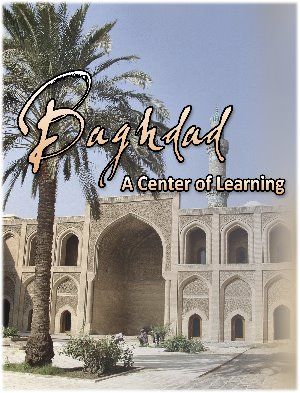
    Baghdad: A Center of Learning

    [two_fifths] When we think of Baghdad today, we imagine a war-torn, ravaged city. However, Baghdad has a rich history which the present should not obscure. From the eighth century to the thirteenth century, Baghdad was a metropolis known for intellectual and material prosperity, showcasing numerous libraries, research institutions, thriving universities, magnificent homes, and flourishing businesses.

    Foundation

    Abbasid Caliph al-Mansur founded Baghdad on July 20, 762 C.E., intending it to serve as the capital of Islam and calling it “Madinat-us-Salaam,” or City of Peace. Baghdad was also known as the Round City because it was constructed in a circular shape, consisting of towering semi-circle city walls on the right and left banks of the Tigris River. At the center was a large square with the mosque on one end and the caliph palace on the other; along the inside of the city walls were residential and commercial structures.

    Baghdad was designed in such a way that it was able to utilize the two major river systems in the area: the Tigris and the Euphrates. This strategic and geographic advantage enabled Baghdad to control trading routes and also provided its inhabitants with a plentiful supply of water.

    “The Tigris River and a system of canals gave the city access to the sea, and its trade and manufacture brought an enormous accumulation of wealth. Its palaces, mosques, schools, and public buildings were the wonder of the world,” according to F.B. A

    rtz, author of The Mind of the Middle Ages.

    Indeed, Baghdad became renowned not only for its size, shape and affluence, but also for its nurturing of the arts, sciences, and education.

    A Center for Learning

    As the city of Baghdad grew, it developed a reputation for learning and research. Scholars from all across the Islamic world were attracted to Baghdad, quickly turning it into an intellectual hub. This was no surprise because Islam puts so much emphasis on acquiring knowledge.

    In fact, the very first verses revealed to Prophet Muhammad (pbuh) enjoined him to read, and informed him that God taught man everything that he never knew before. At another place, God exhorts the believers to ask Him: “O my Lord! Increase me in knowledge.” (20:114) Furthermore, God constantly tells humankind to reason, to reflect, to analyze throughout the Quran.

    The Prophet himself is known to extol the benefits of knowledge and wisdom. For example, he once said, “The seeking of knowledge is obligatory upon every Muslim.” (Baihaqi) Additionally, he has stated, “He who goes forth in search of knowledge is in the way of Allah till he returns.” (Tirmidhi) Prophet Muhammad (pbuh) valued literacy so much that he would promise literate prisoners of war freedom if they taught Muslims how to read and write.
    Hence, Islam provided the necessary platform and support, leading to wondrous discoveries, inventions, and developments.

    Library

    Muslims learned how to make paper from the Chinese, and proceeded to transform this art into a major industry. By 793 C.E., there were many paper mills in Baghdad. This was a revolutionary development because the existing alternatives to paper were papyrus, which was fragile, and parchment, which was expensive; paper, on the other hand, was relatively cheap. This mass availability of paper enabled Muslims to commit vast amounts of translations and original research to paper; as a result, libraries and bookstores became a common sight in Baghdad, and soon spread to other Muslim cities.

    By the thirteenth century, Baghdad had thirty-six libraries and a 100 book dealers, some of whom were also publishers. The concept of a library catalog dates back to this period; books in these libraries were organized under specific genres and categories. Besides these, many nobles and merchants had private collections of books.

    “We hear of a private library in Baghdad, as early as the ninth century, that required a hundred and twenty camels to move it from one place to another. Another scholar of Baghdad refused to accept a position elsewhere because it would take four hundred camels to transport his books; the catalogue of this private library filled ten volumes. This is the more astonishing when it is realized that the library of the king of France in 1300 had only about four hundred titles,” writes Artz in his book, The Mind of the Middle Ages.

    In addition to libraries and bookshops, the Muslims of Baghdad established an academy devoted to research and intellectual enhancement followed by an institution which is widely acknowledged as the precursor to the modern university, and the very first hospital.

    House of Wisdom

    Caliph Haroon al-Rasheed is credited with expanding the glory of Baghdad to its greatest height during his reign from 786 to 809 C.E. He created an intellectual ambience by encouraging mathematicians, astronomers, scientists, and philosophers. His son, Caliph al-Mamoon went a step further by establishing the House of Wisdom in, an academic institute devoted to translations, research, and education. It quickly became one of the most famous centers of learning, attracting scholars from all over the world, from many cultures and religions. Here, teachers and students worked together to translate Greek, Persian, Syriac and Indian manuscripts. They studied the works of Aristotle, Plato, Hippocrates, Euclid, Ptolemy, Pythagoras, Brahmagupta and many others. Then, they began building on and testing the knowledge of the greatest ancient scholars, resulting in the development of the scientific method of observation and experimentation.

    Instruction at the House of Wisdom included rhetoric logic, metaphysics, theology, algebra, geometry, trigonometry, physics, biology, medicine, and surgery, as documented by Artz. The House of Wisdom also housed an observatory which facilitated astronomical advancements, leading to refinements of such scientific tools as the astrolabe. Scholars also extended the known bounds of existing fields of study – introducing chemistry, algebra, and launching trigonometry as a proper branch of mathematics.

    University

    During the later part of the 11th century, Baghdad introduced the precursor to the modern university in the form of a chain of madrasahs which housed students and a salaried faculty. They were known as the Nizamiyah, after their founder Nizam al-Mulk, a Seljuk vizier. The largest and most splendid of these was located in Baghdad; the great theologian al-Ghazali and the celebrated historian of Saladin, Baha Eddin, were lecturers there.
    The al-Mustansiriyah college was established in 1234 C.E. by Caliph al-Mustansir. It was a large two-storied building, oblong in shape, with a courtyard in the center. Housing and food were provided for those students who required it. The curriculum included religious studies, mathematics, medicine, and history, among other subjects.

    Hospital

    The modern hospital has its roots in a similar institution as established by the Abbasids in Baghdad, something hitherto unheard of. The first hospital was founded in 914 C.E. Another hospital was built in 918 C.E. at the behest of Caliph Muqtadir. Among the physicians here was the renowned Al-Razi (Rhazes). Doctors treated and studied the patients, and documented their findings.

    “By the year 1000, five major hospitals will have been built in Abbasid Baghdad. These hospitals will serve multiple purposes, not unlike modern hospitals containing surgery centers, outpatient clinics, psychiatric wards, convalescent centers, and even nursing homes. And quite often they are free to those in need,” writes Michael Hamilton Morgon in Lost History, the Enduring Legacy of Muslim Scientists, Thinkers, and Artists.

    Decline of Baghdad

    By the thirteenth century, the caliphate had weakened due to internal rivalries and a decadent lifestyle. In the wake of such fragmentation, the Mongols attacked in 1258 and devastated the city and its inhabitants. The civilized people of Baghdad were horrified at the savage ways of the Mongols who resorted to mass murders, pillaging, and mindless destruction. Its libraries, foremost among the treasures of Baghdad, were burned down. Its canals were destroyed. Its great historical monuments were forever ruined.

    “For five hundred years, Baghdad had been a city of palaces, mosques, libraries and colleges. Its universities and hospitals were the most up to date in the world. Nothing now remained but heaps of rubble and a stench of decaying human flesh,” recounts Sir John Glubb in A Short History of the Arab Peoples.
    The city thus began a long period of decline, falling victim to subsequent wars that continue to this day. However, during its five centuries of glory, it gifted the world an immense treasure which became the foundation for the European Renaissance. Just as the Muslims had translated ancient works into Arabic centuries before, the Europeans began translating Arabic scholarship into Latin, giving Latinized names to Muslim scholars, and advancing their research. This salvaged knowledge formed the basis for the Age of Enlightenment.

    In fact, Islam was the major catalyst which enabled Baghdad to reach its glorified stature. In addition to encouraging the gathering of knowledge and the use of reasoning, Islam was more than just a religion. Being a “way of life”, it was not confined to the mosque but was apparent in everyday activities of people. The Muslims of Baghdad refined astronomy as a science in order to offer their five daily prayers at accurate times, to predict when the crescent moon will appear, to find the direction to Mecca for prayers; in the process, and to achieve these aims, they perfected the astrolabe. The Quran specified with clarity that God’s Universe was not random, a mere chance, but was created with wisdom and purpose. This led many scientists to consider the entire world as their research field, resulting in numerous astronomical, mathematical, and geographical discoveries.

    Islam also taught human beings that they were free from Original Sin, leading Muslims to believe in the inherent goodness of humans; this modern outlook enabled scientists to study disease in a matter-of-fact manner. Therefore, as explained by Michael Hamilton Morgan in Lost History, “disease [had] specific, scientifically based physical causes. It [was] not a punishment visited on men from God.”

    Furthermore, the Quran declares, “O Mankind, We created you from a single (pair) of a male and a female and made you into nations and tribes, that you may know each other. Verily the most honored of you in the sight of God is he who is the most righteous of you.” (49:13) This universalism of Islam allowed it to expand its borders. Muslim scientists were eager to learn from people of other cultures and faiths, which is apparent in the prolific translations which took place during this period. On the whole, their faith facilitated them and provided them with a strong foundation which propelled them to reach new heights in their chosen fields.

    Today, Iraq is poised on the road toward independent rule and has yet another chance to reclaim its glorious days. Baghdad can once again rise from the ashes of its tumultuous recent past – as it has done many times before. This time, it should aim to regain its historical place of intellectual and scientific pursuits along with establishing itself as a center of trade and commerce, keeping in mind the debt it owes to Islam and its ancestral Muslims.

    by Saulat Pervez

  • Famous Scholars of Baghdad

    Ibrahim al-Fazari (d. 777 C.E.): constructed the first Muslim astrolabe ~750 C.E.

    Jabir ibn Hayyan (721-815 C.E.): Also known as Geber in Latin, he is considered by many to be the “father of chemistry.”

    Al Khwarizimi (780-850 C.E.): The father of Algebra. The term “algebra” is in fact derived from Khwarizmi’s book on the subject title “Kitab al-Jabr.”

    The Banu Musa Brothers (~803-873 C.E.): He authored “The Book of Mechanical Devices” which contains descriptions of about a hundred devices, including trick inventions. They have influenced many aspects of modern technology.

    Hunayn ibn Ishaq (809-873 C.E.): He had mastered four languages: Arabic, Syriac, Greek, and Persian. His translations were error-free and later translators followed his method widely.

    Al Razi (865-925 C.E.): Considered to be among the greatest physicians of all times. Many “firsts” are attributed to him: he accurately differentiated between smallpox and measles and prescribed treatments; in addition, he discovered numerous compounds and chemicals including alcohol and kerosene, among others. He authored over 200 books and articles in various fields of science.

    Al Ghazali (1058-1111 C.E.): A renowned Muslim theologian.

    Compiled by Saulat Pervez