
بسم الله الرحمن الرحيم

Tag: world hijab day

  • World Hijab Day: Inner and Outer Hijab

    World Hijab Day: Inner and Outer Hijab

    February 1 is World Hijab Day. According to the website worldhijabday.com, “February 1st, 2013, marked the first annual World Hijab Day (WHD) in recognition of millions of Muslim women who choose to wear the hijab and live a life of modesty… [it is] a means to foster religious tolerance and understanding by inviting women (non-Hijabi Muslims/non-Muslims) to experience the hijab for one day.”

    Actually, hijab is not mentioned in the Qur’an as a head-covering for women. The head-cover for women is mentioned in the Qur’an as a khimar. Hijab, on the other hand, is anything that screens or separates two things. For example, hijab is mentioned in 33:35 as a physical screen or curtain in the houses of Prophet Muhammad, separating his wives’ private spaces from the space of visitors. Hijab is also mentioned in 42:51 as a veil that separates humans from God. Hijab, as an invisible barrier, exists between those who recite the Qur’an and those who are wrongdoers, who do not believe in the Hereafter, and are averse to hearing about God in the Qur’an, according to 17:45-47. Based on this wider understanding of hijab, if a woman wears a headcover, she is wearing a khimar and one would hope that she has an inner hijab. That is, a barrier between her thoughts, words, and deeds and all that is base. The same applies to men. But how often it appears that Muslims relegate “hijab” to women, forgetting about its actual linguistic and Qur’anic meaning and its applicability to both genders. Almost like this: if all the women are wearing khimars and modest clothing, it proves that our society is practicing Islam and fulfilling its religious duty. But “the issue is much bigger than that,” as demonstrated in a narrative told by Sh. Muhammad Al-Ghazali.

    Calling for Compassion and Patience

    Shaykh Al-Ghazali was a scholar of classical Islamic learning and also had an extensive knowledge of modern science. He authored numerous books on Islam and was revered by so many Muslims. Graduating from Al-Azhar University in 1941, he was active in dawah and he recalls the day that a young woman came to see him. He took note that the way she dressed was not very modest. He says, “However, the look in her eyes revealed sadness and bewilderment that called for compassion and patience.” He spoke with her and found out that she was Arab but had been raised in France and had very little knowledge about Islam. The Shaykh told her about some fundamentals of Islam and answered all her questions. She requested a future appointment and then left. Sh. Al-Ghazali continues with the story. “Soon after, a young man – on whom qualities of outward Islamism were apparent – came storming into my office and said vehemently:

    ‘How come such a wicked person was admitted here?’

    ‘The job of a physician is to accept. He doesn’t typically see healthy people, does he?’ I replied.
    ‘Of course, you advised her to wear hijab!’ he added.

    I said to him ‘The issue is much bigger than that. There is the foundation that has to be laid. There is the belief in Allah and the Hereafter. There is the hearing and the obeying of what was revealed in the Qur’an and the Sunnah, in addition to the pillars of worship and manners; the pillars that Islam cannot exist without …’ He interrupted me saying, ‘All of this does not mean we don’t order her to wear hijab.’

    ‘I wouldn’t like it if she came in a nun’s clothes while her heart is void of Allah. I taught her the basis that will help her to choose, on her own free will, to wear more decent clothes,’ I calmly replied. He tried to interrupt me again so I said firmly ‘I can’t drag Islam by its back end as you do. I lay the foundation and then start building and I usually achieve what I want with wisdom.’

    Two weeks later, the girl came back. She was wearing much more decent clothes with a scarf over her head. She resumed her questions, and I resumed my teaching. Then I asked, ‘Why don’t you go to the nearest mosque to your home?’ I said that but immediately I felt remorse. I remembered that mosques are closed in the face of Muslim women. The girl answered that she hated the people of religion and that she did not like to listen to them. ‘Why?’ I asked. ‘They are hard-hearted, and they treat us with contempt and scorn,’ came her swift reply.

    I don’t know why I remembered Hind [Abu-Sufyan’s wife]. She was the one who chewed Hamza’s liver and fought Islam vigorously until the 8th year of Hijrah. She did not really know the Prophet. However, when she knew him and saw his lenient manners, she told him ‘I never wished someone on the face of this earth to be humiliated more than you and your family. Now, I do not wish to see someone on the face of this earth more honored than you and your family.’ The Prophet’s kindness and sympathy changed the hearts of the people around him. Now, if only the people who give dawah today would learn from their Prophet. They would learn to draw together instead of driving away, and to bring good tidings rather than to say things that repel people away from them and from Islam.’”

    Inner, Invisible Hijab

    The different approaches of Sh. Al-Ghazali and the young man with “qualities of outward Islamism” are striking. Sh. Al-Ghazali was a moral man and, being a Muslim man who strived to emulate the Prophet (s), he would have been strong and disciplined in living a moral life. But as this story shows, that moral living also was infused with caring and compassion. The young man, on the other hand, appeared to be moralistic — hyper-focused on the morals of others and their real or perceived improprieties.
    Even though Muslims use the misnomer “hijab” when what most mean is “khimar,” the general import is that women who cover their hair and bodies are doing so to be modest, to set a screen between their private femininity and non-mahram persons. So, the intention makes sense and is just fine. But here we are focusing on the meaning of “hijab” to be a screen or barrier that a Muslim establishes to keep himself or herself away from all that is base. Certainly, that is part of modesty. And it applies, of course, to women and men that this inner, invisible hijab should be wrapped around the heart and billowed freely in the mind so that the one with an inner hijab sees and interprets everything through a value system that both nurtures and guards, that is strong and merciful, that stands firm because it surrenders to truth.

    If a man has this inner hijab, then he will do as Allah SWT enjoins of him (and of women, in verse 24:31) in the Qur’an: “Tell the believing men to lower their gaze and guard their modesty. That is purer for them. Verily, Allah is aware of what they do” (24:30). A beautiful balance of responsibility to protect individuals and society from debasement is established when both women and men enrobe their souls with an inner hijab, screening themselves from anything that pulls the individual away from surrender to Allah SWT. Because of this inner hijab, each one will be mostly focused, not on others’ infractions, but on what he or she can do to emulate the Prophet (s) and that includes showing kindness and compassion to people, to Muslims and non-Muslims, to family and friends and strangers. As Shaykh Al-Ghazali said, “They would learn to draw together instead of driving away, and to bring good tidings rather than to say things that repel people away from them and from Islam.” With inner hijab, a Muslim man knows that he is responsible for his actions regardless of how women dress, that he can’t blame others if he commits a wrong or a sin. Looking at a woman who has not yet surrendered to Allah SWT and seeing her as “wicked” and wanting most of all to “order her to wear hijab” will never change anyone’s heart.

    Raiment of Righteousness

    Without that inner hijab, a man might be tempted by his ego to be a scolder, a correctioner, a bully, a punisher, an authoritarian. Allah SWT says in the Qur’an, “We have not sent you [Muhammad] but as a mercy to the worlds” (21:107). And the most commonly invoked names of Allah are Ar-Rahman, meaning “The Most Compassionate” and Ar-Rahim, meaning “The Most Merciful.” The discipline and rigor, the willingness and ability and strength to protect and defend — these are manly traits that must be used to guard humanity, but also to nurture humanity. The discipline and rigor inwardly focused might make a scholar or at least a most knowledgeable and pious husband, father, or community leader who is known as one who looks around and says, often and astutely, “that called for compassion and patience.” He is never tempted by pettiness or moralistic reductionism for he sees that “the issue is much bigger than that” — much bigger than how a woman dresses. His willingness and ability and strength to protect and defend starts with fighting for balance in himself, an alignment with reality so that he sees beyond the outer cloak and knows that if a woman “came in a nun’s clothes while her heart is void of Allah,” nothing has been accomplished.

    This genuinely virile man is committed to al-deen al-haneef, the way of those inclined, with their whole being, to a way of life steeped in devotion as they stand tall and firm with upright character. Yet, they have balance and moderation as footholds. Then they are able to discern things for what they are, to judge properly as to what is true and right. And so, this manly man might be like Sh. Al-Ghazali who stated, “I usually achieve what I want with wisdom.” He would know that “the Prophet’s kindness and sympathy changed the hearts of the people around him.” This man regularly secures the hijab wrapped softly around his own heart; and he cools his passions with the billowing hijab in his mind. For he has learned to be of those who do not “say things that repel people away from them and from Islam” but to “draw together…to bring good tidings…” His robe is taqwa — God-consciousness and fear of God. His protecting shield is taqwa, allowing him to love Allah’s mercifulness while blazing his own path with righteousness. And he knows he, himself, is imperfect and so he has a healthy sense of shame and that prevents him from being moralistic and harsh. Taqwa is like an inner and outer hijab, a barrier against all that would debase the soul.

    “O children of Adam! Indeed, We have bestowed upon you raiment which covers your shame and provides protection and adornment. But the finest of all is the garment of taqwa. That is one of the signs of Allah so that they may take heed” (Qur’an 7:26).


  • World Hijab Day: Modesty Is Not the Opposite of Freedom

    World Hijab Day: Modesty Is Not the Opposite of Freedom

    Non-Muslims often use the word “oppressed” to describe Muslim women. It is such a ubiquitous term that you will find right-wing Islamophobes, left-wing social justice warriors, and average people applying it regularly, as if it is a de facto aspect of being a Muslim female. The people who use this terminology usually do not know anything about Islam, nor have they asked a single Muslim woman how she feels about her religion and her wardrobe.

    The word “oppressed” carries a lot of weight. It implies that Muslim women are perpetual victims without agency or choice; that they are coerced or brainwashed into following their faith; that they are inherently different from the rest of women, who are assumed to be liberated; that there is some sinister power forcing them into submission; that Muslim women are prevented from living a full life.

    If they bothered to ask Muslim women why they cover their hair and body, people would find that the vast majority do so willingly, as a wayof practicing their faith and obeying their Creator. Far from being imposed on women by nations or governments, the Islamic dress code is currently only mandated in three nations– Saudi Arabia, Afghanistan, and Iran. In the rest of the world, including Muslim-majority nations, the Islamic headscarf is optional or even illegal. In some countries like Tunisia and Turkey, where Islam is the predominant religion, women still had to fight for the right to wear a headscarf in public because it had been banned in all state institutions and government facilities. There are rules explicitly prohibiting Muslim women from wearing outward signs of their religious beliefs in France and Belgium, where Islam is the second most widely professed religion. So, for women who choose to dress in accordance with Islamic guidelines, it is a decision that they make freely and, in fact, courageously.

    Modest or Revealing Attire: Which Is Liberating?

    Interestingly, the term “oppressed” is almost always applied only to the Muslim women who choose to cover their hair. Those who do not are very rarely characterized as being oppressed. Even if they follow all the other tenets of Islam (praying, fasting, striving for a wholesome character, avoiding pork and alcohol, etc.) but leave their hair exposed, these women are much more likely to be considered “modern” or “liberated” because they look more like the non-Muslim women around them. But why has covering one’s body, and particularly one’s hair, been equated with oppression, while revealing them is considered liberating and progressive?

    On the most basic level, many non-Muslims simply assume that modest Islamic attire is limiting – that it prevents women from living a full life because it is too bulky or restrictive. They doubt that Muslim women can do things like play sports, fulfill their job requirements, and function in the real world while wearing modest clothing. They are unaware of, or possibly ignore, thousands of examples of successful Muslim athletes, professionals, world leaders, and activists who pursue their interests and careers while modestly dressed. Instead, they point to extreme and isolated examples, like burqa-wearing women living under Taliban rule. Choosing an extreme example and ignoring the reality of millions of women is a very common tactic. This article on seeker.com, called “Life behind the burqa in Afghanistan” is typical of mainstream media:“Afghanistan was once seen as a fairly progressive country for women’s rights. According to Amnesty International, in the 1970’s, Afghan women not only went out in public without covering their heads, they also wore short skirts and high heels. They dressed quite similarly to women in western countries.”

    Let’s look at what the author is doing in this paragraph. She is assuming that short skirts + high heels + western countries = progressive. And clearly, in her mind, “progressive” here means something good, liberal, and enlightened. This is the narrative that most people believe, and few bother to question it or think too deeply about it. It is rooted in ethnocentric ideas, ignorance, and arrogance.

    Is it more liberating to wear short skirts and high heels? Most of us in the West have been programmed to think that. But why do the majority of women dress the way they do? Is it because they truly long to wear impractical shoes that force their feet at an unnatural angle and pull muscles and joints out of alignment? Is it because they love to spend their life chasing the elusive dream of a perfect, bikini- or miniskirt-worthy body that has no excess fat or signs of aging or imperfection?

    When women’s clothing is designed to reveal their bodies, and society simultaneously promotes unrealistic ideals of female beauty, making a woman’s physical appearance her most salient characteristic, it is a perfect storm. Women will feel compelled to wear those fashionable styles – no matter how impractical– and will invest a great deal of time, money, and energy into molding and manipulating their body to fit the ideal. Preying on women’s insecurities and making them feel never quite attractive enough is a multi-billion-dollar global industry. Hair products, makeup, cosmetic surgery, diet pills, supplements, and weight loss programs are all part of the system that shackles women to the idea that their worth is tied to their outward appearance. If women didn’t care so much about how they look in revealing clothing, it would cause a monumental, earth-shattering financial upheaval.

    Who Is Brainwashed?

    Non-Muslims sometimes accuse modestly dressed Muslim women of being brainwashed. Perhaps they should consider whether they themselves are brainwashed by a sick global mentality that regularly exploits women’s bodies, focuses on their physique rather than their minds and souls, objectifies the female form, and makes women slaves to an unattainable version of female physical perfection.

    Muslim women who choose to dress modestly believe they are following the commandment of God. Their motivation is to make their soul their first priority and to privatize their body, making it inaccessible to public scrutiny. For most Muslim women, therefore, modest clothing is indeed liberating.

    Whether we realize it or not, we are all slaves to something. There is always at least one force that influences our actions and motivates our behavior. Most people’s primary goal is to be seen as fashionable, or beautiful, or popular, or wealthy, or admired. For many women, the desire to be considered attractive above all else has been programmed into them since childhood. But a person cannot be liberated until they willingly choose what they submit to. Muslim women choose to submit to God and His commandments. Whether or not those rules correspond to society’s current trends does not matter to the devout Muslim because man-made beliefs are inherently inferior to divine decree.

    Muslim women are not trying to force non-Muslims to dress modestly or to think the way we do. We simply want the right to dress according to our own religious beliefs, and to do so safely and with dignity. Ignorant people will undoubtedly continue calling us “oppressed.” But whether society chooses to recognize our agency, competence, and free will is irrelevant because our true liberation lies in our indifference to the whims of the world.

  • World Hijab Day and the Rights of Women in Islam

    World Hijab Day and the Rights of Women in Islam

    So often, women’s rights in Islam are misconstrued. From the ignorant shouts of “Islam oppresses women!” to the never-ending spiral of questions like, “Are you forced to wear that?” — it has never been easy to be a Muslim girl in America, especially if she wears hijab. Non-Muslims never associate feminism with Islam. However, so much of the Islamic teachings about women focus on securing their social, political, and economic rights. There are many schools of thought in Western feminism; however, at the core of all of them is the quest to secure women’s human and civil rights.

    Feminism, mainly, is not a movement of women wanting to declare their superiority to men or to promote diminishment of men. For a Muslim who advocates for the rights of women, it should not be the intention to see men and women as equal, meaning “the same” in their inherent characteristics and nature. Women have various strengths and weaknesses and so do men. However, that does not mean that either gender is superior or inferior to the other. Allah SWT created men with primary traits that serve their role as maintainer and protector of the family; and He created women with primary traits that serve their role as nurturer and, ideally, progenitor of God-conscious and virtuous children. That in no way precludes a man from being nurturing and compassionate or a woman from being tenacious and strong. In fact, for far too long, women have been labeled as “weak,” “too emotional,” “incapable,” or “too bossy.” The fact that men, in their predisposition, are logic-oriented and woman, in their predisposition, are heart-oriented, creates a perfect balance. And mind and heart are both revered in Islam, and both are absolutely necessary for both genders, for understanding and faith (heart — see, for example, Qur’an 26:87-89, 22:46, 3:8; mind — see, for example, 29:35, 23:80, 8:22).

    During pre-Islamic Arabia, women were given little rights and were often dehumanized. They were accorded scant respect, had little to no legal protections, and often faced oppression. The beginning of the 7th century marked the beginning of Islam and a new outlook on women. One writer, Jim Garrison, in a HUFFPOST opinion piece, noted that with the advent of Islam, “Women in the 7th century Arabia had rights not extended to most women in the West till recent centuries over 1000 years later.”

    Dignity, Worth, and Life Itself

    The brutal practice of female infanticide, also called “gendercide,” was common during the pre-Islamic era. Killing infant girls by burying them alive was a cultural norm. There was a lot of anti-female bias among the people at the time, favoring sons and seeing a female newborn as an economic liability and burden, and socially undesirable, even a disgrace. “When one of them is given the good news of a female child, his face becomes dark, and he is filled with inward grief. He hides himself from the people because of the evil of these tidings. Should he keep it in humiliation or bury it in the dust? Verily, evil is what they decide” (Qur’an 16:58-59).

    While men and women are not the same, they are equal in the sight of God. Allah SWT tell us, “To whoever, male or female, does good deeds and has faith, We shall give a good life and reward them according to the best of their actions” (Qur’an 16:97). And we are advised as to what the only true superiority is: “Indeed, the most noble of you in the sight of Allah, is the most righteous of you…” (49:13).

    Marriage

    A woman once came to the Prophet (s) and told him that her father had forced her to marry his nephew. The woman had been given no opportunity to consent or reject this marriage. The Prophet (s) responded to this by annulling the marriage. During the pre-Islamic era, the consent of a woman to a marriage was perceived as irrelevant. The oppressive cultural norm of arranged marriage without the woman’s consent prevailed until the advent of Islam. In Islam, there is a marriage contract which is integral to the legality and sanctity of a marriage. Both the bride and groom must give consent, both verbally and by signing the contract. Islamically, consent is a key requirement for a marriage to take place, and women have the freedom to choose their husbands.

    In addition to the contract, there is also a mandatory dowry (mahr) that the groom gives to the bride. The mahr specifics are included in the marriage contract. The mahr is a certain amount of wealth or property the husband gives to his wife after the nikah marriage). Some examples of mahr are pieces of gold, jewelry, cash, or other gifts, according to the financial capability of the groom. The mahr becomes the bride’s own possessions, for her to save or utilize as she pleases. In the Qur’an, Allah SWT says, “And give the women their dowry graciously. . .” (Quran 4:4).

    In pre-Islamic Arabia, women were often dehumanized and treated as property and accorded little respect by men and, particularly, by husbands. The Qur’an and Prophet Muhammad’s teachings, on the other hand, express the importance of respect and kindness towards wives. Prophet Muhammad (s) said, “The believers who show the most perfect faith are those who have the best behavior, and the best of you are those who are the best to their wives.” Unlike the cultural norms and social stigmas at the time, Prophet Muhammad (s) always showed love and respect towards his wives, was affectionate with the children, and helped out with household chores. Although Islam recommends many guidelines to keep a marriage strong and loving, divorce is allowed. Muslim women are given the right to initiate divorce. In that case, however, they are required to return the mahr to the husband unless he allows her to keep it. If a man initiates the divorce, the woman has the right to keep the mahr.

    Inheritance

    The rights of inheritance were revealed in the Qur’an more than 1,400 years ago. Women were also guaranteed the right to own, manage, and dispose of property. Women in the U.S. were given these rights centuries later. According to an article in The Guardian, in 1848 the “Married Woman’s Property Act” is passed in New York. It is later used as a model for other states, all of which pass their own versions by 1900. For the first time, a woman wasn’t automatically liable for her husband’s debts; she could enter contracts on her own; she could collect rents or receive an inheritance in her own right; she could file a lawsuit on her own behalf. She became for economic purposes, an individual, as if she were still single.” According to stepfeed.com, Islam was the first religion to give women inheritance rights.

    Education

    Prophet Muhammad (s) said, “The seeking of knowledge is obligatory for every Muslim.” This advice was directed to both men and women. After Islam spread in Arabia and the Prophet’s message on the importance of seeking knowledge was known, many female scholars rose to prominence in the early years of Islam. In “Al-Muhaddithat: The Women Scholars in Islam” by Mohammad Akram Nadwi, the author writes the following:
    A striking case is that of Amrah bint Abd al-Rahmān, the great tabi’iyyah (Successor), muhaddithah [expert in ahadith] and faqīhah [expert in Islamic law], who intervened in a court case in Madinah to prevent a miscarriage of justice. It is remarkable enough that she knew that the case was in progress and the circumstances of it and what sentence the qādī [judge] had passed but not yet carried out. Many famous men jurists were residents and active in the city; none of them intervened. What is astonishing is that she did intervene, and no one questioned her right to do so. The defendant was a non-Muslim, not known to Amrah except as the defendant in this suit, in which she had no personal, private interest. The qãdi reversed his decision and released the defendant only because he could have no argument against the authority of the hadith she was able to cite. He did not know or remember it, or simply failed to bring it to bear when reaching his judgment. Once he knew the hadith, he did as a Muslim should – he acted upon it.

    There are numerous examples of female Muslim scholars throughout Islamic history who were highly respected and sought after as teachers.

    A Muslim woman, Fatima al-Fihri, founded a mosque in Fes, Morocco in 859 CE. Al-Qarawiyyin, as it was called, served as a place of instruction on religious and spiritual matters and later became a leading educational center. It still operates today and is part of Morocco’s university system. UNESCO calls al-Qarawiyyin the oldest continually operating higher learning institution in the world.

    The first revelation to Muhammad began with “Read…” The Qur’an, in numerous verses, calls for believers, men and women, to think, to reason, to reflect. Many verses tell us to look for lessons in nature, in history, and in the capacities, as well as the limitations, of the human being. Believers are also encouraged to cultivate wisdom and good judgement. All of these injunctions point to the importance of seeking knowledge and education, for both women and men.

    The Wrap

    Islam confers on women a high status and respect and provides for their human and civil rights. Many Muslim-majority countries today still restrict the rights of women. It is, however, up to women to know their rights and never be afraid to speak up when their Islamic rights are diminished.

  • HijabFest Event in New Brunswick, NJ

    HijabFest Event in New Brunswick, NJ

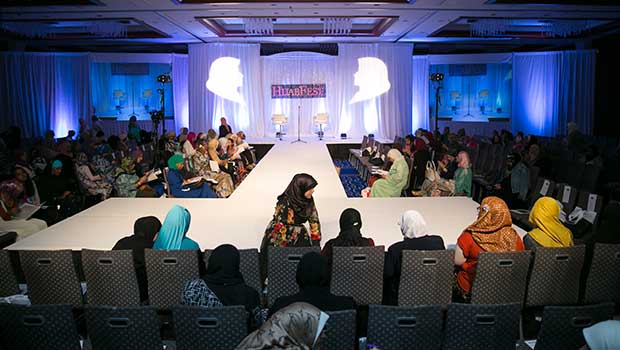
    On September 13, a warm and lovely Sunday morning in New Brunswick, New Jersey, an ambitious group of young women were busy preparing for an annual event, HijabFest,held at the upscale Hyatt Regency Hotel. This is a unique event accentuating the empowerment of Muslim women. Greater significance adheres to this event in that it was designed to highlight the voices of the Muslim women who celebrate their personal choice and sense of privilege in wearing the hijab.
    The initial idea was conceived by members of NBIC, the Islamic center of North Brunswick, when the women felt that there was a need to celebrate the garment of modesty that receives such frequent negative attention from the mass media and general public in the West. The hijab has long been the object of scrutiny, analysis, and condescension,invariably with the critics concluding that it suppresses women.To counter that notion,the women felt that a platform was required to give prominence to women who wear hijab with confidence, conviction, and devotion. It was time to bring attention to the women who proudly and voluntarily exercise their right to wear hijab.
    Academic Discussions, as Well as Fashion, Style, and Creativity
    The stage was beautifully adorned with a white satin fabric backdrop draped with jewels.Black on pink were the colors of this year’s event, with the theme, “The Potential Within Us.” The lineup of speakers included Khadija Daya, Rabeeha Khan, Saadia Malik, and Rabab Mansour.In addition to academic discussions about hijab in lectures and other sessions,the significance and beauty of hijab as a demonstration of modesty and religious devotion was highlighted by a focus on fashion, style, and creativity. The designers, including Zubaidah, Bulbul Clothing, Guzel, and B. Zarina,who worked behind the scenes to create the various patterns and motifs of the hijab and jilbabs, the women who modeled the clothing, as well as the academics and social activists who probed the meaning and the important implications of hijab, were all part of the celebration.
    The event began with Tammy Elmansoury’s recitation of the Quran followed by reading of the translation by Sara Zayed, a co-host along with Suzy Ismail. The program incorporated the stories of Muslim women who struggled and strived,ultimately achieving success in various venues while choosing to wear hijab. Sara Minkara, spoke about her non-profit organization, Empowerment Through Integration(she is a co-founder), to foster full involvement of blind and seeing-impaired children into their communities and societies in order to fulfil their greatest potential. Sara is motivated by her own experience of losing her eyesight at a very young age. Her words reached the hearts of the audience, inspiring everyone with her strength and conviction to help others.Linda Sarsour, an activist for racial and social justice, spoke about her experience, including advocating the inclusion of Eid as a holiday on the calendar of the NYC school system, the nation’s largest public school system, representing 1.1 million students.She also supports the Black Lives Matter movement and participated in the walk from NYC to Washington, DC. When asked why she participated in the 9-daywalk, she replied, “My faith sent me here because Islam is a religion of justice.”
    In addition to the speeches and fashion shows, there were quizzes with prizes and a poetry session.Kashmir Maryam gave a remarkable performance of her poem celebrating the rights of women in Islam and the position of respect granted to them by the noble religion. Donned in a turban style hijab, her eloquently spoken words, garnished by a British accent, flowed through the room with artistic rhythm and a dramatic elegance.
    Amanda Saab, the first ever Muslim woman contestant on the Fox television show, Masterchef, hosted the first cook-off competition between two contestants who raced to make a delectable chicken dish to please the judges.With a passion for home cooking, her recipes have been featured on Huffington Post, Seattle Magazine, and The Detroit News, among others.Amanda loves to re-create ethnic dishes with her own modern twist.She writes a food blog at amandasplate.com.
    Aspiring fashion designer, Sobia Masood, is a student at the Fashion Institute of Technology and incorporates modesty into her clothing designs and ensembles. She gave the audience some fashion tips on how to add color, print, and fun accessories to their outfits to make them pop with style, yet still deliver on the modesty elements called for by Islamic etiquette.
    Great Sponsors, Inspiring Sessions, and Celebration of Hijab
    HijabFest sponsors Cornerstone Consulting and Counseling, Crescent Foods, and Islamic Relief were afforded time to introduce their work.Cornerstone, a faith-based counseling center for youth, families, couples, and individuals was founded and is run by host Suzy Ismail. The center aims to “create strong Muslim families and strengthen relationships in our communities.”Crescent Foods discussed their commitment to providing quality, healthy halal food to Muslim communities.And Islamic Relief, an international humanitarian organization,spoke about the Syrian refugee crisis and made an appeal to the audience for funds to support their humanitarian and relief work.
    There were breaks for lunch, prayer, and a chance to shop at the bazaar which featured products from the various designers who participated in the fashion show. There was also plenty of opportunity for the women to mingle and exchange ideas, and to connect with friends, old and new. One organizer commented,“Putting this program together is a spiritual journey for us. We meet interesting women from all backgrounds that leave an impact on our lives. We learn so much from each other which in turn makes us realize our own potential that we have within us all. We are stronger together than we are when we are apart.”Everyone – organizers, participants, and attendees – enjoyed the highly successful event. Modesty and elegance were conveyed with confidence and self-respect, as hijab was celebrated in the most creative, stylistic, and meaningful way.