
بسم الله الرحمن الرحيم

Tag: red indians

  • My Journey to Islam

    My Journey to Islam

    I grew up in Winston-Salem, but most of my extended family is from Macall, South Carolina, and Richmond County, Scotland County, and Robeson County in North Carolina. My earliest memory as a child was when I was about four years old. A little white boy, dressed in a cowboy getup, took a big heavy stone and smashed it on my head because I was an Indian. He was older than me, maybe eight or nine years old. Another childhood memory is when I was in the cub scouts. There was a boy who was mad at me because I was an Indian, so he spat in my face. He did this in the church where we were meeting. My mother was very upset about it because the boy’s parents didn’t intervene and none of the adults did anything. His spitting in my face didn’t hurt me as much as seeing how much it upset my mother. She was crying and sped out of the parking lot spinning tires. Then, in middle school, whenever I put Native American on my documents, my teacher would tell me to put White because I would get more opportunities. But, my mother raised me to be proud that I am Indian.
    I use various names in reference to indigenous people depending on the context of the conversation. I prefer Pee Dee because that’s the name of my tribe. But, when my family is talking, we use Indian as a generic term. That’s what we have always used. I like the name First Americans. First Nations is usually in reference to tribes from Canada. Native, indigenous, and Indian are all acceptable names. It’s just a matter of context. My native blood is Pee Dee because my mother is registered as a Pee Dee Indian, but we have other blood as well, including Lumbee, Mansamon, Wakamaw, and Tuscarora. There are so many different tribes in North Carolina. The reason why there is so much mixed blood in my family in North Carolina is because this is one of the places where the English first came in contact with Natives. The English went to war with several tribes and had so many tribes fighting one another. So many died from disease and war. What was left were remnants of tribes. These remnants of people from my family came together in Bladen County, North Carolina and Marlboro County, South Carolina. This is where the Lumbee and Pee Dee Indian tribes are located today.

    Finding Islam

    I embraced Islam in 1990. How I came to Islam is a lengthy story. When I was a child, I was not very religious, but I believed in God. I had the idea there was truth to be found in the Bible, I believed in the Prophets, and I attended church. One day, I was imitating how holy roller preachers deliver their sermons. Then all of a sudden, the sky became dark and I began to feel a deep apprehension about what I was doing. I always had the question whether I was supposed to be worshipping God alone or Jesus. When I was in middle school, we had a substitute teacher who taught us about different religions. When he talked about Islam, he showed us how to make salaat (prayer). That day after school, I went home and looked up his number in the telephone book because I wanted to be Muslim, even though I was young, in seventh grade. I ended up not calling him. I guess I was worried about what my mother would think. Years later when I was in high school, I was a big fan of rap music. Alhamdulillah (all praise is due to Allah), back then rap music was more conscious. Some rap artists even talked about Islam. I remember there was one group who said something about accepting Islam as the truth. I knew that Islam was the truth. I knew that in my heart. I would be at home at night and I would have private conversations with God (that is how I described it at the time). I would ask God whether I should worship Him or worship Jesus. This question was addressed to God, not to Jesus. I have never prayed to Jesus in my life. Those rappers saying that Islam was the truth caused me to go out and search. I began going to the public library. I started at my school library which had one or two books on Islam. Then I went to the public library and they too had very few books. None of the books answered my questions about Islam. Fortunately, one of my teachers at school, Fleming El-Amin, was a Muslim, a man who I greatly respected. During the summer of 1990, we had a college preparatory program at Winston-Salem State University. Mr. El-Amin was one of the teachers and he let me borrow his Quran. Another Muslim brother, Husayn Abdur Rafi, gave me literature to read about Islam. The Quran and the other literature answered some of my questions. I then started going to the masjid and speaking with the Imam. Soon after that, I was convinced of the truth of Islam, so I declared my shahadah (declaration of faith).

    When I became Muslim, I was treated differently by my mother, an Indian Christian. She asked me, “How are you going to be Muslim and be Indian at the same time?” I asked her that since she was an Indian and Christian, why would my being an Indian and Muslim be a problem. I was asked the same question my mother had asked me by the chief of my tribe, a Christian preacher. His daughter told him that he couldn’t discriminate against me because I was a Muslim, that I was still Indian. Many Indians look at someone being Indian and Muslim as unacceptable, as a contradiction in terms. I first realized there were other Indians who were Muslims when I read a Message International magazine article online in 1996, “Digging for the Red Roots.” But I couldn’t find other Native Muslims until I ran across a Yahoo chat group online in 2001. The group was run by a Muslim Native who worked with Islamic Relief. There were more non-Native Muslims in the group than Native Muslims. The non-Natives were very open to the Native Muslims and interested in their stories of finding Islam.

    Indian Muslims in the U.S. Today

    Indian Muslims today in the United States are still relatively few, and a greater number are found in Canada. In Mexico, there are many persons of Native descent who have become Muslims. The group (http://turtleisland.muslims.tripod.com) that we have now, Turtle Island Muslims (Turtle Island is a Native American term for the North American continent), is a mix of Muslim and non-Muslim Natives and non-Natives who are Muslim or non-Muslim. There are approximately 160 people in the group, with around 30 Natives. We discuss everything related to Islam and Natives. The purpose of the group is to introduce Natives to Islam and Muslims to Natives, to have an open and welcoming space where everybody is free to participate.
    Information about the history of Natives in Islam is relatively obscure. You hear about things like Abu Bakari II from Mali coming to the Americas in 1300, and Sheikh Abdullah Hakim Quick has written about Muslims in the Americas long before European explorers. These little tidbits are about all that we get and there is not much that we can connect to specific tribes. It was interesting when I did my own family genealogy. I knew about Frances Drake dropping Muslims off on an island off the coast of the Carolinas. These were African and Arab Muslims who were never picked up or accounted for. If those who were abandoned followed the river inland, they would have ended up right where my tribe, Pee Dee Indians, was located. I have heard of a Muslim genealogist who is able to connect members of my tribe to the Melungeon in Tennessee. I, myself, have African blood and Arab blood. I have been able to connect one Muslim ancestor to my family. This goes back to 1630, to a Muslim, Sayyan Lovina. His wife was Native, and her name was Jean Tucker. Professor N. Brent Kennedy did a lot of research on the Melungeon and Sayyan Lovina, who was known as Sayyan the Turk. He was sold as a slave by the Portuguese. Sayyan was so highly respected that he was allowed to be a witness to contracts even though he was a slave. He eventually won his freedom. When I became Muslim, I thought that perhaps I had Muslim ancestors. It was just a feeling that I had. Maybe these Muslims ancestors prayed like Prophet Yacub (Jacob) that their progeny be Muslim. I used to think about these things even though I didn’t expect to be able to connect myself to a Muslim ancestor.

    One of the things I find is that many Muslims believe that all Indians believe in the Great Spirit and share the same language and culture. What they don’t realize is that these are very distinct nations. In North Carolina there were tribes living side by side who spoke different languages and couldn’t understand each other. The Indian culture was very diverse. In modern times, we basically share American culture, giving us many more commonalities. But, when it comes to our Native culture, it is much more distinct.

    Dawah Outreach to the Indigenous Peoples

    There have been Islamic organizations who have tried to help Natives in this country, Islamic Relief being one such organization. ICNA was active in helping the Natives at Standing Rock. I wish that there were more dawah to Natives. But, at the same time, there are over 200 tribes across the U.S. Some of these tribes are federally recognized while others are recognized only by the state they are located in, if at all. We also have a lot of urban Indians. The people on the Red Butte Sioux reservation in South Dakota have a difficult time in their lives. When you hear about the poverty that they endure, it is easy to recognize that they need our help.
    Dawah is desperately needed in the Native communities. In fact, many Natives live in rural and isolated areas where they may never encounter a Muslim. Many Natives that I know became Muslim because of their interaction with Muslims. Without that interaction with Muslims, they know nothing about Islam and are cut off from such a profound blessing.
  • Sauna, Detox, and Healing

    Sauna, Detox, and Healing

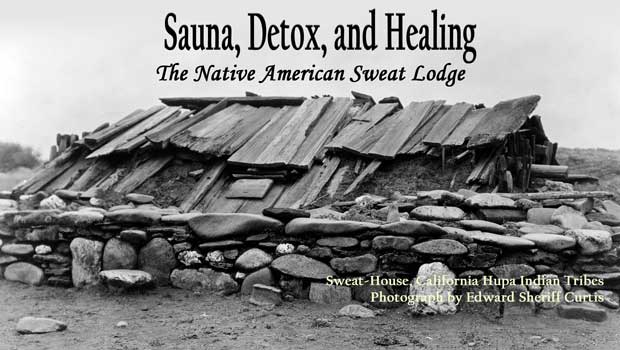
    The Native American sweat lodge, an original form of sauna, has been used for centuries, and is enjoying a revival among Native Americans today. It is also attracting the interest in non-Native Americans. The sweat lodge is usually a low, windowless dome made of willow branches covered with some material impermeable to light and heat (such as tarps or thick blankets), with a dirt floor. It is used not only for physical purification and healing, but for spiritual and psychological healing as well.

    To describe the sweat lodge of one tradition, volcanic stones (which do not explode at raised temperature) are heated in a fire about 20 feet from the lodge entrance. When they are red-hot, the lodge leader (who usually has had years of training and experience) invites the participants inside. There may be one or two, or as many as two dozen participants. First-timers, who have been previously briefed on what will take place, sit where the leader can keep a close watch on them in case they have any trouble breathing or any other difficulty. About a quarter of the rocks are placed in a pit in the center and sprinkled lightly with aromatic botanicals such as tobacco, some species of sage, or tree resin. The door flap is tightly closed so that the interior is dark except for the glow of rocks. Water is splattered sparingly on the rocks to create steam. A prayer song is sung, and opening prayers are said by the leader including giving thanks for the Creator’s compassion, help, and sustenance, petitions for the well-being of the earth and its creatures, for the well-being of the local tribe and sweat lodge participants, and supplication to the Creator to help the leader conduct the ceremony in a good way. Then the participants take turns giving thanks, praying that that Creator will help them “walk in a good way,” asking for forgiveness for wrongdoings, and praying for the spiritual and physical needs of themselves and others.

    After the participants’ prayers, the door flap is opened to bring in fresh air, and the participants are free to get out, stretch, and cool off for a few minutes if they wish. A crowded lodge can get stuffy, and participants who are sweating out toxins can make for a somewhat malodorous environment. The whole procedure is repeated (usually three more times), and then the ceremony is over. The usual practice is to wash the sweat off with cool water afterwards, and then drink water and have light refreshments.

    The Benefit of Detoxification

    Modern man is surrounded by chemicals, some of natural origin, but many thousands are manufactured by human beings. We encounter potentially toxic chemicals daily at home (cleansers, toiletries, pesticides), in agriculture (herbicides, pesticides), in industry (solvents, heavy metals, paints, lubricants), in offices and stores (printing/copying chemicals, highly toxic chemicals released from carpets and building materials), and in science and medicine (sterilizing agents, laboratory chemicals, pharmaceuticals). Some modern office buildings with relatively self-contained ventilation systems may have high levels of airborne pollutants resulting in the “sick building syndrome.” The body will tend to deal with toxic man-made chemicals (whether they be industrial chemicals, pharmaceuticals, food additives, or automobile exhaust) with the same physiological and biochemical mechanisms it uses to deal with toxins arising from its own metabolic processes, from pathogens, and from external sources in the natural world. There are many ways to help the body in the detox process including eating plenty of fiber, drinking ample water, engaging in regular exercise, and using a sauna. In addition to the detox benefits, sauna promotes relaxation, increases circulation, eases muscle pain, improves overall cardiovascular health, and more.

  • Themes from the Holy Quran: Seen Through Indian Eyes

    Themes from the Holy Quran: Seen Through Indian Eyes

    Editor’s note: The following is a slightly modified version of an article that first appeared in The Message in 1996. The author finds similarities between Native American beliefs and values and those of Islam. This is useful in that it can promote mutual understanding between the two communities. It can also help those Muslims who are engaged in Dawah (outreach) to Native Americans. Native American religious beliefs are somewhat diverse but, for the most part, convey a pantheistic view of God, seeing God as the only reality, as Creator but also indwelling in the creation. Islamically, the distinction between the Creator and the creation is absolute, clear, and unassailable. While divinity is not found in the created world, the signs of God are everywhere — all pointing to His existence, His sovereignty, power, and glory.

    The ‘Original Instructions’

    Indian traditions refer to “The Original Instructions,” teachings given by the Creator at the dawn of time. It corresponds [in some ways] to the Islamic idea of din ul-fitr. The Quran tells us, “Devote yourself completely to faith, and adhere to the natural pattern in which He created mankind. There is no altering of the laws of God’s creation. That is the right religion, but most of mankind doesn’t understand that” (30:30). “Original Instructions” does not refer to a set of doctrines or rituals, but rather to remembering God always and trying to follow His guidance, practicing responsibility, and having compassion for all creatures. It also teaches self-sufficiency and generosity and learning about God’s laws through His creation.

    The phrase — “Do everything in a sacred manner” — is often heard among Indians. It involves direct experience with God and His creation, rather than abstract reasoning. Bringing remembrance of God to every word and action is a devotion that leads to the light. As the Quran says, “There shall be no compulsion in religion. Surely right has become distinct from wrong. So, whoever rejects evil and believes in Allah has surely grasped a strong handhold which will never break. And Allah is all-hearing, all-knowing. Allah is the protector of those who believe; He leads them out of every kind of darkness into light. And those who disbelieve, their patrons are the transgressors who bring them out of light into every kind of darkness” (2:256-257).

    The Original Instructions are not universally followed in Indian communities. Over the centuries extraneous beliefs and practices have sometimes gotten mixed into Native American religions, sometimes with good results, sometimes not. Prior to the 1492 invasion, we were exposed to Middle Eastern paganism and sun-worship, and elements from British Isles witchcraft. Since the invasion, we have seen many Indians adopt various Christian creeds. There are also a few Indian Buddhists and Muslims, and quite a number of Baha’i and Mormons. In addition, there is the “New Age” culture and spirituality superimposed upon, or mixed with, materialism, group therapy, and occultism (involving power-seeking, ritual magic, and sometimes a pantheon of gods from all over the world). There are now Indians calling for a return to the Original Instructions, and a weeding out of extraneous, and sometimes corrupting, ideas from our traditions.

    Seeing Signs of God in Creation

    God says in the Quran, “In the heavens and the earth are signs for those who believe. And in the creation of yourselves and the animals scattered throughout the earth are signs for those with sure faith; also, in the alternation of night and day, and the sustenance that God sends down from the sky and thereby revives the earth after her death, and the ordering of the winds, are signs for a people who have sense” (45:3-5). Indians have always seen the signs of God in nature and in the world around them. Walking Buffalo (a Stoney Indian) has said, “We saw the Great Spirit’s [God’s] work in almost everything: the sun, moon, trees, wind, and mountains.… I think we have a true belief in the supreme being… Indians living close to nature and nature’s ruler are not living in darkness.” Tom Flanders wrote in The Eagle (a New England Indian newspaper): “Traditionalists know what is right… they know the Creator even though we cannot understand this force which is so much more powerful than our experience. Because we are close to everything that God has made, we are close to God. We know that an offense against any part of creation is an offense against the Creator and against ourselves.”

    Man’s Relationship to Nature

    The Quran tells us, “There is not an animal on earth or a winged creature that flies but are communities like you. We have left nothing out of the Book. They shall all be gathered to their Lord” (6:38). And in another verse, God says, “Don’t you see that it is God whom all beings in the heavens and on earth praise, and the birds of the air with outspread wings? Each knows its own manner of prayer and praise, and God is aware of all that they do” (24:41).

    Black Elk (Oglala Sioux), in the introduction to his autobiography, stated: “My friend, I am going to tell you the story of my life… It is the story of all life that is holy and is good to tell, and of us two-leggeds sharing in it with the four-leggeds, and the wings of the air and all green things…” Various Indian expressions reflect this relationship to God’s creatures. The Sioux phrase, “mitakuye oyasin” (all my relations) refers to other creatures of earth as brothers and equals before God. Then there is the philosophy of “respect” among all Indians – that God’s creatures are to be respected as brothers, not as servants; as equals, not as inferiors; as respected fellow travelers along the path of God; and as teachers…”

    Three Eagles, Band Chief of the United Southwestern Allegheny Nations, has said: “To Native Americans, spiritual refinement and practice is normal. Before Amerindian culture was so disrupted by the devastation of unpracticed values, diseases, and invasion it was commonplace to develop the gifts of communicating with all life. It is still practiced some today by those who have kept or recovered their knowledge. With it goes a tremendous responsibility to keep in balance.” Floyd Westerman (Oglala Sioux songwriter, actor, and activist) points to the fact that the Indian worldview is not political, ideological, or materialist: “… the Indian world point of view is neither left nor right, communism or capitalism, because Indian culture is based on spirituality.”

    Righteousness

    The Quran tells us, “Righteousness is not turning your faces towards East or West. Rather, righteousness is to believe in God, and the Last Day, and the angels and the Scriptures, and the Prophets. To give your wealth out of love for Him to kin and orphans, and to the needy and the travelers, and to those who ask it; and to free slaves, to be steadfast in prayer, pay charity for the poor, to keep promises when you make them; and to be patient in suffering and hardship and during times of stress. Such as those who are sincere; the ones who are God-fearing” (2:177).

    The Iroquois Creed as quoted by Chief Three Eagles (United Southwestern Allegheny Nation) describes the beliefs and values of the Iroquois who “…believed in…a life everlasting, and in the fraternity of life. With an Iroquois, a thankful heart was prayer… he believed that it was natural to be honorable and truthful, and cowardly to lie. His promise was absolutely binding… He believed in reverence for his parents, and in old age supported them, even as he expected his children to support him… he believed in a forgiving spirit, preferring atonement to revenge…in converting enemies to friends. He believed in the sacredness of property; theft among early Indians was unknown… He believed in the equality of women…”

    The Two Paths

    The Holy Quran mentions the path of the believer in contrast with the path of those who reject God: “…And what will explain to you the steep path? It is freeing the bondsman or giving food in a time of difficulty to an orphan of near relationship or to the indigent in the dust. Then he will be one of those who believe and encourage steadfastness and compassion. Such are the companions of the right-hand. But those who reject our revelations, they are the companions of the left; they will be covered over with fire” (90:12-20).

    The scholar Joseph Epes Brown, in “The Sacred Pipe— Black Elk’s Account of the Seven Rites of the Oglala Sioux,” notes: “The red road is… the good or straight way…similar to the Christian straight and narrow way; or the as-siratal mustaqim of the Islamic traditions. On the other hand, there is the ’blue’ or ’black road’ of the Sioux… which is the path of error and destruction. He who travels on this path is, Black Elk has said, ’one who is distracted, who is ruled by his senses, and who lived for himself rather than for his people.’”

    Race and Color

    The Quran says, “Among His signs is the creation of the heavens and the earth, and the variations in your languages and colors. In that are signs for those who have knowledge” (30:22). And in other verses we are told, “Do you not see that God sends down rain from the sky to bring forth produce of various colors? And in the mountains are streaks of white and red of various shades, [some] intense black. And so, people, animals, and livestock are various colors. Those among God’s servants who truly reverence Him have knowledge. For God is mighty and forgiving” (35:27-28).

    Native Americans today are a variegated group, culturally Indian, whose ancestors include Europeans, Africans, Asians, Polynesians, and others. Because of this, there are Native American tribal members who range from light-skinned and blue-eyed to dark-skinned and brown eyes, in addition to those who look “typically Indian.” This diversity, coupled with the Bureau of Indian Affairs’ (BIA) insistence on “defining” who is an Indian, has led to considerable debate among Indians regarding who is an Indian: full-blood vs. mixed blood; reservation vs. off-reservation dwellers; traditionalists vs. moderns; tribal members vs. non-members in a BIA-recognized tribe. Recently, however, there has been a growing movement among Indians to define ourselves — as people who have Native American ancestry, who try to live by traditional values, and who are loyal to, and serve, the Native American people.

    Charity/Zakat

    In most Indian traditions, accumulation of wealth is not a legitimate goal, and greed and acquisitiveness are considered unworthy behavior. There is the Plains Indian tradition of the “give-away” where someone, on a special occasion, would give away food and personal possessions to those assembled. These events represent the Native American values of sharing, community, interdependence, and mutual well-being. They provide opportunity to distribute wealth among community members. In Islam, zakat is one of the five pillars and is not only an act of worship, it is a purifying of one’s wealth and a way to help those who are needy.

    Gratitude

    The theme of gratitude to God is presented again and again throughout the Holy Quran. Here is one example: “It is He Who brought you forth from the wombs of your mothers when you knew nothing; and He gave you hearing and sight and intelligence and affection that you may give thanks (to God)” (16:78). Gratitude to God for life, sustenance, and for all creation, is an essential part of Native American philosophy.

    Jihad and the Role of the Warrior

    “Those who believe and leave their homes [for the cause of God] and strive in the cause of God with their property and their persons, have a greater rank with God; they are the ones who are triumphant” (Quran 9:20). The word in Arabic that means “war” is “harb.” Jihad means struggling or striving in all ways to attain good as part of one’s devotion to God and Islam. Military action, when necessary, is but a part of that devotion. Likewise, the concept of “warrior” in Native American culture is not synonymous with “soldier.” A warrior is one who protects God’s creatures and his people, and who defends what is right. An Inuit (Alaskan native) woman, Nilak Butler, wrote the following:

    Our suffering is small
    Several moons ago my younger brother asked
    With sorrow and sadness in his heart,
    Why our family must suffer so much, sacrifice much.
    And I thought on this,
    Knowing that no answer at that time could ease his heavy heart…
    Our family has made commitment to serve the People.

    We struggle and resist— we are warriors.
    And sometimes the prices we must offer
    Are not as we would have thought them to fall.
    Our family has made commitment
    To honor and Protect Mother Earth
    And all her children— all life.
    And when I look at how she suffers,
    In comparison our suffering is small.

    Prayer

    It is common among Native Americans to have a time of quiet prayer, “seeking the face of God” (i.e., the presence of God) morning and evening, to try to be conscious of His presence constantly, and to try to obey His laws and guidance. Here is an often-quoted prayer that was printed on a bookmark I received from the Red Cloud Indian School in Pine Ridge, South Dakota (author not given):

    An Indian Prayer

    O Great Spirit, whose voice I hear in the winds,
    And whose breath gives life to all the world.
    Hear me! I am small and weak.
    I need your strength and wisdom.
    Let me walk in beauty,
    And make my eyes ever behold the red and purple sunset.
    Make my hands respect the things you have made,
    And my ears sharp to hear your voice.
    Make me wise so that I may understand things you have taught my people.
    Let me learn the lessons you have hidden in every leaf and rock.
    I seek strength, not to be greater than my brother.
    But to fight my greatest enemy— myself.
    Make me always ready to come to you
    With clean hands and straight eyes.
    So, when life fades, as the fading sunset,
    My spirit may come to you without shame.

    Prayer, in Islam, is one of the five pillars of the religion. God says in the Quran, “Lo! In the creation of the heavens and the earth, and the alternation of night and day, there are signs for those who possess understanding; those who commemorate the praise of God standing, sitting, and lying on their sides, and reflect upon the creation in the heavens and the earth…” (3:190). And in another verse God says, “And be steadfast in prayer, practice regular charity, and bow down your heads with those who bow down [in worship]” (Quran 2:43).