بسم الله الرحمن الرحيم

Tag: ramadan

  • What the Ummah Needs in Ramadan

    What the Ummah Needs in Ramadan

    What does the ummah (Muslim worldwide community) need today? More specifically, what does the ummah need to do for Ramadan? When reflecting on the many areas of improvement needed, it is crucial to also keep in mind the immense amount of good in our communities. There are countless individuals striving hard every day, sacrificing sleep and other worldly comforts or enjoyments in the pursuit of truth, justice, and relief for those who are suffering. Nevertheless, our ummah can benefit by reflecting on the following areas of need, extracted from three verses of Surat Muhammad.

    Aiding the Cause of Allah

    “Believers, if you aid Allah, He will come to your aid and will plant your feet firmly” (Qur’an 47:7). Allah commands us to “aid” His cause which requires us to prioritize the centrality of divine revelation in our lives and to abide by its commandments, prohibitions, and admonishments. No doubt, one might benefit most by starting in one’s home. Aiding Allah’s cause is to truly live by its principles in private, behind closed doors, when people in the outside world aren’t watching. Aiding His cause is to treat one’s family with mercy, justice, and love. It is to consume only what is permissible of provisions, to refrain from what is prohibited, and to be honest with Allah and with oneself in all matters. Aiding His cause and the deen is to pray on time, fast in Ramadan, and fulfill all the obligations of Islam because they’re of a greater priority than worldly desires and societal pressures. Aiding His cause is to speak the truth in all situations and to stand firm for justice regardless of who is on the other end of a conflict or situation.

    Aiding Allah’s cause is to stay strong when anti-Islamic sentiment increases in the world, when Islamophobia impacts society at a structural level, and when the number of people opposing your religious freedoms increases. It is to be courageous in practicing Islam openly and letting your Muslim identity shine forth, even when others might judge you, misunderstand you, or treat you differently. Aiding Islam is to stand united with your Muslim brothers and sisters and overcome any conflicts or differing opinions that might arise, and doing so in the most Islamic way, with good faith and meticulous adaab, and uncompromising fairness.

    Our ummah today is greater in number and more advanced in technology and worldly materialism compared to previous generations of Muslims, and yet Muslims in many countries are oppressed and suffering. One of the primary reasons for the situation of Muslims today is a disconnect from the practice of Islam; instead, there is an attachment to this world and its illusions. Although this doesn’t imply that all previous Muslims were righteous or that all current Muslims are not, there is certainly room for improvement in our ummah today.

    Increased Guidance and Taqwa

    “As for those who are guided, Allah increases them in guidance and causes them to grow in God-consciousness [taqwa]” (Qur’an 47:17). One of the primary objectives of fasting in Ramadan is to gain taqwa (2:183), the God-consciousness that produces awe and fear of God and cultivates piety. Undoubtedly, taqwa should be an ongoing objective in all acts of worship on our journeys towards Allah, regardless of the time of the year or the phase of life we’re experiencing. Our ummah today needs to bridge the gap between what we believe to be true and what we implement of it. The pursuit of truth is only the first step. Once a human being finds truth, there needs to be an implementation of that truth with dedication and consistency. With Islam, we are required to not only identify as Muslims or to claim we believe in Allah and His final messenger, but to also fulfill as much of Islam as we possibly can.

    There are perhaps two billion Muslims in the world today and the population is growing quickly. However, we can honestly admit that not all two billion Muslims are practicing Islam properly in terms of character, rituals, rulings, etc. A useful question to ask frequently is this: What would the world look like if every Muslim alive today fully practiced Islam by embodying its guidance and striving for taqwa? We would assume that society would be a more just place as Muslims, practicing Islam, would strive regularly to implement what is true and just, to advocate for the oppressed, and to spread morality through norms, beliefs, and policymaking in their respective societies. Another aspect of such an alternative world would be the impact of Muslims on the general optimism spread in the world through Islamic theology, positively impacting mental health and decreasing problems in society related to mental health struggles. Additionally, if all Muslims practiced Islam, it’s likely that Muslims would be more united, and more Muslim-majority countries would be strong and inspiring role models.

    The pursuit of truth begins with embracing Islam after which the pursuit of guidance ensures the strengthening of belief, remaining steadfast in one’s faith, and gaining of taqwa.

    Reflecting Upon the Qur’an

    “Do they, then, not reflect on the Qur’an? Or are there locks on their hearts?” (Qur’an 47:24). An individual’s worldview is the way he or she observes and understands the world in terms of how the universe operates, what the purpose and meaning of life is, whether there is a divine reality and an objective moral code, and what one’s place in the world is. Your worldview impacts everything you do in life, from the way you live, righteously or otherwise, to your perception of what is moral or just in social, political, economic, and other areas of society. For Muslims, our worldview is Qur’anic in that it is based on what Allah, the Exalted, has revealed, and what has been clarified and taught by the Messenger of Allah. However, too many Muslims believe that the Qur’an is from Allah without ever connecting to it, practicing its guidance, or viewing the world through its lens.

    It is as though our spiritual hearts have the potential to be shackled, or locked, as the above verse states. The heart is the most precious thing we must protect. Yet, the state of one’s heart is not necessarily on or off, black or white, open or closed. The spiritual heart operates on a spectrum. Sometimes a Muslim might see the signs of Allah but feel too weak to change for the better or accept advice or open his or her heart to the transformative power. It is like the heart is covered by some layer or layers — it could be laziness or stubbornness or pride or many other things.

    A sign of a covering on the heart is when one does not feel connected to the Qur’an, is not moved by it, doesn’t feel inclined to reference it, or commit to live by it. But the very cure we need is the Qur’an itself. The Book of Allah breaks the shackles and removes the layers upon the heart. Then one is able to see how crucial the Qur’an is for the life of the individual and the life of humanity. The cure of the Qur’an motivates the believer to strive on a path that is straight, a journey toward purification of the heart, a dedication to justice and helping to bring about the fulfillment of all people’s rights and relief from oppression and suffering.

    The Qur’an contains the emotional and psychological tools that facilitate resilience for Muslims in this world of trials and tribulations, and it contains the spiritual remedy for the diseased heart that allows a person to engage in sinfulness or a lifestyle of heedlessness. Indeed, the one who listens to the Qur’an regularly, with open and spiritually supple heart, will conform their desires to what Allah has revealed. No more trying to change Islam to fit their desires.

    Every believer who has come and gone, each one who held the Qur’an in reverence and deep-felt appreciation, had a final experience with it, a final recitation, a final reflection. Let us not depart from this world with anything but profound realization of the powerful guidance, cure, and light that we are all blessed with through the Qur’an. Let us reflect during this Ramadan upon our immense blessings.

  • Reflecting on Taqwa During Ramadan

    Reflecting on Taqwa During Ramadan

    Every Ramadan, we are reminded about the verse of fasting (2:183) and other verses that guide us to the objective of taqwa. And every Ramadan we need to reaffirm our understanding of the comprehensive facets of taqwa, for ourselves, our families, and our communities, so that we are aiming for its bountiful scope, not just one or another of its aspects.Consider the following three verses of the Qur’an. Allah says:“O you who believe, have taqwa of Allah as His right upon you” (3:102); and He says,“O you who believe, have taqwa of Allah, and let every soul reflect on what it has sent ahead for the afterlife” (59:18); and “O you who believe, fasting has been obligated upon you as it has been obligated upon those before you so that you may gain taqwa” (2:183).

    Taqwa is translated variously as God-consciousness, fear of God, being in awe of God, awareness of God, mindfulness of God, and conscious obedience to God. However, the Arabic term ‘taqwa’ is far more extensive and multi-faceted than the narrow translations found in one or two English words. One can understand the various facets of taqwa based on the verses of the Qur’an, the authentic aḥadith, and the commentary of the companions (r) of the Prophet (s) and scholars of Islam throughout the ages.

    What Is Taqwa?

    Taqwa is to be mindful and conscious of Allah, recognizing His Majesty and Perfection, acknowledging one’s status as a human being in need before the Creator, and recognizing the importance of submission to Allah out of love, hope, and fear, all with a consistent equilibrium. Thus, the internal state of taqwa leads to external manifestations such as obeying Allah’s commands, staying away from His prohibitions, and regularly reviewing one’s actions in order to progress towards Allah. Taqwa is a safeguard against complacency in this life; it is a fortress against sinning without remorse; it is to protect oneself with cautiousness in everyday life, so that nothing risks harming one’s relationship with Allah and, consequentially, one’s place in the afterlife.

    Taqwa is a shield, but it is not inert like a physical shield. It is a dynamic consciousness, a vitality infused into the believer’s soul so that he or she sees broadly and minutely while walking in a field of thorny bushes, walking cautiously so that they are not harmed by the prick of the thorn. Taqwa is a protection against recklessness whether with one’s thoughts or actions,or with choosing one’s companions or environment.Taqwa is to be so aware of one’s purpose in this life, and of Allah’s Perfection and Majesty, that the only reasonable lifestyle in this temporary and relatively insignificant world is that of awareness and vigilance.There is an adage that a prudent caution precedes wisdom.

    A Healthy Fear that Is Part of Taqwa

    Oftentimes, taqwa is wrongly taken to be a type of fear that is so debilitating that an adherent is living with excessive paranoia and spiritual paralysis. While fear is healthy to have in the proper proportion, it must be coupled with hope in the mercy of Allah, to the extent that one always recognizes their ultimate need for Allah’s mercy regardless of how often they repent or do good. Taqwa is to be so mindful of Allah that one’s actions change for the better.In the modern world, when people know they are being recorded, they tend to be more conscious of what they say or do.

    Then what about the mindfulness we should practice in the sight of Allah, Al-Basir, the All-seeing, and the effect this should have on our lives? While taqwa has within it the aspect of fear, everything in Islam is imbued with a healthy apportionment. What, then, is the healthy type of fear that accompanies taqwa with regards to our lives as believers?

    The component of fear in taqwa is multifaceted: it is fear of misguidance, fear of shortcomings in good deeds, fear of sinfulness, fear of God’s anger, fear of the hellfire — fear of any and all things that can result in ultimate and eternal loss. This fear, however, must be coupled with recognition of Allah’s vast mercy, as He promises to forgive the sinner every time he or she sincerely repents – and that sincerity is demonstrated by stopping the sin, having remorse, and intending to never return to the sin again. Allah’s mercy is so explicit that no believer can reasonably fall into paranoia and debilitating fear unless they have failed to reflect upon His mercy.The All-Merciful says, “O my servants who have transgressed upon themselves in sins, do not lose hope in the mercy of Allah, for certainly Allah forgives all sins. Indeed, He is the All-Forgiving, the Ever-Merciful” (39:53). Further, Allah says in a hadith qudsi, “O son of Adam, were your sins to reach the clouds of the sky and then you asked forgiveness from Me, I would forgive you” (Tirmidhi). Grasping the vast mercy of Allah prevents a believer from experiencing the fear of Allah in such way that it is paralyzing, preventing him or her from thriving mentally and emotionally. That is why it is so crucial for every believer to recognize the formula for equilibrium: it is to worship Allah out of true love and humility, with a balance between fear because of one’s shortcomings and hope for Allah’s mercy.

    The opposite extreme is when believers ignore the element of fear in taqwa and thus, they typically find themselves disregarding Allah’s prohibitions, ignoring His commands, missing some (or all) obligations, and thinking only of Allah’s mercy while ignoring the balancing weight on the other side of the scale:“Inform My servants that I am the Ever-Forgiving, the Ever-Merciful; and that My punishment is the most painful punishment” (15:49-50).

    Taqwa is to recognize Allah’s right over His creation, and as a result to humble oneself and follow His command. Taqwa is what leads the humble, wise, human being to recognize that true success and salvation cannot be achieved without Allah’s vast mercy, but that it is Allah’s right that He be worshipped and His Oneness not denied, praised and His guidance not forgotten, called upon in need and His punishment not downplayed.Imam Ibn al-Qayyim says: “Such a person [of taqwa] will be convinced that he cannot rely on his actions, lest he be destroyed. Many people think about their rights over Allah and not about His rights over them. This is how they are detached from Allah and deprived of the desire to meet Him. This is the epitome of ignorance of their Lord and of themselves.”

    The Path to Taqwa

    If taqwa is a necessary shield, fortress, lifestyle, mindfulness, and a condition of salvation and success, then it is only reasonable that every believer should strive to become a muttaqi, or one who has taqwa. Taqwa comes through holding oneself accountable in this world by reflecting on one’s thoughts and actions, before one is held accountable on the Day of Judgment. Taqwa comes through recognizing that this life is the only opportunity for good deeds – the currency of success! – and that the Day of Accountability is for justice, whether reward or punishment, with no more opportunity for good deeds. It was Umar (r) who said, “Hold yourselves accountable before you’re held accountable, and weigh your deeds [by reflecting on them] before they are weighed [on the Day of Judgment].” Similarly, Al-Hasan al-Baṣri (r) said: “Those who frequently hold themselves accountable in this life find their accountability in the next life easy, and those who take this matter lightly will find their accountability very heavy and difficult in the next life.”

    Taqwa is to check oneself frequently by reflecting and measuring. What is measured is oftentimes managed, and what is measured oftentimes progresses. What greater thing to measure — to manage and to facilitate progress — than one’s own journey to Allah? Taqwa in everyday life is to avoid the consumption of anything damaging to one’s journey to Allah such as watching inappropriate videos, movies, orany other form of improper entertainment, or listening to anything displeasing to Allah, or reading that which distances oneself from Allah’s mercy.Taqwa is to choose one’s environment cautiously and one’s friends carefully, in the hopes of finding support on one’s journey to the Ever-Merciful.

    Imam al-Ghazali (r) wrote,“It is incumbent on every person who believes in Allah and the Last Day that he should not be oblivious of self-accountability. Every breath of life is a precious jewel which can buy eternal treasures. Wasting these breaths or using them for detrimental purposes is such a great loss which no intelligent person could justify.” It was reported that Umar (r) donated a valuable piece of land when he missed Asr prayer in congregation, and that his son, Ibn Umar, used to pray qiyam all night if he missed a prayer in congregation. Thus, disciplining the self when one falls short helps to raise the believer in rank, to preserve the default level and standard of taqwa, and to experience true liberation from worldly desires and attachments, all while connecting to Allah the Ever-Merciful.

    Taqwa puts a proper order and proportion in one’s life, giving the believer a means to facilitate and measure his progress on the journey to Allah. Taqwa reminds the believer of Allah’s punishment while, at the same time, relieving the believer of distress by assuring him of the incomparable grace and power of Allah’s mercy. Taqwa is remembrance that Allah’s mercy is available so long as one ascribes no partner to Him and calls upon Him with true sincerity of repentance. “…And whoever has taqwa of Allah, He will make for him a way out. And He will provide for him from where he could not imagine. And whoever puts his trust in Allah, sufficient is He for him. For Allah will surely accomplish his purpose. Verily, Allah has set for all things a measure” (Qur’an 65:2-3).

    This Ramadan, let us fortify, through remembrance and reflection, a broad understanding of taqwa and then strive for its fullest application in ourselves, our families, and our communities.

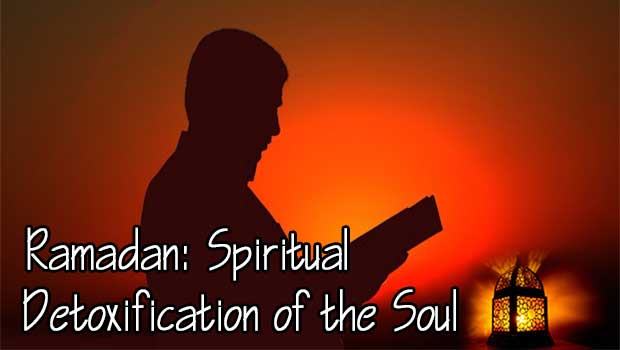
  • Ramadan: Spiritual Detoxification of the Soul

    Ramadan: Spiritual Detoxification of the Soul

    The Ummah (world community) of Prophet Muhammad ibn Abdullah (peace be upon him) is invariably heralded as including individuals from every race, ethnicity, and nation on earth. While the 1.7 billion adherents of Islam comprise an unparalleled cultural and linguistic human mosaic, Muslims are nevertheless inextricably bound by certain fundamental beliefs and practices that define the faith. One such universally-accepted article of faith is the annual observance of the 29 or 30-day fast during the month of Ramadan, the ninth month on the Muslim calendar. The requirement for every able-bodied Muslim who is not traveling to refrain from eating or drinking anything during the daylight hours, reconnect to the Quran, increase acts of worship, avoid profane, useless speech and all evil and bad deeds, and increase acts of charity is universally accepted as being mandated in the Quran. The Quran instructs: “Ramadan is the month in which was sent down the Quran as a guide to mankind, also clear [Signs] for guidance and judgment [between right and wrong]. So, every one of you who is present [at his home] during that month should spend it in fasting, but if anyone is ill or on a journey, the prescribed period [should be made up] by days later…” (Quran 2:185).

    When people travel throughout the Muslim world during Ramadan, they observe differences in the decorations of masajid, homes, shops, a wide variety of specialty dishes and drinks, and the notifications for the beginning and ending of the daily fast. In Egypt, colorful lanterns, reputedly dating back to the Fatimid Caliphate, adorn the urban landscapes. Drummers walk through neighborhoods rousing people to get up for their pre-fast meal, suhoor, and cannons blast in Cairo to announce the ending of the day’s fast. Variations of these practices can be found in Morocco and other north African countries. In Pakistan, Malaysia, west and east Africa, decorations and fasting period notifications may differ, but the theme of special sweets and drinks like baklava and hibiscus rose petal drinks during Ramadan are commonplace.

    Yet, regardless of the cultural practices of Muslims during the month of Ramadan, the essence of this month— self-purification and character building that is sustainable throughout the other eleven months— must never be diminished or obscured. Prophet Muhammad (peace be upon him) has warned that some fasters will only experience thirst and hunger, cut off from any deeper spiritual experience. Unfortunately, lavish iftar (breaking of the fast) meals and eating until dawn are far too commonplace. How can a faster be reminded of the daily plight of the poor when, consciously or subconsciously, he attempts to eliminate hunger pains through over-indulgence before and after fasting? The everyday Prophetic example of Muhammad (peace be upon him) was to eat enough to sustain his health, that is to fill the stomach one third with food, one third with water, and leave one third for ease of breathing. This daily eating regimen of Prophet Muhammad (peace be upon him) is to be emulated, making it more egregious for fasters to over-indulge to the point of gluttony, especially during the sacred month of Ramadan.

    Sleeping during the daylight hours also negates the positive challenges and benefits of fasting. The daylight hours of fasting are to be used to practice constructive character traits and to eliminate negative ones. Yet, sleeping during the hours of fasting is an act of laziness and indulgence, the opposite of an Allah-fearing personality. Ramadan is not the time for a daily hibernation from the service of Allah. Some of the most profound events in the history of Islam, such as the battle of Badr and the conquest of Makkah, and the recapture of Jerusalem from the Crusaders by Salahudeen Ayyubi, occurred during this glorious month of character building and self-discipline.

    The month of Ramadan is an annual gift from our Creator to the Ummah of Prophet Muhammad, a wonderful opportunity to purify ourselves through sustainable character development, self-restraint and discipline, and acts of charity and goodness. Displays of laziness, over-indulgence, or selfishness are unacceptable character defects for Muslims throughout the year, but especially repugnant during the month of Ramadan. Ramadan is that glorious time of the year for the spiritual detoxification of our souls. By the Grace of Allah, relief efforts of Muslim organizations, during the month of Ramadan and throughout the year, are helping to address the material needs of the homeless, hungry, and neglected. One such organization is Helping Hand for Relief and Development. Based in the United States with relief efforts throughout the world, HHRD helps those in need throughout South Asia, Africa, the Caribbean, and Latin America, with the valuable help of donors. ICNA Relief performs a similar charitable function in the United States and its territories such as Puerto Rico and the U.S. Virgin Islands. HHRD and ICNA Relief represent a Muslim collective response to meeting the requirements of the needy. Let us continue the process of self-purification during the month of Ramadan and beyond by supporting these efforts and doing what we are personally capable of doing.

  • Ramadan: A Special Time for Special Deeds

    Ramadan: A Special Time for Special Deeds

    Ramadan! 2017! …1438! …It’s fasting time! …All Praises are for Allah, the Almighty, and may His peace and blessing be upon His true servant and final Messenger Muhammad, on his companions and his household.
    Every year as we prepare to receive the blessed month of Ramadan we are reminded of all the virtues and blessings that it brings. We hear about that in lectures, khutbahs, Ramadan programs, at home, on the social media, and the list goes on. It is important for us to remind one another of this special month. The reminders are excellent as they add to the joys, sweetness, and depth of our worship during this blessed month. But beyond all this, we must try to think of what else we can do that we have not done before, thus, making this Ramadan so very special and different from the other Ramadans that have gone by. It should not be that the blessed month of Ramadan comes and goes and we become inattentive to it or unchanged by it. Certainly this was not the way of the pious predecessors.
    We are told that the sahaabah (R) used to make duas six months prior to the month of Ramadan, asking Allah SWT that they be blessed to witness it, and then they would fast and worship Allah SWT with so much intensity. Then subsequent to Ramadan, they would reflect upon their deeds and make dua for Allah SWT to accept their deeds and this would last for another several months. Then they would prepare to reach the blessed month of Ramadan again. For them, Ramadan was like the center of their lives and their daily living revolved around it. Without doubt, there is enormous benefit in hearing again and again about the great virtues related to Ramadan and how our pious predecessors benefitted from this blessed month. While we may not rise to the level of reflecting and making dua about Ramadan six months ahead of time and five months after, at a minimum, if we think that this could very well be our last Ramadan, then the question is: What more can we do to make this Ramadan a deeply spiritual and transformative experience?
    First, how much more should we be grateful, and glorify and thank Allah SWT for granting us another opportunity to be witnessing this glorious month of Ramadan! Indeed, life and death are in His Hands alone. If He SWT so wished, He could have made us amongst the 57 million people who die each year. But He grants us life. He grants us this opportunity to worship Him with greater fervor. One of the companions reported that the “Mother of the Believers,” Aisha (R), would fast in the intense heat, and he was asked, “What drove her to do this?” He replied, “She would take advantage of the days before death.” Abu Ad-Dardaa’ (R) used to say, “Fast the very hot days in anticipation of the Day of Resurrection, and pray two rak’at in the darkness of night in anticipation of the darkness of the grave.” This is why Mu’adh bin Jabal (R) expressed regret on his deathbed that he would no longer experience this mid-day thirst, as did other early Muslims. This was the way of the early generations. The sweetness of fasting on a hot day during the blessed month of Ramadan was one of their most beloved times of devotion.

    The Great Blessings of Ramadan

    Ramadan should, therefore, be seen as a great blessing from Allah SWT and must not be taken for granted or wasted away. It is a gift from Allah SWT and Abu Hurairah narrated that Rasoolullah (pbuh) said, “My ummah was given five things for Ramadan which were not given to anyone except them”:
    1. For them, the smell from the mouth of a fasting person is sweeter to Allah than the fragrant smell of musk.
    Allah SWT does not judge the outward but what is deep within the hearts. Similarly, during Hajj, on the Day of Arafah, when the pilgrims are dusty and disheveled, Allah SWT grants them His forgiveness and freedom from Hell Fire. Isn’t our total dependence on Allah SWT our original state? In a hadith qudsi, narrated by Abu Zhar(R), that Rasoolullah (pbuh) said that Allah SWT said, “O My servants, all of you are hungry except for those I have fed, so seek food of Me and I shall feed you. O My servants, all of you are naked except for those I have clothed, so seek clothing of Me and I shall clothe you.”
    2. The Angels seek forgiveness for those who are fasting, do so until they break their fast.
    Let us think about that for a moment — the Angels are calling on Allah SWT with their duas, seeking His forgiveness on our behalf Therefore, we must be cognizant and respectful during our fasting that the Angels, who are pure, are making duas for those who are far from purity. They see it as their responsibility to make dua for us and it is our responsibility to become more conscious with our fasting. Remember when someone who is going for Hajj or Umrah asks those who are not going what they want from Makkah or Al-Madinah; they always tell them they want them to make dua for them while they are there!
    3. Allah prepares and decorates a special garden in Jannah every day and then says (to it), “The time is near when faithful servants shall cast aside the great trials of the world and come to you.”
    We all are reminded in the month of Ramadan of the special gate of Jannah called Ar-Rayyan, and that only those who have fasted will enter through it and no one else. Let us continuously make dua throughout Ramadan for Allah SWT to grant us Paradise through the gate of Ar-Rayyaan! And remember that Jannah is very spacious we should make dua for our brothers and sisters in faith, even naming in our dua those who are in our circle of family, friends, and acquaintances.
    4. In this month the evil-minded Shaytaan is chained.
    The devils are chained so as not to tempt the fasters with those evils to which they normally tempt during other months besides Ramadan. So if we still do evil during Ramadan, then this is prompted by our nafs (soul) and what it has acquired over the years. Ramadan is time to do a lot of self-evaluation and introspection. Umar (R) used to tell the companions, “Evaluate yourselves before you are being evaluated!” What better time is there to engage in self-evaluation than in the month of Ramadan.
    5. On the last night of Ramadan, fasters are forgiven. One of the sahaabah (R) thereupon enquired, “0 Messenger of Allah, is that last night Laylatul Qadr?” Rasoolullah (pbuh) replied, “No. But it is only right that a servant should be given his reward on having completed his service” (Reported by Ahmad, Bazzaar and Bayhaqi).
    This is a moment of real joy, as Rasoolullah (pbuh) said, “The fasting person has two occasions for joy — one when he breaks his fast because of his breaking it, and the other when he meets his Lord because of the reward for his fast.” Scholars explain that “when he breaks his fast” refers both to the end of the day when the fasting person breaks his fast, as well as the end of Ramadan when the month of fasting comes to an end.

    Opportunity to Increase Our Empathy

    We should also be grateful, and glorify and thank Allah SWT for granting us another opportunity to increase our empathy for others. The month of Ramadan allows us to experience what it feels like to be poor and hungry. Every day when we fast, as we endure the hunger and thirst, we must think of the millions who go hungry. Many people around the world live in dire poverty, with very little means to overcome the misery they live in. Nearly 1 billion children live in poverty and under extremely miserable conditions. Often these young children are deprived of basic survival needs and schooling, spending their days earning what little they can to help their families survive another day.
    Our fasting should therefore be a reminder of the suffering of our brothers and sisters in humanity and our brothers and sisters in faith. It is not enough for us to only talk about this immense human suffering; we must do something to help relieve them of their woes, as required by our Deen. It requires from us more a sense of duty rather than just pity and thought. Ramadan ought to inspire us to action. Go into our coffers and take out some of our wealth and help others. It is part of the purpose and very culture of Ramadan to instill empathy and action. This is an integral part of what makes Ramadan so very special.

    Opportunity to Build Bridges of Fellowship

    Another social element of Ramadan is that it allows us to break bread with members of the community, irrespective of ethnicity or social background, and share our iftaar (breaking one’s fast) and meal with them. We are provided the opportunity to reach beyond our familiar social circle, tear down the walls of racism and social status. Rasoolullah (pbuh) said, “Whoever gives food to a fasting person to break his fast will have a reward like his without decreasing his reward in the slightest way” (At-Tirmidhi). In another narration, the Prophet (pbuh), said, “Whoever gives food and water to a fasting person to break his fast will have a reward like his without decreasing his reward in the slightest way” (At-Tabaraani and ‘Abdul-Razzaaq).
    The sahaabah (R) understood this very much and they would compete to get others to break their fast with them. Once a woman invited Abu Hurairah, (R) to have iftaar at her home. He did so and said to her, “I would like to inform you that no person breaks his fast at the house of a person unless they would have the same reward as his.” She said, “I would like to repeat your visit to break your fast at my home.” He said, “I would like to have that reward for my family” (‘Abdul-Razzaaq).

    So it is time to make this Ramadan a special opportunity — to deepen our faith, to increase our empathy, and to intensify our gratitude to Allah SWT. It is time to focus, not on how much we will consume at iftaar, but how much we can offer to others. It is not only preparing to get in the front row to pray the Taraweeh prayer but also preparing to get in the front row to distribute food to a hungry man, woman, or child. It is not how big our iftar parties can be to feed the already well-fed, but searching for those who are hungry and wanting. It is time for less talking and more action!
    This is indeed the true spirit of Ramadan. This is how we can make this Ramadan and every Ramadan very special! Ramadan mubaarak!

  • Ramadhan: Opportunity to Attain a Higher Spiritual Status

    Ramadhan: Opportunity to Attain a Higher Spiritual Status

    All praises are for Allah, The Almighty, and may His peace and blessing be upon His true servant and final Messenger Muhammad, on his Companions and his household. The month of Ramadhan always comes to us with lots of blessings and opportunities from Allah SWT. Ramadhan is a very special month. It is the month of the Quran, siyaam (fasting), and qiyaam (the voluntary night prayer). In this month there is a great night, the Night of Qadr, that is better than one thousand months. This blessed month is an annual retreat of the soul to attain a higher spiritual status and to deepen and improve the relationship with the Divine — Allah SWT, with the creation (particularly with the servants of Allah SWT), and with the self (an-nafs).

    The words ‘fasting is for Me’ (Allah SWT) are sufficient to indicate the superiority of fasting over all other acts of worship

    Each of these has rights over us and Ramadhan is the time when we reset and reprogram ourselves to rectify and enhance these relationships. We hope that after we finish our fasting, we get closer to good and discard anything that might have stifled those relationships over the past year. No wonder we learn that the Sahaabah (RA) used to look forward to the month of Ramadhan six months before its arrival, and when it was done, they would reflect for the next five months upon their efforts and experience during the just-completed Ramadhan. Each Ramadhan, they would maximize every moment to fulfill the above-stated goals.

    Relationship with Allah SWT

    Let us begin with our relationship with Allah SWT. One of the greatest benefits of fasting the month of Ramadhan is to purify our intention and increase our sincerity in our relationship with Him. We are not fasting except to please Allah SWT. This particular act of worship distinguishes itself from the other acts of worship or Ibaadaat. For this we read the hadith of Abu Huraira (RA) who reported Allah’s Messenger (pbuh) as saying: “Every deed of the son of Adam would be multiplied, a good deed receiving a tenfold to seven hundredfold reward. Allah, the Exalted and Majestic, has said, ‘With the exception of fasting, for it is done for Me and I will give a reward for it, for one abandons his passion and food for My sake. There are two occasions of joy for one who fasts — joy when he breaks it, and joy when he meets his Lord, and the breath [of the one who fasts] is sweeter to Allah than the fragrance of musk” (Sahih al-Bukhari and Muslim).

    We ought to refrain from backbiting, slander, lies, gossip, and any other word or deed that could harm another person

    Al-Haafiz ibn Hajar (RA) quoted several views from scholars who sought to explain the meaning of this hadith as to why fasting was singled out in this manner. Firstly, there is no showing off in fasting as may happen in other acts of worship. Imam Al-Qurtubi said: “Because showing off may enter into all good deeds, but no one can see when a person is fasting except Allah, so Allah connected it to Himself. Hence He said in the hadith ‘He gives up his desire for My sake.’” Ibn al-Jawzi further explained it in a similar way: “All acts of worship can be seen when done, and they may be contaminated with some element of showing off, unlike fasting where there is no action to be seen or heard.”

    Regarding what is meant by the words “I shall reward for it” is that only Allah SWT knows the extent of the reward and how much his good deeds (hasanaat) will be multiplied. Al-Qurtubi said: “What this means is that the amount of reward for good deeds may become known to people, and they will be rewarded between ten and seven hundredfold, and as much as Allah wants, except fasting, for Allah will reward it without measure.” This is supported by a report narrated by Muslim from Abu Hurairah (RA). The Messenger of Allah (pbuh) said: “Every deed of the son of Adam will be rewarded between ten and seven hundredfold. Allah said, ‘Except fasting, for it is for Me and I shall reward for it.’” Again, this means that He shall reward it greatly, without specifying how much.

    Regarding what is meant by “fasting is for Me” is that it is the dearest of acts of worship to Allah SWT. Ibn Abd al-Barr (RA) said: “The words ‘fasting is for Me’ are sufficient to indicate the superiority of fasting over all other acts of worship.” This is supported by a hadith narrated by Abu Umaamah (RA). The Messenger of Allah (pbuh) said: “You should fast, for there is nothing like it” (An-Nasaa’i). Yet another thought about the statement “fasting is for Me” is that fasting is mentioned in conjunction with Allah by way of honoring. This is similar to when one says Baitullah or “the House of Allah,” giving honor to the Kabah as opposed to the other houses or places of worship.

    There is no doubt that fasting done for Allah’s (SWT) sake cleanses one from shirk, doubts, showing-off, insincere intentions, arrogance, and all those negative qualities that cause a person to be distanced from Allah SWT. Another way of strengthening our relationship with Allah SWT is to humble ourselves in what Allah has commanded us to do so. Allah alone is the one who issues rulings, and His rulings are the most wise and perfect. Thus, the Believers hasten to obey the commands of Allah and His Messenger (pbuh). He SWT says in the Quran: “It is not for a believing man or a believing woman, when Allah and His Messenger have decided a matter, that they should have any choice about their affair. And whoever disobeys Allah and His Messenger has certainly strayed into clear error” (Quran 33:36).

    These days too many people believe that they can pick and choose their acts of worship. A person may choose to give a thousand dollars in charity but not fast a single day. Or vice versa, or he may fast all month but not want to give anything from his wealth. So fasting the month of Ramadhan is done for His sake and has its immense rewards. But it also is meant to strengthen the relationship with Allah SWT so that one complies with His commands without hesitation, with devotion and sincerity.

    Relationship with Our Fellow Human Beings

    Next in line is the relationship that ought to be strengthened with our fellow human beings during the month of Ramadhan. We are given the glad tidings from Rasoolullah (pbuh) who said: “In Paradise there are rooms whose insides can be seen from the outside, and the outside can be seen from the inside. A Bedouin asked, ‘Who are they for, O Messenger of Allah?’ He said, ‘For those who speak kindly, feed the hungry, and stand in prayer at night whilst the people are sleeping.’” While this can be done throughout the year, during the month of Ramadhan it is easier to increase these good deeds. It is the best time to provide food to those who are poor and hungry.

    Fasting makes us feel compassion and empathy towards the poor, because when the fasting person tastes the pain of hunger for a while, he remembers those who are in this situation all the time, so he will hasten to do acts of kindness and show compassion towards them. So fasting is a means of feeling empathy with the poor and intensifying the urge to give. During Ramadhan, Rasoolullah (pbuh) exercised this quality of giving more than other times. In a hadith we learn that Rasoolullah “was the most generous of all the people and he used to become more generous in Ramadhan when Jibril met him. Jibril used to meet him every night during Ramadan to review the Quran with him. Allah’s Apostle then used to be more generous than the fast wind.” He even encourages us to offer a fasting person something with which to break his/her fast. He tells us: “Whoever gives food to a fasting person with which to break his fast will have a reward like his without detracting from the reward of the fasting person in the slightest” (At-Tirmidhi).

    Above all, Ramadhan teaches us to withhold our tongues and hands from harming others. This perhaps is the one of the most powerful ways of strengthening our relationship with our fellow human beings. He (pbuh) warns: “Whosoever does not leave bad words and bad actions, Allah does not care if he leaves his food and drink” (Al-Tirmidhi). Thus, we ought to refrain from backbiting, slander, lies, gossip, and any other word or deed that could harm another person. So if we fast right, we can discard hypocritical relationships with our fellow brothers and sisters, and instead develop a lasting bond of fellowship based on mutual caring, respect, and sincerity. If a person does that for a whole month sincerely, the rest of the year will go well. If on the other hand, we harm each other while fasting, then there is no difference between a day when we fast and a day when we do not. We may end up fasting year after year yet we are back to square one. Nothing has stayed with us and this is sad.

    Rasoolullah (pbuh) advises us that the month of Ramadhan is time to be sincere and make du’a for our brothers and sisters. In a hadith, Safwan narrates: “I visited Abu Darda’s house in Sham. I did not find him there but Umm Darda [was present at the house]. She said, ‘Do you intend to perform Hajj during this year?’ I said, ‘Yes.’ She said, ‘Do supplicate Allah for blessings upon us, for Allah’s Apostle [peace be upon him] used to say: The supplication of a Muslim for his brother in his absence is responded to so long as he makes a supplication for blessings for his brother and the commissioned Angel says: Ameen, and says, may it be for you too! I went to the market and met Abu Darda and he narrated the same from Allah’s Apostle [peace be upon him]” (Muslim).

    Relationship with Our Own Nafs (Self)

    The nafs is the seat of Shaitan within us and Allah SWT has given us this noble opportunity in the month of Ramadhan to conquer the Shaitan that resides within. Rasoolullah (pbuh) informs us: “When Ramadan comes, the gates of Paradise are opened, the gates of Hellfire are closed, and the devils are chained up. For this He SWT has chained the devils so that we can utilize his weakness to gain our strength.” While there are many interpretations for this hadith, it would appear that the Shaiateen are not able to tempt the Muslims as they are able to do to others because they are busy with the fast which controls their desires, and by reading the Quran and doing zhikr of Allah SWT.

    Another dimension to this is that fasting humiliates and weakens the Shaitan. It weakens the effects of his whispers (waswaas) on a person, and thus the person’s sins are reduced. That is because the Shaitan “flows through the son of Adam like blood” as the Prophet (pbuh) said, but fasting narrows the passages through which the Shaitan flows, so his influence grows less.

    The greatest inner quality that is developed deep within us during the month of Ramadhan is taqwa. In fact, it is the primary reason for fasting in the month of Ramadhan. Allah SWT says: “O you who believe! Observing the fast is prescribed for you as it was prescribed for those before you, that you may become al-muttaqoon [those who are pious, those with taqwa]” (Quran 2:183). The aim mentioned here is taqwa (God- consciousness, piety, and fear of God) and taqwa means giving up haraam things, and in general terms includes both doing what is commanded and abstaining from what is forbidden for Allah’s (SWT) pleasure. So if by fasting we can give up halaal things (temporarily) in order to please Allah and for fear of His painful torment, then we will be more likely to refrain from haraam things for the same purpose. Once again, if a person does that for a whole month, the rest of the year will go well in his or her efforts to achieve this inner deep God-consciousness.

    Finally, every heart desires something great. Each individual wants to achieve great things in life. Through fasting, we aim high, with the goal of attaining the forgiveness of our sins and reaching the special place in Jannah called ar-Rayyaan! Sahl ibn Sa’d reported that the Prophet said: “There is a gate to Paradise that is called ar-Rayyan. On the Day of Resurrection it will say, ‘Where are those who fasted?’ When the last [one] has passed through the gate, it will be locked” (Al Bukhari and Muslim).

    Concluding Thoughts

    Dear brothers and sisters, let us not allow the month of Ramadhan to come and go without achieving the greatness and grandeur it can bring us. I’ll remind myself and all of us of a hadith of Rasoolullah (pbuh): “The Messenger (pbuh) climbed the minbar and said, ‘Ameen, Ameen, Ameen!’ The Companions inquired concerning this, and he responded, ‘Verily Jibril approached me and said: Whomsoever reaches the month of Ramadhan but does not have his sins forgiven before his death, and due to this he enters the Hell-fire, may Allah distance this person. Jibril then ordered me to say Ameen, so I said Ameen.’” (Ibn Hiban)

    If we do not do good in this blessed month of Ramadhan, then when else? Qatadah (one of the early scholars) said, “It used to be said: Whoever does not have his sins forgiven in Ramadhan, he will not have his sins forgiven in other than Ramadhan.” May Allah (SWT) accept all of our Ibadaat, ameen.

  • Importance of Self-Improvement in Islam

    Importance of Self-Improvement in Islam

    The Messenger of Allah, peace be upon him, once said, “Truly I was sent as a Prophet for the purpose of perfecting human character.” This hadith defines a very important aspect of Islam: self-improvement through the purification of one’s personal qualities.  Islam is a way of life that teaches Muslims to focus on bettering themselves by following the Qur’an and the teachings of Prophet Muhammad (pbuh). There is an Arab proverb that states: “The one who lacks something cannot give it to others.” It applies that in order to influence others with respect to upright character and manners, goodness in word and action, one must first possess those qualities. One must primarily focus on improving oneself before attempting to influence others. And throughout the journey of self-improvement, Muslims must aim for a pure intention, and then seek to attain spiritual purification by tazkiya (the cleansing of the heart). A verse from the Holy Qur’an says: “Truly God does not change the condition of a people until they change what is in themselves” (Qur’an 13:11).

    When a Muslim lives in dedicated pursuit of self-improvement in every aspect of his or her life, their good character will radiate to others and, therefore, serve to improve society as a whole. This dynamic change begins at the individual level by a defining and cleansing of one’s intention, or niyyah, as the Prophet (pbuh) said:  “All actions are judged by their intentions, and each person will be rewarded according to his or her intention.” In the journey of self-purification, it is essential to have the correct intention and goal of seeking God’s pleasure. A Muslim may also be motivated by paradise and an eternal life of comfort and success in the Hereafter granted to those with whom Allah is pleased.  On the other hand, having impure intentions such as seeking the admiration of other people is counterproductive to the pursuit of self-improvement. As Sheikh Hamza Yusuf has pointed out, having egotistic intentions increases the presence of several diseases of the heart such as envy, arrogance, and love of this material world.

    When a Muslim lives in dedicated pursuit of self-improvement in every aspect of his or her life, their good character will radiate to others and, therefore, serve to improve society as a whole

    Tazkiya, or the cleansing of the heart, is the path of spiritual purification, a sanctifying or making free from sin all that one says and does.  God says in the Holy Qur’an: “God did confer a great favor on the believers when He sent among them an apostle from among themselves, rehearsing unto them the signs of God, sanctifying them, and instructing them in scripture and wisdom, while, before that they had been in manifest error” (Qur’an 3:164). Tazkiya requires the cultivating of discipline physically, mentally, emotionally, and spiritually. Eating what is wholesome and healthy, exercising the body, knowing and guiding one’s inner chatter, speaking only what is virtuous, acting with integrity — all of these, and more, are so important for a Muslim to attain to spiritual health. Purification of the soul in all its aspects brings a Muslim closer to Allah SWT.

    There are several practical steps that a Muslim can take according to the Qur’an and the teachings of Prophet Muhammad (pbuh) to seek purification of the self:

    Focus on the cornerstone of purifying and improving the self through ibadah, worship of the one and only God, by deepening your basic understanding of the five pillars of Islam and how they are applied. Establish prayer as ordained by Allah SWT;  practice the remembrance of Allah to increase awareness of Him throughout the day in order to come closer to Him and, in turn,  decrease the likelihood of committing any act that He would be displeased with.

    Improve your moral standards by cultivating integrity, conscientiousness, and right action.

    Smile in the face of others and be kind and positive when interacting with them. Be merciful and forgiving when dealing with your fellow brothers and sisters.

    Be disciplined and organized in the management of your time so that you are more productive throughout the day.

    Lend a helping hand to those in need. The Prophet (pbuh) said: “None of you truly believes until he wishes for his brother what he wishes for himself.”

    Strive to increase your knowledge whether it be religious or academic knowledge. Endeavor to be an informed and active citizen.

    Maintain good company and friends who will influence you in a positive manner. The Messenger of Allah (pbuh) said: “A person is likely to follow the faith of his friend, so look to whom you befriend.”

    Perform sincere tawbah, or repentance, for your sins and seek the mercy and forgiveness of Allah SWT.  Make use of the guilt you feel about transgressions as motivation to learn from your mistakes and never repeat them again.

    In Islam, the heart is the center of spiritual growth. Incorporating the above measures into one’s daily life will improve the spiritual health of one’s heart over time. Some of the above guidelines involve social interaction. Keep in mind that seclusion, or withdrawing into solitude for the purpose of spiritual purification, must be moderate and intended as a means for self-examining and soul-searching. This in no way presupposes or condones isolating oneself in general, as that is an evading of worldly responsibilities. Central to the  regimen of self-purification is treating others with compassion and respect, and helping the less fortunate. This is not possible if one leads the life of an austere recluse.

    On the authority of Abu Dharr (may Allah be pleased with him) who said: “My beloved companion (Prophet Muhammad) has commanded me with seven: he commanded me to love the poor and become near to them; he commanded me to look at the one below me (in material wealth) and to not look at the one above me; he commanded me to maintain blood relations even if (those relatives) turn away; he commanded me to not ask anything from anyone (as a favor); he commanded me to tell the truth even if it is bitter; he commanded me to not fear in the path of Allah those who blame and vilify; he commanded me to increase in saying ‘there is no power and might except from Allah’ for they are the words from a treasure kept beneath the throne of The Beneficent.”

    It is noteworthy that most of the seven injunctions refer to one’s active role in the world, reinforcing the idea that self-purification does not imply isolation from other people and the affairs of the world. Another important lesson is that the second command enjoins Muslims to compare themselves with those below them in terms of material possessions. By doing this, one will feel grateful for the blessings that Allah has bestowed upon him or her, and help curb the inclination to greed and envy. This allows one to remain focused on the quest of self-improvement and eternal success in the Hereafter rather than on the pursuit of material things in this transitory life.

    It is important for every Muslim to focus on tazkiya through the methods described in the Qur’an and Sunnah. The result of this process will be pleasing to Allah SWT as well as a commitment to serving others in an altruistic manner. Goodness overflows from the heart of an individual who dedicates his or her life to the path of self-purification. This is the way of success in this life and in the Hereafter.

    “By the soul, and the proportion and order given to it, and its inspiration as to its wrong and its right — truly he succeeds who purifies it; and he fails who corrupts it” (Qur’an 9-10).

  • How to be a Muslim in America?

    In a Q&A session with the Islamic Circle of North America (ICNA), Prof. Tariq Ramadan answered questions on how Muslims in a western society could proactively give back to their societies without sacrificing their Muslim faith and identity.

    Q: Having experienced the consequences of asserting Islamic identity by being banned to the US, how would you encourage American Muslims to assert their Muslim identity despite the challenges they may face?

    I would say that there’re many levels, and I really think that we have to be really cautious not to be assertive because we are resisting. We should be assertive because we want to be who we are and we know what Islam means for us.

    So the starting point is not because having been banned or because I’m facing many different attacks coming from westerners or from different circles in western societies.

    I think that our strength is mainly to come back to the fundamentals of the Islamic faith, and the tradition and ‘Aqida(creed), which is really this connection with God.

    I have one fear with Muslims living in the West and living in the States, for example. What I’m saying is two things; some are going very far into spirituality, and even Sufism, and “This is Islam”, and “This is the only way to be good Muslims”. On the other side, we have people very much against the system, struggling for rights and politics. And it is as if there’s a gap between the two.

    But to be a Muslim and to assert your identity is to be both at the same time, is to really know the very essence of Islam, which is to purify yourself and to come back to this closeness to Allah, to God, and to try to understand that at the end of the day all our life is a struggle for peace, and the most important peace is the inner peace.

    By saying this we come with values and understanding the oneness of God: At-Tawheed; is a reconciliation between you and Him (God) which means between you and yourself because the knowledge of God is between you and your heart:

    “… and know that Allah comes in between a man and his heart” (Al-Anfal 8; 24).

    This is one thing.

    Islam is visible through your actions and behavior, on the civil ground, on the social ground at both the individual level and the collective level

    For a Better World

    On the other side, we are doing all this to change the world for the better. And to change the world for the better means to change the United States of America for the better, is to be a contributing force to the best of values and justice, equality and empowerment, for Muslims.

    So, because I know the meaning of being at peace with God and to try to promote justice, that I’ve been struggling for my rights in this country by saying ‘what you are doing is wrong’, because at the end of the day nothing is wrong in me supporting Palestinians, for example, because I will keep on supporting them whatever is going to happen, because this is justice; because these are oppressed people, and this is what we have to do.

    So this mindset is important because you are not assertive against, (instead), you are assertive for: for your values, for some objectives: it’s more justice in the United States of America, it’s a democracy, but still not a perfect democracy. When you are an African American in this country you are still facing injustices. When you are poor, you are facing injustices. So the civil rights are an ongoing struggle in this country. It’s not because your president now is an African American president that everything is solved. That’s not true. It may be a symbol, but a symbol could hide the reality and not express it.

    So I would say this is where the Muslims should be, and that’s why they have to be assertive.

    Thus, by doing these two things that are very important to me; never to nurture a victim mentality. We are not victims. Life is a test:

    “He Who created Death and Life that He may try which of you is best in deed” (Al-Mulk 67; 2).

    Islam is visible through your actions and behavior, on the civil ground, on the social ground at both the individual level and the collective level

    So, life is a test. Your life and death are tests, so you have to face up to the challenges of these tests. You have to be the subject of your own history. So by being American; by being citizens in these countries it’s not to say ‘Oh, we are victims. You don’t like us, so we are going to withdraw, or to show you a nice face of spiritual things, for example. That’s not right. The nice face is there, but it should be visible through your acts and behavior within the society. Because in Islam, faith is visible through your actions and behavior, on the civil ground, on the social ground at both the individual level and the collective level. So this is one dimension; so no victim mentality.

    Stick to Your Values

    Another thing, which is quite important as it is also what I’m seeing in many western societies as exactly the same in the United States of America, is this mindset of being minority; ‘Oh we are minority in the society’.

    No, our values are majority values. So, as citizens we have to come and speak about justice, we will be understood by anyone as we do speak for justice for all, justice for every one; man and woman, black and white. Anything which has to do with justice we are for it, against, you know, torture, extraordinary rendition, wrong laws against immigrants …all these are our struggles.

    So, I would say here that we have to come with something which is a majority mindset, which is we are talking to the whole of the United States of America as a majority with our majority values, and this is where we have to be constructive.

    Q: Do you think there are ways for Muslims to be integrated into the society without just being assimilated?

    Once again, it’s always a question of terminology; what does it mean to be integrated?

    For me, it’s over. The religious and cultural integration is done. You, your organizations, all what you are doing is just showing that you are Americans, you have just to be accepting the fact that you are American Muslims or Muslim Americans. That’s not the problem. What I’m saying now, and I’m always repeating this, because you have always people who say ‘You Muslims have to integrate’. And by using the term they create the problem. And we have to do exactly the opposite, because the success of integration is to stop talking about integration. That’s over now.

    Let us talk about the real challenge which is contribution. It is what we have to do; we need to contribute. Our contribution to this society should be on many levels. And once again, not only on the social ground, but also on the spiritual ground; with ethics. Our distinction should me a moral ethical distinction, and not only distinction in the way we dress, because the way we dress is just showing what we believe in. These are values, we speak about dignity, we speak about the self. We are saying to the people your value is not in what you have, but your value is in what you are.

    So this is the way we dress. We are sending a message. So, I would say that this is something which is really important in our presence in the United States of America and in the western societies.

    So to let people know say ‘OK, look, if you want me to integrate by being lesser a Muslim and more an American, it’s over; you’ve lost the struggle.’ All the people who are now settling are willing to be both fully Muslim and fully American. And this is what we have to do.

    Our distinction should be a moral ethical distinction, and not only distinction in the way we dress

    But we also have to say to the Muslim ‘be careful. Don’t fall into the trap of this American dream that as you are settling down in the United States making money forgetting about values and principles.

    And if you look at the reality of the Muslim community in America we can say that there’s a gap between the new immigrants, the new American citizens outside the inner cities they are making money building big mosques, while in the inner cities we have African American Muslims very poor, marginalized in this society. And they are saying to this society you are telling us that we have to integrate? We are native Americans; we have been here for centuries.  It might be exactly the opposite, that the United States of America should integrate the Muslim presence, not Muslims to be integrated. This is something that we also have to tell the people.

    So, it’s also a very important intellectual struggle, an intellectual Jihad which is really to resist this use of wrong terminology used to create problems that are now solved already.

    Q: ICNA has multiple programs catering to the society at large, how important are these programs? Also, how do you think this would play into creating that Muslim identity?

    First, of course I’m supporting this because I really think this is what we have to do. I would start with a comprehensive picture is that for the Muslims not to be only visible when we speak about Islam. It’s when we speak about human beings we are here. This is what it is to be a Muslim. It’s really this. This is the essence of Islam.

    Be Proactive

    So when we speak about being Muslims in this country; in the States, it is really to be involved in all the discussions. We speak about schools we have to be involved in anything which has to do with education, not by saying ‘Oh, we are going to create our Islamic schools’.

    That’s fine. Do your Islamic schools, but what about the state system? What about the schools and the curriculum, what we are teaching?

    When we speak about social problems; marginalization, poverty in this country, this is supposedly the biggest and the richer country in the world. Despite that, if you go and see how people are living, you have poverty and things that are unacceptable. So we are speaking about human dignity. That’s what we have to be involved in; we have to be struggling against anything which has to do with poverty. In Mauritius, for example, we started a big campaign (a Jihad) against poverty because this is the right way of using Jihad-against poverty. Our enemy is not non-Muslims. Our enemy is anything which is wrong. So this is something that we have to do as well.

    When we speak about family, we Muslims are very quick to say family is very important. OK, but what is happening in the rich countries, about divorces and kids not knowing how to deal with authorities and transmission. What about fatherhood? We speak very much about women, and we are right to do that, but we also have to speak about fathers because it’s very difficult to be a father in western societies, all this question of being a presence of going along your own kids.

    Let people see you as an American- a Muslim American dealing with everything and not only with Islam.

    So, this is where the Muslims should be; everything that has to do with being a citizen or being a human being. So, this is a comprehensive approach. Let people see you as an American- a Muslim American dealing with everything and not only with Islam. Because if you come only when we speak about Islam on the domestic side or in the international scene, we are perceived by definition to be on the defensive; you come only when we speak about Islam. So, this is something that we have to do.

    The second point which is important is all the work that you are talking about; solidarity work and telling the people if you want to ask about Islam just come to us and we supporting the poor, the needy people. This is all fine, but it has to be part of something which is an overall vision. And the overall vision is when we speak about contributing we are not only talking about solidarity, it’s not only humanistic or humanitarian work. It’s also about rights, it’s dealing with rights. This is to be assertive. It’s, for example, very good to speak about democracy, but the way it is implemented is quite important. So when you are black man or black woman in this country, because you don’t have enough money sometimes, you are facing wrong implementation, it is discrimination on the job market, in housing. So this is also where we all have to be; is to assertive by saying ‘we are doing this for the sake of the country’.

    For the Sake of Humanity

    So, it’s not only to come with the big heart. It’s to come with a very demanding intellectual struggle on anything which has to do with our rights, our citizenship, our dignity. And then solidarity work should be involved into this. My fear here is really to see Muslims coming with all solidarity work during Ramadan and this solidarity thing. It’s all fine, but if we go behind it it’s as if we want to show the people that we are nice, that we are kind, that we care. That’s all good if and only if we are saying we have a heart and we have requirements as well; that we have claims, we want to be treated with dignity –and not only us but every single human being.

    The last dimension of all this work is also to be involved in things that are essential for our time. I don’t see enough Muslim contributions into something which has to do with global warming, with ecology, with the way we treat animals, for example. And that’s what we have to be self critical. In Eid-Al-Adha, for example, the way we treat the sheep, the way we are slaughtering, we have to ask ourselves: ‘is this the right way to do it?’

    Because we are very strict on the technicalities –as saying when slaughtering, “Bismillah, Allahu Akbar” (In the name of Allah, Allah is the Greatest). But on the way we treat animals, that’s wrong. That’s not the Prophet’s message. So to be self critical as the Prophet, peace be upon him, told us to treat animals with dignity.

    So we can’t send a message to the people that we are strict on technicalities and not deep on teachings. So, all these things are quite important. So, of course I would support what’s done, but I would want it to be within something which is a vision, with multiple, multi-faceted vision including all things altogether.

    Q: How do you envision the American Muslim community to be like ten years from now?

    Look, in my last book (What I believe) I’m saying it’s not a question of ten years, it’s going to be a question of two generations at least. We are going to face challenges and it’s not going to be easy. Because as you can see after 9/11 it has been more and more the case. Yet, before that it was already there. It is that we are perceived as the other; so an outsider within or an insider that is still perceived as a foreigner. And this is the very essence of the question; it is how we really deal with that.

    I would say that it is a question of time. That’s why I’m always saying that we have to normalize our presence without trivializing it. Meaning by this, it’s normal to be an American Muslim but we have an ethical distinction, and this is not to trivialize our presence. That’s what God say:

    ‘Thus, have We made of you an Ummah (nation) justly balanced, that you might be witnesses over the nations” (Al-Baqarah 2; 143).

    So, I think it’s not going to be easy, you are going to face in the States challenges and campaigns against this Muslim presence.

    Embrace the Challenge

    Listen to what is said by some trends in the States about what’s going in Europe, trends who are coming mainly from the States, saying: ‘Oh, in Europe we are now dealing with Arabia with Islam is silently colonizing Europe because of the numbers. And exponentially the fact that Muslims are going to grow and being a very effective presence. So they are sending a message which is this is very scary.

    At the same time in the States they are watching Muslims, and sometimes monitoring them. So, I would say to Muslims this is not going to be easy, but you have the choice, you will have what you deserve. If you are assertive, confident with your own values and you know that you are not coming here to be “the other”, but to be here is to be among the people as an American providing this society with the best values and the best behavior. This is where you have to be assertive.

    Your spirituality, your heart, yourself; don’t forget yourself into the society, and don’t forget the society because you care about your own self. So it’s always a balance. And then give. You are what you give, and you are what you are in the same time. This is the very meaning of being a Muslim: “those who believe and do good deeds.” (Al-Baqarah 2; 25). This is the balance.

    It’s not going to easy, you’ll have people if you are here to please them you’ll never be at peace with your own self, because life is not to please the people. Life is about His satisfaction, and you know that when you please God you will be respected by the people. This is the very meaning of being with God.

    And then the second thing which is also important is whatever are the critiques and the people rejecting you, at the end you’ll find that within this society many people are starting to listen. Many Americans know something is wrong in the whole discussion. So they are listening to Muslims, they are listening to us, they want to know who are these fellow citizens trying to be, quite vigilant with their own values. So, it is up to us to do the job; it is to just to stop putting ourselves into something like we are not liked in this country.

    If we respect ourselves we are going to be respected. It’s not going to be easy, it’s going to take time, effort, patience, perseverance and endurance, and this is life. And if we think about what happen for other Muslims in other situations and in time, they were facing much more than what we are facing. So, we still have the resources to do what we have to do Insha’Allah.