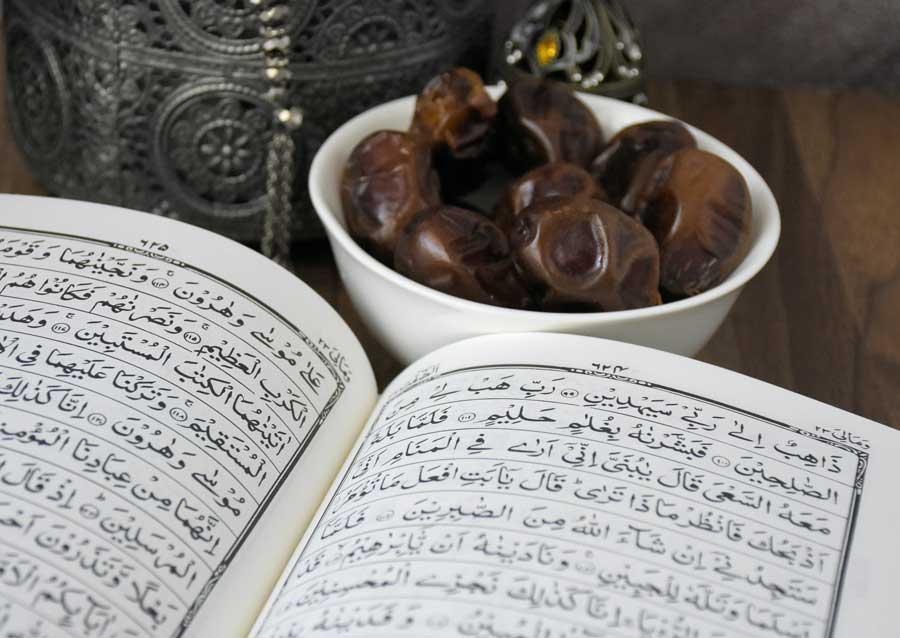
بسم الله الرحمن الرحيم

Tag: ramadan

  • Ramadan in the South: Traditions, Challenges, and Community Connections

    Ramadan in the South: Traditions, Challenges, and Community Connections

    In the heart of the South, where sweet tea and Sunday church gatherings are a way of life, Ramadan beats to its own rhythm. Despit the often-intense heat, the Muslim community comes together in large numbers to break its fast, filling masjids with warmth, devotion, and the sounds of shared prayer. Ramadan is observed across the world, but even within the U.S., the experience varies depending on where you live.

    For Texans and Houstonians in particular, the abundance of halal restaurants, Muslim-owned catering services, and masjids offering daily iftars and taraweeh prayer is a privilege. No matter what you’re craving, there’s always a place to find it. It’s one of the things I love most about living here, and why I always say I’ll never move. Of course, fasting in 109-degree heat with 15-hour days is no easy feat, but it builds a deep appreciation for sacrifice and commitment. Each day completed feels like a victory for the soul and a step closer to Allah.

    Every family has its own Ramadan traditions, and ours revolve around the masjid. We love arriving just before Maghrib, breaking our fast in the company of others, and staying for taraweeh. Whenever there’s a qiyam program that lasts until dawn, chances are we’ll be there. You see, worshiping, praying, and eating in community has always been important to me. There is nothing like standing shoulder to shoulder with people who have all gathered for the same purpose – to worship Allah.

    Of course, food also looms large in our traditions. One of our family favorites is pitted dates stuffed with cream cheese and served with cashews and fresh fruit. It’s simple, but we look forward to it every year. In the past, we made it a point to visit different masjids around the city, exploring new cultures and cuisines while teaching my children about the diversity within our own communities. These days, the kids are older and just want to be with their friends, even if that means going to the same masjid every night.

    One thing I’ve learned about Muslims is that our physical location doesn’t change our cultural practices. No matter where we go, we bring our traditions with us. A black American Muslim home. whether in Brooklyn or Chicago, might have barbecue chicken, mac and cheese, candied yams, and greens for iftar. A Pakistani home will always have some variation of curry, roti, chai, and biryani. Our meals are just another way we stay connected to our roots.

    As a working Muslim, Ramadan comes with its own set of challenges. Regardless of where you are, colleagues will notice when you stop joining lunch runs. And, of course, there’s the universal question Muslims get every year – “Not even water?” Many people can’t grasp the idea of going without food and drink for so long, especially in the heat. I’ve learned to give a heads up before Ramadan starts, answering their questions early, because I definitely won’t be in the mood to explain when I’m running on an empty stomach.

    One of my favorite things, though, is when non-Muslim friends or coworkers show genuine curiosity and want to participate in Ramadan. Lately it’s become trendy for people to try fasting, and I’m not sure how I feel about that. However, when someone sincerely wants to experience what we do, it means a lot to me. Some have even asked to join me for iftar or attend Friday jummah prayer at the masjid. That kind of openness and respect is always welcomed.

    Ramadan in the South is special because of the diversity I’ve been blessed to grow up around; it feels like having the whole world in one city. I’ve met people from nearly every background, heard countless languages, and tasted global cuisines without even needing a passport. And the beautiful part? We’re all connected by Islam. The Prophet (peace be upon him) said in his last sermon, “Muslims constitute one brotherhood.” While not everyone gets to experience that sense of unity, I know how blessed I am to have it.

  • About Ramadan  From a Convert, With Love

    About Ramadan From a Convert, With Love

    A few years ago, I was sitting with a friend chatting just before the start of Ramadan, Islam’s holy month of fasting. Just as I was about to launch into what I would be preparing for suhoor, the pre-dawn meal, and for iftar when we break our fast in the evening, my friend, a born Muslim, said something very unexpected about the coming fast.

    “I’m dreading it.”

    I remember being a little thrown by her comment, then immediately confused and, ultimately, a bit sad. However, I didn’t make a harsh judgment about her; instead, I listened to how she felt, particularly about her experience fasting as a young mother of two small boys and considering the challenges she faced fighting fatigue while minding and keeping up with her very energetic sons.

    I also empathized with her. After all, at the time all three of my children were in school, and I worried how their grades would fare as they struggled through hunger, thirst, the occasional headache, and with simply being tired. In other words, we may all have some small sense of dread as we enter into a month that – let’s face it – shifts much of our schedule and can leave us feeling unmoored from our normal day-to-day lives as we navigate extra-early mornings, busy afternoons preparing food, and evenings spent eating and then rushing to the mosque for taraweeh evening prayers.

    All of our challenges in Ramadan are, of course, meant to be taken as blessings, and I believe most Muslims see them this way and offer thanks and praises to Allah (SWT) for every day we overcome hardship and successfully fast from food, water, and intimate relations for the primary purpose of living in obedience to Allah (SWT) and striving to be in a state of taqwa, or God consciousness.

    As Allah said in the Quran, “Believers are enjoined to fast, as were those before them, to become God-fearing.” (2:183)

    Since that conversation, I’ve often recalled my friend’s comment and, even though it demonstrated her negative mindset as she headed into Ramadan, nevertheless it’s helped me to remember how monumental the act of fasting during Ramadan is, a thought I’ve had numerous times since my conversion nearly 20 years ago, praise God!

    While I certainly recognize there are scores of born Muslims who deeply understand and appreciate the significance of fasting in Ramadan and what it means for our faith as well as feel deeply connected to the practice – it is, after all, one of the five pillars of Islam – let me explain what I, a convert, mean when I describe it as monumental.

    Like many converts, when I first learned what Ramadan is and how it’s practiced, I was astounded. I couldn’t believe anyone would voluntarily deny themselves food and water all day for an entire month! After all, I didn’t grow up seeing any of my family, friends, or community members fasting in any form or fashion. Even those of us who grew up in or were familiar with the Catholic faith have seen the 40-day Lenten season watered down from a fast similar to that of Muslims’ to most of the religion’s followers only abstaining from one type of food or activity during Lent. What’s more, others only forgo meat on Fridays. In other words, I’m not sure many born Muslims can truly understand how much of a shift it is for a convert to fast in Ramadan when most of us had no concept or example of it growing up.

    However, I don’t point this out to toot my own horn – I’m not – or to imply the fasts of converts are more difficult – they’re not; I say this to impress on my born Muslim brothers and sisters the absolute gratefulness I feel that Ramadan is such an important part of Islam. Because, trust me, if fasting weren’t part and parcel of our faith, I guarantee I wouldn’t do it, and I would surely be the loser as a result.

    What’s more, when I think of all the spiritual benefits and blessings of fasting, it fills my heart with even more love for my adopted faith.  Consider what Allah’s Messenger (peace be upon him) said. “Verily, there is a gate in paradise called al-Rayyan, through which only those who fasted will enter on the Day of Resurrection. No one else will enter it along with them. It will be said: Where are those who fasted? They will stand and no one will enter it along with them. When they enter it, it will be closed and no one else will go through it. (Sahih al-Bukhari 1896)

    This hadith describes for us Muslims the special standing those of us who fast will have when we meet our Lord. Our acts us discipline, self-control, and restraint, undertaken for the primary purpose of obedience to Allah (SWT) and to grow in piety and consciousness of Him, are ones I fear I surely would not have undertaken without the beautiful pillar of fasting.

    I am forever tremendously thankful fasting has been prescribed for us Muslims as it was for those of other Abrahamic faiths before us, and I pray that I and all Muslims will embrace this commandment and appreciate it for the profound mercy that it is.

    And as for my friend who suffered a moment of human weakness heading into Ramadan all those years ago, I pray she walks into this next Ramadan with excited anticipation and never again feels a moment of dread for this most sacred and holy month that we all hope to experience again and again, God willing.

  • Laylat al-Qadr: Greater than a Lifetime

    Laylat al-Qadr: Greater than a Lifetime

    Envision an opportunity so extraordinary, rare, and magnificent that missing it would be like missing a millennium of opportunities. In Islam, there is such an opportunity — it is Laylat al-Qadr, or the Night of Decree.

    The Night of Decree holds a place of unparalleled significance in Islam. As the Prophet (peace be upon him) proclaimed when the month of Ramadan began, “Verily, this month has presented itself to you. There is a night within it that is better than a thousand months. Whoever is deprived of it has been deprived of all good, and none is deprived of its good but that he is truly deprived” (Ibn Majah). The one who is deprived is the one who is not deserving of its great blessings, reward, and forgiveness because of grievous sins and evil choices they’ve embraced, rejecting Allah’s signs that prompt him to turn back to Him, and squandering countless opportunities to do good.

    Can a soul truly claim the blessings of this magnificent night when they continuously turn away from its light? The one who is profoundly purposeful about his afterlife, therefore, should embrace turning back to Allah, asking for forgiveness, and striving for a purified heart, and never giving up on redemption and growth. Otherwise, to miss out on the Night of Decree is to miss out on a treasure beyond measure, a night that has the potential to alter the course of our lives forever.

    Greater than 1000 Months

    The Night of Decree is described in the Qur’an as a night “better than a thousand months” (97:3), surpassing the average human lifespan. One night is greater in reward, blessings, accepted prayers, and forgiveness than an entire lifetime. Thus, only a prideful or foolish person would neglect such a night. It is the repentant heart, feeling the burden of sins, that recognizes this night as a beacon of hope. This night’s unparalleled virtues outshine all other times honored by Allah, like the Day of Arafah among the days, the month of Ramadan among the months of the year, and Jumu’ah (Thursday sunset to Friday sunset) among the days of the week — all marking times of profound spiritual opportunity. Yet, Laylat al-Qadr exceeds all of these.

    In Islamic theology, the concept of decree (qadar) usually includes reference to Laylat al-Qadr. Decrees, known only to Allah and inscribed upon the Preserved Tablet, is brought down by angels appointed to bring them to the lowest heaven, the realm of our existence. The angels cover the expanse of life from the moment a soul is breathed into a fetus, ushering in life, to the annual descent of decree on the Night of Qadr. This night stands as a solemn reflection, a spiritual checkpoint from one year to the next, encompassing the information about one’s forthcoming lifespan, deeds, and sustenance.

    Although Prophet Muhammad (s) used to strive all year with unwavering dedication, he intensified his devotion during Ramadan, and even more so in the last ten nights. Aishah reported, “When the last ten nights of Ramadan arrived, the Prophet, peace and blessings be upon him, would tighten his belt, spend the night in worship, and awaken his family” (Bukhari). This heightened devotion is for us to emulate, highlighting what is in our best interests as believers.

    When Is the Night of Decree?

    For several reasons it is  from Allah’s wisdom and mercy that the believers have to seek out the Night of Decree in the last ten nights of Ramadan. Aisha reported: “The Messenger of Allah, peace and blessings be upon him, said, ‘Search for the Night of Decree in the odd nights among the last ten nights of Ramadan’” (Bukhari). This directive is not a mere suggestion but a profound strategy, igniting a spiritual marathon. The believer who strives for ten nights is not going to gain the limited benefits like the one who strives for one night. Imagine the depth of repentance, the sincerity of consistent du’a, and the generosity of giving spread across ten nights, each act compounding upon the previous, emerging as a beacon  of submission and growth.

    Ubadah ibn al-Samit reported that,” The Messenger of Allah, peace and blessings be upon him, came out to inform people about the Night of Decree in Ramadan, but two Muslim men were insulting each other. The Prophet said, ‘Verily, I have come out to tell you about the Night of Decree, but two men were insulting each other. Thus, its knowledge was taken away and perhaps it is better for you. Look for it during the seventh, ninth, or fifth night of the last ten nights’” (Bukhari). Of great importance in this hadith is the phrase translated as, “perhaps it is better for you.” In other words, it is better for the believers to strive to find the Night of Qadr than to know when it is, strive on one night, and retire afterwards.

    What Actions Are Best?

    On the Night of Qadr, the believer is encouraged to pray mindful and sincere prayers, to recite Qur’an with deep reflection on its meanings, to supplicate for oneself, one’s family, and the ummah, and to seek forgiveness with humility.

    Aishah reported: “I said, ‘O Messenger of Allah, if I know which night is the Night of Decree, what should I say during it?’ The Messenger of Allah, peace and blessings be upon him, said, ‘Say: O Allah, You are pardoning. You love to forgive, so forgive me’” (Tirmidhi).

    At the heart of it all, it is forgiveness and Allah’s pleasure that we strive for. Abu Hurairah reported that the Messenger of Allah, peace and blessings be upon him, said, “Whoever fasts the month of Ramadan due to faith and seeking reward, his previous sins will be forgiven. Whoever stands in prayer during the Night of Decree due to faith and seeking reward, his previous sins will be forgiven” (Bukhari).

    Life, with its many demands, often leads us through cycles of energy and fatigue. It’s a natural ebb and a flow, and a reminder of our humanity. While it is natural to fluctuate throughout the days, months, and years, there lies in the reminder a cautionary tale. A principle of wisdom, perhaps, is in recognizing the moments that hold great potential and significance, and to take advantage of them and use our energy effectively.

    Therefore, let us be vigilant during Ramadan and the Night of Decree. Let us not allow the periods of waning energy to coincide with these blessed opportunities. Do not be among those who start off Ramadan really strong and burn out after a few days. Do not be like those who work hard in the beginning and lazy at the end, for it is similar to the one who plants seeds, waters them, cultivates them, and then when the time to harvest the fruits of their efforts arrives, he walks away and abandons them. This is why the early generations of Muslims exemplified perseverance in their religious dedication — when the days of Ramadan were decreasing, their good works and acts of worship only increased.

    May Allah grant us and our brothers and sisters worldwide blessings, accepted prayers, and forgiveness through the Night of Decree.

  • Ramadan: Clarifying Our Vision, Rebooting Our System

    Ramadan: Clarifying Our Vision, Rebooting Our System

    We are in it. Ramadan. A time for increased worship, a month of food and festivities, of gatherings and decorations, and of so much more. A transformative event unlike any other, that involves each of your five senses, as well as your heart, mind, and soul. As deeply intricate and masterfully woven our deen is, no ritual or ruling in it stands alone; everything is somehow connected to another and makes sense on many levels. There are multiple reasons for performing a task, and just as many affects by fulfilling an obligation.  “There are people who fast and get nothing from their fast except hunger…” (Ibn Majah ). Clearly, Ramadan is not about refraining from food and drink alone.

    Preparing For It

    With the wisdom that comes with age, we realize that as with most things in life, we get out of a thing what we bring to it, that the more prepared we are, the more productive. Like those who physically prepare by changing their diets will often fare better when dealing with hunger, those who spiritually studied the importance of the month, read about the lofty status of Ramadan, will treat this guest better than those who had not. It behooves us to study how the month and all we do in it came about, by reflecting on relevant verses. It will benefit us to study Seerah (Prophet Muhammad’s (s) life) how he and his companions dealt with the month and how their lives changed through its meaning and purpose. One cannot rationally expect it to be easy if he or she doesn’t feel the intensity and potency  of this fard (obligatory) act of worship. Nor  can one be motivated if he or she  doesn’t realize the immense reward that comes from it. It is not just another month. Not one day in this month should be like any other day.

    Spring Cleaning

    Everything gets stale if untouched or unmoved; anything can become  stagnant. We get the urge to deep clean every so often, to get rid of dust from our living spaces or start new hobbies to freshen up our mental states and lives. Spiritually, this “deep clean” is needed more than anywhere else as this is our foundation. Our Creator has  gifted us the month of Ramadan exactly for that purpose. We get to reboot all our systems, physical, mental, emotional, spiritual, and everything in between. We recalibrate back to the focus on our Lord, so our spiritual vision is shifted as needed, and corrected. What we, as Muslims, aim for is to access a deeper spiritual realm, to clarify the mindset until it fastens itself to the greatest mooring of all — the guidance of Allah’s deen.

    Alter the Routine

    Make your month distinctive, your days special, your hours fresh, by coming out of your automatic daily routine during this month. If something as simple as dressing differently helps you gain greater consciousness and mindfulness, go for it; keep your newer clothes for this time. Your “different” will not be my “different,” as we each  have our own normal routine of living. Just change your routine. A writer in psychology, Jane Porter, explains it well: “Breaking out of your daily routines can be a powerful way to unlock new ideas…Deviate from your routine …when it is done with intention…can be a powerful way to stimulate new thinking, breaking bad habits…”

    Sleep less than you’re used to, and you’ll be surprised by how far your stamina can take you and how much more can be achieved in the extra time. An extra thirty minutes you aren’t used to will feel like an hour. In that extra time, you can do a good deed. Muslim scholars and secular accomplishers alike always have advocated for taking advantage of the early hours. The Messenger of Allah (s) stated “O Allah! Bless my people in the early part of the day” (al-Tirmidhi and Abu Dawud).

    Just as the addition of good habits is crucial during Ramadan, so too is the removal of bad habits. Reflect on what you need removed from your life that is displeasing to Allah SWT and try to commit one less of those deeds per day. Find ways to increase your armor to fight the desire to commit that act. Sometimes it is as simple as spending less time with company that encourages those bad deeds.  Even if unable to completely stop at the time, simply reflecting on the sin will still have a great positive effect. Our sins will become magnified in our own eyes, our sensitivities heightened to our wrongs so they will seem like the mountains they are. If nothing else, they should become harder to do. Breaking bad habits begins with breaking routines.

    Adding Intentional Study to the New Routine

    It is important to hone the time we spend studying. Don’t shy away from listening to a lecture you already heard, reading a  book that didn’t interest you before, or conversing on spiritual topics with learned folks. Every sentence hits differently each time you hear it, because your mind is in a different state — you have added experiences to your repertoire of devotional living, and new ideas sprout as you reflect on the meaning of your existence and the purpose of your life. Because we are constantly changing, our absorption of knowledge continues to vary and so the influx of lessons from our deen must be constant. This reorganizing will fall into a newly realigned mentality more in tune with our Rabb, to get us through another year of greater obedience and a more in-depth and proactive practice of the deen.

    Every Journey Starts with a Small Initial Move

    If your sights are set on lofty statuses and great accomplishments that some are blessed and talented enough to attain, you may become overwhelmed and, therefore, underachieve. The beauty in our deen is its simplicity in starting anything by making a clear and precise intention; and wisdom in its design — the Prophet (s) said, “Take up good deeds only as much as you are able, for the best deeds are those done regularly even if they are few” (Sunan Ibn Majah).

    If we want to please our Rabb more this month, there are countless ways to do so. How significant and poignant that your intention already kickstarts your good deeds, uplifts your spirituality a notch, and takes you already halfway to your destination. Umar Ibn al-Khattab relates that he heard the Messenger of Allah (s) say, “Verily actions are by intentions, and for every person is what he intended…” (Agreed upon).

    Make a conscious decision to do more good acts, in whatever capacity, whether it be globally, locally, or personally, but just do more good. Pick up debris from the road. Carry someone’s load for them. Give someone struggling in any way a little helping hand. Even a smile is an act of good, if intended to spread positivity and please our Lord. Refrain from responding to someone or something negative  with vitriol. If your goal is set on something more long-term, with a higher bar set, such as beginning tadabbur ul-Qur’an (study for a deep understanding of the meaning of Qur’an), even your search for suitable classes/teachers begins the good deed counter. A small daily habit established now can become a giant in the long run. Every journey, every huge feat, every life-changing win starts from a small initial move.

    Magnification of Good Deeds

    With the promise of rewards for good deeds magnified in this time, you are already increasing your rewards just from the mere thought of beginning it. Abu Huraira (may Allah SWT be pleased with him) reported Allah’s Messenger as saying: “Every  deed of the son of Adam would be multiplied, a good deed receiving a tenfold to seven hundredfold reward…”(Sahih Muslim). Only the terribly foolish or heedless would let this immensely golden opportunity pass by without using it for spiritual increase.

    We should keep in mind  that any good deed  done to please Allah SWT is an act of worship. This is one of the most profound, yet simplest, concepts in our deen. Shaykh ul-Islam Ibn Taymiyyah (d. 728H), rahimahullah, said: “Worship (al-‘ibadah) is obedience to Allah by following that which He ordered upon the tongues of His Messengers.” He goes on to say: “Worship  is a comprehensive term covering everything that Allah loves and is pleased with — whether words or actions, outward and inward.” From offering a smile to someone to building an orphanage, we can all participate in this wonderfully open-ended worship.

    I often reflect that this month, ironically in which we should be parched and physically thirsty for most of our waking hours, actually comes to quench a different kind of thirst. The word Ramadan stems from the Arabic root “ar-ramad,” which means scorching heat or dryness, alluding to thirst. Those that feel a thirst in their souls to connect in a deeper way to their Lord, a longing to link to a community of believers, an innate desire to participate in something far greater than themselves and everything they know, Ramadan quenches this thirst. Can a Muslim ever feel alone knowing that at sunset, every single one of their fellow two billion Muslims is breaking fast at the same time along with them?

    Truly a month of miracles, Ramadan comes and beautifully fills our voids that no one else is even aware of, sometimes not even known to ourselves. Our souls know something is off before we can identify and name it. It comes and masterfully, through various channels, whether it be taraweeh prayer or simply through patiently enduring pangs of hunger, clears our vision so we can focus more sharply on the meaningfulness and purpose of our lives. It has been rebooting the personal system of each observant Muslim for over 14 centuries and will do so to the end of time.

    O Allah SWT, let us experience Ramadan as fully and richly as possible so we can feel a depth of conviction as true believers, aiming for the ultimate outcome — pleasing You SWT in this life, and pleasing You on the final Day, the day of truth, judgment, and reckoning.

  • Ramadan — Some Keys to Unlocking Closeness to Allah

    Ramadan — Some Keys to Unlocking Closeness to Allah

    Ramadan is upon us once more, and I am excited. For Muslims across the world, it is the most important month of the entire year, filled with immense blessings and rewards. During this month, most people not only decorate their homes or re-stock their pantries, but they also generate ideas of how to increase their ibadah. This might include memorizing a new surah, listening to more lectures, going to tarawih prayer, and/or increasing acts of charity. There are so many different ways to increase closeness to Allah.

    One practice that I have adopted is attempting to memorize and understand more of the 99 names of Allah. In doing so, I gain greater understanding of the attributes of Allah and am able to incorporate their significance and ramifications into my daily life.

    Al-Salam

    One of the first names I studied is Al-Salam. Salam means peace, soundness, safety, and security. It also means perfection and freedom from fault. I am witness to Allah’s attribute of Al-Salam as the giver of peace and serenity because of the goodness He instills within mankind. Allah has created a world with dueling forces of good and evil. But He has promised us that ultimately it is the good within us that will lead us to Paradise. While it may seem strange to pinpoint human beings at the center of an example about Allah’s peace, it makes sense when you remember people in your life and in the world that embody peace. Have you ever met someone whose very demeanor and presence brings a feeling of calm over you? Or what about well-known leaders and scholars who have been the champions of peace in periods of intense conflict or war? Allah’s ability to create peace and inspire it in the heart of man, is something that brings me immense comfort.

    On the other hand, I connect with Allah when I personally am in need of peace, and it is life circumstances or human beings that have disrupted my peace. In moments when I need to find calm, I turn to Allah. Complaining to Him about my troubles and asking Him to bring me peace of mind and heart always leads to alleviation of stress. One du’a of the Prophet that I make is the following: “O Allah, I seek refuge with You from worry, grief, incapacity, laziness, miserliness, cowardice, debt, and being overpowered by others.”

    Al-Jabbar

    Another name of Allah that I ponder is Al-Jabbar. It means The Compeller. Yaqeen Institute breaks the meaning down further into two parts: 1) the One who is able to compel and subdue all His servants, with all of creation submitting to Him; and 2) the One who mends the broken and enriches the poor. As the world currently watches a worsening genocide, it brings me comfort to know that Allah will enact control over the oppressors and bring to justice those who have injured, harmed or murdered the innocent. The Prophet (s) said, “The arrogant and the tyrants will be gathered on the Day of Resurrection as tiny particles. The people will trample upon them due to their disgrace before Allah Almighty.”

    Yaqeen Institute also described the name Al-Jabbar as the One who mends what is broken and the One who consoles the hearts. This brings me comfort to know that those whose hearts have been harmed due to the disregard and abuse from their fellow man, will have their hearts soothed by Allah and their wounds healed.

    Al-Rahman

    One of the most well-known names of Allah is Al-Rahman, the Most Merciful. Rahmah is tenderness, kindness, care and compassion. Allah says in the Qur’an, “My mercy encompasses all things.” In that same vein the Prophet (s) told us, “When Allah completed the creation, He wrote in His book with Him upon the Throne, ‘Verily, My mercy prevails over My wrath.’”

    I rely on this name when I am feeling lost due to all the mistakes I have made in my life. In those moments I start to doubt myself and my abilities to do good and receive good. It’s a comfort to remember that as long as I am able to turn to Allah to ask for help or ask Allah for forgiveness, He SWT will always respond with mercy.
    Reflecting on the Names of Allah

    I have only mentioned three of the 99 Names of Allah. According to the Prophet (s), the reward is great for memorizing all of His 99 names. The Prophet said, “Allah has ninety-nine names. Whoever memorizes them will enter Paradise” (Bukhari and Muslim). We know of course that memorizing and reciting His names comes with further responsibility. We have to strive to understand the meaning and scope of each name and to see how each one can connect to, and impact, our daily lives. For example, we mentioned above that He SWT is Ar-Rahman, The Most Merciful. He is also Ar-Raheem, the Bestower of Mercy. So, when one has sinned, calling upon Him with sincere repentance, and asking for His mercy, can bring relief and set things straight.
    Allah SWT tells us in the Qur’an, “And the most beautiful names belong to Allah, so call on Him by them” (7:180). What better time than Ramadan to learn His names, to memorize as many as we can, and to reflect on their beauty and power and meaningfulness.

  • Ramadan: Increasing Awareness of Its Blessings

    Ramadan: Increasing Awareness of Its Blessings

    Ramadan is the ninth month of the Islamic calendar, a blessed and sacred time for Muslims all around the world. During this month, Muslims fast from dawn until sunset, abstaining from food, drink, and sexual activity. This is a way of demonstrating devotion to Allah SWT and as a way to increase faith.

    The Prophet (s) has told us that Allah SWT says, “Fasting is Mine and it is I who give reward for it. One gives up his sexual passion, his food, and his drink for My sake. Fasting is like a shield. And he who fasts has two joys: a joy when he breaks his fast and a joy when he meets his Lord. The change in the breath of the mouth of one who fasts is better in Allah’s estimation than the smell of musk” (Bukhari).

    Fasting is the most well-known aspect of Ramadan, and it requires self-discipline and self-restraint. These are positive traits that benefit us year-round. Yet, there are many other blessings that come with this holy month. For one, Ramadan is an optimal time to increase one’s acts of worship and to engage in spiritual reflection and renewal. Muslims are encouraged to act out of good character at all times, yet Ramadan is the great opportunity to push a bit more, striving to overcome shortcomings that we sometimes indulge in. Coupled with spending more time in prayer and contemplation, this can lead to a deeper understanding of oneself and a greater sense of connection with Allah SWT.

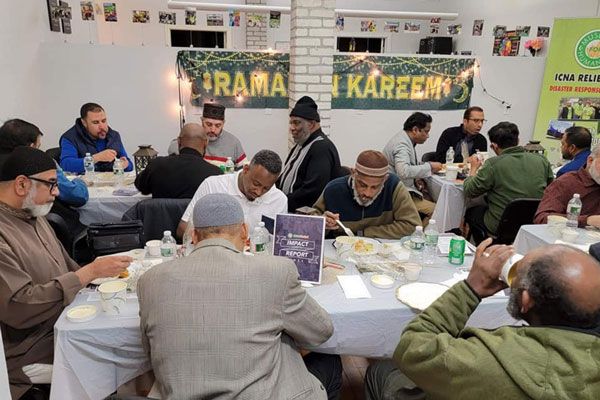
    Ramadan is also a time of community. Muslims often gather with family and friends to break their fasts together, and many mosques host iftar dinners. This is especially important for those who may not have anyone to break their fast with. Some are converts and some live in areas where they may be a small minority. The community iftars allow them to feel connected to a larger network of Muslims, individuals and families who come together to share their faith.

    In addition, Ramadan is a time of generosity and charity. Muslims are encouraged to give to those in need, whether through donations to charity or relief organizations or by volunteering their time to help those less fortunate. This focus on giving back can help to foster empathy and compassion and can lead to a greater understanding and sensitivity to the challenges faced by others.

    Finally, Ramadan concludes with celebration. The end of the month is marked by the festival of Eid al-Fitr, a time of joy when Muslims come together to celebrate with family, friends, and the community. This celebration is a reminder of the blessings that come with the month of Ramadan, and of the importance of faith, family, and community in our lives.

    The blessings of Ramadan are many and varied. This holy month offers a unique opportunity for Muslims to connect with Allah SWT, with deeper levels of self, and with one another. It is a time to gain greater awareness of the many blessings in our lives, and to strive to be grateful. With Ramadan again here, we should spend some time focusing on the wide scope of potential for us to grow spiritually, to increase and strengthen our acts of worship, to incorporate good character traits, and to purify our hearts. This short piece mentions the following blessings:

    • increasing one’s acts of worship
    • demonstrating devotion to Allah SWT
    • deepening faith
    • finding a greater sense of connection to Allah
    • engaging in remembrance of Allah SWT and all His blessings
    • spending time in spiritual reflection
    • striving for spiritual and religious renewal
    • practicing self-discipline self-restraint
    • gaining deeper understanding of self
    • increasing one’s empathy and compassion for others
    • developing generosity and charity
    • feeling a sense of community and underscoring the importance of faith, family, and community
    • celebrating and finding joy

    “If you count the favors of Allah, you cannot enumerate them. Surely, Allah is Oft-forgiving, Most-merciful” (Qur’an 16:18)

  • The Ultimate Roadmap: Ramadan of the Righteous — Part two

    The Ultimate Roadmap: Ramadan of the Righteous — Part two

    You can read part one of this article here.

    The Station of Qur’an Recitation

    The month of Ramadan is the month of the Qur’an, in terms of its revelation as well as its increased recitation and study. The Muslim must therefore recite the Qur’an a great deal and pay particular attention to its meanings and ponder its miraculous nature. The angel Jibril (Gabriel) used to recite the Qur’an with the Prophet (s) during Ramadan. It was reported that Uthman Ibn Affaan (r) used to complete reciting the Qur’an once each day in Ramadan.

    Some of the predecessors also completed the Qur’an in their night prayers every three nights, or every seven nights, or every ten nights. Others completed it every seven days and this was accomplished by reciting both during prayer and at other times of the day and night. During Ramadan, Imam Al-Shafi’i used to complete reciting the Qur’an once every day and once every night. AI-Aswad used to complete reciting the Qur’an every two nights. Qataada completed the Qur’an every three nights of Ramadan, but in the last ten days of Ramadan, he completed it every night.

    Ibn Rajab says in Laṭā`if Al-Ma’ārif: “The prohibition of reciting the Quran in less than three days [found in some ahadith] refers to doing so regularly [throughout the year]. As for virtuous times, like Ramadan – especially the nights in which it is hoped Laylatu al-Qadr will occur – or virtuous places, like Makkah – for those who enter it and are not residents there, then it is recommended to increase in reciting the Qur’an, making the most of the time and the place. This is the position of [Imam] Aḥmad, Isḥāq [ibn Rāhūyah] and other Imams, and the practice of others [from the Salaf] indicates [they held the same position].”

    When Ramadan came, al-Zuhri discontinued the study of hadith and concentrated on reciting the Qur’an. Similarly, Sufyan Al-Thawri put aside all other voluntary forms of beneficial knowledge and concentrated on the Qur’an. It was reported that Imam Malik would teach the people (year-round), then when the month of Ramaḍan would come, he would free up his time to fast and to recite the Qur’an.

    The above examples may actually be discouraging to the individual who is new to Islam or who may not know how to read the Qur’an in Arabic at all. Whether you have been practicing Islam for decades but do not know how to read the Arabic, or you have just embraced Islam recently, know that your journey is unique to you and there is no reason to compare yourself to those who are more proficient in reading Qur’an. The examples provided in this article are simply meant as sources of inspiration and as a way of challenging yourself to learn consistently. In the meantime, do the best you can by attempting to read in Arabic, preferably with someone who can accurately correct and teach you. There are so many ways to increase your overall understanding and appreciation of the Qur’an: reading a translation and the tafsir (exegesis); listening to recitations of the Qur’an frequently; attending or finding online lectures about the meaning of the Qur’an; learning the basic Arabic letters through some free online resources (which, these days, has become easy and accessible). So, utilize all options available to you.

    The key point is that the Qur’an is an inspiration, a light, a healing, and a guidance, as Allah SWT‎ has described it: “And thus We have sent to you an inspiration of Our Command. You knew not what is the Book, nor what is faith. But We have made it a light wherewith We guide whosoever of Our slaves We will. And verily, you are indeed guiding to the Straight Path” (Qur’an 42: 52).

    The Station of Weeping with the Quran’s Recitation

    During this month in particular, focus on pondering the meanings of the Qur’an and not limiting yourself to reciting quickly on the tongue. The Qur’an was revealed as guidance, for reflection (tadabbur), and if you come across a verse that impacts you in a particular manner, then pause and reflect, repeat it as many times as necessary, and let it enter your heart with humility.

    It was narrated that Abdullah b. Mas’ood (r) said: “The Prophet (peace and blessings of Allah be upon him) said to me, ‘Recite the Qur’an to me.’ I said, ‘O Messenger of Allah, shall I recite it to you when it was revealed to you?’ He said, ‘I like to hear it from someone else.’ So, I recited Surat al-Nisa’ to him, and when I reached this verse – ‘How then, when We bring from each nation a witness and We bring you [O Muhammad] as a witness against these people?” [4:41] – he said, ‘That is enough for now.’ I turned to him and saw his eyes were streaming with tears.” (Bukhari)

    It was related from Abu Hurayrah that the Prophet (s) said, “When the verse of the Qur’an that says ‘Do you then wonder at this recital, and you laugh at it and weep not’ [Qur’an 53:59-60] was revealed, the Companions residing in the Suffah, [in the Prophet’s mosque] wept until tears began to trickle down their cheeks.” When the Prophet (s) heard their weeping, he wept with them, and his weeping made us weep. The Messenger of Allah said, ‘The person who weeps in humility to Allah will not enter Hell’” (al-Bayhaqi).

    One day, Abdullah b. Umar read surah Al-Mutaffifin until he reached “…the Day when (all) mankind will stand before the Lord of the Worlds…” [Qur’an 83:6]. He wept to such an extent that he fell to the ground and could not move on to the next verses.

    The Station of Qiyam Prayer in Ramadan

    Umar Ibn Al-Khattab used to pray at night what he wished, until it was in the middle of the night, when he would wake up his family to pray. Then he would say to them “al-salah, al-salah (prayer… prayer)”, and would recite this āyah: “Bid your people to pray and be diligent in it. We do not ask you to provide. It is We Who provide for you. And the ultimate outcome is for the righteous” (Qur’an 20:132).

    During Ramadan, it is encouraged for one to pray qiyam after the isha prayer, such as with eight units of prayer (2 by 2) and then witr prayer (in odd units of 1, 3, 5, etc.). This night prayer in Ramadan is known as the taraweeh prayer, and there’s a particular reward for praying it in congregation. The Prophet (s) said, “Whoever stays with his imam until he completes the prayer, will have the night written for him as one who performed qiyam al-layl, (i.e., one who stood the night in prayer)” (al-Tirmidhi). It is not an obligation for women to pray this prayer at the mosque for the reward mentioned in the hadith, or for the man who is excused for valid reasons.

    The Station of Generosity

    The Prophet (s) was the most generous of people, and he was even more generous during Ramadan. The Messenger of Allah said, “The best charity is one given during Ramadan” (al-Tirmidhi). The Messenger of Allah (s) also said, “Whoever feeds a fasting person will have a reward equal to that of the fasting person, without any reduction in his reward” (Ahmad). And further, he (s) said: “The likeness [i.e., in terms of rewards] of the one who comes to [the aid of] a widow and [the aid of] a destitute is like that of a mujahid [striver] in the cause of Allah or that of someone who spends the night in prayers and the day in fasting” (al-Mishkat).

    The Station of Productivity

    If you are a busy Muslim with a significant number of responsibilities, what should you do during Ramadan to maximize the opportunity? Among other strategies, consider the following:

    WHAT do you want to accomplish? Be specific about your goals.
    WHY do you want to accomplish them? What is your intention and motivation?
    HOW do you plan to accomplish your goals? What is your strategy to do it and to measure it daily?

    If you analyze your schedule closely, you might realize that time is being wasted here and there and isn’t as productive as you think. Being busy is not equal to being productive. Try the following:

    1. Track your schedule to find wasted time or efficiency gaps.
    2. Use a count-down timer frequently and know that the hours of Ramadan are limited.
    3. Remove distractions when focusing on tasks, especially during Ramadan.
    Additionally, be sincere in looking for every opportunity to decrease your worldly responsibilities during Ramadan, such as work projects, extracurricular activities, voluntary matters, educational goals, etc., postponing them until after Ramadan. Obviously, one cannot literally postpone all responsibilities in Ramadan nor are we expected to. The companions reached new heights in Ramadan with acts of worship, but at times they were attacked and had to engage in battle during Ramadan. So, whatever can wait of worldly matters until after Ramadan, try to postpone it.

    If you cannot postpone it, consider incorporating supplications, dhikr (remembrance of Allah SWT), and recitation of the Qur’an throughout your day and night while taking care of your worldly activities. One brother remarked at how this one advice helped him to complete the recitation of the entire Qur’an for the first time in his life, despite not decreasing his worldly responsibilities. He recited Qur’an between tasks, even if it was a few minutes at a time. He also made du’a and dhikr and found it to be spiritually transformative while juggling worldly responsibilities.

    Remember throughout Ramadan the importance of pairing one’s internal purification with external deeds of worship. Oftentimes, people focus so much on external acts of worship – even doing so in a robotic fashion – that they forget to cultivate sincerity and ihsaan within.

    Some Muslims will depart this world during this holy month. Their passing comes at a blessed time when “the gates of heaven are opened, and the gates of the Hellfire are closed.” None of us knows when our final Ramadan will be, so we should be passionately motivated to make this Ramadan the best one ever.

  • The Ultimate Roadmap: Ramadan of the Righteous — Part One

    The Ultimate Roadmap: Ramadan of the Righteous — Part One

    What if you knew with conviction that Ramadan was a life-changing month of opportunities, blessings, and forgiveness, and that this Ramadan would be your last?

    Ramadan is the month in which the Qur’an was revealed, and a month Allah chose as one of increased forgiveness, mercy, accepted prayers, and multiplied rewards. Some people learn about Ramadan practices from their parents, friends, communities, and/or scholars, but sometimes end up missing some foundational elements in their practices during Ramadan.

    How do we know what the best practices are during the month of Ramadan? The Prophet (s) reportedly said, “The best of generations is my generation, then those which follow them, then those which follow them” (Muslim). Therefore, the most reasonable and reliable source is the Prophet’s practice during Ramadan, and that of the early generations of believers.

    Stage I: The Preparation for Ramadan

    The month before Ramadan, Sha’ban, is the month of preparation for those who want to maximize their potential in Ramadan. Sha’ban is a proof of heartfelt intention for the one who wishes to get closer to Allah SWT during Ramadan. Sha’ban is a proof for the one who is sincerely passionate about living to another Ramadan and hoping and praying that their previous Ramadan was accepted. Sha’ban is the month for the conscientious who plan to properly set the foundations for the month of Ramadan. Sha’ban is the month referred to as the month of reciters, for the companions increased their recitations of the Qur’an in order to maintain momentum throughout Ramadan.

    Aishah (r) said: “I never saw the Messenger of Allah fasting for an entire month except in Ramadan, and I never saw him fast more than he did in Sha’ban.” Usamah ibn Zayd (r) said: “I said, ‘O Messenger of Allah, I do not see you fasting in any other month like you fast in Sha’ban.’ He (s) said: ‘That is a month to which people do not pay attention, between Rajab and Ramadan, and it is a month in which deeds are lifted up to the Lord of the worlds. I like for my deeds to be lifted up when I am fasting.’”

    Anas (r) said, “When Sha’ban would commence, the Muslims would dedicate themselves to the recital of the Quran” (Lata’if al-Ma’arij). Ibn Rajab al-Hanbali (r) writes: ‘Since Sha’ban is a prelude to Ramadan, Islam encourages certain deeds in this month, that are usually done in Ramadan, such as fasting and Qur’an recitation; this prepares the soul to welcome Ramadan, when it arrives, with open arms” (Lata’if al-Ma’arif).

    Stage II: Ramadan Arrives

    Abu Huraira reported that The Messenger of Allah (s) said: “When the month of Ramadan begins, the gates of the heaven are opened, the gates of Hellfire are closed, and the devils are chained” (Bukhari). Talhah ibn ‘Ubayd reported that whenever the Messenger of Allah (s) saw the crescent moon, he would say, “O Allah, bring it over us with blessings and faith, safety and Islam. My Lord and your Lord is Allah” (Sunan al-Tirmidhi).

    The Station of Motivation

    How rewarding can your next 720 hours be if Allah decrees for you living to the end of Ramadan? It helps the believer to know the rewards and blessings of the month of Ramadan in order to be strongly motivated and consistent throughout the month and beyond it.

    The great companion Talha bin ‘Ubaidullah (r) narrated that two men came to the Messenger of Allah (s) and became Muslim together. After accepting Islam, one of them would strive harder than the other. The one who used to strive harder went out to fight in the way of Allah and was martyred. The other man who accepted Islam at the same time as the martyr lived a year longer, then he also passed away. Later Talha reported that he saw in a dream that he was at the gate of Paradise, and he saw those two men that had died. Then through the gates of Paradise someone came out and admitted the one who had died last into Jannah, then he came out again and admitted the one who died first as a martyr. Then he came back to Talha and said, “Go back, for your time has not yet come.”

    The next morning, Talha told people of the dream and they were amazed. News of that reached the Messenger of Allah (s). The Prophet (s) said, “Why are you so amazed at that?” They said, “O Messenger of Allah, the first one was the one who strove harder, and he died a martyr in the cause of Allah, but the other man was admitted to Paradise before him?” The Messenger of Allah (s) said, “Did he not live for another year?” They said, “Yes.” The Prophet (s) asked, “And did not Ramadan come, and he fasted, and he offered such and such prayers during that year?” They said, “Yes.” The Messenger of Allah (s) said, “The difference between them is greater than the difference between the heaven and the earth” (Ibn Majah).

    If you’re blessed with just one more Ramadan, take advantage of the opportunity Allah SWT has given you, for the departed would wish to come back for such a blessed opportunity. Indeed, Abu Huraira reported that the Messenger of Allah, peace and blessings be upon him, said, “Whoever fasts the month of Ramadan due to faith and seeking reward, his previous sins will be forgiven. Whoever stands in prayer during the Night of Decree due to faith and seeking reward, his previous sins will be forgiven” (Bukhari).

    Anas ibn Malik reported that the Messenger of Allah (s) said when the month of Ramadan began, “Verily, this month has presented itself to you. There is a night within it that is better than a thousand months. Whoever is deprived of it has been deprived of all good. None is deprived of its good but that he is truly deprived” (Sunan Ibn Mājah). The Messenger of Allah (s) also said, “Verily, Allah has people He redeems during every day and night of Ramadan. Every servant among them has a supplication that will be answered” (Musnad Aḥmad).

    Allah SWT tells us, “O you who believe, fasting has been obligated upon you as it has been obligated upon those before you so that you may gain taqwa” (Qur’an 2:183). One of the greatest objectives and focus points of Ramadan is that of purification of the soul. Ramadan is a great opportunity to become a stronger believer, to purify oneself of vices, to strengthen one’s self-discipline and perseverance, and to fulfill one’s potential.

    Every year, we see this remarkable phenomenon around the world of two billion Muslims, where believers who were not reciting any Qur’an the entire year are suddenly reciting for hours throughout Ramadan. Believers who thought voluntary prayers were beyond their capacity are now praying qiyam every night, sometimes for several hours. Believers who neglected calling upon Allah are now making du’a passionately and sincerely. Believers who never fasted a single day all year are now fasting the entire month of Ramadan. This phenomenon that manifests every year during Ramadan is a proof to all believers – and all human beings – that change is possible. If you can improve even slightly during Ramadan and gain increased taqwa, you can certainly change any time of the year. The Lord of Ramadan is the Lord of the entire year, the Lord of time, and the Lord of the universe.

    You can read part two of this article here.

  • Sha’ban: The Lead-up to Ramadan

    Sha’ban: The Lead-up to Ramadan

    The month of Ramadan is approaching quickly. Every year we set goals for ourselves with the intention of making this Ramadan better than the last. We want to stay motivated and consistent but what we often don’t realize is that motivation and consistency don’t manifest overnight. You can’t start Ramadan with a list of things you want to achieve that you don’t normally do. You need to choose which acts of ibadah will be most beneficial and most realistic for you. You might want to read three Islamic books and read the entire Qur’an this year, but how often do you read normally? If you’re an avid reader, this might be a small feat. But if you’re not a big reader, this might prove difficult.

    Your goals should start out small and realistic or else you will lose motivation early in the month. Making a checklist or keeping a journal can help you keep track of your goals. Make a checklist of what you want to complete and a list of du’as you want to make during the month and, specifically, when you break your fast. The Messenger of Allah (s) said, “Verily, the supplication of a fasting person is not turned away at the time of breaking fast” (Sunan Ibn Majah).

    Ramadan is a time where we try to develop new habits or improve old ones, but habits take time to form. If you want to stay consistent with your sunnah prayers, dhikr, Qur’an reading, and fasting, these habits need to be started before Ramadan in order to help establish a routine you can carry into the month. Implementing some of these habits during the month of Sha’ban cannot only help you prepare for Ramadan, but there is blessing in starting it in Sha’ban as well. Aisha reported: “The most beloved month to the Prophet (s) for fasting was Sha’ban, then he would connect it with Ramadan (Sunan Abu Dawud).

    In another hadith, the Prophet (s) said, “It is a month (Sha’ban) people neglect between Rajab and Ramadan. It is a month in which the deeds are raised to the Lord of the worlds, and I like for my deeds to be raised while I am fasting.” Fasting during Sha’ban is a sunnah that has so much wisdom behind it. The first few days of fasting can be brutal for some of us, especially those of in school or those who work because it disrupts schedules, and that disruption can also affect our ibadah and motivation. If your energy and motivation start to dwindle in the first few days, that will only make the rest of the month harder. Practicing fasting and other acts of ibadah during Sha’ban can help you adjust your schedule and get used to your new routine so that you can give your entire focus on keeping up those habits during Ramadan.

    Preparing for Ramadan involves more than establishing habits regarding ibadah. There are also other things we can do before the month starts to make sure we give Ramadan our full attention. Do your major grocery shopping and spring cleaning now. Learn or write down new recipes if you want to incorporate new dishes into your suhoor and iftar. During Ramadan, cook meals that will boost energy. A healthy body is a healthy mind. Before each Ramadan, we should also revisit the virtues of this month. What makes Ramadan so special to Muslims? What were the historical events that took place during Ramadan? The more we understand the virtues of Ramadan, the more eager we will be to complete our ibadah and purify our intentions. We should also make plenty of du’as before the start of Ramadan. We should ask Allah to allow us to see another Ramadan, to be able to fast and take full advantage of the blessings of this month. Yahya ibn Abi Kathir, may Allah have mercy on him, used to supplicate with this du’a, “O Allah! Safeguard me for Ramadan, safeguard Ramadan for me and accept it from me — O the most merciful of all those who show mercy!” Ameen.

  • Ramadan, A Multicultural Experience in America

    Ramadan, A Multicultural Experience in America

    Multiculturalism has been a topic of discussion in North America since at least the 1930s. America embraced the idea of a melting pot, with minorities maintaining their languages and cultural traditions to more or less extent while still assimilating into the larger American ethos. In the late 1970s, Canada switched to the salad bowl metaphor — keeping the uniqueness intact, even if it created ethnic pockets which were not integrated at all. According to ThoughtCo, “Multicultural societies are characterized by people of different races, ethnicities, and nationalities living together in the same community. In multicultural communities, people retain, pass down, celebrate, and share their unique cultural ways of life, languages, art, traditions, and behaviors.” Both the U.S. and Canada, while having made positive strides, have a long way to go in honoring and fully embracing the multitudes of cultures that thrive within their borders, and treating all minorities as equal members of society, particularly when it comes to indigenous peoples who lag behind in acceptance.

    Islam, at its founding, was an example of diversity and over time grew into a multicultural empire the likes of which the world had never seen. Various dynasties of non-Arabs ruled, and even today, the largest populations of Muslims are found outside Arab countries. Islam is unique today for the many cultures represented in the 50 Muslim-majority countries, but also by the presence of Muslims in virtually every country in the world, sharing and spreading their one commonality — faith. With the much-anticipated month of Ramadan here once again, that multiculturalism which flourishes within the faith, is on full display.

    The Qur’an was first revealed to Prophet Muhammad (s) in Ramadan in 610 CE, and its recitation during taraweeh prayers and at home during the 30 days is central to fully participating in the holy month. There are general rituals that all Muslim cultures practice. Each day of Ramadan begins with waking up to eat suhoor before praying fajr. Then Muslims fast during the day and break the fast at Maghrib. Many then pray taraweeh at their local masjid. The aim of this holy month of Ramadan is an increase in prayers, recitation of the Qur’an, a deeper reflection on one’s life, and strengthening the relationship with Allah. The religious rituals bond Muslims in a shared and profoundly meaningful experience.

    It is easy to forget that Islam came to North America long before the formation of the United States and Canada. What is left of these first Muslim footprints are found in letters, oral stories, and books in libraries and museums. In the 1500s, explorer Mustafa Zemmouri traveled the Gulf Coast, Florida, and New Mexico. Enslaved men like Omar ibn Sayyid, Ayuba Sulieman Diallo, Bilali Mohammad, and Salih Bilali all wrote letters in Arabic with those back home or to other slaves. Yusuf Ben Ali, Salem Poor, Joseph Saba, Bampett Muhammad, and Peter Salem fought in the Revolutionary War. Those first Muslims recited Qur’an and prayed their five prayers as best they could under the harsh conditions of antebellum slavery. They prepared the sahoors and iftars for their families based on their own cultural upbringing from back home. African American Muslims today have found their own way to Islam and have created their own traditions.

    Ramadan Traditions Around the World

    Each culture in Muslim-dominant countries has their own special way of observing Ramadan with particular foods, décor, and even clothing. These traditions have traveled abroad to Western countries with those who have immigrated and have been sewn into the cultural fabric, especially in the United States and Canada which have large populations of Muslims from around the world. Masajid hold taraweeh prayers where a Senegalese individual may pray next to a convert or a Lebanese next to an Indian. Potluck iftars may serve basi-salte, roasted lamb leg, samosas, and stuffed grape leaves. With bi-cultural marriages, families can share Ramadan within the home by blending traditions or even creating new ones.

    Muslim immigrants can be found living in nations around the world and engage in rituals and traditions during Ramadan rooted in their location. In Java, Indonesia, for example, Muslims soak their bodies in springs or other fresh bodies of water the day before Ramadan begins. Padusan (to bathe) is a cultural adaptation in Indonesia. In the UAE, children chant for sweets in Sha’ban, two weeks before Ramadan begins. Their translated chant is, “Give to us and Allah will reward you, and help you visit Makkah.” And in South Africa, the maan kykers (moon watchers) travel to Three Anchor Bay in Cape Town to physically observe the new moon’s birth and announce the start of Ramadan.

    The Musaharati beat drums and chant to wake residents up for suhoor in Saudi Arabia. Drumming is also used in Turkey for the same reason and the drummers wear traditional Ottoman dress. Residents peek out of windows as they pass by. There are over 2000 drummers in Turkey who uphold this tradition. In Morocco, the nafars wake townspeople up, chanting prayers, while Lebanon and the UAE shoot cannons each day to let everyone know it is time to break their fast. Egyptians put out fanous (lanterns) in kaleidoscopic colors. Children wander the streets carrying the lanterns as they ask for sweets and small gifts.

    Ramadan is a blessed month for many reasons. In Western multicultural Muslim communities, we have the opportunity to practice our own traditions and also to experience the traditions of other cultures. This occasion to share and learn from other cultures can enrich us. As it says in the Holy Qur’an, “O humanity! Indeed, We created you from a male and a female, and made you into nations and tribes so that you may know one another. Verily the most honored of you in the sight of Allah is the most righteous among you. Indeed, Allah is the All-Knower, All-Aware” (Qur’an 49:13). If that spirit of Islam is allowed to envelope us and enter our minds and, especially, our hearts, we can heal the racial and ethnic rifts within our communities. That is the only way to represent the profound beauty of diversity in our everyday living and through our interactions with family, friends, neighbors, and strangers. Ramadan is the perfect time to explore these possibilities.