بسم الله الرحمن الرحيم

Tag: Quran

  • 100 Commandments and Doctrines from the Quran

    100 Commandments and Doctrines from the Quran

    1. Do not be rude in speech (3:159)

    2. Restrain anger (3:134)

    3. Be good to others (4:36)

    4. Do not be arrogant (7:13)

    5. Forgive others for their mistakes (7:199)

    6. Speak to people mildly (20:44)

    7. Be moderate in your bearing and the volume of your speech (31:19)

    8. Do not ridicule others (49:11)

    9. Be dutiful to parents (17:23)

    10. Do not say a word of disrespect to parents (17:23)

    11. Do not enter parents’ private room without asking permission (24:58)

    12. Commit to writing any transaction involving the taking or giving of loans (2:282)

    13. Do not follow anyone blindly (2:170)

    14. Grant more time to repay if the debtor is in hard times (2:280)

    15. Don’t be involved with usury or interest (2:275)

    16. Do not engage in bribery (2:188)

    17. Do not break any promise (2:177)

    18. Keep and fulfil all trusts (2:283)

    19. Do not mix the truth with falsehood (2:42)

    20. Judge with justice between people (4:58)

    21. Stand out firmly for justice (4:135)

    22. Wealth of the dead should be distributed among his family members (4:7)

    23. Women have the right of inheritance (4:7)

    24. Do not take for yourself the property of orphans (4:10)

    25. Protect orphans (2:220)

    26. Do not consume one another’s wealth unjustly (4:29)

    27. Facilitate peace between those in conflict (49:9)

    28. Avoid being suspicious (49:12)

    29. Spend wealth in charity (57:7)

    30. Encourage feeding of the poor (107:3)

    31. Seek out the needy and help them (2:273)

    32. Do not spend money extravagantly (17:29)

    33. Do not invalidate charity by bragging about your generosity (2:264)

    34. Honor guests (51:26)

    35. Enjoin virtue to others only after practicing it yourself (2:44)

    36. Do not engage in or spread corruption (2:60)

    37. Do not prevent people from going to houses of worship (2:114)

    38. Never engage in fighting as an aggressor but only in defense (2:190)

    39. Do not engage in compulsion regarding religion (2:256)

    40. Believe in all prophets (2:285)

    41. Do not have sexual intercourse during the menstrual period (2:222)

    42. Do not commit adultery (17:32)

    43. Choose leaders based on their merit (2:247)

    44. God does not burden a person beyond his capacity; nor should we (2:286)

    45. Do not become divided (3:103)

    46. Think deeply about the wonders of nature and the creation of this universe (3:191)

    47. Men and women have equal rewards for their deeds (3:195)

    48. Do not marry those related to you by blood (4:23)

    49. The man is the protector and supporter of the family (4:34)

    50. Do not be miserly (4:37)

    51. Do not envy others (4:54)

    52. Do not support or be an advocate for those who betray their trusts (4:105)

    53. Support one another in virtue and piety, not in sin or enmity (5:2)

    54. Be just and do not let hatred swerve you from justice (5:8)

    55. Do not consume dead animals, the blood of animals, or pork (5:3)

    56. Avoid intoxicants and alcohol (5:90)

    57. Do not gamble (5:90)

    58. Do not insult other people’s deities (6:108)

    59. Be honest; don’t cheat in any of your dealings (6:152)

    60. Eat and drink but be not excessive (7:31)

    61. Wear good clothing during prayer times (7:31)

    62. Protect and help those who seek protection (9:6)

    63. Strive for purity (9:108)

    64. Never give up hope of Allah’s Mercy (12:87)

    65. Know that Allah forgives a wrong done out of ignorance if the person repents and corrects himself (16:119)

    66. Inviting others to the way of God should be done with wisdom and graciousness (16:125)

    67. No one can bear another person’s sins (17:15)

    68. Do not kill your children for fear of poverty (17:31)

    69. Avoid vain talk (23:3)

    70. Respect other people’s privacy, especially in their own homes (24:27)

    71. Know that God provides security and peace to those who worship Him and act virtuously (24:55)

    72. Be modest and humble (25:63)

    73. Strive for reward in the Hereafter but do not neglect your affairs in this world (28:77)

    74. Invoke not any other deity along with God (28:88)

    75. Do not engage in homosexuality (29:29)

    76. Enjoin the right and forbid the wrong (31:17)

    77. Women should not display or flaunt their beauty and charms (33:33)

    78. God forgives all sins when the sinner repents and turns to Him (39:53)

    79. Repel evil by something that is better (41:34)

    80. Decide affairs by consultation (42:38)

    81. Know that there should be no monasticism in religion (57:27)

    82. Those who have knowledge will be given a higher rank by God (58:11)

    83. Treat non-Muslims in a kind and fair manner (60:8)

    84. Stay away from greed and stinginess (64:16)

    85. Do not ignore or push away the needy (93:10)

    86. Pardon and forgive the mistakes of others (3:135)

    87. Establish prayer and give in charity (31:4)

    88. Know that the bounty of God is better than anything man can amass or hoard (10:58)

    89. God puts love and affection between the hearts of those who believe in Him (8:63)

    90. Those who purify their souls succeed, and those who corrupt their souls fail (91:10)

    91. Those who believe in God find satisfaction in remembering Him (13:28)

    92. Those who believe and do good are given joy and peace of mind (13:29)

    93. Enjoin patience and compassion (90:17)

    94. Know that God gave humans hearing, sight, intelligence, and affections so that they might be grateful (16:78)

    95. Compete with one another in doing good (21:90)

    96. Know that God created the universe with meaning and purpose (3:191)

    97. Guard your modesty (23:5)

    98. Know that being just is next to piety (5:8)

    99. Fight when necessary to defend yourselves but do not aggress (2:190)

    100. Know that it is only righteousness that makes a person noble (49:13)


  • An Islamic Model of Marriage

    An Islamic Model of Marriage

    The image of marriage that we are advised to strive for as portrayed in the Qur’an and Sunnah is based on three foundations: taqwa (consciousness of Allah SWT; love of pleasing Him and hope for His mercy, which is balanced by fear of displeasing Him and earning His wrath; virtuousness), mawadda (abundant love), and rahma (mercy). Taqwa guides the practice of abundant love and mercy as will be explained in more detail. We can experience paradise on earth if we really strive to live the Islamic model of marriage. Let us begin by exploring taqwa and its importance in marriage.

    Taqwa

    If we are asked to choose one trait that is essential for marriage, our unequivocal answer should be “Taqwa!” Taqwa emanates from the heart and envelops the whole of the human being. In fact, it is the core foundation from which love, mercy, and caring flow. There are many reasons why taqwa is essential to the success of marriage. Many marital issues in Qur’an and Sunnah are left open to the application of ma`roof, i.e. in accordance with Shari`ah (divine law), justice, fairness, respect, equity, caring, compassion and kindness. Ma’roof also encompasses what is Islamically customary, such as issues of obedience, gender roles, divorce, maintenance and provisions, or even the simple act of just living together as spouses. Only inner God-consciousness, taqwa, guarantees that couples fulfill their marital duties and apply the principles of Islam as justly and as fairly as possible.

    “…They are your garments and you are their garments” (Qur’an, Al-Baqara, 2:187). The word garment conveys feelings of warmth, closeness, protection and security.

    Taqwa of Allah (SWT) is the only reason why a person in his/her sane mind would counter evil with good for fear of transgressing and in hopes of high rewards from Allah (SWT). Abu Huraira (RAA) narrated that the Messenger of Allah said: “…do not hate one another; do not turn away from one another; and do not undercut one another, but be you, O servants of Allah, brothers (and sisters). A Muslim is the brother of a Muslim – he neither oppresses him nor does he fail him; he neither lies to him nor does he hold him in contempt. Taqwa is right here” – and he pointed to his breast three times” (Muslim). The Prophet (SAW) is pointing out that taqwa is the safeguard to help stay away from the evil behaviors he mentions. Taqwa means putting our trust in Allah (SWT). By trusting and following Allah’s (SWT) commands, we can ensure a successful marriage in this life. With taqwa we can trust that fitra (pristine human nature), common sense, and goodness will rise above egoistic tendencies for conflict, power seeking, and vengefulness.

    Taqwa empowers us to live in harmony with our spouses. We may have come from homes where verbal or physical abuse was accepted and regularly engaged in. However, it is not befitting or acceptable for someone with taqwa to follow in the footsteps of such ugly behavior. Both spouses raise their standards when they practice taqwa. Taqwa is the best garment one can wear, whether during marriage, parenthood, work, or any other aspect of life. “…But the garment of righteousness [taqwa], that is the best. Such are among the Signs of Allah, that they may be reminded” (Qur’an, Al-‘A`raf, 7:26).

    Only a person clothed with taqwa will be a comforting companion and a merciful friend. Such an individual becomes a cover and shield for his/her spouse in full embodiment of the following beautiful verse: “…They are your garments and you are their garments” (Qur’an, Al-Baqara, 2:187). The word garment conveys feelings of warmth, closeness, protection and security. It is interesting that the root meaning of taqwa includes to safeguard, to protect, to preserve, to shield, to shelter, and to prevent. It is easy to see why taqwa is the perfect garment for the two individuals in a marriage relationship. Let us look at the following verse: “And among His Signs is this – That He created for you mates from among yourselves that you may dwell in tranquility with them and He has put abundant love and mercy between your [hearts]. Verily in that are Signs for those who reflect” (Qur’an, Ar-Rum, 30:21). Allah (SWT) establishes a beautiful image of an amazing bond between a man and a woman; one of closeness, shelter, warmth, and abundant mawadda (love) and rahma (mercy). These two Arabic words encompass many meanings. Let’s look at each one more closely.

    Mawadda

    In the verse above, mawadda is best defined as abundant love. Couples need to gather and increase their provisions of love, lots of it, to keep the ship of their marriage sailing. Abundant love encompasses many meanings such as affection, appreciation, attention, commitment, joy, respect, responsibility, sacrifice, security, trust, and intimacy. For the marriage to be happy, enduring and fulfilling, couples need to engage in the continuous exercise of loving and nurturing each other. If we do not nurture our marital relationship daily, it withers and dies like a plant without water or sunlight. Loving each other on a daily basis is about feeling close, connected, individually and mutually fulfilled and appreciated.

    At the heart of many marital problems is a poor perception of a spouse, which usually involves our focusing on the other’s shortcomings rather than on our own, letting negative thoughts run wild and building a mental case against the worst aspects of the spouse rather than building an emotional support system for their best aspects.

    There are unlimited ways to demonstrate love, affection, and caring toward your spouse. Tell your spouse frequently how much you love him/her. Loving your spouse is not just about realizing this in your heart but also about telling them. The Prophet (SAW) said, “If any of you loves his brother, let him tell him that he loves him.” This applies to family, friends, fellow Muslims, and most significantly, to spouses. You can call your spouse during the day or send him/her an email checking how things are going. When you call, tell them you miss them or any other sentiment of your choosing that expresses affection and appreciation. In fact, giving a gift of appreciation has great impact. This does not have to be elaborate or expensive; it just needs to be thoughtful. Give something that tells your spouse that you listen to them and are aware of what makes them happy. A preferred dessert, a book he/she has mentioned wanting to read, or a flower may be more than enough. The Prophet said, “Give each other gifts and you will love each other.” And, as simple as it seems, smiling when you see your spouse has a positive and heartening effect. The Prophet (SAW) guided us by saying, “To smile in the face of your brother is a charity…” Always aim to be cheerful, uplifting and humorous. Sometimes we feel this is an obligation towards our Muslim brothers and sisters, but we forget to practice this in our daily interactions with our spouses.

    Most couples are able to discover more about their specific nurturing and love needs as they get to know each other better. The main point is to infuse your life with demonstrations of abundant love that make the bonding between you close and strong. In fact, the bonding was so close and strong between the Prophet (SAW) and Khadija, his first wife, that long after she had died he would remember her and praise her as the first believer and his closest ally on the path of Allah (SWT). In fact, loving each other for the sake of Allah (SWT) is the best type of love between spouses, it is true and enduring love, not just short-term affection. This love helps each spouse grow and guarantees success, true success. In fact, this love makes us lovable by others. “Lo! Those who believe and do good works, the Beneficent will appoint for them love” (Qur’an, Maryam, 19:96). My observation is that of the couples who seek counseling, those who improve significantly are those who learn to nurture their marriage on a daily basis with loving words and actions. The Prophet (SAW) used to kiss his wives frequently, drink from the same cup in the same spot where A’isha put her lips, and help out with household chores. Strive to make your spouse feel like the most special person in the world to you. Here are three examples of how to create this environment, in your own mind and in your home:

    Realize that your spouse is precious: Reflect on this profound reality and it will slowly become engrained in your mind and actions. Indeed, we have a great example in the deep love that the Prophet (SAW) had for his wife A’isha (RAA): “When the Prophet was asked which person he loved most in the world, the Prophet replied, A’isha’…”

    “Believe” in your spouse: This is absolutely essential in strengthening the marital bond and helping your spouse achieve his/her goals. Khadija (RAA), sets a great example for us. Long after she passed away, the Prophet (SAW) would often remember her and say: “…she believed in me when everyone else disbelieved in me; when they belied me she trusted me; when no one would help me, she helped me with her money. Allah (SWT) gave me children from her and denied me children from any other woman.” Having a positive and loving perception of our spouses has a great impact on how we interact with them. Having a negative perception of our spouses has a negative impact on our interactions with them. At the heart of many marital problems is a poor perception of a spouse, which usually involves our focusing on the other’s shortcomings rather than on our own, letting negative thoughts run wild and building a mental case against the worst aspects of the spouse rather than building an emotional support system for their best aspects.

    We know that the Prophet’s wives were actual participants in relaying the transformational message of Islam to the world. In this regard, the Prophet (SAW) and the whole community supported them. This has practical implications for us today. Husbands must understand the tremendous need in our society for the talents, creativity, insights, and wisdom of women. What follows from that is providing practical support for a wife to pursue her dreams and fulfill her obligation as an active participant in society. All this, of course, would occur while keeping a balance between the duties of a home and the demands of society. That is giving fullest support to our spouses: believing in their capabilities and helping them achieve their goals.

    Give your spouse your undivided attention: Spend uninterrupted time wholeheartedly listening to his or her dreams, fears, insights, thoughts, needs or whatever they want to talk about. This also means that we have to create a safe haven in our homes, where our spouses can speak their minds without fear of being judged or ridiculed.

    When we love someone abundantly, we are inclined to being more merciful, tolerant, and patient with his/her shortcomings. And rahma is the third foundation of a healthy Islamic marriage.

    Rahma

    Rahma has many meanings and levels. With regard to the spouse, it means having mercy with his/her faults and mistakes as well as protecting and covering their shortcomings. In fact, the root word of rahma is the same as the word rahem (the womb), thereby evoking more intimate, beautiful meanings of mercy. The womb is safe and nurturing, allowing growth without impediment. Marriage should be naturally easygoing and nurturing for both spouses to appreciate each other’s differences and to grow together without obstacle. Spouses live together day in and day out and gradually let most of their guards down. Therefore, they may be very vulnerable and sensitive because their deficiencies and weaknesses are readily visible to the other.

    One of the greatest ways of showing rahma is being the advocate for your spouse, especially in situations when they are reluctant to speak up for themselves, such as tense moments with the in-laws.

    It is clear that without rahma, a marriage would be a daily struggle and a slide into depression, chronic stress, and even physical illness. Then just the act of being “at home” becomes a struggle, let alone being able to face the many other challenges outside the home. Lack of mercy impedes growth in any relationship, preventing a spouse from feeling confident enough to reveal his/her weaknesses and to work on overcoming them. With rahma, tranquility and peace envelop the house. Only when we feel truly accepted, can we flourish to our highest potential. People feel relaxed when living in an atmosphere of tolerance and understanding. We become truthful with nothing to hide. There is no longer any need to wear a mask or feel tense. There are many elements of mercy such as acceptance, approval, compassion, connectedness, consideration, flexibility, gentleness, humility, kindness, self-awareness, tranquility, tolerance, and understanding. All these elements should guide our demonstration of rahma towards our spouses. There are many ways to show rahma to the spouses:

    Showing rahma with their faults: when something is not major, let it go.

    When they are weak, sick, or stressed, cater to their special needs and do something extra, such as buying them their favorite foods, taking time off from work to care for them, serving them breakfast in bed, calling them at work/home to see how they are doing, offering warm soup or a nicely brewed cup of tea.

    Be flexible. In his book, “Finding the Love of Your Life,” Dr. Neil Clark Warren talks about flexibility as the one personality trait that covers a multitude of differences. “It is this quality that can take over when two people discover, after their wedding, that they have some critical differences. If both people have a generous portion of flexibility woven into their personalities, they can make important adjustments.”

    One of the greatest ways of showing rahma is being the advocate for your spouse, especially in situations when they are reluctant to speak up for themselves, such as tense moments with the in-laws.

    Show tolerance and acceptance of your spouse’s extended family and the people he/she cares about. This is a crucial element for any couple and can often make or break a marriage. In counseling, I have seen many conflicts arise from one of the spouse’s lack of attention to their partner’s need to host or welcome their extended family.

    Be creative about the possible ways to show rahma to your spouse. The key is to stay attuned to their rahma needs by seeking feedback from them about what you can do to assist and make life easier for them.

    The Benefits of the Islamic Model of Marriage

    A marriage based on the solid foundations of taqwa, mawadda, and rahma is sure to reap many bounties and blessings from Allah (SWT). In the company of such spouses and insha’Allah healthy and pious offspring, our marriage can truly be the answer to the following supplication: “…Our Lord! Grant us in our spouses and offspring the comfort and delight of our eyes and give us [the grace] to lead the righteous” (Qur’an, Al-Furqan, 25:74). Marriage is conducive to our emotional, psychological, spiritual and intellectual growth. It helps us become useful contributors to society. When we have such peaceful and happy homes, built according to the teachings of Islam, we will live in a heaven on earth. We can have very calm and easeful souls in the middle of life filled with challenges and difficulties only when we believe in Allah (SWT). This is the true joy of living Islam.

  • Taqwa Must Enter the Heart

    Taqwa Must Enter the Heart

    The word “taqwa” comes from the Arabic root letters wa, qaf, and ya. Its meaning is broad, signifying consciousness of Allah (SWT), love and fear of Him, and righteousness. In Quran, Allah (SWT) uses the word taqwa 151 times. We read these verses and get in-depth understanding of what this word really means as we ponder its profound significance. We realize that taqwa is a shield which prevents us from doing immoral acts. We internalize that Allah (SWT) sees and hears all things, and this awareness keeps us away from sins. One time, some companions asked the Prophet (peace be upon him) about taqwa. He tapped his fingers over his chest and said that “taqwa is here.” He repeated that three times. This indicates that taqwa involves more than an intellectual grasp of the divine reality. Consciousness of Allah (SWT) must enter the heart and inform one’s character, so that love and fear of Him bears its fruit in a person’s actions.

    A farmer knows the secrets of getting a good harvest. He chooses a good location with plenty of sunlight, cleans the ground from weeds, ensures that the soil is fertile, plants good quality seeds, and gives the right amount of water. He continues to work hard for a good harvest. In the same way, if we want to cultivate taqwa in our hearts, then we have to locate ourselves well — surrounding ourselves with good people, sound ideas, and wholesome pleasures.

    Once Umar (r) queried Kaab (r) about taqwa. Kaab (r) then asked Umar (r) if he had ever walked through a thorny path. Umar (r) said that he had done that many times. Kaab (r) then asked Umar (r) to describe how he moves amongst the thorns. Umar (r) responded that he walks carefully with all his clothes collected close to his body so they are not ripped by the thorns. Kaab (r) said that this is the answer to his question about taqwa. Indeed, this world is a place surrounded by the thorns of temptations, provocations, deceptions, and pretenses. We must carefully tread this life’s journey to protect ourselves from the traps of Shaitaan, our own base desires, and worldly snares. If we are successful, then we are a “muttaqi” – a person with taqwa.

    How Can We Attain to Taqwa?

    In Surah al-Baqarah, Allah (SWT) says, “O mankind! Worship your Lord, Who has created you and those before you, so that you may become righteous [attain taqwa]” (2:21). This verse indicates that if we really want to cultivate taqwa in our hearts, we can do so through ibadaat, our acts of worship, like fasting, daily prayers, charity, and other acts. As we increase the sincerity and devotion of our ibadaat, taqwa increases – we become more conscious of Allah (SWT), our love and fear of Him permeates our daily lives, and our behavior reflects our feelings of closeness to Him.

    The Benefits of Taqwa

    We should keep in mind the full meaning of taqwa when we read Quranic verses. So when the translation of “ittaqullah” is rendered as “be conscious of Allah” or “fear Allah” or “be righteous,” the original in Arabic encompasses all the meanings.

    Taqwa brings about the following benefits:

    • Allah will facilitate our self-reform and forgive our sins: “O you who believe! Be conscious of Allah (have taqwa), and speak words directed to what is right. He will [then] make your conduct whole and sound and forgive you your sins: he that obeys Allah and His Messenger, has already attained the highest achievement” (33:70-71).
    • We will attain to an honored status: “Verily the most honored of you in the sight of Allah is [he who is] the most righteous of you [has the most taqwa]. And Allah has full knowledge and is well acquainted [with all things]” (49:13). The criterion for high ranking in the sight of Allah (SWT) is taqwa, not appearance, wealth, status, or other worldly attribute.
    • We will find ease in affairs, have bad deeds pardoned, and our reward magnified: “… and for those who fear Allah [have taqwa], He will make their path easy… And if anyone fears Allah, He will remove his ills from him, and will enlarge His reward” (65:4-5).
    • We will be able to discern right from wrong and have our sins forgiven: “O you who believe! If you fear Allah, He will grant you a criterion [to distinguish between right and wrong], and remove from you all evil and forgive you” (8:29).

    All the above blessings are available to us in this world and will result, insha’Allah, in earning the pleasure of Allah (SWT) and gaining us entry into Jannah with His mercy.  Ameen.

    Concluding Remarks

    A farmer knows the secrets of getting a good harvest. He chooses a good location with plenty of sunlight, cleans the ground from weeds, ensures that the soil is fertile, plants good quality seeds, and gives the right amount of water. He continues to work hard for a good harvest. In the same way, if we want to cultivate taqwa in our hearts, then we have to locate ourselves well — surrounding ourselves with good people, sound ideas, and wholesome pleasures. Then we plants seeds of taqwa with devotion, nourishing ourselves with the light of truth. We also have to regularly clean our minds and hearts from negative thoughts and feelings, and enrich and soften the loam of our souls with our tears.

    There are countless ways to plant seeds of taqwa: a kind word, a charitable act, support of social justice, turning away from temptation and refraining from wrongdoing, a focused and sincere prayer, and so on. And remembering Allah (SWT) is a continuous dedication to producing a good harvest in our souls. The best time to do this is at tahajjud time when others are sleeping. We leave the comfort of our beds to remember Allah (SWT), to make dua to Him for qulb-e-saleem (a sound heart) and for nafs-ul-mutmainnah (a tranquil soul).

    Insha’Allah, He will accept our duas and give us the taufiq (good fortune) to remain conscious of Him always, to love and fear Him so that we follow His commands and the wisdom of His guidance, and to be of those who attain righteousness. For then, taqwa has entered the heart. Ameen.

  • Quran as a Psychological Healing

    Quran as a Psychological Healing

    As he gathered his thoughts, he wondered if he could ever recover from his sense of loss. The death of a close friend so unexpectedly had left him feeling so devastated that he could not muster up the strength to stand up straight. This was his friend who had been there for him, caring and supportive, through graduation, through the death of his father, through his marriage and the birth of his beloved child. And now this wonderful friend had left this world. How could he get through all of the pain and become whole again? He somehow rose to his feet and began walking down the hallway to his study. Books were something he turned to when he needed some kind of inspiration or solace. This was one of those times. He searched the shelves until his eyes fell on the Holy Quran, a copy his friend had given him when his father had passed. It served as a comfort then and must serve as one now. He picked it up and sank into his armchair, allowing the tears to flow even before he opened to the first chapter, “The Opening.” He trusted that the Quran would open his heart, sooth his emotions, and bring a light unto his mind. He would sit and read and reflect, soaking in all the wisdom the Lord from on high had to offer that would heal his broken heart.

    When an individual is undergoing a harsh trial, one suggestion psychologists give to him/her is to focus on gratitude. This does not mean dismissing or denying the feelings of sadness, anger, etc., but to experience gratitude as shelter in a violent storm.

    As humans, we will all endure difficulties in life for this is the nature of the life of this world. Allah (SWT) has created us to test us, and some of those tests that we encounter may be extremely painful. There are many resources for us to turn to in these times of sadness, loss, hardship, and struggle such as family members, friends, imams, therapists, support groups, etc. But one essential resource is the Holy Quran itself. Allah (SWT) says about the Quran, “And We send down of the Quran that which is a healing and a mercy to those who believe…” (Surah Al-Israa, 17:82). He (SWT) describes the Quran as a healing, something that soothes hearts and souls. We must believe in its ability to heal us when we are going through trials, particularly the psychological anguish that comes along with these tribulations. The sadness, anger, guilt, regret, and other negative emotions that arise within us can be soothed by the recitation of, and reflection on, the words of Allah (SWT).

    When an individual is undergoing a harsh trial, one suggestion psychologists give to him/her is to focus on gratitude. This does not mean dismissing or denying the feelings of sadness, anger, etc., but to experience gratitude as shelter in a violent storm. The storm is still there and the wind is howling, but gratitude provides a safe haven, a place to momentarily rest and breathe deeply and endure with patience. The Quran contains numerous passages on gratitude as Allah (SWT) reminds the believers of what they have been given from Him: “And whatever of blessings and good things you have, it is from Allah” (Surah al-Nahl, 16:53). This verse, among many, reminds us of how blessed we are even in the darkest of times. It is a reminder of the One who has given us all that we have, a reminder to thank Him and turn to Him for solace.

    Another characteristic we learn from the Quran that can help heal hurting hearts is sabr, which is patience and perseverance. When one is going through a trial, the practice of sabr ensures that the one who is suffering is able to endure the trial and remain firm throughout. Sabr is a beautiful quality that Allah (SWT) describes in the Quran as a feature of the people who earn Jannah. If one struggles through a hardship and endures patiently, he/she will be rewarded greatly. Even knowing this fact brings comfort to the heart in harsh times. The promise of Allah (SWT) is true, and trusting in, and depending on that promise is often the strength that pushes a person forward despite being in distress. The Quran says, “Be sure we shall test you with something of fear and hunger, some loss in goods or lives or the fruits [of your toil], but give good news to those with sabr who, when afflicted with calamity, say, ‘Truly, to Allah we belong and truly, to Him we shall return.’ Those are the ones upon whom are blessings from their Lord, and mercy. And it is they who are the guided ones” (Surah al-Baqarah, 2:157). This promise of the blessings and mercy of Allah (SWT) is a beautiful one that can be remembered in challenging times for support and consolation. The Messenger of Allah (pbuh) said, “Strange is the affair of the believer; verily, all his affairs are good for him. If something pleasing befalls him, he thanks [Allah] and it becomes better for him. And if something harmful befalls him, he is patient and it becomes better for him. And this is only for the believer.”

    Recitation and reflection on the words of Allah bring solace and healing. Gratitude is a safe haven because even in difficult times there are moments in which to focus on the many blessings to be grateful for. Sabr (patience and perseverance) is a virtue to practice at all times but especially when we are struggling with the tests of this life because the promise of Allah (SWT) is true: that the one who practices sabr in hard times surely deserves Paradise. The very thought of Paradise can be a solace for us in difficulty. We can close our eyes, imagine a place in Jannah that we are longing for, a place of complete ease and comfort and joy, and strive to earn that reward. Allah (SWT) tells us, “Now no person knows what delights of the eye await them [in the life to come] – as a reward for all that they did” (Surah as-Sajdah, 32:17). In harsh circumstances, if we remind ourselves of this beautiful place, it will provide a comfort to our hearts that will carry us through the pain towards a place of contentment.

  • Quran: The Divine Guidance

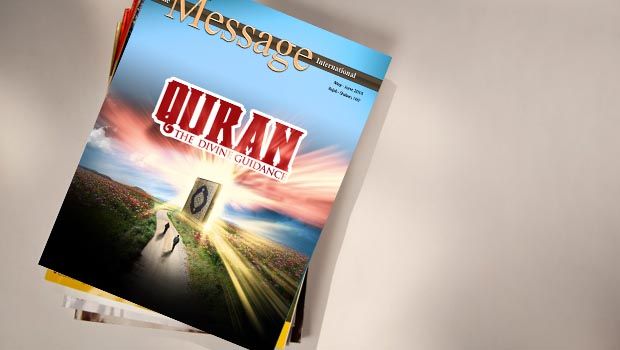
    Quran: The Divine Guidance

    “We have sent our messengers with clear evidences and sent down with them the Scripture and a balance that the people may maintain [their affairs] in justice” (Quran 57:25).

    “Surely, this Quran guides to that which is most just and upright” (Quran 17:9).

    The primary purpose of the Quran is to define the true set of beliefs with regard to the Creator and His creation, and to implement these beliefs in a system of laws that will benefit humanity in this life and the next.

    These are just two out of many verses in which the Quran describes itself. Those familiar with the subject matter of the Quran, no matter whether they recognize it as divine scripture, would agree that it is a book providing guidance for individuals, families, and society. It is a book that has profoundly influenced people around the world for centuries. The Quran continues to enlighten, and to change the lives of people from all walks of life. After simply reading a few passages of this magnificent book, a good number of people have embraced Islam. And the number of converts increases day by day. This is indeed one of the miraculous powers of the Quran.

    One analyst rightly says, “The primary purpose of the Quran is to define the true set of beliefs with regard to the Creator and His creation, and to implement these beliefs in a system of laws that will benefit humanity in this life and the next” (see “The Eternal Miracle of the Qur’an” by Yasir Qadhi in The Message International, May-June 2011, p.21). Interestingly, while there are people in the West who are obsessed with propagating a tag line that Islam oppresses women, those who convert to Islam in the West are overwhelmingly female. And these women are typically not unsophisticated individuals or social misfits; they are rather well-educated and accomplished. They have read the Quran, studied Islam, and made an informed decision. They were not deceived by those who spread fictions about the Quran. Instead they were moved to check it out for themselves. To quote Ustad Nouman Ali Khan, “This book has been attacked before and it will be attacked again. It is Allah’s word and no amount of criticism is going to take away from its glory” (see “Quran and Me,” in The Message International, May-June 2011, p.25).

    Any close and careful reading of the Quran reveals that this unique book presents a comprehensive system that balances human beings’ personal needs with the general good. It gives humanity a formula that speaks to moral and spiritual issues as well as practical, everyday affairs and aspirations. It has been said that there are three pillars upon which social justice in Islam is built: the absolute freedom of conscience; human equality as to worth, rights, and opportunities; and the reality of human and social interdependence. Each one of these pillars is necessary to the integrity and stability of social justice. Freedom of conscience, for example, allows the human being to choose voluntarily what he or she believes about God and the meaning and purpose of life. The one who chooses submission to God finds psychological and emotional liberation from thralldom to other people, material things, or any other earthly influence or relative power. That individual realizes it is Allah who creates man, provides him with sustenance, and holds him accountable in a final reckoning as to his belief and his deeds. Allah, the Almighty, says in the Quran: “Say: O people of the scripture [Jews and Christians], come to a word that is just between us and you, that we worship none but God, and we associate no partners with Him, and that none of us shall take others as lords besides God” (3:64).

    Interlocking with man’s freedom of conscience and right to choose his ultimate destiny is the principle of equality. Islam presents this principle to the world, that in spite of outward differences, all human beings are equal in human worth, in their basic civil, political, social, and economic rights, and in their claim to fair opportunity, without discrimination or politically imposed impediment. The Quran declares, “O people, We have created you from a male and a female, and formed you into nations and tribes that you might know one another. Indeed, the noblest of you in the sight of Allah is the most righteous of you. Surely Allah is wise and all-knowing” (49:13). This verse makes it clear that the diversity of nationalities, races, and cultures among human beings allows for greater discernment and understanding of the human condition. False notions of superiority set the stage for discrimination based on outward, superficial characteristics. This is nothing but folly, leading to injustice and conflict.

    The third pillar, human and social interdependence, is further commitment to mutual understanding and tolerance. Humanity is one family and each person is integral to the common good and social progress. This interdependence ties people together through empathy and affection; it also fosters positive, moral, and concrete action such as helping the needy and vulnerable.

    Social justice is one of the most important values and gifts of Islam, and Prophet Muhammad and his companions built a strong, stable society that reflected fraternity and fairness across the board. Those who want to understand firsthand, are invited to read the Quran, to experience for themselves the beauty and powerful appeal of Divine guidance and wisdom in its uncompromising call for social justice and peace.

  • Trusteeship and Transformation of Character

    Trusteeship and Transformation of Character

    Islamic faith has a strong hold on the lives of its followers. Whatever a believer does, he or she must first make sure that it is not contrary to the teachings of Islam. With acquired knowledge, a believer has to refrain from all those actions which are forbidden. This applies to matters that are universally recognized to be within the religious sphere, as well as to issues that many people would assume to be of no concern to religion. In fact, Islam is not merely a relationship between an individual and God; it is also a code of life that organizes human living in such a way as to make the pleasure of God the essential goal. The pleasure of God is achieved only by living one’s life by following God’s commands. The Quran consists of the true moral and socio-political code that has to be followed by believers to achieve their status as God’s trustees, which is a much higher status than achieved by those who live their lives to fulfill their personal needs and desires only. People who adopt obedience to divine guidance and lead a life of piety become worthy of God’s mercy and friendship. Inculcation of proper values predisposes individuals to being mature, fair-minded, and productive. Hence, they are beneficial to the society.

    All Righteous Activities Are Divine Worship

    Islam is the religion revealed by God, the Creator of the universe. It embodies the ideology and basic principles from which Islamic laws are derived. And human actions are to proceed from that ideology, principle, and law. Actions, whether by the individual, family, community, or state, are inseparable from faith and ideology. It is extremely important to understand that, according to Islam, there can be no split between faith and action, between ideology and law. One follows the other in the same way as cause produces effect. For this reason, action is firmly linked with faith in many verses of the Quran: “Verily man is at loss, except such as have faith, and do righteous deeds, and [join together] in the mutual teaching of truth, and of patience and constancy” (Quran 103:2-3). “But give glad tidings to those who believe and work righteousness, that their portion is gardens, beneath which rivers flow. …” (Quran 2:25). “Whoever works righteousness, man or woman, and has faith, verily, to him will We give a new life, a life that is good and pure [in this world] and We will bestow on such their reward [in the Hereafter] according to the best of their actions” (Quran 16:97).

    Instead of complaining about corruption and evil in other people and society, we strive with calmness, pure intention, and utmost determination to bring about transformation — of ourselves, those in our close circles, and in the larger community.

    Faith, if sincere, produces right conduct. When these two confirm each other, God’s grace transforms the life in this world. Instead of being troubled and unsatisfied, we have peace and contentment. Instead of complaining about corruption and evil in other people and society, we strive with calmness, pure intention, and utmost determination to bring about transformation — of ourselves, those in our close circles, and in the larger community. The dynamic and constructive outcomes found in living this way are visible in this life itself, but for those who actively engage in bringing about this betterment, the reward is in the hereafter, and will be beyond human expectation and comprehension. The Prophet (pbuh) said, “Allah said: ‘I have prepared for My righteous servants what no eye has seen and no ear has heard, nor has it occurred to the human heart.’” This mirrors what the Quran says, “And no soul knows what joy for them [the inhabitants of Paradise] has been kept hidden” (Quran 32:17).

    Transforming One’s Character and Conduct

    Islam very strongly advocates for the welfare of all the people of this world and encourages those activities that are beneficial to individuals and society. A true believer is tolerant and inclusive in his or her thinking, honest, trustworthy, and just—qualities that free human interactions from discrimination, fraud and deception, exploitation and corruption. Islamic values are intrinsic to the fitrah, the primal, innocent nature every human is born with. This is the original pure and unimpaired condition of human nature. Many individuals throughout history have not known Islam but yet followed the divinely bestowed values that produce results that are beneficial to society. This is surrender to God without knowing the formal religion as revealed to and disseminated by Muhammad (pbuh).

    Corrupt people can only spread disorder and misery in society. If they occupy positions of power in government, they act in self-serving and, too often, unjust and exploitative ways.

    Of course, knowing and believing in God’s final message to humanity, and acting with sincere intention to embody its principles, takes a person to a sublime realm. There all individual activities that are good and moral are acts of worshipping God. God informs us in Surah Al-Ahzab: “O you who believe! Fear Allah, and say a word directed to the right: That He may make your conduct whole and sound and forgive you your sins: he that obeys Allah and His Messenger has already attained the highest achievement” (Quran 33:70-71).

    The Divine Gift: Free Will, Innate Wisdom, and Guidance

    The core principles of Islam are not different from that preached by all the other prophets, some of whom God entrusted with messages through revelation. Starting with Adam and including Nuh (Noah), Ibrahim (Abraham), Ismail (Ishmael), Ishaq (Isaac), Yaqub (Jacob), Musa (Moses), Dawud (David), Zakaria (Zachariah), Yaya (John), and Isa (Jesus), the line of prophethood reached its culmination with Muhammad, the last of God’s messengers. The essential precepts of faith preached by all these messengers is the same. These principles are universal and enduring and intended for all nations and all generations. In Surah Al-Shura, God tells us: “The same religion has He established for you as that which He enjoined on Noah – that which We have sent by inspiration to you — and that which We enjoined on Abraham, Moses, and Jesus: Namely, that you should remain steadfast in religion, and make no divisions therein” (Quran 42:13).

    A true believer is tolerant and inclusive in his or her thinking, honest, trustworthy, and just—qualities that free human interactions from discrimination, fraud and deception, exploitation and corruption.

    God created humankind, gave it free will, a portion of innate wisdom that flows from the unimpaired conscience, and through His messengers and prophets provided guidance. God has appointed each one of us, male or female, rich or poor, as His trustee on earth to serve Him through implementing His commands in managing our affairs so as to build a just society on earth. This is a trust requiring humans to use their faculties of thinking, reasoning, caring, and conscientious volition in all aspects of life. God tells us in Surah Al-Ahzab, “We did indeed offer the trust to the heavens and the earth and the mountains; but they refused to undertake it, being afraid thereof: but man undertook it…” (Quran 33:72).

    The Quran has been revealed for the guidance of all humanity. It contains the enlightenment and the instructions that facilitate our growth as human beings, aid our development of a good and sound character, and ennoble our behavior. These divine gifts – free will, wisdom arising from a healthy conscience, and the ultimate guidance – lay the foundation for establishing a prosperous and peaceful human society based on justice and mutual respect.

    Motivation and Knowledge to Succeed

    Life in this world is a trial so that people may demonstrate who is willing to live life to its best purpose and potential. This requires knowing one’s human duties and obligations to God, encompassing both material and spiritual aspects of life. God has provided the necessary guidance for the fulfillment of trusteeship on earth and our human worship of the Creator. This guidance has been given within the human gene in the form of conscience, and has been taught and implemented by all of God’s messengers. Conscience and prophetic example are validated and fortified by the teachings in the Quran. These teachings encompass the entire moral, economic, and socio-political areas of human activity that are required to develop and protect good character and a just and virtuous society.

    To help people to achieve this high standard of nobility and continual striving for excellence (ihsan), God has sent prophets and messengers as role models to various nations throughout the ages, to preach His message and to guide people to the way of life that ensures their happiness both in the life of this world and in the life Hereafter. Although individual and collective success or failure depends on efforts, divine guidance motivates and helps people to excel in life, in learning, in character, and in their capacity to establish a good society. God provides what is required for the success of humanity, and thus, He requires God-conscious and virtuous people to be His trustees on earth.

    The teachings related to refinement and transformation of human character are not like something externally pasted onto the rituals of worship. The essence of these religious and spiritual rituals cannot be separated from the individual during the movements and interactions of his or her daily life. The Islamic principles and teachings permeate the rituals, reach to the very core of human personality, infuse human affairs with meaning and purpose, save people from the thralldom of selfish or base desires, and serve as a profoundly reliable basis for all choices and decisions.

    Our Choice: Trusteeship or Spreading Corruption

    Corrupt people can only spread disorder and misery in society. If they occupy positions of power in government, they act in self-serving and, too often, unjust and exploitative ways. On the other hand, righteous people consider it their responsibility to institute fairness and accountability in the use of power and to enhance good governance. Those who reject the message of God and flout their arrogant ways, especially those in positions of power, risk bringing upon themselves the wrath of God. The Quran says: “[To them shall happen] the like of what happened to Pharaoh’s people and of those before them: they rejected the signs and messages of Allah, and Allah punished them for their sins. For Allah is powerful, and strict in punishment. This, because Allah will never change the blessings which He has bestowed on a people until they change what is in their souls: and verily Allah is He Who hears and knows all things” (Quran 8:52-53).

    There are two conflicting tendencies within the human soul. The first tendency represents a decent and pure human nature inclined towards righteousness, which feels happiness in doing good and hates wickedness and evil. It feels remorse and sorrow on committing sin. It considers that the success of its existence is in truth and justice. The second tendency is fomented by lascivious or immoral thoughts or emotions and satanic inclinations which turn it away from righteousness. This tendency, left unchecked, leads to mean, arrogant, and/or debased behavior. It is unnecessary to try and ascertain whether these desires or inclinations enter the self from outside or whether they are ingrained within the human condition. We do know for a fact that both these tendencies are found in people. One leads to virtue and the other to depravity, and they are in an ongoing struggle for dominance in the soul.

    Conscientious choice and the will to purify the self determine the final outcome of this inner struggle. In Surah Al-Shams, God says: “By the Soul, and the proportion and order given to it; and its enlightenment as to its wrong and its right — truly he succeeds that purifies it, and he fails that corrupts it” (Quran 91:7-10).

    Striving in the Divine Cause

    Describing his mission, the Messenger of Allah informed people that he was sent for the purpose of perfecting good morals. The transformation of people’s character is initiated by belief in God and is further facilitated through worship. Although Islamic ritual worship may vary in form and appearance, its aim and purpose is the same, which is to worship God and help people purify their hearts, build their characters, and refine their behaviors. Our prayers, fasting, charity, and Hajj (pilgrimage) are the steppingstones toward these objectives. On this path, each believer cultivates the qualities required for shouldering the trust and helping to establish just communities in which life is peaceful, secure, and prosperous.

    We are challenged to strive in the divine cause, and to do so with constancy and determination. Through this striving and devotion, we can overcome our defects and shortcomings. God tells us, “Those who strive hard for Us, We will most certainly guide them in Our ways, and Allah is most surely with the doers of good” (Quran 29:69). We are further reassured of His help: “As to those who receive Guidance, He increases the [light of] Guidance, and bestows on them piety and restraint… Know, therefore, that there is no god but Allah, and ask forgiveness for your faults, and for [that of] the men and women who believe: for Allah knows your activities and your resting places” (Quran 47:17 & 19).

  • Why Have We Normalized Islamophobia?

    Why Have We Normalized Islamophobia?

    The horrific attacks in Paris and San Bernardino have captured headlines and triggered responses from journalists, politicians, and religious leaders. Some Western heads of government have once again threatened a global war against terrorism, while some political commentators have even invoked World War III.

    A cottage industry of ideological, agenda-driven, anti-Muslim polemicists has sprung up, consisting of pundits, bloggers, authors, lobbyists, elected officials, and their resourceful and wealthy funders.

    In the United States, Republican presidential candidates and some thirty governors have called for a freeze on accepting refugees fleeing the civil war in Syria. Donald Trump, the leading Republican candidate for president of the United States, has pushed the envelope to its extreme, advocating a temporary freeze on all foreign Muslim immigration, as well as the monitoring or even the forced closure of American mosques. The result? Trump soared in the polls, as did fellow presidential candidate Ben Carson, who stated that “for a Muslim to become president of the United States…you have to reject the tenets of Islam.” In Europe, far-right political candidates continue to make political headway. The far-right Front National party of Marine Le Pen won nearly 30% of the vote in the recent French regional elections; although the party did not win any of the regions outright, the strong showing positions Le Pen as a future presidential candidate.

    Fear of Islam and Muslims in general—not just Muslim extremist and terrorist movements specifically—have become normalized in popular culture in both America and Europe. The anti-Islamic and anti-Muslim hate speech, bias, discrimination, and hate crimes—commonly referred to as Islamophobia—are on the rise. Islam Muslims and the vast majority of Muslims have been brush-stroked by and often equated with the kind of militant extremism and terrorism practiced by a mere fraction of Muslims, obscuring the fact that the vast majority of terrorist victims are themselves Muslim. This, in turn, has had a significant impact on the growth of Islamophobia as well as the domestic policies that have threatened Muslim civil liberties. But what are its causes?

    Is Islam the primary cause and catalyst for terrorism?

    Major polls have consistently reported that Islam is a significant component of religious and cultural identity in Muslim countries and communities globally, and thus an attractive tool for violent extremists as an instrument for legitimation and mobilization. However, the primary catalysts for extremism and terrorism are political grievances often intertwined with the use or misuse of religion. Osama Bin Laden and others like him appealed to long-standing political grievances among many in the Muslim world, the mainstream non-violent majority and extremists alike: Western influence, invasion, occupation; Western support for authoritarian regimes that claim to speak for all Muslims; uncritical bias and support for Israel from the American government in the Palestinian-Israeli conflict. Add to this the Iraqi and Syrian (Shiah-dominated) governments’ repression and killing of tens of thousands of civilians and other crimes.

    “Trump is ISIS’s greatest triumph: the perfect Manchurian Candidate who, instead of offering specific and realistic policies, preys on the fears of the public, doing ISIS’s job for them.”

    ISIS has shown a particular talent for coopting and exploiting all of these issues. Their execution videos, released when ISIS called itself the Islamic State of Iraq (October 2006–April 2013, Al-Furqan Media Foundation), underscored the importance of political grievances for legitimation of their actions and as a tool for recruitment.

    In addition to this, public displays of Islamophobia in the West, from political speeches and demonstrations to negative portrayals of Muslims in the media and hate crimes, are also effective tools for recruitment. Major studies have also found that Islamophobia increases significantly not only with incidents of domestic terrorism but also at election time, as seen in the 2008 and 2012 presidential and the 2010 Congressional elections. During those races, Newt Gingrich, Rick Santorum, Herman Cain and others sought to gain attention by making reckless statements about Muslims. In 2010 in particular, the public debate over the so-called “Ground Zero” mosque in New York became fodder for candidates looking for media coverage. Today, that trend continues with candidates such as Trump, Carson, Cruz, and others.

    Most Americans—who live in a country with a relatively small Muslim population—say they know little or nothing about Islam. Thus, it is not surprising that when terrorists commit their acts of violence in the name of Islam in Paris and San Bernardino, they are drawn to demagogues in America like Donald Trump and in Europe who bring Muslims and the Islamic faith to the forefront of the political debate.

    As Kareem Abdul-Jabbar recently wrote in the New York Times: “Trump is ISIS’s greatest triumph: the perfect Manchurian Candidate who, instead of offering specific and realistic policies, preys on the fears of the public, doing ISIS’s job for them.”

    To what extent has media contributed to the problem?

    Media Tenor, in its 2011 report “A New Era for Arab-Western Relations,” found that out of nearly 975,000 news stories from US and European media outlets, networks significantly reduced coverage on events in MENA to actions of Muslim militants. A comparison of media coverage in 2001 versus 2011 demonstrates the shocking disparity of coverage. In 2001, 2% of all news stories in Western media presented images of Muslim militants, while just over 0.5% presented stories of ordinary Muslims. In 2011, 25% of the stories presented militant image, while the images of ordinary Muslims remained stuck at 0.5%.

    The net result is an astonishing imbalance of coverage: an exponential increase in coverage of militants but no increase at all over the 10 year period in the coverage of ordinary Muslims—and that despite census figures confirming a rapidly growing Muslim population. The situation got worse, for example—between 2007 and 2013, 80% of all American news coverage about Muslims/Islam was negative.

    Over the past decade, there has been an explosion of social media websites targeting the Muslim community, with serious international and domestic consequences. A cottage industry of ideological, agenda-driven, anti-Muslim polemicists has sprung up, consisting of pundits, bloggers, authors, lobbyists, elected officials, and their resourceful and wealthy funders.

    An August 2011 Center Report, Fear, Inc., documented, based on IRS information, that $42.6 million flowed from seven foundations over ten years to support Islamophobic authors and websites. A CAIR Report in 2013, “Legislating Fear: Islamophobia and its Impact in the United States,” reported that the inner core of the US-based Islamophobia network enjoyed access to at least $119,662,719 in total revenue between 2008 and 2011.

    Totally lost or obscured in the fear and fog of war are the facts on the ground regarding American Muslims. Data from major polls (Gallup, Pew and others) and studies have reported that the vast majority of Muslims in America, for example, are educationally, economically, socially, and religiously an integral part of our American mosaic: members of Congress, the military, corporate, education and religious leaders, physicians, lawyers, engineers, scientists and small business owners. American Muslims were among the victims and first-responders on 9/11. In contrast, Muslim terrorists are a fraction of a fraction of 1%. No wonder that the US Attorney General, Senior Pentagon and Department of Homeland Security, as well as leaders in the Democratic and Republican parties, have rejected Donald Trump’s outrageous and inflammatory rhetoric and its threat to American principles and values and to the civil liberties of American Muslims.

    House Speaker Paul D. Ryan (R-Wis.) offered the simplest and most direct rebuttal Tuesday, the day after Trump called for a ban on Muslims entering the United States: “Freedom of religion’s a fundamental constitutional principle,” Ryan said.

    “It’s a founding principle of this country….This is not conservatism. What was proposed yesterday is not what this party stands for, and more importantly, it’s not what this country stands for. Not only are there many Muslims serving in our armed forces dying for this country, there are Muslims serving right here in the House, working every day to uphold and to defend the Constitution…. Some of our best and biggest allies in this struggle and fight against radical Islamic terror are Muslims—the vast, vast, vast majority of whom are peaceful, who believe in pluralism, freedom, democracy, individual rights. I told our members this morning to always strive to live up to our highest ideals, those principles in the Constitution on which we swear every two years that we will defend.”

    As President Barack Obama recently observed: “[I]t is the responsibility of all Americans—of every faith—to reject discrimination. It is our job to reject religious tests on who we admit into this country. It is our responsibility to reject proposals that Muslim Americans should somehow be treated differently. Because when we travel down that road, we lose…We were founded upon a belief in human dignity—that no matter who you are, or where you come from, or what you look like, or what religion you practice, you are equal in the eyes of God and equal in the eyes of the law.”

    A lot of things went wrong this past year, but there may be a silver lining. As Islamophobia intensified and gained more media attention, many Americans and the international community took notice. Google searches of the term “Islamophobia” spiked dramatically after Paris and San Bernardino. Prominent journalists, government and religious leaders, politicians, scholars, and members of the general public started calling out Islamophobia with more force, and leaders on both the right and left stood in solidarity with Muslims. Dozens of interfaith efforts also popped up around the country. So, despite the fact that Islamophobia was at its worst in 2015, there are reasons to hope that we are turning a corner.

  • Transcending Dysfunctional and Damaging Thoughts

    Transcending Dysfunctional and Damaging Thoughts

    Consider the amazing hadeeth, “Part and parcel of right and good worship of a person is his good thought” (Al Jame’a Al Sagheer). And the Prophet (pbuh) has also said, “Had they had good thoughts, indeed they would have had good actions.” These two hadeeth demonstrate the foundational importance of good thoughts.

    We become experts at finding the evidence in our experience to support our self-limiting beliefs and ignoring anything to the contrary. And then our negative self-talk seals the deal with things like, “That always happens to me.” “See, I’m no good at that sort of thing. I knew that was going to happen.”

    Isn’t it therefore imperative to become aware of our inner thoughts, the dialogue that courses though our minds all day long? Is it possible that we have negative thoughts that we are only marginally conscious of, that keep us imprisoned in a troubled or weakened self-concept, with habits of behavior that only bring us misery? Negative thoughts are often expressed as self-limiting beliefs that keep us from deeper discovery of who we are and how to embark on paths of growth in maturity and spiritual upliftment in our daily lives.

    To understand how an individual can allow dysfunctional and damaging thoughts to keep him shackled and resigned, consider elephants. These incredibly strong animals can be controlled and used for manual labor if they are conditioned while still young. The elephant’s leg is tied to a stake in the ground with a thick rope so that it can move only a few feet. At first the young elephant will attempt to pull free from the stake and rope, but over time, after numerous attempts, he gives up and accepts his captivity. Even when full-grown, with more than enough strength to break free from the stake and rope, the elephant is conditioned to believe that he cannot escape. The elephant could walk away at any time, but his conditioning, like our self-limiting thoughts, keeps him captive for the rest of his life.

    Human Beings Internalize Self-limiting Beliefs While They Are Young and Vulnerable

    Self-limiting beliefs are often established early in life. Imagine a child in 3rd grade who is a slow learner. It appears to him that he doesn’t learn things as easily as the other children. He repeats countless times to himself, “I am stupid.” And he might reach adulthood actually believing he is stupid, even though that might be far from the reality. Intellectual capacity and individual modes of learning are two different things. But he couldn’t know that as a child. So unless a parent or teacher or counselor intervened, he would internalize that self-concept of being stupid. The sad thing about self-limiting beliefs is that it is like wearing blinders — the pair of leather flaps attached to a horse’s bridle to cut off his side vision. We tend to focus on the things in front of us that conform to and reinforce our self-concept.

    Neuropsychology explains the human tendency to find all the evidence he needs in the world and in his experience to support and perpetuate his self-concept, even if much of that is founded on notions that disparage and limit the self. The Reticular Activating System (RAS) is a cluster of brain cells that serves an alerting or arousal function. The RAS filters the enormous number of bits of data streaming in through the senses each second. Based upon our priorities, including beliefs about the self and its potential or its limitations, the RAS filters out the seemingly irrelevant data and alerts us to that data which is relevant to our worldview and personal perspectives. The data will be consistent with our priorities, even if that includes negative beliefs like:

    • “I can’t change, I am who I am.”
    • “Allah SWT will never forgive my sins, they are unforgivable.”
    • “There is never enough time to do what I want. I have no control over my time.”
    • “If I fail, I’ll be embarrassed to try again.”
    • “If I haven’t been successful yet, I never will be.”
    • “I’ll never learn to focus and concentrate in my prayer.”
    • “I need other people’s approval to feel good about myself.”
    • “If I speak my mind, I will be rejected.”
    • “I always have to struggle, while others have it easier than me.”

    We become experts at finding the evidence in our experience to support our self-limiting beliefs and ignoring anything to the contrary. And then our negative self-talk seals the deal with things like, “That always happens to me.” “See, I’m no good at that sort of thing. I knew that was going to happen.” The RAS and our limiting self-talk form a seeming comfort zone. But it is an illusion. The reality is we are flailing about, without taking charge of our lives, like being adrift at sea, tossed around by powerful waves. For some people the idea of taking an inventory of their thoughts in order to discover negative or disempowering ideations or self-limiting beliefs is just too much of a struggle. Or that the struggle will never bring about a positive outcome. But we now know that this too is just self-limiting belief. Re-framing that perspective on struggle with an empowering frame of reference can be a springboard to transformation of self.

    Struggle Out of the Cocoon Brings Freedom

    A powerful reference about struggle is found in the following parable. A man found a cocoon, the silky enclosure spun by the larvae of many insects, to serve as a covering while they are in the pupal stage. This was the cocoon of a butterfly and the man decided to watch and witness the gradual emergence of the beautiful insect. One day he noticed a small opening had appeared. The man watched for several hours as the butterfly struggled to push itself through the small hole. When it seemed that the butterfly no longer was making any progress, the man decided to help it by carefully making a slit in the cocoon with a scissors. The butterfly emerged easily, but its body was swollen and its wings small and unextended. The man watched, waiting for the body to contract and the wings to expand and strengthen. It never happened! This butterfly would never fly. It spent the rest of its life crawling around with a swollen body and shriveled wings.

    What the man did not realize is that the butterfly’s struggle to emerge out of the tightly-fitting cocoon, through the small opening, was necessary to force fluid from the body into the wings, to achieve the proper proportions with a sleek body and strong expanded wings able to support flight. And that struggle unfolds in a proper order, in a methodical and brilliantly designed sequence of things.

    It is the struggle out of the cocoon that brings about the freedom to fly!

    Our self-imposed limitations are like the cocoon. The Reticular Activating System and negative defeatist self-talk filter out any evidence contrary to one’s self-imposed limitations. We can freely accept the challenge of a struggle to emerge from the cocoon, using that struggle to purify ourselves from all unwholesome or distorted thinking, from attitudes and notions about life, our own selves, and other people that sap our vitality and end up serving destructive habits of behavior. Or we can maintain the cocoon as a self-imposed prison, to insulate ourselves from the reality of our human challenge. If we stay in the cocoon, we think that this is a protected state but it is instead like being squeezed by a vise, leading to nothing but spiritual ruin. If we try to sneak out of the cocoon without the properly ordered and proportioned struggle, it is likewise nothing but spiritual ruin — like the butterfly with swollen body and shriveled wings.

    Examples of short-cutting abound in everyday life. Putting on a wise and good-mannered appearance when in public while behaving in a madly intolerant and controlling way at home is trying to sneak out of the cocoon. Speaking to other people in beautiful language of hope and inspiration while habitually ruminating about one’s own fears and doubts is sidestepping the struggle. Comforting oneself that it’s God’s will that one failed the course when the reality is that study got pushed aside time and again for gaming — that’s skipping out on the struggle. There is order and proportion in a genuine struggle for mastery of self. Expecting responsible and good-mannered behavior from family members is good; indulging in a power trip of bullying and intimidation creates psychological and emotional confusion and disturbance. Wanting to uplift other people is good; not practicing what one recommends to other people disorders one’s personal reality with the falseness of pretense. Relaxation and recreation are perfect counterbalance to hard work; putting them ahead of obligation and commitment disproportions one’s activities.

    Everything must be according to the proper order and proportion in order for us to attain to true health, happiness, and success. “By the soul, and the proportion and order given to it; and its inspiration as to its wrong and its right – truly he succeeds who purifies it, and he fails who corrupts it” (Qur’an 91:7-10).

    Practical Steps to Discipline the Inner Chatter

    In order to discover any self-limiting beliefs, or dysfunctional and damaging thoughts that cycle through our minds, we can practice a simple yet powerful technique. It brings us greater awareness of our thoughts and provides tools to bring refinement and discipline to the inner chatter.

    Step one: become aware of your inner dialogue. For one week, catch yourself 3 or 4 times a day in the midst of this chatter. Observe it neutrally and without judging yourself. See if it is supportive of a positive outlook, of your faith, your goals, and your mental and emotional health; see if it supports your efforts to fulfill your greatest potential. Or is it negative and undermining of that?

    Step two: practice negative-thought stopping. The second week, every time you become aware of negative thoughts which are undermining your determination, STOP that thought with a superior, stronger, healing thought. One can choose anything – an adage, an affirmation, whatever works for you. You can also choose from countless profoundly inspiring and supportive Quranic verses. For example, you can learn in Arabic and /or English “…to Allah we belong and to Him is our return.” This of course comes from the beautiful verses, “O you who believe! Seek help with patient perseverance and prayer. For Allah is with those who patiently persevere……. and give glad tidings to those who patiently persevere – who say when afflicted with calamity ‘to Allah we belong and to Him is our return.’ They are those on whom are blessings from their Lord and mercy. And they are the ones that receive guidance” (2:153-157).

    If those who are faced with calamity are being prompted to say “to Allah we belong and to Him is our return,” and are assured that they will then receive blessings and mercy and guidance from Allah SWT, then certainly the power of these words, the meaning and hope and comfort, is sufficient to stop a negative and undermining thought. One can also choose from many other verses, such as: “Allah places no burden on any soul greater than he can bear” (2:286); “With every difficulty there is relief” (94:5-6); “Not a leaf falls without His knowledge and permission” (6:59).

    This is a powerful tool to stop negative inner dialogue so that those counter-productive thoughts do not develop and grow and control us. There was a woman who sought counseling because she engaged in thoughts of disaster whenever her child got sick, or her husband was late in coming from work, or their finances were tight. She learned this technique of thought stopping, using Quranic verses, and within two months she had mastered the technique and no longer was a victim of her negative thoughts. You cannot imagine the positive energy that was released that she could use in productive ways, once she was master rather than slave to her thoughts. Reflect on the profound reality that inner thoughts can become impulses or desires; and impulses can become actions; and actions can become habits.

    Step three: increase your fluency in positive inner thoughts by keeping a journal. When you become aware of a pattern of habitual negative chatter or framing, take 5-10 minutes to compose a positive dialogue to replace the negative one and write them both in a journal. This is an amazing process when we begin to pull from our minds and hearts the power to articulate a frame of reference for any situation which increases our eman, supports our efforts to achieve a goal, brings Allah SWT to remembrance, and helps us to implement the wisdom of the Islamic teachings. Remember, our inner dialogue can reinforce —

    • discipline or laziness
    • a positive outlook for pessimism
    • being genuine or putting on a pretense
    • patience or impatience
    • tolerance or meanness and bigotry
    • self-restraint or angry outbursts and rage

    That list could go on endlessly and shows the power of thought as well as the potential to choose the mood and tenor of the moment at hand. Every time you make the effort to write down in a journal a positive replacement for a negative thought, you strengthen your capacity and your resolve to do that spontaneously whenever you encounter frustration, annoyance, hardship, etc. Keep in mind that it takes time to become skilled at catching ourselves when we entertain a counter-productive thought; and it takes practice to be able to spontaneously replace it with a thought/statement that serves our faith, character, and goals in a more productive way. Here are some examples:

    Intolerance — a mother who can’t stand her kids’ frequent arguing

    Negative inner dialogue: “Oh my God, we haven’t been awake even one hour and already they are fighting. This is going to be another miserable day. I just can’t stand it anymore. I actually feel at this moment that I hate my kids…astaghfiru Allah.”

    Positive replacement: “Oh my God, we haven’t been awake even one hour and already they are fighting. Okay, let me just remind myself that they are just being kids. This is great opportunity to practice patience and perseverance (sabr) and know that Allah loves me and rewards me for that. The way I choose to respond in this stressful situation is the very test for which I was put in this dunya.”

    Impatience — a man who is stuck in a traffic jam and late for a meeting with a prospective client

    Negative inner dialogue: “Move it, come on get going, what the heck is wrong with all you drivers. This is ridiculous, I’m going to miss the meeting. Oh my God, the boss will be furious with me and probably fire me for messing this up. I’m sure we’re going to lose this new client. Come on you morons, move it!”

    Positive replacement: “Oh no, traffic isn’t moving, what am I going to do. Wait a minute. Let me breathe deeply and put this in perspective. There’s nothing I can do, it’s out of my control. And everything is in the hands of Allah SWT. I’ll just do my best when I get to the meeting. And I’ll apologize for being late and then impress the client with how well prepared I am, insha’Allah.”

    Anger — a man whose son has not done his homework

    Negative inner dialogue: “I can’t believe he is so irresponsible. This makes me really mad. He’s just wasting my time with this nonsense, being sloppy and lazy. What’s wrong with him…? All that TV and playing video games have ruined him. I need to make him wake up…I’m gonna show him what a real father looks like!”

    Positive replacement: “I can’t believe he didn’t do his work. Wait a minute, let me practice ‘the pause’ and not get carried away. I remember when I was his age and how I would just goof off some times. Let me re-examine my approach with him and see if there is a better way that can motivate him and help him to be more consistent in taking care of his responsibilities. This is a good chance to practice sabr.”

    Remember — the practice of writing positive thoughts to replace negative ones strengthens our capacity and our resolve to do that spontaneously whenever we encounter frustration, annoyance, hardship, or any other difficulty in daily living. It is a coping skill that everyone who learns it, comes to love and value tremendously.

    Step four: Make a resolution to go through one hour or part of a day with no negative inner dialogue. This is not as easy as it sounds, but its rewards are endless. Engaging in positive inner thoughts becomes a virtuous habit, just as negative inner thoughts become a harmful habit. Shaykh Ibn Al-Qayyim makes this significance clear with an analogy. He says that Allah SWT has created the human mind like a millstone which does not stop grinding day or night. Those who habitually produce in their minds positive thoughts, are like those who put wholesome grains in their millstone, and thus produce good flour, to nourish themselves and others. But, he says, most people grind nothing but dirt and stones — meaning negative, harmful thoughts — all day long, day in and day out. When the Trumpet is blown signaling the Day of Judgment, it is time to bake our bread; and then every individual will know what he has been grinding in his millstone: wholesome, nourishing grain or dirt and stones!

  • The Universal Ethos of Moderation: Dismantling Extremism

    The Universal Ethos of Moderation: Dismantling Extremism

    Discussion continues among Americans about terrorism, extremism, jihad, and Islam. The discourse has three basic viewpoints. Put in simplistic frames, the anti-Islam perspective sees Islam as the “mother lode of bad ideas” and Muslims as an irredeemable enemy who evokes the specter of extremism and barbarity convulsing out of religious affiliation. The anti-Islam group voice alarm at the danger lurking at unsecured borders and in unsurveilled living rooms. The liberals, representing the second perspective, recoil at blanket condemnations of Islam and Muslims. Appreciators of pluralist society and multi-culturalism, they eagerly call for respect of Islamic and all other cultural traditions. This voice defends Muslims as a vast majority of peace-loving individuals who have had their religion taken hostage by extremists. The liberals are alarmed at the spreading bigotry that resonates with a wide swath of the American population, as fear and aversion cut through minds and hearts, ratcheted up by bellicose ultra-nationalists and ideologues. The third voice in this discourse, the Muslim one, is largely unceasing recitals of Islamic first principles — “Islam is peace” or the like — and dissimilitude to so-called “jihadists.” The response, both by choice and public demand, is an effort to answer for the political radicalization and terroristic behavior of individuals who commit incomprehensible violence and destruction — all in the name of Islam.

    Trying to Change the Narrative

    When Muslims say “Islam is peace” or “terrorism is un-Islamic” or “Muslim Americans are loyal to America” or “the extremists have hijacked the religion,” it makes no dent in the mindset of the antagonist of Islam. He seems determined to ignore any facts or any pronouncements that are contrary to his preconceived notion of who Muslims are and what Islam teaches. Yet, Muslims have been condemning terrorism ever since 9/11, with sincerity, without fail, loudly and clearly, as reflected in the public record. But the pronouncements are never enough to satisfy minds intent on ostracizing. And so demands for Muslim denunciation of terrorism continue unabated, and like a carnivorous plant, the antagonist sets his traps and gobbles up the condemnations like a feast of delectable insects. But his appetite is insatiable.

    When Muslims say “Islam is peace” or “terrorism is un-Islamic” or “Muslim Americans are loyal to America” or “the extremists have hijacked the religion,” it makes no dent in the mindset of the antagonist of Islam.

    With abhorrence deep-seated and habitual, he declares over and over that Islam and the Quran teach hatred and violence. Yet, going directly to the Quran, one is hard-pressed to find a scintilla of evidence of the purported malevolence. That does not stop the maligning of Islam, the faith of nearly one-fourth of the world’s population, even in academic circles. In the past 15 years, the dominant literature on “Islamic terrorism” has characterized the phenomenon as expression of religious fanaticism, intrinsic to Islam. An influential expositor on religious terrorism, Bruce Hoffman, in his book “Inside Terrorism,” writes, “For the religious terrorist, violence is first and foremost a sacramental act or divine duty executed in direct response to some theological demand or imperative. Terrorism thus assumes a transcendental dimension, and its perpetrators are consequently unconstrained by the political, moral or practical constraints that may affect other [secular] terrorists.”

    Liaquat Ali Khan, professor of law at Washburn University School of Law, writing in the Washburn Law Journal in 2005, describes the mindset of Hoffman and his ilk in his article, “The Essentialist Terrorist”: “There is a coordinated effort on part of academics, scholars, think-tankers, journalists and others to create a profile of Muslim militants as essentialist terrorists who commit heartless violence because they are spiritually addicted to violence. These authors argue that no concrete grievances or violations of rights cause Muslim militancy.” Khan notes that these writers obscure, knowingly or ignorantly, the core beliefs of Islam, thus making the case, quite successfully for those not familiar with authentic sources of the religion, that Islam and terrorism pivot from the same violence-prone provenance.

    Modern-Day Universal Civil and Political Rights

    Before taking a look at primary sources of Islamic doctrine appertaining to violence, warfare, taking of life, and related issues, it is useful to note that modern-day international law codifies rules for military action. In brief, these prescribe that wars be fought to achieve stated lawful aims; that military engagement should be brought to an end as quickly as possible; that unnecessary destruction should be avoided; that prisoners of war should be treated humanely and justly; that all civil and political rights must be respected; and that non-combatants should be protected from harm and hardship, among other rights of people and constraints upon warring parties.

    A Muslim cannot control how other people live their lives, can take responsibility only for his or her own words and actions, and regardless of the ignorance of any other person(s), the duty is to spread peace (28:55).

    International law also codifies the right to defend against aggression and to resist colonial and foreign domination and foreign occupation. In accordance with international human rights law, there are real and legitimate grievances — political, social, and economic — suffered by Muslims. Countries in the Middle East are targeted again and again by exploitative external actors, often colluding with internal authoritarians, resulting in egregious and contemptible violations of human rights. A birthright of individuals, the claim to self-determination, is encoded in Article 1 of the International Covenant on Civil and Political Rights (ICCPR). This treaty asserts the right of all peoples to “freely determine their political status and freely pursue their economic, social and cultural development,” among many other stipulated rights. The majority of nations in the world, including the United States, have ratified and signed on to this international treaty. The ICCPR, along with the Universal Declaration of Human Rights, and provisions in the U.N. Charter, comprise the body of international human rights law. Accordingly, human beings and states have the right to resist an aggressor and defend sovereign territory, including the right to use force. These legal forms of violence are also accorded legitimacy in any struggle for “liberation from colonial and foreign domination.”

    A great number of U.N. General Assembly resolutions have affirmed this legal right of resistance. United Nations General Assembly Resolution A/RES/33/24 of 29 November 1978 states, in part, that it “Reaffirms the legitimacy of the struggle of peoples for independence, territorial integrity, national unity and liberation from colonial and foreign domination and foreign occupation by all available means, particularly armed struggle” (emphasis added). Accordingly, the Iraqis who rose up to fight the military invasion in 2003 were not insurgents or terrorists. They were engaged in a lawful armed struggle to resist a foreign invasion.

    Universal Ethical Principles and Rights Codified in Islam

    The ethical principles codified in contemporary international law (albeit, too often ignored by modern states) with regard to warfare, prisoners of war, protection of civilians, and so on, were heralded centuries ago in Islamic law and tradition. Islam makes clear that there are uncompromising political, moral, and practical constraints in place. There are some general principles expressed in Quran and hadeeth that apply to any conflict or response to being wronged. For example, verse 41:34 instructs believers to repel the evil deed with something better; and there are Prophetic sayings such as “There should be neither harming nor reciprocating harm” (Ibn Majah and others); and “Do not be people without minds of your own, saying that if others treat you well, you will treat them well; and that if they do wrong, you will do wrong to them. Instead, accustom yourselves to do good if people do good, and not to do wrong [even] if they do evil” (Al-Tirmidhi). Getting more specific, there are many Quranic verses that speak to the constraints placed upon Muslims who engage in armed conflict. Some of these are as follows:

    Muslims are not to aggress or begin hostilities (see Quran 2:190)

    If the enemy inclines to peace, Muslims must do the same (Quran 8:61); if the enemy desists from fighting, then hostility must cease (see Quran 2:193)

    Those who are wronged or oppressed have every right to defend themselves, but they must guard against requiting that grievance with actions that may, in turn, slide into evil; so that making peace is preferable, if possible, and rewarded by God (Quran 42:40-42). Muhammad Asad writes in his commentary, “Hence, most of the classical commentators (e.g., Baghawi, Zamakhshari, Razi, Baydawi) stress the absolute prohibition of ‘going beyond what is right’ (i’tida’) when defending oneself against tyranny and oppression”

    Islam is, indeed, a religion of moderation, not one of extremism;.. peace is the objective, not conflict or war.

    While humans are given the right to defend themselves against wrongdoing and oppression, they are nonetheless advised to be patient in adversity and ultimately to forgive (Quran 42:43)

    Captives of war are to be set free or ransomed (Quran 47:4) — perhaps with the exception of war criminals, according to Shaykh Yusuf Al-Qaradawi in “Fiqh of Jihad”).

    Consider the Prophetic saying that there should be neither harm nor reciprocating harm, along with this verse: “…take not life, which God has made sacred, except by way of justice and law: thus does He command you, that you may understand” (6:151). These two Islamic teachings — on their own — dismantle the myth that “violence is first and foremost a sacramental act or divine duty” disseminated by the “violence is intrinsic to Islam” propagandists. These two teachings also demolish the justifications made by those who engage in terror in the name of Islam, who target non-combatants and civilians. Add to them the following hadith: “All creation is the family of God, and the person most beloved by God is kind and caring toward His family” (Agreed upon). These are not doctrines that proffer violence as divine duty; these are doctrines, promulgated a millennium and a half ago, that predate and foreshow the loftiest of contemporary humanitarian law.

    As to why fighting is sometimes necessary, the Quran cogently states: “And if God had not enabled people to defend themselves against one another, corruption would surely overwhelm the earth: but God is limitless in His bounty unto all the worlds” (2:251). And another verse: “And how could you refuse to fight in the cause of God and of the utterly helpless men and women and children who are crying, ‘O our Sustainer! Rescue us from this town whose people are oppressors, and raise for us, out of Thy grace, a protector, and raise for us, out of Thy grace, one who will bring us succor!” (4:75).

    In addition, the Prophet (pbuh) put in place many guidelines including the prohibition on killing children, women, the elderly, the sick or wounded, individuals in places of worship, or animals except for food; the forbidding of destruction of towns or villages or any places of human habitation; the prohibition of spoiling cultivated fields and gardens or uprooting or destroying trees. The many Quranic and Prophetic guidelines and instructions provide ethical principles of warfare, clearly and compellingly forwarded by Islam, very similar in detail and substance to modern-day laws of warfare.

    Skewing the Definition of Terrorism

    One important point should be made here. When it comes to Muslims, the following are all lumped together: acts of self-defense against an invading force, acts of resistance against colonialist domination, desperate acts of rage against tyranny and oppression, or deranged acts of murder by the criminally-minded, by one individual or a group. All these acts get labelled as terrorism, even if the targets are military rather than civilian. But the untold millions of men, women, and children killed by bombs, drone attacks, political sanctions, and all the other “counter-terror” or “counter-insurgency” campaigns, are whitewashed as unfortunate collateral damage in the “War on Terror.”

    Section 2656f(d) of Title 22 of the United States Code defines the term “terrorism” as “premeditated, politically motivated violence perpetrated against non-combatant targets by subnational groups or clandestine agents.” It is not unintentional that “subnational” groups only fit the definition. What about “national” groups, i.e., countries, which engage in “politically motivated violence perpetrated against non-combatant targets”? To cut to the chase, we can quote Noam Chomsky as he poses the obvious question: “I don’t know what name you give to the attack that’s killed maybe a million civilians in Iraq and maybe a half a million children, which is the price the Secretary of State [Madeline Albright] says we’re willing to pay. Is there a name for that?”

    Skewing the Meaning of Jihad

    The Arabic word jihad means “struggle,” or exerting oneself to the utmost in any good or beneficial endeavor. Yet, mention of the word causes immediate paroxysms of fear and disdain in the minds of many Americans. Sheikh Rashid Al-Ghannoushi, points out in “What is New about Al-Qaradawi’s Fiqh of Jihad?” (available online) that Shaykh Al-Qaradawi makes clear distinction between jihad and qital (fighting), noting that the Quranic command to undertake jihad is a Makkan verse, at a time when there was no fighting. Jihad in that verse referred to the jihad of dawah. Al-Qaradawi quotes Shaykh Ibn Taymiyya, that jihad “can be with the heart, by calling to Islam, by countering invalid arguments, by advising or facilitating what is beneficial to Muslims, or by one’s body — that is, fighting.” Shaykh Al-Ghannoushi stresses, though, that “The natural state of affairs in relations between Muslim and others is peace and cooperation in goodness. Islam abhors war and only engages in it unwillingly and as a necessity.”

    Professor T.J. Winter (Shaykh Abdal Hakim Murad), the Shaykh Zayed Lecturer of Islamic Studies in the Faculty of Divinity at Cambridge University and Director of Studies in Theology at Wolfson College, has aptly noted, “Terrorism is to jihad what adultery is to marriage.” Al-Ghannoushi, along these lines, observes that irhab, terrorism, as carried out by groups in the name of Islam, is illegitimate, that declaring “war on the whole world is an illegitimate use of jihad in an inappropriate setting, terrorizing innocent people – Muslims and non-Muslims – in order to achieve alleged political ends inside or outside Muslim lands, flagrantly contravening the principles and ethics of jihad in Islam. Hence Al-Qaradawi [in Fiqh of Jihad] condemned violent acts committed by extremist groups in Muslim and non-Muslim countries against innocent people, whether tourists or others. He further stripped the indiscriminate killing and shedding of innocent lives committed by these groups of any legitimacy.”

    Bernard Lewis, Professor Emeritus at Princeton University, is considered in Western circles to be a leading scholar and expert on the Middle East. He is an unapologetic critic of modern Muslim societies and cannot, therefore, be accused of being an apologist for Islam. Yet, he writes quite forthrightly in his book, “Islam: The Religion and the People”: “Muslim fighters are commanded not to kill women, children, or the aged, unless they attack first; not to torture or otherwise ill-treat prisoners; to give fair warning of the opening of hostilities or their resumption after a truce; and to honor agreements… At no time did the classical jurists offer any approval or legitimacy to what we nowadays call terrorism. Nor indeed is there any evidence of the use of terrorism as it is practiced nowadays” (p. 151). Writing in the Wall Street Journal on September 27, 2001, following the 9/11 attacks, Lewis states: “What the classical jurists of Islam never remotely considered is the kind of unprovoked, unannounced mass slaughter of uninvolved civil populations that we saw in New York…For this there is no precedent and no authority in Islam.”

    Dismantling Extremist Ideology

    Shaykh Al-Ghannoushi writes, “Al-Qaradawi is extremely careful to distinguish between extremist groups that declare war on the whole world, killing indiscriminately, tainting the image of Islam and providing its enemies with fatal weapons to use against it, on the one hand, and on the other groups resisting occupation. And as much as he condemns the former and delegitimizes its foundations, he defends the latter, and calls on the Ummah to support them, particularly in Palestine, as long as their operations are against military targets.” Al-Ghannoushi goes on to summarize Shaykh Al-Qaradawi’s dismantling of each and every argument used by those who wage war on the world. The ideology of ISIS is founded on the theory of the entire world being the abode of war if it is not the abode of Islam, with corresponding aberrations including expansion of territory under their control through use of ultraviolent and terroristic means, including suicide bombings against Muslim authority such as in their May 2015 offensive against Ramadi, in Iraq; forcible conversions to Islam; and acts of cruelty, persecution, and murder against local populations, both Muslim and non-Muslim, that shock and appall the staunchest heart.

    In order to achieve their dominationist ambitions, they must disregard the multitude of verses in the Quran, above and beyond the many already cited, that declare that even when fighting becomes inevitable against aggressors, Muslims are not to exceed limits of morality and decency (2:190); that there is no compulsion in religion (2:256); that when an individual rejects Islam, Muslims are to remember that their responsibility is only to deliver the message (3:20).

    This point, that there is no coercion in Islam and that Muslims are only to deliver the Message and leave the decision to embrace or reject as a matter between that individual and God — there are so many verses in the Quran that convey this same principle: the Prophet was not sent as a “keeper over them” (4:80, 6:104, 6:107, 27:92); that nothing is incumbent on the Prophet but to deliver God’s message (5:99); that Muslims must keep in mind that whoever cleaves to the truth does so for his own good and those who stray harm only themselves, and that, again, the Prophet, and by extension, Muslims in general, are not custodians over them (10:108); that Muslims are to exhort others wisely and discuss with them in the best manner, knowing that God sees who is on the right path and who goes astray (16:125); that a Muslim cannot control how other people live their lives, can take responsibility only for his or her own words and actions, and regardless of the ignorance of any other person(s), the duty is to spread peace (28:55).

    Those who founded and direct ISIS, and all those who follow their ideology and participate in their terror campaign, must ignore all the above verses and the many more that are spread throughout the Quran. They have to ignore the divine injunctions, listed above, that warn against aggression, or refusing to accept overtures of peace, about not allowing persecution to ultimately turn the persecuted into a persecutor.

    They spurn the Quranic ordinance that all people have the right to due process, that life may be taken only within the parameters of justice and law, that Islam must not be forced upon any individual in that only by voluntary choice does it have any meaning and value for that person. Extremists also have to ignore all the Prophet’s warnings about not harming non-combatants, restraining from treachery, destruction of vegetation or animals, or places of human habitation. And then there is a clincher: “And if your Lord had pleased, surely all those who are on the earth would have believed — all of them; will you then force men till they become believers?” (10:99).

    Moderation, Not Extremism

    In what universe could the verse just cited conjure up a world in which Muslims are bent on world domination, where non-Muslims are forced to convert, where intolerance rules the day?! Shaykh Al-Qaradawi writes, “[W]e can live, under Islam, in a world that promotes peace and security rather than fear, tolerance rather than fundamentalism, love rather than hatred. We can live with the United Nations, international law, human rights conventions and environmentalist groups.” Al-Ghannoushi underscores that “Al-Qaradawi has developed a principal theory in contemporary Islam, from which all his views and stances emanate, and to which he tirelessly calls, widening its appeal and marginalizing its opponents – that is the principle of Islamic Wasatiyya or moderation. This was inspired by the verse in the second chapter of the Qur’an, ‘And thus we made you into a middle (wasat) nation.’ Thus, he presents Islam as the middle position between opposing and conflicting rigid positions; as the middle ground that brings all together, a middle position between materialism and spiritualism, between individualism and collectivism, between idealism and realism, etc.”

    One cannot read the many verses and hadeeth throughout this article and come away with anything but conviction that Islam is, indeed, a religion of moderation, not one of extremism; that is seeks to bring succor to the world, not terror; that peace is the objective, not conflict or war; that freedom of conscience is to be safeguarded rather than corralled or obliterated. Next time someone asks you about Islam’s position on violence, terrorism, or jihad, have ready on your tongue some of the salient points, some of the eloquent verses, some of the revealing hadith. It may be your coming-of-age child who asks, so learn the points, verses, and hadith by memory, so that you can speak from the heart. Make that a spiritual jihad against terrorism.

    Will the antagonists listen to an authentic reading of Islam? Some yes, some no. “And say: ‘The truth is from your Lord.’ Then whosoever wills, let him believe, and whosoever wills, let him disbelieve” (Quran 18:29).


  • Living and Exemplifying Islam is the Best Remedy for What Ails Us

    Living and Exemplifying Islam is the Best Remedy for What Ails Us

    “Who are the Muslims, really?” “Are they friend or foe — with us or against us?” These are the unsettling questions which have troubled many non-Muslim Americans for the last decade and a half. Unfortunately, Muslims in America are facing major setbacks regarding the perceptions of who we are and what we stand for. History has shown that certain minority groups have had their turn at being despised, such as the American Indians or African Americans, or being labeled “outsiders” like the Italians and then later the Japanese. Regrettably, it seems, Muslims currently hold this dishonorable distinction.

    When we follow our religion, displaying the virtues and generosity of Islamic manners in every setting of our daily lives, thereby letting non-Muslims know us and, in turn, coming to know them.

    Interestingly enough, from about the late 1960s to the end of 2001, some Muslim organizations in the U.S. were either directly or indirectly urging followers to embrace a lifestyle of isolationism. The popular position was that devout Muslims shouldn’t associate with non-Muslims outside of work or school. Nor should they get involved in interfaith activities. And furthermore, the mere idea of getting involved in politics was out of the question, a veritable waste of time and highly undesirable — some even implied that to do so was disloyal or haram (forbidden). My own household was likewise influenced by this isolationist mentality. I remember that my parents disapproved of me attending high school sports events or getting involved in any extracurricular activities. The feeling was that participating and supporting such activities might somehow weaken my faith in Islam.

    Muslim Isolationism — A Failed Approach

    It seems pretty clear that the isolationist strategy promoted by some Muslim American organizations was a complete fallacy. This was blaringly apparent immediately after the horrific World Trade Center tragedy on September 11, 2001, an attack which was categorically condemned as a crime against humanity by Muslims in America and around the world. Prior to this horrific event, Muslims were considered somewhat “exotic” and intriguing to non-Muslim Americans. However, after the World Trade Center atrocity, some believed they knew all they needed or wanted to know about Islam and Muslims, and the proverbial “fingers of suspicion” were vehemently pointed in the face of Islam in America. Everyday life for Muslims in American consequently changed dramatically.

    A New American Muslim Social Strategy

    After the horrific 9/11 tragedy, suspicion toward Muslims became the norm in the United States. Some Muslim organizations then began frantically scrambling to rethink their prior strategies, while simultaneously attempting to reassure fellow Americans that mainstream Muslims were just as outraged and devastated by this disaster as they were. The dilemma was that a few individuals who called themselves Muslims were being blamed—and suddenly the entire religion of Islam was unjustly being tried in the court of public opinion. Yet, the attacks on September 11th violated the very essence of what Islam stands for. In fact, is there any greater tragic irony than to suddenly label Islam, a religion which has promoted peace and justice for over 1400 years, as the faith of violence and terror?

    Muslims know that service to fellow man is a fundamental principal in Islam, and all of us can do our part to be helpful, individually, when called upon.

    Being prompted by the attacks on September 11, and after much crises management and damage control think-tank sessions, most Muslim organizations came to similar conclusions regarding how best to guide members to move forward as Muslims in America. Thus, a new “social” era was born for Muslim American organizations: Instead of the ill-fated strategy of isolationism, they began to promote a policy of “integration or assimilation without compromise.” The new recommendations for Muslim American families was that they take steps to assimilate into the greater society without compromising their Islamic faith and values, or violating any principles of Islamic practice. In so doing, Muslims could become more deeply interwoven into the fabric of American society, would have a voice, and be viewed as contributing, conscientious, fellow Americans.

    Assimilation Without Compromise

    So how should average Muslim families proceed to assimilate into society without compromising their Islamic faith? First, Muslims can think of themselves, not as part of a “melting pot,” but rather as an important ingredient in a “tossed salad.” Muslims can integrate into the larger American community while maintaining their Islamic identity, and through strong faith and exemplary demeanor and conduct, they can navigate the social intricacies of daily life. It’s important to note that this is far from any notion of yielding to demands of “fitting in” in some unprincipled or conformist popular-culture way. Assimilating without compromise means exactly that – weaving into the American fabric without compromising one’s Islamic convictions and values.

    Muslims have been in America arguably from its establishment, and will continue to live in and make contributions toward its betterment.

    Allah (SWT) says: “….We created you nations and tribes that you may know one another” (Quran 49:13). Nowhere in the Quran does it say that Muslims should stay separate and isolate themselves in a protective bubble away from the rest of the world. Allah (SWT) explains why Muslims are a good example for others: “You are the best nation raised up [as an example] for mankind. You enjoin what is right and forbid what is wrong and believe in Allah” (Quran 3:10). When we follow our religion, displaying the virtues and generosity of Islamic manners in every setting of our daily lives, thereby letting non-Muslims know us and, in turn, coming to know them — and when we, further, stand shoulder to shoulder with those committed to social justice — we can begin to disprove the venomous lies being spread about Islam, Muslims, and the Prophet, and thereby dismantle the defamation campaign waged against us.

    In the Work Place

    America is known as the “land of opportunity,” and the fact is that Muslim American families work hard and make positive contributions to society as doctors, engineers, educators, business people, and in countless other professions. The work place is a fertile ground for Muslims to represent themselves as outstanding employees and employers. Muslims should strive for excellence whether as a server at a restaurant or the CEO of a major corporation. Prophet Muhammad (pbuh) has said: “Verily, Allah has prescribed excellence in all things…” (Muslim). As in all walks of life, Muslims must be honest employees, as exemplified by the Prophet Muhammad (pbuh), who was nicknamed Al-Amin, the trustworthy one. The restaurant owner should never worry that a Muslim employee would steal from the cash register, and a Muslim CEO should demonstrate great qualities of leadership and integrity, including treating all employees justly. Muslims should set a good example in the workplace by striving to be on time, meet all work-related commitments, and always give one hundred percent effort in their daily work routines as well as special projects.

    Excellence in Academic Environments

    Schools are a wonderful place for the dissemination of truthful information about Islam and Muslims. Nearly every student will have an opportunity at some point or another to give a presentation about Islam, interact in casual discussions about religion, or correct inaccurate information being taught during a lesson about Islam. All students, whether in high school or college, should take full advantage of these golden opportunities to convey authentic and correct information about Islam. They also should strive to exemplify the characteristics of ideal Muslim character — in actions and words, and should strive for excellence in academics. It’s not about obsessing over straight As, but about doing one’s absolute best and being a good role model. For those inclined toward sports and fitness, it also involves maintaining ones Muslim personality and manners while interacting with fellow athletes. This means being respectful to coaches, teammates, and showing good sportsmanship when losing by congratulating opponents. It also calls for being a moral leader — not a follower, and interacting without diminishing one’s Islamic commitment and resolve.

    School Involvement by Parents is Essential

    In addition to students playing an important role in representing Islamic character at school, parents too can play an important role by showing concern for the greater school community and participating in their PTA (parent teacher association). Parents should visit with teachers and principals and be active in helping with school functions including helping out with fundraisers, contributing snacks for class parties, or accompanying the class for field trips. It is very beneficial for parents to play an active role and show that they are involved and caring parents, community members, and fellow citizens.

    Kindness to Neighbors

    Average Americans should be happy to have Muslims as neighbors. Being a good neighbor is a wonderful opportunity for indirect dawah. Indeed, for a Muslim to be unjust in any way to his neighbor violates the letter and the spirit of Islam. The Prophet (pbuh) said, “One is not a Muslim if his neighbor does not feel safe from his mischief” (Bukhari). There are many ways to show the spirit of Islam to neighbors — helping them when they ask, bringing them gifts from one’s travel, giving them sweets during the holidays, and visiting them when they are sick. There is a beautiful story about one of the Prophet’s neighbors who used to regularly throw trash in his yard. One day the Prophet found no trash so he went to enquire about this neighbor and learned she was sick. The Prophet then visited her and she was so moved by his graciousness and caring that she embraced Islam.

    Muslims and the Political Process

    America is a land “of the people, for the people, by the people,” and as such, it is in Muslims’ best interest to be civically engaged, actively participating in the political process. This is the way to effect positive change in communities around the country, and also to influence how the U.S. deals with other nations around the world. Getting involved is not only about voting during elections or campaigning for candidates, but also, for those so inclined, running for office. Some Muslims including Rep. Keith Ellison of Minnesota and Rep. Andre’ Carson of Indiana have already paved the way for Muslims in politics. Joan Walsh, currently national affairs correspondent for The Nation, wrote in an article for the Minnpost.com, “The fact is, we need more Keith Ellisons in Congress. Not just because he’s a great progressive voice, supporting the president but challenging him strongly on his questionable austerity politics, but also because he’s a patriotic American who’s also a Muslim. He’s crucial right now.” For Muslims to become civically engaged, it’s more than just “talking the talk” about making positive change — it’s about walking the extra miles to change the narrative about Islam and improve American perception of Muslims and the religion.

    Interfaith Programs Help Counter Misinformation

    Through various interfaith programs, Muslims have an opportunity to represent the truth about Islam by not only educating non-Muslims about its rich heritage contributing great mathematical and scientific advancements for civilization, but also its 1400 year legacy of promoting peace and justice. Toward this end, masjids can have annual open houses, and Muslim individuals and groups can take part in programs and panel discussions set up by various religious groups in their places of worship. These programs go a long way in countering the lies and misinformation being disseminated.

    Representation in Media and Professional Sports

    Muslim Americans must have a voice in the media. How can we present the truth about Islam if we’re not part of the conversation? These days, alhamdullilah, we see more Muslims getting involved in producing films, being interviewed as experts on major news networks like CNN, and being visible in professional sports. As Muslims continue to be more prominently featured in the media, and non-Muslims begin to realize Muslims are making positive contributions, perhaps the tides will turn from suspicion to appreciation for Islam and Muslims.

    Muslim Social Service Exemplifying Islam

    Muslims know that service to fellow man is a fundamental principal in Islam, and all of us can do our part to be helpful, individually, when called upon. However, on a daily basis, millions of Americans are in need of various social services from shelter, to soup kitchens, even disaster relief. Those who provide such help are a lifeline for the destitute or afflicted. Prophet Muhammad (pbuh) said, “The most beloved of people according to Allah is he who brings most benefit to people.”

    This hadeeth is a “call to action” which all of us can answer in our own way. On a larger scale, however, although Muslim social service organizations have made steady progress in the realm of social services, they are still not known as the “go to” place for non-Muslim Americans in times of need or distress. This is due to a variety of factors including lack of resources. However, in years to come this could change. Insha’Allah once greater numbers of non-Muslims begin seeking and receiving crucial help in times of need from Muslim social service agencies, Islam will gradually be known for what it is — a religion of compassion, peace, and justice.

    Muslims have been in America arguably from its establishment, and will continue to live in and make contributions toward its betterment. Despite the fact that there are segments of the population which have motives to portray Muslims as the “enemy,” we should nonetheless remember that ultimately Allah (SWT) is in charge and has a greater plan for all our affairs. Each of us should work to deepen our faith individually, and also make dua to improve our collective situation.

    Allah (SWT) says in the Quran: “Assuredly you will be tried in your property and in your persons, and you will hear much wrong from those who were given the Scripture before you, and from the idolaters. But if you persevere and ward off [evil], then that will be a determining factor in all affairs” (Quran 3:186).