بسم الله الرحمن الرحيم

Tag: Quran

  • Engaging with the Qur’an — A Guide

    Engaging with the Qur’an — A Guide

    Bismillah — In the name of Allah. We begin all matters in His name, for whom are all the beautiful names (as Allah tells us in the Qur’an, 7:180), and as taught to us by His messenger, Muhammad (peace be upon him). And as such, this writing begins in His name.

    It is a common experience to feel overwhelmed by the task of studying the Qur’an, including reading it, reciting it, and understanding it. The most difficult part of any goal is to actually start, to take action.  It is especially difficult if we don’t have a plan or a framework on how we are going to go about it, and it then is too easy to lose motivation or interest. This often creates a cycle of starting and stopping, over and over again. In this article, we will lay out a structure by which one can build a regimen of engaging with Allah’s Book to expand and deepen one’s relationship with the Qur’an.

    How well do I understand the Qur’an right now? For example, how well do I know my home? If I were to be blindfolded and left in any room of my home, would I be able to soon recognize my whereabouts by walking around and touching the walls and the furniture in the room? Yes, and soon I will be able to move through the house blindfolded, although still with some difficulty. I will be able to tell you which room I am in and the features or content of that room. The question then I ask myself is this — am I able to understand the Qur’an with my eyes open? A Muslim, a student of the Qur’an, should aspire to know thQur’an and be able to navigate through the surahs and know the themes of each, the events presented, the important message or lesson, etc. As daunting as this may sound, building such a familiarity with the Qur’an is entirely doable for us.

    Over the years, I have personally benefitted a great deal, and continue to do so, by following a framework which is comprised of three pillars, with the first pillar having five parts:

    1. Studying the Qur’an
      • recitation
      • reading a translation
      • studying Qur’anic exegesis
      • learning Arabic, the language of Qur’an
      • memorization
    1. Reflecting on the Qur’an
    1. Attending a Qur’an study circle (halaqa).

    The first two parts of pillar #1 — recitation and reading a translation — will be addressed in this article. In a coming article, the remaining three parts of the first pillar will be covered, as well as the second and third pillars — reflecting on the Qur’an and attending a Qur’an study circle.

    Below are two parts of the first pillar (studying the Qur’an), recitation and reading a translation.

    1. Recitation of the Qur’an

    Individuals who are born into a Muslims family are typically taught to recite the Qur’an in early childhood. One should be able to recite the Qur’an and, with the passing of time, continuously improve one’s fluency. For those of us who are yet to be fluent, or yet even able to read the Qur’anic text in Arabic, it is recommended to make this a priority as it helps a great deal with being comfortable and fully engaged with the Qur’an. The best way to do this is to have one-on-one lessons with a qualified teacher, with a clear goal to learn/perfect recitation. It is very helpful to listen to an audio of recitation and recite along. There are a lot of audio options available, from websites to mobile apps, and one can have multiple go-to audio options.

    For an example, one good, basic resource for audio of the Qur’an is Quran.com. One can play audio of an individual ayah (verse) and also set how many times it should be repeated. There is also the option to speed up or slow down the speed of the audio. All these features help tremendously to work on one’s recitation.

    Using available tools to work on one’s recitation on their own is very important to make progress. Yet this is a supplement to, not a replacement for, studying with a teacher, ideally one-on-one and in-person.

    2. Reading a translation of the Qur’an

    As one recites the Qur’an, it is imperative to also read the translation of verses as this is the first step in understating the message of the Qur’an. This preferably should be side-by-side with the recitation. For example, if one is reciting Surah al-Fatiha, then one should recite one ayah and then read the translation of that ayah. A second method, to maintain the flow, is to recite the entire surah and then read the translation of the surah. This is practical for shorter surahs. For longer surahs, this can be broken down by reciting a number of lines or half a page, for example, and then reading the translation. Both these methods should be employed, and one should keep experimenting to find what works best.

    Reading the translation of the entire Qur’an once, at a minimum, should be an immediate milestone one should aim for. Though the vastness and depth of meaning of the Qur’an is not comprehended entirely by reading a translation cover to cover, it is one of the fundamental aspects of a life-long engagement with the Book. The Qur’an can inspire and uplift one’s mind and heart as no other book can as it delivers to us the words of our Lord (or at least the translation of those words). And so, we yearn to understand its message.

    While reading the translation of the Qur’an, you can highlight or underline the verses that have special meaning to you. If you already have a mechanism in place for taking notes, then you can use that in some form while reading the translation of the Qur’an. If you do not. I suggest you institute one and begin by noting and writing down anything that catches your attention, anything you feel you need to further understand, and, most importantly, any word, verse, or principle that you have questions about. Once we have had a drink from this divine fount of wisdom, it will soon start showing its effects and one can explore other activities that can go along with reading a translation such as writing one’s reflections in a journal or taking notes to summarize each surah. These are not being covered here as this should come after one has already gone through the initial foundation of a complete reading of a translation.

    One of the most common questions that is asked is which translation should be used. The bottom line is that you should look for a translation which resonates with you. I don’t think there is a consensus as to which is the best translation. One can read a few translations in parallel and see for themselves which translation would be the most engaging. For an example, one can take a translation from the past such as Abdullah Yusuf Ali’s translation, The Holy Qur’an, published in 1934. Or one can choose a contemporary translation such as The Clear Quran, published in 2015 by Mustafa Khattab. Again, one can also choose to read them side-by-side.

    A few words of caution here are important. First, we are reading the translation of the Qur’an, which means this — the word of the translator is not the Word of God as He revealed His verses and surahs in Arabic. Yet, until one is able to read and understand the Qur’an in Arabic, translations are a useful and practical stepping-stone.

    Second, as one reads the translation of the Qur’an and starts developing an understanding of its message, there can be a tendency to start to judge others, to see things in black and white terms. The Qur’an is the Furqan, the Criterion, and it distinguishes right from wrong; but a sincere student of the Qur’an takes that as divine guidance for him or herself first and foremost and does not start looking for the flaws or shortcomings of others, feeling they are better than them, or even developing contempt for anyone whom he or she finds not practicing (Qur’an, in 88:21-22, alerts us that Allah wants us to remind other individuals of His guidance but that we are “not over them a controller”).

    As mentioned in the beginning of this article, there are three pillars in the practical guide to engaging with the Qur’an. The first pillar is studying the Qur’an, and it has five parts. This article has addressed the first two parts: recitation and reading a translation of the Qur’an. The three remaining parts — studying Qur’anic exegesis; learning Arabic, the language of Qur’an; and memorization — will be covered in part two of this article, as well as the second and third pillars, reflecting on the Qur’an and attending a Qur’an study circle.
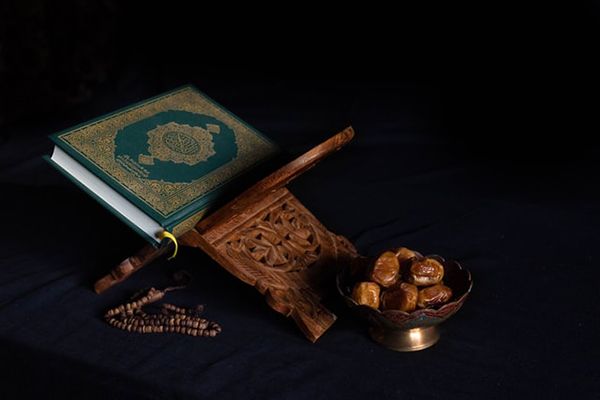
  • Establishing a Strong Relationship with the Qur’an

    Establishing a Strong Relationship with the Qur’an

    Muslims believe that the Qur’an is the miraculous Word of the One God, Allah Almighty, the Creator and Maintainer of the universe. Nevertheless, despite our realization that the Qur’an is our reference point on life, death, and the afterlife, we oftentimes struggle to maintain in our daily lives a strong and healthy relationship with the Book of Allah. Many of us might not realize that some of our difficulties and suffering in life could be byproducts of a weak relationship with the Qur’an, while we search so earnestly for relief, blessings, and success elsewhere. Thus, we ask: how does one go about establishing a strong relationship with the Qur’an?

    First, one must know the value of the Qur’an and why a consistent relationship with it is so crucial. For many people, this is the real underlying issue that is unresolved. The Qur’an is the final miracle given to the final messenger of God, and there is nothing like it in this world. We were not alive to see the splitting of the Red Sea, or the miracles given to Prophet Eesa (Jesus), or the splitting of the moon or the cool and safe fire for Prophet Ibrahim (Abraham). But we are alive now and have access to the greatest miracle of all: the Qur’an. Unlike other miracles and signs of God, this particular miracle is not confined to a particular time in history or region of the world. It is accessible worldwide today and recited amongst two billion Muslims around the world, just as it was recited by the great companions of Prophet Muhammad.

    Furthermore, we must remember three facets of recognition pertaining to the Qur’an:

    Recognize the Qur’an as Correspondence from Allah SWT

    If you were to receive a message from someone famous or powerful, or from a person you value, love, and respect, how would you treat that particular correspondence? If it were a text message from a just and beloved prime minister, a phone call from a pious scholar, a gift from a dear friend or family member, would you disregard it or value it?

    In all likelihood, that message or gift would be thought about and cherished time and again. This clumsy analogy, while important, is nothing compared to the reality of the Qur’an. The Qur’an is not a letter or a short message, but rather it is correspondence from Allah, the Exalted, to His creation. As one famous scholar said, “The people before you considered the Qur’an to be correspondence from their Lord, so they would ponder it by night and act upon it by day” (al-Ḥasan al-Baṣri).

    How often do we think of the Qur’an as correspondence from Allah, as it truly is, and as a result ponder its meanings and contents throughout the day and night? How often do we revisit this Message, one that we are in need of for all affairs of this life and the next? How often do we review it in prayer, study its deeper meanings, implement its commands, and teach it to others?

    Truly, when we recognize the Word of Allah for what it is, the value of the Qur’an will increase in our hearts and minds, and we’ll find ourselves connecting to it more deeply, respecting it more, and regularly embracing it for its transformative Light.

    Actions you can take:
    •  Before you begin your daily recitation of the Qur’an, take a moment to reflect on the fact that you’re engaging with the Word of Allah to you and to mankind.
    •  When the Qur’an is being recited, listen attentively as you acknowledge Allah’s correspondence to you.
    •  Regularly nourish your passion and motivation to connect with the Qur’an throughout the day and night as you value Allah’s Word and its central place in your life.

    Recognize the Qur’an as the Ultimate Source of Healing

    How much would you be willing to pay for a medication you needed? Oftentimes, people are willing to search far and wide for healing of a physical, emotional, or psychological ailment. One of the most powerful ways to reconnect with the Qur’an and increase its value in our hearts and minds is to recognize our need for it. The Qur’an is the ultimate source of shifā’ (healing). Allah SWT tells us, “O humanity! Indeed, there has come to you a warning from your Lord, a cure for what is in the hearts, a guide, and a mercy for the believers” (10:57). And in another verse, we are reminded of the same: “We send down the Qur’an as a healing and mercy for the believers…” (17:82).

    Regularly reconnecting with the Qur’an leads to a powerful shield for the heart and mind, a psychological resilience and barrier against weakness, and a healing for difficulties and ailments.

    Actions you can take:
    •  When you encounter difficulties, sadness, pain, or suffering, turn to the Qur’an first for healing, and also make du’a, in order to find strength and resolve through Allah’s Word.
    •  When you face ailments or illnesses of any kind, turn to the Qur’an for shifaa’ (healing) by reciting upon your body, or in your hands held in supplication and then wiping over your body, while fully believing in the shifaa’ through Allah’s Word. This step is to be followed even while benefiting from medical treatments or any medications.
    •  When reflecting on the world’s ailments and society’s emotional and psychological turmoil, turn to the Word of Allah first to find healing and peace and then share that with others.

    Recognize the Qur’an as the Ultimate Source of Guidance

    In the second verse of the very first surah (chapter) of the Qur’an, we find a description of the Qur’an itself: “This is the Book, without doubt, a guidance for those who are mindful of Allah” (2:2). When we look at the state of the world today, we see how lost people are without knowing about or adhering to the message of God. We see how people no longer fulfill their spiritual potential and end up wasting their lives and efforts. The human being is made noble by God, with an intended and magnificent purpose, to be tested in this life and to see “who is best in their deeds” (Qur’an 67: 2) before the life of eternal compensation, of reward or punishment.

    Jundub b. ‘Abdillāh Al-Bajalī (r) was once asked for advice. He said, “I advise you to fear Allah and obey Him [have taqwa] and I advise you to adhere to the Qur’an, for it is a light in the dark night and a guidance during the day, so implement it no matter how much struggle and poverty you have to face. If a calamity befalls you, put your wealth forward to protect your religion, and if the calamity continues, put forward your wealth and your life to save your religion; for the ruined is he whose religion is ruined, and the looted is he whose religion is taken. And know that there is no poverty after Paradise, and no riches after the Fire” (Siyar A’lām Al-Nubalā).

    What is it that assists people to do what’s right, to fulfill the potential within themselves or to recognize the blessings around them? It is the Word of Allah SWT, a guide for those who are mindful of God, a guidance for every moment, situation, or challenge. It is a source of objective morality, and a guidance for those who seek clarity and purpose in life. And yet, many people do not recognize that the solutions to problems, liberation from distractions and addictions, advocacy against societal oppressions, the livelihoods they passionately pursue, and the relationships they cherish – are all supported, perfected, and blessed when they are guided by the source of true guidance.

    It was reported that ‘Ubayy b. Ka’b (r) advised: “Take the Book of Allah as your leader (imam) and be pleased with it as a judge and ruler. It is what your Messenger left amongst you. It will be an intercessor for you. It is to be obeyed. It is a witness never doubted. In it is a mention of you and those before you, and judgment for whatever happens amongst you. And in it is news about you and whatever will come after you” (Siyar A’lām Al-Nubalā’).

    Actions you can take:
    •  Regularly connect with the Qur’an in order to preserve and reinforce your attachment to the guidance you were blessed with by Allah SWT.
    •  Whenever you feel lost or purposeless in life, increase your connection with Allah’s Word in order to be reminded of your true purpose, your profound value as a believer, your ultimate objective, and the true definition of eternal success.
    •  Utilize the strategies and reminders of Allah SWT in the Qur’an in order to serve as a source of guidance for others in the world. Many believers are grateful for the guidance they find in the Qur’an. Yet, many people they interact with are not aware of the true message of Islam. Magnify the blessings of guidance in your life by sharing Islam, its Book, and its guidance regularly with others.

    Ultimately, a lifestyle of connecting with the Qur’an begins with sincerity and recognition of the Qur’an’s value as it truly is. Therefore, we should do the following: (1) recite the Qur’an on a daily basis; (2) understand it; (3) memorize it; (4) internalize it; (5) implement it; (6) teach it to others for the sake of Allah.

    Abū Hurayrah (r) used to say about the house in which the Qur’ān is recited — “It becomes spacious for its inhabitants, the good of it becomes plentiful, the angels come to it and the devils leave it. And the house in which the Qur’ān is not recited becomes cramped for its inhabitants, has little good in it, and the devils come to it” (al-Muṣannaf).

    May Allah SWT guide us and our loved ones to deeply and regularly recognize the Qur’an as correspondence from Allah, the ultimate source of healing, and the ultimate source of guidance. May the Qur’an fill and heal and guide our hearts and minds, our attitudes and intentions, our homes and our lives.

  • Reflecting on Taqwa During Ramadan

    Reflecting on Taqwa During Ramadan

    Every Ramadan, we are reminded about the verse of fasting (2:183) and other verses that guide us to the objective of taqwa. And every Ramadan we need to reaffirm our understanding of the comprehensive facets of taqwa, for ourselves, our families, and our communities, so that we are aiming for its bountiful scope, not just one or another of its aspects.Consider the following three verses of the Qur’an. Allah says:“O you who believe, have taqwa of Allah as His right upon you” (3:102); and He says,“O you who believe, have taqwa of Allah, and let every soul reflect on what it has sent ahead for the afterlife” (59:18); and “O you who believe, fasting has been obligated upon you as it has been obligated upon those before you so that you may gain taqwa” (2:183).

    Taqwa is translated variously as God-consciousness, fear of God, being in awe of God, awareness of God, mindfulness of God, and conscious obedience to God. However, the Arabic term ‘taqwa’ is far more extensive and multi-faceted than the narrow translations found in one or two English words. One can understand the various facets of taqwa based on the verses of the Qur’an, the authentic aḥadith, and the commentary of the companions (r) of the Prophet (s) and scholars of Islam throughout the ages.

    What Is Taqwa?

    Taqwa is to be mindful and conscious of Allah, recognizing His Majesty and Perfection, acknowledging one’s status as a human being in need before the Creator, and recognizing the importance of submission to Allah out of love, hope, and fear, all with a consistent equilibrium. Thus, the internal state of taqwa leads to external manifestations such as obeying Allah’s commands, staying away from His prohibitions, and regularly reviewing one’s actions in order to progress towards Allah. Taqwa is a safeguard against complacency in this life; it is a fortress against sinning without remorse; it is to protect oneself with cautiousness in everyday life, so that nothing risks harming one’s relationship with Allah and, consequentially, one’s place in the afterlife.

    Taqwa is a shield, but it is not inert like a physical shield. It is a dynamic consciousness, a vitality infused into the believer’s soul so that he or she sees broadly and minutely while walking in a field of thorny bushes, walking cautiously so that they are not harmed by the prick of the thorn. Taqwa is a protection against recklessness whether with one’s thoughts or actions,or with choosing one’s companions or environment.Taqwa is to be so aware of one’s purpose in this life, and of Allah’s Perfection and Majesty, that the only reasonable lifestyle in this temporary and relatively insignificant world is that of awareness and vigilance.There is an adage that a prudent caution precedes wisdom.

    A Healthy Fear that Is Part of Taqwa

    Oftentimes, taqwa is wrongly taken to be a type of fear that is so debilitating that an adherent is living with excessive paranoia and spiritual paralysis. While fear is healthy to have in the proper proportion, it must be coupled with hope in the mercy of Allah, to the extent that one always recognizes their ultimate need for Allah’s mercy regardless of how often they repent or do good. Taqwa is to be so mindful of Allah that one’s actions change for the better.In the modern world, when people know they are being recorded, they tend to be more conscious of what they say or do.

    Then what about the mindfulness we should practice in the sight of Allah, Al-Basir, the All-seeing, and the effect this should have on our lives? While taqwa has within it the aspect of fear, everything in Islam is imbued with a healthy apportionment. What, then, is the healthy type of fear that accompanies taqwa with regards to our lives as believers?

    The component of fear in taqwa is multifaceted: it is fear of misguidance, fear of shortcomings in good deeds, fear of sinfulness, fear of God’s anger, fear of the hellfire — fear of any and all things that can result in ultimate and eternal loss. This fear, however, must be coupled with recognition of Allah’s vast mercy, as He promises to forgive the sinner every time he or she sincerely repents – and that sincerity is demonstrated by stopping the sin, having remorse, and intending to never return to the sin again. Allah’s mercy is so explicit that no believer can reasonably fall into paranoia and debilitating fear unless they have failed to reflect upon His mercy.The All-Merciful says, “O my servants who have transgressed upon themselves in sins, do not lose hope in the mercy of Allah, for certainly Allah forgives all sins. Indeed, He is the All-Forgiving, the Ever-Merciful” (39:53). Further, Allah says in a hadith qudsi, “O son of Adam, were your sins to reach the clouds of the sky and then you asked forgiveness from Me, I would forgive you” (Tirmidhi). Grasping the vast mercy of Allah prevents a believer from experiencing the fear of Allah in such way that it is paralyzing, preventing him or her from thriving mentally and emotionally. That is why it is so crucial for every believer to recognize the formula for equilibrium: it is to worship Allah out of true love and humility, with a balance between fear because of one’s shortcomings and hope for Allah’s mercy.

    The opposite extreme is when believers ignore the element of fear in taqwa and thus, they typically find themselves disregarding Allah’s prohibitions, ignoring His commands, missing some (or all) obligations, and thinking only of Allah’s mercy while ignoring the balancing weight on the other side of the scale:“Inform My servants that I am the Ever-Forgiving, the Ever-Merciful; and that My punishment is the most painful punishment” (15:49-50).

    Taqwa is to recognize Allah’s right over His creation, and as a result to humble oneself and follow His command. Taqwa is what leads the humble, wise, human being to recognize that true success and salvation cannot be achieved without Allah’s vast mercy, but that it is Allah’s right that He be worshipped and His Oneness not denied, praised and His guidance not forgotten, called upon in need and His punishment not downplayed.Imam Ibn al-Qayyim says: “Such a person [of taqwa] will be convinced that he cannot rely on his actions, lest he be destroyed. Many people think about their rights over Allah and not about His rights over them. This is how they are detached from Allah and deprived of the desire to meet Him. This is the epitome of ignorance of their Lord and of themselves.”

    The Path to Taqwa

    If taqwa is a necessary shield, fortress, lifestyle, mindfulness, and a condition of salvation and success, then it is only reasonable that every believer should strive to become a muttaqi, or one who has taqwa. Taqwa comes through holding oneself accountable in this world by reflecting on one’s thoughts and actions, before one is held accountable on the Day of Judgment. Taqwa comes through recognizing that this life is the only opportunity for good deeds – the currency of success! – and that the Day of Accountability is for justice, whether reward or punishment, with no more opportunity for good deeds. It was Umar (r) who said, “Hold yourselves accountable before you’re held accountable, and weigh your deeds [by reflecting on them] before they are weighed [on the Day of Judgment].” Similarly, Al-Hasan al-Baṣri (r) said: “Those who frequently hold themselves accountable in this life find their accountability in the next life easy, and those who take this matter lightly will find their accountability very heavy and difficult in the next life.”

    Taqwa is to check oneself frequently by reflecting and measuring. What is measured is oftentimes managed, and what is measured oftentimes progresses. What greater thing to measure — to manage and to facilitate progress — than one’s own journey to Allah? Taqwa in everyday life is to avoid the consumption of anything damaging to one’s journey to Allah such as watching inappropriate videos, movies, orany other form of improper entertainment, or listening to anything displeasing to Allah, or reading that which distances oneself from Allah’s mercy.Taqwa is to choose one’s environment cautiously and one’s friends carefully, in the hopes of finding support on one’s journey to the Ever-Merciful.

    Imam al-Ghazali (r) wrote,“It is incumbent on every person who believes in Allah and the Last Day that he should not be oblivious of self-accountability. Every breath of life is a precious jewel which can buy eternal treasures. Wasting these breaths or using them for detrimental purposes is such a great loss which no intelligent person could justify.” It was reported that Umar (r) donated a valuable piece of land when he missed Asr prayer in congregation, and that his son, Ibn Umar, used to pray qiyam all night if he missed a prayer in congregation. Thus, disciplining the self when one falls short helps to raise the believer in rank, to preserve the default level and standard of taqwa, and to experience true liberation from worldly desires and attachments, all while connecting to Allah the Ever-Merciful.

    Taqwa puts a proper order and proportion in one’s life, giving the believer a means to facilitate and measure his progress on the journey to Allah. Taqwa reminds the believer of Allah’s punishment while, at the same time, relieving the believer of distress by assuring him of the incomparable grace and power of Allah’s mercy. Taqwa is remembrance that Allah’s mercy is available so long as one ascribes no partner to Him and calls upon Him with true sincerity of repentance. “…And whoever has taqwa of Allah, He will make for him a way out. And He will provide for him from where he could not imagine. And whoever puts his trust in Allah, sufficient is He for him. For Allah will surely accomplish his purpose. Verily, Allah has set for all things a measure” (Qur’an 65:2-3).

    This Ramadan, let us fortify, through remembrance and reflection, a broad understanding of taqwa and then strive for its fullest application in ourselves, our families, and our communities.

  • Mercy for a Suffering World: The Islamic Model

    Mercy for a Suffering World: The Islamic Model

    In the Islamic faith, there is one phrase that is recited more frequently than any other. It begins every chapter of the Quran except for one. It is the opening for every prayer and the invocation that begins each action — whether it is eating and drinking, facing the most difficult of challenges, or starting the most mundane and routine of tasks. This phrase is “bismillah ir-Rahman ir-Raheem,” a few short but powerful words so often recited habitually, routinely, and ritually, but, nonetheless, a phrase that conveys one of the most beautiful expressions of faith: in the name of Allah, the Most Merciful, the Most Compassionate.

    The mercy of Allah (SWT) is captured in this awe-inspiring phrase with which we are commanded to begin so many actions in our lives. The reminder that our Lord is the most Merciful and the one who is truly filled with compassion is meant to be on our minds, on our tongues, and always in our hearts. The question plagues us as to why something difficult must befall us or another human being, when we are in the midst of suffering or see the suffering of others. The most critical pivot in those moments is to return to the words of Allah (SWT) and the reminder that is not meant to be far from our thoughts. For in the recognition of a most Merciful and Compassionate God exists the answers that we are so often seeking. Encompassed within His rahmah (mercy) is an implicit promise that whatever befalls us in this dunya, it is meant to be, and is, a blessing for us, even as we experience the test. As the one who has created us, we understand that He is closer to us than a mother is to her child. We are reminded in an authentic Sahih Muslim hadith that “Verily, Allah has one hundred portions of mercy. From one portion, the creation has been given mercy between themselves, and ninety-nine portions are reserved for the Day of Resurrection.”

    The Mercy of Allah (SWT) Is So Much Greater

    Imagine knowing that here on earth, the acts of kindness and mercy we see and engage in, such as feeding the hungry, caring for the sick, donating to charities, taking care of our families, and so much more, are just a tiny portion of Allah’s mercy towards His creation. In the beautiful narration of a situation witnessed by Aisha (RA), we see the mercy of a mother to her children and are in amazement of the fact that the mercy of Allah (SWT) is so much greater than that. “A woman entered, upon Aisha, with her two daughters, and she [Aisha] gave her three dates. [The woman] gave each of her daughters a date, then she split the last one between them. She [Aisha] said, ‘Then the Prophet (pbuh) came and I told him about that.’ He said,’ Why are you surprised? She will enter Paradise because of that.’” Although the mother herself was hungry, knowing that her daughters were also hungry, she willingly gave them the dates in an act of caring and compassion. We see glimpses of such mercy in humanity on a regular basis.

    The infinitely greater mercy of Allah (SWT) can be understood in the examples of His rahmah in forgiving our sins and in rewarding us for our repentance. We are reminded of the beautiful verse in the Quran which commands us to never despair of the mercy of Allah: “Say, ‘O My servants who have transgressed against themselves [by sinning], do not despair of the mercy of Allah. Indeed, Allah forgives all sins. Indeed, it is He who is the Forgiving, the Merciful’” (39:53). When we give in to despair, it becomes easy to fall into a depression that questions the mercy of our Creator. If we find ourselves in this dark place, then it becomes very difficult to hold onto the hope of relief through repentance and forgiveness, and we may turn away from Allah. Yet, it is He who is Most Merciful and Most Compassionate, and in the darkest hour, we need the connection with our Creator the most.

    The Man Who Killed 100

    There is a hadith that beautifully illustrates the immeasurable mercy of Allah (SWT). Abu Said Al-Khudri (RA) reported that the Prophet said, “There was a man from among a nation before you who killed ninety-nine people and then made an inquiry about the most learned person on the earth. He was directed to a monk. He came to him and told him that he had killed ninety-nine people and asked him if there was any chance for his repentance to be accepted. He [the monk] replied in the negative and the man killed him also, completing one hundred. He then asked about the most learned man in the earth. He was directed to a scholar. He told him that he had killed one hundred people and asked him if there was any chance for his repentance to be accepted. He [the scholar] replied in the affirmative and asked, `Who stands between you and repentance? Go to such and such land; there are people devoted to prayer and worship of Allah; join them in worship, and do not come back to your land because it is an evil place.’

    So, he went away and hardly had he covered half the distance when death overtook him, and there was a dispute between the angels of mercy and the angels of torment. The angels of mercy pleaded, ‘This man has come with a repenting heart to Allah,’ and the angels of punishment argued, ‘He never did a virtuous deed in his life.’ Then there appeared another angel in the form of a human being and the contending angels agreed to make him arbiter between them. He said, `Measure the distance between the two lands. He will be considered belonging to the land to which he is nearer.’ They measured and found him closer to the land [of piety] where he intended to go, and so the angels of mercy collected his soul” (Bukhari and Muslim). It is purely from the mercy of Allah (SWT) that his intention to do good was known and that the weight of that intention, by the measure of Allah’s compassion, carried him away from his past wrongdoings and towards mercy and forgiveness.

    In fact, rahmah comes from the same root in Arabic as rahm (womb). In a hadith qudsi, Allah SWT says, “I am al-Raḥman and created the rahm – and I named it after Me” (Ahmad). We know that the bond of the mother to her child is profound, and the love, kindness, and compassion she feels is sublime and awe-inspiring. Yet, the merciful Lord cares for those He has created more than a mother cares for her child, His rahmah so great and all-encompassing that it cannot be conceived fully by the human mind or experience.

    Prophet Muhammad: A Mercy to the Worlds

    The story of the first humans created, Adam and Eve, is also a story of repentance and rahmah and lays the foundation for our understanding of what it means to seek forgiveness and to always maintain our hope that despite our frailties and wrongdoings, that when we sincerely repent, Allah (SWT) will forgive us. The story of Adam and Eve is a lesson about repentance and forgiveness, and the centrality of rahmah in the design of life by Allah SWT. Extending that theme, the world was also sent Muhammad (pbuh) as a mercy for all mankind. We are reminded of this in the Quran: “Indeed, in this [Quran] is message for a worshiping people. And We have not sent you, [O Muhammad], except as a mercy to the worlds” (21:106-107).

    The mercy of the Prophet (pbuh) is evident in his actions with both those closest to him in his own family and those who were harshest with him from among the disbelievers. From being pelted with garbage and harassed in the streets, to being constantly cursed and belittled by the leaders of Quraysh, the Prophet (pbuh) never swayed from his mission to worship Allah (SWT) and to spread the message of Islam with mercy and compassion. There are many hadiths that document the demonstration of love, kindness, and mercy in the actions of the Prophet (pbuh). In Sunan Ibn Majah, Aisha (RA) narrated, “Some Bedouin people came to the Prophet (pbuh) and said, ‘Do you kiss your children?’ He said, ‘Yes’. They said, ‘But we, by Allah, never kiss [our children]’. The Prophet (pbuh) said, ‘What can I do if Allah has taken away mercy from you?’”

    Being merciful for the sake of Allah (SWT) includes actions that show genuine caring about the well-being of others. In a hadith, we are told the Prophet said, “…removing a harmful thing from the path is a charitable act” (Bukhari and Muslim). Such a simple act, removing a harmful item from the path of another, is a beneficial act of mercy for all, not in any way self-serving. In many situations where others may have reacted harshly, we again see the Prophet (pbuh) exhibiting the utmost rahmah. Anas bin Malik narrated, as recorded in Sahih Bukhari and Muslim, the following: “While we were in the Mosque with the Messenger of Allah, a Bedouin came and stood urinating in the Mosque. The companions of the Messenger of Allah said, ‘Stop it! Stop it!’ and were about to attack him. But the Messenger of Allah said, ‘Do not interrupt him; leave him alone.’ So, they left him until he had finished urinating, then the Messenger of Allah called him and said to him, ‘In these Mosques it is not right to do anything like urinating or defecating; they are only for remembering Allah, praying and reading Quran,’ or words to that effect. Then he commanded a man who was there to bring a bucket of water and throw it over [the urine], and he did so.”

    Recognizing that the Bedouin did not know any better, the Prophet (pbuh) showed him compassion and tolerance in response to his action in the masjid. Today, we often see things that are much less offensive in our masajid and yet we react with less tolerance and compassion. Such intolerant, condemning reactions only serve to alienate the person and make him defensive. The beauty of a merciful act and a merciful word can also be seen in the way the Prophet (pbuh) responded to the people of Taif who had treated him so badly and caused him great physical harm. When Jibreel (AS) told him Allah (SWT) could command the angels of the mountains surrounding Taif to crush the people therein as a punishment for their actions, the Prophet (pbuh) said “no” because he maintained hope that some of the offspring of the people of Taif would believe. And his hope was borne out and his rahmah was rewarded in seeing that day when the children of Taif and the grandchildren of Taif accepted Islam and became among the staunchest believers.

    Allah (SWT) Ordains that We Extend Mercy to Those on Earth

    While we may be well-acquainted with the narrations of the seerah and able to easily recognize the rahmah of the Prophet (pbuh) and the signs and manifestations of the rahmah of Allah (SWT) all around us, it can be difficult to consistently extend acts of mercy to those around us. When we view someone suffering today, often if the suffering feels very far away, we throw some money at the problem and hope that it will help in some way. But, truly living in a way that demonstrates caring, kindness, tolerance, and compassion requires that we take action, extending kindness also to those who are not of our own families or communities. In the reminder of the oft-repeated phrase that began this article, there exists a recognition that no matter what we experience in this dunya, there is a Merciful Lord who wants us to return to Him and who will see us through our most difficult trials. But in the midst of our lowest moments, it is also our own mercy, towards ourselves and others, that must lift us up and bring us closer to our Creator. To truly be a mercy, we must live according to the phrase “bismillah ir-Rahman ir-Raheem,” and we must deepen our gratefulness to the most Merciful Creator; and we must celebrate His praises with “al-hamdulillahi Rabb il-alameen (praise be to God, Lord of the worlds).

    Let us always remember what the Messenger of Allah, peace and blessings be upon him, said: “Those who are merciful will be shown mercy by the Most Merciful. Be merciful to those on the earth and the one in the heavens will have mercy upon you” (Sunan al-Tirmidhi).

  • Purifying Your Intentions

    Purifying Your Intentions

    All praises are for Allah, The Almighty, and may His peace and blessing be upon His true servant and final Messenger Muhammad, on his Companions, and on his household.

    This topic, “purifying your intentions,” is a basic one and much talked about, as it permeates our everyday lives and all of our acts of ibaadah (worship). As such, it is never too much to be reminded of purifying the intentions. After all, it is the level of purity of intention that gives weight to a deed and which, in turn, will make the “scales” heavy on the Day of Judgment so that the deed gets the fullest reward. The opposite is also true. If the sincerity is light, so will be the deeds, the scales, and the reward.

    Deen Is Sincerity

    First and foremost, the entire deen (religion) is built upon sincerity and purification of intention. Deen is not how good one looks or how one performs. Indeed, everyone should strive for excellence in whatever has to be done, as Rasoolullah (peace be upon him) said: “Verily, Allah has prescribed excellence in everything…” (Muslim). But this excellence must come with pure intention.

    In another hadith narrated by Tameem Ad-Daari (RA), Rasoolullah (pbuh) said: “Religion is sincerity. We asked to whom and the Prophet (pbuh) said ‘To Allah, His book, and to his Messenger, and to the Muslims, and to the common folk of the Muslims” (Muslim). Here the words used are “ad-deenu naseehah,” roughly translated as “religion is sincerity.” Rasoolullah (pbuh) tells us that there are five aspects to this, the first of which is sincerity to Allah SWT.

    Sincerity to Allah SWT means there are certain requirements, and to assess our fulfilling of these requirements, we should try to answer some self-examining questions when getting ready to take action for Allah SWT. Here are examples of such questions:
    • Is the action done sincerely for Allah SWT alone?
    • Is the action done for the pleasure of Allah SWT alone?
    • Is the action done for the sake of Allah in the best possible way?
    • Is the action done, even partially, to be seen or talked about by others?

    Remember, one should not give that which is flawed or left over for Allah SWT’s sake. Such actions Allah SWT describes in Suratul Baqarah: “O you who have believed, spend from the good things which you have earned and from that which We have produced for you from the earth. And do not aim at getting anything which is bad, in order that out of it you may give away something, while you would not take it [yourself] except with closed eyes. And know that Allah is free of need and Praiseworthy” (2:267).

    Ali (RA) said, “Do not be concerned with the smallness of a deed; rather be concerned with the acceptance of that deed.” Obviously, acceptance means that it is done purely and sincerely for Allah SWT. Imam Aḥmad bin Hanbal said, “Before you do anything, check your intention. Ask yourself before performing an action, ‘Is this for the sake of Allah SWT?’”

    Actions Are by Intentions

    Every book of hadith or fiqh begins with this hadith: It is narrated on the authority of Amir al-Mu’minin (Leader of the Believers), Abu Hafs ‘Umar bin al-Khattab (RA), who said: “I heard the Messenger of Allah (pbuh), say, ’Actions are according to intentions, and everyone will get what was intended. Whoever migrates with an intention for Allah and His messenger, the migration will be for the sake of Allah and his Messenger. And whoever migrates for worldly gain or to marry a woman, then his migration will be for the sake of whatever he migrated for’” (related by Bukhari and Muslim).

    We can understand from this hadith that while the outward action may seem fair and good, like migrating in order to marry a woman, if that action is not subsumed by the more important intention of migrating for the sake of Allah SWT, then that action will be only for the sake of the outward intention (i.e., marrying a woman). The deeper one goes in examining his intentions, the more he might find that while he thinks he is doing something for the sake of Allah SWT, his more outward pursuit of some tangible benefit is holding sway.
    Also, the outward action has the same stress and tiredness of the migration. Imagine two people migrating to get married. Both persons have to climb the mountains and cross the desert. Both might be in the same caravan, but one walks for Allah SWT’s sake alone and so he seeks to marry to fulfill his religion and please Allah, and the other to get married to a woman solely for his own personal, human reasons. These two migrations do not have the same value and do not get the same reward.

    How about a Masjid full of worshippers? All the worshippers stand, bow, prostrate, and sit. All the worshippers stand in line, but how sincere the intention of each man or woman will determine the level of the reward. Rasoolullah (pbuh) said, “A person may offer a prayer and nothing of it is recorded for him except one tenth of it, one ninth of it, one eighth of it, one seventh of it, one sixth of it, one fifth of it, one quarter of it, one third of it, or half of it” (this hadith is classed as hasan). This should not be a reason to be despondent, rather a reason to examine the intention when doing acts of worship.

    Purifying the Intention Is a Part of Aqeedah (Matters of Belief and Faith)

    Allah SWT says in the Qur’an, “…whoever hopes for the meeting with his Lord, let him work righteousness and associate none as a partner in the worship of his Lord” (18:110). In this verse, Allah SWT directs mankind to prepare for meeting Him by fulfilling two conditions:
    1. Working righteousness: a deed must be saalih (righteous) by following the guidance of Rasoolullah (pbuh) and be within the framework of deen.
    2. Worshipping the Lord: there should be no shirk or association of any partner with Allah SWT.

    With regard to both, working righteousness and worshipping the Lord, the focus must be on doing any act of good or any act of worship correctly in the outward sense and, at the same time, on being sincere to the core. Rasoolullah (pbuh) sent a man to redo his salaah because he did not perform it properly, and that is the outward aspect of acts of worship. But more importantly, the inner aspect, the intention and the degree of sincerity, can a reason for the deed to be accepted or rejected. The inner self is such that no one can see it except Allah SWT. Oftentimes, the individual can be blinded by the lower nafs and fail to see what obstructs his deed from being accepted.

    Struggling to Achieve Sincerity — Beware of the Ego

    The battle to purify the intentions should not be taken lightly. It is a big struggle. Ikhlaas (sincerity) means that nothing should come between you and Allah SWT in your actions. The struggle is to strive to make one’s emotions, speech, and actions free from all impurities. To achieve ikhlaas, one has to battle one’s own ego as well as the whispers of Shaitaan.
    Sahl bin Abdullah (died 896 CE, Basra, Iraq) said, “There is nothing tougher upon the soul than ikhlaas. How many times have I tried to extinguish riyaa (showing off) from my heart and it is as if it has appeared in a different color!”

    One of the challenges of doing good deeds is to maintain sincerity for Allah SWT alone, throughout that deed. So, before the action, there is the niyah (intention); during the action there is the necessity of ittiba’ (adhering to the teachings of Qur’an and following the guidance of Rasoolullah (pbuh); and after the action there is shukr (thanking Allah SWT for His guidance, for being able to complete the act, and for not boasting about it).

    Some of the root causes of insincerity are 1) being overly concerned about others’ perceptions and the desire to make oneself appear good in the eyes of others. This is a heart that loves praise and hates criticism. It seeks being glorified by others; 2) yearning to obtain what which is possessed by other people.

    Abu Hurairah (RA) narrated the following:
    “I heard The Prophet of Allah, peace and blessings of Allah be upon him, say: ‘The first of people against whom judgment will be pronounced on the Day of Resurrection will be a man who died a martyr. He will be brought, and Allah will make known to him His favors and he will recognize them. [The Almighty] will say: And what did you do about them? He will say: I fought for you until I died a martyr. He will say: You have lied. You did but fight that it might be said [of you]: He is courageous. And so, it was said. Then he will be ordered to be dragged along on his face until he is cast into Hellfire.

    ‘[Another] will be a man who studied [religious] knowledge and taught it and who used to recite the Quran. He will be brought, and Allah will make known to him His favors and he will recognize them. [The Almighty] will say: And what did you do about them? He will say: I studied [religious] knowledge and I taught it and I recited the Quran for Your sake. He will say: You have lied. You did but study [religious] knowledge that it might be said [of you]: He is learned. And you recited the Quran that it might be said [of you]: He is a reciter. And so, it was said. Then he will be ordered to be dragged along on his face until he is cast into Hellfire.

    ‘[Another] will be a man whom Allah had made rich and to whom He had given all kinds of wealth. He will be brought, and Allah will make known to him His favors and he will recognize them. [The Almighty] will say: And what did you do about them? He will say: I left no path [untrodden] in which You like money to be spent for Your sake. He will say: You have lied. You did but do so that it might be said [of you]: He is open-handed. And so, it was said. Then he will be ordered to be dragged along on his face until he is cast into Hellfire’” (related by Muslim, at-Tirmidhi, and an-Nasa’i).

    The three men represent, respectively, those who look like they are willing to give of their lives, those who look like they are willing to give their time to become learned, and those who look like they spend of their wealth. All three thought they were taking action for the sake of Allah SWT. But they deceived themselves, falling victim to insincerity. The three represent people who allow their lower nafs/ego to dominate them, even when they think they are acting with sincerity and pure intention.
    Train the Soul Not to Crave Praise or Admiration:
    • Develop firm knowledge and conviction that there is no individual who can confer benefit upon you, and that the only true honor comes from Allah SWT being pleased with you.
    • Likewise, there is no individual who can inflict damage upon or disgrace you except Allah SWT.

    Train the Soul Not to Crave What People Possess:
    • Develop firm knowledge and conviction that Allah SWT alone possesses the treasures that are supreme and everlasting. What people possess is only temporary.
    • Likewise, know with conviction that no earthly pleasure or material possession can compare with the treasures that Allah SWT alone can bestow upon a person.

    These reminders are necessary as they help when the servant stands in front of the Creator on the Day of Judgment to answer for one after the other of his or her deeds. So, remember when we perform our good deeds, let us be cognizant that the intention needs to be purified. May Allah SWT facilitate for us the purifying of our intentions and the capacity to maintain sincerity in all that we do!

  • Revival of Quranic Arabic

    Revival of Quranic Arabic

    The importance of the Arabic language to Islam and Islamic culture cannot be overstated. Indeed, its importance is universally accepted in the Muslim world. The religion of 1.8 billion people is based upon an Arabic Quran, the revelation which was transmitted by Allah’s most noble messenger, Muḥammad (peace be upon him). Its recitation rings out from all inhabited regions of the globe. One of the most significant aspects relative to the miracle of the Quran is its powerful and inimitable language. The late Mufassir Mawdudi, in “Message of the Prophet’s Seerah,” states the following: “The Quran’s linguistic style makes it unique and impossible to be imitated. This is called the I‛jaaz al-Quran. From this I‛jaaz, the Quran issues a challenge to all of mankind to imitate the Quran as the rational proof of its divine source. This is because Islam does not accept blind faith and the challenge results in the definite conclusion that the Quran is from Allah.”
    Understanding Quranic Arabic allows one to begin appreciating some of its numerous intricacies. Even the term “ayah,” meaning verse or sign, is itself a unique sign (evidence, demonstration, attestation) from Allah. Intrinsically, the Quran’s linguistics, grammar, rhetoric, prose, logic, and literary characteristics clearly differentiate it from human use of language. Altogether, the Quran was the most elevated presentation of Arabic that the Arabs at the time of the Revelation had ever encountered. This was evidenced by the testimony of a bitter enemy of Islam, Walid ibn Mughirah, who was one of the most eminent personalities and poets of the Quraysh: “I swear by God, there is none amongst you who knows poetry as well as I do, nor can any compete with me in composition or rhetoric – not even in the poetry of the Jinn! And yet, I swear by God, there is no similarity to what he [Muhammad] is saying [the Quran], and I swear by God, that indeed, his speech is very sweet, and is adorned with beauty and charm. Its higher part is fruitful, and its lower part is abundant, and it cannot be overshadowed! It shatters what is under it!”

    Lack of Literacy in the Arabic Language

    The Quran is the most highly regarded book, the only one that is memorized by millions. The preservation of the Quran in the heart, or Hifz, in and of itself, is a miracle of the Quran. However, it is tagged with a rather unfortunate paradox. The majority of the Muslim Ummah does not understand Arabic, the language of the Quran. Arabs constitute approximately 15 percent of Muslims worldwide, and that will probably decrease in the future, according to a 2017 estimate by Pew Research. This is not a new phenomenon, but the decrease in native Arab speakers has grown over the past few centuries as Islam has spread into every land. Thousands of Huffaz continue to be produced yearly from non-Arab Muslim lands. Much of the Ummah acquire the ability to read and memorize portions of the sacred Quranic Arabic script yet are completely oblivious to its meaning. This shortcoming is disheartening, demonstrating a complacency about the deen and absence of intellectual and spiritual depth. And there is little urgency or organized effort among Muslims to address this lack of Arabic literacy. It is important to note that rote memorization contradicts how the generation of the Prophet (peace be upon him) learned the Quran. Ibn Taymiyyah and others have mentioned that when the Sahabah learned just ten ayaat from the Prophet (peace be upon him), they did not hasten to learn more until they had digested the message and implemented the knowledge contained in the verses.

    Beyond the requirement for proper recitation of the Quran, the purpose of learning verses is not simple rote recitation, transmission, or memorization. Its purpose is guidance: “This is the Book about which there is no doubt, guidance for those conscious of Allah” (Quran 2:2). Allah also says: “Those to whom We have given the Book recite it with its true recital. They are the ones who believe in it. And whoever disbelieves in it — it is they who are the losers” (Quran 2:121). Here, the word “tilawah,” translated as “recitation,” has a deeper meaning than simply qiraa’ah (recite; read), and implies, reciting, conforming to and acting according to what is recited. The true tilawah of the Quran is following and practicing the guidance that has been recited. And this can only be accomplished when the language of the Quran is understood, even if it is at a basic level.

    History of the Decline

    The history of the decline of proper use and understanding of the Arabic language among the Ummah did not occur overnight. After the first few centuries in the Islamic world, Fusha Arabic (classical or literary Arabic) ceased to be the standard in spoken language, even though Arabic was still the dominant language. After the Mongol invasion, Arabic lost its eminence and its decline continued under Ottoman rule. Later, with the rise of Turkish nationalism, the concept of reading and memorizing the Quran, without understanding the meaning, became commonplace and was an encouraged practice. The hadith of the Messenger of Allah (peace be upon him) says: “Whoever recites a letter from Allah’s Book, then he receives a reward from it, and the reward of ten the like of it…” This was practiced in a ritualistic fashion solely for blessings. One of the causes of the decline of the Ottoman Empire was the stark disconnect between the recitation of the Quran, and its application, understanding, and contemplation.
    It is from this time period, along with the rise of European colonialism, that the learning of Fusha Arabic was systemically halted in the Muslim world, especially in lands where Arabic was not the mother tongue. It is important to note that colonialism and nationalism were not the only forces contributing to this decline. Islamic culture and influence stagnated in the 17th and 18th centuries. This was a universal phenomenon in practically all Muslim lands until the precipitous collapse of Islamic power in the 19th century. The colonial powers played a direct role, alongside nationalists like Ataturk, to bar the spread of Arabic and force Latin script upon non-Arab Muslims. This occurred with the Turkish, Malay, Hausa, and Swahili languages which had previously transitioned to Arabic letters. Arabic was essentially replaced with the language of the colonial powers which, in many places, has become the dominant language. Even in the Arab lands, the decline of the Arabic language had become significant up until its recent revival from individuals such as Muḥammad Abduh and his contemporaries . To this day, we see the lasting influence of the colonial powers in the Western language hegemony in the Muslim world. To complicate this matter, the Arabic Fusha language has moreover dispersed into regional dialects which have further distanced the Arabs from the Quranic language. We, as an Ummah, still have not been able to reverse the destructive effects of the colonial powers in diminishing Arabic in the non-Arab Muslim world.

    In the 19th century, the response by some scholars to Muslims’ lack of literacy in Arabic was to translate the Quran into other languages. And from this, the translation of the Quran into practically every language has continued until the present day. Unfortunately, for non-Arab Muslim countries, this has remained the accepted response to tackling the centuries old problem of Muslims memorizing, reading, and/or reciting the Quran without understanding the meaning. Despite the revival of Arabic in the past century or so, from the period of stagnation and taqlid (here, this term refers to “blind following of a religious school” and the stagnation in relevant jurisprudence and scholarship which result), the Muslim world still has not been able to break the colonial shackles. Our identities, nationalities, and languages remain not much different than those carved out for us by the previous colonial powers. We are still reciting the Quran ritualistically without taking heed of its guidance and wisdom. It is important for the Ummah to increase awareness of this problem if it is to be remedied.

    Fusha Arabic Can Never Disappear

    Is Fusha Arabic gone? No, alḥamdulillah, never can or will it disappear. The vastness of Islamic knowledge, science, and literature has been inscribed in Fusha Arabic. And the Quran itself is the highest presentation of Fusha Arabic. It is the basis of what we know as “Modern Standard Arabic” or MSA. Despite how secular MSA may appear, it is rooted in Classical or Fusha Arabic. Unfortunately, Fusha Arabic is not at all prevalent in the Arabic world, even among the most literate or religious. In Arab countries over the past few centuries there has been a widening disconnect between Fusha and the conversational Arabic that is used in society. Fusha Arabic has been confined for the most part to a purely religious or classical Arabic literature role. It is also used in khutbahs, official speeches, and formal news, but scarcely in any other societal context. Perhaps even more alarming than this is the contemporary decrease in the use and value of Arabic in Arab countries themselves. In one poll of young Arabs from the Gulf, one third report use of English more than Arabic on a daily basis. Affinity for the language of the Quran for American Muslims is not much different than rest of the Ummah. Our demographics are also not dissimilar to the worldwide Muslim population — one-third of American Muslims are Arab, one-third South Asian, and one-fifth Black Americans. Furthermore, we live in a society where Arabic is scarcely spoken, except in the privacy of some homes.
    If we are to uphold and continue the legacy of Islam here and elsewhere, we need to uphold and spread Fusha Arabic. Any distancing from the language will push us further from the Quran’s guidance and its divine benefits. Furthermore, the Ummah is at critical crossroads, and is continuously challenged by trials and tribulations of every kind. The masses need a direct connection to the lofty words of Allah Almighty so that they be protected from misguidance, ignorance, discord, insincerity, materialism, and despair. There are many challenges to moving the Ummah towards Arabic literacy nationally and internationally. The first step is in realizing the full nature of this calamitous problem. Only in that way we will find the proper perspective in formulating solutions. One positive note is that the average non-Arab Muslim has the ability to read the Quran at some level, whether basic or higher. This actually makes a realistic solution more feasible. One prospective solution is that all Islamic Institutions make teaching Quranic Arabic a mandatory part of their curriculum, especially those that teach and supervise Quranic Hifz. Another recommendation is that Islamic schools in both Arab and non-Arab lands transition their Arabic curriculums from conversational to Fusha or Quranic Arabic. Altogether, we need to make learning Quranic Arabic a principal goal in our lives, and to do so to the best of our abilities.

  • The Quran: The Perfect Starting Point for New Muslims

    The Quran: The Perfect Starting Point for New Muslims

    I’ve been a Muslim for ten years, alhamdulillah. I guess in the grander scheme of life, ten years is just a blip on the timeline. But as I reflect on all that’s happened over those years, I realize that, like many converts, my time as a Muslim has been filled with right turns and wrong turns, times of high iman and low iman, and plenty of stumbling around until I landed somewhere in between. I say alhamdulillah for it all. But if one were to ask me to pick something, to pick just one thing, that maybe (and Allah knows best!) I could have done better or started sooner, my answer would be to read and study the Quran.
    Too often, I meet recent converts who remind me of me. We hear about Islam from a friend, or a friend of a friend, and we start asking questions. Those questions lead us to a masjid where someone gives us a summary of the basics, a few pamphlets, and a Quran in teeny tiny print. Masha’Allah, by the mercy of Allah, we eventually declare our shahada. And for a few minutes, it’s a really exciting time. Takbeers ring out, the community showers us with hugs, and we spend our first moments as a Muslim feeling refreshed and hopeful about our new life path. But when the smiles fade and the congratulations stop, we go back home to find that our lives are exactly the same. Alhamdulillah, we are Muslim now, but the lives we live are not yet very Islamic. For many of us, this is where the hardships of a convert begin.
    Backlash
    The backlash we receive from non-Muslim friends and family for converting takes a huge spiritual toll. Because we are so new to the deen, we often lack both the religious knowledge to properly present and explain our beliefs and the spiritual maturity to deal with disagreements in a peaceful way. This creates tension and distance from the ones we love, the ones whom we would usually look to for support. Integrating ourselves into existing Muslim communities isn’t much easier. Cultural/ethnic ties and a general lack of empathy can make us feel looked down upon and unwelcomed. This creates more tension and becomes a primary factor for many converts not wanting to participate in masjid activities.
    Life becomes a blur when you are trying to navigate a storm of sensitive relationships and learn the rituals of a new way of life all on your own. Because of these difficulties, some converts leave the religion entirely. But many of us simply withdraw and quietly try to hold on to and put into practice whatever basic knowledge we have, in the best way we know how. The refreshed and hopeful feeling subsides and our spiritual development comes to a stand-still.
    The Benefits of Reading and Studying the Quran
    This is where I believe that reading and studying the Quran, and starting this early on, can be of great benefit to converts, as it can be to every Muslim. Unfortunately, it’s not something we pick up on right away. Often, learning the Quran doesn’t become a priority in our lives until years down the road, if at all. This is a great mistake. The Quran is not just another book for collecting dust on our shelves. It’s the preserved revelations of Allah, the Most High, and its message is meant for you and me. Allah says in the Surah An-Nahl, “… And We have sent down to you the Book as an exposition of everything, a guidance, a mercy, and glad tidings for those who have submitted themselves [to Allah]” (16:89).
    Through the Quran, Allah tells us everything that we need to know in order to live a good life. He (SWT) says in Surah Al-Isra, “Indeed, this Quran guides to that which is most suitable and gives good tidings to the believers who do righteous deeds that they will have a great reward” (17:9). Any issue that we can come up with, any problem we might face, any confusion we may have over a matter, Allah has addressed it for us in the Quran. In Surah Al-Isra, we are told, “And indeed We have fully explained to mankind, in this Quran, every kind of similitude, but most of the people refuse anything but disbelief” (17:89).
    The Quran even provides us with stories of people who came before us so that we can learn from their examples and use them as a measure to take account of our own souls. Through these stories, Allah provides us with a kind of blueprint for how to live and function in this world. So when we return to our homes and are met with confrontation, argument, or threat of rejection from the ones we love, we can open the Quran and learn from the account of Prophet Ibrahim (pbuh) speaking kindly and respectfully to his father who refused to believe in Allah alone (Surah Maryam, 19:41-48). And when we face old friends who want to tear us from our new path, we can remember the Companions of the Cave who united upon righteousness and were blessed by Allah for holding firm to their faith (Surah Al-Kahf, 18:9-26).
    Learning Supplications from the Quran
    If ever Allah tests us with great loss, we can try to embody the beautiful patience of Prophet Yaqub (pbuh) when he lost his son (Surah Yusuf). And when we make mistakes, because we all make mistakes, we can open the Quran and recite any number of powerful prayers for forgiveness that Allah, the Most Merciful, teaches us. We can learn a prayer like the one Prophet Yunus (pbuh) made from the belly of the whale: “La ilaaha il anta, subhanaka inni kuntu mina-thaalimeen”, which means “There is no God but You, glory to You, truly I am of the wrongdoers (Surah Al-Anbiya, 21:87). We can also learn the prayer of Prophet Adam (pbuh) and his wife Hawwa, after giving into temptation from the Shaytan: “Rabbanaa thalamnaa anfusanaa wa illam taghfir lanaa wa tarhamnaa lanakuunanna minal khaasereen,” which means “Our Lord, we have wronged ourselves, and if You do not forgive us and have mercy on us, we will surely be among the losers” (Surah Al-Araf, 7:23).
    Following the Guidance in the Quran
    The Quran contains so much guidance for us to live by. To not learn it is like keeping ourselves in the darkness when Allah has already shown us the light. But still, we make excuses. We tell ourselves, “I don’t know Arabic. What’s the point of reading something that I can’t understand?” I say, then start with whatever translation works for you. We think: “I’m so busy with everything else; I don’t have the time to learn right now.” I say, then start with just one ayah a day. Sometimes, we feel so weighed down by our hardships or by our shortcomings that we start to think that maybe we can’t change. And to this I say, remember the Sahaba. One of the main reasons many of the early Muslims became who we know them to be is because of the Quran.
    The perfect wisdom of Allah, coupled with the outstanding example of Prophet Muhammad (pbuh), liberated them from a life of ignorance, confusion, and susceptibility to lower desires. In practicing Islam, they came to be people of knowledge, understanding, justice, and virtue. And it can do the same for us, insha’Allah. But we have to read the Quran. We have to learn the fundamentals of Islam. We have to let the knowledge sink into our minds and into our hearts and then put into action what we have learned. We have to “practice” Islam. We have to make the Quran a priority in our lives and allow it to be our criterion for how to live in this world. And we have to start today. Prophet Muhammad (pbuh) said, “Indeed this Quran is a rope – one end of it is in the Hand of Allah and the other end is in your hands. So hold firmly to it that you will never go astray and never be destroyed” (sahih narration in the hadith collection of Ibn Hibban).
    Ways You Can Help a Convert Read and Study the Quran
    1. If you haven’t already been reading and studying the Quran, start learning and include a convert friend in your efforts, whether by going to a class or reading and discussing the Quran together.
    2. If you already know how to read Quran in Arabic, offer to teach a convert the basics.
    3. If you are a Quran teacher, offer classes for beginners so converts can learn the basic meanings of the Quran, especially for the shorter surahs that are memorized for salah.
    4. If you are a scholar, or a student of knowledge, offer a tafsir course so that converts can learn the events behind particular revelations and understand how to implement Quran into their everyday lives.
    5. If you are any of the above, make dua to Allah and ask Him to ease the transition and hardships of the converts, to bring them into Islam completely, and to allow you and us to be people of the Quran for His sake. Ameen.

    Prophet Muhammad, peace and blessings be upon him, said, “The best of you are those who learn the Quran and teach it” (Sahih Bukhari).

  • Islamic Resource Center – Interview with Janan Najeeb

    Islamic Resource Center – Interview with Janan Najeeb

    Janan Najeeb is a speaker, educator, business leader, activist, mother, and the force and founder behind a unique non-profit, the Islamic Resource Center (IRC) in Milwaukee, Wisconsin. The lending library which allows patrons to borrow Islamic books, is the first of its kind in Wisconsin and was established in 2010. It is thought to be the first one in the United States that serves youth as well as adults in the same vein of a public library. Beyond books, the resource center serves as a meeting place for many social and educational activities.

    The IRC is the brainchild of the Milwaukee Muslim Women’s Coalition (MMWC) founded in 1994 by Najeeb, along with a group of professional Muslim women. The organization’s board is made up of highly respected doctors and educators, all women, and the mission statement encapsulates the ideas of these forward-thinking individuals: “To empower Muslim women by providing them with the skills and training necessary for self advocacy, leadership and economic security. To advocate for Islam and Muslims by promoting an accurate understanding of the faith, to encourage dialogue amongst all people, to protect civil liberties and to build relationships and coalitions that work for justice, harmony, peace and understanding.” Najeeb, a mother of five, has received several awards for her activism in Wisconsin from the State, CAIR, and the ACLU. She is also the first Muslim to lead the prayer at the Wisconsin State Assembly.

    The following is a Q&A with Janan Najeeb, the President of the MMWC, about the resource center.

    Was the resource center an initiative of the masjid or a separate committee/group?

    The MMWC runs the IRC. We are independent of the masjid and have our own 501c3. However, we have close ties with the main Masjid (Islamic Society of Milwaukee) in Milwaukee and with the full time Islamic School, Salam School. They are a few miles away from us. Most of the board members attend the main Masjid for Jumu’ah and other events.

    How many people does the center serve?

    In 2015, we had nearly 5000 visitors. More than half of these are individuals that are not Muslim.

    So it is open to Muslims and non-Muslims?

    Yes, definitely. That was the main intent of the endeavor, to create a library and Islamic cultural center that is transparent and welcoming for everyone.

    What are some of the programs that you offer at the library besides the summer reading program?

    We have book clubs; the majority of participants are not Muslim. We have monthly networking brunches on many topics. This month we will be bringing in speakers from Voces de la Frontera, a Latino immigrant rights organization. We have a monthly “So How’s It Going” dinner for reverts, a tafsir group for men and a tafsir group for women, and Arabic classes for middle school, high school, and adults taught by university staff. We host films and discussions at a monthly family film night. We have Islamic poetry/spoken-word slams for college students and young adults, host author talks, and we host a wide range of workshops, for teachers, social workers, students, etc.

    We have a number of professors from several universities that bring their students every semester to attend a panel discussion or a book discussion. We also are one of the designated sites for foreign guests of the State Department that come to Milwaukee. We have been the hosts of high school students from Northern Ireland, Yemeni imams, female leaders of NGOs, and Muslim journalists. They consider us unique in the country because we are an educational and outreach organization lead by professional Muslim women and we are highly sought after as speakers. We are a monthly meeting site for one of the main interfaith organizations in Milwaukee, and we co-host the Muslim-Catholic Leaders dialogue. We have hosted a number of art exhibitions, youth leadership trainings, and presentations on important social justice issues.

    How did you collect the books? What types of books do you have? Do you have anything else besides books in the library? Media sources? Computers, etc.?

    The library currently has about 2800 books, DVDs, CDs, and magazines for loan, just like a public library, but all devoted to Islamic topics. We add new resources every week. We also have two computers for public use. We have a wide variety of resources covering every possible subject including children’s books, theology, Muslim women, hadith, fiqh, Islamic art, interfaith relations, marriage guides, African American Muslims, etc. People get a library card like any public library and they can check out books and resources. They also pay fines for overdue material. We have a professional librarian on staff and we research books from the many Islamic book publishers and book stores and a wide number of others that are not Muslim but print quality material including places like Oxford press and Fons Vitae. It is important to us that we carry quality material with quality writing and printing. We feel there is no reason we should not be a professional first rate facility.

    We have a small café that sells cold drinks, coffee, tea and snacks. We also have a small bookstore that sells books, Islamic gifts, cards, prayer rugs, etc., and we have Islamic art exhibited throughout the center.

    Who supports the library?

    The library is completely sustained by donations. We purchase material as we get donations, and what better sadaqat jariyah [ongoing charity] than a library that promotes knowledge and understanding for Muslims and those of other faiths as well?

    Is this a program that could be duplicated elsewhere?

    The most important ingredients for the success of this endeavor are regular dua, tireless commitment, and an absolute insistence on professionalism in every aspect of the project. When Imam Zaid Shakir visited last year during his 50 city tour, he stated that this was one of the most unique endeavors he encountered and he said every single city with a sizable Muslim population should replicate it. You can watch his video on our website.

    How has the greater community (non-Muslim) taken to this library?

    Wonderful response! Universities send us students to intern for the semester and to conduct research using our unique book collection. We are one of the main “go-to resources” for the media, and more than 50 percent of our patrons are not Muslim. The many Masjids send those that call looking for resources to us. Many teachers, particularly non-Muslim elementary school teachers, come in to choose books, particularly children’s story books, to share with their classes during Ramadan. Muslims often refer their colleagues, neighbors, and friends when they are faced with questions they can’t answer or they want to provide resources. And we have people that are just passing by stop in. Since we are not a Masjid and we are a library, the public feels comfortable coming in. Some of our top volunteers are not Muslim! Our numbers grow every year, and at least one third of the attendees at our annual fundraising dinner are not Muslim. I think that says a lot.

    Do you have plans to expand the library?

    Insha’Allah, as we acquire donations we continue to expand.

    Do you have a relationship with the public libraries?

    Yes. Our librarian is often contacted by public libraries for suggestions, particularly regarding Islamic children’s books. She has created a list based on the books that are checked out the most by children.

    How many subscribe to the library?

    According to the librarian, we have nearly 500 regular library subscribers, this number increases every month. Many others come and read or research at the center.

    Is there anything else that you want to say about the library or your community?

    Before starting this project, I remember touring many cities across the U.S. I was looking for great examples of an Islamic library that I could get ideas from. Most often, what I found was Islamic bookstores that looked like they belonged in a third world country rather than here in the U.S. I found that very distressing and unacceptable. In addition, there did not seem to be too much concern for professional quality, some of the books had very poor grammar and the printing was uneven and printed on cheap paper. In addition, some of the material was, in my opinion, counterproductive to promoting understanding. So rather than finding a model Islamic library, what I acquired was a list of “what not to do.”

    Having an Islamic library and resource center is crucial not only for the general public but also for Muslim children who don’t see characters that look like them, and participating in activities familiar to them, in the books they read in public libraries or their public schools. You can just see the joy on the faces of the children when they open these books for the first time.

    Also, this is a very important resource for reverts that need access to accurate information, as there are many that get erroneous information from Muslims who base their understanding on culture, and the library provides them with solid resources. You will be amazed how many Muslim families do not have any Islamic book collection at home; where are these families and children going to get their information? YouTube videos will never replace a good book! We are always looking to expand our library and we welcome financial donations.

    For more information, visit www.irconline.info. Also see mmwconline.org/ for information on the founding organization, Milwaukee Muslim Women’s Coalition.

  • Detecting Early Signs of Risk in Our Youth

    Detecting Early Signs of Risk in Our Youth

    Young children and teens today are bombarded from all around them via fellow peers, enticing ads, music, movies, and more, all calling them to engage in harmful behaviors. They are told to do whatever will make them “happy” or “fulfilled,” messages that turn them away from modesty, decency, common sense, and wisdom. It is essential that we, as community leaders, parents, educators, and medical and mental health professionals be aware of the constant struggle that is faced by today’s youth. We must not dismiss or deny signs of risky behavior, or believe that our youth are immune to such things as alcohol or drug use, or becoming sexually active.

    My question to the parents is always “What prevented you from seeking help when you started noticing a change in your child’s behavior?”

    We must also learn to recognize the warning signs and take action right away before things progressively become worse. In order to understand the struggle, we must first take a look at what could lead to psychological, spiritual, and/or social decline in our youth and what we can do to prevent that. Although these three categories are intertwined and influence one another, we will look at them separately to more deeply understand the impact of each.

    Psychological

    In her recent article, 12 Warning Signs Your Child May Have a Mental Health Issue, Dr. Susan Newman discusses “parent radar,” an essential tool all parents have that can help them discern if there is a psychological issue to be dealt with. The parent radar is the innate sense that something is not right with your child even though others may be telling you that it is a phase or a stage and the child will grow out of it. It is the feeling deep down that the mood swings, aggressive behavior, or overeating are not just part of growing up and learning how to cope with and navigate the complexities of life, but are a result of a deeper issue the child is dealing with. Trusting that feeling is essential because ignoring it could lead to dire consequences. When there is a feeling that something is just not right, it is time to seek help to rule out any mental health issues the child may be struggling with. Ignoring the feeling and hoping the issue will go away is where many parents go wrong. The issue will only increase in intensity and will become that much more difficult to resolve.

    I often have parents come into my office with a child who is being disruptive or disrespectful to the parent, a child who is failing in school, a girl who is being aggressive with her siblings, or a boy who has become withdrawn and non-communicative with family members. When I ask how long this has been going on, they typically answer: a few months, over a year, or sometimes a few years. My question to the parents is always “What prevented you from seeking help when you started noticing a change in your child’s behavior?” The answer is not always the same, but most often it is: “We didn’t think it was a big deal” or “We thought it would go away on its own.”

    It is essential to reach out for help when any warning signs present themselves. Ann Douglas, author of Parenting Through the Storm: Find Help, Hope, and Strength When Your Child Has Psychological Problems, discusses the warning signs to look out for. A few of these are frequent mood swings; display of intense emotions such as angry outbursts or extreme fear; difficulty sleeping or having nightmares; a lot of physical complaints. These are just a few of the many warning signs in children that may indicate that a psychological component is playing a part. It is important to be aware of the fact that any significant, extreme, or negative change in your child’s normal mood or behavior should be looked into. As parents, we must keep the communication open with our children, preteens, and teens so that we are able to discuss honestly and directly with them any concerns we may have with regard to their behavior. When children feel comfortable talking to their parents, they are more likely to turn to them for help.

    Spiritual

    Too often parents clash with their children or teens over religion, urging them to pray salah and read Quran, and wondering where they went wrong when their child refuses to comply or follow through. There is a common fear among Muslim parents that their children will go astray and completely denounce the deen or not wish to live a life of obedience to Allah’s commands. Parents spend many nights on the prayer rug earnestly seeking Allah’s help in guiding their children. Prayers are a huge step in the right direction, but so is patient, loving communication and interaction with our children. From a very young age, the parent is the role model when it comes to religion. They must be authoritative (not authoritarian), yet kind and fair. If religion is associated with any misbehavior or less than mature words and actions on the part of the parent(s), the child is likely going to feel alienated from Islam. Educating your child about the deen, demonstrating on a daily basis its values and principles, and imbuing it with meaning and purpose and joy through your love and encouragement – all this is essential, especially in the teen years.

    Warning signs of spiritual decline include a lack of interest in going to the masjid, in reading the Quran, or in praying. These may seem obvious but what may not be as clear is the feeling underneath the lack of interest. What is occurring inside the child/teen that is leading to this distance from deen? This must be unearthed in order for the spiritual decline to be understood and addressed. I have often seen in my practice teens who have lost hope in Allah because of prayers being unanswered, or others who have committed sins that they do not believe they could be forgiven. Trust, hope, and belief in Allah’s mercy are essential discussions to engage youth in so that they can relate these valuable principles to their own situations. Again, communication is always key. A connection to your teen and awareness of what he/she is going through is necessary in order to be a mentor, a compelling influence, and a source of guidance and comfort to him or her.

    Social

    The social life of preteens and teens is so important to them. This stage of life is when they are discovering themselves and, therefore, depend very highly on their peers. We know it well that Prophet Muhammad (pbuh) has said: “Man is influenced by the faith of his friends. Therefore, be careful of whom you associate with.” This statement must be focused on in this stage of a person’s life because the early teen years are when strong friendships are being developed. As parents, we must be aware of the people who are spending time with our youth, and the influence they may have on them, for good or ill. If our children are showing any signs of disinterest in being around family, mistreating others, becoming non-communicative, isolating themselves, etc., we must take note and remedy the situation before it worsens.

    Perhaps greater than the influence of friends is the influence of the Internet. Social media has grown so exponentially that many parents are unable to keep up with the different apps and social media outlets that the youth connect to and engage in on a daily basis, often multiple times a day. Inappropriate words, pictures, and videos can be shared in an instant, and access to them has become easier than ever before. Dr. Carolyn C. Ross, in her article, Overexposed and Under-Prepared: The Effects of Early Exposure to Sexual Content, notes the danger:

    Research has long established that teens who watch movies or listen to music that glamorizes drinking, drug use or violence tend to engage in those behaviors themselves. A 2012 study shows that movies influence teens’ sexual attitudes and behaviors as well. The study, published in Psychological Science, found that the more teens were exposed to sexual content in movies, the earlier they started having sex and the likelier they were to have casual, unprotected sex.

    It is simple common sense that there are detrimental effects on children from exposure to sexual and violent content. We as parents must strive to minimize such exposure via phones, tablets, and computers. Limits must be placed on when and where the device is used and for how long. There are numerous parental controls that are available on devices so that parents can control what their children are being exposed to. Some warning signs to look out for include: a decrease in time spent with family, an increase in time spent on devices, a decrease in communication/interaction with others, and any negative attitude or behavior change. Constant monitoring and open discussions with teens about sex, alcohol/drugs, and violence can prevent exposure and the more feared result, addiction. Children as young as nine years old are being exposed to pornography, and we simply cannot ignore this issue any longer; we must openly discuss in our homes and in our Islamic centers the danger to our children.

    Prevention is Key

    Unfortunately, parents so often seek professional help only when a situation with their child has reached crisis proportions. We as a community need to encourage one another to ask for help, to seek counseling, and to attend workshops so that we can work to prevent psychological, spiritual, and social problems in our youth. We must be proactive in creating resources within the community to protect the youth from harmful influences. The greatest need for children is connection and a sense of belonging. When they feel a lack of connection to their parents and to their community, that is when the need for something else comes into the picture. These feelings of loneliness and isolation drive teens to turn to drugs and sex, and also make them susceptible to depression, anxiety, and other mental health conditions.

    Communication is essential among families, friends, and community members so that we can assist one another when a warning sign presents itself. Counseling should never be a last resort but, instead, must be a resource that we encourage one another to utilize in times of chronic or acute stress, or any alarming concern. This can prevent even larger problems from taking hold of our families and communities. It is time we moved forward, from burying our heads in the sand to facing the problems head and heart on.

  • Seeking His Shade: Growing up in the Worship of God

    Seeking His Shade: Growing up in the Worship of God

    Have you ever heard the saying — Youth is wasted on the young? Those of us who can still lay claim to being young often have no real sense of the value of our youth. We’re strong in body, passionate in emotion, and have ample free time that makes older folks envious. There are young people who use their youthful years wisely, and others who fritter it away as though it holds no worth, thinking, “I’ll change sooner or later but I’ve got time to do whatever I want now.”

    Youth is a time of exploration. Older youth don’t yet have the family, financial, and civic responsibilities of an adult; but they have time, energy, health, and exuberant curiosity to explore, develop skills, and grow in knowledge

    Prophet Muhammad (pbuh) said, “Take benefit of five before five: your youth before your old age, your health before your sickness, your wealth before your poverty, your free time before you are preoccupied, and your life before your death.” Youth is mentioned as one of the categories here because it involves the part of your life where you are at your peak health. It’s the time when you’re in a position to lay a foundation for the rest of your life, to institute habits of discipline, to practice virtues, to learn how to think and reason and use common sense. This is the time when you’re able to begin an exciting journey of discovery, of contribution and service, of beneficial impact on your community and the world.

    In the era of the Prophet (pbuh), youth was not seen as a barrier to accomplishing things. There were military leaders who were teenagers. There were Quranic scribes who, in our times, would be considered too young to take on such an important task. There were scholars who were raised in the presence of the Prophet, listening to his words and absorbing his wisdom at tender ages. For these individuals, their youth was an asset, never a limitation. We’re often (mistakenly) taught that as young people we do not have the skills, patience, or dedication to contribute in a substantive way to our communities and to the larger ummah. But as we’ve mentioned, throughout Islamic history many young people achieved great things.

    The very act of having good people in your life can make or break your status with God. Your peers affect you in ways that you may not comprehend at first glance.

    Prophet Muhammad (pbuh) said, “There are seven whom Allah will shade in His Shade on the Day when there is no shade except His Shade.” Among the seven he mentioned is a young person who grows up in the worship of Allah. How can we ensure that Allah (SWT) grants us this status on the Day of Judgment? And how can we capitalize on our time to make sure we’ve fulfilled our greatest potential during the dynamic and bountiful years of our youth?

    Surround Yourself with Good Friends

    I couldn’t be more grateful to my parents who strove to put me in the presence of intelligent and well-mannered people, including my peers. They always knew where I was and with whom. They knew my friends’ parents, and the kinds of people they were. I’ll openly admit that as a child, this was often irritating to me. I didn’t want to have to answer a million questions about who my friends were or where we were going and for how long. I wanted my “freedom.” Now, as an adult and as a parent, I have come to sincerely appreciate the effort that my parents exerted so that I would be in the company of good, trusted people. The very act of having good people in your life can make or break your status with God. Your peers affect you in ways that you may not comprehend at first glance.

    For example, in Surat al-Kahf, Allah (SWT) mentions the story of a group of young men who escaped their town and secluded themselves in a cave because they were the only ones who believed in one God. Allah (SWT) caused them to sleep for 309 years. As part of the story, Allah (SWT) describes the group, saying: “They will say there were three, the fourth of them being their dog; and they will say there were five, the sixth of them being their dog – guessing at the unseen; and they will say there were seven, and the eighth of them was their dog. Say, [O Muhammad], ‘My Lord is most knowing of their number. None knows them except a few. So do not argue about them except with an obvious argument and do not inquire about them [among the speculators] from anyone’” (18:22). It may seem like the dog is mostly irrelevant in the story, but the fact that Allah (SWT) mentions him several times is no coincidence. Scholars of tafseer have explained that the reason the dog is mentioned so often is that it was in the company of these righteous young people. Being in the company of these believers was enough for the dog to be honored to the level of being mentioned three separate times in this Quranic verse. This is the blessing of righteous companionship!

    Not only do we need to surround ourselves with good people, we also need to ensure that we become the sellers of musk. Every person who sits with us should leave with something beautiful.

    Similarly, in a beautiful hadith Qudsi, Allah (SWT) explains that the angels search for groups of people who are remembering Allah, and they surround them with their wings. At the end of the hadith, Allah (SWT) says: “Bear witness that I have forgiven them.” Then one of the angels would ask, “Among those assembled, there is one who is not of them [i.e., a sinner]; he only came for some other need.” Allah would reply: “Even so, they are one another’s companions and their companions shall not suffer.” Just our presence with the people who remember Allah can be a means for us to be forgiven!

    Having righteous companionship can affect our status with Allah (SWT). Good people remind us of our blessings and remind us to be grateful for them. Good people can lift us up in times of distress so that we don’t get lost in our pain. Good people help our hearts stay open and receptive to Allah’s message and guidance. Prophet Muhammad (pbuh), said, “The likeness of a righteous friend and an evil friend is the likeness of a perfume seller and a blacksmith. As for the perfume seller, he may either bestow something on you or you may purchase something from him, or you may benefit from his sweet smell. And as for the blacksmith, he may either burn your clothes or you may be exposed to his awful smell.”

    Not only do we need to surround ourselves with good people, we also need to ensure that we become the sellers of musk. Every person who sits with us should leave with something beautiful.

    Read, Read, and Read Some More

    As a child, I would walk to the nearby library with my siblings and we would each take out at least ten books at a time. Once we got home, we would hole ourselves up in our rooms, devouring the books one by one. This was our entertainment before the advent of hand-held devices. Our mother would have to pry books out of our hands in order for us to eat or sleep at a decent time.

    Growing up this way made us into voracious readers. Although many of us have succumbed to the allure of hand-held devices, there is still no greater pleasure than holding a book and reading in silence. Reading opens the mind to frames of reference other than our own. It enriches our vocabularies so that we might become articulate speakers and writers. It lets us glimpse realities that we haven’t lived, and helps us develop understanding and empathy. “Read!” was the first word ever revealed to our beloved Prophet (pbuh). Years later, after a victorious battle in which the Muslims captured a number of their enemies, Prophet Muhammad advised that if any of them would teach ten children how to read and write, they would be freed. The ability to read and write was given such significant value that teaching it was considered enough of a ransom to warrant an enemy’s freedom. Allah (SWT) tells us in the first verses revealed: “Read! — in the Name of your Lord Who created, created man from a clinging substance. Read! — and your Lord is the Most Generous, Who taught by the pen, taught man that which he knew not” (96:1-5).

    In the Quran and the Prophetic traditions, there is great emphasis placed on reading, learning, and contemplating. Attaining to knowledge is given such a high status that even the Prophet himself would supplicate to Allah, saying “My Lord! Increase me in knowledge.” Reading is the gateway into the world of learning. It is the start of a life-long journey of reflection and exploration. The Quran advises, “Say, [O Muhammad], ‘Travel through the land and observe how He began creation. Then Allah will produce the final creation. Indeed, Allah is able to do all things’” (29:20).

    Reading isn’t just an intellectual exercise. It’s about expanding your mind to a point where you start to recognize and appreciate all the signs that Allah (SWT) has placed on this earth. So for a portion of each day, put aside social media, gaming, and TV and read! Read and strive to understand the Quran; read about the amazing scholars, writers, and inventors who came before us. Read about history, politics, economics, psychology, physics, linguistics, alternative energy sources, health and fitness… the list is endless. And the capacity to expand our minds and deepen our understanding is relatively endless as well.

    Grow Your Passions and Be Active

    Once you reach the age of puberty, you are held accountable for all that you do, and that thought can be daunting. But you also have the opportunity to do good and therefore cement your status as a “youth who grew up in the worship of God.” Youth is a time of exploration. Older youth don’t yet have the family, financial, and civic responsibilities of an adult; but they have time, energy, health, and exuberant curiosity to explore, develop skills, and grow in knowledge.

    Take courses outside of school, develop interesting hobbies, volunteer with your school’s MSA or other groups, work on neighbourhood projects or political campaigns that you believe in. You can even start a small business on your own or with a group of other like-minded peers. The opportunities are quite literally endless. But above all, remember that you are doing all of these things so that Allah will accept you as a youth who took advantage of his or her years before old age. And most of all, remember that you are doing all of these things as part of your worship, as a demonstration that your words and deeds flow from your eman; and your eman, in turn, is constantly growing and informing your daily living with a believer’s sense of meaningfulness and purpose. Ensure that this intention is present, and He will bless all that you do.

    Remember that Your Surroundings Don’t Define You

    I know how difficult it is to grow up in a place where others often belittle your identity, or look at you with suspicion. Perhaps you may feel that you’re at a disadvantage because you live somewhere remote, unable to learn at the feet of scholars, or you live in an environment not conducive to Islamic beliefs. But I remind myself constantly of the examples of the righteous people who came before me – some of whom had to live and preach in much more difficult circumstances. Prophet Musa (pbuh) was raised in the household of one of the worst oppressors and transgressors in history — Pharaoh himself. His adoptive mother Aasiya (may Allah be pleased with her) was in the same boat, but she had it even worse – she was married to Pharoah. And yet both of them rose above these toxic influences surrounding them – Musa (pbuh) became a prophet and messenger whose brilliant example is immortalized in the Quran. Aasiya became a martyr whose strength inspires us to this day, and whose dying words have become part and parcel of our beliefs: “My Lord, build for me near You a home in Paradise.”

    The opposite is also true. You can grow up in the best and most loving, supportive environments for a believer and still go astray. Take for example Prophet Nuh’s (pbuh) son. Regardless of the fact that his father was a prophet, Nuh’s son vehemently disbelieved in the truth. Even as the waves of the flood were getting higher and more violent, he refused to board his father’s ark and eventually perished. You are not defined solely by your surroundings. You are defined only by your own worship of God and your dedication to goodness in all facets of your life. Despite your flaws and sins (we all have them) – you’re so much stronger than you think.

    I pray that I and each person reading this meet under the Shade of Allah (SWT) because we used our youthful years to worship Him (SWT). Ameen.