
بسم الله الرحمن الرحيم

Tag: Quran

  • The Five Necessities

    The Five Necessities

    The conversation never gets old. Two parents are standing at the edge of the Masjid, on the verge of losing their kids to the crowd. It appears that the influence of their peers and the challenges of being young are getting the best of them. One concerned parent says emphatically to the other, “We need to do something for the youth!” A few cities over, the same realization is echoing at the weekly board meeting of your neighborhood Islamic Center and resounding from the pulpits of Muslim communities across the nation. If you’ve been involved in activism long enough you might have heard these words a thousand times.

    How do we instill this conviction in Muslim youth? One of the most effective ways is to put them through specialized dawah training. Why? Because many of them have the very same questions and doubts

    Nonetheless, there is an increasing awareness within our communities of a need that has been both present and pressing for a very long time. Where we have been delayed and left lingering for too long, however, is not in recognizing the need; rather it is in bringing forth and implementing practical solutions and methods to facilitate the fulfillment of that need. In other words, we have yet to cover the distance between “the what” and “the how.” We have yet to bridge the gap between the principle and the practical. We know we need to strengthen our Muslim youth but we don’t always know how. We know we need to cultivate in them the love of Allah and His Messenger, but again, we don’t always know how. We know we need to keep them engaged and active at the Masjid but we don’t always know how. This is where the old conversation usually comes to an end, and this is where the new conversation has to begin…

    There is a very beautiful and profound chapter of The Quran that is simple and short enough for a three-year-old child to memorize and to understand. In this chapter, Allah lays out a roadmap to success that is relevant to all of humanity and especially practical for Muslim youth. From it we can derive five basic necessities that, by Allah’s permission, will not only help our youth prosper in their religious affairs (deen) but will also help them prosper in their worldly affairs (dunya). The chapter that I am referring to is none other than Al-Asr (The Time), and the five necessities, that it so eloquently captures, are as follows: time management, conviction, righteous activity, inclusive engagement, and positive reinforcement.

    Time Management

    Allah says “By time, mankind is in a state of loss…” (103:1-2). One of the greatest challenges for our Muslim youth in the pursuit of their fullest potential is the fact that they have too much free, unaccounted for and unmonitored time, and not enough positive alternatives with which to fill that time. Many of them, in fact, are being left to their own devices and their own discretion without proper intervention or regulation, and as a result their true potential is being wasted. Yes, many of them may be doing well or excelling in school; but at the same time they are spending valuable hours on video games and social media, on the phone, watching 3-hour movies, and excessively engaging in fruitless activities. All the while, they are falling behind in their Islamic development.

    Mentorship is important for the success of youth because it creates a source for advice and support that is separate from the sensitivities that are present with family and friends

    Without a doubt there is great benefit in relaxation and entertainment, but when it begins to consume the lives of young people, then it becomes detrimental. What if we could cut the time that they spend engaging in entertainment and social media in half or even reserve a third of that time for beneficial endeavors? Now, instead of simply excelling in school, they could be over-excelling in school or taking on an extra-curricular that may contribute to their future success. In fact, with the amount of time that the average young person spends on the internet alone, they could be learning a trade or gaining a level of accreditation in one of the sciences of Islam. Time management is so vital and so necessary for our success that Allah uses the remainder of this chapter (Al-Asr) to lay out for us a specific regiment for the usage of our time.

    Conviction

    After informing us that all human beings are in a state of loss, Allah makes an exception by saying “…except for those who have faith…” (103:3). The second and the most important necessity that should occupy the time of our Muslim youth in order to prevent their potential from being lost is the development and preservation of their conviction in Allah. Why? Because without true faith and certainty in Allah, their taqwa (their mindfulness of Allah which leads to virtue and prevents sin) cannot be fully developed. Moreover, as long as they have doubts about Islam they run the risk of not only falling into sin but of losing their identity all together. On the other hand, if they do develop the necessary level of certainty and mindfulness of Allah, then they will begin to take account of themselves and make their own initiative to maintain their Islam. The real question, however, is how do we instill this conviction in Muslim youth?

    One of the most effective and practical ways to nurture conviction in the hearts of Muslim youth, especially teenagers, is to put them through specialized dawah training. Why? Because many of them have the very same questions and doubts that a non-Muslim would have. Many of them don’t know why they believe what they believe, and a part of the reason why is because they have not been introduced to Allah’s proofs in a way that captivates their minds and keeps them engaged. In fact, many young Muslims have never even been asked the question “Why are you, personally, a Muslim?” And the very inability to answer this question is a sign that their conviction may be deficient or unfounded, and their Islam may simply be cultural, a lifestyle that was passed on to them from their parents. Such a possibility should never be left unresolved. Also, dawah training, if done properly, should accomplish three things. It should stimulate faith and build certainty, connect hearts to the Quran, and provide individuals with the language and the skill to articulate and defend their Islamic identity in a time when Islam is at the center of the world stage.

    Righteous Activity

    After conviction, Allah mentions righteous activity which is the third necessity for success. Allah says “… those who do righteous deeds” (103:3). Oftentimes when we think of righteous activity, we limit it to praying, fasting, giving charity, and basic acts of kindness. However, righteous activity is that which is essentially beneficial and is a very broad category that can even include such things as physical fitness and social events if they are facilitated in the proper way with the correct intention. Righteous activity also includes those activities that will prevent you from falling into disobedience as well as those activities that facilitate good deeds. A good example of this type of righteous activity is participating in sports. Not only does sports prevent many young people from wasting time and engaging in other harmful things, but also through sports certain qualities and life skills are practiced and developed such as sportsmanship, teamwork, sacrifice, effective communication, tolerance, strategic planning, and even self-confidence. Moreover, if these activities are being facilitated by Muslims, then prayer and beneficial reminders can actually be incorporated as well.

    Now, I know that not every young Muslim likes sports. That’s fine. There are plenty of other activities that can benefit them and keep them engaged. Be creative! Ask them what their interests are and develop your programming around them. Take their favorite game shows like Jeopardy and Family Feud and create Islamic versions. Try to put them together in teams as much as possible and create incentives and merit systems to reward those who put forth their best efforts. Facilitate writing workshops that reinforce the importance of creativity and written expression in Islam, and encourage them, for example to write poems about the prophets or short pieces about what Islam means to them. Make sure that study circles for the youth seem less like lectures and more like conversations that involve both the speaker and the listener. Ask them if they know before you tell them the answer and they will be much more attentive. Lastly, one of the most transformative righteous activities that Muslim youth can participate in is feeding and helping those in need. This has a very profound impact on young people, especially those who have lived a relatively privileged life, without deprivation in food, shelter, or other basic necessities.

    Inclusive Engagement

    As for the fourth necessity on the roadmap to success, Allah says “…and those who participate in and encourage truth…” (103:3). If we want to see Muslim youth attached to the Masjid and taking up the cause of Islam on their own initiative, then participation is paramount. They have to feel like the Masjid is their Masjid. They have to feel like they are a part of the process. Even if they are given a donation basket to hold on Friday or a stack of flyers to hand out to the congregation as they leave, that seemingly small act of inclusion may change their entire perspective of the Masjid and their relationship with it as well. Through participation we not only can instill a sense of ownership in them, but we can also begin to cultivate leadership, and transition the youth into active, even proactive, members of the community!

    If you want to take it a step further, then don’t just let them hand out food to the needy on the day of distribution; let them manage the entire process themselves. Let them make phone calls from the office phone in the Masjid. Let them collect donations from community members. Let them plan the coat drive. Let them organize and host their own events under the guidance of the administration. Let them decide where they want to go for their quarterly youth trip. These things may seem insignificant but they can go a long way in the life of a young Muslim. Lastly, offer tutoring in English and math and SAT preparation classes at your community center because this will send the signal that you are concerned about the overall success and well-being of the Muslim youth. It also is a strategic way to bring them together in the House of Allah with other young Muslims.

    Positive Reinforcement

    As for the fifth necessity for success, Allah says “…and those who observe and encourage patience and perseverance” (103:3). Strengthening Muslim youth is all about positive reinforcement which should ultimately manifest into a comprehensive support system that includes family, friends, and mentors. This creates an environment wherein Muslim youth are constantly being invited and encouraged to do good. One of the most vital components to this support system is the youth group because youth are more influenced by their peers than anyone else, and are more inclined to come to the Masjid and participate in programs when they know that other youth will be present. What can enhance the positive youth-to-youth impact is the collaboration with other youth groups. This provides an extended sense of belonging, and sends the signal that other people like them are enjoying themselves doing similar things.

    Mentorship is perhaps just as important for the success of our youth because it creates a source for advice and support that is separate from the sensitivities and incentives that are present with family and friends. Youth need a safe-zone where they can express their insecurities and their personal struggles without feeling that they are being judged or condemned. They have real challenges that are not simply overcome just by knowing right from wrong; and the Imam might not be the person that they feel comfortable disclosing themselves to. This is where the mentor becomes very important. Some ideal candidates for mentors are university students, young professionals, and athletes – all of whom should be well-grounded and well-balanced in their Islamic identity.

    Lastly, everything crumbles without positive parental reinforcement in the homes. In fact, without it, the positive effects of involvement with high-minded Muslims peers and the guidance and support of mentors are undone. Parents cannot think that just because they send their children to the Masjid or even to Islamic school that their responsibility has been fulfilled. Rather, they have to know that they are the single most important pillar in the lives of their children because of the level of authority and proximity that Allah has given them. Ultimately, the five necessities cannot be properly implemented, monitored, and measured, without the involvement of the home.

    To conclude, we should know that Muslim youth are just youth who are Muslim. Their challenges and their interests are very much the same as other youth. However, the only thing that sets Muslim youth apart, and will allow them to prosper through the challenges, is the clear guidance sent by Allah!
  • A Day Trip to the Kaaba: The Ultimate Privilege and an Absolute Blessing

    A Day Trip to the Kaaba: The Ultimate Privilege and an Absolute Blessing

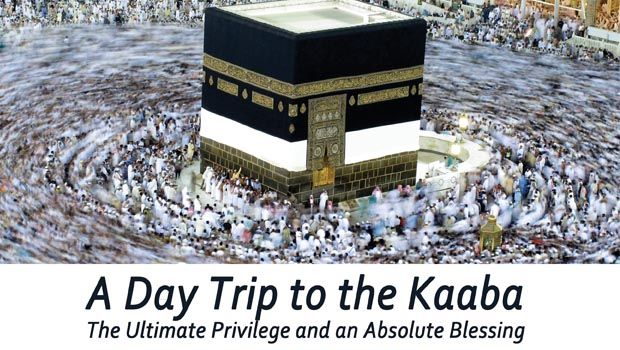
    At seven in the morning I would step out of my house into glorious sunshine and board the bus with my neighbours, who were also my colleagues, my friends, and my newly adopted family. In a state of Ihram and donned in two pieces of white cloth, the men would take the front of the bus. The women would be armed with their prayer beads and supplies of breakfast snacks as we yet again shared our overwhelming awe of being absorbed in the present moment: a day trip to the glorious Kaaba.

    We were a group of British and South African teachers living out an adventure in Jeddah, Saudi Arabia. The reasons to emigrate were many, but the common thread was our desire to be within close proximity to our spiritual home. The frustrations and stresses of working within a Saudi system paled in comparison to standing in front of the Kaaba, or in front of the beloved Prophet Muhammed’s (peace be upon him) grave and amongst thousands of worshippers who shared the same desire and passion to immerse themselves in contemplation of the oneness of God — escaping from the earthly world and into the ephemeral where the human heart can find complete rest and tranquillity.

    Words cannot convey the immensity of gratitude that ran through me each time I visited the two holy cities. Inevitably, large crowds of worshippers brought with them many challenges that had to be overcome; patience, respect, and understanding were all part of the process in ensuring that the full benefits of the Umrah trips were gained. However, during periods when international visas were closed, uninterrupted meditations were an absolute blessing. I would place my hands on the wall of the Kaaba fully absorbed in the moment. Deep in heartfelt prayers, I had the privileged opportunity to pray for all of humanity. From my late father who passed away prematurely from pancreatic cancer to the stranger who laboured endlessly to fund his child’s education, I asked Allah to grant them all peace in this world and the hereafter.

    Medina was a more relaxed experience compared to Mecca, and during the periods of closed visas, it offered an even more incredible opportunity to feel the love of the beloved prophet (pbuh). Through the blessings of Allah, I could sit close to the Prophet’s grave, taking my time in offering the two rakats of prayer and simply absorbing the immense strength of spirituality that seemed to have a unique and powerful vibe exclusively reserved for the city of Medina.

    My one year stay in Jeddah was an eclectic mix of experiences. Frustration, anger, and disappointment was balanced out with inspiring nature and beautiful friendships. But my greatest motivation was always my deep desire to be spiritually moved, to be fully absorbed into a world of prayer where only God exists. Mecca and Medina fulfilled this desire, and as I sit in my home in the UK watching the autumn change into winter, I cannot express enough gratitude for the blessings of having said time and time again, “Let’s go for a day trip to the Kaaba!”

    It is narrated on the authority of the amir al-muminin (leader of the believers), Abu Hafs Umar bin al-Khattab (may Allah be pleased with him), who said, “I heard the Messenger of Allah (peace be upon him), say, ‘Actions are according to intentions, and everyone will get what was intended. Whoever migrates with an intention for Allah and His messenger, the migration will be for the sake of Allah and his Messenger. And whoever migrates for worldly gain or to marry a woman, then his migration will be for the sake of whatever he migrated for’” (Bukhari and Muslim).

  • Muslim Youth: Developing Leaders for Today and Tomorrow

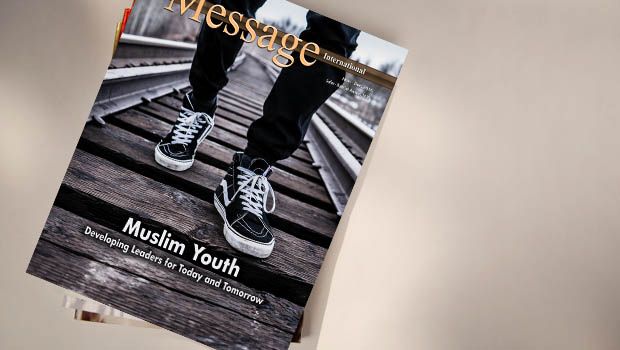
    Muslim Youth: Developing Leaders for Today and Tomorrow

    “The youth of today are the leaders of tomorrow.” This concept has been drilled into our heads. Both in Islamic contexts and elsewhere, we hear about youth potential and how one day they will be leaders of society. While experience and maturity is important, the role of Muslim youth is not to sit back and wait for the future to arrive. Prophet Muhammad, peace be upon him, told all Muslims that when we see something wrong, we should first change it with our hands. If we cannot change it with our hands, then change it with our tongues, by speaking up, and if we cannot do that, then at the very least we must recognize that evil and in our hearts, support changing the situation.

    Young Muslims presents and stresses core concepts of Islamic character and leadership, helping youth deepen their understanding of Islam and implement virtuous traits crucial to their success

    Muslim youth in America face challenges that can stifle their potential. One of the biggest challenges is the lack of necessary Islamic knowledge. Oftentimes Muslim youth in America are taught only the basics of their faith and sometimes not even that. They typically learn how to read and write Arabic without learning the meaning. It is no mystery why many young Muslims are not confident in their faith. Many do not understand Arabic enough to understand the Quran for themselves. Their own holy book can seem strange and foreign. If they want to truly understand their faith, they must go out of their way to seek Islamic knowledge.

    Another hurdle for Muslim youth in America is the lack of support in Muslim communities. Mosques sometimes feel to young people like a place of judgment and close-minded attitudes. Mosques are meant to be community centers where anyone can find help and support. Sadly, youth find that the issues they deal with are considered by adults to be too taboo or uncomfortable to discuss amongst Muslims. Youth end up turning to other sources for guidance, whether peers, social media gurus, or non-Muslim teachers or advisers. Their advice, while often well-intended, may contradict Islamic principles. Who can blame youth for taking that advice when Muslim mentors aren’t available to give them credible information and guidance suitable for young Muslims?

    Muslim youth are also constantly surrounded by vulgarity in pop culture. Every day they are exposed to music, movies, TV shows, and media filled with obscene messages. Living in a culture where modesty is rejected and “doing whatever you want” is celebrated can drain anyone, especially young people who are still building identities and figuring out their boundaries. Young Muslims in America are in a constant struggle between being accepted by society and firmly adhering to their faith. It is easier to follow the crowd and gain acceptance than to reject societal norms and risk being an outcast.

    Despite the challenges, Muslim American youth are part of history in the making. Being a Muslim in America today means you are contributing to the ever-changing portrait of Islam in America. Whether through standing up and driving change, or staying silent and allowing politicians, journalists, or even Islamophobes to speak for them, Muslim youth affect the image of Islam in America every day. The passion and energy of youth is an incredible asset. Young people can accomplish amazing feats in life when their efforts are channeled correctly. Some of the most esteemed companions of the Prophet (pbuh) gained respect and leadership positions at a young age. They used their passion and youth to help their communities grow and prosper. Their age did not limit them, instead their youth helped them further contribute to society. In order for Muslim youth to succeed as they have in the past, they must be given the proper tools.

    Safe spaces are crucial for developing dynamic youth. Muslim youth need to be in an environment where good deeds and good character are celebrated, somewhere they can to turn to receive wholesome Islamic advice without being looked down upon for their flaws. Being around people who encourage good deeds and discourage bad is a positive form of peer pressure that builds confidence and strength of character. Communities can implement this by encouraging youth to participate in community affairs, providing space to grow and learn from fellow community members while contributing to discussions and activism with their unique perspectives.

    Young Muslims, a division of ICNA, connects Muslim youth throughout America. This grassroots organization provides the tools youth need to grow and develop. YM presents and stresses core concepts of Islamic character and leadership, helping youth deepen their understanding of Islam and implement virtuous traits crucial to their success. Through weekly meetings, YM gives youth the opportunity to explore their faith and build bonds of companionship that last a lifetime. Organizations like YM give Muslim youth the tools they need to become the leaders of today and tomorrow.

  • Your Child is Being Bullied: What Should You Do?

    Your Child is Being Bullied: What Should You Do?

    Bullying happens too often in schools, both in public and Islamic schools, and parents often don’t know what to do to help their child when he or she is a victim of bullying. When a parent becomes aware that their child is being bullied, it’s very important to address the issue immediately in order to avoid the negative effects of bullying. Those negative effects can impact their development, and diminish their confidence, security, and sense of self-worth.

    Studies in the past have shown that children who are subjected to bullying are likely to have problems in various other aspects of their lives. In addition to feeling unsafe, the child who is subjected to bullying feels the misery of social rejection. This can lead to poor academic performance and other more serious problems as the child gets older. Wanting to feel accepted and liked by his or her peers is extremely important to a child. Yet some children simply lack the social skills that allow them to navigate their way successfully on the playground, in groups of children playing together, or in any casual interaction with peers whether in the classroom, in the hallway, or during lunch at the cafeteria.

    For all children, the younger ones as well as older youth, it is also very important to make sure that they have some basic guidelines as to how to respond when bullying does occur. There is a nonprofit organization that provides very practical steps that you can teach your child in this regard. Their website is www.kidpower.org. The guidelines are available at: kidpower.org/library/article/prevent-bullying/.

    In all cases, make sure that you are supportive of your child and that he or she knows they can tell you anytime about what is going on at school and anything they are having difficulty with. Never convey the idea to your child that he should ignore the bullying or that she is somehow to blame. Make sure he knows that bullying is wrong and that it is not his fault. Share with your child the Islamic teachings about mocking others, calling them names, or talking badly about other people. You can read with your child Surah Al-Hujurat, verse 11, and discuss the meaning on an age-appropriate level.

    When your child is bullied, gently try to get him or her to talk about the bullying so that you can elicit information and details about when, where, and how it happens. Talk to your child’s teacher and, if necessary, the school principal and let them know that you want to work with them to ensure that your child does not continue to be subjected to bullying.

    Most importantly, make sure that your home is a place where your child feels safe and secure, physically as well as emotionally. Your child should always feel that he/she can openly and honestly communicate with you. Let your child know that together you can solve any problem or handle any challenge, and that with patience and perseverance the solution will be found.

    Contributed by LivingEman.com

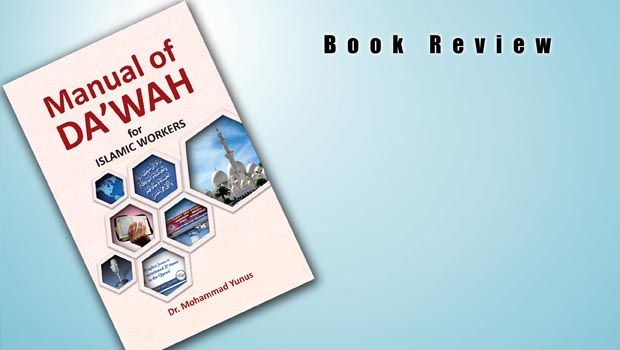
  • Book Review: Manual of Dawah for Islamic Workers

    Book Review: Manual of Dawah for Islamic Workers

    Paperback:  151 pages
    Author:  Dr. Mohammad Yunus (former Ameer of ICNA)
    Publisher: Islamic Circle of North America (ICNA)
    Year Published: 2016 (revision #4)

    Library of Congress Catalog Card #: 83-82068
    International Standard Book #: 0-9691479-1-0

    Review by Dr. Talat Sultan, former Ameer of ICNA

    Dawah, or sharing the true message of Islam, is a fundamental responsibility of every Muslim. It is also a collective obligation of the Muslim ummah. The Quran proclaims: “Thus have we appointed you as a community of the middle way so that you may be witness to mankind and that the Messenger may be a witness to you…” (Baqarah, 2:143). The Quran also tells us: “You are the best community that has been raised up for mankind. You enjoin the doing of what is right and forbid the doing of what is wrong, and you believe in God…” (Ali Imran, 3:110). And Prophet Muhammad (peace be upon him) said, “You should pass it on to others even if you know just one sentence [of Islamic knowledge].”

    Islamic Circle of North America, as an Islamic movement, has been carrying out this task over more than four decades as a leading dawah, educational, and social service organization. The “Manual of Dawah for Islamic Workers,” prepared by Dr. Mohammad Yunus for ICNA’s dawah department, was first published in August, 1983 as a guidebook for Muslims in general, and ICNA workers in particular, to carry out the obligation of dawah in a well-informed and effective manner. Now, ICNA has published its completely revised and updated 4th edition.

    The book starts out by introducing the concept of dawah in the light of Quran and of the sunnah of our beloved Prophet (pbuh) so that the reader understands clearly why it is important to carry out this essential obligation of outreach to people, a legacy of all the prophets of Allah. The book then outlines the contents of the dawah message to fellow Muslims and to non-Muslim audiences, as suitable to each. It then emphasizes that the character and conduct of the daiyah is of paramount importance, as the backbone and embodiment of the words of dawah.

    Various techniques of dawah are presented, geared to individual or collective audiences, from spouse and children in one’s own home, to other relatives and friends, to people in the larger community. Part V provides the reader with information about Christianity, its various doctrines, its scriptures, and the position of Jesus (peace be upon him) in the Quran. Part VI presents the activities and accomplishments of WhyIslam (WhyIslam.org) and Gain Peace (GainPeace.com), two highly successful dawah projects of ICNA. Their various programs are outlined, with statistics showing the encouraging results of the ongoing dawah work. Finally, a list of recommended books is provided for those who are serious and determined to further develop their skills in dawah. There is also a list of books that are recommended for distribution to individuals and groups who are the recipients of one’s dawah activities and efforts.

    The preface of the 1983 manual says, “The act of submitting to Allah requires that every heart beat of a Muslim must carry the message to those around him, that there is no god but Allah and therefore, He alone is the final authority. Concern and unequivocal commitment to Allah’s orders are not the only tools for an Islamic worker. He employs the best available technique of mass communication in a systematic manner for taking Allah’s message to all.” That message is compelling today as it was three decades ago. The “Manual of Dawah” has helped many over the years who thus strive to carry out dawah work, whether on their own or through an organization such as ICNA.

    This valuable manual is recommended reading for every Muslim who realizes that it is his/her obligation to share the truth and the beauty of Islam with fellow citizens.

  • Model for Civic Engagement – Dar al-Noor Masjid (MAV) in Manassas, VA

    Model for Civic Engagement – Dar al-Noor Masjid (MAV) in Manassas, VA

    Civic engagement for America’s Masajid could not be more crucial than now. America is facing challenges that can only be overcome by propelling the voices of reason into public and civic life and driving the voices of bigotry and closed- mindedness out of the public spotlight. We are facing the public rise of anti-Islamic sentiment while some of the country’s political leadership, both at the local and state levels and in Washington, D.C., have become detached from reality. Consequently, the safety and security of our families have become a growing concern for everyone. Muslim-Americans must engage in the civic arena in order to ensure, by Allah’s permission and will, that we contribute to the betterment of America, something that we, and all fair and decent citizens, want for ourselves and for our children.

    With civic engagement, your Masjid will have a voice in government decisions both big and small; your Masjid can achieve solutions for issues in the community; and your Masjid can do its part to ensure social justice and equality for all – with Allah’s guidance and help. Muslim-Americans’ civic engagement with their communities and our participation in the political process is a mutually beneficial affair. Engaging with our elected and public officials guarantees that the voices of Muslim-Americans are heard, especially on topics such as presenting accurate information about Islam, countering terrorism and violence in our communities, and finding sensible solutions to community issues.

    The Muslim Association of Virginia (MAV) has, in fact, been active in the civic arena for some 16 years now. Alhamdulillah, MAV has been successful in achieving major accomplishments for our community including the successful defeat of the anti-Sharia legislation in the Virginia Congress; the introduction and passing of a Halal bill in Virginia to regulate the labeling, identification, and sale of Halal products; lobbying for legislation granting students a religious holiday for Eid; and active voter registration which resulted in registering over 200 voters during Ramadan this year.

    MAV has identified some crucial steps and activities in a successful civic engagement program, and encourages all Masajid and Muslim organizations who have not already done so, to develop their own civic engagement program. Some of the steps and activities include:

    Set Up Voter Registration

    Your primary leverage with elected officials is demonstrating that you represent a large group of voters. In order to effectively represent your Masjid, you must ensure that its members are registered to vote. There are two ways to accomplish this goal: (1) your Masjid can set up its own voter registration team with registration tables at Jumu’ah prayers; or (2) you can bring in an outside organization that focuses on getting voters registered.

    Provide a Forum for Community Engagement

    The Masjid is a perfect space for school board or town hall meetings, and for debates between local, regional, and even national candidates. Not only does this benefit your community by bringing the information directly to your Masjid, but this also allows some non-Muslim members of the community an opportunity to set foot inside a Masjid for the first time in their lives. That opportunity to introduce community members of other faiths to your Masjid and their Muslim neighbors is critical to the success of your civic engagement program.

    Assist Homeless Shelters

    Show your community how vital charity is in Islam. Assist with food drives, help find shelter for families in need, visit the elderly at senior centers, become mentors/tutors for disadvantaged youth, volunteer at local schools or hospitals — your involvement in charity outside the Masjid demonstrates that you are dedicated to improving the community and, more importantly, that we care about our fellow citizens, Muslims and non-Muslims alike.

    Build a Relationship with Local Law Enforcement

    The security, good will, and community building that your Masjid receives from fostering a good relationship with local law enforcement is vital to the success of your civic engagement program. When a tragic event injures or takes the life of an officer protecting your community, be proactive about supporting the police station and the families of the officers. Your support of law enforcement events, memorials, and parades establishes a relationship of trust between the Masjid, its community, and local law enforcement. Inviting local law enforcement leaders to the Masjid is a great way to begin that relationship.

    Encourage Members of your Masjid to Get Involved

    Members of your Masjid should strive to serve on school boards, commissions, and civic associations, and to run for elected office. Having Muslims in those positions amplifies the voice of your Masjid and the Muslim community, from the grassroots level and up.

    Participate in Public Events

    Announce at your Masjid public events like parades and 4th of July celebrations and encourage attendance. If possible, provide transportation to such events to ensure turnout and that your community supports these events as a unified group. The more the wider community interacts with the members of your Masjid, the more successful your civic engagement program can, and will be, insha’Allah.

    Offer Elected Officials Speaking Time During Jumu’ah and Eid Prayers

    Invite local, state, and federal elected officials and candidates to speak at your Masjid. This benefits your Masjid in the following ways: 1) gives your members an opportunity to hear directly from officials and candidates; and 2) offers an opportunity for your members to speak directly to their elected official, asking questions to learn where that official stands on important issues. Set aside time (approximately 10-15 minutes) before the start of prayers to allow elected officials to speak to your community (for those officials who did not get to speak, acknowledge them and their attendance). It is vital that you make every effort to invite all candidates who are running for an elected office, regardless of party affiliation. Ensure that you are keeping a record of those invitations so that the non-profit status of your Masjid is protected and not placed in legal jeopardy.

    Support Sensible Elected Officials Regardless of Party Affiliation

    Do not engage with only one side of the political spectrum. Not every issue your Masjid encounters will be a shared concern of the major political party you (may) typically affiliate with. There are sensible elected officials in every party and it is important to have the opportunity to speak with them and raise issues, regardless of their political affiliation.

    Work Towards Common Goals

    When you engage an elected official, work towards achieving common goals rather than debating divisive issues. Your Masjid’s civic engagement program cannot solve every issue. Identify what issues are feasible for that elected official to accomplish and focus on those. Aggressively pursuing issues that the elected official is strongly opposed to, or where an agreement cannot be achieved, will usually result in little being accomplished and can burn rather than build bridges of understanding and cooperation. Choose your battles carefully.

    Organize with Others When Meeting Elected Officials

    Communicate with other Masajid, interfaith organizations, civic organizations, and local entities to encourage leaders from those organizations to attend meetings with elected officials alongside you. Showing unity and representation of a large voting bloc is important when speaking with elected officials. Don’t show up at the elected official’s office with a mob, however. Carefully choose leaders that represent a variety of organizations with goals and concerns in common with your Masjid.

    Know your Strengths and Abilities

    If you know you have large numerical or widespread support in the community – and can demonstrate or document it – strategically and tactically let officials know. Do not be hostile or overbearing at any time. Do not exaggerate your capabilities and strengths. Accentuate your good relations with other elected officials who support your position(s) and who may be allies to the particular official you are meeting with. Be organized in your presentations, making sure to highlight the key objectives or issues on your list.

    Establish Interfaith Engagement

    Reach out to other faith organizations in your area and work with them in all aspects of your civic engagement program. They likely already have some activities and strategies in place and may be willing to share what they have learned. And many faith organizations share similar values with Muslims. Remember, the more unity, the better!

    Promote on Social Media

    Remember that most Americans get their news and social views from what is on their social media feeds. Promote your Masjid and community events on social media and connect with other local organizations and your wider community.

    Determine the Intentions of Those Who You Engage With

    There are three reasons why another organization or an elected official is engaging with your Masjid:

    • They are focused on the best interests of the community
    • They are there for their own self-interest
    • They just need your Masjid for a photo opportunity
    • Know what you want to accomplish with those your Masjid engages with and focus your efforts on those who can produce positive results.

    Designate a Credible Spokesperson

    Your Masjid’s civic engagement program must have a credible spokesperson who can meet with elected officials, other organizations, and the wider community to successfully engage in the civic arena. The designated spokesperson does not need experience in politics; they just need to be able to accurately and effectively convey the community’s issues and messaging to elected officials.

    REMEMBER:

    In order for 501(c)(3) organizations to participate in civic political engagement, they must invite all candidates who are involved in an election and they must announce that they do not endorse or oppose any candidate.
    ——
    This article is compiled by Dar al-Noor Masjid (MAV) in Manassas, VA.

  • Helping Hand (HHRD) Strengthens Muslims in Mexico

    Helping Hand (HHRD) Strengthens Muslims in Mexico

    While most children his age attend school fulltime, our young brother Nooruddin spends many of his days making sweet desserts to sell on the streets of Mexico City. Each batch takes him three hours to prepare. Once the desserts are finished, he cools and wraps them to sell for a small profit of 15 pesos each, about $1USD. On a good day, he can sell 30 desserts, earning about $30 to help his father, who suffers from heart problems, provide for their family. Nooruddin and his family are among a growing minority of Mexicans who have come to accept Islam as their religion, and like millions of other people across Mexico, poverty is their way of life.

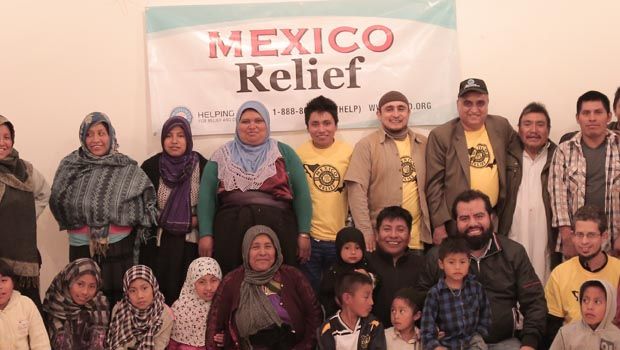
    Helping Hand for Relief and Development (HHRD) is one of the few Islamic NGOs focusing attention on aiding Muslim families in Mexico with long-term relief and development programs. Since 2012, HHRD has been working in various parts of Mexico to aid families with food packages including Zabihah compliant meals and Ramadan iftars, diabetes screening programs, school supplies, and gift bags for children. “I don’t know if maybe the impression is that Muslims in Mexico are self-subsidized and self-supporting, but it’s not true,” said the Libyan Ambassador to Mexico, Muftah Altayar.

    According to a 2009 PEW report, the number of Muslims in Mexico is approximately 110,000, accounting for less than one percent of the total population. However, by the mercy of Allah and then the outreach efforts of both Mexican and immigrant Muslims, Islam in Mexico is spreading. “Alhamdulilah, in Mexico it is very easy to talk in the universities and the high schools. They invite us to talk about Islam because the people really want to learn about Muslims,” said Imam Isa Rojas, the first Mexican graduate of the Islamic University of Medina, Founder of the Al-Hikmah Center in Mexico City, and active caller to Islam in Mexico. “The people want to know about Islam because they don’t have a negative opinion about Muslims like they do in Europe or perhaps in the United States.”

    Mexico City, the bustling capital located in the center of the country, has upwards of 3,000 Muslims living within its borders, many of whom are converts. In the Southeast region of Mexico lays the Free and Sovereign State of Chiapas. It is a lush and culturally rich land with an estimated 100-300 Mexican converts to Islam who have established a small but growing Muslim community in the city of San Cristobal de las Casas. However, many of the brothers and sisters in this area struggle with basic necessities such as job security, education and healthcare.

    While in Chiapas this past year, HHRD volunteers were given a tour of the community by Brother Yahya Gómez, one of the prominent Mexican converts to Islam and activists in Chiapas. The homes were simple structures of wood plank walls and metal sheet roofs, made to house only a few people. However, it was not uncommon to see extended families of 15 or more relatives living together in the same space. Men in the community can only secure work as manual laborers, if they are able to find work at all.

    “It’s in very bad shape. You have a few families living in one house. It’s more a kind of temporary shelter; I cannot say it is a house. It needs renovation… I say they need a new house in its place,” said HHRD International Program Director, Irfan Khurshid, when he witnessed the poor living conditions.

    For only $27,000 per home, HHRD’s Home Renovation and Building Project can provide for current homes in Chiapas to be upgraded or completely redone to provide safer, more spacious homes for growing families, including all necessary plumbing, electric, and construction costs. Some homes will even be completely rebuilt in safer neighborhoods that are closer to the local masjid.

    To further aid Muslim families in Chiapas, HHRD is implementing a Micro Finance Initiative that will provide interest-free small business loans to individuals with the ambition to become self-sustaining. With small loans ranging from $1,500 to $4,000, participants in the program can learn skilled trades and begin to operate their own businesses in the fields of carpentry, sewing, baking, or auto mechanics to help raise themselves and their families out of poverty.

    “This micro financing project is so amazing because it takes a simple donation, you know somebody can give $1,000 or $2,000 to help a Muslim start up a company,” said Boonaa Mohammed, a volunteer who recently traveled with HHRD to Chiapas. “It will take that money and allow them to buy whatever necessary tools are mandatory for the specific trade. It will give them the bare minimum. And then once they have actually been able to become successful in their trade and they have that money, they give it back to the charity which then gives it back to another Muslim that wants to, again, prove themselves through a trade.”

    HHRD is also in the process of establishing a Skills and Vocational Training Center in Chiapas to assist unemployed individuals gain the education and training needed to earn steady and halal sources of income. “In this center we can teach them different skills and they can learn a trade so that they can start their own business or find different jobs,” said Khurshid. “This will help them economically and will help them educate their children because many of the children from these unemployed and low income families have not had access to an education.”

    In addition to these large scale development projects, HHRD is also in the process of starting an In-Kind Gift Program to provide immediate necessities to families in Chiapas, Rosarito, and Mexico City, as well as an Educational Support Program where donors can sponsor a child for only $1 per day to help provide them with necessary school supplies.

    “Often times, in North America, when we look at converts and reverts, there are so many difficulties they have integrating within our Muslim communities,” said Mohammed. “Now imagine a community of reverts and converts trying to integrate into a non-Muslim society that doesn’t have a strong basis of Islam for them to fall back on. It is imperative that we offer our support in whatever way that we can and know that whoever gives for the sake of Allah, subhana wa ta ala, the sadaqa will never go to waste.”

    To get involved with Helping Hand for Relief and Development programs in Mexico, visit their website www.hhrd.org, contact info@hhrd.org, or call 1-888-808-HELP (4357).

  • Al Servicio de la Comunidad Mexicana

    Al Servicio de la Comunidad Mexicana

    Hace solo cuatro años que el primer informe fue escrito acerca del Proyecto WhyIslam en México, pero mucho ha ocurrido desde entonces. La campaña mexicana comenzó con un deseo de repartir ropa islámica y literatura a una comunidad creciente en la Ciudad de México llamada Centro Al Hikmah. Siete organizaciones se unieron para contribuir a la causa, donando todo lo necesario. Durante su vacación, Nahela Morales, una conversa mexicana, distribuyó los artículos a la comunidad islámica en junio de 2012. El viaje tuvo tanto éxito que se convirtió en un esfuerzo anual.

    El interés aumentó cuando personalidades muy conocidas como Nouman Ali Khan, Omar Suleiman, y Boonaa Mohammed respaldaron los proyectos en México. En 2013, Nouman Ali Khan viajó al estado mexicano de Chiapas, al pueblo de San Cristobal de las Casas, como parte del segundo viaje de divulgación en México. Se conmovió tanto al ver las condiciones de vida tan pobres en las que viven las familias musulmanas indígenas, que decidió filmar un recorrido de un hogar típico, una estructura humilde hecha de paredes de madera cubiertas en plástico para que no entre la lluvia, un techo de chapa, y piso de tierra. El video fue lanzado en el canal de YouTube de WhyIslam y lo han visto más de 215.000 personas.

    La meta para ese año era comenzar planes para renovar la mezquita, Al Kauthar. A través del uso de medios de comunicación y campañas para recaudar fondos, Morales logró reunir más de $30.000 para el material islámico y alimentos a distribuir durante el mes de Ramadán, y el proyecto de renovación para la mezquita. Sin embargo, las metas futuras eran ofrecer apoyo continuo a las familias necesitadas en este sector y proporcionar renovaciones a sus casas. Esto provocó planes para establecer un capítulo de Mano Amiga para la Ayuda y el Desarrollo en México, o HHRD (Helping Hand for Relief and Development).

    En 2014 Boonaa Mohammed viajó con HHRD y un equipo de grabación a México para producir documentales que llaman la atención necesaria a esta causa.

    El Profeta Muhammad, la paz sea con él, una vez aconsejó a Aisha cuando ella deseaba ofrecer un regalo a un vecino; le dijo que debía dar “a aquel cuya puerta está más cerca a la tuya”. La idea de ayudar a nuestros hermanos y hermanas en México nace de este consejo, siendo que México es uno de solo dos países que comparte una frontera con los EE.UU. También es el país más grande de América Latina con la población musulmana más pequeña. Sin embargo, los musulmanes están creciendo en número y necesitan ayuda. Alhamdulillah, hemos sido bendecidos con la capacidad de ayudar a nuestros hermanos por lo que pedimos su continuo apoyo y oraciones.

    Esperamos que ustedes disfruten leer algunos relatos y artículos informativos de nuestros hermanos y hermanas de México y de habla hispana, y que también los recuerden en sus oraciones. YazakumAllahu khaiyran.


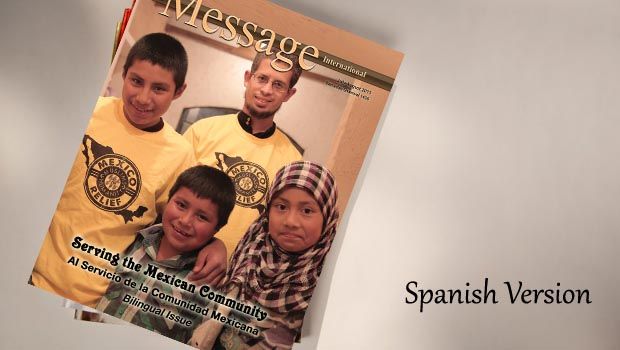
  • Serving the  Mexican Community

    Serving the Mexican Community

    It was only four years ago that the first story about WhyIslam in Mexico was written, but many exciting events have transpired since then. The Mexican campaign began with a desire to deliver Islamic attire and literature to a growing community in Mexico City, Al Hikmah Center. Seven organizations joined forces to contribute to the cause, donating everything from Islamic CDs to siwaks. During her vacation, Nahela Morales, a Mexican convert, distributed the items to the Islamic community in June of 2012. The trip was so successful that it became an annual effort and each year expanded to cover more than five cities within the country.

    Interest really took off when well-known lecturers and personalities such as Nouman Ali Khan, Omar Suleiman, and Boonaa Mohammed endorsed the projects in Mexico. In 2013, Nouman Ali Khan even traveled to the Mexican state of Chiapas, to the Islamic village in San Cristobal de las Casas, as part of the second annual dawah trip to Mexico. He was so moved by the poor living conditions of the indigenous Muslim families that he filmed a video tour of a typical home, a humble structure with walls made of planks and plastic covering to keep out the rain, a tin rooftop, and a dirt floor. The video was released on WhyIslam’s YouTube channel and has over 215,000 views.

    The goal for that year was to begin plans to renovate the town’s masjid Al Kauthar. Through the use of social media and fundraising campaigns, Morales was able to gather over $30,000 for Islamic material and food for distribution during Ramadan, and the masjid renovation project. However, future goals were to offer continuous support to needy families in this sector and to provide home renovations and reconstructions. This sparked plans to launch Mexico Relief Project by Helping Hand for Relief and Development.

    In 2014 Boonaa Mohammed traveled with HHRD and film crews to Mexico to produce documentaries that bring the necessary attention to this cause.

    The Prophet Muhammad, peace be upon him, once advised Aisha when she desired to offer a gift to a neighbor, that she should give, “to the one whose door is nearer to you.” The idea of helping our brothers and sisters in Mexico is one that stems from neighborliness, in the sense that Mexico is one of only two countries which share a border with the US. It is also the largest Latin American country with the smallest Muslim population; however, the Muslims are growing in number and need assistance. Alhamdulillah, we have been blessed with the ability to aid our brethren so we ask for your continued support and prayers.

    We hope that you will enjoy reading some stories and informative articles from our Mexican and Spanish-speaking brothers and sisters, and that you will also remember them in your prayers. JazakumAllahu khaiyran.

  • My Advice to New Muslims

    My Advice to New Muslims

    Oftentimes when a person embraces Islam, he or she is unsure of what steps to take next. After much effort to arrive at the decision to proclaim the shahadah, the testimony of faith, with conviction and sincerity, their journey continues. Knowing where to go from there can help a new Muslim steer clear of hardships and misguidance. I am a Latino convert of over twenty years who has had a chance to study Islam and Arabic in the US and Saudi Arabia. In this article, I offer my advice to new Muslims.

    Learn About Allah

    The science which deals with this is called al-tawhid, which means “to single out Allah in worship”. Actually, al-tawhid is classified into three categories – tawhid al-rub?b?yah (singling out Allah in His Lorship), tawhid al-asm?’ wa al-sif?t (singling out Allah in His Names and Characteristics), and tawhid al-uluh?yah (singling out Allah in worship).

    Getting to know Allah is very important. Having newly entered Islam, one might still have a lot of misunderstandings about his/her Lord. In Islam, we recognize that our original state of being is one of not having knowledge, and Allah sent prophets to us to teach us about Allah and the correct way to worship Him. Allah says “We have sent to every nation a messenger (saying) “Worship Allah and avoid worship of other than Allah.” This knowledge is the most important thing a Muslim can learn and the first obligation upon him/her. One should be continually learning, recognizing, purifying, and acting upon tawhid.

    The first words uttered to enter Islam – “L? il?ha illa All?h” – are related to al-tawhid. These words are in fact a statement confirming al-tawhid. They should also be the last words a Muslim says just before he/she dies. That being the case, we can say that al-tawhid should also be the last matter in life.

    Learn the Qur’an

    Allah sent the Qur’an to us as a guide to live by, to judge by it, to recite it, to use it as a cure, to learn and teach it, to reflect upon its words, and to make it the center of our lives. Indeed, the Qur’an is one of the greatest miracles. We should spend time learning how to recite it in its original language. We should read its translation in the language we are most fluent and comfortable with. We should also invest time in our lives to familiarize ourselves with its verses. Indeed, every single verse is itself a sign (?yah) from Allah. It is Allah’s Message to us and instructions on how to live our lives and fulfill what Allah wants us to do.

    Start Praying Immediately

    Prayer is an essential part of Islam. The prophet (peace be upon him) said, “The covenant that distinguishes between us and them is the prayer, so whoever abandons it has disbelieved.” (Reported by Ahmad, Al-Nisai, and Al-Tirmidhi).

    Avoid Bad Company

    It is very important for new Muslims to stay away from bad company. Why do I say this? There are many negative and destructive behaviors that some people see as normal or even praiseworthy. Some individuals accept certain actions as being normal or acceptable; for example, dating and premarital sex, unnecessary intermixing of the genders, drinking alcohol and going to nightclubs, etc. These people have not yet understood the importance of living a pious life or felt the impact of establishing regular prayer. They may not even accept the existence of a Creator. This type of bad company might divert you – intentionally or unintentionally – from your new chosen life. They are not upon the correct path; so how can you expect them to aid you on the path that you have already chosen and recognized to be the one and only truth?

    Attend the Masjid Regularly/Get Involved

    Islam is a religion in which community is very important. Prayers are preformed in congregation five times a day. Males should try to make a great effort to attend all of these five prayers or as many as he can in the masjid if there is no difficulty in him doing this. Women are certainly allowed to pray in the masjid, but are encouraged to pray at home when children or other home matters demand attention. I would also suggest getting involved in whatever capacity you can at the local masjid.

    Learn Arabic

    Arabic is the language of Islam since the revelation was revealed through this language. Arabic is a universal language and is spoken by believers all around the world. The more we understand Arabic, the better we can understand the Qur’an.

    I would suggest learning as much of the Arabic language as possible. Focus on the correct recitation of the words, and on understanding their meaning.

    Additionally, one should not make it a stumbling block to learning or practicing the religion. At times, Muslims get diverted from other matters and may not even pray or memorize the Qur’an with the excuse that he/she has not mastered Arabic yet. Not knowing enough Arabic should never be used as an excuse for one to fall short in other areas.

    Learn the Seerah

    Muslims should learn about the Prophet Muhammad’s (peace be upon him) life. Seerah is the science which teaches about the life of the Prophet Muhammad. We should learn about his life and take lessons from it. We should also learn how he dealt with situations and try our best to model our lives according to his life. Indeed, Allah said, “You have in the Messenger of Allah the best example.” All of our actions in life should accord with his Sunnah (way of life, instruction, actions, and tacit approval).

    Learn About he Early Muslims

    There are often times where Muslims differ on issues related to the religion. Sometimes these differences are legitimate, and sometimes they are not. Allah says, “If you differ in anything, bring it back to Allah and his Messenger.” This means that we should resolve our problems by going back to Allah’s Qur’an, and in our times since the Messenger is not alive, we should go back to his Sunnah. However, there may still exist some differences of opinion on the interpretation of the Qur’an and Sunnah. Therefore, we should rely on the interpretation of the early Muslims, namely the Prophet’s Companions, their followers, and the followers of the followers. By this we can get the best and most accurate interpretation of Islam.

    If these early generations of Islam had a consensus on a particular matter, then it is not permitted to differ in that matter. If they differed on something, then the varying viewpoints are acceptable. We should never rely on our own opinion on things that have already been established or make it an issue of disunity among the Muslims.